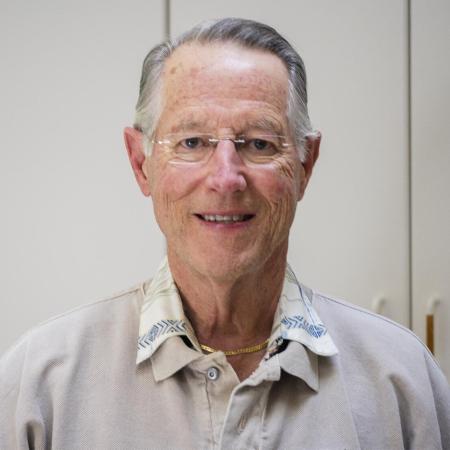
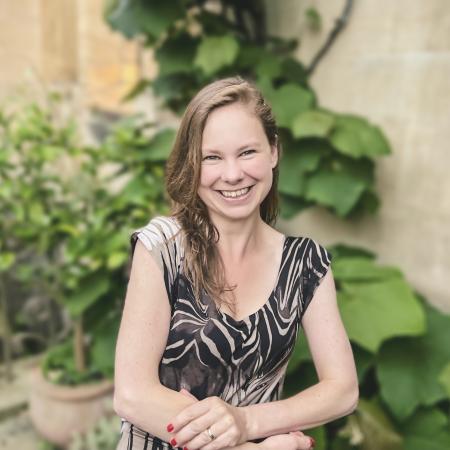
Happy retirement from the Math Department to some of our long standing faculty members!
William Bogley
Bill Bogley received his Ph.D. in mathematics from the University of Oregon in 1987 and joined OSU in the fall of 1990, having first held postdoctoral positions at Portland State University, Tufts University, and Dartmouth College. His research career included visits and collaborations in Germany, Poland, South Korea, and the U.K, with funding from the London Mathematical Society, EPSRC, Edinburgh Mathematical Society, DAAD, and the NSF.
Bogley’s research focuses on applications of low dimensional topology to structure and classification problems in geometric and combinatorial group theory. Centered on the natural concept of symmetry in all its forms, this area of research features a daunting variety of deterministic questions that are known to be unsolvable by algorithmic means. Descendants of the Halting Problem for Turing machines, these are things that can be defined but not computed. Paradoxically, the rapidly expanding power of enumerative computation enables discovery of previously unseen forms of structure and symmetry. Together with his collaborators and ten PhD students, Bogley has contributed new results on both sides of this paradox and continues to be drawn to the gap between what is and what is not computable.
In thirty plus years at OSU, Bogley served in a wide variety of administrative and governance roles with the University Honors College, the Faculty Senate, Academic Affairs, and the Mathematics Department. As Department Head from 2018-2023, Bogley focused on compensation, community, and workload issues for Instructor-rank faculty, on hiring and renewal of postdoctoral and tenure-track professorial ranks, and on budget stability. His all-too-brief stints as Lead Advisor for the department were exceptionally meaningful on a personal level. Firmly committed to the notion that effective teaching is its own reward, Bogley was nevertheless gratified by teaching awards from the Mathematics Department graduate students, the College of Science, and the University Honors College, where he was a two-time recipient of the Sandy & Elva Sanders Eminent Professorship.
Tevian Dray
Tevian Dray received his PhD in mathematics from Berkeley in 1981 after having been an undergraduate at MIT. He then held postdoctoral positions in both mathematics and physics in Germany, the Netherlands, England, Princeton, and India before coming to OSU in 1988, where he was Professor of Mathematics as well as Adjunct Professor of Physics. He fully retired in 2024 at the rank of Professor Emeritus.
Tevian's research lies at the interface between mathematics and physics. His early work used differential geometry to study general relativity, and his more recent work used nonassociative algebra to describe particle physics. In addition to his traditional research in mathematical physics, Tevian also studied student understanding of "middle-division" mathematics and physics content. He was an active member of both the RUME (Research in Undergraduate Mathematics Education) and PER (Physics Education Research) communities, and an original member of the Paradigms in Physics program at OSU, begun in 1996 and still a national model of undergraduate physics instruction.
For his work in relativity, Tevian was a Fulbright Scholar twice (India, 1987; Australia, 1995), and was elected a Fellow of the APS (American Physical Society) in 2010. He was also an outstanding teacher, having received teaching awards at the university, state, regional, and national levels. At OSU, he received the Fredrick Horne (2004), Loyd Carter (2011), and Elizabeth P. Ritchie (2014) awards, as well as awards from the University Honors College in 2009 and 2012. In 2017, he received the Deborah and Franklin Tepper Haimo Award from the MAA (Mathematical Association of America). Tevian has been a member of both MSRI (now the Simons Laufer Mathematical Sciences Institute) and the Institute for Advanced Study, held named visiting positions at Mount Holyoke and Grinnell Colleges, and given numerous invited talks on six continents.
In retirement, Tevian continues both his research in mathematical physics and his engagement with international education. He taught general relativity to graduate students in Bénin (2018) and several graduate courses in mathematical physics at AIMS (the African Institute of Mathematical Sciences) in South Africa (2023, 2024, 2025). But he and his wife (OSU Professor Emerita of Physics Corinne Manogue) are now spending much of their time in California with their children and grandchildren.
Adel Faridani
Adel Faridani received his Diplom in Physics (1982) and Ph. D. in Applied Mathematics (1988) from the University of Münster, Germany. He came to Oregon State University in 1989 on a post-doctoral research fellowship, where he was mentored by Prof. Kennan T. Smith. What was originally planned as a one-year visit turned into a career-long commitment when he joined the department's faculty in 1990.
Throughout the decades that followed, Faridani enjoyed advising and mentoring students and teaching a variety of Mathematics courses. Faridani's research involves mathematical questions arising from Medical Imaging and Signal Processing. In Medical Imaging he investigated optimal sampling and resolution in computed tomography, derived error estimates for tomographic reconstruction algorithms, and contributed to the theory and implementation of local tomography. In Signal Processing he continues to study non-uniform sampling theorems for bandlimited functions.
Robert Higdon
Robert Higdon was an undergraduate at the University of Missouri - Columbia, and in 1981 he received a PhD in mathematics from Stanford University. In the fall of 1982 he joined the faculty in the Department of Mathematics at OSU. At the end of 2024, he retired at the rank of Professor Emeritus.
Throughout Higdon's time at OSU, classroom teaching was a high priority for him. He mainly taught classes in analysis, applied mathematics, and numerical analysis. The last class that he taught was Math 311, Advanced Calculus, during fall quarter 2024. A coincidence is that the first course that he took in advanced calculus was at MU during fall semester 1974; now do the math. In fall 1983, Higdon received the Carter Award for Outstanding and Inspirational Teaching at the undergraduate level, and in fall 2001 he received the Carter Award for graduate teaching, both from the OSU College of Science.
Higdon's research is in the numerical solution of partial differential equations. His early work included research on absorbing boundary conditions for wave propagation problems. Compared to earlier work, he developed a new point of view that enabled substantial simplifications and generalizations. Later, he worked on some issues involving the numerical solution of PDE's of fluid dynamics that model ocean circulation. This work was done in consultation and collaboration with ocean modelers at OSU and elsewhere. One topic involved some problems related to the multiple time scales that can be found in this situation, and another project has involved a relatively new form of spatial discretization. Higdon's work was supported by several grants from the National Science Foundation.
For the near future, Bob and Kathy expect to make more frequent visits to their daughters in the San Francisco Bay Area. They also hope to travel more broadly, such as to make additional trips to Europe, including the Alps. Otherwise, they will relax in and near Corvallis.
Enrique Thomann
Enrique Thomann graduated from the National University of Cordoba in 1977 with a degree of Licenciado in Mathematics. In 1980 he moved to Berkeley to pursue a PhD in Mathematics under the direction of Professor Andrew Majda. After graduation from UC Berkeley in 1985, Enrique was a Visiting Member of the Courant Institute for two years. Enrique joined OSU in 1987, following a family decision to move back to the West coast.
Enrique’s research in Applied Mathematics benefited from collaboration with OSU colleagues from various departments from the Colleges of Science, Engineering, Agriculture, Forestry and CEOAS. He served as Interim Head and Head during the years 2014-2018, Acting Head in 2022 and Interim Head in 2023. During his tenure at OSU, Enrique held visiting positions at the University of Indiana, Liverpool, Stellenbosch and Arizona, as well as at the Institute of Mathematics and its Applications in Minneapolis. Enrique taught a variety of courses in Analysis, Partial Differential Equations, Probability, Stochastic Processes and Actuarial Mathematics. Enrique continues to work together with former colleagues as well as former OSU graduate students that he directed. His research combines analytic and probabilistic methods in the analysis and modeling of problems from fluid mechanics and actuarial mathematics.