Mathematics

Mathematics

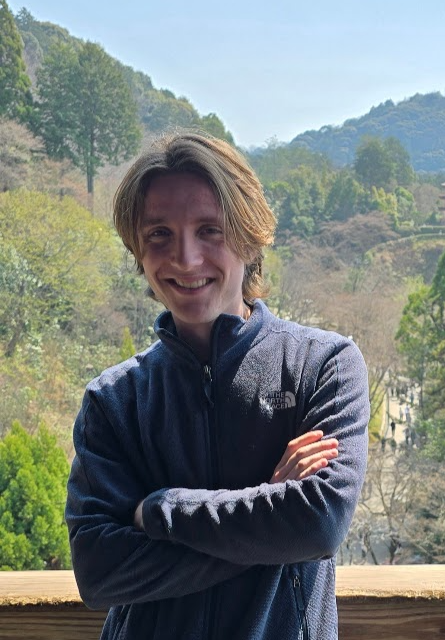
Marian Frick

Marian Frick

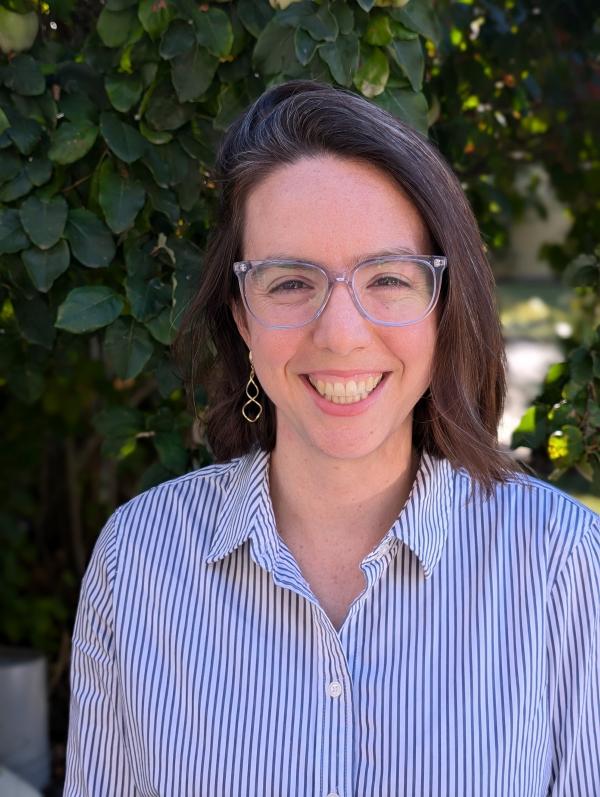
Jackson Dube

Jackson Dube

Libbie Clevette

Libbie Clevette

Sage Bothwell

Sage Bothwell

Orsola Capovilla-Searle

Orsola Capovilla-Searle

Elizabeth Carlson

Elizabeth Carlson

Brian Moore

Brian Moore

Happy Retirement in the sand on beach

Fond Farewells - Math Department Retirements

Happy retirement from the Math Department to some of our long standing faculty members!

William Bogley

Bill Bogley received his Ph.D. in mathematics from the University of Oregon in 1987 and joined OSU in the fall of 1990, having first held postdoctoral positions at Portland State University, Tufts University, and Dartmouth College. His research career included visits and collaborations in Germany, Poland, South Korea, and the U.K, with funding from the London Mathematical Society, EPSRC, Edinburgh Mathematical Society, DAAD, and the NSF.

Bogley’s research focuses on applications of low dimensional topology to structure and classification problems in geometric and combinatorial group theory. Centered on the natural concept of symmetry in all its forms, this area of research features a daunting variety of deterministic questions that are known to be unsolvable by algorithmic means. Descendants of the Halting Problem for Turing machines, these are things that can be defined but not computed. Paradoxically, the rapidly expanding power of enumerative computation enables discovery of previously unseen forms of structure and symmetry. Together with his collaborators and ten PhD students, Bogley has contributed new results on both sides of this paradox and continues to be drawn to the gap between what is and what is not computable.

In thirty plus years at OSU, Bogley served in a wide variety of administrative and governance roles with the University Honors College, the Faculty Senate, Academic Affairs, and the Mathematics Department. As Department Head from 2018-2023, Bogley focused on compensation, community, and workload issues for Instructor-rank faculty, on hiring and renewal of postdoctoral and tenure-track professorial ranks, and on budget stability. His all-too-brief stints as Lead Advisor for the department were exceptionally meaningful on a personal level. Firmly committed to the notion that effective teaching is its own reward, Bogley was nevertheless gratified by teaching awards from the Mathematics Department graduate students, the College of Science, and the University Honors College, where he was a two-time recipient of the Sandy & Elva Sanders Eminent Professorship.

Tevian Dray

Tevian Dray received his PhD in mathematics from Berkeley in 1981 after having been an undergraduate at MIT. He then held postdoctoral positions in both mathematics and physics in Germany, the Netherlands, England, Princeton, and India before coming to OSU in 1988, where he was Professor of Mathematics as well as Adjunct Professor of Physics. He fully retired in 2024 at the rank of Professor Emeritus.

Tevian's research lies at the interface between mathematics and physics. His early work used differential geometry to study general relativity, and his more recent work used nonassociative algebra to describe particle physics. In addition to his traditional research in mathematical physics, Tevian also studied student understanding of "middle-division" mathematics and physics content. He was an active member of both the RUME (Research in Undergraduate Mathematics Education) and PER (Physics Education Research) communities, and an original member of the Paradigms in Physics program at OSU, begun in 1996 and still a national model of undergraduate physics instruction.

For his work in relativity, Tevian was a Fulbright Scholar twice (India, 1987; Australia, 1995), and was elected a Fellow of the APS (American Physical Society) in 2010. He was also an outstanding teacher, having received teaching awards at the university, state, regional, and national levels. At OSU, he received the Fredrick Horne (2004), Loyd Carter (2011), and Elizabeth P. Ritchie (2014) awards, as well as awards from the University Honors College in 2009 and 2012. In 2017, he received the Deborah and Franklin Tepper Haimo Award from the MAA (Mathematical Association of America). Tevian has been a member of both MSRI (now the Simons Laufer Mathematical Sciences Institute) and the Institute for Advanced Study, held named visiting positions at Mount Holyoke and Grinnell Colleges, and given numerous invited talks on six continents.

In retirement, Tevian continues both his research in mathematical physics and his engagement with international education. He taught general relativity to graduate students in Bénin (2018) and several graduate courses in mathematical physics at AIMS (the African Institute of Mathematical Sciences) in South Africa (2023, 2024, 2025). But he and his wife (OSU Professor Emerita of Physics Corinne Manogue) are now spending much of their time in California with their children and grandchildren.

Adel Faridani

Adel Faridani received his Diplom in Physics (1982) and Ph. D. in Applied Mathematics (1988) from the University of Münster, Germany. He came to Oregon State University in 1989 on a post-doctoral research fellowship, where he was mentored by Prof. Kennan T. Smith. What was originally planned as a one-year visit turned into a career-long commitment when he joined the department's faculty in 1990.

Throughout the decades that followed, Faridani enjoyed advising and mentoring students and teaching a variety of Mathematics courses. Faridani's research involves mathematical questions arising from Medical Imaging and Signal Processing. In Medical Imaging he investigated optimal sampling and resolution in computed tomography, derived error estimates for tomographic reconstruction algorithms, and contributed to the theory and implementation of local tomography. In Signal Processing he continues to study non-uniform sampling theorems for bandlimited functions.

Robert Higdon

Robert Higdon was an undergraduate at the University of Missouri - Columbia, and in 1981 he received a PhD in mathematics from Stanford University. In the fall of 1982 he joined the faculty in the Department of Mathematics at OSU. At the end of 2024, he retired at the rank of Professor Emeritus.

Throughout Higdon's time at OSU, classroom teaching was a high priority for him. He mainly taught classes in analysis, applied mathematics, and numerical analysis. The last class that he taught was Math 311, Advanced Calculus, during fall quarter 2024. A coincidence is that the first course that he took in advanced calculus was at MU during fall semester 1974; now do the math. In fall 1983, Higdon received the Carter Award for Outstanding and Inspirational Teaching at the undergraduate level, and in fall 2001 he received the Carter Award for graduate teaching, both from the OSU College of Science.

Higdon's research is in the numerical solution of partial differential equations. His early work included research on absorbing boundary conditions for wave propagation problems. Compared to earlier work, he developed a new point of view that enabled substantial simplifications and generalizations. Later, he worked on some issues involving the numerical solution of PDE's of fluid dynamics that model ocean circulation. This work was done in consultation and collaboration with ocean modelers at OSU and elsewhere. One topic involved some problems related to the multiple time scales that can be found in this situation, and another project has involved a relatively new form of spatial discretization. Higdon's work was supported by several grants from the National Science Foundation.

For the near future, Bob and Kathy expect to make more frequent visits to their daughters in the San Francisco Bay Area. They also hope to travel more broadly, such as to make additional trips to Europe, including the Alps. Otherwise, they will relax in and near Corvallis.

Enrique Thomann

Enrique Thomann graduated from the National University of Cordoba in 1977 with a degree of Licenciado in Mathematics. In 1980 he moved to Berkeley to pursue a PhD in Mathematics under the direction of Professor Andrew Majda. After graduation from UC Berkeley in 1985, Enrique was a Visiting Member of the Courant Institute for two years. Enrique joined OSU in 1987, following a family decision to move back to the West coast.

Enrique’s research in Applied Mathematics benefited from collaboration with OSU colleagues from various departments from the Colleges of Science, Engineering, Agriculture, Forestry and CEOAS. He served as Interim Head and Head during the years 2014-2018, Acting Head in 2022 and Interim Head in 2023. During his tenure at OSU, Enrique held visiting positions at the University of Indiana, Liverpool, Stellenbosch and Arizona, as well as at the Institute of Mathematics and its Applications in Minneapolis. Enrique taught a variety of courses in Analysis, Partial Differential Equations, Probability, Stochastic Processes and Actuarial Mathematics. Enrique continues to work together with former colleagues as well as former OSU graduate students that he directed. His research combines analytic and probabilistic methods in the analysis and modeling of problems from fluid mechanics and actuarial mathematics.
Read more stories about: people, faculty and staff, mathematics


Image of a candle in the darkness

Remembering Our Colleagues: In Memoriam

The Mathematics Department would like to acknowledge the passing of some of our beloved faculty and staff.

Juha Pohjanpelto

Juha was born in Helsinki, Finland in 1959. While studying for his M.Sc. in Mathematics (1983) under Olavi Nevanlinna at Teknillinen Korkeakoulu, now Aalto University, he coauthored a high school physics textbook, taught as a lecturer, and completed a year of service in the Finnish army as a lieutenant in an anti-aircraft division.

Juha moved to Minneapolis to study for a PhD in Mathematics (1983-1989) as Peter Olver’s first student with a dissertation on generalized symmetries of Maxwell’s equations. He moved to Corvallis, Oregon in 1989 where he worked as a professor of mathematics at Oregon State University teaching classes across several areas of mathematics from geometry, algebra, topology to real and complex analysis, and financial mathematics. In addition, he published a series of highly regarded papers in his field and served as chair of teaching, and graduate committees and assistant chair.

Juha’s stories, sense of humor, and enthusiasm are tremendously missed by his friends and family and colleagues. He is survived by his wife Anne-Marie Girard-Pohjanpelto of Corvallis, Oregon and sons Max and Alex Pohjanpelto of Helsinki, Finland, along with relatives in Finland and Canada.

Read more about Juha at the McHenry Funeral Home


Beata Michalik

Bea Michalik passed away at home on Friday, December 6. A longtime member of the Mathematics Department community, Bea served as MSLC Coordinator during 2021-2022. Bea was born in Warsaw, Poland and received the Diplom in Mathematics from the JW Goethe Universitat in Frankfurt, Germany in 1992. She moved to Corvallis in 1993. Bea has been very active in the Corvallis community, including with da Vinci Days, the Corvallis Women’s Choir Jubilate!, and the Timberhill Tennis Club. Bea worked as an instructor in the Mathematics Department at LBCC for many years, including service as the President of the Part-Time Faculty Association there. During her tenure, the association engaged in collective bargaining with the college. Bea also served on the most recent LBCC presidential search committee. But what she really enjoyed was teaching.

Bea was diagnosed with ALS in January 2022, by which time she was unable to continue teaching. Still, she eagerly embraced the opportunity to work as MSLC Coordinator here in Kidder Hall. A number of her personal touches are still in place there. She spoke fondly and frequently about her co-workers in the department, especially the tutors and clerks with whom she worked; it was a sadness to her when she was unable to continue in that role due to her illness.

While at home during the past 2+ years, Bea had many lively and faithful visitors, which gave her life meaning as she navigated life with ALS. She was peaceful and surrounded by family and friends at her passing.

Read more about Beata's life at the McHenry Funeral Home


Dave Carlson

Dave received his Ph.D. in 1963 under Hans Schneider at the University of Wisconsin-Madison. Dave was immediately part of the mathematical and university community serving on committees at all levels of the university. His field of research was linear algebra and matrix theory. He had two Ph.D. students and a couple of masters students. He was originally from Southern California. After eighteen years, for personal reasons, he decided to take a professorship at San Diego State University in 1981. He remained there until his retirement, even serving at one point as the head of the department down there.


Read more stories about: people, faculty and staff, mathematics


A man in a black shirt stands in front of a white background.

Roan Luikart, Class of ’25: Mathematics major finds the equation for success

By Hannah Ashton

Roan Luikart is quick to admit that he knows math isn’t everyone's favorite subject — and he’s had his fair share of surprised reactions when he tells people he loves it. But for him, the appeal is clear.

“There’s a logical rigor and clarity in mathematics that is comforting,” Luikart said. “It’s not subjective. Either something is logically consistent or it isn’t. In a world with a lot of uncertainty, mathematics is grounding.”

He also sees the beauty in the discipline, from fractals to Lorenz attractors, a set of chaotic solutions that resembles a butterfly. For Luikart, math is more than equations and proofs. It’s a way of thinking, creating and understanding the world.

At Oregon State, he was able to bring his passion to life. He studied abroad in England, conducted two undergraduate research projects, served as a resident assistant and helped grow the Math Club.

This June, Luikart will graduate as an Honors double major in mathematics and physics before preparing for his next adventure: pursuing a Ph.D. in mathematics at the University of Virginia. He hopes to become a professor of mathematics and carry forward the mentorship and discovery that have defined his academic career.

The Math Club poses for a photo during the first meeting of Fall term 24-25.

The Math Club poses for a photo during the first meeting of Fall term 24-25.

How he got involved with undergraduate research

Luikart’s passion for math didn’t begin in a classroom. In eighth grade, after transferring schools and being placed in the wrong math track, he found himself catching up over winter break with a thick packet of make-up work. He was unmotivated — until his father brought him along to work and left him with nothing else to do but finish the assignments.

“Through that experience, I formed a greater appreciation for it and fell in love with math,” he said. “I found out how fun it can be especially when you have a higher level of understanding.”

By high school, he was even more enthusiastic about math. And once he discovered he could make a career out of it, he was sold.

Raised between Oregon and New Hampshire, Luikart chose Oregon State in part for in-state tuition and its strong research focus. He capitalized on this strength and completed two major research projects, one on campus and the other as a part of an NSF funded summer research opportunity.

Asking his favorite professor if he could do research with him snowballed into his Honors thesis project and a mentor for life.

Luikart approached assistant professor Nick Marshall, who is interested in mathematics problems that involve interactions between analysis, geometry and probability, especially such problems motivated by applications to data science.

“He is a fantastic teacher, and past that, a great research mentor. He’s given me a lot of advice, and I don’t know where I would be without it,” Luikart said.

Together with Marshall and a graduate student, Luikart co-authored a paper published in the SIAM Journal On Matrix Analysis and Applications. Their work focused on improving a numerical algorithm, relevant to fields like medical imaging and computer tomography (CT, also known as CAT scans), by adding a method known as “momentum” to speed the algorithm.

“We need algorithms that can quickly solve these linear systems of equations. We added a term that incorporates past movement of the algorithm so it can speed up,” he said.

Equipped with knowledge from multiple terms working with Marshall, Luikart applied for multiple REUs (competitive summer National Science Foundation Research Experience for Undergraduates programs), covering all sides of mathematics research.

Luikart presents his REU research at the end of the program.

Luikart presents his REU research at the end of the program.

He was accepted and spent three months in Illinois working on mathematical biology at Northwestern University.

His research mentor was studying circannual rhythms, a biological rhythm that happens annually in different species like birds or bears. While many of the models assume this behavior is intrinsic and doesn’t take into account environmental influences, his mentor theorized differently.

Luikart worked on the early development of a new mathematical model that incorporates external factors like temperature or duration of daylight.

“I improved my independent problem solving and learned how mathematical modeling works. I did most of it on my own and it was interesting because I could mathematically model the same biological observation in different ways,” he said.

Undergraduate research has not been the only way Luikart has gotten involved on campus.

He joined the Math Club as a first-year student and became president in his senior year, helping revive the organization after it dwindled during the pandemic.

“It has been a huge part of my time here,” he said.

Today, the club hosts weekly meetings and game nights for all students who love math or are interested in it. Luikart’s energy and passion for connecting with students led to him becoming a resident assistant in the dormitories for three years.

Luikart and his friend Nick pose for a photo during the Math4All conference in 2024.

Luikart and his friend Nick pose for a photo during the Math4All conference in 2024.

Studying abroad

Second to meeting Nick Marshall, studying abroad was a top transformative experience for Luikart. Similar to knowing he wanted a Ph.D., studying abroad was a no-brainer. Travel has been a huge part of his life, with his mother taking him to a new country almost every year since he was a young child. At last count, he has been to about 20 countries.

Working with OSU Go, he was able to tailor his experience and enroll in Lancaster University in the United Kingdom. Often ranked in the top 15 mathematics programs in the UK, Lancaster fit everything he was looking for.

His favorite detail was one he almost didn’t notice. On an evening walk home, he noticed covered walkways along campus buildings, designed to shelter from frequent rain. Between the supporting pillars were carefully tended flower planters. Careful not to damage them, gardeners were taking each planter down to water. This small attention to detail left a lasting impression.

“I really liked the university, and the campus turned out to be the biggest highlight for me. It is incredibly beautiful. I was already loving the campus, but as I was nearing the end of my time there, I started to take more time to appreciate things. I could go on and on,” he said.

A thirst for more math

This July, Luikart will head to Charlottesville to begin his Ph.D. at the University of Virginia. While professorship remains his goal, the draw of graduate school goes further than fulfilling a career path.

“Even if I don’t end up becoming a professor, having that further mathematical understanding is something I desire. Right now, I know just the tip of the iceberg,” he said.

For Luikart, math is a subject to explore. And thanks to the community, opportunities and mentorship he found at Oregon State, he’s ready for whatever comes next.

Subscribe to Mathematics