Mathematics Major

Mathematics Major

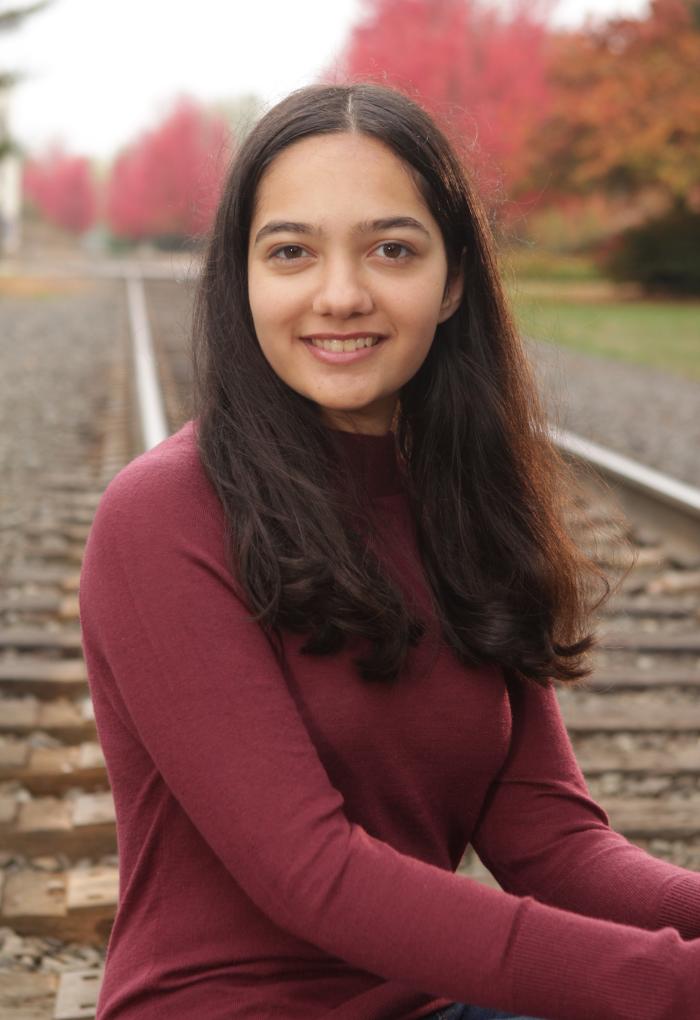
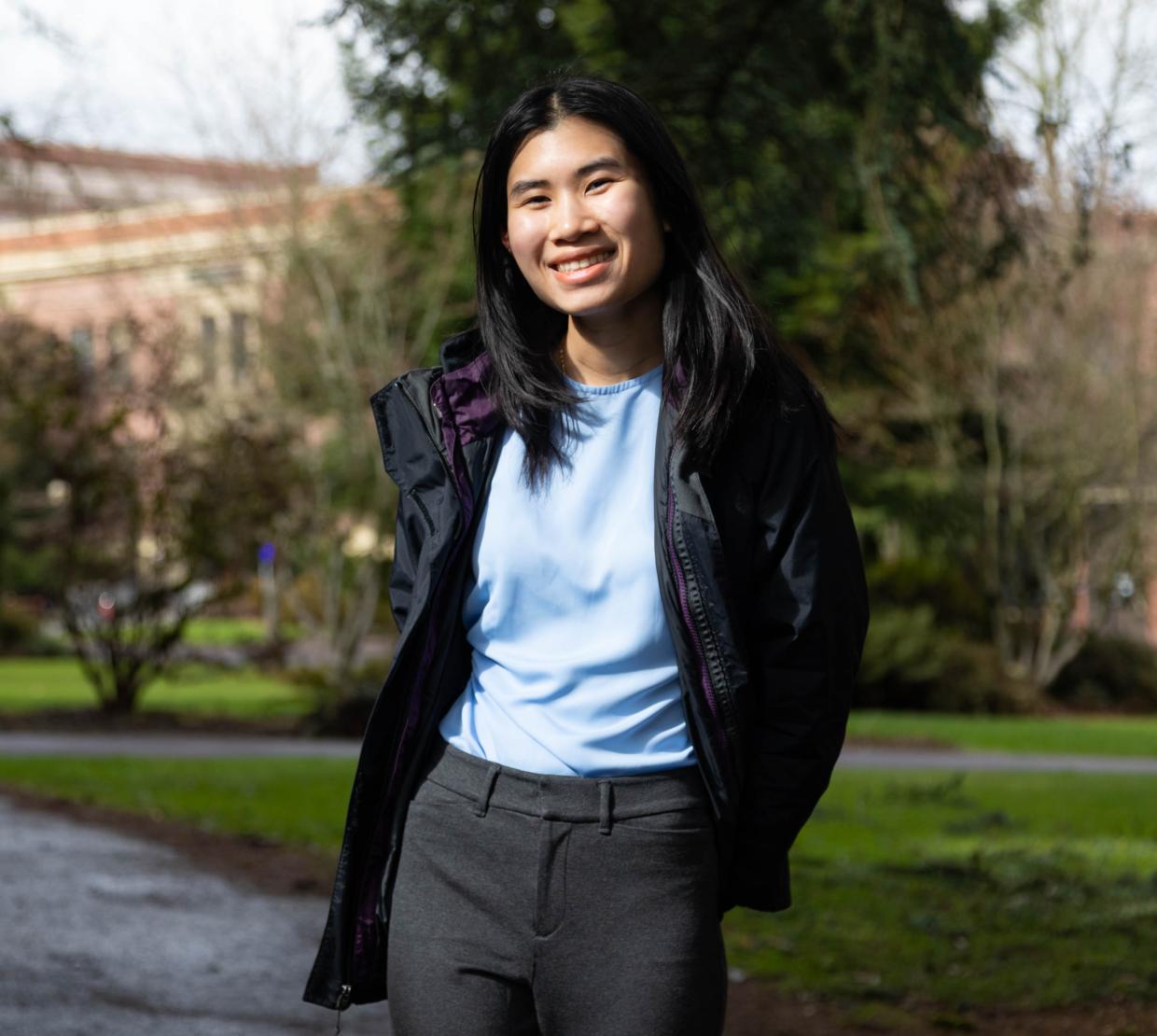
Kimberly Truong

College of Science student selected as Goldwater Scholar

By Steve Lundeberg

A third-year mathematics student has been named a 2023 Goldwater Scholar by the Barry Goldwater Scholarship and Excellence in Education Foundation.

Kimberly Truong of Portland, who attended Reynolds High School in Troutdale and is a student in OSU’s colleges of Engineering and Science, is OSU’s 18th Goldwater Scholar in the past decade, 13 of whom have come in the last five years. She is Oregon State’s 45th honoree overall since the program’s 1986 inception.

Truong is part of the Oregon State University Honors College and is double majoring in computer science and mathematics. She is one of 413 Goldwater Scholars selected from more than 1,200 students nominated by 427 academic institutions in the United States.

Sophomores and juniors studying natural science, engineering or mathematics are eligible for the scholarship. The Goldwater Scholarship is the top undergraduate award in the majors it covers, said LeAnn Adam, OSU’s Goldwater campus representative, and applicants must be planning a career in research.

Each recipient receives a maximum of $7,500 to use for any part of tuition, fees, books, and room and board for the 2023-24 school year not covered through support from other sources.

Truong intends to obtain a Ph.D. in machine learning and pursue a university faculty position that will allow her to conduct research at the intersection of machine learning and software engineering.

Read more here.

A young man hugging a German shepherd dog.

Math alumnus fast-tracks degree to actuarial success

By Grace Peterman

A good job and a big yard keep James Hansen and his canine pal happy.

James Hansen (Mathematics ’20, Actuarial Science Minor) was in 8th grade when his aunt foretold his future career. “She said, ‘you’re good at math, you should be an actuary,’” he recalls. “I was like, ‘Oh, what’s that?’”

Less than a decade later, Hansen has found a niche as a full-time Actuarial Analyst at GovInvest, aiding government agencies in their fiscal planning. He credits his success to determination and decisiveness: “I stuck to the schedule and hammered it out,” he said of getting an education.

When Hansen entered Oregon State, he was already well on his way to achieving that goal. He earned an associate’s degree at Clackamas Community College while still in high school, taking over 100 credits of general education and advanced math coursework.

Oregon State welcomes and encourages students to earn college credit prior to enrollment and accepts credit earned through a wide variety of options. Our Degree Partnership Program also allows students to enroll at both OSU and any Oregon community college concurrently, minimizing overall college costs and allowing for more flexibility in course scheduling.

For Hansen, this early investment of time and energy allowed him to jump into 300-400 level courses when he came to Oregon State, finishing his B.S. in just two years.

Plugging in to actuarial science

Hansen attended Canby High School outside Portland, where his soccer coach happened to be friends with Oregon State’s Actuary in Residence Manny Hur. Hansen was able to meet Hur for a job shadow and career counseling session. They chatted for a couple hours, “and that was basically the decision right there,” he said of choosing Oregon State.

Once at the College, Hansen found his instructors helpful, accommodating and inspiring — even when it came to graduating during the pandemic.

Mina Ossiander was just very real with it,” Hansen said of the Professor of Mathematics’s probability courses. “I loved her. I think that there are some professors out there that act like their course was your whole life, but Mina was not that person.” When classes went remote due to COVID, Hansen said Ossiander was respectful of students’ changing needs and challenges in a time of unprecedented instability.

He was also impressed by how Assistant Professor of Statistics James Molyneux handled the transition to remote coursework. “I had him the only term I took online, he was amazing, again just super down to earth, really good speaker, great at teaching, and encouraged conversation between students," Hansen said. “I’d say that online class [Statistics 413] was the best-set-up of any class I took.”

Finishing his degree in two years kept Hansen busy, and biking to class allowed him to build exercise into his schedule. Corvallis and Oregon State are ranked nationally for bike-friendliness, and 30% of Oregon State students opt to bike to campus.

Finding a niche in a small startup

Through participation in the College’s Actuarial Science Club, Hansen found an internship with a large health insurance company right after graduation. While the predictability of working there was convenient, Hansen likes the flexibility and variety of his current position. At software startup GovInvest, “I get to have a lot more impact and say than I would at a larger company,” he said.

Based in Portland, GovInvest advises public institutions and private companies in their pension and benefits planning. “It’s very niche,” said Hansen of his work helping government agencies interface with their employees. “Say a firefighter wants a health benefit when they retire. The city’s not going to know right off the top of their head, ‘oh this is the amount of money we need to have saved up by the time they retire to meet that liability.’ Our work makes it so that there can be a conversation there without just guessing. It provides certainty in very uncertain circumstances.”

Hansen said he likes the non-traditional nature of his work, and the leadership opportunities afforded by running with a small team. “It’s a rewarding accomplishment to see how everything kind of lines up in the end,” he said.

Embracing stability and commitment

What Hansen finds most fulfilling about his work is the freedom it gives him to live a life he loves. Hansen and his wife met in high school, got married in college and recently bought a house together in Molalla. Having their own space with a yard for their dog is a dream that was worth the time and hard work it took to make it happen.

One of the resources that was integral to their success as a young couple in college was the Supplemental Nutrition Assistance Program (SNAP) offered through the Department of Human Services. Hansen said the decision to apply was a game-changer: “we were living off, like, ramen before,” he joked. “And then suddenly we could afford real food!” He encourages students who qualify to take advantage of this program. Assistance with eligibility questions can be found through the OSU Human Services Resource Center.

All along, finding the path to success for Hansen took trust, discipline and a series of decisions — from taking those advanced math classes back in high school, to getting married at 19 and beyond. Hansen said a love for certainty and stability have motivated him along the way.

Yet sometimes college students get stuck in trying to make decisions that will bring them the perfect future they picture — especially when choosing a major. Hansen said getting a degree is sometimes less about making the perfect choice and “more about showing you can just commit to finishing something.” For students wavering between two great options, “just pick something,” he said. “Make a decision, and if that decision turns out not to be the right one, then switch it up.”

Michael Waterman

Genomics pioneer paves the way for first-generation students

By Grace Peterman

Photo by Leah Lee

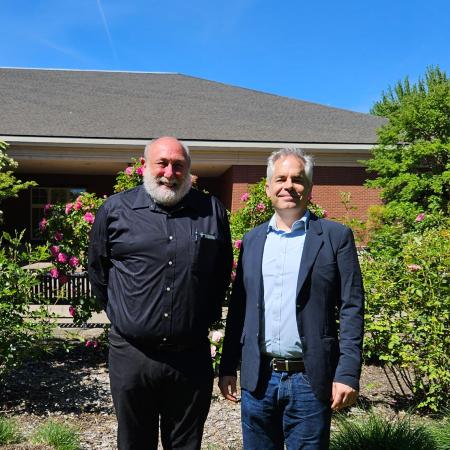
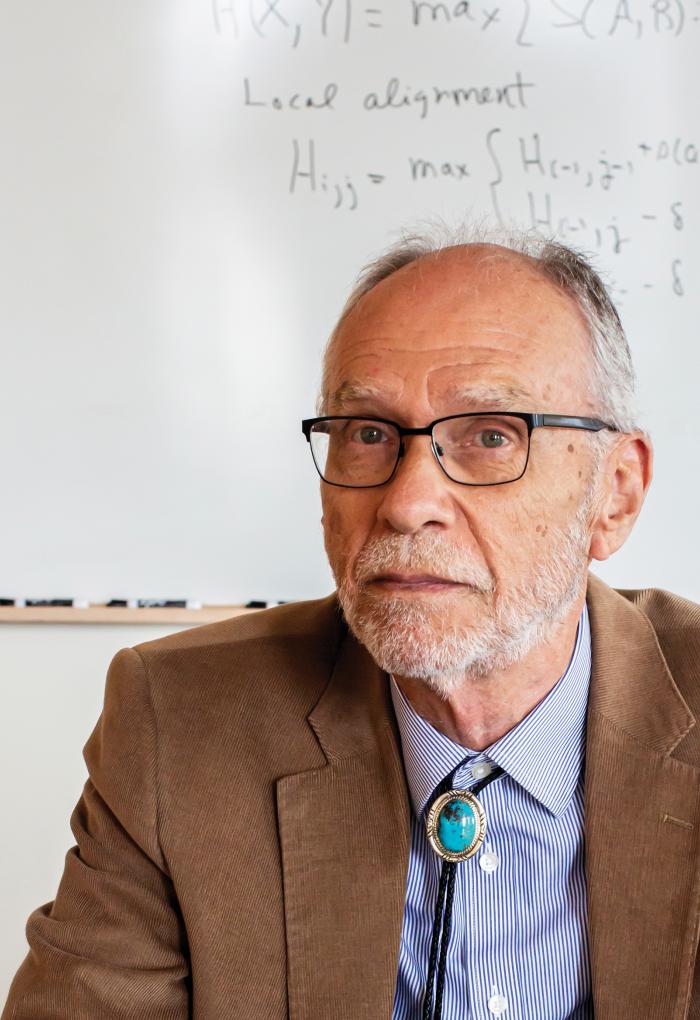
Michael Waterman (Mathematics ’64, ’66) grew up on a ranch in rural Southwestern Oregon. A first-generation college student, Waterman said entering Oregon State as a freshman “was the doorway to the rest of the world” for him.

After College, Waterman went on to make an international impact, transforming the field of computational biology. This year, he receives the College of Science's 2021 Lifetime Achievement in Science Award for his remarkable accomplishments that have brought honor, distinction and visibility to the University. Waterman’s extensive career includes research that has been foundational to many DNA mapping and sequencing projects, including the Human Genome Project.

"I am deeply grateful to land grant universities, and Oregon State in particular, that allowed me and many others to receive an excellent education,” he said.

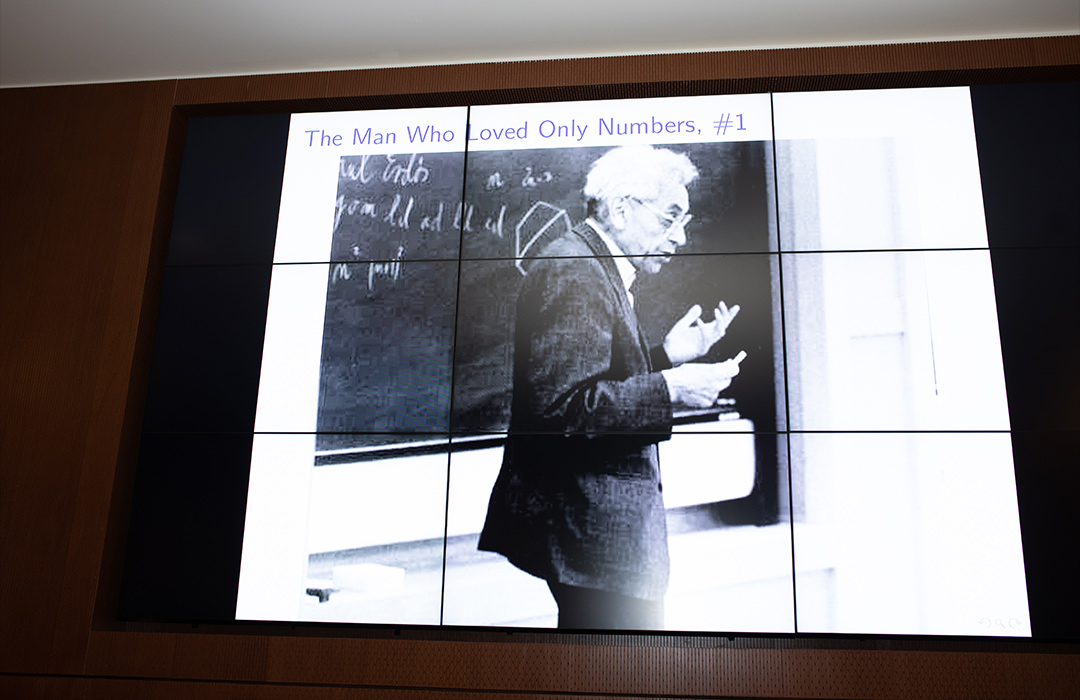
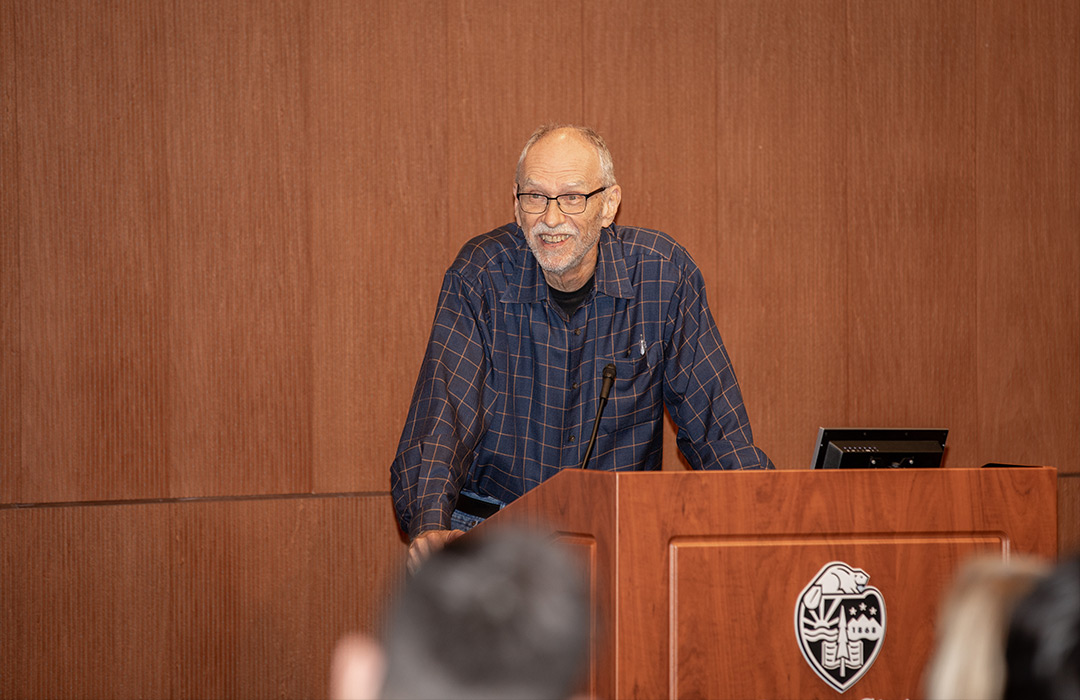
Waterman presented the College of Science 2021 Distinguished Lecture on November 10, 2021, in the Memorial Union, Horizon Room, at Oregon State University. The lecture discussed Waterman’s deep ties to Oregon and Oregon State and explored the connections between mathematics and the biological sciences.

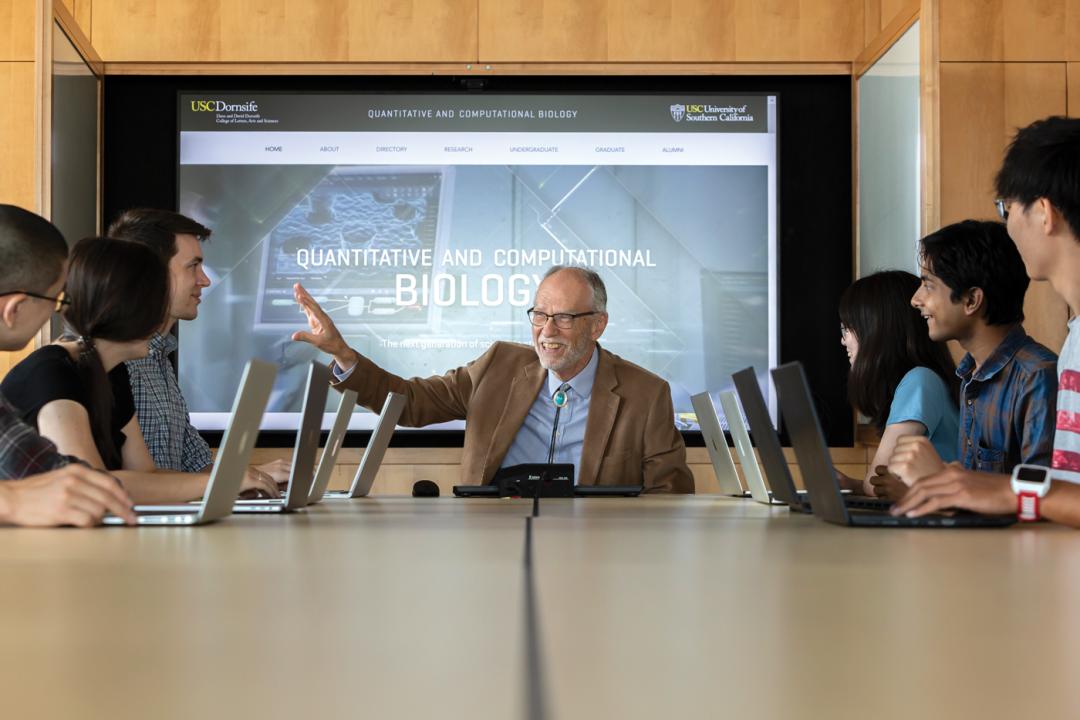
Michael Waterman teaching

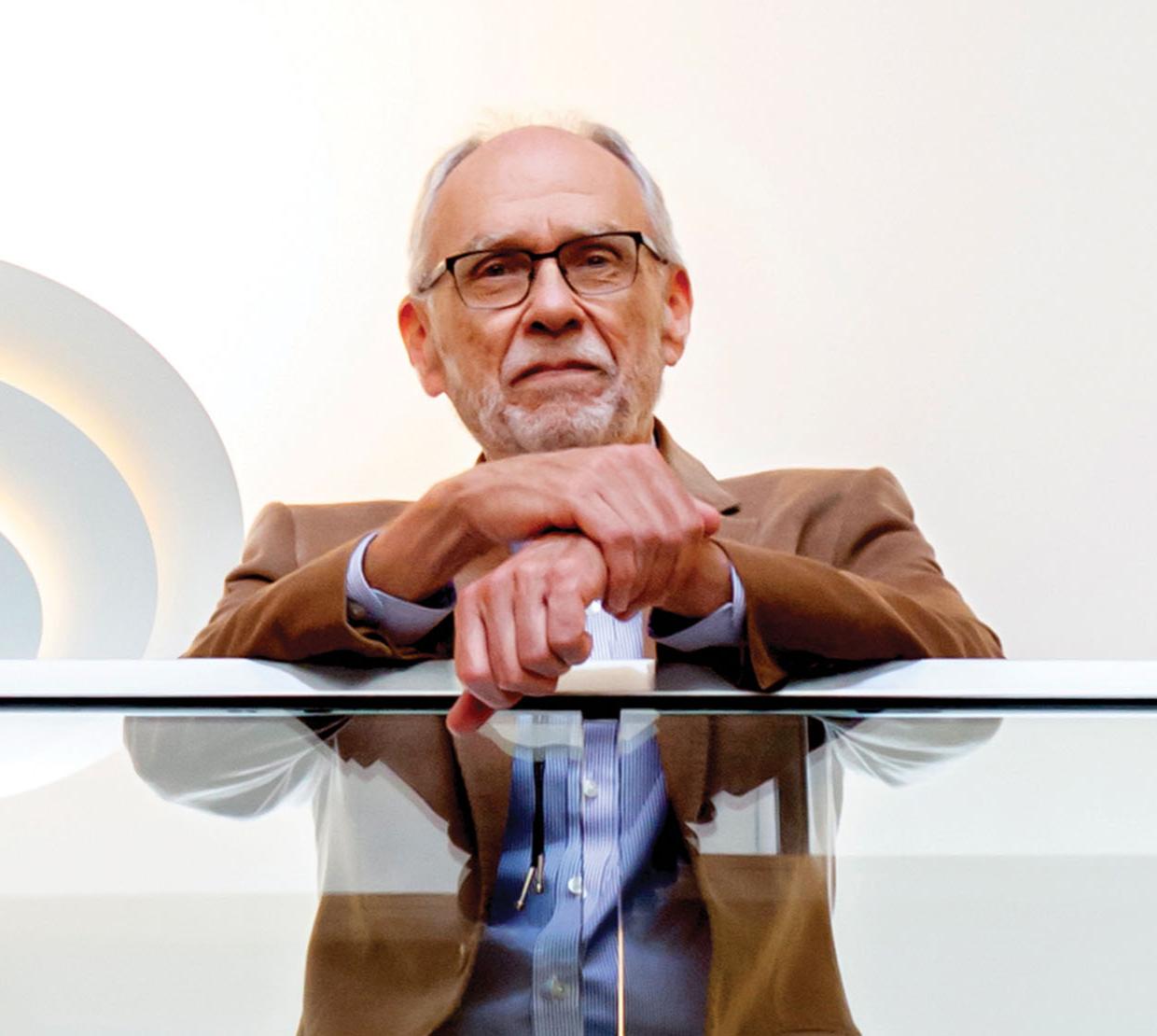
Michael Waterman is an Emeritus University Professor at the University of Southern California. Photo by Leah Lee.

A global reputation in genomic sequence analysis

After earning his bachelor’s and master’s degrees in mathematics at Oregon State, Waterman went on to complete a Ph.D. in statistics and probability at Michigan State University. His work, focused on applying mathematics, statistics and computer science techniques to various problems in molecular biology, continues to play an important role in DNA sequencing today.

Waterman is an Emeritus University Professor at the University of Southern California, with joint academic appointments in the Departments of Biological Sciences, Mathematics, and Computer Science, and a Distinguished Research Professor at the University of Virginia.

He is also an elected member of both the U.S. National Academy of Sciences and of Engineering, the American Academy of Arts and Sciences and both the French and Chinese Academies of Sciences. He has received the William Benter Prize in Applied Mathematics, the Gairdner Foundation International Award in Biomedical Sciences, the Dan David Future Prize in Bioinformatics and a Guggenheim Fellowship.

Reflecting on his work upon receiving the Dan David Prize, Waterman said curiosity and a love for the process motivate him and his team more than anything. “Our research was not initially in any hot-topics category. We simply found fascinating problems that were irresistible, and we were determined to pursue them.”

That’s how the first serious meeting to discuss sequencing the human genome began as well. “We thought, ‘We’re mathematicians, we should be able to say something about this!’” said Waterman. Among the team of scientists assembled at University of California Santa Cruz in 1985, no one was even sure if such a huge undertaking was feasible. Yet, the idea was too good to pass up: “I remained steady in my belief that this was barely possible and truly important,” he said. “Just deciphering the code that our ancestors passed down to us as our genetic heritage was priceless.”

Michael Waterman

Waterman's early work on algorithms was the breakthrough needed to decode the human genome. Photo by Leah Lee.

Pathways to success for underrepresented students

Strong science thrives on this type of bold questioning of what’s possible. How did Waterman go from a rural ranch in Oregon to debating a landmark scientific project at UC Santa Cruz? Growing up, “it’s very hard to imagine beyond what you see,” said Waterman.

As a first-generation college student starting at Oregon State, Waterman experienced a world of possibility opening up for him. That’s why he established an endowed scholarship to open doors for other first-generation college students on their own paths to success. The Michael and Tracey Waterman Scholarship — the second largest in the College’s history — ensures future students are empowered with a sense of possibility and perspective.

“I believe that those who didn’t grow up with privilege should have a chance too,” he said. “I am pleased to see Oregon State is still accepting kids from a variety of backgrounds.”

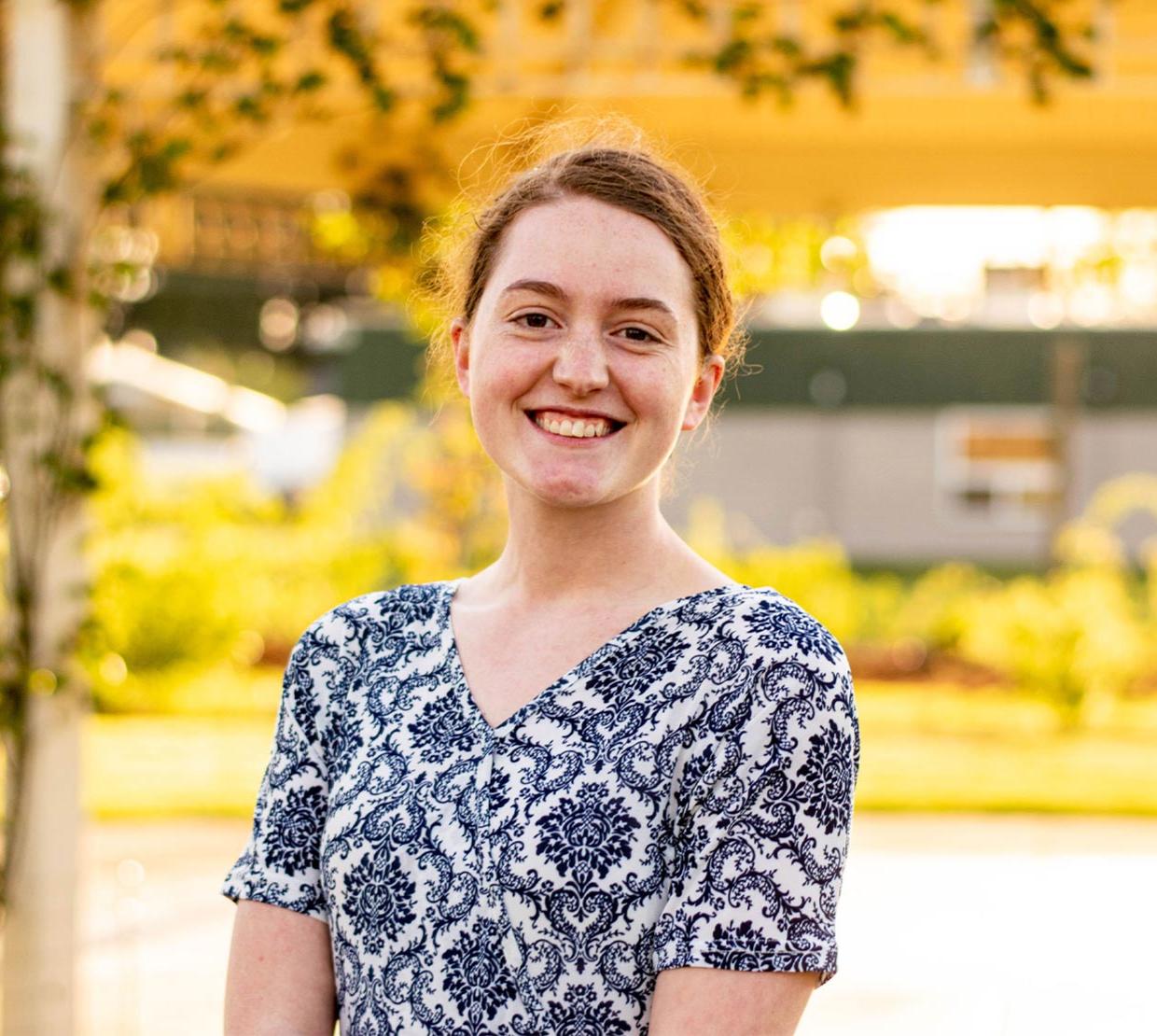
A smiling girl posing in front of of a yellow background outdoors

Oregon native – and role model to young girls – carves her own path in mathematics

By Kimberly Felton

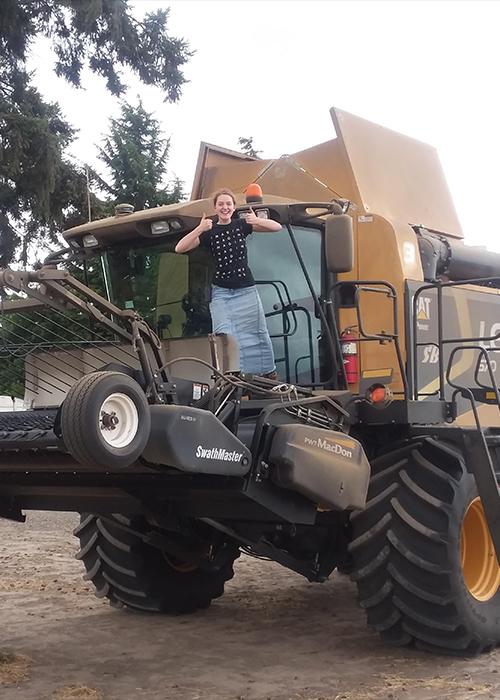
During summers, Jennifer Smucker drives combines to earn money for college. This is her fifth, and likely last, summer of crossing the fields at little more than 2 miles per hour, working days so long that she sees the late summer sunset from the cab. This fall, the newly-minted Oregon State grad will begin her Ph.D. in mathematics at Virginia Tech.

Smucker has always loved math. She reads poetry and plays the ukulele. She writes – and has published both online and in print – and hikes and sews. She enjoys science. But it’s the logic of math she loves.

“You get an answer on a test – it’s either going to be right or it’s wrong,” she says. “What you find is not necessarily arbitrary or dependent on someone else’s opinion. You don’t have to worry about whether or not the instructor is going to like what you said.”

But that doesn’t mean math is always easy. Graduating with a bachelor of science in mathematics means working through four years of tougher and tougher problems.

“The process of getting to the right answer is never very enjoyable for me,” Smucker says, “but once I get the right answer, there’s so much relief and joy from actually figuring out what it is. It makes the struggle worth it. This feeling of pushing through something that’s really difficult, to get to a final answer. If I got to the same result without the struggle, I wouldn’t enjoy the result as much – because I hadn’t worked so hard for it, you know?”

Girl giving the "thumbs up" on top of a big combine

Jennifer Smucker drove a combine each summer to help pay for college. Now, she's looking toward a future as a Ph.D. student in Virginia.

Derailed by the pandemic, but still pushing forward

Smucker grew up in Harrisburg, a farming community near Corvallis. Freshman year she dual-enrolled at Oregon State University and Linn Benton Community College, attending classes at Linn Benton the first two years. Within this program, her transfer to OSU as a junior in 2019 was seamless.

Four siblings already had attended Oregon State, and Smucker looked forward to her own experience there. Her junior year was her first year on campus and began well, building memories and studying with classmates. “You know, bonding over shared struggle,” she says.

But as so many stories the last two years go … ”and then COVID.” Between her jobs and pandemic restrictions, Smucker missed out on some of the college activities she normally would have joined.

“What I like about science is that it takes along that math and makes it useful and applies it. But math is the thing I know the most of and understand the best.”

“I didn’t get to make a lot of connections outside of class, mostly because of COVID,” Smucker says. “But despite that I feel like I was very challenged in my classes and got to learn so many new and cool things. I’ve really enjoyed my time at OSU and feel like it’s been a really good experience for me.”

Discovering the means to the end

With her love for math, Smucker began college as a mechanical engineering major. “But I realized I just did not want to be an engineer and I’d much rather do some sort of teaching,” she says. Mathematics was her logical choice.

Teaching opportunities opened for Smucker well before graduation: As a junior, she taught middle and high school science at a small private school. As a senior, she tutored students in physics at Linn Benton.

“Part of the reason I chose math as a major was because it had a good helping of both math and science,” Smucker says. “What I like about science is that it takes along that math and makes it useful and applies it. But math is the thing I know the most of and understand the best.”

Yet figuring out the next steps for her future was more challenging. “I knew kind of what I wanted the end goal to be, but I was completely lost as far as how to get there,” she says. Tom Dick, her advisor, helped her figure that out.

“I came to him and said I’m thinking about getting my Ph.D. or maybe my master’s, but I’m not really sure what that would look like or what that would mean for me down the road. And he very much just talked me through … If you want to get your Ph.D., that means you’d have this sort of potential career path. If you want to get your master’s, you’d have these potential career paths.”

With Dick clearly laying out options and requirements, Smucker determined she was most interested in a Ph.D. in mathematics.

“It was my decision to get a Ph.D.,” Smucker says. “But kind of talking through the whole process and what I needed to do was extremely helpful.”

“I've always felt like needed to pave a path. That has influenced my journey.”

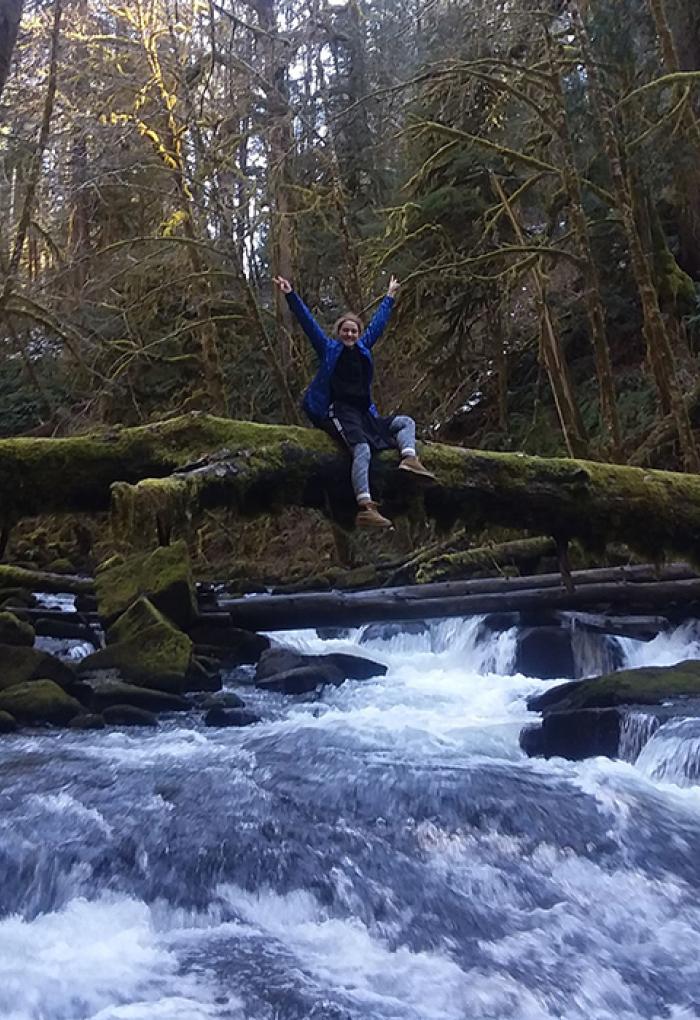
Girl with hands up sitting on a fallen log over a rushing river

Seeing things a new way

Despite her love of linear certainty, Smucker appreciates the mystery of exceptions. One of her favorite classes at Oregon State was non-Euclidean geometry.

“With regular geometry, you’re working in the way we think of and perceive the world,” Smucker says, “Where if you want to get to from point A to point B, the shortest trip is just a straight line from point A to point B. We have our standard ways for tabulating that distance, and that’s considered Euclidean geometry.

"I want other girls to know that if they like math and they like science, they have what it takes to pursue that."

“But in non-Euclidean geometry, the idea is that it doesn’t fit all those rules that come with the geometry we know. So it’s really just a fun mental exercise. You take everything you thought you knew about distances and points and just toss it out the window, and start to think of these new abstract ways; then it’s really fun.”

Non-Euclidean geometry made Smucker look differently at a discipline she knew so well. “So maybe it meshed with the part of my personality that likes to, I guess, be constantly seeing things in new and fresh ways,” she says.

Smucker is, perhaps, somewhat non-Euclidean herself. Though the fifth sibling in her family to attend college, among her peers in her community, a female leaving home for college – let alone in a STEM field – is a bit more unusual.

“I love this so much and I want other girls to know that if they like math and they like science, they have what it takes to pursue that,” Smucker says. “I think my desire to be a role model in that way has really pushed me to try to learn more, try to do better. I've always felt like I kind of needed to sort of pave a path. That has influenced my journey.”

Goldwater Scholarship

Biochemistry, mathematics and molecular biology students win 2021 Goldwater awards for research excellence

By Srila Nayak

Students in the College of Science have won the nation's most prestigious award for undergraduate research, the Barry Goldwater Scholarship, almost every year since 2017. Science majors have won a total of 25 Goldwater scholarships — the most at Oregon State University to date. This year, once again, science and mathematics majors at Oregon State University have netted the competitive award for their academic prowess and scientific achievements.

Two students from the College of Science have been awarded the 2021 Goldwater awards. A total of four Oregon State University students were selected for the Goldwater scholarships this year. Emily Gemmill, a junior, and sophomore Alyssa Pratt in the College received the prestigious scholarship, which is the top undergraduate award in the country for sophomores and juniors in the fields of science, technology, engineering and mathematics (STEM).

Tegan Thurston and Cindy Wong, students in the College of Engineering, were also named Goldwater scholars. The recipients are selected on the basis of outstanding academic achievement and for demonstrating the potential to pursue research careers.

Gemmill is pursuing a double major in biochemistry and biophysics and mathematics, with a minor in chemistry and options in advanced biophysics and mathematical biology. Pratt, a second-year Honors student, is double majoring in computer science and biochemistry and molecular biology with a concentration in computational molecular biology. Both Goldwater scholars demonstrate high potential for scientific research careers and have engaged in meaningful and ambitious undergraduate research experiences at Oregon State.

Across the United States, 410 college students were selected for the Goldwater scholarships in 2021-2022 from a pool of 1256 college sophomores and juniors in the fields of natural science, engineering and mathematics. Oregon State University has the greatest number of Goldwater scholars in the state of Oregon this year, thus consolidating its status as the premier campus for STEM-oriented students.

The preeminent undergraduate award in the sciences, the Goldwater Scholarship Program was established in 1986 to honor former Arizona Senator Barry M. Goldwater, and is sponsored by the Barry Goldwater Scholarship and Excellence in Education Foundation. The award provides up to $7,500 per year for a maximum of two years covering undergraduate tuition, fees, books, and housing expenses.

Taking part in high-impact undergraduate research

Emily Gemmill

Emily Gemmill

Employing interdisciplinary research methods, Gemmill probes the mysteries of protein-based molecular motors called kinesins in the lab of biophysics Associate Professor Weihong Qiu. Kinesins interact with microtubules (dynamic tubes that provide structure and shape to cells) within cells and play an indispensable role in facilitating transport and force to sustain human life by converting chemical energy into mechanical energy. Gemmill’s research builds on ongoing research in the Qiu Lab on the distinctive properties of kinesin-14s that move and bind differently to microtubules from other kinesins.

"I chose the advanced biophysics option for my biochemistry degree and the mathematical biology option for my mathematics degree, which complement each other well as they both apply rigorous analytical methods to biological systems.”— Emily Gemmill

Introduced to molecular motors in a high school biology class, Gemmill’s fascination with the subject deepened as she learned more about their significance and functions in the Qiu Lab. She is currently investigating the regulatory mechanism of a kinesin-14 motor to better understand the factors governing its motility and it’s interactions with other proteins that affect kinesin-14’s movement.

Gemmill transferred to OSU from Portland Community College where she was a student in the honors program. There she was awarded an Oregon Space Grant Consortium research fellowship to support her work on developing a mathematics fluid-based model on mitigating traffic flow in Portland. At OSU, Gemmill was able to pursue ambitious research goals with the help of a Summer Undergraduate Research Experience (SURE Science) scholarship and an Undergraduate Research in the Sciences and Arts (URSA) Engage grant.

After graduation, Gemmill plans to work toward a research career at the intersection of mathematics and biophysics. “I am earning degrees in both biochemistry & biophysics and mathematics, leading to a wide range of interdisciplinary knowledge,” said Gemmill. “Additionally, I chose the advanced biophysics option for my biochemistry degree and the mathematical biology option for my mathematics degree, which complement each other well as they both apply rigorous analytical methods to biological systems.”

Alyssa Pratt

Alyssa Pratt

Pratt studies RNA secondary structural features called hairpin loops with a wide variety of functions, primary among them being the potential to arrest disease-associated genes, in the lab of David Hendrix, an associate professor of biochemistry and biophysics and computer science. Through bioinformatics experiments utilizing specific algorithms and data sequencing, Pratt investigates the properties and defining characteristics of a little-known subset of RNA hairpins called unbreakable hairpins for a better understanding of their potential and biological significance in the human body.

“Once I met supportive mentors, I realized that innate computer skills didn’t exist and that I could pursue my interests in computer science as well as molecular biology, which inspired me to focus on computational biology.” — Alyssa Pratt

Pratt has also undertaken summer research at Portland State University, where she used optimization methods and computational analysis to search for specific secondary DNA structures in the context of cruciviruses (viral family containing components from both RNA and DNA viruses).

An exceptional student, Pratt is a Presidential Scholar at OSU, and received a number of prestigious awards in high school including a National Merit Scholarship and a National AP Scholarship. She is also a recipient of Oregon State’s URSA Engage Award.

Pratt hopes to pursue a Ph.D. in computational biology after graduation, combining her interests in molecular biology and computer science. In her application, Pratt writes that throughout her school years she thought she “didn’t have the innate computer skills that it seemed my male peers possessed." With effective guidance and mentorship, Pratt began to pursue substantive computational research projects. “Once I met supportive mentors, I realized that innate computer skills didn’t exist and that I could pursue my interests in computer science as well as molecular biology, which inspired me to focus on computational biology.”

Inspired by her own experiences of overcoming bias in a STEM field, Pratt works for the Precollege Programs at OSU as a media assistant, and is involved in a wide range of youth outreach activities designed to increase college access and academic preparation for Oregon’s youth.

The Goldwater Scholarship is administered at Oregon State University through LeAnn Adam, OSU Advisor for the National and Global Scholarships Advising and the OSU campus representative for the Goldwater scholarship.

Megan Tucker standing in park

Mathematics and writing senior awarded Department of Energy fellowship

By Srila Nayak

Megan Tucker, a mathematics senior, was awarded the Mickey Leland Energy Fellowship by the U.S. Department of Energy.

As a high school student in Santa Cruz, California, Megan Tucker picked Oregon State University as one of her top two choices for a major in nuclear engineering. Although she opted for a physics major with an emphasis on physical chemistry in her freshman year, before switching to mathematics, the nuclear reactors on campus were what lured her to OSU in the first place. On her first visit, Megan also fell in love with the beautiful campus.

“I really liked the curriculum. I liked the faculty and students I met during my visit. I learned I could do a minor in writing which was very uncommon.” She had found the perfect combination of elements for her undergraduate experience and decided to look no further. And although her priorities would shift and change as she discovered more about herself and her interests, Megan has managed to find the right academic niche at OSU.

“Regardless of what job it is, technical or creative, to be able to show that one can write and communicate is very important.”

Now a double major in mathematics and writing, Megan Lynn Tucker has excelled at and enjoyed the wide gamut of courses at Oregon State University, from Metric Spaces and Topology to Environmental Writing. She will graduate next month with a substantial amount of research experience under her belt: Megan was awarded the Mickey Leland Energy Fellowship, which gave her the opportunity to work on an interdisciplinary team at the National Energy Technology Laboratory (NETL) in Albany, Oregon, during the summer of 2019.

The Mickey Leland Fellowship Program provides students across America with educational opportunities to gain real-world, hands-on research experience with the Department of Energy’s Office of Fossil Energy. Megan’s 10-week internship took her to NETL’s Geospatial Analysis, Interpretation and Assessment (GAIA) Computational Facility where she performed geospatial data analysis and statistics related to carbon storage modeling. The GAIA computational lab works on creating models for oil, gas, and rare earth elements. Megan gathered and analyzed wellbore data on a state level to assess availability, consistency, and usability.

“Most of my summer was spent learning about the topic as I have little to no geology background. As the lab was multidisciplinary, I had meetings and conversations with colleagues whose areas of expertise overlapped with this project,” said Megan. “I learned about a variety of topics in geochemistry, petroleum engineering, and geography.”

While focusing on statistical and data errors and trying to account for those inconsistencies to make reliable inferences, Megan discovered how mathematics could be applied to real world problems. She presented her research on wellbore data and carbon sequestration at a Department of Energy conference in Pittsburgh in August 2019.

“The mathematics major taught me to think logically and intuitively, and that has been helpful with pretty much all my STEM classes.”

Megan says the most important skills and values she learned at OSU have to do with lifelong learning and mastering the knack of teaching oneself. “The best thing I learned in college is how to read a textbook, how to do actual scientific research and obtain information that is good, viable and trustworthy.” She was able to transfer her self-reliance to her NETL internship where she quickly learned software applications to perform data analysis. With no prior knowledge, Megan taught herself and became proficient in programming languages such as ArcPro and R.

The new knowledge gained from her internship has been an asset at job interviews. After graduation, Megan will move to Seattle to work as a technical writer with Amazon Web Services — a subsidiary of Amazon that provides on-demand cloud computing platforms to individuals, companies and governments.

“I talked about my software skills a lot during my interviews. Also, the fact that I had written a formal paper, done a presentation and engaged in research as a mathematician,” Megan said. “Regardless of what job it is, technical or creative, to be able to show that one can write and communicate is very important.”

With painstaking determination, Megan applied to nearly 50 jobs before getting the offer from Amazon. Initially interested in data science jobs, she came to realize through the job search process that she really didn’t want to do data science. “Instead, I wanted to write about data science and technical documentation. Getting to know exactly what kind of position I was looking for was very helpful,” Megan observed.

Megan found the knowledge she gained from her technical writing and computer science classes to be particularly useful in her job interviews. She is graduating with an impressive variety of coursework that includes computer science and chemistry in addition to mathematics and writing, a testament to the unique breadth and flexibility of undergraduate studies at OSU.

“I had taken so many mathematics courses that computer science classes became a lot easier for me,” Megan said. “The mathematics major taught me to think logically and intuitively, and that has been helpful with pretty much all my STEM classes.”

Megan switched to mathematics from physics when she found herself enjoying her math classes and realizing that she needed to further explore and understand the fundamentals of the subject beyond what she was getting as a physics major. Her favorite mathematics classes have included Complex Analysis and Linear Algebra. To her pleasant surprise, she has seen the latter pop up everywhere from her courses in quantum mechanics to chemistry and computer science.

A valedictorian, Megan has maintained a very impressive GPA and was elected to the Phi Beta Kappa Honor Society. Beyond all her positive academic experiences, Megan says the most enjoyable part of her undergraduate years has been her discovery of dancing. Introduced to dance at OSU, Megan has mastered ballroom and swing dancing and calls her involvement with the OSU ballroom dance club one of the best things in her life.

“I have had a great academic experience. But being connected to your cohort and not staying isolated is also very important,” said Megan. “Finding your community and making friends helps you not only learn and do well in classes, but also helps you gain social skills and grow as a person.”

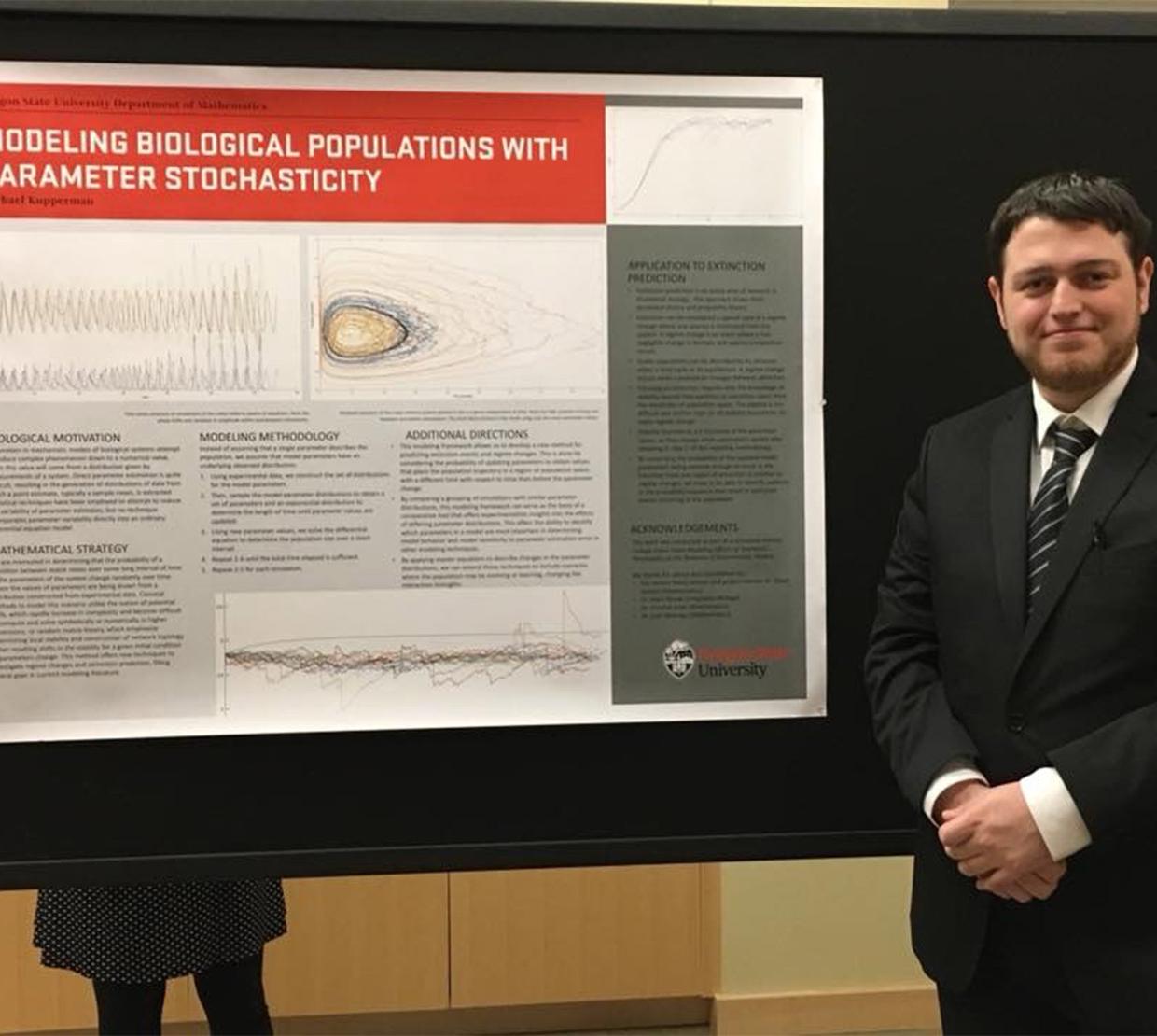
Michael Kupperman in front of his research poster

Prestigious research internship opens new possibilities for double-major science student

By Martha Wagner

Michael Kupperman, honors senior in mathematics and biology double-major

Senior Michael Kupperman loves to do research at the crossroads of mathematics and biology a deep interest the Honors student has explored as a double-major in the College of Science and in a prestigious summer internship.

Kupperman will graduate in June with honors degrees in mathematics and biochemistry and minors in chemistry and history. With his strong background in science, technology, engineering and mathematics (STEM) coursework beginning in his freshman year, it’s not too surprising that he was among the 20 percent of applicants accepted for a Science Undergraduate Laboratory Internship (SULI) at Los Alamos National Laboratory (LANL) in Los Alamos, New Mexico, last summer.

A mathematical biologist, Kupperman is also the only Accelerated Master’s Platform (AMP) student in mathematics this academic year. He’s a member of the University Honors College, an OSU presidential scholar, and he completed his honors thesis in mathematics in his third year. In February 2019, he teamed up with two other OSU undergrad math students to produce a solution to an optimization problem for the annual COMAP (Consortium for Mathematics and Its Applications) Mathematical Contest in Modeling, a solution that had to be completed within 97 hours and was awarded a meritorious distinction.

The paid 10-week internship program he experienced is designed to encourage undergraduates and recent graduates to pursue STEM careers through research experiences at one of the U.S. Department of Energy (DOE) national laboratories. Admittance to the program, says Kupperman, was based on statements he wrote about his research interests as well as his technical proficiencies, computer skills and letters of recommendation.

LANL is one of the largest science and technology institutions in the world, conducting multidisciplinary research in fields such as national security, space exploration, nuclear fusion, renewable energy, medicine, nanotechnology and supercomputing. Kupperman says that today LANL is arguably best known in scientific circles for its work on supercomputer mainframes and the Metropolis Hastings algorithm.

Kupperman explains his work at Los Alamos this way: “I’m a theorist largely— a majority of my work happens at a computer and a whiteboard rather than a laboratory bench— it’s a very collaborative environment. I had a research mentor, graduate students and post-docs who were also available to me.”

Kupperman took part in a different kind of collaborative effort on the OSU campus several months before his internship, when he and two other undergraduate math students entered an international competition to solve an optimization problem for the 2019 COMAP Mathematical Contest in Modeling. Their solution placed in the top 8 percent of more than 14,000 submissions worldwide, winning them a meritorious distinction. The problem tasked them with creating a detailed plan for packing disaster relief supplies in drones and calculating flight paths and schedules for delivery to an island after a theoretical hurricane based on the real hurricane that devastated Puerto Rico in 2017.

As a freshman from Hillsboro, Oregon, Kupperman started out as a biochemistry and biophysics major. “That lasted all of a week,” he says, “before I added a math major, which was by far the most rewarding decision I’ve made in college. I was interested in systems, be it the rules of evolution or the processes that govern cells. When OSU added the BMB (biochemistry and molecular biology) major, I switched from biochemistry and biophysics to BMB, which offered a computational option. With BMB, I could take the elective courses I wanted to take (computer science, genomics, etc.) within the major.”

Today Kupperman says that his research interests “lie at the interface of mathematics and biology, focusing on probability theory and dynamics.” The topic of his thesis was The Mathematics of Critical Shifts in Ecological Networks with Alternative Stable State Theory, a Potential Framework for Early Warning Indicators, available through the OSU Scholars Archive.

The SULI internship experience will likely benefit Kupperman’s graduate school and career plans. “My experience at Los Alamos shifted my focus from pure mathematics to applied mathematics. I continue to be interested in biological problems, but I’ve thought a lot more about the best path forward to that goal. Los Alamos opened my mind to considering national laboratory research and employment. It’s a unique type of place, somewhat removed from industry-specific pressures, but offering a bit more structure than a university research environment.”

Other thoughts about his Los Alamos internship? Kupperman enjoyed living in a town said to have the highest concentration of Ph.D.s per square mile in the world. “People like living and working there” he says. “For such a small town, Los Alamos also has great food,” he adds, not an insignificant detail for someone who considers himself a foodie and enjoys making gourmet ice cream, creating flavors ranging from bacon to figs and brandy.

Meanwhile, with graduation on the horizon, Kupperman is assessing graduate school programs and looking forward to that next chapter in his education.

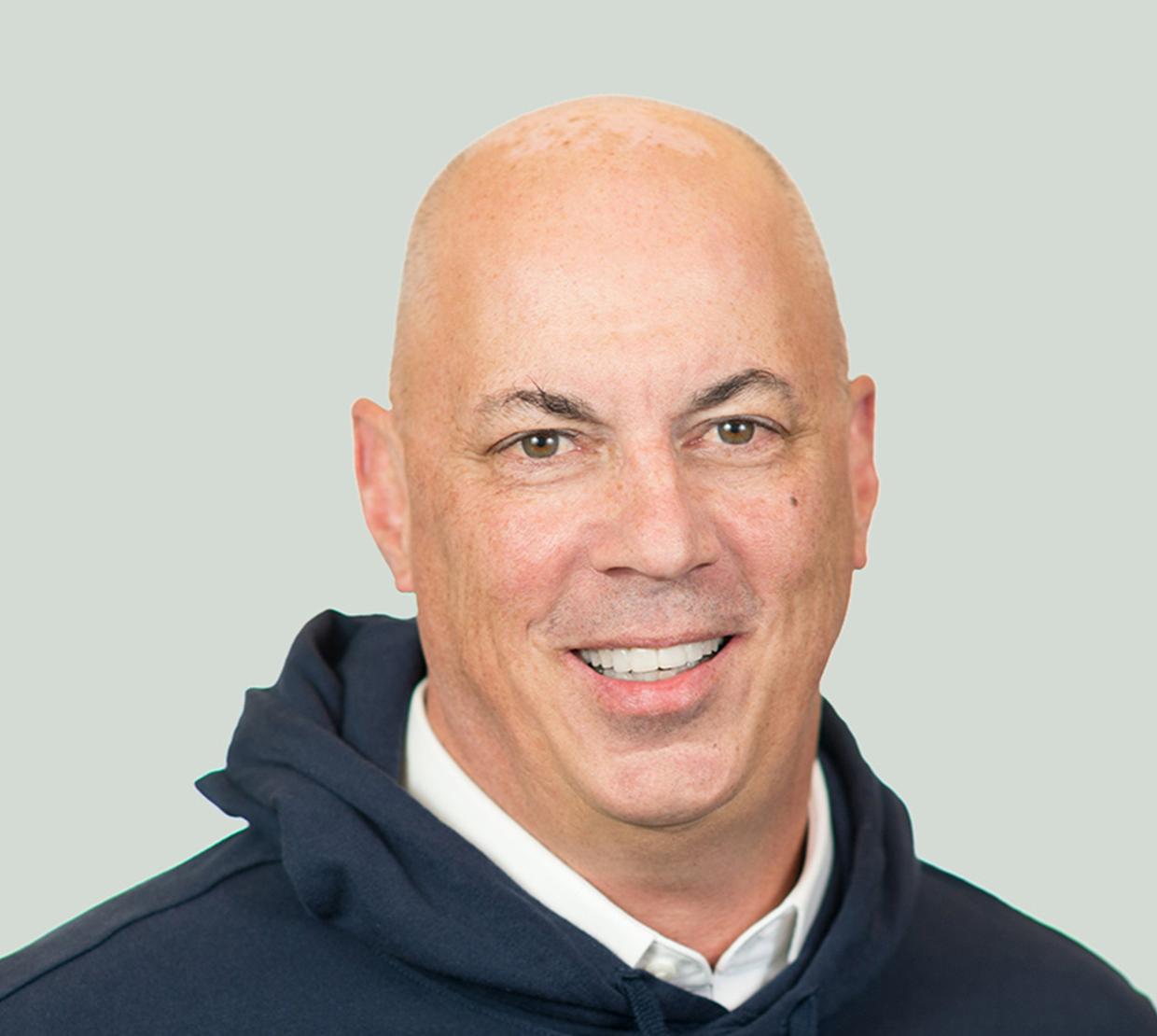
Patrick Franklin in front of white backdrop

Knowledge is more important than grades says math alumnus and American Express chief technologist

By Srila Nayak

Alumnus Patrick Franklin (’89)

If, as the prevailing wisdom goes, a four-year college degree should prepare students for the next 40 years of working life, and for a future that few of us can imagine, then Patrick Franklin’s (’89) undergraduate mathematics degree has paid off handsomely. Patrick’s Oregon State mathematics education gave him several foundational capacities that have helped him adapt and thrive in some of the most competitive and iconic work places in America: Intel, Microsoft, Amazon, Google and General Electric.

He is executive vice president and chief technology officer at American Express Company, the behemoth New York-based Financial Services Corporation.

Patrick’s time as an undergraduate student in the mathematics department was a “very positive experience.” He was mentored by John Lee, emeritus professor of mathematics. “Studying mathematics set me up for success,” Patrick observed.

One of Patrick’s pet dinner table conversation themes is comparing a mathematics degree to a degree in computer science. The latter can teach you about algorithms, data structures and the mechanics of coding, he says. But a degree in math taught him “how to think deeper and much more critically and helped me learn a more analytical and thoughtful way to approach things.”

“I wasn’t the strongest student in class. But I learned a lot. For me, the grades were secondary to the knowledge I obtained.” — Patrick Franklin

Math courses taught him what to code, as well as how to approach and break down a problem, and how to prove things. Learning mathematics made it easy for him to transfer his skills to other fields. “I became instantly a software person with my first job at Intel.”

At OSU, he studied probability, statistics and other “fun mathematical stuff” with former math professor Robby Robson and took a pivotal multi-variable class with John Lee.

Patrick studied mathematics for the simple reason that he loved the subject. At first, he wanted to major in electrical engineering, unsure how to use a mathematics degree to procure a job. But he was dissuaded from doing so. “My wife kept saying, ‘You love math. Why don’t you just stay with math.’”

Patrick came to OSU as a married, 21-year-old undergraduate student after two years in a community college. Raised in Tacoma, Washington, Patrick’s life is an inspiring model of turning failure into success. After failing high school, Franklin enrolled in community college and earned a high school diploma, before joining OSU and turning a chapter in his life. “I wasn’t the strongest student in class. But I learned a lot. For me, the grades were secondary to the knowledge I obtained.”

He absorbed lessons from his academic experiences that he applies to his professional and personal life even today. “I have never asked somebody for their GPA when I interview them. I like to know how they solve problems. After 5 to 7 years of job experience, it just doesn’t matter.”

Patrick put himself through college without much guidance or financial support from his parents. That has given him a richer perspective on the things that matter in the long run and how one may overcome personal struggles. “I think it is important that students have a responsibility for their own education. It’s not an interruption to your studies if you have to take an extra year to get to school because you have to work. Graduating without student loans or debt is more important.”

Taking the lead with technology

At his first job at Intel, which he joined in 1989, Patrick made a path-breaking contribution. He was a founding member of the P6 microprocessor that we know today as Pentium II. Franklin was instrumental in creating the PC’s microprocessor that is the basis of the microprocessor architecture in Pentium II. He was one of only 7 VLSI architects on the project and was responsible for the retirement logic, the performance monitoring hooks as well as the silicon and user debug hooks.

“The system transformation was not as much of a software exercise as it was a puzzle or logic or design problem. That’s what math teaches you. I don’t think you can get that in other disciplines.”

“We built it and it has become the way computing works today. Intel was a great place to get my engineering chops as a mathematician,” noted Patrick. After Intel, he joined Microsoft as a software developer and architect and led the Advanced Configuration and Power Interface (ACPI) initiative that brought reliable plug-n-play and power management to Windows 2000. He was the co-inventor of hibernate — a mode whereby the PC saves all the open programs and data and uses much less power than the sleep mode.

One of his greatest professional achievements came at Amazon, which he joined in 2007 to lead its retail catalog that manages the lifecycle for the products Amazon buys and sells on its website. He was in charge of scalability for the retail systems teams and greatly enjoyed the challenges of large-scale systems. There he led the Amazon Fresh Engineering Team and was the CTO for Amazon consumables.

In 2007, Amazon was a smaller company with a $10 billion market cap. Patrick made positive changes to the retail systems. “The system transformation was not as much of a software exercise as it was a puzzle or logic or design problem. How are going to solve this problem that has lots and lots of complexity in a way that reduces complexity and increases the likelihood of success?” Patrick found his answers in mathematics. “That’s what math teaches you. I don’t think you can get that in other disciplines.”

Patrick has a message for students: “Don’t worry so much about grades. Make sure you understand the material. Make sure you are learning. Learn the fundamentals well because everything builds from the fundamentals.” Patrick’s career is certainly a great example of the latter. His professional life mirrors the arc of technological transformations in our society. He moved up from working on a processor at Intel to e-commerce in the age of the internet.

Patrick has two adult sons who have inherited his love for computers and technology. One works in machine learning and the other is a React (a java script programming language) developer. As a member of the College of Science Board of Advisors, Patrick cherishes the opportunity to deepen his ties to his alma mater.

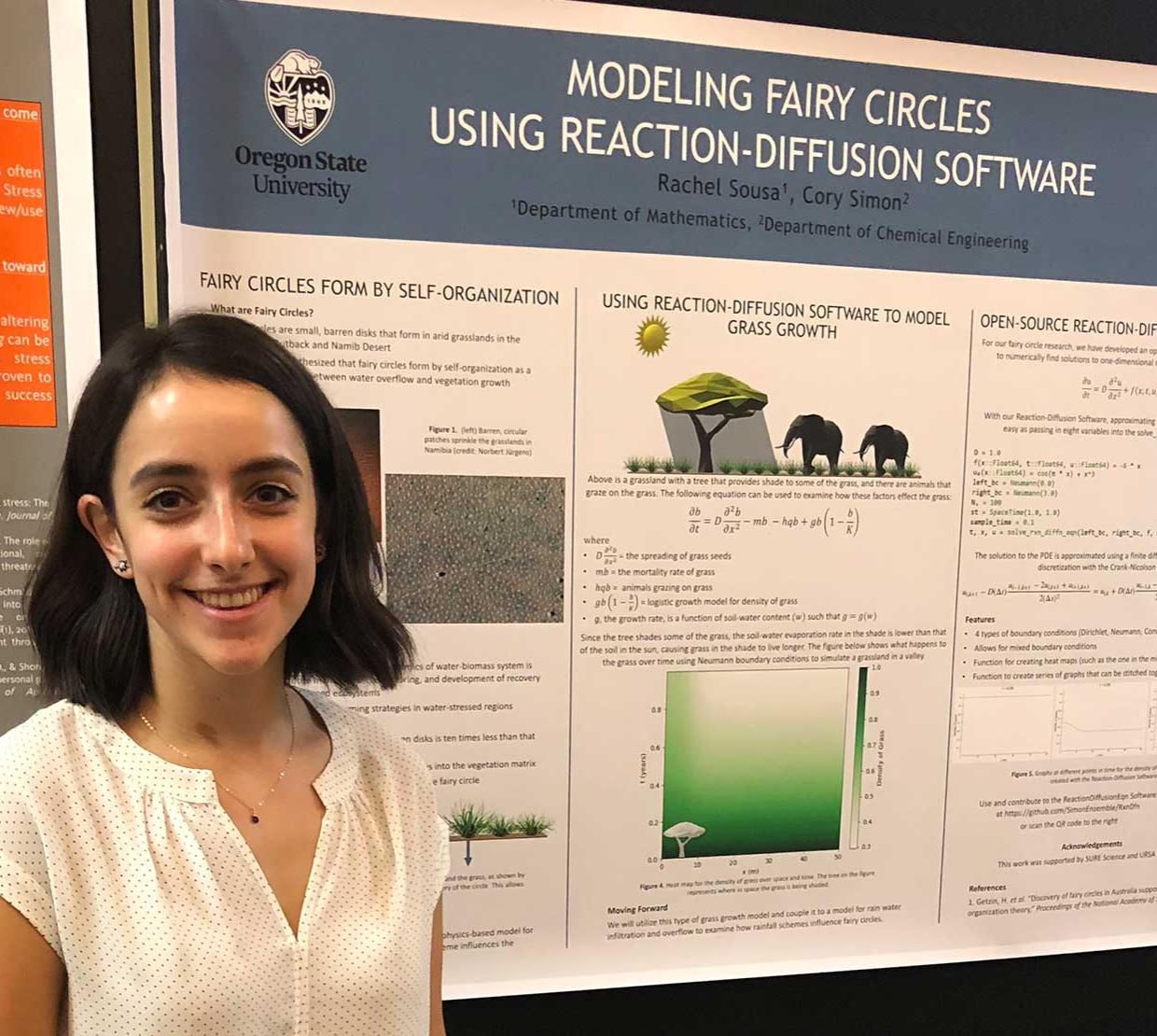
Rachel Sousa next to research poster

Using mathematical biology to explore everything from ecological phenomenon to cancer cells

By Mary Hare

Rachel Sousa, a mathematics senior

For Rachel Sousa, being a woman in a notoriously male-dominated field is no obstacle – it just motivates her to work harder. Sousa is a senior mathematics major with a focus on mathematical biology and a minor in computer science at OSU. She also works as an undergraduate research assistant in Assistant Professor of Chemical Engineer Cory Simon’s Lab and interned this summer at the National Cancer Institute at the University of Utah.

But the aspiring mathematician hasn’t always been interested in this career path or even believed it was possible. As a first-generation college student, she didn’t have access to many of the support and resources that her peers did.

“My parents were always very supportive. They just didn’t know what to tell me to do,” explains Sousa. Although their own lack of college experience did not stop Sousa’s parents from trying their best to ensure their children could have the best education possible.

“I have an older brother who’s two years older than me, and whenever we were on car rides, my dad would always quiz us on math,” Sousa said. “My dad said I used to be deterred from answering, because [my brother] was older and would always get things right before me.”

Of course, this all changed when she started second grade and began practicing math with peers her own age. “I remember maybe in second grade we had the timed multiplication tables, and I used to love racing through them. It really piqued my interest,” she explains.

After that, Sousa was hooked. She made the decision to become a math teacher, dual majoring in mathematics and education so that she could help other children overcome their fear of math as well.

“I think having a bad math teacher really deters you from liking math. I had a really good high school math teacher and a really bad one, so I wanted to become one of the good ones. I think math is super nice and beautiful, and I wish everybody could appreciate it,” Sousa said.

Then everything changed when Sousa got to OSU.

Talking with senior mathematics students and faculty in a prerequisite course for math majors, she learned that teaching math was only one of many possibilities that the major could offer.

“There was one student who was working with the baseball team on campus and doing stats on them, and another student who had been doing research over the summer on river water bed systems. I just had never thought about using math for all these other opportunities,” said Sousa.

Soon after, she dropped the education major to focus more deeply on math and added an emphasis in mathematical biology. Mathematical biology uses mathematical principals to model biological phenomena, such as using growth models to describe growth patterns of bacteria in a petri dish or infectious disease models to describe how a disease could spread throughout a community.

“I figured if after I graduate I still want to teach I can still do that. Whereas if I had stayed on the teaching track, I only had one path I could go down,” Sousa explained.

It was at a faculty mixer hosted by the College of Science during Sousa’s freshman year that she first was introduced to Dr. Simon, a chemical engineering faculty researcher in the College of Engineering who had a background in math.

In the Simon Lab, Sousa is working on an individual project using mathematical biology to study an ecological phenomenon known as ‘fairy circles;’ mysterious circular patches of barren land that occur in arid grasslands along the Namib Desert and in parts of Australia. Fairy circles have been a mystery to scientists since the 1970s and continue to fascinate scientists to this day.

“I’m not afraid to put myself out there anymore… I never thought I would get the National Cancer Institute’s summer research internship program, but I did.”

Sousa was awarded an URSA Engage scholarship and a SURE Science Award in 2018, allowing her to spend many hours in the Simon Lab throughout her years at OSU.

Recently Sousa contributed to a group project in the Simon Lab studying metal-organic frameworks, porous molecules that are able to store gasses that have a wide variety of functions. For her part of the project, Sousa used mathematical techniques such as Singular Value Decomposition to break down three-dimensional formulas into two dimensions to analyze the different components. She was also responsible for writing part of a research paper that was published in an academic journal in May 2019, and which earned her a listing as a coauthor, quite a feat for an undergraduate.

In the summer of 2019, Sousa’s research took her all the way to the National Cancer Institute at the University of Utah, where she used mathematical modeling of cancer cell plasticity to understand induced drug resistance and cancer immune cell therapies.

Sousa is grateful for her time at OSU for helping her grow her confidence and expand her horizons.

“I think the biggest thing to overcome was forcing myself out of my comfort zone and really learning about all the opportunities they offer here. I’ve definitely become more open, and I like saying “yes” to whatever opportunities are available,” reflects Sousa.

“I’m not afraid to put myself out there anymore… I never thought I would get the National Cancer Institute’s summer research internship program, but I did.”

Sousa has also participated in OSU’s Faculty-Student Mentoring Program, led by Science Dean Roy Haggerty, which aims to provide upperclassmen and faculty mentors to new and transfer students from underrepresented communities.

She also serves as Vice President of OSU’s Math Club and volunteers in Discovery Days, an annual event where elementary school children come to OSU’s campus to learn about science, engineering, technology and mathematics.

“I really enjoy being able to share my love of math with the kids and see their faces light up when they discover something they hadn’t known before.”

Sara Tro wearing graduation gown in front of the Learning Innovation Center

Math senior finds inspiration from women mathematicians at OSU

By Srila Nayak

Sara Tro, senior in mathematics

It is fairly uncommon to win a major international honor just a month before graduation — a sort of icing on the graduation cake. But mathematics Honors student Sara Tro has achieved just that. Tro and her teammates — fellow math majors Andrea Lanz and Michael Kupperman — were given a very high rank in the 2019 Consortium for Mathematics and Its Applications (COMAP) Mathematical Contest in Modeling. The team was awarded Meritorious Winner, placing it in the top seven percent internationally. Only 42 teams did better! To put things in perspective, 14,108 teams from around the world took part in the modeling contest.

This year’s COMAP contest ran for four days in January. During that time, Tro and her team researched, modeled, and submitted a solution to one of three modeling problems.

“It was an exhausting weekend, and we balanced classes and working on the modeling problem on Thursday and Friday. But I am very happy that we got a high rank,” said Tro.

Tro, who also holds minors in actuarial science and Spanish, completed her Honors thesis, in which she analyzed a proposed model by combining Maxwell’s equations with the Duffing model, under the guidance of mathematics professor Vrushali Bokil.

“While doing the research was valuable, just having a mentor who I met and had conversations with every week made a big difference.”

Tro has gained admission to the graduate program in the Department of Applied Mathematics at the University of Colorado, Boulder, where she will begin her Ph.D. in August. While she was offered a spot at other schools, Sara chose CU Boulder encouraged by her advisor, Bokil, who was excited about the program and recommended it highly. And for good reason. The graduate program in applied mathematics at CU Boulder ranks 14th in the nation.

Tro says that doing research for her Honors thesis with Bokil was one of the highlights of her time as an undergraduate student. Interactions with her mentor helped to demystify many aspects of academia.

“Doing the thesis with Dr. Bokil was a really important experience for me. While doing the research was valuable, just having a mentor who I met and had conversations with every week made a big difference,” said Tro. “We talked about what classes to choose, where I was going to graduate school and what to look for in graduate school.”

Tro grew up in Canby, Oregon, the daughter of a police officer and a nurse. She enjoyed science and mathematics in school and excelled at the subjects. She chose to major in mathematics towards the end of high school after discovering that she enjoyed physics and chemistry because they contained math. “To me, math was a lot more perfect and beautiful in and of itself than other fields that utilized math,” observed Tro.

After looking at liberal arts schools in Washington, Tro chose Oregon State University for undergraduate studies because she was offered a coveted spot in the Honors College. Plus, as an Oregon resident, OSU was going to be the least expensive school among her choices. But she didn’t know much else about the mathematics department at OSU before she arrived on campus as a wide-eyed freshman.

“As a high school student, I didn’t know what to look for in a mathematics department,” said Tro.

But things worked out very well for the next four years. “I am glad I ended up in a larger math department with a big focus on research, unlike the small liberal arts colleges that I looked at,” Tro observed.

As for a first impression, she was pleasantly surprised and inspired by the number of women math professors she met at OSU. In fact, the number of women mathematicians at OSU is well above the national average — 30% compared to just 16% at doctoral-level mathematics departments nationwide.

“In my very first term, I had a vector calculus class with Dr. Elaine Cozzi. I thought it was so great,” said Tro. “After taking a number of classes, I started to realize that all my favorite math professors were women. It helps to see other women in front of the room.”

Some of her favorite math courses include the ones on differential equations and mathematical biology with Bokil and mathematical modeling classes with Professor Malgorzata Peszynska.

Beyond mathematics, Tro has fulfilled another significant goal as an undergraduate student. An Honors Experience Scholarship led her to participate in the OSU in Cuba program for two weeks in 2017. The granddaughter of Cuban immigrants, Tro had always wanted to visit Cuba. During the trip, she visited museums and cultural centers, medical clinics, schools, the Bay of Pigs, and got a taste of the artistic, cultural, historical and political and landscape through conversations, lectures and lessons from a diversity of local experts.

Closer to home, a Research Experiences for Undergraduates scholarship took her to a program in computational and applied mathematics at UCLA. There she worked on a project to create new algorithms to analyze and classify video data from cameras worn by Los Angeles Police Department officers. While the mathematician in her didn’t find the machine learning-focused research project very compelling, Tro acquired the knack of reading academic papers, engaged in collaborative work with her team and honed her presentation skills.

A straight-A student, Tro has garnered several awards for her academic achievements. These include the mathematics department’s Edward Stockwell Award and the WIC Culture of Writing Award and OSU’s Finley Academic Excellence Scholarship. She was also inducted into the math honor society Pi Mu Epsilon and the academic honor society Phi Beta Kappa.

What drives Tro's passion for mathematics? “I love that math can represent reality, and one can use mathematics to accomplish that.” She adds, “But I also just enjoy doing math problems.”

As she moves on with her life as a mathematician, there is no doubt that Tro will continue to find opportunities to do what she loves best.
Subscribe to Mathematics Major