Mathematics

Mathematics

Abigail Anita Adjei

Abigail Anita Adjei

Two lemurs sit closely together on a tree branch, surveying their environment

Science Faculty Secures $18.5M in FY 2024, extending the reach and impact of science

By Hannah Ashton

The Everson lab studies Madagascan lemurs to explore how hybridization shapes genomes, species limits and the evolutionary trajectory of radiations (rapid increases in diversity).

The College of Science has a diverse portfolio of signature research, scholarship and innovation activities that enable our College to make fundamental and applied discoveries. To support society’s scientific challenges, we are invested in discovery-driven science and applied and transdisciplinary research. Our research intersects with all four research areas of priority outlined in OSU’s strategic plan, Prosperity Widely Shared.

Over the 2024 fiscal year (FY24: July 1, 2023 - June 30, 2024), the College of Science researchers received $18.5 million in research grants to support groundbreaking science. Most of that funding came from federal agencies and foundations in recognition of proposals with broad societal impacts, like increased human health, sustainable and clean energy and climate change mitigation. Our faculty pursue foundational and basic research projects and science education projects. Data science and Artificial Intelligence (AI) tools are increasingly becoming part of the fabric of much of our research. College of Science research expenditures in FY24 totaled $20.7 million.

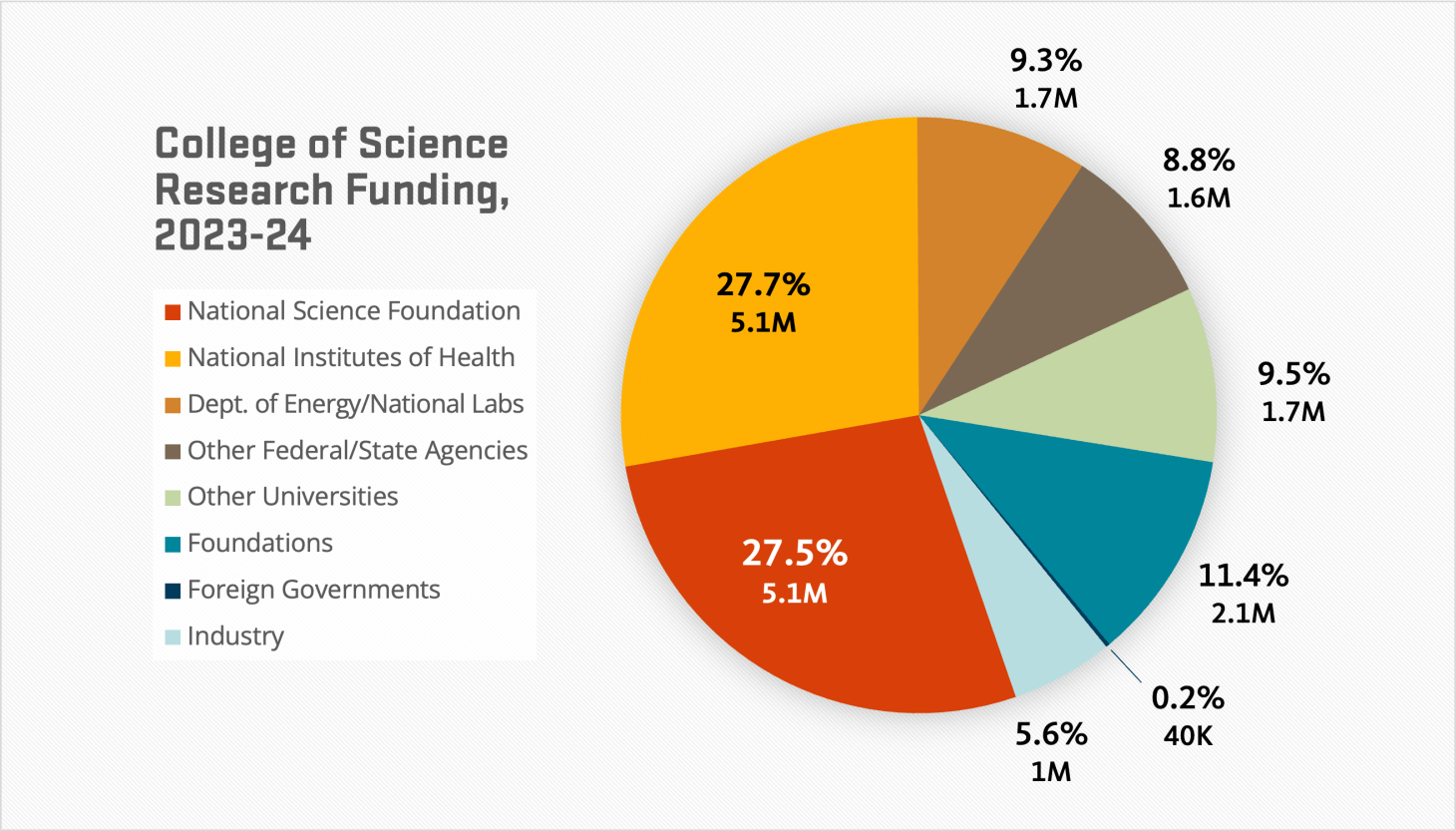
The figure below illustrates the breakdown of funding sources for the College, with the National Science Foundation (NSF) and National Institutes of Health (NIH) each awarding about $5.1M.

Pie chart showing Science Research Funding, with details in the following caption

Research funding in 2023-24 ($18.5M total) comprised investments mostly from federal and state agencies, including the National Science Foundation (25.7%–$5.1M), National Institutes of Health (27.7%–$5.1M), Department of Energy and National Labs (9.3%–$1.5M), and others (8.8%—$1.6M). Additional funds were provided by other universities (9.5%—$1.7M), foundations (11.4%–$2.1M), foreign governments (0.2%–$40K) and industry (5.6%–$1M).

Research funding propels Team Science forward

Oregon State University is focused on big discoveries that drive big solutions. Many science faculty received grants last year in support of discovery-driven science, applied and transdisciplinary research science education and innovation in OSU’s priority research areas of integrated health and biotechnology, climate science and solutions, robotics, data science and AI, and clean energy and solutions. Below are some of the highlights—not including multi-year projects started before 2023.

Faculty honors

Astrophysicist Jeff Hazboun received a $73K Faculty Early Career Development award from the National Science Foundation. This prestigious NSF early career award is highly coveted by faculty! Hazboun’s project includes curriculum development and the implementation of a summer workshop in astrophysics-themed data analysis designed to foster inspired teaching, stimulate excitement in pulsar timing array research, facilitate the learning goals of undergraduate and graduate students, and support the community college students’ transition into four-year schools.

Mathematician Christine Escher received a $50,397 award from the NSF to host the Pacific Northwest Geometry Seminar series over three years at various Pacific Northwest universities. Escher is the principal organizer of the conference. This award supports meetings of the Pacific Northwest Geometry Seminar (PNGS), a regional meeting for researchers and educators of geometry, to be held at the University of British Columbia (2025), Seattle University (2026) and Lewis & Clark College (2027).

Integrated health & biotechnology

Materials scientist Kyriakos Stylianou, along with members of the College of Pharmacy and the College of Agricultural Science, received $2 million from the U.S. Department of Agriculture to develop improved ways of preventing stored potatoes from sprouting, particularly in the organic sector. Stylianou’s team studied nearly 200 different plant essential oils for their anti-sprouting effects. Oregon, Washington and Idaho produce more than 60% of the potatoes grown in the United States, and Pacific Northwest potato cultivation is a $2.2 billion industry.

Microbiologist Maude David is part of a multi-institution research team to receive a $4.3 million grant from the U.S. Department of Agriculture to study European foulbrood disease (EFD) in honey bees. The group is investigating the factors contributing to the high incidence of infection, and will then share their findings with local beekeepers and growers to improve mitigation efforts. Beekeepers in Oregon typically pollinate about five different crops annually. If the colonies are weakened by EFD, this results in less pollination, which is a concern for blueberry and almond growers.

A scientist in a beekeeping outfit stands next to a honeycomb

Carolyn Breece from the OSU Honey Bee Lab shows Maude David a bee colony during a field trip.

Evolutionary biologist Michael Blouin was awarded $1.86M over five years ($371K per year) from the National Institutes of Health for his project entitled, “Genetic mechanisms of snail/schistosome compatibility.” Schistosomes are water-borne blood-flukes transmitted by snails, which infect over 250 million people in more than 70 countries and cause severe and chronic disability. A debilitating helminth parasitic disease of humans, vaccines are available for schistosomiasis. This project will identify new genes that make some snails naturally resistant to infection by schistosomes, revealing potential new ways to reduce parasite transmission at the snail stage.

Statistician Robert Trangucci received $164K from the University of Michigan for his project entitled, “Data driven transmission models to optimize influenza vaccination and pandemic mitigation strategies.” Selection bias is common in infectious disease datasets due to complex observational and biological processes, and bias can arise from covariate data which is missing due to analytical limitations. The research team is addressing the concern by extending existing models to accommodate risk and data gaps over time for application in vaccination and other novel datasets.

Chemist Dipankar Koley received $542K from the National Institutes of Health for his project entitled, “Microenvironmental characterization and manipulation to prevent secondary caries.” A common reason for dental replacement is a recurrence of caries around existing restorations caused by microbial activity. The project seeks development of new and innovative materials to bias this microbial environment toward improved dental health, and the researchers are investigating the use of cations of magnesium and zinc applied with specialized release platforms.

Collaborative research at the interface of robotics, computer vision and AI

Statistician Yanming Di received $249K from the U.S. Department of Agriculture for a project entitled, “DeepSeed: A computer-vision network for onsite, real-time seed analysis.” The Willamette Valley is considered the “grass seed capital of the world.” Seed testing, used for determining seed lot quality and establishing seed value, is a fundamental phase of the agricultural marketing system. With recent advances in robotics, computer vision, and AI, an opportunity presents itself for a new wave of innovations. This project utilizes AI and robotics to innovate devices and protocols for sampling grass seeds and a computer vision system for automated seed analysis. The investigators consist of experts in seed services, computer vision, statistics, and mechanical engineering.

California mussels at low tide, covered in barnacles

Mytilus californianus (the California mussel) is prey for many predator species, serves as a filter for ocean particulate, and harbors hundreds of other species. Threats to this normally resilient foundation species represent risks to the entire local marine ecology.

Climate science and related solutions

Materials scientist Kyriakos Stylianou received $689K from Saudi Aramco for a project entitled “New Generation of CO2 Capture Adsorbents: Synthesis, Performance under Humid Conditions, and Scaleup.” In this project, the Stylianou group aims to discover novel adsorbents for the selective capture of CO2 from diluted sources. Successful materials will undergo scaling up and evaluation for their efficacy in removing CO2 from air.

Marine ecologist Bruce Menge received $200K from the National Science Foundation for his project entitled, “RAPID: A subtle epidemic: unique mortality of Mytilus californianus on the Oregon coast.”

The research team is investigating the major changes occurring in the Pacific Northwest marine ecosystems, with evidence these communities exhibit low resilience to climate change. For example, sessile invertebrates (mussels, barnacles, etc) become more abundant while seaweed species (kelp, etc) decline.

Evolutionary biologist Kathryn Everson received two awards for $276K from the University of Kentucky Research Foundation for a project entitled, “The role of hybridization in generating biodiversity: Insights from genomics of Madagascar’s true lemurs (Eulemur).” This project is funded by the NSF to understand how new species form in the context of complex gene flow and to expose the genomic signatures of evolutionary processes. The researchers will characterize patterns of gene flow, selection, and genome architecture for a species of lemur to gain a genomic perspective on the evolution of species boundaries. In addition, the team will construct a hybridization model using data on geographic range, diet, and social behavior for this lemur.

Clean energy and related solutions

Aerosol chemist Alison Bain received $284K from McGill University for her project entitled, “Single particle measurements.” This research aims to understand the optical properties of stratospheric aerosols. Using single particle experiments under environmentally relevant temperatures and humidities, the team will extend a wavelength-dependent refractive index model to include these conditions. They are also looking at how atmospheric aging impacts the optical properties of these materials.

Chemist Wei Kong received $110K from the American Chemical Society for her project entitled, “Superfluid helium droplets as microreactors for studies of photochemistry of fossil fuel hydrocarbons: polycyclic aromatic hydrocarbons and the corresponding endoperoxides.” The project will use superfluid helium droplets as microreactors to investigate the kinetics of the photooxidation process of a major component of petroleum (polycyclic aromatic hydrocarbons, PAH). Using several analytical techniques, the team will test the hypothesis that supercooling the helium droplets will stabilize an excited state of the oxygen molecule and prevent further reactions.

Collaborative partnerships to fuel a thriving world

Biochemist Ryan Mehl received $234K from the NobleReach Foundation in partnership with the National Science Foundation. The project “Ideal eukaryotic tetrazine ligations for imaging protein dynamics in live cells” was selected as one of the first set of 11 national pilot projects to receive $234K from the NobleReach Foundation.The partnership seeks to identify and accelerate the translation of NSF-funded research into biotechnologies and bio-inspired designs with commercial and societal impacts. This pilot will help inform future translational funding opportunities along with enabling Professor Mehl and the other selected principal investigators to accelerate bringing their research to the market and society.

Biochemist Patrick Reardon received $500K from the National Science Foundation (NSF) Research Instrumentation Program for his project entitled, “MRI: Acquisition of Helium Recovery Equipment: An integrated system for helium capture and recovery for the OSU NMR facility.” This award supports the acquisition and installation of an integrated system for helium capture and recovery for the nuclear magnetic resonance (NMR) facility. Helium is in high demand and is used for a wide variety of industrial and research applications, and it is a non-renewable resource which highlights the need for laboratories to capture and recycle this important gas. The NMR lab is supported by funding from the National Institutes of Health, NSF, M.J. Murdock Charitable Trust, and OSU, and it is a core facility and cornerstone for groundbreaking research in interdisciplinary science and engineering, chemistry, biochemistry, and biophysics at OSU, throughout the Pacific Northwest, and beyond. The facility continually strives to enhance its state-of-the-art instrumentation for the highest levels of analytical performance.

Tom and Jon stand outside a home with beautiful bushes and flowers

Celebrating a legacy of excellence: An endowed scholarship for future mathematicians

Professor Emeritus​ Thomas Dick (left) and Mathematics Department Head Jon Kujawa. A recent endowed scholarship has been created by an anonymous donor to honor Professor Dick's dedication to mathematics education and student success.

Professor Emeritus​ Thomas Dick's journey in academia has left a lasting impact on mathematics education. During his tenure as a professor and former chair (1992-97) in the Department of Mathematics at Oregon State University, he built an amazing legacy through his leadership, dedication to teaching and innovative programs.

“The mathematics department is extremely pleased to create an endowed scholarship in honor of his dedication to the field of mathematics education, both locally in Oregon and at Oregon State University, and broadly across the international mathematics education community,” said Jon Kujawa, mathematics department head and Hartmann Faculty Scholar.

“Given his legacy, we are thrilled that, through this scholarship, mathematics education graduate students at Oregon State University will have the good fortune to learn about Tom Dick and his contributions to the field – thanks to an anonymous donor, grateful for his mentoring.”

Professor Dick significantly enhanced mathematics education through transformative initiatives. As the faculty director of the OSU Math Learning Center, he initiated the innovative Math Excel (Treisman Emerging Scholars) program. This program supports students in introductory mathematics courses by offering supplemental instruction. These sessions, led by trained facilitators, focus on collaborative problem-solving and active learning, helping students deepen their understanding of mathematics concepts.

Throughout his career, he has been dedicated to teaching mathematics and preparing future teachers of mathematics at all levels, from kindergarten to graduate school. This commitment to excellence has been recognized through numerous accolades, including the Mathematical Association of America’s Award for Distinguished College or University Teaching of Mathematics for the Pacific Northwest region, and his induction into the Oregon Mathematics Education Hall of Fame.

“So many people in the field of mathematics education know and love Tom."

At Oregon State, he was further honored with the Olaf Boedtker Award for Excellence in Undergraduate Advising, the Loyd F. Carter Award for Outstanding and Inspirational Teaching in Science, the Fred Horne Award for Sustained Excellence in Teaching Science, and the Elizabeth P. Ritchie Distinguished Professor Award – the university's highest teaching award.

His main interest in mathematics education research has been in the use of technology to enhance the teaching and learning of mathematics. He co-edited a volume on using technology to support reasoning and sense-making for the National Council of Teachers of Mathematics and co-authored the technology chapter in the second edition of the Handbook of Research on Mathematics Teaching and Learning. He also served on the technology committee for the Association of Mathematics Teacher Educators. Additionally, he has served as chair of the editorial panel for the Journal for Research in Mathematics Education and as chair of the Advanced Placement Calculus Test Development Committee.

He remains active as an examination leader for the grading of AP Calculus and as a senior mathematics advisor to Texas Instruments Educational Technology Division.

“So many people in the field of mathematics education know and love Tom,” the donor shared.

“In all the mathematics education circles of which Tom is a part, every person who knows him remarks on his mathematical expertise and creativity, his fun and collegial spirit, and his warm and welcoming nature. He always offers insightful ideas and suggestions for mathematics education research and teaching. Throughout his formal career and beyond, he has been an exceptional friend, colleague, and mentor. We are profoundly grateful for his decades-long support of mathematics education faculty, students, and research at OSU.”

If you would like to contribute to the fund honoring Professor Tom Dick, please visit https://give.fororegonstate.org/ and type “Professor Emeritus Thomas P. Dick Endowed Scholarship” into the “I want to give to” box. Gifts may also be made to the fund by mail to the OSU Foundation.

Ross Hatton

Ross Hatton

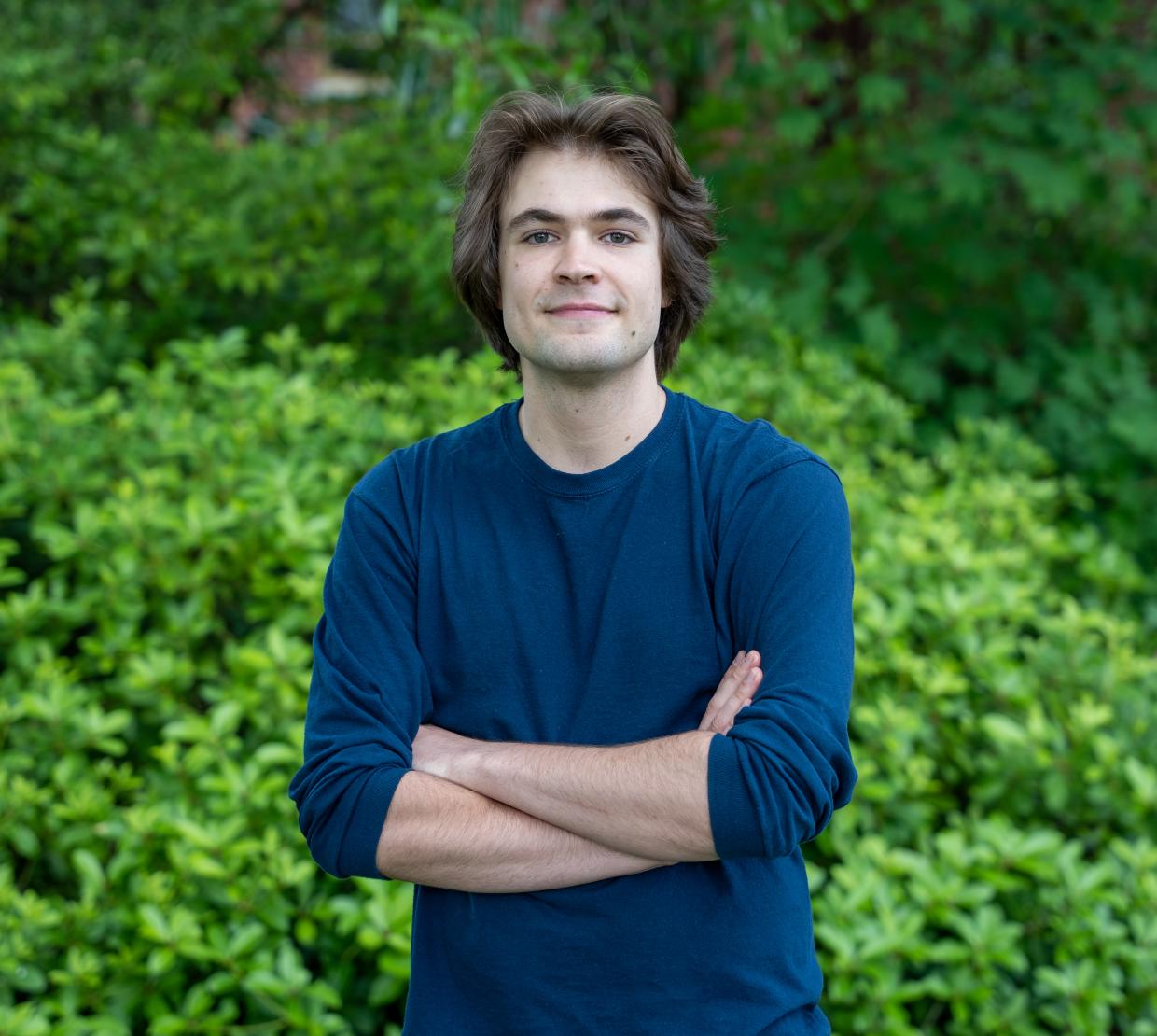
Joey Takach posing with a smile in front of leafy green bushes.

Edtech-inspired physics and mathematics senior lands a spot at top-tier university

By Kaitlyn Hornbuckle

A long time ago in a galaxy not so far away — in Lake Oswego, Oregon — Joey Takach ordered a bunch of soundboards, accelerometers and other metal parts online. This aspiring Jedi was determined to build his own model lightsabers that hummed and glowed just like the Star Wars movies.

"When I was really young, I wanted to be an astrophysicist, but I didn't really know what that meant. I’ve always been a huge Star Wars fan, so fantasizing about creating technology that might resemble something from that played a significant role in what I chose to study,” he said.

Building lightsabers while in high school wasn’t out of the ordinary for Takach. He loved putting together different types of gadgets for fun, and drew inspiration from the type of work his mother did in the engineering field.

When it was time to decide his next steps in his academic career, he applied to Oregon State University to study electrical engineering. The presidential scholarship helped him avoid student debt and made studying at Oregon State especially appealing.

But then his trajectory changed entirely. Instead of focusing on the mechanics of building lightsabers, he became fascinated by something bigger: getting closer to objective reality itself. And being able to model what happens in real life using mathematical equations to make sense of everyday experiences was just as captivating.

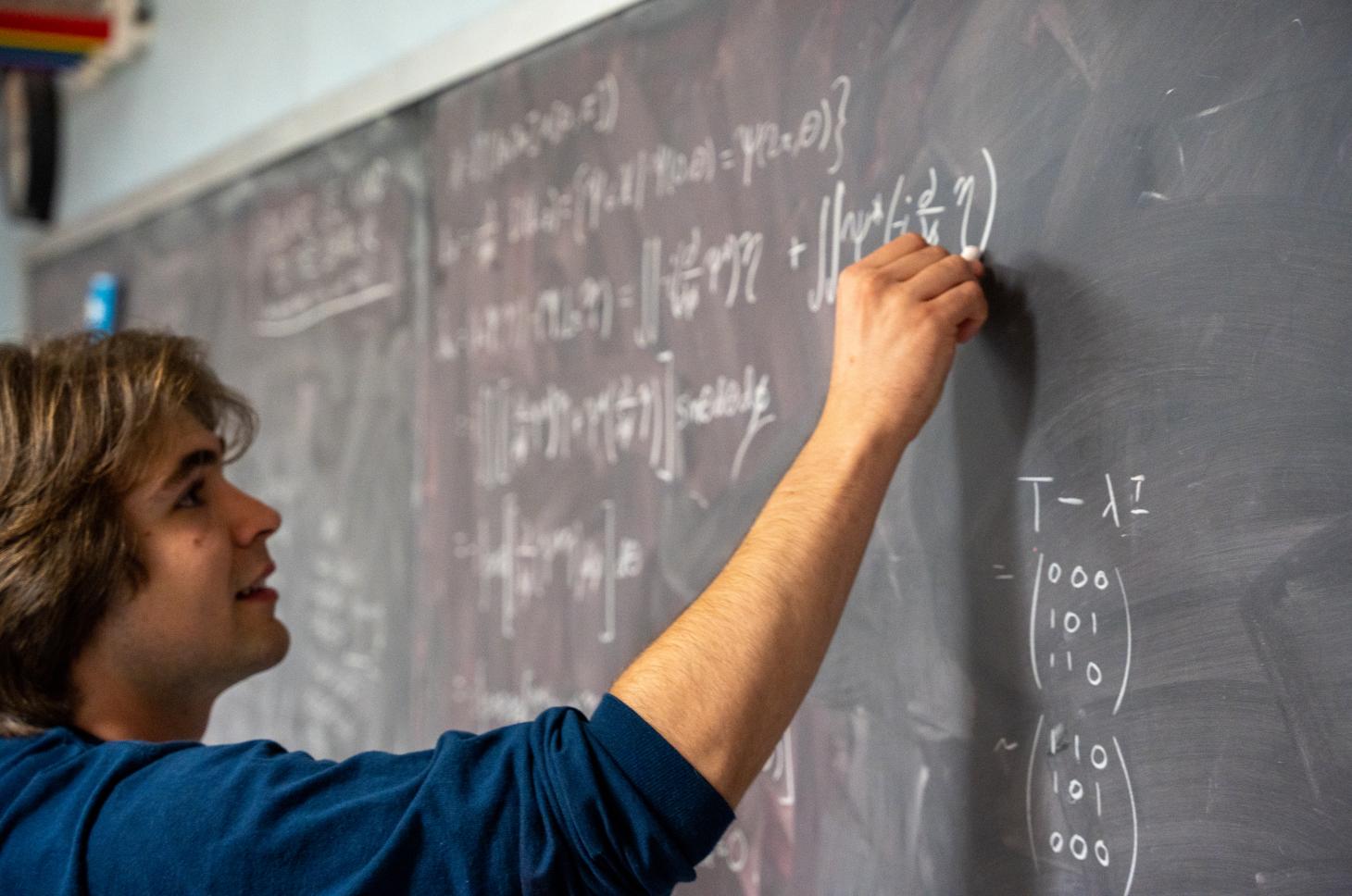
Joey Takach grinning while writing equations on a chalkboard.

Takach plays with some of his favorite equations.

"When I started to take more physics classes, I thought, 'Wow, this physics stuff is really cool,' and it just clicked,” Takach said. One thing led to another, his passion grew and he pivoted entirely.

"Not to say that math isn’t beautiful, but I think that applying math to something real is what is most important."

Takach is graduating this summer with a double major in physics and mathematics. "The coolest thing about the math department is how flexible it is. And in the physics department, everyone's really friendly and there's lots of interaction between students," he said.

In the fall, Takach is moving forward with a Ph.D. program at University of California, Berkeley, focusing on particle physics and phenomenology. This involves looking for things that can be observed and may not be obvious experimentally. Instead of testing a hypothesis, phenomenologists choose a mathematical theory and try to “tease out” observations. After they decide what the observable effects are, they tell experimentalists to go looking for them in real life applications.

By chance, physics meets education technology

Takach found a lot of faculty support that allowed him to make an impact early on in his academic career. In his first year, one of his main advisors, Associate Department Head David Craig became his go-to resource for knowledge.

“I did the naive freshman thing and went to Craig because he was one of the resident theoretical physicists here. He directed me to a bunch of stuff to study in my free time and what books to read. He also motivated me to start learning on my own, and helped me learn how to attack those high-level concepts early without waiting to be in a class.”

Takach’s journey didn’t stop there. Last summer, he landed an internship at University of California, Davis, where he gained experience working with computational physics and quantum field theories in the realm of particle physics.

At Oregon State, he worked on campus as a peer advisor for the Science Success Center and as a learning assistant for the Techniques of Theoretical Mechanics course in the physics department.

His passion blossomed when he learned how to utilize the power of Python, a computer programming language, to create educational videos about high-level physics concepts and make the content more accessible to students who haven’t learned it.

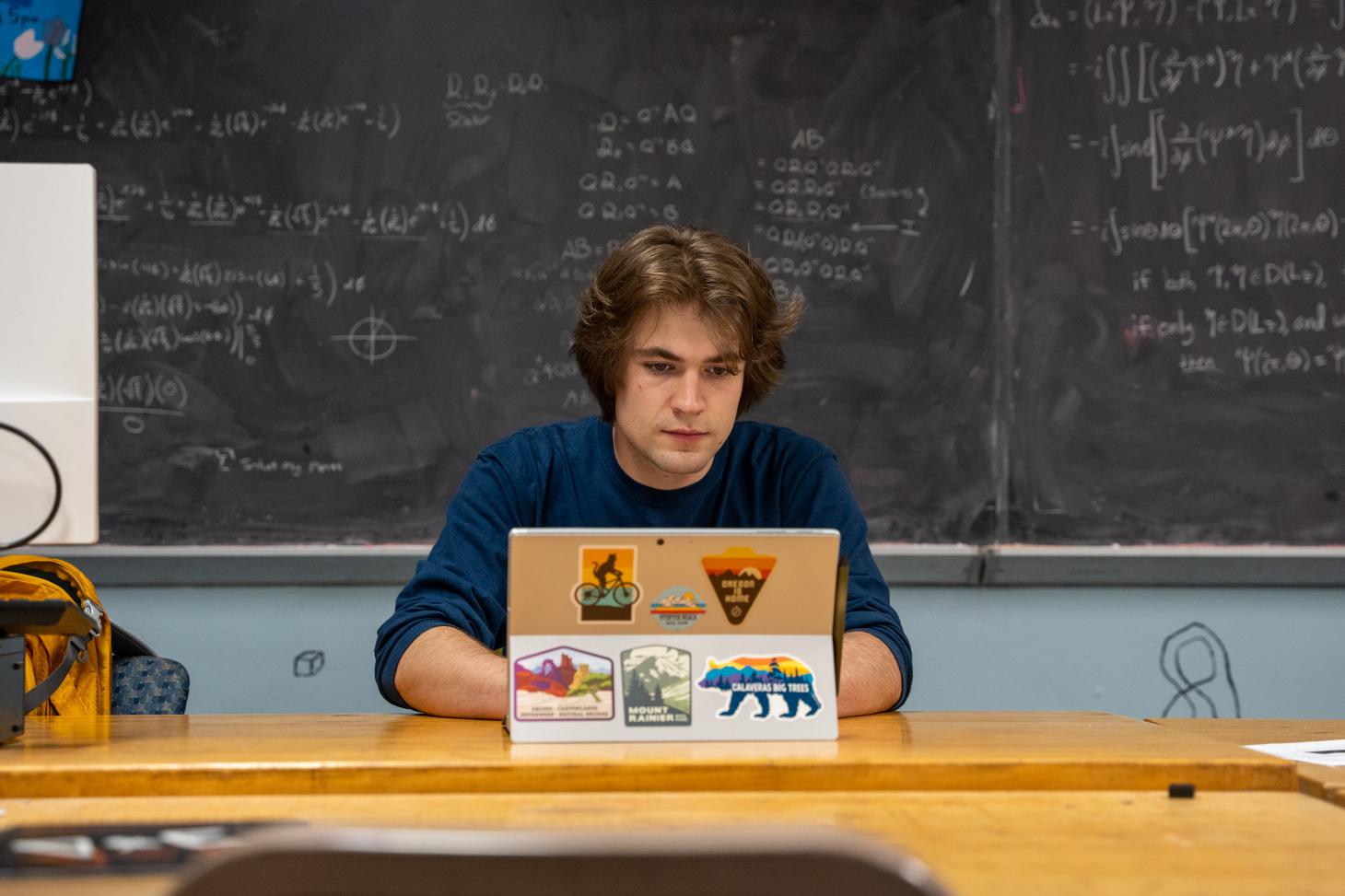
Takach is busy typing behind his laptop. A chalkboard full of mathematical equations stands behind him.
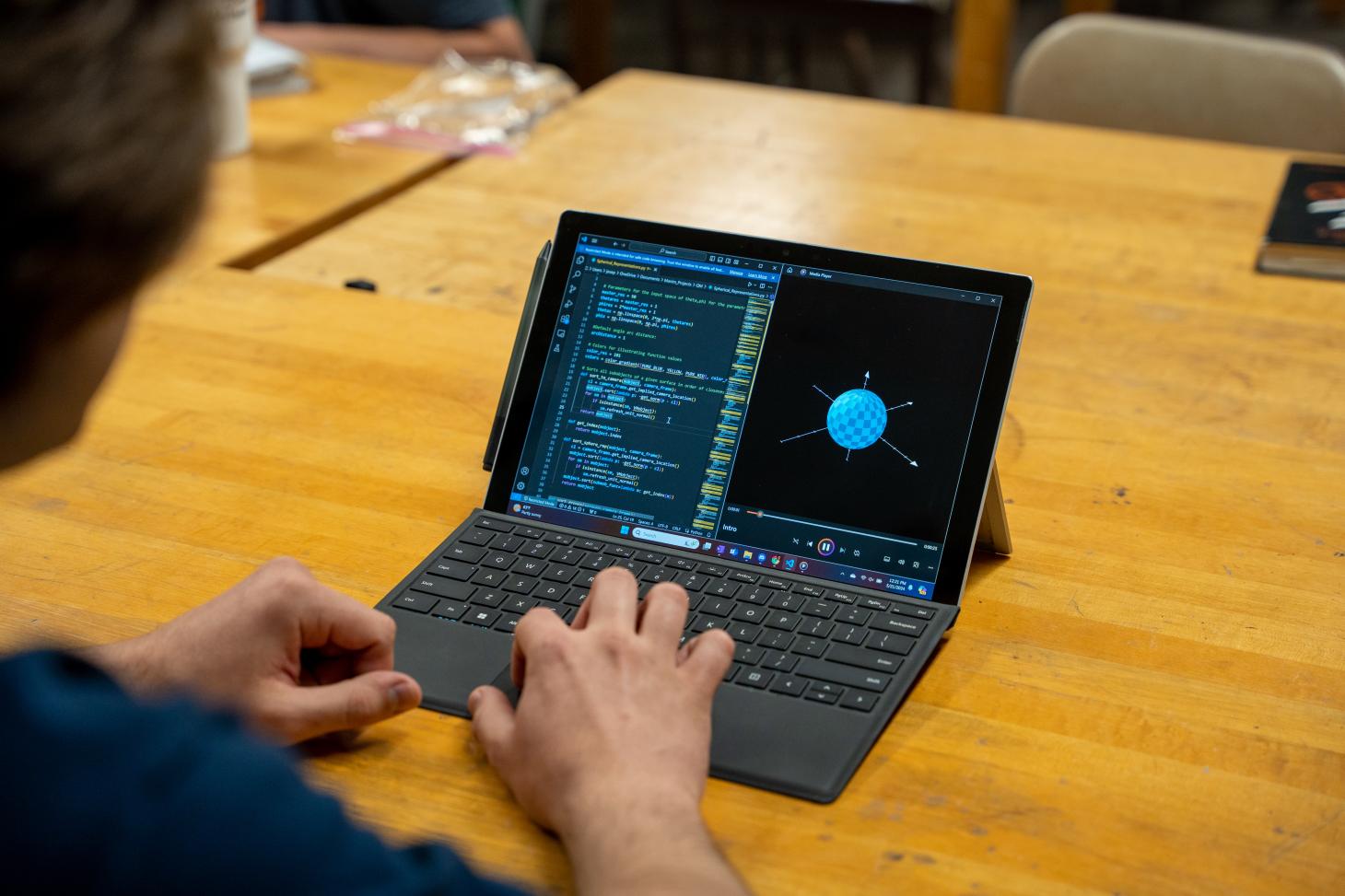
Takach steps through a Python program that runs a video simulation. A blue sphere with arrows pointing out of it is displayed on the computer screen.

Takach presents a vector video simulation using the Python programming language.

“Getting an early start and giving kids the opportunities to learn more as early as they can is so important. It becomes second-nature if they start early enough,” he said.

Inspired by YouTuber 3Blue1Brown, who made animated mathematics content, Takach created his own video to help more students have access to an engaging, easier-to-grasp learning experience. His goal was to teach about an advanced mathematics topic: curl.

In vector mathematics, curl is a concept that involves measuring the rotational or swirling behavior of a vector field. A vector is a direction with a specified measurement, such as how fast a golf ball moves forward when hit with a golf club. Imagine a bunch of arrows pointing in the direction that the ball is moving – the longer the arrows, the stronger the force in that direction.

“There are tons of people online that make these kinds of videos. Making this content accessible to younger people is essential because the amount of science you need to know in order to advance in a field is very daunting,” Takach said.

He sent his video to Physics Professor Emeritus Corinne Manogue, the leader behind the Paradigms in Physics project funded by the National Science Foundation. This physics education project led to the creation of 19 new physics courses and focused on shifting the curricula from traditional lectures to active engagement for students at Oregon State.

She hired Takach to make more educational videos that were aligned with the physics curriculum, including quantum mechanics. The videos were intended to improve the learning experience for future physics students.

“The most concrete thing that I want to have an impact on is teaching. I love sharing the experience of learning something for the first time. It happens so frequently – it's the weirdest experience and when you share that with someone, It’s motivating, fulfilling and fun,” he said.

Physics Associate Professor Elizabeth Gire also had a positive influence on his academic career. After she taught one of his first upper-division physics courses, he left feeling inspired. "She really, really cares about the students and how much everyone's learning. I think that rubbed off on me. The way she goes about teaching and encouraging people to work together is definitely something to look up to and had a big impression on me.”

Looking back, one of Takach’s favorite memories at Oregon State is living with his friends for three years. "Two of my best friends from high school are still my roommates now. They’ve been a great support system.”

During his free time, Joey loves to dive into music and plays several instruments, including guitar, bass, viola and violin. When the sun comes out, he enjoys hiking, backpacking and traveling.

After completing his Ph.D. in California, Takach dreams of becoming a physics professor. “Learning and teaching for as long as possible is the most ideal for me. I need the connection to what is actually real. Not to say that math isn’t beautiful, but I think that applying math to something real is what is most important.”

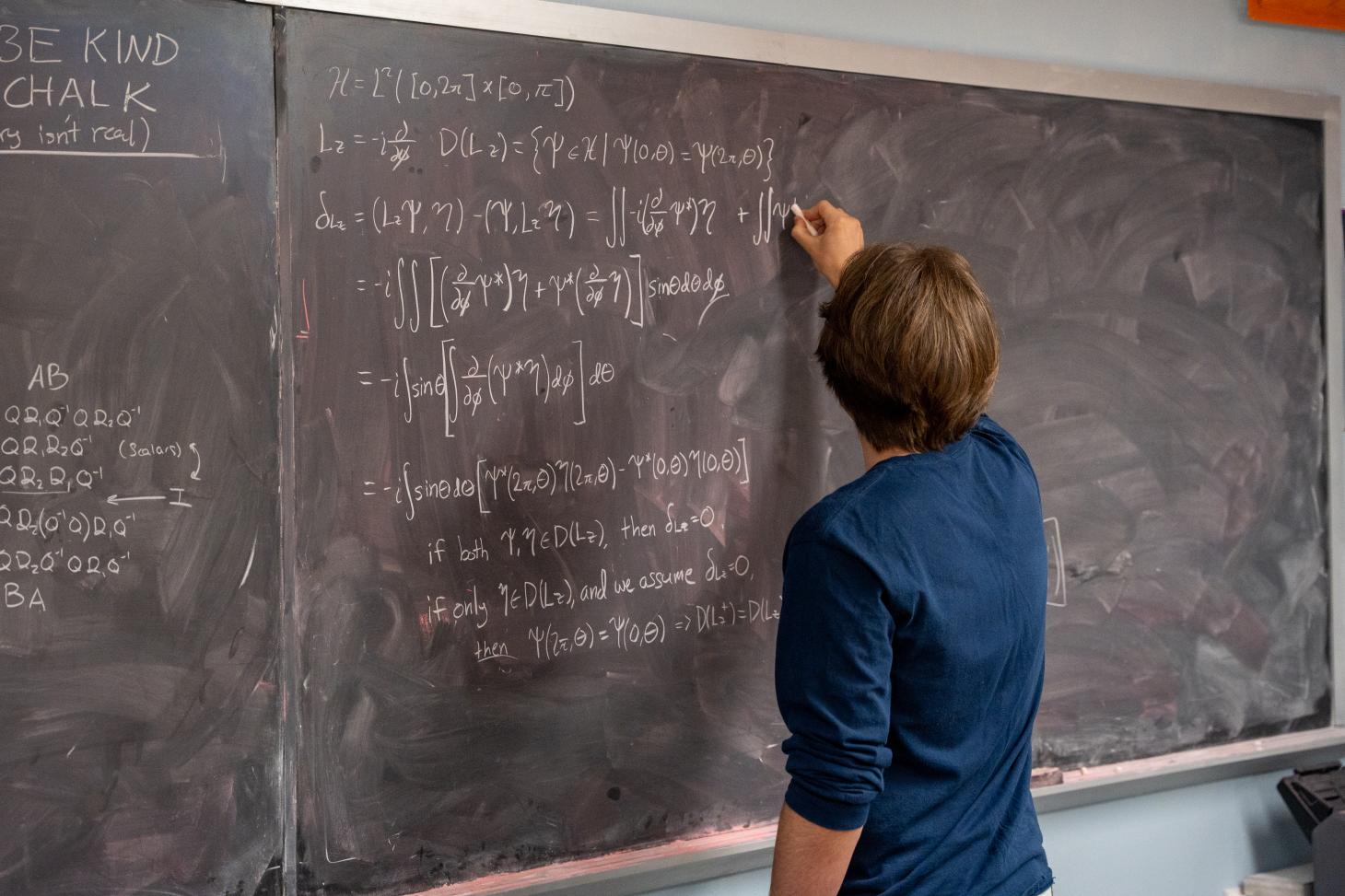
Takach fills a chalkboard with mathematical equations, with his back faced to the camera.

Takach contributes to the beauty of mathematics and reality of physics on a chalkboard.

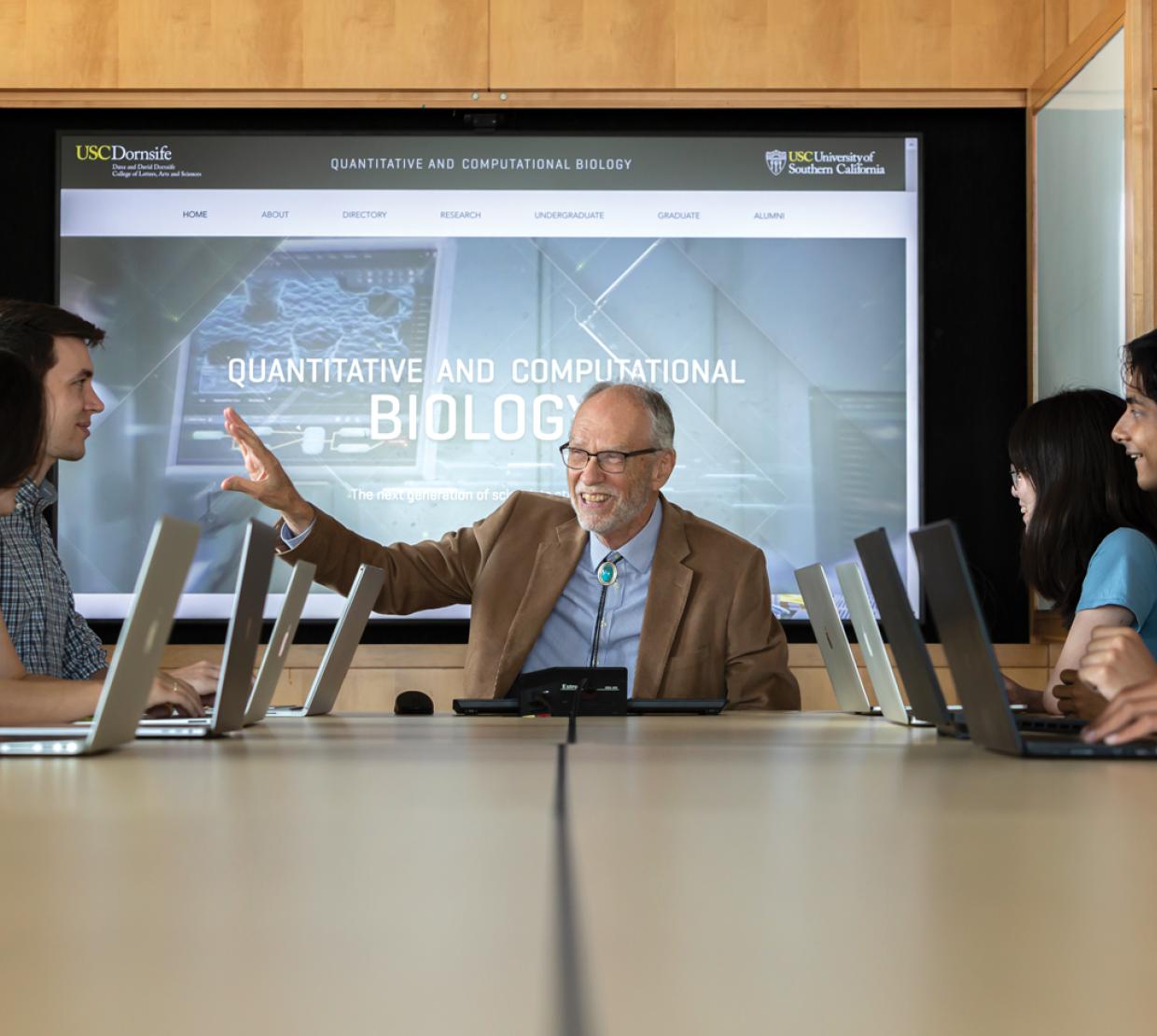
Michael Waterman teaching

College of Science alumnus to be presented with honorary doctorate

By Hannah Ashton

Courtesy of USC, by Leah Lee

College of Science alumnus Michael S. Waterman (Mathematics '64, '66) will be presented with an honorary doctorate at this year's university-wide commencement ceremony in Corvallis.

Waterman is an internationally celebrated mathematician and biologist known for his extraordinary contributions to science, dedication to education and impact on multiple disciplines. He is an eminent figure in bioinformatics and globally recognized as a trailblazer in computational biology.

He is considered the architect of the groundbreaking Human Genome Project which advanced genomics and deepened the world's understanding of life's genetic foundations. He is also known for his collaborative innovation in developing the Smith-Waterman algorithm, a monumental breakthrough. This algorithm revolutionized sequence alignment and is described as the "gold standard for gene and protein sequence analysis." It has become an indispensable tool in bioinformatics, molecular biology, and genetics, and has profoundly impacted molecular biology, medicine, cancer treatment and biofuel development.

"Dr. Waterman's dedication to pushing the frontier of knowledge and his commitment to education are extraordinary," wrote Oregon State University President Jayathi Murthy and Provost and Executive Vice President Edward Feser.

Waterman received the college's Lifetime Achievement in Science Award in 2021. Serving on the College of Science Board of Advisors, he also created a scholarship that supports College of Science students who are historically underserved, Oregon residents.

His list of awards and honors includes the Guggenheim Fellowship and professorships at the University of Southern California and the University of Virginia. He is an elected member of the American Academy of Arts and Sciences, the National Academy of Sciences, and the National Academy of Engineering, and a fellow of several scientific organizations including the American Association for the Advancement of Science and the Institute of Mathematical Statistics.

He has received the Gairdner Foundation International Award, the Dan David Prize, the Walter Benter Prize in Applied Mathematics, and the Friendship Award from the Chinese government. Additionally, he is a founding editor of the Journal of Computational Biology and serves on the editorial boards of various journals.

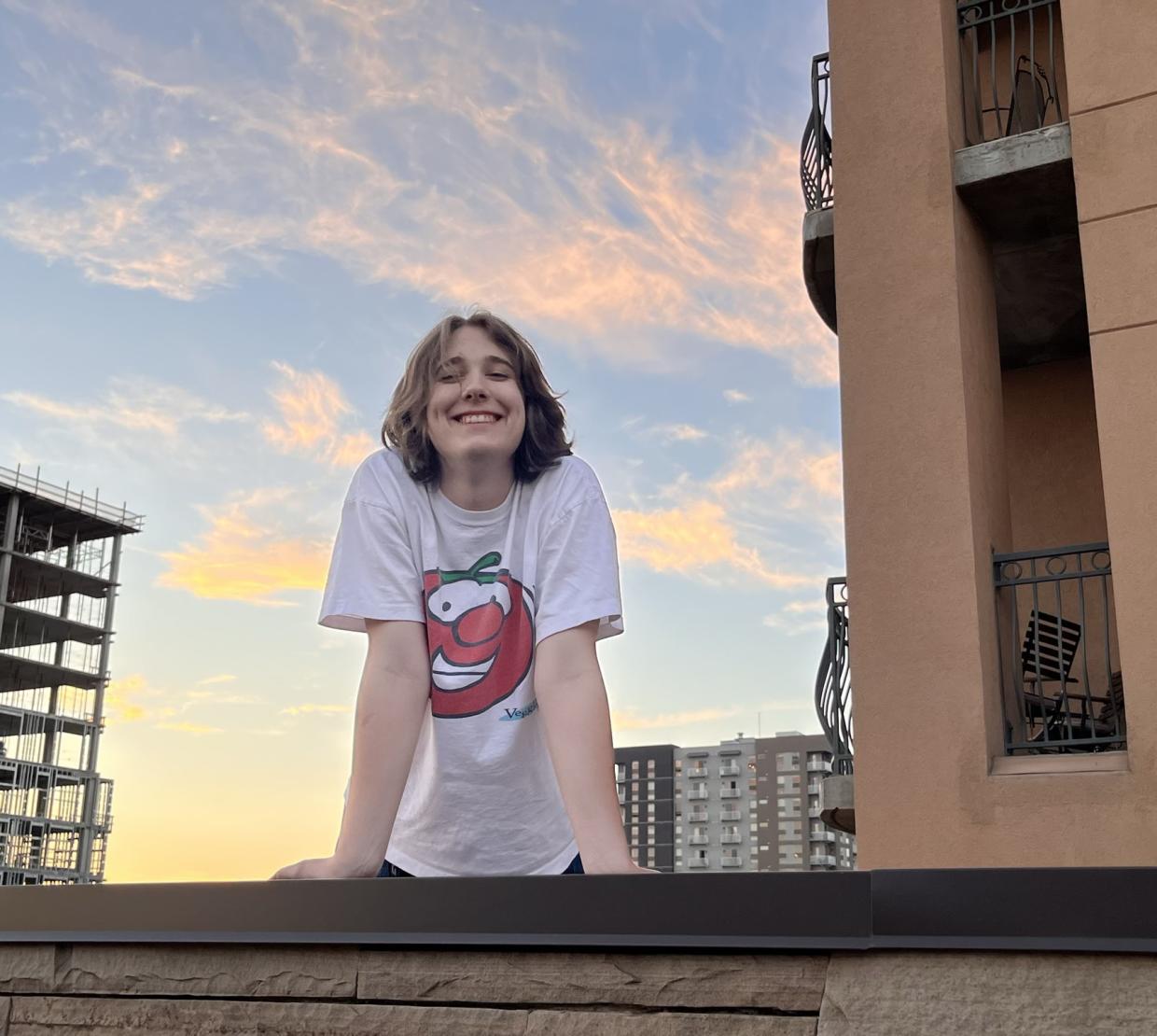
A man in a white t shirt with shoulder length hair poses for a photo with a sunset in the background.

Turning a talent for numbers into a career in finance

By Tom Henderson

Ryan Holzschuh liked math as a teenager.

He was even one of the top mathematics students at Cleveland High School in inner southeast Portland and took a year's worth of college-level math classes during his senior year in 2022.

However, it took going to Oregon State University for Holzschuh to truly fall in love with numbers.

“When I was in high school, I was just good at math," he said. "I didn't really know what to enjoy about it. Coming here really helped. A lot of the professors helped me learn to love it."

One such professor was Dr. Axel Saenz Rodriguez, who specializes in algebra and number theory, analysis and applied mathematics as well as probability.

"He was my probability professor," Holzschuh said. I "had him for a whole year. He has really taught me to love proofs. I was terrible at proofs early in the year. Now I've gotten good at them."

One area of math was a bit of a harder sell for Holzschuh.

"Algebra was not my favorite, but I had Dr. Clayton Petsche as a professor," he said. "He is such a good teacher and really helped me love algebra, even though I will probably never do it again because it is very complicated."

Holzschuh is graduating from Oregon State this spring with a mathematics degree with a focus in statistics as well as a minor in actuarial science.

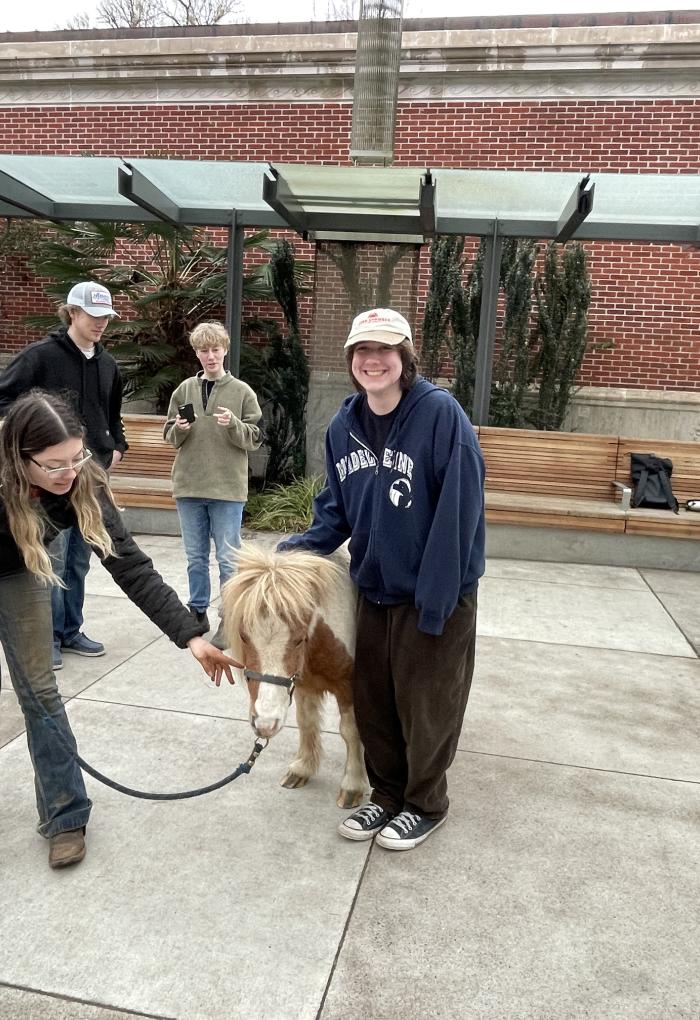
A man stands on the Oregon State University campus and pets a miniature horse.

Ryan Holzschuh pets a miniature horse in front of the Memorial Union.

His road to graduation started with his father.

"I was very good at math when I was a kid, and my dad tried to hone in on that," he said. "He always told me how when he learned math, he memorized formulas and that got him through math even when he didn't always understand it."

Even if math didn’t rise to the level of a passion quite yet in Holzschuh's young life, he spent a lot of time crunching numbers. "I would always spend hours learning to understand the math I was doing," he said.

All that time paid off when he arrived at Cleveland High School. "I quickly picked up on math because I had such a strong foundation that I could easily build on," he said.

"That led to being very good at math and very good at physics," he added. "I didn't pursue physics because there are just a couple of concepts I really didn't understand, like when I started learning about Feynman diagrams."

Feynman diagrams are pictorial representations of mathematical expressions describing the behavior and interaction of subatomic particles.

Physicist Richard Feynman used wavy lines to represent photons. In physics as well as mathematics, a wave is a propagating dynamic disturbance of one or more quantities. "Waves are pretty weird," Holzschuh said. "Waves always tripped me up, so I decided to focus on math."

Oregon State was a fairly straight-forward choice for college, he said. Other colleges and universities in Oregon don't offer as many classes in statistics, and Holzschuh also wanted to stay close to home.

"I came to Oregon State mostly because I'm from Portland, and it was pretty easy," he said. "I wasn't moving too far, and I still had a little bit of freedom. I also knew a lot of people here, so it would be an easy transition into college."

Once in Corvallis, Holzschuh said he was impressed with the university's world-class faculty, and his love of math flourished.

"I love the theory behind math," he said. "It's super interesting to me how you predict outcomes."

He added he also loves how math is so unambiguous.

"I like how math has one answer," he said. "When you're doing calculus, there's one answer. Now that I'm in more proof-based analysis level math, I like how you go from Point A to Point B, and there are different ways to go, but you're always going to get to Point B."

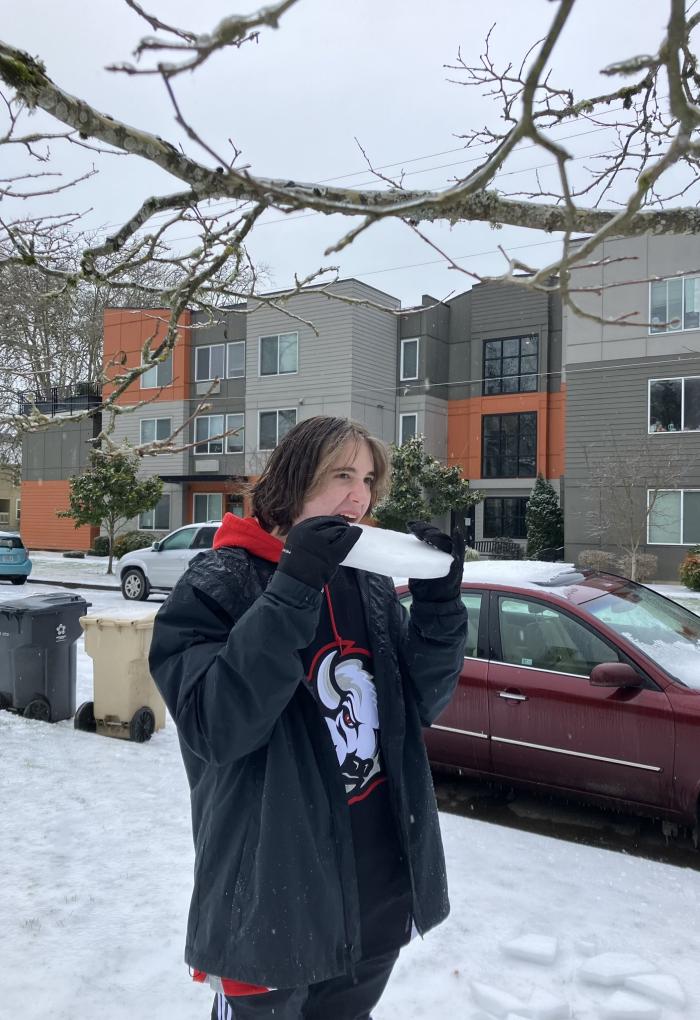
A man holds a piece of ice and attempts to eat it.

Ryan Holzschuh pretends to eat a piece of ice during an ice storm in January 2024.

His other academic passion is not known for its lack of ambiguity.

"Math and science were my big subjects in high school, but I also had a small interest in philosophy," Holzschuh said. "I really do still love philosophy."

He just doesn't have a lot of time to hang out with Plato, Descartes and their 21st-century counterparts as a mathematics major.

"Because I spend most of my time studying math, I don't have the reading comprehension level to truly understand a lot of the current philosophy papers," he said. "They're just so heavy and dense."

Still, he has friends ready to help. "One of my best friends is a philosophy major in Belgium, and he will talk to me about philosophy for hours," he said. "I really love it."

"Being able to go on the scheduling website and just take a bunch of math classes, it makes me pretty happy."

Being a math major has not kept him socially isolated, he added.

"I've met so many different people from so many different majors," Holzschuh said. "One of my best friends is a mechanical engineer. My two roommates are botany and English majors."

Students recognized for expertise in certain subjects in high school are often humbled when they arrive at college and are no longer the big fish in a small pond.

Even if he was no longer one of a handful of math stars, Holzschuh said he found coming to the mathematics community at Oregon State exhilarating.

"I actually liked it," he said. "For one, college allowed me take the classes I wanted to take. I went from high school, where I took one math class a year and seven other random classes, to where I'm taking 20 hours of math and statistics this semester."

He added, "Being able to go on the scheduling website and just take a bunch of math classes, it makes me pretty happy."

Undergraduate students usually spend much of their freshman and sophomore years taking required lower-division classes, regardless of their majors.

"Once you get past your second year in mathematics, it really opens up," Holzschuh said. "I came in a year ahead on my math track, so once I got to my second year, I could take linear algebra, and once you've taken that, basically everything opens up. You can pretty much take any math class in any field."

He has taken such general elective classes as differential equations, complex variables ("which is really interesting"), math models and math biology.

"I never thought I would take anything related to biology because I hated biology in high school, but that was an interesting class," Holzschuh said.

After graduation, he intends to move from Corvallis in August to start graduate school at Boston University.

"I selected Boston University because it's on the East Coast," he said. "I really want to go there, especially because of math and finance. The East Coast is a great place to be for that. Also, Boston seems beautiful, and it's close to New York."

After grad school, Holzschuh said he hopes to remain on the East Coast and pursue his love of numbers as a quantitative analyst -- designing, developing and implementing algorithms and mathematical or statistical models to solve complex financial problems.

"It's a very challenging career path, and I really like being challenged," he said.
An abstract illustration of data, AI and information forming waves

College of Science hosts Inaugural Research Showcase

By Hannah Ashton

Extending the Reach and Impact of Science

RSVP Today

Tuesday, May 21, 2024
11 a.m. – 2 p.m.
Memorial Union Multipurpose Room 13

This event will feature SciRIS awardee presentations, panel discussion on artificial intelligence in the College of Science, and posters and science education demonstrations by Oregon Museum of Science and Industry (OMSI) Fellows.

Schedule of Events

11 – 11:10 a.m.

Welcome and introduction from Vrushali Bokil, Associate Dean of Research and Graduate Studies


11:10 – noon

SciRIS Awards Showcase

The College of Science Research and Innovation Seed (SciRIS) program funds projects based on collaborative research within our community and beyond. The program awards seed funding for high-impact collaborative proposals that build teams, pursue fundamental discoveries and create societal impact. Founded in 2018, SciRIS accelerates the pace of research, discovery and innovation in the College of Science by enabling scientists to work across an array of disciplines in a mentored environment. We showcase some of the recent awards made under this program.

Francis Chan: “The Hypoxic Barrier Hypothesis: have we missed a fundamental dynamic of oxygen use in microbes and ecosystems?”

Kim Halsey: “Leveraging volatile organic compounds to detect cyanotoxin contamination in Oregon lakes”

Maude David: “Leveraging organ-on-a-chip systems to mimic the gut sensory system: toward screening microbiota-vagal interactions”

Yuan Jiang: “Harnesses longitudinal microbiome data to define the ecological roles of host-associated microbes”

Alysia Vrailas-Mortimer: “A New Model to Study the role of Iron in Parkinson’s Disease”


Noon – 1 p.m.

Lunch & Networking: OMSI Communication Fellows demonstration and poster session

Oregon State University and the Oregon Museum of Science and Industry (OMSI), one of the nation's leading science centers, have enjoyed a close partnership since 2016. OMSI hosts its popular Science Communication Fellowship cohort program on OSU’s Corvallis campus every spring. More than 70 students, faculty and staff from across science at OSU have completed the training program, including the Colleges of Science; Engineering; Earth, Ocean, and Atmospheric Science; Agricultural Sciences; Forestry; and Public Health and Human Sciences. The COS partners with OMSI in offering this fellowship to our students. Here we showcase some of our COS OMSI Science Communication Fellows.

Akasit Visootsat & Yuan Gao (Physics): “What & How to see motor proteins?”

Sunni Patton (Microbiology): “Exploring the Coral Microbiome”

Austin Vick (Integrative Biology): “What can the common fruit fly tell us about our health”


1 – 2 p.m.

Panel Session: AI in Research
Moderators: Vrushali Bokil, Bettye Maddux and Jeff Hare

The panel will discuss ideas for incorporating AI and data science across four priority research areas: clean energy, integrated health and biotechnology, climate solutions and robotics.

Panelists

Tim Zuehlsdorff, Assistant Professor, Department of Chemistry

Jeff Hazboun, Assistant Professor, Department of Physics

Ryan Mehl, Professor, Director of GCE4All Research Center, Department of Biochemistry & Biophysics

Marilyn Rampersad Mackiewicz, Associate Professor, Department of Chemistry

Francis Chan, Associate Professor, Director, Cooperative Institute for Marine Ecosystem and Resources Studies, Department of Integrative Biology

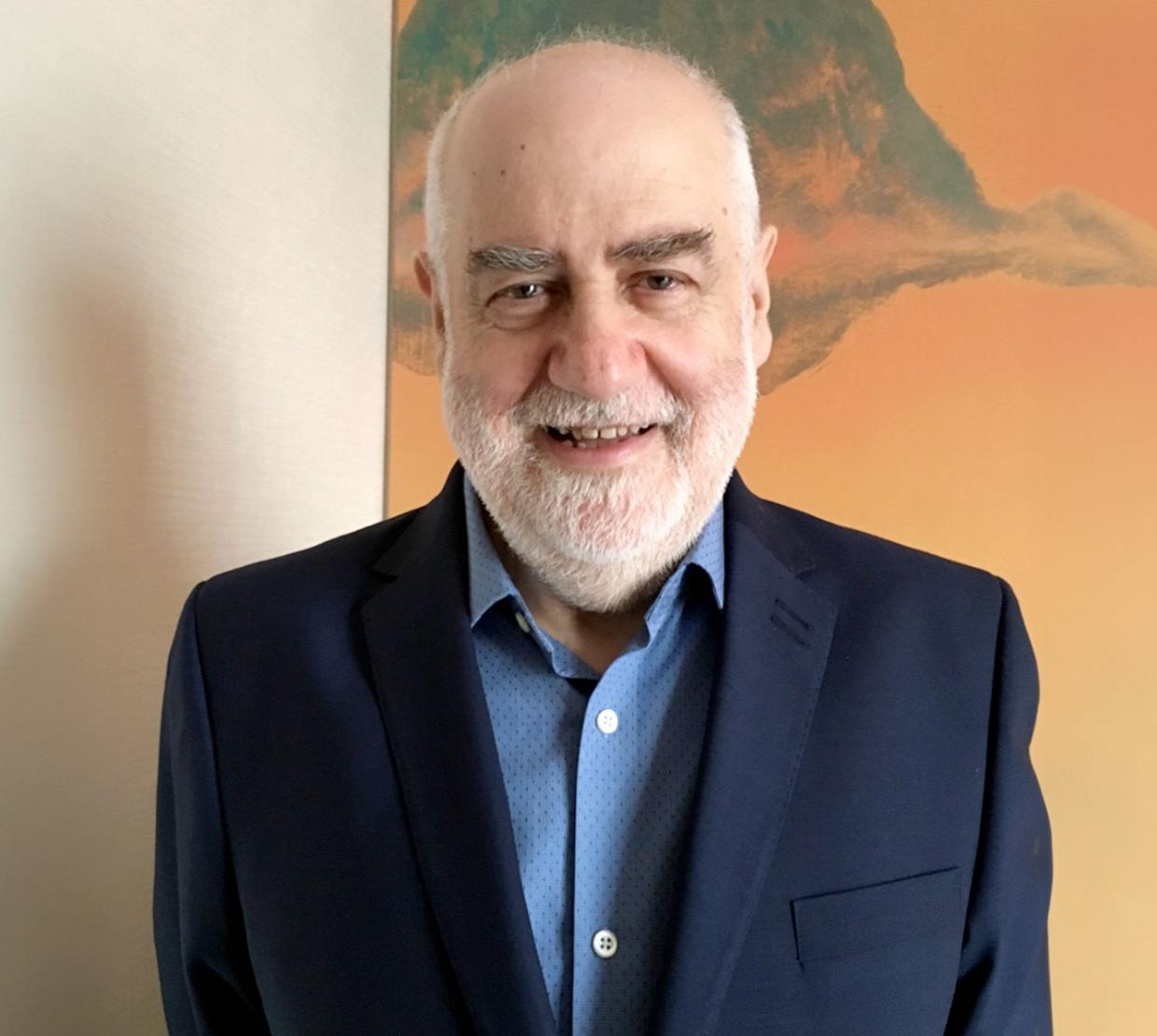
A man in a blue suit jacket poses for a headshot.

'Inverse problems and Harry Potter's Cloak': Lonseth Lecture 2024

By Hannah Ashton

Esteemed mathematician Gunther Uhlmann will present the 39th Lonseth Lecture on Tuesday, May 14.

The event will begin by honoring student and faculty achievements at the Department of Mathematics annual awards ceremony from 3:30 to 4 p.m. Then, Uhlmann will speak from 4 to 5 p.m., followed by a public reception. The event takes place at the LaSells Stewart Center.

In his talk, "Inverse Problems and Harry Potter's Cloak," Uhlmann will explore various inverse problems encountered across scientific disciplines. Inverse problems involve deducing causes from observed effects, common in science and engineering, solving backward from outcomes to parameters.

Gunther Uhlmann is the Robert R. and Elaine F. Phelps Endowed Professor at the University of Washington. He has received Sloan and Guggenheim fellowships, and he is a Fellow of the American Academy of Arts and Sciences. His research focuses on inverse problems, and his work spans fields like medical imaging, geophysics and material science. He has received prestigious awards such as the Bôcher Memorial Prize and the Kleinman Prize.

Established in 1985, the Lonseth Lecture series pays tribute to the legacy of Arvid T. Lonseth, a respected figure in the Mathematics Department at Oregon State University. Explore more about Arvid Lonseth and the lecture series to appreciate its significance within academia.


Read more stories about: events, mathematics, awards & recognition


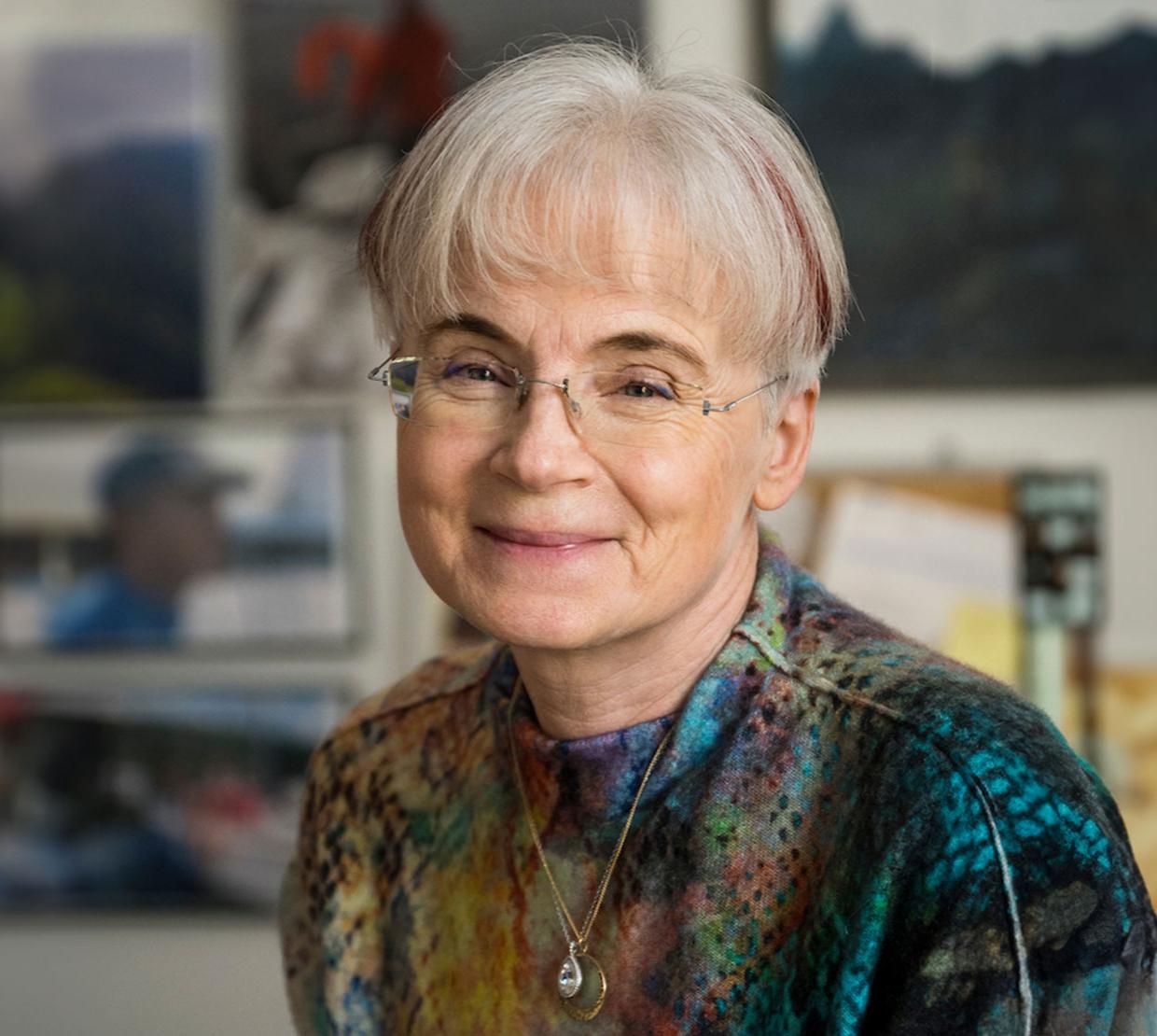
A woman in a multi-colored blouse poses for a headshot to celebrate being announced as a Distinguished Professor.

Malgorzata Peszynska named a University Distinguished Professor

By Tamara Cissna

Malgorzata Peszyńska, newly honored as a University Distinguished Professor at Oregon State University, has charted a remarkable path — shaped by uncommon talent, grit and a spirit of joyful independence.

Renowned for her exploration of the physical world through the prism of mathematics and computation, Peszyńska's work has yielded fascinating insights over her distinguished career. Her research has fostered innovation and enabled applications with global impact on pressing environmental concerns and natural resource management.

In recognition of her achievements, she has earned Oregon State's highest academic honor. The university awards this distinction to a select few faculty nominated by their peers, with the College of Science having the highest number at 19.

"Dr. Malgorzata Peszyńska is nationally and internationally recognized as a leader in mathematical and computational modeling of complex processes, and her work has been particularly significant in building bridges across disciplinary boundaries," Provost Ed Feser wrote in the university’s announcement of this honor.

Peszyńska will present a university distinguished lecture, along with one other 2024 distinguished professor: Todd S. Palmer in the College of Engineering. She will present her lecture on Wednesday, May 8, at 1:30 – 3 p.m. in the Memorial Union Horizon Room. Her lecture is titled, “Math Matters: Multi-* Modeling, Analysis and Simulation.”

“This is an honor and accomplishment, and evidence of appreciation coming from the many colleagues, students and collaborators,” Peszyńska said. “It is also a responsibility, and I am not the only one deserving, but now I can stand on the shoulders of giants and pay it forward.”

As the Joel Davis Faculty Scholar in Mathematics, Peszyńska is acclaimed for her pioneering work in numerical analysis and modeling. Her recognition as an AAAS Fellow in 2020 highlights her “exceptional contributions to multidisciplinary mathematical and computational modeling of flow and transport in porous media."

Peszyńska's work has been supported by more than $3M from the National Science Foundation (NSF) and other agencies and industries. She has authored more than 119 research publications in high impact computational mathematics journals including SIAM journals and in the interdisciplinary venues such as the Journal of Petroleum Science and Engineering, Advances in Water Resources, Geophysics, and other high-Impact journals, and her publications have received more than 2,000 citations.

Over the years, her achievements have garnered numerous awards: She received the Geosciences Career Prize from the Society for Industrial and Applied Mathematics (SIAM), and she's also been recognized as a Distinguished Fellow by the Kosciuszko Foundation and served as a 2009-2010 Fulbright Research Scholar at the University of Warsaw, 2006 Mortar Board Top Professor award, 2016 Graduate faculty award and more.

A mathematical odyssey in energy and climate

Peszyńska specializes in modeling, analysis, and numerical analysis of models, a discipline that seeks to describe real-world systems mathematically, so they can be simulated, analyzed predicted and — when there are problems — solved.

With expertise that spans disciplines, Peszynska primarily works to mathematically solve problems related to environment and, recently, climate change. Her modeling of mass and energy flow and transport includes porous media phenomena in aquifers, oil and gas reserves, carbon sequestration, solar cells and the effect of permafrost warming. Perhaps most notable is her work on phase transitions in methane hydrate transfer and evolution, as well as in using computational mathematics to study complex pore-scale environments. This work aims to understand and predict the presence and behavior of fluids in nature to mitigate potential disasters, like hazardous explosions or methane emissions contributing to global warming and addressing challenges in climate science and geophysics.

In her recent NSF-supported work on studying permafrost changes, Peszyńska seeks to predict and mitigate potential large-scale events such as building collapses and coastal erosion, highlighting the urgency for more modeling in this area.

Her research team employs computers to approximate solutions, striving for accuracy even when the true solution is unknown, she explained. Ultimately, they contemplate how computational algorithms can approximate truth without certainty, exploring the mysteries of mathematics.

"There's so much about the methods themselves that intrigue us in this mystery," she said. "How do you achieve that? How can you anticipate whether your computational algorithm will yield a prediction close enough to the true solution, regardless of what that true solution might be, without actually having knowledge of it?"

Peszyńska will explore this and other questions in her public lecture. She will also “delve into how her research team explores multi-scale multi-physics systems using complex computational mathematics, inspired by real-life applications. She will discuss their investigation of porous media at nano-, pore-, lab-, and field scales, predicting their responses to environmental changes. She will also emphasize the importance of fostering interdisciplinary collaborations within Oregon State University and with external partners to encourage students to embrace complexity over simplicity.”

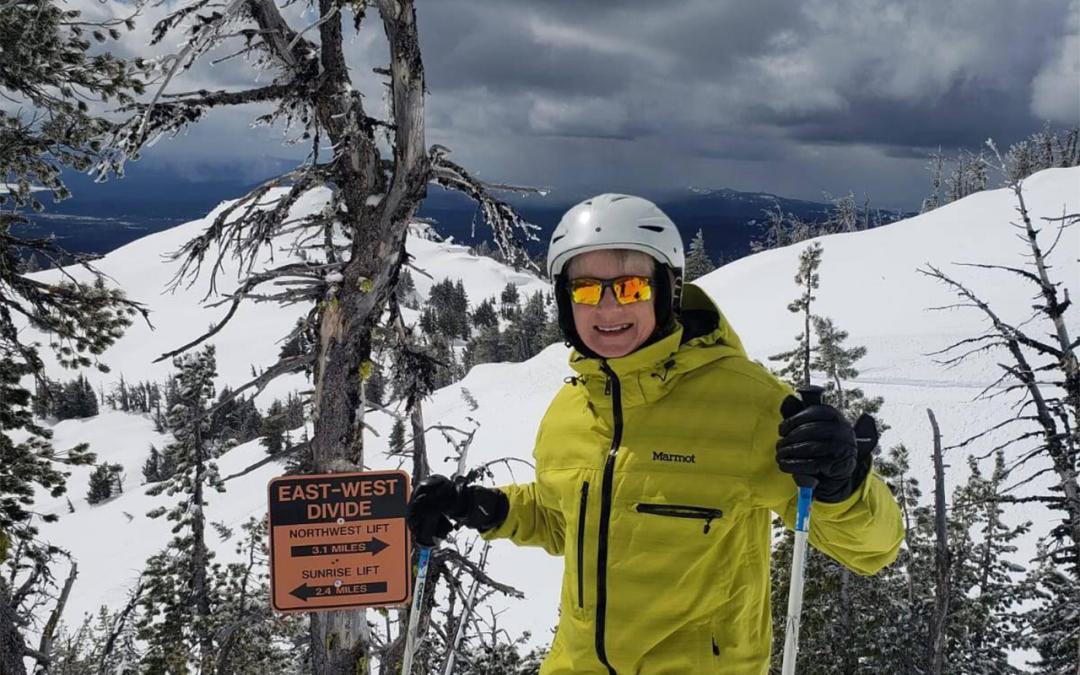
A woman in a skiing outfit stands next to a sign read "East, West."

Malgorzata Peszynska on the southeast side of Mt. Bachelor, Oregon, where two trails meet at the East West Divide. Peszynska's journey has also taken her on trails from East to West, over 5,000 miles from Poland to Oregon.

From Warsaw to worldwide impact: A wholehearted journey

Born and raised in Warsaw, Poland, Peszynska discovered her passion for mathematics at a young age. Encouraged by her family, she cultivated that passion alongside her love for the natural world, leading her to study mathematics in the context of physical phenomena and ultimately specialize in mathematical modeling and computational solution of flows through porous media and their geological applications.

She earned a master’s degree in applied mathematics from the Warsaw University of Technology and a Ph.D. in mathematics from the University of Augsburg in Germany. She also holds a habilitation degree from the Warsaw University of Technology.

Her interest in real-life applications is driven, in part, by a personal passion for the natural environment and outdoor activities. And she commits fully to her pursuits, whether tackling complex equations, building interdisciplinary teams, or enjoying leisure activities like skiing and sailing. Embracing her mantra to "Make your own kind of music," she consistently tries to choose the complex and challenging path over the simple and easy.

Reflecting on the most meaningful milestones and accomplishments that led to this recognition, Peszynska shared that it's not about one single thing but rather a tapestry of efforts woven from countless interesting problems and diverse potential directions.

“At every fork in the road, we are choosing a path and sometimes we succeed in making progress,” she said. “At times, the most cited papers are the easiest for us, and sometimes those least noticed are the hardest but might make an impact much later. This may be scary when looking ahead, but it gets easier over time.”

She likens her role as a mathematician to that of a translator, bridging gaps between disciplines and applying mathematical rigor. Collaborating with colleagues from within mathematics and across other fields has empowered her to tackle real-world modeling projects with significant practical implications, even in the absence of a clear existing mathematical framework for analysis. From exploring multi-scale modeling techniques to navigating complex algorithms, these partnerships have broadened her perspective and fueled innovation.

As a mentor, she encourages students to discover their passions and gently nudges them to work diligently towards their goals, knowing they might change their minds along the way. But, she said, “There's no substitute for hard work. Sometimes, it's not just about assignments or tasks; it's about doing repetitive steps and finding the discipline to keep going. One of my past mentors said, ‘All you can do is work.’ And that's true. It means showing up every day, putting in your hours, and eventually, things will click. In turn, mentoring isn't easy. You offer advice, but ultimately, it's up to them to decide what works best for them. It's not unique—I don't have all the answers. Live and let live, I suppose—that's another principle I try to uphold.”

One of her former students, Scott Clark ('08), listed in Forbes Magazine’s 30 under 30, shared, “Dr. Peszyńska’s guidance led me down the interdisciplinary path that would become the foundation of my later graduate and professional work. ... She had a direct, positive impact on my career trajectory, and I would not be where I am today without her.”

At that, she humbly replied, “We have a lot of brilliant undergraduate students, and they just need an opportunity to fly. And so we should be accommodating them, I think. Yeah, let them fly."

She has also found leading the community in various professional circumstances gratifying—“building one connection at a time and not letting go.” Peszyńska has served as a program director for computational mathematics for the NSF and in multiple roles for the Society for Industrial and Applied Mathematics. Additionally, she organizes conferences, serves on editorial boards, and participates in review panels for prestigious institutions.

A group of people stand on a deck celebrating the graduation of a postdoc.

Malgorzata Peszyńska and her students and postdocs celebrating the graduation of Lisa Bigler (Ph.D. 2022).

Challenges and rewards: Bridging disciplinary divides

Peszynska’s success in bridging complex mathematics and diverse real world disciplines has much to do with her independent and joyful spirit.

She describes her atypical view of computational and applied math as an "attitude," rather than a discipline. “My work leans closer to art in its abstract form, or closer to science and engineering in its useful side. This dichotomy is not always understood or appreciated, and it feels funny and sometimes tedious that we may have to prove ourselves over and over. Doesn't everyone want to have clean air, enough food, exciting and intellectually stimulating complex work and stability of life? Live and let live!

“But my strategy is to not try to win anyone over to interdisciplinary work but rather to enjoy the intellectual and emotional joy of learning the new language while appreciating the cultural differences. The reward is that you build the bridges rather than straddle the fence.”

To apply her discipline and contribute wholly to critical concerns is very hard work, and she competes mostly with herself, harnessing discipline if ever enthusiasm wanes. Just as she advises her students: Do the work.

“On the lighter side, most days I wake up happy in the morning to continue doing this work,” she said. “It's fun, more fun than video games because I can make my own with the simulations. So that's exactly what I hope for others, especially students, that they will find fun in it—potentially even more, making a difference, one step closer to a better world.”

Curious minds may explore Peszyńska’s website for its challenges and interactive learning. Exploring innovative solutions can feel akin to solving puzzles, but even more rewarding.

The lasting impact of her work that she will hold most dear is the enduring value of lifelong learning and the significance of interdisciplinary collaboration—with its potential to shape the future. And she truly hopes that students will experience and appreciate the intrinsic joy and real-world impact that computational and applied mathematics have to offer.

“I am thrilled to see Malgo Peszyńska get this well-deserved recognition,” said Eleanor Feingold, dean of the College of Science. “Her world-class work in mathematical and computational modeling, coupled with her dedication to interdisciplinary collaboration, are instrumental in shaping the future of environmental science.”

Along her journey, Peszyńska has had to choose between many forks in the road. With too many options to follow in one lifetime, she acknowledges the opportunities left behind for future lives.
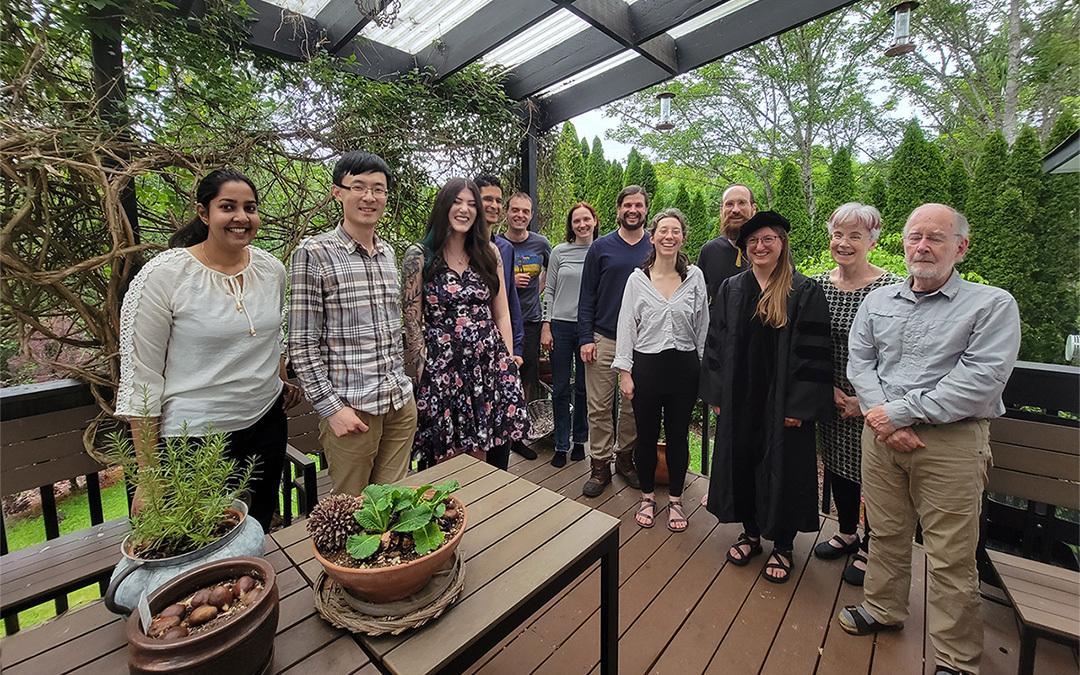
What might she pursue in her next life? Well, she might need two (or more). “Right now, my count goes into the upper teens.”

Subscribe to Mathematics