Research

Research

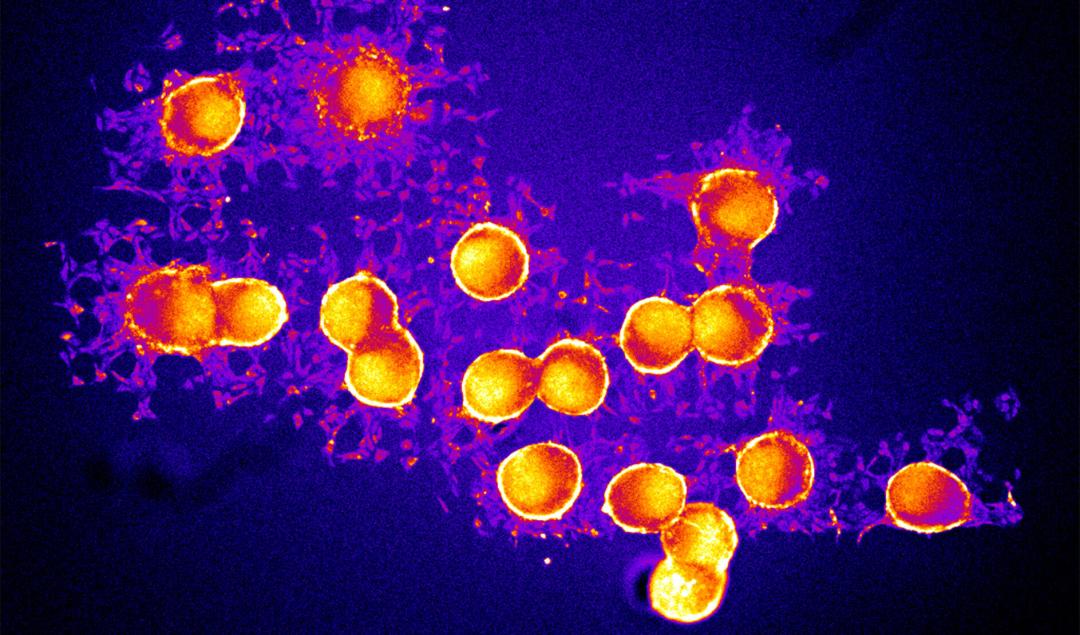
neuron spheroids on a chip designed to control the communication channels between the neuron cells. Color shows the firing activity of the cells.

From nanoplastics to quantum magnets: Four teams selected for SciRIS awards

By Hannah Ashton

Bo Sun's project focusing on cell based artificial intelligence is one of four SciRIS awards announced in the latest round of funding.

The College of Science’s Research and Innovation Seed (SciRIS) program is continuing to fuel bold, foundational, interdisciplinary and transdisciplinary science with the potential for high societal impact through collaborative research.

Four College of Science research teams have received funding during our Spring 2025 competition which is focused on selecting proposals submitted to our large awards categories; SciRIS Stage 2 and Stage 3.

This round of awards includes three projects funded through Stage 2 and one project through Stage 3, designed to help research teams in developing a proof of concept and in preparing proposals for large-scale external funding opportunities.

The funded projects span breakthroughs in environmental health, nanotechnology and quantum materials — from the impacts of nanoplastics on human health and the environment to the exploration of spin waves in quantum magnets.

Transforming Computing through Spintronics

SciRIS Stage 3 Award

Members of the physics, mathematics and chemistry departments are leading a collaborative project to design and control spin waves in quantum magnets for future spintronic technologies.

Spintronics is an emerging field that could transform computing by using magnons — tiny packets of spin waves — instead of electrons to process and store information. Because magnons do not produce resistive heating, they offer a path to faster, more energy-efficient devices. Yet, scientists still need to understand how these waves behave and how to manipulate them for practical applications.

The cross-disciplinary team includes Oksana Ostroverkhova from the Department of Physics, Axel Saenz Rodriguez from the Department of Mathematics and Chong Fang and Tim Zuehlsdorff from the Department of Chemistry.

The group will focus on two-dimensional magnetic materials with highly tunable properties. Using OSU’s ultrafast laser facility and advanced theoretical models, the researchers aim to uncover the physical mechanisms behind spin-wave propagation in emerging 2D magnetics and develop innovative ways to control spin-wave properties for next-generation spintronics.

A graph showing oscillations.

(top) Oscillations in time-resolved reflectance due to laser pulse-launched spin waves in a two-dimensional magnet CrSBr (inset). (bottom) Quantum field theory prediction for spin wave dispersion in a cubic lattice.


Cell Based Artificial Intelligence

Stage 2 Award

Bo Sun is building a transdisciplinary team to address key challenges in cell-based artificial intelligence, a groundbreaking approach in the field of computation, leveraging the inherent processing capabilities of biological cells to perform complex calculations and tasks.

With modern science, these cells can be engineered to process information, sense environmental changes, and produce outputs in response to specific inputs, much like traditional computer systems. Cell-based computing is energy efficient, environmentally friendly and capable of self-replication and repair. Advancements in cell-based artificial intelligence may also help researchers better understand brain functions to treat neurological and cognitive disorders.

Collaborating with Patrick Chappell in the College of Veterinary Medicine and an external partner at the University of Pittsburgh, Sun aims to address key challenges in cell-based artificial intelligence using a transdisciplinary approach.

neuron spheroids on a chip designed to control the communication channels between the neuron cells. Color shows the firing activity of the cells.

Neuron spheroids on a chip designed to control the communication channels between the neuron cells. Color shows the firing activity of the cells.

Using Machine Learning to Develop Single Pixel Spectrometers

Stage 2 Award

Experimental physicist Ethan Minot is leading a pioneering effort to reinvent how we measure light. His team is developing “single-pixel spectrometers,” ultra-compact devices built from atomically thin semiconductors that can provide detailed spectral data without the bulky components used in traditional systems.

Working with electrical engineering professor Xiao Fu, Minot’s group is pairing these next-generation photodetectors with advanced machine-learning algorithms. Their goal is to enable new uses of spectroscopy through these ultra-compact photodetectors.

Future applications could include drone-based crop monitoring and wearable sensors to record ambient environmental data and manage health and well-being. Together, the team will lower barriers to deploying spectroscopy, enabling new scientific discovery and commercial opportunities.

Physicist Ethan Minot and graduate student Brett Clark operate a machine to dry-transfer van der Waals materials. This process enables the precise peeling and stacking of single atomic layers, allowing researchers to create ultrathin, layered materials for advanced scientific exploration.

Labeling Nanoplastics

Stage 2 Award

Marilyn Mackiewicz, associate professor of chemistry, leads a transdisciplinary project developing a metal nanoparticle-based tracker for visually tracking nanoplastic uptake in cells and in embryonic zebrafish models.

Nanoplastics, created by the breakdown of larger plastic debris, are increasingly found in water, soil and even the human body. However, concerns about the health implications of widespread exposure to micro- and nanoplastics remain largely unanswered. While toxicity studies are being conducted, visualizing these plastics in living systems is difficult due to their small size and composition.

Along with a Stacey Harper, from the Colleges of Agricultural Sciences and Engineering, Mackiewicz plans to develop a customized, stable nanotracer designed to label nanoplastics ranging from just a few billionths of a meter, slightly wider than a DNA strand, to the size of microscopic bacteria.

This tool would allow researchers to increase their understanding of nanoplastics, nanoparticle-biological interactions, and their mechanisms of uptake and toxicity. This information would be valuable to a diverse array of experts, including scientists in bioengineering, imaging and analytics, as well as climate scientists, waste management professionals and toxicologists.

A woman holds a petridish.

Juliana Betancourt from the Mackiewicz Lab works with silver nanoparticles to track hidden nanoplastics.

Students wander around looking at thesis posters.

OSU Honors College degree for science students, built around undergraduate research

By Hannah Ashton

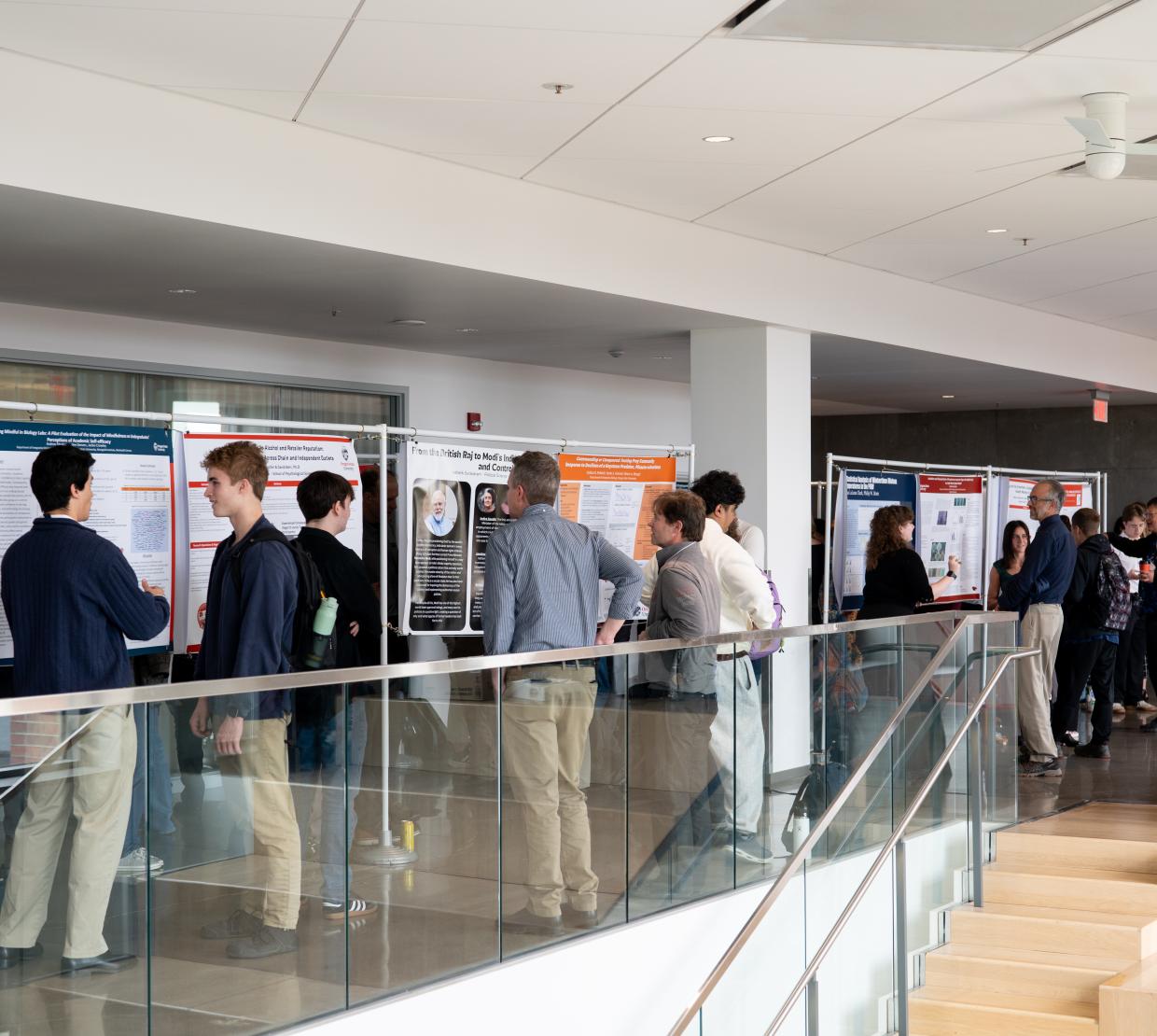
Students take part in the 2025 spring Honors College Thesis Fair.

Science students at Oregon State are driven by curiosity. They want to ask big questions, join research teams early and build strong relationships with faculty. The Honors College gives them an additional space to do that. Nearly 14% of College of Science students choose honors — double the university-wide percentage — because it opens more doors.

For science majors balancing heavy course loads, research ambitions and competitive postgraduate pathways, the Honors College offers structure, access and support that can elevate their experience.

At OSU, that support is anchored in a rare distinction: unlike universities where honors is a transcript notation, honors students earn a unique degree at OSU. And the benefits don’t stop there: Honors science courses double down on engagement between and among faculty and students alike. Early research opportunities to support required honors thesis turns undergraduates into published scholars. At multiple levels, OSU’s Honors College delivers an educational model that deeply aligns with the goals of future scientists.

Research: the heart of the Honors College experience

The emphasis on research begins early, with some science students finding opportunities through honors in their first year — an experience echoed across the College of Science for all students who proactively pursue opportunities.

Eleanor Courcelle, an Honors mathematics and chemistry major, discovered her current research mentor after seeing her present at an Honors College Faculty Research Showcase. She reached out afterward, and that connection led to a funded URSA project and ultimately her honors thesis, which applies mathematical modeling to biological systems.

Biochemistry and molecular biology Honors senior Katya Karlapati had a similar experience. As she settled into her major, she realized she didn’t want to wait to get hands-on research experience.

A woman with black hair sits at a table and looks into a microscope.

Katya Karlapati is part of Alysia Vrailas-Mortimer's laboratory. Her lab explores how different factors such as aging and exposure to toxins contribute to neurological disorders and muscular dystrophies. Vrailas-Mortimer uses fruit flies as a model organism.

“Research helps drive a field forward, and it’s really at the forefront of giving better patient care or improving medications,” she said. “The Honors College really helped give me opportunities and gave me a structure because I knew we had to do a thesis.”

Karlapati ended up in Alicia Vrailas-Mortimer's lab, a fly lab that focuses on Alzheimer’s research. This became the cornerstone of her thesis, which examines different mutations that can accelerate the development of Alzheimer’s in flies and lead to neuron death.

When science students reach out to faculty, she said, being in honors signals commitment.

“Professors know you have to do your thesis and you’re willing to put in that extra mile,” she said.

For students eyeing medical, dental or graduate school, the thesis shows a level of scholarly ability that stands out. Every honors thesis is published on OSU’s open-access ScholarArchive, meaning each undergraduate has contributed to a global body of knowledge.

“It is a pathway that sets them apart… they’re making their contribution available to the entire world,” said Honors College Dean Toni Doolen.

A unique honors framework

Unlike many universities where honors is a transcript note or participation program, OSU stands apart as one of the only institutions in the country where honors is its own degree.

Students graduate with an Honors Baccalaureate degree, which is simultaneously conferred with their major. A biochemistry major, for example, graduates with an Honors Bachelor of Science in Biochemistry, a title that signals not just engagement in honors coursework, but academic rigor backed by measurable learning outcomes attached to the honors coursework.

“Our program isn’t just about participation or just taking honors sections of classes that you might normally take a non-honors section of. We have learning outcomes specific to the Honors College, including scholarly inquiry and engaged inquiry,” Doolen emphasized.

Students sit around a table and look towards an instructor in a salmon colored shirt.

Honors College students engaging in an interactive class discussion in a small, seminar-style setting that encourages participation and critical thinking.

The scholarly inquiry learning outcome is fulfilled primarily through students doing independent research or scholarly work under the advisement of a faculty member and a committee that culminates in their honors thesis.

“This helps them grow their writing and oral communication skills. For many students, it also gives them a chance to do a really deep dive into what it looks like to be a scholar and to make a contribution to a body of knowledge,” Doolen said.

The engaged inquiry learning outcome coincides with the Honors College’s belief that students need to be able to communicate outside of their area of expertise. All students are required to complete unique classes to the Honors College called seminars. These courses offer students the opportunity to explore cross-disciplinary spaces that they might not otherwise be comfortable in. Seminars are taught pass or no pass so there is no risk to a student’s GPA.

Karlapati said those courses broadened her academic world.

“They give you an opportunity to learn about subjects in a different way,” she said. “They offer a low-stress environment to learn more and they’re also really fun.”

She took classes on leadership, astronomy, fashion and even a course built around board games that examined the history of finance.

For science students accustomed to lab reports and problem sets, that variety is often refreshing and useful.

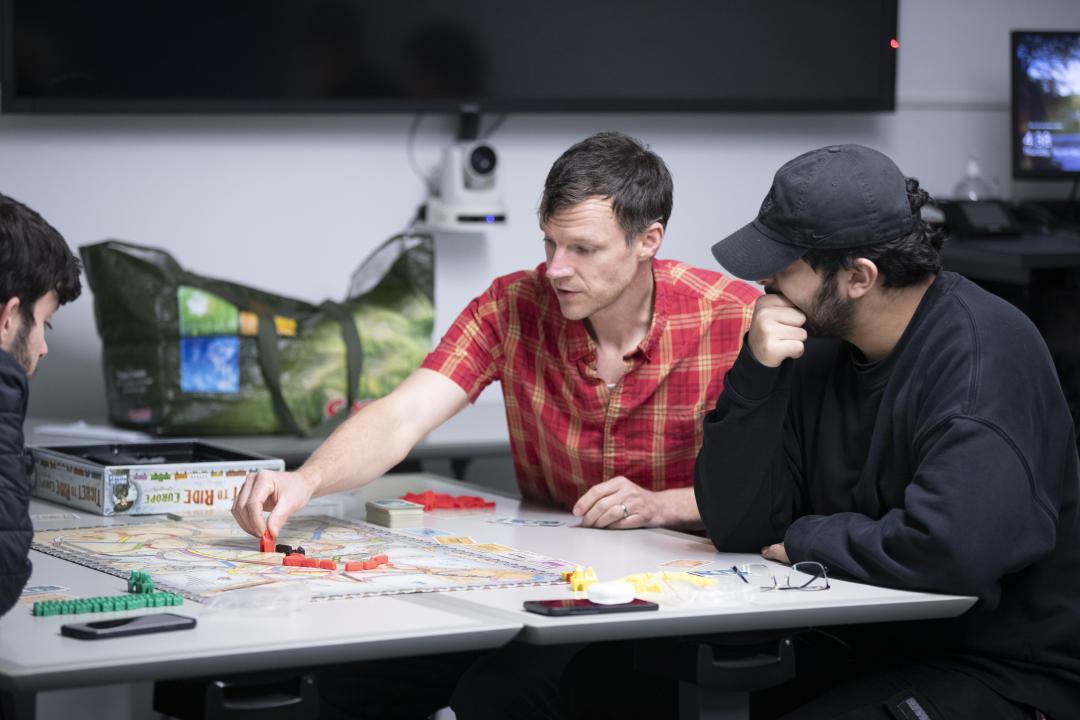
Two students and a professor sit a table and play the board game ticket to ride.

Students explore the History of Commerce through board games in an Honors College seminar. This unique course uses interactive gameplay to examine the evolution of trade, finance and economic systems in a fun, low-stress learning environment.

Building relationships in a big university

Many students said one of the strongest Honors College benefits is the highly engaged class environment, especially early on in demanding science sequences like chemistry, biology and genetics.

Courcelle said this makes first-year classes less daunting.

“The core honors classes were a lot smaller,” she said. “It made a big difference when I was applying to outside opportunities my first year …. professors knew me well.”

Karlapati agreed. “Especially if you’re just starting out, it can be an easier path to get the help you need,” she said. “It’s a really big help to have that personalized attention.”

Dean Doolen emphasized that while some honors courses are small, others are intentionally large, but use an “engaged pedagogy” marked by interaction, discussion and experiential learning.

Another benefit is community-building opportunities outside the classroom.

Karlapati lived in West Hall, parton of the honors living and learning community, and she said the friendships she made there shaped her entire OSU experience.

“I have suitemates who are going to be my lifelong friends,” she said. “Most of them are the ones going to class with you…it’s great to go into the study room and you’re seeing all your classmates.”

The SLUG — the Honors College student learning space on the Corvallis campus — is another space that supports honors students. "SLUG" stands for Students Learning UnderGround and dates back to the Honors College's early days in Strand Agricultural Hall, when the student learning space was in the basement.

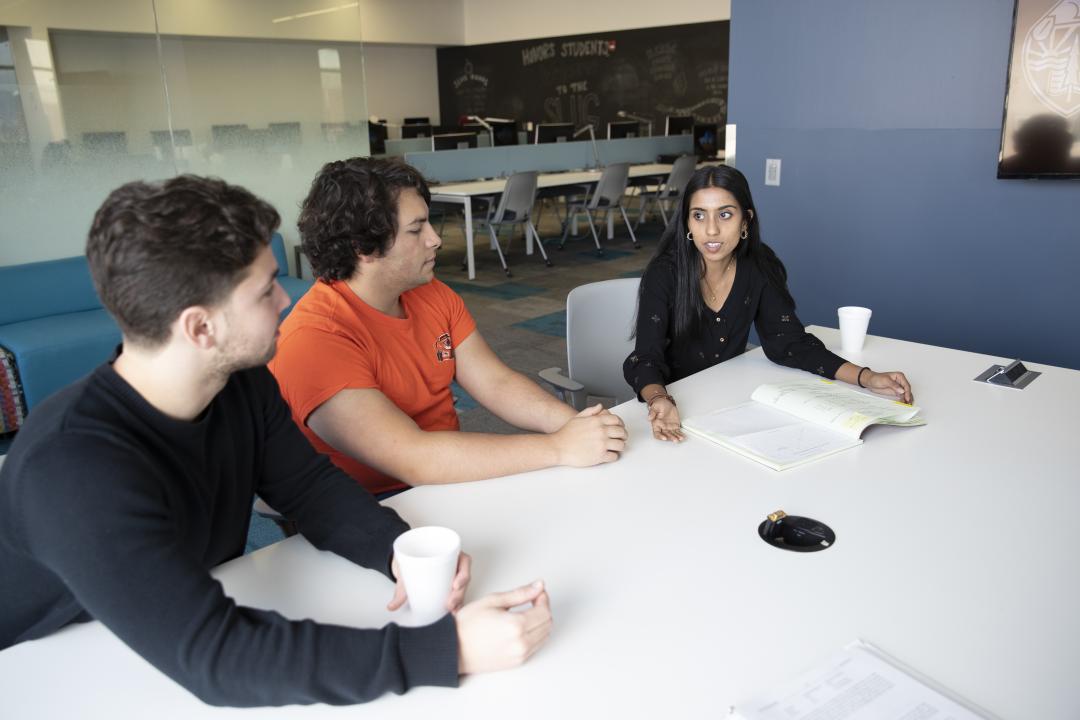
Three students sit at a table.

Honors College students study and collaborate in the SLUG, a dedicated space designed for connection, group work and academic support.

“It’s a great study spot, and the best part is the food,” Karlapati said. “There’s always a meal in there you can take whenever you need.” The Honors College supports students through its Forgot Your Lunch program, which provides food in the SLUG for anyone who forgot their meal or needs a little extra help.

The Honors College provides community for students who might otherwise feel overwhelmed.

“OSU is a big place now,” Dean Doolen said. “For a lot of students, the Honors College is a way of creating a smaller community of like-minded folks.”

A good fit for curious, driven scientists

Both Courcelle and Karlapati say the benefits of honors stack up, academically, personally and professionally.

The college becomes not just an academic distinction, but a launchpad. A hub for friends, mentors, engagement in research and personal and professional growth. A smaller, tighter world inside OSU’s expansive scientific ecosystem.

And for students like Courcelle and Karlalpati, it’s hard to imagine their scientific journey without it.

Orange background with graphics of mini research posters.

Celebrating graduate research at the College of Science

By Hannah Ashton

Graduate Research Showcase

Graduate students at the College of Science are conducting crucial research that addresses critical challenges and benefits both local communities and the broader world.

To celebrate their accomplishments, the College will be hosting the inaugural Graduate Science Research Showcase from 11:30 a.m. to 2:30 p.m. on Friday, May 16, 2025 in the Memorial Union Horizon Room.

Click here to RSVP!


This event offers a glimpse into the future of science featuring graduate research presentations, a poster session and a keynote address from renowned alumnus Jonathan Gallion, vice president of Artificial Intelligence and Machine Learning for OmniScience.

Gallion, recipient of the College's 2024 Early Career Award, earned dual Honors bachelor's degrees in biochemistry and biophysics, and microbiology in 2012. His career began with an internship at SIGA Technologies, where he programmed robots to screen chemical compounds for antiviral medicines. At OmniScience, Gallion and his team utilize large language models to enhance clinical trial outcomes and improve human health. Their work accelerates decision-making and transforms data analysis in biotech, medtech, pharmaceutical and preclinical innovation. Rather than replace human expertise, their AI tools are designed to compliment it.

Schedule of Events

12 p.m.

Lunch

12:20 p.m.

Welcome from Executive Associate Dean Vrushali Bokil and Dean's Remarks from College of Science Dean Eleanor Feingold.


12:30 p.m.

Keynote speech from alumnus Jonathan Gallion, V.P. of Artificial Intelligence and Machine Learning for OmniScience.

Keynote Talk Title - Beyond Automation: Agentic AI and the New Frontier of Life Science Innovation

Abstract: Artificial intelligence in the life sciences is moving beyond automation into a new frontier defined by agentic systems—AI tools capable of reasoning, planning, and autonomous action. As these AI agents continue to evolve from tools to collaborators, life scientists will need to rethink how we generate hypotheses, design experiments, interpret data, and generate insights. This keynote will examine how agentic AI is already transforming decision-making and accelerating innovation within clinical trial development and offer a perspective on how domain experts can adapt and lead at the intersection of scientific expertise and intelligent automation through AI.


1 - 2:30 p.m.

Five minute research presentations and dessert, followed by a poster session, showcasing the diverse research conducted across the seven departments in the College of Science. The session will highlight how Science graduate students are participating and contributing to this valuable research.

Presenters include:

Oluwasen Adu (Integrative Biology)
Advisor: Michael Blouin
Talk title: Genome Wide Association Study of Biomphalaria glabrata snail and its Schistosome Parasite

Vera Alenicheva (Chemistry)
Advisor: Vincent Remcho
Talk title: A Microfluidic Paper-Based Assay for the Quantification of CBD and THC

Lucas Allan (Chemistry)
Advisor: Tim Zuehlsdorff
Talk title: FC2DES: Modeling 2D Electronic Spectroscopy for Harmonic Hamiltonians

Hallee Boyd (Chemistry)
Advisor: May Nyman
Talk title: Characterization of Trivalent Lanthanide Keggin Phosphomolybdate Sandwich Clusters

Daniel Malone Buoy (Statistics)
Advisor: Claudio Fuentes / Sarah Emerson
Talk title: Representative Sampling Methods for K-Fold Cross Validation

Olivia Burleigh (Integrative Biology)
Advisor: Virginia Weis
Talk title: Transcription Factor-targeted ChIP-Seq for Smad3-mediated TGF-β Signaling in Heat-stressed Aiptasia

Jun Cai (Integrative Biology)
Advisor: Virginia Weis
Talk title: Effect of Sphingolipid Metabolic Pathway Inhibition and Knockdown on Cnidarian-Algal Symbiosis

Giovanni Crestani (Integrative Biology, Ph.D.)
Advisor: Molly Burke
Talk title: Genomics of experimentally-evolved postponed reproduction in Drosophila melanogaster

Ushasi Datta (Chemistry)
Advisor: Marilyn Mackiewicz
Talk title: Unveiling the Hidden Properties: How Nanomaterial Surface Chemistry and Biomimetic Systems Shape Reflectance and Contrast

Konstantin Drallios (Chemistry)
Advisor: Thomas Osborn Popp
Talk title: 3D Printable Radiofrequency Coils

Rudranil Dutta (Chemistry)
Advisor: Claudia Maier
Talk title: Identification and Quantitation of Bioactive Alkaloids in Withania Somnifera

Arpa Ebrahimi (Chemistry)
Advisor: Claudia Maier
Talk title: Characterizing the Lipidomic and Proteomic Profile of the 5xFAD Alzheimer’s Disease Mouse Model: A Comparative Study Using MALDI Imaging Mass Spectrometry

Jessica Etter (Chemistry)
Advisor: Claudia Maier
Talk title: LC-QTOF and LC-TIMS-qQTOF MS Analysis of Fecal Inoculum Biotransformation Products and LC-MRM-MS Analysis of Human Withanolide Pharmacokinetics of an Ashwagandha Supplement

Caroline Hernandez (Microbiology)
Advisor: Maude David
Talk title: Whole-Cell Crosslinking Reveals Direct Lactobacillaceae and Rhizobiaceae Interactions with Host Duodenal Neuropods

Esteban Hernandez (Chemistry)
Advisor: Jennifer Field
Talk title: Experimental pKa Values of Substituted and Unsubstituted Perfluoroalkyl Sulfonamides via 19F NMR

Lucas Kolanz (Physics)
Advisor: Davide Lazzati
Talk title: Cosmic dust bunnies

Weiqi ‘Grace’ Li (Statistics)
Advisor: Yuan Jiang
Talk title: Reframing spatial transcriptomics prediction: From regression to classification

Sarah Louie (Biochemistry & Biophysics)
Advisor: Richard Cooley / Ryan Mehl
Talk title: Optimizing genetic code expansion technology to access post-translationally modified proteins

Praveeni Mathangadeera (Mathematics)
Advisor: Małgorzata Peszyńska
Talk title: Computational Modeling of the Nonlinear Heat Equation in Frozen Soil and Snow

Anshika Nagar (Chemistry)
Advisor: Marilyn Mackiewicz
Talk title: Shielded Nanoparticles: Advancing X-Ray Fluorescence Microscopy with Oxidant-Resistant Nickel and Cobalt

Luke Nearhood (Physics)
Advisor: Patti Hamerski
Talk title: Computing the Tension

Joline Nguyen (Biochemistry & Biophysics)
Advisor: Sarah Clark
Talk title: Isolation of Scarce Membrane Protein Complexes from C. elegans

Victory Chiamaka Obieke (Mathematics)
Advisor: Vrushali Bokil
Talk title: Compatible Energy Preserving Discretizations for Nonlinear Optical Wave Propagation: The Maxwell-Duffing Approach

Emily Palmer (Statistics)
Advisor: Yuan Jiang
Talk title: A Group Penalization Framework for Detecting Time-Lagged Microbiota-Host Associations

Madison Phelps (Mathematics)
Advisor: Małgorzata Peszyńska
Talk title: Nonlinear Solvers in Permafrost applications

Kevin Rice (Microbiology)
Advisor: Maude David / Kenton Hokanson
Talk title: Electrical Characterization of Primary Enteroendocrine Cells: Developing Tools to Screen Novel Microbial Neuroactive Compounds

Casey Rummelhart (Chemistry)
Advisor: Addison Desnoyer
Talk title: Frustrated Lewis Pairs Ligand for the Transformation of Carbon Dioxide to Chemical Feedstocks

Pavel Sengupta (Chemistry)
Advisor: Dipankar Koley
Talk title: Quantifying Dissolved Oxygen in Biofilms with Non-invasive Flexible Amperometric Oxygen Sensors

Michael Sieler (Microbiology)
Advisor: Thomas Sharpton
Talk title: Modeling the zebrafish gut microbiome’s resistance and sensitivity to climate change and parasite infection

Gavin Tovar (Statistics)
Advisor: Robert Trangucci / Sarah Emerson
Talk title: Sequential Approach to K-Fold Cross-validation---Computational Reduction Technique

Hao Yue (Chemistry)
Advisor: Marilyn Mackiewicz
Talk title: Targeted X-ray Imaging Agents for Visualizing Triple-Negative Breast Cancer

Sima Ziyaee (Chemistry)
Advisor: Claudia Maier
Talk title: Exploring Cellular Heterogeneity through Single-cell Proteomics


Join us to celebrate the future of science — and the graduate students who are making it happen.

View of the Colorado river inside the Grand Canyon.

Transforming river health, ecology, seaweed, and pest control: Revolutionary SciRIS research

By Hannah Ashton

The College of Science Research and Innovation Seed (SciRIS) Program continues to drive groundbreaking research by fostering collaboration and innovation. Founded in 2018, SciRIS funds interdisciplinary research projects that aim to create meaningful societal impact. This year, Stage 2 awardees are working to revolutionize our understanding of river health, ecological communities, sustainable seaweed cultivation and insecticide resistance.
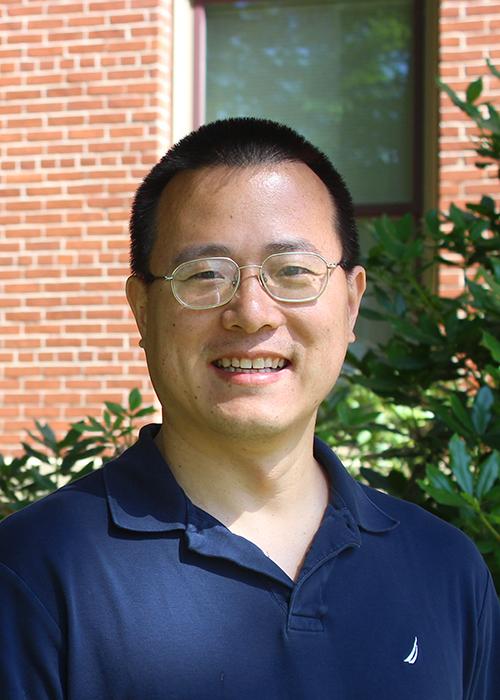
There are two tracks through the program: SciRIS team awards (Stages 1-3) and the SciRIS individual investigator award (SciRIS-ii). SciRIS Stages 1-3 funds teams in three stages to support training, research, and capacity-building, accelerating work toward external funding opportunities. SciRIS-ii funds individual faculty to establish research relationships with external partners, enabling them to demonstrate the feasibility of their ideas and quickening the pace of scientific discovery.

Four teams received SciRIS Stage 2 awards.

Bioinformatics for integrated river health

Biologist David Lytle’s project focuses on understanding the complex interactions between multiple biotic components, including food base, disease landscape and microbiome in the lower Colorado River, including the Grand Canyon. Lytle will be working with three Oregon State colleagues, along with collaborators at the United States Geological Service and the National Parks Service. The project aims to develop diagnostic tools that can identify fish parasites and diseases at a molecular level and provide preliminary data on how these parasite, microbial and invertebrate communities change over time.

Oregon State Collaborators
David A. Lytle, Integrative Biology
Justin Sanders, Microbiology, (College of Science and Carlson College of Veterinary Medicine)
Anna Jolles, Integrative Biology (College of Science and Carlson College of Veterinary Medicine)
Claire Couch, Fisheries, Wildlife and Conservation Sciences (College of Agricultural Sciences and Carlson College of Veterinary Medicine)

Government Collaborators
Ted Kennedy, Kim Dibble, Charles Yackulic, Kate Behn, Jessica Anderson, Bridget Deemer, U.S. Geological Service
Emily Omana, Brandon Holton, National Parks Service

Ripening Oregon blackberries, one of the crops at risk from Spotted wing drosophila

Spotted wing drosophila are an invasive pest that attack several crops essential to Oregon farmers, including ripening blueberries, blackberries, apples and stone fruit. Fruit fly populations evolve rapidly and the Patel and Vrailas-Mortimer group seek to understand the risks of resistance evolution before they adapt to local pesticides.

Insecticide resistance in spotted-winged drosophila

Geneticist Alysia Vrailas-Mortimer's project addresses the significant agricultural threat posed by spotted-winged drosophila (SWD), an invasive pest species. The research aims to advance understanding of the genetic basis and evolution of insecticide resistance in these pest populations through experimental work, genetic techniques and mechanistic mathematical modeling. The project involves collaboration with experts from UC Davis and focuses on developing sustainable control methods. Directly connected to the needs of the Oregon agricultural community, this project is a prime example of OSU’s strong community engagement initiatives as a land grant institution. By learning more about the mechanisms of insecticide resistance in spotted-winged drosophila, growers will be better able to plan and prioritize their insecticide applications to mitigate resistance.

Oregon State Collaborators
Alysia Vrailas Mortimer, Biochemistry & Biophysics
Swati Patel, Mathematics
Serhan Mermer, Environmental and Molecular Toxicology (College of Agricultural Sciences)

Analytical Tools to Understand Ecological Communities

Statistician Yuan Jiang’s SciRIS project aims to create novel analytical tools for assessing how organisms in complex ecological communities like microbes and parasites interact and affect each other over time. The research will leverage long-term community datasets from wild vertebrate host populations with improved data techniques that allow these large complex data sets to be analyzed more efficiently and with environmental conditions factored in. In addition to improve our ecological understanding of these communities, Jiang's project seeks to extend the accessibility of these analytical tools to diverse scientific audiences through summer camps, workshops and online tutorials. The project will also involve collaboration with colleagues and students at the Universidad of San Francisco de Quito in Ecuador to build capacity in data analytics.

Oregon State Collaborators
Yuan Jiang, Statistics
Lan Xue, Statistics
Anna Jolles, Integrative Biology
Claire Couch, Fisheries, Wildlife and Conservation Sciences (College of Agricultural Sciences)

Seaweed on a beach with water.

Seaweed morphology and chemical makeup can vary dramatically depending on environmental factors like seawater composition and sunlight exposure, making it a challenge to nutritionally analyze consistent materials. James Fox and his contributors have developed a system for growing seaweed on land under consistent conditions for analysis.

Unlocking the potential of seaweed

Algal physiologist James Fox’s project explores the chemical composition and potential applications of Pacific Dulse, a protein-rich seaweed native to the Pacific coastline. The team will create a special growth chamber to cultivate seaweed on land under controlled conditions. This allows researchers to maximize the production of important compounds found in Pacific Dulse, which can be used in nutrition and medicine. The project also emphasizes community outreach and inclusive excellence by engaging diverse student populations and partnering with outreach programs. Additionally, the project will investigate the impact of different processing methods on the nutritional quality of seaweed extracts.

Oregon State Collaborators
James Fox, Microbiology
Myriam Cotten, Biochemistry and Biophysics
Ford Evans, Hatfield Marine Science Center
Evan Forsythe, Integrative Biology
Scott Geddes, Chemistry Program Coordinator OSU-Cascades
Jung Jwon, Department of Food Science & Technology (College of Agricultural Sciences)
Christopher Suffridge, Microbiology

These projects highlight the innovative and impactful research being conducted by the 2025 SciRIS awardees. Each project not only advances scientific knowledge by also emphasizes collaboration, community engagement and inclusive excellence.

Two lemurs sit closely together on a tree branch, surveying their environment

Science Faculty Secures $18.5M in FY 2024, extending the reach and impact of science

By Hannah Ashton

The Everson lab studies Madagascan lemurs to explore how hybridization shapes genomes, species limits and the evolutionary trajectory of radiations (rapid increases in diversity).

The College of Science has a diverse portfolio of signature research, scholarship and innovation activities that enable our College to make fundamental and applied discoveries. To support society’s scientific challenges, we are invested in discovery-driven science and applied and transdisciplinary research. Our research intersects with all four research areas of priority outlined in OSU’s strategic plan, Prosperity Widely Shared.

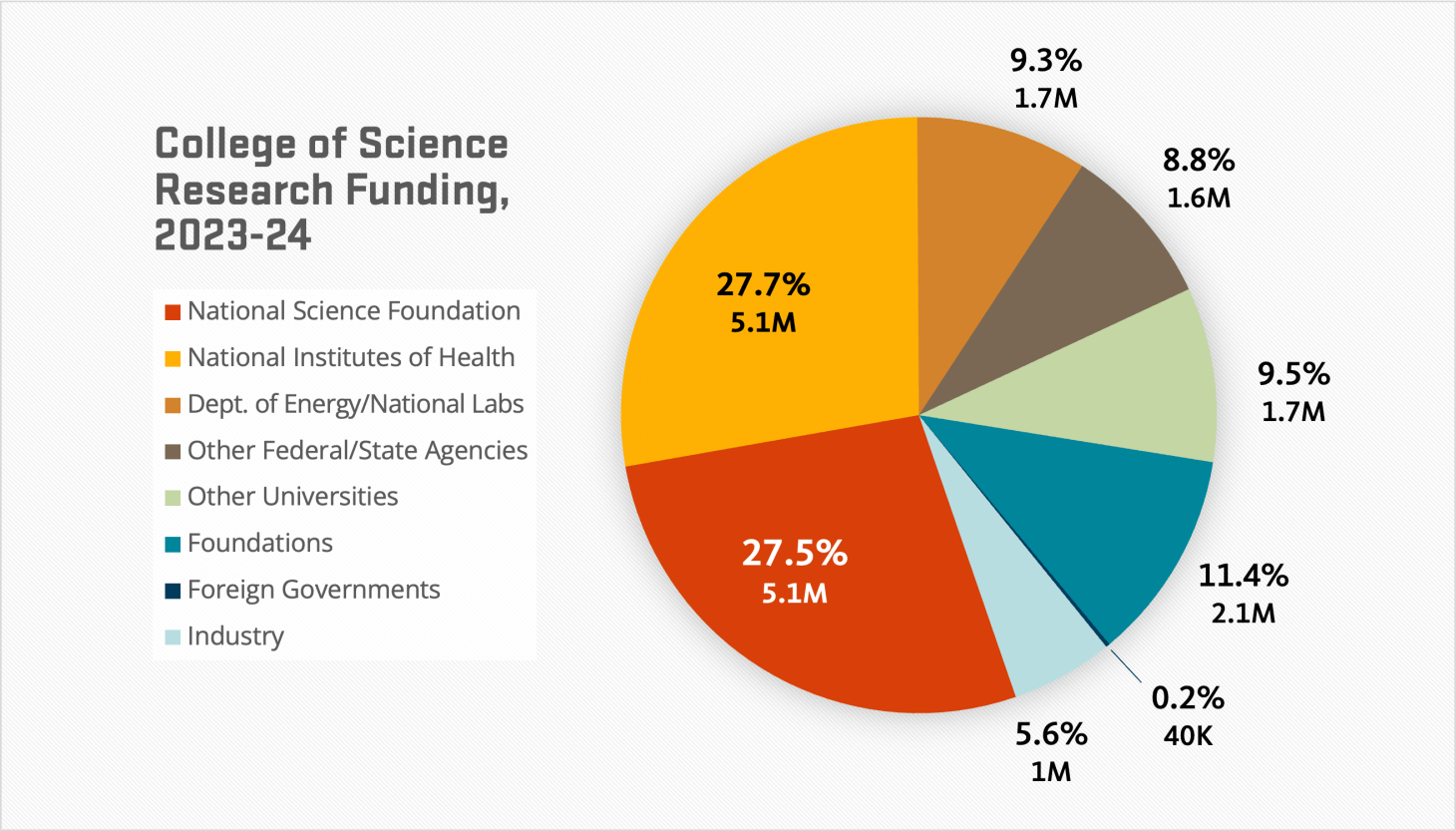
Over the 2024 fiscal year (FY24: July 1, 2023 - June 30, 2024), the College of Science researchers received $18.5 million in research grants to support groundbreaking science. Most of that funding came from federal agencies and foundations in recognition of proposals with broad societal impacts, like increased human health, sustainable and clean energy and climate change mitigation. Our faculty pursue foundational and basic research projects and science education projects. Data science and Artificial Intelligence (AI) tools are increasingly becoming part of the fabric of much of our research. College of Science research expenditures in FY24 totaled $20.7 million.

The figure below illustrates the breakdown of funding sources for the College, with the National Science Foundation (NSF) and National Institutes of Health (NIH) each awarding about $5.1M.

Pie chart showing Science Research Funding, with details in the following caption

Research funding in 2023-24 ($18.5M total) comprised investments mostly from federal and state agencies, including the National Science Foundation (25.7%–$5.1M), National Institutes of Health (27.7%–$5.1M), Department of Energy and National Labs (9.3%–$1.5M), and others (8.8%—$1.6M). Additional funds were provided by other universities (9.5%—$1.7M), foundations (11.4%–$2.1M), foreign governments (0.2%–$40K) and industry (5.6%–$1M).

Research funding propels Team Science forward

Oregon State University is focused on big discoveries that drive big solutions. Many science faculty received grants last year in support of discovery-driven science, applied and transdisciplinary research science education and innovation in OSU’s priority research areas of integrated health and biotechnology, climate science and solutions, robotics, data science and AI, and clean energy and solutions. Below are some of the highlights—not including multi-year projects started before 2023.

Faculty honors

Astrophysicist Jeff Hazboun received a $73K Faculty Early Career Development award from the National Science Foundation. This prestigious NSF early career award is highly coveted by faculty! Hazboun’s project includes curriculum development and the implementation of a summer workshop in astrophysics-themed data analysis designed to foster inspired teaching, stimulate excitement in pulsar timing array research, facilitate the learning goals of undergraduate and graduate students, and support the community college students’ transition into four-year schools.

Mathematician Christine Escher received a $50,397 award from the NSF to host the Pacific Northwest Geometry Seminar series over three years at various Pacific Northwest universities. Escher is the principal organizer of the conference. This award supports meetings of the Pacific Northwest Geometry Seminar (PNGS), a regional meeting for researchers and educators of geometry, to be held at the University of British Columbia (2025), Seattle University (2026) and Lewis & Clark College (2027).

Integrated health & biotechnology

Materials scientist Kyriakos Stylianou, along with members of the College of Pharmacy and the College of Agricultural Science, received $2 million from the U.S. Department of Agriculture to develop improved ways of preventing stored potatoes from sprouting, particularly in the organic sector. Stylianou’s team studied nearly 200 different plant essential oils for their anti-sprouting effects. Oregon, Washington and Idaho produce more than 60% of the potatoes grown in the United States, and Pacific Northwest potato cultivation is a $2.2 billion industry.

Microbiologist Maude David is part of a multi-institution research team to receive a $4.3 million grant from the U.S. Department of Agriculture to study European foulbrood disease (EFD) in honey bees. The group is investigating the factors contributing to the high incidence of infection, and will then share their findings with local beekeepers and growers to improve mitigation efforts. Beekeepers in Oregon typically pollinate about five different crops annually. If the colonies are weakened by EFD, this results in less pollination, which is a concern for blueberry and almond growers.

A scientist in a beekeeping outfit stands next to a honeycomb

Carolyn Breece from the OSU Honey Bee Lab shows Maude David a bee colony during a field trip.

Evolutionary biologist Michael Blouin was awarded $1.86M over five years ($371K per year) from the National Institutes of Health for his project entitled, “Genetic mechanisms of snail/schistosome compatibility.” Schistosomes are water-borne blood-flukes transmitted by snails, which infect over 250 million people in more than 70 countries and cause severe and chronic disability. A debilitating helminth parasitic disease of humans, vaccines are available for schistosomiasis. This project will identify new genes that make some snails naturally resistant to infection by schistosomes, revealing potential new ways to reduce parasite transmission at the snail stage.

Statistician Robert Trangucci received $164K from the University of Michigan for his project entitled, “Data driven transmission models to optimize influenza vaccination and pandemic mitigation strategies.” Selection bias is common in infectious disease datasets due to complex observational and biological processes, and bias can arise from covariate data which is missing due to analytical limitations. The research team is addressing the concern by extending existing models to accommodate risk and data gaps over time for application in vaccination and other novel datasets.

Chemist Dipankar Koley received $542K from the National Institutes of Health for his project entitled, “Microenvironmental characterization and manipulation to prevent secondary caries.” A common reason for dental replacement is a recurrence of caries around existing restorations caused by microbial activity. The project seeks development of new and innovative materials to bias this microbial environment toward improved dental health, and the researchers are investigating the use of cations of magnesium and zinc applied with specialized release platforms.

Collaborative research at the interface of robotics, computer vision and AI

Statistician Yanming Di received $249K from the U.S. Department of Agriculture for a project entitled, “DeepSeed: A computer-vision network for onsite, real-time seed analysis.” The Willamette Valley is considered the “grass seed capital of the world.” Seed testing, used for determining seed lot quality and establishing seed value, is a fundamental phase of the agricultural marketing system. With recent advances in robotics, computer vision, and AI, an opportunity presents itself for a new wave of innovations. This project utilizes AI and robotics to innovate devices and protocols for sampling grass seeds and a computer vision system for automated seed analysis. The investigators consist of experts in seed services, computer vision, statistics, and mechanical engineering.

California mussels at low tide, covered in barnacles

Mytilus californianus (the California mussel) is prey for many predator species, serves as a filter for ocean particulate, and harbors hundreds of other species. Threats to this normally resilient foundation species represent risks to the entire local marine ecology.

Climate science and related solutions

Materials scientist Kyriakos Stylianou received $689K from Saudi Aramco for a project entitled “New Generation of CO2 Capture Adsorbents: Synthesis, Performance under Humid Conditions, and Scaleup.” In this project, the Stylianou group aims to discover novel adsorbents for the selective capture of CO2 from diluted sources. Successful materials will undergo scaling up and evaluation for their efficacy in removing CO2 from air.

Marine ecologist Bruce Menge received $200K from the National Science Foundation for his project entitled, “RAPID: A subtle epidemic: unique mortality of Mytilus californianus on the Oregon coast.”

The research team is investigating the major changes occurring in the Pacific Northwest marine ecosystems, with evidence these communities exhibit low resilience to climate change. For example, sessile invertebrates (mussels, barnacles, etc) become more abundant while seaweed species (kelp, etc) decline.

Evolutionary biologist Kathryn Everson received two awards for $276K from the University of Kentucky Research Foundation for a project entitled, “The role of hybridization in generating biodiversity: Insights from genomics of Madagascar’s true lemurs (Eulemur).” This project is funded by the NSF to understand how new species form in the context of complex gene flow and to expose the genomic signatures of evolutionary processes. The researchers will characterize patterns of gene flow, selection, and genome architecture for a species of lemur to gain a genomic perspective on the evolution of species boundaries. In addition, the team will construct a hybridization model using data on geographic range, diet, and social behavior for this lemur.

Clean energy and related solutions

Aerosol chemist Alison Bain received $284K from McGill University for her project entitled, “Single particle measurements.” This research aims to understand the optical properties of stratospheric aerosols. Using single particle experiments under environmentally relevant temperatures and humidities, the team will extend a wavelength-dependent refractive index model to include these conditions. They are also looking at how atmospheric aging impacts the optical properties of these materials.

Chemist Wei Kong received $110K from the American Chemical Society for her project entitled, “Superfluid helium droplets as microreactors for studies of photochemistry of fossil fuel hydrocarbons: polycyclic aromatic hydrocarbons and the corresponding endoperoxides.” The project will use superfluid helium droplets as microreactors to investigate the kinetics of the photooxidation process of a major component of petroleum (polycyclic aromatic hydrocarbons, PAH). Using several analytical techniques, the team will test the hypothesis that supercooling the helium droplets will stabilize an excited state of the oxygen molecule and prevent further reactions.

Collaborative partnerships to fuel a thriving world

Biochemist Ryan Mehl received $234K from the NobleReach Foundation in partnership with the National Science Foundation. The project “Ideal eukaryotic tetrazine ligations for imaging protein dynamics in live cells” was selected as one of the first set of 11 national pilot projects to receive $234K from the NobleReach Foundation.The partnership seeks to identify and accelerate the translation of NSF-funded research into biotechnologies and bio-inspired designs with commercial and societal impacts. This pilot will help inform future translational funding opportunities along with enabling Professor Mehl and the other selected principal investigators to accelerate bringing their research to the market and society.

Biochemist Patrick Reardon received $500K from the National Science Foundation (NSF) Research Instrumentation Program for his project entitled, “MRI: Acquisition of Helium Recovery Equipment: An integrated system for helium capture and recovery for the OSU NMR facility.” This award supports the acquisition and installation of an integrated system for helium capture and recovery for the nuclear magnetic resonance (NMR) facility. Helium is in high demand and is used for a wide variety of industrial and research applications, and it is a non-renewable resource which highlights the need for laboratories to capture and recycle this important gas. The NMR lab is supported by funding from the National Institutes of Health, NSF, M.J. Murdock Charitable Trust, and OSU, and it is a core facility and cornerstone for groundbreaking research in interdisciplinary science and engineering, chemistry, biochemistry, and biophysics at OSU, throughout the Pacific Northwest, and beyond. The facility continually strives to enhance its state-of-the-art instrumentation for the highest levels of analytical performance.

An abstract illustration of data, AI and information forming waves

College of Science hosts Inaugural Research Showcase

By Hannah Ashton

Extending the Reach and Impact of Science

RSVP Today

Tuesday, May 21, 2024
11 a.m. – 2 p.m.
Memorial Union Multipurpose Room 13

This event will feature SciRIS awardee presentations, panel discussion on artificial intelligence in the College of Science, and posters and science education demonstrations by Oregon Museum of Science and Industry (OMSI) Fellows.

Schedule of Events

11 – 11:10 a.m.

Welcome and introduction from Vrushali Bokil, Associate Dean of Research and Graduate Studies


11:10 – noon

SciRIS Awards Showcase

The College of Science Research and Innovation Seed (SciRIS) program funds projects based on collaborative research within our community and beyond. The program awards seed funding for high-impact collaborative proposals that build teams, pursue fundamental discoveries and create societal impact. Founded in 2018, SciRIS accelerates the pace of research, discovery and innovation in the College of Science by enabling scientists to work across an array of disciplines in a mentored environment. We showcase some of the recent awards made under this program.

Francis Chan: “The Hypoxic Barrier Hypothesis: have we missed a fundamental dynamic of oxygen use in microbes and ecosystems?”

Kim Halsey: “Leveraging volatile organic compounds to detect cyanotoxin contamination in Oregon lakes”

Maude David: “Leveraging organ-on-a-chip systems to mimic the gut sensory system: toward screening microbiota-vagal interactions”

Yuan Jiang: “Harnesses longitudinal microbiome data to define the ecological roles of host-associated microbes”

Alysia Vrailas-Mortimer: “A New Model to Study the role of Iron in Parkinson’s Disease”


Noon – 1 p.m.

Lunch & Networking: OMSI Communication Fellows demonstration and poster session

Oregon State University and the Oregon Museum of Science and Industry (OMSI), one of the nation's leading science centers, have enjoyed a close partnership since 2016. OMSI hosts its popular Science Communication Fellowship cohort program on OSU’s Corvallis campus every spring. More than 70 students, faculty and staff from across science at OSU have completed the training program, including the Colleges of Science; Engineering; Earth, Ocean, and Atmospheric Science; Agricultural Sciences; Forestry; and Public Health and Human Sciences. The COS partners with OMSI in offering this fellowship to our students. Here we showcase some of our COS OMSI Science Communication Fellows.

Akasit Visootsat & Yuan Gao (Physics): “What & How to see motor proteins?”

Sunni Patton (Microbiology): “Exploring the Coral Microbiome”

Austin Vick (Integrative Biology): “What can the common fruit fly tell us about our health”


1 – 2 p.m.

Panel Session: AI in Research
Moderators: Vrushali Bokil, Bettye Maddux and Jeff Hare

The panel will discuss ideas for incorporating AI and data science across four priority research areas: clean energy, integrated health and biotechnology, climate solutions and robotics.

Panelists

Tim Zuehlsdorff, Assistant Professor, Department of Chemistry

Jeff Hazboun, Assistant Professor, Department of Physics

Ryan Mehl, Professor, Director of GCE4All Research Center, Department of Biochemistry & Biophysics

Marilyn Rampersad Mackiewicz, Associate Professor, Department of Chemistry

Francis Chan, Associate Professor, Director, Cooperative Institute for Marine Ecosystem and Resources Studies, Department of Integrative Biology

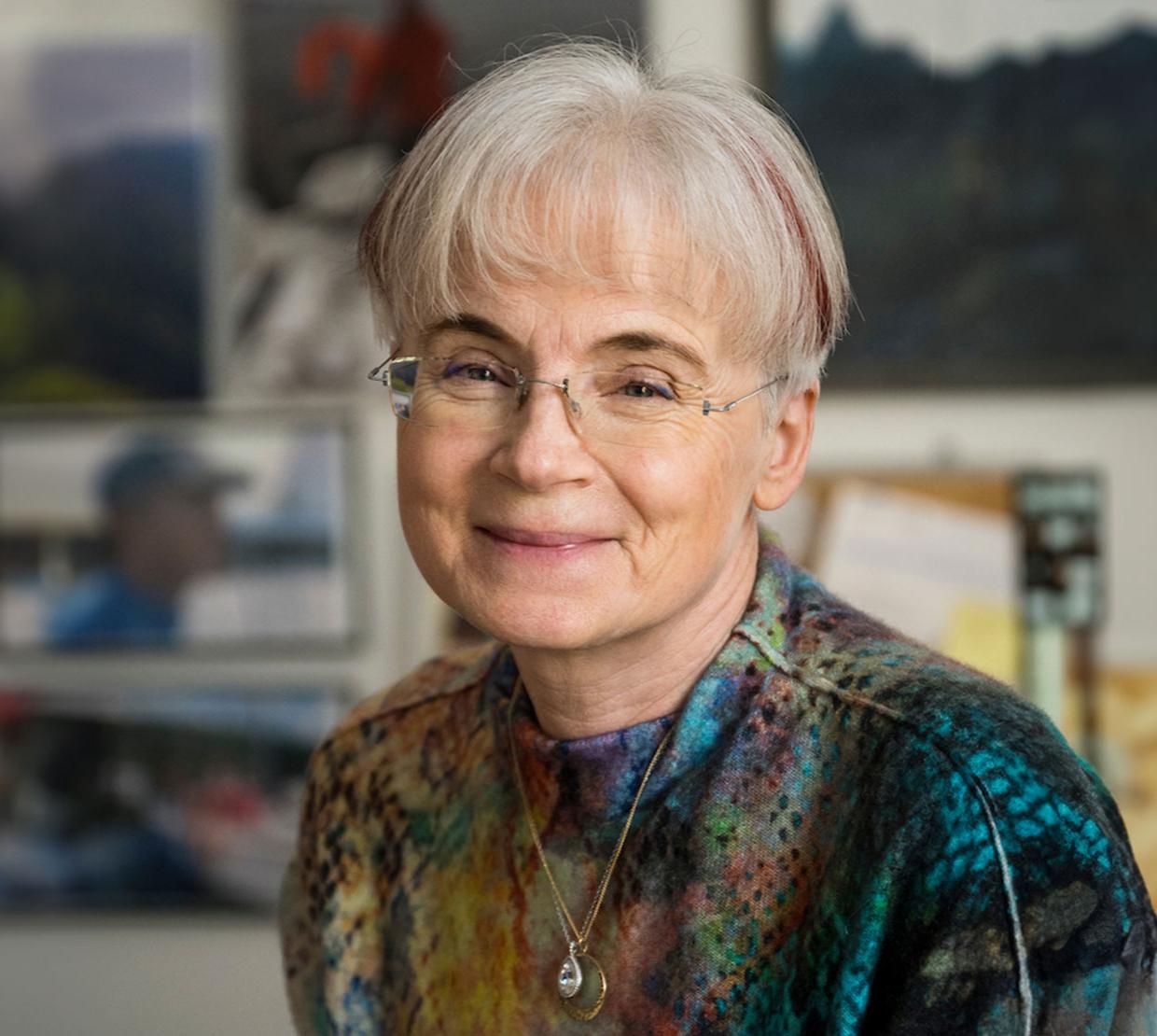
A woman in a multi-colored blouse poses for a headshot to celebrate being announced as a Distinguished Professor.

Malgorzata Peszynska named a University Distinguished Professor

By Tamara Cissna

Malgorzata Peszyńska, newly honored as a University Distinguished Professor at Oregon State University, has charted a remarkable path — shaped by uncommon talent, grit and a spirit of joyful independence.

Renowned for her exploration of the physical world through the prism of mathematics and computation, Peszyńska's work has yielded fascinating insights over her distinguished career. Her research has fostered innovation and enabled applications with global impact on pressing environmental concerns and natural resource management.

In recognition of her achievements, she has earned Oregon State's highest academic honor. The university awards this distinction to a select few faculty nominated by their peers, with the College of Science having the highest number at 19.

"Dr. Malgorzata Peszyńska is nationally and internationally recognized as a leader in mathematical and computational modeling of complex processes, and her work has been particularly significant in building bridges across disciplinary boundaries," Provost Ed Feser wrote in the university’s announcement of this honor.

Peszyńska will present a university distinguished lecture, along with one other 2024 distinguished professor: Todd S. Palmer in the College of Engineering. She will present her lecture on Wednesday, May 8, at 1:30 – 3 p.m. in the Memorial Union Horizon Room. Her lecture is titled, “Math Matters: Multi-* Modeling, Analysis and Simulation.”

“This is an honor and accomplishment, and evidence of appreciation coming from the many colleagues, students and collaborators,” Peszyńska said. “It is also a responsibility, and I am not the only one deserving, but now I can stand on the shoulders of giants and pay it forward.”

As the Joel Davis Faculty Scholar in Mathematics, Peszyńska is acclaimed for her pioneering work in numerical analysis and modeling. Her recognition as an AAAS Fellow in 2020 highlights her “exceptional contributions to multidisciplinary mathematical and computational modeling of flow and transport in porous media."

Peszyńska's work has been supported by more than $3M from the National Science Foundation (NSF) and other agencies and industries. She has authored more than 119 research publications in high impact computational mathematics journals including SIAM journals and in the interdisciplinary venues such as the Journal of Petroleum Science and Engineering, Advances in Water Resources, Geophysics, and other high-Impact journals, and her publications have received more than 2,000 citations.

Over the years, her achievements have garnered numerous awards: She received the Geosciences Career Prize from the Society for Industrial and Applied Mathematics (SIAM), and she's also been recognized as a Distinguished Fellow by the Kosciuszko Foundation and served as a 2009-2010 Fulbright Research Scholar at the University of Warsaw, 2006 Mortar Board Top Professor award, 2016 Graduate faculty award and more.

A mathematical odyssey in energy and climate

Peszyńska specializes in modeling, analysis, and numerical analysis of models, a discipline that seeks to describe real-world systems mathematically, so they can be simulated, analyzed predicted and — when there are problems — solved.

With expertise that spans disciplines, Peszynska primarily works to mathematically solve problems related to environment and, recently, climate change. Her modeling of mass and energy flow and transport includes porous media phenomena in aquifers, oil and gas reserves, carbon sequestration, solar cells and the effect of permafrost warming. Perhaps most notable is her work on phase transitions in methane hydrate transfer and evolution, as well as in using computational mathematics to study complex pore-scale environments. This work aims to understand and predict the presence and behavior of fluids in nature to mitigate potential disasters, like hazardous explosions or methane emissions contributing to global warming and addressing challenges in climate science and geophysics.

In her recent NSF-supported work on studying permafrost changes, Peszyńska seeks to predict and mitigate potential large-scale events such as building collapses and coastal erosion, highlighting the urgency for more modeling in this area.

Her research team employs computers to approximate solutions, striving for accuracy even when the true solution is unknown, she explained. Ultimately, they contemplate how computational algorithms can approximate truth without certainty, exploring the mysteries of mathematics.

"There's so much about the methods themselves that intrigue us in this mystery," she said. "How do you achieve that? How can you anticipate whether your computational algorithm will yield a prediction close enough to the true solution, regardless of what that true solution might be, without actually having knowledge of it?"

Peszyńska will explore this and other questions in her public lecture. She will also “delve into how her research team explores multi-scale multi-physics systems using complex computational mathematics, inspired by real-life applications. She will discuss their investigation of porous media at nano-, pore-, lab-, and field scales, predicting their responses to environmental changes. She will also emphasize the importance of fostering interdisciplinary collaborations within Oregon State University and with external partners to encourage students to embrace complexity over simplicity.”

A woman in a skiing outfit stands next to a sign read "East, West."

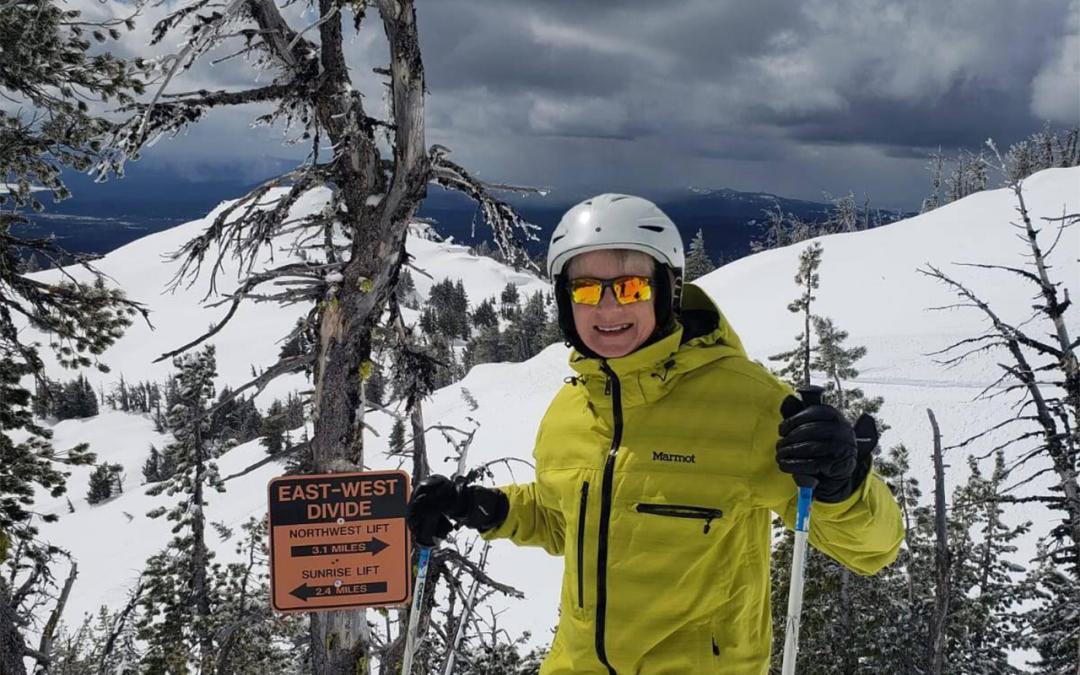
Malgorzata Peszynska on the southeast side of Mt. Bachelor, Oregon, where two trails meet at the East West Divide. Peszynska's journey has also taken her on trails from East to West, over 5,000 miles from Poland to Oregon.

From Warsaw to worldwide impact: A wholehearted journey

Born and raised in Warsaw, Poland, Peszynska discovered her passion for mathematics at a young age. Encouraged by her family, she cultivated that passion alongside her love for the natural world, leading her to study mathematics in the context of physical phenomena and ultimately specialize in mathematical modeling and computational solution of flows through porous media and their geological applications.

She earned a master’s degree in applied mathematics from the Warsaw University of Technology and a Ph.D. in mathematics from the University of Augsburg in Germany. She also holds a habilitation degree from the Warsaw University of Technology.

Her interest in real-life applications is driven, in part, by a personal passion for the natural environment and outdoor activities. And she commits fully to her pursuits, whether tackling complex equations, building interdisciplinary teams, or enjoying leisure activities like skiing and sailing. Embracing her mantra to "Make your own kind of music," she consistently tries to choose the complex and challenging path over the simple and easy.

Reflecting on the most meaningful milestones and accomplishments that led to this recognition, Peszynska shared that it's not about one single thing but rather a tapestry of efforts woven from countless interesting problems and diverse potential directions.

“At every fork in the road, we are choosing a path and sometimes we succeed in making progress,” she said. “At times, the most cited papers are the easiest for us, and sometimes those least noticed are the hardest but might make an impact much later. This may be scary when looking ahead, but it gets easier over time.”

She likens her role as a mathematician to that of a translator, bridging gaps between disciplines and applying mathematical rigor. Collaborating with colleagues from within mathematics and across other fields has empowered her to tackle real-world modeling projects with significant practical implications, even in the absence of a clear existing mathematical framework for analysis. From exploring multi-scale modeling techniques to navigating complex algorithms, these partnerships have broadened her perspective and fueled innovation.

As a mentor, she encourages students to discover their passions and gently nudges them to work diligently towards their goals, knowing they might change their minds along the way. But, she said, “There's no substitute for hard work. Sometimes, it's not just about assignments or tasks; it's about doing repetitive steps and finding the discipline to keep going. One of my past mentors said, ‘All you can do is work.’ And that's true. It means showing up every day, putting in your hours, and eventually, things will click. In turn, mentoring isn't easy. You offer advice, but ultimately, it's up to them to decide what works best for them. It's not unique—I don't have all the answers. Live and let live, I suppose—that's another principle I try to uphold.”

One of her former students, Scott Clark ('08), listed in Forbes Magazine’s 30 under 30, shared, “Dr. Peszyńska’s guidance led me down the interdisciplinary path that would become the foundation of my later graduate and professional work. ... She had a direct, positive impact on my career trajectory, and I would not be where I am today without her.”

At that, she humbly replied, “We have a lot of brilliant undergraduate students, and they just need an opportunity to fly. And so we should be accommodating them, I think. Yeah, let them fly."

She has also found leading the community in various professional circumstances gratifying—“building one connection at a time and not letting go.” Peszyńska has served as a program director for computational mathematics for the NSF and in multiple roles for the Society for Industrial and Applied Mathematics. Additionally, she organizes conferences, serves on editorial boards, and participates in review panels for prestigious institutions.

A group of people stand on a deck celebrating the graduation of a postdoc.

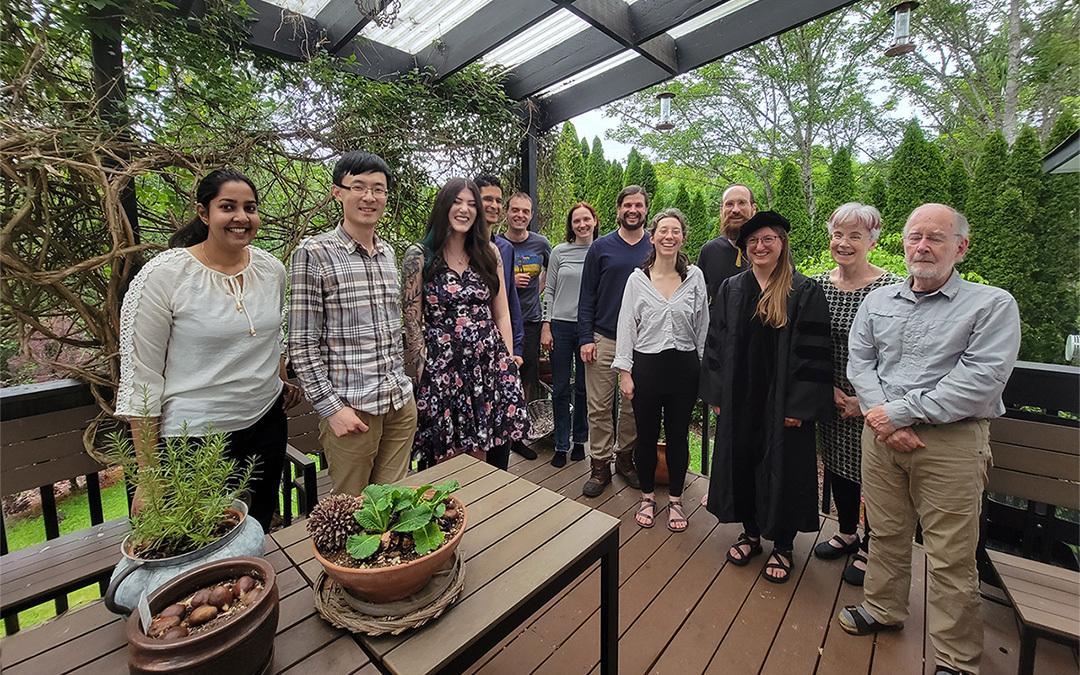
Malgorzata Peszyńska and her students and postdocs celebrating the graduation of Lisa Bigler (Ph.D. 2022).

Challenges and rewards: Bridging disciplinary divides

Peszynska’s success in bridging complex mathematics and diverse real world disciplines has much to do with her independent and joyful spirit.

She describes her atypical view of computational and applied math as an "attitude," rather than a discipline. “My work leans closer to art in its abstract form, or closer to science and engineering in its useful side. This dichotomy is not always understood or appreciated, and it feels funny and sometimes tedious that we may have to prove ourselves over and over. Doesn't everyone want to have clean air, enough food, exciting and intellectually stimulating complex work and stability of life? Live and let live!

“But my strategy is to not try to win anyone over to interdisciplinary work but rather to enjoy the intellectual and emotional joy of learning the new language while appreciating the cultural differences. The reward is that you build the bridges rather than straddle the fence.”

To apply her discipline and contribute wholly to critical concerns is very hard work, and she competes mostly with herself, harnessing discipline if ever enthusiasm wanes. Just as she advises her students: Do the work.

“On the lighter side, most days I wake up happy in the morning to continue doing this work,” she said. “It's fun, more fun than video games because I can make my own with the simulations. So that's exactly what I hope for others, especially students, that they will find fun in it—potentially even more, making a difference, one step closer to a better world.”

Curious minds may explore Peszyńska’s website for its challenges and interactive learning. Exploring innovative solutions can feel akin to solving puzzles, but even more rewarding.

The lasting impact of her work that she will hold most dear is the enduring value of lifelong learning and the significance of interdisciplinary collaboration—with its potential to shape the future. And she truly hopes that students will experience and appreciate the intrinsic joy and real-world impact that computational and applied mathematics have to offer.

“I am thrilled to see Malgo Peszyńska get this well-deserved recognition,” said Eleanor Feingold, dean of the College of Science. “Her world-class work in mathematical and computational modeling, coupled with her dedication to interdisciplinary collaboration, are instrumental in shaping the future of environmental science.”

Along her journey, Peszyńska has had to choose between many forks in the road. With too many options to follow in one lifetime, she acknowledges the opportunities left behind for future lives.

What might she pursue in her next life? Well, she might need two (or more). “Right now, my count goes into the upper teens.”

Cancer cells

Innovation in cancer treatment and mathematics: SciRIS awardees lead the way

By Hannah Ashton

SciRIS awards bolster essential research endeavors, such as the investigation of human cancer cells (pictured above).

Collaborative science has the power to change the world. The 2024 College of Science Research and Innovation Seed (SciRIS) award recipients aim to use that power to develop better treatments for cancer and unlock the mysteries of complex mathematical equations.

The SciRIS program funds projects based on collaborative research within the College of Science community and beyond. There are two tracks through the program: SciRIS (Stages 1-3) and the SciRIS individual investigator award (SciRIS-ii).

SciRIS Stages 1-3 funds teams in three stages of increasing funding to support training, research and capacity-building, accelerating work toward external funding opportunities. SciRIS-ii funds individual faculty to establish research relationships with external partners, enabling them to demonstrate the feasibility of their ideas and quickening the pace of scientific discovery.

SciRIS Stage 1

Professor Claudia Maier, alongside a multidisciplinary team including researchers from the Colleges of Engineering and Agricultural Science, received a SciRIS Stage 1 award to study on triple-negative breast cancer.

Maier’s team includes two other College of Science researchers, Yanming Di from the Department of Statistics and Chad Giusti from the Department of Mathematics.

In biology, cells exhibit a range of diverse characteristics known as cellular heterogeneity, regardless if the overall biology appears uniform. This diversity influences disease progression, treatment outcomes and the likelihood of disease recurrence. Single-cell proteomics is an emerging technique that allows researchers to study these differences at the individual cell level.

Collaborating with faculty from the College of Engineering and the College of Agricultural Science, the team aims to refine a single-cell mass spectrometry workflow focusing on triple-negative breast cancer and specifically targeting therapy-induced senescent cells. Senescent cells eventually stop multiplying but don’t die off, leading to the continued release of chemicals that can trigger inflammation and damage healthy cells. This research builds upon previous work and collaboration, moving from technology development to practical application in biomedicine.

By understanding the heterogeneity within breast cancer and the role of senescent cells in treatment resistance, the researchers aim to develop methods for detecting and characterizing TIS cells from tissue samples. This information will be crucial for developing treatments that target these cells, potentially improving outcomes for TNBC patients.

Kyriakos Stylianou smiles for a photo.

Kyriakos Stylianou

SciRIS-ii (Individual Investigator)

The following three scientists received SciRIS-ii awards: Kyriakos Stylianou, Christine Escher and Xueying Yu.

Materials scientist Kyriakos Stylianou will use his SciRISii award to study a new, more efficient way to diagnose and treat cancer using advanced technology that combines imaging and therapy in one tiny package.

Theranostics is a novel cancer approach that uses radiotracers, compounds made of radiation and chemicals that selectively bind to a specific target in the body. The tracers identify and then deliver radioactive drug therapy to the tumor, resulting in better outcomes and personalized treatments.

Stylianou will explore using metal-organic frameworks to build the nanoparticles. His research will also look at utilizing boron neutron capture therapy, a promising approach to cancer treatment that results in minimal consequences to normal cells.

By combining gadolinium for imagining and carborane-based ligands—which include boron—for therapy, the MOF would be able to diagnose and treat cancer after being activated specifically in tumor microenvironments.

The successful demonstration of the theranostic capabilities of the MOFs in lab settings will mark the initial phase towards more complex studies conducted in living organisms.

Christine Escher in front of shrubbery

Christine Escher

Mathematics Professor Christine Escher will use her SciRISii award to delve into Global Riemannian geometry, a field studying the relationship between local and global geometric properties of space. Specifically, the focus is on understanding manifolds with lower curvature bounds by exploring symmetries.

Escher will be continuing to collaborate with Catherine Searle from Wichita State University, to achieve a comprehensive classification of such manifolds, contributing to a deeper understanding of Riemannian geometry.

Escher will be attending a semester-long program at the Mathematical Sciences Research Institute in Berkeley entitled, “New Frontiers in Curvature: Flows, General Relativity, Minimal Submanifolds and Symmetry.” This opportunity facilitates collaboration and provides access to specialized resources. One of Escher’s Ph.D. students, Augustin Bosgraaf, will also participate in the program, further enhancing the mentorship and educational aspects of this research endeavor.

Xueying Yu

Xueying Yu

Assistant Professor of Mathematics Xueying Yu received a SciRISii grant to understand the behavior of dispersive equations, which are fundamental in describing various natural phenomena such as light transmission, charge transport in DNA and particle interaction in atoms. While these equations are widely used across physics and biology, their long-term behavior remains largely unexplored.

Collaborating with researchers at the University of Bologna in Italy, the University of New York at Binghamton and Massachusetts Institute of Technology, Yu will focus on equations with variable coefficients which are more complex to analyze. The project aims to develop theories and tools to understand the long-term behavior of these variable coefficient dispersive equations, focusing on aspects like global well-posedness, scattering effects and unique continuation of solutions.

This project will not only contribute to advancing mathematical understanding but also have practical implications in various fields such as numerical simulations, optics, condensed matter, fluid mechanics and biology.

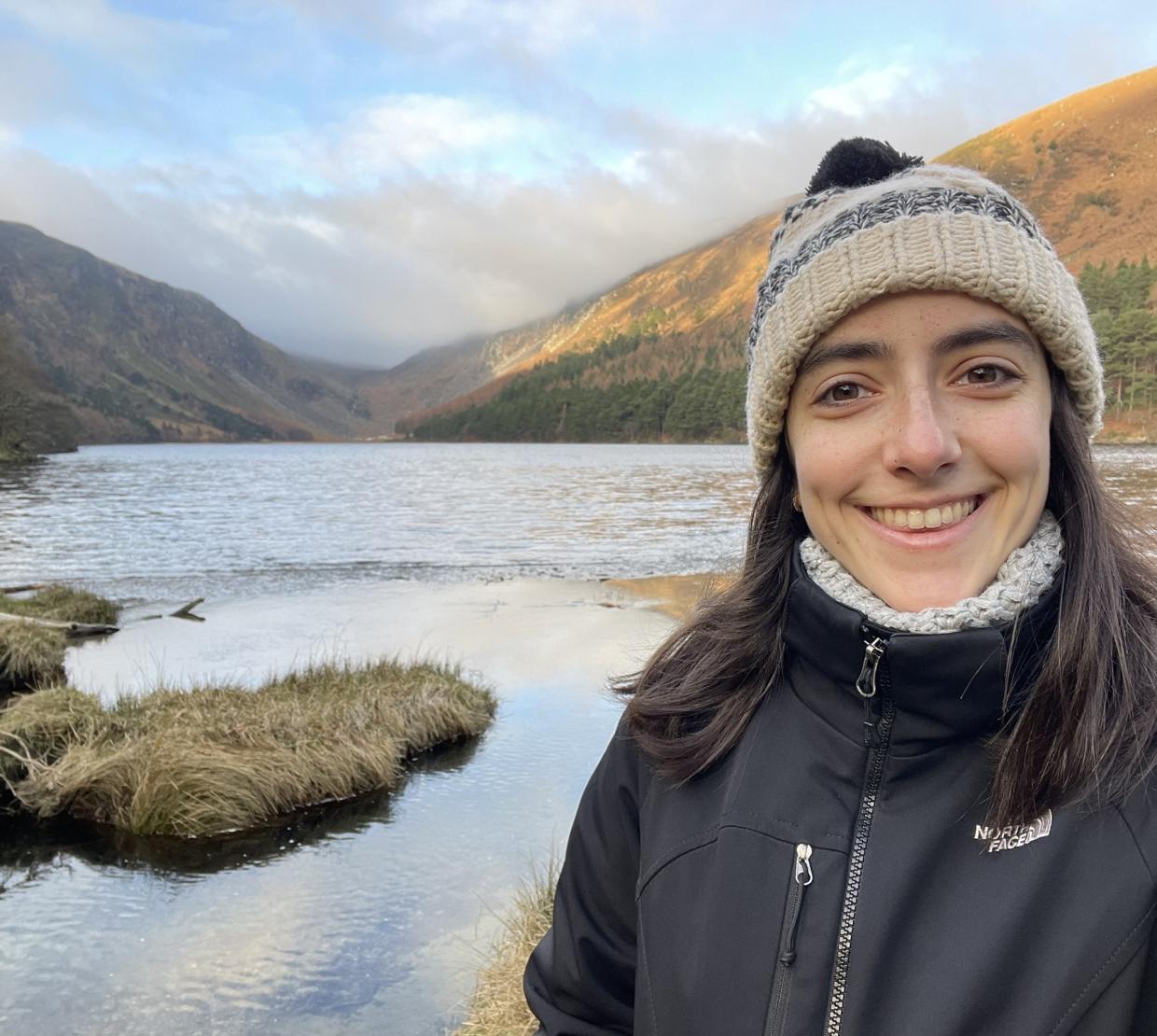
Rachel Sousa stands before a vast body of water at the base of tall, sweeping mountains in Ireland.

Mathematics graduate thrives with simple philosophy: ‘Why not?’

By Elana Roldan

In the intricate languages of mathematics and biology, alumna Rachel Sousa, ‘20, is multilingual.

Instead of translating words, she transforms data. Instead of immersion in a foreign country, she interns at eminent research facilities. Calling her field the Rosetta Stone of mathematics and biology isn’t much of a stretch.

“Collaboration is key in progressing research forward,” she says. “It’s hard for mathematicians to just think about the math and not have any access to data, whereas the experimentalists can do all of these experiments, but some of them are very time-consuming or impossible. If you can bring the two worlds together, they synergize very well.”

The path Sousa took from Oregon State to being a Ph.D. candidate at the University of California, Irvine was paved with risk. With many of the opportunities that came her way, the chance of rejection seemed too large to overcome. But by putting herself out there, she has gone on to attend prestigious international events and earn highly competitive internships before setting foot outside academia.

Bolstered by her undergraduate experiences in the College of Science, she has reached higher and higher ever since.

Finding the best fit

While she always had mathematics at the forefront, Sousa wasn’t introduced to its application in biology until beginning at Oregon State. A panel with upper-division students during an introductory course for mathematics majors was the first time she’d seen the fields merge. Instantly, she became hooked. The final push she needed came from her advisor as she discussed changing to the mathematical biology option. He excitedly showed her his own research which integrated the disciplines, and she made the switch that same day.

“The College of Science was really good at bringing people of different backgrounds together so that you could hear different experiences and life journeys, whether they were similar to yours or not,” she said, which helped her discover her new passion.

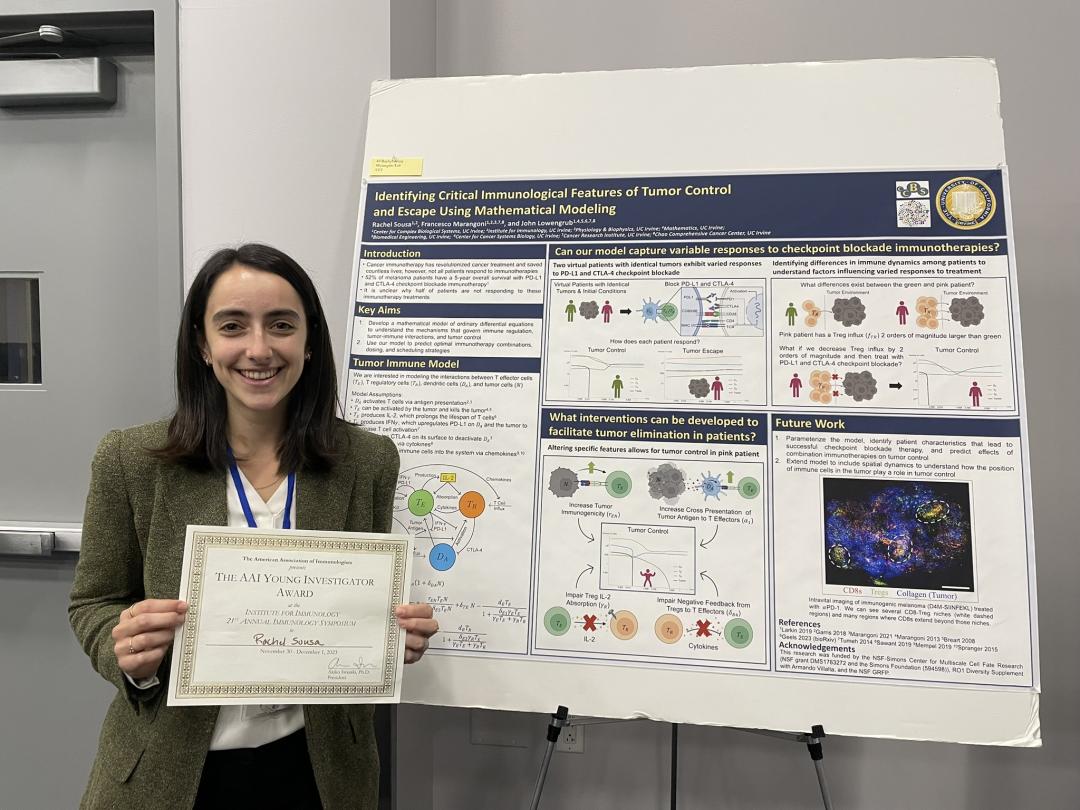
Sousa holds up a certificate for the American Association of Immunologists Young Investigator Award while standing in front of her research poster.

Sousa wins the American Association of Immunologists Young Investigator Award for her poster presentation at the 2023 UC Irvine Immunology Symposium.

Sousa didn’t slow down from there. She soon met Associate Professor Cory Simon at a student-faculty mixer hosted by the College of Science. His work, which used mathematical modeling to predict specific grass formations in Africa and Australia, fascinated her, and she joined his lab soon after.

Two years later, she received an email from the College about an internship opportunity with the National Cancer Institute. It seemed like a stretch that she would get it, but with a few years of research under her belt and a solid support system encouraging her to try, she sent in her application and hoped for the best. What she hadn’t expected was for them to say yes.

Sousa spent the summer at the University of Utah using mathematical modeling to study breast cancer, loving every minute of it.

“That was the key moment I decided that I really enjoyed this type of work and that I wanted to pursue it moving forward,” she said.

The right mindset

After graduating from Oregon State in 2020, Sousa went to UCI to work toward her Ph.D. in Mathematical, Computational and Systems Biology. More than her GPA, she credits her acceptance into the program to her undergraduate experience at OSU.

“Doing research during undergrad was a huge part of it. Showing I had the interest and the skills to do research really helped,” she said. “Good or good enough grades, doing some sort of research in undergrad, and getting an internship will help to boost your skills.”

The inherent collaboration in mathematical biology led her to join two labs at UCI, one led by a mathematician and the other by an immunologist. She works with both to create models of the immune system and its interactions with cancer, which they ultimately want to use to predict the most effective therapy choices in eliminating the disease. Much of what she learned at Oregon State applies to what she now does daily as a professional researcher. From building models to working with ordinary differential equations, the foundations she laid as an OSU student continue to support her current work.

While studying at UCI, Sousa has not rested on her laurels. In her second year, she applied for the notoriously competitive National Science Foundation Graduate Research Fellowship Program and earned the impressive award. She also put her skills to the test in an industry setting during an internship with pharmaceutical company Pfizer, where she built models for anti-cancer small-molecule drug development.

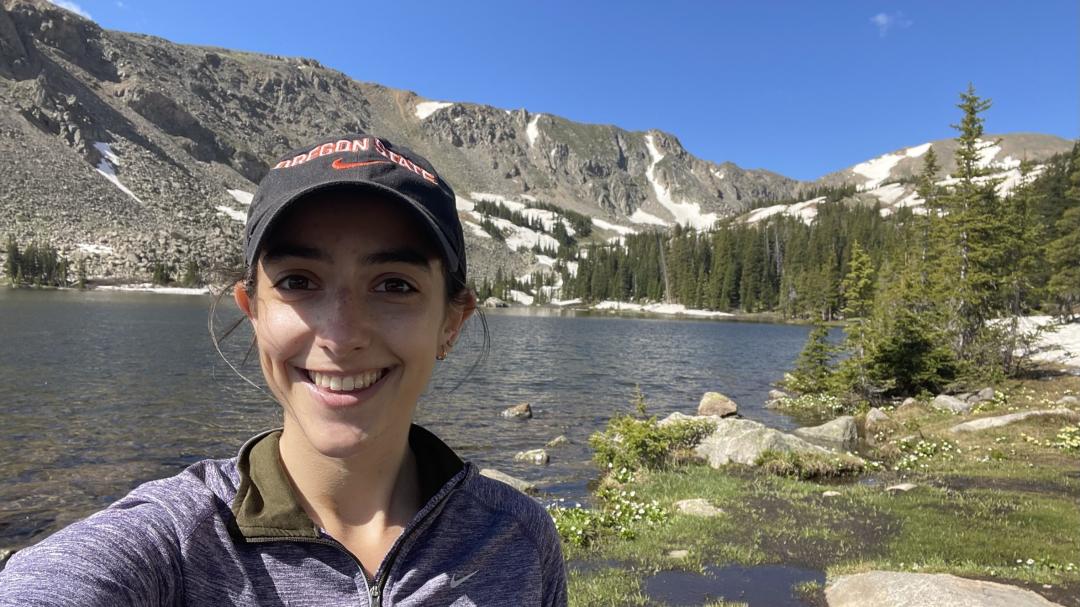
Sousa smiles in front of a crystal clear lake bordered by craggy mountainsides and pines.

Sousa hikes to Diamond Lake during her internship with Pfizer in Colorado.

One of her proudest achievements was being selected to attend the 72nd Lindau Nobel Laureate Meeting. The meetings are annual forums that bring together Nobel Laureates and 600 emerging young scientists from around the world in Lindau, Germany. It left a lasting impression on Sousa and was another reminder to pursue any opportunity that came her way.

“I applied to attend and again was sort of like, ‘It seems like a big opportunity, I don’t know if I’ll be selected but the worst they could tell me is no.’ Except they told me yes,” she said.

“That’s such a good mindset to have in life. If you don’t try, you’re not going to get it. If the worst-case scenario is somebody telling you ‘no,’ then why not at least try? That’s sort of what’s gotten me where I am today.”

In the years since Sousa began pursuing mathematical biology at OSU, she has developed a philosophy toward her work and career. Whether applying for her undergraduate internship at the National Cancer Institute, her fellowship from the National Science Foundation or a spot at the Lindau Nobel Laureate Meeting, there was always an initial doubt about if she should even take the chance. What has become clear to her after all of these experiences is that without trying to seize an opportunity, the possibility of getting it becomes zero.

“I see all of these opportunities and they all seem like such prestigious things that I feel not good enough for, but then I apply and I get them. So I am good enough,” she said. “That's such a good mindset to have in life. If you don’t try, you’re not going to get it. If the worst-case scenario is somebody telling you ‘no,’ then why not at least try? That’s sort of what’s gotten me where I am today.”

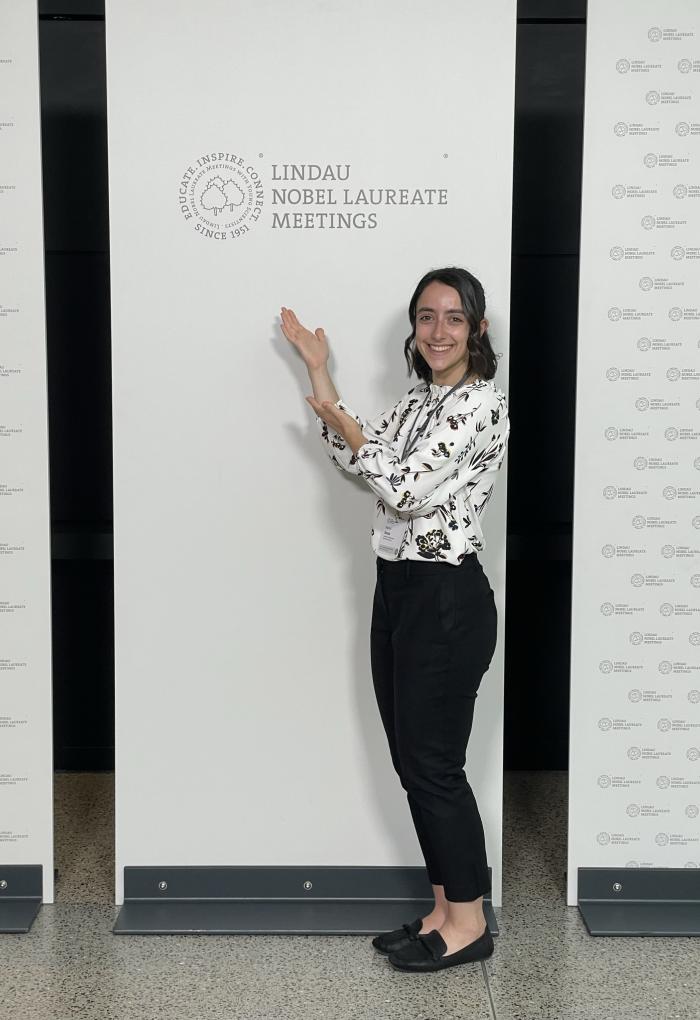
Sousa points to the sign for the Nobel Laureate Meeting.

Sousa attends the 72nd Lindau Nobel Laureate Meeting.

A series of colored circles on a blue background.

Classroom puzzles to cosmic insights: Students and professor demystify mathematical theorem

By Hannah Ashton

Central forces that decay as 1/r² are special, as they guarantee that all bound orbits are going to be closed (Bertrand's theorem). Small changes in the power will lead to significantly different kinds of orbits.

More than 150 years ago, Joseph Bertrand stated a mathematical theorem. Proving why this theorem is true hasn’t been a simple endeavor.

Two College of Science alumni, along with professor Patrick De Leenheer, recently published a paper in the SIAM Review pulling back the curtain on Bertrand’s Theorem. Together, they wrote a proof that is accessible to undergraduate mathematics or physics students.

Bertrand’s Theorem states that among all possible gravitational laws, there are only two exhibiting the property that all bounded orbits are closed, Newtonian and Hookean gravitation.

“If we didn’t live in a gravitational field governed by Newtonian gravitation, the world would be very different and far more unpredictable. For example, we would probably not have seasons,” De Leenheer said. “It’s kind of remarkable that gravity operates in this way. Among all the possibilities, truly infinite, this is the one that we live in and that’s just astounding.”

In the simplest terms, the group started by using a process of elimination, by first showing that gravitation must follow a power law. Next, they narrowed down the power laws until only two of them remained. And finally, they checked that both of these had the property they were looking for.

De Leenheer remembers taking his first physics class in high school and questioning the formula, R: F = G(m1m2)/R2. De Leenheer wanted to know why it was R-squared. Why not R cubed or something different? This led him to Bertrand’s Theorem. He couldn’t find a proof of it, leaving him to wonder why it was true.

Headshot of Patrick De Leenheer on campus

Patrick De Leenheer

John Musgrove, ‘20, and Tyler Schimleck, ‘21, heard about the theorem in De Leenheer’s Vector Calculus 2 course and approached him after class. He enthusiastically brought them on board what turned into a five-year project.

“For me, it was my first time jumping into real mathematical literature. Reading papers by other mathematicians working on the same problem and diving into their research was super exciting for me,” Musgrove said.

Having access to undergraduate research helped both of them successfully pursue a postgraduate degree.

Musgrove graduated from Columbia University with his MS in Operations Research and Schimleck is currently a graduate student at UC Santa Barbara in the Department of Mathematics. Schimleck is interested in differential geometry and mathematical physics.

“It can be so scary at first if you try to read mathematical literature. There is a huge gap between a lot of high-level research and what you learn in undergrad,” Schimleck said. “Doing undergraduate research was a massive confidence boost that helps me say, ‘No, it’s okay, I can do this. I may not understand it at first but eventually, I’ll figure it out and it’ll be okay.’”

Working with a faculty member can be equally terrifying but Musgrove and Schimleck said De Lehneer helped every step of the way.

“One of my favorite things about working with Patrick, would be sitting there in the room and we’re staring at equations on the blackboard in silence for a few minutes and then we will have an “Aha” moment and Patrick will actually say “Aha” and go run to the blackboard with the solution,” Musgrove said. “It's labor. Math doesn’t look appetizing but once you are in it, the energy and emotions sustain the whole thing.”

He said that in a typical undergraduate classroom, students don’t get to experience facing a wall because everything is set up with an answer already.

“That’s the difference with doing research, there is nobody who will tell you the answer. You just have to keep looking at it and thinking about it. There are no shortcuts,” he said.

De Leenheer said it feels like serendipity that a question he had as a young adult, he was able to answer years later.

“I got to know two guys here in class and they showed excitement and they had the dedication, they never quit. Even today I am still thinking about it and it baffles me when I talk to people about this result. All together it was very rewarding,” he said.

Subscribe to Research