Career Outcomes

Career Outcomes

OSU funds the most high-impact undergraduate research experiences in the state.

How undergraduate research drives student success at OSU

By Srila Nayak, Emmet Pettit

Undergraduate research funded through OSU can lead to scholarships, fellowships and a dream job.

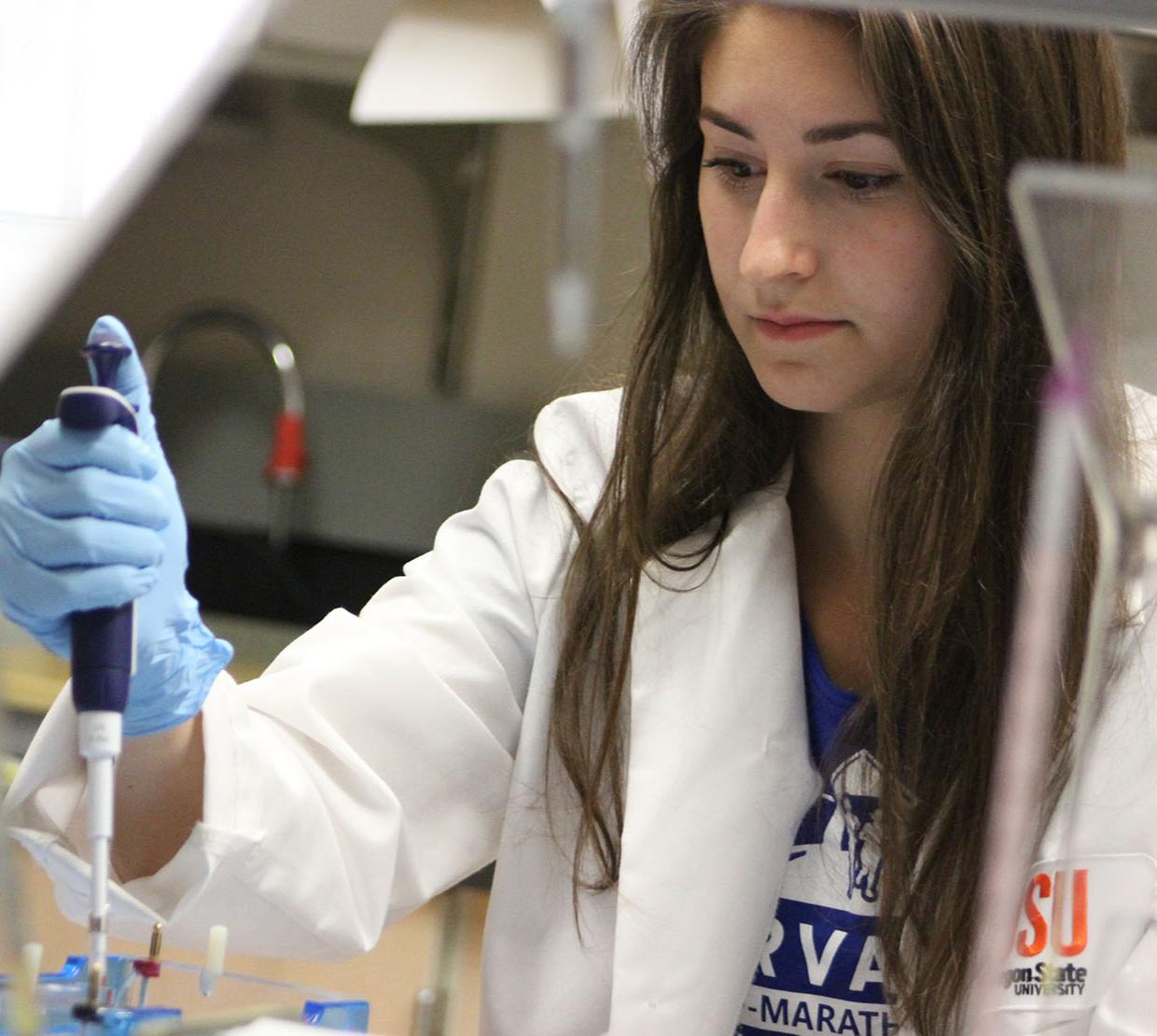
Biochemistry alumna Kendra Jackson participated in research experiences during her undergraduate studies at OSU.

In the College of Science, students have more opportunities to collaborate on undergraduate research that addresses real-world problems and prepares them for top graduate programs and training at internationally recognized institutions.

Half of undergraduate students in the College of Science not only work on research projects with faculty mentors across the campus, but also find a home at Oregon State University’s cutting-edge scientific centers and institutes.

Oregon State funds more high-impact undergraduate research experiences than any other university in the state. Undergraduate research programs give students hands-on learning experiences early in their undergraduate careers, opportunities to learn new things and develop new skill sets beyond the scope of the classroom.

Undergraduate research enhances employment opportunities

Undergraduate research opportunities also play a key role in developing student-faculty relationships. Associate Professor of Physics Matthew Graham mentors several undergraduate students supported by research fellowships in his lab and has found that the value of undergraduate research on student careers cannot be overestimated. “Research is an unspoken, firm prerequisite for graduate school, and it is one of the few ways industry-bound graduates can stand-out in getting their first job. I am surprised at how often potential employers contact me for references.”

Substantive undergraduate research experiences are the norm rather than the exception in the College of Science. A key trait that sets the College’s undergraduate research program apart is that students get the financial support they need to commit to a research program long enough to make effective contributions to scientific discovery and new foundational knowledge.

“The big reason that I came to OSU – and why I really love it – is because of the research opportunities."

“Science requires time, and while as mentors we strive to offer meaningful research opportunities to undergraduate students throughout the year, having the secured time-commitment to follow experimental designs from start to end and really own the research project they are developing is empowering for the students,” said Maria Franco, an associate professor of biochemistry who mentors undergraduate research scholars in her lab. “This is a very valuable opportunity that can impact their professional and personal goals in meaningful ways.”

Capping off more than three years of research in a disordered proteins lab, Seth Pinckney (Biochemistry & Biophysics '21) co-authored two manuscripts, one of which shares early results on the SARS-CoV-2 nucleocapsid protein.

Linus Unitan (Honors Chemistry '21) and his mentor Professor of Chemistry Vince Remcho were awarded a patent for devising a blood-plasma separator device for medical purposes in an analytical chemistry lab. Unitan also co-authored a paper on the subject in the journal Analytical and Bioanalytical Chemistry.

The high caliber of undergraduate research is verified by the success of OSU science majors who have won some of the most competitive national awards, including the Goldwater and Fulbright awards, as well as the National Science Foundation Graduate Research fellowship. Since 2017, all Goldwater scholars from the College, eight in total, were involved in extensive undergraduate research programs before winning the national prestigious award.

“The big reason that I came to OSU – and why I really love it – is because of the research opportunities,” said biochemistry alumna Kendra Jackson (Honors Biochemistry and Molecular Biology '20), who received both Ray and Frances Cripps Undergraduate Research Experience (CURE) and Summer Undergraduate Research Experience (SURE) fellowships to conduct research on fungal genetics and epigenetics. Jackson won the Goldwater scholarship in 2019 and is currently studying medicine at Stanford University.

SURE scholarships fuel student success

Students work independently to tackle aspects of research projects that are at the cutting-edge of scientific innovation, preparing them well for careers in science and industry. Chemistry student and SURE scholar Alice Lulich ('23) is doing research in a lab specializing in new inorganic materials. “The structures I make in the lab have never been made before,” Lulich said. “The SURE scholarship means that I will get to have as close to a grad school experience as possible in my undergraduate career.”

Undergraduate research programs also help students discover new interests and passions, enabling them to venture bravely outside their comfort zones. Zoology major Dustin Campbell ('20) won the SURE scholarship to conduct research in the area of reproductive behaviors in garter snakes.

Doing so helped Campbell discover a talent for both field and lab-based zoological research. “I thoroughly enjoy collecting animal specimens and field research. The SURE program showed me what the work looks like in the lab after you have collected the specimens. Being in the lab helped me realize that I do really like all aspects of animal research.”

Supported by donors, alumni and faculty, funded undergraduate research opportunities have had a positive and powerful effect on student learning and achievement. Since its inception in 2015, the Summer Undergraduate Research Experience (SURE) Program has helped science faculty engage undergraduates in their research. Supported by our extraordinary alumni and donors, in the last two years, SURE Science, among other student scholarship programs, provided $405K in scholarships to 80 students to participate in substantive lab and field-based research experiences.

“The structures I make in the lab have never been made before."

Our alumni are passionate about paving the way for students on their journeys to meaningful careers. Joel Peterson (Microbiology ’69) says he gives so that students can “get a better understanding early on of where research in their field is headed,” adding that students’ “enthusiasm and idealism” make him “feel like I’m doing something worthwhile.”

In addition to the SURE Science program, more than 10 different alumni-funded scholarships – both College-wide and department-specific support undergraduate research. These include the Student Research Experience Fund, the Ray and Frances Cripps Undergraduate Research Experience (CURE) fellowship in the Department of Biochemistry and Biophysics, the Sheila Van Zandt Student Research Experience Fund; the College of Science Experiential Learning Fund; and numerous other department-specific awards. Each year these fellowships support students as they engage in original research alongside faculty mentors working on projects that span countless areas of fundamental and applied sciences and mathematics.

The alumni behind these funds, grateful for their own formative years in the College, believe that passing the baton enhances graduate prospects and creates a more hopeful future. “These young people are going to change the world,” said alumna and scholarship donor Judy Faucett (Mathematics ’70). “They are doing incredibly important things.”

OSU research means enhanced access and equity

The SURE Science program and other scholarships have widened equity and access to careers in science, increasing opportunities for underrepresented minority students and first-generation and low-income students.

"I am finally able to start doing the kind of research I want to do for the rest of my life!"

Instead of worrying about finances, mathematics student Luis Garcia-Lamas ('22) spent last summer conducting full-time paid research on corn genetics, using statistical modeling and data analysis to predict phenotype outcomes. “I come from a low-income background, so scholarships mean a lot to me. This research is fundamental to my upcoming graduate school applications,” said Garcia-Lamas.

With the help of funding, science students overcome significant barriers to engage in valuable research opportunities. “This scholarship means the world to me,” said integrative biology major Samantha Gregory, who studies the impacts of a predatory snail on ecosystems in the intertidal zone at Patrick’s Point, California. “I have several chronic illnesses and accessing scholarship programs where I can control my physical activity has been a challenge. I am finally able to start doing the kind of research I want to do for the rest of my life!”

True to its mission as a land grant research university, the College research programs are helping build the next generation of scientists and leaders so that they can develop innovative solutions to the challenges facing our world.

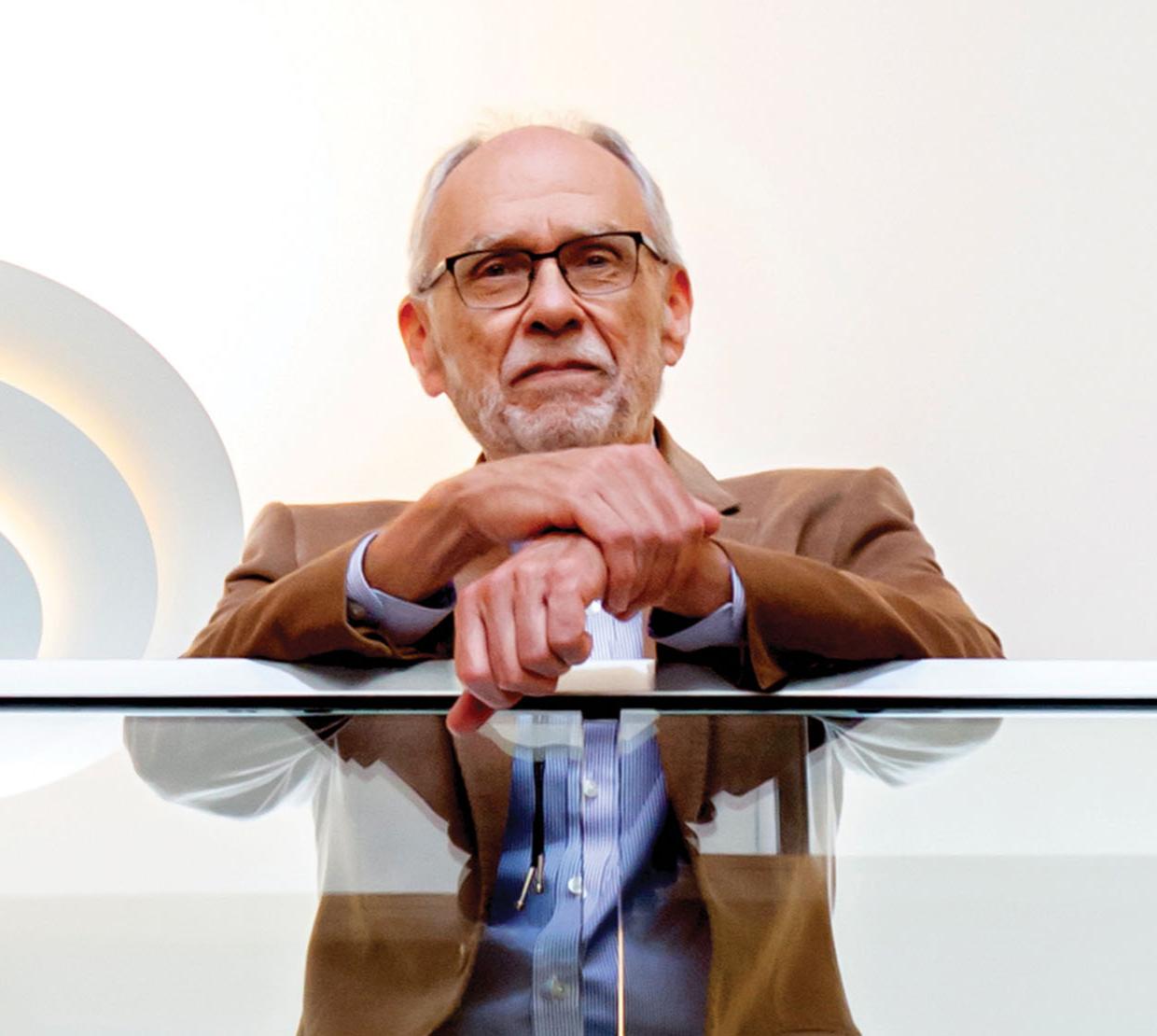
Michael Waterman

Genomics pioneer paves the way for first-generation students

By Grace Peterman

Photo by Leah Lee

Michael Waterman (Mathematics ’64, ’66) grew up on a ranch in rural Southwestern Oregon. A first-generation college student, Waterman said entering Oregon State as a freshman “was the doorway to the rest of the world” for him.

After College, Waterman went on to make an international impact, transforming the field of computational biology. This year, he receives the College of Science's 2021 Lifetime Achievement in Science Award for his remarkable accomplishments that have brought honor, distinction and visibility to the University. Waterman’s extensive career includes research that has been foundational to many DNA mapping and sequencing projects, including the Human Genome Project.

"I am deeply grateful to land grant universities, and Oregon State in particular, that allowed me and many others to receive an excellent education,” he said.

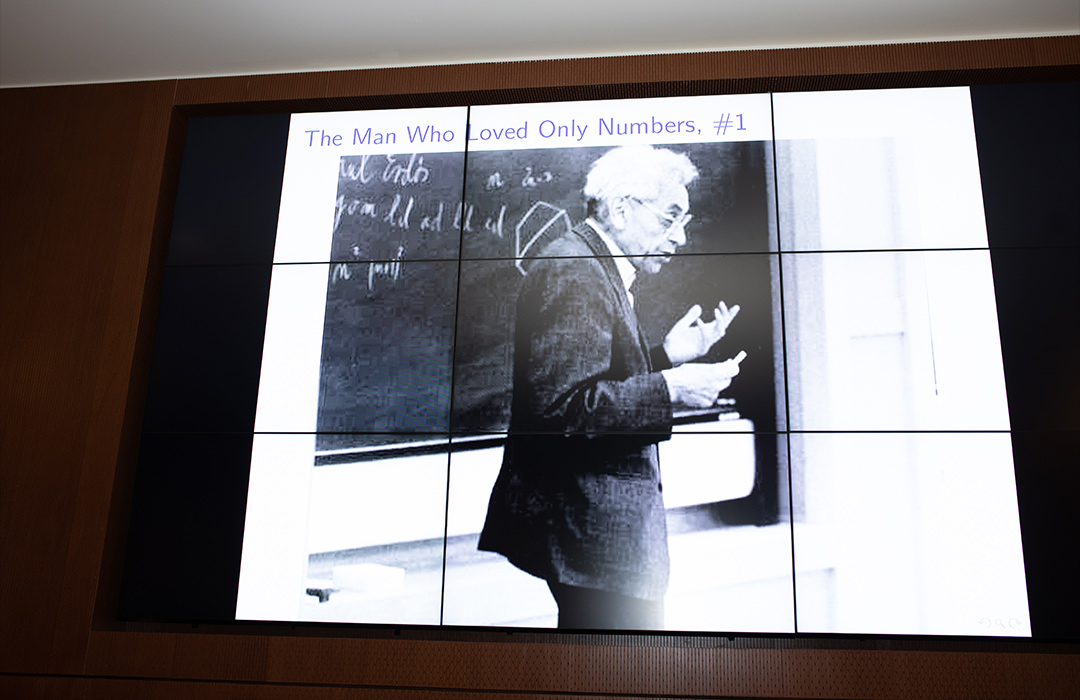
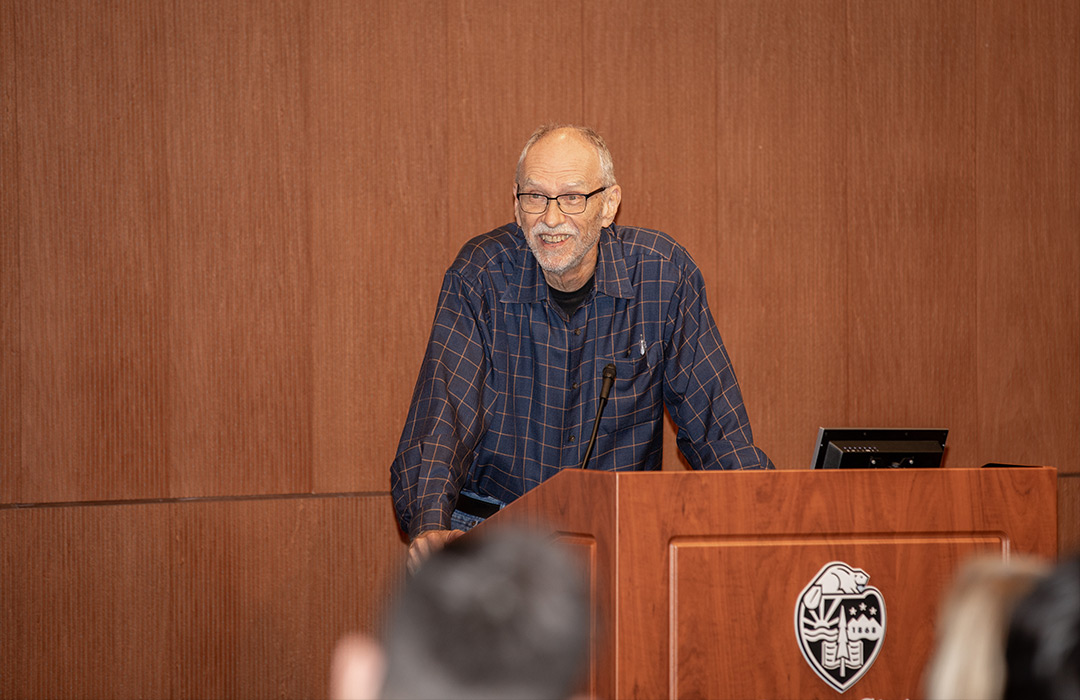
Waterman presented the College of Science 2021 Distinguished Lecture on November 10, 2021, in the Memorial Union, Horizon Room, at Oregon State University. The lecture discussed Waterman’s deep ties to Oregon and Oregon State and explored the connections between mathematics and the biological sciences.

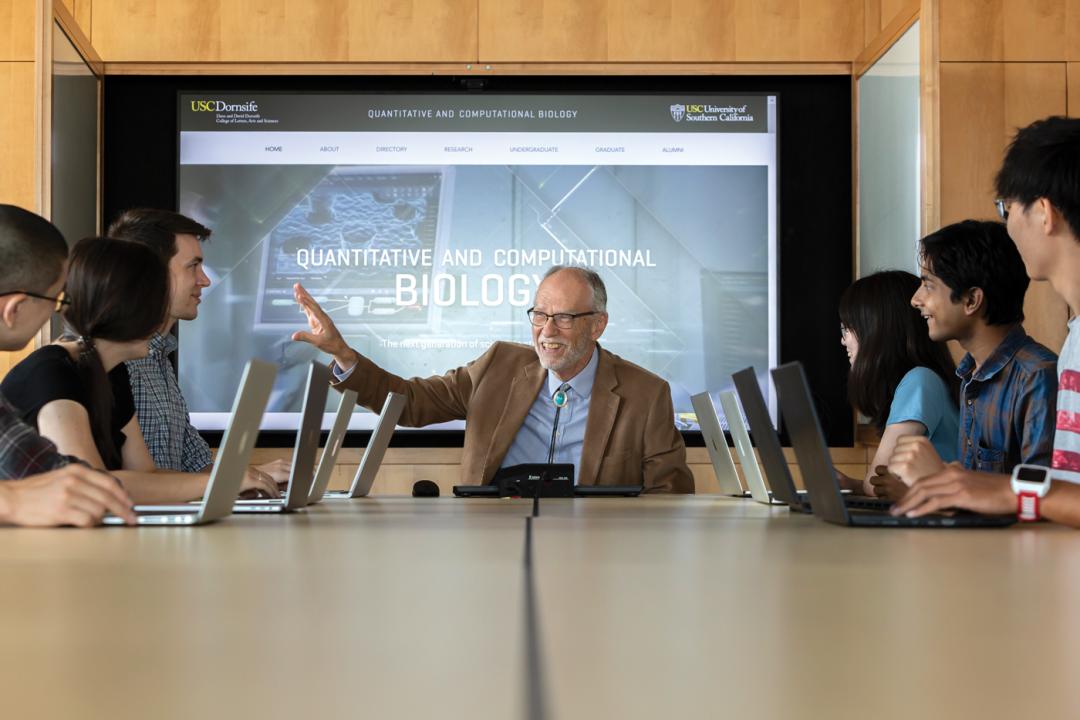
Michael Waterman teaching

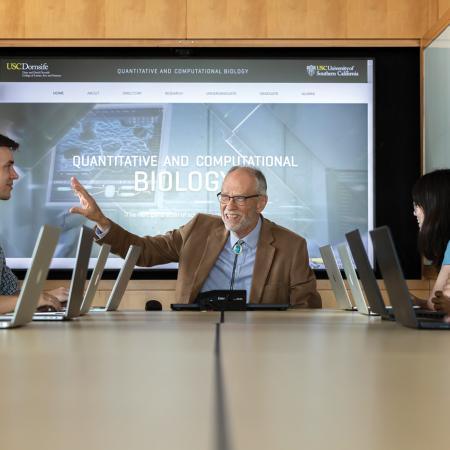
Michael Waterman is an Emeritus University Professor at the University of Southern California. Photo by Leah Lee.

A global reputation in genomic sequence analysis

After earning his bachelor’s and master’s degrees in mathematics at Oregon State, Waterman went on to complete a Ph.D. in statistics and probability at Michigan State University. His work, focused on applying mathematics, statistics and computer science techniques to various problems in molecular biology, continues to play an important role in DNA sequencing today.

Waterman is an Emeritus University Professor at the University of Southern California, with joint academic appointments in the Departments of Biological Sciences, Mathematics, and Computer Science, and a Distinguished Research Professor at the University of Virginia.

He is also an elected member of both the U.S. National Academy of Sciences and of Engineering, the American Academy of Arts and Sciences and both the French and Chinese Academies of Sciences. He has received the William Benter Prize in Applied Mathematics, the Gairdner Foundation International Award in Biomedical Sciences, the Dan David Future Prize in Bioinformatics and a Guggenheim Fellowship.

Reflecting on his work upon receiving the Dan David Prize, Waterman said curiosity and a love for the process motivate him and his team more than anything. “Our research was not initially in any hot-topics category. We simply found fascinating problems that were irresistible, and we were determined to pursue them.”

That’s how the first serious meeting to discuss sequencing the human genome began as well. “We thought, ‘We’re mathematicians, we should be able to say something about this!’” said Waterman. Among the team of scientists assembled at University of California Santa Cruz in 1985, no one was even sure if such a huge undertaking was feasible. Yet, the idea was too good to pass up: “I remained steady in my belief that this was barely possible and truly important,” he said. “Just deciphering the code that our ancestors passed down to us as our genetic heritage was priceless.”

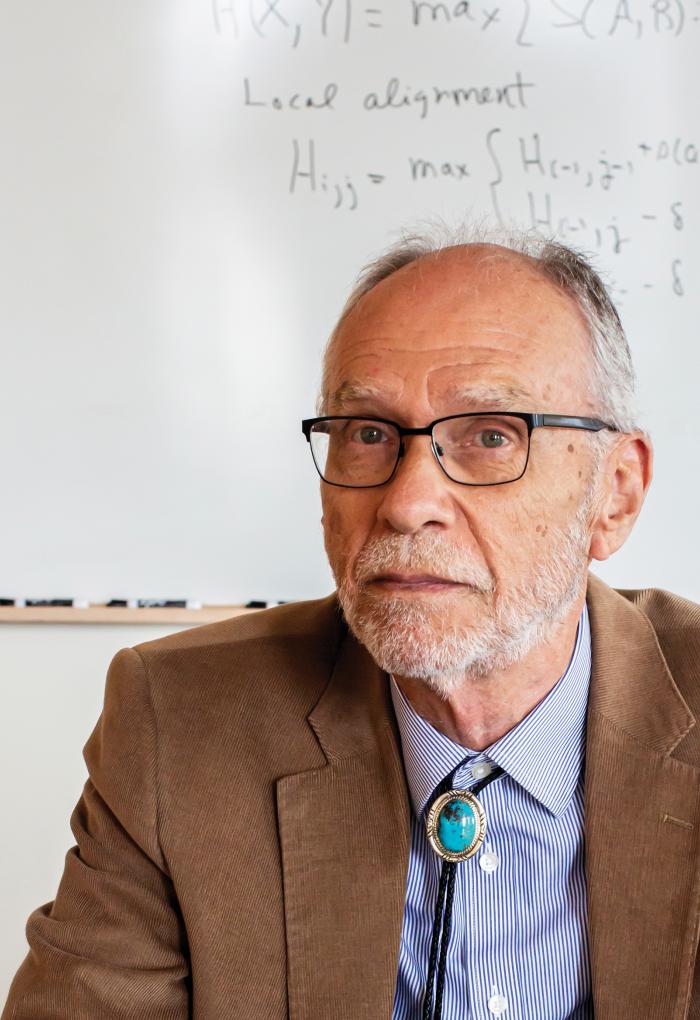
Michael Waterman

Waterman's early work on algorithms was the breakthrough needed to decode the human genome. Photo by Leah Lee.

Pathways to success for underrepresented students

Strong science thrives on this type of bold questioning of what’s possible. How did Waterman go from a rural ranch in Oregon to debating a landmark scientific project at UC Santa Cruz? Growing up, “it’s very hard to imagine beyond what you see,” said Waterman.

As a first-generation college student starting at Oregon State, Waterman experienced a world of possibility opening up for him. That’s why he established an endowed scholarship to open doors for other first-generation college students on their own paths to success. The Michael and Tracey Waterman Scholarship — the second largest in the College’s history — ensures future students are empowered with a sense of possibility and perspective.

“I believe that those who didn’t grow up with privilege should have a chance too,” he said. “I am pleased to see Oregon State is still accepting kids from a variety of backgrounds.”

aug2021_math_alum_uses_disease_modeling

Mathematics alum uses disease modeling to help keep OSU community safe

By Department of Mathematics

Peter Banwarth originally decided to pursue a master's in mathematics to follow a career in teaching students.

Peter Banwarth (M.S. ’12) is an epidemiologist and public health data scientist with the Benton County Health Department in Oregon. He has developed models to guide county health policies on testing, safety and health measures for employees and the public to minimize infections and deaths in Corvallis and nearby areas. To keep the public informed about COVID-19 models and public health initiatives, Banwarth has presented his work with Oregon health departments for audiences at OSU and the Corvallis City Council. Banwarth's modeling suggests that the restrictions Benton County implemented during the shutdown phase have been successful in reducing the spread of the virus. Prior to joining the mathematics graduate program with Professor Tom Dick, Banwarth received an undergraduate degree in economics and a master's degree in statistics from Stanford University.

The following content has been adapted from an interview conducted by the OSU Mathematics Department Media Committee. Responses have been adapted for length.

Why did you choose to study in the mathematics department at OSU?

As an undergraduate I studied economics and then had an opportunity to do a master's in statistics. When I decided to move back to Oregon, I was thinking about what I enjoy doing. One of those things is teaching, I really like teaching. There are a lot of opportunities to teach mathematics — a lot more opportunities to teach math than there are to teach economics. Being from Corvallis, I decided to start the math program at OSU with the plan to get a degree so that I could teach math.

What is one favorite OSU mathematics department memory?

I really enjoyed the first year of my master's program, diving into the core classes with my fellow students. Just working through the homework together up at the chalkboard, three or four of us talking about the problems and figuring them out. So that's one of my favorite memories — not necessarily a specific one but I definitely enjoyed the camaraderie.

A specific memory I enjoyed was a class with Elise Lockwood on teaching. I don't remember exact title, but it was about statistics and the teaching of probability and statistics. We each developed a little module project that we presented to the class, so I developed one based on an experiment I actually did when I was in eighth grade science, but added a statistics flair. I got to present that to the class, and then submitted it to a statistics website and actually got it published there. So that's one of my favorite memories.

"It was a good opportunity for me to take my skill set and use it to build more knowledge and really ground myself in the community that I wanted to live in."

What is it that you do?

A lot of what I do is really collaborative learning, I would say. I learn from the folks I work with, their side of things, and then I help them learn the mathematical and the data side of the work that they're doing.

I monitor more overall health measures for the county and work with our community partners to try to improve the health of our community members. My role is to provide the data to help them set mileposts and understand where we are, and then monitor any changes.

I have an opportunity to do a lot of different things in my job. I've worked on some pretty intensive programming projects, like developing EpiModel of disease. I work on presenting data to different groups in different ways, everything from a community group that has no background in public health or data analytics, to other Epis around the state. And I also get to work with a really great team of professionals who are focused on extending the benefits of living in Benton County to all our community members, and not just the ones who come in privileged.

What led you to your career and how did the mathematics department at OSU prepare you for it?

I was teaching as an adjunct lecturer at OSU with a baby on the way, and as much as I enjoyed it, I knew it wasn't incredibly stable. So when this position came along for the epidemiologist at the county, I decided, hey, that's an interesting job. I knew I would learn a lot about the public health side of things, and they were also pretty clear that they were looking for someone who is really comfortable both interpreting, but also explaining, data and statistics in a public health lens. It was a good opportunity for me to take my skill set and use it to build more knowledge and really ground myself in the community that I wanted to live in.

What are you currently working on?

For the past year I have been working with public health and the health department in the county on our COVID-19 response.

Currently, I monitor our daily trends in COVID-19 cases. I've developed and maintain a public dashboard so that our community can see what the pandemic looks like at a local level. Along with some other team members, I provide recommendation and advice to our local K-12 schools as they provide education to our students in this current climate. Earlier on, when there were more questions than answers about what the pandemic would look like, I developed modeling to help us plan for different contingencies based on how we might respond from a policy standpoint and how the disease might develop. I also partner with OSU, especially the College of Science and College of Public Health, on the TRACE-COVID-19 project for monitoring COVID-19 among the OSU community and how it affects and interacts with the larger Benton County community.

"OSU students are absolutely a part of our community."

The most common question I get as an epidemiologist is, “Well, are students part of Benton County? Do we count students in our population? Do we count them in our health statistics?" OSU students are absolutely a part of our community. The population of Benton County is 93,000 people, and that includes OSU students. We include them in our health statistics, and they are as much a part of our community as anybody else who lives, works, learns or plays in Benton County. Whether someone is visiting for a single meal or living their whole life here, they're all part of the public health community and we do our best to include them in our community wellbeing.

You were interviewed as part of OSU’s Daily Barometer series “19 COVID-19 Stories” back in May 2020. One year later, how has your work changed and how do you feel about the state of things now compared to then?

May 2020 was about the point where the initial spread of the disease seemed to slow a little bit — at least in Oregon and in Benton County — so there was a lot of uncertainty about the future. We didn't know much about the disease, didn't know specifically how it spread, how much of it was aerosol, droplet or surface. Medical treatments were not as refined, so individuals with a severe case were at higher risk of death. And at the same time, in Benton County we were seeing maybe two cases a week. So we did not actually have a lot to do from the standpoint of case investigation or actual disease control — we were trying to figure out how to prepare for what might or might not come down the road later. We did a lot of work on seeing how the disease might progress throughout the next full year, developing some models to see, for instance, what would happen if we maintain very high restrictions? We now have a much better sense of what to expect, given a certain level of cases and depending on response, whether the case rate will grow or shrink.

"That's where epidemiology has really expanded; understanding the determinants of health requires data and analytics backgrounds."

What might people be surprised to learn about your profession and what you do?

Epidemiology is a lot more than infectious or communicable disease. When people think about epidemiologists, they think about someone like Dr. Anthony Fauci, who is an epidemiologist, in addition to being a medical doctor and the head of infectious disease at US NIAID. But most epidemiologists actually work on non-communicable disease, for example, epidemiologists who spend their careers trying to figure out the reason for higher cancer rates in a certain population. And epidemiology has really begun to recognize how far back the determinants of health go — everything from income, to the zip code where a person was born to what racial or ethnic group they identify with. Epidemiology is really now trying to figure out how to incorporate all that different information to understand what changes a person's opportunity to live a healthy life and what can we do to create the conditions so that everyone can have that opportunity.

Like most other disciplines, public health has become more data oriented. That's where epidemiology has really expanded; understanding the determinants of health requires data and analytics backgrounds.

What do you do for fun or hobbies?

I really like mountain biking. I try to mountain bike every week in McDonald Forest. I also like gardening. I've got a vegetable garden started, and I also have blueberries and some fruit trees planted. And my kid, who's five, he really loves to be out in nature and to ride his bike. So a couple of times a week we either go riding our bikes, or — I just got a couple of kayaks, so now we've started exploring the waterways around Salem. As the weather gets better, we'll go for more hikes and go camping as well.

"A lot of mathematics feels very black and white, but mathematics takes place in society and society is very colorful."

What advice or “wise words” would you like to give people?

The biggest advice I would give would be, always look for opportunities to learn from the people around you. We all bring different backgrounds, different experiences, different views and different skill sets, and it's amazing what you can learn from someone when you enter with a sense of curiosity. Honor your worldview, but also really try to see things from someone else's perspective. A lot of mathematics feels very black and white, but mathematics takes place in society and society is very colorful. Just being open to the possibility and the opportunity to learn from other people, I think, is satisfying and very professionally advantageous.

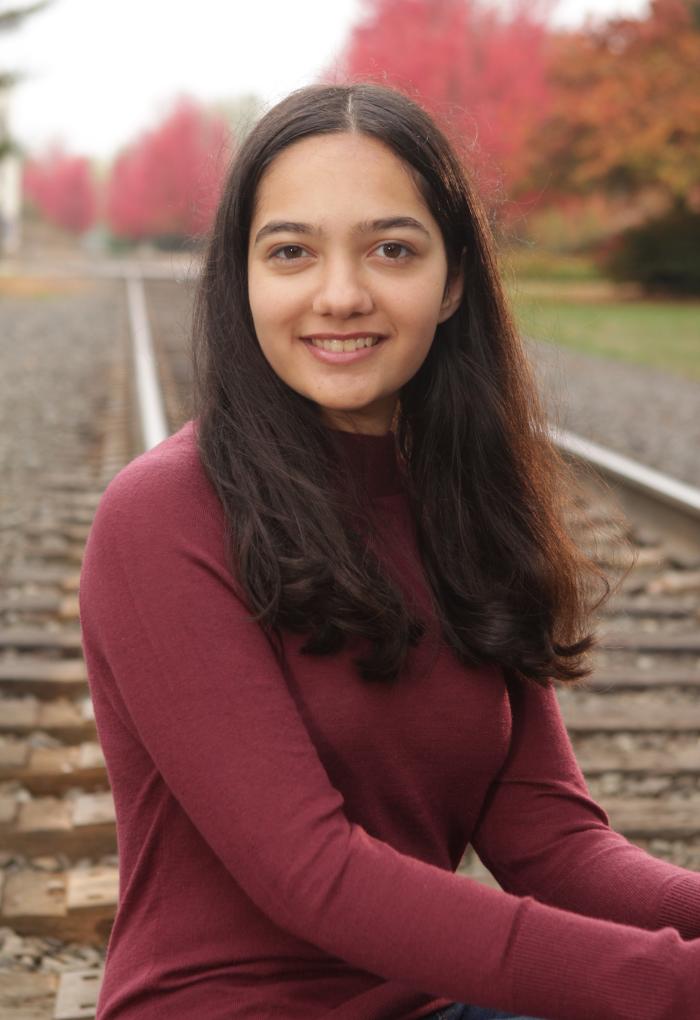
Portrait photo of Peter Banwarth.

Epidemiologist and public health data scientist

Alumni profile: Peter Banwarth

Peter Banwarth (M.S. ’12, Advisor: Tom Dick) is an epidemiologist and public health data scientist with the Benton County Health Department in Oregon. He has developed models to guide county health policies on testing as well as safety and health measures for employees and the public to minimize infections and deaths in Corvallis and nearby areas. To keep the public informed about COVID-19 models and public health initiatives, Banwarth has presented his work with Oregon health departments for audiences at OSU and the Corvallis City Council. Banwarth's modeling suggests that the restrictions Benton County implemented during the shutdown phase have been successful in reducing the spread of the virus. Prior to joining the mathematics graduate program at OSU, Banwarth received an undergraduate degree in economics and a master's degree in statistics from Stanford University.

The Mathematics Department Media Committee recently sat down with Peter for an interview. The following has been edited for length.

Q: Why did you choose to study in the math department at OSU?

I started as an undergraduate, I studied economics, and then had an opportunity to do a master's in statistics, so I moved a little more abstract, a little way from applied. And then when I decided to move back to Oregon, I was thinking about what I enjoy doing, one of those things is teaching, I really like teaching. And so I did a little thinking and I said, there are a lot of opportunities to teach mathematics, a lot more opportunities to teach math than there are to teach economics. And so I moved to Salem at the time, and Oregon State is close to Salem, and I'm from Corvallis, so had the opportunity to start the math program at OSU with the plan to get a degree so that I could teach math.

Q: What is one favorite OSU Math department memory?

I really enjoyed the first year of my master's program, diving into the core classes with my fellow students who are also diving in, and just working through the homework together, and up at the chalkboard three of us, or four of us, and talking about the problems and figuring them out. So that's one of my favorite memories, not necessarily a specific one, but I definitely enjoyed the camaraderie.

A specific memory I enjoyed was I took a class with Elise Lockwood on teaching, I don't remember exact title, but it was about statistics and teaching of probability and statistics. And we each developed a little module project that we presented to the class, and so I developed one based on actually an experiment I did when I was in eighth grade science, but added a statistics flair and got to present that to the class, and then submitted it to a statistics website and actually got it published there. So that's one of my favorite memories.

Q: What is it that you do?

A lot of what I do is really collaborative learning, I would say. I learn from the folks I work with, their side of things, and then I help them learn the mathematical and the data side of the work that they're doing.

I monitor more overall health measures for the county and work with our community partners to try to improve the health of our community members, and my role is to really provide the data to help them set mileposts and understand where we are, and then monitor any changes.

I have an opportunity to do a lot of different things in my job. So I've worked on some pretty intensive programming projects, developing EpiModel of disease. I've worked on some data science, data management applications to bring in large quantities of data and organize it so it's easily visualized. I work on presenting data to different groups in different ways, everything from a community group that has no background in public health or data analytics, to other Epis around the state. And I also get to work with a really great team of professionals who are focused on extending the benefits of living in Benton County to all our community members, and not just the ones who come in privileged.

Q: What led you to your career and how did the Math department at OSU prepare you for it?

I was teaching as a lecturer at OSU, mathematics, and also had a baby on the way so I thought about the trajectory of my career, and as an adjunct lecturer at OSU, as much as I enjoyed it, I knew it wasn't incredibly stable. So when this position came along for the epidemiologist at the county, I decided, Hey, that's an interesting job. I always like learning something new, I knew I would learn a lot about the public health side of things, and they were also pretty clear that they were looking for someone who is really comfortable both interpreting, but also explaining, data and statistics in a public health lens, and so it was just a good opportunity for me to take my skill set and use it to build more knowledge and really ground myself in the community that I wanted to live in.

Q: What are you currently working on?

For the past year I have been working with public health and the health department in the county on our COVID 19 response.

Currently I monitor our daily trends in COVID-19 cases. I've developed and maintain a public dashboard so that our community can see what the pandemic looks like at a local level. I am, along with some other team members, we provide recommendation and advice to our local K-12 schools as they provide education to our students in this current climate, I have developed some modeling to, earlier on before, when it was more questions than answers about what the pandemic would look like, I developed modeling to help us plan for different contingencies based on how we might respond from a policy standpoint, how the disease might develop. I also partner with OSU, especially College of Science and College of Public Health and Human Services on the OSU TRACE project for monitoring COVID-19 among the OSU community, and how that affects and interacts with the larger Benton County community.

The most common question I get as an epidemiologist is, “Well, are students part of Benton County? Do we count students in our population? Do we count them in our health statistics?" And so I would encourage you to find some space to put this in the media, or the interview, is OSU students are absolutely a part of our community, they are included in our population, so the population of Benton County is 93,000 people, and that includes all the OSU students. We include them in our health statistics, and they are as much a part of our community as anybody else who lives, works, learns, or plays in Benton County. Whether someone is here visiting for a single meal, or living their whole life, they're all part of the public health community, and we do our best to include them all in our community wellbeing.

Q: You were interviewed as part of OSU’s Daily Barometer series “19 COVID-19 Stories” back in May 2020. We are a year later - How has your work changed since then and how do you feel about the state of things now compared to then?

In May 2020 there was so much uncertainty about what was happening and about how the virus may spread. May was about the point where the initial spread of the disease seemed to slow a little bit, at least in Oregon and in Benton County, and so there was a lot of uncertainty about, how are we weathering this? Is it going to get a lot worse in the fall and the winter? Didn't know much about the disease, didn't know specifically how it spread, how much of it was aerosol, how much of it was droplet, how much of it was surface. The medical treatments were not as refined, and so individuals who've got a severe disease were at higher risk of death. And at the same time in Benton County we were seeing maybe two cases a week, maybe five cases a week. So we did not actually have a lot to do from the standpoint of case investigation, or actual disease control, we were trying to figure out. How are we going to prepare for what may or may not come down the road later.

So we did a lot of work on seeing how the disease might progress throughout the next full year, developing some models to say, well, what would happen if we maintain these very high restrictions? What would happen if we relaxed the restrictions completely, things like that. In the past year, we now have a much better sense of what to expect, given a certain level of cases, what to expect coming, depending on a response, whether the case rate will grow or shrink. So at the same time, in April we were seeing a minimum of five cases a day, so instead of five cases a week, if we had only five cases in a day, we were very fortunate. During January we were seeing as many as 40 cases a day, so fortunately we have brought that down, but things were starting to trend back up in April.

So the county response overall is now we're putting a lot in public health, our two roles really are now case investigation. We have four full-time case investigators focused just on COVID 19 that we've added in the past year, and also our vaccine rollout, and our vaccine efforts, which really started in January and have ramped up to include everyone over the age of 12.

Q: What might people be surprised to learn about your profession and what you do?

Epidemiology is a lot more than infectious disease, communicable disease. So when people think about epidemiologists, they think about someone like Dr. Anthony Fauci, who is an epidemiologist, in addition to being a medical doctor and the head of infectious disease at US NIAID. But most epidemiologists actually work on non-communicable disease, so the epidemiologists who just spend their careers trying to figure out the reason for higher cancer rates, for example, in a certain population, whether it's geographic, or other connections between the population. And epidemiology has really begun to recognize how far back the determinants of health go, everything from income to the zip code where a person was born, to what racial or ethnic group they identify with. And so epidemiology is really now trying to figure out, how do we incorporate all that different information to understand what changes a person's opportunity to live a healthy life, and what can we do to create the conditions so that everyone has the opportunity to live a healthy life.

As public health, like most other disciplines, has become more data oriented, that's where epidemiology has really expanded into those other pieces, the use of data to understand those determinants of health requires data and analytics backgrounds.

Q: What do you do for fun or hobbies?

I really like mountain biking. I try to mountain bike every week in McDonald Forest. I also like gardening. So I've got a vegetable garden started, and I also have blueberries and some fruit trees planted. And my kid, who's five, he really loves to be out in nature and to ride his bike. So a couple of times a week we either go riding their bikes, or I just got a couple of kayaks, and so now we've started exploring the waterways around Salem, and as the weather gets better, we'll go for more hikes and go camping as well.

Q: What advice or “wise words” would you like to give people?

The biggest advice I would give would be, always look for opportunities to learn from the people around you. We all bring different backgrounds, different experiences, different views and different skill sets, and it's amazing what you can learn from someone when you enter with a sense of curiosity, and you honor your worldview, but you also are able to really try to see things from someone else's perspective. A lot of mathematics feels very black and white, but mathematics takes place in society and society is very colorful. And so just being open to the possibility and the opportunity to learn from other people, I think is satisfying and very professionally advantageous.

Goldwater Scholarship

Biochemistry, mathematics and molecular biology students win 2021 Goldwater awards for research excellence

By Srila Nayak

Students in the College of Science have won the nation's most prestigious award for undergraduate research, the Barry Goldwater Scholarship, almost every year since 2017. Science majors have won a total of 25 Goldwater scholarships — the most at Oregon State University to date. This year, once again, science and mathematics majors at Oregon State University have netted the competitive award for their academic prowess and scientific achievements.

Two students from the College of Science have been awarded the 2021 Goldwater awards. A total of four Oregon State University students were selected for the Goldwater scholarships this year. Emily Gemmill, a junior, and sophomore Alyssa Pratt in the College received the prestigious scholarship, which is the top undergraduate award in the country for sophomores and juniors in the fields of science, technology, engineering and mathematics (STEM).

Tegan Thurston and Cindy Wong, students in the College of Engineering, were also named Goldwater scholars. The recipients are selected on the basis of outstanding academic achievement and for demonstrating the potential to pursue research careers.

Gemmill is pursuing a double major in biochemistry and biophysics and mathematics, with a minor in chemistry and options in advanced biophysics and mathematical biology. Pratt, a second-year Honors student, is double majoring in computer science and biochemistry and molecular biology with a concentration in computational molecular biology. Both Goldwater scholars demonstrate high potential for scientific research careers and have engaged in meaningful and ambitious undergraduate research experiences at Oregon State.

Across the United States, 410 college students were selected for the Goldwater scholarships in 2021-2022 from a pool of 1256 college sophomores and juniors in the fields of natural science, engineering and mathematics. Oregon State University has the greatest number of Goldwater scholars in the state of Oregon this year, thus consolidating its status as the premier campus for STEM-oriented students.

The preeminent undergraduate award in the sciences, the Goldwater Scholarship Program was established in 1986 to honor former Arizona Senator Barry M. Goldwater, and is sponsored by the Barry Goldwater Scholarship and Excellence in Education Foundation. The award provides up to $7,500 per year for a maximum of two years covering undergraduate tuition, fees, books, and housing expenses.

Taking part in high-impact undergraduate research

Emily Gemmill

Emily Gemmill

Employing interdisciplinary research methods, Gemmill probes the mysteries of protein-based molecular motors called kinesins in the lab of biophysics Associate Professor Weihong Qiu. Kinesins interact with microtubules (dynamic tubes that provide structure and shape to cells) within cells and play an indispensable role in facilitating transport and force to sustain human life by converting chemical energy into mechanical energy. Gemmill’s research builds on ongoing research in the Qiu Lab on the distinctive properties of kinesin-14s that move and bind differently to microtubules from other kinesins.

"I chose the advanced biophysics option for my biochemistry degree and the mathematical biology option for my mathematics degree, which complement each other well as they both apply rigorous analytical methods to biological systems.”— Emily Gemmill

Introduced to molecular motors in a high school biology class, Gemmill’s fascination with the subject deepened as she learned more about their significance and functions in the Qiu Lab. She is currently investigating the regulatory mechanism of a kinesin-14 motor to better understand the factors governing its motility and it’s interactions with other proteins that affect kinesin-14’s movement.

Gemmill transferred to OSU from Portland Community College where she was a student in the honors program. There she was awarded an Oregon Space Grant Consortium research fellowship to support her work on developing a mathematics fluid-based model on mitigating traffic flow in Portland. At OSU, Gemmill was able to pursue ambitious research goals with the help of a Summer Undergraduate Research Experience (SURE Science) scholarship and an Undergraduate Research in the Sciences and Arts (URSA) Engage grant.

After graduation, Gemmill plans to work toward a research career at the intersection of mathematics and biophysics. “I am earning degrees in both biochemistry & biophysics and mathematics, leading to a wide range of interdisciplinary knowledge,” said Gemmill. “Additionally, I chose the advanced biophysics option for my biochemistry degree and the mathematical biology option for my mathematics degree, which complement each other well as they both apply rigorous analytical methods to biological systems.”

Alyssa Pratt

Alyssa Pratt

Pratt studies RNA secondary structural features called hairpin loops with a wide variety of functions, primary among them being the potential to arrest disease-associated genes, in the lab of David Hendrix, an associate professor of biochemistry and biophysics and computer science. Through bioinformatics experiments utilizing specific algorithms and data sequencing, Pratt investigates the properties and defining characteristics of a little-known subset of RNA hairpins called unbreakable hairpins for a better understanding of their potential and biological significance in the human body.

“Once I met supportive mentors, I realized that innate computer skills didn’t exist and that I could pursue my interests in computer science as well as molecular biology, which inspired me to focus on computational biology.” — Alyssa Pratt

Pratt has also undertaken summer research at Portland State University, where she used optimization methods and computational analysis to search for specific secondary DNA structures in the context of cruciviruses (viral family containing components from both RNA and DNA viruses).

An exceptional student, Pratt is a Presidential Scholar at OSU, and received a number of prestigious awards in high school including a National Merit Scholarship and a National AP Scholarship. She is also a recipient of Oregon State’s URSA Engage Award.

Pratt hopes to pursue a Ph.D. in computational biology after graduation, combining her interests in molecular biology and computer science. In her application, Pratt writes that throughout her school years she thought she “didn’t have the innate computer skills that it seemed my male peers possessed." With effective guidance and mentorship, Pratt began to pursue substantive computational research projects. “Once I met supportive mentors, I realized that innate computer skills didn’t exist and that I could pursue my interests in computer science as well as molecular biology, which inspired me to focus on computational biology.”

Inspired by her own experiences of overcoming bias in a STEM field, Pratt works for the Precollege Programs at OSU as a media assistant, and is involved in a wide range of youth outreach activities designed to increase college access and academic preparation for Oregon’s youth.

The Goldwater Scholarship is administered at Oregon State University through LeAnn Adam, OSU Advisor for the National and Global Scholarships Advising and the OSU campus representative for the Goldwater scholarship.

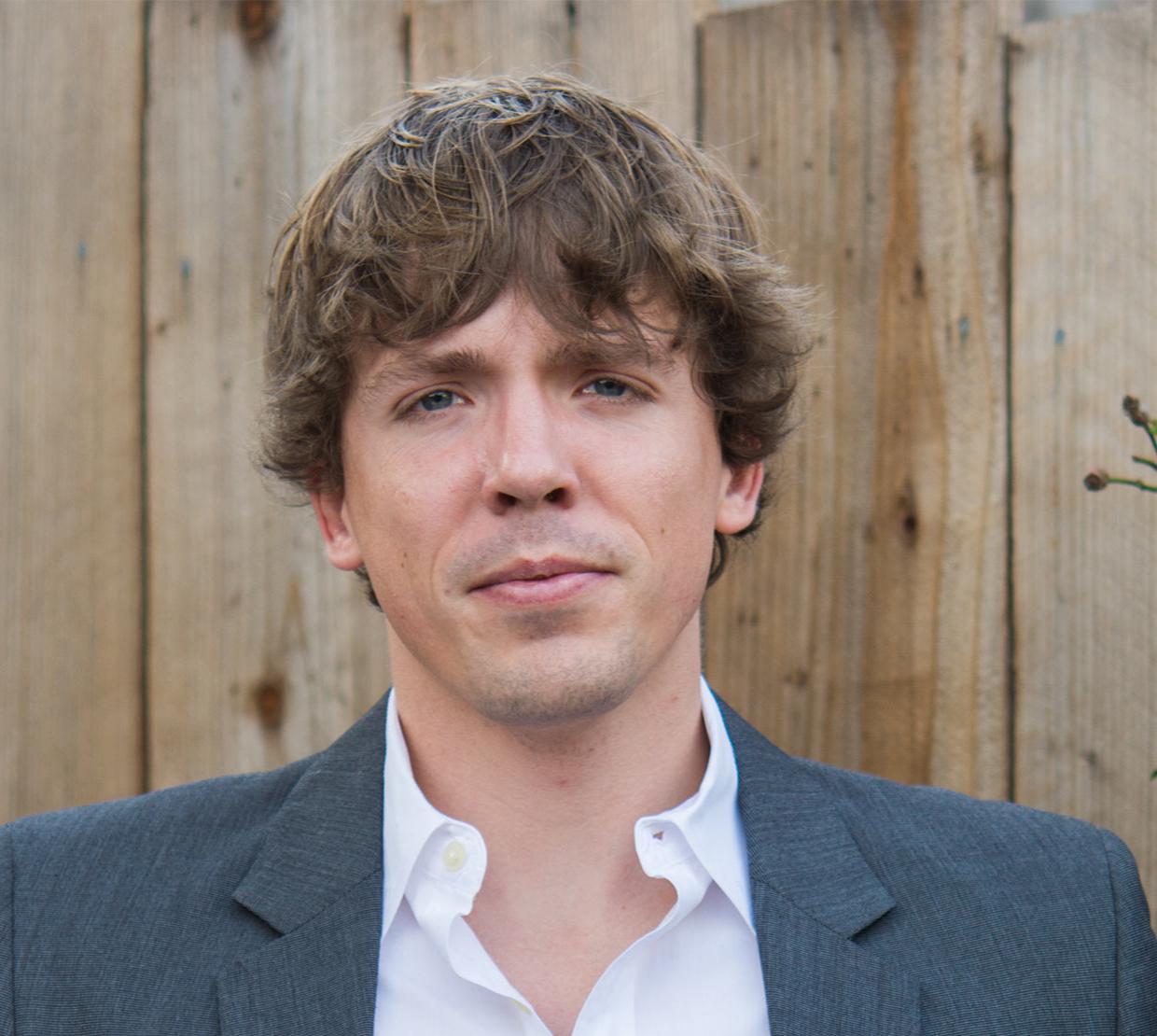
Scott Clark in front of a wood fence background

Meet a Science Grad: Scott Clark

By College of Science

The following interview is part of a series the College of Science conducted with some of our alumni. While their experiences and career paths vary widely, their passion for science and love for the College and OSU tie them together.

Scott Clark

Major: Physics, Mathematics and Computational Physics (’08)
Additional Education: M.S. in Computer Science and Ph.D. in Applied Mathematics (’12), Cornell University
Occupation: CEO and Co-Founder, SigOpt, Inc.

Why did you choose to study at OSU?

OSU has a great science faculty, innovative programs and degrees, and it sets you up to succeed in your career after college.

What led you to choose your major and career path?

I always wanted to learn how the universe worked. Physics was the rules and math was the language.

How did the College of Science prepare you for your future career?

It laid the foundation for my Ph.D., which I turned into a startup that has raised tens of millions, employs dozens, and services firms around the world.

Describe your career? How are you making a difference?

I am co-founder and CEO of SigOpt, a startup that provides experimentation and optimization tools to thousands of researchers around the world helping them build the future.

What might people be surprised to learn about your profession?

When you start a company based on research, if everything goes really well you end up not getting to do research anymore because you're too busy running a company -- but it is extremely rewarding and completely worth it.

How were you involved in the OSU community?

I did undergraduate research via Undergraduate Research, Innovation, Scholarship & Creativity (URISC), Research Experience for Undergraduates (REUs), and independently with professors. I also went to every football game. :)

What is one favorite College of Science memory?

I loved how unbounded you could be within the College of Science. You could always take any class, double or triple major, and there were never any limits as long as you could do the work.

Was there a particular professor or advisor who made an impact in your undergraduate career?

Professors Rubin Landau (emeritus, Physics) and Malgorzata Peszynska (Mathematics) gave me my first opportunities in real research and it changed my life.

What did you do for fun to de-stress from schoolwork?

I played video games, attended football games and worked out at Dixon Rec Center.

If you could give a future College of Science student advice, what would it be?

Try everything, take lots of science electives, learn interdisciplinary things between fields, there is still lots to discover and big impact to be had.

Read more about Scott in this story when he was listed on the Forbes' 30 Under 30 list.

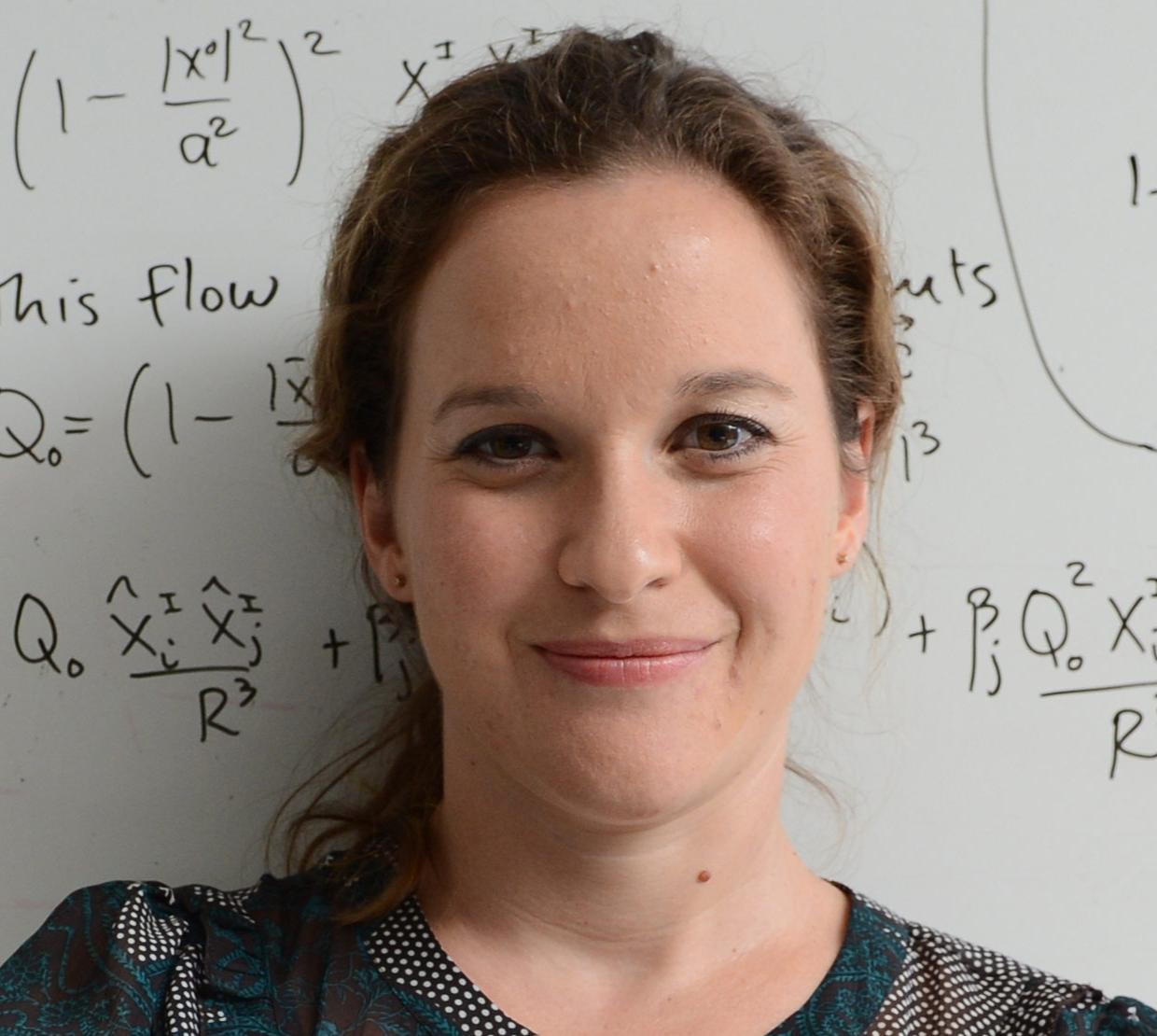
Carrie Manore standing in front of a whiteboard.

Math alumna’s disease modeling at national lab aiding public health initiatives to combat COVID-19

By Srila Nayak

Carrie Manore (Mathematics, Ph.D. '11) is a mathematical epidemiologist at Los Alamos National Laboratory.

The ongoing COVID-19 pandemic has placed mathematical models in the spotlight as they have become central to public health interventions, planning, resource allocation and forecasts. OSU mathematics alumni have made important contributions to COVID-19 modeling and research at both national and regional levels.

Mathematics alumna Carrie Manore (Ph.D. ’11) is at Los Alamos National Laboratory working as part of the COVID-19 modeling team. Manore is a mathematical epidemiologist in the Information Systems and Modeling Group at LANL since 2013. Her work focuses on modeling mosquito-borne diseases such as Zika, chikungunya, dengue and West Nile virus. The LANL COVID-19 forecasts are part of the modeling New Mexico Department of Health officials have been using since April to prepare for and tackle the COVID-19 outbreak.

“I got a really strong background in math at OSU, which not only helped me acquire mathematical skills, but also a way of thinking. It prepared me to work on real problems in the world like I am doing now.” — Carrie Manore

For more than a decade, LANL scientists have modeled infectious disease outbreaks, such as smallpox, HIV, Ebola and influenza, across the world and have developed mathematical and computational models to track and forecast their spread. The LANL COVID-19 model is among the forecasts the Center for Disease Control (CDC) has used throughout the pandemic to create health guidelines.

A compilation of LANL and other New Mexico-based models of SARS-CoV-2 virus’s transmission patterns have proven to be successful in helping New Mexico contain the spread of COVID-19. In an article in September, Scientific American reported that “New Mexico’s models and its system for collecting and tracking data allow its policy makers to make forward-looking, evidence-based decisions.” The COVID-19 numbers in New Mexico are far lower than that of its neighbors Texas and Arizona. The scientific expertise and contagion forecasts of LANL epidemiologists like Manore have played an important role in shaping the state’s fight against the coronavirus. Due to her work on the LANL COVID-19 model, Manore has received mention in New Mexico media, as well as the New York Times.

The Los Alamos model is a part of the CDC’s ensemble forecasts to understand the impact of the virus. An ensemble forecast combines models from multiple teams and organizations into one aggregate forecast to get a reliable estimate of total COVID-19 infections and deaths over the next four weeks.

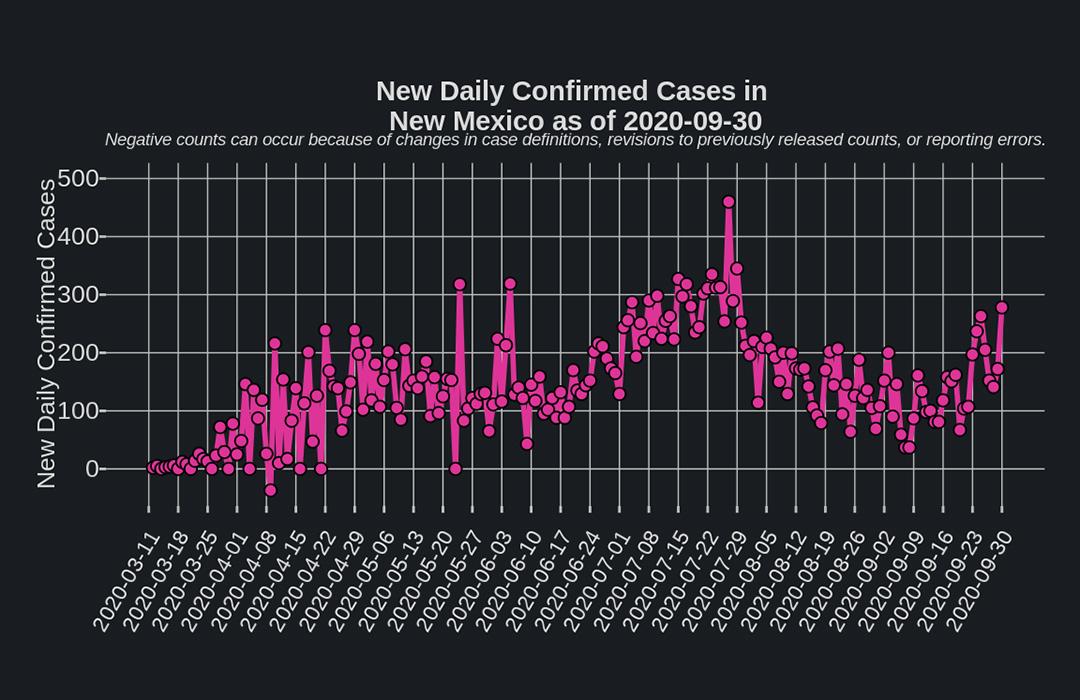
LANL COVID-19 model

Through 2020-10-04, there have been 30,477 confirmed cases in New Mexico. The LANL modeling team provides weekly, short-term as well as six-week forecasts. Source: LANL.

Mapping epidemics from Zika to COVID-19

Manore was modeling the spread of infectious diseases like Zika and West Nile virus at the beginning of 2020 when news about the novel coronavirus in China got the team’s attention. Manore’s modeling team started working on the COVID-19 outbreak in late January and their efforts intensified in mid-March when the infection started emerging globally and within the U.S. As their primary forecasting model has become stable, automated, requiring less day-to-day work, Manore and her team have moved on to answering other questions about a second wave of infections and different possible scenarios for reopening schools.

Manore’s work on forecasting models is primarily based on data, predicting what will happen, given current trends of positive cases and deaths. The national and global COVID-19 models by the team are made publicly available every Monday and Thursday to project case counts for every state in the U.S. as well as every country that has more than 100 cases.

As a mathematical epidemiologist, Manore helps ensure the model accurately captures the transmission dynamics of COVID-19 to forecast the national and global spread of the disease. Manore and her team utilize a probabilistic artificial intelligence computer model for COVID-19, developed by a Los Alamos statistician, that garnered national recognition when a version of it won the CDC’s flu forecasting challenge in 2019, beating 23 other teams.

“We needed to revise and adapt this model for COVID-19 forecasting because we have 20 years of flu data but only a few months of data for COVID-19,” said Manore. The Los Alamos model offers distinct advantages and stands out among other models because “it is truly data driven,” Manore observed. “Quite a few of the other models have a lot of assumptions about how people may behave and their possible decisions. Our model is just really driven by the data on cases and deaths. In particular, that gives more accurate short-term forecasts than some of the other models.”

In response to the reopening of businesses as well as many schools, Manore’s team has also moved forward simultaneously with other models and simulations that account for asymptomatic people, changes in people’s behavior and the consequences of relaxing restrictions. “We do think there is a lot of utility in having multiple models with multiple assumptions. Because we really don’t know what’s going to happen. So, that can give us an idea for the range of possible outcomes,” Manore said.

Manore got her start in disease modeling in the mathematics department at OSU, which she joined in 2006 after studying mathematics at Whitworth University and Eastern Washington University for her undergraduate and master’s degrees. At OSU, she was an NSF IGERT (Integrative Graduate Education and Research Traineeship Program) Fellow in Ecosystem Informatics and worked at the intersection of mathematics, biology, geosciences and computer science. Manore was advised by Vrushali Bokil, a professor of mathematics, and completed her dissertation on population dynamics and epidemiology.

“I got a really strong background in math at OSU, which not only helped me acquire mathematical skills, but also a way of thinking,” Manore said. “The IGERT program was truly interdisciplinary as it involved working collaboratively with academics from different disciplines and I found that extremely useful in my training as a mathematical epidemiologist. It prepared me to work on real problems in the world like I am doing now.”

Manore was an NSF postdoctoral fellow involved with emerging infectious diseases research at Tulane University before joining LANL.

Megan Tucker standing in park

Mathematics and writing senior awarded Department of Energy fellowship

By Srila Nayak

Megan Tucker, a mathematics senior, was awarded the Mickey Leland Energy Fellowship by the U.S. Department of Energy.

As a high school student in Santa Cruz, California, Megan Tucker picked Oregon State University as one of her top two choices for a major in nuclear engineering. Although she opted for a physics major with an emphasis on physical chemistry in her freshman year, before switching to mathematics, the nuclear reactors on campus were what lured her to OSU in the first place. On her first visit, Megan also fell in love with the beautiful campus.

“I really liked the curriculum. I liked the faculty and students I met during my visit. I learned I could do a minor in writing which was very uncommon.” She had found the perfect combination of elements for her undergraduate experience and decided to look no further. And although her priorities would shift and change as she discovered more about herself and her interests, Megan has managed to find the right academic niche at OSU.

“Regardless of what job it is, technical or creative, to be able to show that one can write and communicate is very important.”

Now a double major in mathematics and writing, Megan Lynn Tucker has excelled at and enjoyed the wide gamut of courses at Oregon State University, from Metric Spaces and Topology to Environmental Writing. She will graduate next month with a substantial amount of research experience under her belt: Megan was awarded the Mickey Leland Energy Fellowship, which gave her the opportunity to work on an interdisciplinary team at the National Energy Technology Laboratory (NETL) in Albany, Oregon, during the summer of 2019.

The Mickey Leland Fellowship Program provides students across America with educational opportunities to gain real-world, hands-on research experience with the Department of Energy’s Office of Fossil Energy. Megan’s 10-week internship took her to NETL’s Geospatial Analysis, Interpretation and Assessment (GAIA) Computational Facility where she performed geospatial data analysis and statistics related to carbon storage modeling. The GAIA computational lab works on creating models for oil, gas, and rare earth elements. Megan gathered and analyzed wellbore data on a state level to assess availability, consistency, and usability.

“Most of my summer was spent learning about the topic as I have little to no geology background. As the lab was multidisciplinary, I had meetings and conversations with colleagues whose areas of expertise overlapped with this project,” said Megan. “I learned about a variety of topics in geochemistry, petroleum engineering, and geography.”

While focusing on statistical and data errors and trying to account for those inconsistencies to make reliable inferences, Megan discovered how mathematics could be applied to real world problems. She presented her research on wellbore data and carbon sequestration at a Department of Energy conference in Pittsburgh in August 2019.

“The mathematics major taught me to think logically and intuitively, and that has been helpful with pretty much all my STEM classes.”

Megan says the most important skills and values she learned at OSU have to do with lifelong learning and mastering the knack of teaching oneself. “The best thing I learned in college is how to read a textbook, how to do actual scientific research and obtain information that is good, viable and trustworthy.” She was able to transfer her self-reliance to her NETL internship where she quickly learned software applications to perform data analysis. With no prior knowledge, Megan taught herself and became proficient in programming languages such as ArcPro and R.

The new knowledge gained from her internship has been an asset at job interviews. After graduation, Megan will move to Seattle to work as a technical writer with Amazon Web Services — a subsidiary of Amazon that provides on-demand cloud computing platforms to individuals, companies and governments.

“I talked about my software skills a lot during my interviews. Also, the fact that I had written a formal paper, done a presentation and engaged in research as a mathematician,” Megan said. “Regardless of what job it is, technical or creative, to be able to show that one can write and communicate is very important.”

With painstaking determination, Megan applied to nearly 50 jobs before getting the offer from Amazon. Initially interested in data science jobs, she came to realize through the job search process that she really didn’t want to do data science. “Instead, I wanted to write about data science and technical documentation. Getting to know exactly what kind of position I was looking for was very helpful,” Megan observed.

Megan found the knowledge she gained from her technical writing and computer science classes to be particularly useful in her job interviews. She is graduating with an impressive variety of coursework that includes computer science and chemistry in addition to mathematics and writing, a testament to the unique breadth and flexibility of undergraduate studies at OSU.

“I had taken so many mathematics courses that computer science classes became a lot easier for me,” Megan said. “The mathematics major taught me to think logically and intuitively, and that has been helpful with pretty much all my STEM classes.”

Megan switched to mathematics from physics when she found herself enjoying her math classes and realizing that she needed to further explore and understand the fundamentals of the subject beyond what she was getting as a physics major. Her favorite mathematics classes have included Complex Analysis and Linear Algebra. To her pleasant surprise, she has seen the latter pop up everywhere from her courses in quantum mechanics to chemistry and computer science.

A valedictorian, Megan has maintained a very impressive GPA and was elected to the Phi Beta Kappa Honor Society. Beyond all her positive academic experiences, Megan says the most enjoyable part of her undergraduate years has been her discovery of dancing. Introduced to dance at OSU, Megan has mastered ballroom and swing dancing and calls her involvement with the OSU ballroom dance club one of the best things in her life.

“I have had a great academic experience. But being connected to your cohort and not staying isolated is also very important,” said Megan. “Finding your community and making friends helps you not only learn and do well in classes, but also helps you gain social skills and grow as a person.”

Patrick Franklin in front of white backdrop

Knowledge is more important than grades says math alumnus and American Express chief technologist

By Srila Nayak

Alumnus Patrick Franklin (’89)

If, as the prevailing wisdom goes, a four-year college degree should prepare students for the next 40 years of working life, and for a future that few of us can imagine, then Patrick Franklin’s (’89) undergraduate mathematics degree has paid off handsomely. Patrick’s Oregon State mathematics education gave him several foundational capacities that have helped him adapt and thrive in some of the most competitive and iconic work places in America: Intel, Microsoft, Amazon, Google and General Electric.

He is executive vice president and chief technology officer at American Express Company, the behemoth New York-based Financial Services Corporation.

Patrick’s time as an undergraduate student in the mathematics department was a “very positive experience.” He was mentored by John Lee, emeritus professor of mathematics. “Studying mathematics set me up for success,” Patrick observed.

One of Patrick’s pet dinner table conversation themes is comparing a mathematics degree to a degree in computer science. The latter can teach you about algorithms, data structures and the mechanics of coding, he says. But a degree in math taught him “how to think deeper and much more critically and helped me learn a more analytical and thoughtful way to approach things.”

“I wasn’t the strongest student in class. But I learned a lot. For me, the grades were secondary to the knowledge I obtained.” — Patrick Franklin

Math courses taught him what to code, as well as how to approach and break down a problem, and how to prove things. Learning mathematics made it easy for him to transfer his skills to other fields. “I became instantly a software person with my first job at Intel.”

At OSU, he studied probability, statistics and other “fun mathematical stuff” with former math professor Robby Robson and took a pivotal multi-variable class with John Lee.

Patrick studied mathematics for the simple reason that he loved the subject. At first, he wanted to major in electrical engineering, unsure how to use a mathematics degree to procure a job. But he was dissuaded from doing so. “My wife kept saying, ‘You love math. Why don’t you just stay with math.’”

Patrick came to OSU as a married, 21-year-old undergraduate student after two years in a community college. Raised in Tacoma, Washington, Patrick’s life is an inspiring model of turning failure into success. After failing high school, Franklin enrolled in community college and earned a high school diploma, before joining OSU and turning a chapter in his life. “I wasn’t the strongest student in class. But I learned a lot. For me, the grades were secondary to the knowledge I obtained.”

He absorbed lessons from his academic experiences that he applies to his professional and personal life even today. “I have never asked somebody for their GPA when I interview them. I like to know how they solve problems. After 5 to 7 years of job experience, it just doesn’t matter.”

Patrick put himself through college without much guidance or financial support from his parents. That has given him a richer perspective on the things that matter in the long run and how one may overcome personal struggles. “I think it is important that students have a responsibility for their own education. It’s not an interruption to your studies if you have to take an extra year to get to school because you have to work. Graduating without student loans or debt is more important.”

Taking the lead with technology

At his first job at Intel, which he joined in 1989, Patrick made a path-breaking contribution. He was a founding member of the P6 microprocessor that we know today as Pentium II. Franklin was instrumental in creating the PC’s microprocessor that is the basis of the microprocessor architecture in Pentium II. He was one of only 7 VLSI architects on the project and was responsible for the retirement logic, the performance monitoring hooks as well as the silicon and user debug hooks.

“The system transformation was not as much of a software exercise as it was a puzzle or logic or design problem. That’s what math teaches you. I don’t think you can get that in other disciplines.”

“We built it and it has become the way computing works today. Intel was a great place to get my engineering chops as a mathematician,” noted Patrick. After Intel, he joined Microsoft as a software developer and architect and led the Advanced Configuration and Power Interface (ACPI) initiative that brought reliable plug-n-play and power management to Windows 2000. He was the co-inventor of hibernate — a mode whereby the PC saves all the open programs and data and uses much less power than the sleep mode.

One of his greatest professional achievements came at Amazon, which he joined in 2007 to lead its retail catalog that manages the lifecycle for the products Amazon buys and sells on its website. He was in charge of scalability for the retail systems teams and greatly enjoyed the challenges of large-scale systems. There he led the Amazon Fresh Engineering Team and was the CTO for Amazon consumables.

In 2007, Amazon was a smaller company with a $10 billion market cap. Patrick made positive changes to the retail systems. “The system transformation was not as much of a software exercise as it was a puzzle or logic or design problem. How are going to solve this problem that has lots and lots of complexity in a way that reduces complexity and increases the likelihood of success?” Patrick found his answers in mathematics. “That’s what math teaches you. I don’t think you can get that in other disciplines.”

Patrick has a message for students: “Don’t worry so much about grades. Make sure you understand the material. Make sure you are learning. Learn the fundamentals well because everything builds from the fundamentals.” Patrick’s career is certainly a great example of the latter. His professional life mirrors the arc of technological transformations in our society. He moved up from working on a processor at Intel to e-commerce in the age of the internet.

Patrick has two adult sons who have inherited his love for computers and technology. One works in machine learning and the other is a React (a java script programming language) developer. As a member of the College of Science Board of Advisors, Patrick cherishes the opportunity to deepen his ties to his alma mater.

Elise Lockwood in front of shrubbery

Mathematics professor receives Google award to improve K-12 computer science education in Oregon

By Srila Nayak

Elise Lockwood, associate professor of mathematics

Elise Lockwood, associate professor of mathematics, is part of a $141K, one-year grant from Google to enhance and increase integration between computer science (CS) education and mathematics teacher education curriculum. The project aims to better equip more teachers to teach computational concepts and practices in Oregon high schools. The grant is awarded as part of Google’s growing efforts to support excellent, cutting-edge research in academia.

As part of the project “Integrating CS Education into Teacher Education and K-12 Mathematics,” Lockwood will develop teaching modules for mathematics education students at OSU to build their computer science knowledge and skills. She will collaborate with colleagues Jennifer Parham-Mocello, assistant professor of computer science in the College of Engineering and the lead investigator on the study, and Rebekah Elliott, associate professor of mathematics education in the College of Education at OSU.

This mathematics and computer science education project aims to develop computational thinking and fluency of K-12 students both to enrich their conceptual understanding and to better prepare them for jobs in a highly technological society. The researchers say that this is especially important for Oregon “where many school districts have a growing population of youth minoritized within the educational system who are experiencing lower graduation rates than white peers and are relegated to low track courses and below grade level learning.”

Furthermore, Lockwood and Parham-Mocello point out that Oregon is one of only five states that has no policy to support K-12, computer science education. According to a report on K-12 computer science education in Oregon, only 37% of all high schools teach computer science, and universities in Oregon did not graduate a single new teacher prepared to teach computer science in 2016.

In an attempt to transform the dispiriting circumstances surrounding computer science education in Oregon schools, Lockwood and her colleagues are expanding ways to implement computer science education by exploring connections between secondary mathematics content and basic computational concepts. The researchers will “identify specific topics in existing mathematics standards (for secondary students) that fit with core CS concepts,” and then use those topics to build teachers’ knowledge and skills in computer science.

Over the 2019-2020 academic year, the Google award will offer unique opportunities for students on campus who plan to become secondary mathematics teachers. Both master’s students in the College of Education and undergraduate students in the mathematics department in the College of Science are eligible to participate. Lockwood and her colleagues will develop curricular materials to be utilized in a capstone mathematics course sequence for undergraduate pre-service teachers at OSU, and they will also create curriculum to work with a group of master’s level teacher candidates. In the process, the OSU students studying mathematics education will learn the basics of computational thinking, which they can apply in their future careers as teachers.

Extending mathematics education to computational learning

Lockwood is a highly regarded scholar in the area of mathematics education research. Her impressive research on how students learn combinatorics has steadily expanded to investigate the role played by students’ computational thinking and activity in mathematical and STEM learning. She was awarded a $800K five-year NSF CAREER award in 2017 to study how computational settings, specifically introductory Python programming, can strengthen aspects of students’ combinatorial reasoning. Her published research on using basic Python programming for undergraduate combinatorics problem solving paves the way for novel and creative methods of using computing.

While Lockwood’s CAREER grant was not designed to focus on pre-service teachers explicitly, findings from that project can inform how pre-service mathematics teacher training might involve computational thinking and activity.

“I am thrilled to work with my colleagues Jennifer and Rebekah on this project, and I think that our respective areas of expertise set us up well for a productive collaboration. I am very excited that this award will let us start some exciting work that fits well with my CAREER project,” said Lockwood.

She received the John and Annie Selden Prize for Research in Undergraduate Mathematics Education from the Mathematical Association of America. Lockwood was also awarded a 2019 Fulbright research scholarship to conduct research on how computing can help the teaching and learning of mathematics at the University of Oslo, Norway.

Subscribe to Career Outcomes