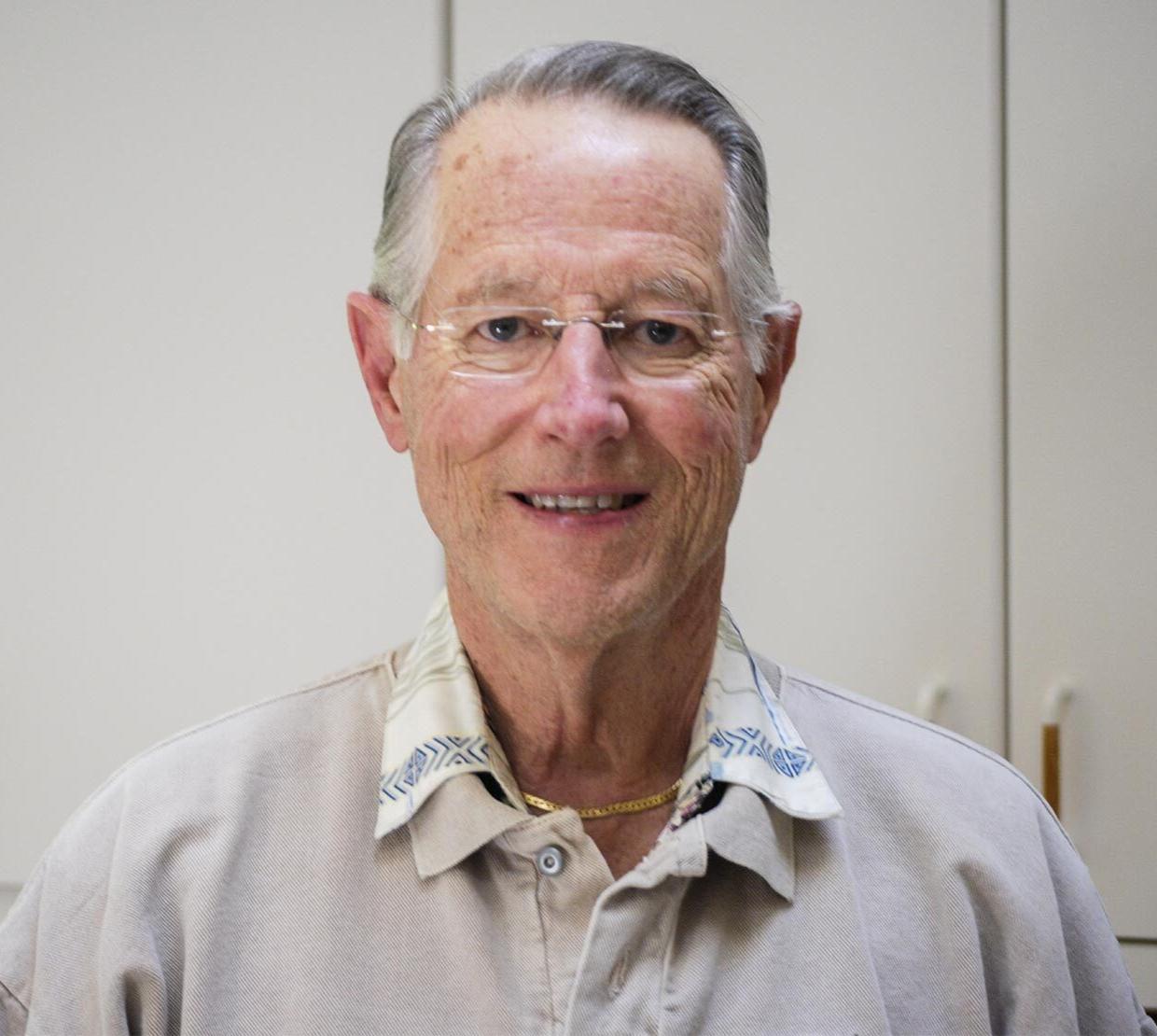
For Dale Comstock (M.A., Ph.D. Mathematics ’64) mathematics has been a passport — taking him from classrooms in Corvallis to night classes in postwar Europe, emerging universities in India and policy rooms in Washington, D.C.
Throughout a career that has spanned research and academic leadership, Comstock has traveled to more than 70 countries. Now, he is helping ensure Oregon State students have the support to build distinguished careers of their own.
Comstock recently established an endowed graduate dissertation award in the Department of Mathematics, designed to recognize and reward exceptional doctoral research.
“The idea is to encourage students to stick it out,” he said. “Sometimes it becomes a very hard path to go through. The demands at that level can be high. So I want to encourage them to hang in there.”
Comstock’s own path through mathematics was anything but linear. After earning his undergraduate degree at Central Washington University, he began his career teaching high school math and physics.
In 1957, a few months after marrying his wife, he was drafted by the Army to serve in West Germany. His role was a fire direction control officer for the atomic artillery unit he was in.
It just so happened there was an extension service there from the University of Maryland, allowing Comstock to continue teaching mathematics in the evenings.
When he returned to the U.S., he made a pivotal decision to pursue graduate study at Oregon State. That choice shaped the rest of his career.
Encouraged by OSU faculty members, Comstock continued on to complete both his master’s degree and Ph.D. in mathematics, turning down a job offer along the way to stay on track academically. His research ranged from Boolean matrices to Turing machines — theoretical models of computation that manipulate symbols on an infinite tape according to a set of rules to simulate any algorithm.
“It had a tremendous effect,” he said of his time at Oregon State. “That’s what started me on the route to higher mathematics.”
After briefly working in industry, Comstock returned to academia, joining the faculty at Central Washington University, where he would spend the bulk of his career. He later became dean of the graduate school and dean of research, roles that extended his impact beyond the classroom and into shaping academic programs and research initiatives.