My experience as a fellow for the PRAx Fellowship has been wonderful. From the application process to the showcase, I learned a lot. I was able to connect with students and faculty to meaningfully engage with an interdisciplinary approach to creating art. I was first told about this opportunity by my Studio Art (ART 117) instructor (Professor Wilson-Haley). I mentioned that I was a math major who had always thought math and art could blend really well. I’ve always had a particular interest in integrating the arts into STEM fields. She told me about the PRAx Fellowship, and from there, my imagination ran wild.
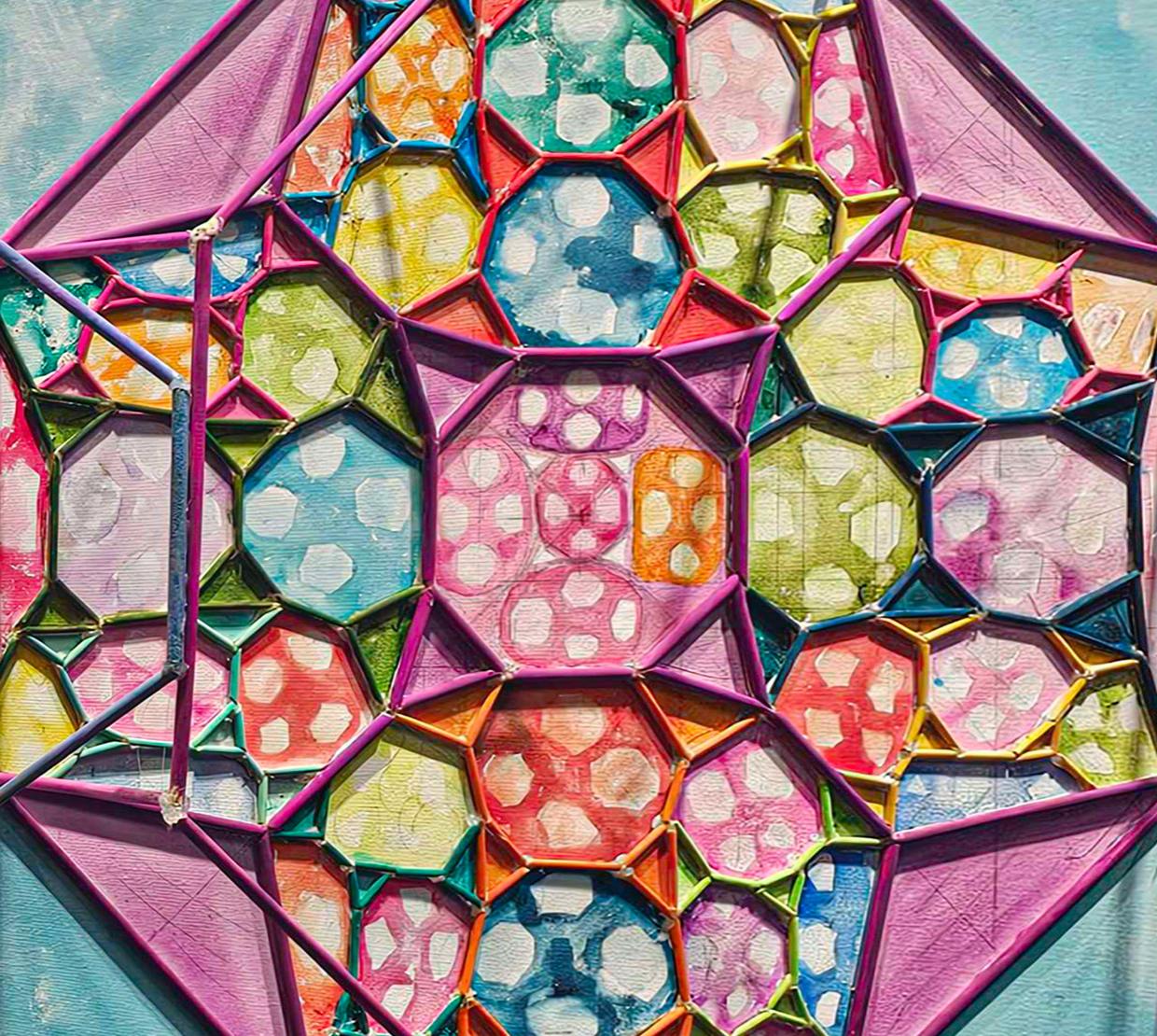
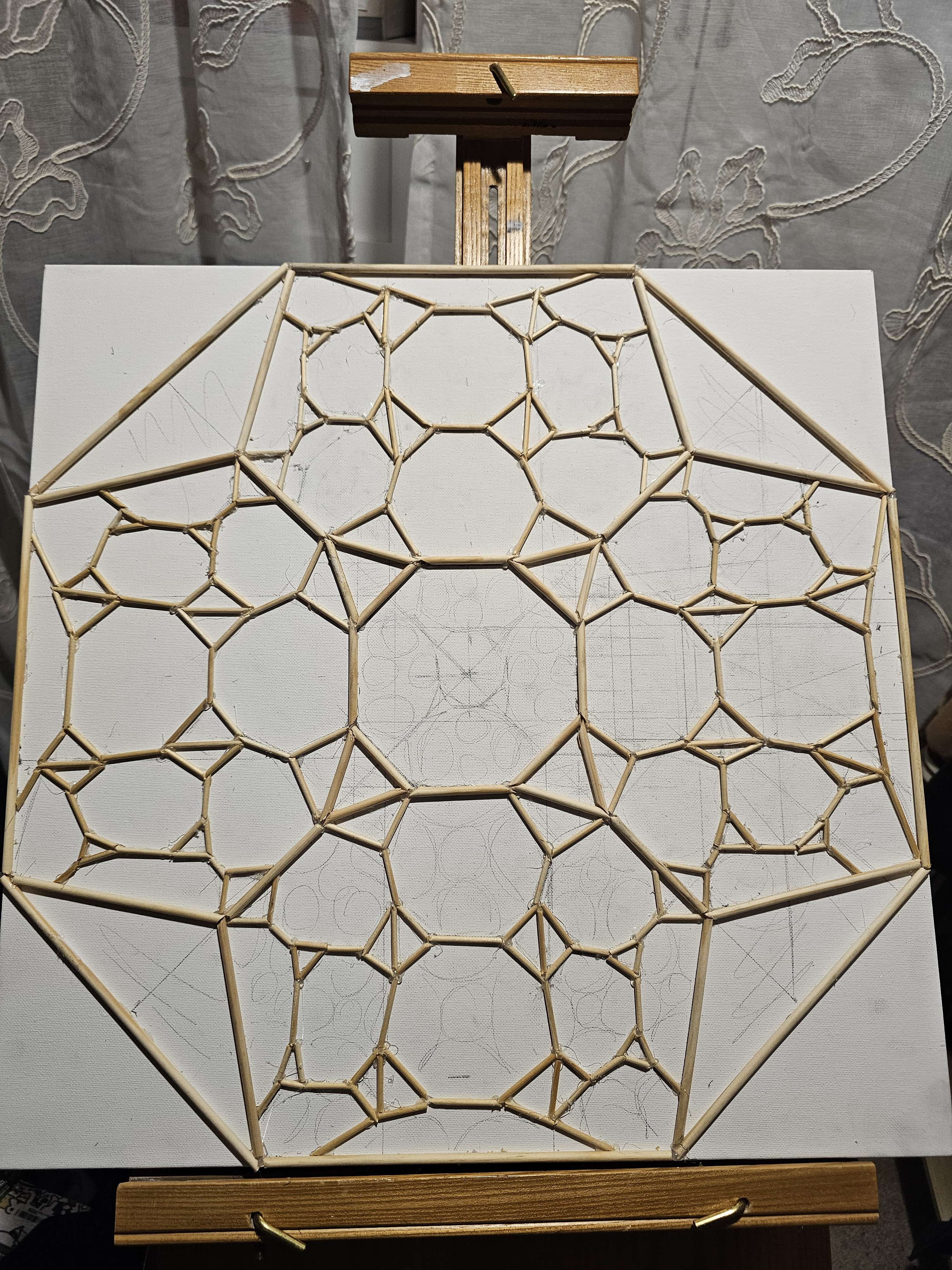
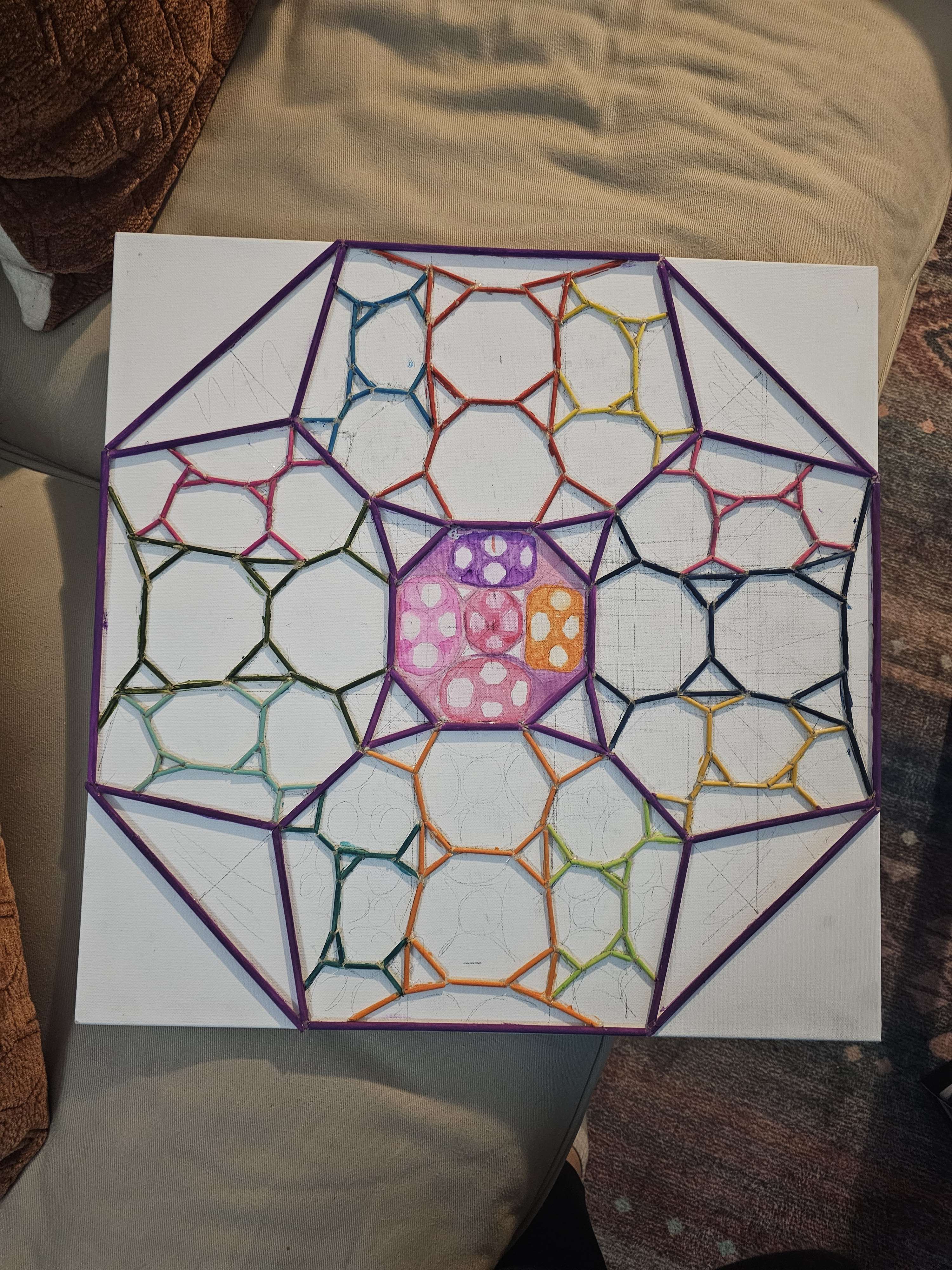
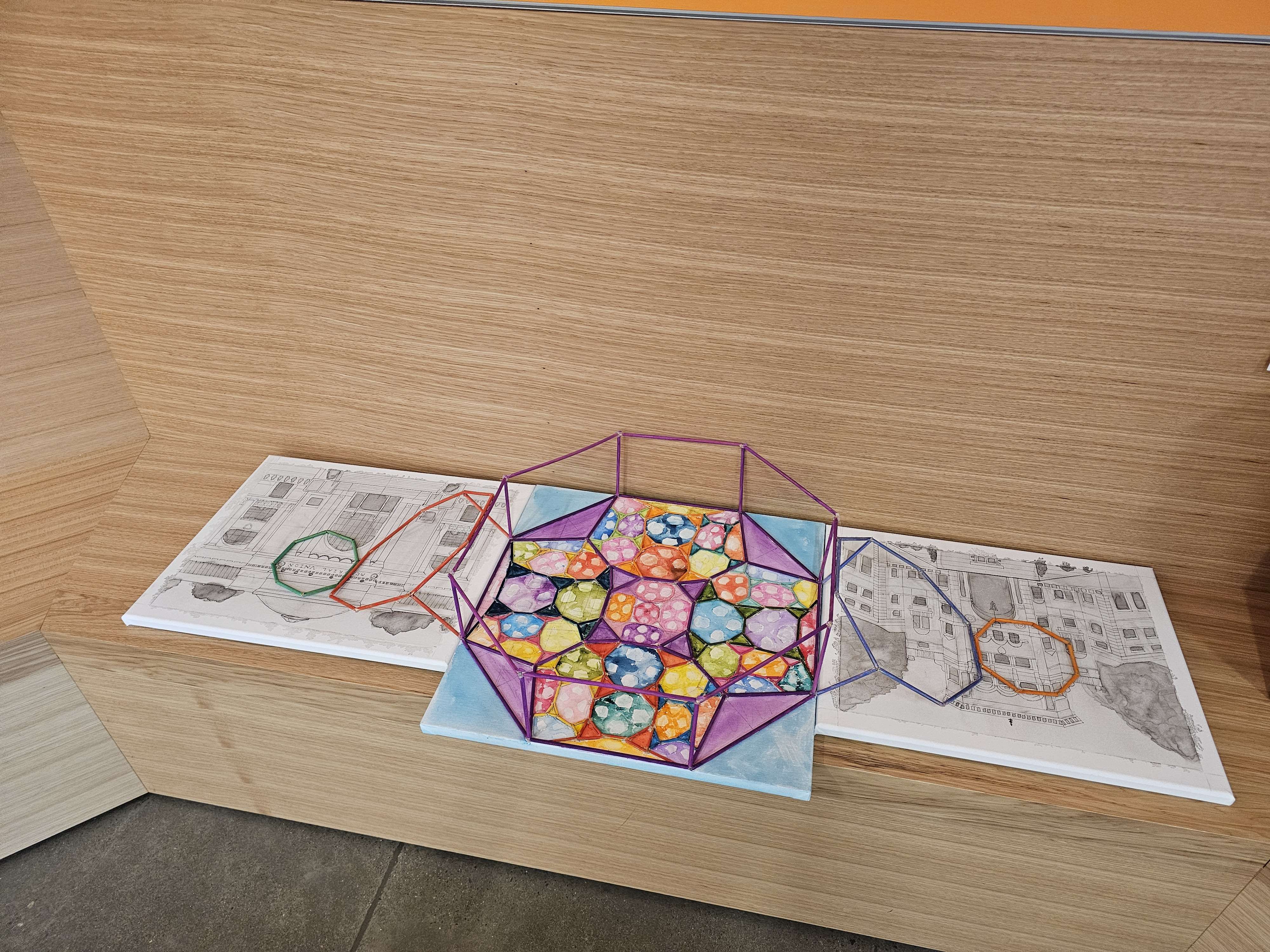
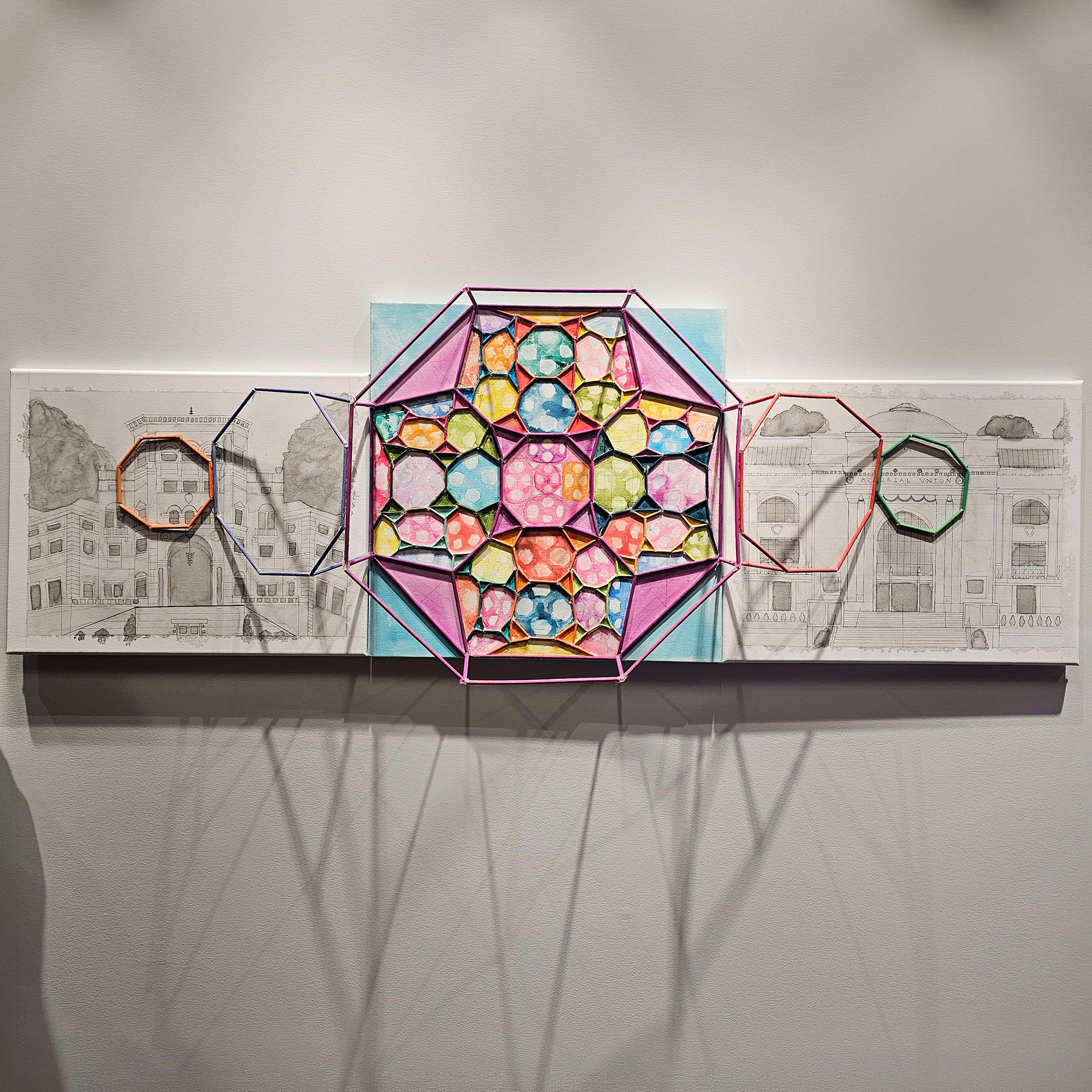
Hyperbolic Blend by Samantha Hubbard (watercolor, ink and wood on canvas) showcases another world revealed by mathematics.
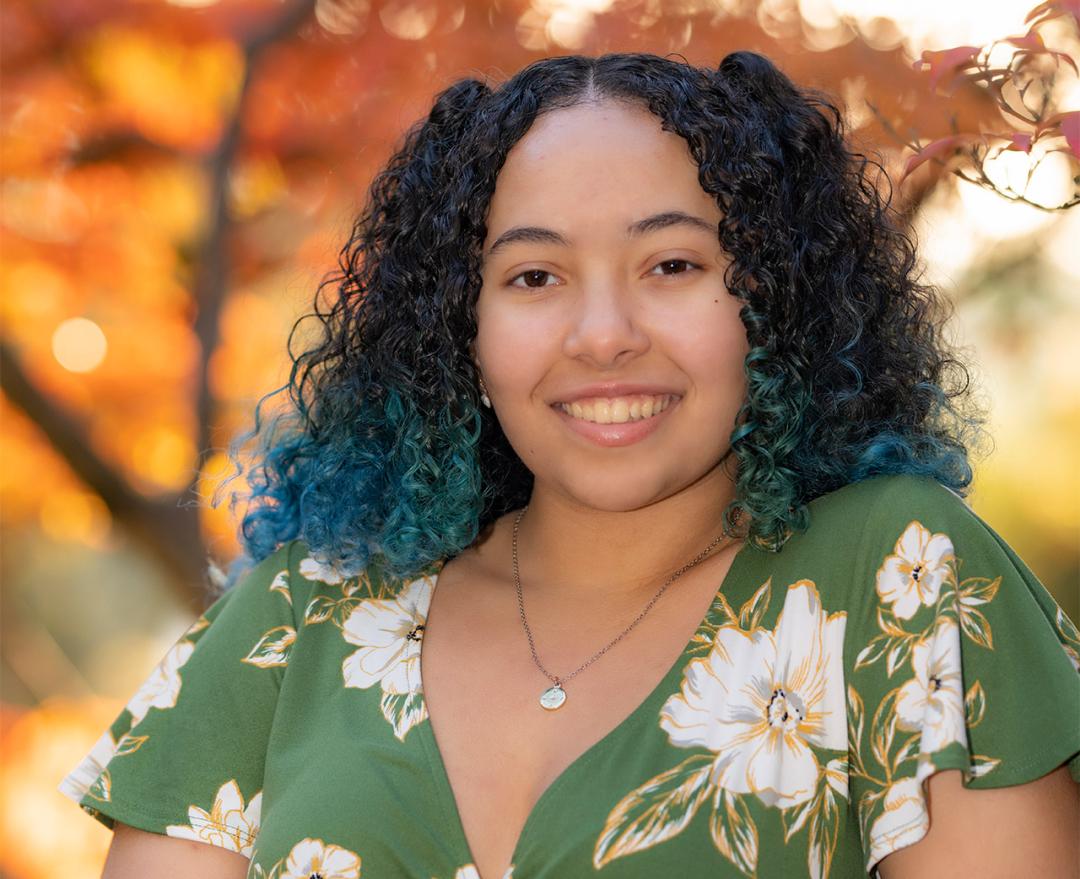
Mathematics major Samantha Hubbard found opportunities to connect her two joys — art and math — with a minor in studio art and the PRAx Fellowship, which offers students the opportunity to develop an interdisciplinary creative project informed by active engagement with OSU research.
That same term, I had been taking Non-Euclidean Geometry with Professor Guo. In that course, I learned about a famous artist, M.C. Esher, who specialized in artistic interpretations of hyperbolic space, a subsect of Non-Euclidean geometry. I wanted to try my hand at representing hyperbolic space and wanted to apply for the program. In the spring of 2025, I asked Professor Guo and Instructor Wilson-Haley to be my mentors, to which they graciously accepted.
“Math has become a joy for me.”
We then embarked on a year-long journey to make this piece come to life. We meet at least once a month during the school year. We began by taking my initial idea and using both of their expertise to expand it. Instructor Wilson-Haley offered the insight to explore a 3-D piece, and Professor Guo offered the insight of using octagons to represent hyperbolic space. This allowed me to come up with the idea of having a piece that contrasts the perceived rigidity of math and the fluidity of art. I chose to play with this idea by representing the mathematical part of my piece with bright, fluid colors. I wanted the hyperbolic representation to show the fantastical aspects of math. To showcase math as a playful world we can explore rather than an unfeeling world of rules and theorems. I contrasted that with a rather dull representation of our world. The hope was that the bright colors of the hyperbolic representation would pop against the dull colors of our world. A demonstration that math has become a joy for me to explore among the monotony that can often happen in life.
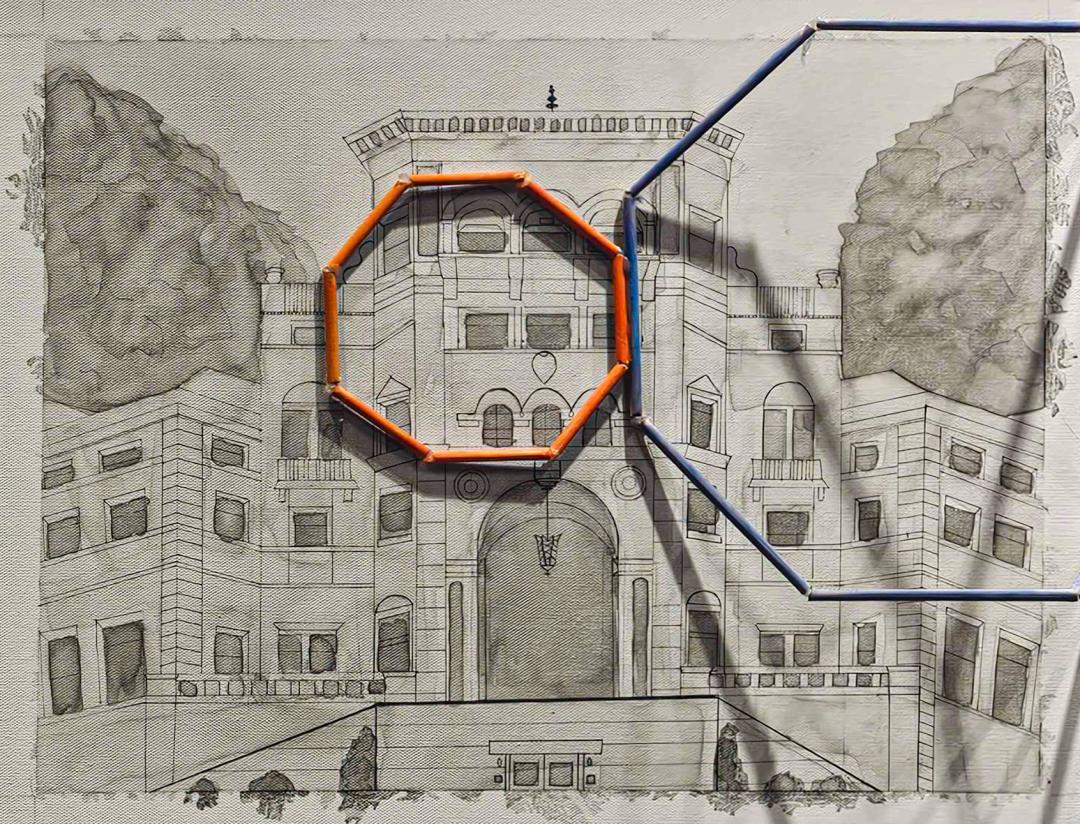
The first panel of Samantha Hubbard's Hyperbolic Blend illustrates brightly colored hyperbolic space in wood and paint superimposed over OSU campus building Weatherford Hall rendered in gray watercolor and ink.
“For every roadblock I reach, there is someone I can reach out to for help.”
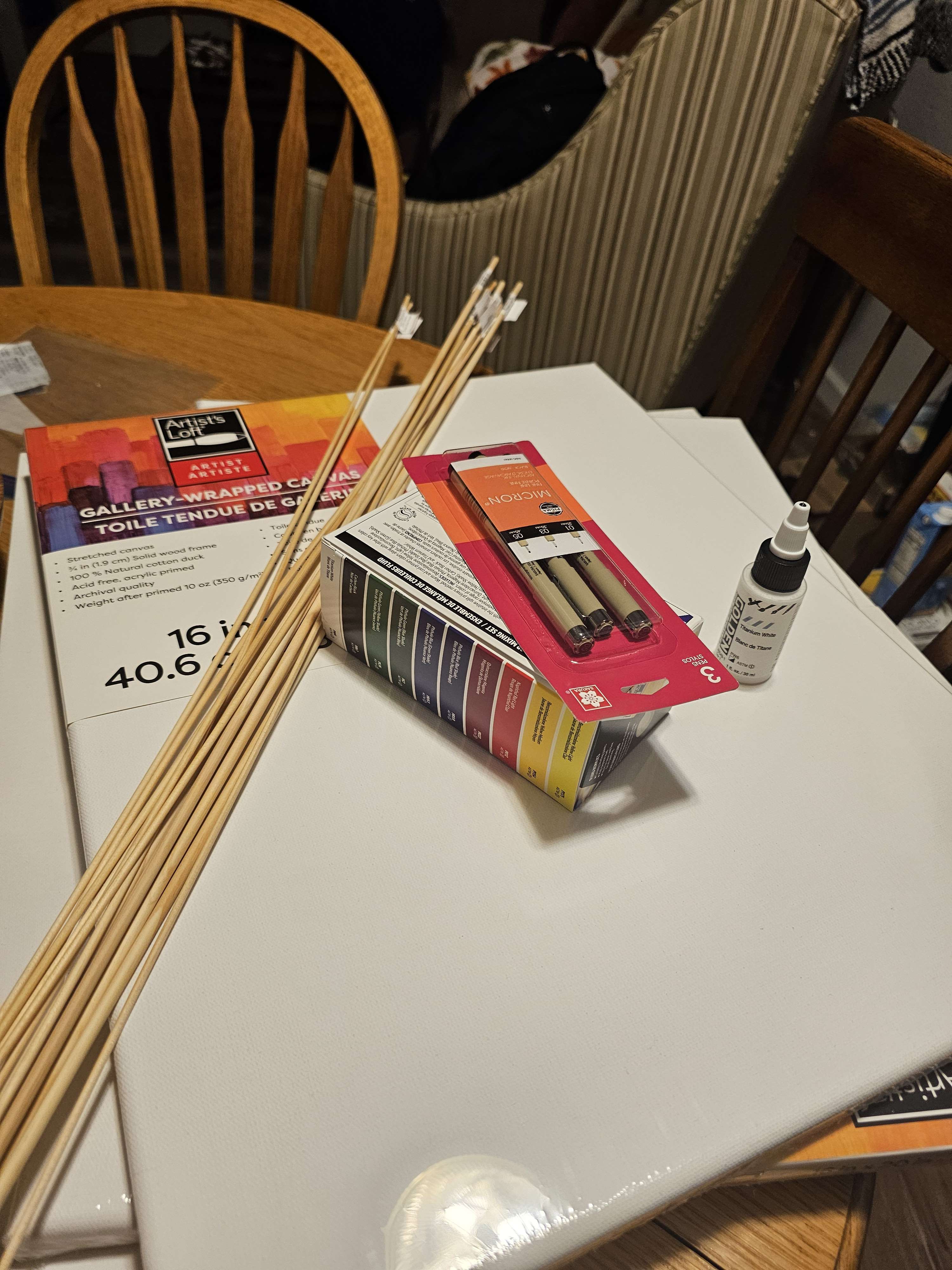
This piece was eventually realized as Hyperbolic Blend. A piece that is currently showcasing at OSU’s very own PRAx Center. The journey to create this piece taught me a lot about collaboration and perseverance. If it weren’t for my mentors, I don’t believe this piece would have become as wonderful a final piece as it did. They gave me wonderful support and resources that made me feel confident in trying something new. This is by far the largest piece I have ever made on my own. They also taught me that for every roadblock I reach, there is someone I can reach out to for help. I worked with my roommates, teachers, mentors, friends, and family to make this piece possible. If it weren’t for them and my time at OSU, I wouldn’t have grown so confident in my abilities. If I had the opportunity to go through this process again, I certainly would. I’d recommend that if anyone was interested, they should certainly apply, as this process was life-changing!


