Faculty and Staff

Faculty and Staff

Valley Library and OSU clock tower in the background with sunshine.

Faculty excellence: Promotions and tenure 2023

By Vrushali Bokil

The College of Science congratulates 17 faculty on receiving promotions and/or tenure this year.

Countless hours of consideration and analysis goes into every promotion decision. The College relies heavily on the expertise and perspectives of departmental staff, department heads, department committees, peer teaching committees, College of Science Promotion and Tenure Committee, external reviewers and students to get our deserving faculty through this process.

Thank you to everyone that helped to make this possible for our well-deserving faculty.

Congratulations to the science faculty in the college who have just completed this process with success!

Chemistry Department

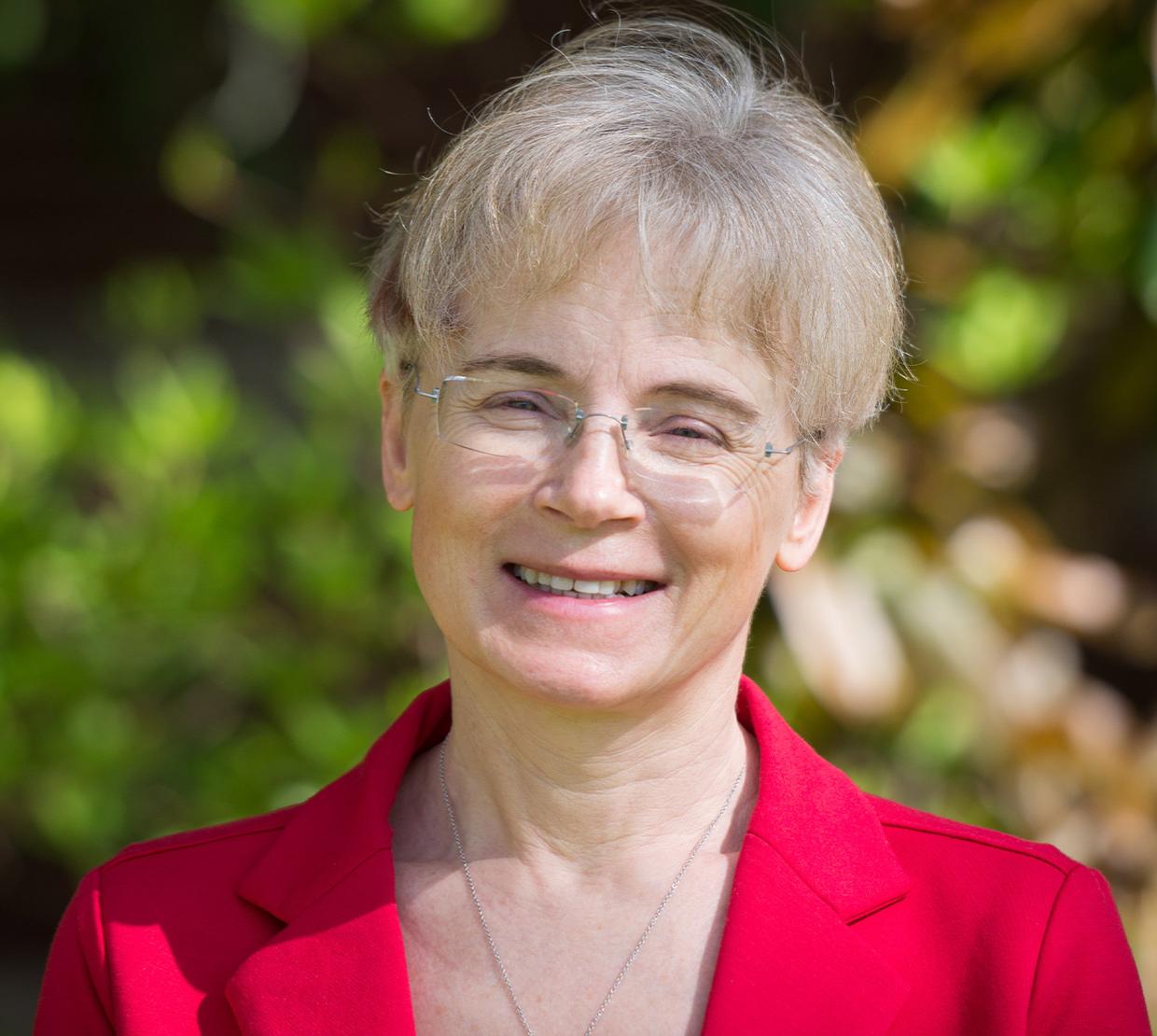
Marilyn Mackiewicz will be promoted to Associate Professor of Chemistry and granted indefinite tenure, effective September 16, 2023.

Integrative Biology Department

Carmen Harjoe will be promoted to Senior Instructor I of Integrative Biology, effective July 1, 2023.

Lindsay Biga will be promoted to Senior Instructor II of Integrative Biology, effective July 1, 2023.

Mathematics Department

Amanda Blaisdell will be promoted to Senior Instructor I of Mathematics, effective September 16, 2023.

Clayton Petsche will be promoted to Professor of Mathematics, effective September 16, 2023.

Chris Orum will be promoted to Senior Instructor I of Mathematics, effective September 16, 2023.

David Wing will be promoted to Senior Instructor II of Mathematics, effective September 16, 2023.

Elise Lockwood will be promoted to Professor of Mathematics, effective September 16, 2023.

Johnner Barrett will be promoted to Senior Instructor I of Mathematics, effective September 16, 2023.

Liz Jones will be promoted to Senior Instructor II of Educational Opportunities Program and Mathematics, effective September 16, 2023.

Mary Beisiegel will be promoted to Professor of Mathematics, effective September 16, 2023.

Michael Gilliam will be promoted to Senior Instructor I of Mathematics, effective September 16, 2023.

Sara Clark will be promoted to Senior Instructor II of Mathematics, effective September 16, 2023.

Microbiology Department

Shawn Massoni will be promoted to Senior Instructor I of Microbiology, effective July 1, 2023.

Physics Department

Evan Thatcher will be promoted to Senior Instructor I of Physics, effective September 16, 2023.

Paul Emigh will be promoted to Senior Instructor I of Physics, effective September 16, 2023.

Statistics Department

Katherine McLaughlin will be promoted to Associate Professor of Statistics and granted indefinite tenure, effective September 16, 2023.

Thank you!

Thanks to all of the committee members who served on the College of Science Promotions and Tenure Committee this year.

  • Andy Karplus, Chair and Professor of Biochemistry & Biophysics
  • Chong Fang, Professor of Chemistry
  • Ethan Minot, Professor of Physics
  • Holly Swisher, Professor of Mathematics
  • Kate Field, Professor of Microbiology
  • KC Walsh, Senior Instructor II, Physics
  • Lesley Blair, Senior Instructor II, Integrative Biology
  • Lisa Madsen, Professor of Statistics
  • Michael Freitag, Professor of Biochemistry & Biophysics
  • Oksana Ostroverkhova, Professor of Physics
  • Sally Hacker, Professor of Integrative Biology
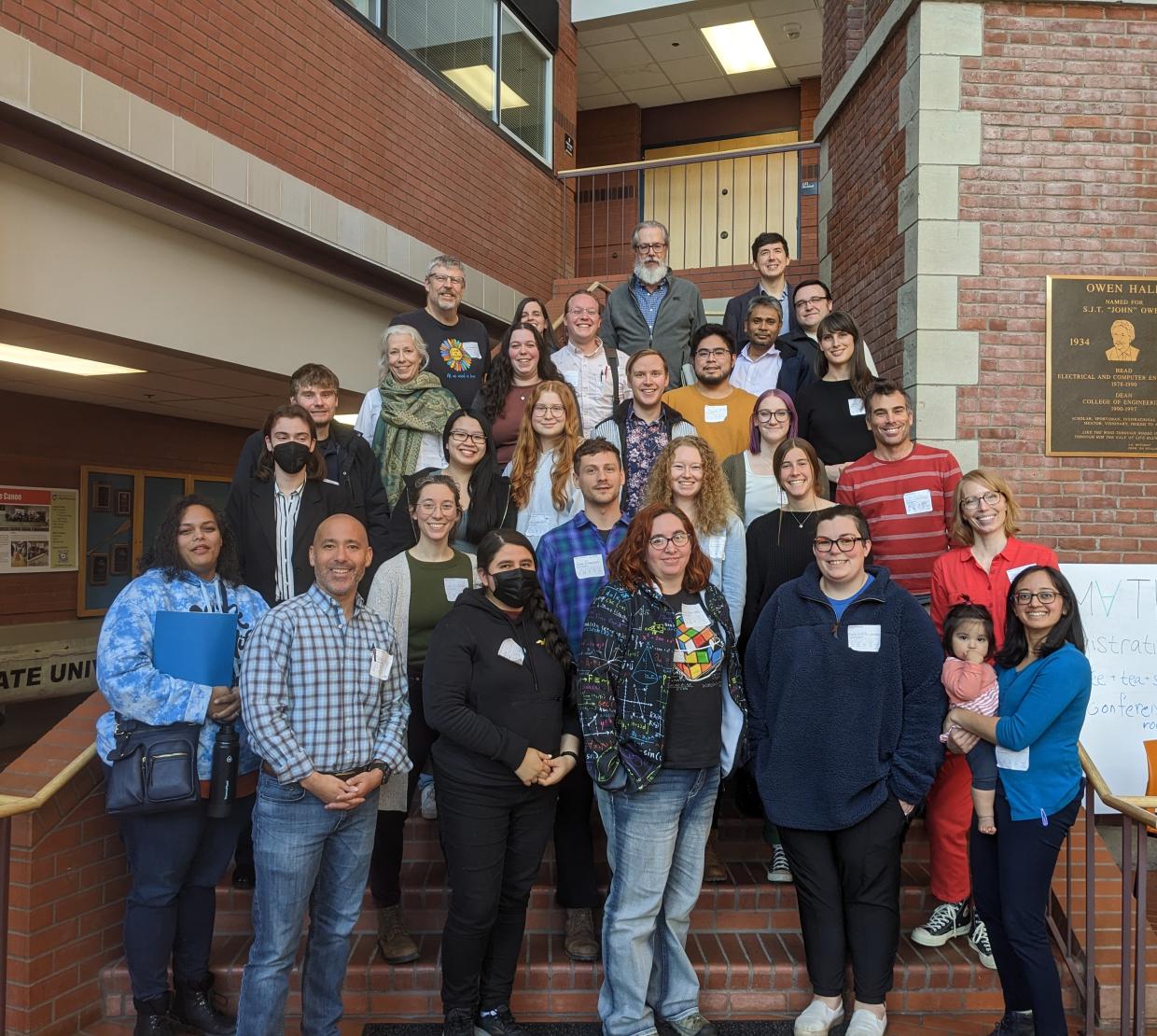
A group of individuals stand on a staircase for a photo during a mathematics conference.

Making math inclusive: Math For All satellite conference

By Kaitlyn Hornbuckle

Oregon State University Assistant Professor Swati Patel and two colleagues, Padi Fuster and Robyn Brooks, wanted to do something to counter systemic inequities in mathematics. In response, they founded the Math For All conference at Tulane University in New Orleans in 2020.

“We created this conference to try to build a more positive and welcoming culture in mathematics,” Patel said. “We thought of a conference that would be an open and friendly space for people to gather and talk about math, math education and how it relates to diversity, justice and inequity.”

Math For All is now a national conference that hosts regional programs annually throughout the country, including a satellite location at Oregon State where 40-60 people attend in Corvallis for free, thanks to generous donor support and scholarships. Attendees learn how mathematics applies to everyday life and experience a sense of belonging to a powerful scientific community. Talks and discussions tend to cover everything from human rights in data science to the mathematics of paper folding.

OSU's satellite conference often welcomes people from local community colleges and other universities, drawing mathematicians from undergraduates to instructors and faculty members.

Breaking down barriers in mathematics

Organizers ensure the conference is structured to promote dialogue between attendees, encouraging them to bridge the gap between their mathematical interests and other human interests that may spark commonality between them. One year, attendee nametags sported the person's unique interests like math as art, trivia or social justice.

“It makes me very happy when undergraduates feel comfortable in this space to ask questions. It takes courage to do that,” Patel said. “It’s not easy to raise your hand and ask a question to a speaker.”

Oregon State graduate student and co-organizer Leah Sturman said in 2023, the first guided discussion included an activity where participants matched important mathematical theorems to the actual societal impact.

Participants then split into groups and developed flowcharts that related those theorems to another branch of math they were familiar with. The activity asked the question, “What does my math mean for people around me?” Some groups decided to relate the theorem to a tool they use themselves, such as illustrating how the Pythagorean Theorem relates to GPS.

“Mathematics is far more doable than a lot of people think,” Sturman said. “It is not nearly as impenetrable or scary as people’s guts tell them. I’ve seen people who think they are bad at math actually be really good at it.”

After the activity, co-organizers posted these flowcharts on the wall for other people to see throughout the day.

“In the second session, we had a little bit more discussion around the thought behind the flowchart activity,” Sturman said. “You know, how can we be conscientious and choose to do mathematics that has a positive impact on society?”

The topics discussed are always varied, so attendees can see how mathematics impacts society as a whole, including the communities they are a part of. This enables everyone to bring their own experiences to the table, as the organizers intend.

"When I went to college, I don't ever remember having a space when I was an undergrad where the conversations like this were being facilitated and were encouraged."

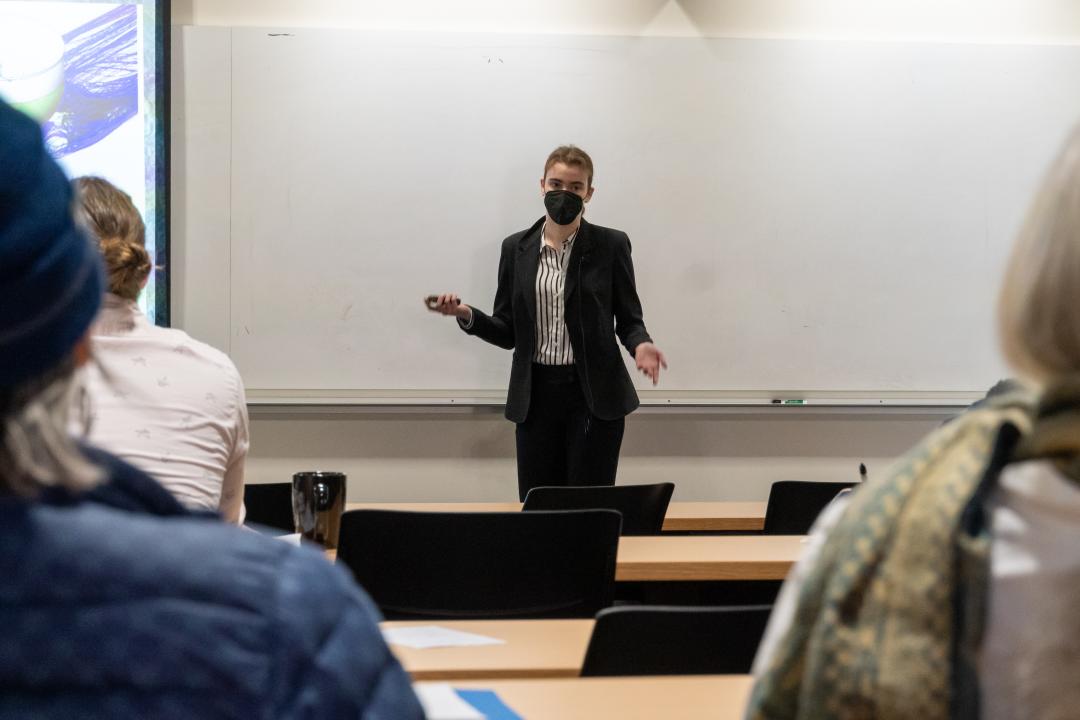
An individual in a black suit stands at the front of the room during the mathematics conference.

Fennel Connelly gives a presentation entitled, "Math, Marine Energy and MECC: An undergraduate perspective on wave energy converter design."

The conversations throughout the conference are not strictly mathematical. Oregon State Mathematics Instructor and co-organizer Michael Gilliam watched students partake in conversations where they wrestled with implicit bias, racism and other issues impacting communities.

“When I went to college, I don't ever remember having a space when I was an undergrad where the conversations like this were being facilitated and were encouraged,” Gilliam said.

For him, these types of conversations are beautiful to witness because students are able to combine the societal impact of mathematics with general concepts they learn in the classroom.

“The purpose of the conference was to create a space where mathematicians can present their findings and feel inclusive,” said Adaline De Chenne, a graduate student and co-organizer at Oregon State. “The way we set our conference apart is there's more attention to inclusivity, there's attention to making the participants feel like they belong, and there are discussions around those topics in mathematics, specifically how we can make our community more inclusive and diverse.”

From meeting new professionals to learning how mathematics applies to everyday life, Math For All is a place for participants to learn in an inclusive environment powered by diversity.

A physicist works to zoom in on a microscope

New grants to support breakthrough discoveries

By Hannah Ashton

Four-dimensional tissue self-assembly, integrated river health and ultra-tiny spectrometers: The 2022 College of Science Research and Innovation Seed (SciRIS) award recipients will use collaboration to fill critical knowledge gaps across numerous scientific disciplines to drive real-world impact.

The SciRIS program funds projects based on collaborative research within the College of Science community and beyond. There are two tracks through the program: SciRIS (Stages 1-3) and the SciRIS individual investigator award (SciRIS-ii).

SciRIS Stages 1-3 funds teams in three stages of increasing funding to support training, research and capacity-building, accelerating work toward external funding opportunities. SciRIS-ii funds individual faculty to establish research relationships with external partners, enabling them to demonstrate the feasibility of their ideas and quickening the pace of scientific discovery.

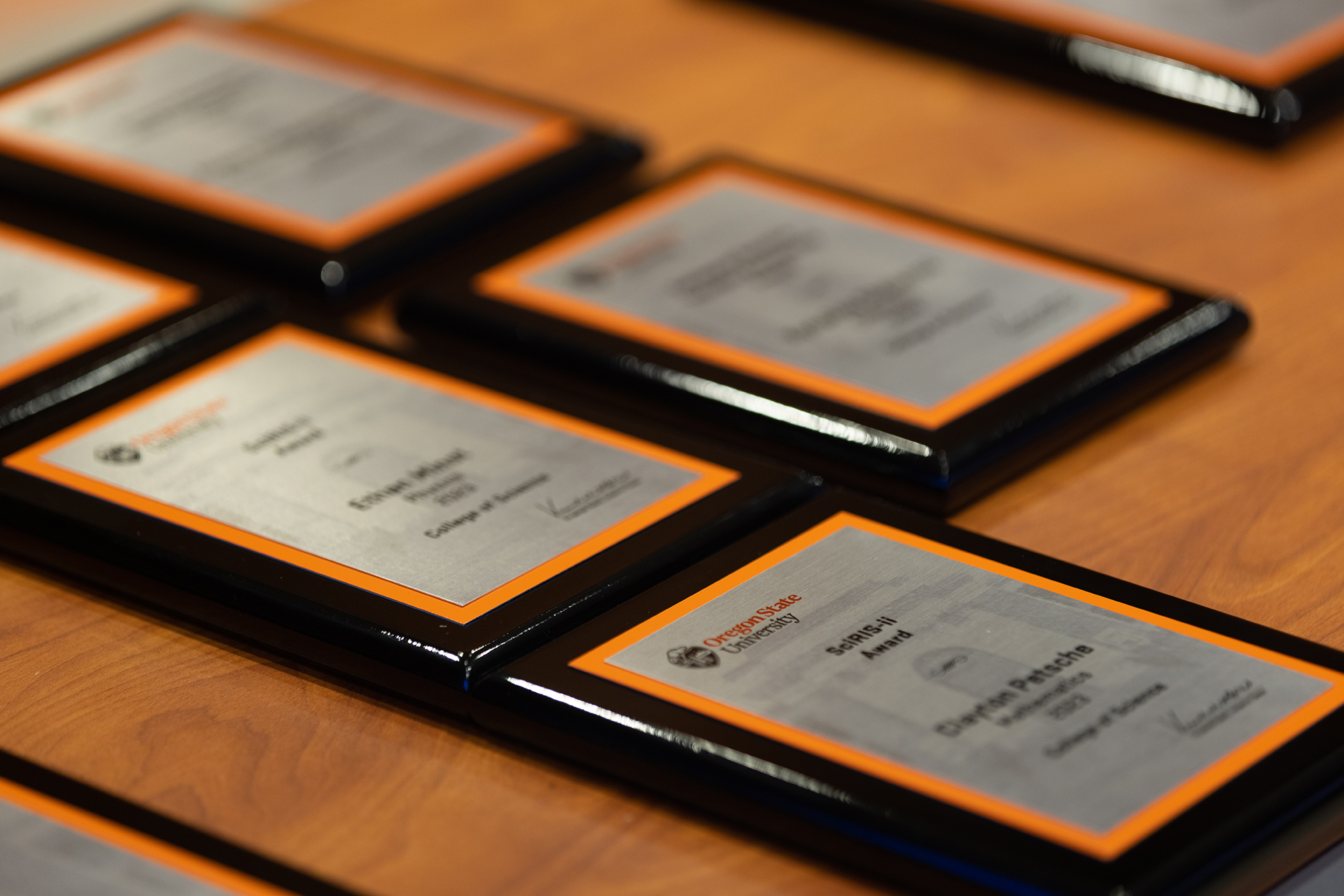
SciRIS-ii Awardees

The following three scientists received SciRIS-ii awards: Bo Sun, Clayton Petsche and Ethan Minot.

Associate Professor of Physics Bo Sun’s research aims to lay the foundation for programmable four-dimensional tissue self-assembly. Current technologies have been unable to harness these naturally occurring processes to assemble dynamic tissue structures for biomedical and therapeutic applications. Four-dimensional tissue self-assembly is critical for many physiological processes including acute wound healing and in lethal tumor metastasis.

Sun and his collaborator, Yang Jiao from Arizona State University, will be building on eight years of collaborative research in the field of cell mechanics and cell migration that has resulted in eight publications.

Associate Professor of Mathematics Clayton Petsche will use his SciRIS grant to help three graduate students complete sub projects within the realm of arithmetic dynamical systems. The research will be entirely student-focused and will help establish their research credentials before entering the postdoctoral job market.

Professor of Physics Ethan Minot will use his award to bring ultra-miniaturized spectrometer technology to Oregon State and pursue follow-up opportunities.

In 2022, with co-authors from Finland, Minot was part of a study published in Science that resulted in a powerful, ultra-tiny spectrometer. Contributing to a field known as optical spectrometry, their discovery could improve everything from smartphone cameras to environmental monitoring.

Minot plans to bring the technology to Oregon to grow the new field of research.

SciRIS Stage 1 Awardees

Four groups of scientists received SciRIS Stage 1 awards up to $10K.

Associate Professor of Statistics Yuan Jiang, along with Anna Jolles, professor in the Department of Integrative Biology, received a SciRIS Stage 1 grant for a project which will help fill a knowledge gap and provide crucial tools to understand microbial community dynamics.

The team will develop a novel analytical pipeline that harnesses longitudinal microbiome data to define the ecological roles of host-associate microbes. Although the accumulation of microbial communities is essential to animal health, there are few statistical routes adequate for characterizing microbial community dynamics through time.

Integrative Biology Professor Anna Jolles and Carson College of Veterinary Medicine Professor Claudia Häse will use their SciRIS Stage 1 award to study eco-evolutionary host-bacterial-phage dynamics. Collaborating with a researcher from the University of Louisiana, the group will be using the Pacific oyster and shellfish pathogen Vibrio coralliilyticus as a model system.

In a project entitled “Bioinformatics for integrated river health,” Integrative Biology Professors David Lytle and Anna Jolles, along with Justin Sanders from the Carson College of Veterinary Medicine, will bring together expertise across disciplines to provide an integrated approach to understanding river health. The group will combine expertise in bioinformatic and genetic methods for characterizing aquatic invertebrate communities, aquatic parasite and pathogen communities, and fish microbiomes. Samples will come from the lower Colorado River, an ecologically and culturally significant ecosystem.

Biochemistry and Biophysics Associate Professors David Hendrix and Colin Johnson, along with Professor of Chemistry Claudia Maier and Patrick Reardon, director of the Nuclear Magnetic Resonance Facility at Oregon State, received a SciRIS Stage 1 award to create a pipeline of computational and experimental methods for the prediction, identification and functional characterization of microproteins. Previously dismissed due to their small size, microproteins are now thought to play significant physiological roles including pathological roles in cancer progression.

Disease Mechanism and Prevention Fund

Researching Parkinson’s disease, Associate Professor of Biochemistry and Biophysics Alysia Vrailas-Mortimer received a grant from the College of Science Disease Mechanism and Prevention Fund for a project entitled “Why is a fly a good model to study my grandmother’s tremors?”

Similar to the SciRIS-ii, the fund is focused on assisting individual faculty efforts to establish research relationships with external partners for projects specifically related to health science.

Using fruit flies, Vrailas-Mortimer’s goal is to determine how a stress response protein protects against Parkinson’s-associated iron-induced oxidative damage. Parkinson’s affects over one million people in the U.S. and her research could provide the basis for future therapeutic strategies.

A scroll sits above a wreath on a blue background with glitter.

Celebrating excellence in teaching and advising: 2023 College of Science Awards

By Hannah Ashton

The College of Science gathered on Feb. 22 to recognize and celebrate our high-achieving faculty and staff at the 2023 Combined Awards Ceremony. The evening celebrates the best in the college, from excellence in teaching and advising, service and administration to inclusive excellence, to outstanding achievements in research.

During the teaching, advising and mentoring portion of the evening, many of the awards were determined based on student nominations. Mentors were praised for their creative teaching styles, engaging personalities and willingness to go above and beyond for students both inside and outside of the classroom.

Congratulations to all the award recipients!

Loyd F. Carter Award for Outstanding and Inspirational Teaching in Science (Undergraduate)

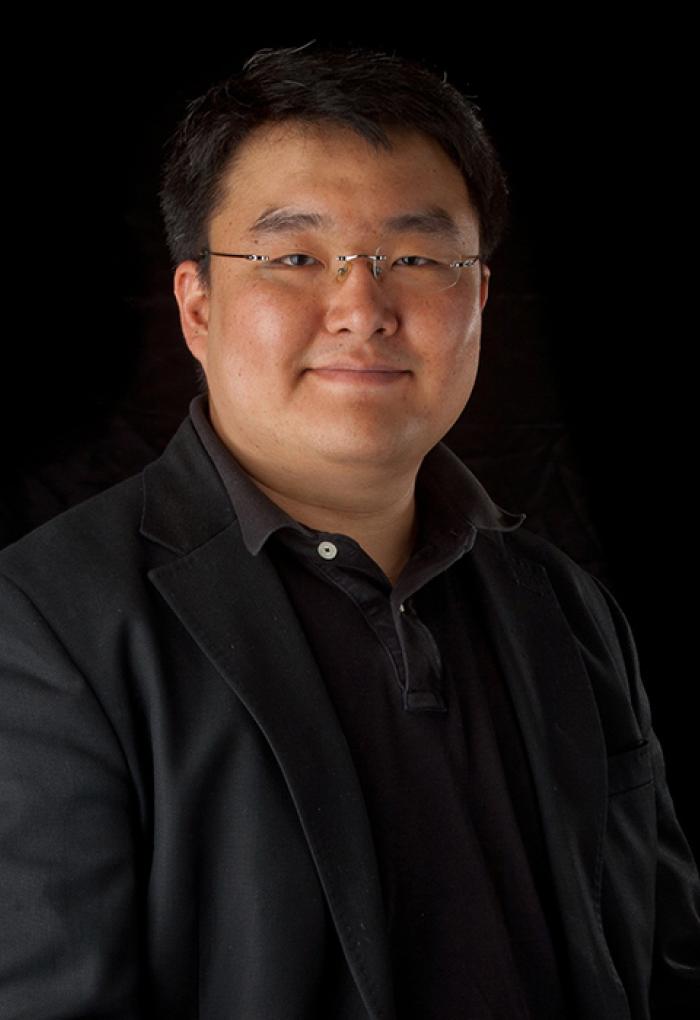
Paul Cheong in front of black backdrop

Bert & Emelyn Christensen Associate Professor Paul Ha-Yeon Cheong

Bert & Emelyn Christensen Associate Professor Paul Ha-Yeon Cheong won the Loyd F. Carter Award for Outstanding and Inspirational Teaching in Science. Cheong teaches General Chemistry and Organic Chemistry.

Nearly twenty students nominated Cheong for this award, commending his charismatic personality, ability to adjust his teaching style for each student and his focus on mental health. Multiple students called Cheong the best professor they have ever encountered and credited him with their academic success.

“He made the class itself easier when the material was complex,” wrote one student nominator. “When I struggled with mental illness and fell behind, he reached out, met outside of class and worked with my personal barriers to make sure I could succeed and move on in my studies.”

Other students acknowledge the challenging stereotypes associated with chemistry courses and Cheong’s ability to make the content digestible.

“There have been many times within the course that I thought that I didn’t belong in the classroom or failed as a student,” said one nominator. “He has restored my confidence and hasn’t given up on me so that I can pursue my goals within higher education.”

Loyd F. Carter Award for Outstanding and Inspirational Teaching in Science (Graduate)

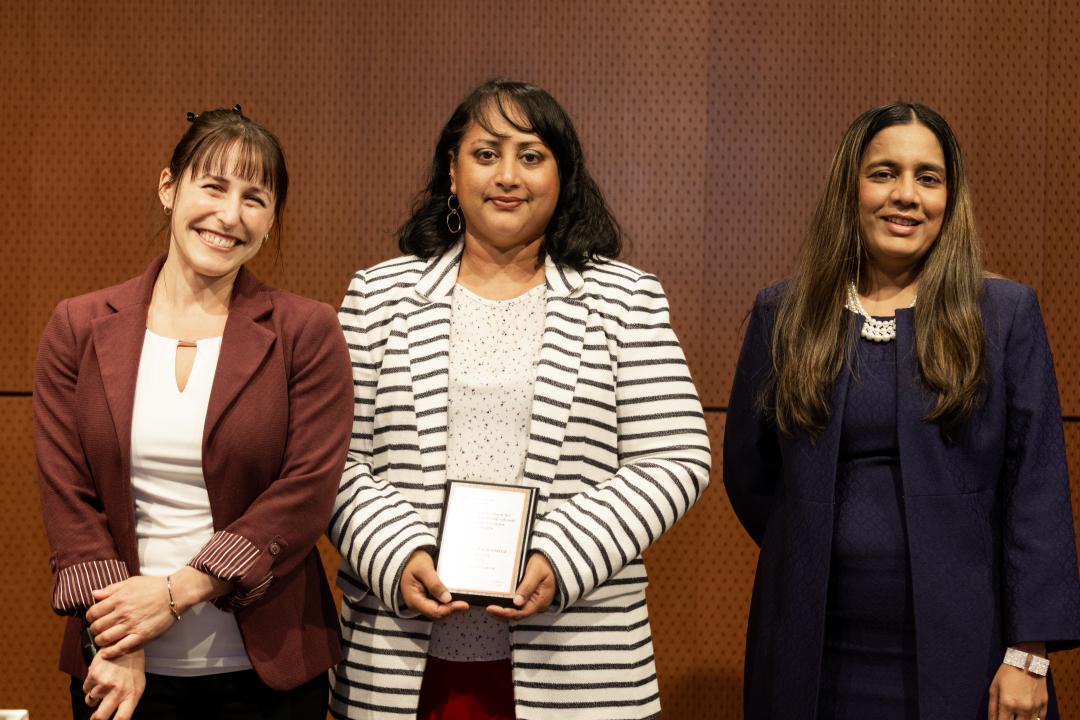
Marilyn Mackiewicz accepting her award.

Marilyn Mackiewicz receiving her award with Interim Dean Vrushali Bokil and Associate Dean for Academic and Student Affairs Jessica Siegel.

Associate Professor of Chemistry Marilyn Mackiewicz received the Loyd F. Carter Award for her inspirational and caring mentorship and teaching of graduate students.

“I wish I could put in words how much of an inspiration she is to me. Her teaching has a very unique flipped classroom model which felt student-centric and very engaging for me,” wrote one nominator. “She had multiple ways that she helped us but not in a way that would damage our independent thought. I love the fact that the class had grant writing, research project work and presentations on chapters to cover for our course all given by the students.”

Last year Mackiewicz received the College of Science Inclusive Excellence Award, and in January 2023, she presented the inaugural lecture in combination with the award. Watch her lecture, “Empowering Culture of Belonging,” on YouTube.

For both undergraduate and graduate students, Mackiewicz is known for her mentorship, support and advocacy. Many of her courses include a focus on fostering a sense of belonging and inspiring leadership development.

Olaf Boedtker Award for Excellence in Academic Advising

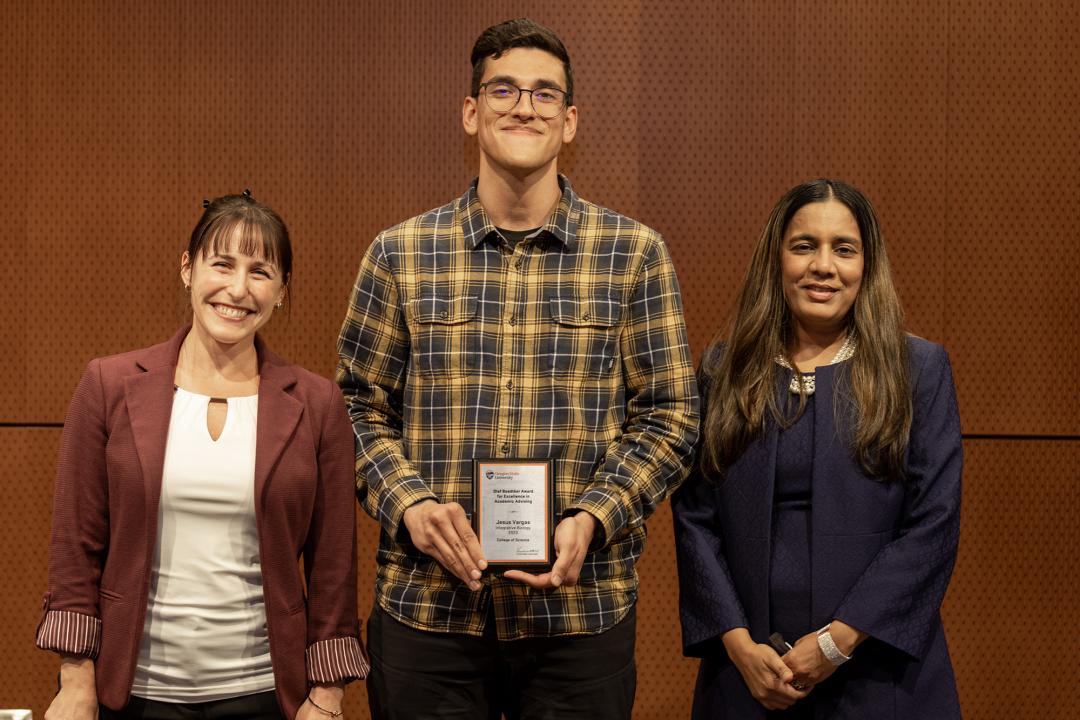
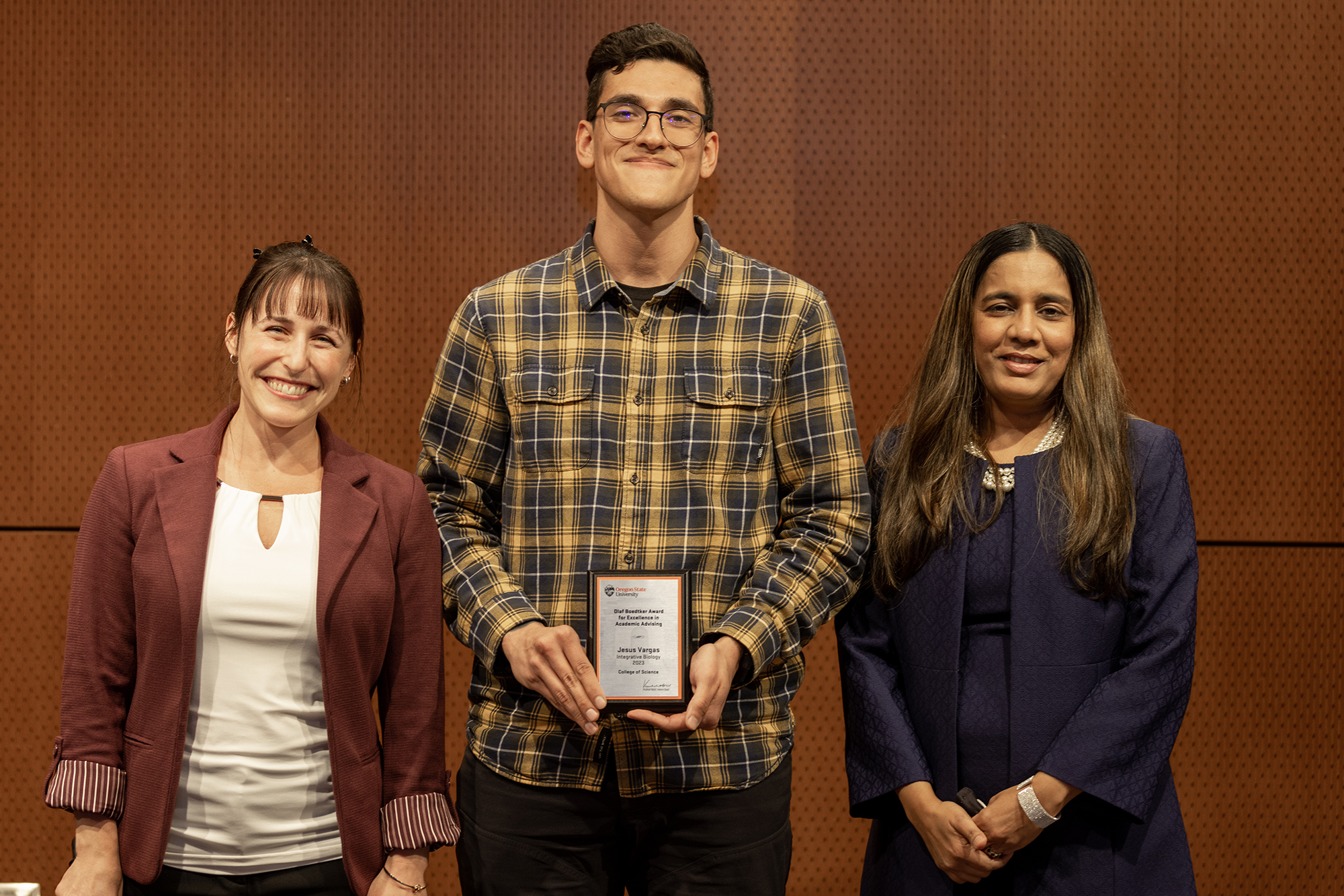
Jessica Seigel and Vrushali Bokil posing with Jesus Vargas holding his award.

Jesus Vargas receiving his award from Interim Dean Vrushali Bokil and Associate Dean for Academic and Student Affairs Jessica Siegel.

Jesus Vargas, academic advisor in the Department of Integrative Biology, received the Olaf Boedtker Award for his knowledgeable support and caring undergraduate advising. Olaf Boedtker was a former professor in the Department of Physics for 23 years and served as head advisor in the College for 14 years from 1973 to 1987.

“Jesus was patient with all of my questions and did a thorough job of preparing to advise me over the summer about my first steps with Oregon State. I was overwhelmed and unsure but his knowledge of the Zoology degree and ECampus platform made his guidance invaluable,” wrote one nominator. “I could tell he had prepared for our advising appointment and that made me feel like the time, money and energy I was putting into my education was respected.”

Another student had similar praises for Vargas. “He was incredibly helpful and knowledgeable, supportive, and helped me really think through the choices I was debating and pick the path that is the best for me. I’ve never felt like an advisor was invested in me personally and truly cared about my specific situation and took the time to look through my transcripts, listen to me and give tailored advice.”

Fred Horne Award for Sustained Excellence in Teaching Science

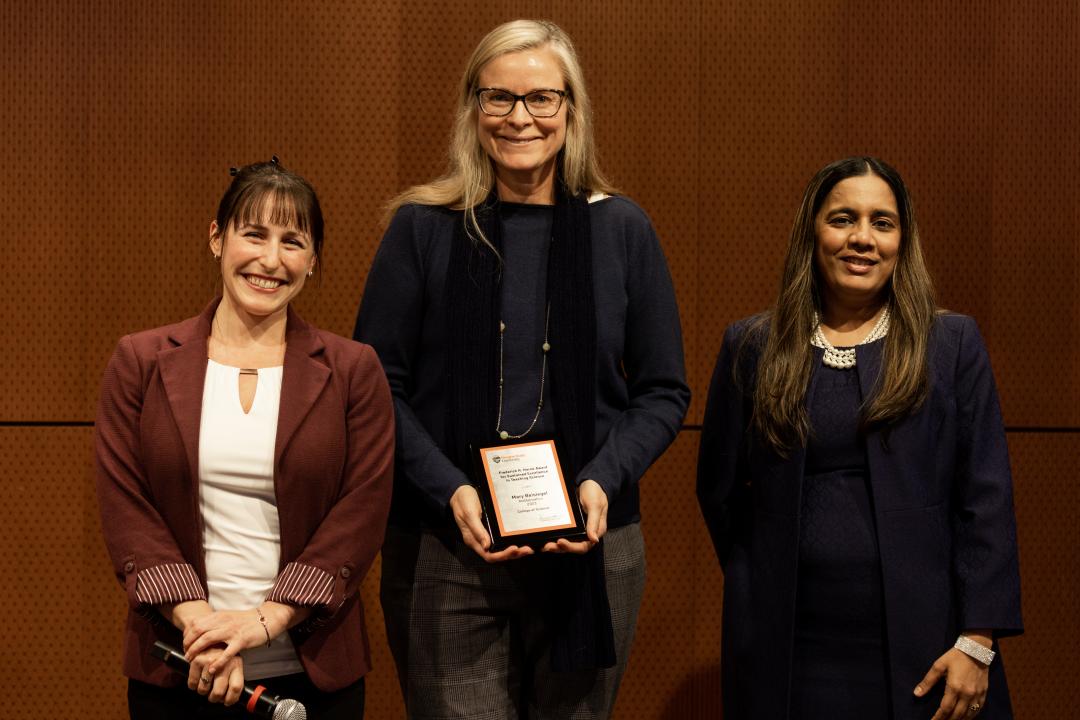
Mary Beisiegel standing in a black shirt and dark pants receiving a plaque.

Mary Beisiegel receiving her award from Interim Dean Vrushali Bokil and Associate Dean for Academic and Student Affairs Jessica Siegel.

Mary Beisiegel, associate professor in the Department of Mathematics, received the Fred Horne Award for her exceptional and sustained instructional achievements and high student praise. This award is named after Fred Horne, Oregon State professor emeritus of chemistry and the former College of Science dean for 13 years, from 1986 to 1999.

During Beisiegel’s ten years at Oregon State, student and peer evaluations of her teaching have been consistently positive.

“In addition to teaching content with an excellence and passion that is unmatched by most, Beisiegel also happens to be a personal role model and mentor of mine,” one student nominator wrote. “Being a woman in a STEM field, I have faced adversity and have often felt out of place among classmates. Beisiegel always made sure that each and every student in her class felt safe and welcome regardless of their math learning background or personal experiences.”

Colleagues mentioned her high-quality teaching that prioritizes student voices and use of evidence-based teaching practices. Extending outside of the classroom, Beisiegel runs the Graduate Teaching Assistant orientation for the department and takes an involved role with the Math Education Seminar.

“Her excitement about teaching has a positive impact on her students, certainly, but as her colleague I can also attest to the positive impact it has had on me,” wrote one nominator. “Being surrounded by a passionate educator like Mary, I am motivated to put the same kind of intentionality and energy into my own teaching, which ultimately serves to benefit the students at OSU.”

Beisiegel has a strong track record of Oregon State and national recognition for her teaching excellence. In 2017 she received the national Henry L. Alder Award for Distinguished Teaching by a Beginning College or University Mathematics Faculty Member. Each year at most three college or university teachers are honored with this award. From 2018 to 2021 she was an Oregon State Ben and Elaine Whitely Faculty Scholar of Teaching Excellence.

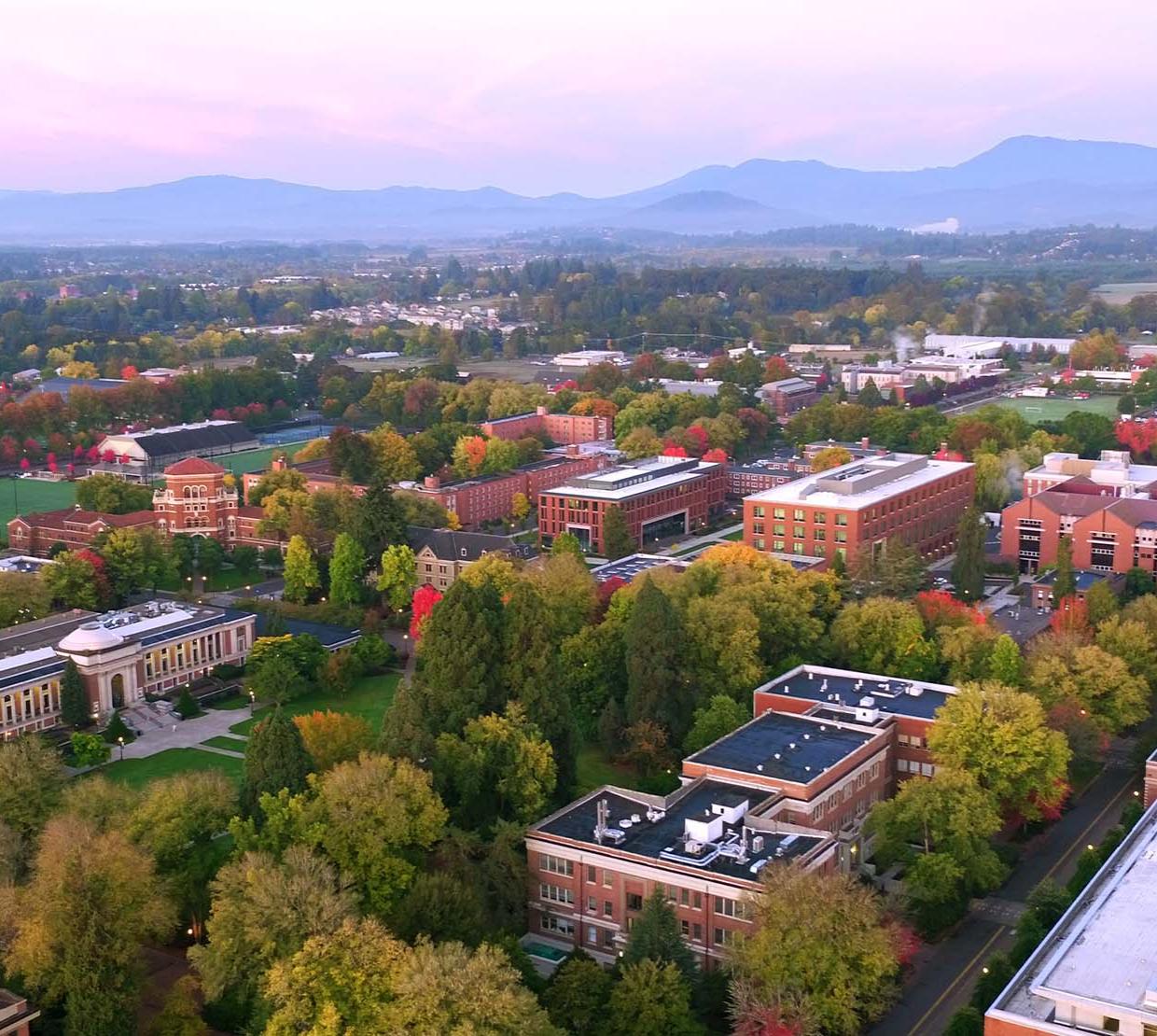
An aerial image of campus showing buildings and trees.

Meet the eight new faculty members bringing their expertise to OSU

By Hannah Ashton

The College of Science is excited to welcome eight new faculty members this fall. They bring diverse expertise in gravitational wave astronomy, applied topology, cancer treatment, age-dependent diseases and more. As researchers and teachers, they will help the College produce a high-quality science education that is equitable, accessible and inclusive of all learners while advancing scientific research and knowledge.

Biochemistry & Biophysics

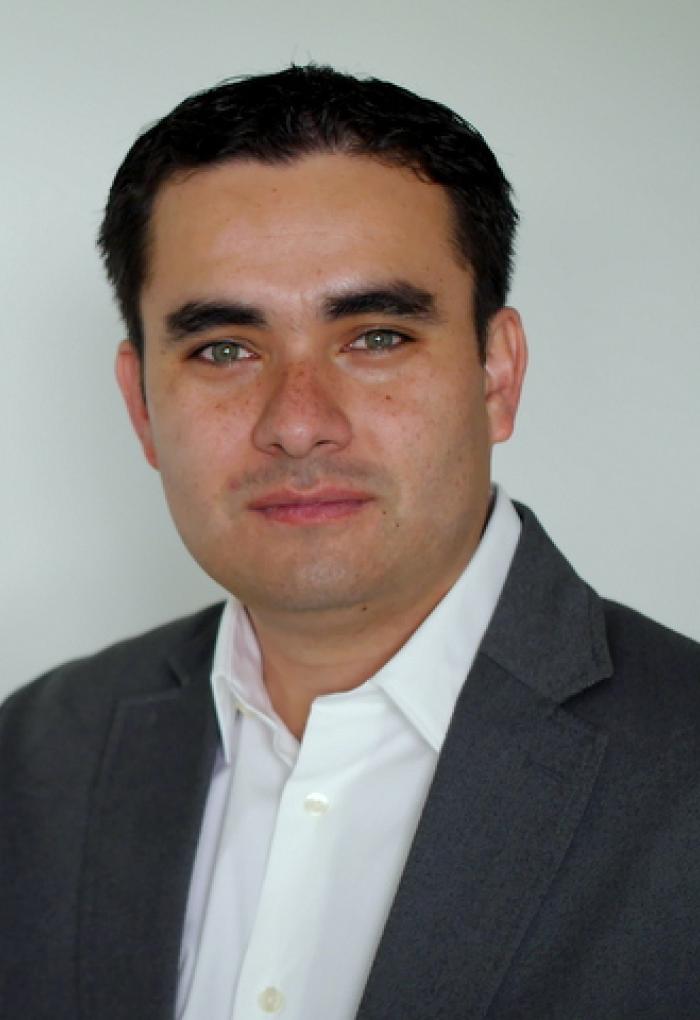
Juan Vanegas

Juan Vanegas will be joining the College as an associate professor.

Originally from Colombia, Juan Vanegas received his bachelor’s and master’s degrees from Oregon State. After earning his Ph.D. in Biophysics from the University of California, Davis, Vanegas was a postdoctoral researcher at the Polytechnic University of Catalonia in Barcelona, Spain for two years before taking a second postdoctoral position at Sandia National Laboratories in Albuquerque, New Mexico. Since 2016, Vanegas has been at the University of Vermont as an assistant professor and then associate professor.

His research pivots around two fundamental questions at the interface between biology, physics, chemistry and engineering: What are the molecular mechanisms that transduce external forces during activation of mechanosensitive proteins, and what is the role of molecular structure in the elastic properties and mechanical response of cellular components such as lipid membranes.

Vanegas describes his teaching philosophy as somewhat non-traditional due to his experiences as a student and his highly interdisciplinary research interests. Some of his previous courses have included a “flipped classroom,” where after a mini-lecture students spent class time working on student led, hands-on computational exercises and programming tasks.

“This format allowed me to better understand common struggles that students encountered, and I was able to more readily help students when they needed guidance,” he said.

During his personal time, he enjoys being outside and woodworking. In fact, he built many of the pieces in his home.

Nathan Mortimer

Nathan Mortimer will be joining the College as an associate professor.

Nathan Mortimer received his Ph.D. in Genetics and Molecular Biology from Emory University and completed his postdoctoral fellowship there as well. He has been an assistant professor at the University of Warwick in the UK and Illinois State University.

Mortimer is generally interested in understanding how the activities of individual proteins can influence biology at the cellular and organismal scales. His research is primarily focused on understanding cell signaling mechanisms, particularly in the context of immunity and disease.

“I am very excited to be joining the Department of Biochemistry and Biophysics and the College of Science,” he said. “It provides an invigorating research environment with a broad range of expertise and top-notch facilities.”

In the classroom, Mortimer focuses on helping students integrate new facts into a broader contextual framework and apply their learning to further knowledge through scholarly research. He achieves these goals by relating new material to previous knowledge and encouraging research experiences.

Mortimer is a project leader for Genomics Education Partnership, a nationwide collaboration that develops curriculum and research questions to enable course-based undergraduate research experiences at a variety of institutions. The project he leads is based on research in his lab and has been implemented at more than 20 colleges and universities.

Outside of work he enjoys spending time outside and going for walks and hikes with his dog Rosie. He is looking forward to exploring the natural world around Corvallis, a very different landscape from central Illinois.

Alysia Mortimer headshot.

Alysia Mortimer will be joining the College as an associate professor.

Alysia Mortimer received her Ph.D. in Genetics and Molecular Biology from Emory University and completed her postdoctoral fellowship in aging and physiology there as well. She has been an assistant professor at the University of Denver and Illinois State University and an associate professor at Illinois State University.

Her research explores how and why humans age and the link between aging and age-dependent diseases such as Parkinson’s diseases, Charcot-Marie-Tooth Disease and muscular dystrophies.

In the classroom, she believes retention requires engagement. “I use an active learning approach in my classroom in which the students watch videos of the lectures at home and then in class we have discussions about the material and do a variety of hands-on activities to reinforce the concepts we discuss,” she said. “This approach also allows students to engage with the material in different formats that can accommodate a variety of preferred learning styles.”

In her free time, Mortimer is an artist, working with several different mediums such as acrylic painting, printmaking and textile arts such as knitting and crochet.

Chemistry

Addison Desnoyer headshot

Addison Desnoyer will be joining the College as an assistant professor.

Addison Desnoyer is originally from central British Columbia, Canada. He received his Ph.D. in Chemistry from the University of British Columbia. He then completed two postdoctoral research fellowships at the University of Minnesota and at the Natural Sciences and Engineering Research Council at the University of California, Berkeley.

“The resources and facilities that OSU offers for researchers are excellent. OSU is the kind of place that gives students all the tools they need in order to be really successful in their research endeavors."

The central theme of his research is to discover new ways to make interesting and useful molecules through the study of the fundamental reactivity of organometallic compounds. In particular, his goal is to use a combination of biorenewable starting materials and earth-abundant (and much less toxic) metal catalysts. The work will result in new methods to prepare novel organic molecules, which will be applied towards the preparation of pharmaceuticals, new monomers for the synthesis of novel materials as well as alternate fuels.

“The resources and facilities that OSU offers for researchers are excellent. OSU is the kind of place that gives students all the tools they need in order to be really successful in their research endeavors,” Desnoyer said. “Another important reason why I joined OSU is that the values of the Department of Chemistry align very well with my own. The department is authentically striving to improve in regard to equity, diversity and inclusion initiatives, as well as delivering an exceptional undergraduate program with significant research opportunities.”

When he is not teaching or in the laboratory, Desnoyer and his wife love to garden and make bread.

Integrative Biology

David Kikuchi headshot.

David Kikuchi will be joining the College as an assistant professor.

David Kikuchi is originally from Chicago and received his Ph.D. at the University of North Carolina at Chapel Hill. His thesis looked at the warning signals of coral snakes and their harmless mimics. Following graduation, he did postdoctoral research at Carleton University in Ottawa, Canada and the University of Arizona. Since 2019, Kikuchi has been a postdoctoral researcher in Berlin and Bielefeld, Germany, doing mostly theoretical work centered on the behaviors of predators and prey.

His research explores how animals make sense of the bewildering amount of information in their environments and the implications that their use of this information has for ecology and evolution. He also studies predator-prey systems and competition and cooperation between species.

“OSU has a world-class group of scientists in Integrative Biology and fantastic potential collaborations in other departments on campus,” he said. “I was furthermore impressed by the commitment that OSU has made to outstanding undergraduate education and redressing historical inequalities in academia, which are critical parts of my mission as a professor.”

In his free time, Kikuchi likes to cook and go mountain biking, rock climbing and running.

Mathematics

Nick Marshall headshot.

Nick Marshall will be joining the College as an assistant professor.

Nick Marshall completed his Ph.D. in Applied Mathematics at Yale in 2019 and received his undergraduate degree from Clarkson University. Before coming to Oregon State, Marshall was a National Science Foundation postdoctoral researcher at Princeton.

His research interests are focused on problems that involve interactions between analysis, geometry and probability, especially such problems motivated by applications to data science. Examples include problems involving spectral theory, group actions and invariance, data analysis and machine learning, and wavelet approximation theory.

“My teaching philosophy is based on inspiring students by sharing my excitement about the material,” Marshall said. “When teaching, my goal is to create an open environment where all students feel free to discuss ideas and voice questions.”

Aside from mathematics, Marshall enjoys a variety of outdoor activities including running, hiking, biking, skiing, rocking climbing and kayaking.

Chad Giusti headshot.

Chad Giusti will be joining the College as an assistant professor.

Chad Giusti earned his B.S. and Ph.D. in Mathematics from the University of Oregon, working in algebraic topology. In between his degrees, Giusti worked as a software engineer at Microsoft and Network Associates.

Afterward, he spent two years as a visiting assistant professor at Willamette University, during which time he was an MAA Project NeXT fellow. Giusti then moved to a postdoctoral researcher position at the University of Nebraska Lincoln. He then spent three years as a Warren Postdoctoral Fellow at the University of Pennsylvania, and subsequently took a faculty position at the University of Delaware, where he has been an assistant professor since fall of 2017.

His research focuses on applied topology, which utilizes recent ideas in geometry, topology and algebra to analyze nonlinear structure in high-dimensional data. From there, he develops mathematical and computational tools for the study of complex systems, which are primarily applied to neuroscience.

“There are a lot of great places to teach, to do research, or to do work that helps the community, but it's rare to find an environment that excels in and supports all of these endeavors,” Giusti said. “I have not spent a great deal of time on the OSU campus, but my interactions with the faculty and administration have uniformly shown me that our values are well-aligned across the breadth of our interests.”

Outside of the classroom he enjoys experimenting with new food and cuisines, playing board and video games with friends, listening to podcasts and spending time outdoors.

Physics

Jeffery Hazboun headshot.

Jeff Hazboun is joining the College as an assistant professor.

Jeff Hazboun is excited to return to Corvallis. He earned his master’s from Oregon State University and then his Ph.D. in Physics from Utah State University. Hazboun had two postdoctoral positions, one at the University of Texas and the other at University of Washington Bothell, both working with the North American Nanohertz Observatory for Gravitational Waves (NANOGrav) Physics Frontier Center.

Oregon State is the lead institution for the center, which received a $17 million award from the National Science Foundation. Under the direction of Professor Xavier Siemens, NANOGrav includes more than 250 students and scientists at approximately 18 universities.

Hazboun is primarily interested in gravity and searching for ways to understand it using astrophysics observations. This includes searching for gravitational wave astronomy with pulsar timing arrays.

“I decided to come to OSU because I like the faculty of the physics department and am excited about the growing astrophysics group,” Hazboun said. “The university seems like a very supportive place to mentor the next generation of scientists.”

Outside of the classroom, he enjoys white water kayaking, playing the banjo and spending time in the mountains with his wife and daughters.

Headshot of Malgo Peszynska smiling with bushes behind her

New endowed faculty scholar position honors late professor

By Hannah Ashton

Joel Davis Endowed Faculty Scholar Malgorzata Peszynska

Mathematics Professor Malgorzata Peszynska has been named the inaugural Joel Davis Endowed Faculty Scholar.

Honoring late College of Science Professor Joel Davis, the award supports a faculty member in the Department of Mathematics who focuses on numerical analysis research.

Davis worked at Oregon State University for 31 years, serving on the Faculty Senate and the Mathematics Department Advisory Committee. Tragically, two weeks after retiring, Davis died in a bike accident in Corvallis in 1995.

Jerry Jacoby, one of Davis’s former students, wanted to honor his mentor by creating the award. He earned three OSU degrees, including a bachelor’s and master’s degree in mathematics.

“Although I never met him, Joel Davis must have been an incredible professor who affected many students. I feel humbled to receive this award,” Peszynska said. “It will be wonderful to explore the opportunities this award creates.”

Peszynska has been at Oregon State for 19 years. During that time she has received numerous awards including the College of Science Champion Award, the Joel Davis Faculty Excellence Award and the Graduate Faculty Award.

Her research includes applied and computational mathematics modeling of real-life phenomena, such as flow, transport and other coupled processes. Her interdisciplinary projects have included the fields of hydrology, oceanography, statistics, environmental, petroleum, civil and coastal engineering, physics and material science.

From 2019 to 2021, she served as a program director at the National Science Foundation in the Computational Mathematics program.

Internationally, Peszynska was elected a 2020 fellow of the American Association for the Advancement of Science. She was honored for her “outstanding contributions to multidisciplinary mathematical and computational modeling of flow and transport in porous media.” She was also awarded the Society for Industrial and Applied Mathematics Career Prize in Geosciences in 2021.

The faculty scholar award committee noted Peszynska’s extraordinary record of accomplishments in research and success educating and mentoring students at Oregon State and beyond.

“My motto is ‘Pay it forward,’” Peszynska said. “I am sure I’ve had supporters, many of whom I didn’t know who they were. I can’t pay them back directly, but I can pay it forward to the students and other junior computational scientists and to the computational mathematics community.”

The committee also pointed out Peszynska’s numerous leadership roles in national and international arenas. She has served leadership roles within the Society for Industrial and Applied Mathematics, the Association of Women in Mathematics, Mathematics Department Graduate Committee, Oregon State President's Commission on the Status of Women and Oregon State Faculty Senate Committee.

Peszynska will hold the faculty scholar position for three years.

Vrushali Bokil outside

Research excellence, student success and inclusivity goals for Interim Dean Bokil

By Hannah Ashton

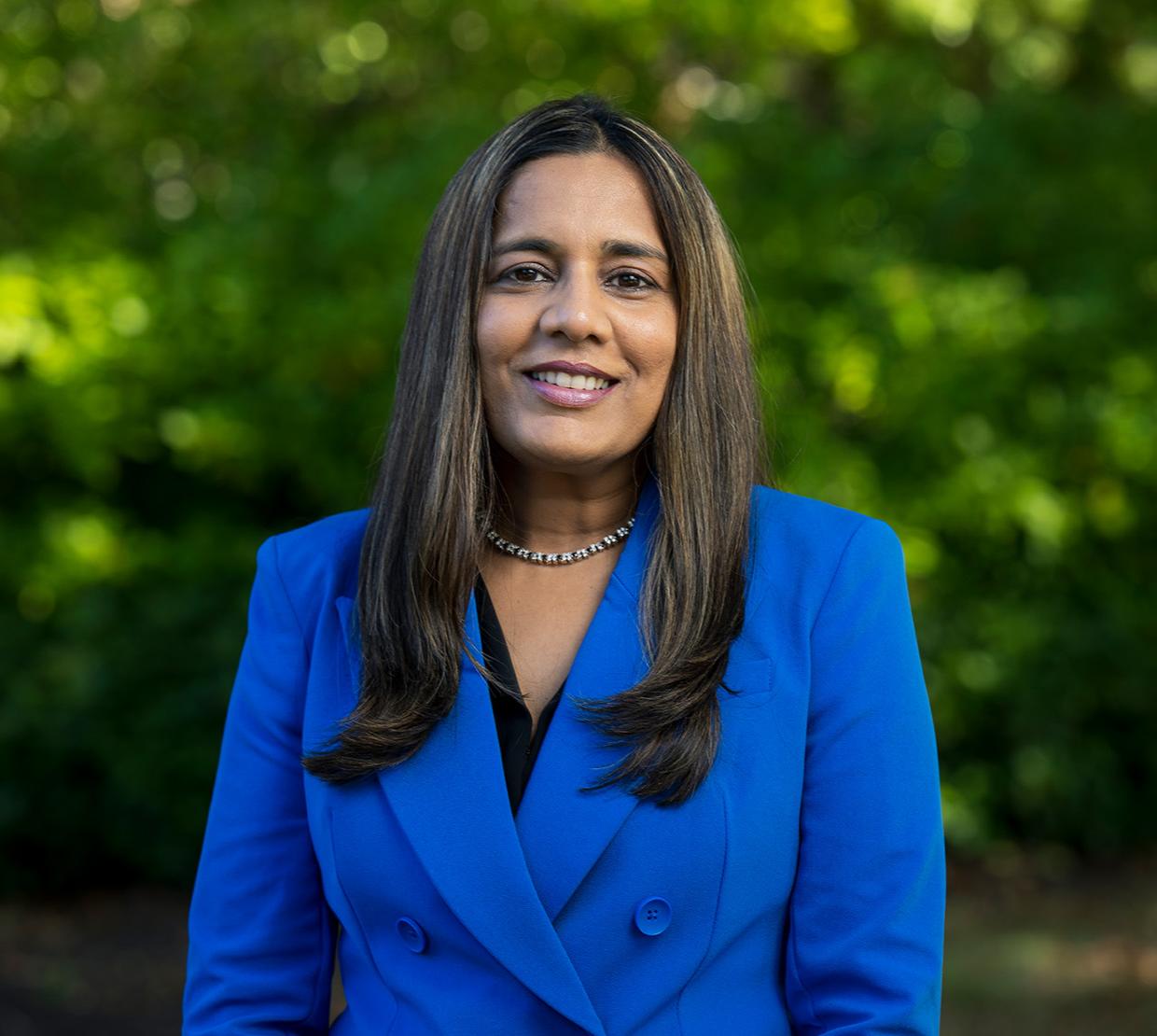
Throughout her graduate and doctoral education in mathematics and as an academic faculty member, Vrushali Bokil recognized that in many academic places, she was the only woman or the only woman of color in the room.

As her career progressed, her lived experiences highlighted the problematic nature of the underrepresentation of women and minorities in mathematics and science as a whole.

Bokil is working to make the sciences more welcoming and accessible to all. On August 1, she will continue fostering scientific excellence and inclusivity in her new role as interim dean for the Oregon State University College of Science. Bokil will be the first woman and the first woman of color to be interim dean of science at Oregon State University.

In collaboration with the Science community, she is eager to implement the College’s soon-coming strategic plan, crafted in a College-wide effort over the last year, that aims to enhance research and innovation, increase outreach and engagement, improve access to science education and develop the next generation of science leaders.

“I have every confidence that Vrushali Bokil will do an outstanding job serving as interim dean,” said Roy Haggerty, previous College dean.

Discovering mathematics

At the age of 15, Bokil decided she wanted to be an astrophysics professor. With a family history of academics, it seemed like a logical choice. While receiving her undergraduate degree in India, a passionate mathematics instructor drew her attention away from the sky and she was hooked.

She earned her Master of Science in Mathematics from New Mexico State University in 1996 and her doctoral degree in mathematics from the University of Houston in 2003. Before coming to Oregon State, she was a postdoctoral research associate at the Center for Research in Scientific Computation at North Carolina State University.

Part of the Oregon State faculty since 2006, Bokil is currently the College of Science associate dean for research and graduate studies as well as a professor in the mathematics department. Since July 8, she has been serving as the acting dean of science. Her general research interests include computational and applied mathematics, numerical analysis and mathematical biology.

Bokil is currently a co-PI on two National Science Foundation funded projects in computational mathematics. Her primary research is in the field of computational electromagnetics, which uses computational tools to study electromagnetic wave propagation in different materials. The research can be applied towards designing new materials and understanding in a computational setting what materials are best suited for different applications.

She is also working with an international team of researchers on several problems in mathematical ecology involving the construction and analysis of deterministic and stochastic models for applications in population dynamics, epidemiology and spatial ecology.

In 2019, she received a College of Science Research and Innovation Seed (SciRIS) grant to use modeling techniques to understand the spread and control of plant diseases caused by co-infecting viruses. She has also been funded by the Thomas Jefferson Fund of the FACE Foundation to conduct Transatlantic research, working with a French collaborator, in this area.

She acknowledges that she couldn’t have done any of this alone.

“I’ve been very lucky, I’ve had amazing mentors and collaborators all my career, throughout undergraduate, graduate and beyond,” Bokil said. “I can see that a lot of the things that made today happen, would not have happened if I hadn’t had those mentors, if I hadn’t had those opportunities, if I hadn’t had that access, so I just want everyone to have the same opportunities I had.”

Stepping into the role as interim dean, inclusivity, collaboration, access and equity will remain a top priority.

In 2021, Bokil was the chair and lead of the College of Science Diversity, Equity, Justice, and Inclusion Working Group. This group led the development of the College’s 2021-2024 Diversity Action Plan (DAP) Embedding Equity, Access & Inclusion. The DAP highlights five goals for the College including equitable hiring, forming an inclusive climate, and innovative access to learning and research experiences.

“If I think about everything I’ve done, I would say the success of my students has been really gratifying."

Bokil is also an ADVANCE Faculty Fellow, ADVANCE Seminar graduate and Train the Trainer graduate. Funded by the National Science Foundation, ADVANCE aims to help further the study and practice of equity, inclusion and justice for women faculty and others from historically underrepresented groups.

Her work with ADVANCE was part of the reason she received the inaugural College of Science Inclusive Excellence award in 2019.

If you ask her what her proudest achievement is, her answer is simple.

“If I think about everything I’ve done, I would say the success of my students has been really gratifying,” she said. “That my students have gone on to be successful, that to me says I’ve done the right thing as a professor.”

After student success, her work creating collaborative networks that foster opportunities for underrepresented groups is a source of pride.

Bokil is a member of the Association for Women in Mathematics, the Society for Industrial and Applied Mathematics and serves these organizations by working on employment and career opportunities for students and strategies for women to address harassment and inequities.

“It’s really important to improve the status of women in mathematics and science generally speaking by networking and increasing the collaborative networks that women have access to so they have access to opportunities,” she said.

Increasing the representation of women in STEM is part of the highly competitive Executive Leadership in Academic Technology, Engineering and Science (ELATES) program at Drexel University.

Bokil was selected as a 2021-2022 fellow, one of 47 women faculty from over 35 different institutions across the U.S. and Canada

ELATES is a full-year, part-time fellowship that provides training and development for faculty and administrators.

Participating in a learning community with six other women on the West Coast, was Bokil's favorite part. The group met once every week throughout the program and has continued to provide support after completing the fellowship.

As interim dean, Bokil will work to transition the College smoothly as the national search for a new dean begins. Another priority is the release and implementation of the new College of Science Strategic Plan. The plan will launch in the fall and integrate and embed the Diversity Action Plan.

“Students can expect me to want to see them,” she said. “I really want to hear how they are doing and hear what their lived experience on campus is as they come in and transition through the different stages of their careers.”

When Bokil isn’t meeting with students and faculty or researching the numerical solution of wave propagation problems, you can find her playing classical guitar with her two school-age boys.
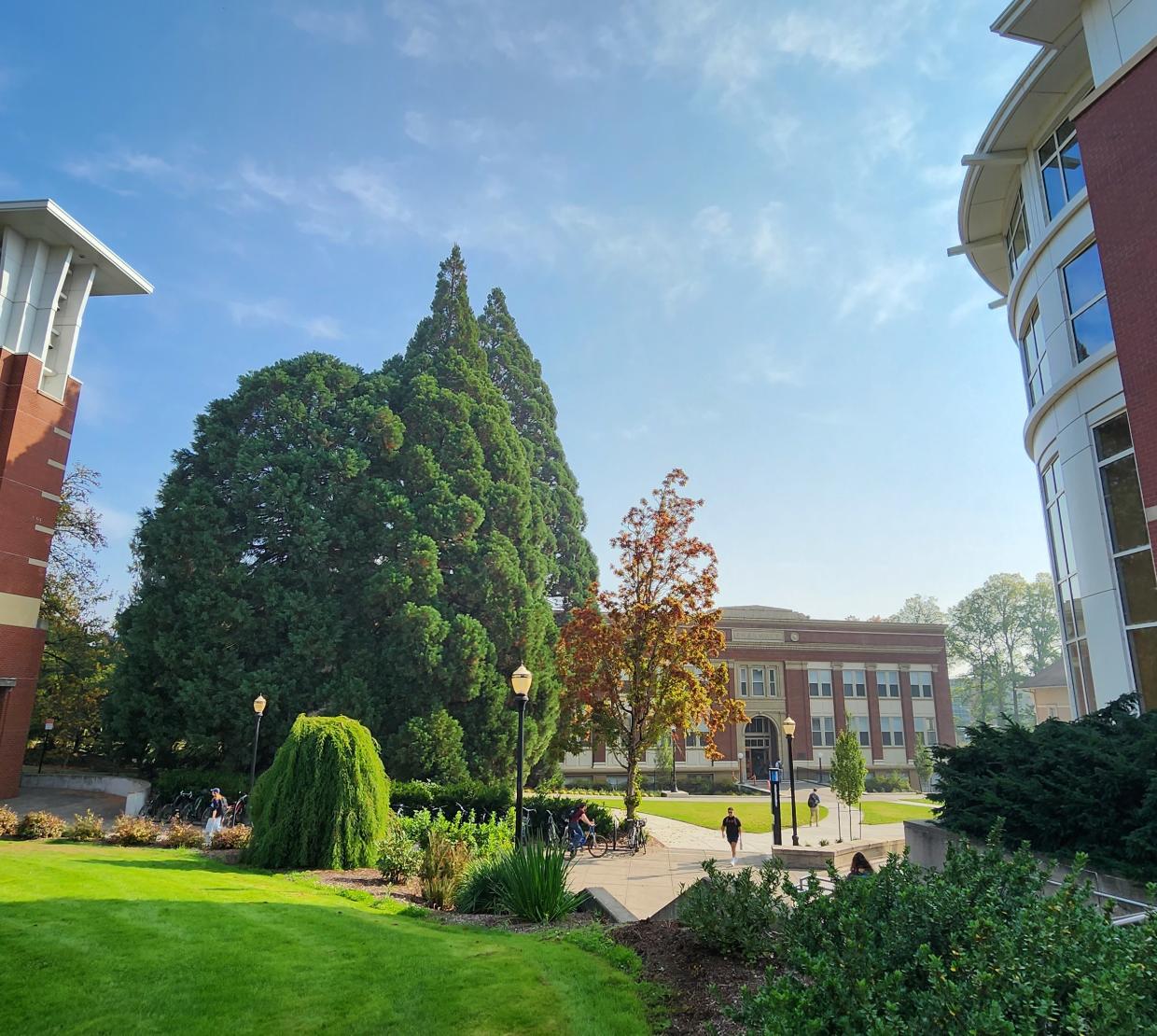
Bikes on rack next to sidewalk on campus

New Faculty Arriving Soon

This coming fall the Mathematics Department will be welcoming two new tenure-track assistant professors, Nicholas Marshall and Chad Giusti, and two new postdoctoral scholars, Bella Tobin and Zachary Hilliard, into our community. A third tenure-track hire, Dr. Xueying Yu, will be joining OSU in September 2023 after completing her current postdoctoral visit at the University of Washington.

Nicholas Marshall received a PhD in Mathematics from Yale University in 2019. Since September 2019, Dr. Marshall has been a postdoctoral fellow at Princeton University supported by the NSF fellowship. Dr. Marshall does research work in the intersection of harmonic analysis, geometry, and probability with applications in data analysis, machine learning, and wavelet approximation theory. In Summer 2018, Marshall worked as a research mentor for Summer Undergraduate Mathematics Research at Yale (SUMRY), where he mentored a group of three students on a research project in spectral graph theory. While at Princeton, Dr. Marshall participated in the Horizons Seminar whose goal was to provide a conversation with thought leaders who are transforming mathematics through diversity, equity, and inclusion.

Chad Giusti received his PhD from the University of Oregon in 2010 under the supervision of Dev Sinha. After three postdoctoral fellowships including one at the Warren Center for Network and Data Science at the University of Pennsylvania, he has been an assistant professor at the University of Delaware. Prof. Guisti works in topological data analysis, focusing on topological neuroscience, computation and coding in neural systems; the development of topological, algebraic and geometric methods in applications; and, the topology of configuration spaces. He is currently funded by the Air Force Research Laboratory and the National Science Foundation. Prof. Guisti has mentored one postdoc, two masters students, advised six undergraduate research projects, and is currently mentoring five PhD students and two postdocs. In the spring of 2019 he developed a new graduate mathematics course in topological data analysis. At University of Delaware Prof. Giusti helped his department with the creation of a graduate student mentoring program. In 2021 he participated in the University of Delaware Prison Education initiative.
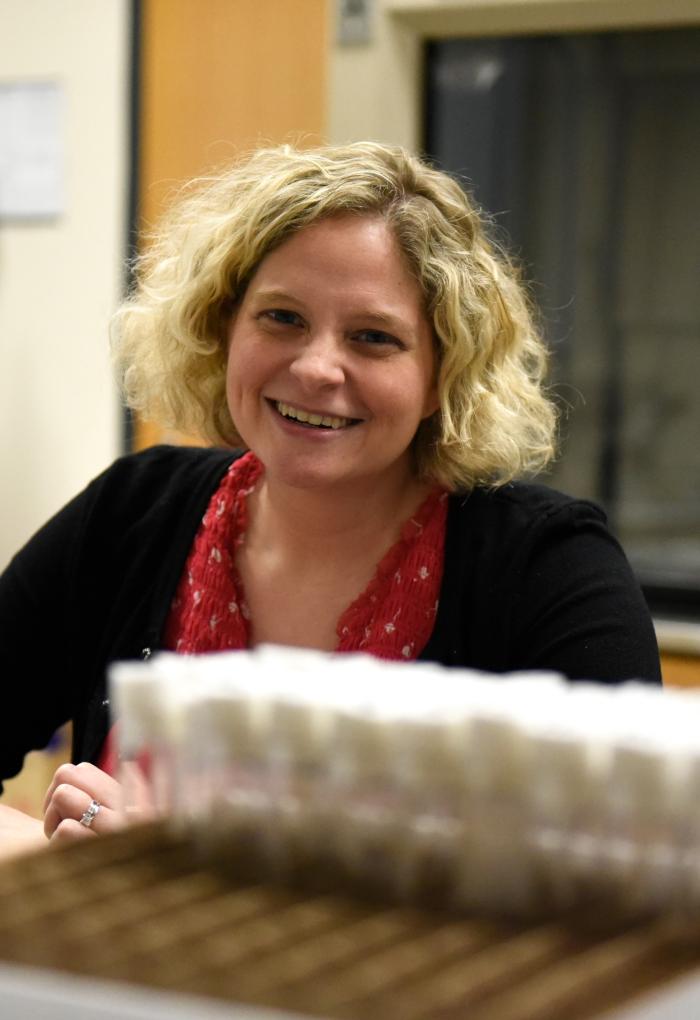
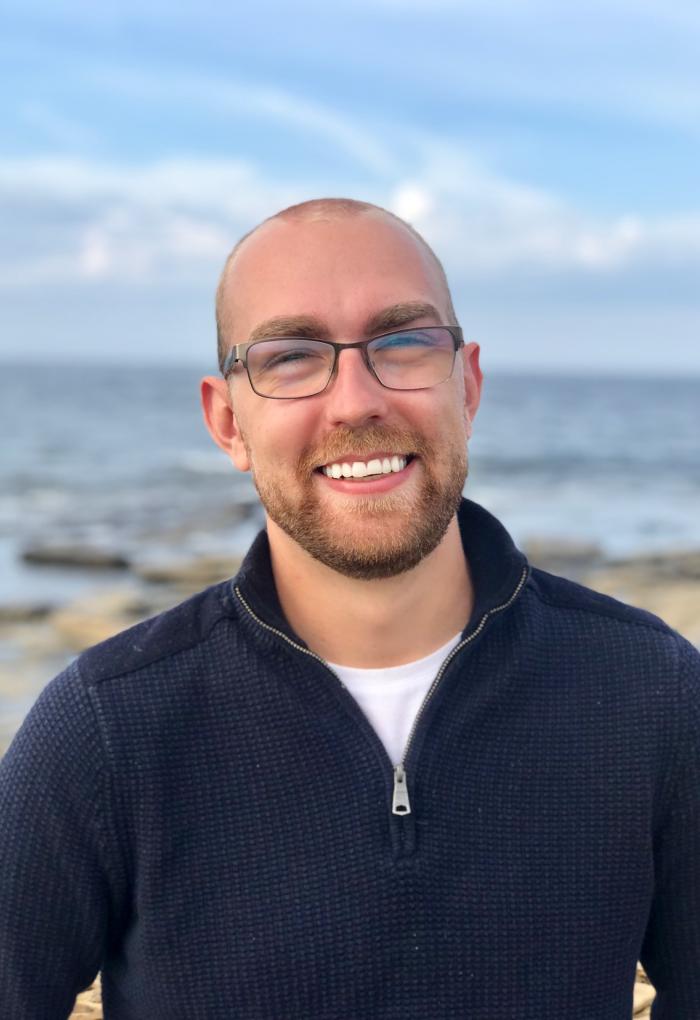
Bella Tobin received her PhD from the University of Hawaii in 2019 under the supervision of Michelle Manes, and has been a post-doctoral fellow at Oklahoma State University. Dr. Tobin does research in arithmetic dynamical systems and number theory, with a particular interest in classifications of post-critically finite maps and dynamical Belyi maps. Dr. Tobin was a faculty co-sponsor of the Oklahoma State Student Chapter of the Association for Women in Mathematics, a co-organizer of the Distinguished Women in Mathematics Colloquium Series at Oklahoma State University, and has organized ”Be A Scientist Night” at the Honolulu Institute for Human Services.

Zachary Hilliard graduated with his PhD in Mathematics in 2020 from Washington State University. His earlier degree was from Washington State Universities in Tri -Cities in 2014, and he was an intern at Pacific Northwest National Laboratory from 2011 to 2016. His PhD work was on analysis and numerical modeling of Cahn-Hilliard equation for modeling refugee flow and mammal migration. Although Dr. Hilliard is interested in most topics related to analysis, his primary passion is in differential equations; especially finite element methods for parabolic partial differential equations. Outside of math, he likes to draw and play volleyball. During 2020 through 2022 he has been teaching and coaching volleyball at a private school in Virginia, but is looking forward to working at OSU.

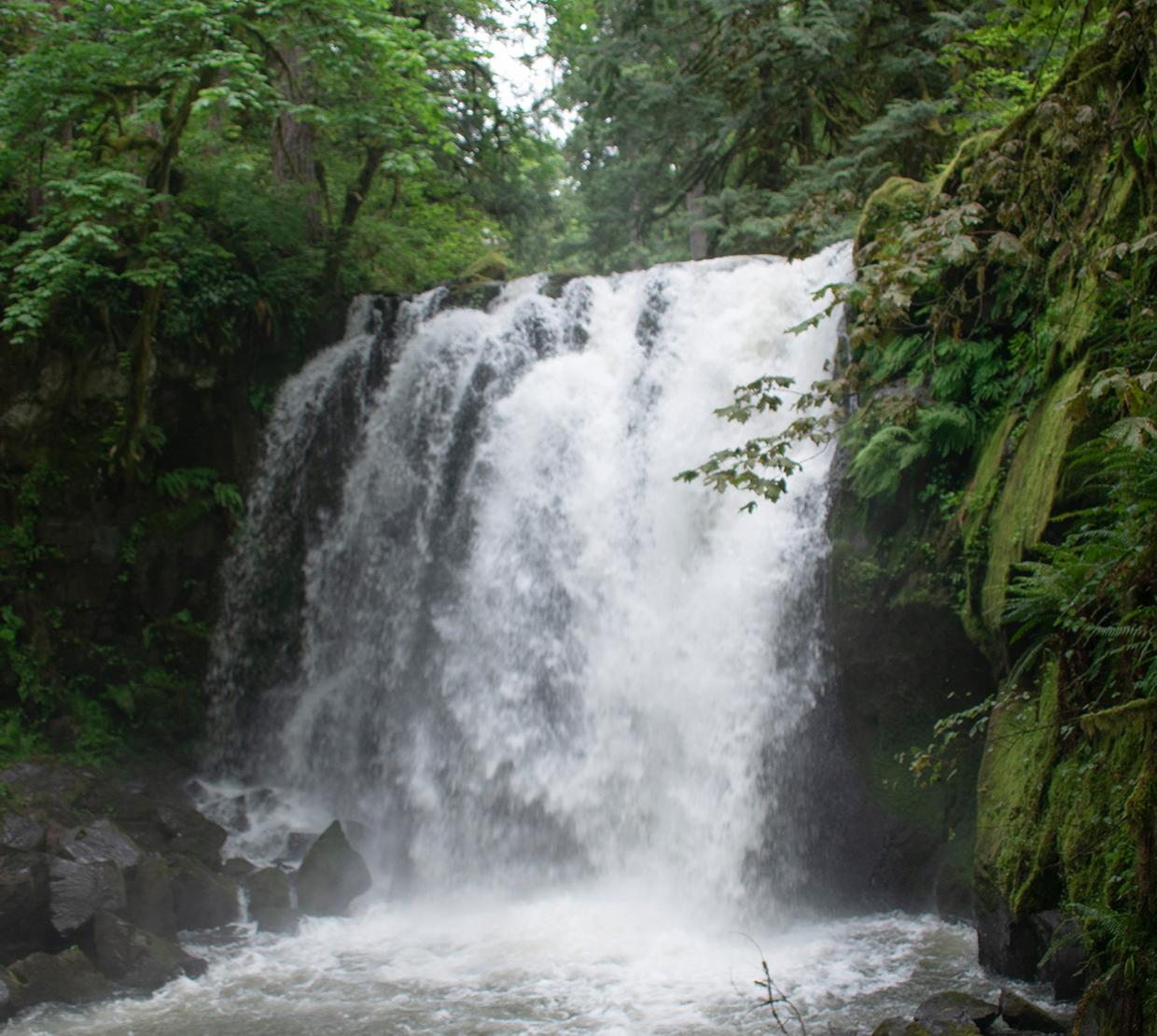
Oregon waterfall cascading down a cliffside surrounded by lush green trees.

A sustainable future: Unravelling the data

By Mary Hare

With areas of distinction in marine science, materials science, data science, biomedical science – and other research areas, OSU faculty and students are fighting climate change and moving the world forward to a greener future – whether that is through harnessing new materials, interpreting complex data or reimagining how organisms can adapt to changes. We share just a few examples in this three-part series.

Oregon State University scientists are rapidly rising to the challenge of our changing climate, supported by hundreds of graduate and undergraduate researchers who are committed to leaving a better world than the one they inherited. In part three of this series, we examine some of the data-driven research that is helping usher in a new era of climate policy and action.

Mathematics and statistics are two of the quickest-growing fields in the country, and it's not hard to guess why. As technology advances, mathematical modeling or statistical analysis can provide a faster, more reliable way to examine lots of data. In practice, these skills can provide critical insight to collaborative projects or inform policymakers on the most environmentally sound decisions.

Wildlife behavior

Making green energy safer for wildlife

Professor of statistics Lisa Madsen and statisticians from the United States Geological Survey (USGS) have come together to develop methodology to estimate the total mortality of bats, birds and other small creatures on wind farms and solar facilities. The Endangered Species Act requires that wind farms pay particular attention to endangered or threatened species such as golden eagles, brown pelicans, whooping cranes, condors and Indiana bats, which are killed when they accidentally collide with turbine blades.

Madsen and her colleagues have developed complex statistical tools that estimate the actual number of carcasses when they are undetectable for any reason by taking into account a host of predictor variables such as searcher efficiency, variations in plot sizes and location of inaccessible areas.

The software package, created by the team, will be utilized by government agencies as well as Western EcoSystems Technology, Inc., which has already begun to implement the software to assist their clients. The project has also attracted attention from environmental and government agencies in Canada, South Africa, Portugal and Scotland among others. In addition, the USGS statisticians have conducted workshops demonstrating how to use the software to estimate animal mortality at wind and solar energy facilities.

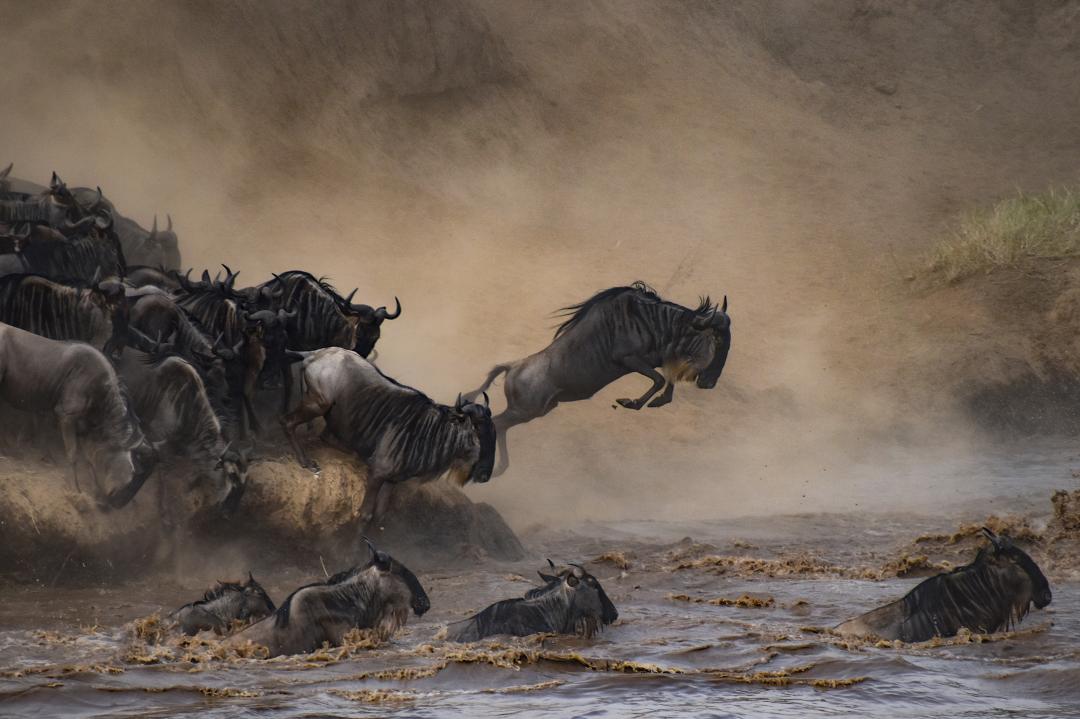
Wildebeast heard crosses the Mara River in Kenya

A recent study shows that groups of organisms that act together, like this wildebeest herd crossing the Mara River in Kenya, have complex relationships with their ecosystems. Not only are these mass movements affected by the external forces of their environments – they also shape the processes around them. These relationships have a powerful role in the behavior of the group, as well as in the health of the ecosystem.

Collective movement to stabilize ecosystems

In addition to being visually stunning, schools of herring, herds of wildebeest and countless other groups of organisms that act in concert can help complex ecosystems maintain their diversity and stability. Published in Nature Ecology and Evolution, a study led by mathematical biologist Benjamin Dalziel demonstrates that when individuals band together to consume resources as a collective group, the surrounding ecosystem is prone to be more resilient and able to support a wider range of species.

Their findings could be an important step toward understanding how cooperation and biodiversity help living systems stay on an even keel. “We constructed simulations in such a way that we could turn collective behavior on and off without changing anything else in the system,” Dalziel said. “What we found was that adding collective behavior was a game changer in the simulations – it stabilized ecosystems.” Since collective behavior is ubiquitous across the planet, playing a prominent role in everything from bacterial biofilms to human cities, the study’s findings have wide significance.

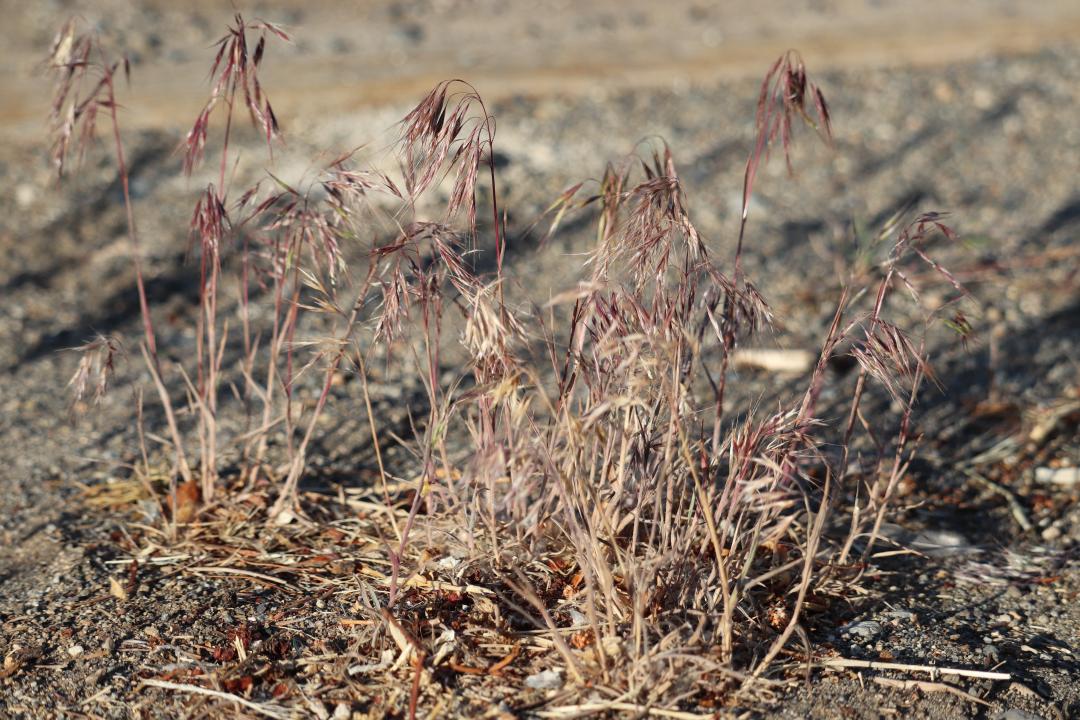
Bromus tectorum (cheatgrass)

In the sagebrush steppe of the intermountain West, invasive species like cheatgrass (Bromus tectorum) change soil composition and increase fire intensity and frequency, effectively squeezing out integral vegetation like sagebrush. Post-fire seeding efforts give sagebrush a fighting chance to recover from the impact of this interloper.

Data-driven resource management

The need for native seeds

Climate change and irresponsible land use have resulted in the degradation of millions of acres of land around the country. These disturbances are detrimental to native plant health and often creates opportunities for invasive species to thrive.

Statistician Virginia Lesser served as a panel member for a committee to assess the Need for Native Seeds and the Capacity for Their Supply, sponsored by the National Academies of Sciences, Engineering and Medicine. Native seeds play an essential role in maintaining and restoring natural areas. The committee explored the complex systems of native seed production and use in the United States, and examined their viability for future projects. Their committee was formed in 2019 and developed an interim report in 2020, with a final report expected in 2022.

Smarter forestry practices for a drier climate

As the earth warms, scientists in the Pacific Northwest can be sure of two things: rising temperatures and drier summers. In a state that relies heavily on Douglas fir trees - as a habitat for wildlife as well as economically - understanding how changing temperatures affect forest growth patterns will be critical for forest management. In a collaboration with the College of Forestry, statistics professor Lisa Ganio published a study that found that minor differences in temperature, soil depth or moisture did not significantly influence tree growth patterns. However, growth patterns were significantly impacted by competition, with higher growth in less competitive areas. The results of this study suggest that foresters will be able to focus more attention on other areas, such as habitat preservation.

Changing flood regimes, new projections

The potential for changes in flood regimes due to climate change, in combination with the deep limitations of climate projections, necessitates rethinking how we make flood risk management decisions.

Statistics professor Alix Gitelman participated in a study to develop a new approach for dealing with hydrologic uncertainty and flood management. The developed bottom-up approach was applied to the American River, CA, USA flood management system by first identifying the sensitivity and vulnerability of the system to different climates. To do this, they developed a climate response surface by calculating and plotting Expected Annual Damages (EAD, $/year) under different flood regimes.

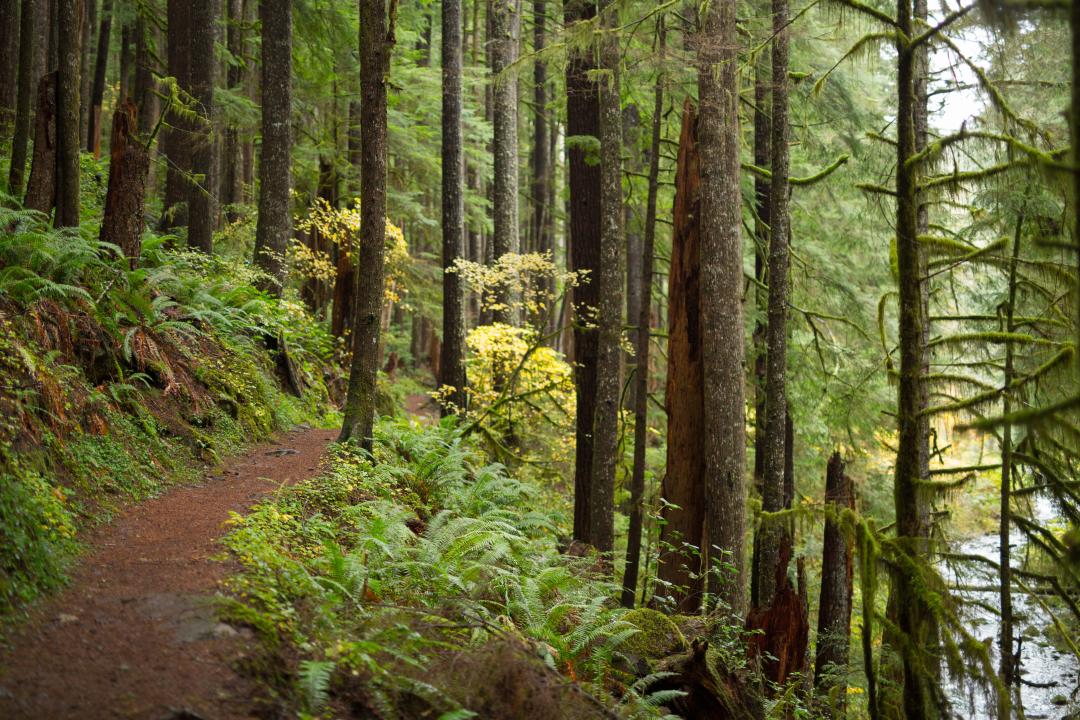
Siuslaw National Forest of Oregon

The time it takes a forest to recover after high-severity fires has important implications for how the landscape will respond in the future to changing fire regimes. A warming planet could delay forest recovery by either hindering tree seedling establishment and growth, or through the loss of seed sources if patches of high-severity fire become larger.

Bolstering fire resistance in a changing climate

As fires become more prevalent throughout the west, landscapes are altered in ways that may make them more or less resilient to fire in the future. Enrique Thomann, a mathematics professor, participated in a study published in the Journal of Ecology to examine how changing ecological composition impacts the landscape's ability to resist fire damage in the future - an area that continues to be under-researched.

As the climate warms, there is a growing concern that forest landscapes risk transformation to non- forest systems through alteration of their fire regimes. Fire modifies vegetation composition and structure, including effects on fuel amount and type, fuel connectivity, and canopy- mediated influences on microclimate and fuel moisture. These effects may then shape the spread and severity of subsequent fires.

The strength of fire–vegetation feedbacks (i.e., the degree to which fire- driven changes to vegetation, fuels and microclimate affect the spread and behavior of subsequent fires) is influenced by numerous global change pressures. Given the many interacting variables that influence how ecosystems respond to disturbance, models calibrated to a specific study area are highly valuable in evaluating how that ecosystem responds to alterations of its disturbance regime.

Helping mitigate energy disasters in the Arctic

With expertise that spans disciplines, mathematics professor Malgo Peszynska primarily works on problems related to energy engineering and climate change. Her modeling of transport includes porous media phenomena in aquifers, oil and gas reserves, carbon sequestration, solar cells and the effect of permafrost warming. Perhaps most notable is her use of computational mathematics to model methane hydrate transfer and evolution.

Methane hydrate is an “ice” found primarily in the Arctic permafrost as well as in sub-ocean sediments. Known as one of the largest potential sources of fossil fuel, it is also one of the most risky. Existing in a delicate pressure-temperature equilibrium, exposure to heat could lead to melting that could cause explosions, or the escape of huge quantities of methane gas into the atmosphere.

The specific conditions at which it exists have also meant that it has been exceedingly difficult to study using traditional research tools. This is where using mathematics can be so useful. “As an applied mathematician in this area, the objective is to provide reliable and accurate modeling tools for simulation of various scenarios to help mitigate and contain the possible disasters,” Peszynska said.

Leaving a better world

As one of only three Land-, Sea-, Space- and Sun-Grant institutions in the country, Oregon State University has a commitment of service that extends beyond our campus, state or country borders. Students not only have the opportunity to receive a world-class education, but the opportunity to perform high-level research with faculty who genuinely care about the future of the planet - whether they are biologists, physicists or statisticians.

Subscribe to Faculty and Staff