Climate Change

Climate Change

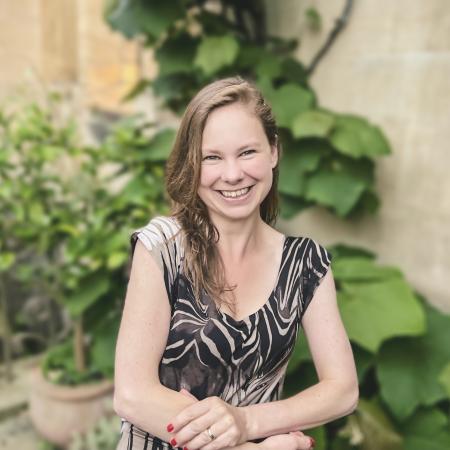
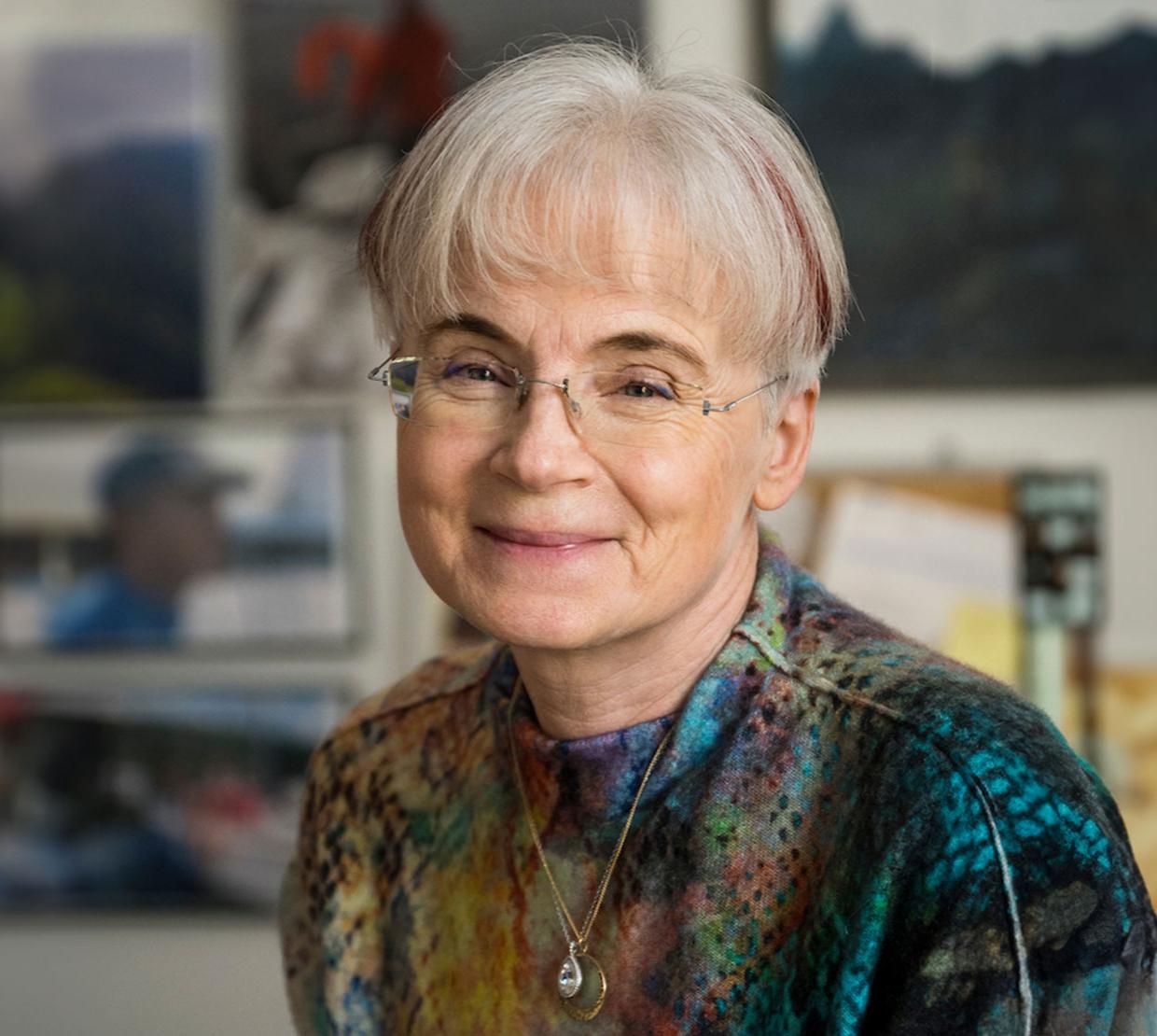
A woman in a multi-colored blouse poses for a headshot to celebrate being announced as a Distinguished Professor.

Malgorzata Peszynska named a University Distinguished Professor

By Tamara Cissna

Malgorzata Peszyńska, newly honored as a University Distinguished Professor at Oregon State University, has charted a remarkable path — shaped by uncommon talent, grit and a spirit of joyful independence.

Renowned for her exploration of the physical world through the prism of mathematics and computation, Peszyńska's work has yielded fascinating insights over her distinguished career. Her research has fostered innovation and enabled applications with global impact on pressing environmental concerns and natural resource management.

In recognition of her achievements, she has earned Oregon State's highest academic honor. The university awards this distinction to a select few faculty nominated by their peers, with the College of Science having the highest number at 19.

"Dr. Malgorzata Peszyńska is nationally and internationally recognized as a leader in mathematical and computational modeling of complex processes, and her work has been particularly significant in building bridges across disciplinary boundaries," Provost Ed Feser wrote in the university’s announcement of this honor.

Peszyńska will present a university distinguished lecture, along with one other 2024 distinguished professor: Todd S. Palmer in the College of Engineering. She will present her lecture on Wednesday, May 8, at 1:30 – 3 p.m. in the Memorial Union Horizon Room. Her lecture is titled, “Math Matters: Multi-* Modeling, Analysis and Simulation.”

“This is an honor and accomplishment, and evidence of appreciation coming from the many colleagues, students and collaborators,” Peszyńska said. “It is also a responsibility, and I am not the only one deserving, but now I can stand on the shoulders of giants and pay it forward.”

As the Joel Davis Faculty Scholar in Mathematics, Peszyńska is acclaimed for her pioneering work in numerical analysis and modeling. Her recognition as an AAAS Fellow in 2020 highlights her “exceptional contributions to multidisciplinary mathematical and computational modeling of flow and transport in porous media."

Peszyńska's work has been supported by more than $3M from the National Science Foundation (NSF) and other agencies and industries. She has authored more than 119 research publications in high impact computational mathematics journals including SIAM journals and in the interdisciplinary venues such as the Journal of Petroleum Science and Engineering, Advances in Water Resources, Geophysics, and other high-Impact journals, and her publications have received more than 2,000 citations.

Over the years, her achievements have garnered numerous awards: She received the Geosciences Career Prize from the Society for Industrial and Applied Mathematics (SIAM), and she's also been recognized as a Distinguished Fellow by the Kosciuszko Foundation and served as a 2009-2010 Fulbright Research Scholar at the University of Warsaw, 2006 Mortar Board Top Professor award, 2016 Graduate faculty award and more.

A mathematical odyssey in energy and climate

Peszyńska specializes in modeling, analysis, and numerical analysis of models, a discipline that seeks to describe real-world systems mathematically, so they can be simulated, analyzed predicted and — when there are problems — solved.

With expertise that spans disciplines, Peszynska primarily works to mathematically solve problems related to environment and, recently, climate change. Her modeling of mass and energy flow and transport includes porous media phenomena in aquifers, oil and gas reserves, carbon sequestration, solar cells and the effect of permafrost warming. Perhaps most notable is her work on phase transitions in methane hydrate transfer and evolution, as well as in using computational mathematics to study complex pore-scale environments. This work aims to understand and predict the presence and behavior of fluids in nature to mitigate potential disasters, like hazardous explosions or methane emissions contributing to global warming and addressing challenges in climate science and geophysics.

In her recent NSF-supported work on studying permafrost changes, Peszyńska seeks to predict and mitigate potential large-scale events such as building collapses and coastal erosion, highlighting the urgency for more modeling in this area.

Her research team employs computers to approximate solutions, striving for accuracy even when the true solution is unknown, she explained. Ultimately, they contemplate how computational algorithms can approximate truth without certainty, exploring the mysteries of mathematics.

"There's so much about the methods themselves that intrigue us in this mystery," she said. "How do you achieve that? How can you anticipate whether your computational algorithm will yield a prediction close enough to the true solution, regardless of what that true solution might be, without actually having knowledge of it?"

Peszyńska will explore this and other questions in her public lecture. She will also “delve into how her research team explores multi-scale multi-physics systems using complex computational mathematics, inspired by real-life applications. She will discuss their investigation of porous media at nano-, pore-, lab-, and field scales, predicting their responses to environmental changes. She will also emphasize the importance of fostering interdisciplinary collaborations within Oregon State University and with external partners to encourage students to embrace complexity over simplicity.”

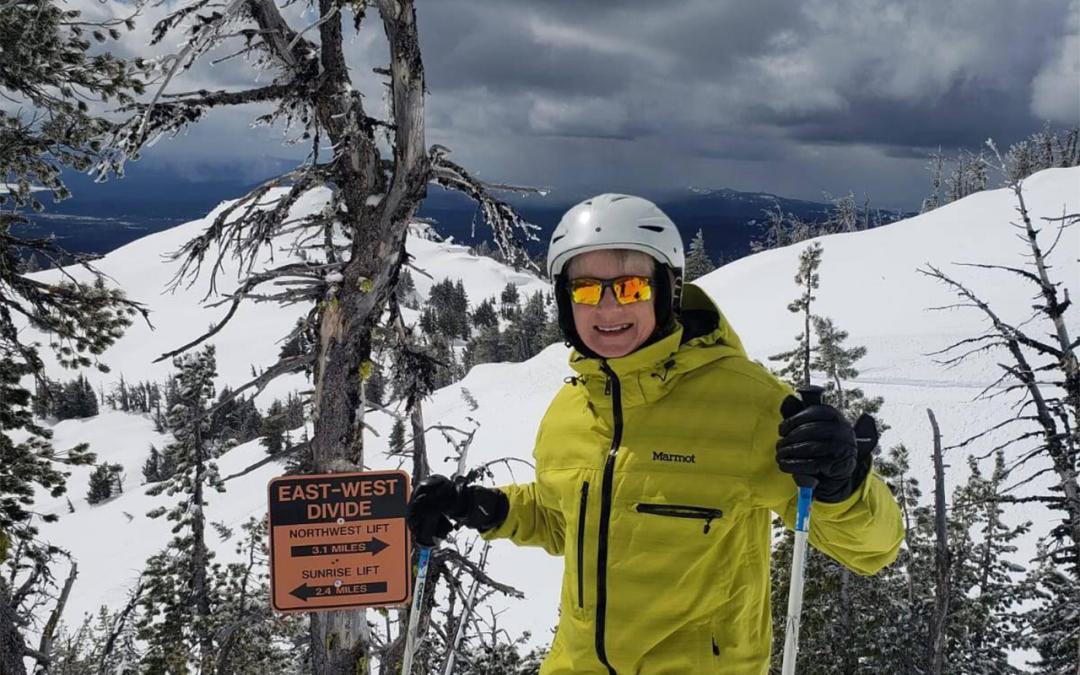
A woman in a skiing outfit stands next to a sign read "East, West."

Malgorzata Peszynska on the southeast side of Mt. Bachelor, Oregon, where two trails meet at the East West Divide. Peszynska's journey has also taken her on trails from East to West, over 5,000 miles from Poland to Oregon.

From Warsaw to worldwide impact: A wholehearted journey

Born and raised in Warsaw, Poland, Peszynska discovered her passion for mathematics at a young age. Encouraged by her family, she cultivated that passion alongside her love for the natural world, leading her to study mathematics in the context of physical phenomena and ultimately specialize in mathematical modeling and computational solution of flows through porous media and their geological applications.

She earned a master’s degree in applied mathematics from the Warsaw University of Technology and a Ph.D. in mathematics from the University of Augsburg in Germany. She also holds a habilitation degree from the Warsaw University of Technology.

Her interest in real-life applications is driven, in part, by a personal passion for the natural environment and outdoor activities. And she commits fully to her pursuits, whether tackling complex equations, building interdisciplinary teams, or enjoying leisure activities like skiing and sailing. Embracing her mantra to "Make your own kind of music," she consistently tries to choose the complex and challenging path over the simple and easy.

Reflecting on the most meaningful milestones and accomplishments that led to this recognition, Peszynska shared that it's not about one single thing but rather a tapestry of efforts woven from countless interesting problems and diverse potential directions.

“At every fork in the road, we are choosing a path and sometimes we succeed in making progress,” she said. “At times, the most cited papers are the easiest for us, and sometimes those least noticed are the hardest but might make an impact much later. This may be scary when looking ahead, but it gets easier over time.”

She likens her role as a mathematician to that of a translator, bridging gaps between disciplines and applying mathematical rigor. Collaborating with colleagues from within mathematics and across other fields has empowered her to tackle real-world modeling projects with significant practical implications, even in the absence of a clear existing mathematical framework for analysis. From exploring multi-scale modeling techniques to navigating complex algorithms, these partnerships have broadened her perspective and fueled innovation.

As a mentor, she encourages students to discover their passions and gently nudges them to work diligently towards their goals, knowing they might change their minds along the way. But, she said, “There's no substitute for hard work. Sometimes, it's not just about assignments or tasks; it's about doing repetitive steps and finding the discipline to keep going. One of my past mentors said, ‘All you can do is work.’ And that's true. It means showing up every day, putting in your hours, and eventually, things will click. In turn, mentoring isn't easy. You offer advice, but ultimately, it's up to them to decide what works best for them. It's not unique—I don't have all the answers. Live and let live, I suppose—that's another principle I try to uphold.”

One of her former students, Scott Clark ('08), listed in Forbes Magazine’s 30 under 30, shared, “Dr. Peszyńska’s guidance led me down the interdisciplinary path that would become the foundation of my later graduate and professional work. ... She had a direct, positive impact on my career trajectory, and I would not be where I am today without her.”

At that, she humbly replied, “We have a lot of brilliant undergraduate students, and they just need an opportunity to fly. And so we should be accommodating them, I think. Yeah, let them fly."

She has also found leading the community in various professional circumstances gratifying—“building one connection at a time and not letting go.” Peszyńska has served as a program director for computational mathematics for the NSF and in multiple roles for the Society for Industrial and Applied Mathematics. Additionally, she organizes conferences, serves on editorial boards, and participates in review panels for prestigious institutions.

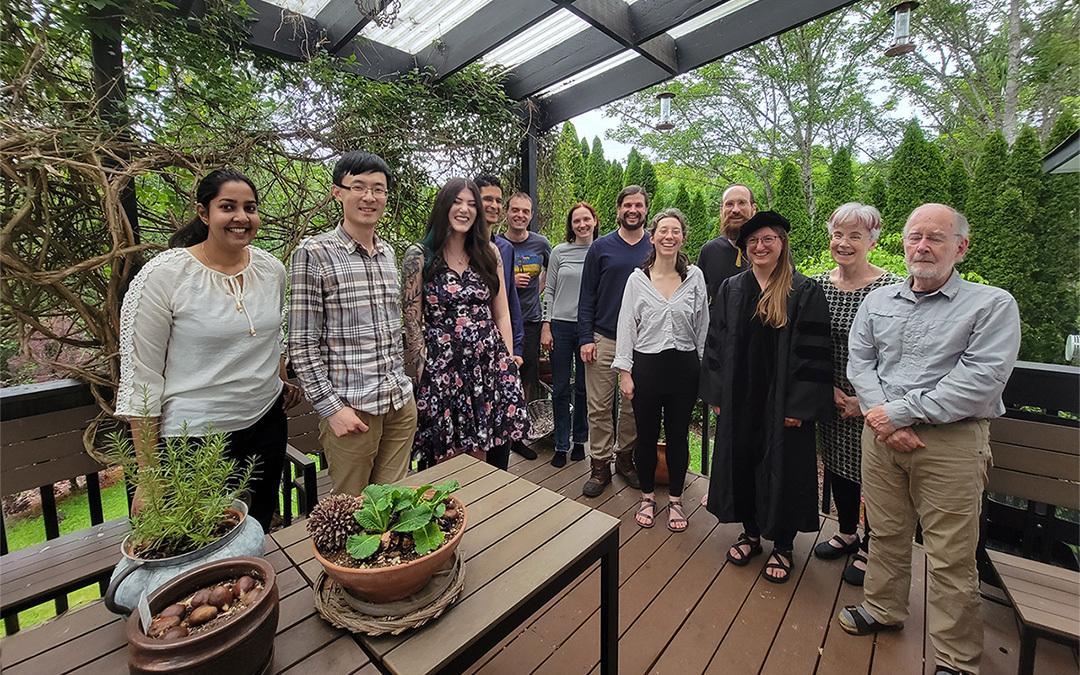
A group of people stand on a deck celebrating the graduation of a postdoc.

Malgorzata Peszyńska and her students and postdocs celebrating the graduation of Lisa Bigler (Ph.D. 2022).

Challenges and rewards: Bridging disciplinary divides

Peszynska’s success in bridging complex mathematics and diverse real world disciplines has much to do with her independent and joyful spirit.

She describes her atypical view of computational and applied math as an "attitude," rather than a discipline. “My work leans closer to art in its abstract form, or closer to science and engineering in its useful side. This dichotomy is not always understood or appreciated, and it feels funny and sometimes tedious that we may have to prove ourselves over and over. Doesn't everyone want to have clean air, enough food, exciting and intellectually stimulating complex work and stability of life? Live and let live!

“But my strategy is to not try to win anyone over to interdisciplinary work but rather to enjoy the intellectual and emotional joy of learning the new language while appreciating the cultural differences. The reward is that you build the bridges rather than straddle the fence.”

To apply her discipline and contribute wholly to critical concerns is very hard work, and she competes mostly with herself, harnessing discipline if ever enthusiasm wanes. Just as she advises her students: Do the work.

“On the lighter side, most days I wake up happy in the morning to continue doing this work,” she said. “It's fun, more fun than video games because I can make my own with the simulations. So that's exactly what I hope for others, especially students, that they will find fun in it—potentially even more, making a difference, one step closer to a better world.”

Curious minds may explore Peszyńska’s website for its challenges and interactive learning. Exploring innovative solutions can feel akin to solving puzzles, but even more rewarding.

The lasting impact of her work that she will hold most dear is the enduring value of lifelong learning and the significance of interdisciplinary collaboration—with its potential to shape the future. And she truly hopes that students will experience and appreciate the intrinsic joy and real-world impact that computational and applied mathematics have to offer.

“I am thrilled to see Malgo Peszyńska get this well-deserved recognition,” said Eleanor Feingold, dean of the College of Science. “Her world-class work in mathematical and computational modeling, coupled with her dedication to interdisciplinary collaboration, are instrumental in shaping the future of environmental science.”

Along her journey, Peszyńska has had to choose between many forks in the road. With too many options to follow in one lifetime, she acknowledges the opportunities left behind for future lives.

What might she pursue in her next life? Well, she might need two (or more). “Right now, my count goes into the upper teens.”

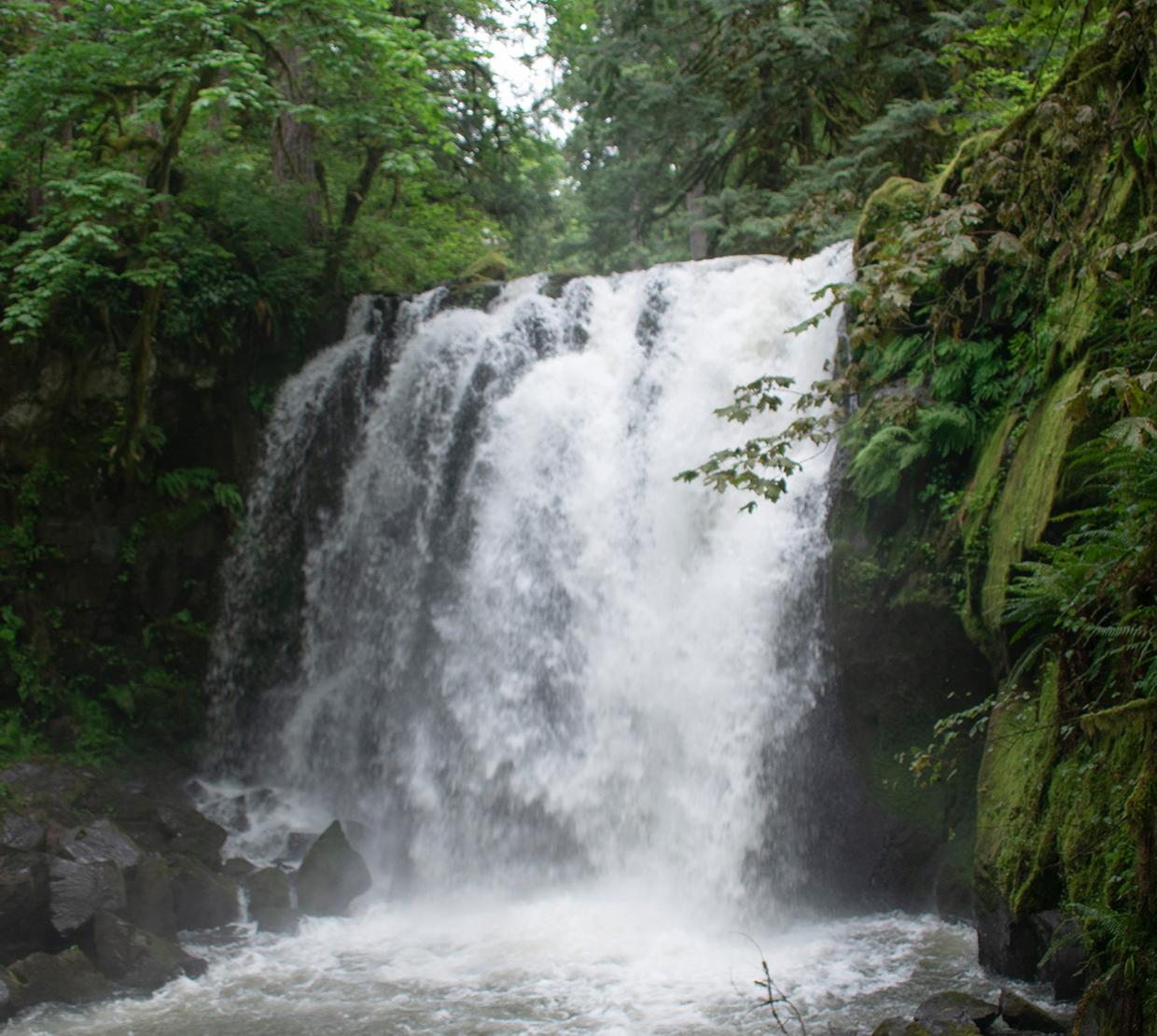
Oregon waterfall cascading down a cliffside surrounded by lush green trees.

A sustainable future: Unravelling the data

By Mary Hare

With areas of distinction in marine science, materials science, data science, biomedical science – and other research areas, OSU faculty and students are fighting climate change and moving the world forward to a greener future – whether that is through harnessing new materials, interpreting complex data or reimagining how organisms can adapt to changes. We share just a few examples in this three-part series.

Oregon State University scientists are rapidly rising to the challenge of our changing climate, supported by hundreds of graduate and undergraduate researchers who are committed to leaving a better world than the one they inherited. In part three of this series, we examine some of the data-driven research that is helping usher in a new era of climate policy and action.

Mathematics and statistics are two of the quickest-growing fields in the country, and it's not hard to guess why. As technology advances, mathematical modeling or statistical analysis can provide a faster, more reliable way to examine lots of data. In practice, these skills can provide critical insight to collaborative projects or inform policymakers on the most environmentally sound decisions.

Wildlife behavior

Making green energy safer for wildlife

Professor of statistics Lisa Madsen and statisticians from the United States Geological Survey (USGS) have come together to develop methodology to estimate the total mortality of bats, birds and other small creatures on wind farms and solar facilities. The Endangered Species Act requires that wind farms pay particular attention to endangered or threatened species such as golden eagles, brown pelicans, whooping cranes, condors and Indiana bats, which are killed when they accidentally collide with turbine blades.

Madsen and her colleagues have developed complex statistical tools that estimate the actual number of carcasses when they are undetectable for any reason by taking into account a host of predictor variables such as searcher efficiency, variations in plot sizes and location of inaccessible areas.

The software package, created by the team, will be utilized by government agencies as well as Western EcoSystems Technology, Inc., which has already begun to implement the software to assist their clients. The project has also attracted attention from environmental and government agencies in Canada, South Africa, Portugal and Scotland among others. In addition, the USGS statisticians have conducted workshops demonstrating how to use the software to estimate animal mortality at wind and solar energy facilities.

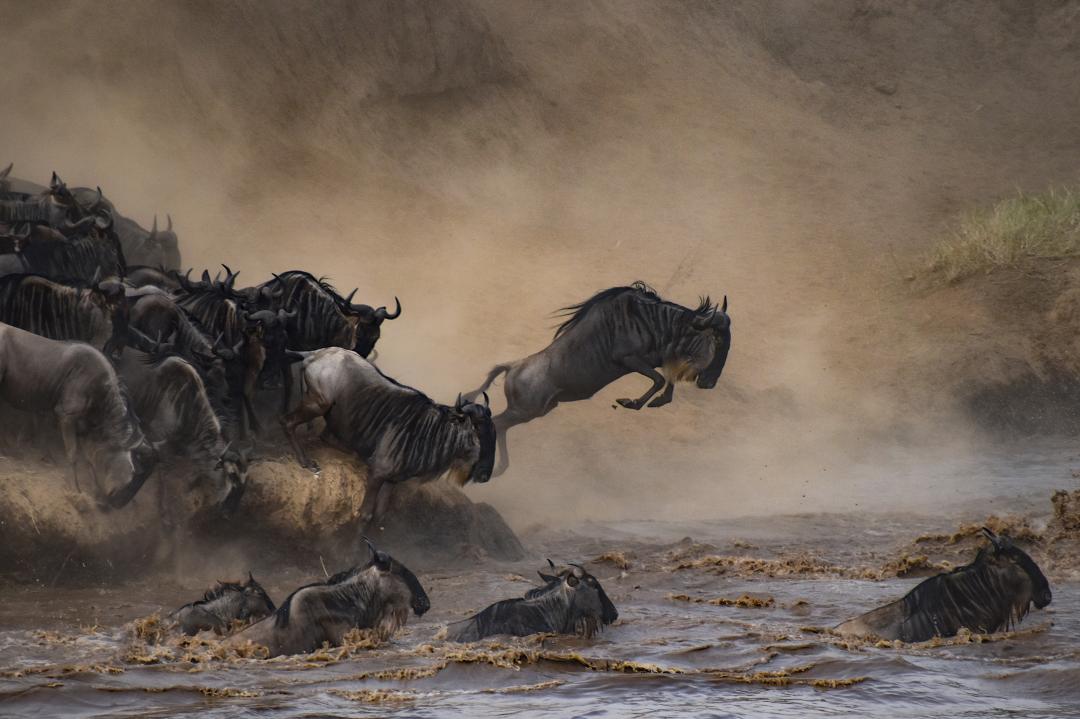
Wildebeast heard crosses the Mara River in Kenya

A recent study shows that groups of organisms that act together, like this wildebeest herd crossing the Mara River in Kenya, have complex relationships with their ecosystems. Not only are these mass movements affected by the external forces of their environments – they also shape the processes around them. These relationships have a powerful role in the behavior of the group, as well as in the health of the ecosystem.

Collective movement to stabilize ecosystems

In addition to being visually stunning, schools of herring, herds of wildebeest and countless other groups of organisms that act in concert can help complex ecosystems maintain their diversity and stability. Published in Nature Ecology and Evolution, a study led by mathematical biologist Benjamin Dalziel demonstrates that when individuals band together to consume resources as a collective group, the surrounding ecosystem is prone to be more resilient and able to support a wider range of species.

Their findings could be an important step toward understanding how cooperation and biodiversity help living systems stay on an even keel. “We constructed simulations in such a way that we could turn collective behavior on and off without changing anything else in the system,” Dalziel said. “What we found was that adding collective behavior was a game changer in the simulations – it stabilized ecosystems.” Since collective behavior is ubiquitous across the planet, playing a prominent role in everything from bacterial biofilms to human cities, the study’s findings have wide significance.

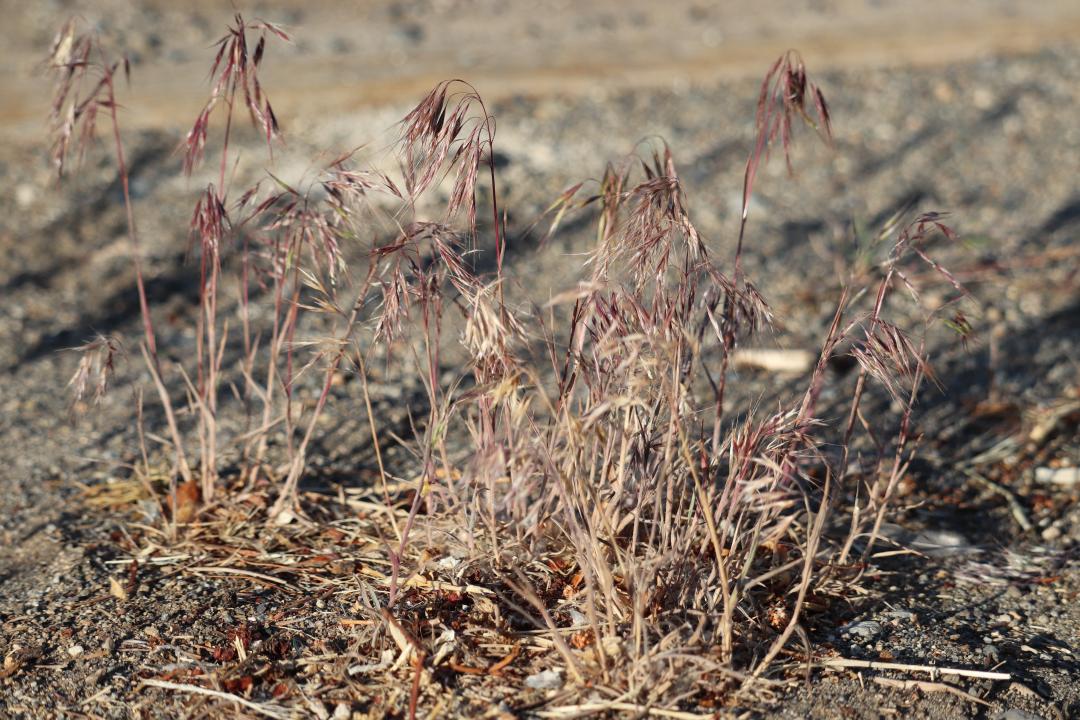
Bromus tectorum (cheatgrass)

In the sagebrush steppe of the intermountain West, invasive species like cheatgrass (Bromus tectorum) change soil composition and increase fire intensity and frequency, effectively squeezing out integral vegetation like sagebrush. Post-fire seeding efforts give sagebrush a fighting chance to recover from the impact of this interloper.

Data-driven resource management

The need for native seeds

Climate change and irresponsible land use have resulted in the degradation of millions of acres of land around the country. These disturbances are detrimental to native plant health and often creates opportunities for invasive species to thrive.

Statistician Virginia Lesser served as a panel member for a committee to assess the Need for Native Seeds and the Capacity for Their Supply, sponsored by the National Academies of Sciences, Engineering and Medicine. Native seeds play an essential role in maintaining and restoring natural areas. The committee explored the complex systems of native seed production and use in the United States, and examined their viability for future projects. Their committee was formed in 2019 and developed an interim report in 2020, with a final report expected in 2022.

Smarter forestry practices for a drier climate

As the earth warms, scientists in the Pacific Northwest can be sure of two things: rising temperatures and drier summers. In a state that relies heavily on Douglas fir trees - as a habitat for wildlife as well as economically - understanding how changing temperatures affect forest growth patterns will be critical for forest management. In a collaboration with the College of Forestry, statistics professor Lisa Ganio published a study that found that minor differences in temperature, soil depth or moisture did not significantly influence tree growth patterns. However, growth patterns were significantly impacted by competition, with higher growth in less competitive areas. The results of this study suggest that foresters will be able to focus more attention on other areas, such as habitat preservation.

Changing flood regimes, new projections

The potential for changes in flood regimes due to climate change, in combination with the deep limitations of climate projections, necessitates rethinking how we make flood risk management decisions.

Statistics professor Alix Gitelman participated in a study to develop a new approach for dealing with hydrologic uncertainty and flood management. The developed bottom-up approach was applied to the American River, CA, USA flood management system by first identifying the sensitivity and vulnerability of the system to different climates. To do this, they developed a climate response surface by calculating and plotting Expected Annual Damages (EAD, $/year) under different flood regimes.

Siuslaw National Forest of Oregon

The time it takes a forest to recover after high-severity fires has important implications for how the landscape will respond in the future to changing fire regimes. A warming planet could delay forest recovery by either hindering tree seedling establishment and growth, or through the loss of seed sources if patches of high-severity fire become larger.

Bolstering fire resistance in a changing climate

As fires become more prevalent throughout the west, landscapes are altered in ways that may make them more or less resilient to fire in the future. Enrique Thomann, a mathematics professor, participated in a study published in the Journal of Ecology to examine how changing ecological composition impacts the landscape's ability to resist fire damage in the future - an area that continues to be under-researched.

As the climate warms, there is a growing concern that forest landscapes risk transformation to non- forest systems through alteration of their fire regimes. Fire modifies vegetation composition and structure, including effects on fuel amount and type, fuel connectivity, and canopy- mediated influences on microclimate and fuel moisture. These effects may then shape the spread and severity of subsequent fires.

The strength of fire–vegetation feedbacks (i.e., the degree to which fire- driven changes to vegetation, fuels and microclimate affect the spread and behavior of subsequent fires) is influenced by numerous global change pressures. Given the many interacting variables that influence how ecosystems respond to disturbance, models calibrated to a specific study area are highly valuable in evaluating how that ecosystem responds to alterations of its disturbance regime.

Helping mitigate energy disasters in the Arctic

With expertise that spans disciplines, mathematics professor Malgo Peszynska primarily works on problems related to energy engineering and climate change. Her modeling of transport includes porous media phenomena in aquifers, oil and gas reserves, carbon sequestration, solar cells and the effect of permafrost warming. Perhaps most notable is her use of computational mathematics to model methane hydrate transfer and evolution.

Methane hydrate is an “ice” found primarily in the Arctic permafrost as well as in sub-ocean sediments. Known as one of the largest potential sources of fossil fuel, it is also one of the most risky. Existing in a delicate pressure-temperature equilibrium, exposure to heat could lead to melting that could cause explosions, or the escape of huge quantities of methane gas into the atmosphere.

The specific conditions at which it exists have also meant that it has been exceedingly difficult to study using traditional research tools. This is where using mathematics can be so useful. “As an applied mathematician in this area, the objective is to provide reliable and accurate modeling tools for simulation of various scenarios to help mitigate and contain the possible disasters,” Peszynska said.

Leaving a better world

As one of only three Land-, Sea-, Space- and Sun-Grant institutions in the country, Oregon State University has a commitment of service that extends beyond our campus, state or country borders. Students not only have the opportunity to receive a world-class education, but the opportunity to perform high-level research with faculty who genuinely care about the future of the planet - whether they are biologists, physicists or statisticians.

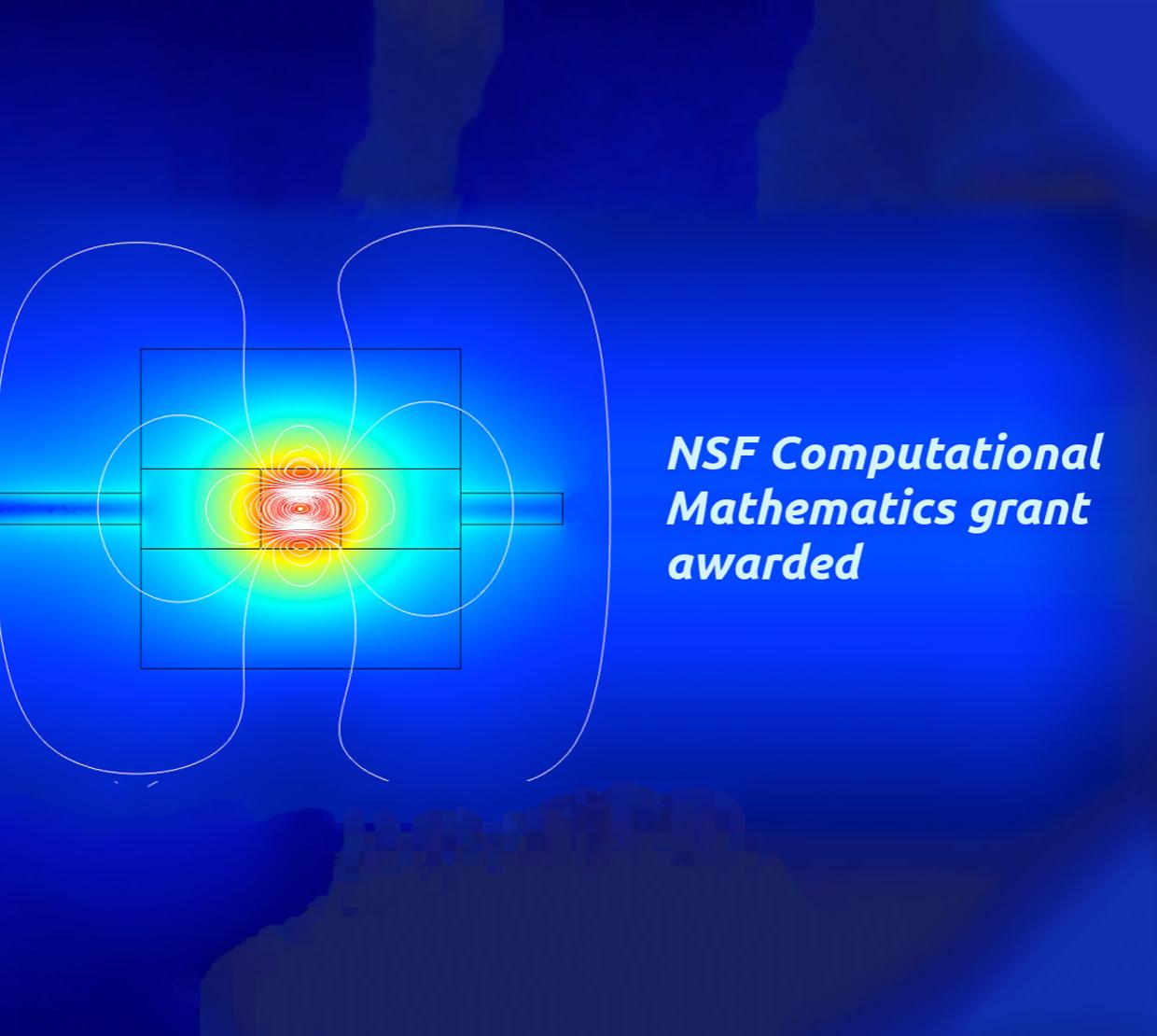
Depiction of a magnetic field with text that reads "NSF Computational Mathematics grant award."

Computational Mathematics grant awarded to Bokil and Gibson

Image produced by former PhD student Duncan McGregor (PhD 2016, Advisors: Bokil and Gibson). The image depicts induced magnetic field lines within a segment of a segmented Faraday type magnetohydrodynamic power generator.

Congratulations to Vrushali Bokil (principal investigator) and Nathan Gibson (co-principal investigator), who were awarded $225K funding from NSF’s Computational Mathematics program for their project "Computational and Multi-Scale Methods for Nonlinear Electromagnetic Models in Plasmas and Nanocomposites". The project is funded for the period August 1, 2020 - July 31, 2023 and includes co-principal investigator Pallavi Dhagat, Professor of Electrical & Computer Engineering at Oregon State University.

This project is an interdisciplinary collaboration involving mathematical modeling, computational simulation and experimental data for accelerating the design of advanced electromagnetic nanocomposite materials as well as alternative power generators. Nanocomposites, made of ferromagnetic nanoparticles in a dielectric, non-magnetic matrix, offer unparalleled opportunities for innovation in electromagnetic materials. The ability to predict electromagnetic material properties as a function of size, shape and concentration of inclusions in the host matrix, from computational simulations of physics-based models, will crucially aid in the digital fabrication of nanocomposites. These advances in design will enable applications including microwave frequency antennas and gradient refractive index lenses, printed electronic circuits and systems, to name a few. This objective is related to the Materials Genome Initiative's mission to accelerate materials innovation via computation. Professor Dhagat has been collaborating with HP Labs in Corvallis, on the application of multi-jet fusion technology for digital fabrication of magnetic composites.

A second objective involves Magnetohydrodynamic (MHD) power generation, which is potentially a significant component of a secure U.S. energy portfolio. The lack of moving parts in an MHD power generator increases the overall efficiency of the power plant and potentially decreases carbon emissions significantly. Computational simulations of physics-based models will aid in the optimal design of these thermally efficient energy systems. The models we consider are also essential to correctly modeling solar flares which can trigger geomagnetic storms disrupting power and communications costing millions of dollars in losses. Thus our techniques will advance applications in astrophysics, space weather prediction and clean energy systems, among others. PhD student Sebastian Naranjo Alvarez (Advisor: Bokil) will be funded by this project to work on Mimetic Finite Difference (MFD) methods and Virtual Element Methods (VEM) for MHD models in collaboration with Vitaliy Gyrya and Gianmarco Manzini of the Applied Mathematics and Plasma Physics group in the Theoretical Division at Los Alamos National Laboratory. PhD student Evan Rajbhandari (Advisor: Gibson) is working on a closely related project involving MHD modeling and simulation, including inverse problems and uncertainty quantification. He is being funded directly by Bokil and Gibson's collaborator Rigel Woodside from the National Energy Technology Laboratory in Albany, OR.

Mathematics graduate student Ruby (Ali) Chick

Mathematics graduate student explores marine systems through an interdisciplinary lens

By Srila Nayak

Mathematics graduate student Ruby (Ali) Chick

Mathematics graduate student Ruby (Ali) Chick (M.S. ’20) is on a team with other graduate students from environmental science and fisheries and wildlife science that collaboratively analyzes the environmental impact of microplastics. The multi-disciplinary team is a part of the National Science Foundation Research Traineeship (NRT) program at Oregon State University, which has established a new paradigm of cross-disciplinary STEM graduate student education on campus. Since 2016, graduate students across Oregon State have studied and conducted research pertaining to the NRT project, “Risk and Uncertainty Quantification in Marine Science,” focused on the study, management and protection of ocean systems.

The NSF Research Traineeship Program is designed to encourage the development and implementation of bold, new, highly innovative and potentially transformative models for STEM graduate education training in high priority interdisciplinary research areas.

The four-year (2016-2020) $3 million NRT grant at OSU, led by Professor Lorenzo Ciannelli from the College of Earth, Ocean and Atmospheric Sciences (CEOAS), prepares a new generation of natural resource scientists and managers who combine mathematics, statistics and computer science with environmental and social sciences to address climate and policy problems in marine systems. To date, 44 OSU graduate students, including 12 M.S. and Ph.D. students from the College of Science, have been funded and trained by the NRT program.

Ali and her NRT graduate cohort have advanced their training via participation in a combination of communication workshops, national and international internships, technical coursework, peer-mentoring and transdisciplinary research projects. These projects are guided by knowledge gleaned from outreach, communities and stakeholder engagement, and by using mathematical and statistical models and data sets to study different issues pertaining to the marine environment. The trainees learn about the dynamics of coupled natural-human systems, the science of big data, risk and uncertainty quantification, and communication.

The NRT program began with a week-long immersive learning experience at the Hatfield Marine Science Center, where students like Ali got to learn about ocean acidification and the effects of climate change on ocean temperatures from different experts in marine science. “That was my first leap out of math into a different field of science. I learned a lot of new terms I wasn’t familiar with before. I feel more comfortable speaking out now in a multi-disciplinary setting,” Ali says.

For their core NRT project, “A systems-based understanding of microplastic impacts on ecological and human health,” Ali and her team members are studying the effects of socio-economic factors, such as the mother’s level of education, recycling habits and consumption patterns, on microplastic pollution in the ocean. Ali is currently preparing a mathematical model to determine the correlation between human action and the amount of microplastic pollutants that make their way to the ocean. Her goal is to come up with a robust model that can influence the way we consume and recycle plastic and other pollutants.

In addition, Ali will examine the disruptive effect that microplastics can have on the endocrine system of fish through mathematical modeling. This fits well within Ali’s masters thesis research which uses mathematical modeling, and computational techniques to study multi-scale models for the endocrine system in mammals with an aim to understand polycystic ovarian syndrome, a hormonal disorder common among women of reproductive age.

Ali, who holds a bachelor’s as well as a master’s degree in mathematics from University of Texas at Tyler, says the NRT program has exposed her, for the first time in her academic career, to disciplinary perspectives from other scientific fields as well as the social sciences. These cross-disciplinary collaborations are shaping the group’s analysis and research on human effects on marine systems. “We learned how to cut through jargon and speak a common language in our classes and workshops,” Ali observes.

Ali and her advisor Vrushali Bokil, a professor of mathematics, examine research questions from an interdisciplinary perspective during NRT research meetings as the group moves forward with its project. In addition to Bokil, the cohort is mentored by Susanne Brander (Environmental and Environmental Toxicology), Shawn Rowe (College of Education), and Ivan Irismendi (Fisheries and Wildlife).

The broader NRT training has been valuable for several reasons, not least because it enables graduate students to talk to scientists from different disciplines. “I learned to explore microplastic pollution from different perspectives. There is a human and political element to our discussions that was absent in my mathematics classes where conversations are more abstract,” Ali remarked. “Most importantly, I am very glad I had this experience of learning how to collaborate and communicate across disciplines with different scientists because it will help me when I enter the job market as an applied mathematician.”

Her work with NRT added a new dimension to exploring “how valuable mathematics can be” in solving real-world problems and the different ways she can contribute as a mathematician on a multidisciplinary team. “I discovered that mathematics is actually something I can use to assist other disciplines,” Ali observed.

The training will culminate in a thesis chapter that will outline the collaborative group project and solutions to the climate and policy problem in question. After graduation, Ali plans to continue working in a cross-disciplinary scientific setting in industry, aspiring to bring her skills as a NRT student to bear on her future projects.

As one of the core requirements of NRT, this summer Ali will pursue an internship at the Environmental Protection Agency (EPA) in Corvallis, working on improving forecasting models in the field of human epidemiology with Nathan Schumaker, courtesy faculty in the Department of Fisheries and Wildlife Science and an EPA scientist. They will combine mathematics and computer simulations to develop powerful epidemiological forecasting models, seeking to overcome the challenges and limitations posed by widely used traditional mathematical models. As an example, they hope to use a spatial simulation model to quantify how rates of disease spread and change based on complex real-world drivers such as population density, environmental conditions and landscape connectivity.

In addition to Ciannelli, Julia Jones (CEOAS), Ana Spalding (College of Liberal Arts), Flaxen Conway (Marine Resource Management) as well as statistician Alix Gitelman and mathematician Enrique Thomann from the College of Science form the team of co-principal investigators and core-members, on the NRT project.
Juan Restrepo sitting on ledge in front of shrubbery

Mathematician elected Fellow of American Physical Society for advancing understanding of climate change

By Srila Nayak

Juan Restrepo, Mathematics Professor

Mathematics Professor Juan Restrepo has been elected a 2019 Fellow of the American Physical Society(APS), the world’s second largest organization of physicists.

Election to Fellow of APS is a rare and highly prestigious honor that is conferred upon no more than one half of one percent of the society’s membership. This year, 168 fellows from all over the world were selected and recognized for their contributions to physics. Fellows are chosen on the basis of: outstanding physics research, important applications of physics, leadership in or service to physics, or significant contributions to physics education.

Restrepo was nominated for the honor by the Topical Group on Physics of Climate. His Fellowship citation commends him for “advancing the understanding of wave dynamics and uncertainty quantification in the climate system.”

Restrepo joins a distinguished roster of APS Fellows in the College of Science at Oregon State University. He is the second mathematician at OSU to be elected a Fellow of APS. Professor of Mathematics Tevian Dray was elected an APS Fellow in 2010. Other APS fellows include OSU physicists Janet Tate (2015), Henri Jansen (2005), Corrine Manogue (2004) and Heidi Schellman (1999).

“I’ve had great scientific collaborators over the years and they are also responsible for my receiving this honor. Becoming Fellow of APS is obviously gratifying,” said Restrepo. “Professionally the award is very meaningful to me because APS is recognizing that anthropogenic climate change is a major existential crisis and that tackling this issue is a pressing scientific priority.”

Restrepo has received several prestigious honors and awards in the recent past. In 2018, he was elected a Fellow of the Society of Industrial and Applied Mathematics (SIAM) for his exemplary contributions to the mathematical and computational modeling of the ocean. He received SIAM’s Geosciences Career Prize in 2017 in recognition of his substantial impact in computational geosciences.

Restrepo specializes in applied mathematics research studying problems at the crossroads of mathematics, geophysics and oceanography. His research focuses on geophysical fluid dynamics, statistical mechanics, scientific computing, and uncertainty quantification. His research encompasses two distinct areas:

  • The application of data science to understanding complex non-equilibrium physical and human systems and to the development of forecasting tools for these systems, and
  • The role of ocean and ocean transport in climate dynamics and in nearshore processes, such as oil-spill dynamics, wave breaking dynamics, wave-generated transport and the role of oceans in global climate.

In an interview with SIAM News, Restrepo discusses his interdisciplinary research in applied and computational mathematics in the several fields of geosciences:

“My work on oceans involves deciphering how waves contribute to Earth’s circulation and how that affects ocean transport of nutrients, pollutants, and heat. In climate science my work has suggested important ocean pathways critical to the carbon cycle. In the nearshore, my work has demonstrated the effect of waves on shore connected sand ridges, on a possible explanation for the slowing down and parking of pollutants bound for the beach. The transport model for ocean oil spills my team is developing will someday help abate oil spill disasters.”

Restrepo’s teaching broadly covers the areas of numerical analysis and scientific computing, as well as applied analysis. As an advocate of diversity in science and mathematics, Restrepo has mentored numerous students from underrepresented groups.

He received his Ph.D. in physics from Pennsylvania State University in 1992. Prior to coming to Oregon State in 2014, Restrepo was a mathematics professor at the University of Arizona with appointments in the Department of Physics and the Department of Atmospheric Sciences. At OSU, he has courtesy appointments in Statistics, Electrical Engineering and Computer Science and Physical Oceanography.

APS has a diverse roster of fellows drawn from different fields such as mathematics, materials science, chemistry, biochemistry, mechanical, electrical and chemical engineering, in addition to physics. Their cross-disciplinary work is in a broad spectrum of fields, encompassing both core subject areas and their applications to physics.

APS publishes more than a dozen scientific journals, including Physical Review and Physical Review Letters and organizes more than 20 science meetings each year. Founded in 1899, APS is one of the oldest non-profit membership organizations working to diffuse and advance the knowledge of physics. The organization represents more than 51,000 members, including physicists in academia, national laboratories, and industry in the country and throughout the world.

Sea shell washed up on ocean shore

Tackling misconceptions about climate science with mathematics

Dynamics of oceans and climate

Mathematics professor Juan Restrepo, an expert in uncertainty quantification and the dynamics of oceans and climate, published a study on mathematical models addressing climate change in SIAM News. The news journal covers cutting-edge research and novel applications in applied mathematics and computational science for the Society for Industrial and Applied Mathematics (SIAM).

Juan Restrepo in his classroom

Mathematics professor Juan Restrepo

Invariably, congressional staffers and the elected officials they support are keen to engage in the climate debate. As he advocates for science research and education funding during congressional visits, Restrepo is often asked how mathematics can inform climate change issues.

The current official stance of the U.S. government has provided him with an opportunity to showcase how mathematics can inform the increasingly contentious debate. The two fundamental tenets of the current Administration are: (1) It is not surprising that climate changes, these are normal fluctuations of the natural dynamics of climate; (2) There are too many uncertainties in climate science and climate models in particular, to be able to make predictions on climate change.

"It is not enough to simply point out that one cannot be certain about the former and claim that the latter is true. One can use some very simple mathematics to show that the former is not true, and that present uncertainties in climate science can be taken into account in making climate predictions," said Restrepo.

Quantifying uncertainty in climate change

In "Uncertainty in Climate Science: Not Cause for Inaction," Restrepo and co-author Michael Mann, an atmospheric science professor at Pennsylvania State University, use simple mathematical arguments to show that observational climate data are not consistent with a key (theorem) or property of data that is in a statistically steady state. If climate data were in a steady state, they would change and fluctuate in time but their moments or averages would not. This finding disproves the Administration's contention that climate is "always changing," implying that temperatures, for example, might go up but they might also go down at some point.

The authors also show how uncertainties in the data and models can be taken into account when making predictions of future global climate. According to Restrepo, when ensembles of predictions, with uncertainty estimates derived from historical data, are made, the average outcome does not differ significantly from predictions that appear in the Intergovernmental Panel on Climate Change report, which represents the consensus of the best peer-reviewed assessments by climate scientists from around the world.

The concept of uncertainty in climate science is often misrepresented in public discussions, asserts Restrepo, and a greater public understanding of uncertainty analysis and its impact on the science of climate change would help dispel misconceptions that tend to influence policy.

The authors note in their conclusion:

“Because key climate change attributes, such as ice sheet collapse and sea level rise, are occurring ahead of schedule, uncertainty has in many respects turned against us. Scientific uncertainty is not a reason for inaction. If anything, it should inspire more concerted efforts to limit carbon emissions.”

A version of their article, entitled “This is How Climate is Always Changing” was also published in the American Physical Society GPC Newsletter.

Portrait photo of Juan Restrepo.

Mathematics Professor recognized as 2018 Fellow of the Society for Industrial and Applied Mathematics (SIAM)

Congratulations go to Professor Juan M. Restrepo, who was recently named Fellow of the Society for Industrial and Applied Mathematics (SIAM). Dr. Restrepo is one of 28 researchers in the 2018 Class of SIAM Fellows. He was nominated for his exemplary research contributions as well as outstanding service to the community, which includes innovative interdisciplinary programs and leadership roles taken to advance the discipline.

Established in 1952, SIAM is the leading international professional society of applied and computational mathematics, with over 14,000 individual members. The society publishes books and premier journals, sponsors many international conferences and programs, advocates for science funding and education.

SIAM Fellows are recognized by their peers for their distinguished contributions to one or more multiple areas of research, education, technical leadership and service to SIAM or its community. Through their contributions, SIAM Fellows help advance the fields of applied mathematics and computational science. There are no more than 0.315% society members who are SIAM Fellows.

This year’s Fellows will be recognized at the SIAM Annual Meeting, to be held in Portland OR, on July 9-13, 2018. The 2018 SIAM Fellows hail from different parts of the world, representing institutions such as the University of Oxford, The Technion-Israel Institute of Technology, Massachusetts Institute of Technology, National University of Singapore, Technische Universitaet Wien and Stanford University, among others.

Dr. Restrepo was “recognized for contributions to the mathematical and computational modeling of the ocean and atmosphere.” He received the prestigious 2017 SIAM Geosciences Career Prize for his impressive research in mathematical modeling and numerical simulation of oceanography and climate dynamics, which has had substantial impact in computational geosciences.

Dr. Restrepo specializes in geophysical fluid dynamics, scientific computing, and uncertainty quantification. His research encompasses two distinct areas:

  • The application of data science to understanding complex non-equilibrium physical and human systems and to the development of forecasting tools for these systems, and
  • The role of the oceans in global climate and ocean transport in nearshore processes, such as pollution and sediment transport.

He teaches broadly in the areas of applied mathematics, in particular in numerical analysis and scientific computing. As a proponent of diversity in science and mathematics, Restrepo has mentored numerous students from underrepresented groups.

Dr. Restrepo has been awarded nearly $7M in research grants from the Department of Energy, NASA, and the National Science Foundation for his applied mathematical research in oceanography, meteorology, and the environment. He is a co-principal investigator of the National Science Foundation (NSF) Research Traineeship (NRT) at OSU, which received $3 million to implement the program.

His present junior research collaborators are, graduate students Will Mayfield, Dallas Foster, Andrew Jensen, Evgenia Chunikhina, A. Sandra Nguemto Guaiwa, Michael Dumelle, Harrison Ko, and undergraduate students Jessica Peterson and Antonio Sam.

forest fire during the day time

Mathematician explains how populations handle random disturbances

By Steve Lundeberg

Natural disturbances caused by global climate change

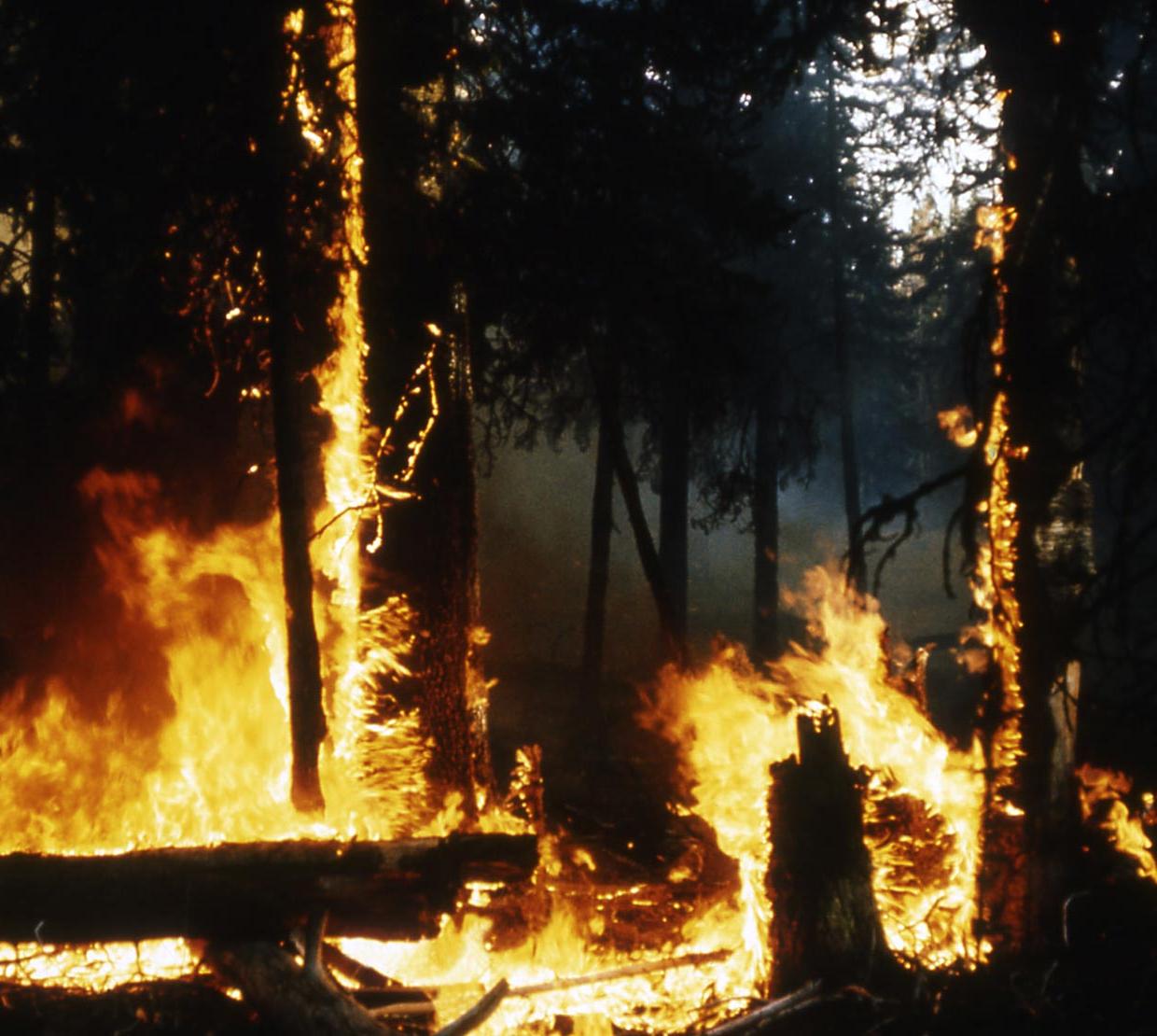
Mathematician Patrick De Leenheer and his collaborators have developed a mathematical framework to understand how population-reducing events of varying frequency and intensity, like fires, floods, storms and droughts, can affect a species’ longtime survival ability.

The work by De Leenheer, professor of mathematics, and his research team addresses “critical growth thresholds” for species subjected to random events that immediately and substantially impact the species’ population levels. Edward Waymire, professor emeritus of mathematics is one of the co-authors.

The research is important in part because one of the effects of global climate change is an uptick in these types of events.

“What are the effects of our human operations on populations on this Earth?” De Leenheer said. “We only have one Earth, so we should be concerned about that.”

The predictive modeling research builds on earlier work by De Leenheer and Oregon State collaborators that looked at river flooding’s effects on three insect species and savanna fires’ impact on a perennial grass.

“That earlier model shows promise for predicting population dynamics after multiple disturbance events and for management of river flows and fires,” said De Leenheer.

“The main objective was to determine via simulations when a population was resilient enough to withstand these disturbances and when it was not.”

That paper, published last year in Ecology Letters, did not address the randomness of events’ occurrence, but the latest work, in the Journal of Mathematical Biology, does.

“This class of models is larger than the previous one and also considers a worst-case scenario,” De Leenheer said. “We don’t incorporate possible habitat improvements associated with certain disturbance events. Our main goal was analyzing when these models predict population extinction or persistence.”

The analysis identified specific ecological and disturbance parameter combinations for which “threshold values can be determined such that when these thresholds are crossed, the system’s extinction or persistence behavior changes fundamentally,” he said.

“That’s a key feature of these models,” De Leenheer said. “They provide precise conditions for which the mortality rate due to the frequency and magnitude of these episodic disturbances exceeds the natural, net growth rate of a population. The thresholds mark a boundary between a persisting population of fluctuating size and one that becomes extinct at an exponentially fast rate.”

The research provides a framework for biologists and other life scientists to better understand how a particular system behaves when it gets disturbed in ways that aren’t predictable, or are predictable only in certain terms.

“Scientists have hypothesized how big swings in temperature affect natural populations, and this research provides some answers,” De Leenheer said. “The intensity and the frequency of disturbances define precise thresholds on ecological parameters that determine whether a population will go extinct.”

Read the full article here.

snowy mountains

Quantifying risk in a changing world

By Katharine de Baun

Landscapes at danger due to climate change

Note: this article is part of a series on how Oregon State scientists are working to mitigate climate change. Read more: Warm Oceans need Cool Science (introduction), Informing Policy and Sustaining Resources.

In 2016, our planet reached the highest temperature on record for the third year in a row according to independent analyses by NASA and the National Oceanic and Atmospheric Administration. Analyzing big data to model our evolving future is mission critical in an era of potentially catastrophic global warming.

“Statistical analysis and data science are key to discoveries and innovation,” says Sastry G. Pantula, dean of the College of Science. New fields involved in big data like bioinformatics are often interdisciplinary and collaborative.

“Solving major complex issues …requires teams with a diversity of expertise across science, mathematics and statistics. An interdisciplinary cohort enhances depth in core areas, breadth of communication across various fields, and strength in statistical and computational skills,” adds Pantula. Scientists at Oregon State work with big data to tackle climate change on many fronts.

Big data for the next generation

Mathematician Juan M. Restrepo is Chair of the Focus Group on Climate in the American Physical Society. He works on improving weather and climate forecasts by combining data and weather models, and is presently focused on finding ways to compute statistics of rare and extreme weather events. Some of the methods developed in this line of research lead to adaptive ways to respond to disasters, such as flooding and hurricanes.

Juan Restrepo in front of brick wall

Juan M. Restrepo, mathematician

Restrepo and statistician Alix Gitelman are co-principal investigators in a $3 million NSF Research Traineeship to prepare a new generation of scientists capable of assessing and communicating risk and uncertainty in the development of marine resource management strategies and policies. The student teams comprise future scientists, engineers and social scientists, who are trained to work with big data, engineered and natural systems, and stake-holders. Restrepo, together with students, statistician Claudio Fuentes and engineer Harry Yeh, is developing improved methods for forecasting and responding to tsunami disasters.

Models for real-world problems and solutions

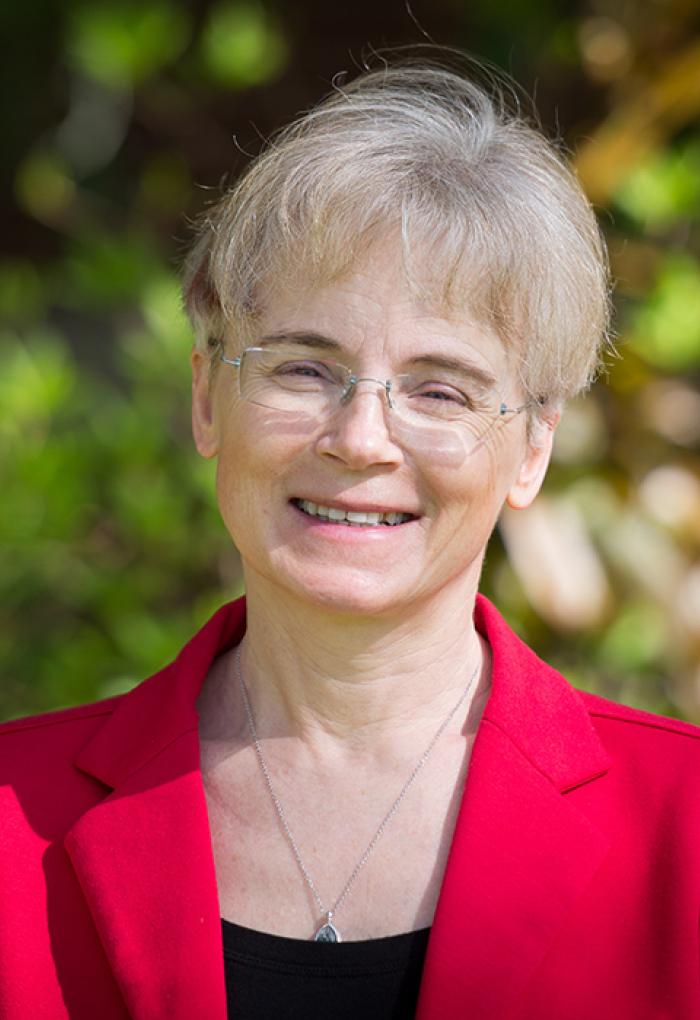
Mathematician Malgo Peszynska and her students collaborate with geophysicists, engineers, microbiologists and others to create mathematical models that are accurate, fast and relevant to better understand a warming climate. The models predict how warming temperatures can trigger the release of huge pockets of methane gas trapped in ocean sediments, and how leakage could occur if carbon dioxide emissions are pumped into the ground.

Malgo Peszynska in front of shrubbery

Malgo Peszynska, mathematician

Mathematician and biologist Patrick De Leenheer is at the leading edge of mathematical biology, a new branch of study that has evolved in recent decades as research in biology and medicine becomes increasingly dependent on mathematics and computation.

De Leenheer uses dynamical mathematical models to describe and illuminate biological processes ranging from the cellular to the ecological scale. He has helped develop new modeling approaches for the analysis and design of Marine Protected Areas to enhance fisheries as part of an NSF-funded project. He has also published studies on critical thresholds for extinction in population growth models and has been modeling the effects of climate change on disease severity.
Huge impacts, tiny creatures

The smallest known free-living cells, plankton SAR11, discovered by microbiologist Stephen Giovannoni, are so dominant that their combined weight exceeds that of all the fish in the world’s oceans. En masse, the tiny creatures produce enough sulfur gasses to play an important role in cloud formation and the stabilization of Earth’s atmosphere.

Stephen Giovannoni in from of wooden wall

Stephen Giovannoni, microbiologist

Collaborating with scientists around the world, Giovannoni is now building a database of plankton genomes collected from faraway places, from Massachusetts to Bermuda and the Sargasso Sea, against which future changes in the oceans can be assessed. Understanding the role of plankton is critical to accurately model climate change and its effects.


Read the rest of this series on how scientists at OSU are tackling global warming:

Subscribe to Climate Change