Career Outcomes

Career Outcomes

A group of people at a conference.

What does an actuary do? Erica Baird’s path from math student to industry leader

By Hannah Ashton

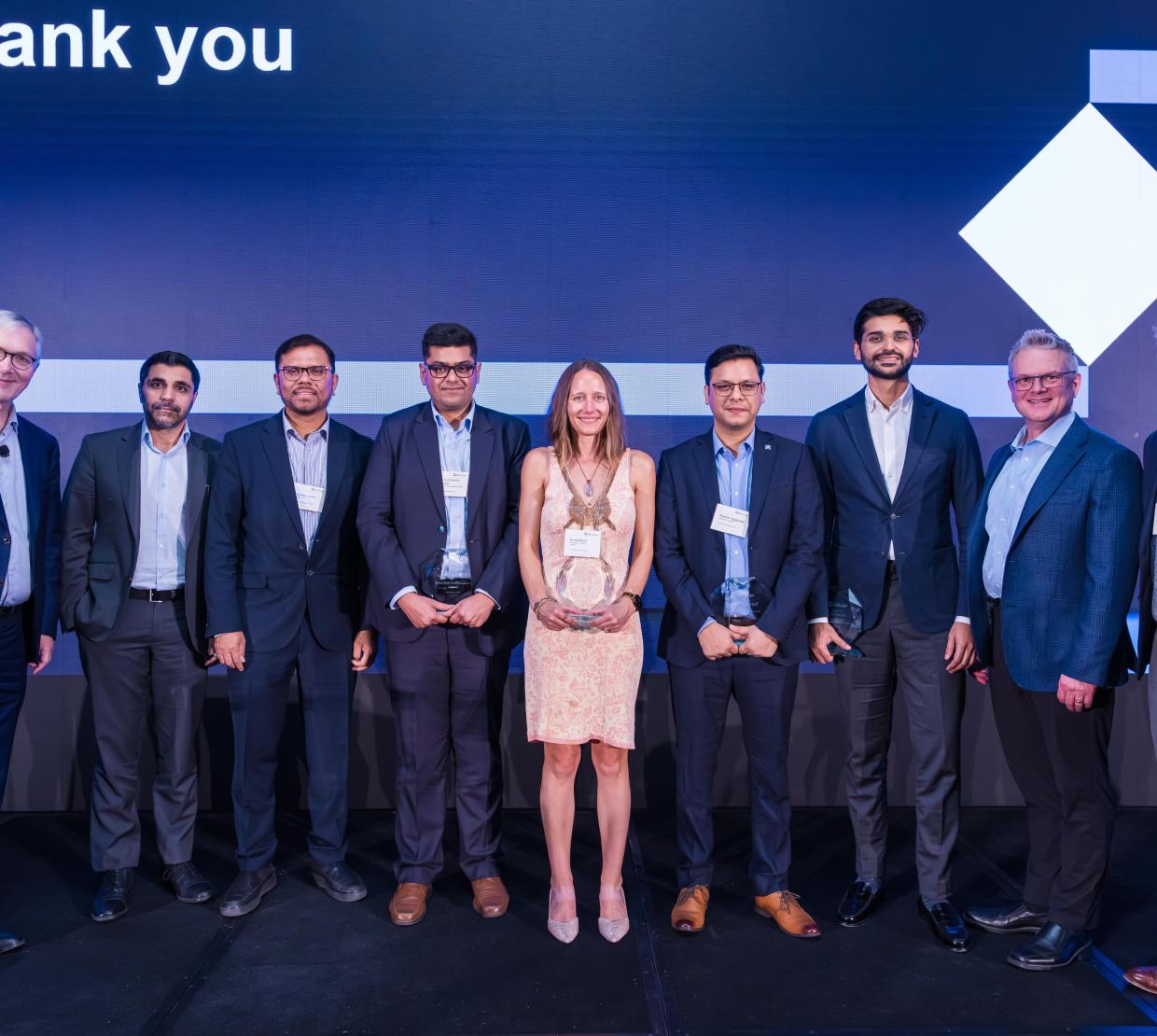
Erica Baird and her coworkers at a shareholders meeting in Phoenix in 2026, along with the chairman of the board and CEO of Milliman.

Erica Baird (’05, M.A. mathematics ’09, Ph.D. mathematics and statistics ’13) didn’t set out to become an actuary. In fact, when she first heard about the career as an undergraduate mathematics student at Oregon State University, she was skeptical.

“I thought it was a scam,” she said. “You go and take all of these exams and then you get this great high-paying job and all you need is a bachelor’s degree.”

That skepticism didn’t last. As Baird learned more about the profession and the rigor behind its credentialing process, she began to see actuarial science as a disciplined field grounded in mathematics, data and real-world impact.

Today, Baird is a principal and consulting actuary at Milliman, where she leads research and development for a risk-adjustment software product while advising clients across the health care industry. Her path from southern Oregon to a leadership role in a global consulting firm was driven by a desire to use mathematics to tackle complex challenges that affect patients and health care systems.

Four people sit and pose for a photo in front of trees.

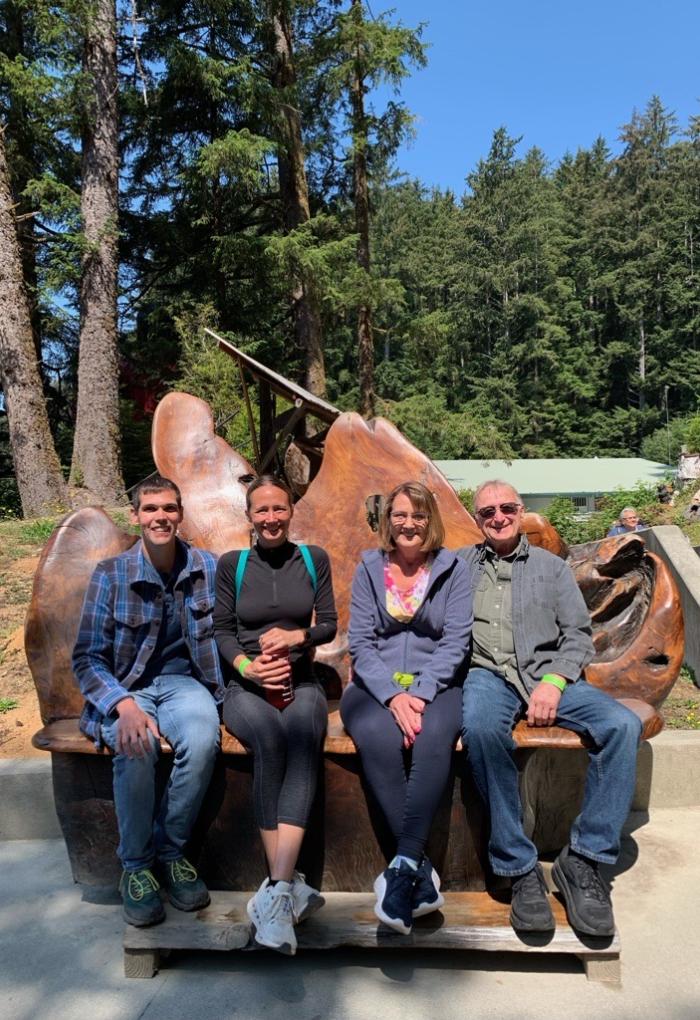
Baird and her husband Kyle pose for a photo with Baird's parents at the Trees of Mystery in California.

What is an actuary?

At its core, actuarial science uses mathematics, statistics and financial theory to manage risk and inform decision-making. While the work is rooted in numbers, it is ultimately about helping institutions understand what could happen in the future — and how to plan for it.

The profession is structured around four main practice areas: health, life, property and casualty, and pensions. Each track focuses on a different kind of risk and requires specialized knowledge of industries, regulations and financial systems.

Health actuaries, like Baird, work with hospitals, insurance companies and government programs to analyze medical costs, design insurance pricing and evaluate how healthcare services are funded and delivered.

“We’re trying to make sure that their prices are fair, and that they are financially stable,” she said.

Baird started at Milliman as an actuarial analyst, supporting a software product designed to predict individual health care costs using past claims data. She trained predictive models, validated them and answered client questions.

Over time, her role expanded. Baird discovered she excelled in consulting, working directly with clients to solve unique problems. She now leads research and development for the software product and holds a senior-level position on the consulting side. Her work ranges from pricing Medicare plans to helping hospitals understand payment models to evaluating how successful medical interventions are at improving patient outcomes.

A group of people hold hands and jump into a lake for a polar plunge.

Baird and her coworkers jump into a frozen lake for a polar plunge to benefit Minnesota Special Olympics (Baird is third from the right and her husband, Kyle, is fourth from the right).

“My days are never boring," she said. “Clients bring us hard problems and we get to design studies, build models and really dig into whether something is working.”

No two assignments look the same, she said, because no two clients are trying to solve identical problems. That variability is part of what keeps the work engaging: each project requires adapting models, interpreting data in context and explaining results to non-technical audiences.

While insurance can be a complex and sometimes frustrating system for consumers, Baird emphasizes the broader mission behind the work.

“It can be tricky, but it can also save lives,” she said. “We aren’t just there to help insurance companies make more money. We’re there to help them serve the people that need health care.”

In January 2026, Baird joined the Actuarial Standards Board, which sets standards that actuaries in the U.S. must follow in their work. It also oversees updates to those standards through volunteer expert task forces and public comment, helping ensure consistency and professionalism across the field.

“It's been a great experience because they’re all people who are really passionate and excited. We spend a lot of time in passionate discussions and debates, making sure we think through all the implications of the guidance that we’re creating. Am I setting the bar too high for actuaries? Or am I not setting it high enough?”

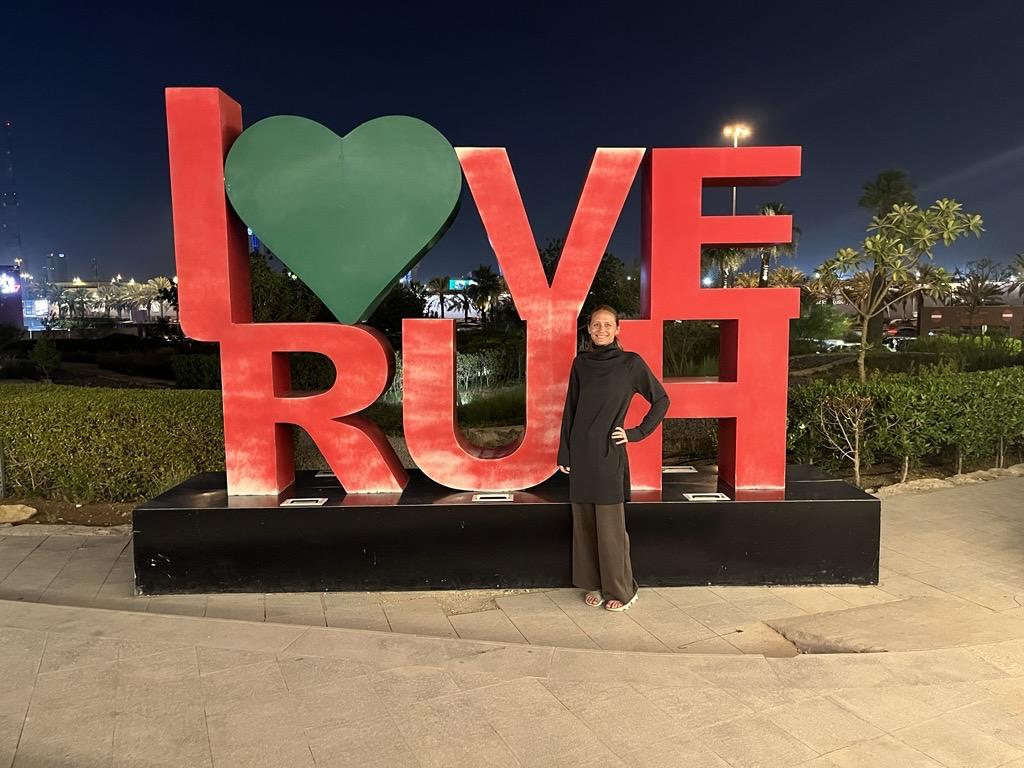
A woman poses with a giant sign that says "Love RUH."

Baird poses with the Love RUH sign in Riyadh, Saudi Arabia during a work trip.

Baird’s take on how to become an actuary

Baird grew up in Central Point, Oregon, and was interested in pursuing a degree in education, but a high school calculus class shifted her trajectory.

“I really enjoyed the problem-solving aspect of it,” she said. “It felt like the first time you moved beyond mechanics and got to how we use math to solve problems.”

That realization led her to pursue mathematics at Oregon State, where she eventually completed her undergraduate degree, master’s degree in mathematics and a dual Ph.D. in mathematics and statistics.

Her interest in actuarial science didn’t take hold until graduate school. After taking her first probability course, she began to see new possibilities, deciding to take her first actuarial exam while she was still in school.

Becoming an actuary requires a series of rigorous professional exams that unfold over several years. Candidates complete seven exams and a series of modules and other courses to reach Associate status, with several additional exams and modules needed to be fully credentialed as a Fellow. Most candidates study while working full-time, turning the exam process into a parallel track of education and career experience.

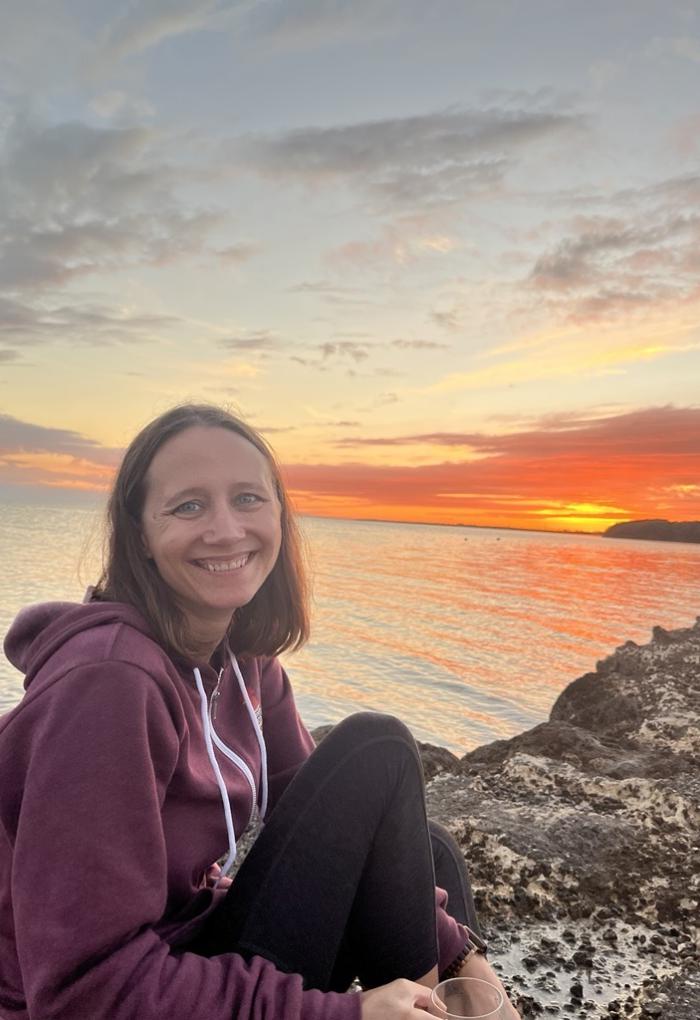
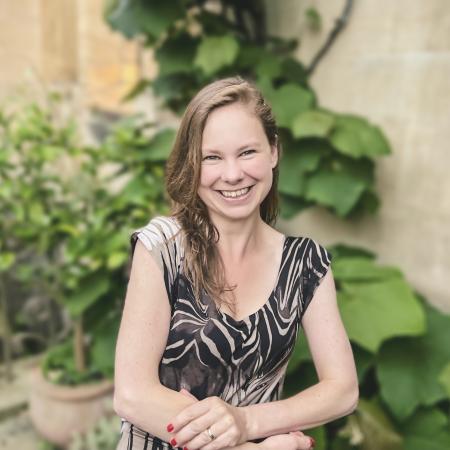
A woman smiles on the beach in front of an orange sunset

Baird poses for a photo during sunset in Key West during a work trip.

Always being open to learning benefited Baird when she started at Milliman. New terminology, processes and expectations felt overwhelming. Although she credits her graduate training for helping her develop critical skills like note-taking and technical writing, it took her time to adjust.

“For the first six to eight months, I felt completely out of my element,” she said.

Doubting yourself in a new role is a normal experience, Baird said, but those feelings won’t last forever. Over time, that uncertainty gave way to confidence and she took on leadership roles.

For students interested in actuarial careers, Baird recommends gaining early exposure to the field by taking exams and pursuing internships. Equally important are soft skills.

“We’re a very collaborative group,” she said. “Making sure that you can show that you have successfully worked as part of a team or led a team is helpful.”

Actuarial work goes beyond spreadsheets and equations; it’s about using math to guide decisions that affect people’s lives. From shaping how healthcare is delivered to ensuring organizations can meet their financial commitments, that work carries real consequences. For Baird, it’s a job that lets her use mathematical skills in ways that have real-world impact.

Headshot of Scott Clark

Meet Scott Clark, an OSU science alum who built a $30M AI startup

By Tom Henderson

Scott Clark (08) wants artificial intelligence to be powerful — and trustworthy.

The College of Science alumnus is a mathematician, physicist and machine learning expert who has spent the last decade working at the cutting edge of optimization and artificial intelligence. He’s also a repeat founder. In 2014, he launched SigOpt, a startup that helped some of the world’s largest companies fine-tune their machine learning models. He sold it to Intel in 2020.

Now, he’s doing it again.

Clark’s latest venture, Distributional Inc., is focused on a fast-growing challenge in today’s AI landscape: reliability. The company helps organizations test, calibrate and monitor AI systems — ensuring they behave as expected and can be trusted in real-world use. It’s already raised $30 million and grown to a team of 30.

"Faster cars are better, but not everyone wants an F1 car," Clark said. "That would be ridiculous, People want Honda Civics. People want cars they can trust. This seemed like another hard mathematical problem we could solve."

Focusing on reliability is important during the latest surge in AI technology, he said. "If reliability and confidence are ever going to matter, it's right now."

A man in a cap and gown holds three diplomas.

Scott Clark smiles on graduation day in 2008, holding his three B.S. degrees in math, physics and computational physics.

How the College of Science prepared him to change the landscape of AI

When Clark arrived as a freshman at Oregon State in 2008, he met Rubin Landau, who ran the (since discontinued) computational physics program at the time. Clark became especially enthralled with Landau's work after checking out one of his books from OSU's Valley Library.

"It was everything that I loved, all put together," Clark said. "It was physics with math on computers. It was like, 'Here's how you teach a computer physics.'"

He convinced his advisor to let him take a 400-level class as a freshman. Although he started out as a math and computer science double major, he switched to a triple major in math, physics and computational physics halfway through his freshman year.

"One of the things I loved about Oregon State was that they let me explore as much as possible."

Oregon State has one of the best numerical analysis departments in the world with legendary professors such as Malgorzata Peszynska and Bob Higdon, he added.

"One of the things I loved about Oregon State was that they let me explore as much as possible," Clark said. "They never told me I wasn't allowed to take a class because I didn't have the prerequisite, or it was a 600-level class, and I was only a sophomore. They always let me try it, to jump into the deep end and see if I could swim."

Clark began expanding his work, pursuing summer Research Experiences for Undergraduates (REUs) in biophysics at the University of California at Davis. He also worked at the Max Planck Institute in Germany, doing computational quantum mechanics work.

He and Malgorzata Peszynska spent a summer working on fluid dynamics problems.

"What I really loved was all this interdisciplinary work of how you fit these fields together and using computational simulations to push that forward," Clark said.

After graduating from Oregon State in 2012, he pursued graduate school at Cornell University in its applied mathematics department. "I could work on all these problems that would otherwise fall through the cracks," he said.

Clark soon received a fellowship from the U.S. Department of Energy, allowing him to work in computational science at various national laboratories, including Los Alamos and Lawrence Berkeley. The latter focuses on scientific discovery and solving large-scale problems in energy, health and the environment.

"A lot of these problems end up looking similar," Clark said. "They end up looking like difficult optimization problems where you build some big, complex machine, system or algorithm, and you want to make it work as well as possible."

Figuring out how to use computers to solve extremely hard optimization problems became his next passion, Companies often spent exorbitant amounts of money grappling to increase optimization. Clark saw an opportunity. "In as few attempts as possible, you want to get to the best possible answer," he said.

Toward the end of graduate school, he faced a choice -- heading to academia or industry. He decided it would be more interesting and fast-paced to at least try industry first.

A man in a cap and gown shakes the hand of his Ph.D. advisor.

Scott Clark shakes that hand of his Ph.D. advisor, Peter Frazier, after getting his hood on graduation day at Cornell University in 2012.

An internship with Bloomberg in New York City working in finances helped finalize his decision. Clark recalled the thrill of working at a fast pace with highly intelligent people.

"Everyone had something to optimize."

He took the private-sector skills he acquired in New York City and began working for Yelp. The company needed help building a targeting system as it ventured into advertising. "This was like a really fun, hard math problem," Clark recalled. "There was enough scale to make it really interesting, but it was early enough that it was very greenfield, so I wasn't trying to make something slightly better. We were starting from scratch, basically."

It struck him other companies could benefit from what he was doing for Yelp. He created MOE -- the Metric Optimization Engine -- and presented it to companies like Google, Facebook and OpenAI.

"Everyone had something to optimize," Clark said. "I learned this was an extremely pervasive problem."

In 2014, Clark founded SigOpt to market the software he developed to use machine learning and complex algorithms to optimize user experiments for websites and applications. He improved data collection for everyone from federal intelligence agencies to hedge funds and big banks. Traveling the world, he built a team of 30 people and raised $17 million in seven years.

After selling the company to Intel in 2020, he became Intel's vice president of AI and High Performance Computing Software teams within the Supercomputing Group -- helping people build even bigger and better computers. However, after two years, a thought kept nagging him. Customers didn't necessarily want the best result. They wanted the most reliable result.

Thus was born Distributional Inc.

The company creates reliable AI by creating better testing, automating test creations and calibration -- allowing organizations to reduce risk by standardizing testing throughout the life of all their AI technology.

"It's all about how to test them and make sure they're behaving as we wish," Clark said.

A man and his parents at a gala.

Clark stands with his parents, both Oregon State grads, at the Oregon Museum of Science and Industry Gala in Portland, Oregon in May 2025. Clark recently finished his term as treasurer on the OMSI Board of Trustees.

A lifetime love of computers

Clark has been working with computers since he was 10 years old in the early 1990s, and his father brought discarded office computers home.

"I tinkered around with QBasic and stuff like that,” he said. “I was always interested in making machines do things that I found interesting, even if it was just printing my name over and over on one of those old terminals."

He built computers for people while he attended Central Catholic High School in Southeast Portland -- customizing early Dell and Gateway computers. "I was willing to value my time at $10 per hour so I could undercut someone who was just updating HTML."

Clark built several dozen computers for local businesses and friends and designed websites. Then his interests took a cosmic turn.

"I became interested in more than how computers work and became interested in how the world and the universe work," he said.

He was particularly interested in physics and began reading Richard Feynman's lectures on theoretical physics. This led to Clark taking advanced placement courses as well as classes at Portland Community College.

"I wanted to understand physics, because that's the way the world works, and I wanted to understand math because that's the language of physics," Clark said.

"I was never told anything was impossible, so I never stopped."

However, his fascination with computers remained. "I was always interested in how you can make computers much faster, how you can run simulations and things like that," he said. "I was enthralled by these very beautiful simulations of fluid dynamics and partial differential equations."

Clark, now 38, said everyone will be touched by AI -- even the engineers who create and service the machines

"I see a lot of companies now not hiring engineers just because it's so efficient to have a system that writes a lot of stuff too," he said. "Engineers are definitely going to be touched by AI. The pace of change is insane. Even working in the field, staying on top of AI is hard. It’s definitely exponential."

Clark's parents weren't engineers or scientists, but while they knew nothing about creating artificial intelligence, he said they knew a lot about nurturing it naturally.

"I'm definitely here as a product of the encouragement of my parents," said Clark, who was born in Salem and raised in Tigard.

"We were exploring together," he said. "I remember my parents were very quickly unable to help me with my math homework anymore, but they were always very encouraging. They'd let me take over the entire dining room table."

It was that kind of encouragement that made him the tech entrepreneur he is today, Clark said. It was the support he also found at Oregon State.

"I was never told anything was impossible, so I never stopped," he said.

Michael Waterman teaching

College of Science alumnus to be presented with honorary doctorate

By Hannah Ashton

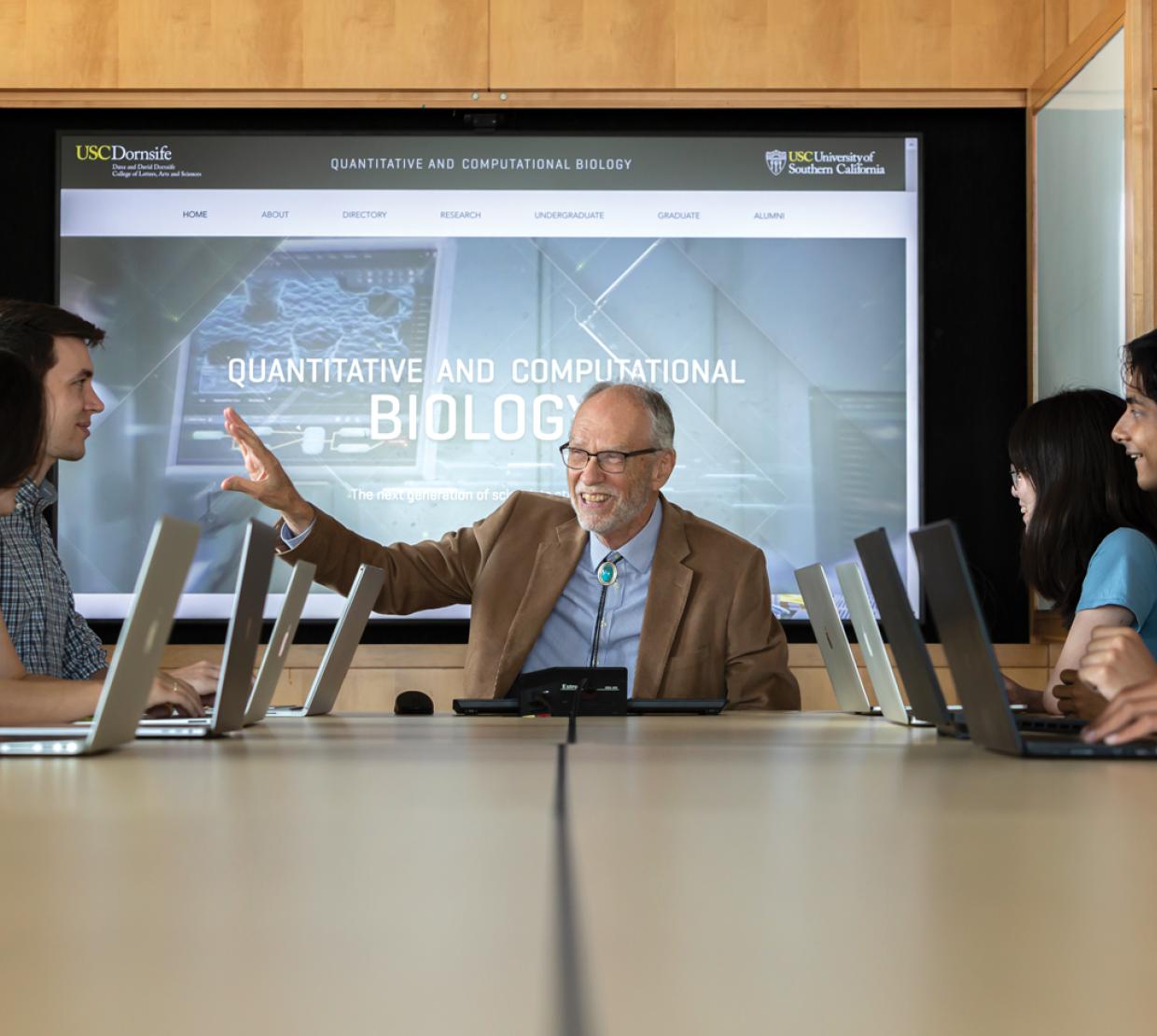
Courtesy of USC, by Leah Lee

College of Science alumnus Michael S. Waterman (Mathematics '64, '66) will be presented with an honorary doctorate at this year's university-wide commencement ceremony in Corvallis.

Waterman is an internationally celebrated mathematician and biologist known for his extraordinary contributions to science, dedication to education and impact on multiple disciplines. He is an eminent figure in bioinformatics and globally recognized as a trailblazer in computational biology.

He is considered the architect of the groundbreaking Human Genome Project which advanced genomics and deepened the world's understanding of life's genetic foundations. He is also known for his collaborative innovation in developing the Smith-Waterman algorithm, a monumental breakthrough. This algorithm revolutionized sequence alignment and is described as the "gold standard for gene and protein sequence analysis." It has become an indispensable tool in bioinformatics, molecular biology, and genetics, and has profoundly impacted molecular biology, medicine, cancer treatment and biofuel development.

"Dr. Waterman's dedication to pushing the frontier of knowledge and his commitment to education are extraordinary," wrote Oregon State University President Jayathi Murthy and Provost and Executive Vice President Edward Feser.

Waterman received the college's Lifetime Achievement in Science Award in 2021. Serving on the College of Science Board of Advisors, he also created a scholarship that supports College of Science students who are historically underserved, Oregon residents.

His list of awards and honors includes the Guggenheim Fellowship and professorships at the University of Southern California and the University of Virginia. He is an elected member of the American Academy of Arts and Sciences, the National Academy of Sciences, and the National Academy of Engineering, and a fellow of several scientific organizations including the American Association for the Advancement of Science and the Institute of Mathematical Statistics.

He has received the Gairdner Foundation International Award, the Dan David Prize, the Walter Benter Prize in Applied Mathematics, and the Friendship Award from the Chinese government. Additionally, he is a founding editor of the Journal of Computational Biology and serves on the editorial boards of various journals.

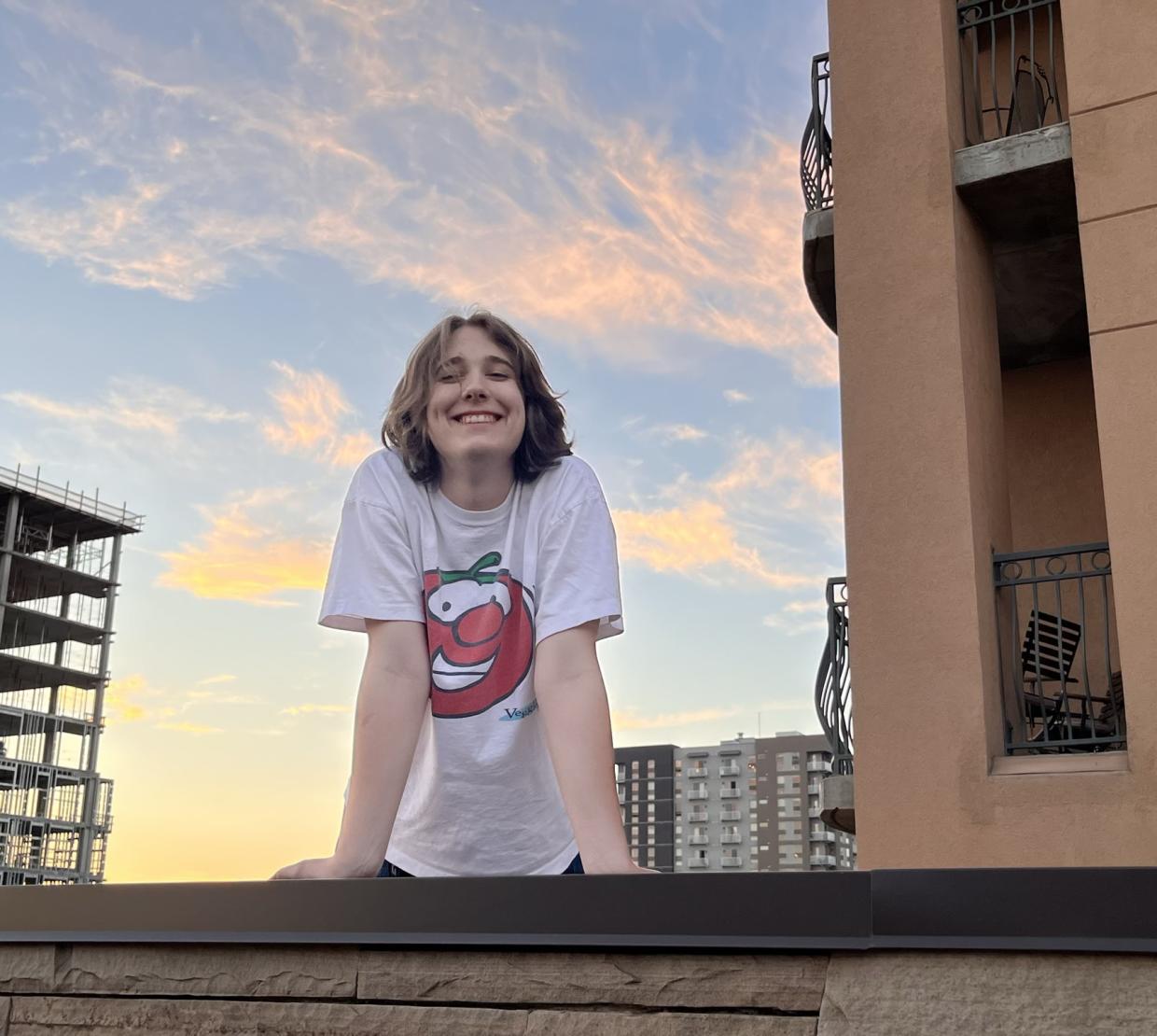
A man in a white t shirt with shoulder length hair poses for a photo with a sunset in the background.

Turning a talent for numbers into a career in finance

By Tom Henderson

Ryan Holzschuh liked math as a teenager.

He was even one of the top mathematics students at Cleveland High School in inner southeast Portland and took a year's worth of college-level math classes during his senior year in 2022.

However, it took going to Oregon State University for Holzschuh to truly fall in love with numbers.

“When I was in high school, I was just good at math," he said. "I didn't really know what to enjoy about it. Coming here really helped. A lot of the professors helped me learn to love it."

One such professor was Dr. Axel Saenz Rodriguez, who specializes in algebra and number theory, analysis and applied mathematics as well as probability.

"He was my probability professor," Holzschuh said. I "had him for a whole year. He has really taught me to love proofs. I was terrible at proofs early in the year. Now I've gotten good at them."

One area of math was a bit of a harder sell for Holzschuh.

"Algebra was not my favorite, but I had Dr. Clayton Petsche as a professor," he said. "He is such a good teacher and really helped me love algebra, even though I will probably never do it again because it is very complicated."

Holzschuh is graduating from Oregon State this spring with a mathematics degree with a focus in statistics as well as a minor in actuarial science.

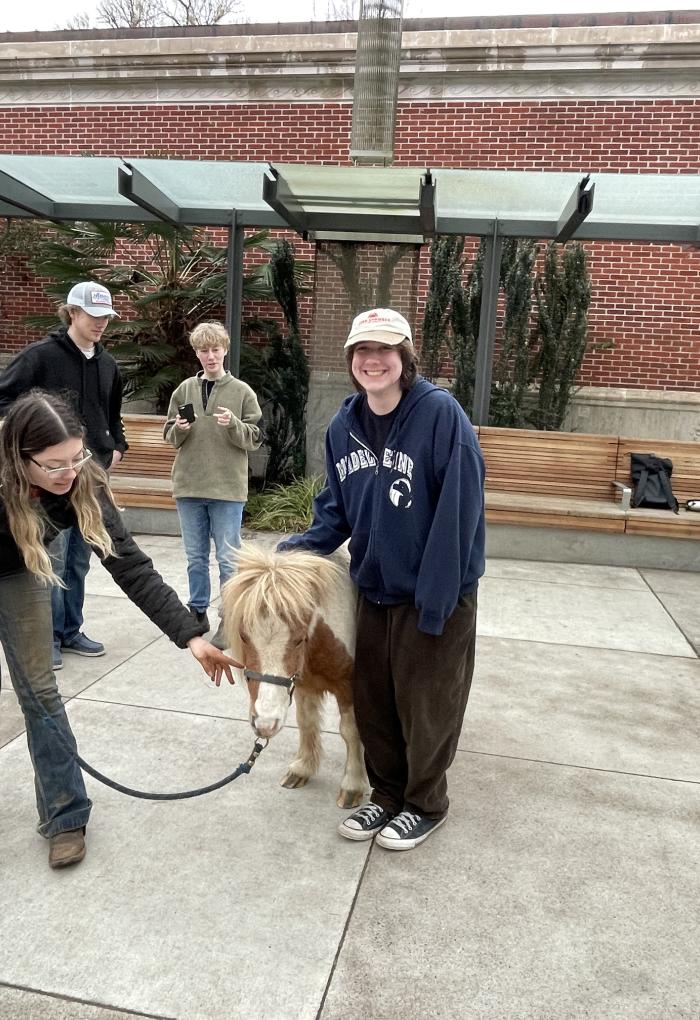
A man stands on the Oregon State University campus and pets a miniature horse.

Ryan Holzschuh pets a miniature horse in front of the Memorial Union.

His road to graduation started with his father.

"I was very good at math when I was a kid, and my dad tried to hone in on that," he said. "He always told me how when he learned math, he memorized formulas and that got him through math even when he didn't always understand it."

Even if math didn’t rise to the level of a passion quite yet in Holzschuh's young life, he spent a lot of time crunching numbers. "I would always spend hours learning to understand the math I was doing," he said.

All that time paid off when he arrived at Cleveland High School. "I quickly picked up on math because I had such a strong foundation that I could easily build on," he said.

"That led to being very good at math and very good at physics," he added. "I didn't pursue physics because there are just a couple of concepts I really didn't understand, like when I started learning about Feynman diagrams."

Feynman diagrams are pictorial representations of mathematical expressions describing the behavior and interaction of subatomic particles.

Physicist Richard Feynman used wavy lines to represent photons. In physics as well as mathematics, a wave is a propagating dynamic disturbance of one or more quantities. "Waves are pretty weird," Holzschuh said. "Waves always tripped me up, so I decided to focus on math."

Oregon State was a fairly straight-forward choice for college, he said. Other colleges and universities in Oregon don't offer as many classes in statistics, and Holzschuh also wanted to stay close to home.

"I came to Oregon State mostly because I'm from Portland, and it was pretty easy," he said. "I wasn't moving too far, and I still had a little bit of freedom. I also knew a lot of people here, so it would be an easy transition into college."

Once in Corvallis, Holzschuh said he was impressed with the university's world-class faculty, and his love of math flourished.

"I love the theory behind math," he said. "It's super interesting to me how you predict outcomes."

He added he also loves how math is so unambiguous.

"I like how math has one answer," he said. "When you're doing calculus, there's one answer. Now that I'm in more proof-based analysis level math, I like how you go from Point A to Point B, and there are different ways to go, but you're always going to get to Point B."

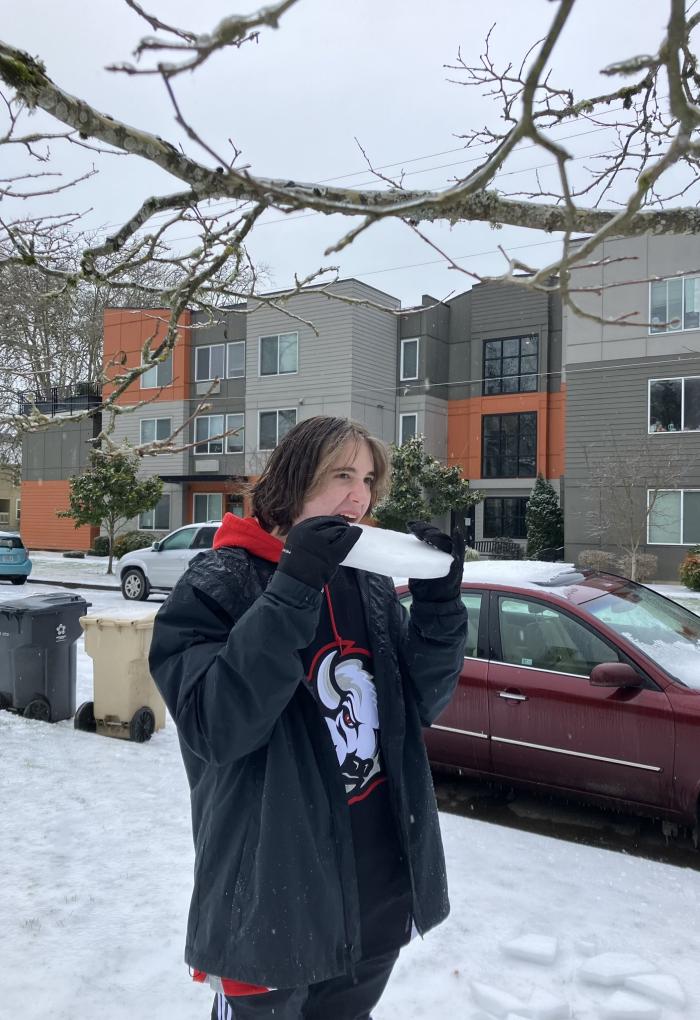
A man holds a piece of ice and attempts to eat it.

Ryan Holzschuh pretends to eat a piece of ice during an ice storm in January 2024.

His other academic passion is not known for its lack of ambiguity.

"Math and science were my big subjects in high school, but I also had a small interest in philosophy," Holzschuh said. "I really do still love philosophy."

He just doesn't have a lot of time to hang out with Plato, Descartes and their 21st-century counterparts as a mathematics major.

"Because I spend most of my time studying math, I don't have the reading comprehension level to truly understand a lot of the current philosophy papers," he said. "They're just so heavy and dense."

Still, he has friends ready to help. "One of my best friends is a philosophy major in Belgium, and he will talk to me about philosophy for hours," he said. "I really love it."

"Being able to go on the scheduling website and just take a bunch of math classes, it makes me pretty happy."

Being a math major has not kept him socially isolated, he added.

"I've met so many different people from so many different majors," Holzschuh said. "One of my best friends is a mechanical engineer. My two roommates are botany and English majors."

Students recognized for expertise in certain subjects in high school are often humbled when they arrive at college and are no longer the big fish in a small pond.

Even if he was no longer one of a handful of math stars, Holzschuh said he found coming to the mathematics community at Oregon State exhilarating.

"I actually liked it," he said. "For one, college allowed me take the classes I wanted to take. I went from high school, where I took one math class a year and seven other random classes, to where I'm taking 20 hours of math and statistics this semester."

He added, "Being able to go on the scheduling website and just take a bunch of math classes, it makes me pretty happy."

Undergraduate students usually spend much of their freshman and sophomore years taking required lower-division classes, regardless of their majors.

"Once you get past your second year in mathematics, it really opens up," Holzschuh said. "I came in a year ahead on my math track, so once I got to my second year, I could take linear algebra, and once you've taken that, basically everything opens up. You can pretty much take any math class in any field."

He has taken such general elective classes as differential equations, complex variables ("which is really interesting"), math models and math biology.

"I never thought I would take anything related to biology because I hated biology in high school, but that was an interesting class," Holzschuh said.

After graduation, he intends to move from Corvallis in August to start graduate school at Boston University.

"I selected Boston University because it's on the East Coast," he said. "I really want to go there, especially because of math and finance. The East Coast is a great place to be for that. Also, Boston seems beautiful, and it's close to New York."

After grad school, Holzschuh said he hopes to remain on the East Coast and pursue his love of numbers as a quantitative analyst -- designing, developing and implementing algorithms and mathematical or statistical models to solve complex financial problems.

"It's a very challenging career path, and I really like being challenged," he said.

Megan Tucker smiles widely, her scarlet beanie a striking contrast to the snow-covered mountaintops that rise behind her.

What do mathematicians do? This mathematics grad began a technical writing career at Amazon

By Elana Roldan

In science, ‘new’ is a constant. Novel research techniques propel studies forward. Updated software creates ripples across technology. But as fields evolve at a breakneck pace, leaving the rest of the world to play catch-up, there is a subset of communicators helping us along — technical writers.

Technical writing breaks down complex scientific jargon into easily understood information. Those who pursue the niche are much like Swiss Army knives, able to learn and explain a variety of specializations. Alumna Megan Tucker, ‘20, is one such knife.

After completing a double major in Mathematics and Liberal Studies with a focus on writing, Tucker worked as a technical writer for Amazon Web Services for three years. She is currently completing her master’s degree abroad. Using the breadth of knowledge and professional skills she naturally gained as a College of Science undergraduate, she has found the sweet spot between her two passions in a truly rewarding career.

“It felt great to graduate knowing I could continue to learn and write about science and become an expert in fields I wouldn’t have known existed until someone said, ‘We need a tech writer.’”

Doing the math

The perfect set of degrees for Tucker wasn’t immediately obvious. While she always had an additional writing-focused major, her first major in STEM was nuclear engineering. It was short-lived as she felt drawn to the deeper discussions about quantum mechanics available to physics undergraduates. But physics still wasn’t quite right, and she finally turned to the major that had run through each of the others: mathematics.

Having academic advisors dedicated to each major ready to help made for a smooth transition into mathematics. It turned out to be an excellent fit, even as the content became increasingly difficult. Triumphing over challenges with the help of her mentors was one of the best learning experiences the major had to offer.

“I was really struggling with some proofs in an abstract algebra course and Professor Schmidt told me, ‘You can do this proof. You’re doubting yourself. Stop doubting yourself and you’ll be able to solve anything you put your mind to.’ That was such a game changer for me, to realize that yeah, I can do this,” she said.

“That’s really what I went to college for, to talk to experts in their field ... Having the opportunity to work with those people and learn from them is probably the best thing that I got out of OSU and the College of Science.”

The switch was especially validated at the end of her junior year when she was accepted into an internship for the Department of Energy, which she found through attending a College of Science research seminar. She flew to Pittsburgh and Washington, D.C. to study data sets that could prove useful for carbon sequestration.

Surrounded by Ph.D. candidates of many specializations, Tucker appreciated the experience for its challenging environment.

“In college especially, people should really push themselves. That’s their opportunity to learn and try things and fail. I don’t even think you should stop doing that after college, but college is a really nice place where you can do it a lot,” she said.

This style of learning led by knowledgeable guides was a highlight of her time as an undergraduate, and she cherishes the lessons it taught her.

“That’s really what I went to college for, to talk to experts in their field,” she said. “Learning not just about the class, but about what it means to get your Ph.D., what it means to get your master’s and what it means to be a mathematician. Having the opportunity to work with those people and learn from them is probably the best thing that I got out of OSU and the College of Science.”

The unspoken questions

When technical writing was first introduced to her through her coursework, Tucker had no intention of pursuing it further. A career in the niche hardly crossed her mind.

“I was like, ‘It’s a course I took in school, no one actually does that for work, right?’” she recalled ironically.

But when she later accepted a grant writing internship on campus while searching for more work opportunities, her perspective shifted. She began to see the world of possibilities that lived at the intersection of writing and science. Her two passions that once seemed completely disparate merged into her dream job. By the time senior year rolled around, she was applying for as many technical writing positions as she could.

A job offer from Amazon Web Services came back in March and she began working for them in Seattle soon after graduation. AWS is the most widely adopted global cloud provider, boasting millions of users who rely on its services. Much of Tucker’s work involved creating user and application programming interface guides for each software release. Her writing boiled down imposing cloud architecture setup into step-by-step instructions, guiding customers out of a computer deep end and into smooth sailing.

“There's an endless amount of things I could write about. You’re answering the unspoken questions that need to be answered.”

The skills she learned from both of her degrees played prominent roles in her daily work. Being able to absorb the ins and outs of feature releases and discuss science-heavy content with software developers both stemmed from her mathematics major. These then pooled into planning, writing and editing technical documentation for the company, allowing her to thrive in her position.

Along with the skills she purposefully developed, Tucker found that the ones she gained naturally as a science student were critical to her success.

“It’s very much like university with different clothing,” she explained. “Ultimately, I really had to keep up with my courses and be organized and punctual. That’s pretty invaluable to me working, staying on top of my tasks and being able to communicate these topics with people who have a varying level of knowledge about them.”

After three years at AWS, Tucker resigned to work toward her master’s in writing at Queen’s University in the U.K., which she plans to earn later this year. The degree will be another step higher for her into the world of technical writing, one full of possibilities.

“I love the field because of that conversation between STEM and writing,” she said. “I could write for chip manufacturing, I could write for a university, I could write for medical tech. There's an endless amount of things I could write about. You’re answering the unspoken questions that need to be answered.”

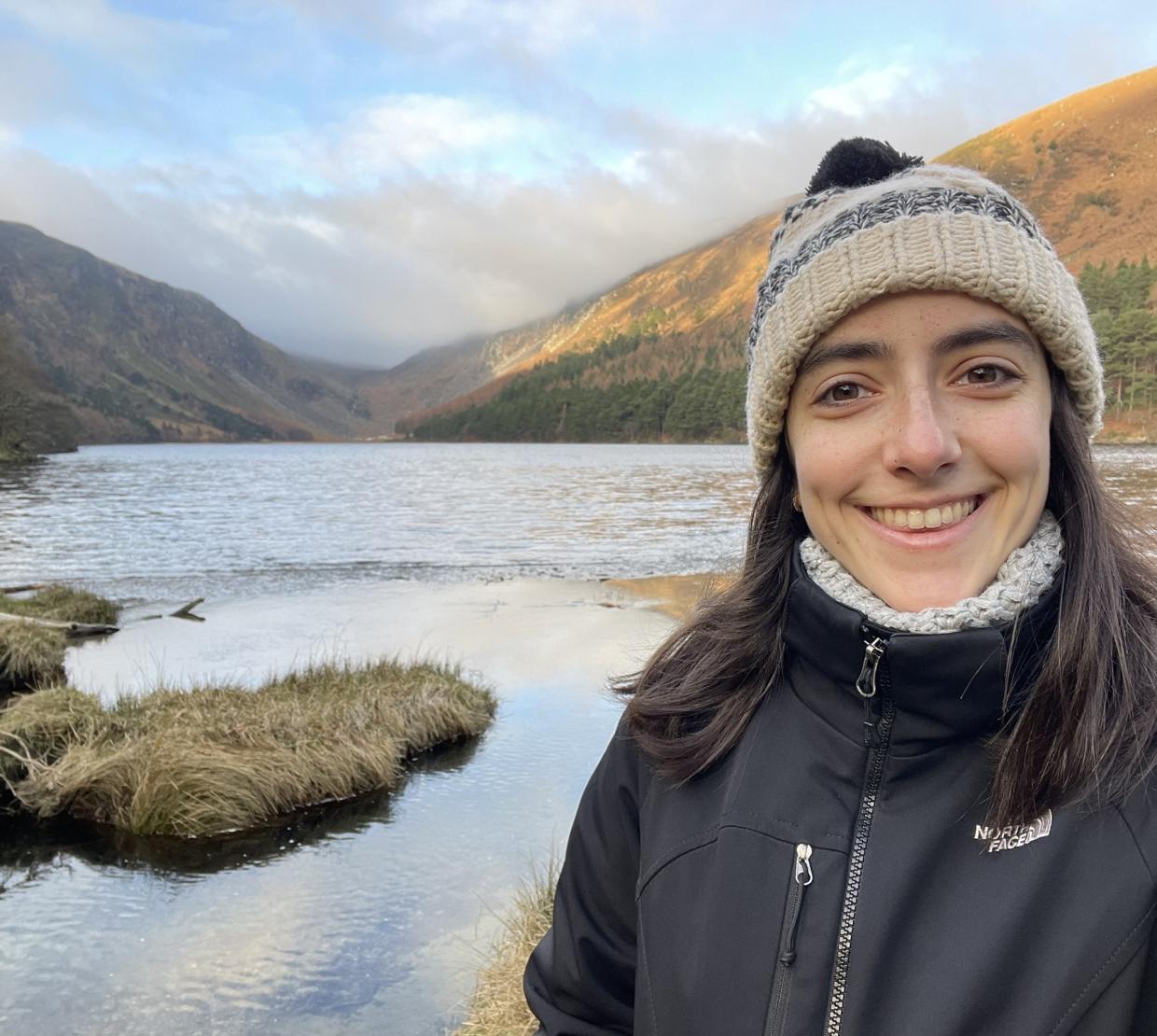
Rachel Sousa stands before a vast body of water at the base of tall, sweeping mountains in Ireland.

Mathematics graduate thrives with simple philosophy: ‘Why not?’

By Elana Roldan

In the intricate languages of mathematics and biology, alumna Rachel Sousa, ‘20, is multilingual.

Instead of translating words, she transforms data. Instead of immersion in a foreign country, she interns at eminent research facilities. Calling her field the Rosetta Stone of mathematics and biology isn’t much of a stretch.

“Collaboration is key in progressing research forward,” she says. “It’s hard for mathematicians to just think about the math and not have any access to data, whereas the experimentalists can do all of these experiments, but some of them are very time-consuming or impossible. If you can bring the two worlds together, they synergize very well.”

The path Sousa took from Oregon State to being a Ph.D. candidate at the University of California, Irvine was paved with risk. With many of the opportunities that came her way, the chance of rejection seemed too large to overcome. But by putting herself out there, she has gone on to attend prestigious international events and earn highly competitive internships before setting foot outside academia.

Bolstered by her undergraduate experiences in the College of Science, she has reached higher and higher ever since.

Finding the best fit

While she always had mathematics at the forefront, Sousa wasn’t introduced to its application in biology until beginning at Oregon State. A panel with upper-division students during an introductory course for mathematics majors was the first time she’d seen the fields merge. Instantly, she became hooked. The final push she needed came from her advisor as she discussed changing to the mathematical biology option. He excitedly showed her his own research which integrated the disciplines, and she made the switch that same day.

“The College of Science was really good at bringing people of different backgrounds together so that you could hear different experiences and life journeys, whether they were similar to yours or not,” she said, which helped her discover her new passion.

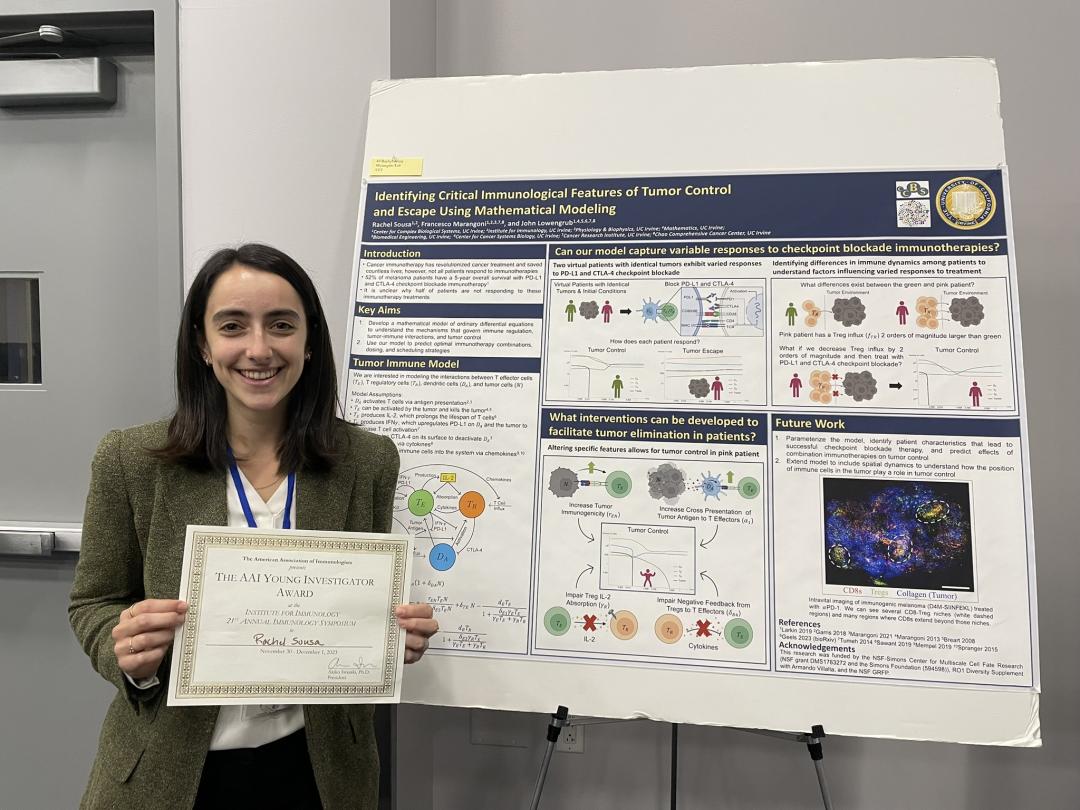
Sousa holds up a certificate for the American Association of Immunologists Young Investigator Award while standing in front of her research poster.

Sousa wins the American Association of Immunologists Young Investigator Award for her poster presentation at the 2023 UC Irvine Immunology Symposium.

Sousa didn’t slow down from there. She soon met Associate Professor Cory Simon at a student-faculty mixer hosted by the College of Science. His work, which used mathematical modeling to predict specific grass formations in Africa and Australia, fascinated her, and she joined his lab soon after.

Two years later, she received an email from the College about an internship opportunity with the National Cancer Institute. It seemed like a stretch that she would get it, but with a few years of research under her belt and a solid support system encouraging her to try, she sent in her application and hoped for the best. What she hadn’t expected was for them to say yes.

Sousa spent the summer at the University of Utah using mathematical modeling to study breast cancer, loving every minute of it.

“That was the key moment I decided that I really enjoyed this type of work and that I wanted to pursue it moving forward,” she said.

The right mindset

After graduating from Oregon State in 2020, Sousa went to UCI to work toward her Ph.D. in Mathematical, Computational and Systems Biology. More than her GPA, she credits her acceptance into the program to her undergraduate experience at OSU.

“Doing research during undergrad was a huge part of it. Showing I had the interest and the skills to do research really helped,” she said. “Good or good enough grades, doing some sort of research in undergrad, and getting an internship will help to boost your skills.”

The inherent collaboration in mathematical biology led her to join two labs at UCI, one led by a mathematician and the other by an immunologist. She works with both to create models of the immune system and its interactions with cancer, which they ultimately want to use to predict the most effective therapy choices in eliminating the disease. Much of what she learned at Oregon State applies to what she now does daily as a professional researcher. From building models to working with ordinary differential equations, the foundations she laid as an OSU student continue to support her current work.

While studying at UCI, Sousa has not rested on her laurels. In her second year, she applied for the notoriously competitive National Science Foundation Graduate Research Fellowship Program and earned the impressive award. She also put her skills to the test in an industry setting during an internship with pharmaceutical company Pfizer, where she built models for anti-cancer small-molecule drug development.

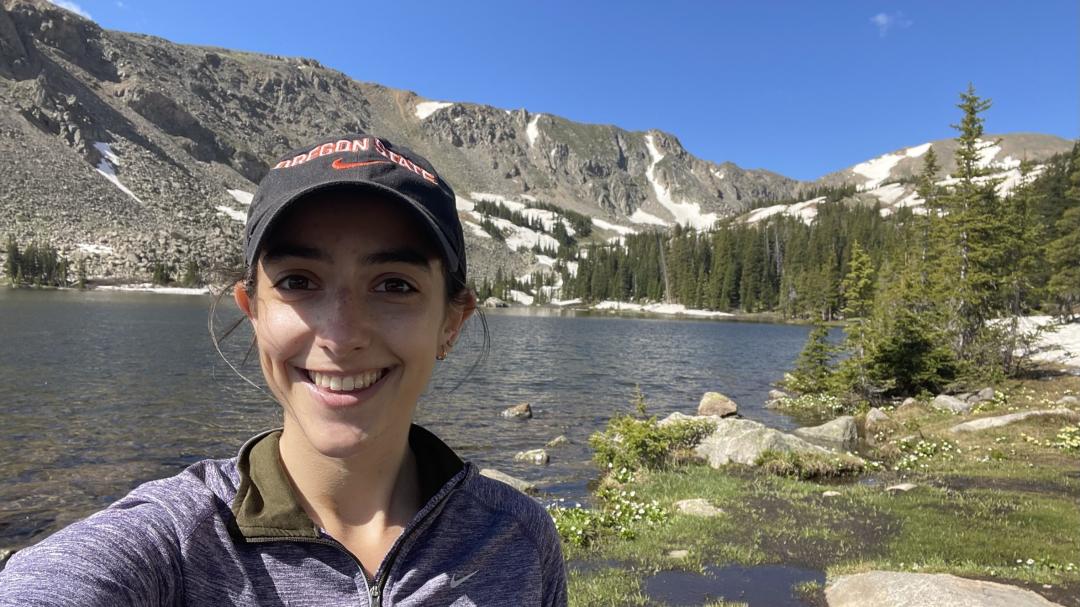
Sousa smiles in front of a crystal clear lake bordered by craggy mountainsides and pines.

Sousa hikes to Diamond Lake during her internship with Pfizer in Colorado.

One of her proudest achievements was being selected to attend the 72nd Lindau Nobel Laureate Meeting. The meetings are annual forums that bring together Nobel Laureates and 600 emerging young scientists from around the world in Lindau, Germany. It left a lasting impression on Sousa and was another reminder to pursue any opportunity that came her way.

“I applied to attend and again was sort of like, ‘It seems like a big opportunity, I don’t know if I’ll be selected but the worst they could tell me is no.’ Except they told me yes,” she said.

“That’s such a good mindset to have in life. If you don’t try, you’re not going to get it. If the worst-case scenario is somebody telling you ‘no,’ then why not at least try? That’s sort of what’s gotten me where I am today.”

In the years since Sousa began pursuing mathematical biology at OSU, she has developed a philosophy toward her work and career. Whether applying for her undergraduate internship at the National Cancer Institute, her fellowship from the National Science Foundation or a spot at the Lindau Nobel Laureate Meeting, there was always an initial doubt about if she should even take the chance. What has become clear to her after all of these experiences is that without trying to seize an opportunity, the possibility of getting it becomes zero.

“I see all of these opportunities and they all seem like such prestigious things that I feel not good enough for, but then I apply and I get them. So I am good enough,” she said. “That's such a good mindset to have in life. If you don’t try, you’re not going to get it. If the worst-case scenario is somebody telling you ‘no,’ then why not at least try? That’s sort of what’s gotten me where I am today.”

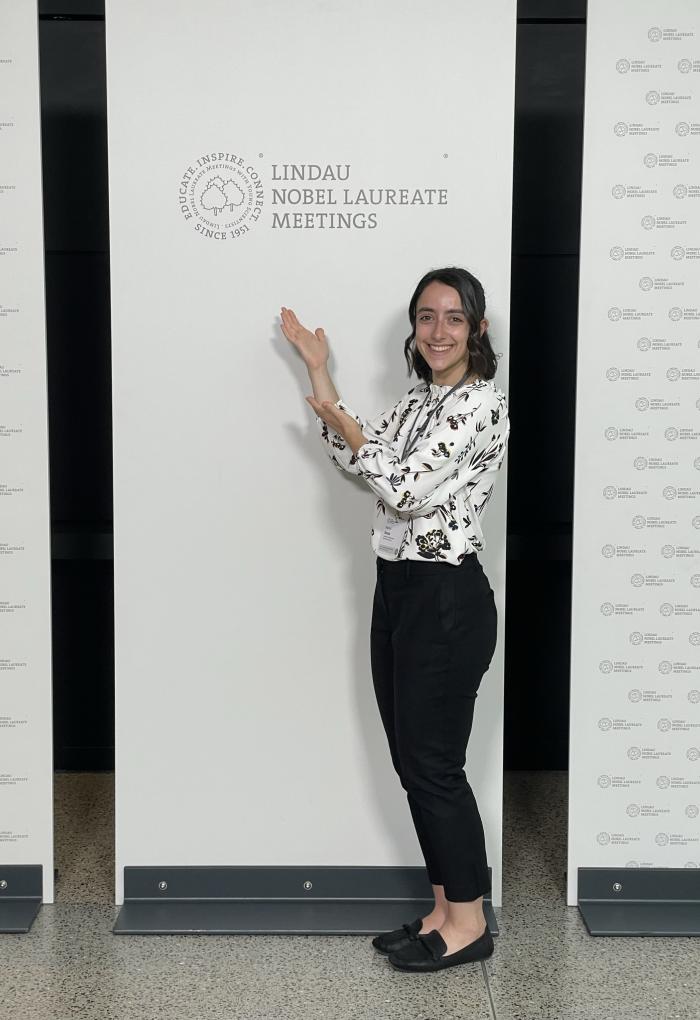
Sousa points to the sign for the Nobel Laureate Meeting.

Sousa attends the 72nd Lindau Nobel Laureate Meeting.

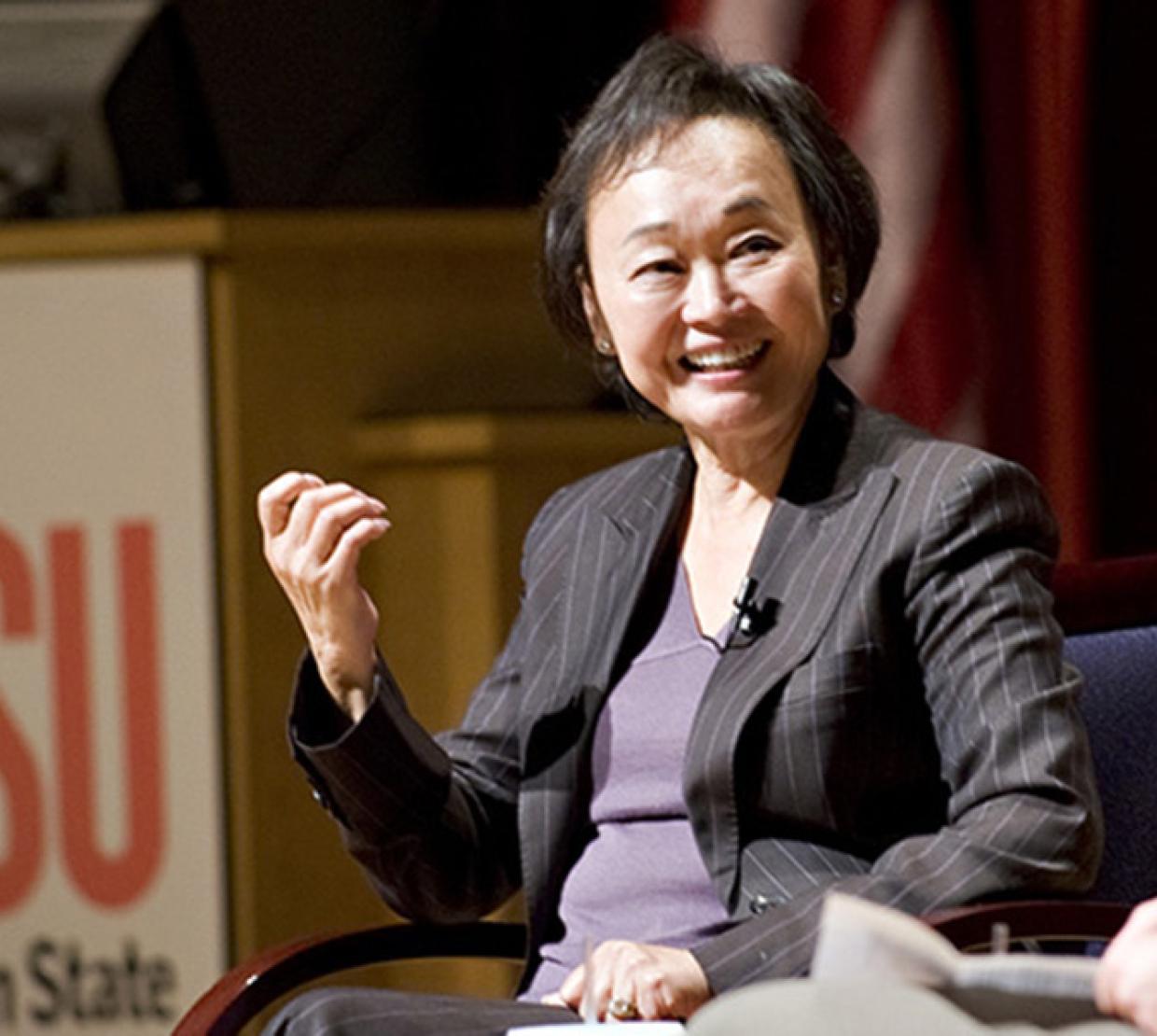
Peggy Cherng sits in a suit on stage giving a talk at an OSU event.

How Peggy Cherng used her analytical know-how to help build a restaurant empire

By Kevin Miller, ’78 for the Oregon Stater

The three years Peggy Cherng, ’71, spent in Corvallis powering through a four-year program in applied mathematics are a bit of a blur. A rainy, green blur.

“Mostly I remember rain, green and studying. It was raining a lot in Oregon. And Oregon was very green. And I believe one time I got poison oak,” said Cherng, the co-CEO of Panda Express. The company operates more than 2,300 restaurants and brings in $3 billion in annual sales. “But it is important to me that you know that I am grateful for the education I got at Oregon State.

“I did have fun sometimes. But I was working on my studies.”

Cherng has been twice honored as an alumna — in 2000 as an Alumni Fellow of the College of Science and in 2012 by being invited to give the College of Business Dean’s Distinguished Lecture.

Born Peggy Tsiang in Burma (now Myanmar), she moved with her family to China as a child. They eventually settled in Hong Kong. She did well in school, especially in math, and was eager to go to college.

“Most of the people in Hong Kong get their higher education overseas,” she said.

She ended up enrolling at tiny Baker University in Kansas in 1967. It didn’t take long for her and fellow Chinese student Andrew Cherng to notice one another.

The two became friends and fell in love. They planned to finish their undergraduate work as quickly as possible so they could go to graduate school together and get married. In the meantime, she decided to transfer to Oregon State for her bachelor’s degree in math.

Why?

“I didn’t have any friends there, so that wasn’t why,” she said. “It was a scholarship. I just went.”

At Oregon State, she loaded up on challenging classes. And for the next three years, the couple maintained their Kansas-to-Oregon relationship in an era with no Facetime, no email and no free calling plans.

“I don’t think we could afford to talk much,” she said. “At that time a long- distance call was quite expensive.”

Once she got her OSU degree, Peggy and Andrew reunited at the University of Missouri, where he earned a master’s degree in applied mathematics in 1972 before moving to the Los Angeles area to help his cousin run a Chinese restaurant. In 1973 Andrew and his father, a chef, opened a full-service Chinese restaurant of their own, Panda Inn, in Pasadena.

Peggy, meanwhile, quickly finished a master’s degree in computer science at University of Missouri and stayed on to earn a doctorate in electrical engineering in late 1974. She was a rising star, specializing in complex pattern recognition and predictive analytics programming. Her projects included making CAT scans more useful and developing complex battle simulators for the Navy.

The Cherngs married in 1975 and soon started a family, which grew to include three daughters — Andrea, Nicole and Michelle. While Peggy did cutting-edge programming and engineering for McDonnell Douglas and other companies, Andrew and his father worked against fierce competition to make Panda Inn the best Chinese restaurant in the area. Though weekdays saw her doing demanding work in the defense industry, Peggy worked at the restaurant on weekends.

“I was there in a limited capacity at first,” she said, laughing at the memory. “I could only do hosting, and I was not a good hostess. Not very efficient. I couldn’t make cocktail drinks.”

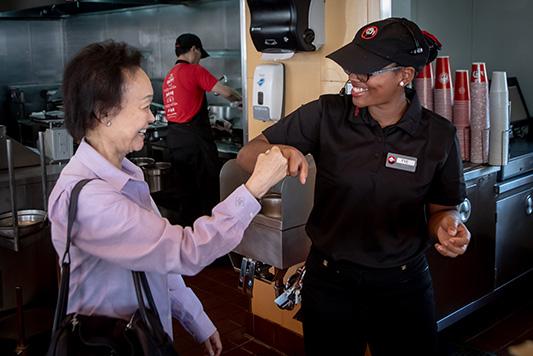
Peggy Cherng with a Panda Express employee.

By 1982, Panda Inn had a strong enough local following that the Cherngs decided to launch a fast-food spinoff, Panda Express, in a local mall the next year. Cherng greets an associate in Tampa, Florida. Today her company is the largest family- owned and operated Asian restaurant chain in the U.S., with more than 2,300 restaurants, 47,000 employees and $3 billion in sales. (Photo courtesy of Panda Restaurant Group.)

Peggy left her engineering career to handle the business and personnel aspects of the company, with Andrew focusing on growth and strategy.

Peggy is credited with creating one of the first purpose-built point-of-sale systems in the fast-food industry, as well as with many continuing innovations in personnel recruiting, training and motivation, including offering profit-sharing to the restaurant’s employees and promoting from within as much as possible.

In 1987, Panda’s chef, Andrew Kao, invented an orange chicken dish, and its popularity helped fuel rapid growth for the company. (The company sells a whopping 110 million pounds of orange chicken each year.)

It’s still Panda’s signature item, and among the places where it is consistently ordered is a Panda Express in the Memorial Union Commons at Oregon State.

What is Peggy’s favorite?

“Well,” she said, “I eat light. Some of the things I like to eat are tofu and eggplant, which are not exactly embraced by everybody who eats at Panda.”

What about orange chicken? She smiled.

“Of course. I do eat orange chicken because it’s our signature dish.”

Really? Like one bite per meal?

“No,” she said, laughing. “Two bites!”

The Cherngs continue to work as co-CEOs and remain active in the business in their mid-70s. Asked how they’ve maintained a successful marriage and a successful business together for so many years, Peggy said it hasn’t always been easy.

“We experience the same challenges as anybody else. You have to learn how to leverage each other’s strengths,” she said.

Part of what held them together during the early days, she said, was their common awareness that they were onto something new and different.

“No one else had a Chinese fast-food restaurant chain,” she said. “So it was all new. We were learning how to do it.”

When she’s not working, her favorite activity is to spend time with her family, especially her five (soon to be six) grandchildren. But work remains central.

Why not retire and kick back? She seems puzzled by the question because she continues to find joy in her job.

“Every single new step the company takes brings new things we must learn: more structures, more challenges, more organization to develop, something new to implement.”

For example, she’s working with others on the Panda team to use data analytics to help improve service and give local Panda managers clearer information on how they might support excellence among the associates (Panda’s term for employees) who work for them.

The Panda organization and the Cherngs as a family are active philanthropists, both through major gifts and via their Panda Cares foundation, which offers help ranging from food donations to college scholarships.

“The mission of the Panda Cares foundation is to support health and education of underserved children,” Peggy said. “To really make a difference, you need a focus.”

Among the Cherngs’ many gifts are support for the Cherng Family West Tower at Huntington Hospital in Pasadena and for OSU’s work promoting healthy children and families.

In addition to the challenges faced across the restaurant industry during the COVID-19 pandemic, Panda Express managers and associates were also subjected to incidents of racism fueled by a rise in anti-Asian sentiment.

“You cannot control other people,” Peggy said. “So, we focus on how we position ourselves. We are productive citizens in the communities we serve. You need a positive approach to hatred.”

No alumni magazine profile of a successful graduate would be complete without advice for those beginning their careers.

“I always say at the start that you have to believe in yourself,” Cherng said. “Also, you need to be curious, because only with curiosity can you learn and elevate and be better.”

She added: “And I believe engineering training and math training help the mind to think, especially when we face something uncertain and unknown to us.”

As for her own continuing education, it seems some friends have been taking her to school as she masters a new pastime.

“Recently I’m learning how to play mahjong,” she said. “But I’m a beginner, and sometimes as a beginner you have to pay what I call tuition. My biggest win is maybe $20, but my biggest loss is $40.”

Probably she can afford it, right?

“Yes,” she said, and then laughed. “I can.”

This story originally appeared in the spring issue of the Oregon Stater.

Man smiling at the camera. Part of a plant visible in the background on the left of the man.

Meet a Science Grad: Justin Ihara

By College of Science

The following interview is part of a series the College of Science conducted with some of our alumni. While their experiences and career paths vary widely, their passion for science and love for the College and OSU tie them together.

Justin Ihara

Major: Mathematics and Computer Science (’09)
Occupation: MES Architect, Axonics Inc.

Why did you choose to study at OSU?

I enjoy solving technically complex problems which seem to present themselves more often in science.

What led you to choose your major and career path?

My original intention was to become a math teacher. Later, after looking for a career change, I was reading a news article on the top 50 jobs in the U.S. There was a noticeably large number related to computer science, which led me to my computer science degree and current career that I am happy with.

How did the College of Science prepare you for your future career?

I learned more about how to approach problems, how to research them and how to collaborate with others to find solutions.

Describe your career? How are you making a difference?

I currently work with software systems that are responsible for the guidance, automation, quality and data capture for manufacturing equipment and components for genome sequencing. Genome sequencing has very widespread applications, from vaccine development to prescriptive cancer treatment to newborn genomic screening.

What might people be surprised to learn about your profession?

Software engineers still need to have people skills.

How were you involved in the OSU community?

I was president of my dorm, a member of the Honors College Council, a member of the Faculty Senate, in bowling club, judo club, and cycling club, volunteered for the bug zoo, tutored and much more.

What is one favorite College of Science memory?

I was part of a cohort of math students who were all taking upper-division math classes. We ended up spending a lot of time together, hanging out and studying, even on weekends. To this day we are still friends and have attended each other's weddings amongst other things.

Was there a particular professor or advisor who made an impact in your undergraduate career?

Dr. Lea Murphy and Dr. Harold Parks, both professors of emeriti, were very personable people that made very difficult subject matters a little bit more enjoyable and understandable. Shout out to Dr. Bryan Tilt, professor in the College of Liberal Arts, for interesting conversations.

What did you do for fun to de-stress from schoolwork?

I de-stressed by playing sports, watching OSU sporting events, spending time with friends and making the occasional trip to the Peacock or McMenamins.

If you could give a future College of Science student advice, what would it be?

It's never too early to start looking at jobs and job requirements for after college. Classes will give you plenty of knowledge, but you can certainly boost your marketability by additional independent learning that is applicable to your desired position.

Photo of a hand writing math equations on a chalk board

Q&A: How to prepare for a job in STEM

By Vrushali Bokil

Mathematics Professor and Associate Dean of Graduate Studies and Research

According to the U.S. Bureau of Labor Statistics (BLS), employment in STEM occupations is projected to grow more than two times faster than the total for all occupations in the next decade.

The Society for Industrial and Applied Mathematics (SIAM) interviewed Vrushali Bokil, Oregon State University mathematics professor and associate dean for research & graduate studies, for an online SIAM Careers Fair.

SIAM: Why are careers in STEM important?

BOKIL: STEM (science, technology, engineering and mathematics) careers include a wide range of academia, business, industry and government jobs. There are options in the fields of mathematics; computer, statistical and data sciences; engineering and architecture; life and physical sciences, as well as industrial manufacturing jobs; consulting, sales and managerial jobs.

These careers are important for educating society and producing basic research needed to solve complex systems-level problems such as climate change, food insecurity, health inequities, addressing pandemics, disease prevention and control, space exploration and cybersecurity.

STEM graduates engage in problem solving; developing new products to optimize productivity. Nearly every sector of business, industry or government has STEM graduates, particularly those trained in mathematics. Mathematics may be a small department, but jobs in this field are crucial. As mathematicians are trained in abstraction and generalization, they are prepared for solving the problems that don't yet exist.

Vrushali Bokil in front of shrubbery

Vrushali Bokil, OSU mathematics professor and associate dean for research & graduate studies

SIAM: What can you say about the job market for students graduating with STEM degrees?

BOKIL: In August, the National Association of Colleges and Employers (NACE) reported that the average starting salary for 2020 graduates was a little over $55K – 2.5% above that of the previous year. Among these graduates, those with bachelor’s degrees in statistics and applied mathematics majors were listed in the top ten highest average starting salaries.

According to the US Bureau of Labor Statistics (BLS), employment in STEM occupations is projected to grow more than two times faster than the total for all occupations in the next decade. Occupations in STEM are expected to grow eight percent by 2029, compared with 3.7% for all occupations. Jobs in the mathematical sciences – which includes data science, mathematics and statistics – are projected to grow the fastest, increasing 26.5% within this period.

SIAM: What are some differences between academic and industrial jobs? How can someone decide between pursuing a job in academia, industry or government?

BOKIL: There is considerable overlap in the duties of government labs, industry and academic researchers. On average, the primary distinction is dependent on the funding source, e.g., profit or grant.

In industry, the time horizon for a viable solution to be determined is usually much shorter than in academia, and typically the scope of the problem is more narrow. Communicating results involves group presentations and white papers more often than conference presentations and peer-reviewed journals.

Graduates who want to explore big, possibly unanswerable questions, would likely prefer academia. Those who just want the best or optimal answer and aren't too concerned about aesthetics or generalizations may prefer industry, and those in the middle may prefer government labs.

Graduates who don't enjoy teaching may not like working at a university, while those who dislike worrying about profitability may not want to be in business and industry jobs. International students should be aware that many national lab positions require permanent residence status or citizenship.

As people get older, what they like and dislike changes. Your first job may not be the job that you want, but it can provide you with critical experience to help you get there.

SIAM has a publication called the BIG jobs guide that is a very good source of information for business, industry and government (BIG) jobs. It covers what they are, the differences between them and how and what you need to prepare to interview for them.

SIAM: What are the best ways to sell yourself in our area of work? What is most valuable to employers?

BOKIL: To sell yourself you have to understand your core values, your strengths and weaknesses, your likes and dislikes and in general, have a work identity that you can grow. I think the best way to sell yourself is by being authentic and true to your core values. Self-awareness is critical to advocate for yourself based on your strengths and pursue professional development to continually grow in areas of strength & weakness.

Employers in BIG jobs are looking for certain core competencies in new hires. An important competency in a new hire is teamwork; the ability to collaborate in a diverse team. As a student, if you get the opportunity to participate in research or team teaching classes, you will significantly build this competency. Another competency is the ability to communicate effectively and inclusively across different disciplines. Employers value critical thinking ability, a growth mindset, leadership skills, resilience and grit. Participating in internships can make a huge difference for your job prospects.

A third is an understanding of power and systems – for example understanding systemic issues that cause inequity and proficiency in anti-racist policies to address these issues. Job seekers should know that diversity statements are now part of the application package for many jobs, especially in many universities. Diversity, equity and inclusion initiatives are critical in the workplace and have taken on a new sense of urgency in the need to diversify the workforce and create equitable, welcoming and inclusive workplaces. Look for employers that view applicants holistically and that make it easy for employees to be their whole selves at work.

SIAM: What makes a resume stand out?

BOKIL: A resume that has exactly what the hiring organization is looking for and that they can discern with very little effort will stand out. Read the position description carefully, know what the qualifications for the job are, and if you have these qualifications, make sure to showcase them in your resume. In some cases, even if you don’t have the exact qualifications asked for, you may have skills that are transferable. Make sure to indicate how your skills transfer to the qualifications that the organization is looking for.

Don’t be too wordy – these organizations are evaluating many many applicants. Don’t give information that is not asked for or is irrelevant to the position, even if it sounds great, unless it is transferable in some way to the position. Finally, the resume should look professional. Make sure there are no typos, because these can feed into a reviewer’s implicit bias.

SIAM: What should people do before heading into an interview or career fair to be best prepared?

BOKIL: Think about projects you have worked on, and be ready to enthusiastically describe your contributions. If you haven't yet had research or internship experience, discuss an extension to a homework problem that you may have pursued on your own, or a research paper you have enjoyed reading. Think about potential generalizations to problems you've studied; if you are asked about a problem that you have not worked on, try to make a connection to what you are familiar with. Remember, they are likely looking for someone to work with them to solve problems that don't even exist yet, and could use your expertise.

SIAM: What resources exist out there to learn more about career fair and interview prep?

BOKIL: Start with your academic or research advisor and resources in your department, college and university career centers. “The Professor Is In,” by Dr. Karen Kelsky, academic career advisor and consultant, is a great resource, as well as articles in Inside Higher Ed and The Chronicle of Higher Education. Look on professional society websites like SIAM, Mathematical Association of America, American Mathematical Society and the Association for Women in Mathematics, to develop a professional network or become a part of local student chapters of these organizations.

SIAM: Any other career prep or interview advice for those in the job market?

BOKIL: Attend conferences, develop a professional network and be on the look out for school or affiliation connections – same Ph.D. institution as your advisor, for instance! Don’t be afraid to ask for help. Send emails to people who will be at a conference you’re attending and ask for five minutes of their time, or contact recent alumni and ask about their jobs. Ask your internship or research mentor for suggestions!

For those not yet on the market, find an internship or conduct summer research. Get to know more senior students so that you can reach out to them later.

For more advice on preparing for a career in STEM from Bokil, watch her joint presentation at the SIAM Career Fair and read Inside-Out: A value based approach to industry job hunting, published in SIAM News, January/February 2019.

Read more stories about: mathematics, career outcomes


A young man hugging a German shepherd dog.

Math alumnus fast-tracks degree to actuarial success

By Grace Peterman

A good job and a big yard keep James Hansen and his canine pal happy.

James Hansen (Mathematics ’20, Actuarial Science Minor) was in 8th grade when his aunt foretold his future career. “She said, ‘you’re good at math, you should be an actuary,’” he recalls. “I was like, ‘Oh, what’s that?’”

Less than a decade later, Hansen has found a niche as a full-time Actuarial Analyst at GovInvest, aiding government agencies in their fiscal planning. He credits his success to determination and decisiveness: “I stuck to the schedule and hammered it out,” he said of getting an education.

When Hansen entered Oregon State, he was already well on his way to achieving that goal. He earned an associate’s degree at Clackamas Community College while still in high school, taking over 100 credits of general education and advanced math coursework.

Oregon State welcomes and encourages students to earn college credit prior to enrollment and accepts credit earned through a wide variety of options. Our Degree Partnership Program also allows students to enroll at both OSU and any Oregon community college concurrently, minimizing overall college costs and allowing for more flexibility in course scheduling.

For Hansen, this early investment of time and energy allowed him to jump into 300-400 level courses when he came to Oregon State, finishing his B.S. in just two years.

Plugging in to actuarial science

Hansen attended Canby High School outside Portland, where his soccer coach happened to be friends with Oregon State’s Actuary in Residence Manny Hur. Hansen was able to meet Hur for a job shadow and career counseling session. They chatted for a couple hours, “and that was basically the decision right there,” he said of choosing Oregon State.

Once at the College, Hansen found his instructors helpful, accommodating and inspiring — even when it came to graduating during the pandemic.

Mina Ossiander was just very real with it,” Hansen said of the Professor of Mathematics’s probability courses. “I loved her. I think that there are some professors out there that act like their course was your whole life, but Mina was not that person.” When classes went remote due to COVID, Hansen said Ossiander was respectful of students’ changing needs and challenges in a time of unprecedented instability.

He was also impressed by how Assistant Professor of Statistics James Molyneux handled the transition to remote coursework. “I had him the only term I took online, he was amazing, again just super down to earth, really good speaker, great at teaching, and encouraged conversation between students," Hansen said. “I’d say that online class [Statistics 413] was the best-set-up of any class I took.”

Finishing his degree in two years kept Hansen busy, and biking to class allowed him to build exercise into his schedule. Corvallis and Oregon State are ranked nationally for bike-friendliness, and 30% of Oregon State students opt to bike to campus.

Finding a niche in a small startup

Through participation in the College’s Actuarial Science Club, Hansen found an internship with a large health insurance company right after graduation. While the predictability of working there was convenient, Hansen likes the flexibility and variety of his current position. At software startup GovInvest, “I get to have a lot more impact and say than I would at a larger company,” he said.

Based in Portland, GovInvest advises public institutions and private companies in their pension and benefits planning. “It’s very niche,” said Hansen of his work helping government agencies interface with their employees. “Say a firefighter wants a health benefit when they retire. The city’s not going to know right off the top of their head, ‘oh this is the amount of money we need to have saved up by the time they retire to meet that liability.’ Our work makes it so that there can be a conversation there without just guessing. It provides certainty in very uncertain circumstances.”

Hansen said he likes the non-traditional nature of his work, and the leadership opportunities afforded by running with a small team. “It’s a rewarding accomplishment to see how everything kind of lines up in the end,” he said.

Embracing stability and commitment

What Hansen finds most fulfilling about his work is the freedom it gives him to live a life he loves. Hansen and his wife met in high school, got married in college and recently bought a house together in Molalla. Having their own space with a yard for their dog is a dream that was worth the time and hard work it took to make it happen.

One of the resources that was integral to their success as a young couple in college was the Supplemental Nutrition Assistance Program (SNAP) offered through the Department of Human Services. Hansen said the decision to apply was a game-changer: “we were living off, like, ramen before,” he joked. “And then suddenly we could afford real food!” He encourages students who qualify to take advantage of this program. Assistance with eligibility questions can be found through the OSU Human Services Resource Center.

All along, finding the path to success for Hansen took trust, discipline and a series of decisions — from taking those advanced math classes back in high school, to getting married at 19 and beyond. Hansen said a love for certainty and stability have motivated him along the way.

Yet sometimes college students get stuck in trying to make decisions that will bring them the perfect future they picture — especially when choosing a major. Hansen said getting a degree is sometimes less about making the perfect choice and “more about showing you can just commit to finishing something.” For students wavering between two great options, “just pick something,” he said. “Make a decision, and if that decision turns out not to be the right one, then switch it up.”

Subscribe to Career Outcomes