Biochemistry & Biophysics

Biochemistry & Biophysics

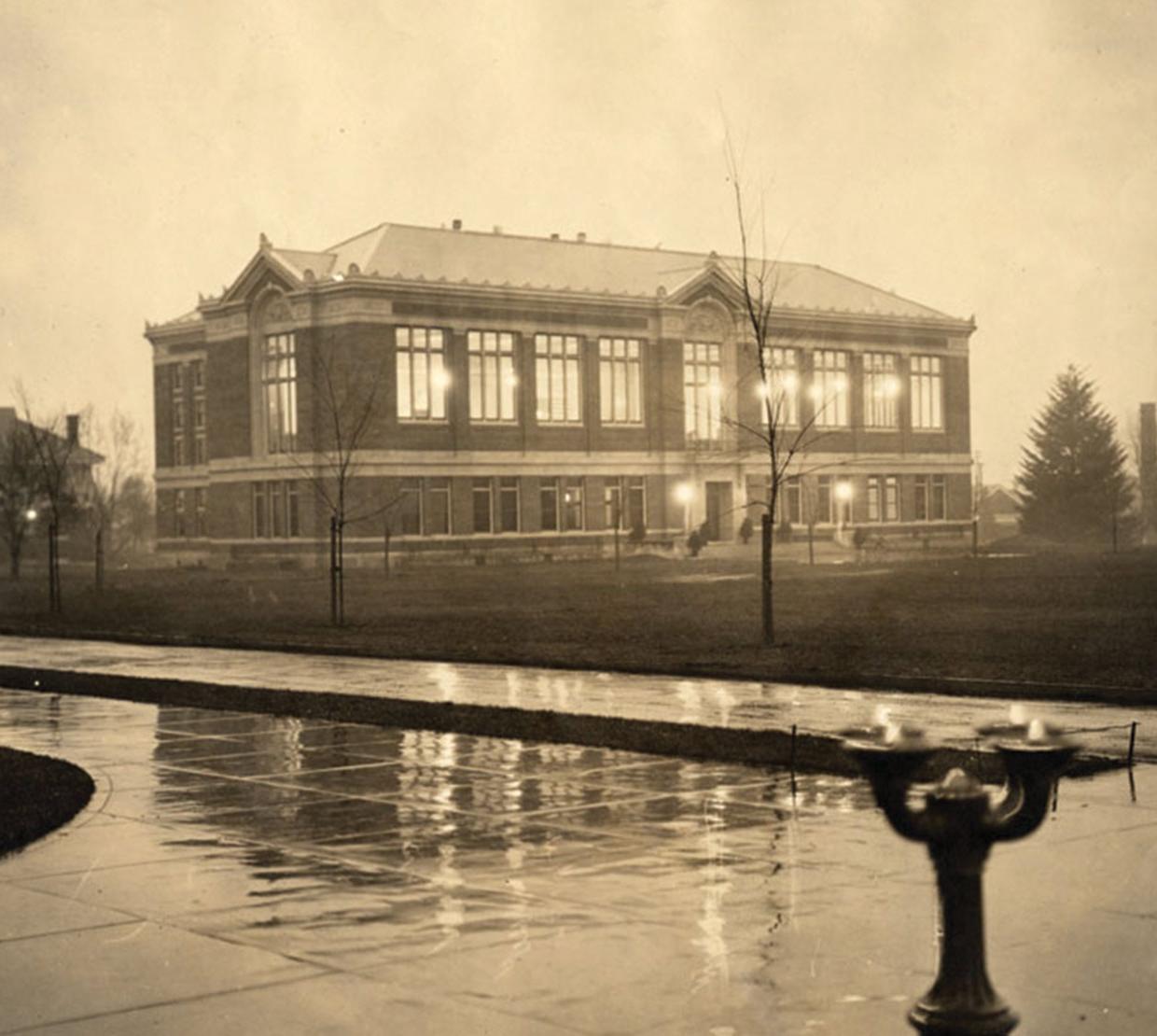
Antique photo of Kidder Hall on a rainy afternoon

Oregon State Science: The many “firsts” in 150 years

By Katharine de Baun

Kidder Hall, the Oregon Agricultural College Library, 1919

Note: this article is part of a series on the distinguished tradition of scientific research pertaining to ocean and space to mark the occasion of Oregon State’s 150th anniversary. Read more: 150 years of science for sea and space (Introduction), On the shoulders of giants, The significance of OSU’s sea-, space-, sun- and land-grant designations.

Mathematics and science have been at the heart of Oregon State University since its designation as a land-grant college in 1868. For example, early records show that a liberal arts curriculum at OSU (then Corvallis College) included three years of mathematics along with a rigorous course of study in Latin and Greek. Mathematician Joseph Emery was one of three faculty in the first decade of the College’s founding. From its earliest days, science at OSU has supported gender equality and wider access to education. In 1890, Corvallis College was one of just three land-grant institutions in the nation to offer scientific courses to women.

Today, mathematics, physics, chemistry, biology and other fundamental sciences form the basis for some of OSU’s most innovative and advanced research and academic programs. The sphere of influence that fundamental science wields at the university is vast. It permeates and shapes 
every discipline from agriculture to oceanography, atmospheric sciences, business, art, history and engineering while creating an intricate blueprint for the future.

The College of Science is proud to have pioneered many “firsts” in its 150-year history:

1868: Science starred in the land-grant college’s first collegiate-level curriculum, with a general “Scientific Course,” “Geology of Oregon,” and courses in chemistry considered “the cornerstone of Scientific Agriculture.”

1870: Corvallis College’s first class of three, one woman and two men, all graduated with bachelor of science degrees, the first granted by a state-assisted college in the western United States. One of them, Robert M. Veatch, gave the College’s first valedictory address titled “Utility of Science.”

1922: First radio transmitter on campus was built by physics professor Jacob Jordan.

1935 Three of the four first Ph.D. recipients at OSU were in science: Herbert L. Jones in physics, Alfred Taylor in zoology and Karl Klemm in chemistry.

1941: First woman to receive a Ph.D. at OSU was Chung Kwai Lui, who emigrated from China to earn a doctorate in physics. She was involved in the top-secret Manhattan Project to develop the first atomic bomb. Her legacy lives on through the Wei Family Foundation Scholarships.

1957: Math professor Arvid Lonseth was instrumental in bringing the first electronic computer to campus, the giant, room-sized Alwac III-e, used for research in mathematics and science. He inspired his student Judith Allen to become the first and only woman in the first computer programming class on campus. She became a pioneer in the 1960s computer industry, driving around Oregon in a bread truck converted into a computer lab, building and selling computers.

1957: Chemistry professor Wendell Slabaugh, a popular teacher who broadcast his chemistry class on TV, could lay claim to being OSU’s first long-distance educator.

1972: Harold J. Evans, professor of plant physiology and biochemistry, was the first OSU faculty member elected to the National Academy of Science (NAS). Two of the three NAS members at OSU today are in the College of Science.

1984: Alumnus Milton Harris (’26) established the first endowed faculty chair at OSU: the Milton Harris Chair of Materials Science.

1987: Microbiology alumnus Knute Buehler (’86) became OSU’s first Rhodes Scholar.

1993: The First MacArthur Fellowship at OSU was awarded to marine biologist Jane Lubchenco for her foundational contributions to marine conservation biology, environmental research and policy.

2009: Chemist Mas Subramanian discovered the first inorganic blue pigment in more than 200 years.

2017: The first-ever 3-D virtual microscope developed and launched by biologist Andrew Bouwma, Ecampus and others won three national awards recognizing innovation in educational technology and bringing the lab experience to online students.

Read more:

Science at OSU has always been a trailblazer, continuing a tradition of outstanding ocean and space research.

The College of Science shines a light on some of the giants who have made ground-breaking contributions to the scientific enterprise.

Find out what it means for OSU to have Land-,Sea-, Space- and Sun-Grant designations.

star icon above cityscape texture

Recognizing outstanding achievements: 2017 Alumni Awards

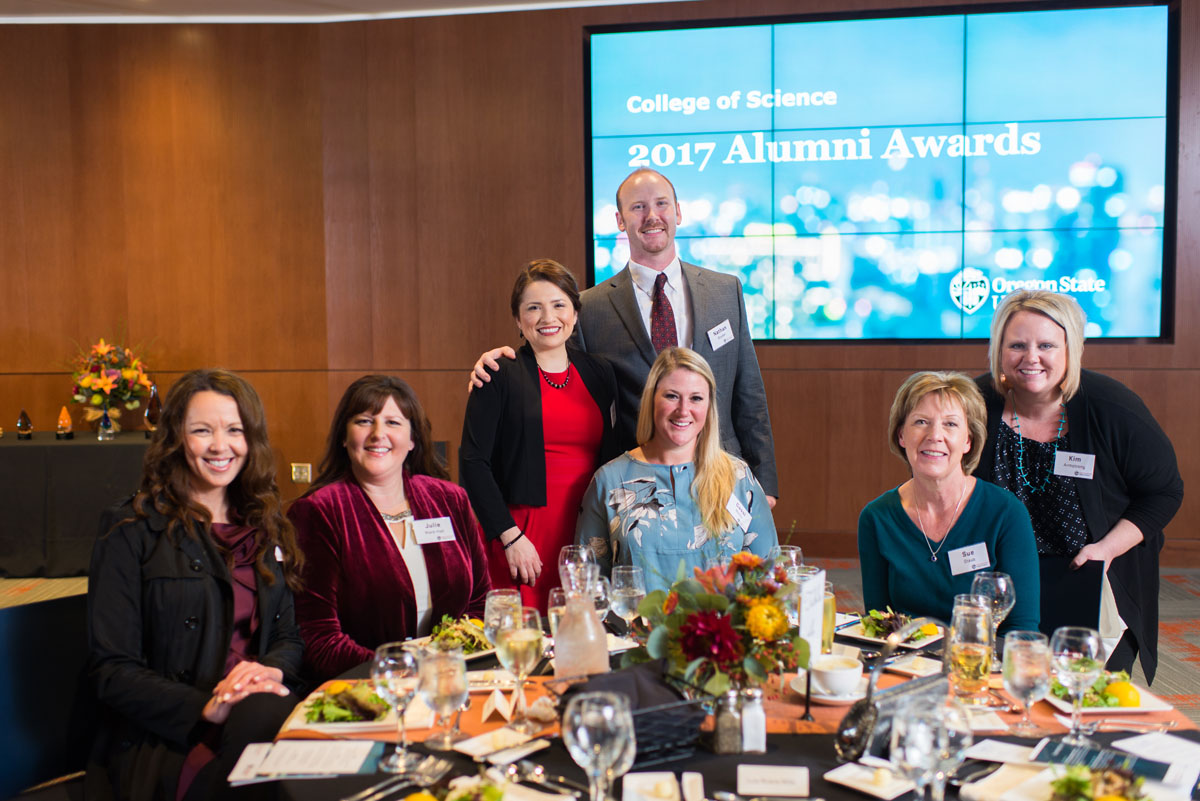
College of Science 2017 Alumni Award recipients

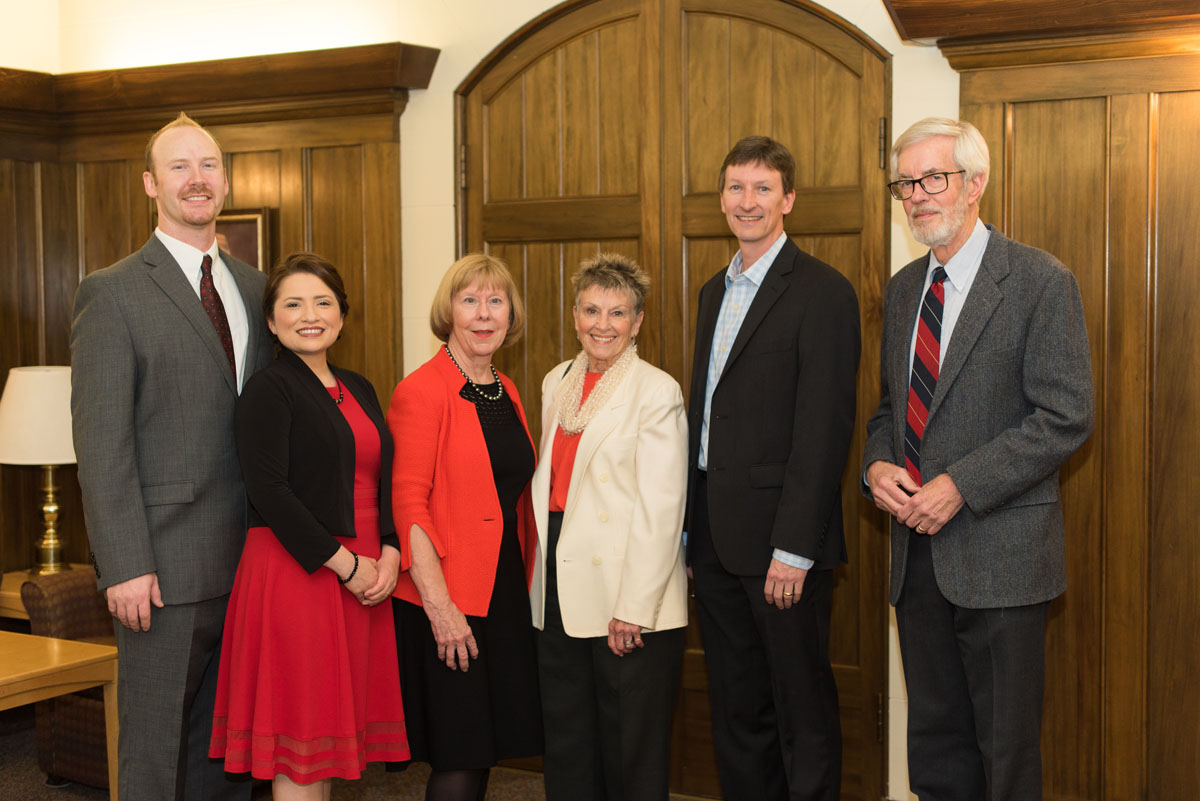
The College of Science is proud to announce its 2017 Alumni Award recipients: Christopher Mathews, distinguished emeritus professor of biochemistry and biophysics, Lifetime Achievement Award in Science; Kay Merrill and Lee Sickler ('90) of the Merrill Family Foundation, Distinguished Service Award; Suzanne McGrath ('70), Distinguished Alumni Award; and Luisa Snyder and Nathan Snyder (both '09), Young Alumni Award.

The awards publicly recognize alumni or friends of the College of Science for distinguished professional and personal accomplishments and for exemplary contributions to society that bring credit to the College as well as the University.

"I am delighted to honor these exceptional alumni and friends who have made invaluable contributions to their professions, to society, to the College of Science and to Oregon State University," said College of Science Dean Roy Haggerty.

"They have enriched our communities here in Oregon and beyond through their passion for science and education and have brought honor and distinction to the College of Science and the University."

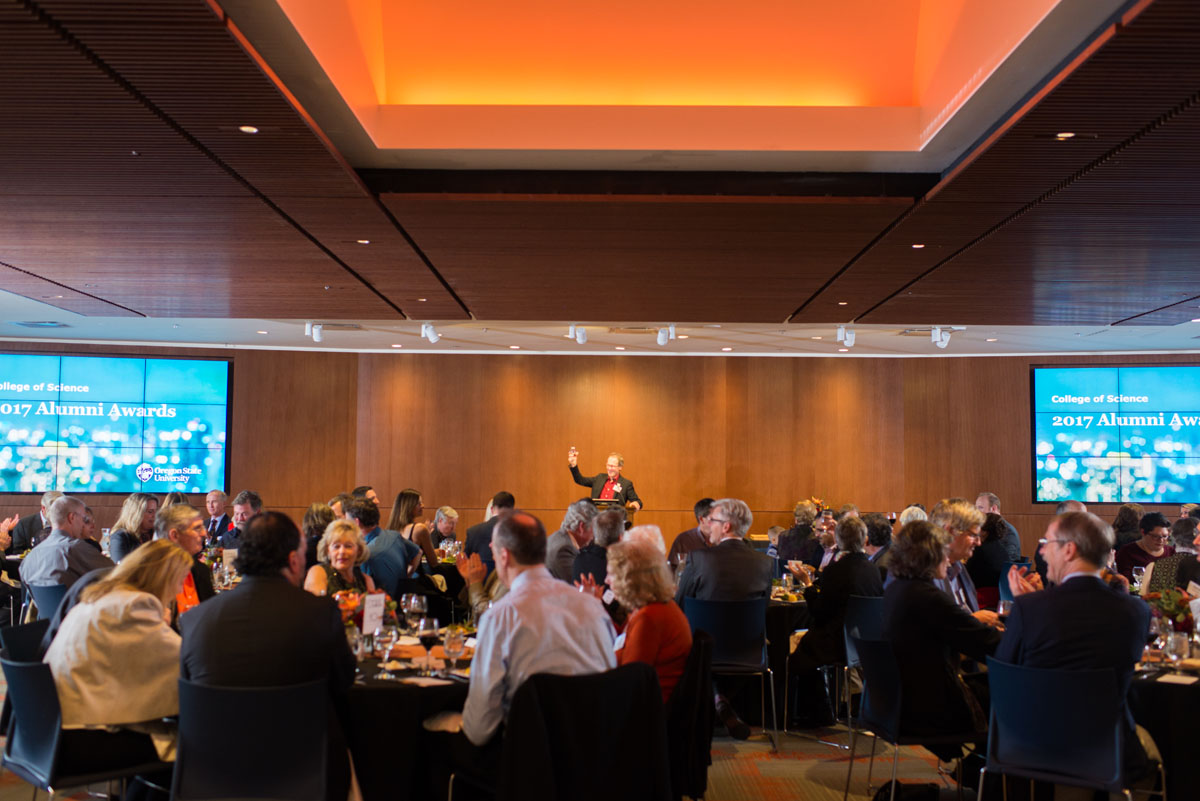
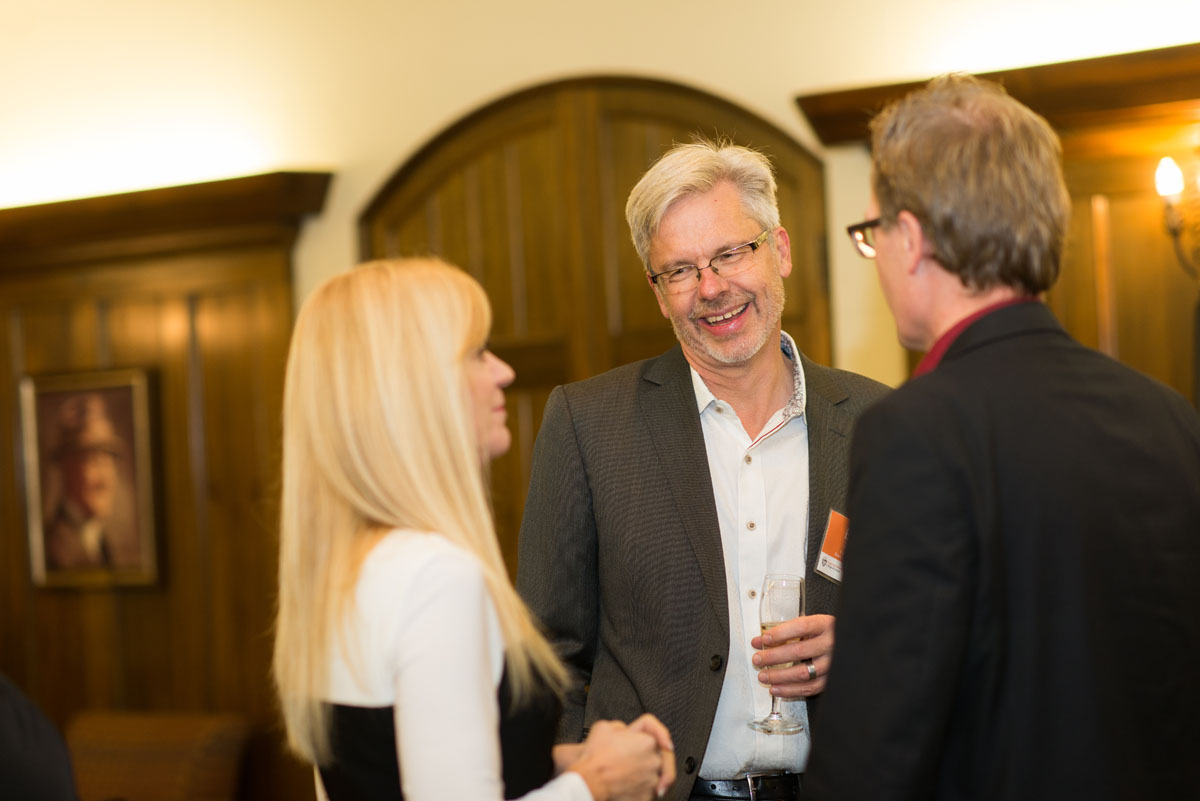
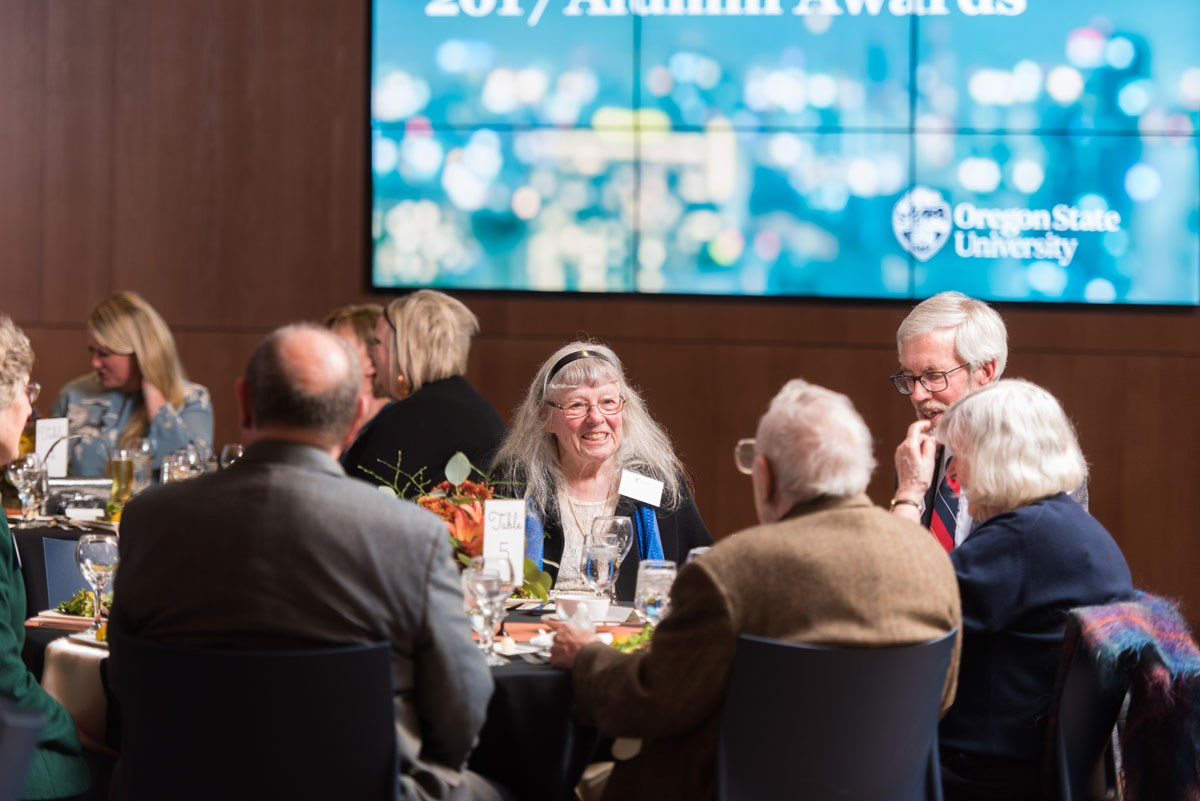
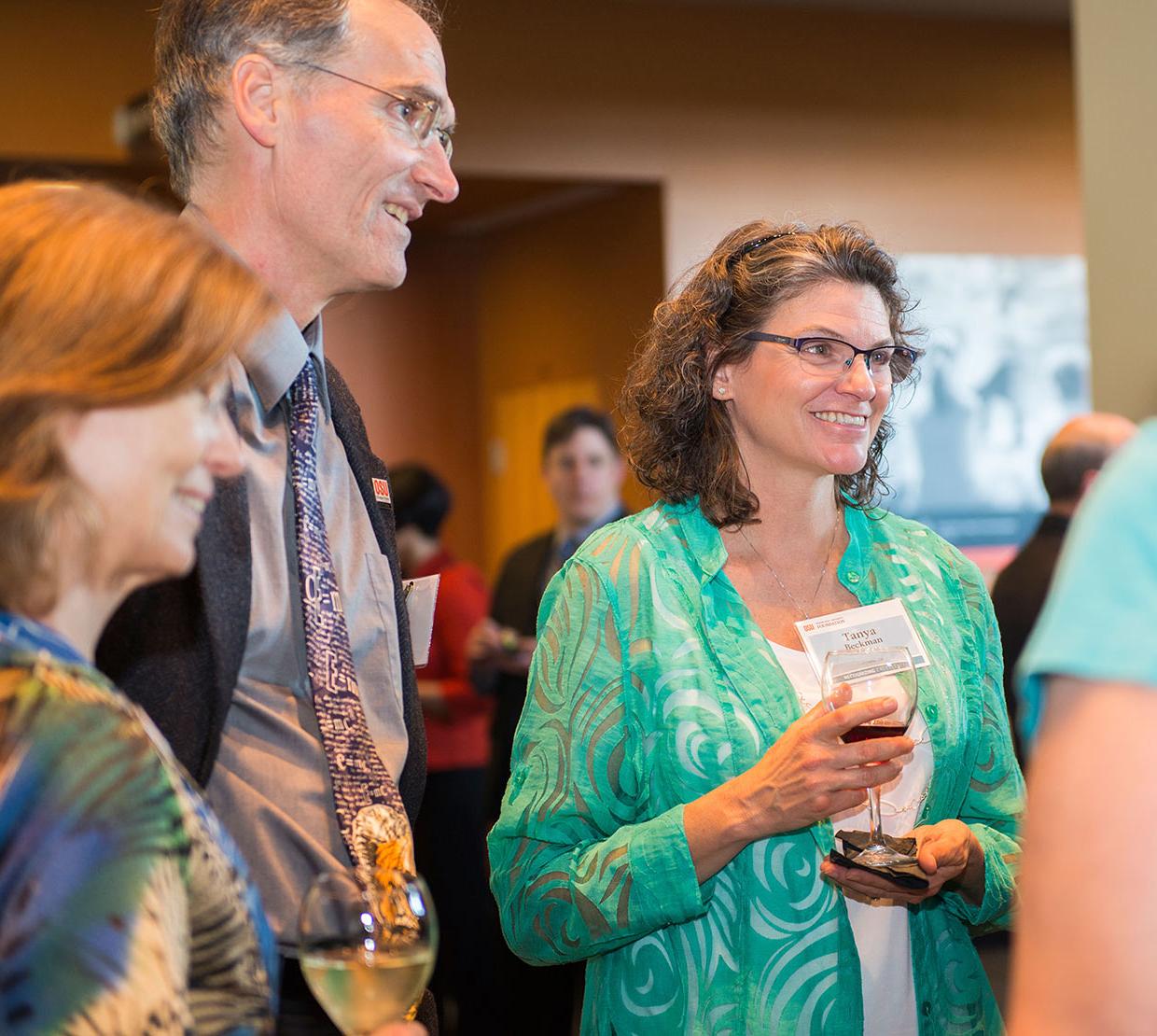
The College celebrated the accomplishments of these distinguished individuals with a gathering of invited guests comprising faculty, campus leaders, students, alumni and friends at its annual award ceremony and dinner at the Memorial Union's Horizon Room on November 17.

Congratulations to these outstanding alumni and friends of the College for their scholarship, leadership and service to science at Oregon State!

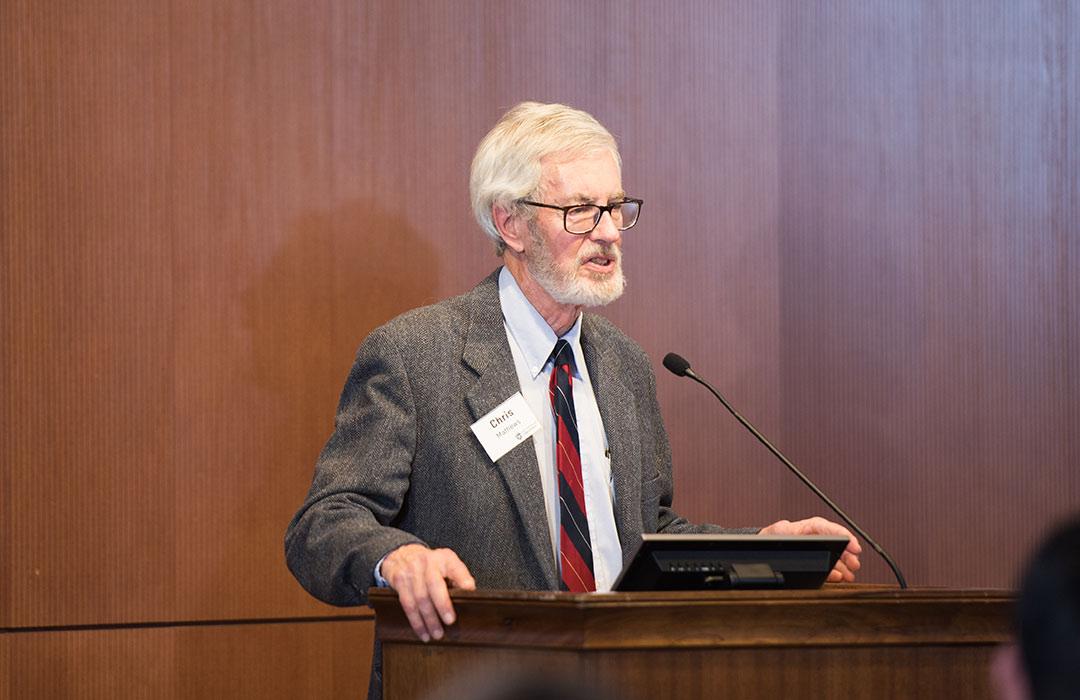
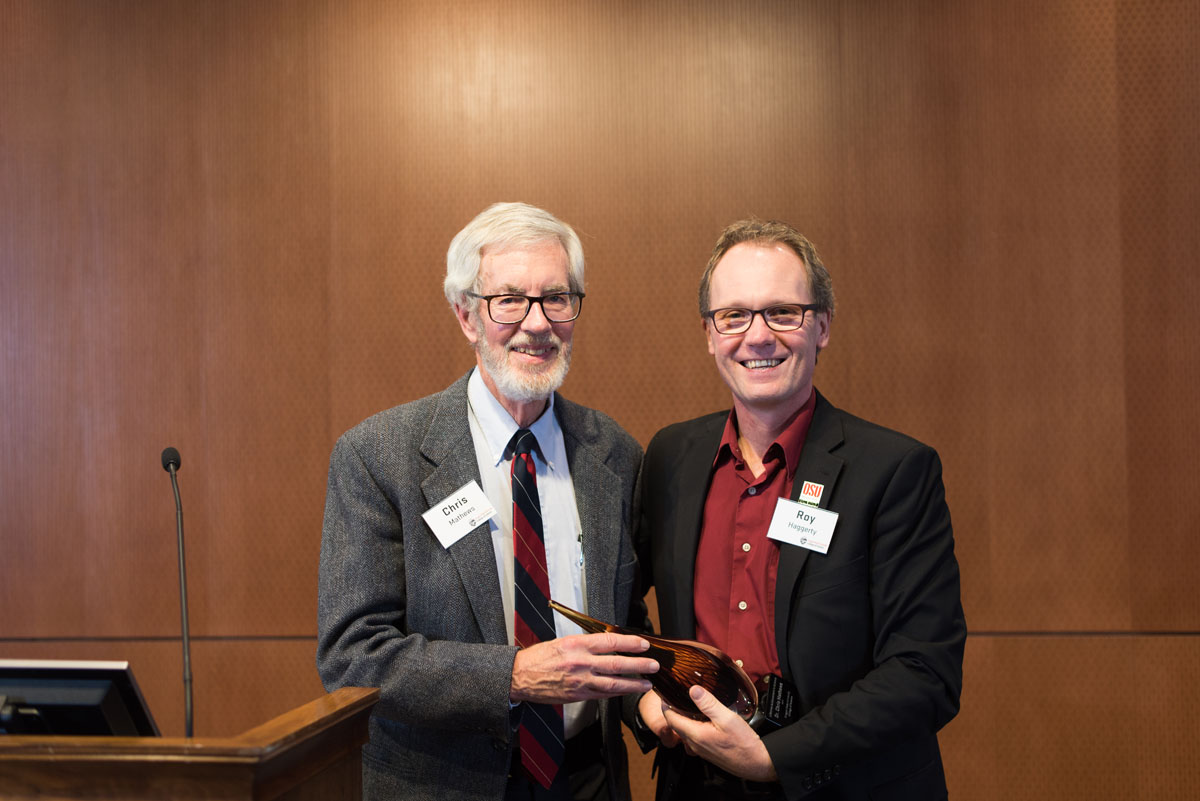
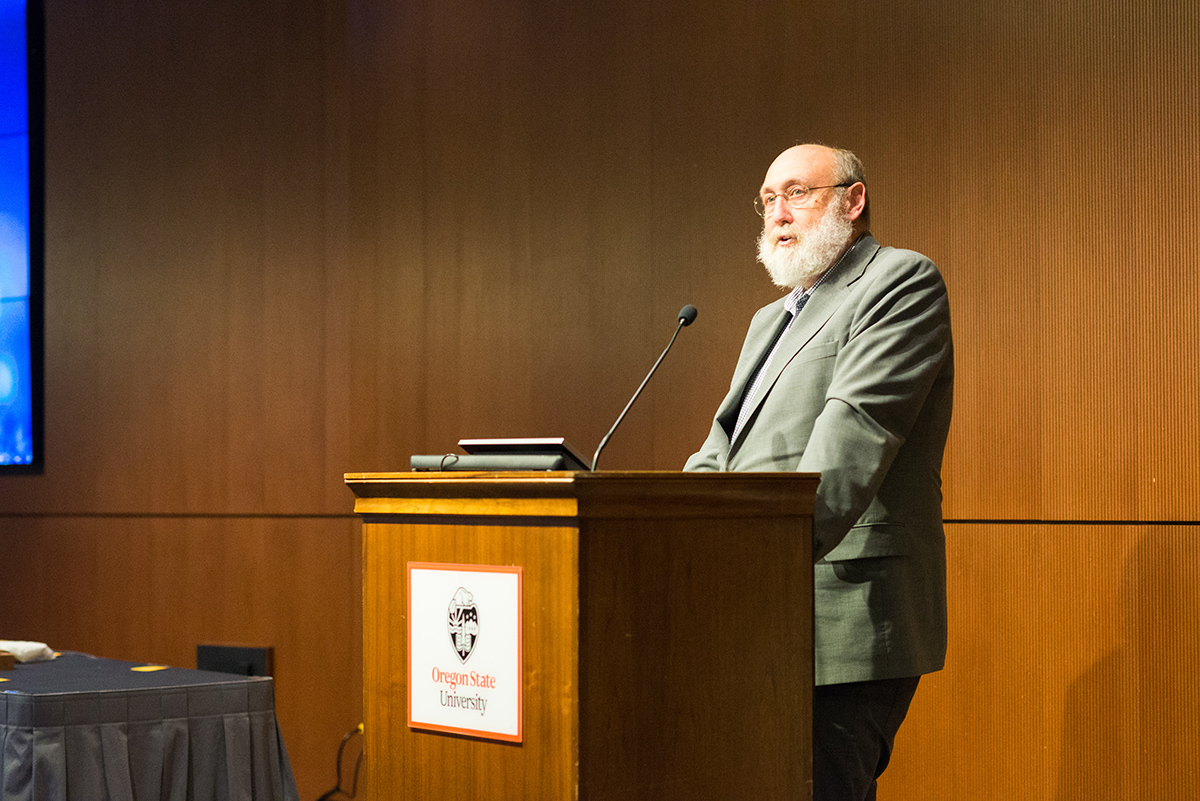
Christopher Mathews talking behind podium

Christopher Mathews, distinguished emeritus professor of biochemistry and biophysics

Lifetime Achievement Award

Pioneering biochemist Christopher Mathews has been one of the most distinguished scientists at Oregon State since his arrival here in 1977 as Chair of the Department of Biochemistry and Biophysics. From advancing the study of DNA synthesis and replication to groundbreaking research in nucleotide and coenzyme metabolism and nucleic acid enzymology, Mathews has played a leading role in establishing the reputation of Oregon State University as an important center for molecular genetics. He was instrumental in the founding of the Center for Genomic Research and Biocomputing (CGRB), which today facilitates genome-enabled and data-driven research in the life and environmental sciences at OSU. Always in the thick of scientific exploration and collaboration, Mathews and his 35 Ph.D. students, postdocs, research assistants and 150 undergraduate students have explored looming questions in the field of regulation of DNA precursors and enzymology.

Read more about his incredible journey as a researcher, teacher, department chair and lifelong scientist.

Chuck and Kay Merrill with Ed Ray taking group photo at University Day

Merrill Family Foundation, created by Kay Merrill and her late husband Chuck Merrill ('63)

Distinguished Service Award

The Merrill Family Foundation created by Kay Merrill and her late husband Chuck Merrill ('63) has been the single most impactful scholarship in the College of Science. Since 2006, the Foundation has granted over $1 million for 544 scholarship awards. Son-in-law Lee Sickler ('90) is a dedicated steward of the Foundation and supports generous scholarships for students in biology and the geosciences.

Read more about the inspiring legacy they are creating through the Merrill Family Foundation.

Suzanne McGrath in front of cityscape view

Suzanne McGrath ('70), math alumnus

Distinguished Alumni Achievement Award

After graduating with a degree in mathematics, McGrath charted an ambitious career path that led to her becoming President of Vision Capital Management, Inc., an investment advisory firm she founded 18 years ago with her daughter. McGrath and her husband, math alumnus Bernie McGrath ('70, '74), have generously supported OSU across the Colleges of Science, Engineering and Business to athletics.

Read more about Suzanne McGrath and the many contributions she has made to her profession and to OSU.

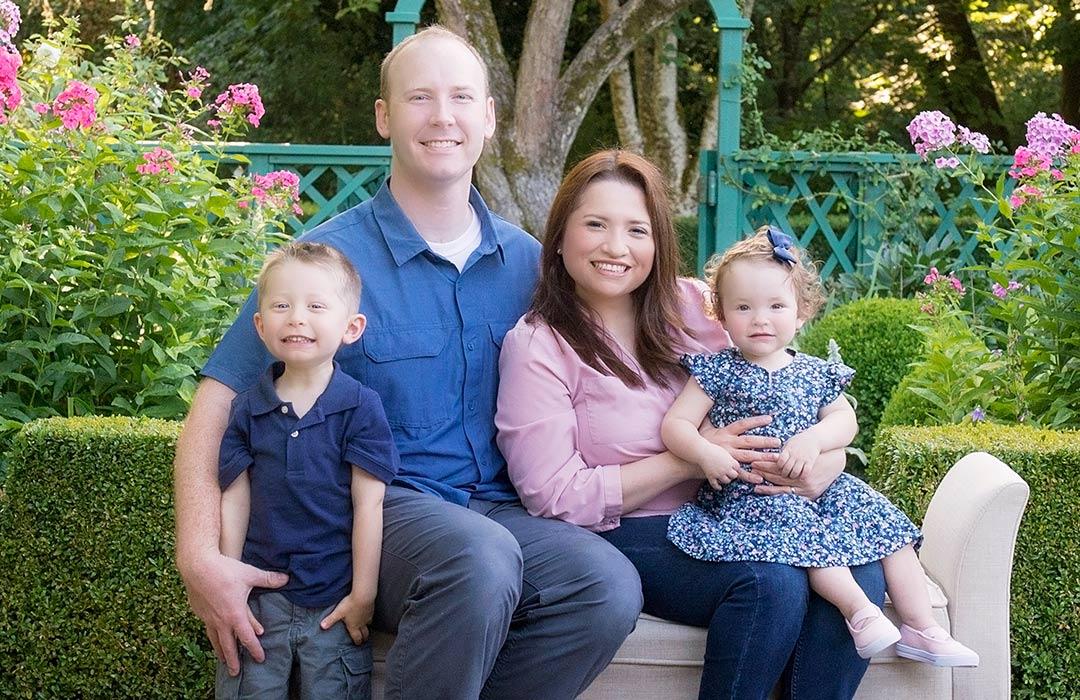
Snyder family sitting in garden

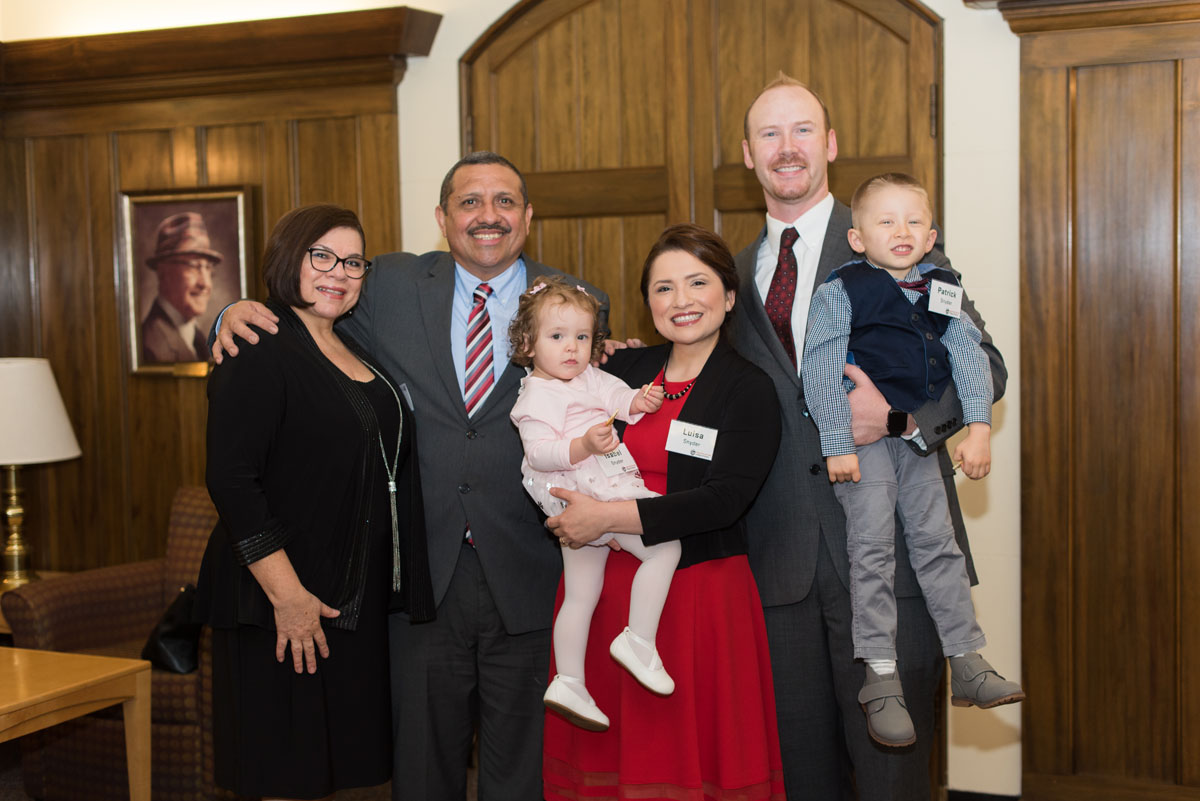
Nathan Snyder ('09) and Luisa Snyder ('09), biology graduates

Young Alumni Award

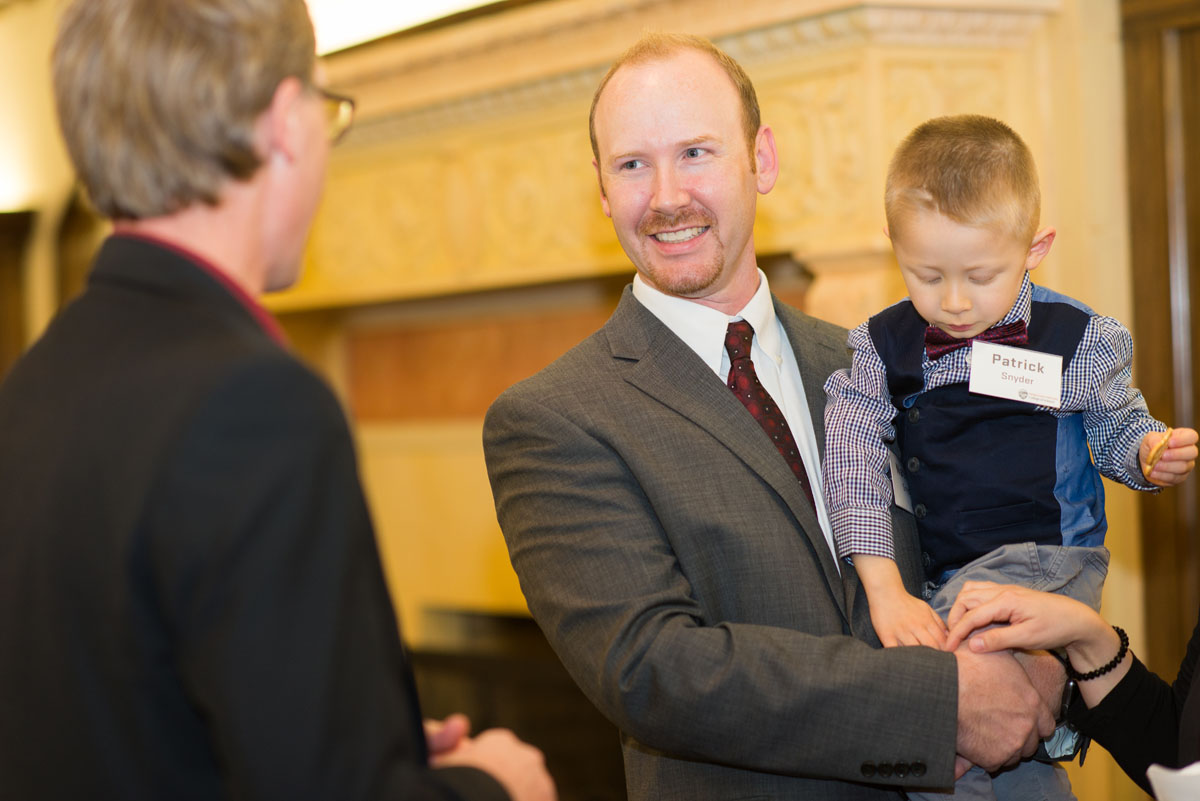
Biology graduates Nathan and Luisa Snyder have attained some cherished dreams early in their careers as medical professionals. Owners of two leading dental practices in Salem, Oregon, the Snyders are thrilled to work together as a team and provide top quality patient care. Having excelled in their academic careers at OSU and in medical school, the Snyders are now building up a strong reputation in Oregon.

Read more about how dentists Nathan and Luisa have made their mark through love and determination.

Alumni Awards Gallery

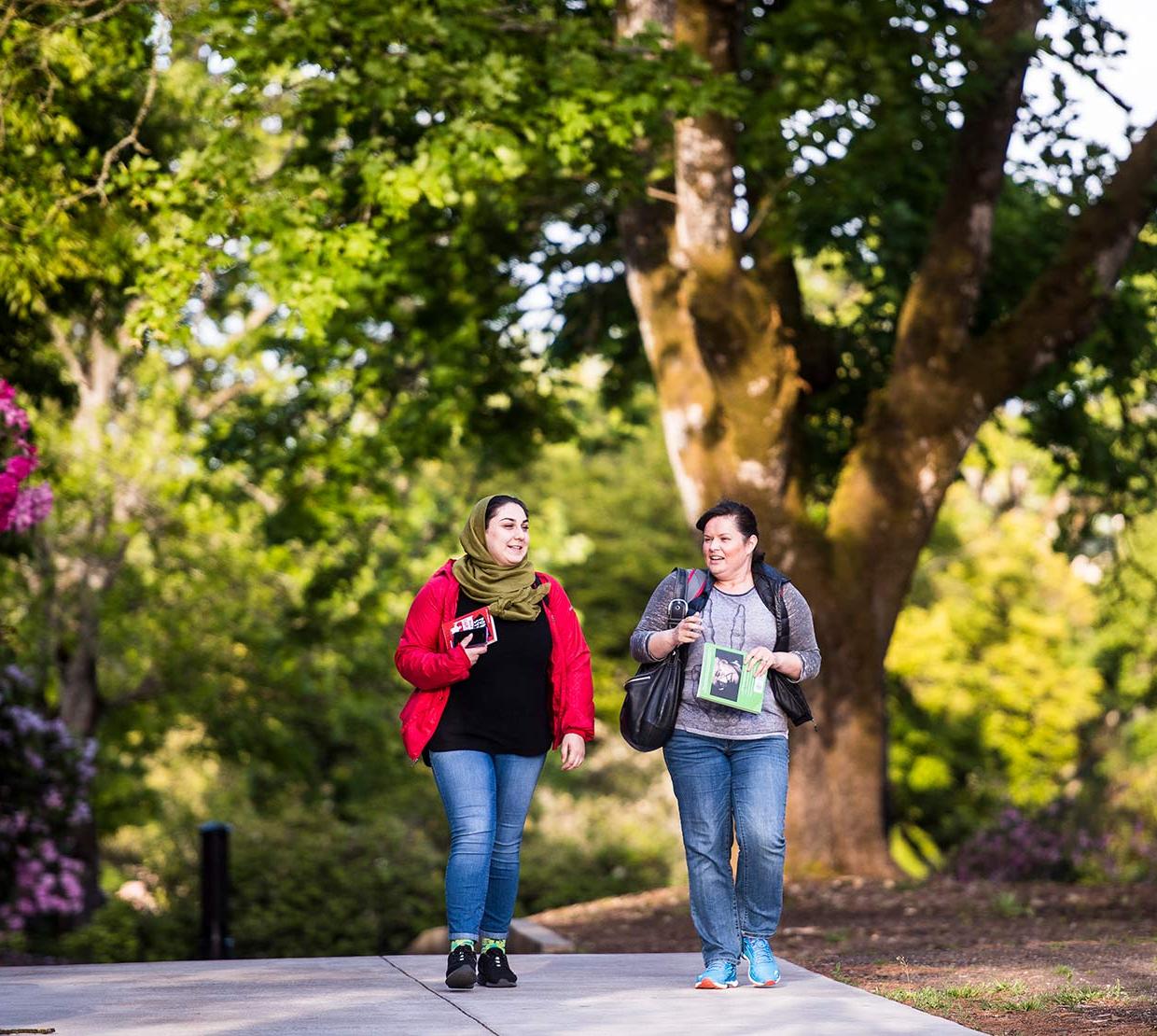
Two female students walking through campus in front of tree

Meet our Class of 2021

By Srila Nayak

Class of 2021

In recent years, the College of Science has enhanced support for underrepresented minority students and first-generation students and increased enrollment of high achieving students (with a GPA of 3.5 and higher). The demographics of the class of 2021 show impressive gains in all these areas.

This fall, the College welcomed 696 new students, a huge increase of 31 percent from last year's incoming class. Twenty-five percent, or 173 first-year students, indicated they are first in their family to attend college and 23 percent are underrepresented minorities. The College is thrilled to welcome the highest ever number of high achieving students in its incoming class: 37.6 percent!

More than half of first-year science students, or 570, receive scholarship support. While this financial support has no doubt helped to attract and inspire top science students, the numerous opportunities and support for undergraduate research in labs across and beyond OSU have also attracted many talented students to the College.

Students sometimes start conducting research in their first year of college itself, supported by awards such as the SURE Science scholarship program. The latter offers students financial support for summer research across campus that can foster meaningful, scholarly connections early in their academic careers and help define their professional career path.

The increase in student diversity points to the strength of campus-wide science, technology, engineering and mathematics (STEM) programs such as LSAMP (Louis Stokes Alliance for Minority Participation), OSU STEM Leaders and SACNAS (Society for the Advancement of Chicanos/Hispanics and Native Americans in Science), which help to connect and fuel students interest in science through workshops, peer mentoring and research experiences helping them succeed both on campus and in their future professions.

"I am delighted to welcome the class of 2021 to the College of Science at OSU. I hope they take every opportunity to expand their professional and intellectual horizons in science. Our faculty and advisors are dedicated to student success," said Roy Haggerty, dean of the College of Science.

Overall fall term 2017 enrollment at OSU (which includes the main Corvallis campus, Ecampus and OSU-Cascades in Bend) grew 1.9 percent from last year, while enrollment at OSU's main campus in Corvallis continued to be stable. University-wide the number of high-achieving, minority and first-generation students have also risen in varying numbers. The most impressive enrollment figure is a 6.3 percent increase in minority students over a year ago.

A look at demographics: Women rule

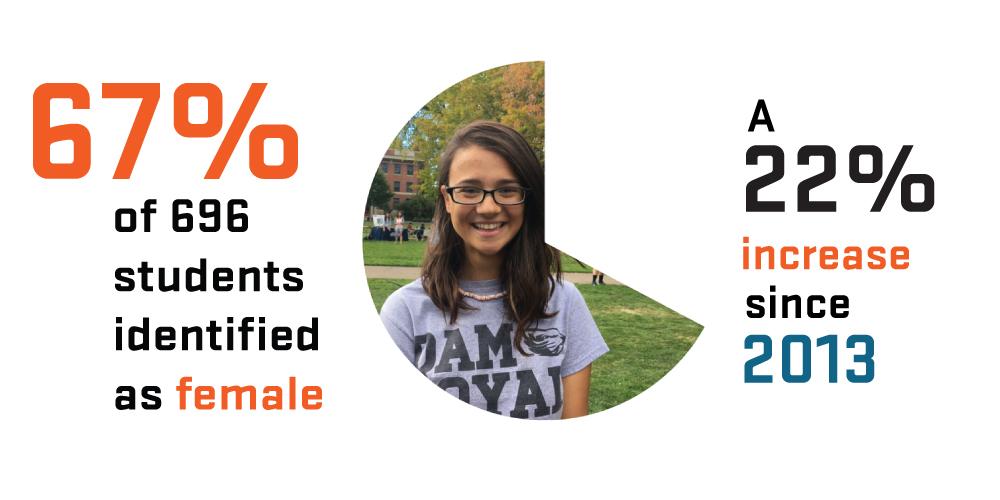
The majority of the 696 students in the class of 2021—67%—identified as female, which constitutes the highest number of first-year women students in science since 2013. At 467, the total number of new women students this year constitutes a 51.6 percent increase over fall 2016.

women graph

While nationwide, women have been enrolling in and graduating from college in greater numbers than men for the last few decades, the data on women pursuing undergraduate degrees in science and mathematics tends to fluctuate across disciplines and fields.

Data from the National Student Clearinghouse Research Center show that in 2014, 42 percent women and 58 percent men earned bachelor's degrees in mathematics. In biological and agricultural sciences, the numbers were 58 percent women and 42 percent men.

At OSU, first-year science students who were surveyed identified as follows: 59 percent white, 13.6 percent students Asian, 2.3 percent Black or African American, 15 percent Hispanic or Latino, one percent American Indian or Alaskan Native, three percent multiethnic and five percent declined to identify their ethnicity.

The survey reflects a 46.8 percent increase in newly enrolled underrepresented minority students in science since fall 2016. Among underrepresented minority students, Hispanic students numbered the highest this year at 104.

The number of first-time students increased by more than 25 percent as compared to fall 2016.

The variation in enrollment data among various minority groups can be viewed in the context of national trends. A 2017 National Science Foundation Report on Women, Minorities and Persons with Disabilities in Science and Engineering states that the share of Hispanics in science and engineering fields has doubled in the past 20 years, with the increase accelerating in the last decade.

The same study reports that while African American student enrollment has steadily increased in psychology, social science and biological sciences, it has declined in "the other science and engineering fields, most notably in mathematics and statistics."

The crossovers: High-achieving, first-gen and underrepresented

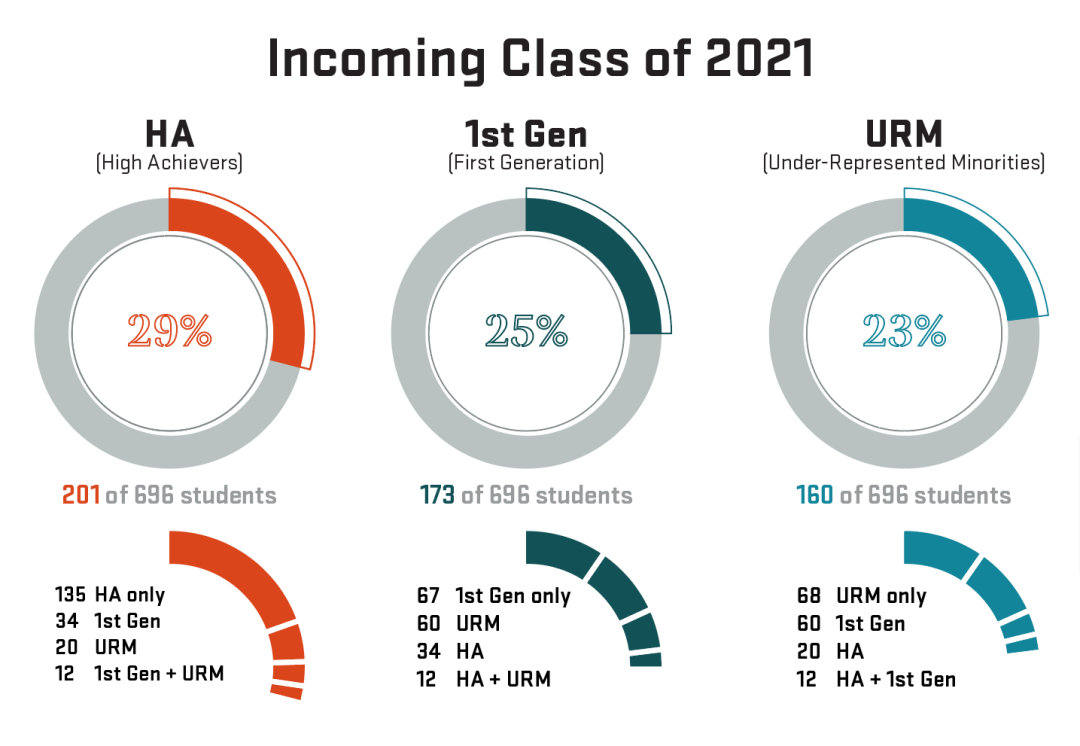
Parsing the numbers further shows a strong correlation between a first-year student's ethnicity and her or his parents' educational background: 35 percent of the 173 students who are the first in their family to attend college are also underrepresented minority students. Of the 201 high achieving students, 10 percent or 67 are first-generation students and an almost equal number are minority students (see infographic below). Two percent or just 12 out of 201 high achieving students are both minority and first-generation students.

Class graphic

Science majors by the numbers

Like in previous years, biology and the biohealth sciences majors attracted the greatest number of students—39.6 percent or 276 students and 26 percent or 184 students respectively. Of 696 students, 5.6 percent are biochemistry and biophysics majors,4.7 percent are biochemistry and molecular biology students, 6.5 percent are zoology majors, 7.3 percent are chemistry majors, 4 percent will major in mathematics, 3.3 percent are physics majors, and 2.4 percent are microbiology students.

A new major in the Department of Biochemistry and Biophysics with a strong laboratory and research focus has proven popular. Biochemistry and molecular biology ushered in its first cohort of 33 students.

The Department of Mathematics welcomed 28 first-year students, the highest number of math majors since 2013. The number of physics students too has risen steadily at 23 first-year students, the highest since 2013.

According to the 2015 Annual Survey of Mathematical Sciences published by AMS, total undergraduate enrollments for mathematics, applied math, statistics and biostatistics across public and private universities (medium, small and large) has increased slightly from 2,481,000 to 2,518,000 since 2012. Mathematics doctoral departments such as OSU awarded eight percent more bachelor’s degrees in 2015 as compared to 2014.

Microscope and laurel icon labeled "2017" above light texture

Recognizing faculty and staff excellence

2017 Fall Faculty and Staff Awards

The College of Science celebrated research, teaching and administrative excellence at its 2017 Fall Faculty and Staff Awards with a reception and ceremony on October 5.

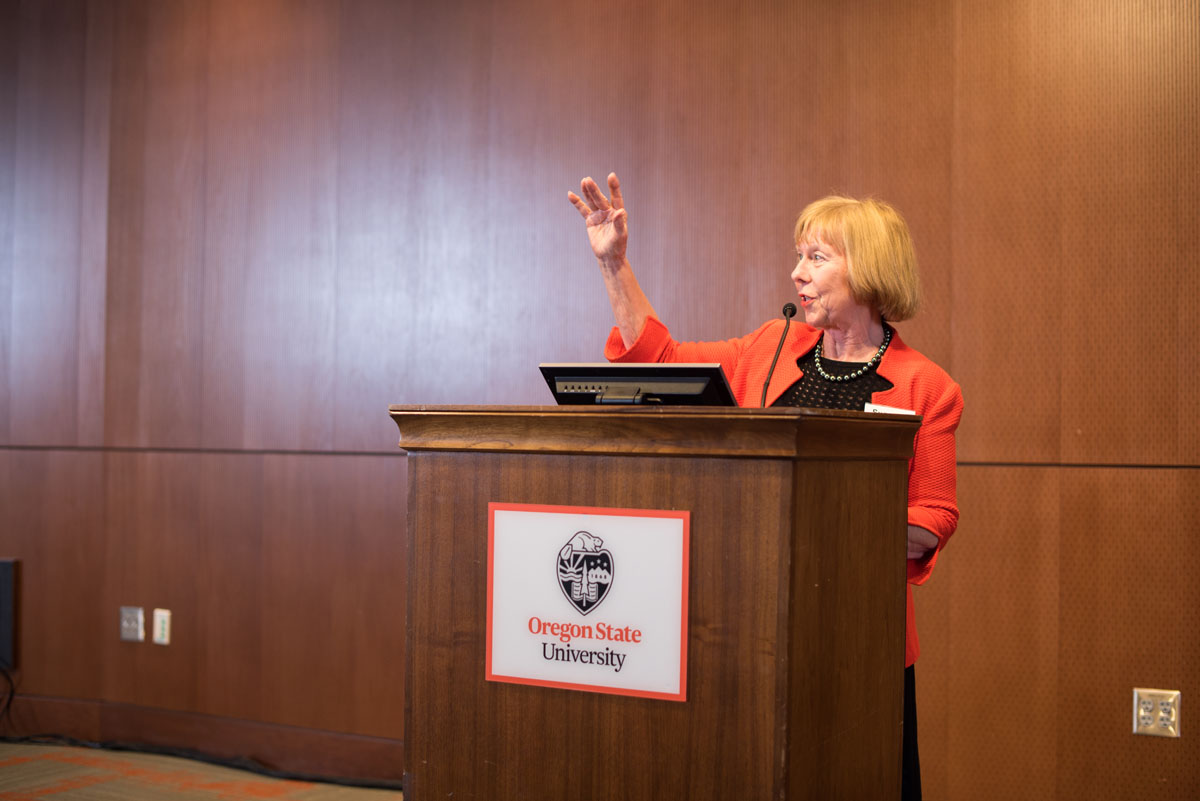
Dean Roy Haggerty delivered welcome remarks and shared his perspective on the challenges science faces nationally as well as opportunities for our campus community. He warmly praised the award-winning researchers, instructional faculty and staff for their impressive accomplishments and dedication to service.

The College announced three new awards this year that support research and teaching excellence: Dean's Early Career Impact Award, College Impact Award with a $10,000 stipend and two Faculty Scholars for Teaching Excellence Awards which carry an award of $12,500 for three years. These awards are possible thanks to the generous philanthropic support of our alumni and friends and matching funds invested by the Provost's Office.

The awards ceremony was followed by a reception and a poster session showcasing the summer research projects of SURE Science students.

Hearty congratulations to these award-winning faculty and staff who were recognized for their outstanding achievements:

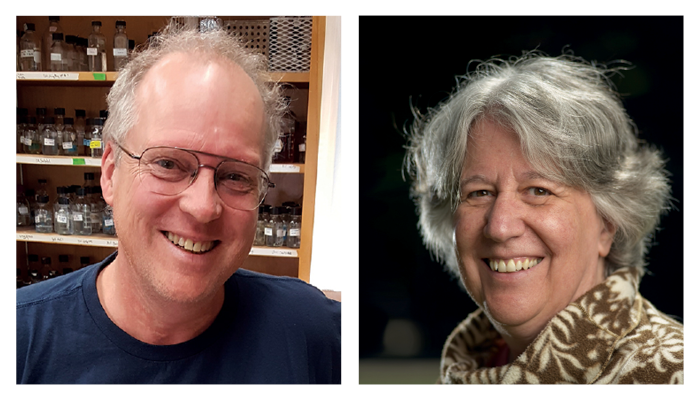
two headshots placed in a white border showing Michael Freitag on the left and Corrinne Manogue on the right.

Michael Freitag, professor of biochemistry and biophysics. Corrinne Manogue, professor of physics.

Michael Freitag, professor of biochemistry and biophysics, received the Milton Harris Award in Basic Research for his outstanding research on how chromatin proteins shape eukaryotic genomes and epigenetic mechanisms of regulating DNA transcription through the use of filamentous fungi model systems.

Freitag has published more than 280 papers in prestigious journals, such as Proceedings of the National Academy of Sciences, Genome Research, Science and Nature; he has published 66 papers and received more than 8,500 citations for his work in the last 10 years.

Colleagues describe Freitag as among "the most respected scientists in the field of fungal biology."

"Since Michael’s arrival at OSU in 2006, he has built a fantastically productive and internationally recognized basic research program," said Andrew Karplus, Head of the Department of Biochemistry and Biophysics.

Freitag is renowned for his 2010 work pioneering the “ChIP-seq” approach in filamentous fungi. ChIP-seq is a high-throughput approach to obtain genome-wide maps showing which parts of a cell’s DNA make direct contacts with proteins. As one nominator noted, this work “made his lab a training ground for researchers from the United States, Europe, Asia and Australia to learn ChIP-seq and its computationally intensive analyses.”

Corinne Manogue, professor of physics, was honored with the F.A. Gilfilan Award for Distinguished Scholarship in Science. The Gilfillan Award honors a faculty member in the College whose scholarship and scientific accomplishments have extended over a substantial period of time.

An outstanding theoretical physicist, Manogue's research focuses on quantum gravity and she played a key role in the early work relating division algebras and supersymmetry. She currently studies the use of octonians—a type of algebra—to study fundamental particles.

Manogue is a teacher and scholar of the highest level as evidenced by her prestigious national and university teaching awards, including the American Association of Physics Teachers' Excellence in Undergraduate Physics Teaching Award. She is also the leader and driving force behind OSU's revolutionary Paradigms in Physics Project, which trains undergraduates how to think like physicists. Manogue is a Fellow of both the American Physical Society and the American Association of Physics Teachers.

She has pioneered physics education research and written articles on how to help students make the difficult transition from lower-division to upper-division physics. Her work has been generously funded by the NSF and has trained multiple students and postdocs who have gone on to become leaders in Physics Education Research.

"Corinne has helped to make discipline-based education research in science a highly respected endeavor that is changing the way we teach science in universities," said Heidi Schellman, Head of the Department of Physics.

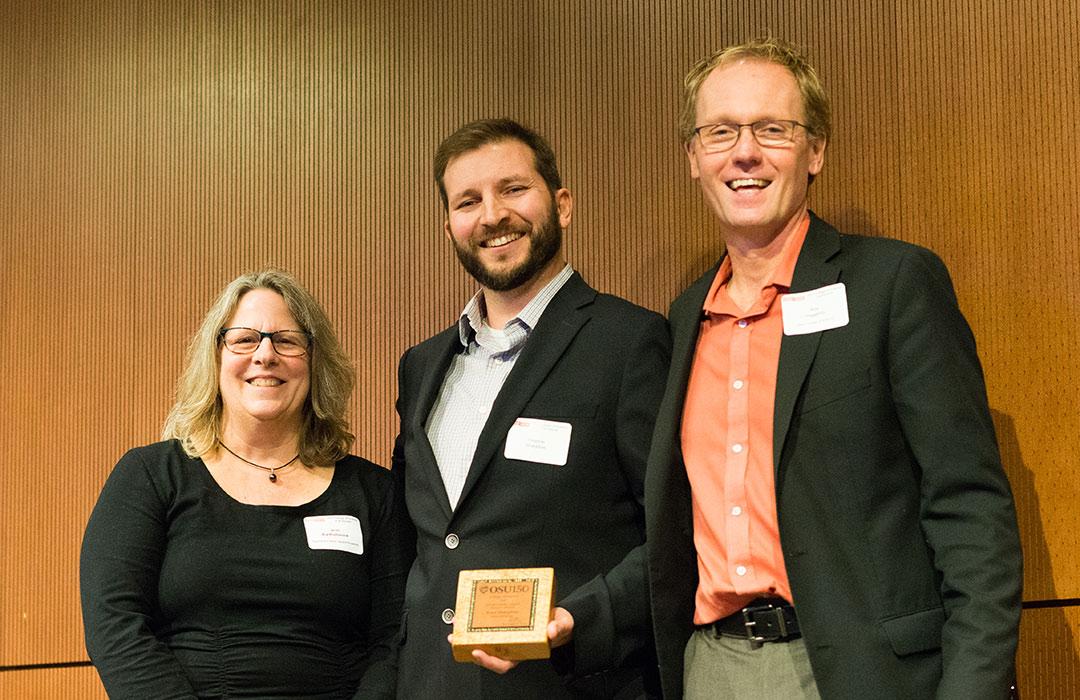
Thomas Sharpton receiving his award from Jerri Bartholomew and Roy Haggerty

Assistant Professor of Microbiology Thomas Sharpton (center) with Department and Dean Roy Haggerty (right).

Thomas Sharpton, assistant professor of microbiology and statistics, received the Dean's Early Career Impact Award for exceptional achievement in research and education by a tenure-track faculty. Sharpton has acquired a national reputation for his work in microbial bioinformatics.

Since joining OSU in 2013, Sharpton has published 15 papers, including one in Proceedings of the National Academy of Sciences (PNAS) which has opened new doors in microbiome exploration by bringing statistical acumen to bioinformatics. This approach applies evolutionary methods to detect long-term historical trends in host/microbe co-evolution.

Among his greatest achievements are developing new technologies, such as Sifting Families (SFams), a system for classifying protein diversity, and his recently published method for automating gene family abundance estimation from metagenomics data. Sharpton's study on the disruption of the zebrafish microbiome as a result of exposure to the antimicrobial agent triclosan was featured in TIME and Fortune magazine.

In recognition of Sharpton’s contributions, he was selected as OSU's official representative for the National Microbiome Initiative Rollout at the White House Office of Science and Technology Policy (OSTP) and was the lead author of OSU's response to OSTP's Call for New Commitments on microbiome research.

This spring the College of Science and OSU's Office of Research launched the Oregon State University Microbiome Initiative (OMBI), led by Sharpton. Through OMBI, an ongoing education and research program, Sharpton is emerging as a campus leader in innovative teaching of bioinformatics and bioinformatics curriculum development.

"Since his arrival at OSU, Dr. Sharpton has made tremendous impacts on the institution's educational and research landscape and has produced substantial discoveries in his field," said Jerri Bartholomew, Head of the Department of Microbiology.

Group photo of award winning faculty

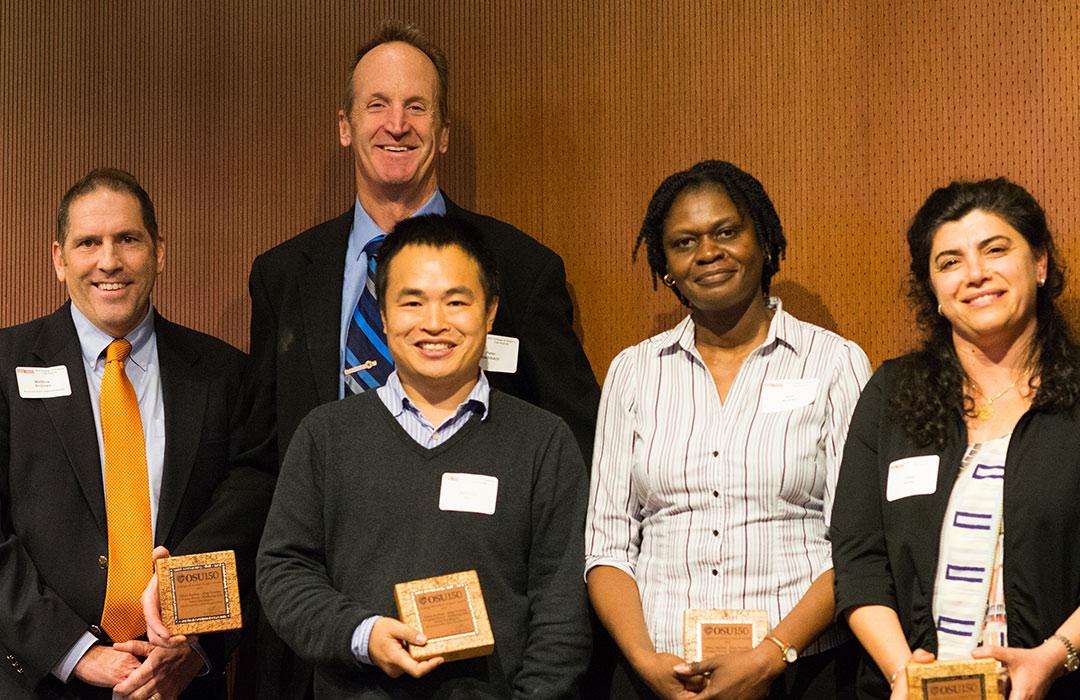
(From left to right) Associate Dean Matt Andrews, physicist Weihong Qiu, biochemists Afua Nyarko and Elisar Barbar and Peter Eschbach (back).

A research team comprising biochemistry and biophysics faculty Elisar Barbar, Afua Nyarko, Viviana Perez, physicist Weihong Qiu and Peter Eschbach (Electron Microscopy Facility) has won the College Impact Award. Through their respective research domains, Barbar and team are rapidly establishing an internationally recognized hub focused on elucidating the multiple essential roles of intrinsically disordered proteins (IDP).

As a testament to their importance and prevalence in biology, IDPs are increasingly appearing in various research projects at OSU ranging from motor proteins and the mitotic spindle (Barbar, Qiu), cancer invasion and tumor progression (Nyarko, Kolluri) and aging (Perez).

The Barbar Lab will join forces with Nyarko, Perez, Qiu and Eschbach to integrate interdisciplinary approaches and cutting-edge, university-wide facilities to continue the study of IDPs in different biological systems. The diversity of expertise will help establish OSU's reputation for excellence as a global leader for driving IDP research in the nation.

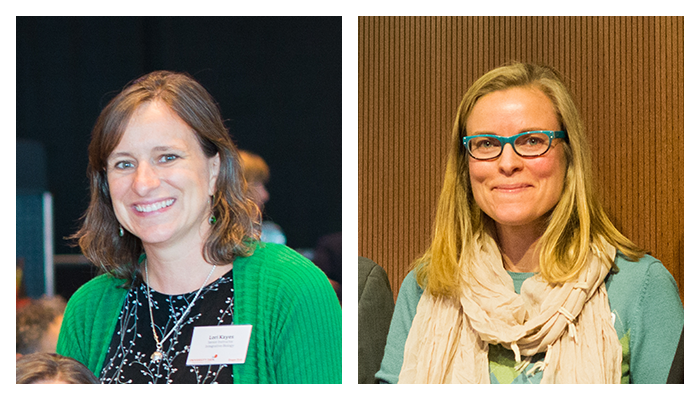
Kayes and Beisiegel receiving awards

Senior Instructor of Integrative biology Lori Kayes (left) and Assistant Professor of Mathematics Mary Beisiegel (right)

Lori J. Kayes, an integrative biology instructor, has won the College of Science Faculty Scholar for Teaching Excellence Award. This new award for a three-year faculty scholar position supports excellence and innovation in teaching and carries an annual stipend of $12,500.

Kayes has distinguished herself as an outstanding instructor, teaching coordinator and biology education researcher. Kayes proposed a redesign of the Principles of Biology (Bi21x) series, a large enrollment introductory biology course for life-science majors, to create a more inclusive, modern and best practices-based course series, while supporting diverse student populations and providing faculty professional development.

For the past six years, Kayes has led faculty development workshops and facilitated the development of teaching materials for introductory biology sequences. Additionally, she has worked extensively with faculty around the state from all institution types to increase the alignment of introductory biology both vertically within a curriculum and horizontally across institution types.

The proposal provides workshops support, faculty support in the form of graduate training assistants to develop curriculum and a comprehensive evaluation plan for the newly revised curricula. This project will impact approximately 1500 students at OSU and the surrounding community colleges per year and involve more than 20 faculty.

Mary Beisiegel, assistant professor of mathematics, received the Ben and Elaine Whiteley Faculty Scholar Award for Teaching Excellence. Beisiegel is a highly gifted teacher of mathematics and is the Mathematics Department's expert on teacher training at all levels.

An accomplished scholar whose research focuses on how people prepare for careers in post-secondary mathematics education, Beisiegel often incorporates her research and evidence-based pedagogical models into teaching.

In 2016, she was awarded a five-year, NSF grant to work on curriculum renewal in lower division mathematics courses. She also received the 2017 Henry L. Alder Award for Distinguished Teaching from the Mathematical Association of America.

Beisiegel will use her award to conduct 12 seminars over the next three years for faculty and graduate teaching assistants focused on how to implement research and evidence-based active learning techniques in the classroom.

"Mary has managed to infect others with her enthusiasm and to promote in others the desire to seriously reflect on their teaching, " said Tom Dick, a professor of mathematics in the Department of Mathematics.

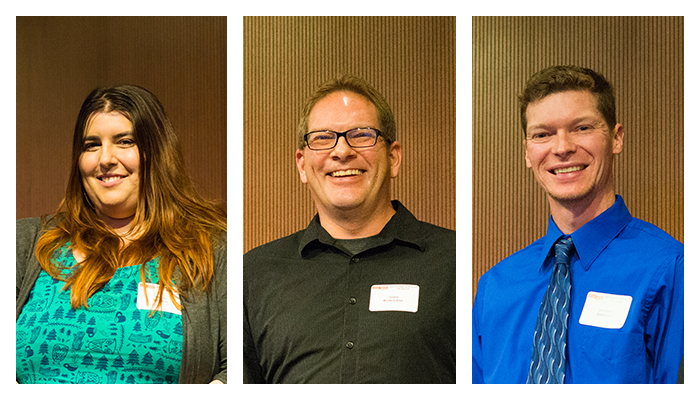
Betterton, Bridenstine, and Robinson receiving awards

Graphic designer Sharon Betterton. ASBC accountant Jamie Bridenstine. Faculty Research Assistant (Integrative Biology) Jonathan Robinson

Sharon Betterton, a graphic designer in the College of Science, received the Gladys Valley Award for Exemplary Administrative Support. Betterton was recognized for her high degree of professionalism, outstanding creative impact and exceptional collaborative skills.

Her extraordinary work as a designer has contributed to a strong College of Science brand that is recognizable, fresh, unique and professional. Her work is well regarded and respected across the university and held up as an example of highly effective marketing.

"She maintains high standards of excellence for her work and is one of the most talented creative professionals I have worked with in my 20-year career," said Debbie Farris, assistant director of marketing and communications in the College.

Jamie Bridenstine, an accountant in finance and administration in the Arts and Science Business Center (ASBC), received the ASBC Exemplary Service Award. This award recognizes exemplary service by a member of ASBC to the colleges within the Division.

Jonathan Robinson from the Department of Integrative Biology won the Outstanding Faculty Research Assistant award. This award recognizes a Faculty Research Assistant who has a record of outstanding job performance and contributions.

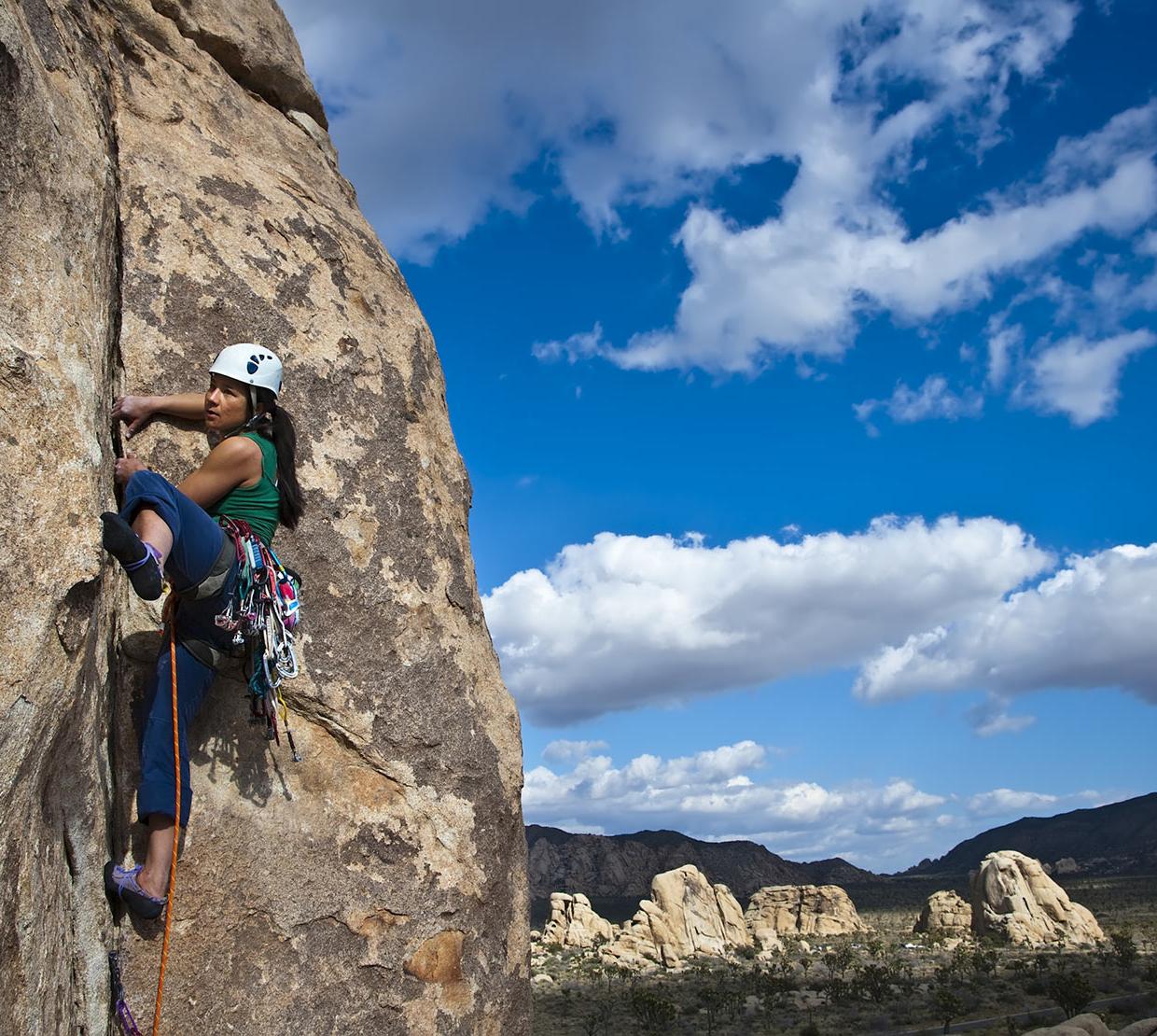
women rock climbing

Getting your career plans in shape: A Saturday bootcamp

The Career Development Advanced Career Bootcamp

Great careers don't happen by accident. Sure a satisfying career takes talent, but it also takes hard work and careful planning while you are still in college.

College of Science majors can sharpen their professional skills and hone their job search strategy at the Career Development Advanced Career Bootcamp on Saturday, October 28, 2017. A three-hour workshop, the bootcamp will take place in the Science Success Center, Kidder 109 from 10 a.m. to 1:00 p.m.

Register today!

The boot camp will teach students a range of skills from writing the perfect cover letter and résumé to negotiating a first job offer. Nationwide, most employers say a cover letter will make or break your chances, and a well-written one can take you far.

The boot camp is highly recommended for students who are less than a year away from graduation. It is also open to other undergraduates who are keen on planning ahead. If you have identified a clear career pursuit and are ready to start the job search process then this bootcamp is ideal for you.

The Advanced Career Boot Camp is designed to prepare you to pursue your career goals with clarity and confidence. It is an excellent way to develop a job search strategy and hone your professional development skills that will prepare you for a satisfying career after graduation.

The event includes a number of professional development activities plus a FREE lunch. At the end of the workshop, you will have learned how to:

  • Create an effective resume and cover letter
  • Develop a job search strategy
  • Prepare for job interviews
  • Negotiate your first job offer
  • Learn from your peers
  • Develop a career action plan

You have your heart set on a career. Join the workshop to find out how you can get there. Register here!

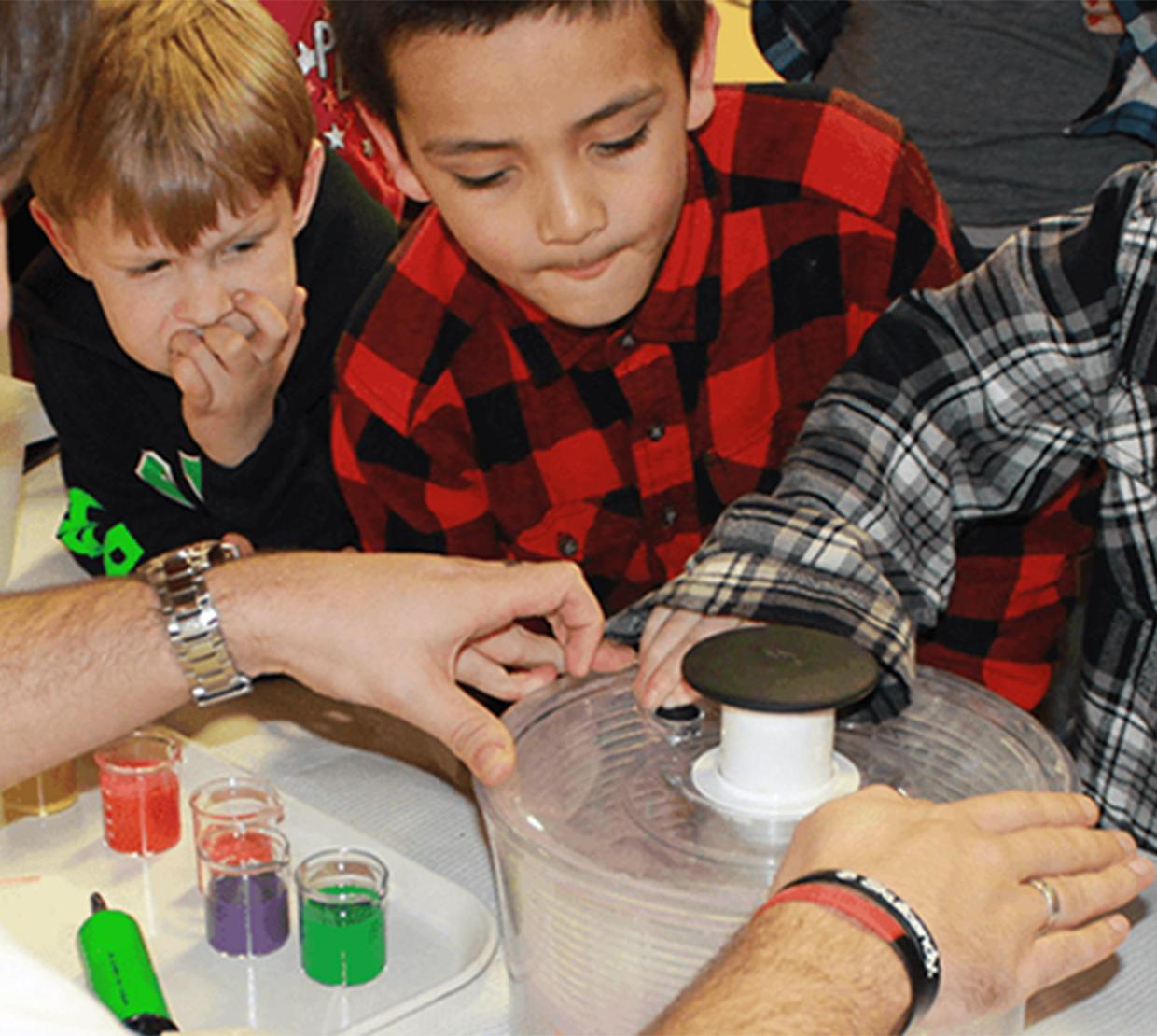
children looking at science themed booth

From the lab to the world: OMSI Science Communication Fellowships

The OMSI Science Communication Fellowship Program

Applications are open for Oregon's top academic and professional fellowship program: The Oregon Museum of Science and Industry's OMSI Science Communication Fellowship. For spring 2018, the fellowship is open to researchers or science professionals including faculty, graduate students, technicians, or other individuals in STEM and health related professions.

The deadline for applications is Wednesday, November 1.

Held primarily in Corvallis, OR on the OSU campus, OMSI Fellows participate in a series of professional development workshops that cover science communication best practices and provide opportunities for participants to practice new skills and techniques. In collaboration with OMSI, each Fellow will develop a unique hands-on educational activity designed to communicate their research to public audiences and will join OMSI in engaging museum visitors with these activities at Meet a Scientist events.

A series of four professional development workshops will focus on building skills to effectively communicate scientific research with broader audiences. Workshops are 3-4 hours each, spaced over the course of three to four months.

Tuition for the program is $1850 per participant. The Science Dean's Office will cover half the tuition for all accepted College of Science applicants.

The OMSI Science Communication Fellowship Program is an excellent way to fulfill broader impact and outreach goals for grant-funded research at OSU. Many of the participants in the Fellowship program secure their tuition through broader impacts or education and outreach components of current research grants.

An online application and further information about the Fellowship program can be found on OMSI's website.

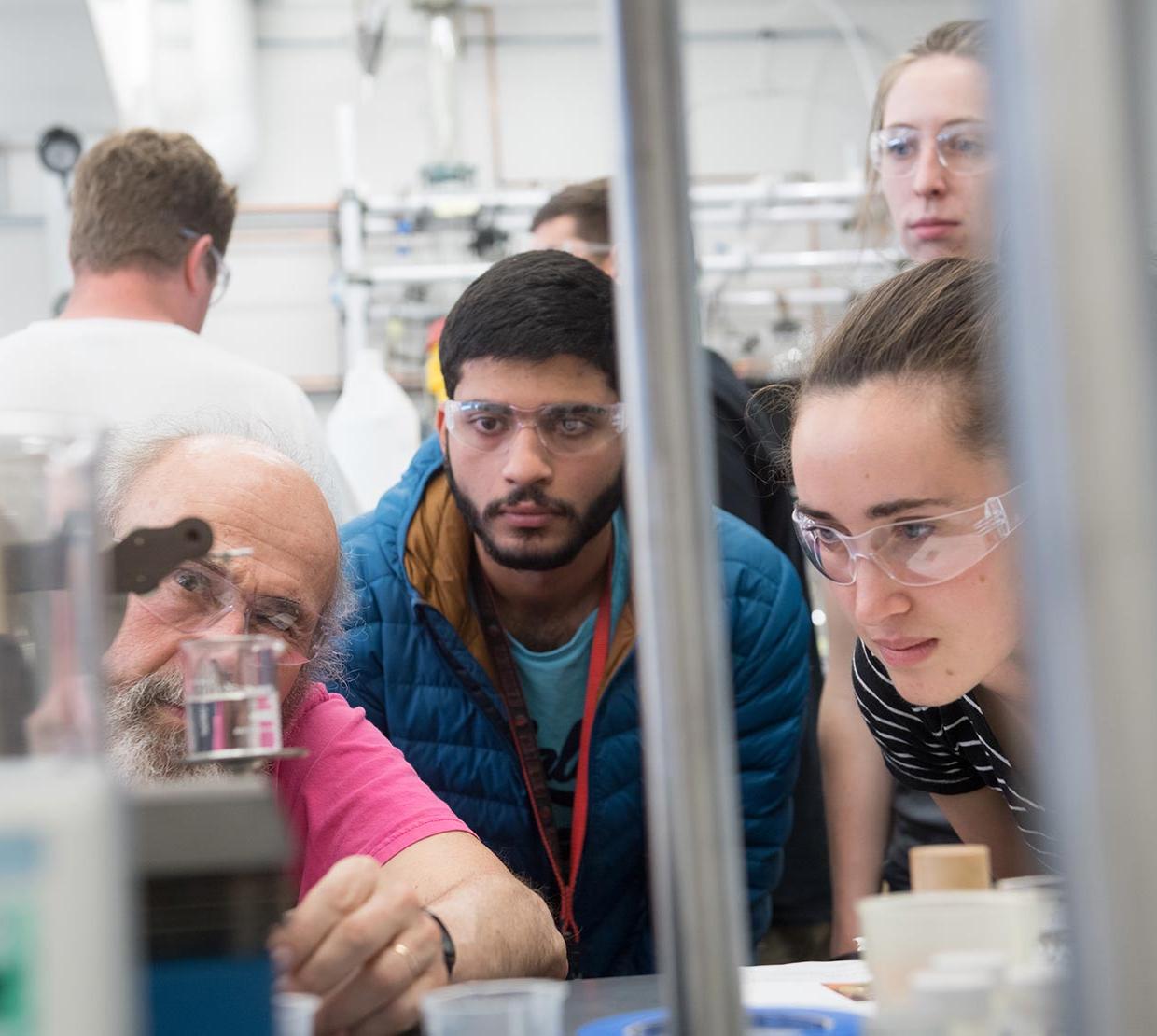
Science students with professor looking at experiment in lab

Science students awarded second highest number of scholarships at OSU

By Steve Lundeberg

Science students in the field

The university has awarded more than $39.5 million in scholarships to students for the 2017-18 academic year, a key component of OSU President Ed Ray’s Student Success Initiative.

Roughly $24.5 million of the total is spread among 7,271 scholarships to returning students. The rest is for awards to 2,532 new/incoming students, including 34 who received a $10,000-per-year Presidential Scholarship, OSU’s most prestigious undergraduate scholarship.

Approximately 35 percent of this year’s first-year students are receiving scholarship support.

Scholarships for science students at an all-time high

College of Science students received the second highest amount of scholarship funds in the university.

More than $7.5 million in scholarship money is going to College of Science students, the college’s highest total ever, said Roy Haggerty, dean of the college. That is triple the amount awarded two years ago. Reasons for the jump include increases in university scholarships and in the number of high-achieving students enrolling in the College.

Nearly $5 million is allocated to 1,344 scholarships for returning students. The rest is for awards to 570 incoming/new students, including nine who received a Presidential Scholarship.

This year more than half of the college’s first-year students received scholarship support.

“Scholarships enable the college to attract, retain and inspire top science students, most of whom go on to high-achieving careers in industry, graduate school, medical school and other professional programs after graduation,” Haggerty said.

“Oregon State’s financial-need-based scholarships also help academically talented low-income and first-generation students from Oregon and elsewhere stay and excel in college.”

First-generation students typically have a greater financial need so scholarships are a crucial part of their educational equation, said Haggerty, who was first in his family to attend college.

“In our College, the number of first-generation students has risen from 20 percent to 29 percent in the last five years,” he said. “Many scholarship students in the College of Science attest to the value of scholarships in easing the financial burden on their families and enabling them to focus on academics, research, volunteer activities and post-college career goals.”

College of Engineering netted the highest amount in scholarship support. Thirty-five percent of engineering students are receiving scholarship support. They are receiving $12.7 million, with $7.9 million divided among 1,948 scholarships to returning students. Nineteen of the 804 their incoming scholarship students are Presidential Scholars.

In third place is the College of Business. It was awarded more than $3.7 million in scholarships, including roughly $2.3 million spread among 761 scholarships to returning students. The remainder is awarded to 276 incoming students, including one Presidential Scholar. About 29 percent of this year’s first-year business students are receiving scholarship support.

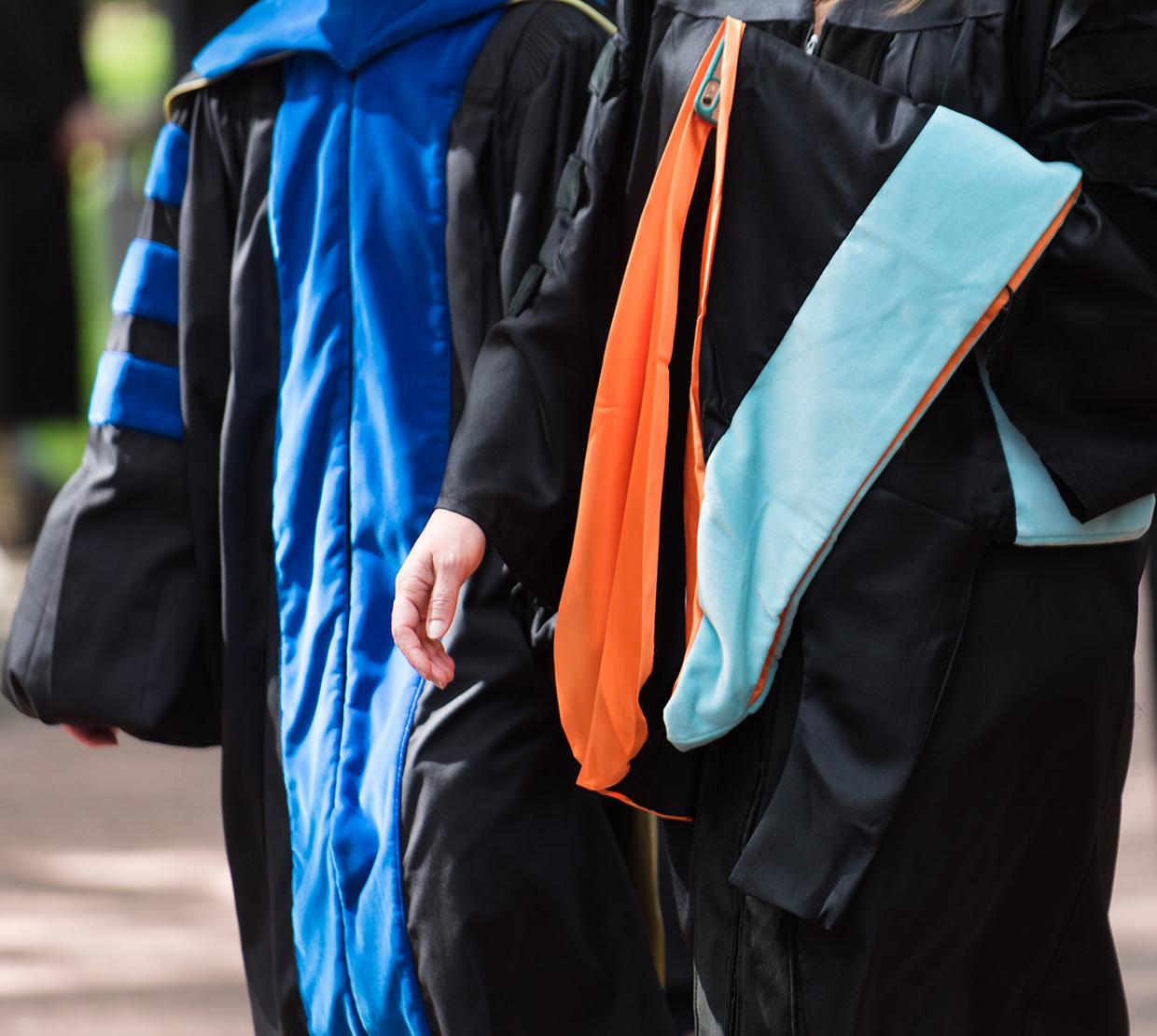
Two professors walking in doctoral gowns on campus

The Class of 2017

By Srila Nayak

2017 graduation

This year’s graduation numbers show that the College of Science has performed exceedingly well on all fronts. The College is graduating a record 629 students with baccalaureate degrees in 2016-17, including 55 honors baccalaureates. This represents a five percent increase from last year.

Biology majors lead the way with 159 graduates, followed by BioHealth Sciences majors with 119. Next are Microbiology majors with 79 graduates, Zoology has 59, Chemistry 51, Mathematics 49, Physics 24, Biochemistry and Biophysics 17 and General Science 17.

In addition, we are graduating 64 master’s and 66 doctoral students. The latter figure constitutes the highest number of Ph.Ds in recent years. In fact, the College is graduating 65% more doctoral students and 33% more masters students than last year.

Overall, Oregon State University graduated 6,807 students in 2017 and 5,590 baccalaureate degrees were awarded to students. The class of 2017 in the College represents 10 majors in the life sciences, physical, mathematical and statistical sciences.

Our graduates accomplish more than they thought imaginable with the help of outstanding professors, who are also scientists at the top of their fields, and a team of dedicated advisors. Supported by awards and scholarships, science students collaborate with faculty to create new knowledge and achieve major scientific breakthroughs.

Many of our graduates have had the opportunity to deepen their scientific knowledge by participating in research in labs across and beyond OSU, ranging from sciences to pharmacy, public health, agricultural sciences, forestry, engineering, robotics and veterinary medicine. For many, research has meant embracing and plumbing the mysteries of the outdoors from diving into marine habitats to field work in diverse terrains and in several parts of the world.

They are leaving OSU as accomplished young scientists in their own right, having begun research in their freshman year; they have presented their work at scientific conferences, co-authored papers in scientific publications with faculty mentors and even won top national awards for their research accomplishments. In fact, OSU ranks among the top 45 research universities in the nation for the number of opportunities it provides undergraduates to participate in research.

Our graduates have also expanded their professional and intellectual horizons by taking part in other transformative experiences such as internships, study abroad programs, leadership experiences and experiential learning in and out of classrooms. These experiences can transform great students into extraordinary leaders in science.

Our 2017 graduates are Fulbright scholars, Thurgood Marshall Scholars, Goldwater nominees, Ford Fellows, future doctors, scientists, entrepreneurs, veterinarians, community leaders, teachers and informed, engaged world citizens. Together they exemplify the College’s commitment to excellence in science education and an inclusive and diverse learning community. We couldn’t be prouder of them!
Each OSU graduate has a compelling story. Here are the stories of a few of our exceptional graduates, in which they reflect on their time at OSU and share their dreams for the future.

Shan Lansing, Chemistry, M.S. 2017

Four years and two degrees later

Swechya Banskota, Biology, 2017

Leadership, healthcare research, artistic diversity: the story of a biology major

Karianna Crowder, Zoology, 2017

From cuddling gibbons to grinding horse teeth

Jason Sandwisch, Chemistry, 2017

A journey to master physical chemistry

Michael Lopez, Mathematics, 2017

Not your typical mathematician: Marine, cop, dad, first generation college graduate

Faculty chatting with one another

Faculty excellence: Promotions and Tenure, 2017

Faculty who received promotions and/or tenure for the 2016-17 academic year

The College of Science congratulates these 18 faculty for receiving promotions and/or tenure for the 2016-17 academic year.

“P&T decisions are one of the most important things I do. I am happy to recognize our outstanding faculty,” said Sastry G. Pantula, dean of the College of Science. “The success of our faculty is essential to the success of our students. Our faculty are not only scholars and teachers, but also are mentors to our students, the next generation of leaders in science.”
Tremendous consideration goes into each promotion and tenure decision. The Provost’s office, the College of Science dean’s office, department heads, promotion and tenure committee members, faculty, external reviewers, student evaluation committees, and of course the individual faculty members all spend many hours preparing, processing and reviewing the documentation. The process is extremely rigorous in order to award the best candidates for promotion and/or tenure.
Special thanks to our College of Science Promotion and Tenure Committee for devoting a significant time engaged in the intense review process.

Congratulations to the following science faculty! We are proud of you.

Biochemistry & Biophysics Department

Dr. Michael Freitag will be promoted to Professor of Biochemistry & Biophysics, effective, September 16, 2017.

Dr. Colin Johnson will be promoted to Associate Professor of Biochemistry & Biophysics and granted indefinite tenure, effective, September 16, 2017.

Dr. Viviana Perez will be promoted to Associate Professor of Biochemistry & Biophysics and granted indefinite tenure, effective, September 16, 2017.

Dr. Kari van Zee will be promoted to Senior Instructor I of Biochemistry & Biophysics, effective, September 16, 2017.

Chemistry Department

Dr. Michael Burand will be promoted to Senior Instructor I of Chemistry, effective, July 1, 2017.

Dr. Xiulei (David) Ji will be promoted to Associate Professor of Chemistry and granted indefinite tenure, effective, September 16, 2017.

Dr. Daniel Myles will be promoted to Senior Instructor II of Chemistry, September 16, 2017.

Dr. Kristin Ziebart will be promoted to Senior Instructor I of Chemistry, effective, July 1, 2017.

Integrative Biology Department

Dr. Dee Denver will be promoted to Professor of Integrative Biology, effective, September 16, 2017.

Dr. Doug Warrick will be promoted to Professor of Integrative Biology, effective, September 16, 2017.

Mathematics Department

Dr. Ren Guo will be promoted to Associate Professor of Mathematics and granted indefinite tenure, effective, September 16, 2017.

Dr. Hoe Woon Kim will be promoted to Senior Instructor I of Mathematics, effective, September 16, 2017.

Dr. Yevgeniy Kovchegov will be promoted to Professor of Mathematics, effective September 16, 2017.

Dr. Clayton Petsche will be promoted to Associate Professor of Mathematics and granted indefinite tenure, effective, September 16, 2017.

Dr. Daniel Rockwell will be promoted to Senior Instructor I of Mathematics, September 16, 2017.

Statistics Department

Dr. Claudio Fuentes will be promoted to Associate Professor of Statistics and granted indefinite tenure, effective, September 16, 2017.

Dr. Yuan Jiang will be promoted to Associate Professor of Statistics and granted indefinite tenure, effective, September 16, 2017.

Dr. Debashis Mondal will be promoted to Associate Professor of Statistics and granted indefinite tenure, effective, September 16, 2017.

star icon above image of Memorial Union

Celebrating Undergraduate Excellence in Science

Celebrating our undergraduates

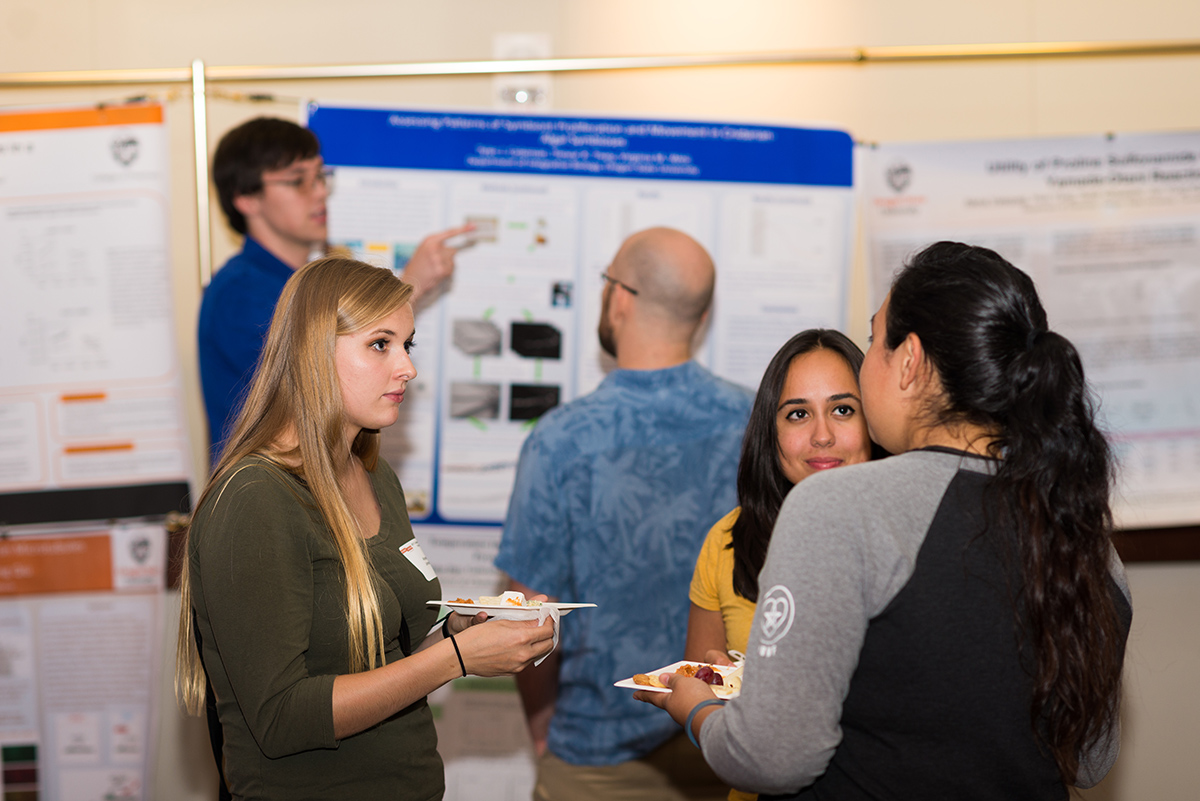
There was ample evidence of brilliance, innovation and creativity at the Celebrating Undergraduate Excellence (CUE) poster session held on May 19 in the Memorial Union Horizon Room. An amazing variety of undergraduate research and creative work taking place at Oregon State University was on display in the form of posters, art work and You Tube videos.

CUE showcased the projects of OSU undergraduates in all disciplines and fields of study. Over 100 students participated in the event. A total of 34 science majors presented their research on a wide range of topics.

A few of the deeply researched and informative science projects at CUE were: Corvid response to forest thinning in the Willamette National Forest; classroom experience for toddlers with developmental delays; accretion disk dependence on black hole size in binary black hole mergers; understanding metastatic growth through the traction force of human breast cells; and, charge mobility of organic semiconductors by using optical trapping.

Please see a complete list of undergraduate projects here.

CUE encourages presentation of ambitious, collaborative research projects, in which a student works alongside a faculty mentor and other researchers to create new knowledge. True Gibson, an Honors College junior studying biochemistry and biophysics, presented his research contributions to a National Science Foundation-funded project led by Associate Professor of Biochemistry and Biophysics Ryan Mehl.

Gibson's poster, "Increasing the Rate of an Ideal Bioorthogonal Ligation," explored his work in developing a stable set of chemical ingredients that will produce the desired reaction with biological processes in humans.

Quite a few of the accomplished science undergraduates who presented their research at CUE are URISC (Undergraduate Research Innovation, Scholarship & Creativity) and URSA Engage (Undergraduate Research, Scholarship and the Arts) scholars, who were able to pursue their research with faculty mentors with the help of the awards.

Celebrating Undergraduate Excellence is sponsored by the Division of Undergraduate Studies and organized by University Events.

Subscribe to Biochemistry & Biophysics