Faculty and Staff

Faculty and Staff

Two young kids work play with math tokens.

OSU faculty and students partner with Corvallis schools to make math fun

By Tom Henderson

Nathan Gibson was in fourth grade when he realized something shocking. Math is fun.

It happened when he started studying the oft-dreaded multiplication table. “I realized pretty quickly that you don't actually memorize it,” Gibson said. “There's a trick to it. You just count by seven or count by eight. That got me thinking of math as more of a game than a chore."

Gibson, the associate head of OSU’s Department of Mathematics, wants children everywhere to realize math is fun – with a little help from their friends.

He started forming “math circles” at Corvallis public schools in 2023. Groups of five to 15 students get together weekly after school to enjoy the company of numbers and each other. Mathematics faculty members and students help guide the groups.

The groups attract more than kids who are into math, Gibson said.

"Math circles are for kids who like math and for kids who want to like math, so it's possible that they just don't like the math they're doing in classes, and they'll enjoy this more,” he said.

Graduate student Sarah Alberson wishes there had been a math circle when she was a kid. “I loved doing math, and I would have loved to join a club where we work through problems together.”

Students tackle assorted math problems, but not exactly the way they’re tackled in traditional math classes. “The types of problems we do are more fun and more approachable than the types of problems they're forced to learn because that's just what their grade level says they're supposed to know,” Gibson said.

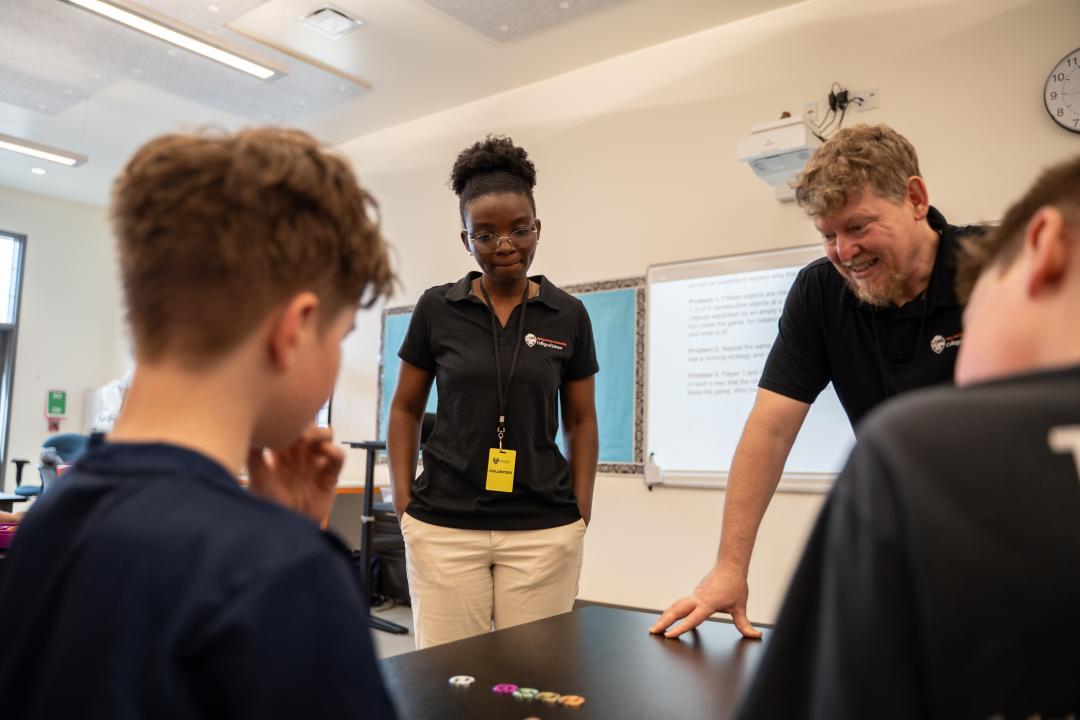
A woman and man talk to two students doing math.

Nathan Gibson and Abigail Adjei from Oregon State work with local Corvallis undergraduate students.

Math problems often depend on knowing the formulas or techniques from a previous math class. “The problems we look at have a lot more to do with logic or common sense or just sitting and thinking about it for a while -- puzzling it out,” Gibson said. “It's closer to Wordle than a traditional math problem."

The math circles began at Franklin School, a Corvallis school with kindergarten through eighth grade. After starting in the primary grades, the circles extended to the middle school level and have since spread to other local elementary and middle schools.

Gibson hopes to spread the program to two more elementary schools by next fall in order to have math circles in all of the Corvallis public schools.

“The main benefit for students is that they get a chance to see mathematics that is typically not found in the standard school curriculum, and they get extra mental stimulation/exercise,” said graduate student Hsaing Thum.

“We also seek to build understanding of these concepts by getting the students to come up with and provide explanations for their answers,” he said. “These skills easily extend to other areas where they need to be clear with their thinking.”

The most important aspect of the circles is the camaraderie, Gibson said. The groups do more than solve problems together. They talk about how the problems have similarities and differences as well as the solutions.

"We try to dig a little deeper, get more abstract to give them a hint on how to approach the harder problems," he said. "This type of problem solving is just more fun in a group.”

Thum said he wants to share his excitement for mathematics. “Looking back, as a kid and teen I failed to appreciate many aspects of the math clubs I had while growing up,” he said.

Gibson said he never failed to appreciate his early math education. His fourth-grade teacher gave him extra worksheets so he could play with numbers while others labored over 9x7.

"From that time on, I knew I would be a math teacher,” said Gibson, adding he hopes that feeling is contagious.

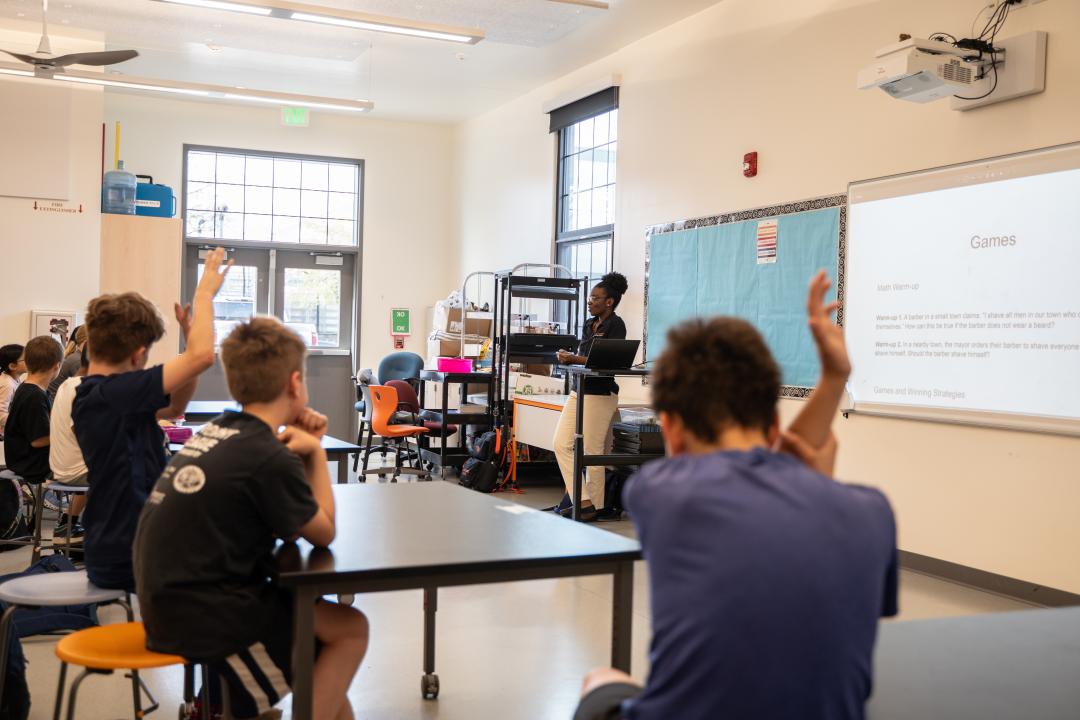
A woman teaches math to elementary students.

Abigail Adjei from Oregon State works with local Corvallis K-8 students.


Read more stories about: faculty and staff, students, mathematics, outreach


A black background with orange glitter, an apple and the year 2026.

Celebrating excellence in teaching and advising: 2026 College of Science Awards

By Hannah Ashton

The College of Science gathered on Feb. 17 to recognize and celebrate our high-achieving faculty and staff at the 2026 Combined Awards Ceremony. The evening celebrated the very best in the College, from teaching, advising and research to inclusive excellence, administration and service.

The following faculty and staff received awards in teaching and advising.

Congratulations to all the awardees!

Loyd F. Carter Award for Outstanding and Inspirational Teaching in Science (Undergraduate)

head shot of Matt Waterhouse

Matt Waterhouse, from the Department of Integrative Biology, received the Loyd F. Carter Award for Outstanding and Inspirational Undergraduate Teaching in Science.

Matt Waterhouse, from the Department of Integrative Biology, received the Loyd F. Carter Award for Outstanding and Inspirational Undergraduate Teaching in Science.

Waterhouse is known for creating an engaging, supportive and inclusive learning environment where students feel both challenged and genuinely cared for. Students consistently describe his teaching as passionate, thoughtful and deeply invested in their success. His courses emphasize real-world applications of ecology, helping students move beyond memorization and toward long-term understanding, critical thinking and practical skills they can carry into their future careers.

Students also highlighted Waterhouse’s responsiveness to feedback and his commitment to continuously improving his courses. From revising course structure after exams to building assignments that scaffold skills over time, he makes learning feel achievable without lowering expectations. His lectures are carefully organized, visually engaging and often infused with humor, creating a classroom atmosphere that is both welcoming and motivating.

“No instructor has put effort in like Matt to make the course as approachable, flexible and achievable,” one student wrote. “His flexibility when I was sick for much of the term and his compassion for other students has been nothing short of saintly. He stands as a model for excellent teaching to human beings, not just the empty vessels older generations believed students to be. Not once did he fail what we expected of him.”

Loyd F. Carter Award for Outstanding and Inspirational Teaching in Science (Graduate)

A woman in a red shirt with dark hair stands in front of a green leafy background with white flowers.

Elaine Cozzi, from the Department of Mathematics, received the Loyd F. Carter Award for Outstanding and Inspirational Teaching in Science (Graduate).

Elaine Cozzi, from the Department of Mathematics, received the Loyd F. Carter Award for Outstanding and Inspirational Teaching in Science (Graduate).

Students describe Cozzi’s classroom as a place where open inquiry is not only welcomed but expected. She encourages students to seek their own understanding, collaborate thoughtfully and speak up to check their reasoning. Her passion for mathematics is evident in every lecture, and students note how she brings them into the process through questions, discussions and creating an environment where everyone feels included in the intellectual conversation.

Her teaching style is grounded in clarity and accessibility. Students appreciate her straightforward notes, her use of the whiteboard to build ideas step by step and her ability to make challenging material feel approachable without sacrificing rigor. Beyond the classroom, she is known for being warm, supportive and exceptionally approachable during office hours.

For some students, her influence extends even further. “As someone who aspires to be a math educator one day, I see a lot of teaching habits in Elaine that I want to emulate,” one student shared.

Olaf Boedtker Award for Excellence in Academic Advising

A woman in a white lab coat sits on a stool in a laboratory.

Kari Van Zee, from the Department of Biochemistry and Biophysics, received the Olaf Boedtker Award for Excellence in Academic Advising.

Kari Van Zee, from the Department of Biochemistry and Biophysics, received the Olaf Boedtker Award for Excellence in Academic Advising.

Students describe Van Zee as a compassionate, dedicated and deeply impactful presence in their academic journeys, often from the very beginning of their time at Oregon State. For many, she is the first person who helped them see what was possible for their future, and she continues to provide that same encouragement and guidance throughout their degrees. Known for her accessibility, organization and unwavering commitment to student success, Van Zee routinely goes above and beyond to support students, often working evening and weekend to ensure they have the tools and confidence they need to thrive.

“Kari has been my advisor since my first year at Oregon State; in fact, she was the first faculty member I spoke with when I reached out as a high school senior,” one student wrote. “Her intelligence, compassion and integrity stood out to me even in our initial conversations and she helped me realize that I could accomplish virtually anything I set my mind to at Oregon State.”

Students also credit Van Zee with fostering a culture of support and belonging within the biochemistry program. Whether helping students navigate degree planning, meeting important deadlines or simply feel seen and supported, her influence is felt across undergraduate, post baccalaureate and graduate communities.

Fred Horne Award for Excellence in Teaching Science

A woman in a grey shirt and blue pants and brown hair smiles.

Devon Quick, from the Department of Integrative Biology, received the Fred Horne Award for Excellence in Teaching Science.

Devon Quick, from the Department of Integrative Biology, received the Fred Horne Award for Excellence in Teaching Science.

For more than 15 years, Quick has demonstrated an extraordinary commitment to teaching excellence at Oregon State, with a lasting impact on both her students and the broader teaching community. Her courses in Human Anatomy and Physiology are known for their rigor, clarity and deep engagement, consistently earning outstanding student evaluations and maintaining remarkably low DFW rates.

Quick’s teaching is distinguished by her commitment to active learning, inclusive pedagogy and real-world application. She integrates case-based assessments, collaborative problem solving and diverse instructional media to support students in mastering complex material. Her thoughtful use of tools such as TopHat and CATME ensures that all students can participate meaningfully, while her extensive office hours, review sessions and open door policy create a welcoming environment where students feel supported both academically and professionally. Each year, she mentors 25-30 learning assistants and teaching interns, transforming students into partners in the teaching process.

Her impact extends far beyond her own classroom. Quick co‑founded the College of Science Learning Assistant Program in 2014, which now supports more than 25,000 student enrollments annually and has become a cornerstone of active learning across the college. She has played major leadership roles in InclusiveExcellence@OSU, ESTEEME, SUMMIT‑P, and other faculty development initiatives, championing evidence‑based and equity‑focused teaching practices that have influenced dozens of instructors and tens of thousands of students.

Students consistently describe her as an advocate, mentor and source of unwavering encouragement. As one student nominator wrote, “Her passion for teaching, her ability to foster deep connections, and her commitment to creating an open and inclusive learning environment have profoundly shaped my academic journey and personal growth in a way no other professor has.”

A drone aerial photo of OSU and the surrounding mountains

2025-2026 Mathematics New Faculty Hires

The Mathematics Department welcomes three new faculty hires for the 25-26 Academic Year; Assistant Professor Orsola Capovilla-Searle, Assistant Professor Elizabeth Carlson and Instructor Advisor Brian Moore.

Orsola Capovilla-Searle Profile photo

Assistant Professor Orsola Capovilla-Searle

Orsola Capovilla-Searle

Orsola Capovilla-Searle earned her PhD at Duke University in 2021 under the supervision of Lenny Ng. She was an NSF graduate fellow. From Fall 2021 to Spring 2025 she was both an NSF Postdoc at UC Davis working with Roger Casals and a Krenner Visiting Assistant Professor.

Her research interests are in the fields of symplectic and contact topology, two twin fields that arose from the study of Hamiltonian dynamics and that have many applications to low dimensional topology, geometry, and mathematical physics. Capovilla-Searle's research focuses on Legendrian knots which arise in the natural world as caustics of light. She has a joint appointment in the college of engineering and has begun exploring the geometry behind robotics.

Capovilla-Searle was born and raised in Mexico prior to studying at Bryn Mawr college in the US. During her spare time, she enjoys reading, painting, and hiking.

victoria

Assistant Professor Elizabeth Carlson

Elizabeth Carlson

Prof. Elizabeth Carlson earned her Bachelor of Arts in Mathematics at Carroll College in Helena, MT, her hometown. She proceeded to go to graduate school at the University of Nebraska - Lincoln, where she received her Master of Arts and PhD (both in Mathematics) under the advisement of Prof. Adam Larios. She spent only 3 years in Nebraska, as the last two years (due to the beginning of COVID) were spent either working at or remotely for Los Alamos National Laboratory. Finishing her schooling in 2021, she continued in academia as a PIMS Postdoctoral Fellow at the University of Victoria under the advisement of Prof. David Goluskin, and then in 2023 was awarded the prestigious Von Kármán Instructorship at Caltech under the advisement of Prof. Andrew Stuart. Her research interests include partial differential equations and fluid dynamics, with practical emphases in data assimilation, optimization, high performance computing, and numerical analysis.

“My goals currently are to continue to work at the intersection of pure and applied mathematics, using the tools of each to further the understanding of both in ways that could not be done by studying the individual fields alone. I think this approach also lends itself to good teaching practices; in particular, you can work to connect real-world problems to the techniques in class directly to make the work more interesting, consequently allowing to students to have better recall of the material.”

When she’s not working, Elizabeth loves to hike, read (voraciously), and play piano.

Brian Moore Profile Image

Instructor Advisor Brian Moore

Brian Moore

Brian Moore earned his Ph.D. in Mathematics at the University of Surrey in the United Kingdom in 2003. He held a postdoctoral research position at McGill University in Quebec, followed by a visiting assistant professorship at the University of Iowa. He joined the Department of Mathematics at the University of Central Florida in 2007 and earned tenure there in 2013. His research interests have been focused on numerical analysis and differential equations with emphasis on structure-preserving algorithms and systems on lattices. His work has contributed to several scientific applications in neuroscience, material science, wave mechanics, and computer vision. Earlier this year, Brian resigned from his post as an Associate Professor and moved to Oregon in search of a position that would grant more time focused on undergraduate student success. He says that his new role as an Instructor/Advisor at OSU is a perfect fit. Apart from mathematics and education, some of his favorite things to do include snowboarding, woodworking, and poetry-reading.


Read more stories about: people, faculty and staff, mathematics


Happy Retirement in the sand on beach

Fond Farewells - Math Department Retirements

Happy retirement from the Math Department to some of our long standing faculty members!

William Bogley

Bill Bogley received his Ph.D. in mathematics from the University of Oregon in 1987 and joined OSU in the fall of 1990, having first held postdoctoral positions at Portland State University, Tufts University, and Dartmouth College. His research career included visits and collaborations in Germany, Poland, South Korea, and the U.K, with funding from the London Mathematical Society, EPSRC, Edinburgh Mathematical Society, DAAD, and the NSF.

Bogley’s research focuses on applications of low dimensional topology to structure and classification problems in geometric and combinatorial group theory. Centered on the natural concept of symmetry in all its forms, this area of research features a daunting variety of deterministic questions that are known to be unsolvable by algorithmic means. Descendants of the Halting Problem for Turing machines, these are things that can be defined but not computed. Paradoxically, the rapidly expanding power of enumerative computation enables discovery of previously unseen forms of structure and symmetry. Together with his collaborators and ten PhD students, Bogley has contributed new results on both sides of this paradox and continues to be drawn to the gap between what is and what is not computable.

In thirty plus years at OSU, Bogley served in a wide variety of administrative and governance roles with the University Honors College, the Faculty Senate, Academic Affairs, and the Mathematics Department. As Department Head from 2018-2023, Bogley focused on compensation, community, and workload issues for Instructor-rank faculty, on hiring and renewal of postdoctoral and tenure-track professorial ranks, and on budget stability. His all-too-brief stints as Lead Advisor for the department were exceptionally meaningful on a personal level. Firmly committed to the notion that effective teaching is its own reward, Bogley was nevertheless gratified by teaching awards from the Mathematics Department graduate students, the College of Science, and the University Honors College, where he was a two-time recipient of the Sandy & Elva Sanders Eminent Professorship.

Tevian Dray

Tevian Dray received his PhD in mathematics from Berkeley in 1981 after having been an undergraduate at MIT. He then held postdoctoral positions in both mathematics and physics in Germany, the Netherlands, England, Princeton, and India before coming to OSU in 1988, where he was Professor of Mathematics as well as Adjunct Professor of Physics. He fully retired in 2024 at the rank of Professor Emeritus.

Tevian's research lies at the interface between mathematics and physics. His early work used differential geometry to study general relativity, and his more recent work used nonassociative algebra to describe particle physics. In addition to his traditional research in mathematical physics, Tevian also studied student understanding of "middle-division" mathematics and physics content. He was an active member of both the RUME (Research in Undergraduate Mathematics Education) and PER (Physics Education Research) communities, and an original member of the Paradigms in Physics program at OSU, begun in 1996 and still a national model of undergraduate physics instruction.

For his work in relativity, Tevian was a Fulbright Scholar twice (India, 1987; Australia, 1995), and was elected a Fellow of the APS (American Physical Society) in 2010. He was also an outstanding teacher, having received teaching awards at the university, state, regional, and national levels. At OSU, he received the Fredrick Horne (2004), Loyd Carter (2011), and Elizabeth P. Ritchie (2014) awards, as well as awards from the University Honors College in 2009 and 2012. In 2017, he received the Deborah and Franklin Tepper Haimo Award from the MAA (Mathematical Association of America). Tevian has been a member of both MSRI (now the Simons Laufer Mathematical Sciences Institute) and the Institute for Advanced Study, held named visiting positions at Mount Holyoke and Grinnell Colleges, and given numerous invited talks on six continents.

In retirement, Tevian continues both his research in mathematical physics and his engagement with international education. He taught general relativity to graduate students in Bénin (2018) and several graduate courses in mathematical physics at AIMS (the African Institute of Mathematical Sciences) in South Africa (2023, 2024, 2025). But he and his wife (OSU Professor Emerita of Physics Corinne Manogue) are now spending much of their time in California with their children and grandchildren.

Adel Faridani

Adel Faridani received his Diplom in Physics (1982) and Ph. D. in Applied Mathematics (1988) from the University of Münster, Germany. He came to Oregon State University in 1989 on a post-doctoral research fellowship, where he was mentored by Prof. Kennan T. Smith. What was originally planned as a one-year visit turned into a career-long commitment when he joined the department's faculty in 1990.

Throughout the decades that followed, Faridani enjoyed advising and mentoring students and teaching a variety of Mathematics courses. Faridani's research involves mathematical questions arising from Medical Imaging and Signal Processing. In Medical Imaging he investigated optimal sampling and resolution in computed tomography, derived error estimates for tomographic reconstruction algorithms, and contributed to the theory and implementation of local tomography. In Signal Processing he continues to study non-uniform sampling theorems for bandlimited functions.

Robert Higdon

Robert Higdon was an undergraduate at the University of Missouri - Columbia, and in 1981 he received a PhD in mathematics from Stanford University. In the fall of 1982 he joined the faculty in the Department of Mathematics at OSU. At the end of 2024, he retired at the rank of Professor Emeritus.

Throughout Higdon's time at OSU, classroom teaching was a high priority for him. He mainly taught classes in analysis, applied mathematics, and numerical analysis. The last class that he taught was Math 311, Advanced Calculus, during fall quarter 2024. A coincidence is that the first course that he took in advanced calculus was at MU during fall semester 1974; now do the math. In fall 1983, Higdon received the Carter Award for Outstanding and Inspirational Teaching at the undergraduate level, and in fall 2001 he received the Carter Award for graduate teaching, both from the OSU College of Science.

Higdon's research is in the numerical solution of partial differential equations. His early work included research on absorbing boundary conditions for wave propagation problems. Compared to earlier work, he developed a new point of view that enabled substantial simplifications and generalizations. Later, he worked on some issues involving the numerical solution of PDE's of fluid dynamics that model ocean circulation. This work was done in consultation and collaboration with ocean modelers at OSU and elsewhere. One topic involved some problems related to the multiple time scales that can be found in this situation, and another project has involved a relatively new form of spatial discretization. Higdon's work was supported by several grants from the National Science Foundation.

For the near future, Bob and Kathy expect to make more frequent visits to their daughters in the San Francisco Bay Area. They also hope to travel more broadly, such as to make additional trips to Europe, including the Alps. Otherwise, they will relax in and near Corvallis.

Enrique Thomann

Enrique Thomann graduated from the National University of Cordoba in 1977 with a degree of Licenciado in Mathematics. In 1980 he moved to Berkeley to pursue a PhD in Mathematics under the direction of Professor Andrew Majda. After graduation from UC Berkeley in 1985, Enrique was a Visiting Member of the Courant Institute for two years. Enrique joined OSU in 1987, following a family decision to move back to the West coast.

Enrique’s research in Applied Mathematics benefited from collaboration with OSU colleagues from various departments from the Colleges of Science, Engineering, Agriculture, Forestry and CEOAS. He served as Interim Head and Head during the years 2014-2018, Acting Head in 2022 and Interim Head in 2023. During his tenure at OSU, Enrique held visiting positions at the University of Indiana, Liverpool, Stellenbosch and Arizona, as well as at the Institute of Mathematics and its Applications in Minneapolis. Enrique taught a variety of courses in Analysis, Partial Differential Equations, Probability, Stochastic Processes and Actuarial Mathematics. Enrique continues to work together with former colleagues as well as former OSU graduate students that he directed. His research combines analytic and probabilistic methods in the analysis and modeling of problems from fluid mechanics and actuarial mathematics.

Read more stories about: people, faculty and staff, mathematics


Image of a candle in the darkness

Remembering Our Colleagues: In Memoriam

The Mathematics Department would like to acknowledge the passing of some of our beloved faculty and staff.

Juha Pohjanpelto

Juha was born in Helsinki, Finland in 1959. While studying for his M.Sc. in Mathematics (1983) under Olavi Nevanlinna at Teknillinen Korkeakoulu, now Aalto University, he coauthored a high school physics textbook, taught as a lecturer, and completed a year of service in the Finnish army as a lieutenant in an anti-aircraft division.

Juha moved to Minneapolis to study for a PhD in Mathematics (1983-1989) as Peter Olver’s first student with a dissertation on generalized symmetries of Maxwell’s equations. He moved to Corvallis, Oregon in 1989 where he worked as a professor of mathematics at Oregon State University teaching classes across several areas of mathematics from geometry, algebra, topology to real and complex analysis, and financial mathematics. In addition, he published a series of highly regarded papers in his field and served as chair of teaching, and graduate committees and assistant chair.

Juha’s stories, sense of humor, and enthusiasm are tremendously missed by his friends and family and colleagues. He is survived by his wife Anne-Marie Girard-Pohjanpelto of Corvallis, Oregon and sons Max and Alex Pohjanpelto of Helsinki, Finland, along with relatives in Finland and Canada.

Read more about Juha at the McHenry Funeral Home


Beata Michalik

Bea Michalik passed away at home on Friday, December 6. A longtime member of the Mathematics Department community, Bea served as MSLC Coordinator during 2021-2022. Bea was born in Warsaw, Poland and received the Diplom in Mathematics from the JW Goethe Universitat in Frankfurt, Germany in 1992. She moved to Corvallis in 1993. Bea has been very active in the Corvallis community, including with da Vinci Days, the Corvallis Women’s Choir Jubilate!, and the Timberhill Tennis Club. Bea worked as an instructor in the Mathematics Department at LBCC for many years, including service as the President of the Part-Time Faculty Association there. During her tenure, the association engaged in collective bargaining with the college. Bea also served on the most recent LBCC presidential search committee. But what she really enjoyed was teaching.

Bea was diagnosed with ALS in January 2022, by which time she was unable to continue teaching. Still, she eagerly embraced the opportunity to work as MSLC Coordinator here in Kidder Hall. A number of her personal touches are still in place there. She spoke fondly and frequently about her co-workers in the department, especially the tutors and clerks with whom she worked; it was a sadness to her when she was unable to continue in that role due to her illness.

While at home during the past 2+ years, Bea had many lively and faithful visitors, which gave her life meaning as she navigated life with ALS. She was peaceful and surrounded by family and friends at her passing.

Read more about Beata's life at the McHenry Funeral Home


Dave Carlson

Dave received his Ph.D. in 1963 under Hans Schneider at the University of Wisconsin-Madison. Dave was immediately part of the mathematical and university community serving on committees at all levels of the university. His field of research was linear algebra and matrix theory. He had two Ph.D. students and a couple of masters students. He was originally from Southern California. After eighteen years, for personal reasons, he decided to take a professorship at San Diego State University in 1981. He remained there until his retirement, even serving at one point as the head of the department down there.


Read more stories about: people, faculty and staff, mathematics


View of the Colorado river inside the Grand Canyon.

Transforming river health, ecology, seaweed, and pest control: Revolutionary SciRIS research

By Hannah Ashton

The College of Science Research and Innovation Seed (SciRIS) Program continues to drive groundbreaking research by fostering collaboration and innovation. Founded in 2018, SciRIS funds interdisciplinary research projects that aim to create meaningful societal impact. This year, Stage 2 awardees are working to revolutionize our understanding of river health, ecological communities, sustainable seaweed cultivation and insecticide resistance.

There are two tracks through the program: SciRIS team awards (Stages 1-3) and the SciRIS individual investigator award (SciRIS-ii). SciRIS Stages 1-3 funds teams in three stages to support training, research, and capacity-building, accelerating work toward external funding opportunities. SciRIS-ii funds individual faculty to establish research relationships with external partners, enabling them to demonstrate the feasibility of their ideas and quickening the pace of scientific discovery.

Four teams received SciRIS Stage 2 awards.

Bioinformatics for integrated river health

Biologist David Lytle’s project focuses on understanding the complex interactions between multiple biotic components, including food base, disease landscape and microbiome in the lower Colorado River, including the Grand Canyon. Lytle will be working with three Oregon State colleagues, along with collaborators at the United States Geological Service and the National Parks Service. The project aims to develop diagnostic tools that can identify fish parasites and diseases at a molecular level and provide preliminary data on how these parasite, microbial and invertebrate communities change over time.

Oregon State Collaborators
David A. Lytle, Integrative Biology
Justin Sanders, Microbiology, (College of Science and Carlson College of Veterinary Medicine)
Anna Jolles, Integrative Biology (College of Science and Carlson College of Veterinary Medicine)
Claire Couch, Fisheries, Wildlife and Conservation Sciences (College of Agricultural Sciences and Carlson College of Veterinary Medicine)

Government Collaborators
Ted Kennedy, Kim Dibble, Charles Yackulic, Kate Behn, Jessica Anderson, Bridget Deemer, U.S. Geological Service
Emily Omana, Brandon Holton, National Parks Service

Ripening Oregon blackberries, one of the crops at risk from Spotted wing drosophila

Spotted wing drosophila are an invasive pest that attack several crops essential to Oregon farmers, including ripening blueberries, blackberries, apples and stone fruit. Fruit fly populations evolve rapidly and the Patel and Vrailas-Mortimer group seek to understand the risks of resistance evolution before they adapt to local pesticides.

Insecticide resistance in spotted-winged drosophila

Geneticist Alysia Vrailas-Mortimer's project addresses the significant agricultural threat posed by spotted-winged drosophila (SWD), an invasive pest species. The research aims to advance understanding of the genetic basis and evolution of insecticide resistance in these pest populations through experimental work, genetic techniques and mechanistic mathematical modeling. The project involves collaboration with experts from UC Davis and focuses on developing sustainable control methods. Directly connected to the needs of the Oregon agricultural community, this project is a prime example of OSU’s strong community engagement initiatives as a land grant institution. By learning more about the mechanisms of insecticide resistance in spotted-winged drosophila, growers will be better able to plan and prioritize their insecticide applications to mitigate resistance.

Oregon State Collaborators
Alysia Vrailas Mortimer, Biochemistry & Biophysics
Swati Patel, Mathematics
Serhan Mermer, Environmental and Molecular Toxicology (College of Agricultural Sciences)

Analytical Tools to Understand Ecological Communities

Statistician Yuan Jiang’s SciRIS project aims to create novel analytical tools for assessing how organisms in complex ecological communities like microbes and parasites interact and affect each other over time. The research will leverage long-term community datasets from wild vertebrate host populations with improved data techniques that allow these large complex data sets to be analyzed more efficiently and with environmental conditions factored in. In addition to improve our ecological understanding of these communities, Jiang's project seeks to extend the accessibility of these analytical tools to diverse scientific audiences through summer camps, workshops and online tutorials. The project will also involve collaboration with colleagues and students at the Universidad of San Francisco de Quito in Ecuador to build capacity in data analytics.

Oregon State Collaborators
Yuan Jiang, Statistics
Lan Xue, Statistics
Anna Jolles, Integrative Biology
Claire Couch, Fisheries, Wildlife and Conservation Sciences (College of Agricultural Sciences)

Seaweed on a beach with water.

Seaweed morphology and chemical makeup can vary dramatically depending on environmental factors like seawater composition and sunlight exposure, making it a challenge to nutritionally analyze consistent materials. James Fox and his contributors have developed a system for growing seaweed on land under consistent conditions for analysis.

Unlocking the potential of seaweed

Algal physiologist James Fox’s project explores the chemical composition and potential applications of Pacific Dulse, a protein-rich seaweed native to the Pacific coastline. The team will create a special growth chamber to cultivate seaweed on land under controlled conditions. This allows researchers to maximize the production of important compounds found in Pacific Dulse, which can be used in nutrition and medicine. The project also emphasizes community outreach and inclusive excellence by engaging diverse student populations and partnering with outreach programs. Additionally, the project will investigate the impact of different processing methods on the nutritional quality of seaweed extracts.

Oregon State Collaborators
James Fox, Microbiology
Myriam Cotten, Biochemistry and Biophysics
Ford Evans, Hatfield Marine Science Center
Evan Forsythe, Integrative Biology
Scott Geddes, Chemistry Program Coordinator OSU-Cascades
Jung Jwon, Department of Food Science & Technology (College of Agricultural Sciences)
Christopher Suffridge, Microbiology

These projects highlight the innovative and impactful research being conducted by the 2025 SciRIS awardees. Each project not only advances scientific knowledge by also emphasizes collaboration, community engagement and inclusive excellence.

A blue background with the year 2025

Celebrating inclusive excellence, administration, service and performance: 2025 College of Science Awards

By Hannah Ashton

The College of Science gathered on Feb. 26 to recognize and celebrate our high achieving faculty and staff at the 2025 Combined Awards Ceremony. The evening celebrated the very best in the College, from teaching, advising and research to inclusive excellence, administration and service.

The following faculty and staff received awards in Inclusive Excellence, Administration, Service and Performance.

Congratulations to all the awardees!

Headshot of Hannah Stuwe, a woman with short curly hair and black shirt.

Hannah Stuwe, graduate student in the Department of Biochemistry and Biophysics, received the Inclusive Excellence Award.

College of Science Inclusive Excellence Award

Hannah Stuwe, graduate student in the Department of Biochemistry and Biophysics, received the Inclusive Excellence Award.

Department Head Elisar Barbar, who nominated Stuwe, said she has engaged in a wide-ranging set of service, outreach and training that is truly impressive. First, Stuwe conducted a GFP protein purification activity for middle and high school students from the Chemawa Indian School, Jewell High School (Seaside), and visited groups of black and Latinx students from the Portland area.

She planned, wrote and edited a handbook of science experiments geared towards middle school aged students, their parents, and teachers to fill the void of not having a BB summer camp. This handbook now serves as a free and open access resource for community members.

Stuwe is the founder of the non-profit organization Corvallis Music Collective. They have engaged in community service and activism by providing live music for events and rallies. Recent events include the Basic Needs Center Fall Welcome Party, the Disabled Students Union Disability Justice Rally and Jackson Street Youth Services National Runaway Prevention Month “Skate Park After Dark” Show.

Amy Timshel

Amy Timshel, assistant head to the department head in the Department of Microbiology, received the Gladys Valley Award for Exemplary Administrative Support.

Gladys Valley Award for Exemplary Administrative Support

Amy Timshel, assistant head to the department head in the Department of Microbiology, received the Gladys Valley Award for Exemplary Administrative Support.

Her colleagues describe her as proactive, always seeking ways to improve processes and deeply committed to making the department a better place for everyone. She is highly regarded by students, faculty and staff for her professionalism, broad knowledge and ability to get things done. In fact, Department Head Anne Dunn noted that when she polled faculty on department strengths during strategic planning exercises, Timshel's critical role in the department was consistently highlighted.

She has a deep understanding of university policies and constantly looks for ways to improve them. She listens, advocates for students and colleagues, and takes initiative to make the department more inclusive and equitable. For example, her work on the Core Values Committee led to the addition of gender-neutral restrooms in Nash Hall and improvements to scholarship and travel fund policies.

Beyond her administrative role, Timshel actively fosters a sense of community within the department. She organizes fundraisers and charity events and regularly attends student events to show her support.

A woman in a red top poses in front of plants.

Elaine Cozzi, assistant head and associate professor in the Department of Mathematics, received the Distinguished Service Award for her impactful service to her department, the College and the broader mathematics community.

Distinguished Service Award

Elaine Cozzi, assistant head and associate professor in the Department of Mathematics, received the Distinguished Service Award for her impactful service to her department, the College and the broader mathematics community.

Cozzi served as interim associate dean of academic and student affairs for the College in Spring of 2024, managing various projects, including the university’s revision of its undergraduate advising system, assessing teaching resources and addressing countless student issues. She was overwhelmingly generous with her time in responding to the many challenges and the needs of her colleagues.

Before and after serving as associate dean, Cozzi served as assistant department head for mathematics, responsible for scheduling upper-level courses and ensuring adequate staffing for the Department’s teaching mission. This affects the hiring of instructors, graduate students, and undergraduate graders.

Jon Kujawa, Department of Mathematics head and Cozzi’s nominator, noted, “It is hard to overestimate the impact of Elaine’s planning on the smooth operation of the teaching side of the department. And she readily pivots when unexpected events disrupt the plans.” Additionally, Elaine led the assessment of the Mathematics undergraduate program for several years, playing a crucial role in student success, he shared.

Cozzi also contributes significantly to the mathematics profession as Associate Editor for the American Mathematical Monthly – the most widely read mathematics journal in the world. She is also an active member of SIAM, a professional society for applied mathematics, where she helps organize meetings and contributes to administrative efforts and regularly serves as a grant evaluator for the NSF and the Simons Foundation, helping to shape the future of mathematical research.

Virginia Lesser in front of shrubbery

Virginia Lesser, Department of Statistics Head, received the Champion of Science award.

Virginia Lesser, Department of Statistics Head, received the Champion of Science award for her significant contributions to the field of statistics and to Oregon State University throughout her distinguished career. After earning her PhD in Biostatistics from the University of North Carolina at Chapel Hill, she joined OSU’s Department of Statistics in 1992.

A year later, she became Director of the Survey Research Center, a role she held until her retirement in December 2024. Lesser's expertise in probability sampling, survey design, and data collection methods ensured that the center upheld the highest standards. Under her leadership, the center became a premier institution, offering expertise in survey methodology, sampling and data analysis – supporting projects that inform policy, environmental monitoring, economic studies and public opinion research. Its work has helped agencies such as the Oregon Department of Transportation, the Oregon State Marine Board, and the Oregon Department of Fish and Wildlife make data-driven decisions, not to mention numerous initiatives within the University.

Lesser's groundbreaking research in survey methodology, environmental statistics, applied statistics and ecological monitoring has advanced the field and influenced practice. She has authored over 55 journal articles and conference proceedings, earning national and international recognition – including being named a Fellow of the American Statistical Association and an elected member of the International Statistical Institute.

Lesser's leadership also transformed the statistics department and elevated Oregon State University’s role in the field as department head from 2011 to 2018.

Lesser has also been a dedicated mentor and advocate for students and colleagues. Over the course of her career, she guided more than 220 graduate students and fostered a welcoming, supportive community within the department. Her colleagues regard her as an exceptional mentor and an inspiring leader, someone who consistently goes above and beyond – whether leading major academic initiatives or simply making sure the department potluck had a home-cooked turkey.

A man poses for a headshot

Mathematician Axel Saenz Rodriguez earns competitive Simons Foundation Pivot Fellowship

By Hannah Ashton

Axel Saenz Rodriguez, an assistant professor in the Department of Mathematics, has been awarded the prestigious Simons Foundation Pivot Fellowship for his groundbreaking work at the intersection of probability theory and mathematical physics.

The Simon Foundation Pivot Fellowship is a highly competitive award that supports early-career researchers seeking to pivot their research into new, impactful scientific areas. The fellowship provides recipients with resources and mentorship from leading experts to explore innovative directions in their research.

“Only eight Pivot Fellowships were given in all of science, math, and engineering this year. Axel’s achievement in securing this fellowship speaks volumes about his interdisciplinary approach to research and the impact of his work,” said Department of Mathematics Head Jon Kujawa.

Saenz Rodriguez will use the fellowship to bridge theoretical models in probability and mathematical physics with experimental work in two-dimensional quantum magnetic materials, a field with vast potential for next-generation technologies, such as clean energy and computational advancements.

As part of the fellowship, he will be mentored by Eric Corwin and Oksana Ostroverkhova, faculty members at the University of Oregon and Oregon State University, respectively. The pair will help Saenz Rodriguez in scientific practices for high-performing numerical computational and experimental physics.

Saenz Rodriguez joined the College of Science in 2021, along with his spouse Swati Patel. His work involves creating exact formulas to analyze various processes in space and time using different areas of mathematics, like algebra, geometry, and combinatorics. His research mainly looks at the Kardar-Parisi-Zhang (KPZ) universality class, which describes certain random behaviors in one-dimensional systems with complex interactions. Saenz Rodriguez aims to develop a clearer understanding and practical uses of the KPZ class.

In 2023, he helped co-organize the Math For All satellite conference, hosting about 40 people in Corvallis for free. The aim is to foster inclusivity in mathematics. The conference welcomed people from Linn-Benton Community College, Chemeketa Community College, Portland State University, University of Portland and Oregon State.

Prior to Oregon State, he was a postdoctoral researcher at the University of Warwick, Tulane University and the University of Virginia where he was the Mary Ann Pitts Postdoctoral Fellow in the Department of Mathematics. He earned his Ph.D. in mathematics from UC Davis and his bachelor’s in applied mathematics from Columbia University.

A woman in a purple suit coat stands in front of a chalkboard for a headshot.

Advances in mathematics education net Elise Lockwood the presidential award

By Hannah Ashton

Photos by Karl Maasdam

Elise Lockwood, a professor in the Department of Mathematics in the College of Science, has been honored with the Presidential Early Career Award for Scientists and Engineers (PECASE), the highest honor bestowed by the U.S. government to outstanding early-career scientists and engineers.

Nearly 400 scientists and engineers received the PECASE from President Biden in January 2025. This award recognizes Lockwood’s innovative research in mathematics education and her potential to advance the field.

Lockwood’s research focuses on how college students learn mathematics, especially combinatorics, the branch of mathematics that focuses on counting objects and identifying patterns within defined parameters. Her work sheds light on how students approach and solve complex counting problems, offering insights that significantly enhance mathematics education.

“I’ve dedicated significant time and effort to carve out this space of trying to improve students’ combinatorial reasoning, and it means a lot that it’s being appreciated. I’m also very fortunate to have had wonderful colleagues and collaborators, as well as the support of the NSF, Oregon State and my students,” Lockwood said. “It’s an honor, and I feel very fortunate and blessed.”

She switched to a mathematics major late in her academic career, initially unaware that studying mathematics education was even an option. Her original plan was to attend graduate school and become a high school mathematics teacher. However, one class changed her trajectory.

“I took a combinatorics class and was fascinated by these problems that were easy to state but kind of difficult to solve. I had a bad experience with them as an undergrad, and I realized I could study ways to improve how these problems are taught and understood by students. That became my passion,” she said.

Unlike solving a calculus equation, which often seems like following a well-lit trail with a pre-existing path to reach an answer, combinatorics problems can feel like they are all unique. Lockwood has discovered that students want more structure, and she has accomplished this by helping them focus on the nature of what they are trying to count instead of focusing on applying a formula.

“Oregon State values STEM education and STEM education research.”

By focusing on how students conceptualize and reason through combinatorial problems, she has redefined traditional approaches to teaching this foundational area of mathematics. Her work integrates deep theoretical insights with practical applications, enabling educators to move beyond rote memorization and formulaic problem-solving to foster genuine mathematical understanding.

Her career path and numerous awards showcase her dedication to mathematics education. She joined Oregon State in 2013, partly because she was excited that “Oregon State values STEM education and STEM education research.”

Two women sit at a desk with a laptop.

Elise Lockwood (right) and Ph.D. student Rebeckah Kuss explore strategies for improving how students learn combinatorics in the Mathematics and Statistics Learning Center.

She is currently a co-editor in chief of the International Journal of Research in Undergraduate Mathematics Education. She is also an academic staff member of the Center for Computing in Science Education at the University of Oslo, Norway.

From 2021 to 2024, Lockwood served as a program officer at the National Science Foundation in the Division of Undergraduate Education, where she was involved in overseeing and managing NSF-funded projects aimed at improving undergraduate STEM education. This role further informed her research on effective teaching practices, and she influenced broader policies and practices in STEM education.

In 2019, she was part of a $141K, one-year grant from Google to enhance and increase integration between computer science education and mathematics teacher education curriculum. The project was aimed at better equipping teachers to teach computational concepts and practices in Oregon high schools.

In 2017, Lockwood received a $800K five-year NSF CAREER Award to study how computational tools and activities, specifically introductory Python programming, can aid students in solving complex combinatorial problems. Her published research on using basic Python programming for undergraduate combinatorics problem solving paves the way for novel and creative methods of using computing to support students’ mathematical reasoning.

In addition to her PECASE award, Lockwood has received the John and Annie Selden Prize for Research in Undergraduate Mathematics Education, the Promising Scholar Award from Oregon State and a Fulbright award. Her work has already influenced the field of mathematics teaching and curriculum development, enabling students to gain a deeper, more intuitive grasp of combinatorial concepts — skills that are critical for careers in science, technology, engineering and mathematics.

Two lemurs sit closely together on a tree branch, surveying their environment

Science Faculty Secures $18.5M in FY 2024, extending the reach and impact of science

By Hannah Ashton

The Everson lab studies Madagascan lemurs to explore how hybridization shapes genomes, species limits and the evolutionary trajectory of radiations (rapid increases in diversity).

The College of Science has a diverse portfolio of signature research, scholarship and innovation activities that enable our College to make fundamental and applied discoveries. To support society’s scientific challenges, we are invested in discovery-driven science and applied and transdisciplinary research. Our research intersects with all four research areas of priority outlined in OSU’s strategic plan, Prosperity Widely Shared.

Over the 2024 fiscal year (FY24: July 1, 2023 - June 30, 2024), the College of Science researchers received $18.5 million in research grants to support groundbreaking science. Most of that funding came from federal agencies and foundations in recognition of proposals with broad societal impacts, like increased human health, sustainable and clean energy and climate change mitigation. Our faculty pursue foundational and basic research projects and science education projects. Data science and Artificial Intelligence (AI) tools are increasingly becoming part of the fabric of much of our research. College of Science research expenditures in FY24 totaled $20.7 million.

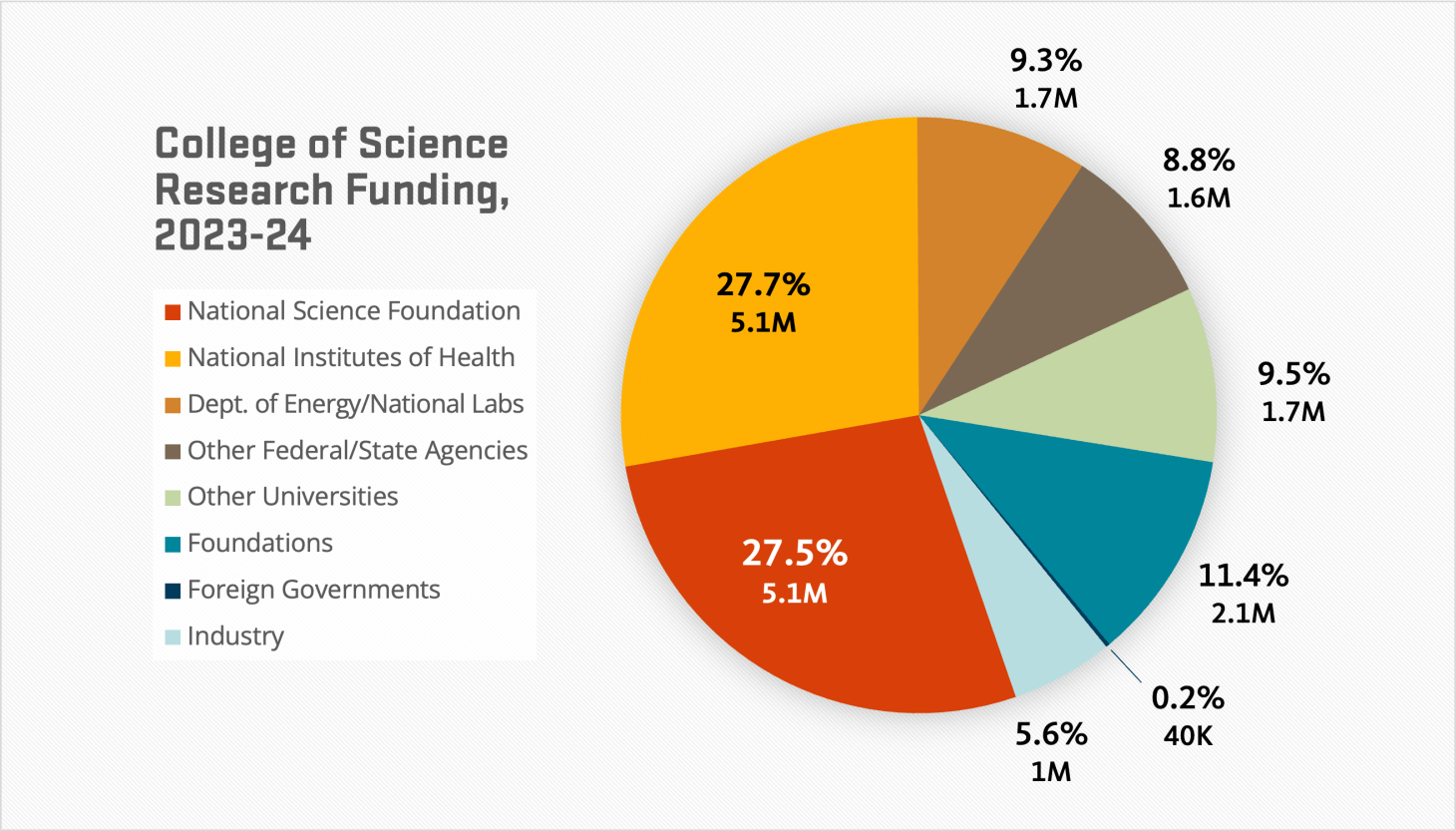
The figure below illustrates the breakdown of funding sources for the College, with the National Science Foundation (NSF) and National Institutes of Health (NIH) each awarding about $5.1M.

Pie chart showing Science Research Funding, with details in the following caption

Research funding in 2023-24 ($18.5M total) comprised investments mostly from federal and state agencies, including the National Science Foundation (25.7%–$5.1M), National Institutes of Health (27.7%–$5.1M), Department of Energy and National Labs (9.3%–$1.5M), and others (8.8%—$1.6M). Additional funds were provided by other universities (9.5%—$1.7M), foundations (11.4%–$2.1M), foreign governments (0.2%–$40K) and industry (5.6%–$1M).

Research funding propels Team Science forward

Oregon State University is focused on big discoveries that drive big solutions. Many science faculty received grants last year in support of discovery-driven science, applied and transdisciplinary research science education and innovation in OSU’s priority research areas of integrated health and biotechnology, climate science and solutions, robotics, data science and AI, and clean energy and solutions. Below are some of the highlights—not including multi-year projects started before 2023.

Faculty honors

Astrophysicist Jeff Hazboun received a $73K Faculty Early Career Development award from the National Science Foundation. This prestigious NSF early career award is highly coveted by faculty! Hazboun’s project includes curriculum development and the implementation of a summer workshop in astrophysics-themed data analysis designed to foster inspired teaching, stimulate excitement in pulsar timing array research, facilitate the learning goals of undergraduate and graduate students, and support the community college students’ transition into four-year schools.

Mathematician Christine Escher received a $50,397 award from the NSF to host the Pacific Northwest Geometry Seminar series over three years at various Pacific Northwest universities. Escher is the principal organizer of the conference. This award supports meetings of the Pacific Northwest Geometry Seminar (PNGS), a regional meeting for researchers and educators of geometry, to be held at the University of British Columbia (2025), Seattle University (2026) and Lewis & Clark College (2027).

Integrated health & biotechnology

Materials scientist Kyriakos Stylianou, along with members of the College of Pharmacy and the College of Agricultural Science, received $2 million from the U.S. Department of Agriculture to develop improved ways of preventing stored potatoes from sprouting, particularly in the organic sector. Stylianou’s team studied nearly 200 different plant essential oils for their anti-sprouting effects. Oregon, Washington and Idaho produce more than 60% of the potatoes grown in the United States, and Pacific Northwest potato cultivation is a $2.2 billion industry.

Microbiologist Maude David is part of a multi-institution research team to receive a $4.3 million grant from the U.S. Department of Agriculture to study European foulbrood disease (EFD) in honey bees. The group is investigating the factors contributing to the high incidence of infection, and will then share their findings with local beekeepers and growers to improve mitigation efforts. Beekeepers in Oregon typically pollinate about five different crops annually. If the colonies are weakened by EFD, this results in less pollination, which is a concern for blueberry and almond growers.

A scientist in a beekeeping outfit stands next to a honeycomb

Carolyn Breece from the OSU Honey Bee Lab shows Maude David a bee colony during a field trip.

Evolutionary biologist Michael Blouin was awarded $1.86M over five years ($371K per year) from the National Institutes of Health for his project entitled, “Genetic mechanisms of snail/schistosome compatibility.” Schistosomes are water-borne blood-flukes transmitted by snails, which infect over 250 million people in more than 70 countries and cause severe and chronic disability. A debilitating helminth parasitic disease of humans, vaccines are available for schistosomiasis. This project will identify new genes that make some snails naturally resistant to infection by schistosomes, revealing potential new ways to reduce parasite transmission at the snail stage.

Statistician Robert Trangucci received $164K from the University of Michigan for his project entitled, “Data driven transmission models to optimize influenza vaccination and pandemic mitigation strategies.” Selection bias is common in infectious disease datasets due to complex observational and biological processes, and bias can arise from covariate data which is missing due to analytical limitations. The research team is addressing the concern by extending existing models to accommodate risk and data gaps over time for application in vaccination and other novel datasets.

Chemist Dipankar Koley received $542K from the National Institutes of Health for his project entitled, “Microenvironmental characterization and manipulation to prevent secondary caries.” A common reason for dental replacement is a recurrence of caries around existing restorations caused by microbial activity. The project seeks development of new and innovative materials to bias this microbial environment toward improved dental health, and the researchers are investigating the use of cations of magnesium and zinc applied with specialized release platforms.

Collaborative research at the interface of robotics, computer vision and AI

Statistician Yanming Di received $249K from the U.S. Department of Agriculture for a project entitled, “DeepSeed: A computer-vision network for onsite, real-time seed analysis.” The Willamette Valley is considered the “grass seed capital of the world.” Seed testing, used for determining seed lot quality and establishing seed value, is a fundamental phase of the agricultural marketing system. With recent advances in robotics, computer vision, and AI, an opportunity presents itself for a new wave of innovations. This project utilizes AI and robotics to innovate devices and protocols for sampling grass seeds and a computer vision system for automated seed analysis. The investigators consist of experts in seed services, computer vision, statistics, and mechanical engineering.

California mussels at low tide, covered in barnacles

Mytilus californianus (the California mussel) is prey for many predator species, serves as a filter for ocean particulate, and harbors hundreds of other species. Threats to this normally resilient foundation species represent risks to the entire local marine ecology.

Climate science and related solutions

Materials scientist Kyriakos Stylianou received $689K from Saudi Aramco for a project entitled “New Generation of CO2 Capture Adsorbents: Synthesis, Performance under Humid Conditions, and Scaleup.” In this project, the Stylianou group aims to discover novel adsorbents for the selective capture of CO2 from diluted sources. Successful materials will undergo scaling up and evaluation for their efficacy in removing CO2 from air.

Marine ecologist Bruce Menge received $200K from the National Science Foundation for his project entitled, “RAPID: A subtle epidemic: unique mortality of Mytilus californianus on the Oregon coast.”

The research team is investigating the major changes occurring in the Pacific Northwest marine ecosystems, with evidence these communities exhibit low resilience to climate change. For example, sessile invertebrates (mussels, barnacles, etc) become more abundant while seaweed species (kelp, etc) decline.

Evolutionary biologist Kathryn Everson received two awards for $276K from the University of Kentucky Research Foundation for a project entitled, “The role of hybridization in generating biodiversity: Insights from genomics of Madagascar’s true lemurs (Eulemur).” This project is funded by the NSF to understand how new species form in the context of complex gene flow and to expose the genomic signatures of evolutionary processes. The researchers will characterize patterns of gene flow, selection, and genome architecture for a species of lemur to gain a genomic perspective on the evolution of species boundaries. In addition, the team will construct a hybridization model using data on geographic range, diet, and social behavior for this lemur.

Clean energy and related solutions

Aerosol chemist Alison Bain received $284K from McGill University for her project entitled, “Single particle measurements.” This research aims to understand the optical properties of stratospheric aerosols. Using single particle experiments under environmentally relevant temperatures and humidities, the team will extend a wavelength-dependent refractive index model to include these conditions. They are also looking at how atmospheric aging impacts the optical properties of these materials.

Chemist Wei Kong received $110K from the American Chemical Society for her project entitled, “Superfluid helium droplets as microreactors for studies of photochemistry of fossil fuel hydrocarbons: polycyclic aromatic hydrocarbons and the corresponding endoperoxides.” The project will use superfluid helium droplets as microreactors to investigate the kinetics of the photooxidation process of a major component of petroleum (polycyclic aromatic hydrocarbons, PAH). Using several analytical techniques, the team will test the hypothesis that supercooling the helium droplets will stabilize an excited state of the oxygen molecule and prevent further reactions.

Collaborative partnerships to fuel a thriving world

Biochemist Ryan Mehl received $234K from the NobleReach Foundation in partnership with the National Science Foundation. The project “Ideal eukaryotic tetrazine ligations for imaging protein dynamics in live cells” was selected as one of the first set of 11 national pilot projects to receive $234K from the NobleReach Foundation.The partnership seeks to identify and accelerate the translation of NSF-funded research into biotechnologies and bio-inspired designs with commercial and societal impacts. This pilot will help inform future translational funding opportunities along with enabling Professor Mehl and the other selected principal investigators to accelerate bringing their research to the market and society.

Biochemist Patrick Reardon received $500K from the National Science Foundation (NSF) Research Instrumentation Program for his project entitled, “MRI: Acquisition of Helium Recovery Equipment: An integrated system for helium capture and recovery for the OSU NMR facility.” This award supports the acquisition and installation of an integrated system for helium capture and recovery for the nuclear magnetic resonance (NMR) facility. Helium is in high demand and is used for a wide variety of industrial and research applications, and it is a non-renewable resource which highlights the need for laboratories to capture and recycle this important gas. The NMR lab is supported by funding from the National Institutes of Health, NSF, M.J. Murdock Charitable Trust, and OSU, and it is a core facility and cornerstone for groundbreaking research in interdisciplinary science and engineering, chemistry, biochemistry, and biophysics at OSU, throughout the Pacific Northwest, and beyond. The facility continually strives to enhance its state-of-the-art instrumentation for the highest levels of analytical performance.

Subscribe to Faculty and Staff