Mathematics

Mathematics

A graphic on a dark background of a star encircled by a circle.

Faculty excellence: Promotions and tenure 2020

By Cari Longman

The College of Science is proud to congratulate the following faculty for receiving promotions and /or tenure for the 2019-20 academic year. These faculty have achieved excellence in teaching, research and outreach. They have made an impact through scholarly accomplishments and their dedication to exceptional teaching.

I am very proud of our faculty who have received a promotion or tenure,” said Roy Haggerty, dean of the College of Science. “Their outstanding research, teaching, mentorship and service have enriched their fields and enhanced student success in the College and at OSU.”

Tremendous consideration goes into each promotion and tenure decision. The Provost’s Office, the College of Science Dean’s office, department heads, Promotion and Tenure Committee members, faculty, external reviewers, student evaluation committees, and individual faculty members all spend many hours preparing, processing and reviewing the documentation.

Special thanks to our College of Science Promotion and Tenure Committee for devoting a significant amount of time engaged in the intense review process.

Congratulations to the following science faculty:

Chemistry Department

Dr. Paula Weiss was promoted to Senior Instructor II of Chemistry. She currently teaches general chemistry, advises chemistry majors and serves as a mentor to chemistry education students. An advocate for improved STEM education, Weiss has been an Action Research Fellow through the ESTEME@OSU Project and is currently an Inclusive Excellence Fellow for the IE@OSU project.

Integrative Biology Department

Dr. Matt Orr was promoted to Associate Professor of Integrative Biology and granted indefinite tenure. He works at the OSU-Cascades campus in Bend, Oregon, and conducts research in topics spanning behavioral ecology, restoration ecology, and the application of restoration ecology to medicine. Being a scientific generalist has helped him to explore fields from a trans-disciplinary perspective and offer undergraduate students a wide array of research experiences that match their interests.

Dr. Kirsten Grorud-Colvert was promoted to Associate Professor, Senior Research. She is a marine ecologist who studies what happens when areas of the ocean are protected and how we can use that information to improve ocean conservation and management. She works at both the global and local levels, and her interests span research, policy, and outreach.

Dr. Stephanie Bollmann was promoted to Senior Faculty Research Assistant I in Integrative Biology. For the past five years, Bollman has worked in Michael Blouin’s lab in the Department of Integrative Biology, studying the genetic basis for resistance to Schistosoma mansoni in Biomphalaria glabrata, aquatic snails which are an obligate host for the human parasite which infects millions of people worldwide. She also studies the negative effects of current hatchery practices on the reproductive fitness of steelhead salmon.

Brittany Poirson was promoted to Senior Faculty Research Assistant I in the Menge–Lubchenco Laboratory. She studies the interactions of intertidal invertebrates and algae along the Oregon and California coasts and is involved with the Partnership for Interdisciplinary Studies of Coastal Oceans, the Long Term Research in Environmental Biology and the Seastar Tragedy and Recovery Study projects.

Dr. Nathan Kirk was promoted to Senior Instructor I of Integrative Biology. Kirk is a molecular ecologist interested in coral symbioses ranging from mutualism (where both partners benefit) to parasitism. He is also keenly interested in the incorporation of educational best practices to increase equity and inclusion in the classroom. In 2019, Kirk received the Loyd Carter Undergraduate Teaching Award for his effective and inspirational approach to teaching undergraduate biology students.

Mathematics Department

Dr. Filix Maisch was promoted to Senior Instructor II of Mathematics. Maisch is a Peruvian-American from California who earned his doctorate in mathematics from the University of California, Santa Cruz. He loves to teach others about the beauty and elegance of mathematics.

Physics Department

Dr. Davide Lazzati was promoted to Professor of Physics. The Lazzati Group performs research in theoretical astrophysics and is currently focused on understanding the physics of Gamma-Ray Bursts and of Cosmic Dust.

Dr. Ethan Minot was promoted to Professor of Physics. He focuses on experimental physics, investigating applied physics questions related to nanoscale systems such as carbon nanotubes and graphene. This line of research impacts a range of industries, from solar energy harvesting to medical diagnostics.

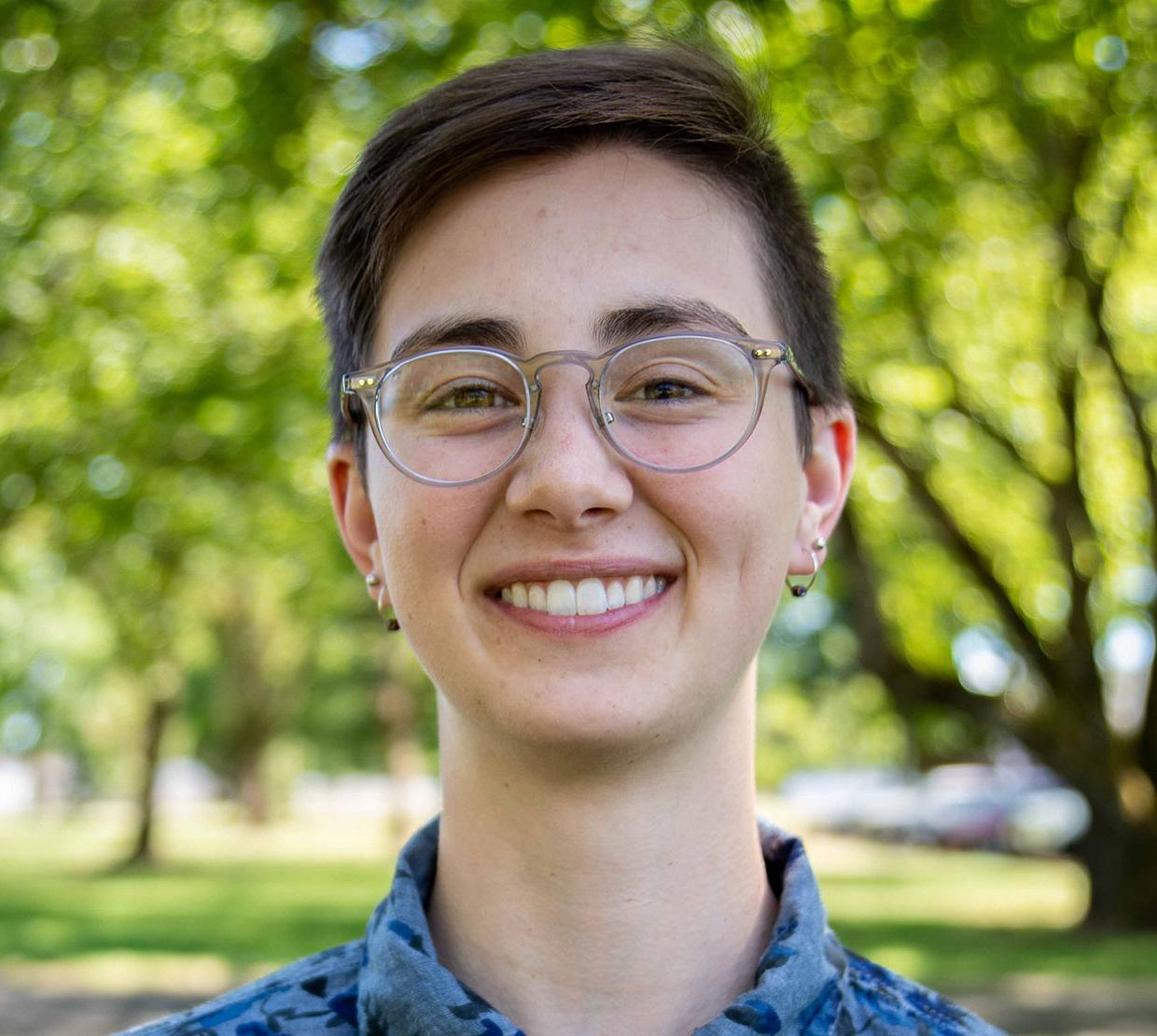
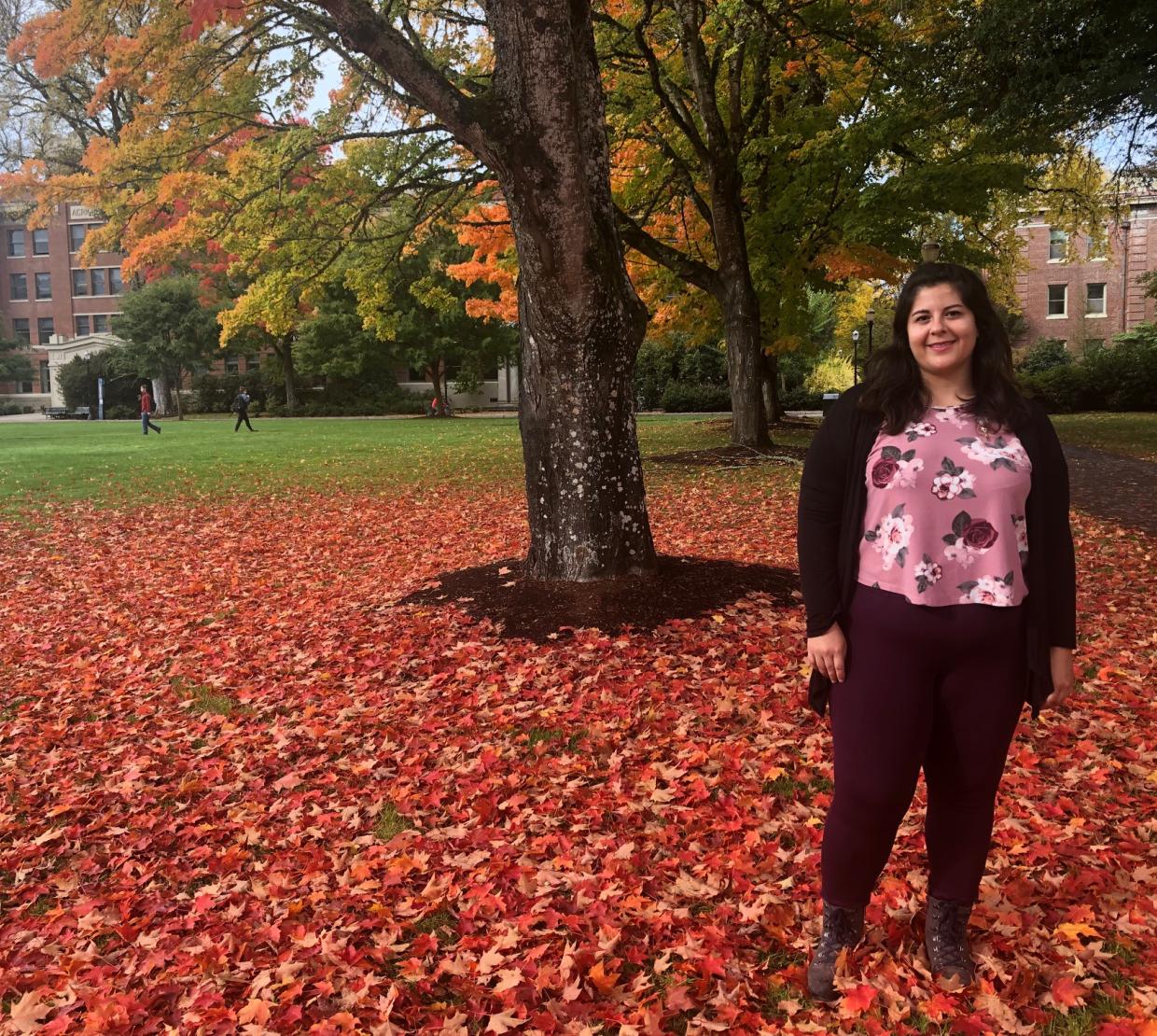
Megan Tucker standing in park

Mathematics and writing senior awarded Department of Energy fellowship

By Srila Nayak

Megan Tucker, a mathematics senior, was awarded the Mickey Leland Energy Fellowship by the U.S. Department of Energy.

As a high school student in Santa Cruz, California, Megan Tucker picked Oregon State University as one of her top two choices for a major in nuclear engineering. Although she opted for a physics major with an emphasis on physical chemistry in her freshman year, before switching to mathematics, the nuclear reactors on campus were what lured her to OSU in the first place. On her first visit, Megan also fell in love with the beautiful campus.

“I really liked the curriculum. I liked the faculty and students I met during my visit. I learned I could do a minor in writing which was very uncommon.” She had found the perfect combination of elements for her undergraduate experience and decided to look no further. And although her priorities would shift and change as she discovered more about herself and her interests, Megan has managed to find the right academic niche at OSU.

“Regardless of what job it is, technical or creative, to be able to show that one can write and communicate is very important.”

Now a double major in mathematics and writing, Megan Lynn Tucker has excelled at and enjoyed the wide gamut of courses at Oregon State University, from Metric Spaces and Topology to Environmental Writing. She will graduate next month with a substantial amount of research experience under her belt: Megan was awarded the Mickey Leland Energy Fellowship, which gave her the opportunity to work on an interdisciplinary team at the National Energy Technology Laboratory (NETL) in Albany, Oregon, during the summer of 2019.

The Mickey Leland Fellowship Program provides students across America with educational opportunities to gain real-world, hands-on research experience with the Department of Energy’s Office of Fossil Energy. Megan’s 10-week internship took her to NETL’s Geospatial Analysis, Interpretation and Assessment (GAIA) Computational Facility where she performed geospatial data analysis and statistics related to carbon storage modeling. The GAIA computational lab works on creating models for oil, gas, and rare earth elements. Megan gathered and analyzed wellbore data on a state level to assess availability, consistency, and usability.

“Most of my summer was spent learning about the topic as I have little to no geology background. As the lab was multidisciplinary, I had meetings and conversations with colleagues whose areas of expertise overlapped with this project,” said Megan. “I learned about a variety of topics in geochemistry, petroleum engineering, and geography.”

While focusing on statistical and data errors and trying to account for those inconsistencies to make reliable inferences, Megan discovered how mathematics could be applied to real world problems. She presented her research on wellbore data and carbon sequestration at a Department of Energy conference in Pittsburgh in August 2019.

“The mathematics major taught me to think logically and intuitively, and that has been helpful with pretty much all my STEM classes.”

Megan says the most important skills and values she learned at OSU have to do with lifelong learning and mastering the knack of teaching oneself. “The best thing I learned in college is how to read a textbook, how to do actual scientific research and obtain information that is good, viable and trustworthy.” She was able to transfer her self-reliance to her NETL internship where she quickly learned software applications to perform data analysis. With no prior knowledge, Megan taught herself and became proficient in programming languages such as ArcPro and R.

The new knowledge gained from her internship has been an asset at job interviews. After graduation, Megan will move to Seattle to work as a technical writer with Amazon Web Services — a subsidiary of Amazon that provides on-demand cloud computing platforms to individuals, companies and governments.

“I talked about my software skills a lot during my interviews. Also, the fact that I had written a formal paper, done a presentation and engaged in research as a mathematician,” Megan said. “Regardless of what job it is, technical or creative, to be able to show that one can write and communicate is very important.”

With painstaking determination, Megan applied to nearly 50 jobs before getting the offer from Amazon. Initially interested in data science jobs, she came to realize through the job search process that she really didn’t want to do data science. “Instead, I wanted to write about data science and technical documentation. Getting to know exactly what kind of position I was looking for was very helpful,” Megan observed.

Megan found the knowledge she gained from her technical writing and computer science classes to be particularly useful in her job interviews. She is graduating with an impressive variety of coursework that includes computer science and chemistry in addition to mathematics and writing, a testament to the unique breadth and flexibility of undergraduate studies at OSU.

“I had taken so many mathematics courses that computer science classes became a lot easier for me,” Megan said. “The mathematics major taught me to think logically and intuitively, and that has been helpful with pretty much all my STEM classes.”

Megan switched to mathematics from physics when she found herself enjoying her math classes and realizing that she needed to further explore and understand the fundamentals of the subject beyond what she was getting as a physics major. Her favorite mathematics classes have included Complex Analysis and Linear Algebra. To her pleasant surprise, she has seen the latter pop up everywhere from her courses in quantum mechanics to chemistry and computer science.

A valedictorian, Megan has maintained a very impressive GPA and was elected to the Phi Beta Kappa Honor Society. Beyond all her positive academic experiences, Megan says the most enjoyable part of her undergraduate years has been her discovery of dancing. Introduced to dance at OSU, Megan has mastered ballroom and swing dancing and calls her involvement with the OSU ballroom dance club one of the best things in her life.

“I have had a great academic experience. But being connected to your cohort and not staying isolated is also very important,” said Megan. “Finding your community and making friends helps you not only learn and do well in classes, but also helps you gain social skills and grow as a person.”

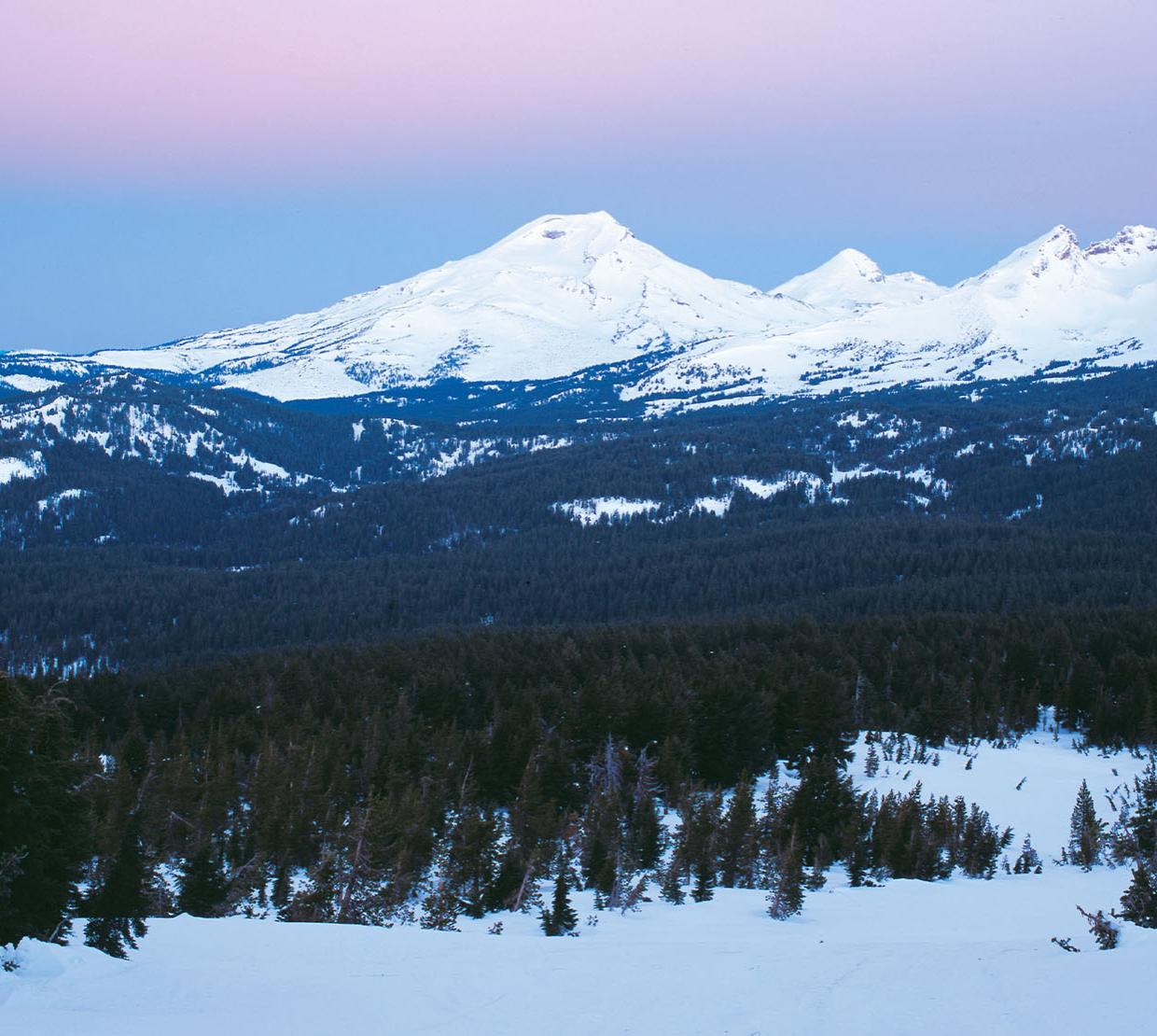
Three Sisters covered in snow.

Cascade RAIN 2020

The Department of Mathematics at Oregon State University (OSU) recently hosted the seventh annual Cascade Regional Applied Interdisciplinary and Numerical Mathematics (RAIN) Meeting. Due to the COVID-19-related closure of campus, the meeting was held online via Zoom. Thus, this was the first RAIN meeting in the Cloud.

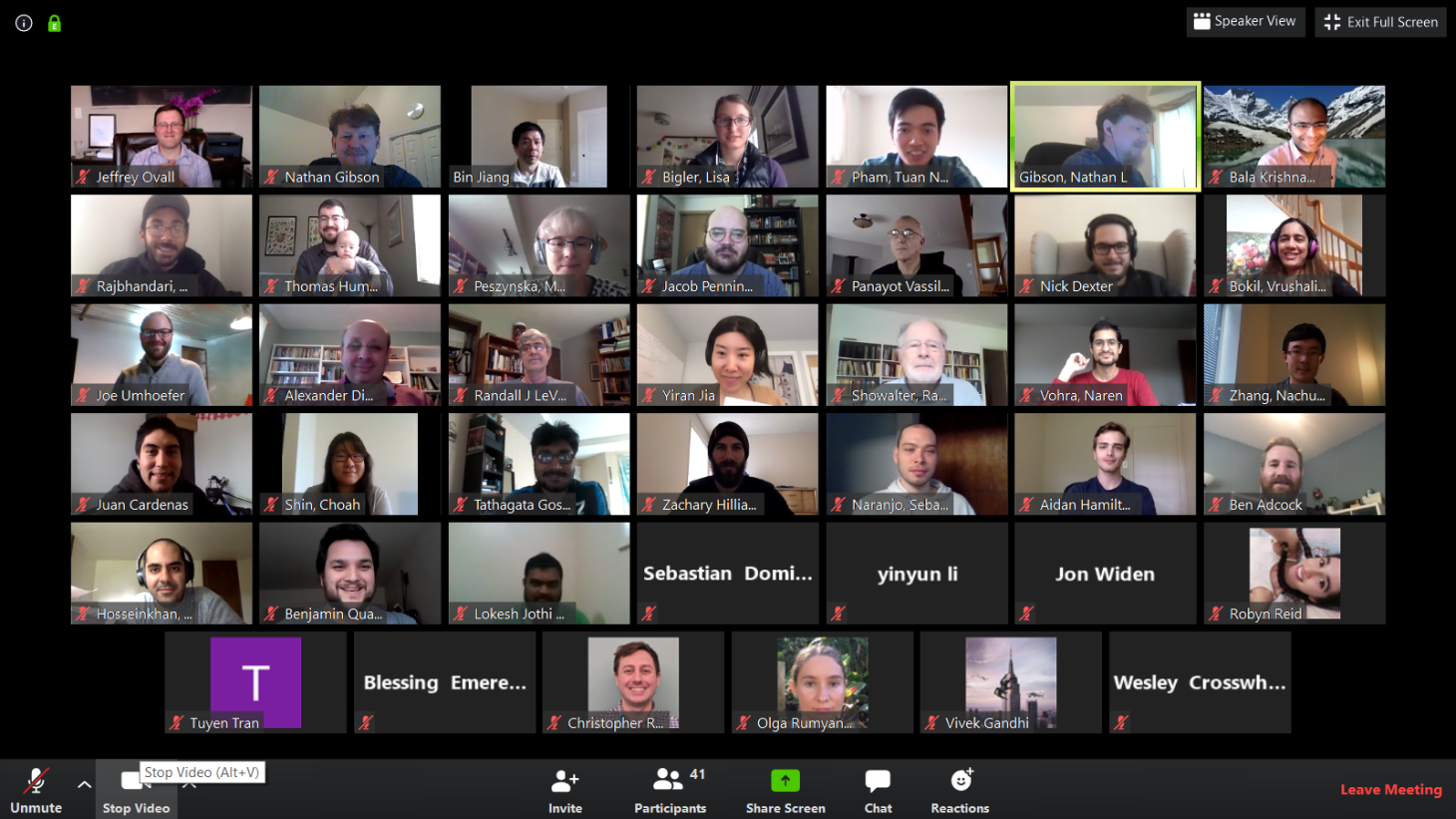
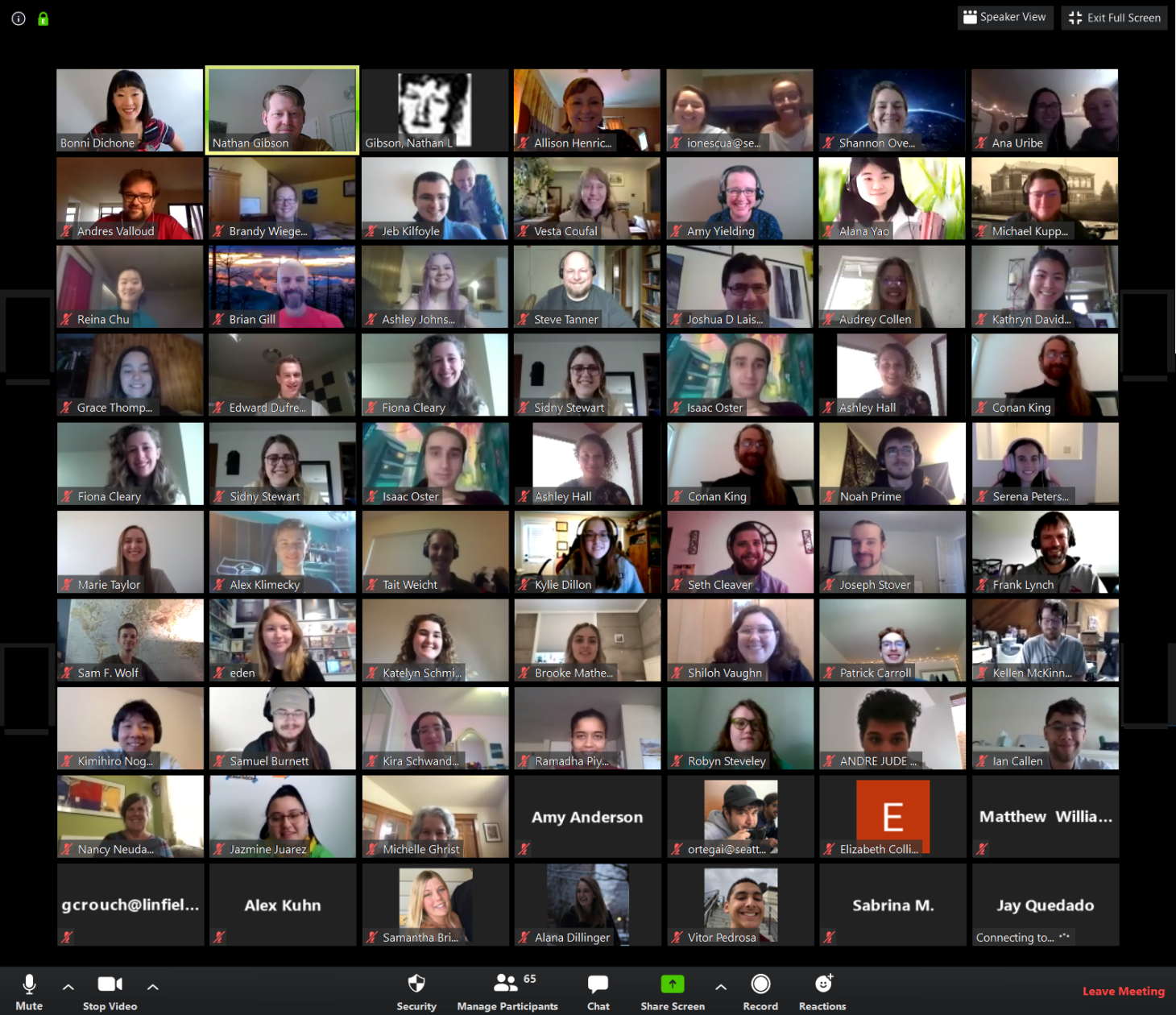
A screenshot of a zoom call with participants of Cascade RAIN.

Seventh annual Cascade RAIN Group Photo (screenshot)

The first edition of the Cascade RAIN Meeting was held in Corvallis in 2014, consisting primarily of mathematics faculty from Oregon State and Portland State Universities. It has subsequently grown to be an annual meeting bringing together researchers from across the Pacific Northwest (and occasionally beyond). A list of previous editions of the conference is provided at https://sites.google.com/site/cascaderainmeetings/events-list.

The RAIN meeting is a gathering of researchers for rapid and informal communication of ongoing research activities in computational and applied mathematics in the northwest region. It is intended to complement the annual PNWNAS and biennial SIAM PNW Section meetings, which feature longer lectures by invited speakers. At RAIN, talks from graduate students are encouraged. The meeting format is similar to the Finite Element Circus, in that the speakers, talk time and speaker order are all determined at the opening of the meeting. The talk length is determined by the total available time divided by the number of speakers, with talk duration typically ranging between 10 and 15 minutes. Typically volunteer speakers write their names and talk titles on a slip of paper to be placed in a hat for a random draw that determines the talk order. On Zoom, speakers announced their talk titles via Chat and a Google Sheet was used to randomize the speaker order.

There were nearly 60 participants attending (including two who registered “on site”), with 15 volunteering to speak. Originally there were only 14, but that would have meant an awkward 21 minutes per talk, so Prof. Nigam from Simon Frasier University (SFU) persuaded her student Javier Almonacid to present a very well-done talk at very short notice!

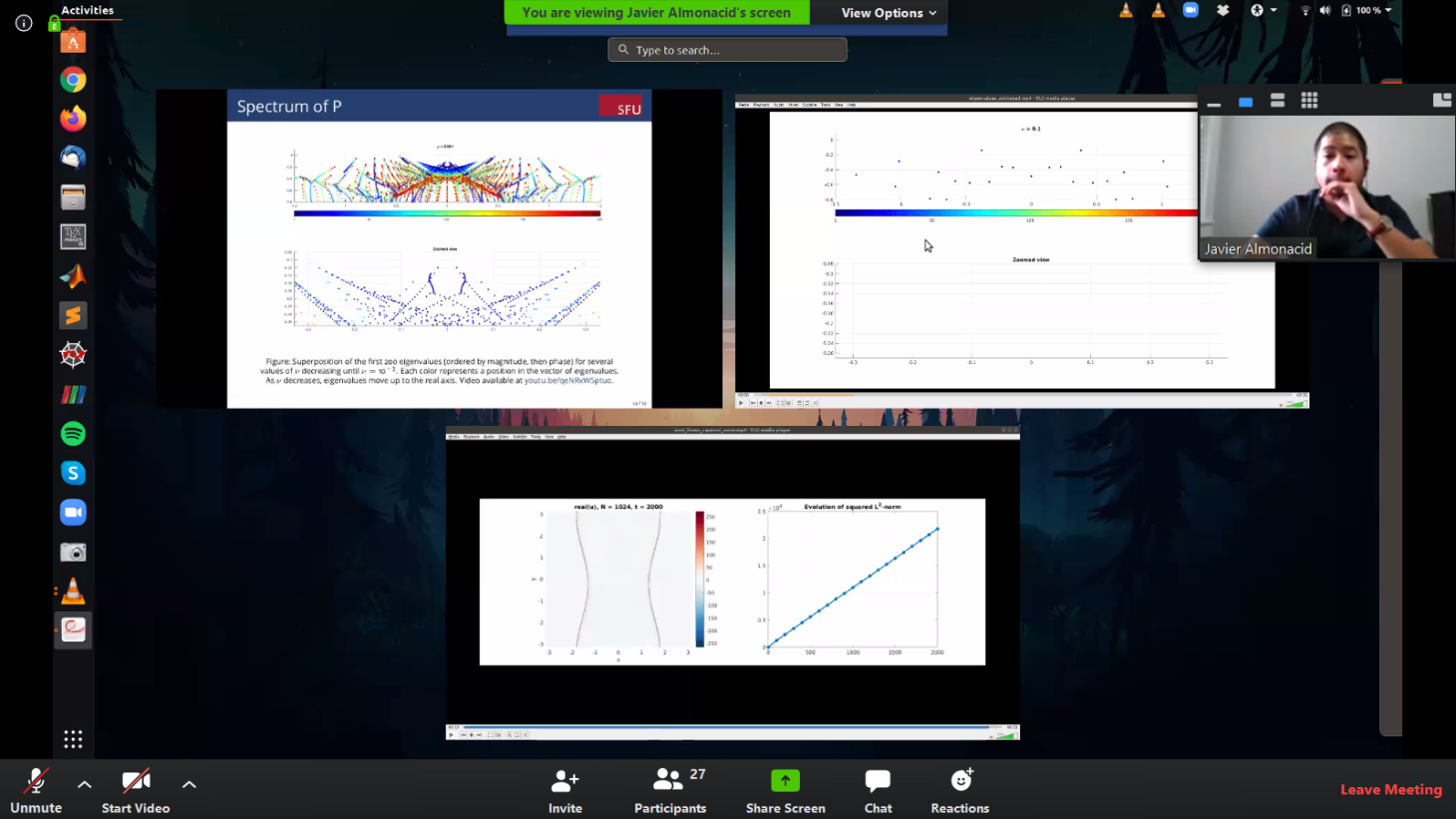
Javier Almonacid presenting through Zoom.

Javier Almonacid, Graduate Student, SFU, “Singular Solutions and the Spectrum of Zeroth-order Pseudo-differential Operator”

As there are no parallel talks at a RAIN meeting, logistics was simple; only one Zoom “room” was used. Coffee breaks were shorter than usual as there were no lines at the restrooms! And while there were hiccups (everyone inexplicably got disconnected from Zoom several minutes into the meeting), the quality of the talks and the value of just having this forum for the dissemination of research, made the inconvenience of the venue negligible.

“I was actually pleasantly surprised to see how effective a virtual meeting could be.” --Ralph E. Showalter, Professor, Oregon State University

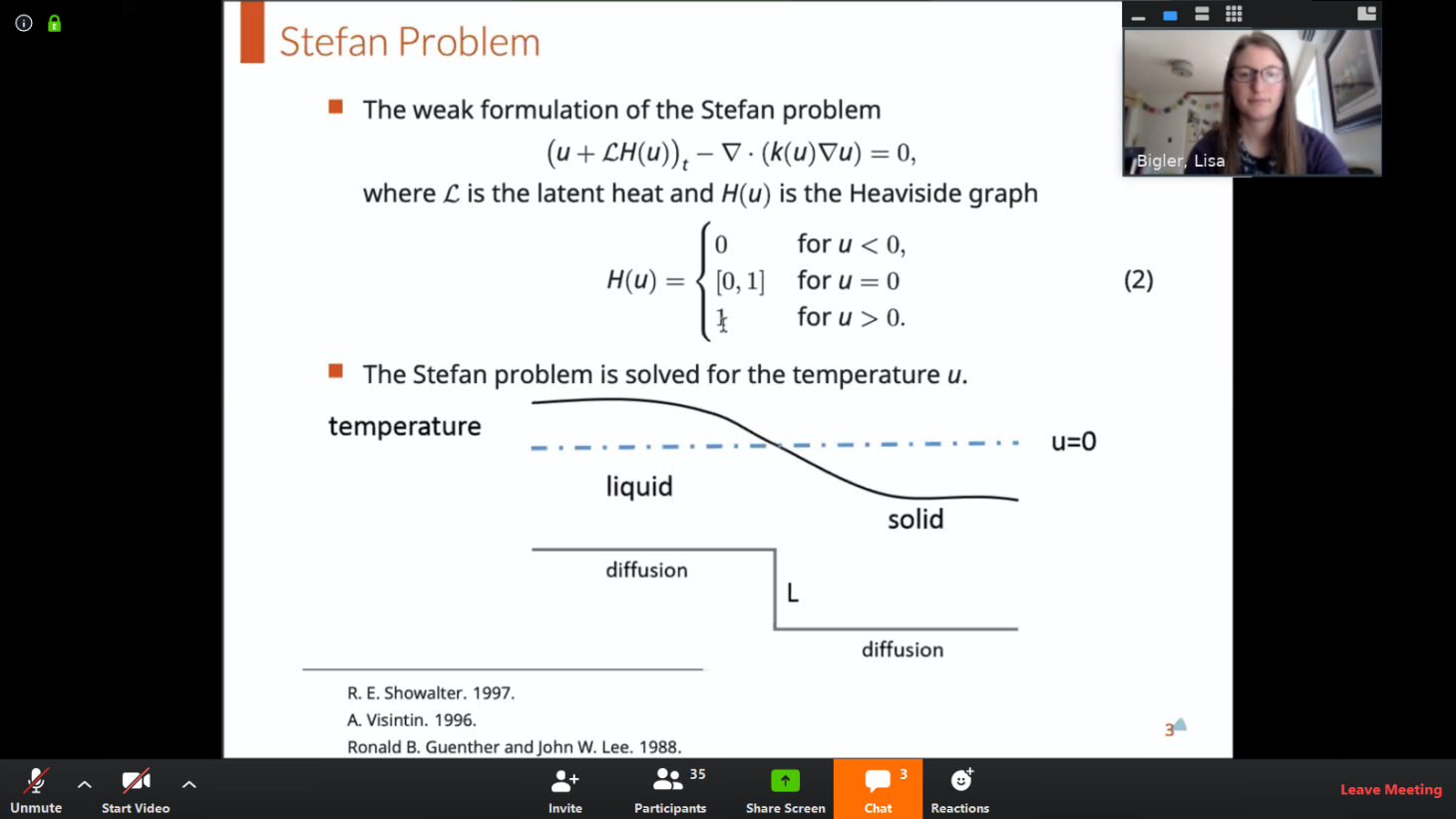
Lisa Bigler presenting through Zoom.

Lisa Bigler, Graduate Student, OSU, “Computational Modeling of Phase Transitions Geared Towards Permafrost Modeling”

Talk topics ranged from “3D muscle modelling” to “Statistical Forest Modeling”; from “Iterative Reconstruction of Sparse View and Limited Angle CT Data with Learned Penalty Terms” to “Predicting the Spatial Confinement of Localised Eigenmodes”; and from “Soft Matter Surface Features using Geometric Measure Theory” to “Matrix Factorization and Deep Model Compression”.

“Wow .. very impressive set of topics” --Robert T. Brigantic, Ph.D., Operations Research Scientist,Pacific Northwest National Laboratory

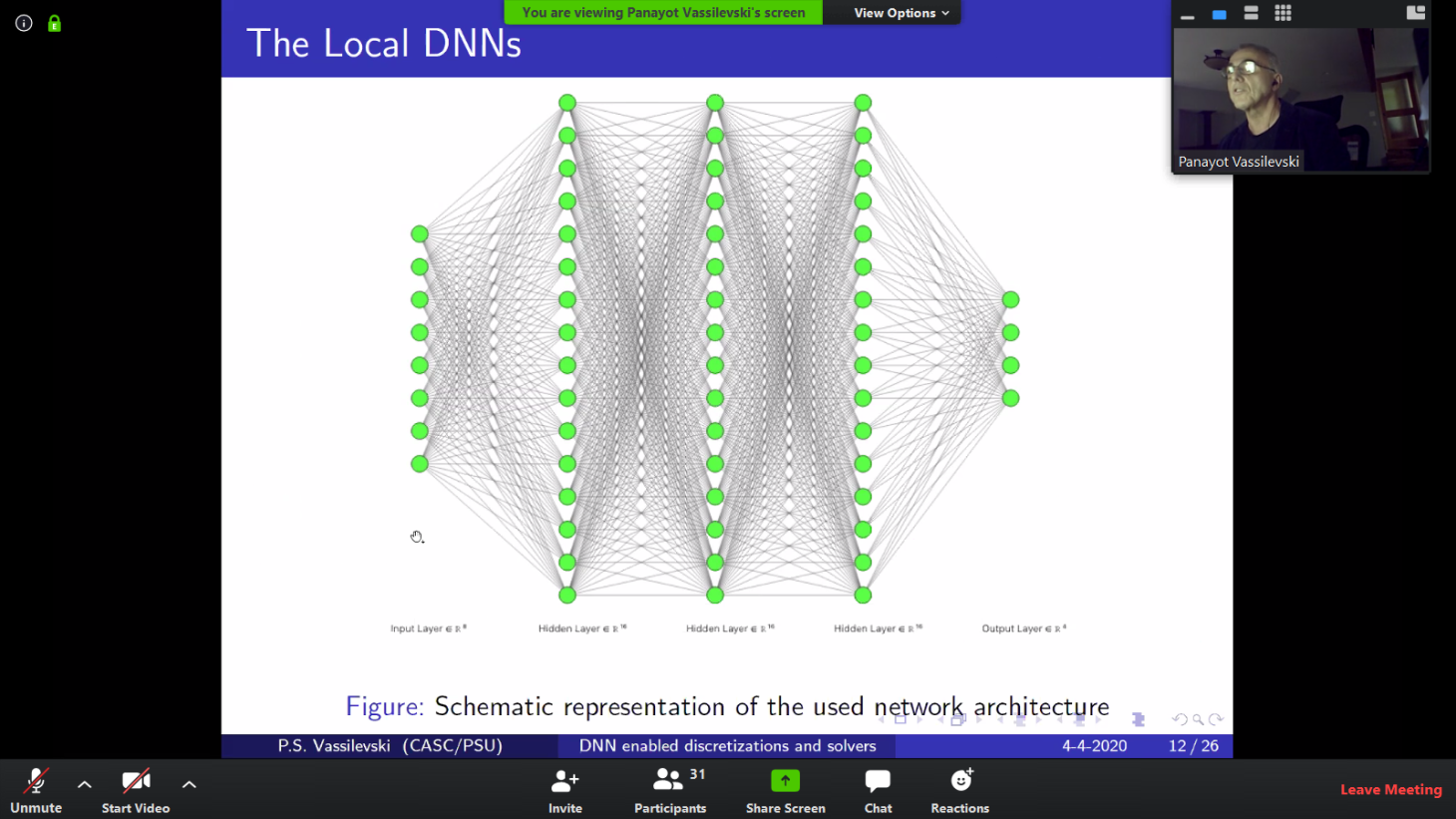
Panayot Vassilevski presenting through Zoom.

Panayot Vassilevski, Portland State University, “DNN Enabled Discretizations and Solvers”

Some talks were given traditionally, with slides and perhaps videos of simulations, while one was handwritten on a tablet and another was an overview of several papers in a pdf viewer! Some speakers decided to dress for the occasion, donning bow ties and sport jackets. It was an unusual realization of an already atypical meeting. In many ways the virtual format was not ideal, but in others it was convenient. A speaker’s co-author from Maryland was able to effortlessly attend this usually regional meeting. The internet has a way of putting us all the same distance from each other, even if that is not always as close as we would like.

The local organizers for this year’s meeting were: Nathan L. Gibson (chair), Blessing Emerenini, and Tuan Pham. Significant contributions to planning were made by the Steering Committee: Malgorzata Peszynska, Thomas Humphries, Bala Krishnamoorthy, Jay Gopalakrishnan, Jeffrey Ovall, Nilima Nigam, Ralph E. Showalter, and Milagros C. Loreto. Funding support had been pledged from the SIAM PNW Section, the OSU College of Science, and the OSU Mathematics Department.


This article was created by the Newsletter/Media Committee. Please email [email protected] with any comments.

Banner for the Northwest Undergraduate Mathematics Symposium.

NUMS 2.0

The 12th annual Northwest Undergraduate Mathematics Symposium (NUMS) was planned to take place on Saturday, April 18, 2020, in conjunction with the 3rd annual Pacific Inland Mathematics Undergraduate Conference (PiMUC), at Seattle Pacific University in Washington. And then COVID-19 happened. As national and international conferences (not just in mathematics) around the world were being cancelled, opportunities for students to present their work were evaporating. The NUMS steering committee, along with the PiMUC organizers, were determined to hold the line. A last minute effort (only a month before the meeting date) was started to move the entire meeting online to a virtual venue via Zoom.

NUMS and PiMUC are regional mathematics conferences providing a venue for undergraduate students in the Pacific Northwest to present mathematical research and projects, including REUs, senior projects, COMAP solutions, etc.

The Oregon State University Math Club, the Pi Mu Epsilon (PME) Oregon Beta Chapter, the OSU student chapters of the Society for Industrial and Applied Mathematics (SIAM), and the Association for Women in Mathematics (AWM) organized the first annual NUMS meeting at Oregon State University (OSU) in Corvallis on Saturday, May 9, 2009. There were 33 attendees including 17 speakers filling two parallel sessions. The local venue served as an effective training opportunity for the national stage; several of the first NUMS participants went on to present at MathFest 2009 in Portland. In fact, two of the six 2009 Pi Mu Epsilon Presentation Prize winners were NUMS participants! Subsequent NUMS meetings have been held throughout Oregon and Washington including at Willamette University, Linfield College, Reed College, University of Washington, Tacoma, Western Washington University, Lewis and Clark College, among others. The conference series has been supported by the National Science Foundation and PME.

PiMUC was first hosted at Gonzaga University in 2018. Many of the universities and colleges in the Pacific Inland Region are isolated. The conference goal is to provide an opportunity for these students to meet each other, show off their hard work, and bond over their love of Mathematics.

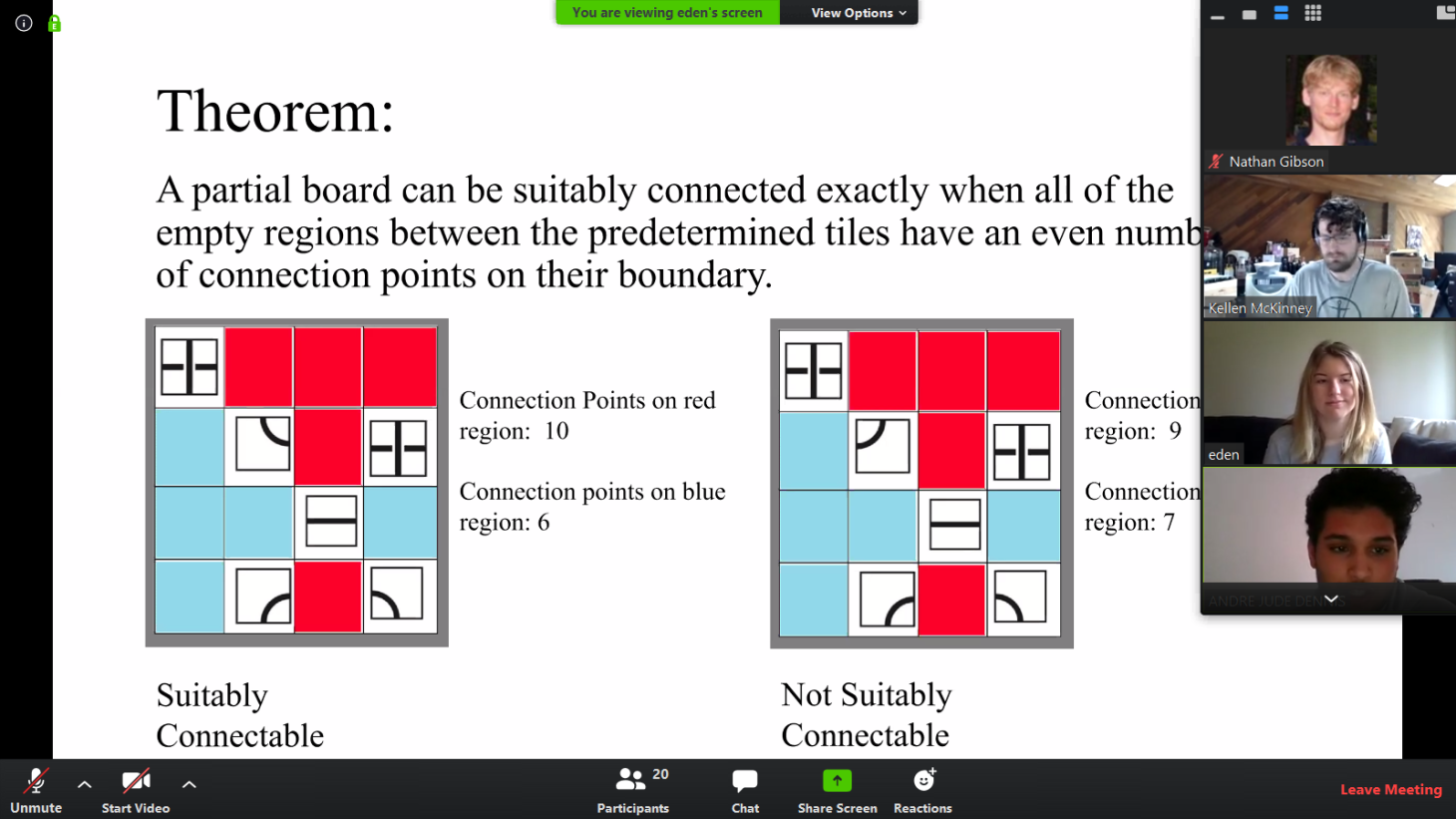
Screenshot of participants of NUMS/PiMUC 2020 on Zoom.

NUMS/PiMUC 2020 Group Photo (screenshot).

For 2020, the combined meeting was virtually hosted by OSU using Zoom. There were 28 talks and 3 posters presentations, with 65 participants overall connecting from their respective homes all over the Pacific Northwest. Several of the talks were group presentations. Students showed off their technological prowess by taking control of each others’ shared screens seamlessly as they took turns talking. One student in particular, Jazmine Juarez, was a speaker in three different presentations! She had participated in both an REU at UCSD and a research group at EOU. Originally her two EOU research partners were going to present by themselves, but they were each home in very isolated rural villages in Idaho and Oregon. In fact, when they practiced their talks, the internet would often drop out. Thus for the meeting, Jazmine was the one sharing her screen to ensure the talks didn’t get interrupted.

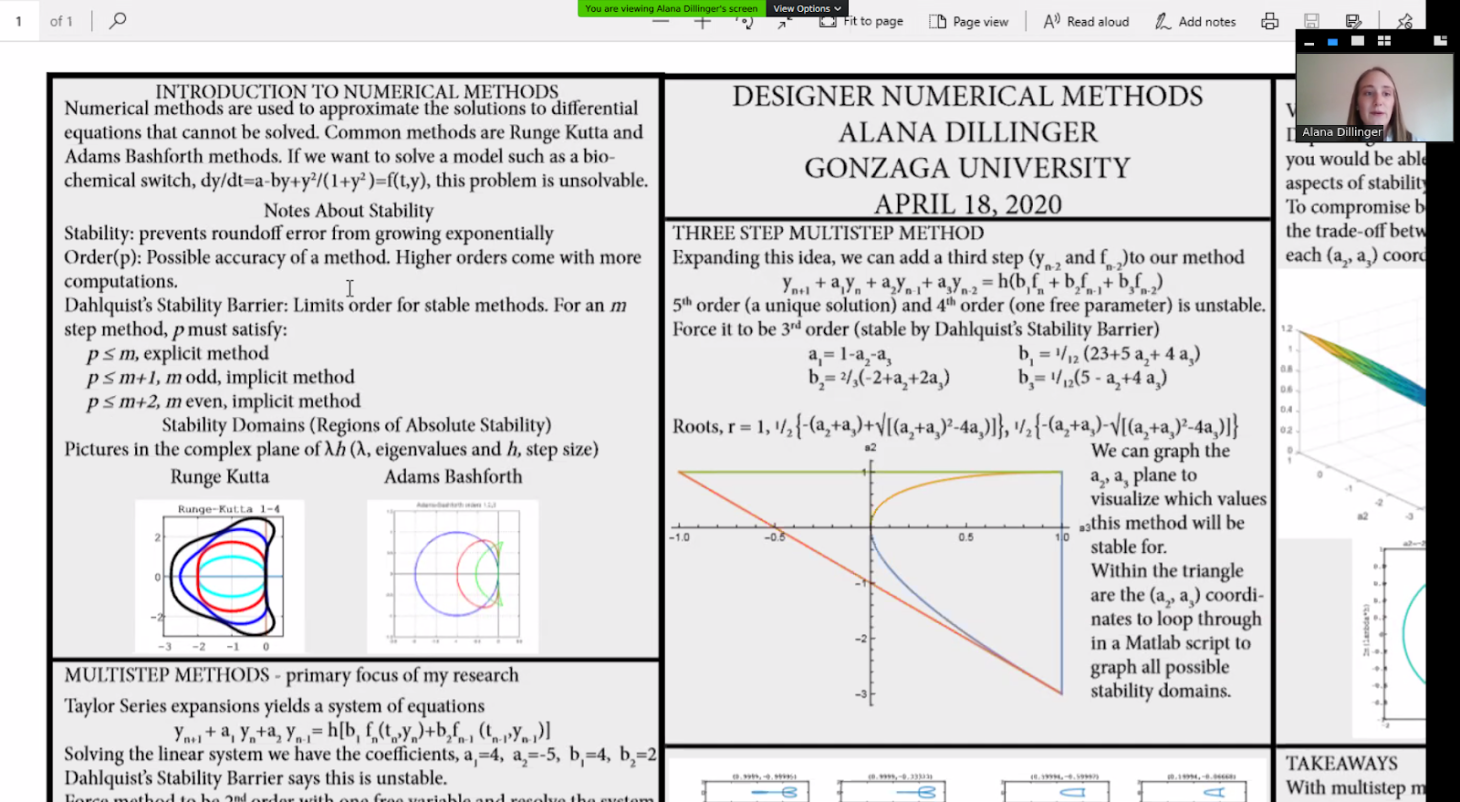
Group presentation at NUMS.

One of several group presentations.

The presentations and posters were given in three different "rooms"; there were two Presentation Sessions with one Poster session in between. The poster session featured the presenter sharing their screen and viewers were able to ask questions directly to the presenter, rather than having a formal talk. The poster PDF files were posted in advance on the PiMUC website so that viewers could zoom in for a closer look.

Group presentation during NUMS.

One of several virtual poster presentations.

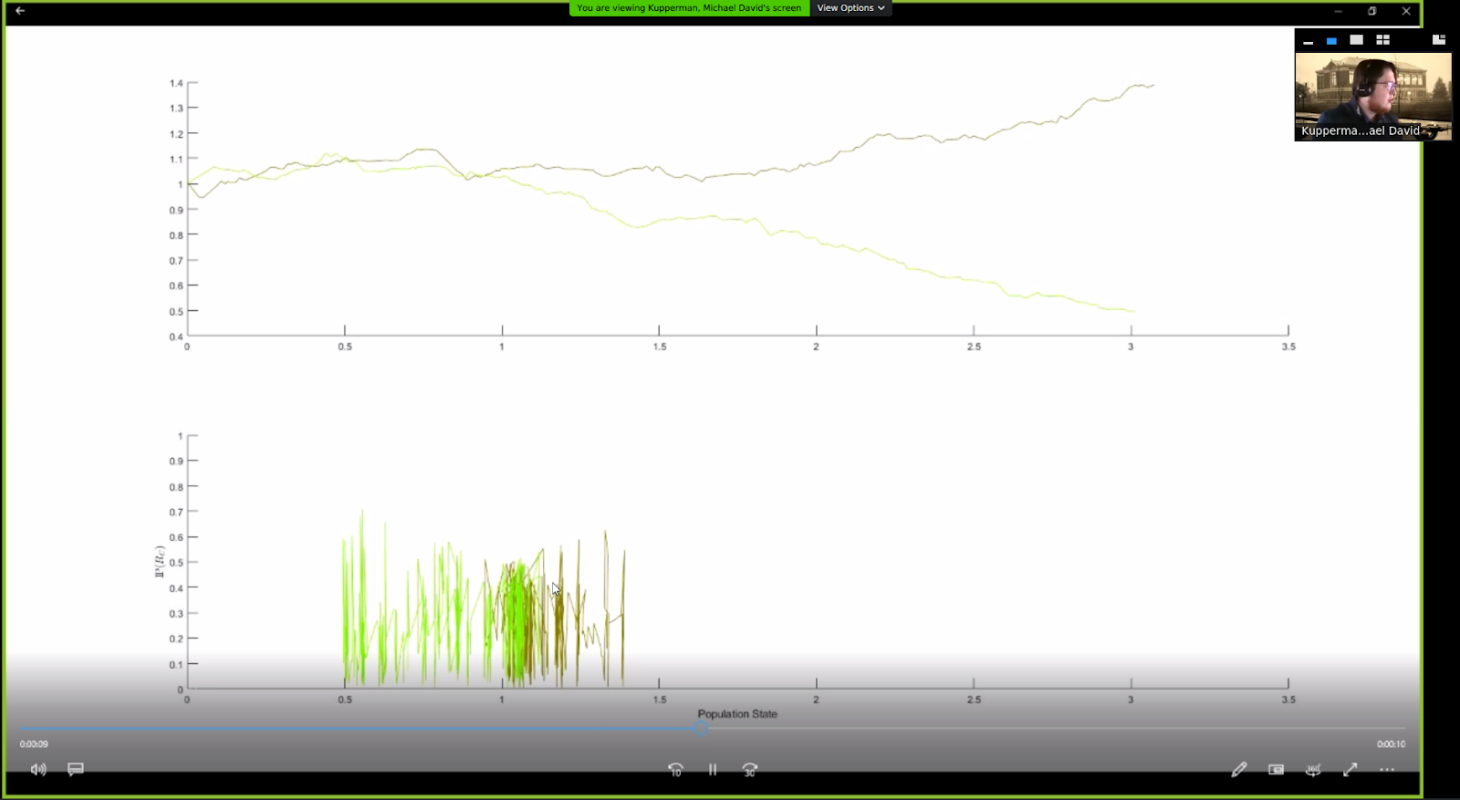
Other students took advantage of the virtual format by making great use of videos of numerical simulations, which are less common in traditional presentations (mostly because speakers at in person meetings are discouraged from using their own computers due to the time required to change out cables!). These included OSU’s own Michael Kupperman, who spoke on “Stochasticity and Stability in Ecological Dynamics: Walking the line between Existence and Extinction”.

Presentation by Michael Kupperman during NUMS.

Video of a numerical simulation by Michael Kupperman.

As is usual for the NUMS meetings, presentation prizes were awarded. This year the cash prizes, totalling $200, were sponsored by a Prize Grant from Pi Mu Epsilon, which was matched by the MAA PNW Section. The 31 presentations were judged by (anonymous) faculty participants using a Google Form. Over 120 votes were cast (thus an average of 4 judges per talk), rating talks based on Organization, Presentation, Understanding, Research Quality, and other considerations. The top four presentations were honored. The presentation winners were: Kathryn Davidson, UWT (First Place), Brooke Mathews and Isaac Ortega SU (Second Place), Amy Jenson, UASE (Third Place), Andres Valloud, WOU (Fourth Place).

“I am so honored to receive this award! A big thanks to all of the coordinators of NUMS/PiMUC for the opportunity to present, listen to other undergraduate research presentations, and win this award." -- Kathryn Davidson, UWT

Presentation by Kathryn Davidson during NUMS.

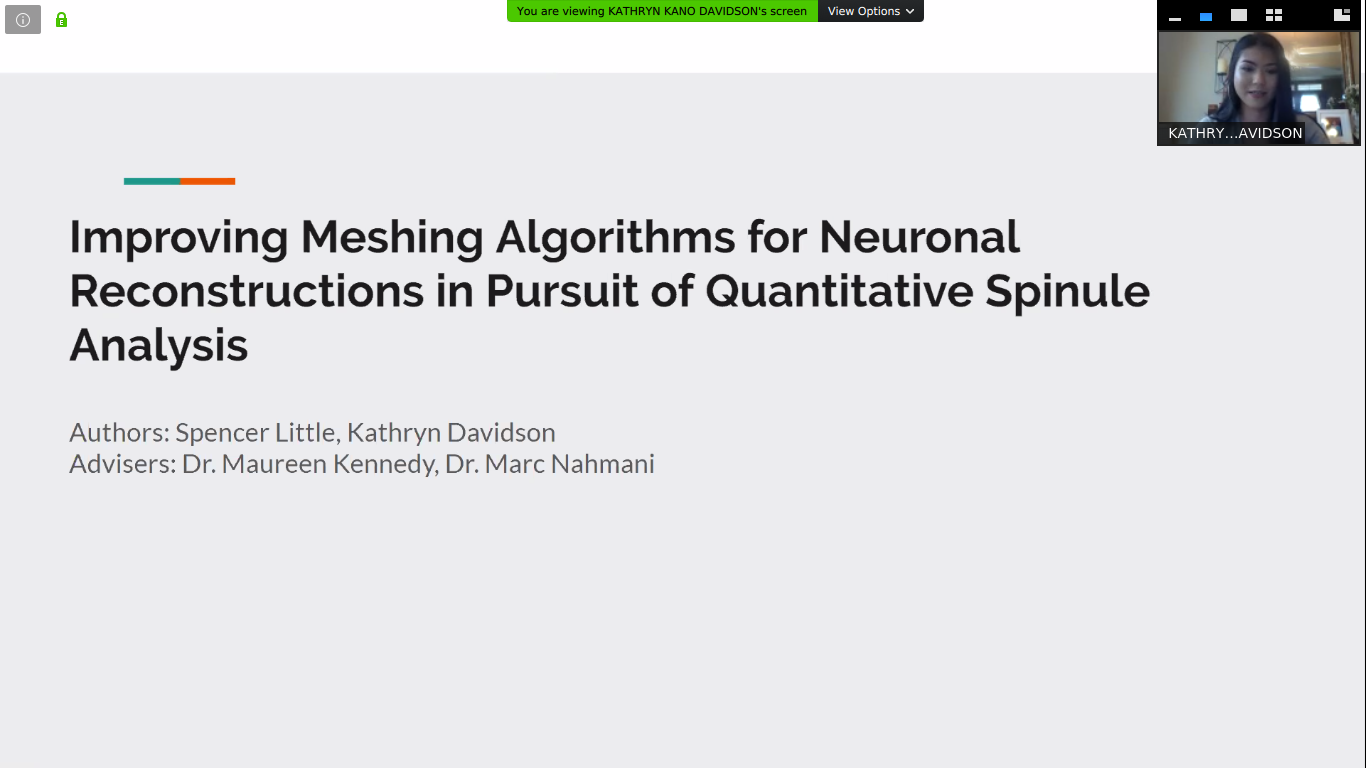
Kathryn Davidson, UWT (First Place Presentation Award), speaking on “Improving Meshing Algorithms for Neuronal Reconstructions in Pursuit of Quantitative Spinule Analysis”

The consensus among the faculty was that many of the talks were exceptional, and it was really difficult to choose which “room” to visit. Some faculty resorted to logging in on multiple devices to watch more than one talk at a time, try that IRL! (IRL: “in real life”.) According to Amy Yielding, Professor at EOU, “I am impressed by all of our speakers. This term has been rough and I am so pleased to see our students throughout the PNW commit to showing off their excellent work!”

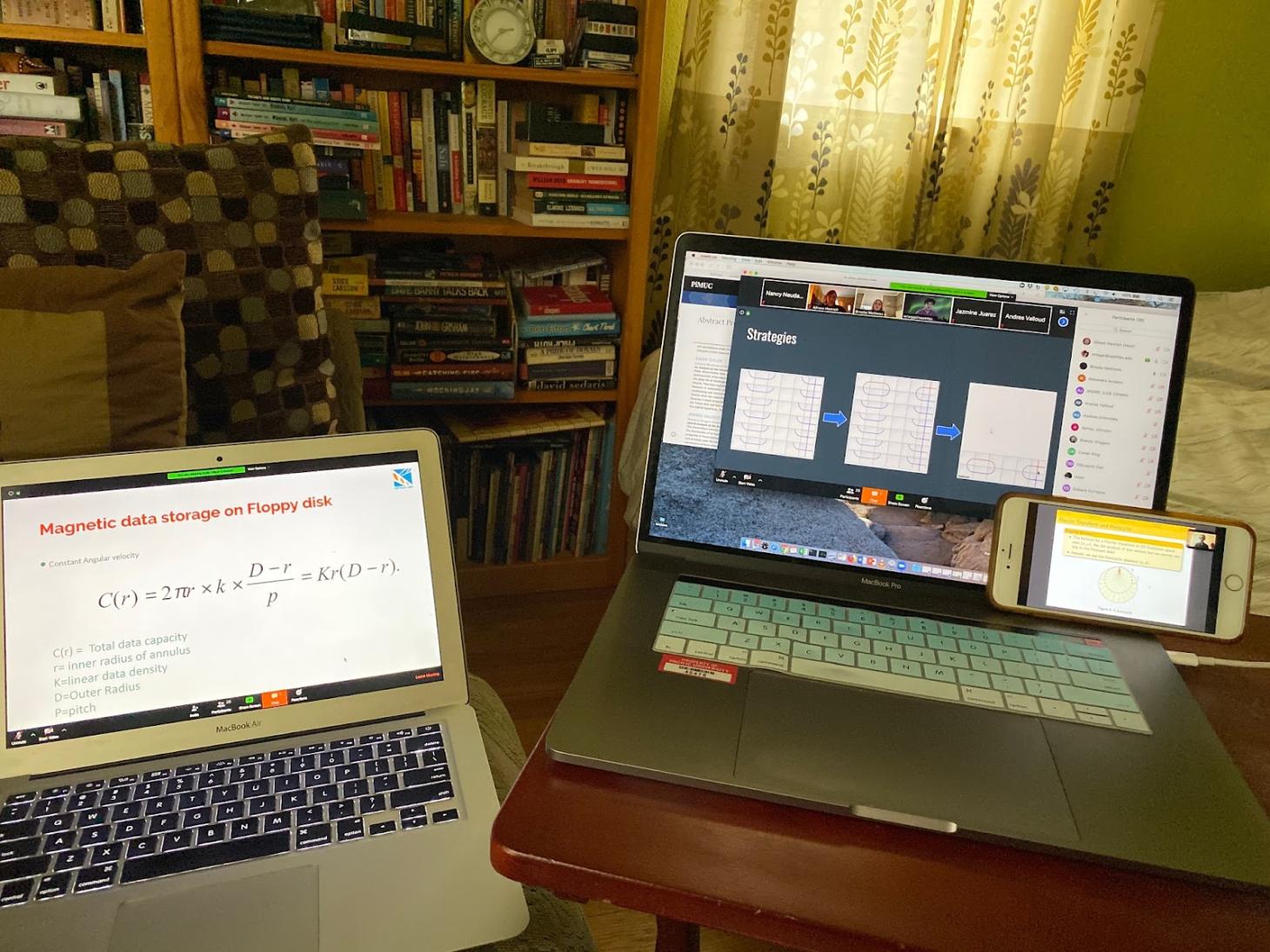
Three devices hosting zoom calls simultaneously.

A faculty participant in three talks at once!

Students commented in the chat about how much they appreciated having the opportunity to present their work, in some cases, senior theses which they may never have a chance to present again. Faculty were glad to be able to show funding agencies that the work students had accomplished was being disseminated. Michelle Ghrist, Professor at Gonzaga University, commented “I am amazed at how well it turned out - I've never seen an undergrad conference done this way before, but then again, we're having lots of firsts these days.” According to Nancy Ann Neudauer, Professor at Pacific University (who helped organize the meeting while being on lockdown in South Africa), “Perhaps we shouldn’t let people know how successful the conference was in this format — They might never fund an in-person meeting again!” She continued, “As smoothly as this went, I also can’t wait to see all my colleagues from the other universities in person next year!”

The NUMS/PiMUC 2020 Organizing Committee consisted of: Bonni Dichone (Gonzaga), Nathan Gibson (Oregon State), Brian Gill (SPU), Allison Henrich (SeattleU), Nancy Neudauer (PacificU), Jennifer Townsend (Bellevue College), Amy Yielding (EOU).


This article was created by the Newsletter/Media Committee. Please email [email protected] with any comments.

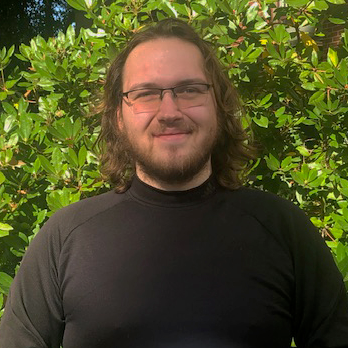
Patrick Donaghue standing in front of a bush.

New Instructors 2019-2020

The mathematics department welcomed new instructors in 2019-2020.

Johnner Barrett

Dr. Barrett received his Ph.D. in Mathematics from OSU in June 2014. His dissertation was related to local conservation laws of the nonlinear Schrödinger equation. Before coming to OSU, he taught for four years at Willamette University where he was awarded the Mortarboard Professor of the Year in 2006. In the classroom, he strives for an atmosphere of free participation where everyone's approach is given attention without risk. Outside of the classroom, he has been a musician and a recreational linguist for longer than he has been a mathematician. He says, “Sharing music and helping people realize their own mathematical capabilities are each immensely satisfying. I am blessed to do both.”

Portrait photo of Johnner Barrett.

Amanda Blaisdell

Ms. Blaisdell earned her Bachelor’s degree in mathematics with a focus on math education from Texas A&M University in 2017. She then moved to Oregon and earned her Master's degree in mathematics from OSU in 2019. Her thesis was titled “The Experiences of Women in First-Term Calculus: Factors Affecting Mathematical Confidence”. She hopes to create equitable and active classrooms here at OSU, and would like to develop curriculum with a focus on equity. She especially likes to highlight mathematicians who are not white men, finding that many students, especially women and students of color, have never thought that someone who looks like them could be really great at math. In her free time, Amanda likes to cook, bake, garden, run, and play with her dog.

Portrait photo of Amanda Blaisdell.

Raven Dean

Ms. Dean earned her Master’s degree at OSU in 2016 in mathematics with a thesis related to active learning and the ALEKS placement test in college algebra. She says, “I want my students to interact with me, other students and the mathematics. I want to create a mathematical village where people feel comfortable learning and teaching math.” She likes Harry Potter, Zelda, and hiking to the barn behind her house. She has a son named Daniel.

Portrait photo of Raven Dean.

Patrick Donaghue

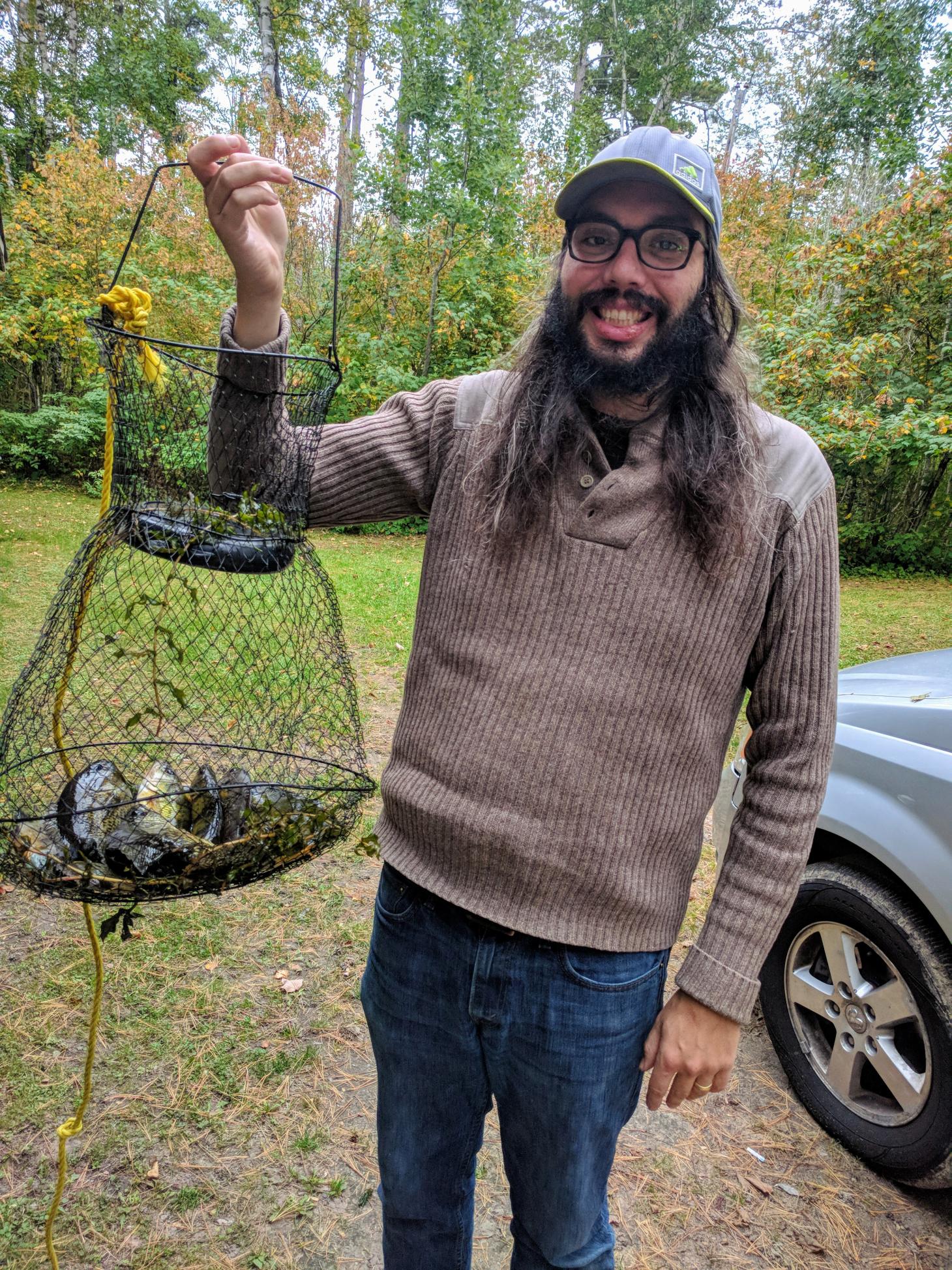
Mr. Donaghue earned his Bachelor’s degree in mathematics from Cleveland State University in 2017, and his Master’s in mathematics from OSU in 2019. His thesis focused on current topics in the non-uniqueness of solutions in fluid dynamics, however, his favorite mathematical result, the Baire category theorem, involves general topology and functional analysis. Mr. Donaghue uses active learning in his classroom. Outside of class he enjoys backpacking.

Portrait photo of Patrick Donaghue.

Michael Gilliam

Dr. Gilliam earned a Bachelor’s degree in mathematics from U.C. Berkeley, and a Ph.D. from the University of Montana at Missoula in 2011. His dissertation dealt with estimates of the Szegö kernel on non-pseudoconvex domains. Dr. Gilliam spent one year as an advanced mathematics teacher at Newport High School, OR, and seven years as an Assistant Professor of Mathematics at The College of New Rochelle, NY, eventually earning tenure. In 2017, he was one of twenty-three recipients of the Outstanding Educator Award from Education Update from New York City region. As an instructor, his current interests are college-prep transition programs and active learning practices. He believes that great teaching is being willing to explore, create, measure accomplishments, acknowledge setbacks, and adjust. He says, “Commensurate to true learning, great teaching is extremely difficult, but it is an endeavor that I truly believe is worth all the effort.”

Portrait photo of Michael Gilliam.

Stephen Krughoff

Dr. Krughoff earned his Bachelor’s degree from Earlham College in Richmond, IN, his Master’s degree from Northern Arizona University in Flagstaff, AZ, and, in 2019, his PhD from OSU in mathematics. His mathematical interests lie in geometry and topology. As an instructor, he enjoys the challenge of providing active learning experiences and individualized attention to large class sections.

Portrait photo of Stephen Krughoff.
Choah Shin

Graduate science fellowship supports interdisciplinary mathematics and energy research

By Srila Nayak

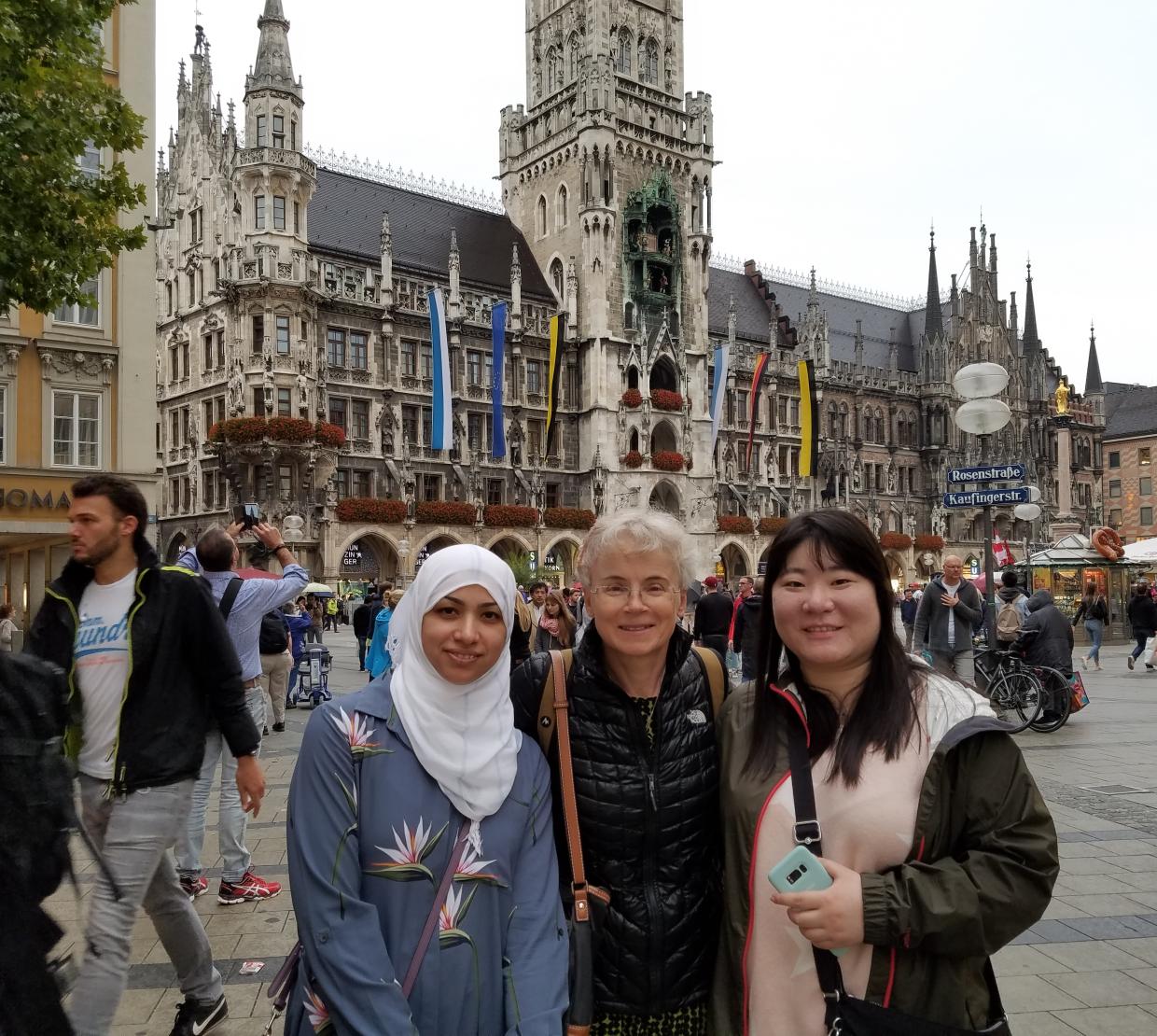
OSU mathematics Ph.D. student Choah Shin (right) with mathematicians Malgorzata Peszynska and Azhar Alhammali (left)

The 2019-2020 Larry Martin and Joyce B. O’Neill Fellowship was awarded to fifth-year mathematics Ph.D. student Choah Shin. The award supports her research on the theoretical and applied aspects of modeling processes associated with the sub-sea sediments of methane hydrate, an energy resource with documented impact on the climate. The fellowship, endowed by Larry Martin and his wife Joyce O’Neill, recognizes students who demonstrate high achievement and whose research involves computational modeling.

The competitive award, designated for graduate students in the College of Science, provides full tuition with an annual stipend of $25,000. Larry Martin (B.S., ’59) is a mathematics and engineering alumnus who had a successful career as a mathematician focusing on modeling for companies such as Lockheed Martin and IBM. After a successful career at IBM, he created, bought and invested in companies, sometimes running them but most often focusing on software and consulting. Martin was the owner of Troon Vineyard in southern Oregon's Applegate Valley which he sold in 2017.

The O’Neill Fellowship acknowledges Shin’s numerous research accomplishments. Her advisor, mathematics professor Malgorzata Peszynska, praises Shin for making “incredible progress on her path towards becoming a computational scientist” and developing “an independent critical viewpoint of computational science” that is responsive to mathematical analysis and the relations between mathematics and “important real-world applications.”

Shin’s broad research experiences span several sub-projects involving simulations for environmental and energy applications. These projects have landed her two prestigious internships in national labs and resulted in more than 20 research presentations comprising posters, invited talks and seminar presentations regionally and internationally. Always passionate about mathematics, Shin is steadily building a career in the field.

Her family moved to Chicago from Daejeon in South Korea just before Shin entered ninth grade. Thanks to her advanced mathematical skills honed by the Korean education system, Shin was placed in upper-level mathematics classes with juniors and seniors in her high school. “That math class was also easy for me. Although I had difficulties with the English language for the first few years,” remarked Shin.

After completing high school, she enrolled at the University of Illinois at Chicago to study mathematics. There she received a B.S. in mathematics (Honors with Distinction) and a M.S. in energy engineering. Shin applied to the Ph.D. program in mathematics at Oregon State University after discovering Peszynska’s research, which, to her delight, lined up perfectly with her own interests in mathematics and energy.

New frontiers in energy research

Methane hydrate — frozen deposits of natural gas in the sea’s subsurface sediment — found primarily in the Arctic and Antarctica is a double-edged fuel source. When the ice-like methane hydrate deposits melt due to high temperatures or drilling, large volumes of methane gas are produced that escape into the atmosphere. While methane hydrate deposits are viewed as one of the largest sources of natural gas and a viable fossil fuel, methane emissions contribute to global warming and climate change. Moreover, converting hydrate compounds into gas can be risky or unstable, making large-scale extraction or production of this powerful greenhouse gas difficult.

Shin’s mathematical models and theoretical approaches tackle various challenges with respect to methane gas transport and flow through different layers in sub-ocean sediments. Various mechanisms of methane transport depend on how hydrate crystals are deposited between the grains of porous medium; to this aim, Shin implemented a Stokes flow model that works at the micro-scale or pore-level events of gas displacement and movement. Overall, theoretical and practical aspects of Shin’s work contribute to a deeper understanding of the impact of hydrate on the environment.

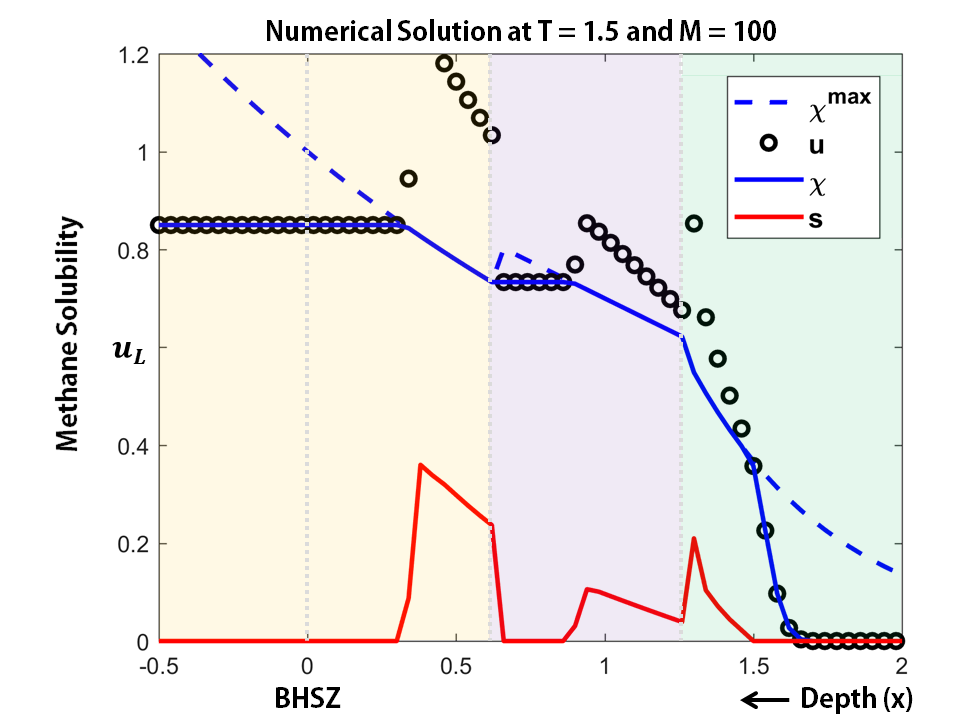
Methane gas transport model

Simulation of methane gas transport in a heterogeneous domain above BHSZ (bottom of hydrate stability zone) with the formation of methane hydrate depicted by spikes of the red curve. The data for this problem is synthetic but resembles typical layers found in subocean sediments; the background color corresponds to the different types of sediment, and the dotted blue curve shows the maximum solubility which depends on the (hypothetical) type of sediment. The solid blue curve shows the amount of methane dissolved in the liquid phase, which must not exceed the dotted curve. When hydrate forms (and red spikes form), the solubility must equal the maximum solubility. The challenges in the simulation are to account for this constraint as well as to represent the spikes accurately (Illustration by Choah Shin).

“Methane is going to be the next energy source for our planet. I am hoping my research will help prevent some environmental issues with methane when it is exposed to air,” said Shin. “I enjoy my research because it is interdisciplinary in nature and combines my interests in mathematics and energy engineering.”

Shin’s growing expertise with varied modeling concepts landed her an internship in summer 2018 with the Pacific Northwest National Laboratory (PNNL) in Richland, Washington. There she worked on developing mathematical models for phase equilibria for a mixture of methane, nitrogen and oxygen in the PNNL lab of Mark White, the lead researcher on an international comparison study of different hydrate models.

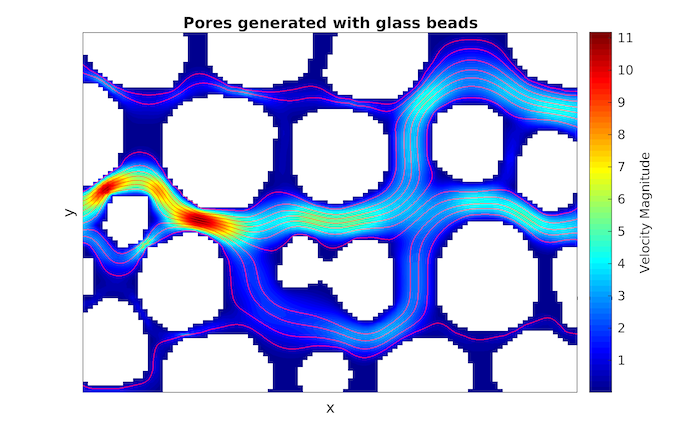
Pores generated with glass beads

Stokes flow in 2D porescale geometry simulated with Choah’s code. Shown are porous grains (white) and the flow velocity magnitude (in color). This simulation can be coupled to methane transport or to biofilm growth which change the flow paths when new semi-permeable solids form in the originally void space available to the flow. (Figure supplied by Choah Shin).

The following year, she was selected as one of the recipients of an NSF Mathematical Sciences Graduate Internship that took her to the National Renewal Energy Laboratory (NREL) at Golden, Colorado. According to Peszynska, Shin’s lab mentor at the NREL designed a project to specifically take advantage of her unique capabilities mixing computational mathematics with her passion for renewable energy resources plus experience with fluids modeling.

Choah’s summer project involved setting up computational solvers (a piece of mathematical software that solves a problem) for simulations of cryogenic helium in the supercritical phase for cooling mechanisms in a range of applications, including quantum computers, superconducting magnets and infrared sensors used in astronomical measurements. Since completing her project, Shin has presented her work at research conferences and is at work on a publication.

“The NREL internship was very helpful for enhancing my programming skills. Although I have done a lot of computational mathematics, the internship gave me the chance to work on supercomputers and with several different languages such as Python, Fortran and C++. I loved it!” Shin said.

Having enjoyed research in national labs immensely, Shin would like to take up a postdoctoral position at a national lab after completing her Ph.D. this year.

“I love doing research, and at the labs I was able to 100 percent focus on my research. I love the possibilities of what I can do in a lab,” mentioned Shin.

In addition to programming experiences, Shin’s internships also broadened her networking and science communications skills and introduced her to influential communities of scientists and collaborators.

Mathematics graduate student Ruby (Ali) Chick

Mathematics graduate student explores marine systems through an interdisciplinary lens

By Srila Nayak

Mathematics graduate student Ruby (Ali) Chick

Mathematics graduate student Ruby (Ali) Chick (M.S. ’20) is on a team with other graduate students from environmental science and fisheries and wildlife science that collaboratively analyzes the environmental impact of microplastics. The multi-disciplinary team is a part of the National Science Foundation Research Traineeship (NRT) program at Oregon State University, which has established a new paradigm of cross-disciplinary STEM graduate student education on campus. Since 2016, graduate students across Oregon State have studied and conducted research pertaining to the NRT project, “Risk and Uncertainty Quantification in Marine Science,” focused on the study, management and protection of ocean systems.
The NSF Research Traineeship Program is designed to encourage the development and implementation of bold, new, highly innovative and potentially transformative models for STEM graduate education training in high priority interdisciplinary research areas.

The four-year (2016-2020) $3 million NRT grant at OSU, led by Professor Lorenzo Ciannelli from the College of Earth, Ocean and Atmospheric Sciences (CEOAS), prepares a new generation of natural resource scientists and managers who combine mathematics, statistics and computer science with environmental and social sciences to address climate and policy problems in marine systems. To date, 44 OSU graduate students, including 12 M.S. and Ph.D. students from the College of Science, have been funded and trained by the NRT program.

Ali and her NRT graduate cohort have advanced their training via participation in a combination of communication workshops, national and international internships, technical coursework, peer-mentoring and transdisciplinary research projects. These projects are guided by knowledge gleaned from outreach, communities and stakeholder engagement, and by using mathematical and statistical models and data sets to study different issues pertaining to the marine environment. The trainees learn about the dynamics of coupled natural-human systems, the science of big data, risk and uncertainty quantification, and communication.

The NRT program began with a week-long immersive learning experience at the Hatfield Marine Science Center, where students like Ali got to learn about ocean acidification and the effects of climate change on ocean temperatures from different experts in marine science. “That was my first leap out of math into a different field of science. I learned a lot of new terms I wasn’t familiar with before. I feel more comfortable speaking out now in a multi-disciplinary setting,” Ali says.

For their core NRT project, “A systems-based understanding of microplastic impacts on ecological and human health,” Ali and her team members are studying the effects of socio-economic factors, such as the mother’s level of education, recycling habits and consumption patterns, on microplastic pollution in the ocean. Ali is currently preparing a mathematical model to determine the correlation between human action and the amount of microplastic pollutants that make their way to the ocean. Her goal is to come up with a robust model that can influence the way we consume and recycle plastic and other pollutants.

In addition, Ali will examine the disruptive effect that microplastics can have on the endocrine system of fish through mathematical modeling. This fits well within Ali’s masters thesis research which uses mathematical modeling, and computational techniques to study multi-scale models for the endocrine system in mammals with an aim to understand polycystic ovarian syndrome, a hormonal disorder common among women of reproductive age.

Ali, who holds a bachelor’s as well as a master’s degree in mathematics from University of Texas at Tyler, says the NRT program has exposed her, for the first time in her academic career, to disciplinary perspectives from other scientific fields as well as the social sciences. These cross-disciplinary collaborations are shaping the group’s analysis and research on human effects on marine systems. “We learned how to cut through jargon and speak a common language in our classes and workshops,” Ali observes.

Ali and her advisor Vrushali Bokil, a professor of mathematics, examine research questions from an interdisciplinary perspective during NRT research meetings as the group moves forward with its project. In addition to Bokil, the cohort is mentored by Susanne Brander (Environmental and Environmental Toxicology), Shawn Rowe (College of Education), and Ivan Irismendi (Fisheries and Wildlife).

The broader NRT training has been valuable for several reasons, not least because it enables graduate students to talk to scientists from different disciplines. “I learned to explore microplastic pollution from different perspectives. There is a human and political element to our discussions that was absent in my mathematics classes where conversations are more abstract,” Ali remarked. “Most importantly, I am very glad I had this experience of learning how to collaborate and communicate across disciplines with different scientists because it will help me when I enter the job market as an applied mathematician.”

Her work with NRT added a new dimension to exploring “how valuable mathematics can be” in solving real-world problems and the different ways she can contribute as a mathematician on a multidisciplinary team. “I discovered that mathematics is actually something I can use to assist other disciplines,” Ali observed.

The training will culminate in a thesis chapter that will outline the collaborative group project and solutions to the climate and policy problem in question. After graduation, Ali plans to continue working in a cross-disciplinary scientific setting in industry, aspiring to bring her skills as a NRT student to bear on her future projects.

As one of the core requirements of NRT, this summer Ali will pursue an internship at the Environmental Protection Agency (EPA) in Corvallis, working on improving forecasting models in the field of human epidemiology with Nathan Schumaker, courtesy faculty in the Department of Fisheries and Wildlife Science and an EPA scientist. They will combine mathematics and computer simulations to develop powerful epidemiological forecasting models, seeking to overcome the challenges and limitations posed by widely used traditional mathematical models. As an example, they hope to use a spatial simulation model to quantify how rates of disease spread and change based on complex real-world drivers such as population density, environmental conditions and landscape connectivity.

In addition to Ciannelli, Julia Jones (CEOAS), Ana Spalding (College of Liberal Arts), Flaxen Conway (Marine Resource Management) as well as statistician Alix Gitelman and mathematician Enrique Thomann from the College of Science form the team of co-principal investigators and core-members, on the NRT project.


Kim Halsey with graduate student taking samples from a river

New grants to advance science that benefits humankind

By Cari Longman

Photo by Hannah O'Leary

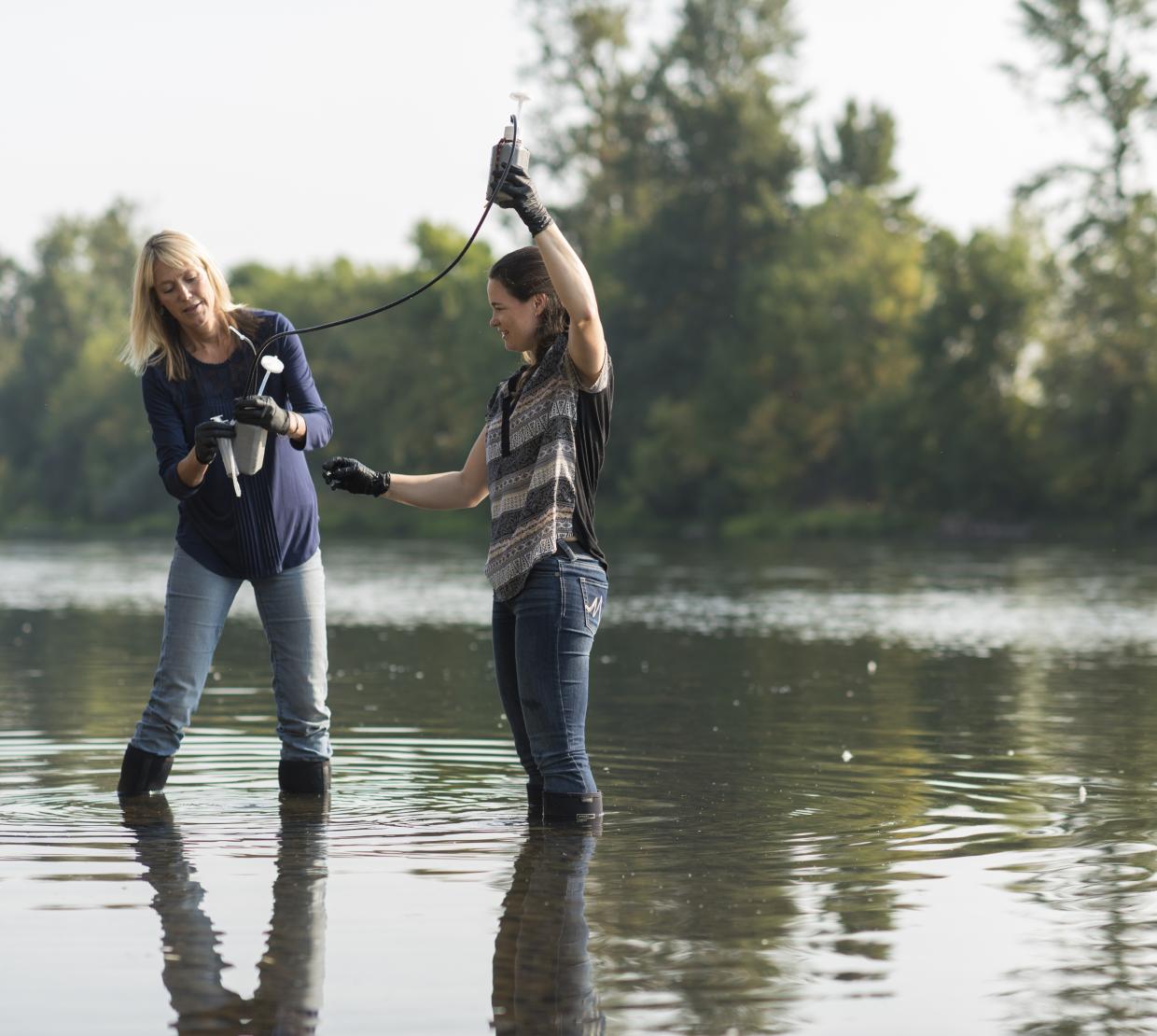
Microbiologist Kim Halsey (left) and postdoc Cleo Davie-Martin collect samples from a river. Halsey is one of four faculty members who received College of Science Research and Innovation Seed (SciRIS-ii) awards. She will study the potential to detect toxic algae blooms in freshwater and marine ecosystems.

How can we better understand how devastating plant diseases are spread? Is there a better statistical model to predict HIV prevalence in a city? Is there a way we can detect toxic algae blooms in freshwater and marine ecosystems before they occur? And of the hundreds of thousands of different metal-organic frameworks (MOFs) in the world, how can we can better find the ones that are most useful for storing and separating gases, like CO2 from industrial plants?

Curiosity is critical for discovery. Asking the questions above led five faculty members to receive College of Science Research and Innovation Seed (SciRIS-ii) and Betty Wang Discovery Fund awards this February to pursue answers over the course of the next year. Their proposals all showed transformative potential and progress toward new frontiers of science and aimed to strengthen collaboration with external research partners. Below is more detail about each of their proposals.

Mathematics Professor Vrushali Bokil was awarded $8,000 to use modeling techniques to understand the spread and control of plant diseases caused by coinfecting viruses. She will focus on Maize Lethal Necrosis (MLN), an emerging disease in Kenya and other parts of Africa that is caused by coinfecting viruses and spread by insects called Thrips, as a test case. Her team’s goals are to use stochastic models and optimal control theory to understand the mechanisms that drive patterns of coinfection in plant populations and effective techniques for controlling the spread of disease in crops and natural grasslands.

In collaboration with the Centers for Disease Control and Prevention (CDC), Statistics Assistant Professor Katherine McLaughlin received $10,000 to explore the use of new statistical methodologies to estimate the number of people who inject drugs in metropolitan areas. The research project, supported by the privately-funded Disease Mechanism & Prevention Fund at the OSU Foundation, has a goal of refining current methods to produce improved population-level demographic, behavioral, disease prevalence and population size estimations. This will aid the CDC in their efforts to contain or slow the rate of HIV in metropolitan areas across the U.S.

Microbiologist Kimberly Halsey was awarded $10,000 to examine the potential for real-time, automated volatile organic compound (VOC) detection as early-warning signals of toxic harmful algal blooms (HABs) in freshwater and marine ecosystems. HABs are increasing in intensity and severity due to climate change and nutrient loading from agriculture and other human-related activities. Some HABs can become toxic to humans and animals. Halsey will use data integration to merge aquatic microbiome data with environmental properties and VOC signatures to identify determinants and trajectory of the annual toxic HAB at Upper Klamath Lake, Oregon.

Physicist David Roundy was also awarded $10,000 to develop new flat histogram Monte Carlo molecular simulation methods to accelerate the discovery of metal-organic frameworks (MOFs) for applications in storing and separating gases. MOFs are crystalline materials that harbor nano-sized pores that have the potential to be used in a variety of clean energy applications, from hydrogen and natural gas storage to capturing carbon dioxide from coal-fired power plant flues. His study aims to enable scientists to accurately predict the absorption properties of hundreds of thousands of MOFs and accelerate the rate of MOF discovery for clean energy applications.

In addition, chemistry professors Kyriakos Stylianou and May Nyman, along with Todd Miller from the Advanced Technology and Manufacturing Institute (ATAMI), received $30,000 from the Betty Wang Discovery Fund to purchase a microwave reactor to integrate on the continuous flow reactor to accelerate the discovery and production of inorganic materials like MOFs. The Betty Wang Discovery Fund supports equipment acquisitions and laboratory infrastructure improvements to advance fundamental discoveries in science. Microwave heating has recently emerged as a powerful method for the preparation of inorganic materials at the laboratory scale, reducing synthesis time down to a few minutes without affecting the product quality or reaction yield. The new machinery will allow the team to investigate the potential of new MOFs to capture carbon in laboratory and industrial applications.

The projects will run for one year, ending next February 2021.The SciRIS program provides funding in three stages for high impact collaborative proposals that build teams, pursue fundamental discoveries and create societal impact. The awards range from $10,000 to $125,000 for various stages of the program and are supported in part by generous alumni and friends, and grants from the U.S. Department of Defense and National Institutes of Health.

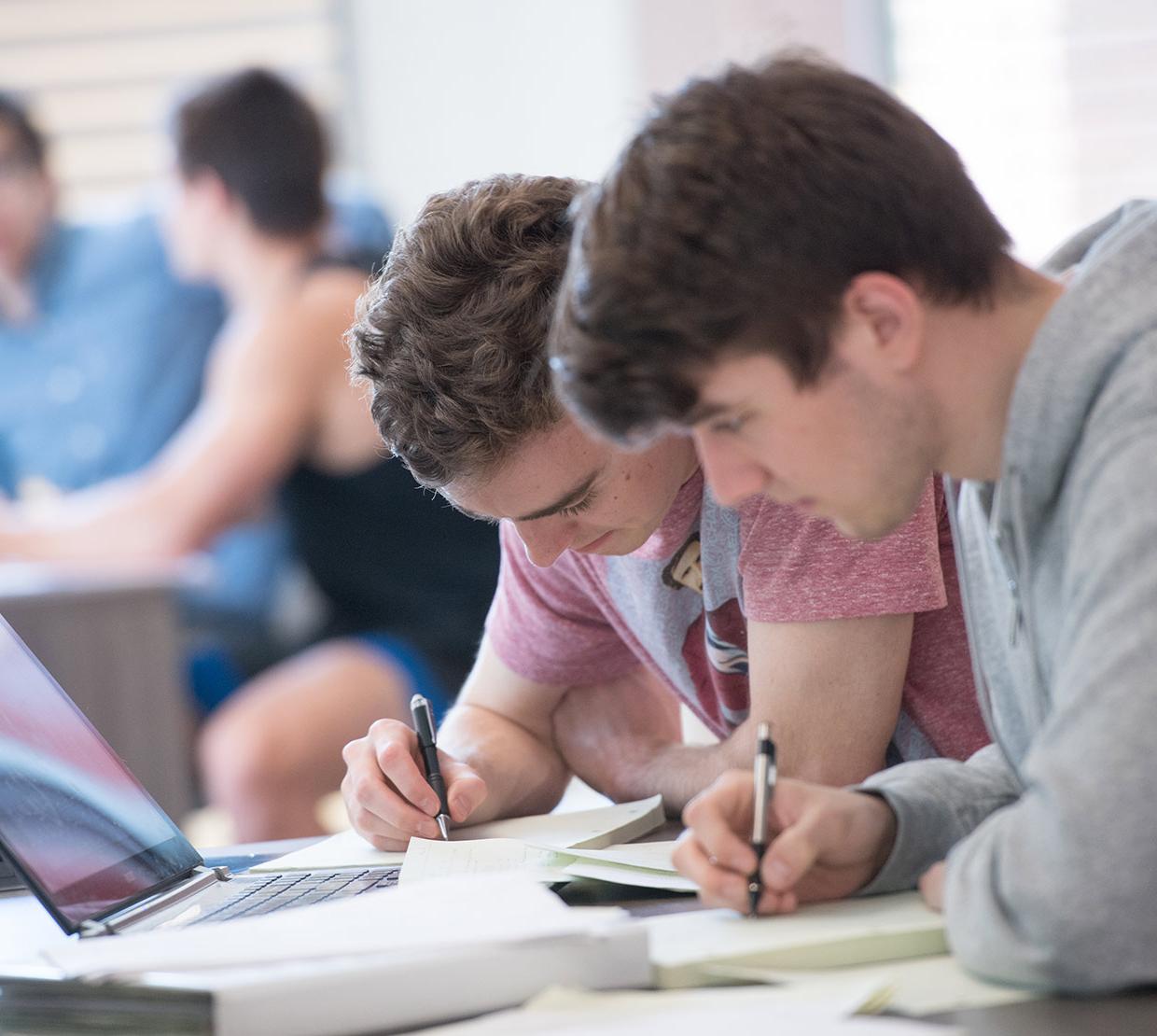
Two students studying together in classroom

A summer of mathematical research

REU program in Mathematics at OSU

Ten students from universities and colleges across the country have gathered for the long-running and prestigious Research Experiences for Undergraduates (REU) Program in Mathematics at Oregon State University for summer 2017. OSU has offered a REU program in mathematics nearly every summer since 1987.

The eight-week program, co-directed by Associate Professors Holly Swisher and Clayton Petsche, has garnered high praise from alumni over the years. It has been commended for providing valuable mentorship and exposing students to the process of mathematical research as well as deepening their interest and passion for mathematics as a discipline and profession.

This year student research projects are directed by Oregon State mathematicians Nathan Gibson, Ren Guo, Yevgeniy Kovchegov, Juan Restrepo, and Mike Rosulek from the School of Electrical Engineering and Computer Science.

Students participating in the 2017 mathematics REU are: Jacqueline Alvarez (California State Polytechnic University, Pomona), Claire Campregher (California State University, Long Beach), Karina Cho (Harvey Mudd College), Andrew Fisher (Walla Walla University), Brian Frost-LaPlante (Cooper Union), Josh Gerstein (Carleton College), Jesse Johnson (Oregon State University), Jacob Naranjo (Kalamazoo College), Anna Raichev (University of California, San Diego), and Collin Victor (University of Nebraska).

The students are working on a broad array of mathematical projects in areas ranging from dynamic (time-varying) systems, classical geometry in Euclidean space, coalescent processes, uncertainty quantification, and cryptography.

The Mathematics REU at OSU has a stellar record in terms of student achievement and success. Almost 300 students have participated in this REU since 1987, and nearly 55 percent of its alumni from the years 2005-2013 have earned a graduate degree in the mathematical sciences. Female participation in the math REU has been consistently high, and data for a 10-year period (2005-2015) shows that nearly 47 percent of the REU participants were female.

After the term of their research is complete, REU students give talks and prepare research papers for publications. REU students and their faculty mentors at OSU have had considerable success in getting their papers accepted for publication at important mathematic research journals over the years.

Read more about the REU program in Mathematics at OSU and its achievements.

Calculus the musical logo with black and red heart and banner

Math Club hosts Calculus: The Musical for Pi Day

Calculus: The Musical

March 14 is Pi Day around the world, and if you love Pi(e), math and musicals, then the Department of Mathematics has a treat in store for you. The Math Club is sponsoring a special presentation of Calculus: The Musical!, a nationally touring production, on Tuesday, March 14, 2017, at 7:00 p.m. in Milam Hall 026. There will also be a pie reception starting at 6:15 p.m. in the foyer right outside of Milam 026. Everyone is welcome to attend the musical and indulge in their love of pi(e)!

This event is supported by the College of Science and the Department of Mathematics.
Calculus: The Musical! was originally created by Matheatre, composed of Marc Gutman and Sadie Bowman. The musical tells the historical story of the development of Calculus and features several scientists and mathematicians across eras who contributed to the development of modern calculus: Archimedes, Isaac Newton, Gottfried Leibniz among others.
Calculus the musical logo with black and red heart and banner

Calculus: The Musical official event poster

The musical is "a comic review of the concepts and history of calculus." According to its creators, the musical employs a mix of genres from light opera to hip hop to bring alive the concepts of limits, integration and differentiation. It promises to be entertaining to the "arithmophobe and the rocket scientist alike."
What makes Pi so special? Apart from the spirited contests over who can recite the more digits of pi (3.141592653...), pi is enthralling for other reasons. Pi, as we learned in school and memorized for the S.A.T.s, is the ratio of a circle’s circumference (the distance around the circle, represented by the letter C) to its diameter (the distance across the circle at its widest point, represented by the letter d). That ratio, which is about 3.14, also appears in the formula for the area inside the circle, A = πr2, where π is the Greek letter “pi” and r is the circle’s radius (the distance from center to rim).

According to mathematician Steven Strogratz (writing in The New Yorker), the beauty of pi can be attributed to a few factors: 1. Pi puts infinity within reach. The digits of pi never end and never show a pattern.They go on forever, seemingly at random—except that they can’t possibly be random, because they embody the order inherent in a perfect circle. This tension between order and randomness is one of the most tantalizing aspects of pi.

2.What distinguishes pi from all other numbers is its connection to cycles. For those interested in the applications of mathematics to the real world, this makes pi indispensable. Through the Fourier series, pi appears in the math that describes the gentle breathing of a baby and the circadian rhythms of sleep and wakefulness that govern our bodies. When structural engineers need to design buildings to withstand earthquakes, pi always shows up in their calculations. Pi is inescapable because cycles are the temporal cousins of circles; they are to time as circles are to space. Pi is at the heart of both.

Whether you love the mysteries of pi or not, don't miss this unique chance to celebrate the spirit and awesomeness of math!


Read more stories about: events, students, mathematics, art and science


Subscribe to Mathematics