Mathematics

Mathematics

Ribbon icon above image of Memorial Union on a bright sunny day

Oregon Academy of Science honors three faculty

Oregon Academy of Science honors three science faculty

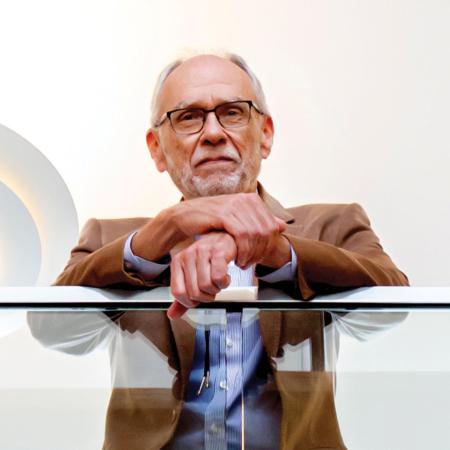
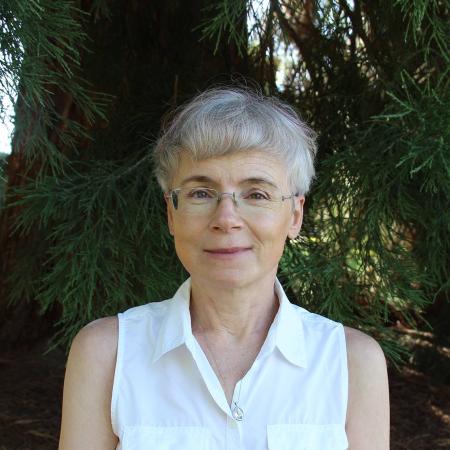
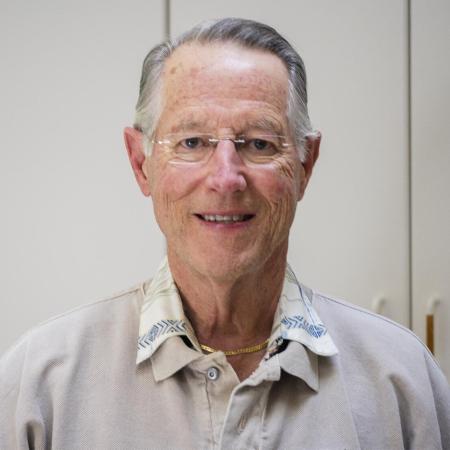
The College of Science is proud to announce three science faculty were honored by the Oregon Academy of Science for their outstanding contributions to science and higher education in science and mathematics. Chemistry professor Mas Subramanian, mathematics professor Tevian Dray, and physics professor Corinne Manogue were awarded OAS's 2016 awards for their impressive scientific and teaching achievements.

While Subramanian received the 2016 Outstanding Scientist Award, Dray and Manogue were honored with the 2016 Outstanding Educator in Science and Mathematics, Higher Education Award.

These awards promote merit in research and education by recognizing individuals who have made an extraordinary impact in their fields Academy officials say that award winners serve as inspirational leaders to members of the Oregon Academy of Science, and embody the core values of serving students and advancing science for the common good.

Subramanian, OSU’s Milton Harris Professor of Materials Science, was recognized for his innovative contributions to materials discovery and their environment-friendly applications in electronics and industry.

“His discovery of the first new stable blue pigment in nearly two centuries is a singular scientific achievement,” said Michael Lerner, an OSU professor of chemistry.

This pigment efficiently reflects heat, could contribute to energy conservation, protects plastics and other materials from sun damage, and can extend useful lifetimes and enhance sustainability.

Dray and Manogue have co-authored dozens of publications addressing ways to improve mathematics and physics education. Through initiatives such as “Paradigms in Physics” and the “Vector Calculus Bridge Project,” they have helped change how students learn math and physics, while working with professional organizations regionally and nationally to improve teaching and foster awareness of best practices.

“Their teaching prowess in the classroom is unmatched and continually praised by students,” said Thomas Dick, an OSU professor of mathematics.

Both Dray and Manogue are Fellows of the American Physical Society and have won numerous teaching awards at Oregon State.

Founded in 1943, the Oregon Academy of Science promotes scientific research and education in Oregon in all areas of the natural sciences and social sciences. Chemistry professor Vince Remcho, was the 2015 OAS Outstanding Scientist recipient. Remcho's research group works at the interface of science and engineering to design, build and optimize microscale analytical instruments and chemical reactors.

Paul Blakemore standing in front of Kidder Hall

Science faculty sweep General Research Fund awards

Paul Blakemore, professor in Chemistry

Professors across mathematics, physics and chemistry have received Oregon State University’s General Research Fund (GRF) awards this year. The competitive, university-wide award enables faculty to launch new research projects in their fields of expertise to attract more funding sources, as the project expands, and to help develop ambitious research/scholarly activities.

Faculty from the College of Science performed extremely well in this year’s GRF awards. Of the six proposals approved for funding, four come from science faculty. Each research project was awarded annual funds of approximately $10,000. The Research Office chose the successful projects from a pool of 15 proposals.

The GRF research committee encourages proposals from young faculty and it is one of several incentive programs offered by OSU’s Research Office. The incentive programs support Oregon State scientists whose research has the potential to positively impact local and global communities and can contribute to the mentoring and training of the next generation of scientific leaders.

Hearty congratulations to the following exceptional science faculty for receiving GRF awards this year:

Mary Beisiegel
Department of Mathematics
“Mathematics Graduate Students’ Perception of Mathematics and Teaching Mathematics”

Paul Blakemore
Department of Chemistry
“A New Method for the Preparation of Alkenes”

Matt Graham
Department of Physics
“Filming the Growth Morphology of Graphene with Video-Rate Transient Absorption of Microscopy”

David McIntyre
Department of Physics
“Micromechanical Evolution of Growing Tumors”

student working on math homework holding calculator

Big Data expertise transcends disciplines

Impacting data science on transdisciplinary research

Data science is a strategic opportunity for the College of Science. By making strategic investments in mathematics, statistics and life sciences faculty, the College has extended its impact of data science on transdisciplinary research. In a science-without-borders approach, the College is deepening engagement between data science and other sciences, engineering, education, arts and business. Cluster hiring in bioinformatics across disciplines has brought expertise in mathematical biology; ecological, evolutionary, and functional properties of the microbiome; and deep sequencing data.

Read more about data science in the College of Science in our iMPACT magazine.

Charlotte Wickham, Statistics

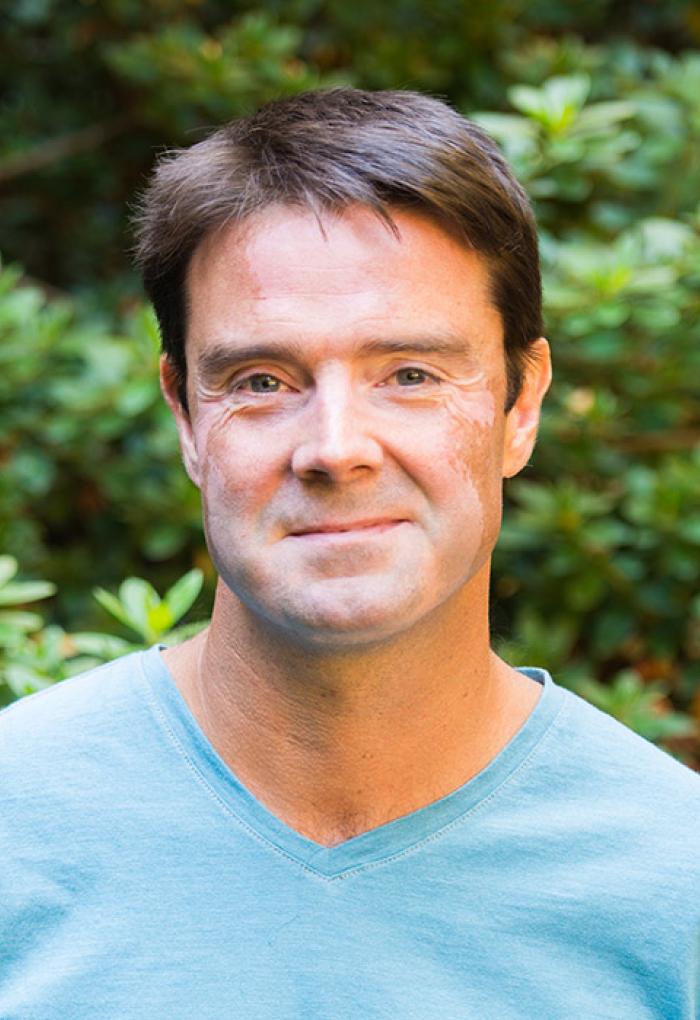
“Our visual system is one of the fastest ways for us to consume information. The goal of my research is to harness this strength, not only to help scientists make discoveries, but also to engage and communicate with the public at large.

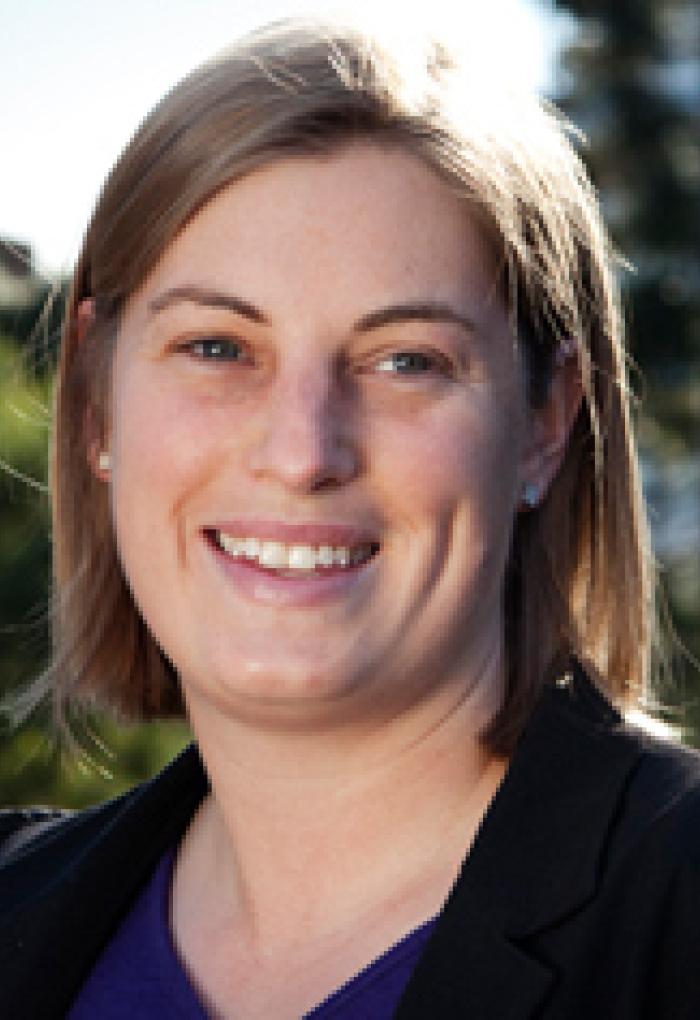
Charlotte Wickham in front of shrubbery

Charlotte Wickham, Statistics professor

“The object of visualization is very often not raw data. Particularly in the era of big data, summarization or modeling is an essential precursor to making sense of the data. Visualization becomes crucial to understanding how decisions at this stage propagate to conclusions and good visualization tools encourage experimentation with alternate approaches. We have methods for propagating statistical uncertainty through a data pipeline, but we are still learning how to best communicate uncertainty visually.

“There are interesting technical challenges along the way. For example, where should the data live? Can analyses be run on the fly, or do they require lengthy distributed computing? Can an approximate answer be achieved in a quicker manner? Is an approximate answer good enough for visualization purposes? Answering these questions requires close collaboration between computer scientists, statisticians and domain experts.”

Bringing data science to the non-data scientist. Wickham recently won first place in an international competition sponsored by EMC2 and hosted by Crowdanalytix . The contest was designed to visually reveal insights into the differences between a professional and amateur motorcycle rider based on data collected at the millisecond level from sensors on the bike, engine and rider during six laps of racing. Simply separating the data into laps posed a data exploration challenge. The iteration between data preparation and visualization was the key to separating the interesting from the uninteresting data.

Duo Jiang, Statistics

“My research aims at developing statistical and computational methods to address challenges posed by the growing amount, dimensionality and complexity of data in biological and biomedical research. A recent focus has been on correlated data methods in genetic association studies, functional enrichment analysis and biological network inference.

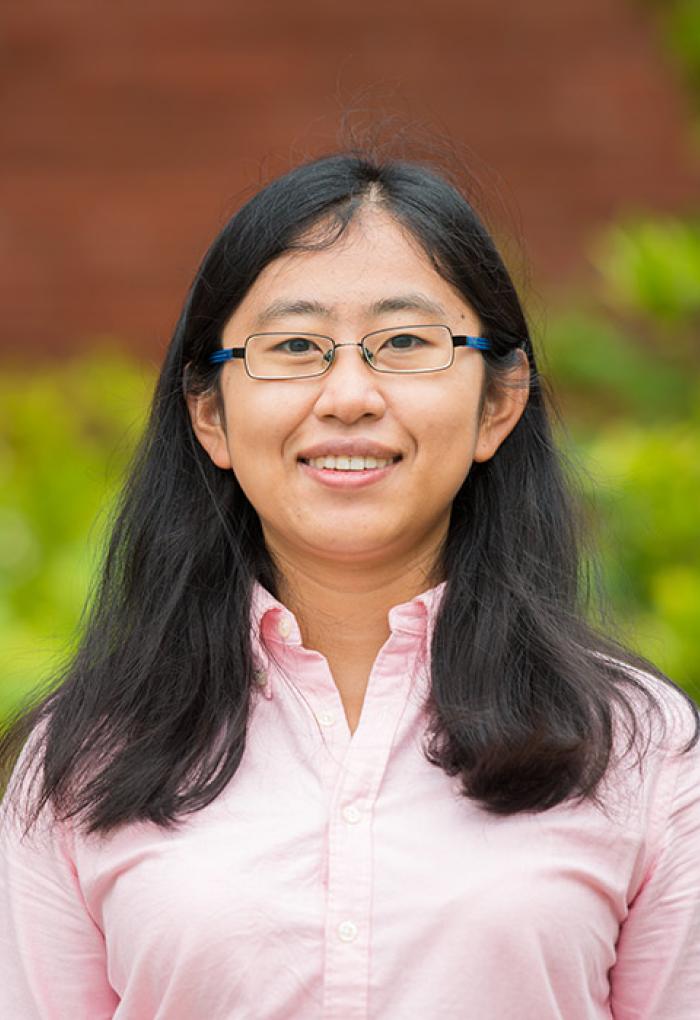
Duo Jiang in front of shrubbery and brick wall

Duo Jiang, Statistics professor

“Through interdisciplinary research and collaborations, I hope to make statistical innovations that not only provide improved data analysis, but also enable new ways of leveraging data to answer biological questions and transform study design considerations for researchers at OSU and in the broader scientific community.”

Debashis Mondal, Statistics

Mondal focuses on research applications in agriculture, geographical epidemiology and environmental sciences.

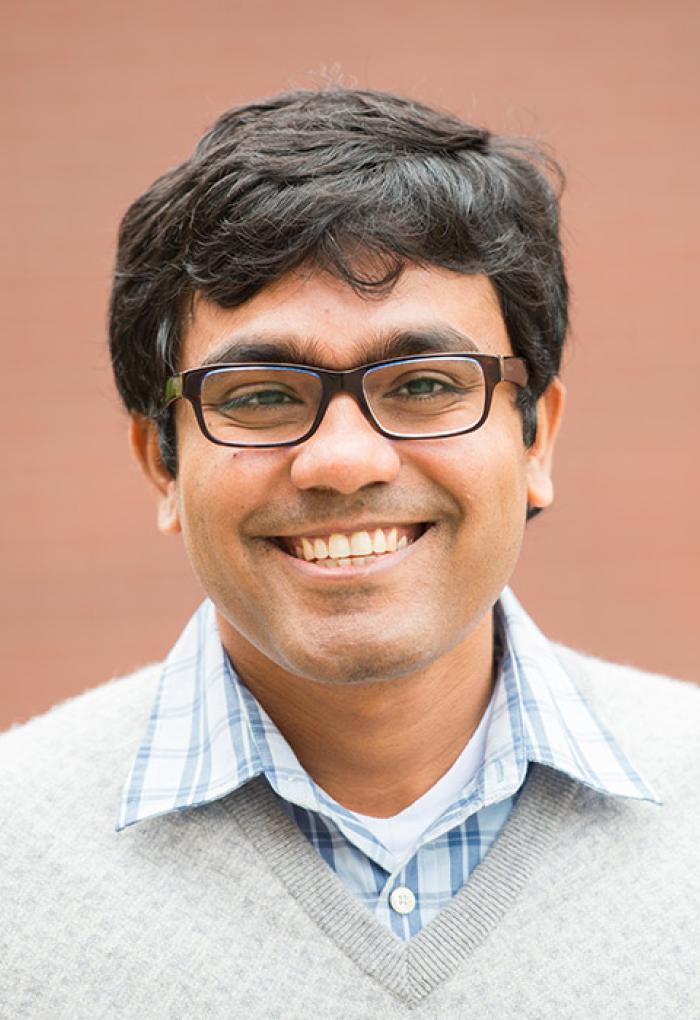
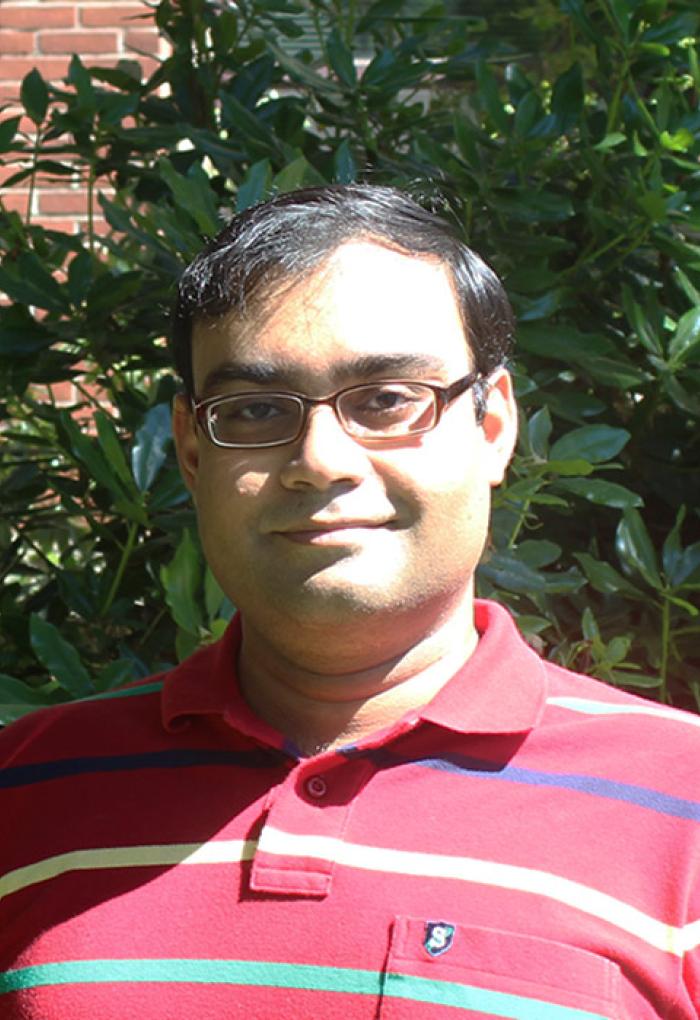
Debashis Mondal in front of brick wall

Debashis Mondal, Statistics professor

"Advances in the field of spatial statistics are important because they can be used to answer scientific questions in agriculture, astronomy, biomedical imaging, computer vision, climate and environmental sciences, epidemiology and geology.

"I seek to enhance scientific understanding of environmental bioassays, arsenic contamination of groundwater and geographic variations in cancer risk. My statistical and computational work addresses questions relevant to environmental or global change and to health studies. I am also interested in Markov chain Monte Carlo computations, time series, ranking and selection and random graphs and trees."

Sharmodeep Bhattacharyya, Statistics

“I work on developing statistical methods for network and high-dimensional data. Large network data sets are currently becoming quite common in several scientific fields from biological to social sciences. My work is focused on networks and high-dimensional data related to large scale -omics studies, neuroscience studies and social interaction studies.

Sharmodeep Bhattacharyya standing in front of Kidder Hall

Sharmodeep Bhattacharyya, Statistics professor

"The development of statistical methods to analyze large-scale data coming from several different experimental sources helps our understanding of complex systems, such as human brain, which has so far remained highly elusive.”

Davide Lazzati, Physics

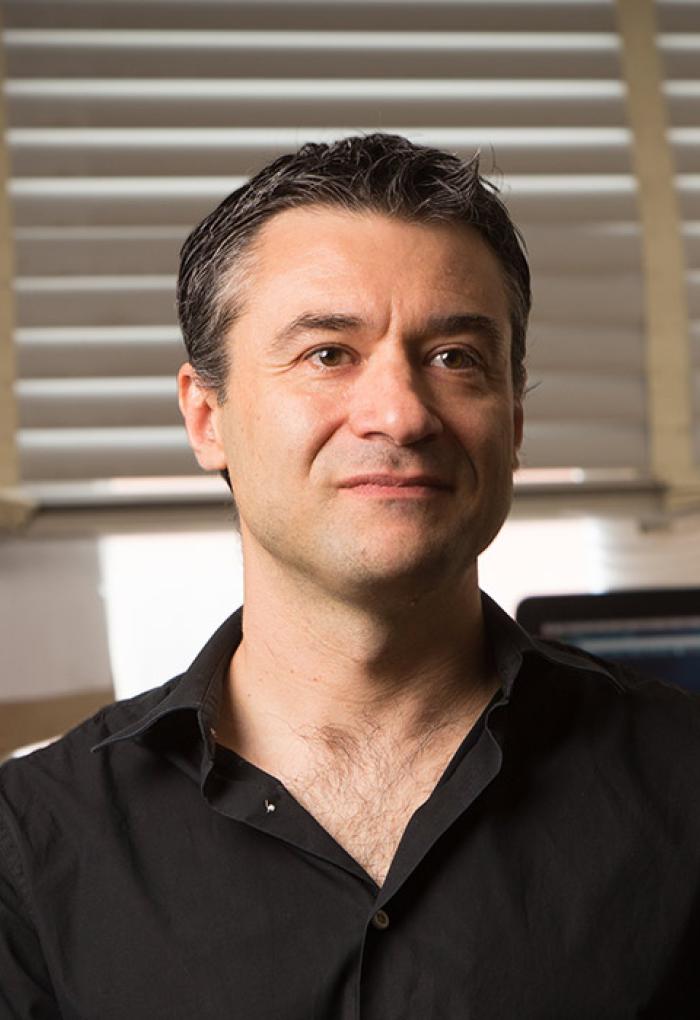
David Lazzati in office space

Davide Lazzati, Physics

Lazzati's research is focused on understanding the physics of cosmic dust and gamma-ray bursts—the brightest and most mysterious explosions in the present day universe. He also studies theoretical high-energy astrophysics, quantum chemistry, soft condensed matter and numerical methods. He was among the first to realize the importance of time dependent effects in the interaction of the burst radiation with interstellar material.

Patrick De Leenheer, Mathematics and Integrative Biology - Bioinformatics hire

De Leenheer’s research interests include mathematical biology, differential equations and control theory. He brings extensive experience in developing instructional and scholarly bridges between mathematicians and biologists. Prior to joining OSU, he was on the mathematics faculty at the University of Florida for nearly 10 years.

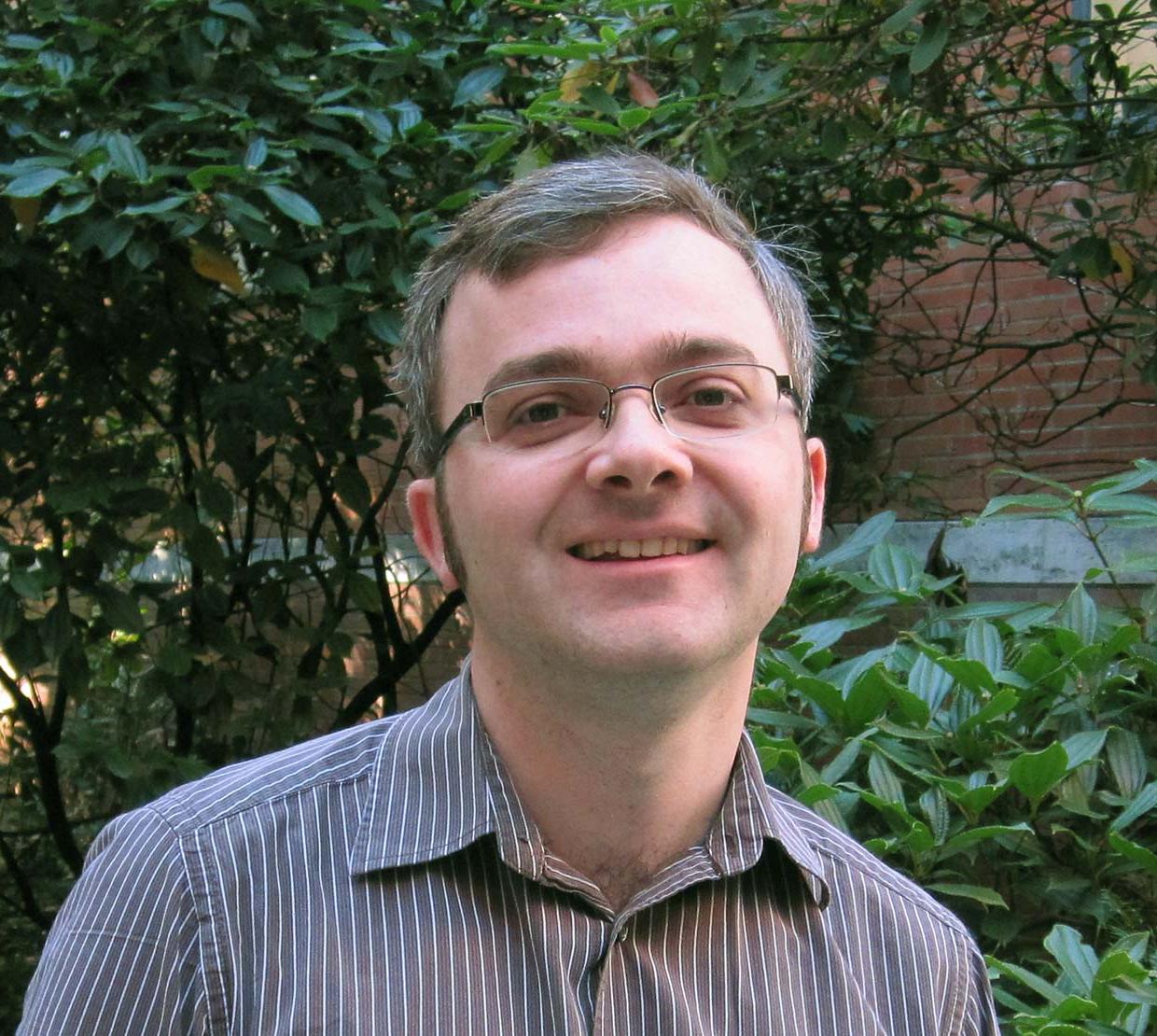
Patrick DeLeenheer in front of shrubbery

Patrick De-Leenheer, joint appointments in Mathematics & Integrative Biology

De Leenheer earned a master of science electro-mechanical engineering and a Ph.D. in applied sciences from Ghent University in Belgium.

David Hendrix, Biochemistry & Biophysics - Bioinformatics hire

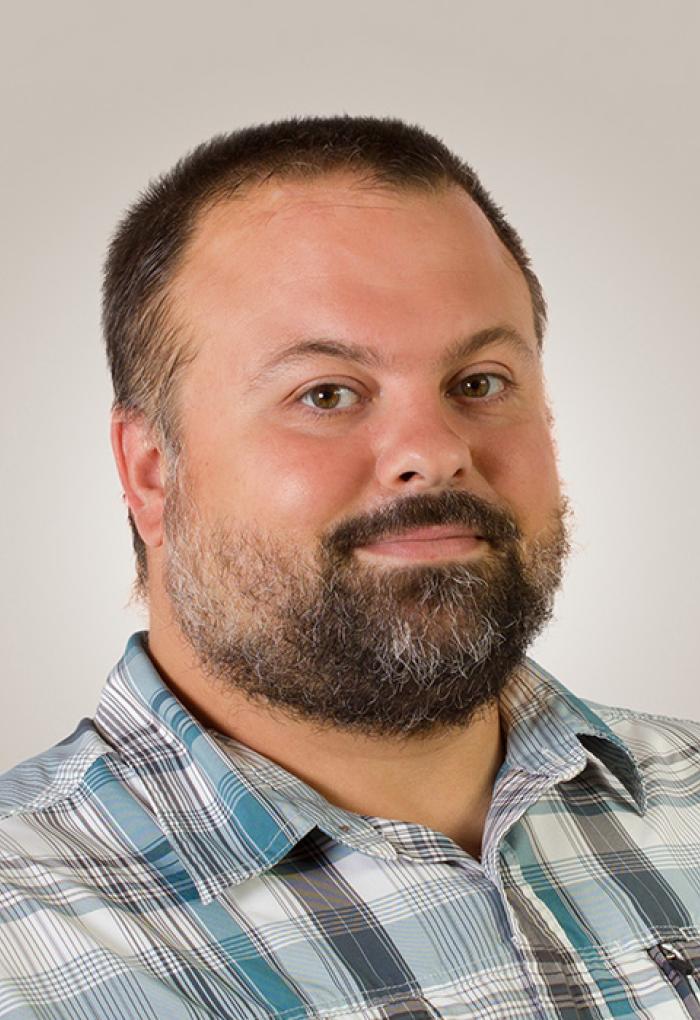
David Hendrix in front of grey backdrop

David Hendrix, Biochemistry and Biophysics

Hendrix’s lab focuses on understanding the structure, function and mechanisms of action of non-coding RNAs. Since the discovery of numerous non-coding RNAs in the past decade, their function is still largely unknown. Hendrix uses structure prediction, genome-wide sequence analysis and deep sequencing data to explore the roles these molecules play in gene regulation. His team also develops algorithms to understand different areas of computational biology.

Thomas Sharpton, Microbiology and Statistics - Bioinformatics hire

Sharpton is developing the quantitative biology curricula and is teaching courses in bioinformatics and microbial genomics. His research team focuses on characterizing the ecological, evolutionary, and functional properties of the microbiome—the vast collection of microorganisms that live on our bodies.

Thomas Sharpton in front of grey backdrop

Thomas Sharpton, joint appointments in Microbiology and Statistics

The team seeks to better understand how the physiologies of our body and our microbiome interact. Their work is interdisciplinary, relying heavily on microbiology, bioinformatics and systems biology, and borrowing from molecular biology, computer science, and statistics.

David Koslicki, Mathematics - Bioinformatics hire

"My research is mainly data-driven as I primarily develop new mathematical techniques to answer biological questions in genomics. Studying metagenomics in particular, I routinely analyze DNA sequencing data with sizes ranging from 10's of gigabytes to 10's of terabytes. Thankfully, Oregon State is well equipped to facilitate analyzing this sort of data, particularly with the Center for Genomics Research and Biocomputing.

David Koslicki in front of brick wall

David Koslicki, Mathematics professor

"The recent discoveries regarding the human microbiome make it an exciting time to be at the interface of biology, mathematics, and computer science."

Koslicki’s research focuses on bioinformatics and the application of tools from the mathematical theory of symbolic dynamical systems to problems in genomics. He is currently interested in problems stemming from the field of metagenomics: the study of bacterial communities through their sampled DNA. He uses a variety of big data techniques, including compressed sensing, probabilistic data structures, and high-performance computing.

Joe Beckman, Biochemistry and Biophysics

“Researchers increasing collaborate across OSU and around the world to better understand what we are exposed to in everyday life, what the cellular actions of these exposures are and how we respond biochemically to these exposures. This involves measuring thousands of chemicals, tens of thousands of genes that are changing, and hundreds of thousands of biochemical molecules.

Joe Beckman sitting in lab

Joe Beckman, Distinguished Professor in Biochemistry & Biophysics; Burgess and Elizabeth Jamieson Chair

"The integration and management of these data has become a major challenge as has learning how to make the result comprehensible to the public and to decision makers.”

Juan Restrepo, Mathematics

Restrepo's research is focused on uncertainty quantification, ocean dynamics, climate, oil/pollution transport and acoustics. He has worked on bio-related homeland security work as a visiting professor at Los Alamos National Laboratory, bone dynamics, voting theory as well as climate dynamics research.

Juan Restrepo in front of brick wall

Juan Restrepo, Mathematics professor

"Elucidating whether a present or future extreme event has low probability, and/or is the result of a changing world is fundamental to developing risk analyses. Finding ways to improve the chances of a fast and cheap recovery after a disaster (rather than of avoiding it) is of great social interest. Producing better predictions from complex dynamic models by combining data and models, taking into account their inherent uncertainties, has high practical engineering and scientific impact.

"The two aspects that distinguish our research, which focuses on extremely high-dimensional problems, are 1) we work with time dependent processes, in which classical equilibrium notions are not applicable, and 2) we work with processes that generate outcomes which are not simply characterized by their mean and their variance.

"My group combines data/observations and methods from probability and statistics, statistical physics, machine learning, and dynamics in order to propose new methods for answering questions in climate, ocean processes, disaster recovery and resilience in natural and man-made systems.

Benjamin Dalziel, Mathematics and Integrative Biology

Dalziel is a population biologist working at the interface of theory and data. He uses mathematical models to uncover causal connections among different types of times-series data, including high-resolution data on animal movement patterns, population density, and the incidence of infectious disease.

Ben Dalziel in front of brick wall

Ben Dalziel, joint appointments in mathematics & integrative biology

"I want to know how populations work: Why do epidemics of infectious diseases happen more often in some cities than others? In addition, what leads migratory animals to “flock” over long distances each year, and how does this affect their vulnerability in a changing world?

"To me, data science is about integrating diverse sources of information--such as environmental measurements, behavior and genetic data--to predict how complex adaptive systems like a group of interacting animals will respond. This is part of a systems–based approach to understanding nature, and it’s made possible by recent increases in the volume and quality of data available.

"But big data is noisy, and a challenge now is how to develop rigorous approaches for extracting “signals” from the all the noise. This isn’t the statistics you learned in school – it’s new, and it’s a bit wild. In a way, data science is about approaching wilderness – that which defies the mind’s attempts at appropriation, as the poet Don McKay says."

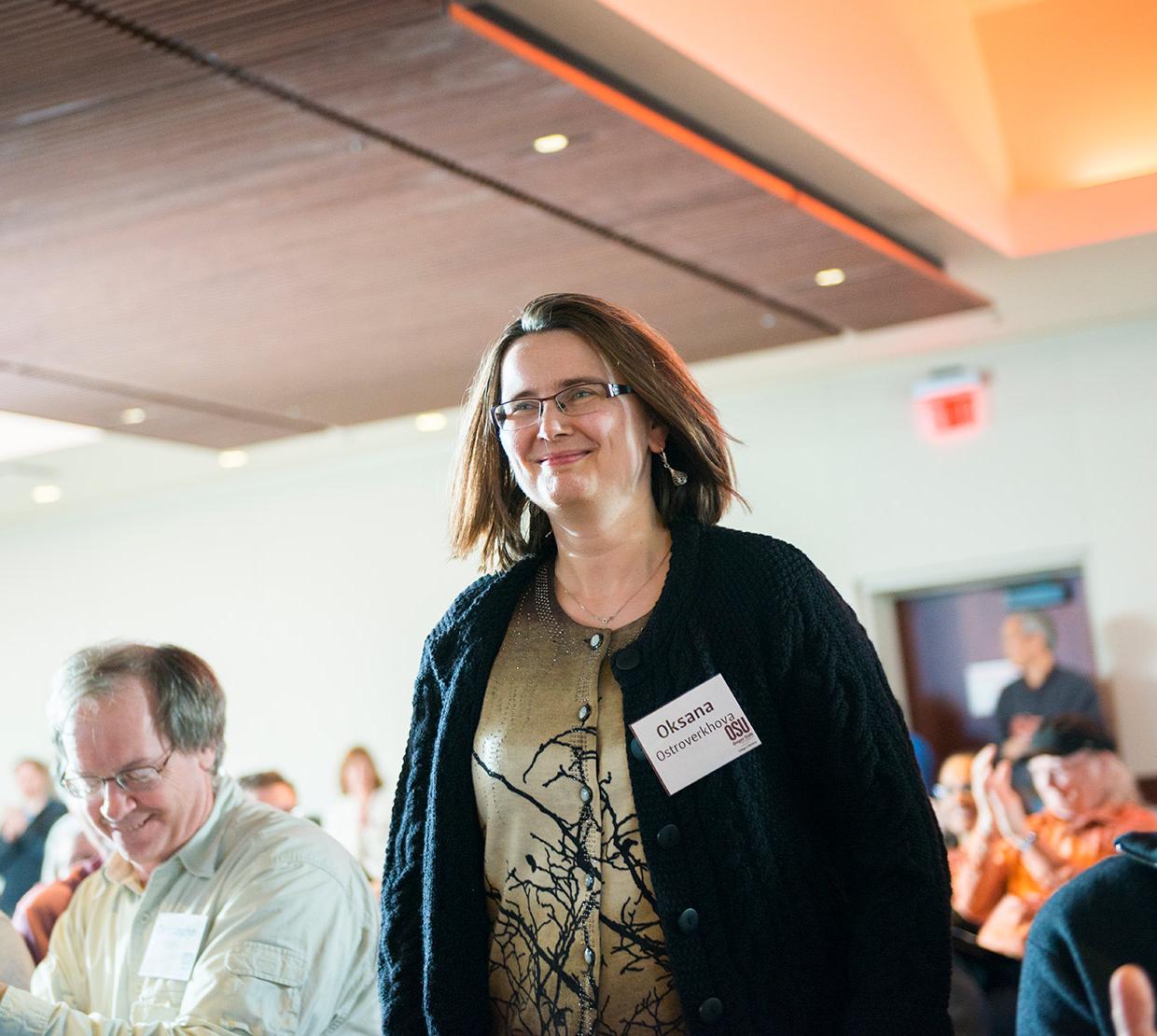
Oksana Ostroverkhova walking towards the stage to receive her award

2016 Winter Teaching & Advising Awards

2016 Winter Teaching and Advising awards

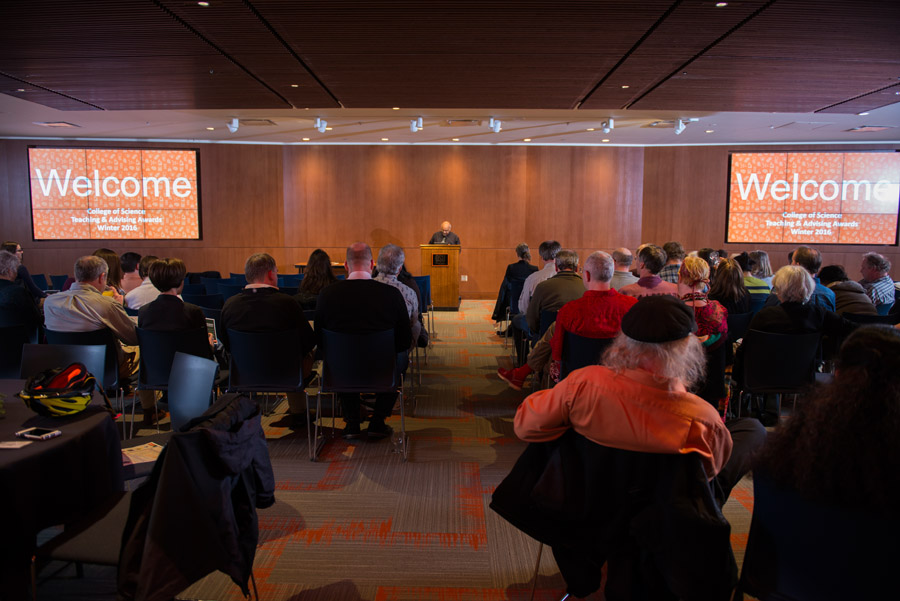
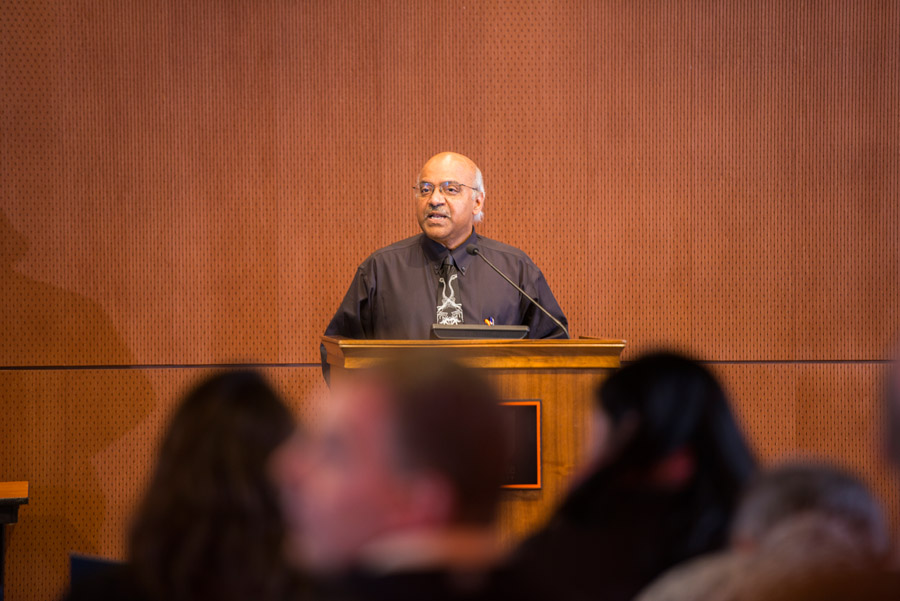
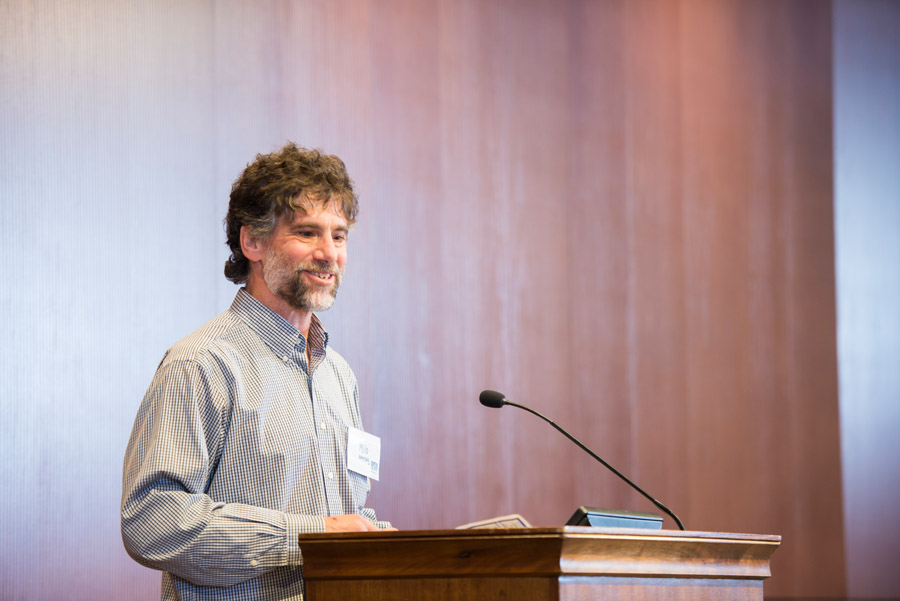
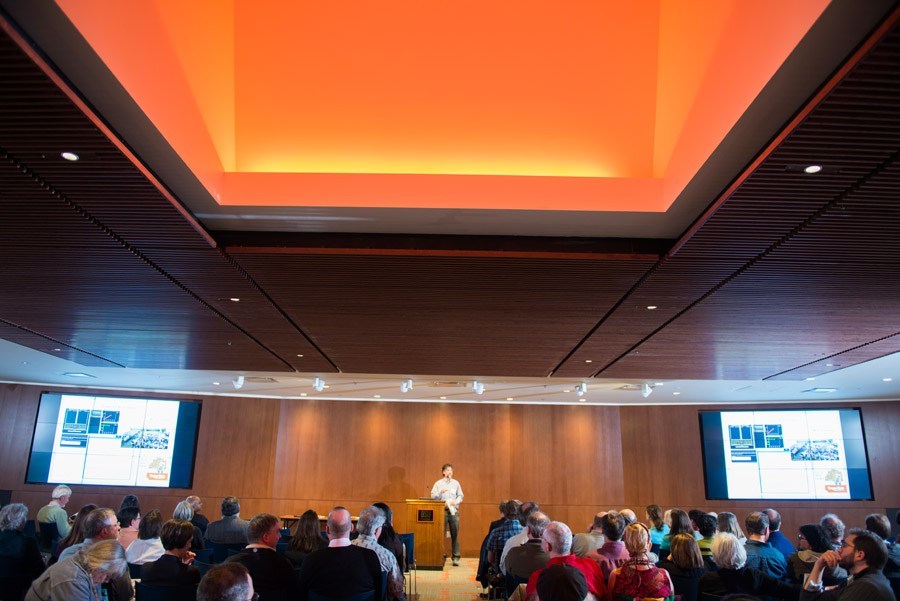
The College of Science celebrated our 2016 Winter Teaching and Advising Awards with faculty, advisors and students on January 12. We recognized excellence in teaching and advising, both hallmarks of our College. We are deeply committed to the success of all our people—faculty, advisors, staff and of course, our students. We want everyone in our OneScience community to thrive, not just survive!

We welcomed special guests from the project, ESTEME@OSU (Enhancing STEM Education). This NSF-funded project seeks to build community and increase evidence-based instructional practices in introductory-level STEM courses, from large lecture classes to smaller studio workshops and laboratories. The College is actively involved in and a strong supporter of ESTEME@OSU.

Congratulations to all of our nominees and to our award winners. The award recipients exemplify deep commitment, skill, effectiveness, mentoring and impact in teaching and advising, which helps build strong leaders in science. They are truly transforming lives.

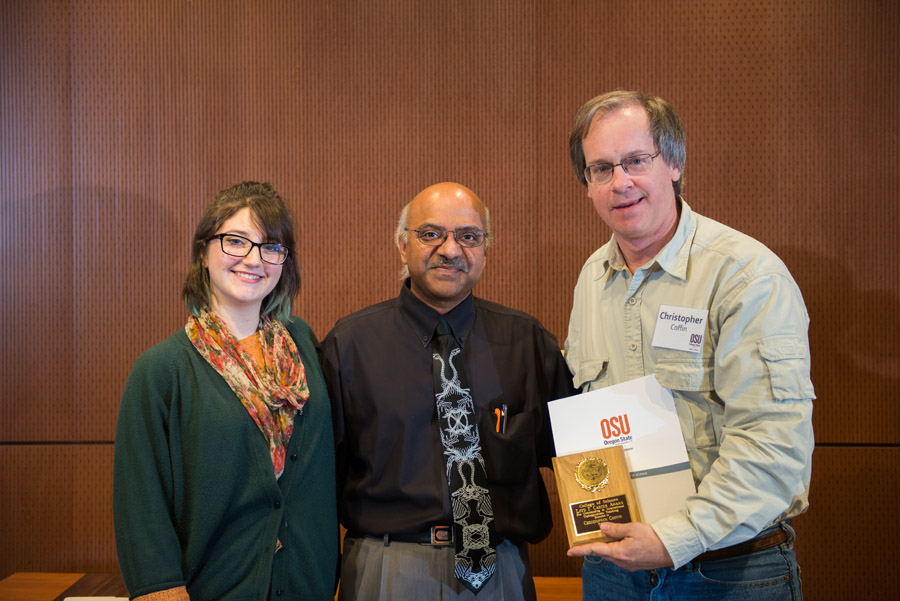
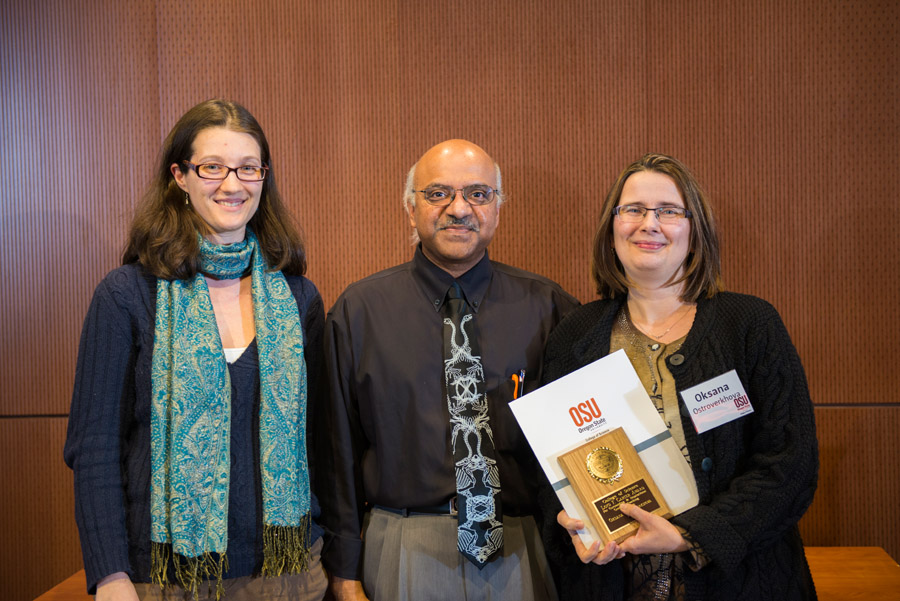
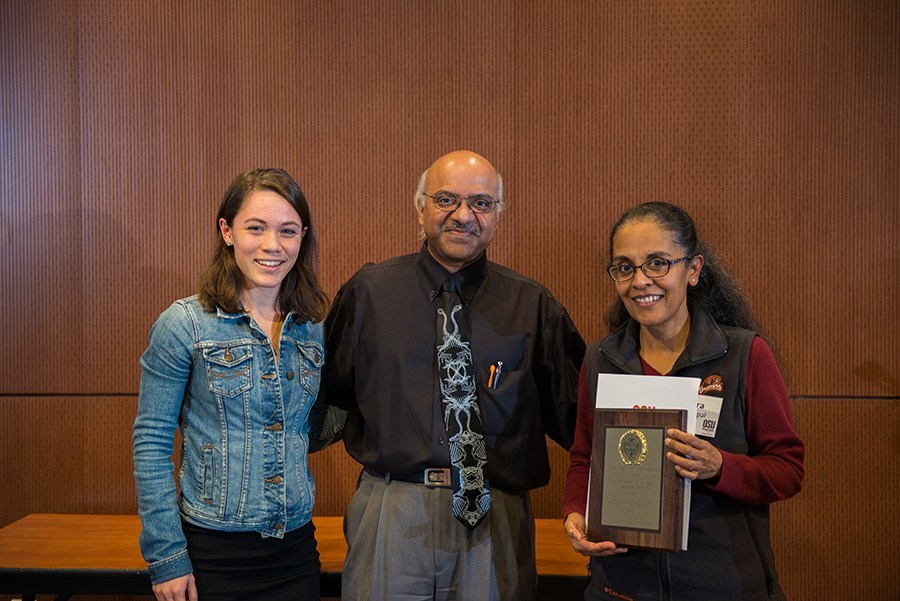
We especially congratulate our award winners: Jen Olarra, Chris Coffin, Oksana Ostroverkhova and Indira Rajagopal. You make us proud!

2016 Award nominees

Olaf Boedtker Award for Excellence in Academic Advising

Tasha Biesinger, Microbiology
Bill Bogley, Mathematics
Jen Olarra, Integrative Biology - winner
Chris Pastorek, Chemistry
Kari van Zee, Biochemistry & Biophysics

Loyd F. Carter Award for Outstanding and Inspirational Teaching in Science, Undergraduate

Bill Bogley, Mathematics
Daniel Myles, Chemistry
Chris Coffin, Physics - winner
KC Walsh, Physics
Phil Watson, Chemistry

Loyd F. Carter Award for Outstanding and Inspirational Teaching in Science, Graduate

Ren Guo, Mathematics
Sandra Loesgen, Chemistry
Malcolm Lowry, Microbiology
Ethan Minot, Physics
Oksana Ostroverkhova, Physics - winner

Frederick H. Horne Award for Sustained Excellence in Teaching Science

Indira Rajagopal - winner

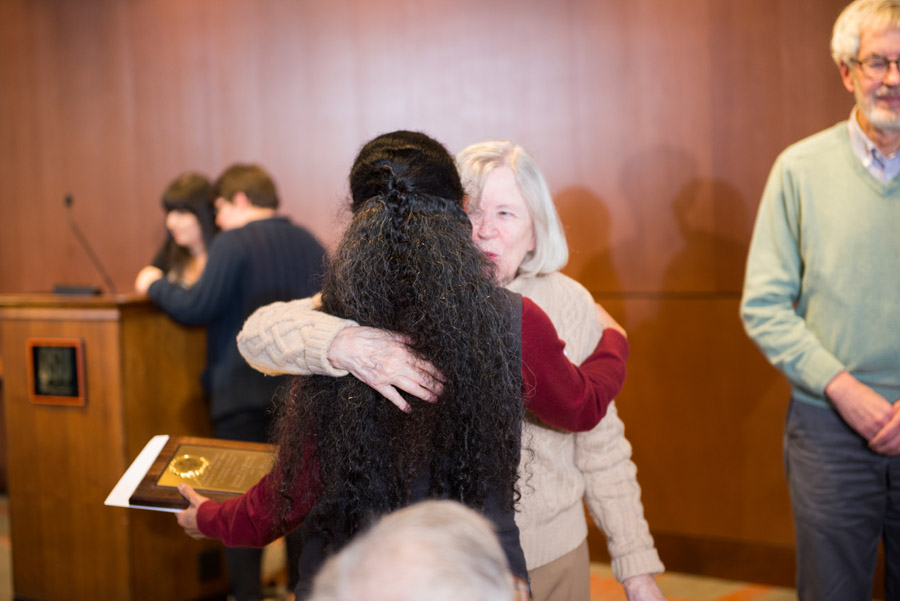
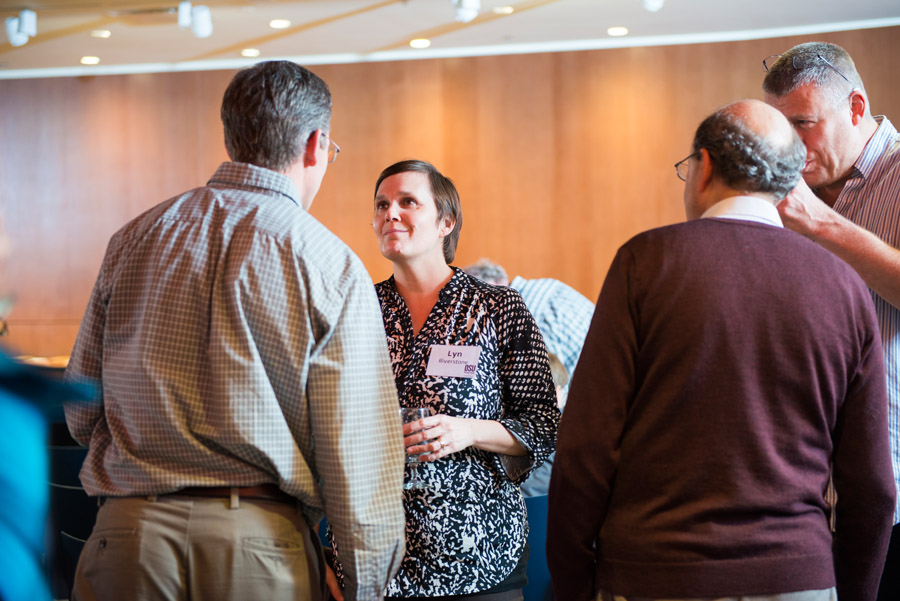
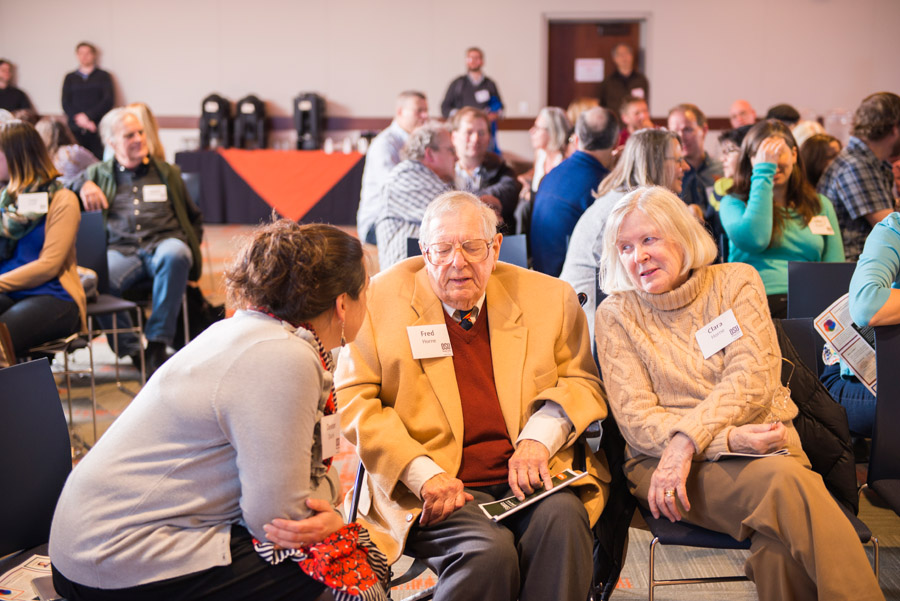
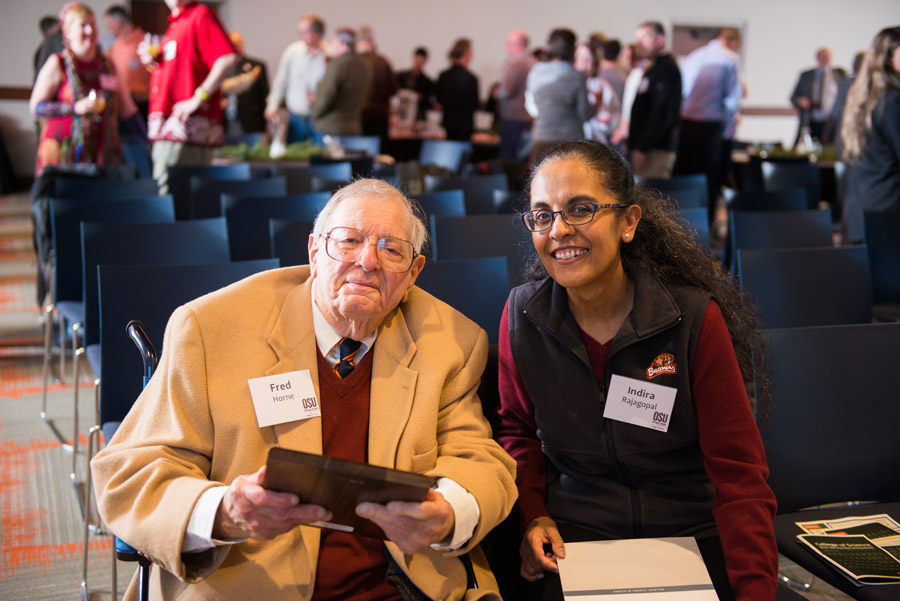
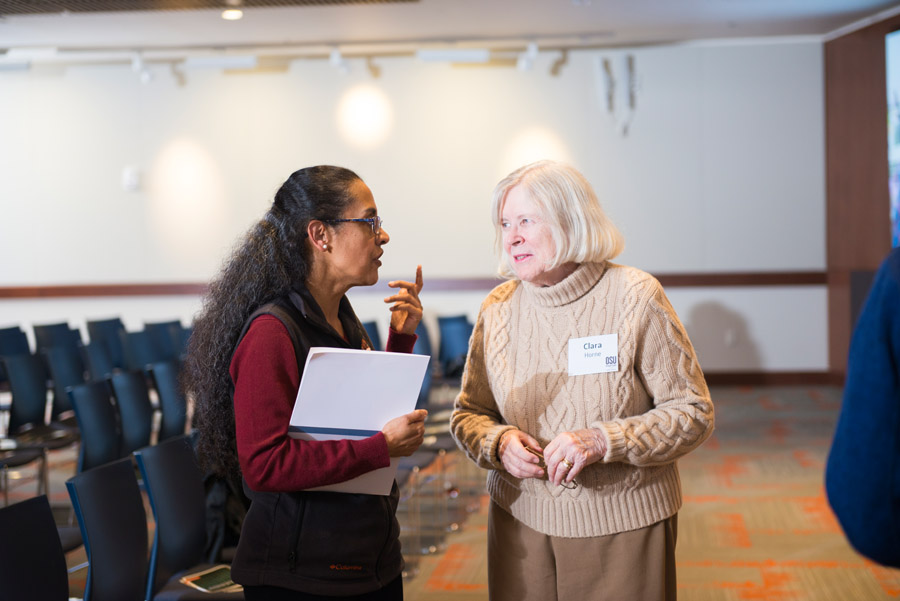
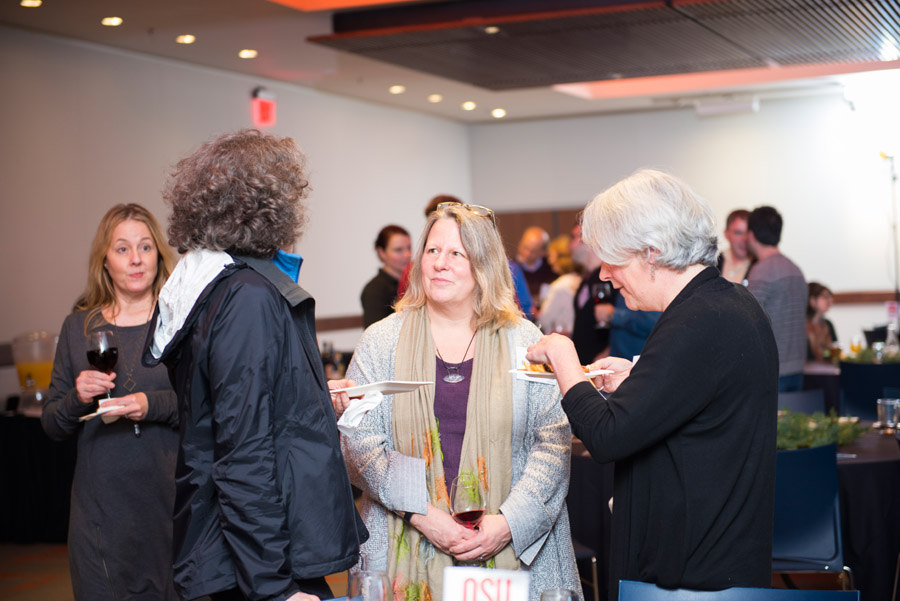
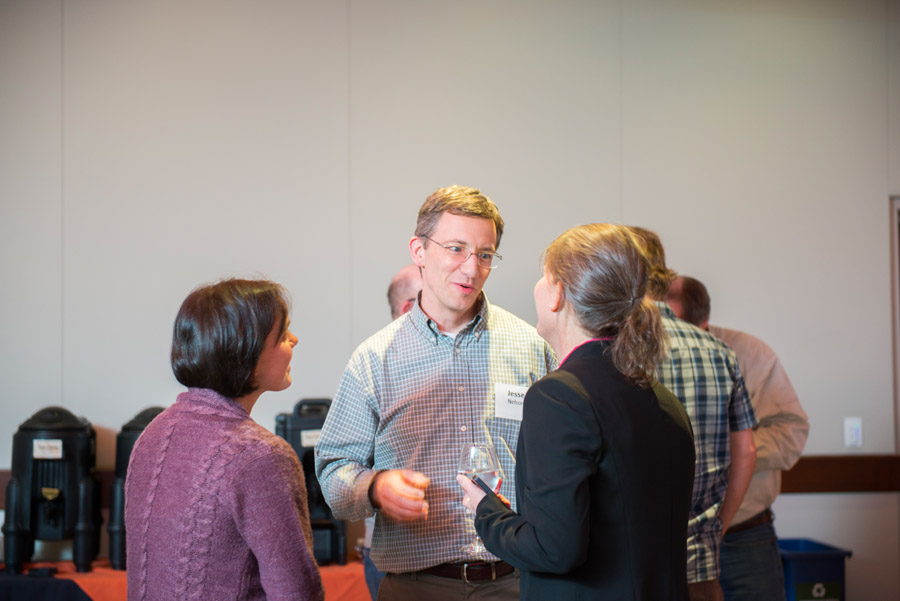
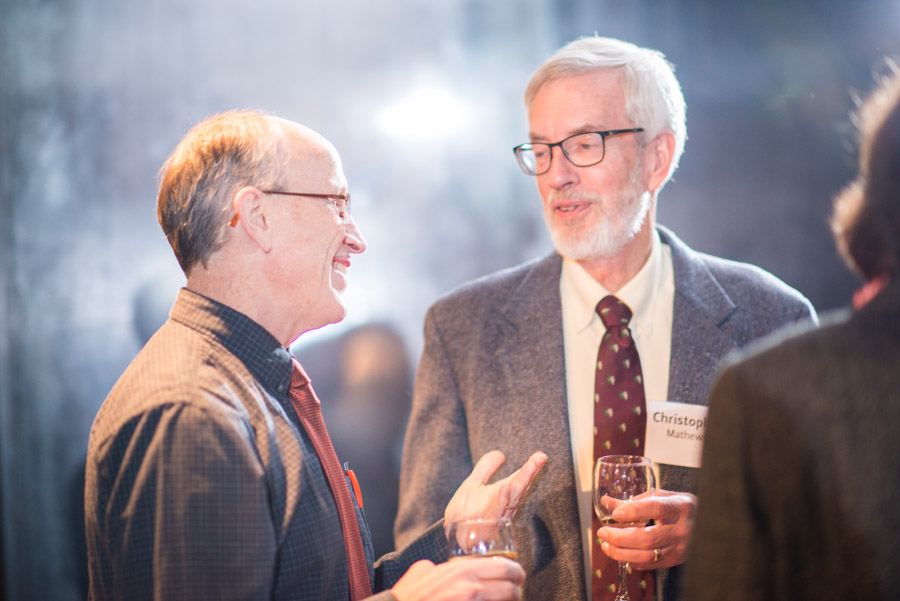
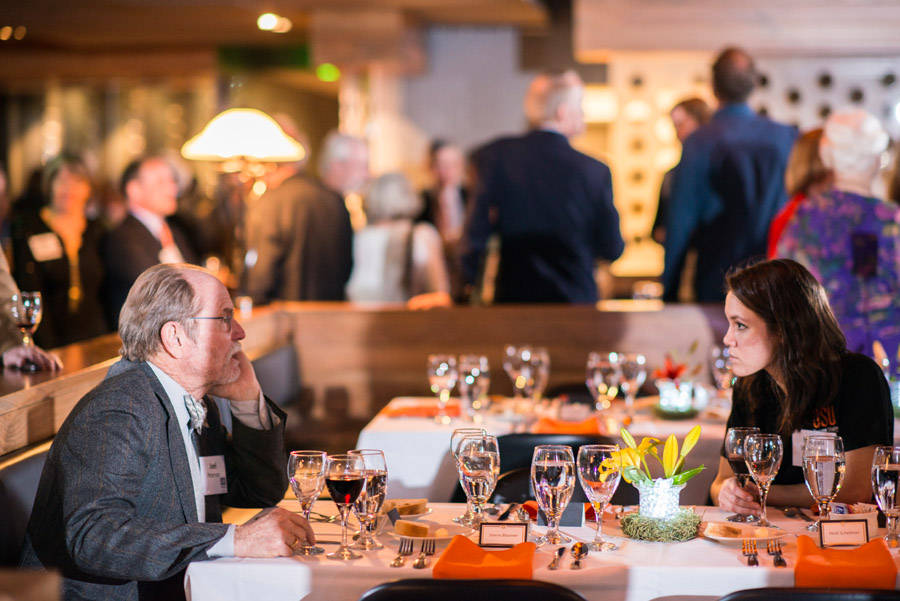
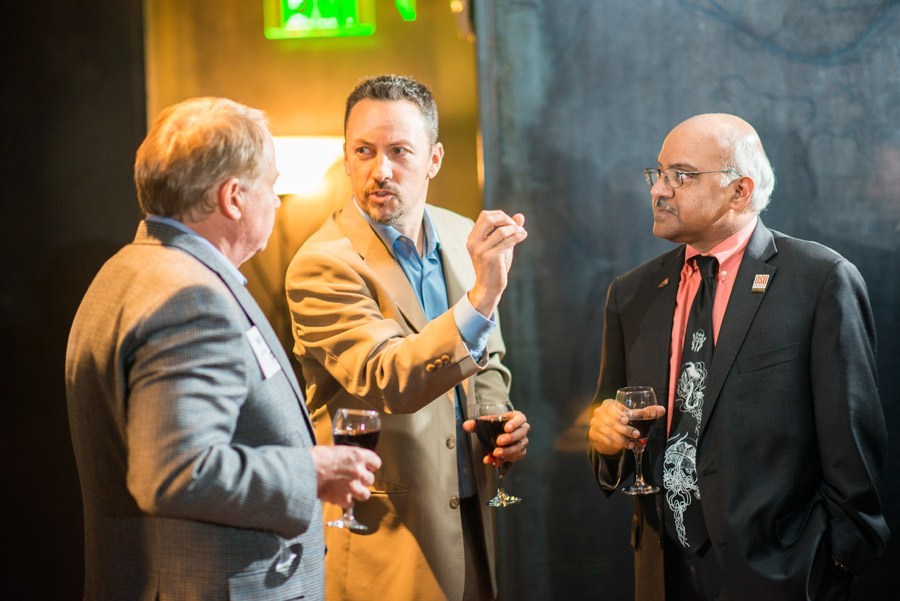
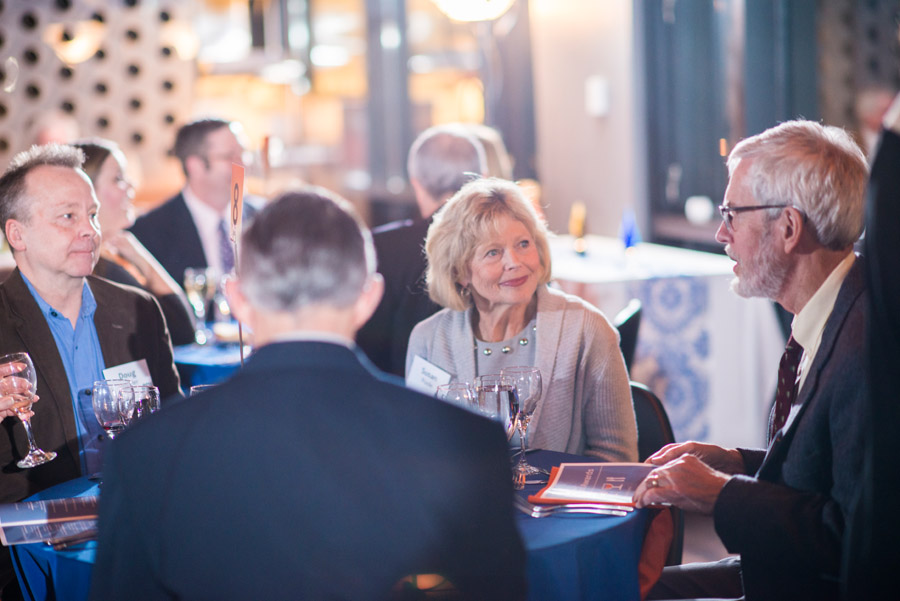
2016 Winter Awards ceremony and reception photos

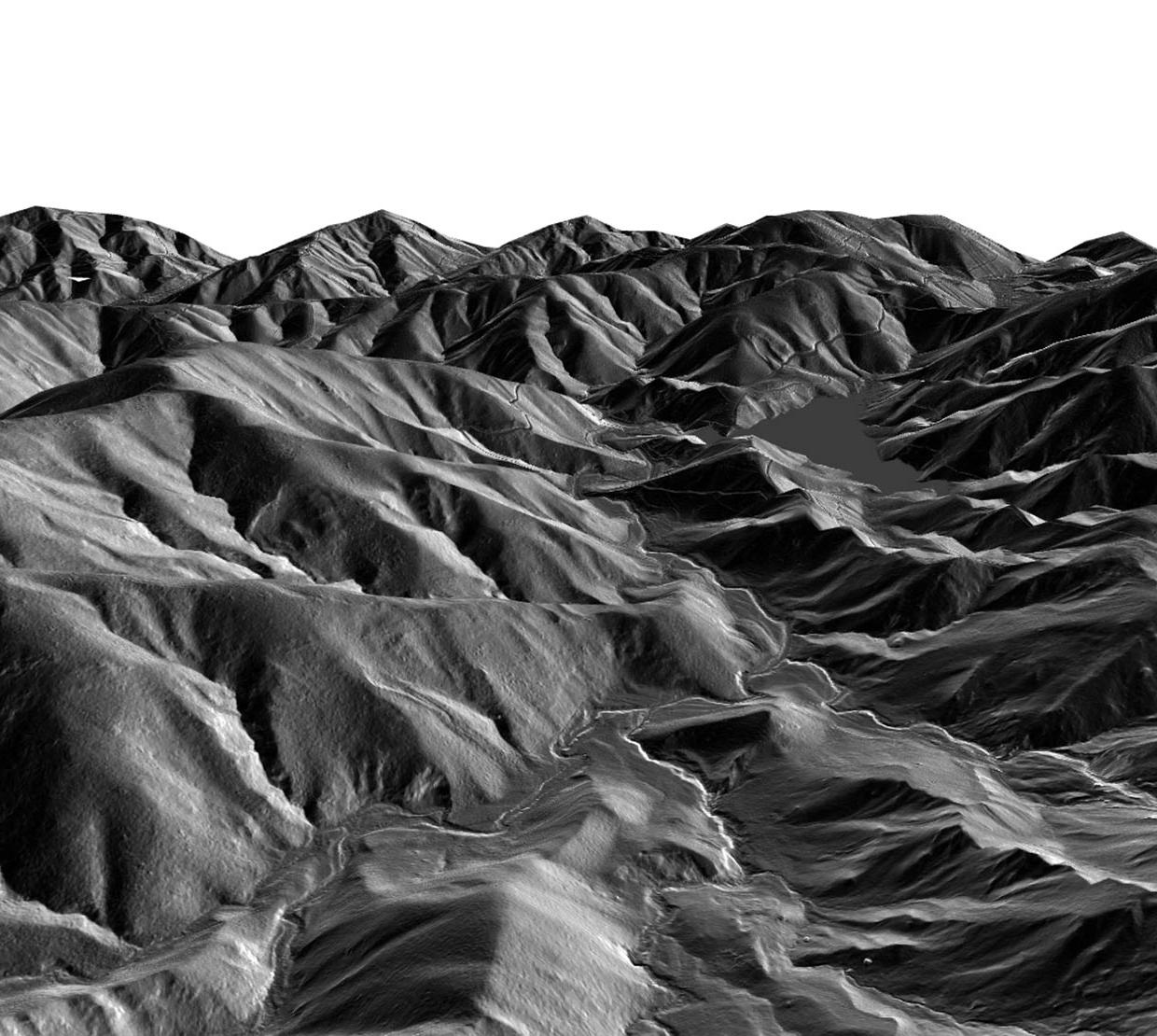
Black and white digital elevation models of mountains and hills

Big Data and Data Science Programs at NSF

image credit = LINZ Data Service

Chaitan Baru, Senior Advisor for Data Science for the Computer and Information Science and Engineering (CISE) Directorate at NSF, will visit campus January 15 to present a seminar on current NSF Big Data and Data Science program and activities. Science faculty and students are invited to attend the seminar, which will be held at 9 am in the Valley Library, Willamette Industries Seminar Room (room 3622) on the third floor.

Chaitan Baru in office space

Chaitan Baru, Senior Advisor for Data Science at NSF

Baru will present an overview of current programs and activities related to Big Data and Data Science at NSF and highlight inter-agency engagements within this area. He will also discuss future directions for Data Science research, education, and infrastructure.

NSF's BIGDATA program seeks novel approaches in computer science, statistics, computational science, and mathematics, along with innovative applications in domain science, including social and behavioral sciences, geosciences, education, biology, the physical sciences, and engineering that lead towards the further development of the interdisciplinary field of data science. Read more about NSF's BIGDATA program current solicitation. Deadline for proposals is February 9, 2016.

Considering that Data Science is a rapidly emerging, evolving field and discipline, Baru will take questions and allow ample time for discussions about where the field ought to be going given what we know today.

Currently on assignment with NSF, Baru is a Distinguished Scientist and Associate Director of Data Initiatives at the San Diego Supercomputer Center (SDSC), at the University of California, San Diego where he works on applied and applications-oriented research problems related to data management and data analytics. He leads the Advanced Cyberinfrastructure Development (ACID) Group at SDSC and is also Director of the Center for Large-scale Data Systems research (CLDS).

Baru has participated in a number of "data cyberinfrastructure" initiatives, including as Principal Investigator (PI) of the OpenTopography project; Cyberinfrastructure Lead, Tropical Ecology, Assessment and Monitoring network (TEAM); Co-Investigator of the Cyberinfrastructure for Comparative Effectiveness Research project (CYCORE); Member of the founding Senior Management Team of the National Ecological Observatory Network (NEON) and Co-PI of the NEON Cyberinfrastructure Testbed; Co-PI of the CUAHSI Hydrologic Information Systems (CUAHSI-HIS); Director, NEES Cyberinfrastructure Center (NEESit); PI/Project Director, Geosciences Network (GEON); and member of the How Much Information? project.

Seattle skyline at night

Math alumni and friends: Join us at 2016 JMM in Seattle

JMM 2016 in Seattle, Washington

Please join us and other OSU mathematics alumni and friends at JMM 2016 in Seattle for an OSU Math Alumni Reception on Thursday, January 7 at the Sheraton Seattle Hotel in the Capitol Hill room on the 3rd floor from 5:00 -6:30 pm. We look forward to celebrating your successes at a reception in your honor featuring hot and cold hors d'oeuvres, sustainable local cheeses and beverages.

This is a great opportunity to connect and catch up. We have lots of departmental and college news to share and want hear about what you are doing these days.

If you aren’t attending JMM, we hope you consider attending or even participating as an industry speaker or panelist in the future. One of our strategic goals is to foster strong connections among academic, industry and government mathematicians and scientists. JMM is also a good place for you to cultivate strong connections with academia and industry and to grow your professional network.

Find out about OSU faculty and alumni who are presenting at JMM this year!


Read more stories about: events, alumni and friends, mathematics


Seattle, Washington Space Needle and skyline

Math faculty and alumni flock to 2016 JMM

JMM 2016 in Seattle, Washington

OSU Mathematics faculty, students and alumni will be well represented at the 2016 Joint Mathematics Meetings in Seattle January 6-9. Many of them are presenting at JMM, the largest mathematics meeting in the world. Attendance at this year's conference is expected to exceed 5,600.

One notable alumnus is George E. Andrews, the Evan Pugh University Professor in Mathematics at Pennsylvania State University. A leading expert in the theory of integer partitions, he will present “A Re nement of the Alladi-Schur Theorem on Saturday, January 9 at 4 pm.

Dr. Andrews has published several monographs and more than 250 research and popular articles on q-series, special functions, combinatorics and applications. His book The Theory of Partitions is the standard reference on the subject of integer partitions. He is a past American Mathematical Society president and a member of the National Academies of Science.

ALUMNI and FRIENDS: Join us at 2016 JMM for an OSU Math Alumni Reception on January 7!

The following OSU mathematics faculty, students and alumni are presenting at JMM this year.

January 6, 2016

AMS Special Session on Modular Forms, q-Series, and Mathematics Inspired by Ramanujan

Organizers:
Chris Jennings-Shaffer, University of Florida
Holly Swisher, Oregon State University

Hypergeometric functions over finite fields

Jenny Fuselier, High Point University
Ling Long, Louisiana State University
Ravi Ramakrishna, Cornell University
Holly Swisher, Oregon State University
Fang-Ting Tu, National Center for Theoretical Sciences, Taiwan

MAA Session on Professional Development for Mathematicians: A Session for MAA PREP

Organizers:
Jon Scott, Montgomery College
Barbara Edwards, Oregon State University
Nancy Hastings, Dickinson College
Stan Yoshinobu, Cal Poly San Luis Obispo

See more at:

A Tale of Two Workshops

Tevian Dray, Oregon State University
Corinne A. Manogue, Oregon State University (Physics)

Spatial scaling of sea ice deformation

Jennifer K Hutchings, Oregon State University (College of Earth, Ocean and Atmospheric Sciences)
Andrew Roberts, Naval Postgraduate School
Cathleen A Geiger, University of Delaware
Jacqueline Richter-Menge, Cold Regions Research and Engineering Laboratory

Sea ice dispersion and anomalous diffusion: patterns and paradigms

J V Lukovich, University of Manitoba, Centre for Earth Observation Science
J.K. Hutchings, Oregon State University, College of Earth, Atmospheric and Oceanic Sciences

January 7, 2016

Spike Time Dependent Plasticity in Spiking Neural Network

Anushaya Mohapatra, Oregon State University
Mike Field, Rice University

Kittitas Valley Math Circle, a program for students and their parents

Brandy S Wiegers, Central Washington University, National Association of Math Circles
Dominic Klyve, Central Washington University
Allyson Rogan-Klyve, Central Washington University, Oregon State University
Janet Shiver, Central Washington University

MAA Panel Discussion: Developing mathematical concepts with technology

Organizer:
Gail Burrill, Michigan State University

Panelists:
Wade Ellis, West Valley Community College
Tom Dick, Oregon State University
Andrew Bennett, University of Kansas
Gail Burrill, Michigan State University

Mixing Times for Markov Chains on Lattices via Weak Limits

Mathew Titus, Oregon State University

Paradigms in Physics: Representations of Partial Derivatives

Tevian Dray, Oregon State University
Corinne A. Manogue, Oregon State University
Elizabeth Gire, Oregon State University
Emily H. van Zee, Oregon State University
David Roundy, Oregon State University

PREP: MAA's Professional Development Program

Nancy Hastings, Dickinson College
Barbara Edwards, Oregon State University
Nathaniel Dean, Texas State University-San Marcos
Virginia Buchanan, Hiram College
Mike Brilleslyper, United States Air Force Academy
Jenna Carpenter, Louisiana Tech University
Jon Scott, Montgomery College

January 8, 2016

AMS Special Session on Equations of Fluid Motion

Organizers:
Elaine Cozzi, Oregon State University
Radu Dascaliuc, Oregon State University
James P. Kelliher, University of California, Riverside

On the distribution of orbits in affine varieties

Clayton Petsche*, Oregon State University

AMS Special Session on Equations of Fluid Motion

Organizers:
Elaine Cozzi, Oregon State University
Radu Dascaliuc, Oregon State University
James P. Kelliher, University of California, Riverside

Listing as a Potential Connection between Sets of Outcomes and Counting Processes

Sarah A. Erickson, Oregon State University
Elise Lockwood, Oregon State University

Transverse ray transform

David V Finch, Department of Mathematics, Oregon State University
Patcharee Wongsason, Department of Math, Statistics, Computer ScienceUbon Ratchathani University

MAA/NCTM Joint Committee on Mutual Concerns Panel Discussion:

Instructional strategies that can make a difference

Organizer:
Gail Burrill, Michigan State University

Panelists:
Tom Dick, Oregon State University
Diane Briars, National Council of Teachers of Mathematics
Brian Hopkins, St. Peters University
Darryl Yong, Harvey Mudd College

AMS Special Session on Equations of Fluid Motion, II

Organizers:
Elaine Cozzi, Oregon State University
Radu Dascaliuc, Oregon State University
James P. Kelliher, University of California, Riverside

Marine protected areas with mobile predator and prey

Patrick De Leenheer, Oregon State University

Quantum mock modular forms arising from eta-theta functions

Amanda Folsom, Amherst College
Sharon Garthwaite, Bucknell University
Soon-Yi Kang, Kangwon National University
Holly Swisher, Oregon State University
Stephanie Treneer, Western Washington University

Connections between hypergeometric series, hypergeometric algebraic varieties, and supercongruences

Alyson Deines, Center for Communications Research
Jenny G. Fuselier, High Point University
Ling Long, Louisiana State University
Holly Swisher, Oregon State University
Fang-Ting Tu, National Center for Theoretical Sciences, Taiwan

Student Interpretations of Textbook Statements of the Multiplication Principle

Elise Lockwood, Oregon State University
Branwen Schaub, University of Portland

Examining Student Generalizing Activity in an Accessible Combinatorial Task

Zackery K. Reed, Oregon State University
Elise Lockwood, Oregon State University

January 9, 2016

A Refinement of the Alladi-Schur Theorem

George E. Andrews, (OSU mathematics alumnus), Department of Mathematics, Pennsylvania State University

Optimizing biodiversity in metagenomics via compressed sensing

David Koslicki, Oregon State University
Simon Foucart, Texas A&M University

Population Models with Partial Migration

Anushaya Mohapatra, Oregon State University
Haley Ohms, Oregon State University
Dave Lytle, Oregon State University
Patrick De Leenheer, Oregon State University

Reimagining Second-Year Calculus: The Vector Calculus Bridge Project

Tevian Dray, Oregon State University
Corinne A. Manogue, Oregon State University (Physics)

Calculating Veech Groups of Translation Surfaces

Brandon Edwards, Oregon State University

Aligning Mathematics GTA Training with Research Findings

Mary Beisiegel, Oregon State University
Emerald Stacy, Oregon State University (graduate student)
Jesse Andrews, Oregon State University

Marine protected areas with mobile predator and prey

Patrick De Leenheer, Oregon State University

Read the full schedule of session and workshops at 2016 JMM.
Sastry talking to table of colleagues

Celebrating excellence: 2015 Alumni Awards

2015 Alumni Awards

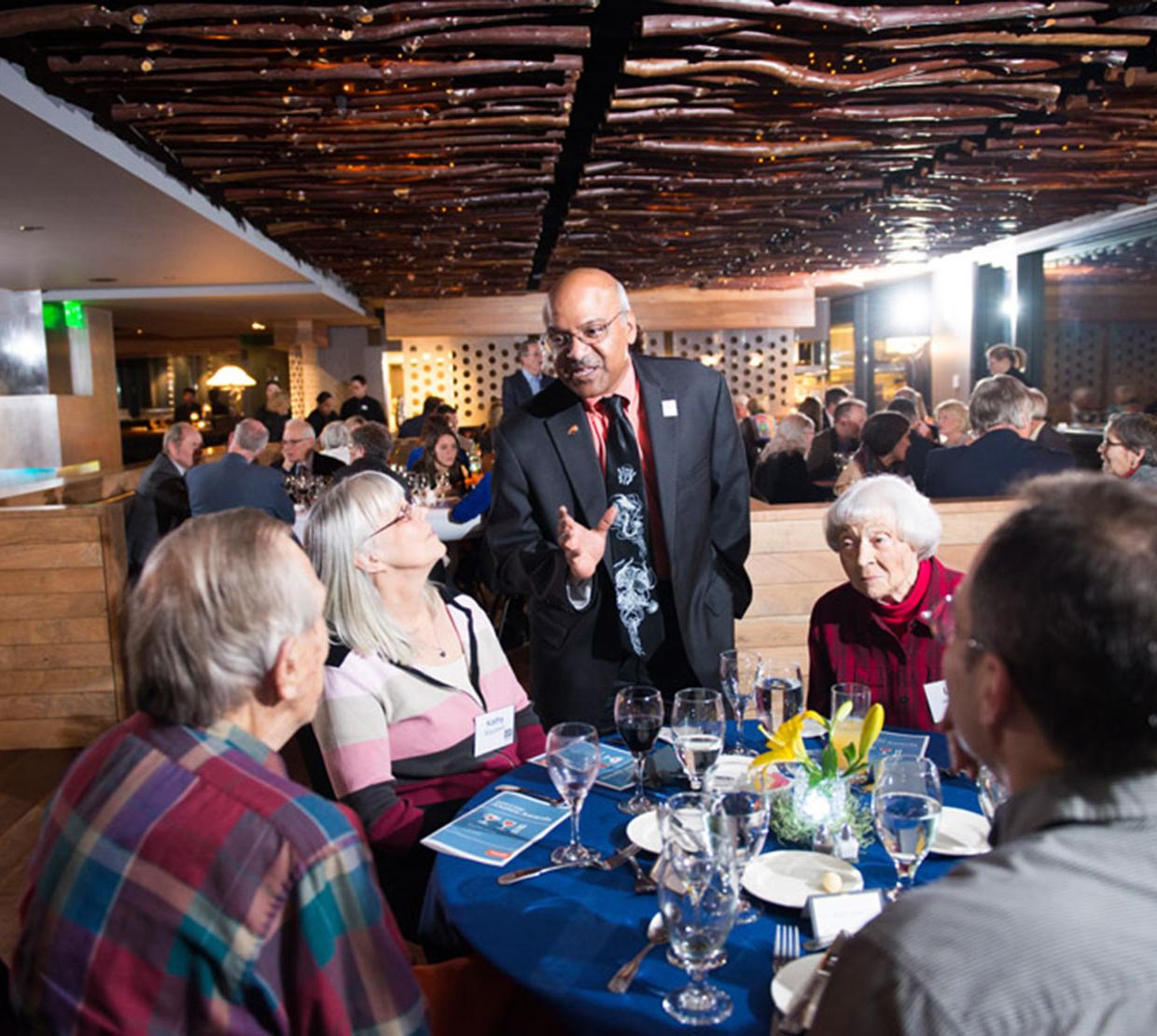
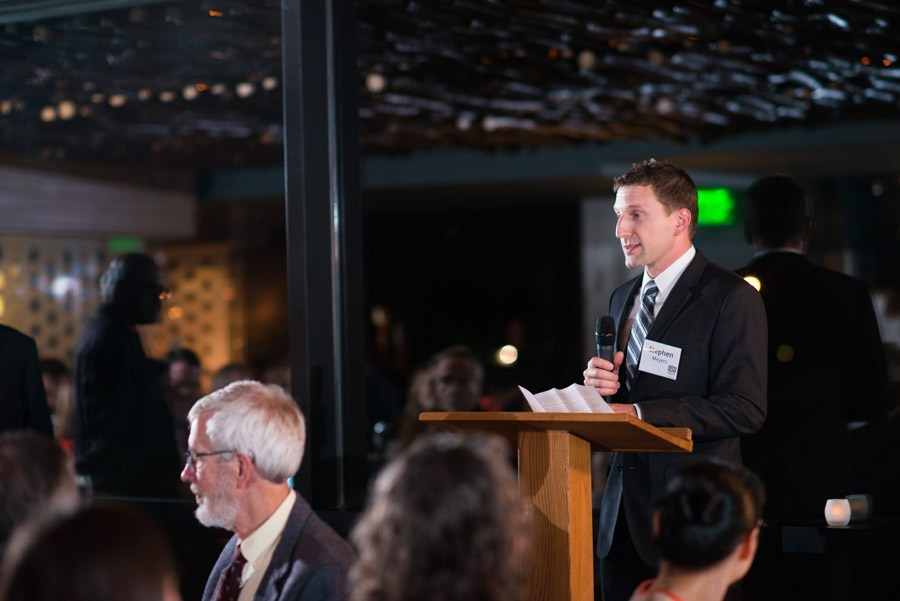
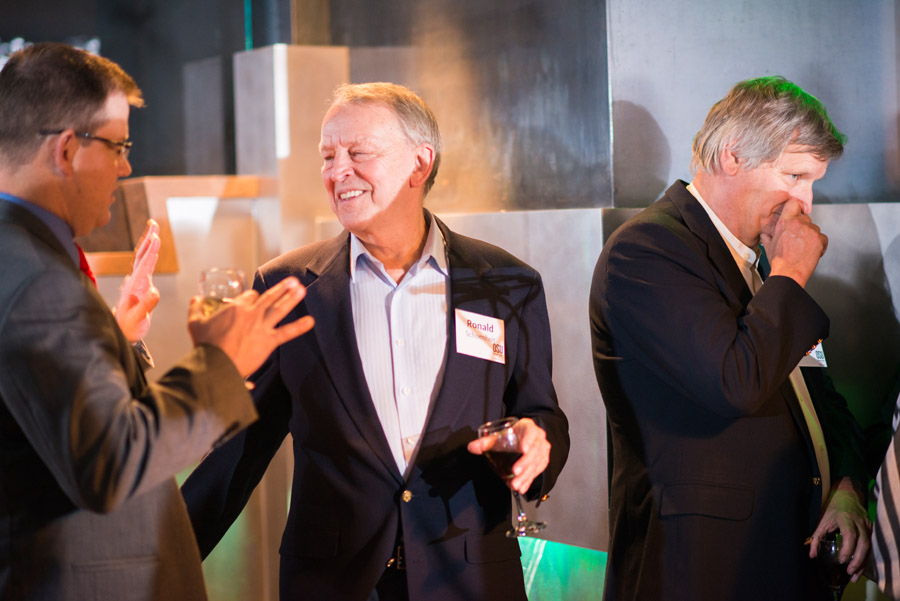
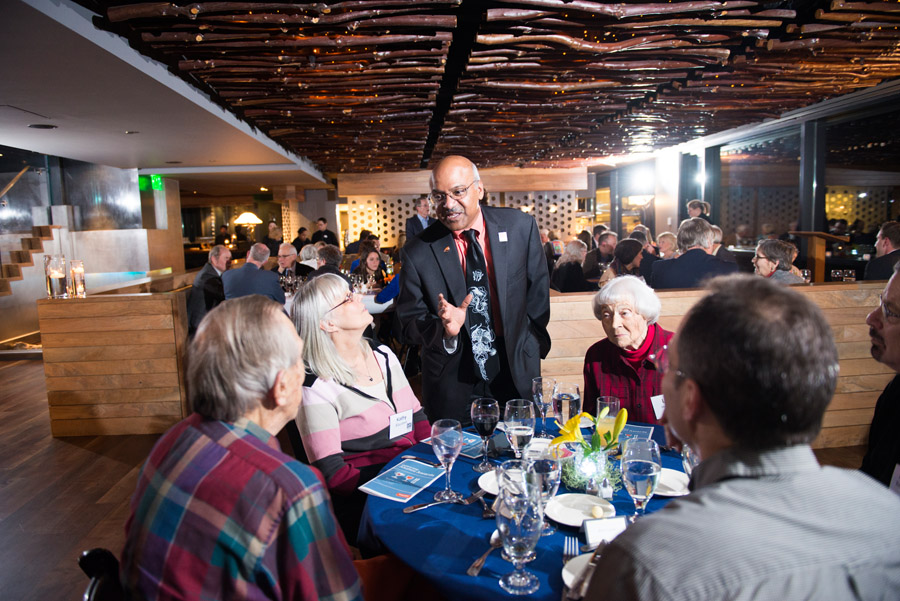
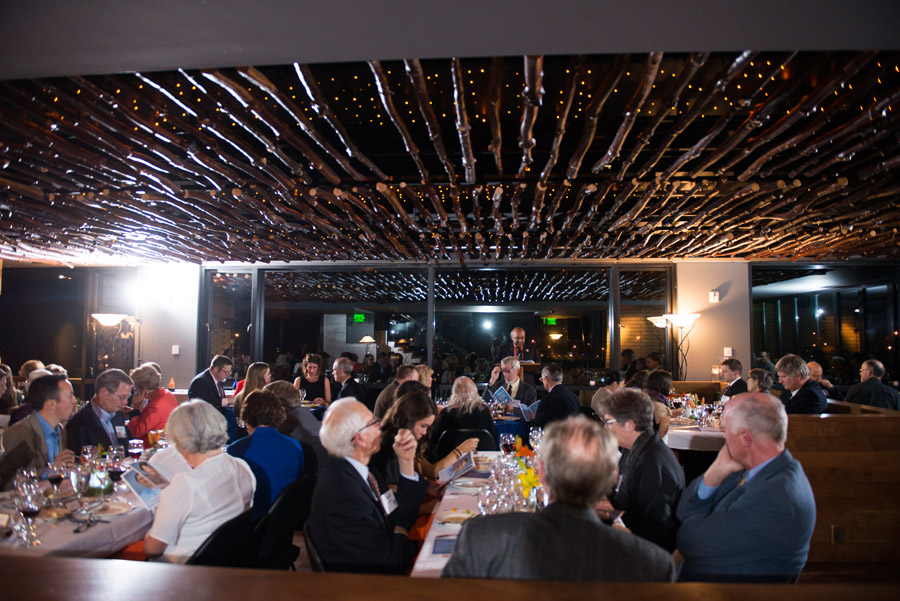
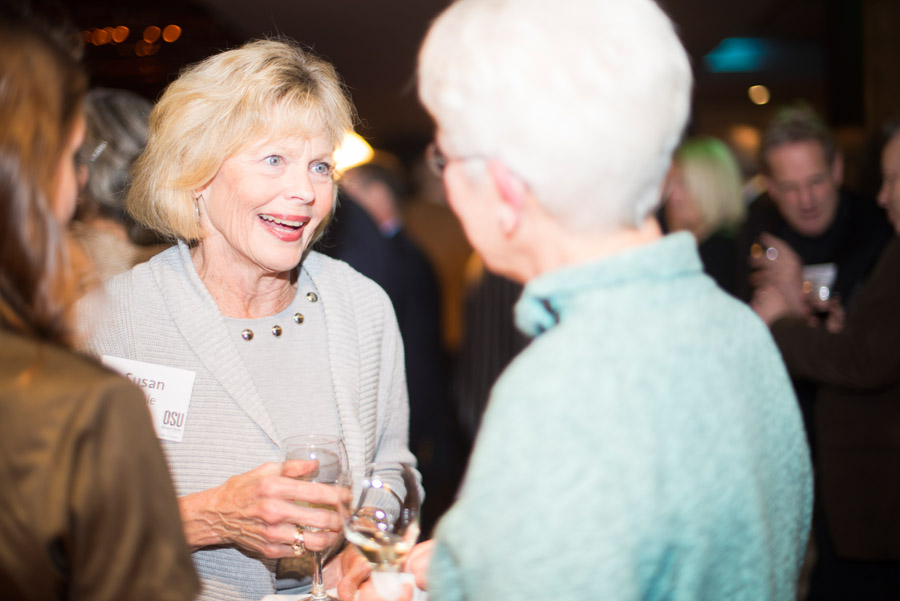
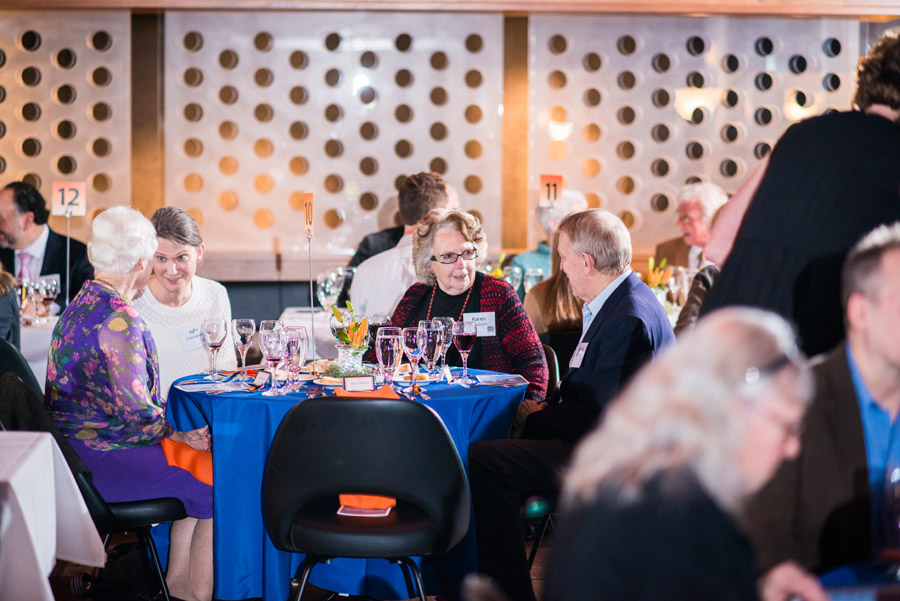
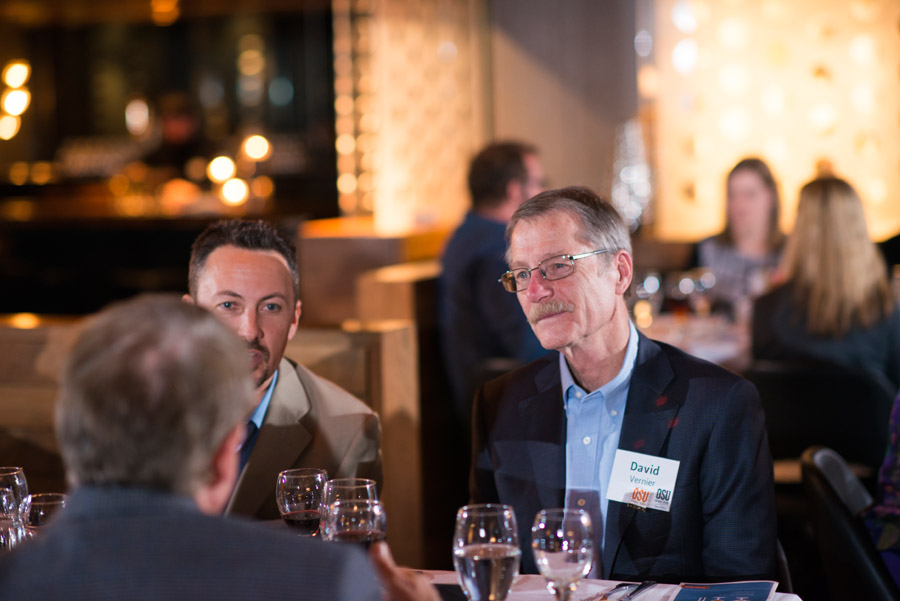
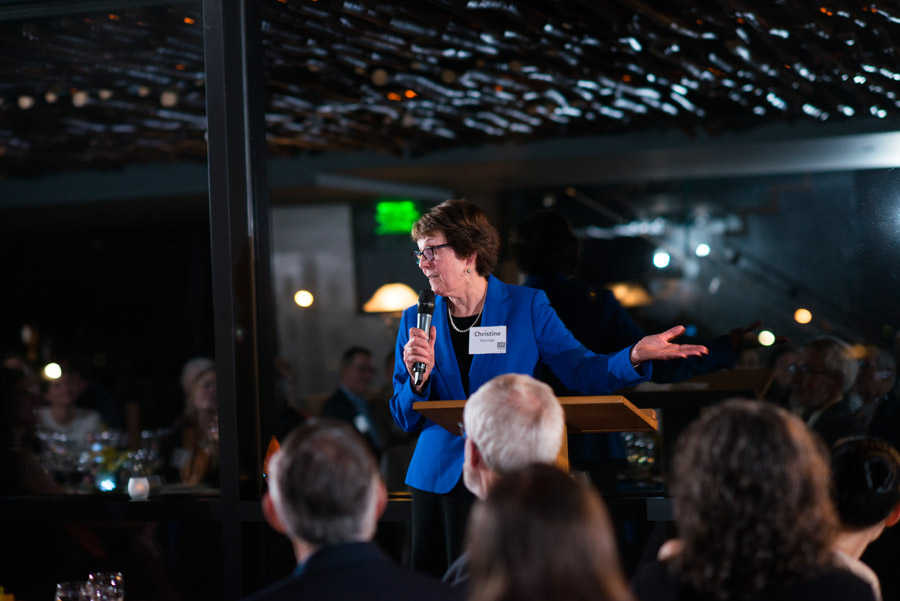
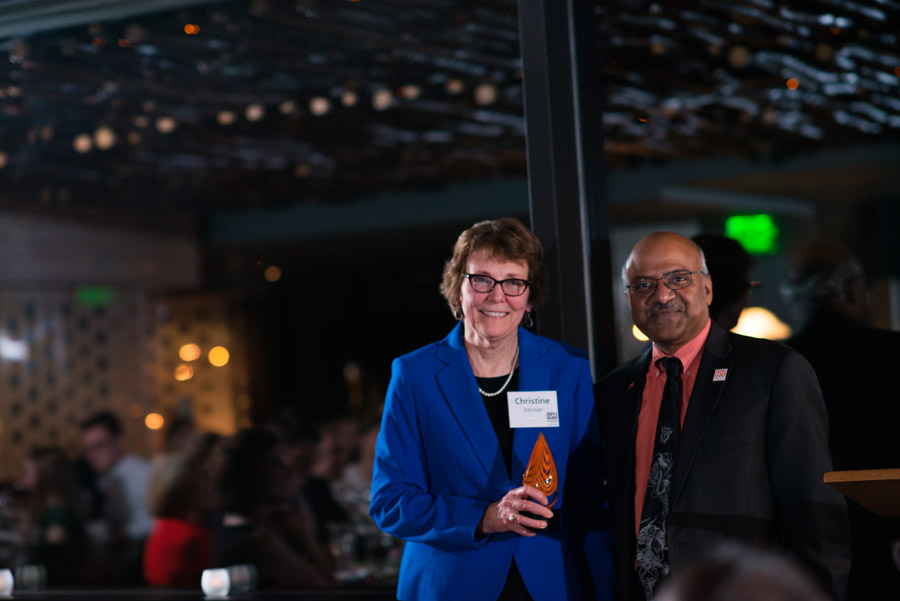
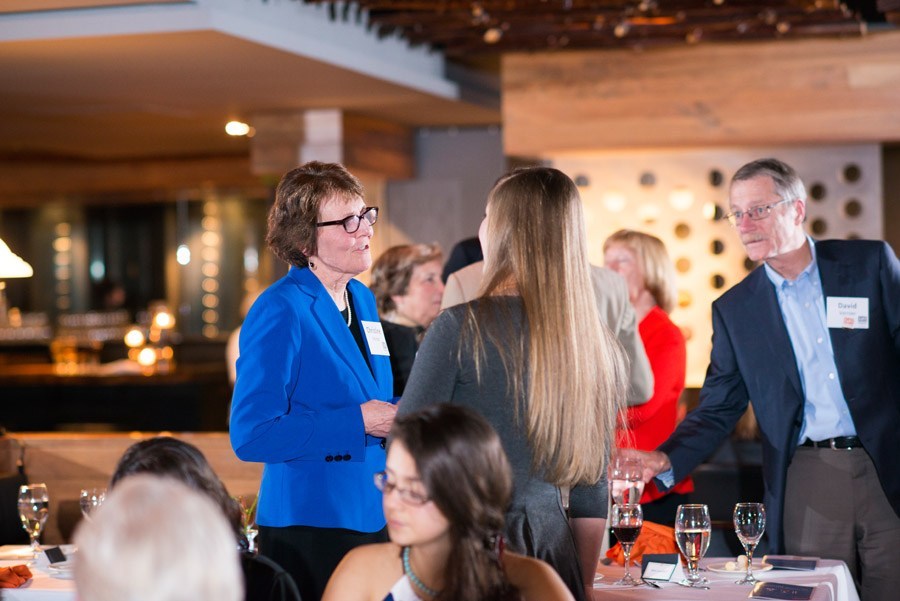
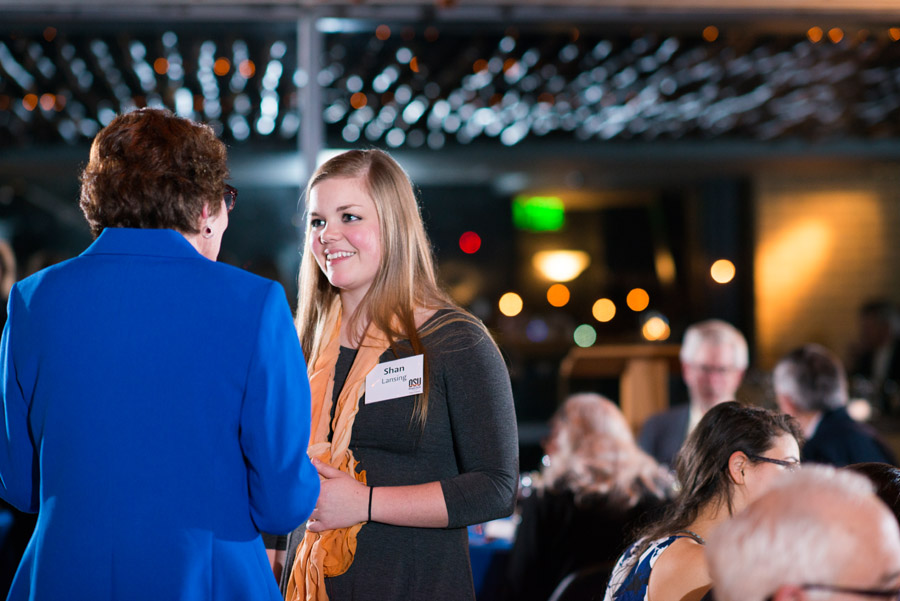
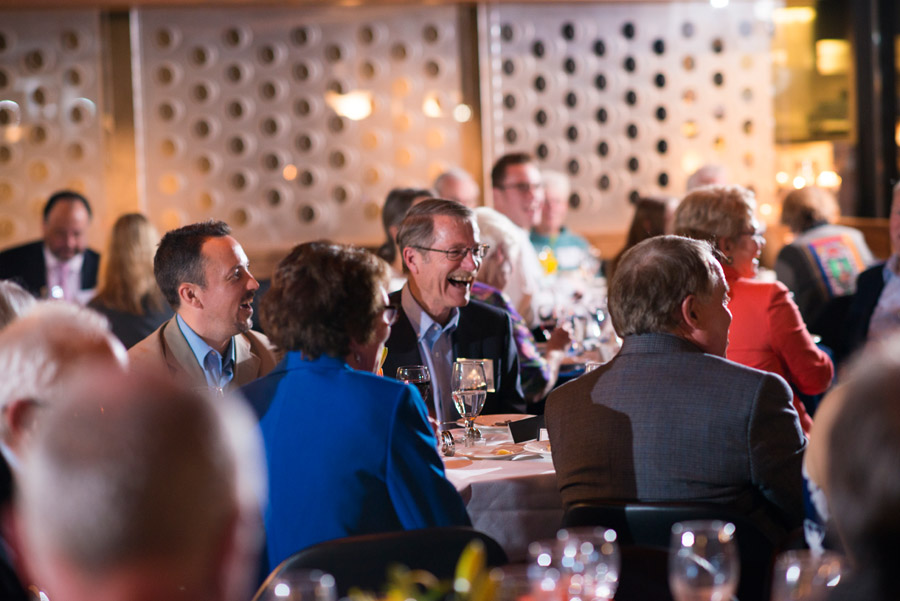
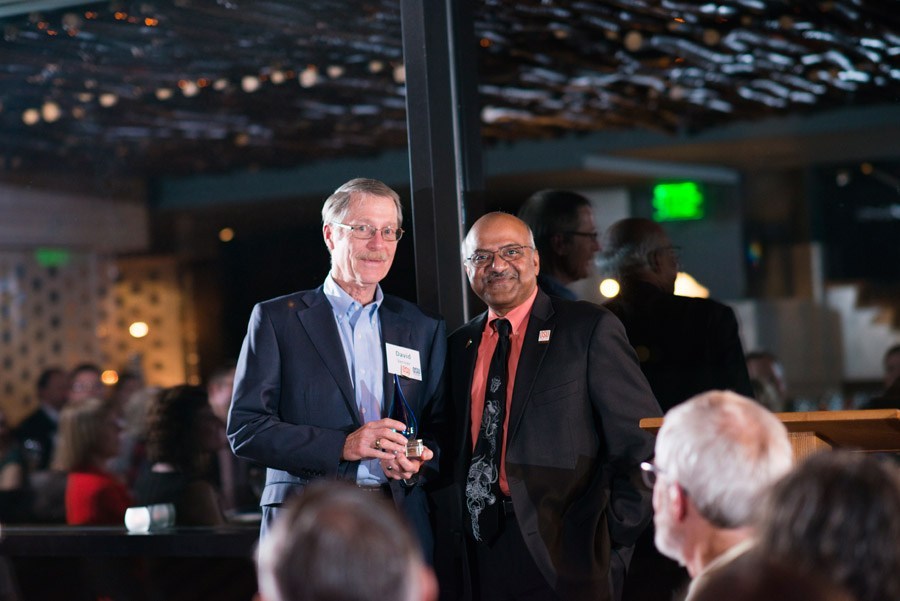
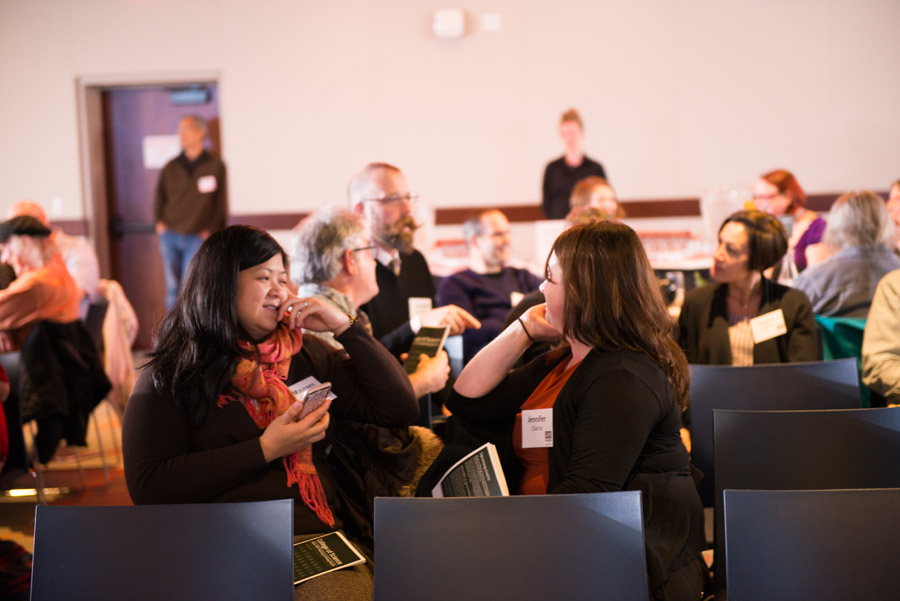
The College of Science gathered together its community of faculty leaders, distinguished professors, students, campus leaders and friends to honor these distinguished individuals at its 2015 Alumni Awards: David Vernier (MS, General Science, ’76) for the Distinguished Alumni Achievement Award; Christine Vernier for the Distinguished Service Award and Stephen Meyers (MS and Ph.D., Chemistry, ’06, ’08) for the Young Alumni Award. The event was held at The Vue in Corvallis in November.

Read more about our award winners.

colleagues showing each other documents in meeting room

Internationally renowned statistician addresses statistics as the “transfer science”

The fall 2015 Milne Lecture

The fall 2015 Milne Lecture features Peter J. Bickel, a leading figure in the field of statistics and Emeritus Professor of Statistics at the University of California, Berkeley. He will discuss, “Statistics: The transfer science, Big Data and an experience with ENCODE." The ENCODE project is the Encyclopedia of DNA Elements.

Peter Bickel in front of shrubbery

Peter Bickel, Emeritus Professor of Statistics, University of California, Berkeley

Hosted by the Department of Statistics, the fall Milne Lecture will be held on Monday, November 23 at 4 pm in the Memorial Union, Horizon room with a reception and cash bar from 5 - 7 pm. The Milne Lecture in Mathematics, Statistics, and Computer Science is a collaborative series of distinguished lectures launched in 1981 to honor founding Mathematics Department Chair and William Edmond Milne, a pioneer in numerical analysis.

Bickel is widely recognized as a leading statistician in any metric: breadth, depth or productivity. He will use illustrative examples to show how statistics is the transfer agent for methodology related to extracting information from aggregates.

In his talk, Bickel will address the new challenges posed by “big” and complex data as well as discuss a significant experience with the ENCODE project, a public research project that aims to identify all functional elements in the human genome and serves as one of the follow-ups to the Human Genome Project.

Credited with a wide range of contributions to the field of statistics, Bickel has conducted pioneering research in statistical sub-disciplines and has made important contributions in many areas of statistics, including robust statistics, decision theory, semiparametric modeling, the bootstrap, nonparametric modeling, machine learning, computational biology, and other areas where statistics and quantitative approaches play an important role.

“The message that statistics is a “transfer science” which enables discoveries in every area of science and most other disciplines is becoming a universal truth,” said Sastry G. Pantula, dean of the College of Science. “I am thrilled to have one of the top minds in statistical and data sciences come to Oregon State to talk to our community about how statisticians convert Big Data to useful knowledge.”

Bickel’s scientific findings have helped reshape aspects of statistical theory and methodological development. His research has influenced developments in other quantitative disciplines, including branches of engineering, economics, finance, computational biology, public health, among others. He is a co-author of the textbook, Mathematical Statistics: Basic Ideas and Selected Topicsv.I and II.

Bickel served as president of The Institute of Mathematical Statistics, The Bernoulli Society and the Board of Trustees of the National Institute of Statistics. Nationally, he has held leading positions within the National Academy of Sciences and the National Research Council.

Bickel has received many awards and honors, including being named the Wald Lecturer and Rietz Lecturer of the Institute of Mathematical Statistics. He was the first to receive the COPSS Presidents’ Award from the Committee of Presidents of Statistical Societies, which includes current and past presidents and presidents-elect of five professional societies of statisticians in Northern America. Three of Bickel’s students have also received the COPSS Presidents’ Award.

His work has also been recognized outside of the statistical profession through the John D. and Catherine T. MacArthur Foundation and Guggenheim Fellowships; and election to the American Academy for Arts and Sciences (AAAS), the National Academy of Sciences and the Royal Netherlands Academy of Arts and Sciences.

Born in Bucharest, Romania, Bickel earned a Ph.D. from the University of California, Berkeley at the age of 22. The Hebrew University, Jerusalem and the ETH (Eidgenossische Technische Hochschule, Zurich) awarded him honorary doctorate degrees. Although he officially retired in 2006, Bickel maintains an active research program in the Department of Statistics at Berkeley.

Support for the Milne Lectures comes from a generous gift from the Milne family as well as support from the College of Science’s Departments of Mathematics and Statistics, the College of Engineering‘s School of Electrical Engineering and Computer Science and from the Center for Genome Research and Biocomputing at OSU.

Enrique Thomann standing in office hallway

Thomann named head of Mathematics Department

Enrique Thomann, Head of the Department of Mathematics

The College of Science welcomes Enrique Thomann as the Head of the Department of Mathematics effective immediately. Thomann has served as interim head of the department of Mathematics since October of last year.

With extensive research and teaching experience, Thomann will lead the department’s academic and research programs, and will oversee about 80 faculty/staff and 70 graduate assistants. He will continue with his research and teaching.

“I am delighted that Dr. Thomann has agreed to be Head of the Department of Mathematics,” said College of Science Dean Sastry Pantula.

“He is an outstanding mathematician with a pleasant personality, and we are extremely fortunate to have him in this leadership position. His deep commitment to enhancing diversity and student success will be a tremendous asset to the department, to Science and to OSU.” —Dean Sastry Pantula

Thomann joined the Mathematics faculty at Oregon State in 1987 supervising undergraduate, master’s and doctoral student theses, which he continues to do. He served as an associate editor for the Annals of Applied Probability from 2005 to 2012, and recently spent a year at the Institute of Mathematics and its Applications (IMA) in Minneapolis, where he held a New Directions Research Professorship.

“Mathematics holds a special place at Oregon State. We have deep expertise in basic mathematical research as well as interdisciplinary research that cuts across other sciences and engineering,” said Thomann.

“The health of Mathematics is essential for OSU’s success." —Enrique Thomann

"Our faculty is recognized nationally and internationally for their teaching and research excellence. We will continue to explore innovative methods for delivering mathematical curricula to support student success. I am looking forward to working with my colleagues in mathematics to raise the visibility and impact of mathematics on our campus as well as globally.”

Thomann specializes in partial differential equations, analysis, applied probability and mathematical modeling. His current research explores problems in partial differential equations arising from fluid mechanics. Thomann also collaborates with colleagues across departments and disciplines to develop mathematical models for applications in ecology, oceanography, hydrology and the management of natural resources.

After completing his undergraduate education in mathematics in his native Argentina at the Universidad Nacional de Córdoba, Thomann earned his Ph.D. in mathematics at the University of California, Berkeley.


Read more stories about: faculty and staff, mathematics


Subscribe to Mathematics