Research

Research

OSU funds the most high-impact undergraduate research experiences in the state.

How undergraduate research drives student success at OSU

By Srila Nayak, Emmet Pettit

Undergraduate research funded through OSU can lead to scholarships, fellowships and a dream job.

Biochemistry alumna Kendra Jackson participated in research experiences during her undergraduate studies at OSU.

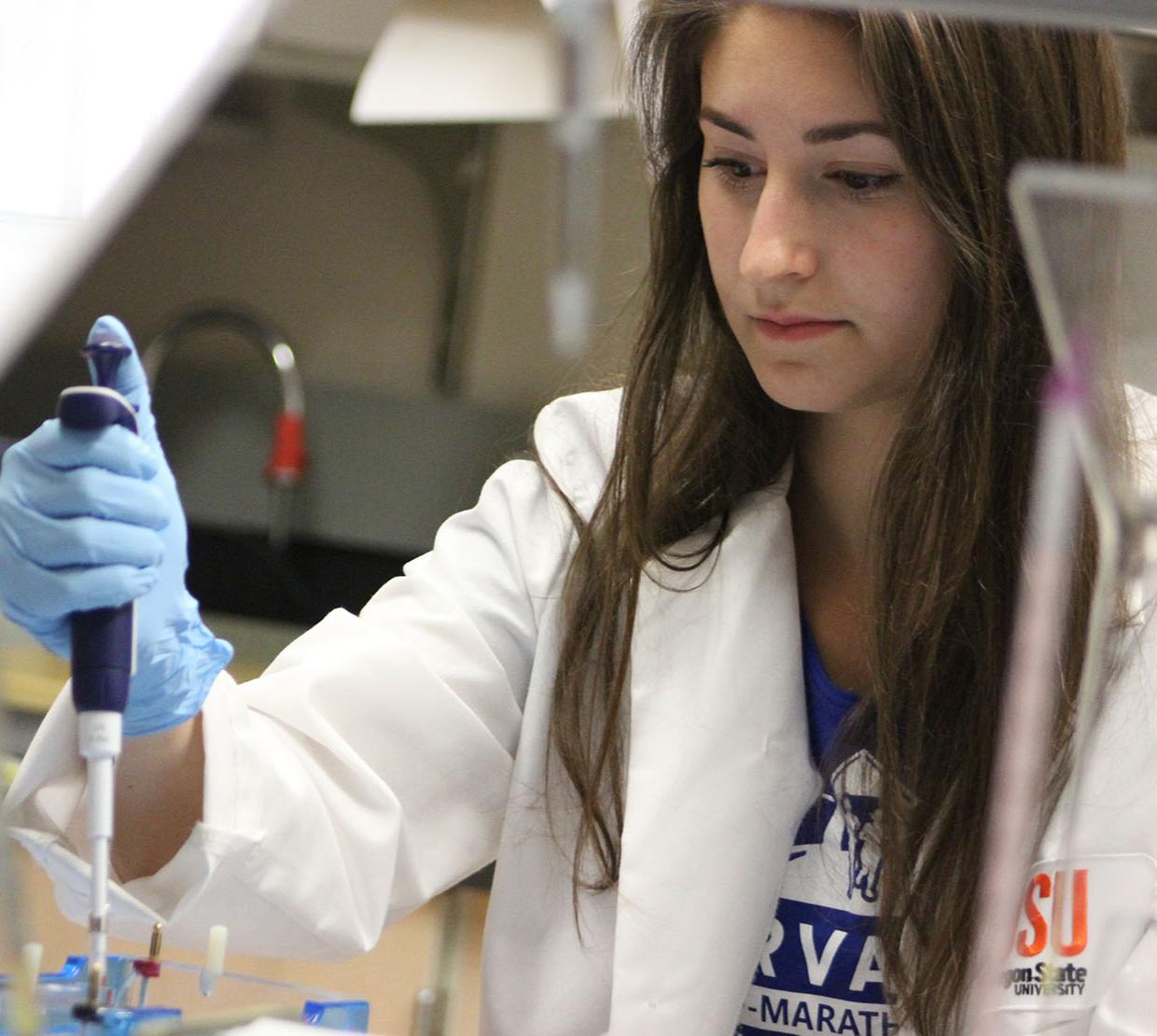
In the College of Science, students have more opportunities to collaborate on undergraduate research that addresses real-world problems and prepares them for top graduate programs and training at internationally recognized institutions.

Half of undergraduate students in the College of Science not only work on research projects with faculty mentors across the campus, but also find a home at Oregon State University’s cutting-edge scientific centers and institutes.

Oregon State funds more high-impact undergraduate research experiences than any other university in the state. Undergraduate research programs give students hands-on learning experiences early in their undergraduate careers, opportunities to learn new things and develop new skill sets beyond the scope of the classroom.

Undergraduate research enhances employment opportunities

Undergraduate research opportunities also play a key role in developing student-faculty relationships. Associate Professor of Physics Matthew Graham mentors several undergraduate students supported by research fellowships in his lab and has found that the value of undergraduate research on student careers cannot be overestimated. “Research is an unspoken, firm prerequisite for graduate school, and it is one of the few ways industry-bound graduates can stand-out in getting their first job. I am surprised at how often potential employers contact me for references.”

Substantive undergraduate research experiences are the norm rather than the exception in the College of Science. A key trait that sets the College’s undergraduate research program apart is that students get the financial support they need to commit to a research program long enough to make effective contributions to scientific discovery and new foundational knowledge.

“The big reason that I came to OSU – and why I really love it – is because of the research opportunities."

“Science requires time, and while as mentors we strive to offer meaningful research opportunities to undergraduate students throughout the year, having the secured time-commitment to follow experimental designs from start to end and really own the research project they are developing is empowering for the students,” said Maria Franco, an associate professor of biochemistry who mentors undergraduate research scholars in her lab. “This is a very valuable opportunity that can impact their professional and personal goals in meaningful ways.”

Capping off more than three years of research in a disordered proteins lab, Seth Pinckney (Biochemistry & Biophysics '21) co-authored two manuscripts, one of which shares early results on the SARS-CoV-2 nucleocapsid protein.

Linus Unitan (Honors Chemistry '21) and his mentor Professor of Chemistry Vince Remcho were awarded a patent for devising a blood-plasma separator device for medical purposes in an analytical chemistry lab. Unitan also co-authored a paper on the subject in the journal Analytical and Bioanalytical Chemistry.

The high caliber of undergraduate research is verified by the success of OSU science majors who have won some of the most competitive national awards, including the Goldwater and Fulbright awards, as well as the National Science Foundation Graduate Research fellowship. Since 2017, all Goldwater scholars from the College, eight in total, were involved in extensive undergraduate research programs before winning the national prestigious award.

“The big reason that I came to OSU – and why I really love it – is because of the research opportunities,” said biochemistry alumna Kendra Jackson (Honors Biochemistry and Molecular Biology '20), who received both Ray and Frances Cripps Undergraduate Research Experience (CURE) and Summer Undergraduate Research Experience (SURE) fellowships to conduct research on fungal genetics and epigenetics. Jackson won the Goldwater scholarship in 2019 and is currently studying medicine at Stanford University.

SURE scholarships fuel student success

Students work independently to tackle aspects of research projects that are at the cutting-edge of scientific innovation, preparing them well for careers in science and industry. Chemistry student and SURE scholar Alice Lulich ('23) is doing research in a lab specializing in new inorganic materials. “The structures I make in the lab have never been made before,” Lulich said. “The SURE scholarship means that I will get to have as close to a grad school experience as possible in my undergraduate career.”

Undergraduate research programs also help students discover new interests and passions, enabling them to venture bravely outside their comfort zones. Zoology major Dustin Campbell ('20) won the SURE scholarship to conduct research in the area of reproductive behaviors in garter snakes.

Doing so helped Campbell discover a talent for both field and lab-based zoological research. “I thoroughly enjoy collecting animal specimens and field research. The SURE program showed me what the work looks like in the lab after you have collected the specimens. Being in the lab helped me realize that I do really like all aspects of animal research.”

Supported by donors, alumni and faculty, funded undergraduate research opportunities have had a positive and powerful effect on student learning and achievement. Since its inception in 2015, the Summer Undergraduate Research Experience (SURE) Program has helped science faculty engage undergraduates in their research. Supported by our extraordinary alumni and donors, in the last two years, SURE Science, among other student scholarship programs, provided $405K in scholarships to 80 students to participate in substantive lab and field-based research experiences.

“The structures I make in the lab have never been made before."

Our alumni are passionate about paving the way for students on their journeys to meaningful careers. Joel Peterson (Microbiology ’69) says he gives so that students can “get a better understanding early on of where research in their field is headed,” adding that students’ “enthusiasm and idealism” make him “feel like I’m doing something worthwhile.”

In addition to the SURE Science program, more than 10 different alumni-funded scholarships – both College-wide and department-specific support undergraduate research. These include the Student Research Experience Fund, the Ray and Frances Cripps Undergraduate Research Experience (CURE) fellowship in the Department of Biochemistry and Biophysics, the Sheila Van Zandt Student Research Experience Fund; the College of Science Experiential Learning Fund; and numerous other department-specific awards. Each year these fellowships support students as they engage in original research alongside faculty mentors working on projects that span countless areas of fundamental and applied sciences and mathematics.

The alumni behind these funds, grateful for their own formative years in the College, believe that passing the baton enhances graduate prospects and creates a more hopeful future. “These young people are going to change the world,” said alumna and scholarship donor Judy Faucett (Mathematics ’70). “They are doing incredibly important things.”

OSU research means enhanced access and equity

The SURE Science program and other scholarships have widened equity and access to careers in science, increasing opportunities for underrepresented minority students and first-generation and low-income students.

"I am finally able to start doing the kind of research I want to do for the rest of my life!"

Instead of worrying about finances, mathematics student Luis Garcia-Lamas ('22) spent last summer conducting full-time paid research on corn genetics, using statistical modeling and data analysis to predict phenotype outcomes. “I come from a low-income background, so scholarships mean a lot to me. This research is fundamental to my upcoming graduate school applications,” said Garcia-Lamas.

With the help of funding, science students overcome significant barriers to engage in valuable research opportunities. “This scholarship means the world to me,” said integrative biology major Samantha Gregory, who studies the impacts of a predatory snail on ecosystems in the intertidal zone at Patrick’s Point, California. “I have several chronic illnesses and accessing scholarship programs where I can control my physical activity has been a challenge. I am finally able to start doing the kind of research I want to do for the rest of my life!”

True to its mission as a land grant research university, the College research programs are helping build the next generation of scientists and leaders so that they can develop innovative solutions to the challenges facing our world.

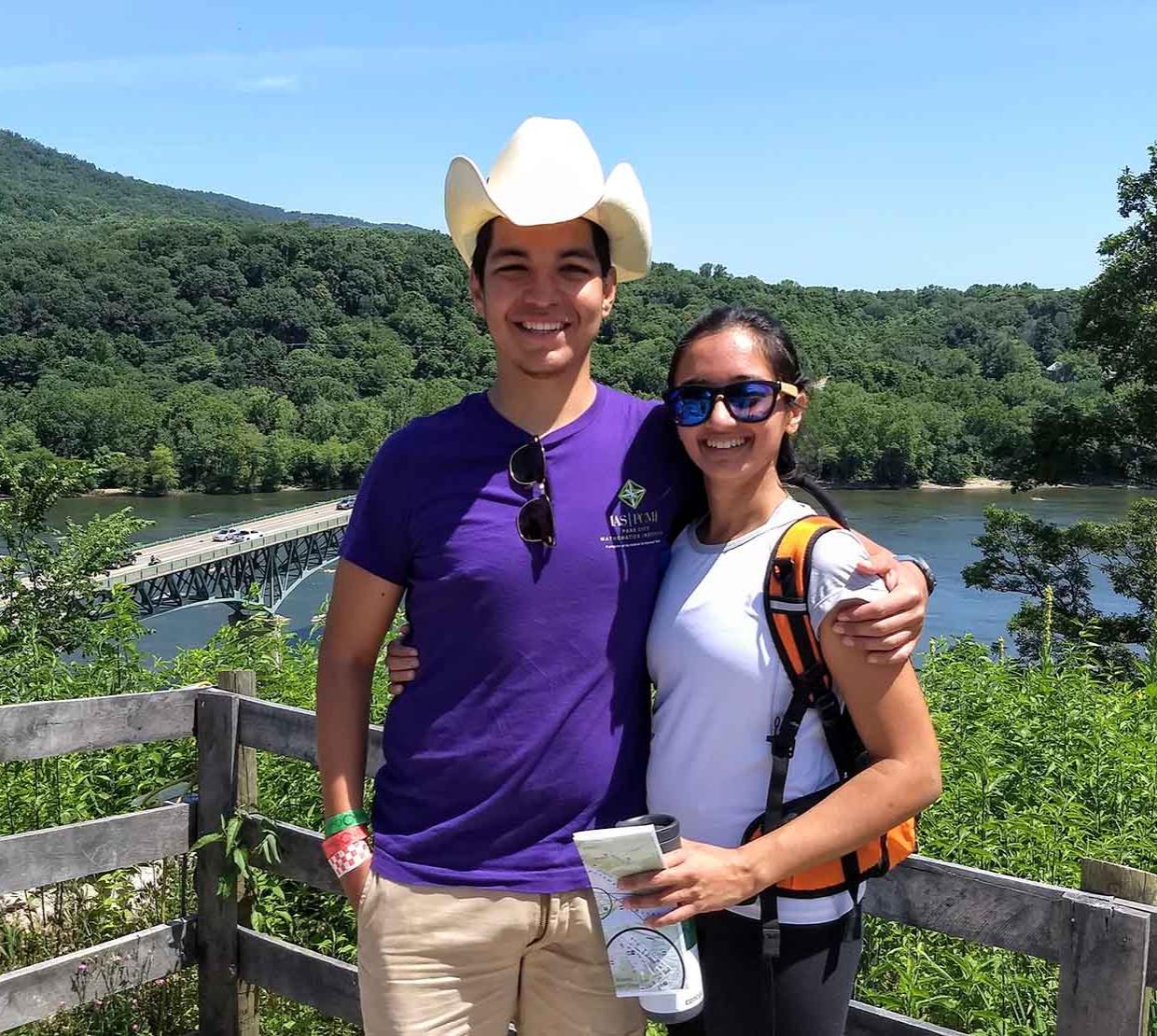
Oregon State mathematicians Axel Saenz Rodriguez and Swati Patel

Welcoming new mathematicians to Oregon State

By Srila Nayak

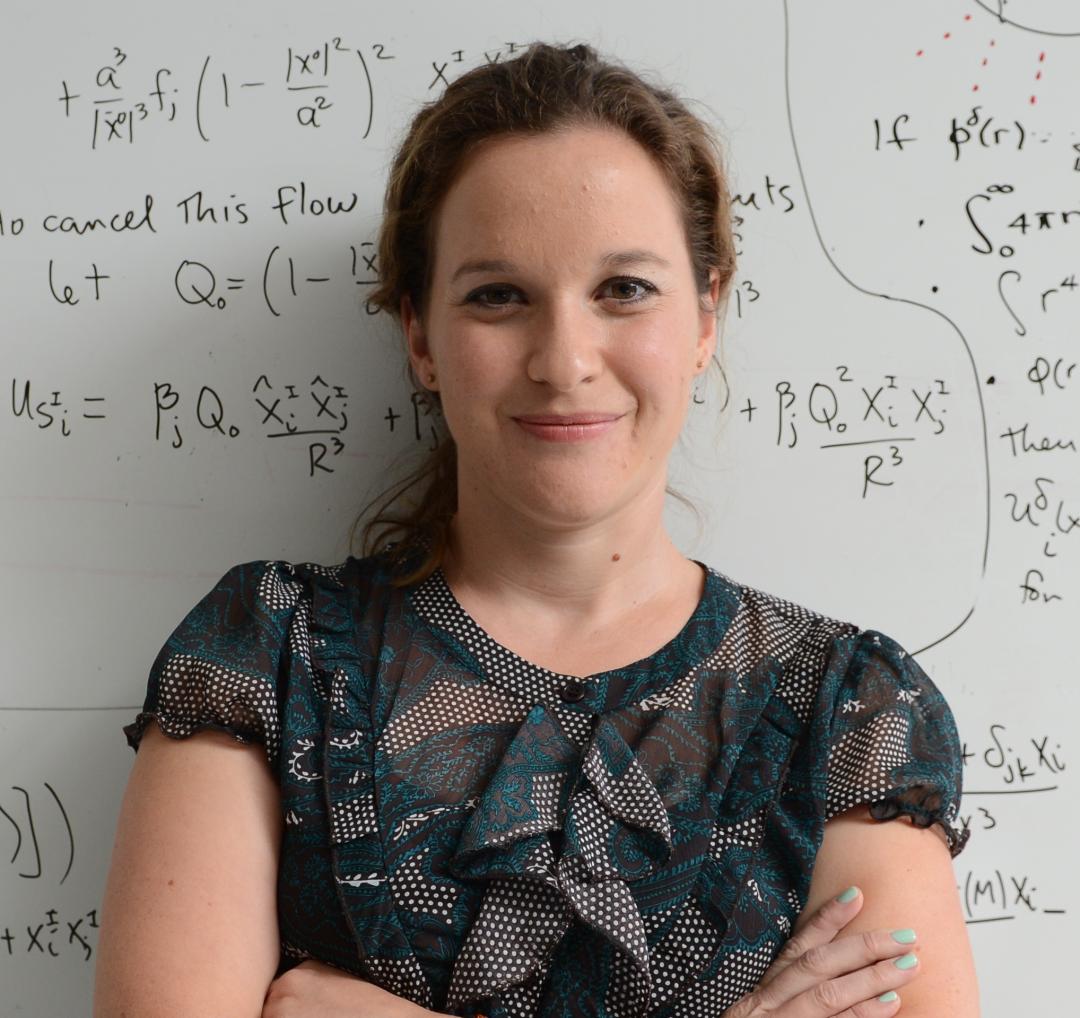
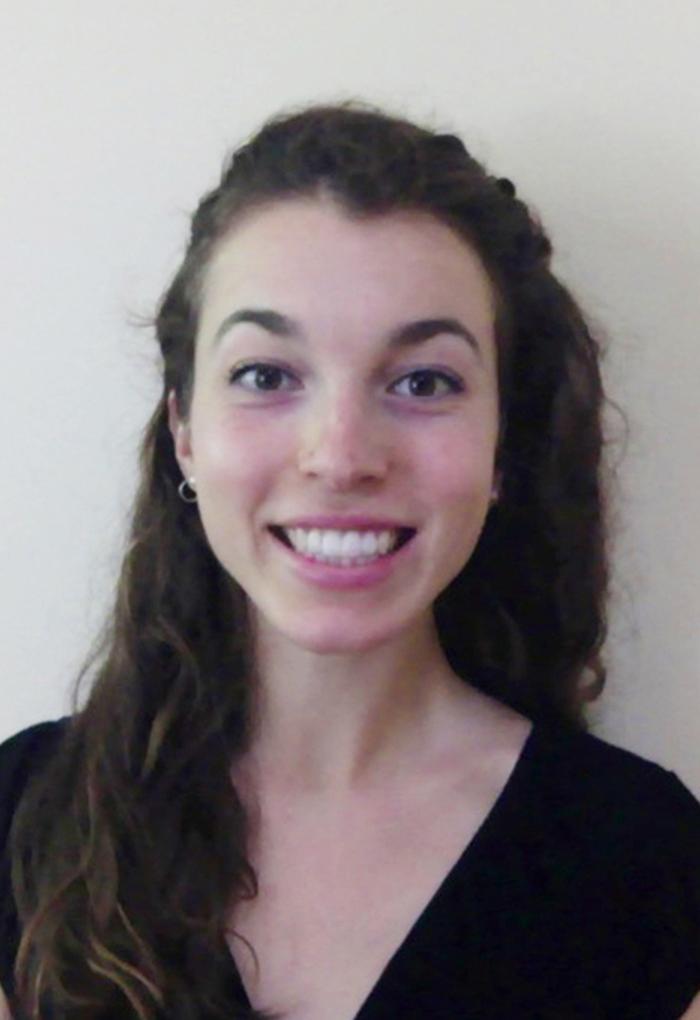
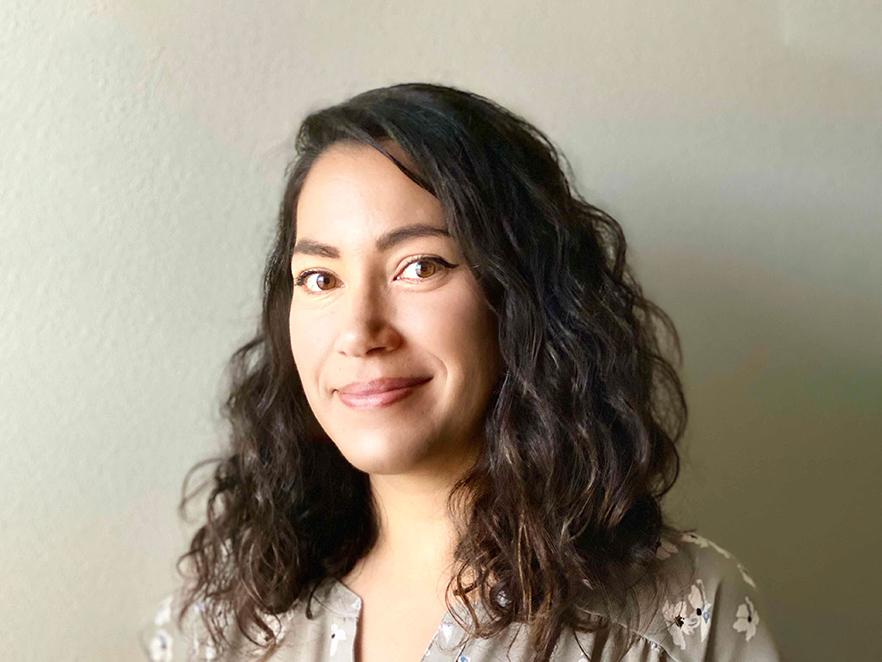
Oregon State mathematicians Axel Saenz Rodriguez and Swati Patel photographed by Harper's Ferry at the confluence of the Potomac and Shenandoah rivers, when they were postdocs at the University of Virginia and Tulane University respectively.

The College of Science welcomes spouses Swati Patel and Axel Saenz Rodriguez who joined the Department of Mathematics as tenure-track assistant professors in September.

Patel was a postdoctoral researcher in the Department of Statistics at the University of Warwick in the United Kingdom before joining OSU. A mathematical biologist by training, Patel applies mechanistic models to understand genetics, population, and infectious disease dynamics that shape our world.

As a mathematical biologist, Patel brings new expertise to Oregon State University in a rapidly expanding field. At Warwick, she worked on transmission models of tropical diseases with the Neglected Tropical Diseases Modeling consortium and the Zeeman Institute for Systems Biology and Infectious Disease Epidemiology Research. Prior to that, she was a postdoc researcher at Tulane University.

Patel takes an active interest in promoting diversity in the discipline and is a co-founder of Math For All in NOLA conference. Started in 2019, Math for All is an annual conference on math education and research that has the purpose of fostering inclusivity in mathematics. She plans to hold a satellite conference at OSU this February.

Patel holds a Ph.D. in applied mathematics from the University of California Davis and a bachelor’s degree in integrated science and biology from Northwestern University.

Saenz Rodriguez’s research involves probabilistic models and simulations of integrable dynamical systems or systems with definite mathematical properties. His research explores the interaction of geometry, representation theory and probability.

Saenz Rodriguez was a postdoctoral researcher at the University of Warwick, Tulane University and the University of Virginia where he was the Mary Ann Pitts Postdoctoral Fellow in the Department of Mathematics.

Saenz Rodriguez earned his Ph.D. in mathematics from UC Davis and his bachelor’s in applied mathematics from Columbia University.

What are your first impressions of Oregon State?

Patel: We are impressed with Corvallis, the landscape, the mountains and the city. We liked the friendliness of the mathematics department when we interviewed here. That really stuck with us.

Saenz Rodriguez: We like the friendly community in the math department. Also, in this last week I have enjoyed teaching. The students are sharp and they are participating. And its maybe because they haven’t been in a classroom for a while, but it has been a good start to teaching again.

Where did you grow up? Can you describe early influences that helped you develop an interest in mathematics and science?

Patel: I grew up in the suburbs of Chicago. My earliest influences were probably my parents — they emphasized science and math and wanted me to become a doctor. But then when I got to college, I started to get involved in research. I was more interested in biology because I like nature, animals and plants. I pursued biology as an undergrad, and did research in biology.

It wasn't until two years after my I finished my undergraduate degree that I decided I wanted to pursue mathematics. It was really because I was reading biology papers and I gravitated towards the papers that relied on quantitative methods and mathematical methods. I found myself interested in that and I wanted to be able to understand them better. Eventually, that led me to pursue mathematics.

Saenz Rodriguez: I grew up in Mexico until I was 11. At that point, we moved to Oklahoma because my dad got a job offer in Tulsa at a ceramic tile company. My dad was the first influence for me because he is an electrical engineer. I grew up in a very science-based household and we are all very science-oriented and logical. Both my older brothers are in computer science and mechanical engineering.

When I was about 13, I watched a PBS documentary called the Elegant Universe by Brian Greene. That really sparked my imagination and curiosity. And I started trying to learn more math and physics, actually more physics, but then the more I got into physics the more interested I got in math. I started pursuing those subjects in high school.

In Oklahoma, I went to the Oklahoma School of Science and Mathematics (OSSM), which is a math and science state-funded boarding school for juniors and seniors. They accept 60 students each year from throughout the state. That was a big influence because it exposed me to a lot of advanced level math and physics at an early age where it led me to pursue the subjects more seriously.

How would you explain your research interests to a broader audience?

Saenz Rodriguez: I work in math, physics, probability and non-equilibrium statistical mechanic models. Those are very technical terms. I work on the variation of random growth models. One specific example is the growth of a bacteria colony in a petri dish where the expected shape is going to be something circular and we try to study the fluctuations around this shape. Moreover, in my research, I look at idealized models with this type of random growth. They are theoretical and deviate a lot from a precise description of that specific model found in nature.

I look at very specialized models that have a lot of symmetries to them, where you can apply very abstract and technical mathematical methods. There is an overarching idea of universality here in that if we can describe the phenomena for these idealized models then it can be generalized to models in nature. So, we're trying to look at idealized models with a lot of mathematical structure that will apply to a wide class of models.

Patel: I work on models in population dynamics, evolution and infectious disease. I study how populations grow, how they change, and adapt to their environments, and how infectious diseases spread over time, and space. I work on modeling these things for different types of diseases or populations that we're interested in and try to understand how that happened or is happening.

Do you bounce ideas of each other or collaborate on projects?

Saenz Rodriguez: We like to bounce ideas off each other when we're doing research. We always have plans of trying to do something together. But up to this point, it seems, for the most part, math biology and mathematical physics are fairly disjoint. But we both have worked on probability models so that at some level there is an overlap.

What attracted you most to Oregon State?

Patel: One big thing was that we were both offered positions here. It worked out very nicely for us to both be in tenure track positions at Oregon State.

Saenz Rodriguez: They have a policy in place for dual hires and not all universities do. This led us to think that Oregon State is a place that is family friendly and that is important to us.

Patel: The math department emphasized that they were interested and thoughtful about diversity initiatives in their posting for the position. The program emphasized values that are important to us. And we looked at Oregon State’s website and it had the diversity initiative plan for how they're going to make sure that the environment is inclusive and supports diversity in faculty, staff and students. That right away was a big thing that we liked about Oregon State. They are supporting families. They are supporting careers. I think these hiring policies really do support women in the field.

Saenz Rodriguez: The cherry on top of all these things is that we really like Corvallis. We like small towns where we can walk to work. We like Oregon and it is an environmentally-friendly place, which is also important to us.

What excites you as a researcher coming into Oregon State? Math biology is a thriving area of research here. What opportunities are you looking forward to?

Patel: This was another thing that excited me about Oregon State. There is a lot of potential for collaborations with the integrative biology department and the Carlson College of Veterinary Medicine. Within mathematics, I have seen a lot of collaborations that are across these disciplines. And I am looking forward to building off of that.

What are your thoughts on how to foster more diversity and equity in mathematics?

Saenz Rodriguez: Over the last year, while we were still in England, I started having conversations with different faculty at OSU, trying to gauge what we can do as a whole to foster diversity.

The most effective way in our position right now is through graduate recruiting and postdoc recruiting, and that can have a trickle-down effect. So, I think the first goal for me is to have an impact on graduate recruiting for Oregon State and bring in more diverse graduate students.

Patel: One big thing for me is to shift the culture around mathematics and academia or try to make the culture more inclusive. So, it’s not just people who have a history of being in those fields that are able to be in them. At Tulane, I started Math for All in New Orleans with two graduate students and am planning to bring that here. The idea behind the conference was to have an inclusive environment for people to discuss mathematics research as well as teaching. And we brought together a lot of universities in New Orleans, many of which are four- year institutions and HBCUs (historically Black colleges and universities) to widen the access to research opportunities. We wanted to come together and extend the network within the universities in New Orleans to discuss mathematics.

What are your hobbies and interests?

Patel: We like exploring the outdoors. So that's another reason why we really like Oregon. I'm really into physical and mental health and well-being. I do a lot of yoga, meditation, and I read a lot of books on mindfulness and secular Buddhism. I also really like to dance — ballet, jazz and aerial acrobatics.

Saenz Rodriguez: I like the sports setting and being active outdoors. I run a few times a week. I am on Strava and I track everything and that certainly takes up a bit of my time. I like soccer and enjoy surfing with friends. I also enjoy cooking and baking and recently got into making bread.

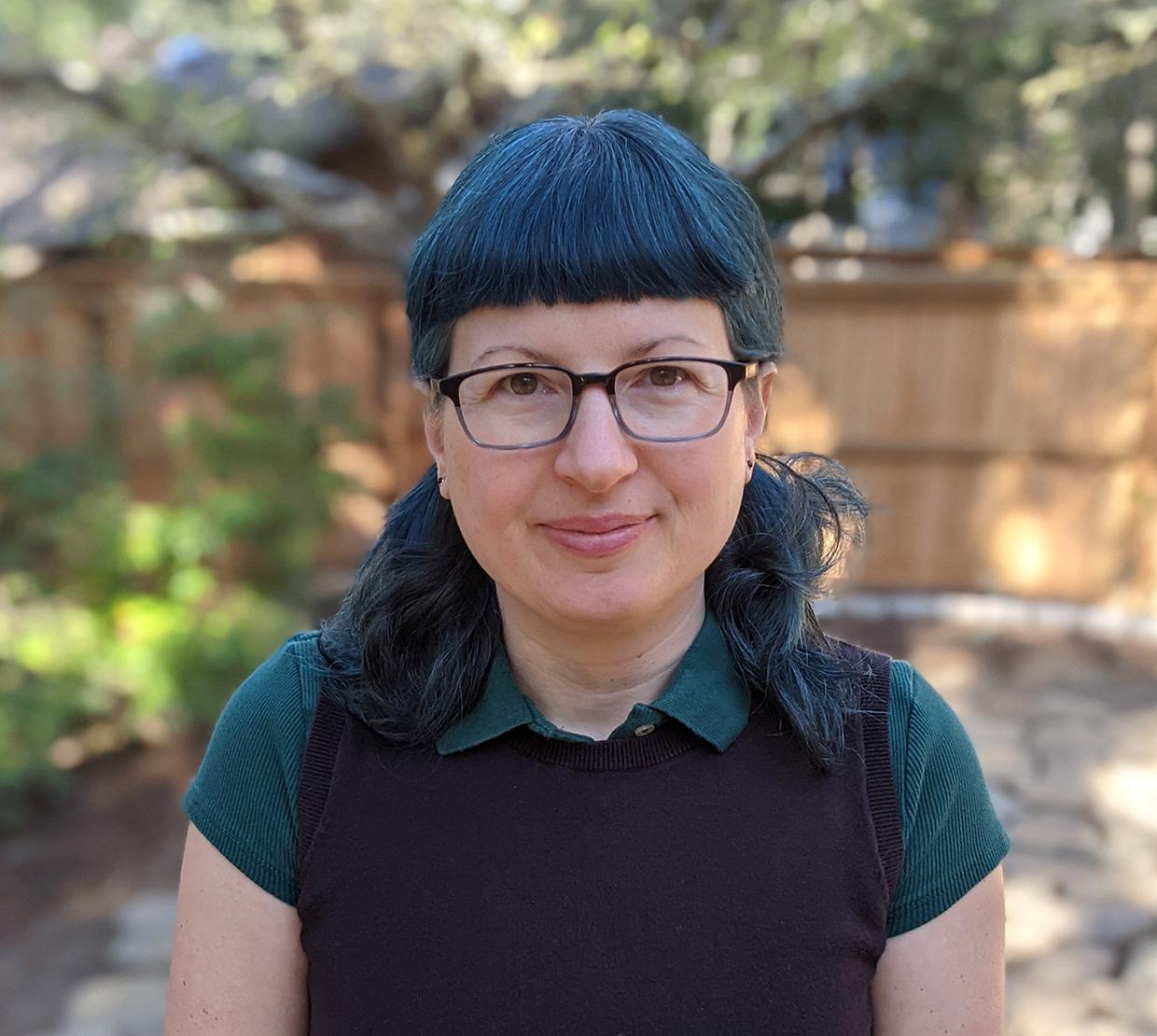
Holly Swisher standing in a backyard.

New NSF award to support 'rich and intricate discoveries' in mathematics

By Srila Nayak

Professor of mathematics Holly Swisher

Professor of mathematics Holly Swisher was recently awarded a three-year $211.5K National Science Foundation grant to investigate some of the field’s most fundamental questions in number theory pertaining to modular and automorphic forms, which play a crucial role in various branches of mathematics and mathematical physics. These include combinatorics, algebra, analysis, arithmetic geometry, number theory and string theory.

An expert in number theory and combinatorics, Swisher’s research focuses on the mathematical areas of partition theory, modular forms, mock modular forms and hypergeometric series as well as the interrelationships among them.

An esoteric branch of classical mathematics, modular forms are complex valued functions on the upper-half of the complex plane that are highly symmetric. A complex plane is a way to geometrically represent complex numbers as points on a plane on the Cartesian coordinate system where the x-axis represents the real part and the y-axis represents the imaginary part of each number.

“One of the beautiful things about number theory is that seemingly simple questions, when deeply investigated, can blossom into rich and intricate discoveries."

Due to its special property of symmetry or congruence, modular forms can be found in fundamental proofs and theorems in other branches of mathematics throughout the twentieth century. Major research problems deeply intertwined with modular forms include the proof of Fermat’s Last Theorem, the Langlands problem, the Taniyara-Shimura conjecture (now the modularity theorem) and open questions in superstring theory.

Swisher will pursue research in the field of modular or automorphic forms in two primary ways — projects related to combinatorial generating functions and projects related to hypergeometric functions. At the foundation of her inquiry lies the central and intriguing role played by modular forms in many major problems in number theory over the last century.

“One of the beautiful things about number theory is that seemingly simple questions, when deeply investigated, can blossom into rich and intricate discoveries,” said Swisher.

She will explore the relationships between several types of modular forms such as quantum modular forms, harmonic Maass forms and mock modular forms, which were first theorized by Ramanujan in 1920.

Swisher explores this project through the mathematics of combinatorial functions, as a testing ground for the theory of modular forms. This strand of research will pay particular attention to combinatorial functions related to the theory of partition of numbers (a branch of number theory) to better understand modularity of combinatorial functions.

According to Swisher, historically, examples arising from combinatorial generating functions have been a rich source of varied types of modularity behavior, and determining a general theory for the modularity of combinatorial generating functions would be a significant piece of the puzzle.

Swisher who leads the Research Experiences for Undergraduates (REU) site in mathematics at Oregon State, has co-authored several articles proving important results on combinatorial objects and modular properties with her REU students.

Swisher and her students will also engage in research on classical hypergeometric functions, with respect to the larger modular and automorphic forms landscape, which have been of great importance to many areas of science, including mathematics, engineering and physics.

Swisher is a member of one of the most ambitious mathematical collaborations in recent times, the L-functions and Modular Forms Database. She is part of a team of more than 70 mathematicians from 12 different countries who are working to create a massive mathematical database which catalogs objects of central importance in number theory and maps out the intricate connections between them.

Goldwater Scholarship

Biochemistry, mathematics and molecular biology students win 2021 Goldwater awards for research excellence

By Srila Nayak

Students in the College of Science have won the nation's most prestigious award for undergraduate research, the Barry Goldwater Scholarship, almost every year since 2017. Science majors have won a total of 25 Goldwater scholarships — the most at Oregon State University to date. This year, once again, science and mathematics majors at Oregon State University have netted the competitive award for their academic prowess and scientific achievements.

Two students from the College of Science have been awarded the 2021 Goldwater awards. A total of four Oregon State University students were selected for the Goldwater scholarships this year. Emily Gemmill, a junior, and sophomore Alyssa Pratt in the College received the prestigious scholarship, which is the top undergraduate award in the country for sophomores and juniors in the fields of science, technology, engineering and mathematics (STEM).

Tegan Thurston and Cindy Wong, students in the College of Engineering, were also named Goldwater scholars. The recipients are selected on the basis of outstanding academic achievement and for demonstrating the potential to pursue research careers.

Gemmill is pursuing a double major in biochemistry and biophysics and mathematics, with a minor in chemistry and options in advanced biophysics and mathematical biology. Pratt, a second-year Honors student, is double majoring in computer science and biochemistry and molecular biology with a concentration in computational molecular biology. Both Goldwater scholars demonstrate high potential for scientific research careers and have engaged in meaningful and ambitious undergraduate research experiences at Oregon State.

Across the United States, 410 college students were selected for the Goldwater scholarships in 2021-2022 from a pool of 1256 college sophomores and juniors in the fields of natural science, engineering and mathematics. Oregon State University has the greatest number of Goldwater scholars in the state of Oregon this year, thus consolidating its status as the premier campus for STEM-oriented students.

The preeminent undergraduate award in the sciences, the Goldwater Scholarship Program was established in 1986 to honor former Arizona Senator Barry M. Goldwater, and is sponsored by the Barry Goldwater Scholarship and Excellence in Education Foundation. The award provides up to $7,500 per year for a maximum of two years covering undergraduate tuition, fees, books, and housing expenses.

Taking part in high-impact undergraduate research

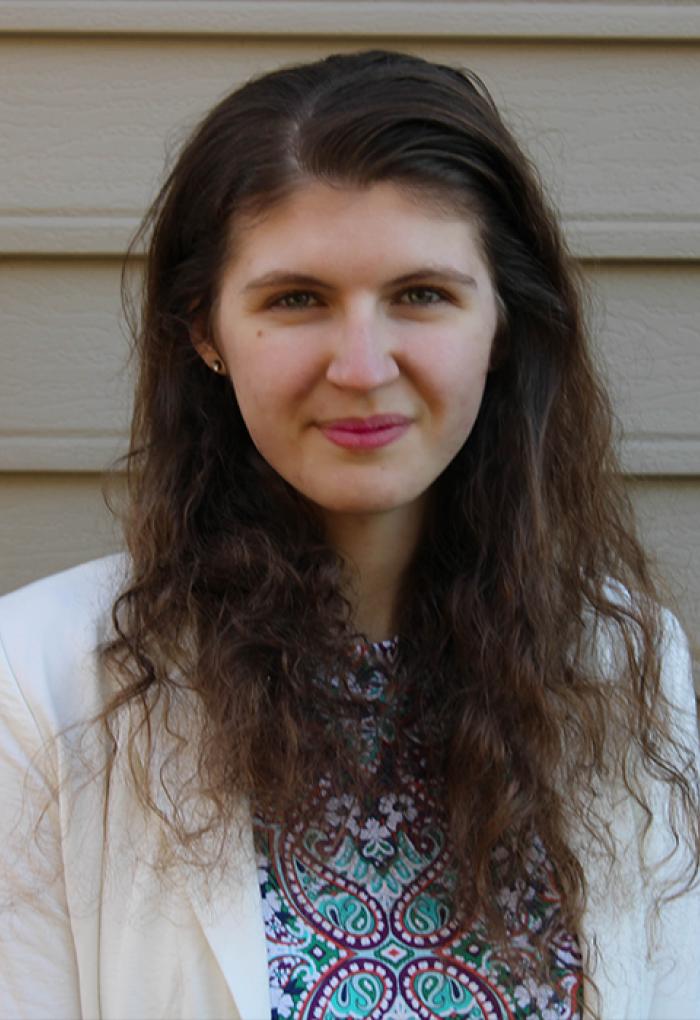
Emily Gemmill

Emily Gemmill

Employing interdisciplinary research methods, Gemmill probes the mysteries of protein-based molecular motors called kinesins in the lab of biophysics Associate Professor Weihong Qiu. Kinesins interact with microtubules (dynamic tubes that provide structure and shape to cells) within cells and play an indispensable role in facilitating transport and force to sustain human life by converting chemical energy into mechanical energy. Gemmill’s research builds on ongoing research in the Qiu Lab on the distinctive properties of kinesin-14s that move and bind differently to microtubules from other kinesins.

"I chose the advanced biophysics option for my biochemistry degree and the mathematical biology option for my mathematics degree, which complement each other well as they both apply rigorous analytical methods to biological systems.”— Emily Gemmill

Introduced to molecular motors in a high school biology class, Gemmill’s fascination with the subject deepened as she learned more about their significance and functions in the Qiu Lab. She is currently investigating the regulatory mechanism of a kinesin-14 motor to better understand the factors governing its motility and it’s interactions with other proteins that affect kinesin-14’s movement.

Gemmill transferred to OSU from Portland Community College where she was a student in the honors program. There she was awarded an Oregon Space Grant Consortium research fellowship to support her work on developing a mathematics fluid-based model on mitigating traffic flow in Portland. At OSU, Gemmill was able to pursue ambitious research goals with the help of a Summer Undergraduate Research Experience (SURE Science) scholarship and an Undergraduate Research in the Sciences and Arts (URSA) Engage grant.

After graduation, Gemmill plans to work toward a research career at the intersection of mathematics and biophysics. “I am earning degrees in both biochemistry & biophysics and mathematics, leading to a wide range of interdisciplinary knowledge,” said Gemmill. “Additionally, I chose the advanced biophysics option for my biochemistry degree and the mathematical biology option for my mathematics degree, which complement each other well as they both apply rigorous analytical methods to biological systems.”

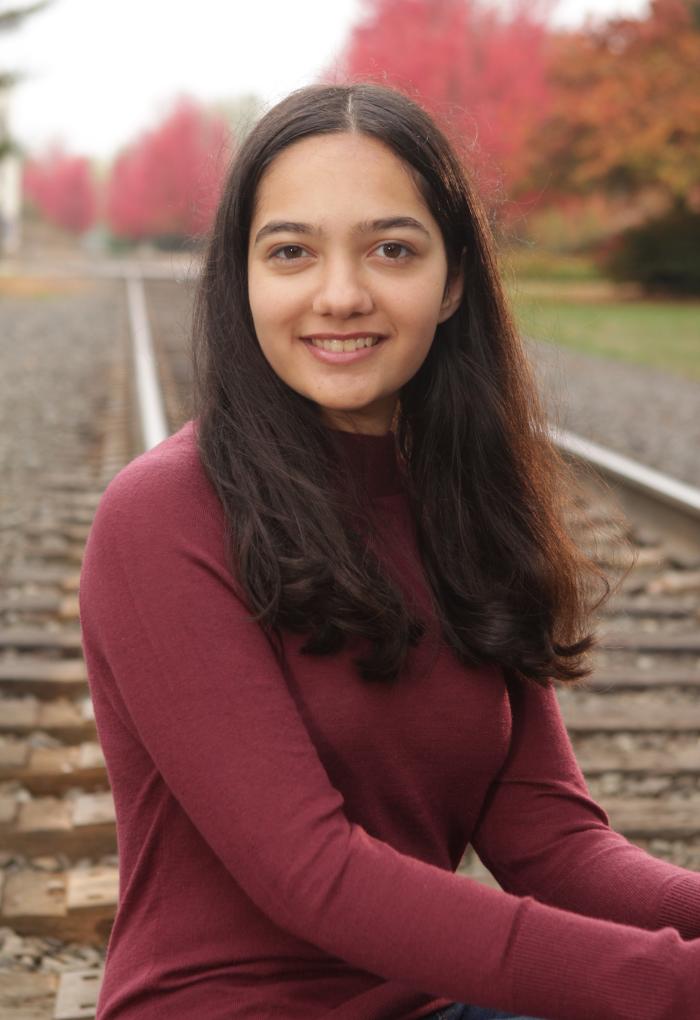
Alyssa Pratt

Alyssa Pratt

Pratt studies RNA secondary structural features called hairpin loops with a wide variety of functions, primary among them being the potential to arrest disease-associated genes, in the lab of David Hendrix, an associate professor of biochemistry and biophysics and computer science. Through bioinformatics experiments utilizing specific algorithms and data sequencing, Pratt investigates the properties and defining characteristics of a little-known subset of RNA hairpins called unbreakable hairpins for a better understanding of their potential and biological significance in the human body.

“Once I met supportive mentors, I realized that innate computer skills didn’t exist and that I could pursue my interests in computer science as well as molecular biology, which inspired me to focus on computational biology.” — Alyssa Pratt

Pratt has also undertaken summer research at Portland State University, where she used optimization methods and computational analysis to search for specific secondary DNA structures in the context of cruciviruses (viral family containing components from both RNA and DNA viruses).

An exceptional student, Pratt is a Presidential Scholar at OSU, and received a number of prestigious awards in high school including a National Merit Scholarship and a National AP Scholarship. She is also a recipient of Oregon State’s URSA Engage Award.

Pratt hopes to pursue a Ph.D. in computational biology after graduation, combining her interests in molecular biology and computer science. In her application, Pratt writes that throughout her school years she thought she “didn’t have the innate computer skills that it seemed my male peers possessed." With effective guidance and mentorship, Pratt began to pursue substantive computational research projects. “Once I met supportive mentors, I realized that innate computer skills didn’t exist and that I could pursue my interests in computer science as well as molecular biology, which inspired me to focus on computational biology.”

Inspired by her own experiences of overcoming bias in a STEM field, Pratt works for the Precollege Programs at OSU as a media assistant, and is involved in a wide range of youth outreach activities designed to increase college access and academic preparation for Oregon’s youth.

The Goldwater Scholarship is administered at Oregon State University through LeAnn Adam, OSU Advisor for the National and Global Scholarships Advising and the OSU campus representative for the Goldwater scholarship.

Elisar Barbar

Women scientists at the forefront of the fight against COVID-19

By Vrushali Bokil

Biochemistry Professor Elisar Barbar in her lab.

In recognition of the International Day of Women and Girls in Science, held on February 11, we acknowledge the women faculty, students and alumnae of the OSU College of Science. The world’s population is 50% women, and yet only 30% of scientists identify as women.

“Women and girls represent half of the world’s population and, therefore, also half of its potential. Gender equality, besides being a fundamental human right, is essential to achieve peaceful societies, with full human potential and sustainable development.” (Source: https://www.un.org/en/observances/women-and-girls-in-science-day)

The UN main event will take place online. Additionally, the 6th International Day of Women and Girls in Science Assembly will be held at the United Nations Headquarters virtually.

The UN theme for 2021 is “Women Scientists at the forefront of the fight against COVID-19”. The COVID-19 pandemic has disproportionately affected women academics, including women scientists, who may face significant career damage, extending the gender gap in science and highlighting unequal effects and existing systemic inequities. In fact, if we are to learn from past pandemics, women are most affected by pandemics.

The Association for Women in Mathematics (AWM) endorsed an open letter, published by the European Women in Mathematics which emphasized the unequal effects of this pandemic on all women academics, especially untenured women and caregivers. They offered suggestions for universities, government and funding agencies to proactively support their most vulnerable populations.

"We did not experience the crisis equally. Untenured faculty lost more. Women lost more. Caregivers lost more. The more vulnerable the population, the greater the disadvantage. No one chooses a pandemic, but now we can choose how to respond." -- the EWM Standing Committee and the EWM Working Group on the Corona Crisis

It is also important to recognize that we cannot fold the experiences of all women into one. Covid-19 has its deadliest effects at crossroads of differing axes of oppression. To meaningfully address issues of equity and inclusion requires that we respond to the unequal effects at the intersections of race & ethnicity, gender, socioeconomic status, disability, sexual orientation, among other social axes of oppression.

And yet, women have made critical contributions to understanding and combating the virus and mitigating its effects on disadvantaged populations.

During this International day of Women and Girls in Science, we take the opportunity to highlight the contributions of OSU College of Science women, both alumnae and current faculty and students, to the fight against Covid-19.

Science faculty, students and alumnae making a difference

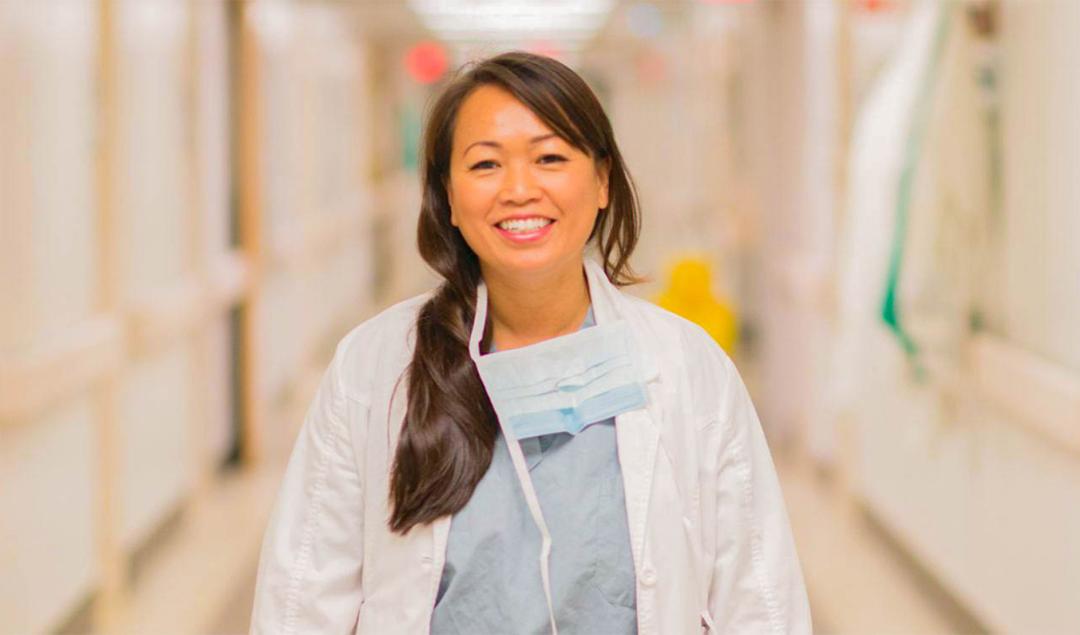
Dr. SreyRam Kuy

Dr. SreyRam Kuy

Dr. SreyRam Kuy (Microbiology '00) was honored with a 2020 Alumni Fellows Award (as an OSU Honors College nominee) at the OSU Alumni Association’s awards virtual ceremony on October 20, 2020. The award recognizes eminent alumni who have distinguished themselves in their professions and communities. Kuy is a practicing general surgeon, healthcare executive and quality improvement researcher. She currently serves as Deputy Chief Medical Officer for the Veterans Affairs Medical Center in Houston, Texas and is a professor at the Baylor College of Medicine.

As the Covid-19 pandemic emerged, Kuy developed a Covid-19 Preparation Tool to help healthcare facilities, businesses and communities rapidly gauge their preparedness for the outbreak, identify areas of weakness and strategically target resources for their greatest impact. She partnered with industry to deploy the free tool widely.

"I had such amazing support at OSU. My teachers and advisers took genuine interest in me and helped and encouraged me. It was a pivotal point in my life that helped me get into medical school and become a doctor,” — SreyRam Kuy

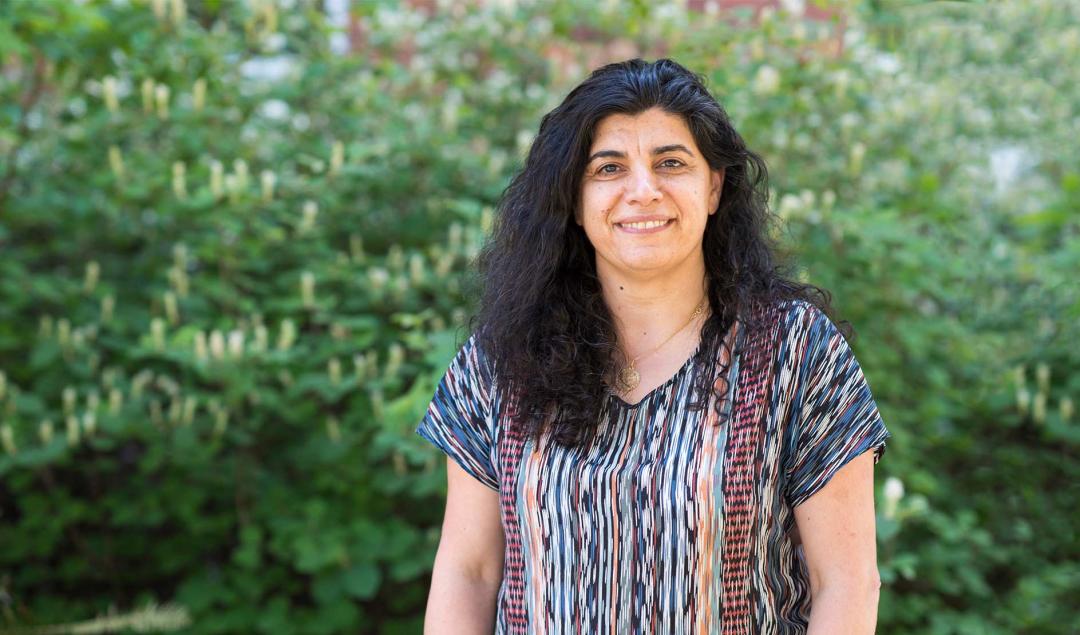
Elisar Barbar

Biochemistry Professor Elisar Barbar

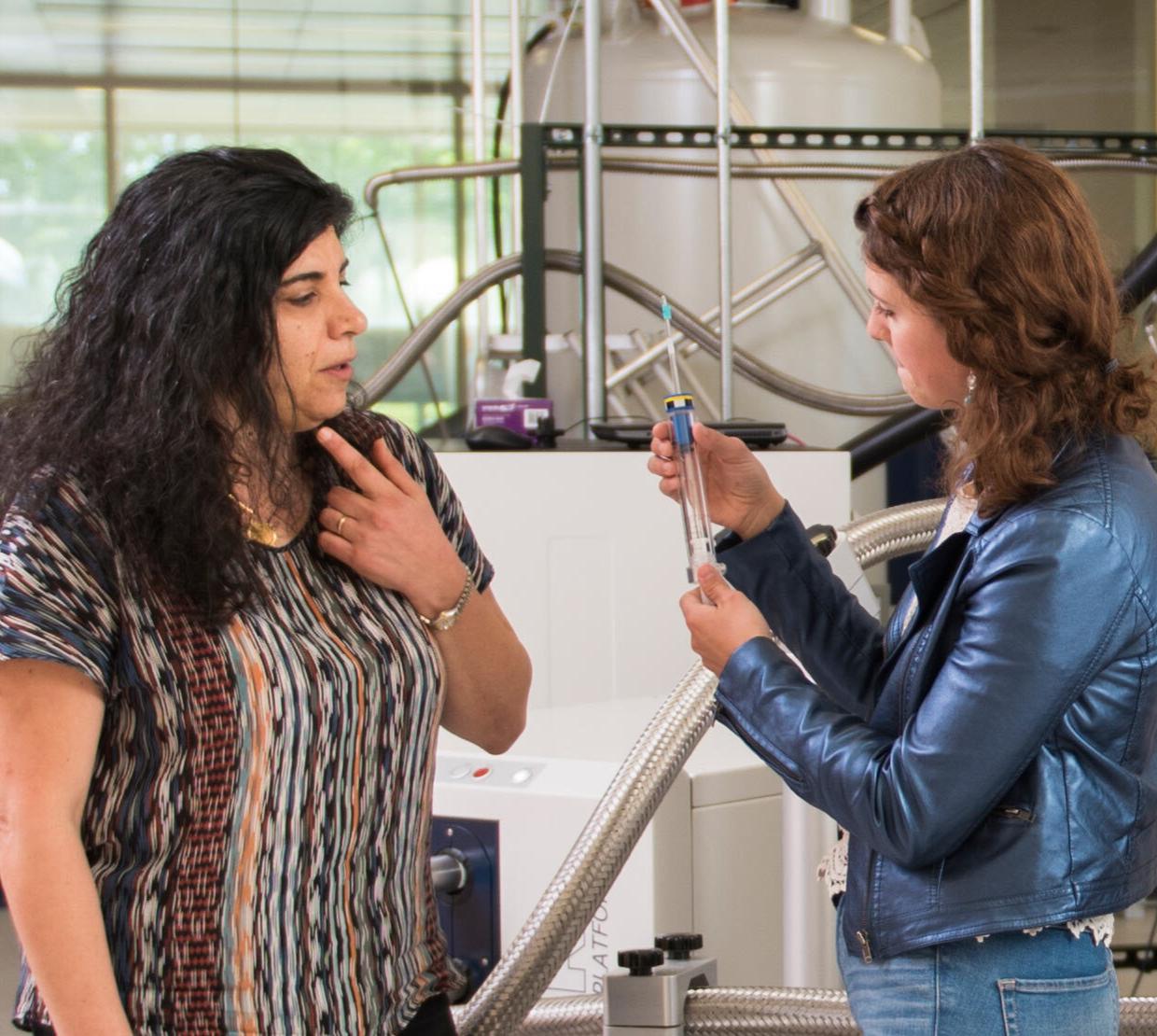
Elisar Barbar, professor and head of the Department of Biophysics and Biochemistry, has received a two-year $300,000 grant from the National Science Foundation to pursue research on the SARS-CoV-2, the novel coronavirus that causes Covid-19. The research project is aimed at understanding how the N-protein of the SARS-CoV-2 performs its essential functions in viral infection and transmission.

The award was made by the NSF EAGER (Early-Concept Grants for Exploratory Research) program, which supports new, exploratory and potentially transformative research ideas or approaches that involve the application of new expertise and novel disciplinary or interdisciplinary perspectives.

“My lab is one of the few labs in the world that works on disordered proteins in viruses using NMR (Nuclear Magnetic Resonance Spectroscopy). This is an opportunity for us to lead and make an impact. We cannot afford to be spectators." — Elisar Barbar

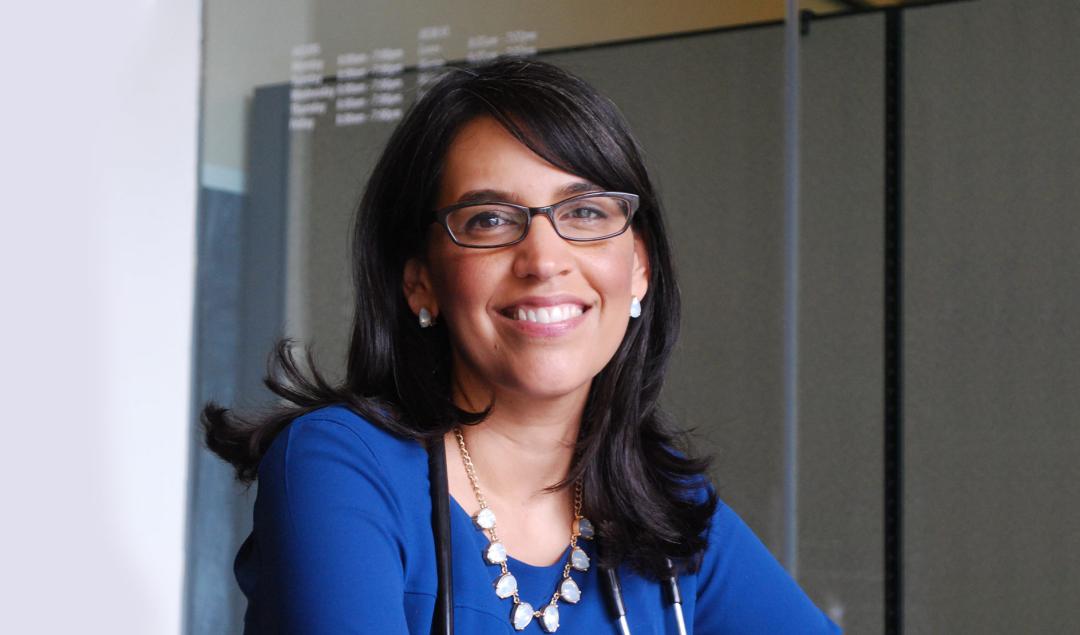
Dr. Eva Galvez

Dr. Eva Galvez

Dr. Eva Galvez (Biology ’99), a family physician at the Virginia Garcia Memorial Health Center, was honored with the 2020 Alumni Fellows Award

The daughter of immigrants, Galvez and her twin sister, Olivia, graduated from the College of Science’s biology program and went on to pursue careers in medicine. Galvez regularly speaks on panels to educate the public around health disparities. During the COVID-19 pandemic, Galvez has become a vocal advocate for mitigating health risks for Oregon’s seasonal farm workers and has addressed the Select Subcommittee on the Coronavirus Crisis in the House of Representatives.

"Much of our society has this belief that health is something that we have control over — that if we as individuals can just eat the right food and exercise the right amount and take the right medications you will be healthy. ... The reality is only about 20% of our health is determined by healthcare and our individual choice. And the rest is shaped by social factors, otherwise known as social determinants of health, and those include cultural beliefs and your values.” — Eva Galvez

Carrie Manore

Mathematics alumna Carrie Manore

Mathematics alumna Carrie Manore (Ph.D. ’11) is at Los Alamos National Laboratory working as part of the Covid-19 modeling team. Manore is a mathematical epidemiologist in the Information Systems and Modeling Group at LANL since 2013. Her work focuses on modeling mosquito-borne diseases such as Zika, chikungunya, dengue and West Nile virus. The LANL Covid-19 forecasts are part of the modeling New Mexico Department of Health officials have been using since April to prepare for and tackle the Covid-19 outbreak.

The ongoing Covid-19 pandemic has placed mathematical models in the spotlight as they have become central to public health interventions, planning, resource allocation and forecasts. OSU mathematics alumni have made important contributions to Covid-19 modeling and research at both national and regional levels.

"I got a really strong background in math at OSU, which not only helped me acquire mathematical skills, but also a way of thinking. It prepared me to work on real problems in the world like I am doing now.” — Carrie Manore

Rachael Aber

Integrative Biology graduate student Rachael Aber

Rachael Aber, Integrative Biology graduate student, has been involved in the TRACE-COVID project that involves door-to-door community surveillance to gather the information that is essential to slowing the spread and minimizing the impact of the disease. She recently spoke at the ARCS Foundation Virtual Event - Science is the Solution about her experiences. She talked about the importance of scientists interacting with the public. Aber received the ARCS Foundation Oregon Chapter Scholar Award.

She was drawn to the Department of Integrative Biology because of its strong tradition of support for interdisciplinary approaches to urgent research questions. She hopes to focus her doctoral research on investigating issues at the intersection of disease ecology and population biology in the lab of Benjamin Dalziel.

“Working in a lab that employs methods from various fields of study will be invaluable to my progress as a science professional.” — Rachael Aber

Elizanette Lopez

Microbiology graduate student Elizanette Lopez

Recent microbiology master’s program graduate Elizanette ‘Nette’ Lopez (Microbiology, M.S. '20) was selected to participate in the Oak Ridge Institute for Science and Education (ORISE) Fellowship program. Lopez was offered a position at the Center for Disease and Control (CDC) Biorepository in Lawrenceville, Georgia.

Her graduate studies were partly funded by a diversity grant from the NIH. During her time at OSU, Lopez advocated for underrepresented minorities and was an active member of the Microbiology Graduate Student Association, Ethnic Minorities United in STEM and a founding member of the Women of Color Caucus. Toward the end of her graduate studies, the COVID-19 pandemic caused widespread disruptions globally. However, the crisis also provided an opportunity for Lopez to gain experience in public health microbiology as a volunteer for the TRACE-COVID-19 project.

As a volunteer, Lopez helped process thousands of swab samples collected from participants in the field. As an ORISE Fellowship recipient, Lopez will soon process SARS-CoV-2 samples and help organize other collections in the biorepository in Atlanta, Georgia.

Katherine McLaughlin

OSU statistician Katherine McLaughlin

Katie McLaughlin is an assistant professor of statistics and co-Principal Investigator of the TRACE-COVID-19 project. McLaughlin is an applied statistician specializing in sampling methodology and social network analysis, particularly for hidden populations at high risk for infectious diseases. The pandemic has led to volumes of data which require statistical interpretation. The data gathered and analyzed by TRACE researchers provide important guidance for local and state officials deciding which public health actions make the most sense in protecting their communities.

“Thanks to all of the support we continue to receive, and thanks to Oregon State’s overarching spirit of collaboration and service, we’re able to play a key role in helping communities stay safe.” — Katie McLaughlin

In addition to the International Day of Women and Girls in Science this month, the International Women’s Day is on March 8, 2021. The UN announced the theme for 2021 is “Women in Leadership: Achieving an equal future in a COVID-19 world”, which is aligned with the priority theme of the 65th session of the Commission on the Status of Women, and calls for the full participation of women, gender equality, elimination of violence against and empowerment for all women and girls. Activities planned around this event will be announced.

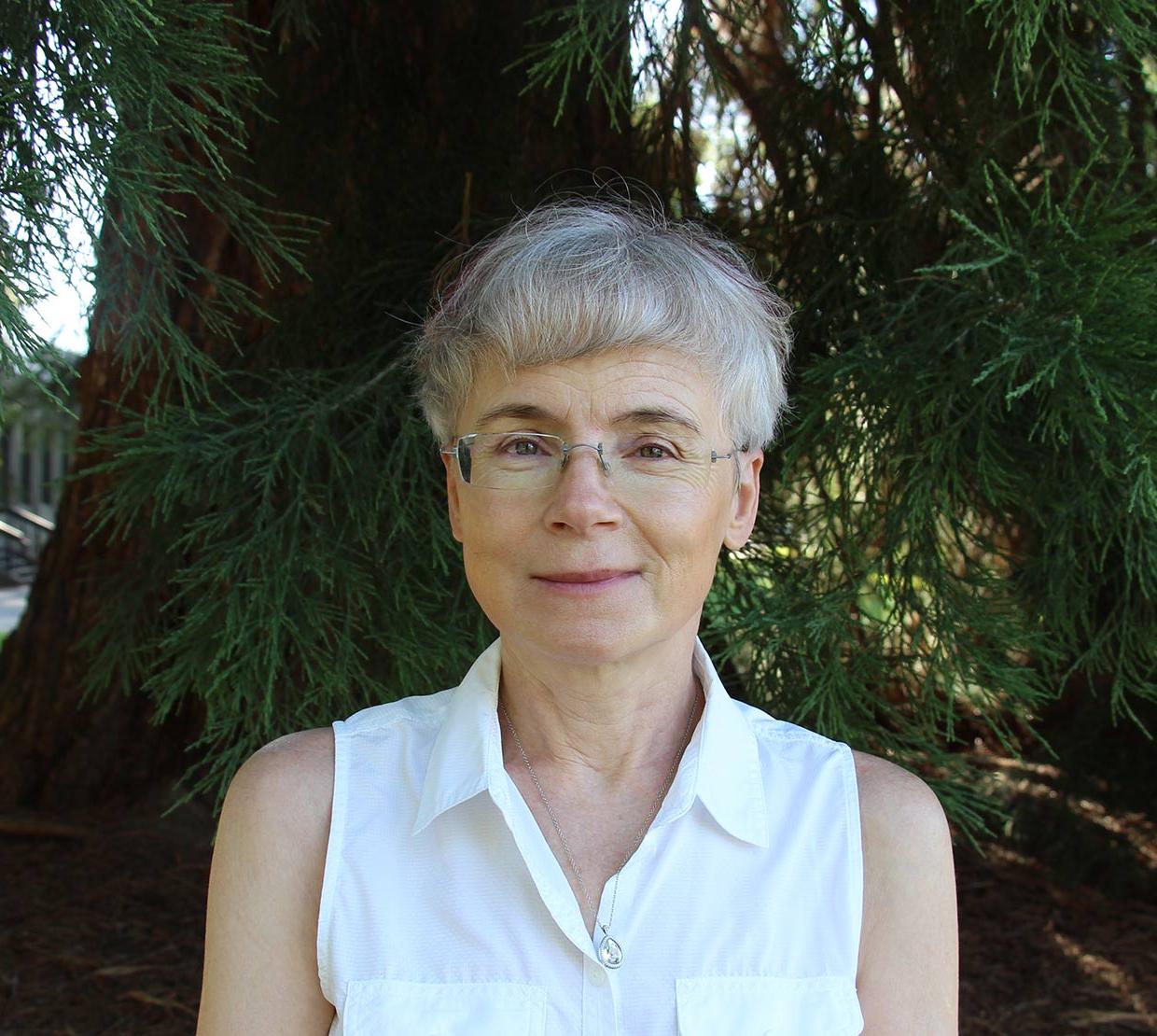
Malgorzata Peszysnka standing in front of a tree.

Applied mathematician elected 2020 AAAS Fellow

By Srila Nayak

OSU mathematician Malgorzata Peszysnka is a Fellow of the American Association for the Advancement of Science.

Mathematics Professor Malgorzata Peszynska is one of 489 scientists and engineers from around the world to be elected as 2020 fellows of the American Association for the Advancement of Science (AAAS).

Founded in 1848, the AAAS is the world’s largest multidisciplinary scientific society. It publishes the leading journal Science and other cutting-edge research journals. AAAS fellows comprise an illustrious group of scientists such as inventor Thomas Edison, anthropologist Margaret Mead and biologist James Watson.

Peszynska, elected in the section on Mathematics, is the 18th faculty member in the College of Science to be elected as an AAAS Fellow. In addition to Peszynska, Patrick Hayes and David Myrold, professors in the College of Agricultural Sciences, were also honored as 2020 AAAS Fellows. This brings the number of professors at Oregon State University elected AAAS Fellows since 1965 to 42.

Peszynska was honored as an AAAS Fellow “for outstanding contributions to multidisciplinary mathematical and computational modeling of flow and transport in porous media.” The new Fellows will be recognized at the online AAAS 2021 annual meeting in February. The names of the newly elected Fellows also appeared in the November 27 issue of Science.

“It is extremely rewarding for my work to be recognized. I stand on the shoulders of the giants in the field and I am grateful for their passion which inspired mine,” said Peszynska. “I share this award with my family and the extended family of students and collaborators, whose support has been unwavering. My goal is to continue paying it forward.”

In 2019, the National Science Foundation (NSF) chose Peszynska as the rotating Program Director within its Division of Mathematical Sciences in Washington, D.C., a position that she continues to hold.

She held research and teaching positions at the Polish Academy of Sciences, the Warsaw University of Technology, Purdue University and the University of Texas, Austin, before joining OSU as an assistant professor in 2003.

“It is extremely rewarding for my work to be recognized. I stand on the shoulders of the giants in the field and I am grateful for their passion which inspired mine,” said Peszynska.

Discovering the world of applied mathematics

Born and raised in Warsaw, Poland, Peszynska received a master’s degree in applied mathematics from the Warsaw University of Technology and a Ph.D. in mathematics from the University of Augsburg in Germany. She also holds a habilitation degree from the Warsaw University of Technology.

Having discovered her love and aptitude for mathematics at a very young age, Peszynska received whole-hearted support and encouragement from her mother, who was a physician, to pursue her academic passion. Trained in pure mathematics at first, Peszynska found her true calling: studying physical phenomena through the lens of mathematics.

“I had substantial training in pure math. My master’s degree was studying very pure mathematical concepts applied to computer science,” Peszynska said. As a Ph.D. student in Germany, she turned to applied mathematics, discovering the bridge between parallel computing and models and simulations of large-scale flow problems.

“My advisor gave me an applied project where I could benefit from my knowledge of parallel computing,” Peszynska said. “I had to learn a lot in a hurry about the applied setting. But it was cool because I could finally use the theoretical underpinnings and methods of analysis that I learned.”

In the last two decades, Peszynska has built up an impressive research program in applied mathematics at OSU. This has attracted several grants from the National Science Foundation, the Department of Energy and other federal agencies to enable the investigation of the challenges of modelling and simulation of complex natural processes. Her work has ranged from multiscale modeling of flow and transport, including at the pore-scale, adsorption and modeling of coupled non-linear phenomena incorporating knowledge of geomechanics, geophysics and geochemistry.

Peszynska’s interdisciplinary projects encompass the fields of hydrology, oceanography, statistics, environmental, petroleum, civil and coastal engineering, physics, and materials science. She has also trained numerous students in her field and has published more than 70 articles, many co-authored with her students.

Peszynska is equally well recognized for her excellent mentoring and dedication to student learning. She has been an advisor to postdocs, master’s, doctoral and undergraduate students. To date, seven Ph.D. students have completed their dissertation under her guidance and she is currently an advisor to four more doctoral students. She also mentored over 10 undergraduate and master’s students. Peszynska’s students, who have pursued research with her across multiple academic levels, are enjoying fruitful careers in industry, academia and national labs.

Peszynska notes that of all her professional accomplishments, she is most proud of her work with students.

“It has been a joy to see my students grow into independent researchers and successful professionals. I recently submitted a paper with four of my students, and it was exciting to see them work together on a joint project where each of them does their part as a researcher.”

Applying mathematical analysis to climate uncertainties

Peszynska’s research intersects with important problems related to energy engineering and climate change. Her modeling of transport includes porous media phenomena in aquifers, oil and gas reservoirs, the growth of biofilms, carbon sequestration, solar cells and the effects of permafrost warming. She is particularly proud of her work on modeling methane hydrate transfer and evolution, and has pioneered the use of computational mathematics to study upscaling in complex pore-scale environments (such as the subsurface of the earth).

Methane hydrate — frozen deposits of natural gas in the sea’s subsurface sediment — found primarily in the Arctic and sub-ocean sediments is a double-edged fuel source. When the ice-like methane hydrate deposits melt due to high temperatures or drilling, large volumes of methane gas may lead to explosions or may escape into the atmosphere. While methane hydrate deposits are viewed as one of the largest sources of natural gas and a viable fossil fuel, methane emissions might also contribute to global warming and climate change. Moreover, converting hydrate compounds into gas can be risky or unstable, making large-scale extraction or production of this powerful greenhouse gas difficult.

Many applied mathematicians simulate things because there is an underlying important problem,” observed Peszynska. “As an applied mathematician in this area, the objective is to provide reliable and accurate modeling tools for simulation of various scenarios to help mitigate and contain the possible disasters.”

"What’s happening with permafrost is absolutely incredible. Right now changes to the permafrost is a problem ripe for more and more modeling."

Peszynska and her research team are combining computational mathematics with the geophysical mechanics of hydrate behavior to address the challenges with respect to methane gas transport and flow through different layers in sub-ocean sediments. Her work on developing and analyzing computational models describing the evolution of methane hydrate is supported by a $384K NSF award for 2015-21.

“These issues were well-known by the geoscientists, but relatively unknown in the mathematics and computations community when I started studying it 15 years ago prompted by OSU colleagues from the College of Earth, Ocean, and Atmospheric Sciences,” said Peszynska.

Peszynska’s current research addresses some pressing challenges that arise in climate science and geophysics. She is developing new mathematical models and results to study the transport and evolution of methane gas under the influence of changing sea temperatures, the warming of permafrost, and the huge range of length and time scales for key elements of the geophysical process. She was awarded a $225K NSF grant to support her research on this project in 2019-21.

“What’s happening with permafrost is absolutely incredible. Right now changes to the permafrost is a problem ripe for more and more modeling,” said Peszynska. “One can study the processes and attempt to predict what’s going to happen in the Arctic. There are several interlinked scales from modeling microscopic changes to predicting large-scale events due to permafrost melting such as the collapse of buildings and disappearance of coastline.”

Peszynska’s research and teaching accomplishments have garnered her a number of awards at OSU and beyond. She has received the mathematics department’s Joel Davis Faculty Excellence Award, the Graduate Faculty Award and has been recognized by the Kosciuszko Foundation as a Distinguished Fellow of the Collegium of Eminent Scientists of Polish Origin and Ancestry. Peszynska was also a 2009-2010 Fulbright Research Scholar at the University of Warsaw.

Subscribe to Research