Research

Research

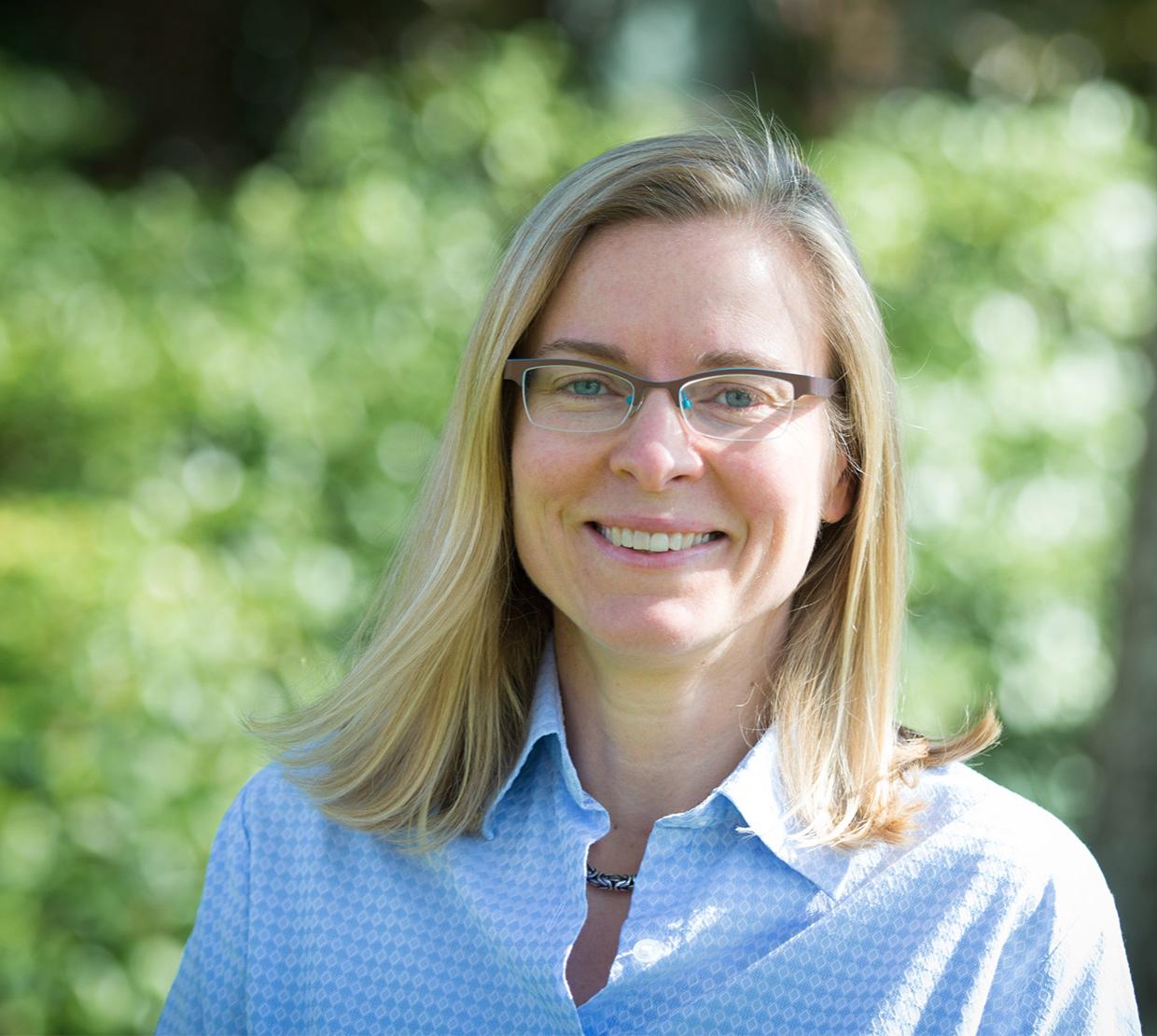
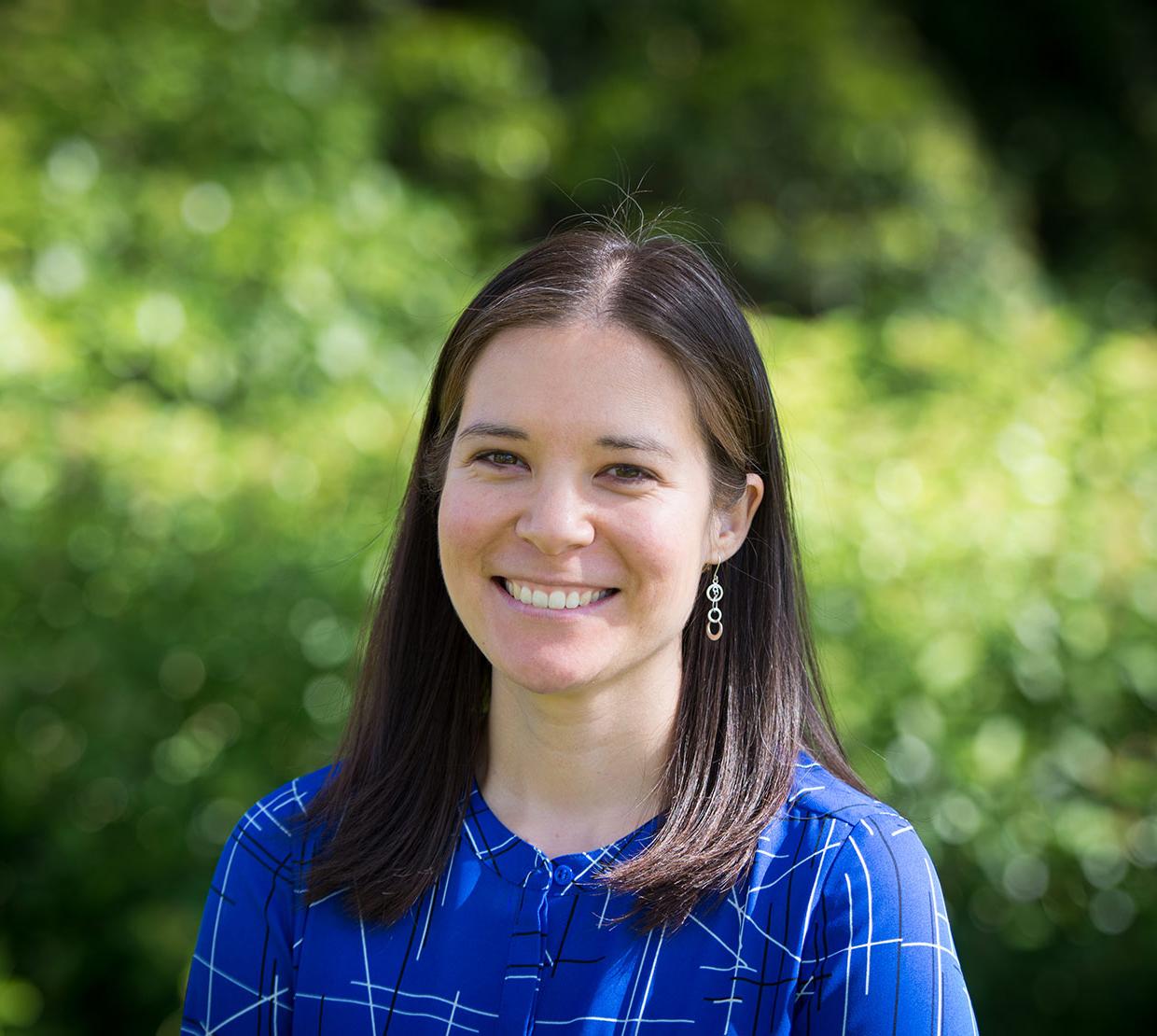
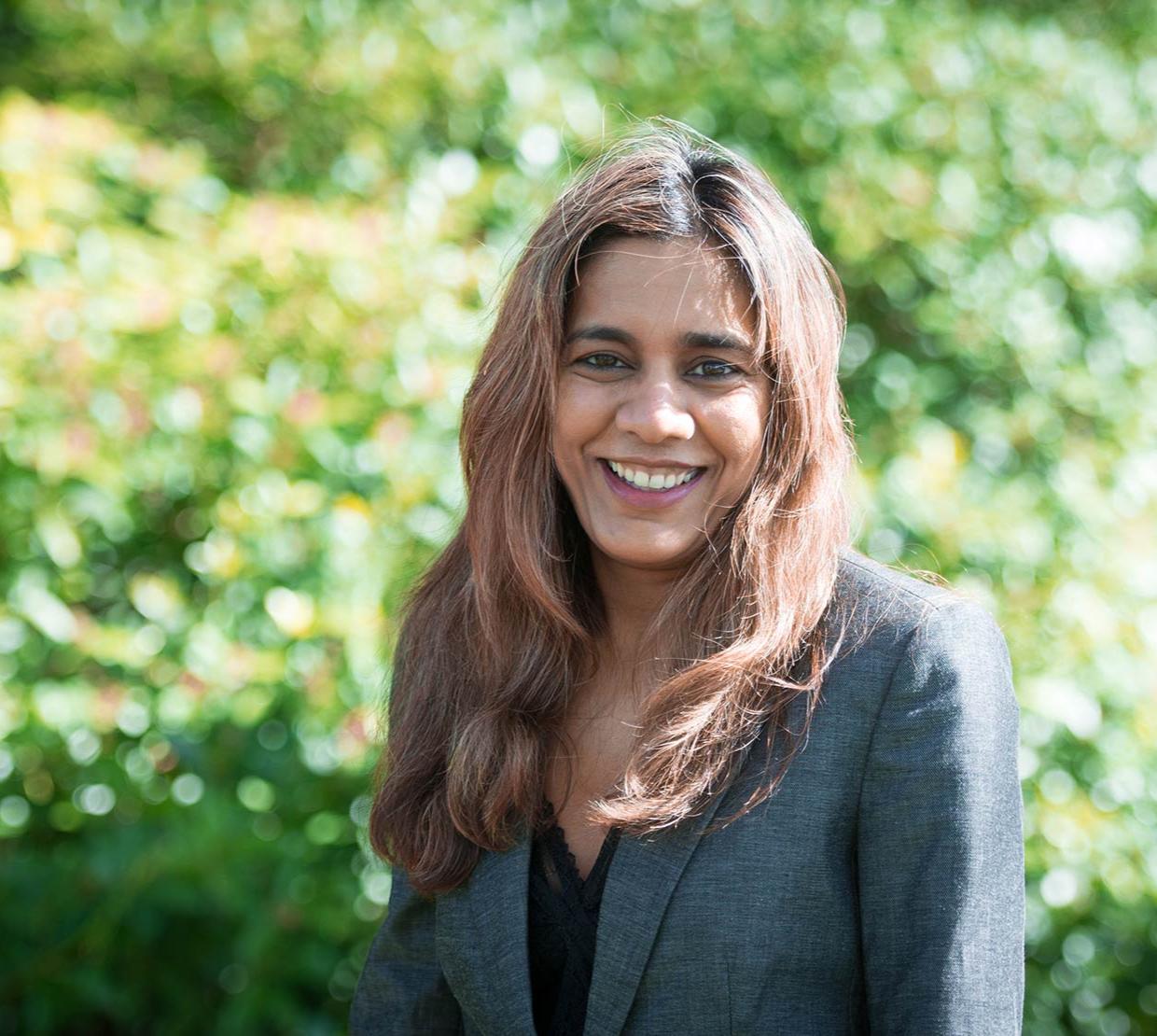
Vrushali Bokil standing in front of shrubbery.

New associate dean announced

By Tamara Cissna

Associate Dean for Research and Graduate Studies Vrushali Bokil

The College of Science is pleased to announce Vrushali Bokil as the new associate dean for research and graduate studies, effective October 19. Bokil brings outstanding leadership strengths, exceptional energy and research experience, and a deep commitment to inclusive and equitable excellence in research and teaching.

A member of the Oregon State faculty since 2006, Bokil is a professor in the Department of Mathematics who has served in many leadership roles during her tenure. Bokil’s primary research interests are in the numerical solution of wave propagation problems. She is also currently working on several problems in mathematical ecology that involve the construction and analyses of deterministic and stochastic models for applications in population dynamics, epidemiology and spatial ecology. She has worked on other topics in applied mathematics, scientific computing and numerical analysis, as well. Her most recent grant is a $225K NSF-funded project, "Computational and Multi-Scale Methods for Nonlinear Electromagnetic Models in Plasmas and Nanocomposites."

Bokil previously served as associate head of the Mathematics department during 2018-2019. She was an Advance Faculty Fellow in 2018, facilitating the implementation of equity, justice and inclusivity training seminars within the College of Science. She currently serves as an OSU faculty senator and was a Faculty Senate Executive Committee member from January of 2018 to January of 2020. She also serves as a member of the Career Opportunities Committee of the Society for Industrial and Applied Mathematics.

“I am very pleased to welcome Dr. Bokil as our Associate Dean for Research and Graduate Studies,” said Roy Haggerty, dean of the College of Science.

“Given Vrushali’s wide-reaching research contributions and effective collaborations with scientists and mathematicians at OSU and beyond, I am confident she will have a significant impact on the College’s research excellence, transformative educational opportunities, initiatives for faculty innovation, and productive collaborations across departments and colleges.

“I know she also will be an effective catalyst for advancing equity and inclusion for women scientists and others from historically underrepresented groups, making a positive difference in the College of Science and in Oregon State’s broad scientific community.

“I want to thank all the search committee members, including chair Elisar Barbar, head of the Department of Biochemistry and Biophysics, for their roles in appointing Dr. Bokil.”

As associate dean, Bokil will advocate for and provide a vision for the College’s research and graduate student educational opportunities in the College’s context as a major contributor to the educational and research mission of Oregon State University and the state of Oregon. She will contribute to day-to-day fiscal policy and budget implementation. In each and every aspect of her position, she will further the College’s commitment to enhancing diversity, equity and inclusion.

"It is my distinct pleasure to be selected to become a part of the leadership team in the College of Science and to work with Dean Haggerty in providing direction for our research and educational missions,” Bokil said. “I am particularly honored to have the opportunity to help craft policies and programs, which are evidence-based, compassionate and holistic, toward our shared mission to create a more diverse, inclusive and equitable scholarly and instructional environment."

Born and raised in India, Bokil earned her Ph.D. from the University of Houston and her master of science from New Mexico State University. She was a postdoctoral associate at North Carolina State University.

Doug Keszler, who served in this role since 2014, announced in July that he would step down. He will continue his materials science research in the Department of Chemistry.

“I want to thank Doug for his leadership and service over the last six years,” said Haggerty. “While serving in this capacity, Doug was highly instrumental in advancing the College’s research excellence and particularly in accelerating high-impact, collaborative research that addresses societal and marketplace needs. He also was effective in fostering industry partnerships with the College and connecting industry expertise with Science students.

“I know he is looking forward to having more time for research and innovation, and I am certain he will continue to mentor and inspire future chemists and entrepreneurs.”

Portrait photo of Mary Beisiegel.

Mary Beisiegel awarded new NSF grants

Congratulations to Mary Beisiegel who has been awarded two new National Science Foundation grants!

A first project entitled "Collaborative Research: Mathematics Graduate Teaching Assistant Professional Development Focused on Implementation of Evidence-based Teaching Practices”, was awarded $2.1 million, with OSU's portion $855K over five years. In collaboration with Mary Pilgrim at San Diego State University and Erica Miller at Virginia Commonwealth University, this project aims to serve the national interest by preparing mathematics graduate teaching assistants (MGTAs) to implement teaching practices designed to improve the success of students in undergraduate mathematics courses. To this end, the project will provide MGTAs with a multi-year professional development program to help them implement evidence based teaching practices, including active learning. The professional development program will include an intensive teaching seminar and two courses focused on active learning and inclusive teaching. This approach, which provides MGTAs with extended professional development over multiple years, contrasts with the conventional practice of providing MGTA training only in their first year of graduate school. To help develop their leadership skills, experienced MGTAs will have the opportunity to serve as teaching mentors for newer peers. Over the five-year span of the project, more than 35,000 undergraduates will be taught by MGTAs who have received this multi-year professional development. It is expected that thousands more students will be served in the years that follow, as many of the MGTAs move into academic careers. The project will be implemented at Oregon State University, Virginia Commonwealth University, and San Diego State University. As a result, the project will have multiple contexts for examining the impact of the professional development on MGTA teaching attitudes and practices, as well as on the success of the undergraduates in the MGTAs classes. The project will compare outcomes at the three institutions to generate new knowledge about MGTA professional development, to explore what works in which contexts, and to develop an explicit theory of change related to MGTAs teaching practices

A second three year project for $124K (OSU portion) was awarded for "Collaborative Research: Algebra Instruction at Community Colleges: Validating Measures of Quality Instruction”. This STEM Learning and Learning Environments project seeks to advance understanding of algebra education at community colleges. It will build on prior work to explore further the relationship between the quality of instruction in college algebra classes and teachers' mathematical knowledge for teaching. This "knowledge for teaching" is the mathematical understanding that teachers need in order to be effective teachers of mathematics. For example, this knowledge enables teachers to explore and diagnose why students are struggling with a mathematical concept and provide targeted help. Despite its critical role in US higher education, instruction at community colleges is a neglected sector of instructional capacity in the United States. To advance mathematics education research related to the first two years of college, this project will develop the Mathematical Knowledge for Teaching Community College Algebra assessment. This assessment will identify the specialized knowledge that teachers need for teaching community college algebra in a way that supports student growth in thinking about fundamental mathematical concepts. The project will also advance previous work by refining the Evaluating the Quality of Instruction of Post-secondary Mathematics instrument, which assesses characteristics of high-quality instruction in community college algebra courses. These efforts will enhance the research tools available for studying post-secondary teaching at community colleges, specifically in college algebra. Since college algebra is often a gateway course to STEM degrees, this project has the potential to improve the recruitment into and success of students in STEM fields and, thus, support STEM workforce development.

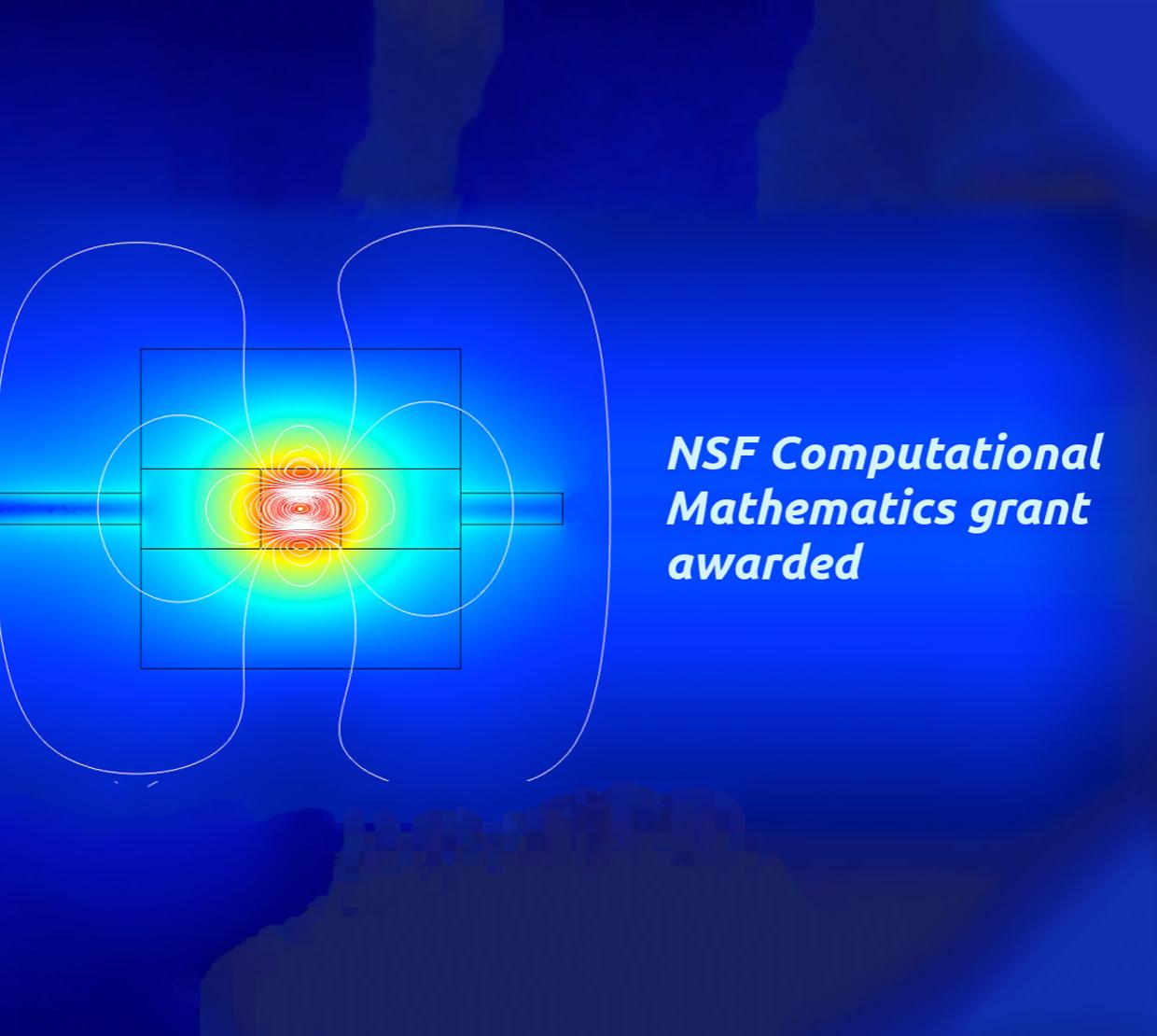
Depiction of a magnetic field with text that reads "NSF Computational Mathematics grant award."

Computational Mathematics grant awarded to Bokil and Gibson

Image produced by former PhD student Duncan McGregor (PhD 2016, Advisors: Bokil and Gibson). The image depicts induced magnetic field lines within a segment of a segmented Faraday type magnetohydrodynamic power generator.

Congratulations to Vrushali Bokil (principal investigator) and Nathan Gibson (co-principal investigator), who were awarded $225K funding from NSF’s Computational Mathematics program for their project "Computational and Multi-Scale Methods for Nonlinear Electromagnetic Models in Plasmas and Nanocomposites". The project is funded for the period August 1, 2020 - July 31, 2023 and includes co-principal investigator Pallavi Dhagat, Professor of Electrical & Computer Engineering at Oregon State University.

This project is an interdisciplinary collaboration involving mathematical modeling, computational simulation and experimental data for accelerating the design of advanced electromagnetic nanocomposite materials as well as alternative power generators. Nanocomposites, made of ferromagnetic nanoparticles in a dielectric, non-magnetic matrix, offer unparalleled opportunities for innovation in electromagnetic materials. The ability to predict electromagnetic material properties as a function of size, shape and concentration of inclusions in the host matrix, from computational simulations of physics-based models, will crucially aid in the digital fabrication of nanocomposites. These advances in design will enable applications including microwave frequency antennas and gradient refractive index lenses, printed electronic circuits and systems, to name a few. This objective is related to the Materials Genome Initiative's mission to accelerate materials innovation via computation. Professor Dhagat has been collaborating with HP Labs in Corvallis, on the application of multi-jet fusion technology for digital fabrication of magnetic composites.

A second objective involves Magnetohydrodynamic (MHD) power generation, which is potentially a significant component of a secure U.S. energy portfolio. The lack of moving parts in an MHD power generator increases the overall efficiency of the power plant and potentially decreases carbon emissions significantly. Computational simulations of physics-based models will aid in the optimal design of these thermally efficient energy systems. The models we consider are also essential to correctly modeling solar flares which can trigger geomagnetic storms disrupting power and communications costing millions of dollars in losses. Thus our techniques will advance applications in astrophysics, space weather prediction and clean energy systems, among others. PhD student Sebastian Naranjo Alvarez (Advisor: Bokil) will be funded by this project to work on Mimetic Finite Difference (MFD) methods and Virtual Element Methods (VEM) for MHD models in collaboration with Vitaliy Gyrya and Gianmarco Manzini of the Applied Mathematics and Plasma Physics group in the Theoretical Division at Los Alamos National Laboratory. PhD student Evan Rajbhandari (Advisor: Gibson) is working on a closely related project involving MHD modeling and simulation, including inverse problems and uncertainty quantification. He is being funded directly by Bokil and Gibson's collaborator Rigel Woodside from the National Energy Technology Laboratory in Albany, OR.

Three Sisters covered in snow.

Cascade RAIN 2020

The Department of Mathematics at Oregon State University (OSU) recently hosted the seventh annual Cascade Regional Applied Interdisciplinary and Numerical Mathematics (RAIN) Meeting. Due to the COVID-19-related closure of campus, the meeting was held online via Zoom. Thus, this was the first RAIN meeting in the Cloud.

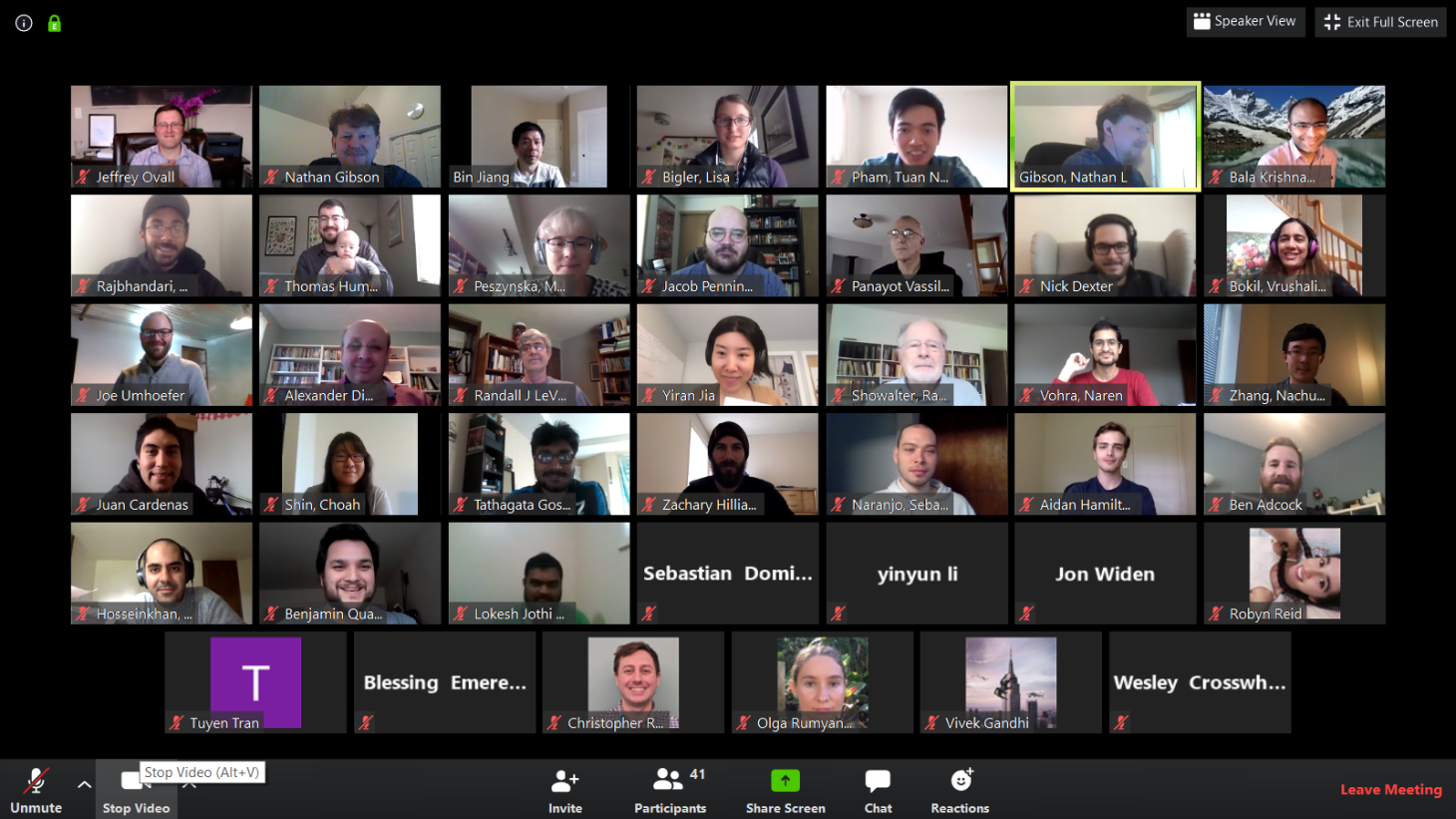
A screenshot of a zoom call with participants of Cascade RAIN.

Seventh annual Cascade RAIN Group Photo (screenshot)

The first edition of the Cascade RAIN Meeting was held in Corvallis in 2014, consisting primarily of mathematics faculty from Oregon State and Portland State Universities. It has subsequently grown to be an annual meeting bringing together researchers from across the Pacific Northwest (and occasionally beyond). A list of previous editions of the conference is provided at https://sites.google.com/site/cascaderainmeetings/events-list.

The RAIN meeting is a gathering of researchers for rapid and informal communication of ongoing research activities in computational and applied mathematics in the northwest region. It is intended to complement the annual PNWNAS and biennial SIAM PNW Section meetings, which feature longer lectures by invited speakers. At RAIN, talks from graduate students are encouraged. The meeting format is similar to the Finite Element Circus, in that the speakers, talk time and speaker order are all determined at the opening of the meeting. The talk length is determined by the total available time divided by the number of speakers, with talk duration typically ranging between 10 and 15 minutes. Typically volunteer speakers write their names and talk titles on a slip of paper to be placed in a hat for a random draw that determines the talk order. On Zoom, speakers announced their talk titles via Chat and a Google Sheet was used to randomize the speaker order.

There were nearly 60 participants attending (including two who registered “on site”), with 15 volunteering to speak. Originally there were only 14, but that would have meant an awkward 21 minutes per talk, so Prof. Nigam from Simon Frasier University (SFU) persuaded her student Javier Almonacid to present a very well-done talk at very short notice!

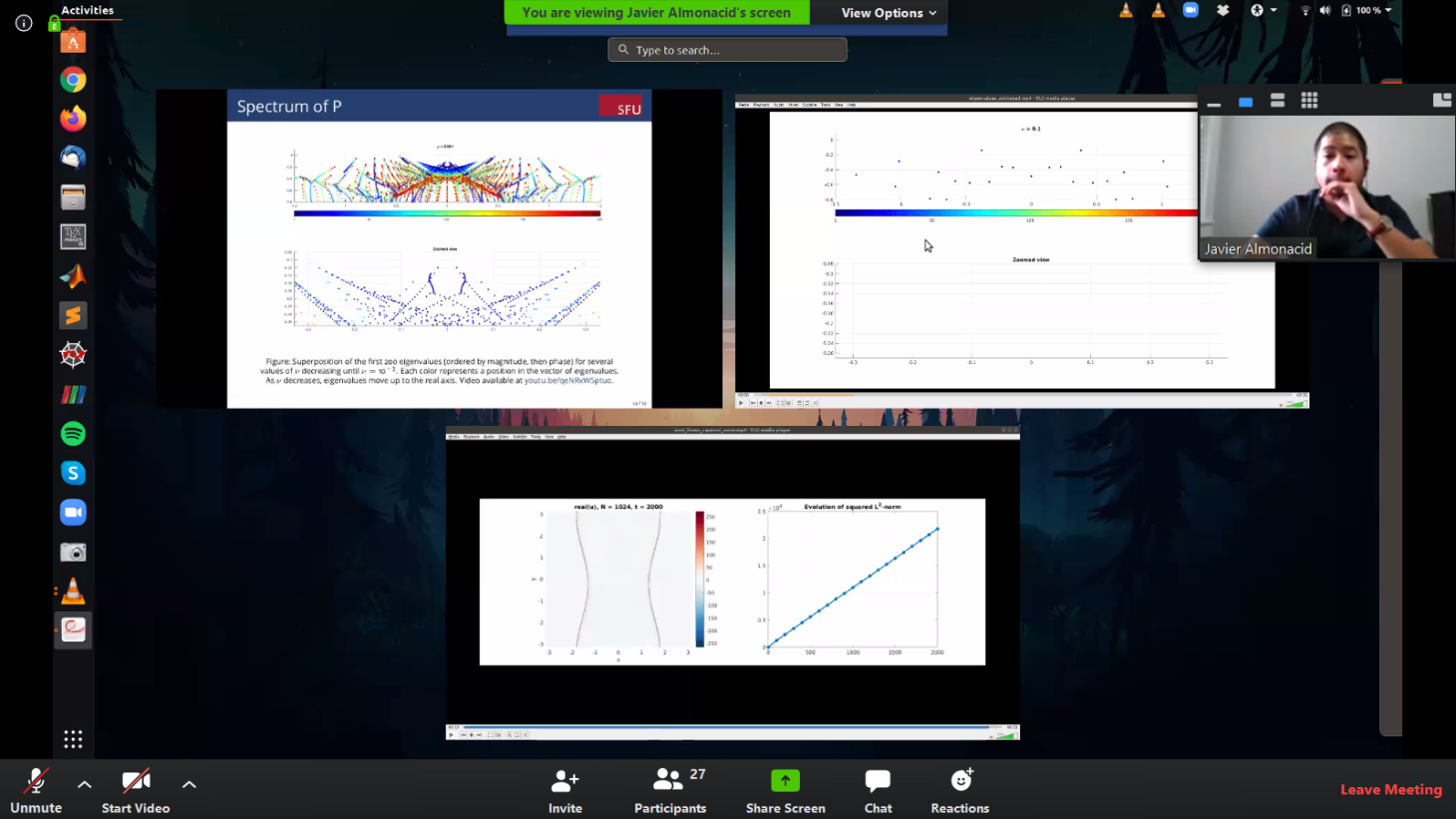
Javier Almonacid presenting through Zoom.

Javier Almonacid, Graduate Student, SFU, “Singular Solutions and the Spectrum of Zeroth-order Pseudo-differential Operator”

As there are no parallel talks at a RAIN meeting, logistics was simple; only one Zoom “room” was used. Coffee breaks were shorter than usual as there were no lines at the restrooms! And while there were hiccups (everyone inexplicably got disconnected from Zoom several minutes into the meeting), the quality of the talks and the value of just having this forum for the dissemination of research, made the inconvenience of the venue negligible.

“I was actually pleasantly surprised to see how effective a virtual meeting could be.” --Ralph E. Showalter, Professor, Oregon State University

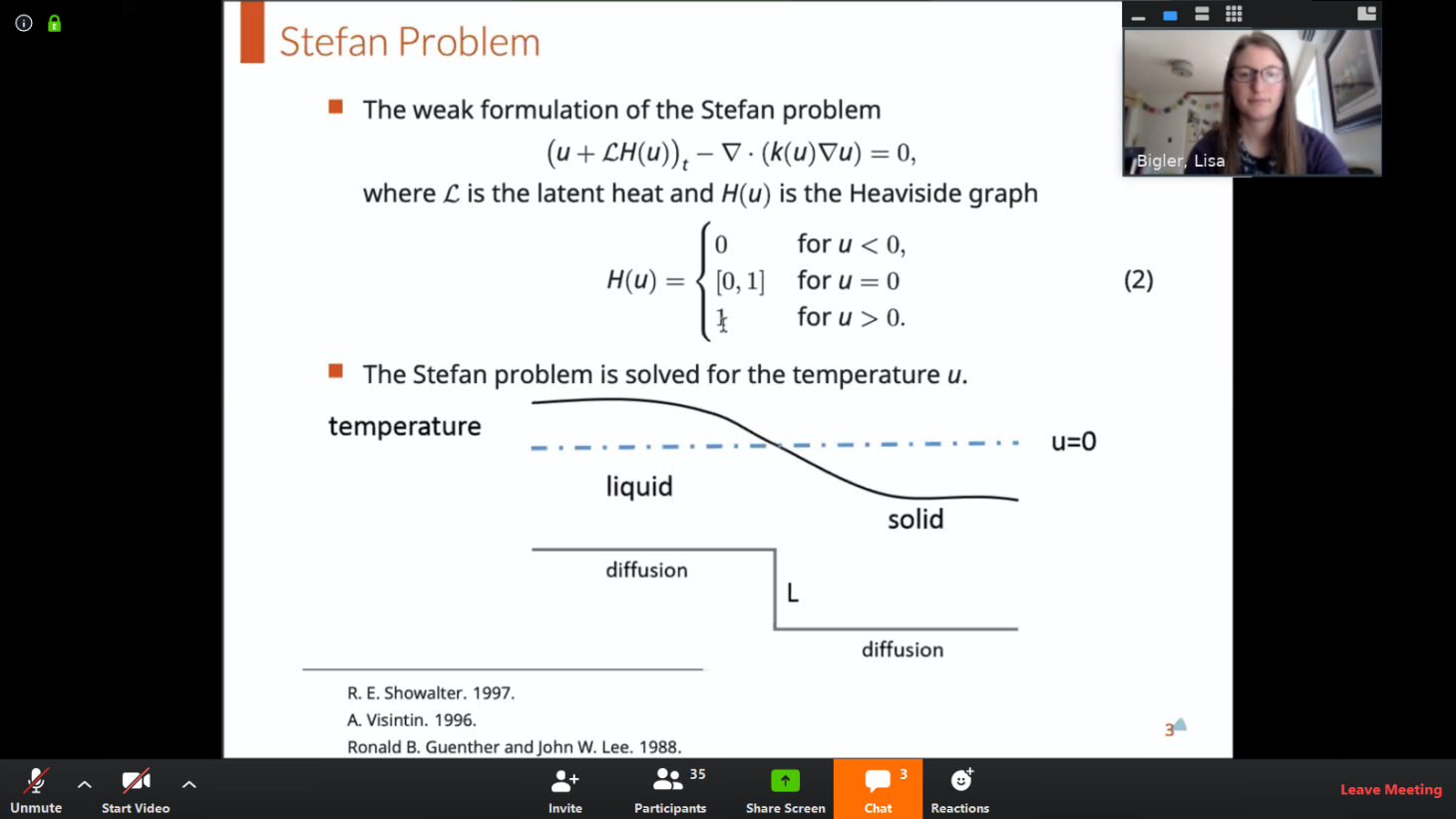
Lisa Bigler presenting through Zoom.

Lisa Bigler, Graduate Student, OSU, “Computational Modeling of Phase Transitions Geared Towards Permafrost Modeling”

Talk topics ranged from “3D muscle modelling” to “Statistical Forest Modeling”; from “Iterative Reconstruction of Sparse View and Limited Angle CT Data with Learned Penalty Terms” to “Predicting the Spatial Confinement of Localised Eigenmodes”; and from “Soft Matter Surface Features using Geometric Measure Theory” to “Matrix Factorization and Deep Model Compression”.

“Wow .. very impressive set of topics” --Robert T. Brigantic, Ph.D., Operations Research Scientist,Pacific Northwest National Laboratory

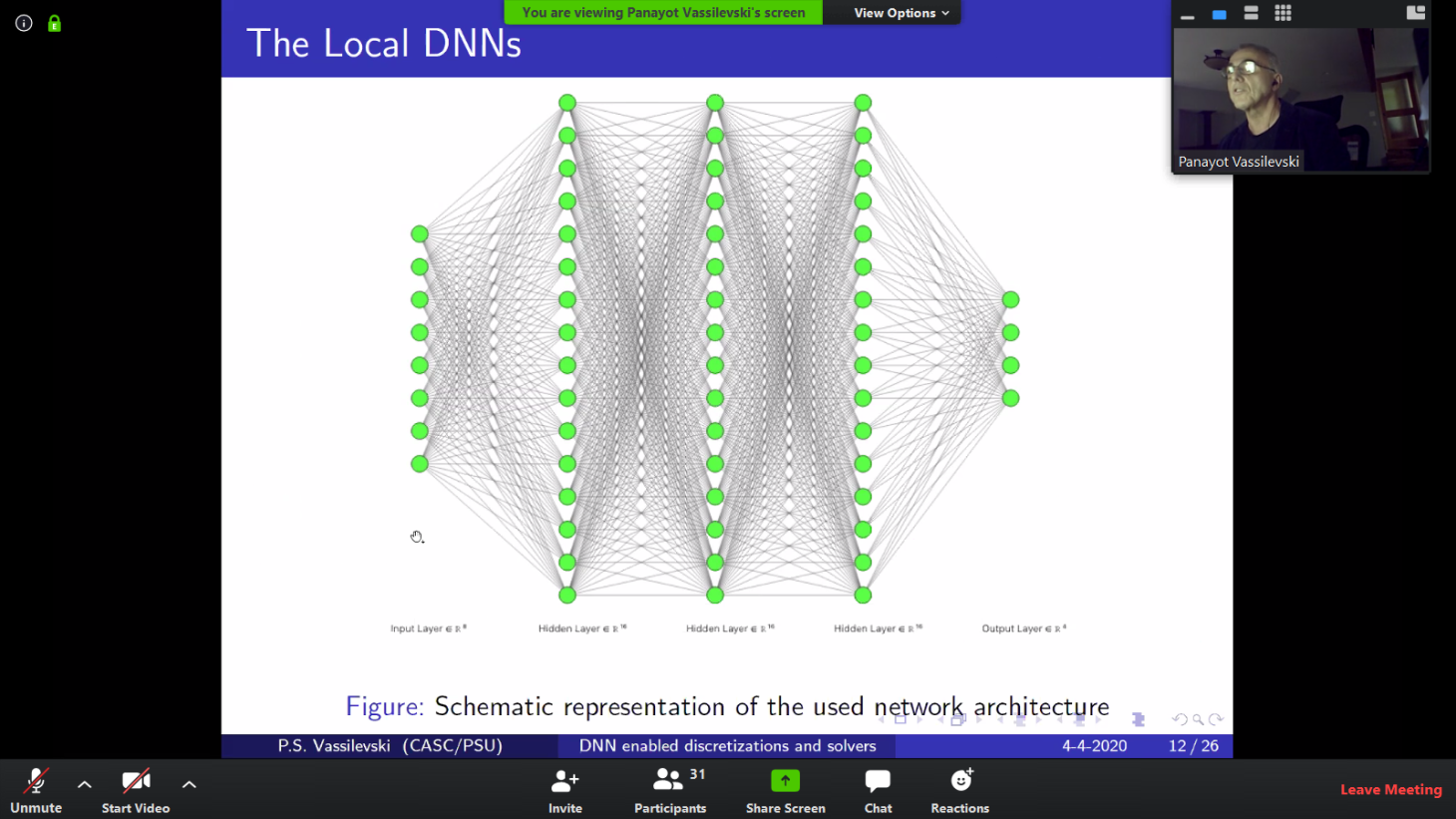
Panayot Vassilevski presenting through Zoom.

Panayot Vassilevski, Portland State University, “DNN Enabled Discretizations and Solvers”

Some talks were given traditionally, with slides and perhaps videos of simulations, while one was handwritten on a tablet and another was an overview of several papers in a pdf viewer! Some speakers decided to dress for the occasion, donning bow ties and sport jackets. It was an unusual realization of an already atypical meeting. In many ways the virtual format was not ideal, but in others it was convenient. A speaker’s co-author from Maryland was able to effortlessly attend this usually regional meeting. The internet has a way of putting us all the same distance from each other, even if that is not always as close as we would like.

The local organizers for this year’s meeting were: Nathan L. Gibson (chair), Blessing Emerenini, and Tuan Pham. Significant contributions to planning were made by the Steering Committee: Malgorzata Peszynska, Thomas Humphries, Bala Krishnamoorthy, Jay Gopalakrishnan, Jeffrey Ovall, Nilima Nigam, Ralph E. Showalter, and Milagros C. Loreto. Funding support had been pledged from the SIAM PNW Section, the OSU College of Science, and the OSU Mathematics Department.


This article was created by the Newsletter/Media Committee. Please email [email protected] with any comments.

Choah Shin

Graduate science fellowship supports interdisciplinary mathematics and energy research

By Srila Nayak

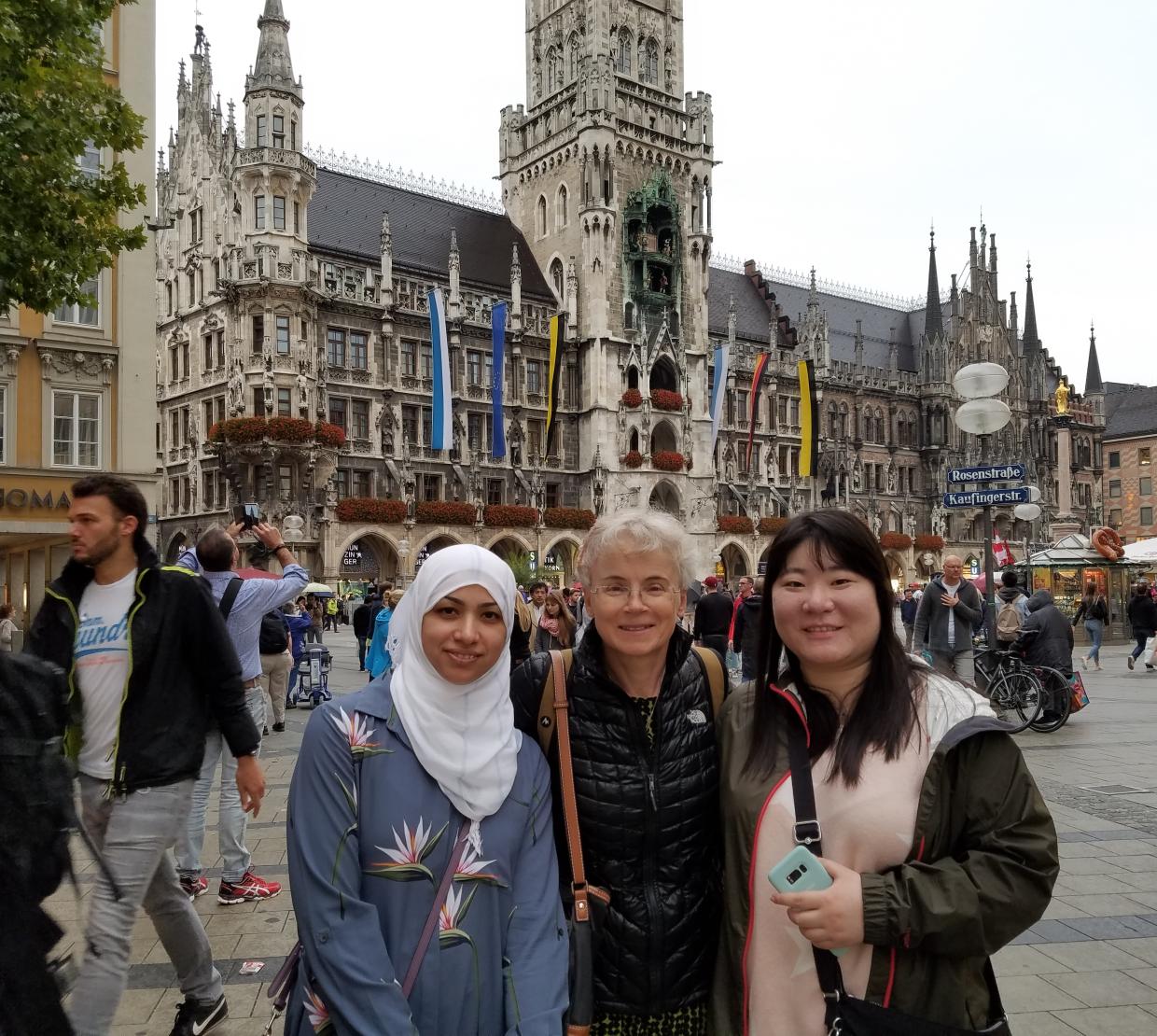
OSU mathematics Ph.D. student Choah Shin (right) with mathematicians Malgorzata Peszynska and Azhar Alhammali (left)

The 2019-2020 Larry Martin and Joyce B. O’Neill Fellowship was awarded to fifth-year mathematics Ph.D. student Choah Shin. The award supports her research on the theoretical and applied aspects of modeling processes associated with the sub-sea sediments of methane hydrate, an energy resource with documented impact on the climate. The fellowship, endowed by Larry Martin and his wife Joyce O’Neill, recognizes students who demonstrate high achievement and whose research involves computational modeling.

The competitive award, designated for graduate students in the College of Science, provides full tuition with an annual stipend of $25,000. Larry Martin (B.S., ’59) is a mathematics and engineering alumnus who had a successful career as a mathematician focusing on modeling for companies such as Lockheed Martin and IBM. After a successful career at IBM, he created, bought and invested in companies, sometimes running them but most often focusing on software and consulting. Martin was the owner of Troon Vineyard in southern Oregon's Applegate Valley which he sold in 2017.

The O’Neill Fellowship acknowledges Shin’s numerous research accomplishments. Her advisor, mathematics professor Malgorzata Peszynska, praises Shin for making “incredible progress on her path towards becoming a computational scientist” and developing “an independent critical viewpoint of computational science” that is responsive to mathematical analysis and the relations between mathematics and “important real-world applications.”

Shin’s broad research experiences span several sub-projects involving simulations for environmental and energy applications. These projects have landed her two prestigious internships in national labs and resulted in more than 20 research presentations comprising posters, invited talks and seminar presentations regionally and internationally. Always passionate about mathematics, Shin is steadily building a career in the field.

Her family moved to Chicago from Daejeon in South Korea just before Shin entered ninth grade. Thanks to her advanced mathematical skills honed by the Korean education system, Shin was placed in upper-level mathematics classes with juniors and seniors in her high school. “That math class was also easy for me. Although I had difficulties with the English language for the first few years,” remarked Shin.

After completing high school, she enrolled at the University of Illinois at Chicago to study mathematics. There she received a B.S. in mathematics (Honors with Distinction) and a M.S. in energy engineering. Shin applied to the Ph.D. program in mathematics at Oregon State University after discovering Peszynska’s research, which, to her delight, lined up perfectly with her own interests in mathematics and energy.

New frontiers in energy research

Methane hydrate — frozen deposits of natural gas in the sea’s subsurface sediment — found primarily in the Arctic and Antarctica is a double-edged fuel source. When the ice-like methane hydrate deposits melt due to high temperatures or drilling, large volumes of methane gas are produced that escape into the atmosphere. While methane hydrate deposits are viewed as one of the largest sources of natural gas and a viable fossil fuel, methane emissions contribute to global warming and climate change. Moreover, converting hydrate compounds into gas can be risky or unstable, making large-scale extraction or production of this powerful greenhouse gas difficult.

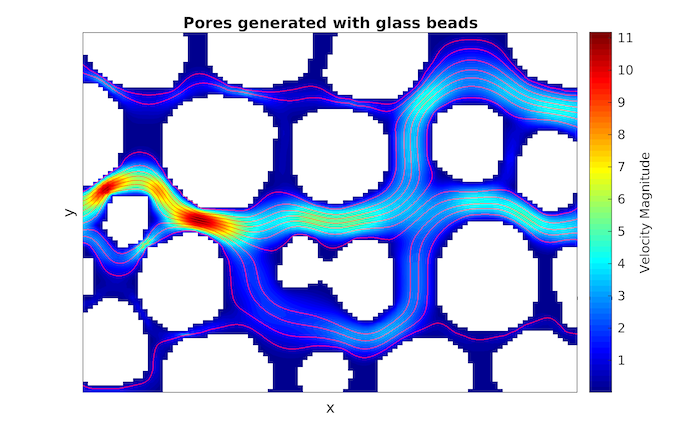
Shin’s mathematical models and theoretical approaches tackle various challenges with respect to methane gas transport and flow through different layers in sub-ocean sediments. Various mechanisms of methane transport depend on how hydrate crystals are deposited between the grains of porous medium; to this aim, Shin implemented a Stokes flow model that works at the micro-scale or pore-level events of gas displacement and movement. Overall, theoretical and practical aspects of Shin’s work contribute to a deeper understanding of the impact of hydrate on the environment.

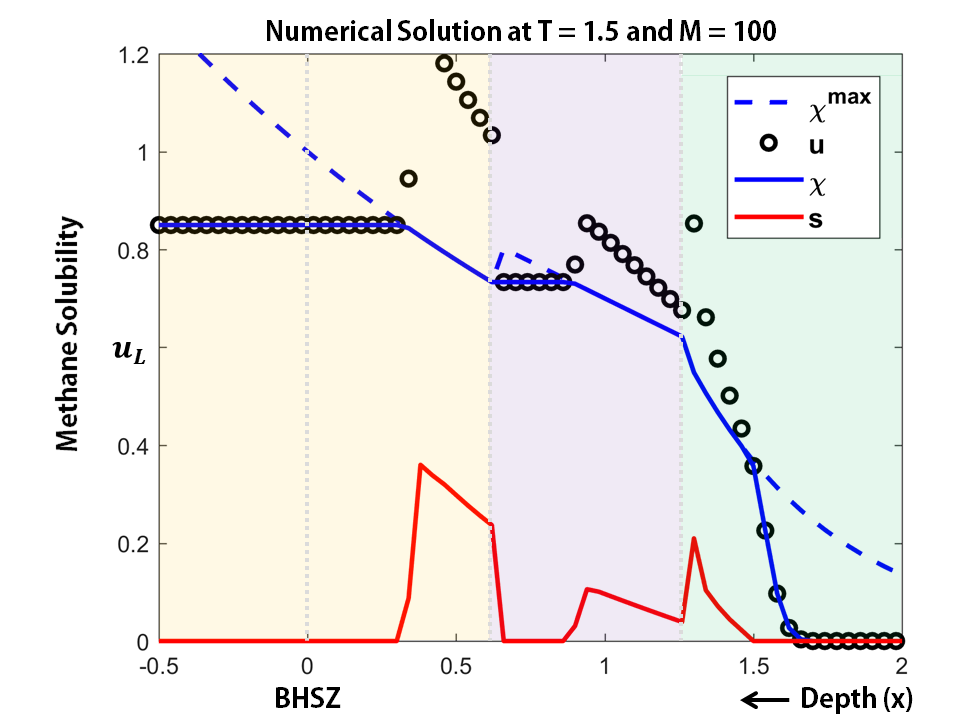
Methane gas transport model

Simulation of methane gas transport in a heterogeneous domain above BHSZ (bottom of hydrate stability zone) with the formation of methane hydrate depicted by spikes of the red curve. The data for this problem is synthetic but resembles typical layers found in subocean sediments; the background color corresponds to the different types of sediment, and the dotted blue curve shows the maximum solubility which depends on the (hypothetical) type of sediment. The solid blue curve shows the amount of methane dissolved in the liquid phase, which must not exceed the dotted curve. When hydrate forms (and red spikes form), the solubility must equal the maximum solubility. The challenges in the simulation are to account for this constraint as well as to represent the spikes accurately (Illustration by Choah Shin).

“Methane is going to be the next energy source for our planet. I am hoping my research will help prevent some environmental issues with methane when it is exposed to air,” said Shin. “I enjoy my research because it is interdisciplinary in nature and combines my interests in mathematics and energy engineering.”

Shin’s growing expertise with varied modeling concepts landed her an internship in summer 2018 with the Pacific Northwest National Laboratory (PNNL) in Richland, Washington. There she worked on developing mathematical models for phase equilibria for a mixture of methane, nitrogen and oxygen in the PNNL lab of Mark White, the lead researcher on an international comparison study of different hydrate models.

Pores generated with glass beads

Stokes flow in 2D porescale geometry simulated with Choah’s code. Shown are porous grains (white) and the flow velocity magnitude (in color). This simulation can be coupled to methane transport or to biofilm growth which change the flow paths when new semi-permeable solids form in the originally void space available to the flow. (Figure supplied by Choah Shin).

The following year, she was selected as one of the recipients of an NSF Mathematical Sciences Graduate Internship that took her to the National Renewal Energy Laboratory (NREL) at Golden, Colorado. According to Peszynska, Shin’s lab mentor at the NREL designed a project to specifically take advantage of her unique capabilities mixing computational mathematics with her passion for renewable energy resources plus experience with fluids modeling.

Choah’s summer project involved setting up computational solvers (a piece of mathematical software that solves a problem) for simulations of cryogenic helium in the supercritical phase for cooling mechanisms in a range of applications, including quantum computers, superconducting magnets and infrared sensors used in astronomical measurements. Since completing her project, Shin has presented her work at research conferences and is at work on a publication.

“The NREL internship was very helpful for enhancing my programming skills. Although I have done a lot of computational mathematics, the internship gave me the chance to work on supercomputers and with several different languages such as Python, Fortran and C++. I loved it!” Shin said.

Having enjoyed research in national labs immensely, Shin would like to take up a postdoctoral position at a national lab after completing her Ph.D. this year.

“I love doing research, and at the labs I was able to 100 percent focus on my research. I love the possibilities of what I can do in a lab,” mentioned Shin.

In addition to programming experiences, Shin’s internships also broadened her networking and science communications skills and introduced her to influential communities of scientists and collaborators.

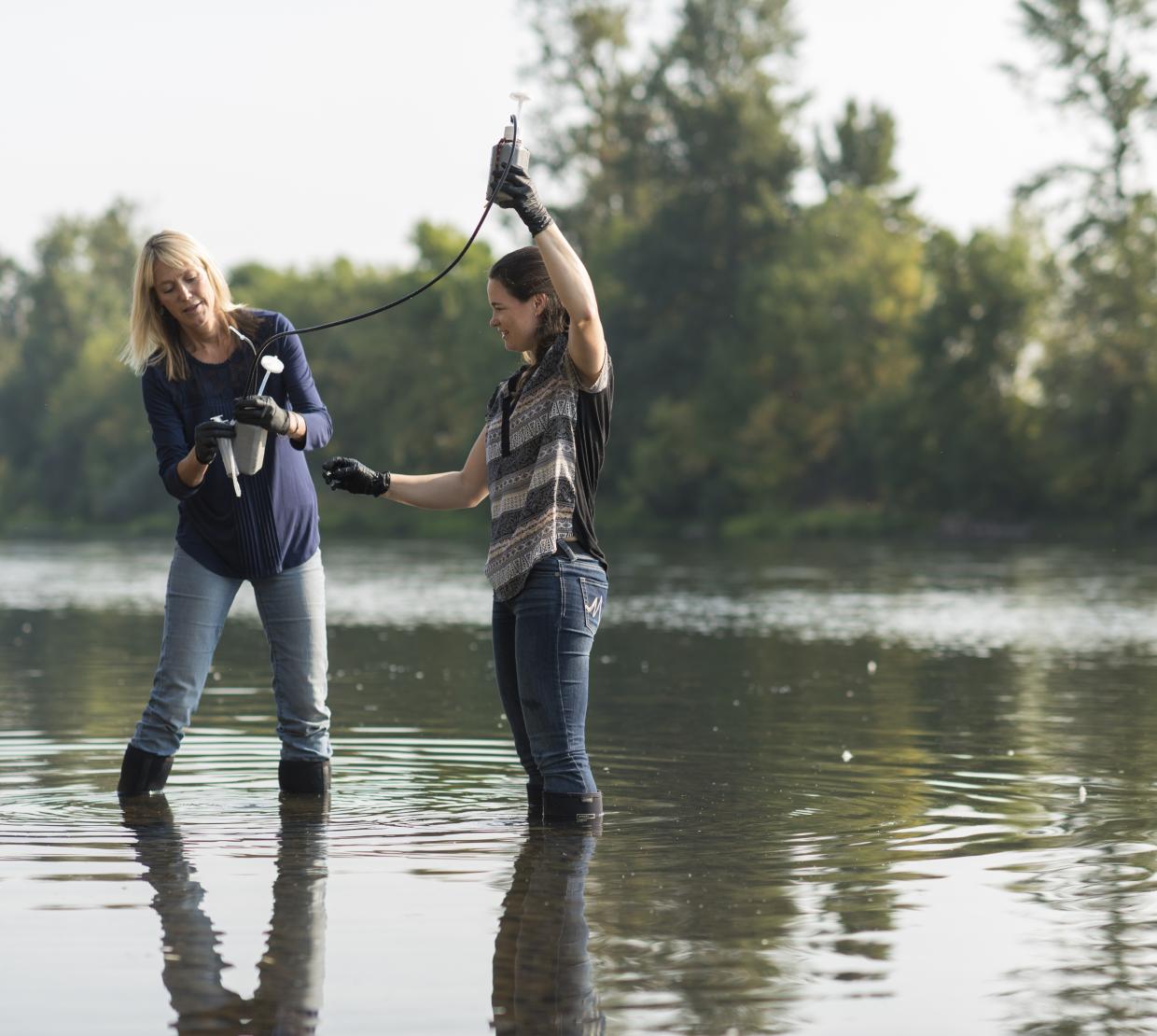
Kim Halsey with graduate student taking samples from a river

New grants to advance science that benefits humankind

By Cari Longman

Photo by Hannah O'Leary

Microbiologist Kim Halsey (left) and postdoc Cleo Davie-Martin collect samples from a river. Halsey is one of four faculty members who received College of Science Research and Innovation Seed (SciRIS-ii) awards. She will study the potential to detect toxic algae blooms in freshwater and marine ecosystems.

How can we better understand how devastating plant diseases are spread? Is there a better statistical model to predict HIV prevalence in a city? Is there a way we can detect toxic algae blooms in freshwater and marine ecosystems before they occur? And of the hundreds of thousands of different metal-organic frameworks (MOFs) in the world, how can we can better find the ones that are most useful for storing and separating gases, like CO2 from industrial plants?

Curiosity is critical for discovery. Asking the questions above led five faculty members to receive College of Science Research and Innovation Seed (SciRIS-ii) and Betty Wang Discovery Fund awards this February to pursue answers over the course of the next year. Their proposals all showed transformative potential and progress toward new frontiers of science and aimed to strengthen collaboration with external research partners. Below is more detail about each of their proposals.

Mathematics Professor Vrushali Bokil was awarded $8,000 to use modeling techniques to understand the spread and control of plant diseases caused by coinfecting viruses. She will focus on Maize Lethal Necrosis (MLN), an emerging disease in Kenya and other parts of Africa that is caused by coinfecting viruses and spread by insects called Thrips, as a test case. Her team’s goals are to use stochastic models and optimal control theory to understand the mechanisms that drive patterns of coinfection in plant populations and effective techniques for controlling the spread of disease in crops and natural grasslands.

In collaboration with the Centers for Disease Control and Prevention (CDC), Statistics Assistant Professor Katherine McLaughlin received $10,000 to explore the use of new statistical methodologies to estimate the number of people who inject drugs in metropolitan areas. The research project, supported by the privately-funded Disease Mechanism & Prevention Fund at the OSU Foundation, has a goal of refining current methods to produce improved population-level demographic, behavioral, disease prevalence and population size estimations. This will aid the CDC in their efforts to contain or slow the rate of HIV in metropolitan areas across the U.S.

Microbiologist Kimberly Halsey was awarded $10,000 to examine the potential for real-time, automated volatile organic compound (VOC) detection as early-warning signals of toxic harmful algal blooms (HABs) in freshwater and marine ecosystems. HABs are increasing in intensity and severity due to climate change and nutrient loading from agriculture and other human-related activities. Some HABs can become toxic to humans and animals. Halsey will use data integration to merge aquatic microbiome data with environmental properties and VOC signatures to identify determinants and trajectory of the annual toxic HAB at Upper Klamath Lake, Oregon.

Physicist David Roundy was also awarded $10,000 to develop new flat histogram Monte Carlo molecular simulation methods to accelerate the discovery of metal-organic frameworks (MOFs) for applications in storing and separating gases. MOFs are crystalline materials that harbor nano-sized pores that have the potential to be used in a variety of clean energy applications, from hydrogen and natural gas storage to capturing carbon dioxide from coal-fired power plant flues. His study aims to enable scientists to accurately predict the absorption properties of hundreds of thousands of MOFs and accelerate the rate of MOF discovery for clean energy applications.

In addition, chemistry professors Kyriakos Stylianou and May Nyman, along with Todd Miller from the Advanced Technology and Manufacturing Institute (ATAMI), received $30,000 from the Betty Wang Discovery Fund to purchase a microwave reactor to integrate on the continuous flow reactor to accelerate the discovery and production of inorganic materials like MOFs. The Betty Wang Discovery Fund supports equipment acquisitions and laboratory infrastructure improvements to advance fundamental discoveries in science. Microwave heating has recently emerged as a powerful method for the preparation of inorganic materials at the laboratory scale, reducing synthesis time down to a few minutes without affecting the product quality or reaction yield. The new machinery will allow the team to investigate the potential of new MOFs to capture carbon in laboratory and industrial applications.

The projects will run for one year, ending next February 2021.The SciRIS program provides funding in three stages for high impact collaborative proposals that build teams, pursue fundamental discoveries and create societal impact. The awards range from $10,000 to $125,000 for various stages of the program and are supported in part by generous alumni and friends, and grants from the U.S. Department of Defense and National Institutes of Health.

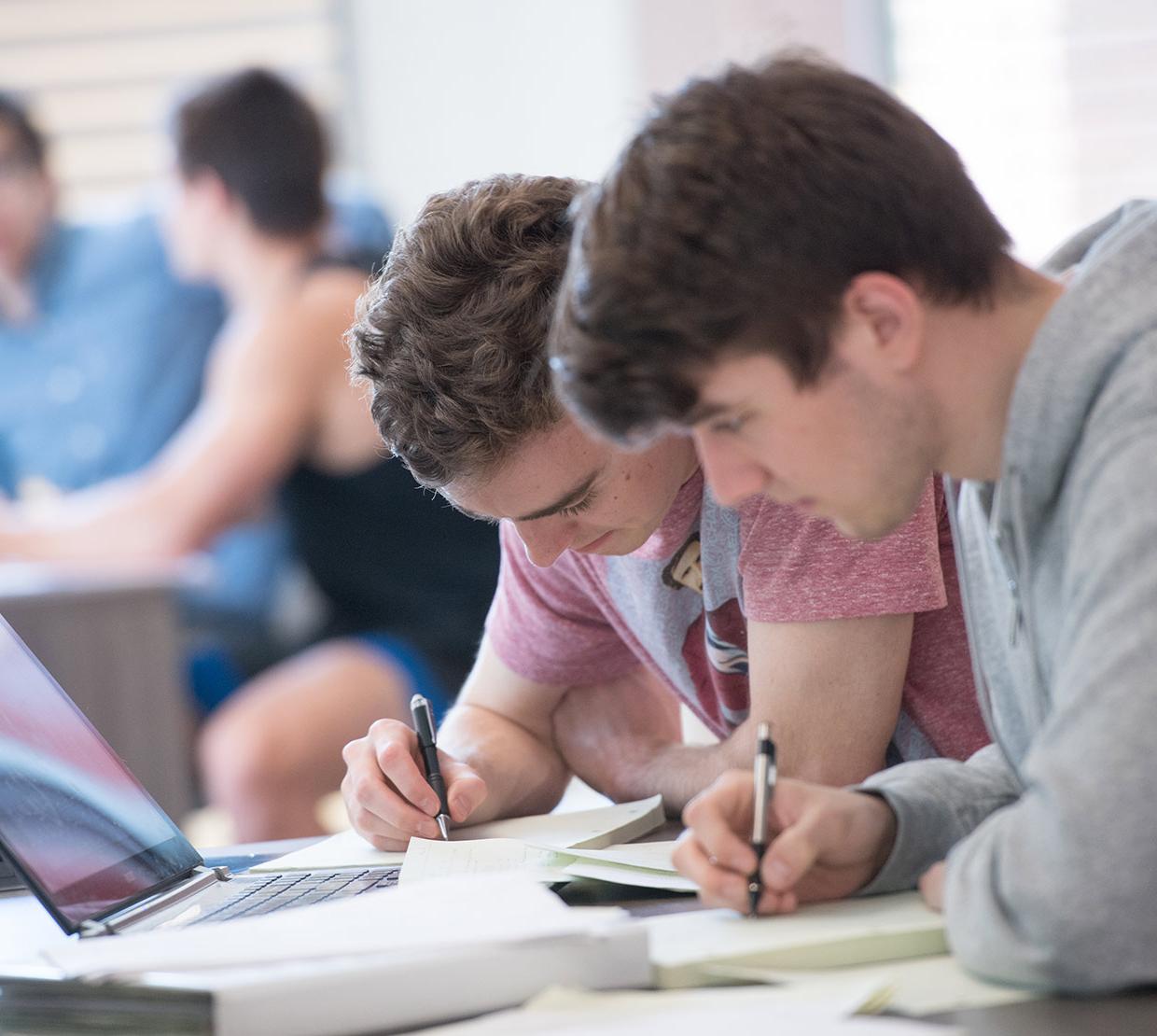
Two students studying together in classroom

A summer of mathematical research

REU program in Mathematics at OSU

Ten students from universities and colleges across the country have gathered for the long-running and prestigious Research Experiences for Undergraduates (REU) Program in Mathematics at Oregon State University for summer 2017. OSU has offered a REU program in mathematics nearly every summer since 1987.

The eight-week program, co-directed by Associate Professors Holly Swisher and Clayton Petsche, has garnered high praise from alumni over the years. It has been commended for providing valuable mentorship and exposing students to the process of mathematical research as well as deepening their interest and passion for mathematics as a discipline and profession.

This year student research projects are directed by Oregon State mathematicians Nathan Gibson, Ren Guo, Yevgeniy Kovchegov, Juan Restrepo, and Mike Rosulek from the School of Electrical Engineering and Computer Science.

Students participating in the 2017 mathematics REU are: Jacqueline Alvarez (California State Polytechnic University, Pomona), Claire Campregher (California State University, Long Beach), Karina Cho (Harvey Mudd College), Andrew Fisher (Walla Walla University), Brian Frost-LaPlante (Cooper Union), Josh Gerstein (Carleton College), Jesse Johnson (Oregon State University), Jacob Naranjo (Kalamazoo College), Anna Raichev (University of California, San Diego), and Collin Victor (University of Nebraska).

The students are working on a broad array of mathematical projects in areas ranging from dynamic (time-varying) systems, classical geometry in Euclidean space, coalescent processes, uncertainty quantification, and cryptography.

The Mathematics REU at OSU has a stellar record in terms of student achievement and success. Almost 300 students have participated in this REU since 1987, and nearly 55 percent of its alumni from the years 2005-2013 have earned a graduate degree in the mathematical sciences. Female participation in the math REU has been consistently high, and data for a 10-year period (2005-2015) shows that nearly 47 percent of the REU participants were female.

After the term of their research is complete, REU students give talks and prepare research papers for publications. REU students and their faculty mentors at OSU have had considerable success in getting their papers accepted for publication at important mathematic research journals over the years.

Read more about the REU program in Mathematics at OSU and its achievements.

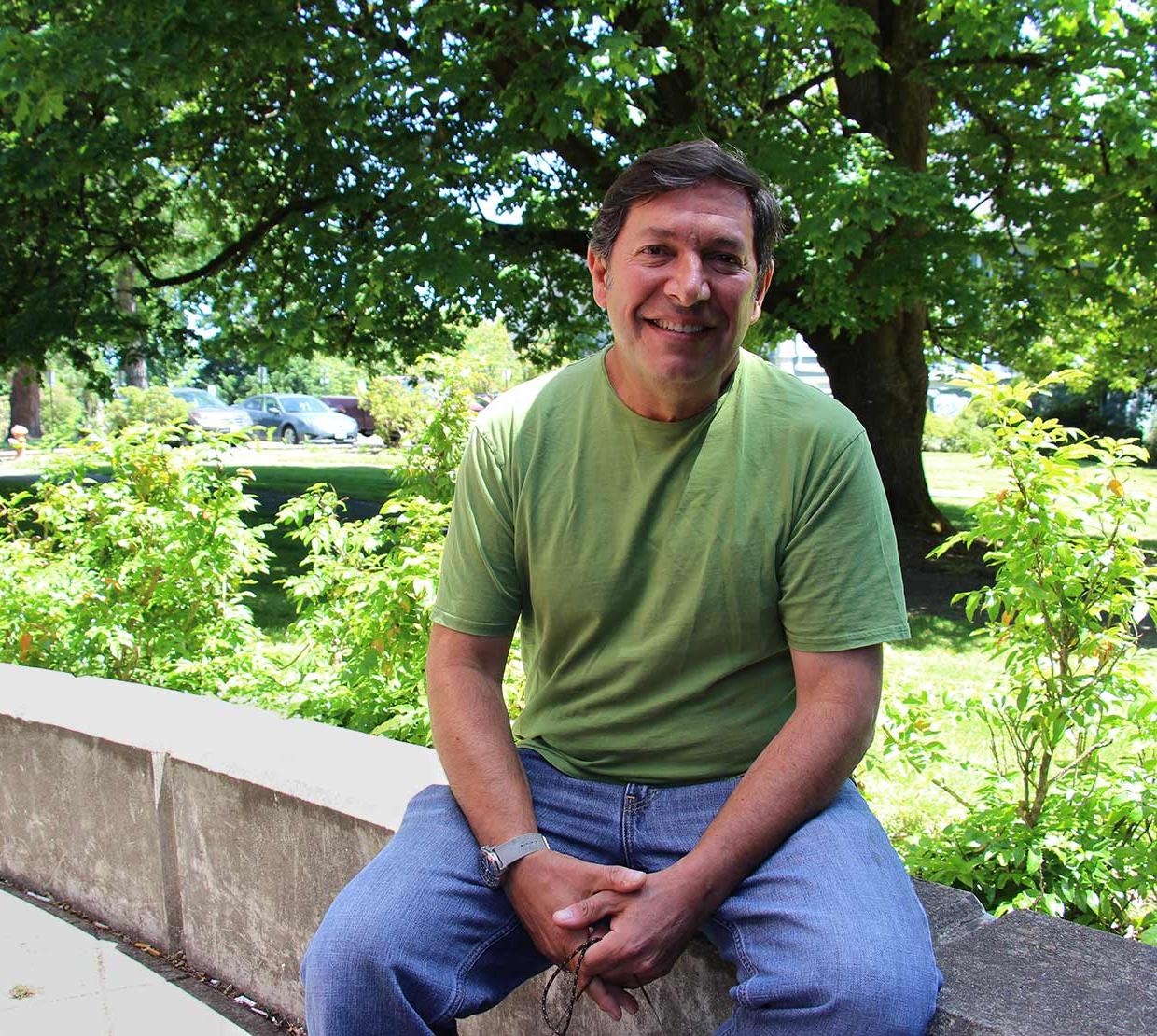
Juan Restrepo sitting on ledge in front of shrubbery

Mathematician elected Fellow of American Physical Society for advancing understanding of climate change

By Srila Nayak

Juan Restrepo, Mathematics Professor

Mathematics Professor Juan Restrepo has been elected a 2019 Fellow of the American Physical Society(APS), the world’s second largest organization of physicists.

Election to Fellow of APS is a rare and highly prestigious honor that is conferred upon no more than one half of one percent of the society’s membership. This year, 168 fellows from all over the world were selected and recognized for their contributions to physics. Fellows are chosen on the basis of: outstanding physics research, important applications of physics, leadership in or service to physics, or significant contributions to physics education.

Restrepo was nominated for the honor by the Topical Group on Physics of Climate. His Fellowship citation commends him for “advancing the understanding of wave dynamics and uncertainty quantification in the climate system.”

Restrepo joins a distinguished roster of APS Fellows in the College of Science at Oregon State University. He is the second mathematician at OSU to be elected a Fellow of APS. Professor of Mathematics Tevian Dray was elected an APS Fellow in 2010. Other APS fellows include OSU physicists Janet Tate (2015), Henri Jansen (2005), Corrine Manogue (2004) and Heidi Schellman (1999).

“I’ve had great scientific collaborators over the years and they are also responsible for my receiving this honor. Becoming Fellow of APS is obviously gratifying,” said Restrepo. “Professionally the award is very meaningful to me because APS is recognizing that anthropogenic climate change is a major existential crisis and that tackling this issue is a pressing scientific priority.”

Restrepo has received several prestigious honors and awards in the recent past. In 2018, he was elected a Fellow of the Society of Industrial and Applied Mathematics (SIAM) for his exemplary contributions to the mathematical and computational modeling of the ocean. He received SIAM’s Geosciences Career Prize in 2017 in recognition of his substantial impact in computational geosciences.

Restrepo specializes in applied mathematics research studying problems at the crossroads of mathematics, geophysics and oceanography. His research focuses on geophysical fluid dynamics, statistical mechanics, scientific computing, and uncertainty quantification. His research encompasses two distinct areas:

  • The application of data science to understanding complex non-equilibrium physical and human systems and to the development of forecasting tools for these systems, and
  • The role of ocean and ocean transport in climate dynamics and in nearshore processes, such as oil-spill dynamics, wave breaking dynamics, wave-generated transport and the role of oceans in global climate.

In an interview with SIAM News, Restrepo discusses his interdisciplinary research in applied and computational mathematics in the several fields of geosciences:

“My work on oceans involves deciphering how waves contribute to Earth’s circulation and how that affects ocean transport of nutrients, pollutants, and heat. In climate science my work has suggested important ocean pathways critical to the carbon cycle. In the nearshore, my work has demonstrated the effect of waves on shore connected sand ridges, on a possible explanation for the slowing down and parking of pollutants bound for the beach. The transport model for ocean oil spills my team is developing will someday help abate oil spill disasters.”

Restrepo’s teaching broadly covers the areas of numerical analysis and scientific computing, as well as applied analysis. As an advocate of diversity in science and mathematics, Restrepo has mentored numerous students from underrepresented groups.

He received his Ph.D. in physics from Pennsylvania State University in 1992. Prior to coming to Oregon State in 2014, Restrepo was a mathematics professor at the University of Arizona with appointments in the Department of Physics and the Department of Atmospheric Sciences. At OSU, he has courtesy appointments in Statistics, Electrical Engineering and Computer Science and Physical Oceanography.

APS has a diverse roster of fellows drawn from different fields such as mathematics, materials science, chemistry, biochemistry, mechanical, electrical and chemical engineering, in addition to physics. Their cross-disciplinary work is in a broad spectrum of fields, encompassing both core subject areas and their applications to physics.

APS publishes more than a dozen scientific journals, including Physical Review and Physical Review Letters and organizes more than 20 science meetings each year. Founded in 1899, APS is one of the oldest non-profit membership organizations working to diffuse and advance the knowledge of physics. The organization represents more than 51,000 members, including physicists in academia, national laboratories, and industry in the country and throughout the world.

Elise Lockwood in front of shrubbery

Mathematics professor receives Google award to improve K-12 computer science education in Oregon

By Srila Nayak

Elise Lockwood, associate professor of mathematics

Elise Lockwood, associate professor of mathematics, is part of a $141K, one-year grant from Google to enhance and increase integration between computer science (CS) education and mathematics teacher education curriculum. The project aims to better equip more teachers to teach computational concepts and practices in Oregon high schools. The grant is awarded as part of Google’s growing efforts to support excellent, cutting-edge research in academia.

As part of the project “Integrating CS Education into Teacher Education and K-12 Mathematics,” Lockwood will develop teaching modules for mathematics education students at OSU to build their computer science knowledge and skills. She will collaborate with colleagues Jennifer Parham-Mocello, assistant professor of computer science in the College of Engineering and the lead investigator on the study, and Rebekah Elliott, associate professor of mathematics education in the College of Education at OSU.

This mathematics and computer science education project aims to develop computational thinking and fluency of K-12 students both to enrich their conceptual understanding and to better prepare them for jobs in a highly technological society. The researchers say that this is especially important for Oregon “where many school districts have a growing population of youth minoritized within the educational system who are experiencing lower graduation rates than white peers and are relegated to low track courses and below grade level learning.”

Furthermore, Lockwood and Parham-Mocello point out that Oregon is one of only five states that has no policy to support K-12, computer science education. According to a report on K-12 computer science education in Oregon, only 37% of all high schools teach computer science, and universities in Oregon did not graduate a single new teacher prepared to teach computer science in 2016.

In an attempt to transform the dispiriting circumstances surrounding computer science education in Oregon schools, Lockwood and her colleagues are expanding ways to implement computer science education by exploring connections between secondary mathematics content and basic computational concepts. The researchers will “identify specific topics in existing mathematics standards (for secondary students) that fit with core CS concepts,” and then use those topics to build teachers’ knowledge and skills in computer science.

Over the 2019-2020 academic year, the Google award will offer unique opportunities for students on campus who plan to become secondary mathematics teachers. Both master’s students in the College of Education and undergraduate students in the mathematics department in the College of Science are eligible to participate. Lockwood and her colleagues will develop curricular materials to be utilized in a capstone mathematics course sequence for undergraduate pre-service teachers at OSU, and they will also create curriculum to work with a group of master’s level teacher candidates. In the process, the OSU students studying mathematics education will learn the basics of computational thinking, which they can apply in their future careers as teachers.

Extending mathematics education to computational learning

Lockwood is a highly regarded scholar in the area of mathematics education research. Her impressive research on how students learn combinatorics has steadily expanded to investigate the role played by students’ computational thinking and activity in mathematical and STEM learning. She was awarded a $800K five-year NSF CAREER award in 2017 to study how computational settings, specifically introductory Python programming, can strengthen aspects of students’ combinatorial reasoning. Her published research on using basic Python programming for undergraduate combinatorics problem solving paves the way for novel and creative methods of using computing.

While Lockwood’s CAREER grant was not designed to focus on pre-service teachers explicitly, findings from that project can inform how pre-service mathematics teacher training might involve computational thinking and activity.

“I am thrilled to work with my colleagues Jennifer and Rebekah on this project, and I think that our respective areas of expertise set us up well for a productive collaboration. I am very excited that this award will let us start some exciting work that fits well with my CAREER project,” said Lockwood.

She received the John and Annie Selden Prize for Research in Undergraduate Mathematics Education from the Mathematical Association of America. Lockwood was also awarded a 2019 Fulbright research scholarship to conduct research on how computing can help the teaching and learning of mathematics at the University of Oslo, Norway.

male student working with lab equipment

More than 50 students awarded scholarships for summer research

By Mary Hare

The College of Science warmly congratulates our 2019 SURE Science scholars!

Oregon State University and the College of Science have made it their mission to help students prepare for a bright future by providing potentially life-changing summer research opportunities.

This year, contributions from generous donors have helped more than 50 science students win competitive summer research awards, including the college-wide SURE Science Award (Summer Undergraduate Research Experience) as well as several department-specific awards.

Undergraduate research often plays a key role in developing student-faculty relationships, and gives students hands-on learning experiences that help them grasp the practical applications of science beyond the scope of the classroom.

“For me, a lot of it is about the students who wouldn’t be able to do research if they weren’t getting paid,” program coordinator Gabs James explains.

By providing fellowships to the greatest possible number of students, these awards give many undergraduate students the financial leverage to pursue career goals that would otherwise be unattainable.

The SURE Science Program is available to all full-time science students who meet the academic requirements. The scholarship provides the opportunity to conduct paid research for up to 440 hours over the summer. The scholarship includes a stipend of $5060 and an additional amount of $500 stipend that can be used as funding for activities that support their research. This year, greater donor support has made it possible for 40 students to receive the award — an unprecedented number with the award money totaling more than $220,000!

In addition to SURE Science, there are also several awards which may be received by high achieving students within a department.

New this year in Integrative Biology is the Alexei Lubchenco Menge Fellowship, which was awarded to Kris Bauer to support his research under the guidance of Postdoctoral Scholar Sarah Gravem and Professor Bruce Menge. The fellowship was established in memory of Alexei Lubchenco Menge, who died at age 27 in 2005. Like his biologist parents, Lubchenco Menge was deeply passionate about the ocean and the life it contains. The award seeks to help a student within the department who exemplifies these values.

Also receiving awards this summer are Ryley Tishendorf, who received a Special Integrative Biology Award, and Jiadi He, who received a Special Physics Award. Tishendorf will perform research in biologist Rebecca Terry’s lab, and He will be mentored by biophysicist Weihong Qiu.

In the biochemistry and biophysics department, students applying for the SURE Award are also eligible to apply for the CURE Fellowship. CURE is sponsored by the Ray and Frances Cripps Education Endowment, as well as by faculty mentors who match the awarded funds. This year, eleven biochemistry students received the award, in addition to eight other students from the department who received the SURE Award.

Congratulations to the inspiring next generation of scholars!

SURE Science awardees:

StudentMajorFaculty
1McKenzie BarkerBiologySally Hacker
2Kelley BastinMicrobiologySusan Tilton
3Dreagn BennettBiologySarah Gravem
4Nathanael BowlesMathematicsMalgorzata Peszynska
5Elizabeth CarrollBiologyClaudia Hase
6Cynthia CedenoChemistryPaul Blakemore
7Addison DeBoerBiochemistry & Molecular BiologyDaniel Rockey
8Luz Dimas-MunozBiochemistry & Molecular BiologyDaniel Rockey
9Haelyn EppBioHealth SciencesWeihong Qiu
10Rebecca FranceBiochemistry & Molecular BiologyColin Johnson
11Kailie FrancoBiochemistry and BiophysicsBo Sun
12Ilana Gottfried-LeeBiochemistry & Molecular BiologyRichard Cooley
13Cat HoangMicrobiologyElisar Barbar
14Kendra JacksonBiochemistry & Molecular BiologyMichael Freitag
15Jin KiatvongcharoenMathematicsDavid Roundy
16Taylor KuntzBiochemistry & Molecular BiologyMatt Andrews/Adam Higgins
17David LehrburgerBiologyStephen Atkinson
18Lauren LewisChemistryStaci Simonich
19Kitty LiuBiochemistry & Molecular BiologyAdrian Gombart
20Chantelle MacAdamsBiology & ZoologyBruce Menge/Sarah Gravem
21Anabel MendozaBioHealth SciencesCarla Schubiger
22Alanis MoralesBioHealth SciencesVirginia Weis
23Rina MullendoreBiochemistry & Molecular BiologyMaria Franco
24Duy NguyenPhysicsEthan Minot
25Makenzie NordChemistryJulie Pett-Ridge
26Acacia PattersonPhysicsJanet Tate
27Taylor PrichardBiologyKatja Duesterdieck-Zellmer
28Victor PuociBiochemistry & Molecular BiologyEhren Pflugfelder
29David RockowBiologyMark Novak
30Kelsey ShimodaBiochemistry & Molecular BiologyJaga Giebultowicz
31Leigh SkalaChemistryTaifo Mahmud
32Ulises Solis OcanaBioHealth SciencesDavid Dallas
33Jason SreyChemistrySandra Loesgen
34Yi Peng TeoPhysicsMatt W Graham
35Dustin TreecePhysicsElizabeth Gire
36Sophia VahsholtzBiologyDee Denver
37Andrew WilliamsBiologySusanne Brander
38Elizabeth WirschingBiologyVirginia Weis
39Tara WirschingBiologyDr. Felipe Barreto
40Wanling XieMathematicsYuan Jiang

CURE Foundation Awardees:

StudentFaculty
1Dorice Goune GoufackMaria Franco
2Mahir PalanMaria Franco
3Juno ValerioViviana Perez
4Brooke GalyonMichael Freitag
5Carolyn LazaroffMichael Freitag
6Maja EnglerMatt Andrews
7Audrey KorteWeihong Qiu
8Seth PinckneyElisar Barbar
9Jacob NorthRyan Mehl
10Isabella KarabinasAlvaro Estevez
11Asra NoorAlvaro Estevez

Subscribe to Research