Awards & Recognition

Awards & Recognition

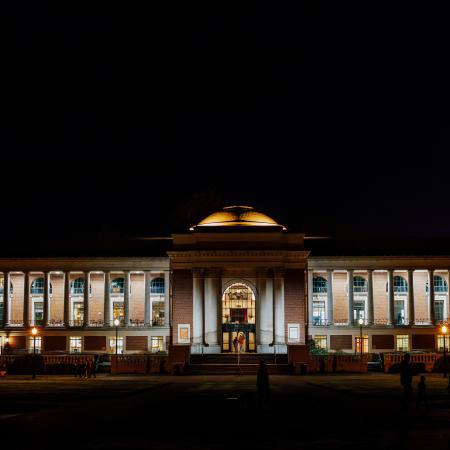
A nighttime image of campus.

College of Science graduate students earn prestigious awards in 2025-26

By College of Science

In the 2025-26 academic year, graduate students in the College of Science received notable recognition through a variety of competitive fellowships, scholarships and professional development awards. These honors support students at critical stages of their graduate education, helping fund research, conference travel, tuition and other opportunities that contribute to academic and professional growth.

Here are the 2025-26 recipients:

ARCS Foundation Awards

ARCS (Achievement Rewards for College Scientists) Foundation, Oregon Chapter seeks to advance science and technology in the United States by providing financial awards to academically outstanding students who are studying to complete Ph.D. degrees in science, engineering, mathematics, technology and medical research at Oregon Health & Science University, Oregon State University and the University of Oregon.

In 2025-26, the following College of Science graduate students received this award: KC Wahl (Chemistry), Lucas Allen (Mathematics) and Abigail Tripler (Integrative Biology).

Dissertation Completion Award

This award supports outstanding doctoral students who are in their final stages of their dissertations by offering an award to cover the cost of three graduate credits of tuition and mandatory fees for one academic term.

In 2025-26, the following College of Science graduate students received this award: Boo Wei Xi (Mathematics), Emily Palmer (Statistics) and Safa Alfattani (Microbiology).

Ecampus Degree Completion

This award provides a one-time tuition scholarship for enrollment in three to six online graduate-level OSU Ecampus credits.

In 2025-26, the following College of Science graduate students received this award: Kaye Brooke (Statistics) and Paul Anderson (Statistics).

Excellence in Undergraduate Research Mentoring

This award recognizes outstanding commitment to undergraduate research mentoring by OSU graduate students. The recipient has direct and significant involvement with undergraduate student researchers, along with demonstrated effectiveness and impact with respect to undergraduate student research and success.

In 2025-26, one College of Science graduate student received this award: Jessica Karr (Integrative Biology).

Fred W. Durbin and Helen E. Bette Pierce Durbin Endowment

Created by Fred and Helen “Bette” Durbin, this endowment supports graduate fellowships as determinedby the Dean. Fred received a bachelor’s in general science from OSU and Bette graduated with a bachelor’s in home economics (now the College of Health). The College of Science awarded two Fred and Helen Durbin Scholarships to Ameh Benson Agi (Chemistry) and Jonathan Dutra (Biochemistry/Biophysics).

In 2025-26, the following College of Science graduate students received this award: Tara Conrad (Microbiology), Natalie Rodgers (Physics), Ryan Wilgenkamp (Integrative Biology) and Genevive Sheehan (Chemistry).

GEM Fellowship

The GEM fellowship program invests in a competitive American workforce by supporting high-caliber students looking to pursue graduate degrees in applied science and engineering, and matches their specific skills to the technical needs of GEM employer members. Through the fellowship, students receive full financial support and a paid internship. The program has received a Presidential Award for its impact in STEM and has produced over 5000 leaders in STEM.

In 2025-2026, one College of Science graduate student received this award: Jessica Naranjo (Statistics).

Graduate Dean’s Catalyst Fellowship

This highly competitive award is designed to support students conducting dissertation research that aligns with the 2024-2030 OSU Strategic Plan, Prosperity Widely Shared: The Oregon State Plan. The fellowship provides full graduate funding for one academic quarter, allowing the recipient time to make significant research progress that supports institutional goals.

In 2024-25, one College of Science graduate student received this fellowship: Jun Cai (Integrative Biology).

Jesse A Hanson General Science Scholarship

The Jesse A Hanson General Science Scholarship is awarded to students who show high scholarship, potential for success, unimpeachable character and service to the university. Jesse Hanson was an OSU professor of poultry science from 1911-66.

In 2025-26, the following College of Science graduate students received this award: Tara Conrad (Microbiology), Natalie Rodgers (Physics), Ryan Wilgenkamp (Integrative Biology) and Genevive Sheehan (Chemistry).

Larry W Martin & Joyce B O'Neill Fellowship

The Larry W. Martin & Joyce B. O’Neill Endowed Fellowship is awarded to a graduate student from any of the seven departments in the College of Science whose research involves computational modeling. This Fellowship includes a stipend and a tuition waiver for one academic year.

In 2025-26, one College of Science graduate student received this award: Lucas Allan (Chemistry).

Nansie Gilfillan Jensen Scholarship

This fund supports incoming graduate students who demonstrate leadership experience or service to their community.

In 2025-26, one College of Science graduate student received this award: Angelina Zuelow (Integrative Biology).

NSF Graduate Research Fellowship

The National Science Foundation Graduate Research Fellowship Program (NSF GRFP) is a national award program of prestigious fellowships given each year to a select group of master’s and doctoral students in science and engineering fields in recognition of their academic and professional excellence. Students who receive the NSF GRFP benefit from a stipend, opportunities for international research and professional development, and the freedom to conduct their own research at any accredited U.S. institution of graduate education to which they are accepted.

In 2025-26, the following students received an honorable mention: Emily Branam (Integrative Biology), Brysyn Goodson (Integrative Biology), Madalyn Gragg (Physics) and Emily Parker (Integrative Biology).

Oregon Lottery Graduate Scholarship

Funds for this scholarship are provided through the Oregon State Lottery and are awarded to domestic or international graduate students enrolled in an advanced degree program at Oregon State. The scholarships are awarded on the basis of academic merit and financial need.

In 2025-2026, the following College of Science graduate students received this award: Piper Aislinn (Physics), Rodrigo Alves (Integrative Biology), Abraham Kpirikai (Biochemistry & Biophysics), Richard Logan (Mathematics), Joachim Schuder (Chemistry) and Ankit Yadav (Chemistry).

Prestigious Diversity Fellowship

The Oregon State University Prestigious Diversity Fellowship (formerly Diversity Advancement Fellowship) supports the recruitment and retention of new, meritorious graduate students from historically underrepresented backgrounds. This fellowship offers financial support to enhance diversity, fostering an inclusive scholarly environment.

In 2025-2026, one College of Science graduate student received this award: Kaylee Johnson-Jordan (Chemistry).

Professional Development Award

Many professional development opportunities exist beyond the university to help graduate students build core competencies and transferable skills. The OSU Office of Graduate Education invites students to apply for funding through the Professional Development Award to help cover costs for qualifying training, resources, and activities that contribute to professional skills development.

In 2025-26, the following College of Science graduate students received this award: Brenna Prevelige(Integrative Biology), Jun Cai (Integrative Biology) and Claire Toney (Integrative Biology).

Provost’s Distinguished Graduate Fellowships and Scholarships

The purpose of the Provost’s Distinguished Fellowship and Scholarship program is to support programs in the recruitment of Oregon State’s most meritorious graduate students. As a Provost Fellow, the student is awarded a 9-month stipend, a matriculation fee waiver, a partial mandatory fee waiver each term, an academic year tuition scholarship and subsidized health insurance.

In 2025-2026, the following College of Science graduate students received this award: Victoria Catlett (Physics) and Allissa Van Steenis (Microbiology).

As a Provost Scholar, the student is awarded a sum, disbursed in three equal installments.

In 2025-26, the following College of Science graduate students received this award: Eleni Vickers (Biochemistry & Biophysics), Rose Minoli Fernando (Chemistry), Jason Waters (Chemistry), Bianca Dawson (Chemistry), David Sensat (Chemistry), Wilson Banini (Integrative Biology), Laura Edwards (Integrative Biology), Aidan Lincicum (Mathematics), Emily Payne (Mathematics), Nicholas Bellavia (Microbiology), Sydney Pfleiger (Physics), Matthew Rosecrans (Physics), Evan Flint (Statistics) and Gavin Tovar (Statistics).

Scholarly Presentation Award

The Graduate School offers the Scholarly Presentation Award to provide graduate students with financial support to assist with certain costs associated with presenting their scholarly work at academic conferences and meetings.

In 2025-26, the following College of Science graduate students received this award: Hannah Dugo (Integrative Biology), Emily Parker (Integrative Biology), Mahya Payazdan (Biochemistry & Biophysics), Jessica Etter (Chemistry), Russell Campbell (Integrative Biology), Kristen Snitchler (Biochemistry & Biophysics), Dorothy Zahor (Integrative Biology), Oluwaseun Adu (Integrative Biology), Lauren Schreck (Integrative Biology), Alyssa Semerdjian (Integrative Biology), Kenneth Glynn (Integrative Biology), Maans Mattsson (Physics), Luke Bobay (Integrative Biology), Alice Welch (Integrative Biology), Jazlee Crowley (Integrative Biology), Emily Taylor (Integrative Biology), Dorothy Zahor (Integrative Biology), Cheyenne Jarman (Integrative Biology), Kenneth Glynn (Integrative Biology), Kevin Dimmitt (Physics), Layla Gordon (Integrative Biology), Russell Campbell (Integrative Biology), Jun Cai (Integrative Biology), Luke Bobay (Integrative Biology), Abraham Kpirikai (Biochemistry & Biophysics), Elena Conser (Integrative Biology), Jessica Karr (Integrative Biology), Valerie Brewer (Integrative Biology), Olivia Burleigh (Integrative Biology), Brandi Whiteman (Mathematics), Jun Cai, Colin Grosvenor (Integrative Biology), Margaret Mattson (Integrative Biology), Cedar Mackaness (Integrative Biology), Alexis Griffin (Integrative Biology) and Maryam Nikpayam(Chemistry).

Science Graduate Fellowship

The Science Graduate Fellowship is to be used to support students enrolled in the College of Science with a preference for students in chemistry, biochemistry and the life sciences.

In 2025-26, one following College of Science graduate student received this award: Reetu Deuba (Integrative Biology).

Wei Family Private Foundation Scholarship

The Wei Family Private Foundation, a non-profit organization, was established to honor the memory of Dr. (Mrs.) Chung Kwai Lui Wei and Mr. Hsin Hsu Wei. Its purpose is to award scholarships to graduate students with high academic credentials in science and math, with a preference for those who have lived in or are related to persons born in China.

In 2025-26, the following College of Science graduate students received this award: Lemeng Li (Statistics) and Mingcan Huang (Chemistry).
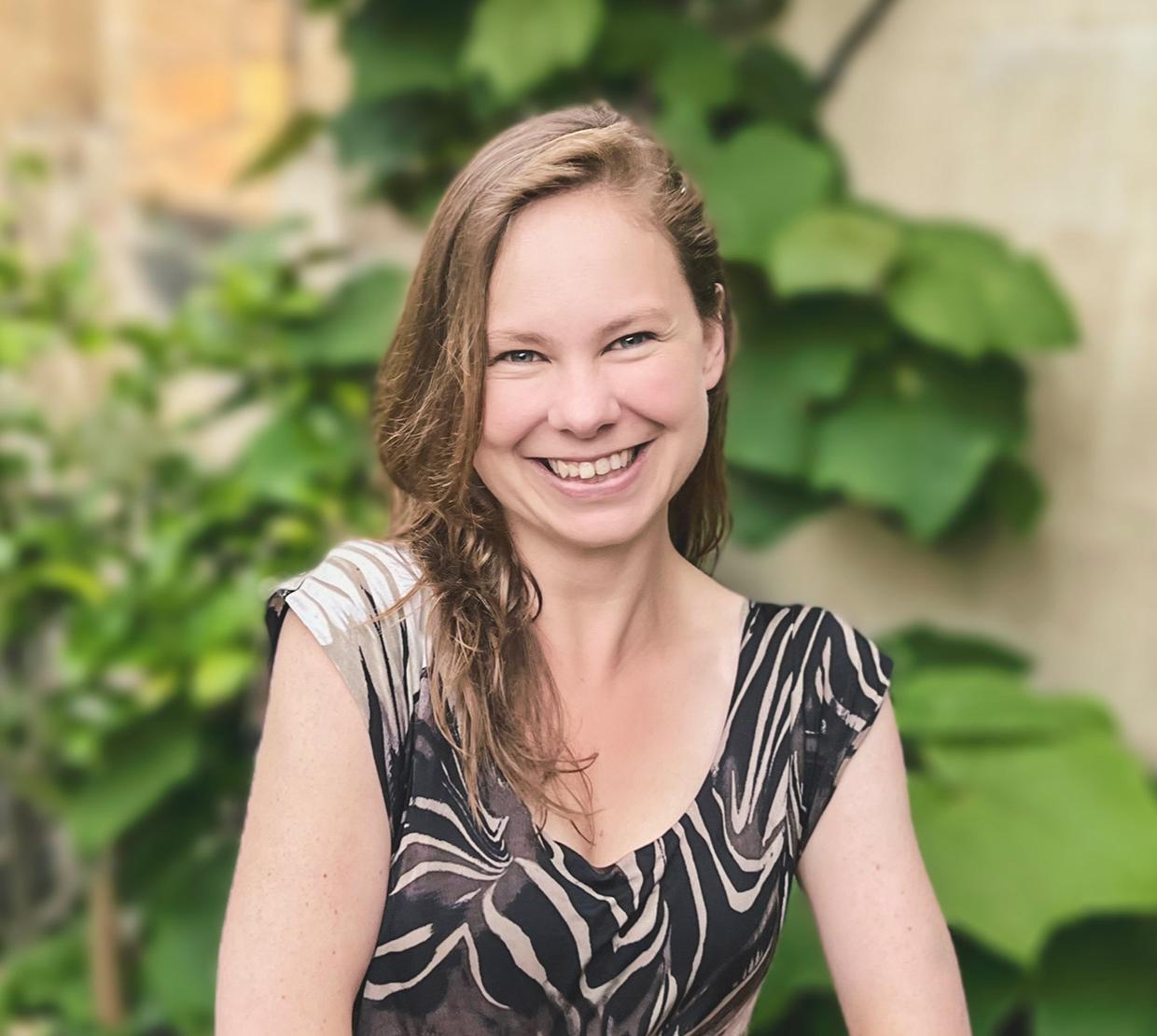
Headshot of Dr. Laura P. Schaposnik: A woman smiling with her hands folded in front of her, sitting outside a house of stone walls and healthy plants.

Lonseth Lecture 2026: 'Geometry of Hidden & Broken Symmetries’

By Arie Henry

The Department of Mathematics invites you to attend the 41st Lonseth Lecture on Thursday, May 28, featuring award-winning guest lecturer Laura P. Schaposnik of the University of Illinois, Chicago. In her lecture, titled "Geometry of Hidden & Broken Symmetries," Schaposnik will break symmetry on purpose to see what drives reality:

Many systems look complicated until we ask what stays the same — at both micro and macro scales. At the micro level, exchangeable interactions and local conservation laws simplify PDEs and networks; at the macro level, these invariances organize families of solutions and predict emergent behavior. Then we’ll break symmetry on purpose to see what drives reality: anisotropy in crystal growth and snowflakes, trust biases that trigger information cascades, and more. Symmetry and its selective breaking offer a way to reduce complexity, illuminate mechanisms, and connect fine-scale rules with large-scale patterns across geometry and the applied sciences.

41st Annual Lonseth Lecture

"Geometry of Hidden & Broken Symmetries"


Date: Thursday, May 28, 2026
Time: Department awards at 3:30 p.m.; lecture at 4 p.m.; reception to follow
Location: LaSells Stewart Center, Construction and Engineering Hall

We'll begin by honoring student and faculty achievements at our annual department awards ceremony from 3:30 to 4 p.m. Then we'll settle in for Schaposnik's lecture from 4 to 5 p.m. A public reception will follow immediately after.


About the speaker

Laura P. Schaposnik is an Argentinian professor of mathematics at the University of Illinois, Chicago. Her research sits at the intersection of geometry, topology and mathematical physics, with a focus on moduli spaces of decorated bundles, and also leads applied projects in network science and mathematical modeling. Schaposnik received the 2025 Presidential Early Career Award for Scientists and Engineers (PECASE), as well as an NSF CAREER award, a Simons Fellowship and a Humboldt Fellowship. She is actively involved in mentoring and outreach, including the development of bilingual STEM books for young readers. Schaposnik will deliver the AMS-MAA Invited Lecture at MathFest 2026.


Established in 1985, the Lonseth Lecture series pays tribute to the legacy of Arvid T. Lonseth, a respected figure in the Mathematics Department at Oregon State University. Explore more about Arvid Lonseth and the lecture series to appreciate its significance within academia.


Read more stories about: events, mathematics, awards & recognition


A black background with orange glitter, an apple and the year 2026.

Celebrating excellence in teaching and advising: 2026 College of Science Awards

By Hannah Ashton

The College of Science gathered on Feb. 17 to recognize and celebrate our high-achieving faculty and staff at the 2026 Combined Awards Ceremony. The evening celebrated the very best in the College, from teaching, advising and research to inclusive excellence, administration and service.

The following faculty and staff received awards in teaching and advising.

Congratulations to all the awardees!

Loyd F. Carter Award for Outstanding and Inspirational Teaching in Science (Undergraduate)

head shot of Matt Waterhouse

Matt Waterhouse, from the Department of Integrative Biology, received the Loyd F. Carter Award for Outstanding and Inspirational Undergraduate Teaching in Science.

Matt Waterhouse, from the Department of Integrative Biology, received the Loyd F. Carter Award for Outstanding and Inspirational Undergraduate Teaching in Science.

Waterhouse is known for creating an engaging, supportive and inclusive learning environment where students feel both challenged and genuinely cared for. Students consistently describe his teaching as passionate, thoughtful and deeply invested in their success. His courses emphasize real-world applications of ecology, helping students move beyond memorization and toward long-term understanding, critical thinking and practical skills they can carry into their future careers.

Students also highlighted Waterhouse’s responsiveness to feedback and his commitment to continuously improving his courses. From revising course structure after exams to building assignments that scaffold skills over time, he makes learning feel achievable without lowering expectations. His lectures are carefully organized, visually engaging and often infused with humor, creating a classroom atmosphere that is both welcoming and motivating.

“No instructor has put effort in like Matt to make the course as approachable, flexible and achievable,” one student wrote. “His flexibility when I was sick for much of the term and his compassion for other students has been nothing short of saintly. He stands as a model for excellent teaching to human beings, not just the empty vessels older generations believed students to be. Not once did he fail what we expected of him.”

Loyd F. Carter Award for Outstanding and Inspirational Teaching in Science (Graduate)

A woman in a red shirt with dark hair stands in front of a green leafy background with white flowers.

Elaine Cozzi, from the Department of Mathematics, received the Loyd F. Carter Award for Outstanding and Inspirational Teaching in Science (Graduate).

Elaine Cozzi, from the Department of Mathematics, received the Loyd F. Carter Award for Outstanding and Inspirational Teaching in Science (Graduate).

Students describe Cozzi’s classroom as a place where open inquiry is not only welcomed but expected. She encourages students to seek their own understanding, collaborate thoughtfully and speak up to check their reasoning. Her passion for mathematics is evident in every lecture, and students note how she brings them into the process through questions, discussions and creating an environment where everyone feels included in the intellectual conversation.

Her teaching style is grounded in clarity and accessibility. Students appreciate her straightforward notes, her use of the whiteboard to build ideas step by step and her ability to make challenging material feel approachable without sacrificing rigor. Beyond the classroom, she is known for being warm, supportive and exceptionally approachable during office hours.

For some students, her influence extends even further. “As someone who aspires to be a math educator one day, I see a lot of teaching habits in Elaine that I want to emulate,” one student shared.

Olaf Boedtker Award for Excellence in Academic Advising

A woman in a white lab coat sits on a stool in a laboratory.

Kari Van Zee, from the Department of Biochemistry and Biophysics, received the Olaf Boedtker Award for Excellence in Academic Advising.

Kari Van Zee, from the Department of Biochemistry and Biophysics, received the Olaf Boedtker Award for Excellence in Academic Advising.

Students describe Van Zee as a compassionate, dedicated and deeply impactful presence in their academic journeys, often from the very beginning of their time at Oregon State. For many, she is the first person who helped them see what was possible for their future, and she continues to provide that same encouragement and guidance throughout their degrees. Known for her accessibility, organization and unwavering commitment to student success, Van Zee routinely goes above and beyond to support students, often working evening and weekend to ensure they have the tools and confidence they need to thrive.

“Kari has been my advisor since my first year at Oregon State; in fact, she was the first faculty member I spoke with when I reached out as a high school senior,” one student wrote. “Her intelligence, compassion and integrity stood out to me even in our initial conversations and she helped me realize that I could accomplish virtually anything I set my mind to at Oregon State.”

Students also credit Van Zee with fostering a culture of support and belonging within the biochemistry program. Whether helping students navigate degree planning, meeting important deadlines or simply feel seen and supported, her influence is felt across undergraduate, post baccalaureate and graduate communities.

Fred Horne Award for Excellence in Teaching Science

A woman in a grey shirt and blue pants and brown hair smiles.

Devon Quick, from the Department of Integrative Biology, received the Fred Horne Award for Excellence in Teaching Science.

Devon Quick, from the Department of Integrative Biology, received the Fred Horne Award for Excellence in Teaching Science.

For more than 15 years, Quick has demonstrated an extraordinary commitment to teaching excellence at Oregon State, with a lasting impact on both her students and the broader teaching community. Her courses in Human Anatomy and Physiology are known for their rigor, clarity and deep engagement, consistently earning outstanding student evaluations and maintaining remarkably low DFW rates.

Quick’s teaching is distinguished by her commitment to active learning, inclusive pedagogy and real-world application. She integrates case-based assessments, collaborative problem solving and diverse instructional media to support students in mastering complex material. Her thoughtful use of tools such as TopHat and CATME ensures that all students can participate meaningfully, while her extensive office hours, review sessions and open door policy create a welcoming environment where students feel supported both academically and professionally. Each year, she mentors 25-30 learning assistants and teaching interns, transforming students into partners in the teaching process.

Her impact extends far beyond her own classroom. Quick co‑founded the College of Science Learning Assistant Program in 2014, which now supports more than 25,000 student enrollments annually and has become a cornerstone of active learning across the college. She has played major leadership roles in InclusiveExcellence@OSU, ESTEEME, SUMMIT‑P, and other faculty development initiatives, championing evidence‑based and equity‑focused teaching practices that have influenced dozens of instructors and tens of thousands of students.

Students consistently describe her as an advocate, mentor and source of unwavering encouragement. As one student nominator wrote, “Her passion for teaching, her ability to foster deep connections, and her commitment to creating an open and inclusive learning environment have profoundly shaped my academic journey and personal growth in a way no other professor has.”

Photo of Memorial Union brick building on OSU campus.

Celebrating College of Science award winners at University Day 2025

By Hannah Ashton

Oregon State University’s annual University Day awards celebrate the faculty, staff and students whose leadership, teaching and research light the way for the university’s success. This year, the College of Science stood out across multiple categories, with honorees recognized for advancing student success, championing affordability, sparking innovation and driving world-class discovery.

Student Learning and Success Teamwork Award

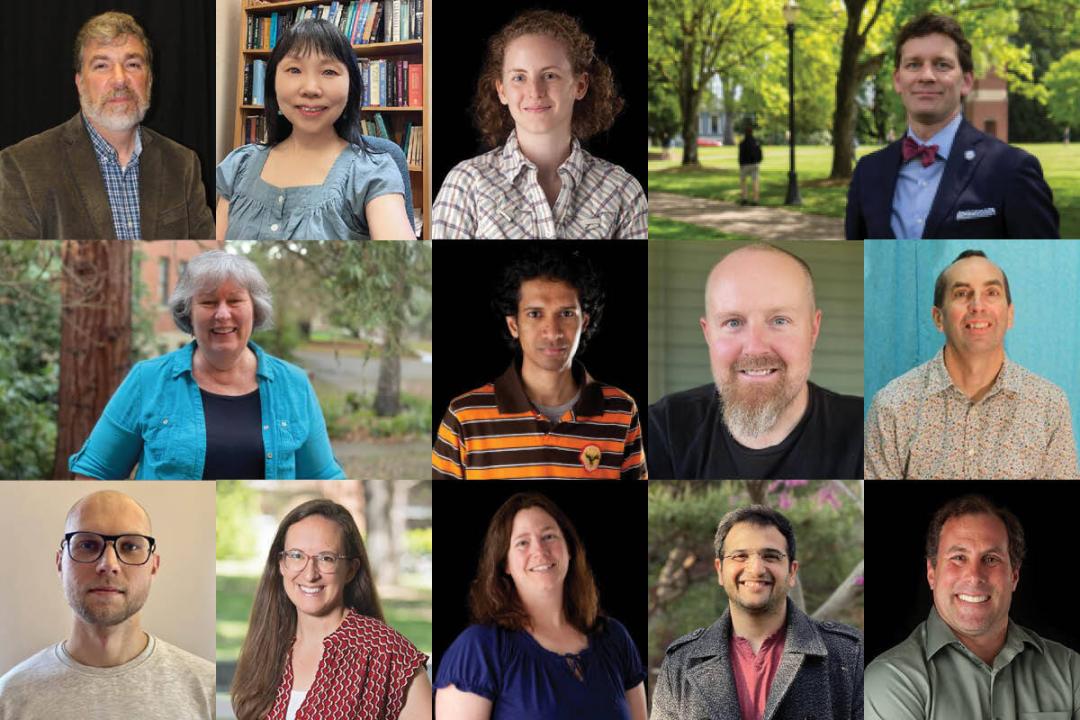
A group image of multiple headshots.

The General Chemistry Team received the Student Learning and Success Teamwork Award.

The General Chemistry Team received the Student Learning and Success Teamwork Award. This award recognizes departments or interdisciplinary groups that have demonstrated exceptional teamwork in creating and sustaining an exemplary teaching and learning environment that advances the university’s strategic goal of student success and excellence.

Oregon State’s general chemistry sequence is often a student’s first experience with college-level science. Thousands of students pursuing science degrees, as well as students from every college and Ecampus, complete the sequence.

The General Chemistry Teaching Team has collaborated extensively to improve instructional practices, revamping lectures, labs and exams. In-class peer learning assistants and teaching assistants help students feel like they belong. The team’s faculty nominator notes their efforts “not only help students succeed in these courses but also help students be successful in future science courses.” They have had “a strongly positive, measurable impact” on students, most of whom are in their first year at OSU.

A student nominator says, “Chemistry is a subject that students such as myself are often terrified of.” But she felt “a deep sense of relief” on the first day of class when her professor acknowledged that while chemistry could be challenging, she would always be available for questions and assistance. And she was.

The team consists of the following members: Marita Barth, Michael Burand, Denis Drolet, Margaret Haak, Jun Li, Amila Liyanage, Shrikant Londhe, Richard Nafshun, Cassie Siler, Artiom Skripka, John Terhorst, Paula Weiss, and Lou Wojcinski.

Impact Award for Outstanding Scholarship

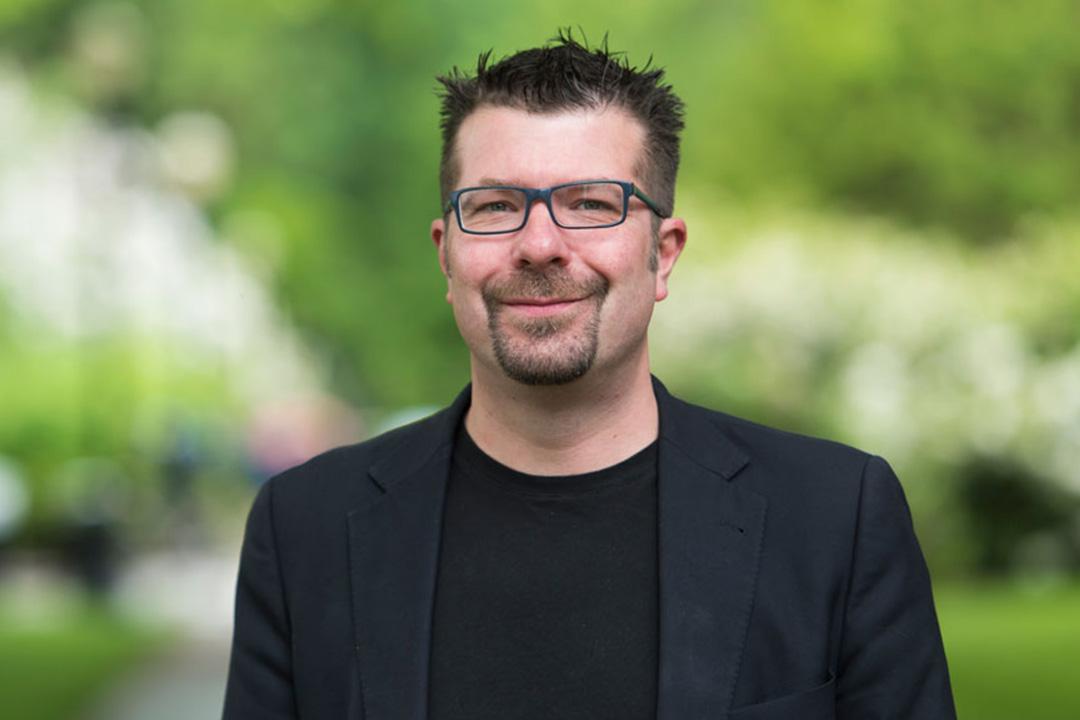
Headshot of a man wearing a black suit and glasses.

Physics Professor Xavier Siemens received the Impact Award for Outstanding Scholarship.

Physics Professor Xavier Siemens received the Impact Award for Outstanding Scholarship. This award recognizes faculty who have demonstrated outstanding scholarship in a specific project or activity resulting in substantial impact beyond the university setting.

Xavier Siemens is director of the NSF-funded North American Nanohertz Observatory for Gravitational Waves, an international collaboration of more than 200 astrophysicists at more than 90 institutions. In this 15-year study, the NANOGrav team presented evidence of a chorus of low-frequency gravitational waves, which is key to understanding how structures form in the universe.

The NANOGrav discovery was featured in media outlets worldwide, including the New York Times, Nature, Reuters, AP News, The Guardian, The Washington Post, BBC and NPR. It was also named among the top 11 most astonishing scientific discoveries of 2023 by National Geographic.

Siemens’ faculty nominators note he is the most cited faculty member at Oregon State with 110,563 citations. “His groundbreaking contributions have deepened our collective understanding of the universe, inspiring curiosity and wonder on a global scale.” Siemens also developed a popular Ecampus course introducing modern astronomy research, has taught upper-division and graduate courses and has mentored numerous students pursuing research in astrophysics.

Elizabeth P. Ritchie Distinguished Professor Award

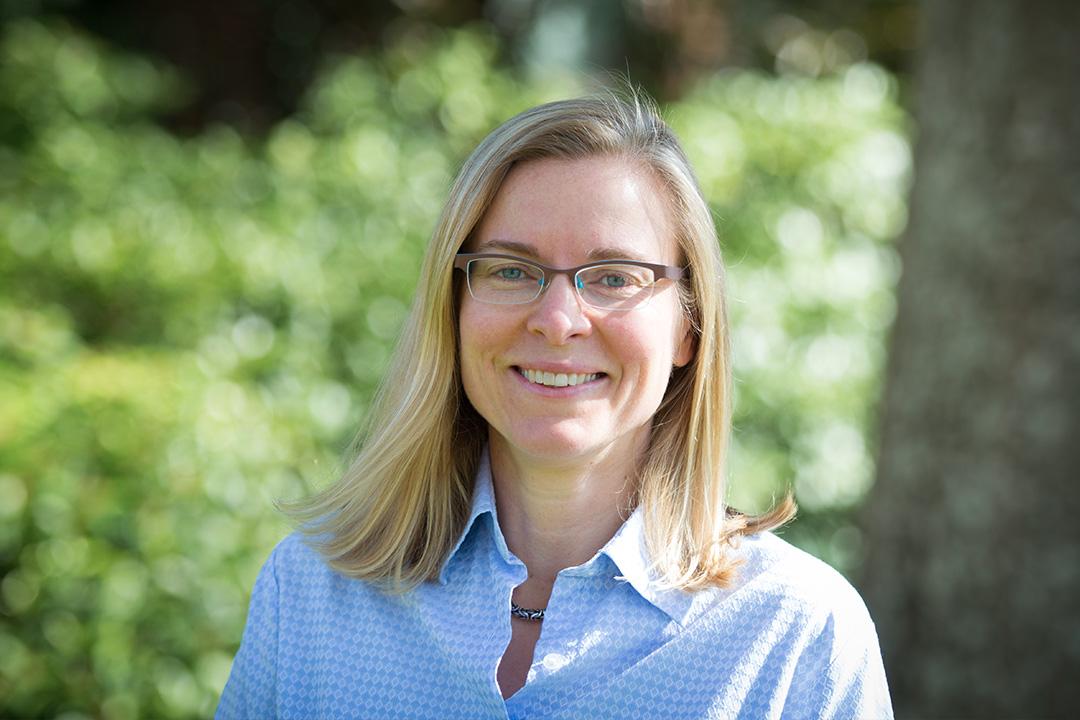
Headshot of a blonde woman in a blue blouse.

Mathematics Professor Mary Beisiegel received the Elizabeth P. Richie Distinguished Professor Award.

Mathematics Professor Mary Beisiegel received the Elizabeth P. Richie Distinguished Professor Award. This award recognizes an OSU faculty member for outstanding undergraduate teaching and research focused on the improvement of instruction and professional leadership.

Mary Beisiegel has consistently earned excellent teaching evaluations — especially for the instructor’s contribution — from students across a range of courses. A leader in mathematics education at Oregon State and nationally, Beisiegel has worked on collaborative projects to redesign undergraduate math courses and has published 40 refereed articles in journals and conference proceedings. In 2023, she was awarded the College of Science Fred Horne Award for her exceptional and sustained instructional achievements and high student praise.

One faculty nominator calls Beisiegel “a masterful, passionate teacher” who sets high expectations for her students while supporting and connecting with them on a human level. Another highlights her expertise in professional development, particularly in transforming the fall TA workshop into a practical, research-based introduction to teaching for new graduate teaching assistants.

An undergraduate who has taken four classes with Beisiegel notes how she helps students develop “an individualized, deep understanding” of course material and make connections to real-world applications. She creates “a brave and safe learning environment for all” and enables students to showcase their knowledge in ways other than written exams, in his case with an oral presentation.

Faculty Teaching Excellence Award

headshot of Adam Chouinard

Associate Professor Adam Chouinard, from the Department of Integrative Biology, received the Faculty Teaching Excellence Award.

Associate Professor Adam Chouinard, from the Department of Integrative Biology, received the Faculty Teaching Excellence Award. This award honors unusually significant and meritorious achievement in teaching and scholarship that enhances effective instruction.

Chouinard teaches several large-enrollment biology classes and central majors courses for the zoology degree. He also teaches a capstone seminar for the Graduate Certificate for College and University Teaching program and a professional development class for all graduate teaching assistants in integrative biology.

One faculty nominator describes Chouinard as “an engaging, enthusiastic and very knowledgeable instructor” who combines mini-lectures, group discussions and problem-solving to highlight the scientific process rather than direct right and wrong answers. Another notes that Chouinard continually improves his courses based on current research and literature, “showing students that our discipline is vibrant and ever advancing.” Chouinard’s student evaluation of teaching scores are consistently high.

A former student acknowledges that Chouinard’s class was not easy, “but the environment that Adam cultivated was welcoming and engaging, which made me excited to be there every day.” Chouinard’s lectures, a mix of storytelling, questions and discussion, and relevant examples, work together to help students make sense of complex processes and mechanisms.

Faculty Affordability Award

Lauren Dalton standing over city viewpoint.

Senior Instructor Lauren Dalton, from the Department of Biochemistry and Biophysics, received the Faculty Affordability Award.

Senior Instructor Lauren Dalton, from the Department of Biochemistry and Biophysics, received the Faculty Affordability Award. This award recognizes a demonstrated commitment to providing affordable course learning materials to students, using no-cost or low-cost course materials in their classes.

Lauren Dalton coauthored an open-access textbook, Fundamentals of Cell Biology, for a class required in many science majors that enrolls more than 900 students each year in Corvallis, OSU-Cascades and Ecampus. Replacing a commercial textbook costing around $75 per copy has saved OSU students more than $60,000 to date. Five other universities have adopted the textbook so far, with more under consideration.

Dalton’s faculty nominator says she has “demonstrated exceptional commitment to reducing the cost of course materials while maintaining high educational standards.” She also notes that Dalton’s involvement in fundraising campaigns, such as Dam Proud Day, has raised significant funds for scholarships, as well as for paid research and conference attendance.

Beyond the open-source textbook, two of Dalton’s students appreciate other free resources, including YouTube videos and other links that students can access outside class. This approach “enhances the visualization of complex processes, making abstract concepts more tangible.” Students can “explore topics in greater depth without the barrier of paywalls.”

Excellence in Postdoctoral Mentoring Award

Molly Burke smiling in the OSU Library Quad

Associate Professor Molly Burke, from the Department of Integrative Biology, received the Excellence in Postdoctoral Mentoring Award.

Associate Professor Molly Burke, from the Department of Integrative Biology, received the Excellence in Postdoctoral Mentoring Award.

Over the last eight years, Molly Burke has successfully recruited and mentored three postdoctoral scholars, two of whom have earned fellowships from the National Science Foundation. Her postdocs have played critical roles in advancing the understanding of fundamental evolutionary processes with ties to human health.

One former postdoc, now a faculty colleague, describes her mentoring style as “based squarely on trust, open dialogue and mutual respect.” She always welcomed thoughtful discussion and when they disagreed on project design or data interpretation, “she listened carefully, challenged me when necessary and encouraged me to refine my thinking.”

A current postdoctoral fellow who wants to pursue a career in industry says Burke has helped her build skills that are valuable both within and outside academia. Burke’s approach to mentorship goes beyond the lab, showing “a genuine investment and a sincere commitment to the growth of those she mentors. I already feel more confident as a scientist thanks to the opportunities she has provided me.”

Postdoctoral Excellence Award

Megan Sandoval-Powers

Megan Sandoval-Powers, postdoctoral scholar in the Department of Integrative Biology, received the Postdoctoral Excellence Award.

Megan Sandoval-Powers, postdoctoral scholar in the Department of Integrative Biology, received the Postdoctoral Excellence Award. This award recognizes exceptional postdoctoral scholars, fellows or research associates for their exceptional contributions to their research field, OSU and the greater postdoctoral community.

Sandoval-Powers’ dissertation research focused on microbial ecology and natural product biosynthesis, but at Oregon State, she has pivoted to evolutionary genomics. Having earned an NSF Postdoctoral Research Fellowship, she is investigating the genetics and evolutionary dynamics of adaptation to complex environmental stressors, with a focus on antifungal drug resistance. She is also a science communication fellow for the Oregon Museum of Science and Industry.

Sandoval-Powers’ faculty nominators highlight her “talent, work ethic and willingness to contribute.” In taking on a new discipline, “what would be a steep learning curve for most was one she navigated with intellectual agility, curiosity and speed.” Within weeks of joining the project, she began making contributions to data collection, analysis and interpretation.

Sandoval-Powers is the backbone of the lab’s mentorship ecosystem, supporting nearly every aspect of lab operations and academic development for both undergraduates and graduate students. “She is generous with her time, very effective in her communication and deeply respected as a result.”

Excellence in Undergraduate Research Mentoring by a Faculty Member

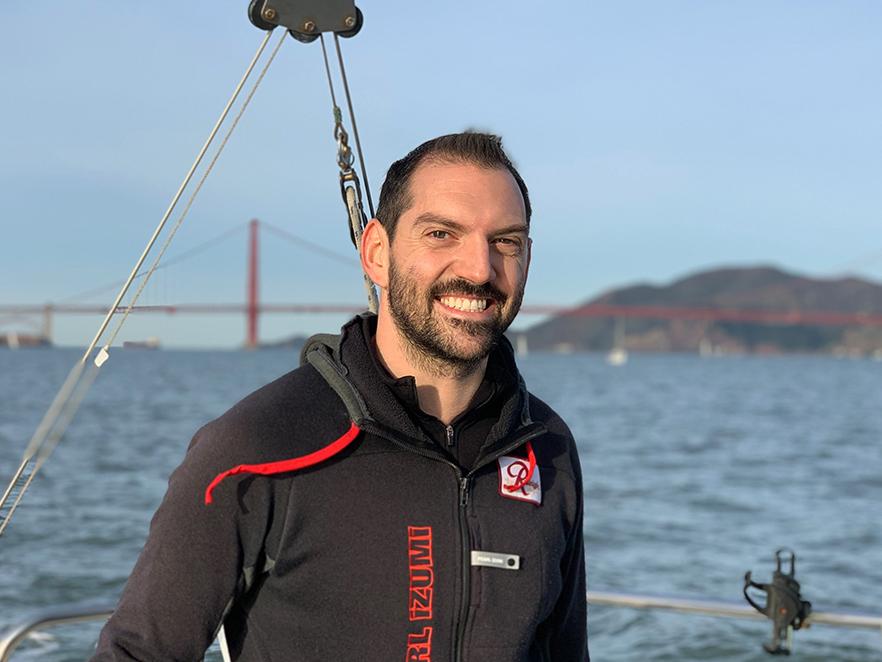
Kenton Hokanson standing on boat in front of the golden gate bridge.

Kenton Hokanson received the Excellence in Undergraduate Research Mentoring by a Faculty Member Award.

Kenton Hokanson received the Excellence in Undergraduate Research Mentoring by a Faculty Member Award. Hokanson is an assistant professor in the Department of Biochemistry and Biophysics. This award recognizes an OSU faculty member who has provided significant research-related mentoring to undergraduate students within the past three years.

Kenton Hokanson uses electrophysiology to investigate the creation and maintenance of functional neural circuits. Over the past seven years, he has mentored 18 undergraduates, including a current team of six.

A faculty nominator says Hokanson “is excited to take on first-year undergraduates with no formal experience in research. He then invests his all in guiding them to become independent, confident research scientists.” Hokanson builds a welcoming and respectful environment, encourages students to design and execute their own experiments and finds “genuine joy in the role of mentor.”

One former student says the Hokanson laboratory “was the first place where I truly felt my opinions were heard and valued, an experience that has had a remarkable influence on my confidence and identity as a scientist.” Another found a strong sense of community in the lab, which “became my anchor at OSU.” Hokanson’s patience, clarity and “understanding that failure is an unavoidable component of eventual success inspire perseverance.”

Excellence in Undergraduate Research Mentoring by a Graduate Student

A woman in a brown shirt.

Jessica (Jessie) Karr, Ph.D. candidate in the Department of Integrative Biology, received the Excellence in Undergraduate Research Mentoring by a Graduate Student Award.

Jessica (Jessie) Karr, Ph.D. candidate in the Department of Integrative Biology, received the Excellence in Undergraduate Research Mentoring by a Graduate Student Award. This award celebrates an OSU graduate student who has provided significant research-related mentoring to undergraduate students within the past three years.

Jessie Karr is a fifth-year Ph.D. candidate studying the effects of unpredictable weather and climate change on the metabolic strategies of birds. She has mentored six undergraduate students, helping them develop their proposals, hypotheses, study designs, and statistical approaches, and then generate final reports, theses and posters.

Karr’s faculty mentors say she encourages students to do their own thinking and take ownership of their research projects. She challenges them and holds high expectations, but does so “with a positive, approachable and fun attitude. She makes science accessible and rewarding.”

One mentee says Karr is “incredibly kind and encouraging, but also makes sure she pushes me,” which has been imperative to her growth as a scientist. Karr has helped her develop several projects and grants, gather data and ensure questions and predictions are thoughtful and backed by research. Another mentee says Karr constantly looked for opportunities for her to be involved in research projects, experiences that will better prepare her for veterinary school.

A nighttime image of campus.

College of Science graduate students earn prestigious awards in 2024-25

By College of Science

In the 2024-2025 academic year, graduate students in the College of Science received notable recognition through a variety of competitive fellowships, scholarships and professional development awards. These honors support students at critical stages of their graduate education, helping fund research, conference travel, tuition and other opportunities that contribute to academic and professional growth.

Here are the 2024-2025 recipients:

ARCS Foundation Awards

ARCS (Achievement Rewards for College Scientists) Foundation, Oregon Chapter seeks to advance science and technology in the United States by providing financial awards to academically outstanding students who are studying to complete Ph.D. degrees in science, engineering, mathematics, technology and medical research at Oregon Health & Science University, Oregon State University and the University of Oregon.

In 2024-25, the following College of Science graduate students received this award: Sarah Perkel (Biochemistry and Biophysics), Trent VanHawkins (Statistics) and Mallory Campbell (Physics).

Dissertation Completion Award

This award supports outstanding doctoral students who are in their final stages of their dissertations by offering an award to cover the cost of three graduate credits of tuition and mandatory fees for one academic term.

In 2024-25, the following College of Science graduate students received this award: Jordan McCaslin (Mathematics) and Lena Kinion (Biochemistry and Biophysics).

Fred W. Durbin and Helen E. Bette Pierce Durbin Endowment

Created by Fred and Helen “Bette” Durbin, this endowment supports graduate fellowships as determinedby the Dean. Fred received a bachelor’s in general science from OSU and Bette graduated with a bachelor’s in home economics (now the College of Health).

In 2024-25, two College of Science graduate students received this award: Ameh Benson Agi (Chemistry) and Jonathan Dutra (Biochemistry & Biophysics).

Grad Advantage Tuition Scholarship

This award is designed to provide tuition support to students who want to enroll in select graduate-level courses that directly support professional development activities associated with the graduate school’s OSU Grad Advantage framework.

In 2024-2025, one graduate student received this scholarship: Brooke Kaye (Statistics).

Graduate Dean’s Catalyst Fellowship

This highly competitive award is designed to support students conducting dissertation research that aligns with the 2024-2030 OSU Strategic Plan, Prosperity Widely Shared: The Oregon State Plan. The fellowship provides full graduate funding for one academic quarter, allowing the recipient time to make significant research progress that supports institutional goals.

In 2024-25, the following College of Science graduate students received this fellowship: Angelika Kurthen (Integrative Biology), Jalyn Deveraux (Integrative Biology) and Kaitlin McHugh (Integrative Biology).

Jesse A Hanson General Science Scholarship

The Jesse A Hanson General Science Scholarship is awarded to students who show high scholarship, potential for success, unimpeachable character and service to the university. Jesse Hanson was an OSU professor of poultry science from 1911-66.

In 2024-25, the following College of Science graduate students received this award: Joshua Byrnes (Statistics), Jessica Etter (Chemistry), Elena Gasiorowski (Integrative Biology) and Mikaela Lee (Microbiology).

Mark and Vicki Hehnen Veterans Science Scholarship

The Mark and Vicki Hehnen Veterans Science Scholarship supports science students who are veterans and provides financial support other than tuition. This award was established by Mark Hehnen (’78 Ph.D.).

In 2024-25, Rylan Chilcott (Chemistry) received this award.

NSF Graduate Research Fellowship

The National Science Foundation Graduate Research Fellowship Program (NSF GRFP) is a national award program of prestigious fellowships given each year to a select group of master’s and doctoral students in science and engineering fields in recognition of their academic and professional excellence. Students who receive the NSF GRFP benefit from a stipend, opportunities for international research and professional development, and the freedom to conduct their own research at any accredited U.S. institution of graduate education to which they are accepted.

In 2025-26, the following College of Science graduate students received this award: Russell Campbell (Integrative Biology), Dustin Campbell (Integrative Biology), Arina Martin (Integrative Biology), Ian Clifford (Integrative Biology), Jacob Wynne (Microbiology), Hannah Redhead (Physics).

The following students received an honorable mention: Delaney Chabot (Integrative Biology), Haley Hudson (Integrative Biology), Jacob Lessard (Integrative Biology), MJ Strike (Integrative Biology) andMeredith Anderson (Integrative Biology).

Oregon Flyfisher’s Club

The purpose of this award is to provide support for domestic or international graduate students pursuing a course of study involving one of the endemic wild stocks of fish within watersheds of the State of Oregon.

In 2024-25, Jesse Fritz (Integrative Biology) received this award.

Oregon Lottery Graduate Scholarship

Funds for this scholarship are provided through the Oregon State Lottery and are awarded to domestic or international graduate students enrolled in an advanced degree program at Oregon State. The scholarships are awarded on the basis of academic merit and financial need.

In 2024-25, the following College of Science graduate students received this award: Jeremy Baier (Physics), Jalyn Devereaux (Integrative Biology), Cheyenne Jarman (Integrative Biology), Chieh-His Kuan (Chemistry), Chung-Ping Lai (Mathematics), Roshell Lamug (Physics) and Jacob Lessard (Chemistry).
Professional Development Award

Many professional development opportunities exist beyond the university to help graduate students build core competencies and transferable skills. The OSU Office of Graduate Education invites students to apply for funding through the Professional Development Award to help cover costs for qualifying training, resources, and activities that contribute to professional skills development.

In 2024-25, the following College of Science graduate students received this award: Oluwaseun Adu (Integrative Biology), Jazlee Crowley (Integrative Biology) and Brenna Prevelige (Integrative Biology).

Provost’s Distinguished Graduate Fellowships and Scholarships

The purpose of the Provost’s Distinguished Fellowship and Scholarship program is to support programs in the recruitment of Oregon State’s most meritorious graduate students. As a Provost Fellow, the student is awarded a 9-month stipend, a matriculation fee waiver, a partial mandatory fee waiver each term, an academic year tuition scholarship and subsidized health insurance.

2024-2025 COS recipients: Timeyin Pajiah (Integrative Biology) and Emily Werner (Chemistry)

As a Provost Scholar, the student is awarded a sum, disbursed in three equal installments.

In 2024-25, the following College of Science graduate students received this award: Brandin Farris (Mathematics), Nadia Gonzalez (Biochemistry & Biophysics), Colin Grosvenor (Integrative Biology), Esther Julius (Chemistry), Daphne Maniatis (Physics), Isabella McColl (Chemistry), Zahrasadat Mirtalebi(Mathematics), Michael Perez Palapa (Mathematics), Hannah Redhead (Physics), Cort Vanzant (Integrative Biology), Lindsey Wingate (Chemistry) and Rong-Hui Yu (Statistics).

Scholarly Presentation Award

The Graduate School offers the Scholarly Presentation Award to provide graduate students with financial support to assist with certain costs associated with presenting their scholarly work at academic conferences and meetings.
In 2024-25, the following College of Science graduate students received this award: Luke Bobay (Integrative Biology), Austin Bosgraaf (Mathematics), Valerie Brewer (Integrative Biology), Laila Brubaker (Microbiology), Jun Cai (Integrative Biology), Jazlee Crowley (Integrative Biology), Evan Flint (Statistics), Jesse Fritz (Integrative Biology), Hua-Chien Hsu (Chemistry), Yu-An Huang (Chemistry), Jessica Karr (Integrative Biology), Angelika Kurthen (Integrative Biology), Logan Lancaster (Chemistry), Brittany Lasher (Biochemistry & Biophysics), Jiawei Liu (Chemistry), Cedar Mackaness (Integrative Biology), Arthur Mills (Mathematics), Emmanuel Musa (Chemistry), Olivia Noonan (Integrative Biology), Pakhin Pawornwitooon (Chemistry), Alyssa Semerdjian (Integrative Biology), Michael Sieler (Microbiology), Anjali Verma (Chemistry), Ankit Yadav (Chemistry) and Angelina Zuelow (Integrative Biology).

Science Graduate Fellowship

The Science Graduate Fellowship is to be used to support students enrolled in the College of Science with a preference for students in chemistry, biochemistry and the life sciences.

In 2024-25, one College of Science graduate student received this award: Emily Parker (Integrative Biology).

Wei Family Private Foundation Scholarship

The Wei Family Private Foundation, a non-profit organization, was established to honor the memory of Dr. (Mrs.) Chung Kwai Lui Wei and Mr. Hsin Hsu Wei. Its purpose is to award scholarships to graduate students with high academic credentials in science and math, with a preference for those who have lived in or are related to persons born in China.

In 2024-25, the following College of Science graduate students received this award: Ziang Jiangi(Chemistry), Mikaela Lee (Microbiology), Zejing Wang (Mathematics), Weiqi 'Grace' Li (Statistics), Xinyu 'Erica' Li (Statistics).

Portrait of Matthew Foreman leaning against a tree trunk in a forest background

‘Impossibility Results in Mathematics’: Lonseth Lecture 2025

By Arie Henry

“You can't square the circle!”

“The square root of 2 can't be written as a fraction!”

“The integral of e^{-x^2} can't be written in closed form!”

“Bitcoin is unbreakable!”

Most of mathematics is about finding solutions to problems or approximating them well. But there is an important collection of results that show certain tasks are mathematically impossible. At this year’s Lonseth Lecture, mathematician Matthew Foreman explains what that means, and the varying notions of impossibility:

40th Annual Lonseth Lecture

Date: Thursday, May 1, 2025
Time: Department awards at 3:30 p.m.; lecture at 4 p.m.; reception to follow
Location: LaSells Stewart Center, Construction and Engineering Hall

We'll begin by honoring student and faculty achievements at our annual awards ceremony from 3:30 to 4 p.m. Then we'll settle in for the lecture, given by Matthew Foreman, from 4 to 5 p.m. A public reception will follow immediately after.

About the speaker: Foreman's mathematics career began very young, receiving his bachelor's degree at the age of 18. He earned his Ph.D. in 1980 at University of California, Berkeley under the direction of Robert M. Solovay. In 1994, he answered a 60-year-old problem about the Banach-Tarski paradox by showing that there is a paradoxical decomposition of the sphere using pieces with the property of Baire. Today, he is a set theorist at University of California, Irvine and has made contributions in widely varying areas of set theory, including descriptive set theory, forcing and infinitary combinatorics.


Established in 1985, the Lonseth Lecture series pays tribute to the legacy of Arvid T. Lonseth, a respected figure in the Mathematics Department at Oregon State University. Explore more about Arvid Lonseth and the lecture series to appreciate its significance within academia.


Read more stories about: events, mathematics, awards & recognition


A blue background with the year 2025

Celebrating inclusive excellence, administration, service and performance: 2025 College of Science Awards

By Hannah Ashton

The College of Science gathered on Feb. 26 to recognize and celebrate our high achieving faculty and staff at the 2025 Combined Awards Ceremony. The evening celebrated the very best in the College, from teaching, advising and research to inclusive excellence, administration and service.

The following faculty and staff received awards in Inclusive Excellence, Administration, Service and Performance.

Congratulations to all the awardees!

Headshot of Hannah Stuwe, a woman with short curly hair and black shirt.

Hannah Stuwe, graduate student in the Department of Biochemistry and Biophysics, received the Inclusive Excellence Award.

College of Science Inclusive Excellence Award

Hannah Stuwe, graduate student in the Department of Biochemistry and Biophysics, received the Inclusive Excellence Award.

Department Head Elisar Barbar, who nominated Stuwe, said she has engaged in a wide-ranging set of service, outreach and training that is truly impressive. First, Stuwe conducted a GFP protein purification activity for middle and high school students from the Chemawa Indian School, Jewell High School (Seaside), and visited groups of black and Latinx students from the Portland area.

She planned, wrote and edited a handbook of science experiments geared towards middle school aged students, their parents, and teachers to fill the void of not having a BB summer camp. This handbook now serves as a free and open access resource for community members.

Stuwe is the founder of the non-profit organization Corvallis Music Collective. They have engaged in community service and activism by providing live music for events and rallies. Recent events include the Basic Needs Center Fall Welcome Party, the Disabled Students Union Disability Justice Rally and Jackson Street Youth Services National Runaway Prevention Month “Skate Park After Dark” Show.

Amy Timshel

Amy Timshel, assistant head to the department head in the Department of Microbiology, received the Gladys Valley Award for Exemplary Administrative Support.

Gladys Valley Award for Exemplary Administrative Support

Amy Timshel, assistant head to the department head in the Department of Microbiology, received the Gladys Valley Award for Exemplary Administrative Support.

Her colleagues describe her as proactive, always seeking ways to improve processes and deeply committed to making the department a better place for everyone. She is highly regarded by students, faculty and staff for her professionalism, broad knowledge and ability to get things done. In fact, Department Head Anne Dunn noted that when she polled faculty on department strengths during strategic planning exercises, Timshel's critical role in the department was consistently highlighted.

She has a deep understanding of university policies and constantly looks for ways to improve them. She listens, advocates for students and colleagues, and takes initiative to make the department more inclusive and equitable. For example, her work on the Core Values Committee led to the addition of gender-neutral restrooms in Nash Hall and improvements to scholarship and travel fund policies.

Beyond her administrative role, Timshel actively fosters a sense of community within the department. She organizes fundraisers and charity events and regularly attends student events to show her support.

A woman in a red top poses in front of plants.

Elaine Cozzi, assistant head and associate professor in the Department of Mathematics, received the Distinguished Service Award for her impactful service to her department, the College and the broader mathematics community.

Distinguished Service Award

Elaine Cozzi, assistant head and associate professor in the Department of Mathematics, received the Distinguished Service Award for her impactful service to her department, the College and the broader mathematics community.

Cozzi served as interim associate dean of academic and student affairs for the College in Spring of 2024, managing various projects, including the university’s revision of its undergraduate advising system, assessing teaching resources and addressing countless student issues. She was overwhelmingly generous with her time in responding to the many challenges and the needs of her colleagues.

Before and after serving as associate dean, Cozzi served as assistant department head for mathematics, responsible for scheduling upper-level courses and ensuring adequate staffing for the Department’s teaching mission. This affects the hiring of instructors, graduate students, and undergraduate graders.

Jon Kujawa, Department of Mathematics head and Cozzi’s nominator, noted, “It is hard to overestimate the impact of Elaine’s planning on the smooth operation of the teaching side of the department. And she readily pivots when unexpected events disrupt the plans.” Additionally, Elaine led the assessment of the Mathematics undergraduate program for several years, playing a crucial role in student success, he shared.

Cozzi also contributes significantly to the mathematics profession as Associate Editor for the American Mathematical Monthly – the most widely read mathematics journal in the world. She is also an active member of SIAM, a professional society for applied mathematics, where she helps organize meetings and contributes to administrative efforts and regularly serves as a grant evaluator for the NSF and the Simons Foundation, helping to shape the future of mathematical research.

Virginia Lesser in front of shrubbery

Virginia Lesser, Department of Statistics Head, received the Champion of Science award.

Virginia Lesser, Department of Statistics Head, received the Champion of Science award for her significant contributions to the field of statistics and to Oregon State University throughout her distinguished career. After earning her PhD in Biostatistics from the University of North Carolina at Chapel Hill, she joined OSU’s Department of Statistics in 1992.

A year later, she became Director of the Survey Research Center, a role she held until her retirement in December 2024. Lesser's expertise in probability sampling, survey design, and data collection methods ensured that the center upheld the highest standards. Under her leadership, the center became a premier institution, offering expertise in survey methodology, sampling and data analysis – supporting projects that inform policy, environmental monitoring, economic studies and public opinion research. Its work has helped agencies such as the Oregon Department of Transportation, the Oregon State Marine Board, and the Oregon Department of Fish and Wildlife make data-driven decisions, not to mention numerous initiatives within the University.

Lesser's groundbreaking research in survey methodology, environmental statistics, applied statistics and ecological monitoring has advanced the field and influenced practice. She has authored over 55 journal articles and conference proceedings, earning national and international recognition – including being named a Fellow of the American Statistical Association and an elected member of the International Statistical Institute.

Lesser's leadership also transformed the statistics department and elevated Oregon State University’s role in the field as department head from 2011 to 2018.

Lesser has also been a dedicated mentor and advocate for students and colleagues. Over the course of her career, she guided more than 220 graduate students and fostered a welcoming, supportive community within the department. Her colleagues regard her as an exceptional mentor and an inspiring leader, someone who consistently goes above and beyond – whether leading major academic initiatives or simply making sure the department potluck had a home-cooked turkey.

A man poses for a headshot

Mathematician Axel Saenz Rodriguez earns competitive Simons Foundation Pivot Fellowship

By Hannah Ashton

Axel Saenz Rodriguez, an assistant professor in the Department of Mathematics, has been awarded the prestigious Simons Foundation Pivot Fellowship for his groundbreaking work at the intersection of probability theory and mathematical physics.

The Simon Foundation Pivot Fellowship is a highly competitive award that supports early-career researchers seeking to pivot their research into new, impactful scientific areas. The fellowship provides recipients with resources and mentorship from leading experts to explore innovative directions in their research.

“Only eight Pivot Fellowships were given in all of science, math, and engineering this year. Axel’s achievement in securing this fellowship speaks volumes about his interdisciplinary approach to research and the impact of his work,” said Department of Mathematics Head Jon Kujawa.

Saenz Rodriguez will use the fellowship to bridge theoretical models in probability and mathematical physics with experimental work in two-dimensional quantum magnetic materials, a field with vast potential for next-generation technologies, such as clean energy and computational advancements.

As part of the fellowship, he will be mentored by Eric Corwin and Oksana Ostroverkhova, faculty members at the University of Oregon and Oregon State University, respectively. The pair will help Saenz Rodriguez in scientific practices for high-performing numerical computational and experimental physics.

Saenz Rodriguez joined the College of Science in 2021, along with his spouse Swati Patel. His work involves creating exact formulas to analyze various processes in space and time using different areas of mathematics, like algebra, geometry, and combinatorics. His research mainly looks at the Kardar-Parisi-Zhang (KPZ) universality class, which describes certain random behaviors in one-dimensional systems with complex interactions. Saenz Rodriguez aims to develop a clearer understanding and practical uses of the KPZ class.

In 2023, he helped co-organize the Math For All satellite conference, hosting about 40 people in Corvallis for free. The aim is to foster inclusivity in mathematics. The conference welcomed people from Linn-Benton Community College, Chemeketa Community College, Portland State University, University of Portland and Oregon State.

Prior to Oregon State, he was a postdoctoral researcher at the University of Warwick, Tulane University and the University of Virginia where he was the Mary Ann Pitts Postdoctoral Fellow in the Department of Mathematics. He earned his Ph.D. in mathematics from UC Davis and his bachelor’s in applied mathematics from Columbia University.

A woman in a purple suit coat stands in front of a chalkboard for a headshot.

Advances in mathematics education net Elise Lockwood the presidential award

By Hannah Ashton

Photos by Karl Maasdam

Elise Lockwood, a professor in the Department of Mathematics in the College of Science, has been honored with the Presidential Early Career Award for Scientists and Engineers (PECASE), the highest honor bestowed by the U.S. government to outstanding early-career scientists and engineers.

Nearly 400 scientists and engineers received the PECASE from President Biden in January 2025. This award recognizes Lockwood’s innovative research in mathematics education and her potential to advance the field.

Lockwood’s research focuses on how college students learn mathematics, especially combinatorics, the branch of mathematics that focuses on counting objects and identifying patterns within defined parameters. Her work sheds light on how students approach and solve complex counting problems, offering insights that significantly enhance mathematics education.

“I’ve dedicated significant time and effort to carve out this space of trying to improve students’ combinatorial reasoning, and it means a lot that it’s being appreciated. I’m also very fortunate to have had wonderful colleagues and collaborators, as well as the support of the NSF, Oregon State and my students,” Lockwood said. “It’s an honor, and I feel very fortunate and blessed.”

She switched to a mathematics major late in her academic career, initially unaware that studying mathematics education was even an option. Her original plan was to attend graduate school and become a high school mathematics teacher. However, one class changed her trajectory.

“I took a combinatorics class and was fascinated by these problems that were easy to state but kind of difficult to solve. I had a bad experience with them as an undergrad, and I realized I could study ways to improve how these problems are taught and understood by students. That became my passion,” she said.

Unlike solving a calculus equation, which often seems like following a well-lit trail with a pre-existing path to reach an answer, combinatorics problems can feel like they are all unique. Lockwood has discovered that students want more structure, and she has accomplished this by helping them focus on the nature of what they are trying to count instead of focusing on applying a formula.

“Oregon State values STEM education and STEM education research.”

By focusing on how students conceptualize and reason through combinatorial problems, she has redefined traditional approaches to teaching this foundational area of mathematics. Her work integrates deep theoretical insights with practical applications, enabling educators to move beyond rote memorization and formulaic problem-solving to foster genuine mathematical understanding.

Her career path and numerous awards showcase her dedication to mathematics education. She joined Oregon State in 2013, partly because she was excited that “Oregon State values STEM education and STEM education research.”

Two women sit at a desk with a laptop.

Elise Lockwood (right) and Ph.D. student Rebeckah Kuss explore strategies for improving how students learn combinatorics in the Mathematics and Statistics Learning Center.

She is currently a co-editor in chief of the International Journal of Research in Undergraduate Mathematics Education. She is also an academic staff member of the Center for Computing in Science Education at the University of Oslo, Norway.

From 2021 to 2024, Lockwood served as a program officer at the National Science Foundation in the Division of Undergraduate Education, where she was involved in overseeing and managing NSF-funded projects aimed at improving undergraduate STEM education. This role further informed her research on effective teaching practices, and she influenced broader policies and practices in STEM education.

In 2019, she was part of a $141K, one-year grant from Google to enhance and increase integration between computer science education and mathematics teacher education curriculum. The project was aimed at better equipping teachers to teach computational concepts and practices in Oregon high schools.

In 2017, Lockwood received a $800K five-year NSF CAREER Award to study how computational tools and activities, specifically introductory Python programming, can aid students in solving complex combinatorial problems. Her published research on using basic Python programming for undergraduate combinatorics problem solving paves the way for novel and creative methods of using computing to support students’ mathematical reasoning.

In addition to her PECASE award, Lockwood has received the John and Annie Selden Prize for Research in Undergraduate Mathematics Education, the Promising Scholar Award from Oregon State and a Fulbright award. Her work has already influenced the field of mathematics teaching and curriculum development, enabling students to gain a deeper, more intuitive grasp of combinatorial concepts — skills that are critical for careers in science, technology, engineering and mathematics.

A graphic of a star is in front of lab test tubes.

College of Science graduate students earn prestigious awards in 2023-24

By Hannah Ashton

As a land grant institution committed to teaching, research, and outreach and engagement, Oregon State University promotes economic, social, cultural, and environmental progress for the people of Oregon, the nation, and the world. Oregon State University is deeply committed to the principle that every student we admit — in person or online — should achieve their goal to graduate, and awards of Scholarships and Fellowships contribute to this goal in an impactful way. The College of Science invests in the success of our graduate scholars by providing financial support to students that we recruit and students that are currently enrolled among other ways of supporting their development, progress and growth.

Graduate students in the College of Science earned notable recognition during the 2023-24 academic year, receiving a range of awards which highlight their achievements and contributions to Oregon State. Below, we highlight some of these noteworthy Graduate School Awards. From state specific honors like the ARCS Foundation Scholarship to institutional support through the Provost’s Distinguished Fellowship, these awards recognize graduate students who embody the values of Team Science.

ARCS Foundation Awards

ARCS (Achievement Rewards for College Scientists) Foundation, Oregon Chapter seeks to advance science and technology in the United States by providing financial awards to academically outstanding students who are U.S. students studying to complete Ph.D. degrees in science, engineering, mathematics, technology and medical research at Oregon Health & Science University, Oregon State University and the University of Oregon.

In 2023-2024, two College of Science graduate students were awarded ARCS scholarships. Karlie Wiese, doctoral student in Chemistry, received the ARCS Oregon 10th Anniversary OSU Scholar Award. Lucas Kolanz, doctoral student in Physics, received the Beth Ray ARCS Foundation Scholar Award. This award is funded through ARCS, the OSU Graduate School and by contributions from past OSU President Ed Ray in memory of his wife Beth.

Delson Bridge to the Future Fund

Pritha Biswas, doctoral student in Physics, is the recipient of the Delson Bridge to the Future Fund, designed to assist graduate students who are facing critical financial emergencies that could impede degree completion.

Dissertation Completion Award

Two doctoral students were awarded the Dissertation Completion Award. This award supports outstanding doctoral students who are in their final stages of their dissertations by offering an award to cover the cost of three graduate credits of tuition and mandatory fees for one academic term. The recipients are Adaline De Chenne from Mathematics and Njesa Totty from Statistics.

Graduate Dean’s Catalyst Fellowship

Two doctoral students, Theodore Bambakidis (Microbiology) and Jesse Howe (Biochemistry and Biophysics) were awarded the Graduate Dean’s Catalyst Fellowship. This award is a pilot program launched for the 2023-24 academic year to support graduate students nearing completion of their doctoral degrees.

Herbert F. Frolander Graduate Teaching Assistant Award

Steven Tran (Chemistry) received the Herbert F. Frolander Graduate Teaching Assistant Award, which recognizes outstanding and professional involvement with both faculty and students by a graduate teaching assistant at Oregon State University. This award is presented to one graduate student from across the entire university during University Day in the fall. Hear from faculty and staff who nominated Tran here.

Laurels Block Grant Program

The purpose of Laurels funding is to provide financial support to academic units so they may diversify and strengthen their graduate programs. This is achieved by providing tuition support to assist with the recruitment of new graduate students to OSU. Two College of Science students received funding in 2023-24, masters student Bailey Sharon (Mathematics) and doctoral student Courtney Clement (Microbiology).

Oregon Lottery Graduate Scholarship

Three doctoral students received funding from the Oregon Lottery Graduate Scholarship. Funds for this scholarship are provided through the Oregon State Lottery and are awarded on the basis of academic merit and financial need. The 2023-24 recipients are Matthew Nguyen (Chemistry), Steven Tran (Chemistry) and Kaitlin McHugh (Integrative Biology).

P.F. and Nellie Buck Yerex Graduate Scholarship

Nilanjana Das, masters student in Microbiology, is the recipient of the P.F. and Nellie Buck Yerex Graduate Scholarship. This scholarship is awarded to graduate students who are pursuing study in a scientific or technological field. It is awarded on the basis of academic achievement and promise for the future.

Prestigious Diversity Fellowship

Two doctoral students received the Prestigious Diversity Fellowship, intended to support the recruitment and retention of graduate students from historically underrepresented backgrounds who demonstrate scholarly promise at Oregon State. The recipients are Hallee Boyd (Chemistry) and Nyazia Sajdah-Bey (Integrative Biology).

Professional Development Award

The purpose of the Professional Development Award is to help cover costs for qualifying training, resources and activities that contribute to professional skills development. In 2023-24, the Graduate School funded the following students:

Alice Welch (Integrative Biology)

Olivia Burleigh (Integrative Biology)

Emily Taylor (Integrative Biology)

Pritha Biswas (Physics)

Kevin Dimmitt (Physics)

Provost’s Distinguished Graduate Fellowships and Scholarships

The purpose of the Provost’s Distinguished Fellowship and Scholarship program is to support programs in the recruitment of Oregon State’s most meritorious graduate students.Ian Clifford (Integrative biology) and Ben Daniels (Microbiology) received the distinguished Provost Fellowship award.

In 2023-24, the College of Science awarded Provost Scholarships to the following students:

Joline Nguyen (Biochemistry and Biophysics)

Emily Hiatt (Chemistry)

Sanpreet Hira (Chemistry)

Jack McLaughlin (Chemistry)

Gage Rios (Chemistry)

Rodrigo De Almeida Alves (Integrative Biology)

Brysyn Goodson (Integrative Biology)

Olivia Noonan (Integrative Biology)

Stefanie Fazekas (Mathematics)

Heather Fogarty (Mathematics)

Mansi Sanjay Mahajan (Mathematics)

Courtney Clement (Microbiology)

Lynn Kaneko (Microbiology)

Katelyn Spadavecchia (Physics)

Kalista Wayt (Physics)

Ian Moran (Statistics)

Scholarly Presentation Award

The Graduate School offers the Scholarly Presentation Award to provide graduate students with financial support to assist with certain costs associated with presenting their scholarly work at academic conferences and meetings. In 2023-24, the following College of Science students received this award:

Mona Khorani (Chemistry)

Nan-Chieh Chiu (Chemistry)

Anshika Nagar (Chemistry)

Ankit Yadav (Chemistry)

Jesse Laney (Integrative Biology)

Angelika Kurthen (Integrative Biology)

Jun Cai (Integrative Biology)

Erick White (Integrative Biology)

Jalyn Devereaux (Integrative Biology)

Jared Freedman (Integrative Biology)

Jesse Fritz (Integrative Biology)

Dorothy Zahor (Integrative Biology)

Jessica Karr (Integrative Biology)

Giovanni Crestani (Integrative Biology)

Kaitlin McHugh (Integrative Biology)

Kenneth Glynn (Integrative Biology)

Jazlee Joon Crowley (Integrative Biology)

Brenna Prevelige (Integrative Biology)

Jeremy Lilly (Mathematics)

Måns Mattsson (Physics)

Thurgood Marshall Graduate Fellowship

The Thurgood Marshall Graduate Fellowship is intended to support the retention of meritorious graduate students whose accomplishments and activities demonstrate leadership, service and commitment to fostering a just and equitable community. Val Sawiccy (Integrative Biology), currently an instructor at the University of Oregon, is this year’s recipient.

Wei Family Private Foundation Scholarship

The Wei Family Private Foundation, a non-profit organization, was established to honor the memory of Dr. (Mrs.) Chung Kwai Lui Wei and Mr. Hsin Hsu Wei. Its purpose is to award scholarship grants to graduate students with high academic credentials in science and math, with a preference for those who have lived in or are related to persons born in China. In 2023-2024, the College of Science awarded one Wei Family scholarships to Lemeng Li (Statistics).

Mark and Vicki Hehnen Veterans Science Scholarship

The Mark and Vicki Hehnen Veterans Science Scholarship supports science students who are veterans and provides financial support other than tuition. This award was established by Mark Hehnen (’78 Ph.D.). In 2023-2024, the College of Science awarded two scholarships to Ebony Stretch (Microbiology) and Angela Mellisa Thompson (Zoology).

Jesse A Hanson General Science Scholarship

The Jesse A Hanson General Science Scholarship is awarded to students who show high scholarship, potential for success, unimpeachable character and service to the university. Jesse Hanson was an OSU professor of poultry science from 1911-66. The following four students received this scholarship during the 2023-2024 academic year: Joshua Byrnes (Statistics), Jessica Etter (Chemistry), Elena Gasiorowski (Integrative Biology), and Mikaela Lee (Microbiology).

Fred W. Durbin and Helen E. Bette Pierce Durbin Endowment

Created by Fred and Helen “Bette” Durbin, this endowment supports graduate fellowships as determined by the Dean. Fred received a bachelor’s in general science from OSU and Bette graduated with a bachelor’s in home economics (now the College of Health). The College of Science awarded two Fred and Helen Durbin Scholarships to Ameh Benson Agi (Chemistry) and Jonathan Dutra (Biochemistry/Biophysics).

Science Graduate Fellowship

The Science Graduate Fellowship is to be used to support students enrolled in the College of Science with a preference for students in chemistry, biochemistry and the life sciences. The College of Science awarded one Science Graduate Fellowship during the 2023-2024 academic year to Emily Parker (Integrative Biology).

*When possible, links to students' directory profiles are included.

Subscribe to Awards & Recognition