News

News

black photo with white snowflakes and picture of a cell

2021-22 College of Science awards: Celebrating excellence in research and administration

By Mary Hare

The Faculty and Staff Awards honor outstanding scholarship and research across the fields of basic and applied science that have led to important breakthroughs and the creation of new knowledge.

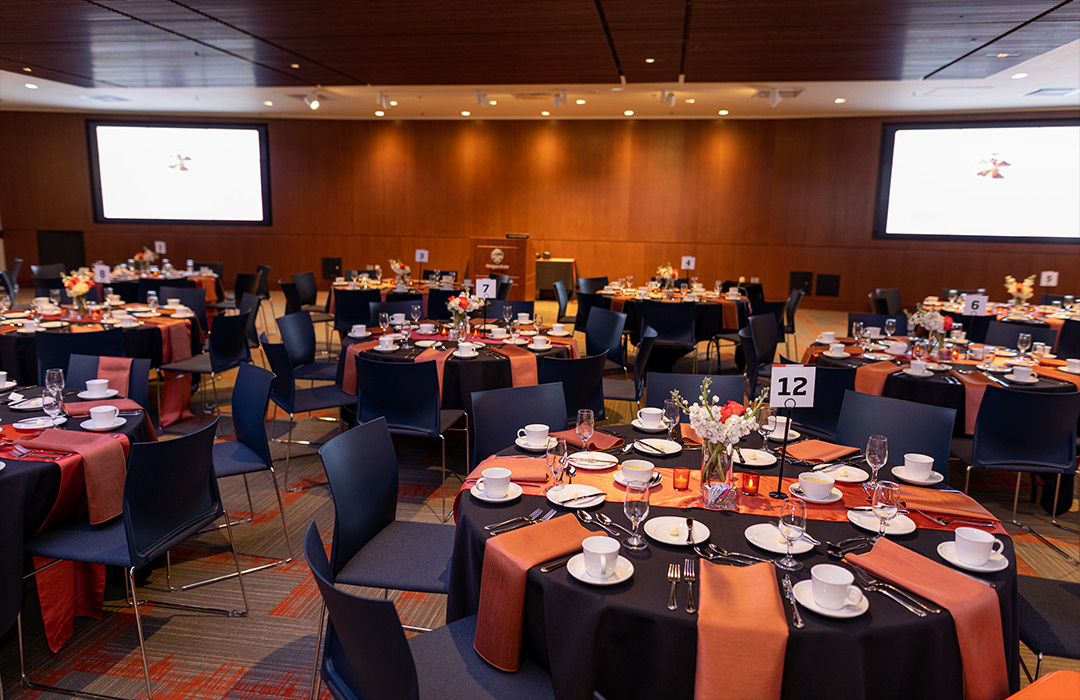
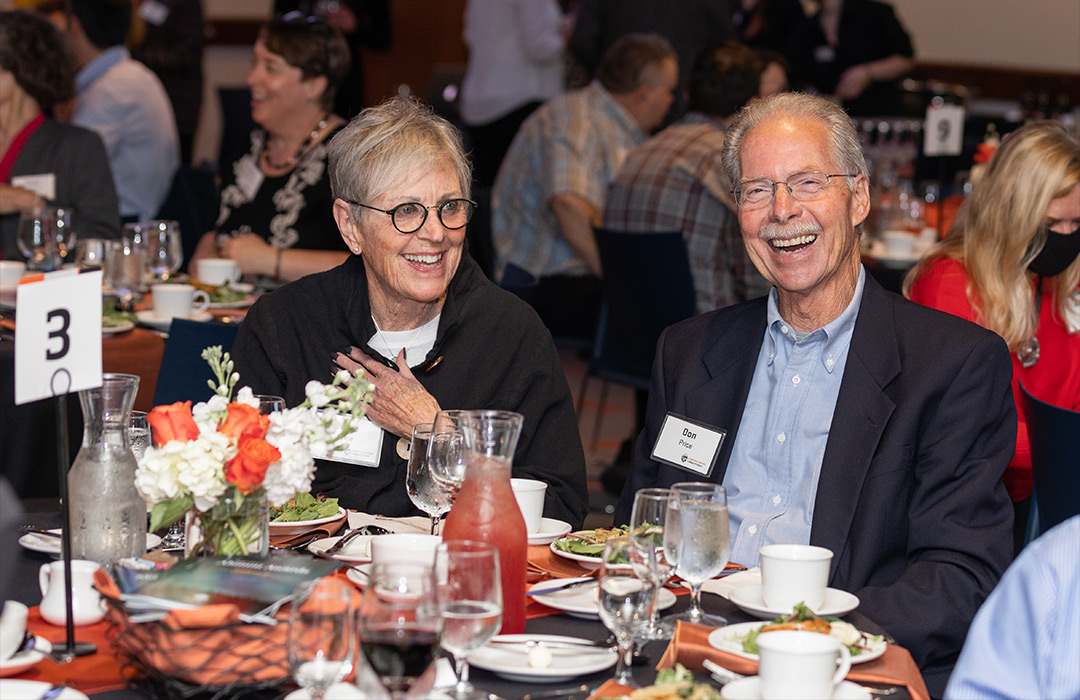
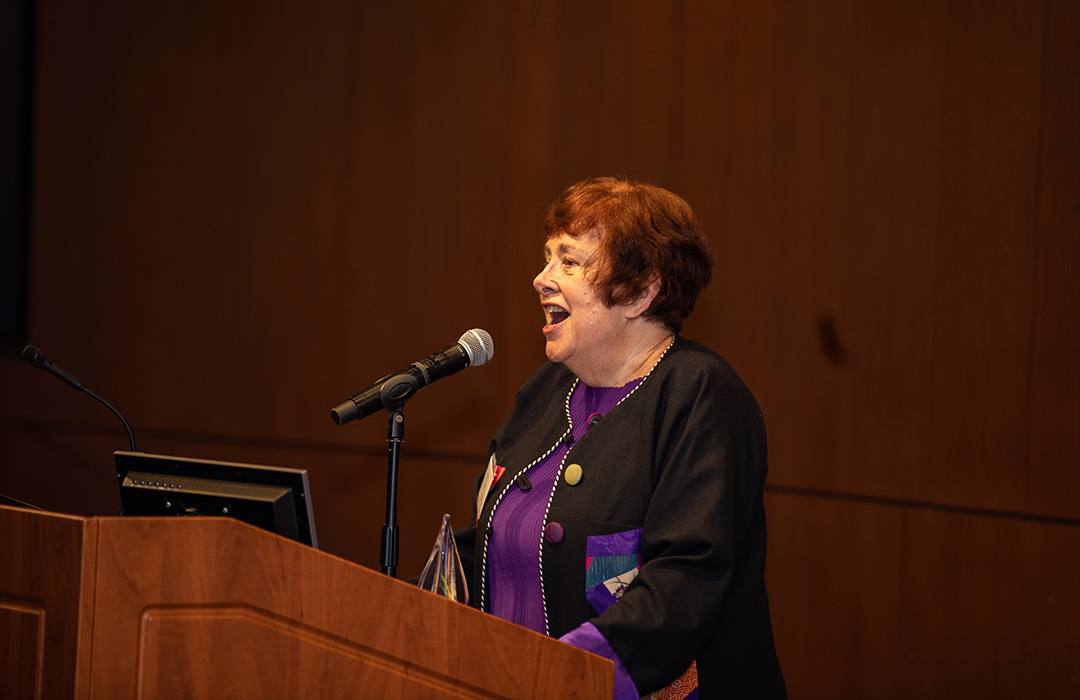
The College of Science gathered yesterday on February 22 to recognize academic and teaching excellence of our esteemed faculty and staff at the College's 2021-22 Combined Awards Ceremony. The first half of the ceremony celebrated exceptional research and administration, while the latter half recognized stellar teaching, advising and mentoring.

"I am always inspired by this opportunity to honor our outstanding colleagues together and to celebrate the privilege of collaborating at a land grant university that prizes research, scholarship and learning," said Dean Roy Haggerty.

The Faculty and Staff Awards honor outstanding scholarship and research across the fields of basic and applied science that have led to important breakthroughs and the creation of new knowledge. The impact of their contributions has resonated far beyond Oregon State University, bringing honor to our College and global recognition from the broader scientific community.

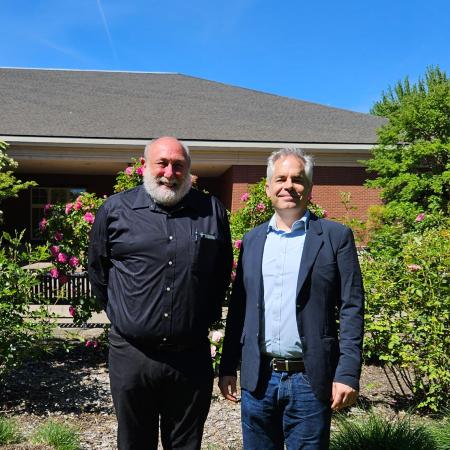
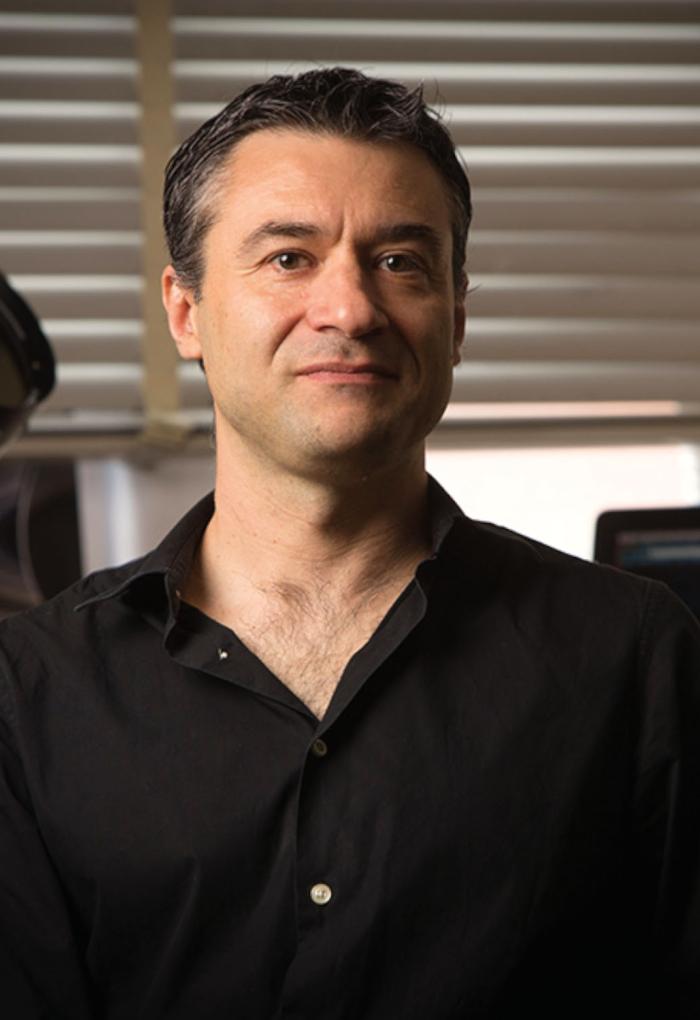
Man in black shirt standing in front of window

Physics Professor Davide Lazzati

Milton Harris Award for Basic Research in Science

Davide Lazzati, professor and department head of physics, received the Milton Harris Award for his outstanding work in the field of high-energy astrophysics. His well-funded and productive research endeavors have helped boost OSU's core astrophysics community to the top of its field.

This award was endowed by G. Milton Harris, a Portland native who received his bachelor’s degree in 1926 from OSU and his Ph.D. from Yale University. He was a pioneer in polymer, fiber and textile science and was the founder and for many years president of Harris Research Laboratories, which later became part of Gillette. The purpose of the Milton Harris award is to recognize exceptional achievement in basic research by honoring an outstanding faculty member in the College of Science.

"It was Dr. Lazzati's work that offered the correct interpretation of the signal and which has helped reshape our understanding of the most powerful events in the universe"

Lazzati's work drew considerable attention in 2017, when a historic merger of two massive neutron stars produced gravitational waves followed by a burst of gamma rays and, subsequently, other forms of light. It was an event that shocked the astrophysical community, but one that had been correctly predicted by Lazzati's computational astrophysics group several months before the merger occurred.

His team was the first to realize that a binary neutron star collision produces narrow beams of electromagnetic waves called Short Gamma-Ray Bursts that can be detected as brief bursts of luminosity in our own galaxy. This phenomenon, he argued, is repeated in all binary neutron mergers, even when their beam of radiation is off-axis and points away from earth.

"It was Dr. Lazzati's work that offered the correct interpretation of the signal and which has helped reshape our understanding of the most powerful events in the universe," said Distinguished Professor of Physics Janet Tate, who nominated him for the award.

Since 2010, Lazzati's work has been supported by more than 2.2M from NASA, the National Science Foundation and other agencies, as well as an NSF Early Career Development Award which he received in 2012 while at NC State University. In 2021, he received Oregon State University's Impact Award for Outstanding Scholarship.

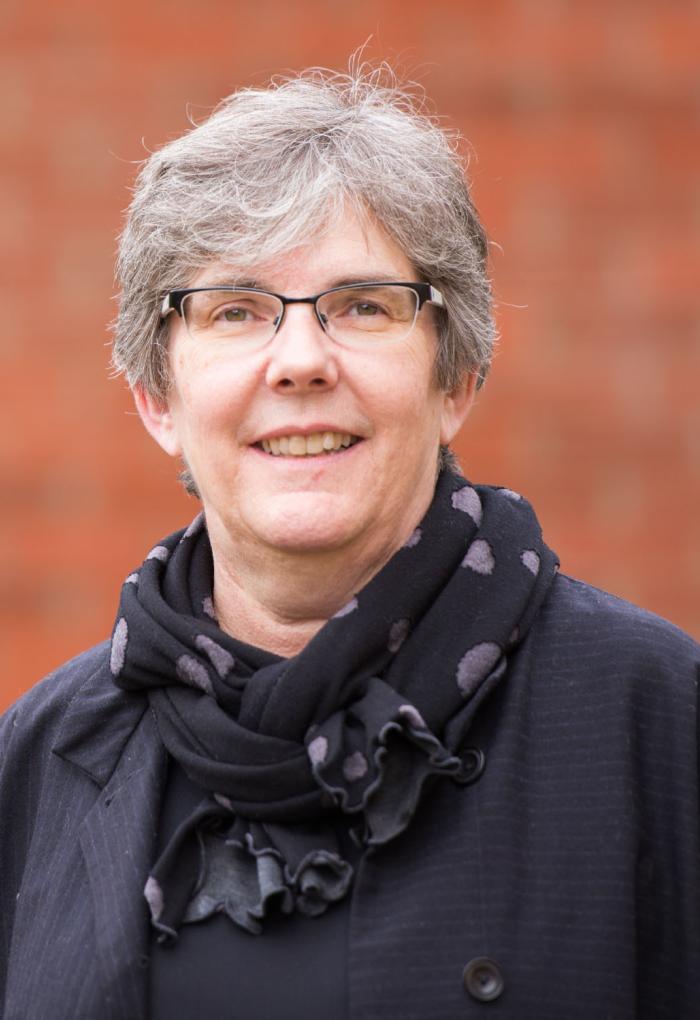
Woman in a black shirt in front of a red background

Physics Professor Heidi Schellman

F.A. Gilfillan Award for Distinguished Scholarship

Professor Heidi Schellman received the Gilfillan Award, which honors faculty members in the College of Science whose scholarship and scientific accomplishments have extended over a substantial period of time, especially faculty whose research careers have had a significant impact on his or her field.

Born in 1893, Gilfillan’s career at OSU spanned over 60 years as a student, professor of chemistry, acting president and Dean of the College from 1939 to 1962. The award was established by his family to honor his life, service and contributions to the College, university and the field of pharmaceutical chemistry.

Schellman’s distinct contributions to experimental particle physics date back to the 1980's. A highly respected leader in a subfield in which women have even lower representation than in physics generally, Schellman has been a cornerstone of the department; serving as chair for seven years, and amassing more than 4.4M in funding since 2015 alone. Per Tate, "as one colleague put it, 'her CV is simply exhausting!'"

Schellman's research focuses on the interactions of neutrinos - tiny particles that may be the reason that matter itself exists. Neutrinos are the most abundant particle in the universe, although few people know of their existence - let alone are able to study them.

Serving several leadership positions for the Deep Underground Neutrino Experiment (DUNE), an international collaboration of 1400 scientists, Schellman has helped several projects to launch a neutrino-scattering apparatus that they hope will help answer fundamental questions concerning the origin of matter and black hole formation.

Schellman has amassed nearly 700 peer-reviewed publications and an h-index of 113 from her contributions to several well-known scientific collaborations, risen to important leadership positions, and mentored many successful young scientists. She was recognized in 2015 by the American Physical Society’s Division of Particles and Fields with their Mentoring Award.

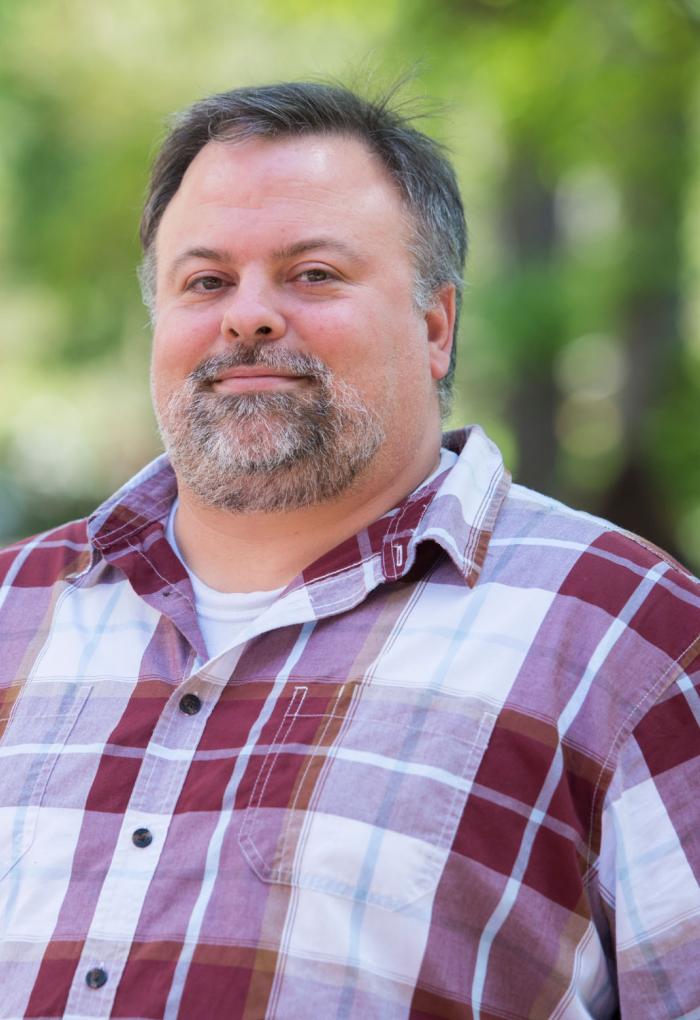
Photo of man in plaid shirt standing outside

David Hendrix, associate professor of biochemistry and biophysics

Dean's Early Career Achievement Award

Computational biochemist David Hendrix received the Dean's Early Career Award, which recognizes exceptional achievement in research and education of faculty no more than four years beyond the tenure date. With joint appointments in biochemistry and computer science, Hendrix' interdisciplinary skills have led to collaborations hat have enhanced research in the College and university.

His research at OSU has focused on applying deep learning approaches to RNA biology, working with collaborators to bring his computational expertise to address biological research questions. Among other innovations, Hendrix has pioneered the use of deep learning in cancer detection based on gene expression data, an approach now gaining in popularity.

"There is more to it than his excellent programming skills. In Dave's hands, the full complexity of biological information emerges"

"There is more to it than his excellent programing skills," said microbiology professor Steve Giovannoni. "In Dave's hands, the full complexity of biological information emerges. As evident from his success, he is solving fundamental problems that have practical real-world impacts on diverse issues."

Since arriving at OSU in 2013, Hendrix has published 24 papers and brought in over $5.9M in funding from the NSF, NIH and USDA. In 2019, he received OSU's University Mentoring and Professional Development Award. On the education side, Dave has created student-centered resources including an open-access bioinformatics textbook. He also helped develop the graduate biological data science minor.

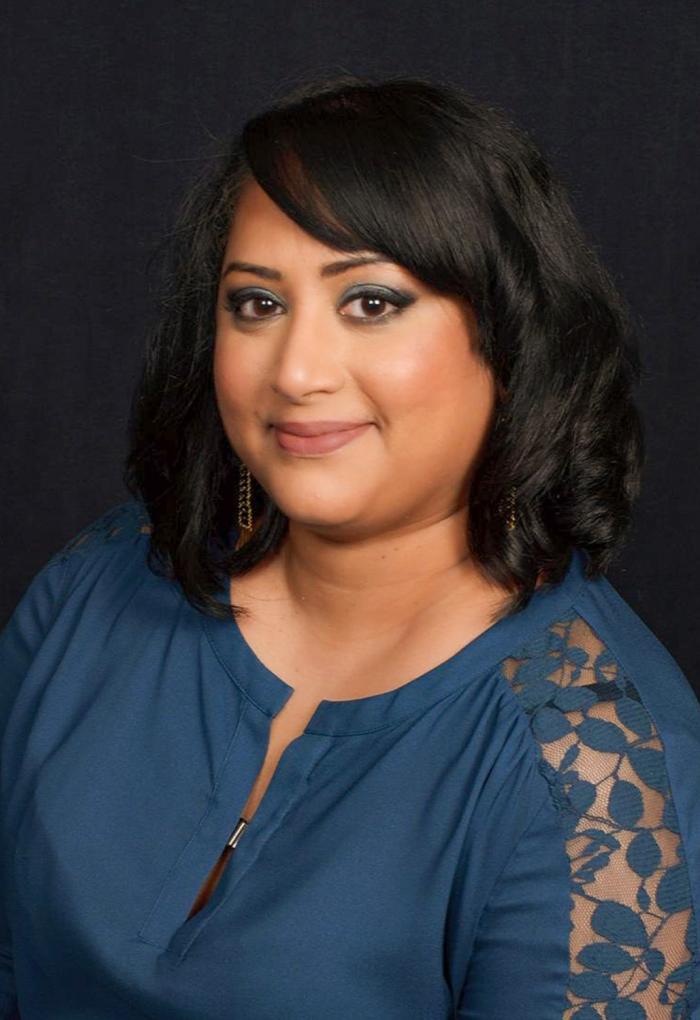
women in glue shirt in front of a black background

Marilyn Mackiewicz, assistant professor of chemistry

Inclusive Excellence Award

Marilyn Mackiewicz, an assistant chemistry professor, received the Inclusive Excellence Award for her extensive commitment eliminating barriers to success in chemistry for students of all backgrounds. In the one year since she was hired at OSU, she has implemented creative tools to improve retention while meeting students at the level they're at.

A 2022 NSF CAREER awardee, Mackiewicz has found the time to develop a “Strategic Doing” process to identify impactful projects that can enhance Gilbert Hall and LPSC as welcoming and inclusive spaces, including a redesign of the Gilbert entryway and the LPSC corridor to showcase research, teaching faculty, emeritus faculty, and alumni.

Mackiewicz has also deeply embedded inclusive excellence in her research and teaching, developing novel courses for undergraduate chemistry majors that explore Careers in Chemistry and Transferable Skills for Chemists. These courses integrate transferable skills development in support of improving the diversity needed in our 21st-century workforce.

Marilyn's potential as a leader has been recognized beyond OSU. The American Chemical Society recognized her work in advancing diversity with the 2020 Northwest Regional Stanley Israel award. She has been invited to present on inclusive leadership practices at Queens University and the plenary at the Women’s luncheon of the 2021 Society of Environmental Toxicology Conference.

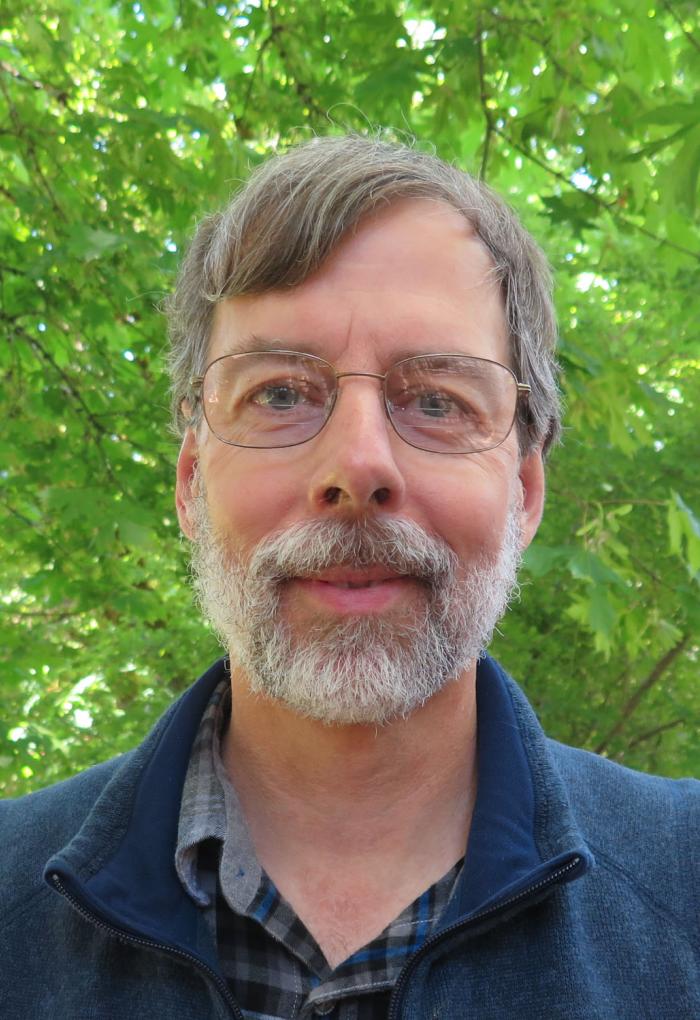
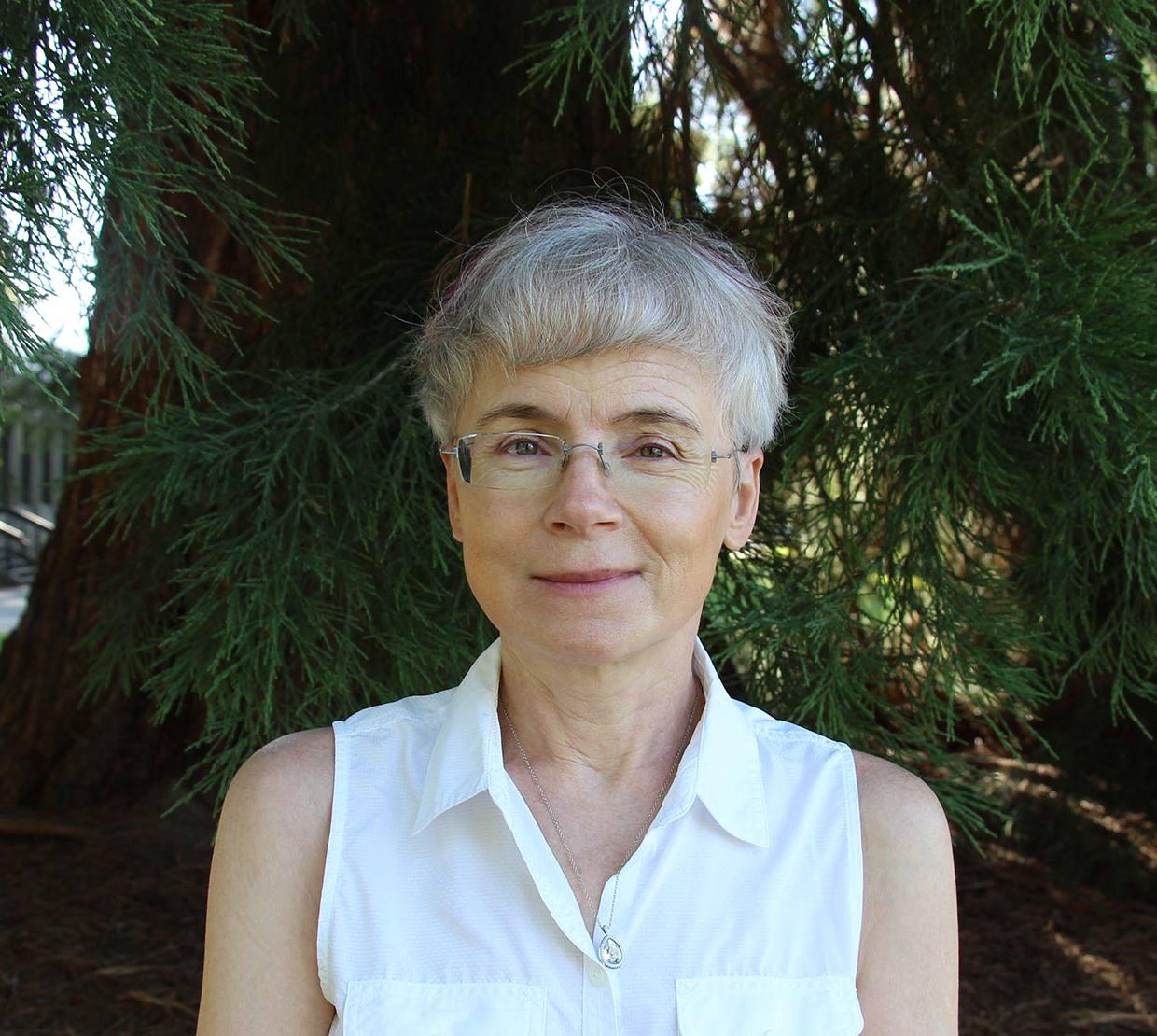
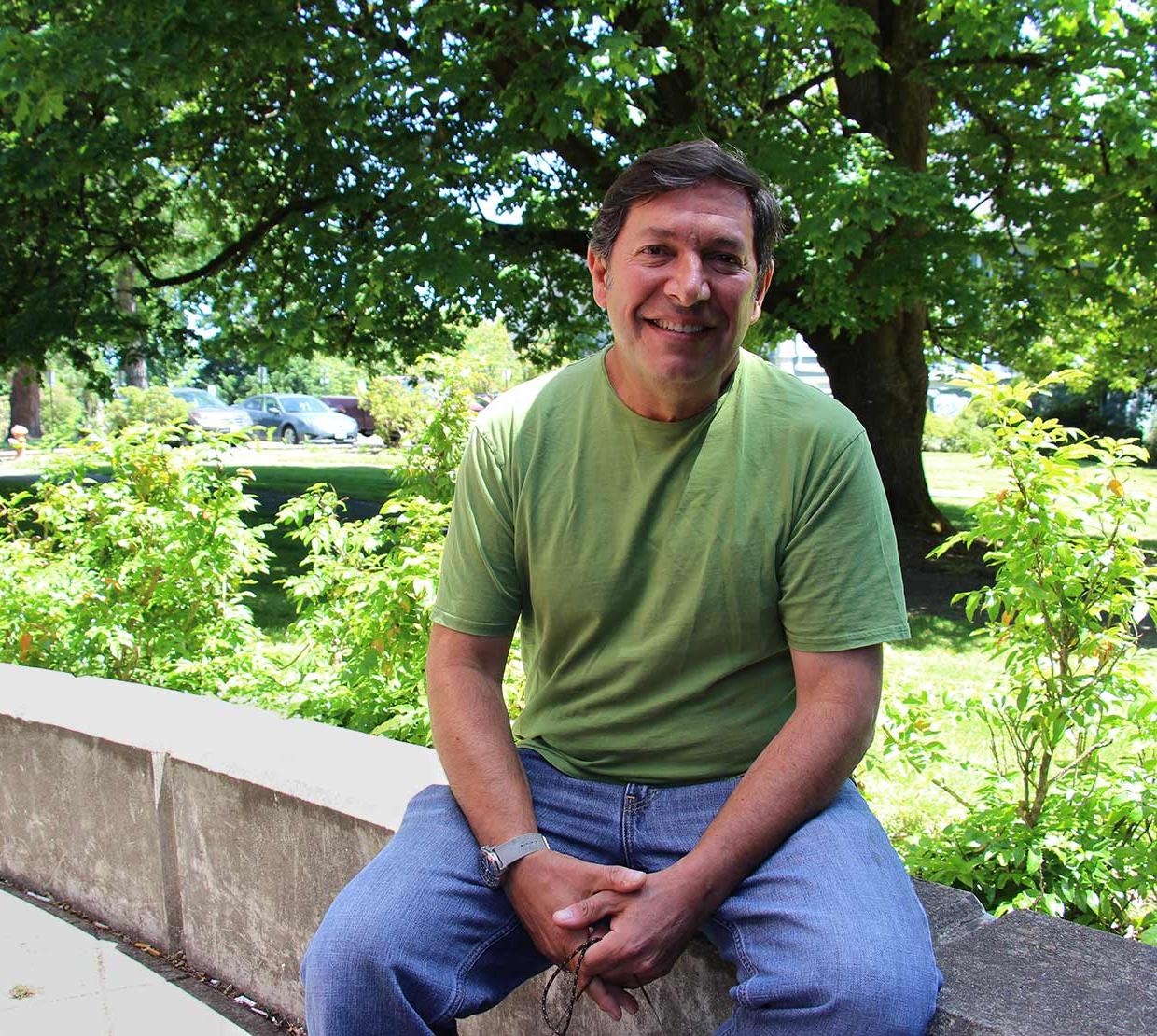
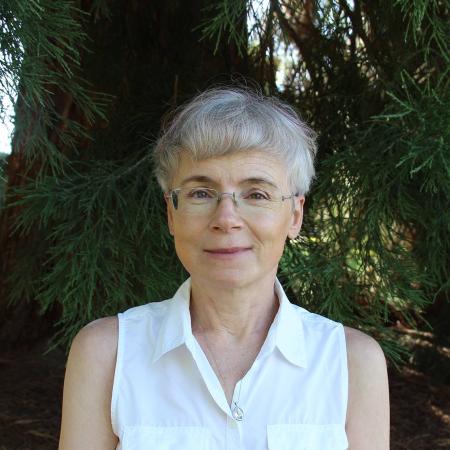
man wearing glasses standing in front of a tree

David Maddison, professor of integrative biology

Distinguished Service Award

Integrative biology professor David Maddison received the Distinguished Service Award, which recognizes a faculty, staff or student member whose outstanding contributions helped to support and sustain the quality and effectiveness of our College.

"There must be very few individuals with David's stature who bring the same prolific focus and creative problem solving to their service work."

"He is a true 'servant leader' and he is extremely effective, including at thankless tasks that take a lot of time and attention," wrote Professor Benjamin Dalziel in his nomination letter. "There must be very few individuals with David's stature who bring the same prolific focus and creative problem solving to their service work."

In addition to maintaining an internationally regarded evolutionary biology research program, Maddison also serves as chair of the IB 'space committee' where he coordinates office and research space for the entire department. As part of this duty, he took the initiative to build an interactive digital map to help facilitate fair and effective allocation of space for each faculty member.

He has also taken a lead role facilitating the Cordley Hall renovation, working with architects to communicate the department's needs and helping ensure that faculty's needs are met. "David is the hero of IB's journey with the remodel of Cordley Hall," said Dalziel.

"It is a bit disturbing to imagine where we would be without David's brilliant service work on IB's most strategically important challenges," he said.

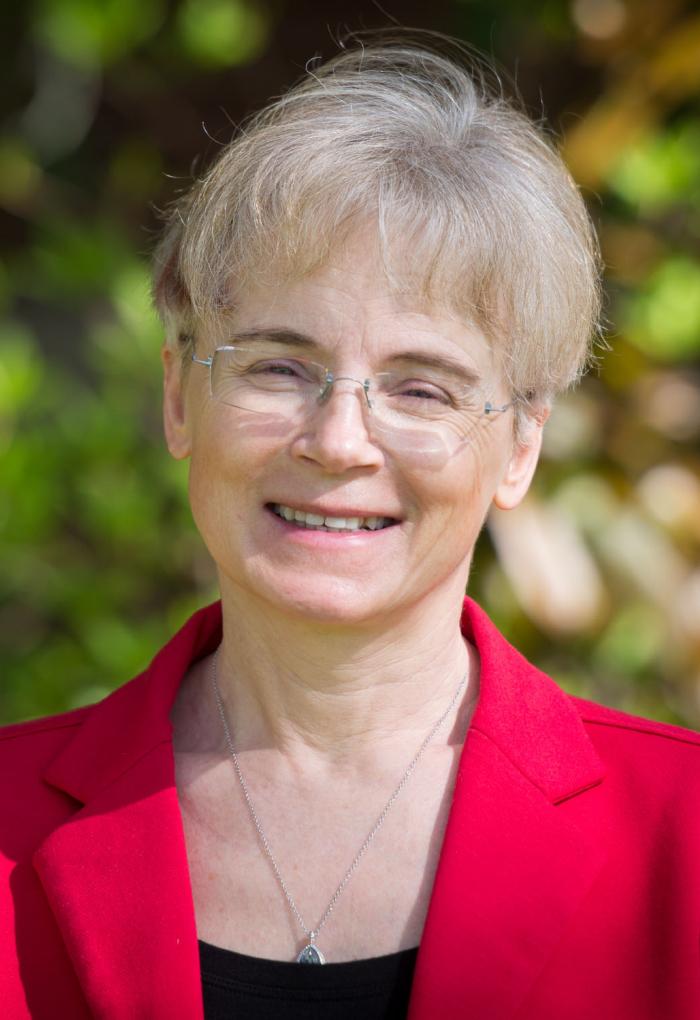
woman in red jacket standing outside

Malgo Peszynska, professor of mathematics

Champion of Science Dean's Award

The Champion of Science Dean's award recognizes individuals who have demonstrated excellence and extra effort that goes beyond what is requested, and the highest quality performance. The award is modeled, including its name, after the President’s Beaver Champion Award, and was presented by Dean Haggerty to applied mathematician Malgo Peszynska.

"Her record of engagement and leadership leaves no doubt that colleagues from Oregon State University, the nation and the world all recognize and seek to engage with her energy and expertise."

Supported by two National Science Foundation awards, Peszynska and her team have combined computational mathematics with geophysical mechanics of hydrate behavior, developing new mathematical models and results to study the transport and evolution of methane gas under the influence of changing sea temperatures, the warming of permafrost, and the huge range of length and time scales for key elements of the geophysical process.

"Her record of engagement and leadership leaves no doubt that colleagues from Oregon State University, the nation and the world all recognize and seek to engage with her energy and expertise," said Haggerty.

Her success has been recognized with numerous awards, including her selection as a 2020 fellow of the American Association for the Advancement of Science (AAAS) for “outstanding contributions to multidisciplinary mathematical and computational modeling of flow and transport in porous media.” In 2021, she received the Society for Industrial and Applied Mathematics (SIAM) Geosciences Career Prize, awarded every two years to outstanding senior researchers in the field.

Gladys Valley Award of Exemplary Administration Support

The Gladys Valley Award recognizes outstanding job performance and dedication by a College staff person to their department and to the College of Science. This year it awarded jointly to Tony Reyna, business manager for the biochemistry and biophysics department; and Cindy Kent, executive assistant to professors Bruce Menge and Jane Lubchenco.

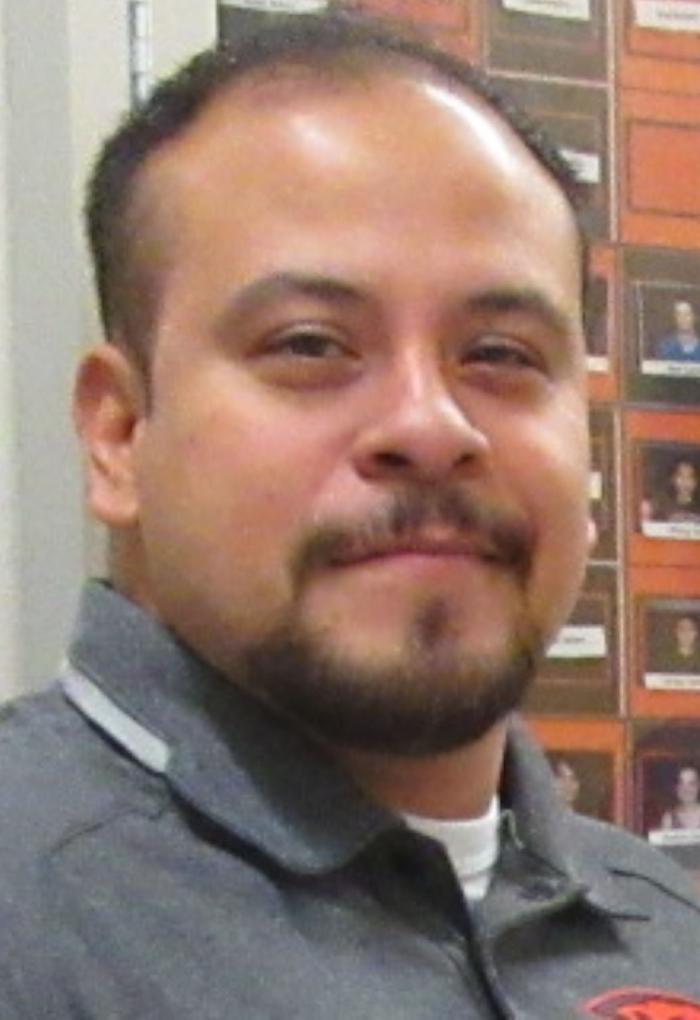
Tony Reyna standing in gallery

Tony Reyna, business manager for the biochemistry and biophysics department

Joining the biochemistry department over five years ago, Reyna is particularly appreciated for his willingness to go above and beyond the scope of his job responsibilities to ensure the office ran smoothly despite numerous trying circumstances. Several nomination letters expressed appreciation for his 'can-do attitude' and ability to solve the most strenuous problems without complaint.

"I personally appreciate Tony's service not only for performing the jobs of two people without complaints, but mostly for his gentle, accepting and understanding attitude," wrote Elisar Barbar, head of the department. "I cannot think of anyone else who worked harder and delivered better than Tony did, and of no one else who is more deserving."

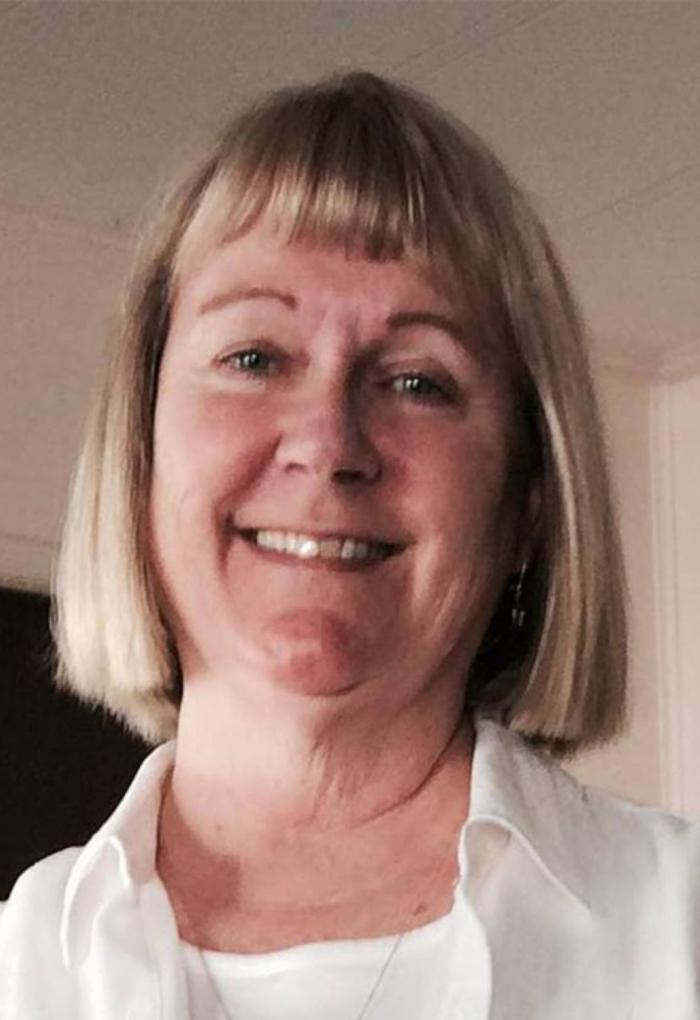
photo of Cindy Kent

Cindy Kent, executive assistant to professors Bruce Menge and Jane Lubchenco

For more than 21 years, Cindy Kent has worked with Wayne and Gladys Valley Chairs Jane Lubchenco and Bruce Menge to ensure that their joint lab and research powerhouse continues to run smoothly. She also acts as confidential assistant to Lubchenco, who is currently serving as Deputy Director for Climate and the Environment.

"She routinely interacts with everyone from an individual with ‘the’ answer to climate change or an oil spill to heads of state, executives in philanthropy or civil society, members of Congress, alumni, and prospective students," according to the nomination letter. "Cindy has been an invaluable member of the group, and serves as the glue that helps everyone function effectively and efficiently."

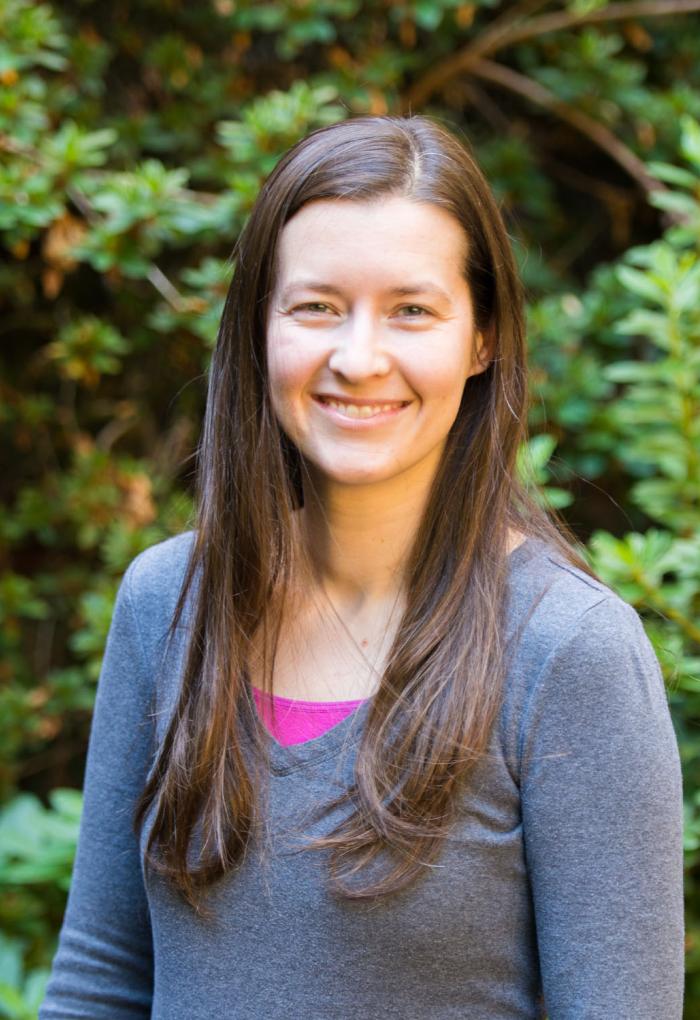
Stephanie Bollman stands outside in front of trees

Stephanie Bollmann, senior faculty research assistant

Outstanding Faculty Research Assistant Award

Stephanie Bollmann received the Outstanding Faculty Research Assistant Award for her outstanding job performance and contributions to the success of Michael Blouin's lab in the integrative biology department. This award is given to an individual each year who has chosen a career as a Faculty Research Assistant (FRA), Senior Faculty Assistant (SFRA) or Research Associate (RA) and has a record of outstanding job performance and contributions.

Bollmann has been working in the Blouin lab for seven years, with wide-ranging duties including project management, DNA/RNA and protein bench work, fish sampling and resource management. She has published regularly, single-handedly tackling large projects despite challenging circumstances.

"In particular, the work on the fitness of hatchery and wild salmon has had a big impact on hatchery management in Oregon and the Pacific Northwest," Blouin wrote. "Stephanie was an essential part of those publications. She has had a huge role in the success of my lab."

Known for her particular skill in bioinformatics, Bollmann's expertise is sought by other labs and collaborators. She also mentors high school students in the summers under the Saturday Academy program to help awaken their interest in science. "She is a relentlessly upbeat, positive, "can-do" person and the students respond to this," wrote Blouin. "I believe Stephanie's commitment to lifelong learning is partly what keeps her so enthusiastic about her work."

A graphic of a star within a circle, on a background of points of light similar to stars or falling rain.

Alumni Awards highlight impact at home and abroad

By College of Science

These prestigious awards honor alumni and friends for their distinguished professional and personal accomplishments.

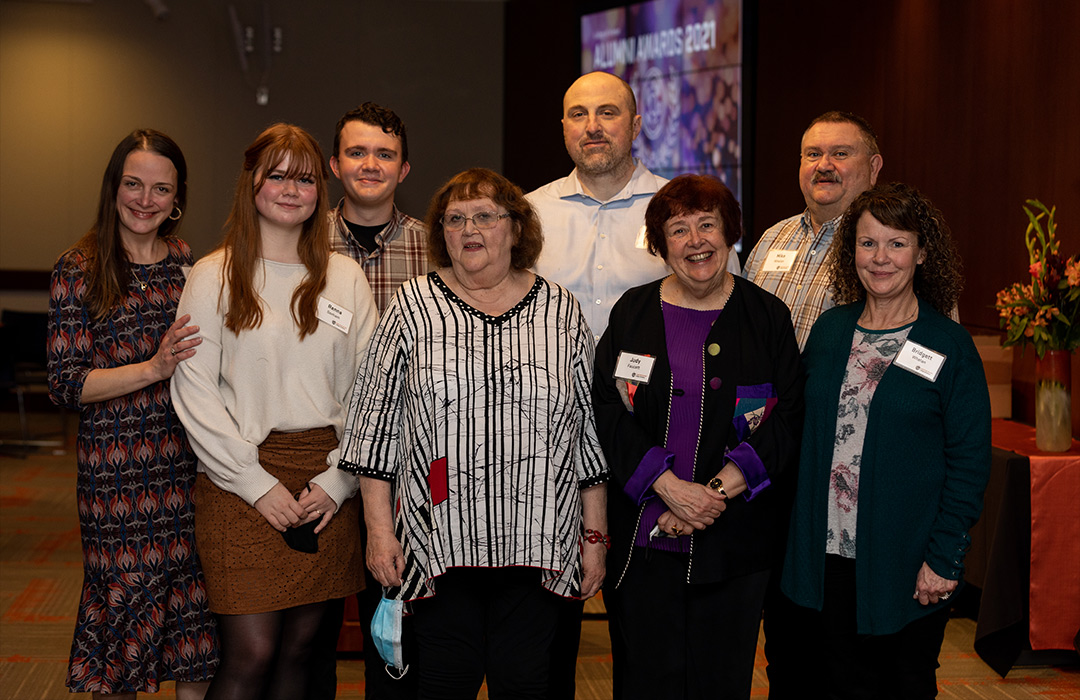
The College of Science community gathered on Friday, November 12, 2021, for the 2021 Alumni Awards, recognizing alumni who stand out in their accomplishments across industry, philanthropy and research.

These four prestigious awards honor alumni and friends for their distinguished professional and personal accomplishments. Their exemplary contributions to science and society bring credit to the College and to Oregon State.

The work of these alumni resonates well beyond Oregon State and has earned global acclaim and the recognition of peers in the wider scientific community. We acknowledge these awardees both for their achievements and their generosity in supporting scholarships and programs that pave the way for the success of future students.

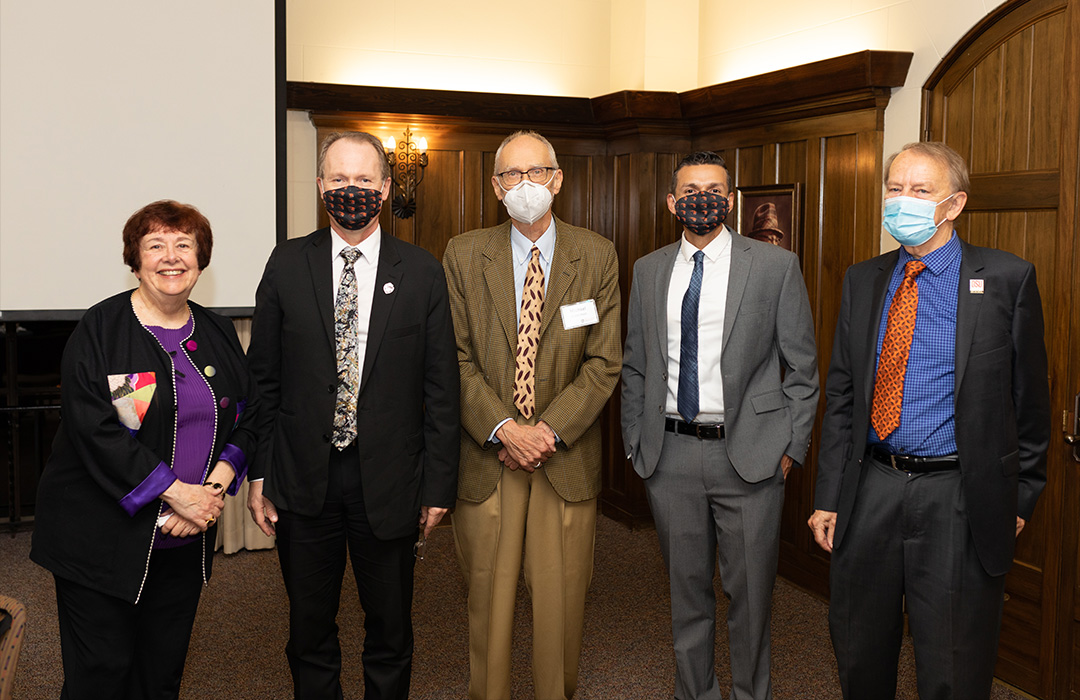
The College recognizes these distinguished alumni with our 2020 and 2021 Alumni Awards:

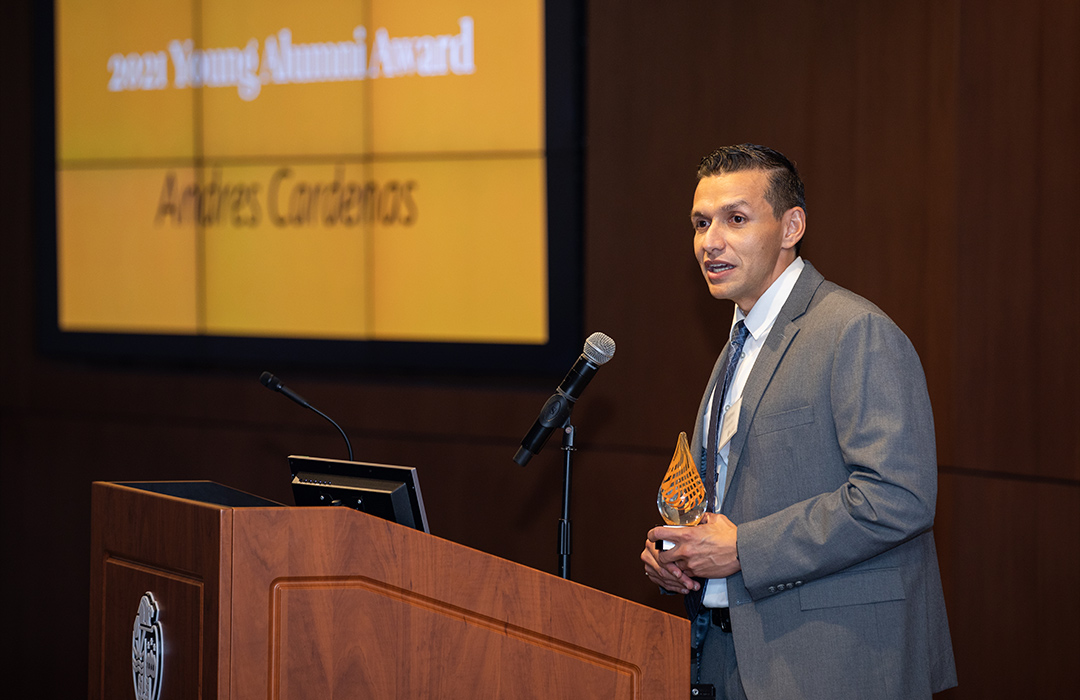
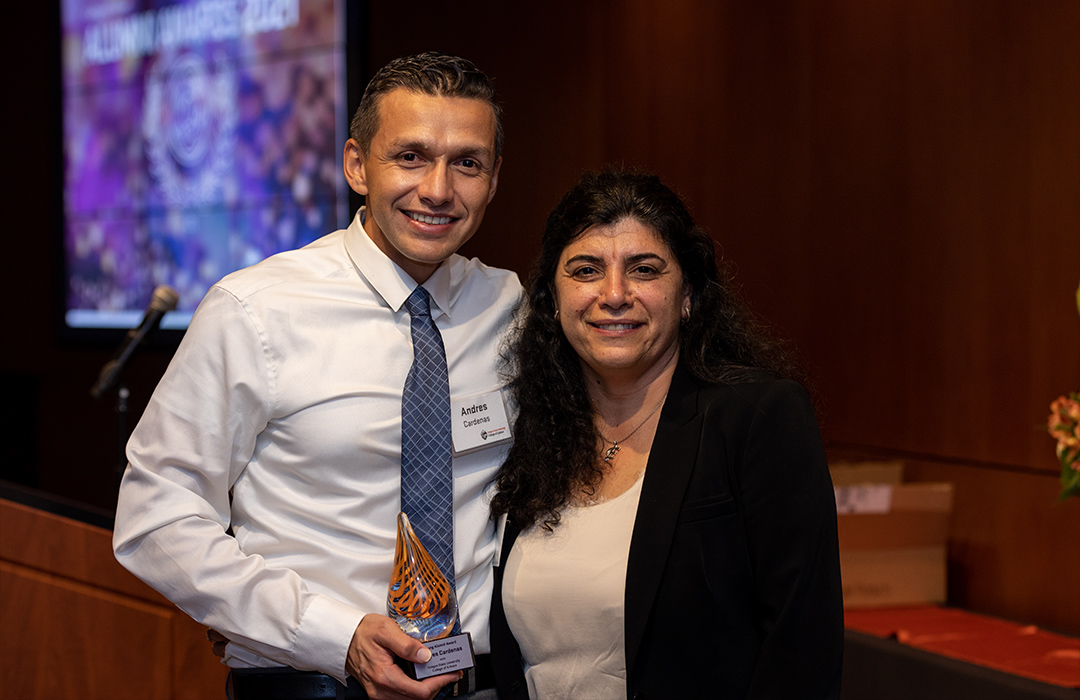
Andres Cardenas (’10) 2021 Young Alumni Award

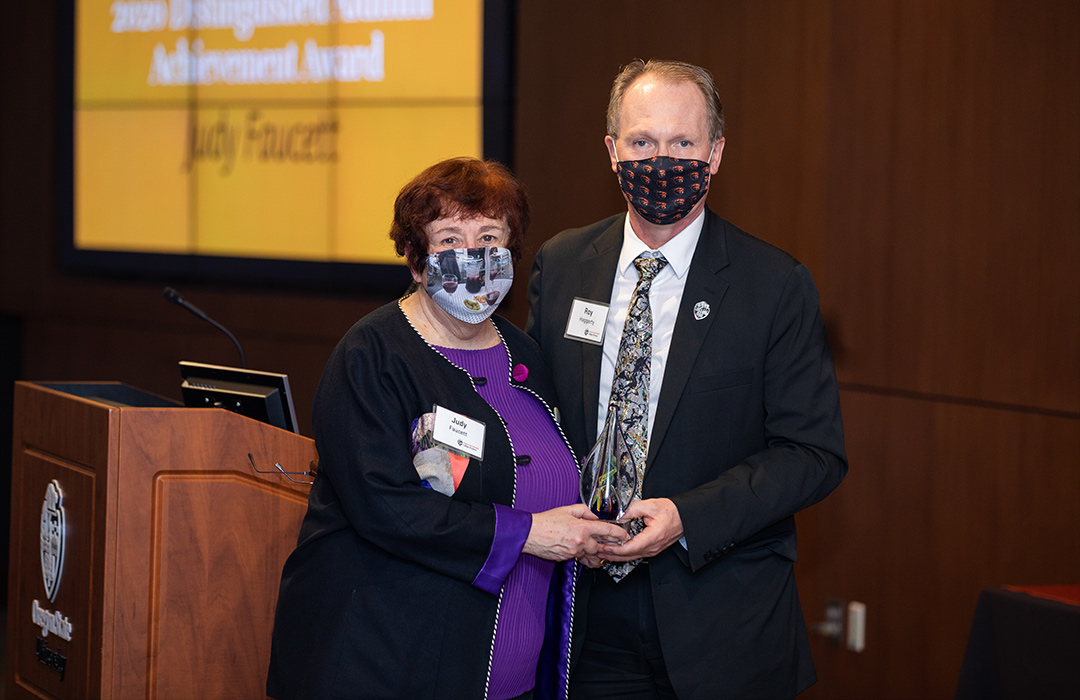
Judy Faucett (’70) 2020 Distinguished Alumni Achievement Award

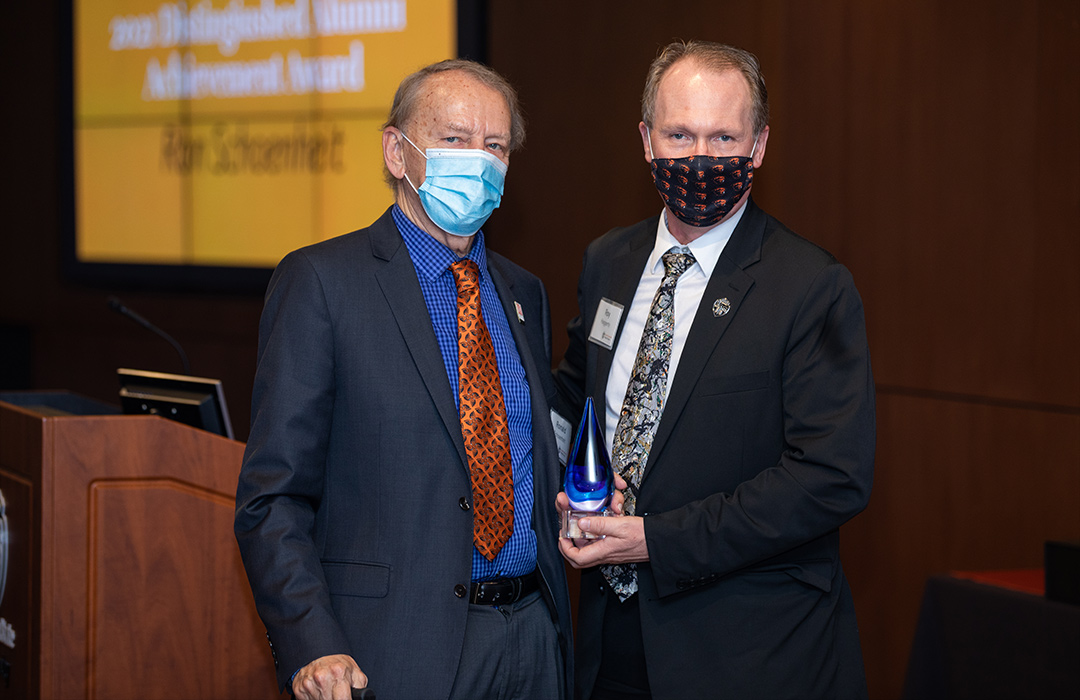
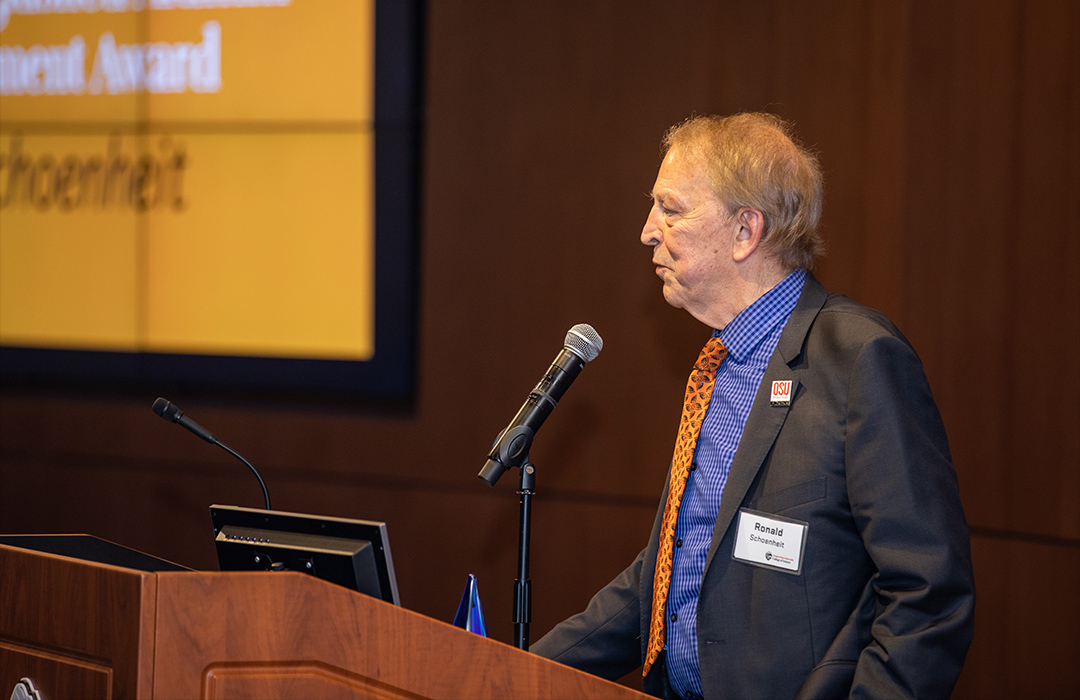
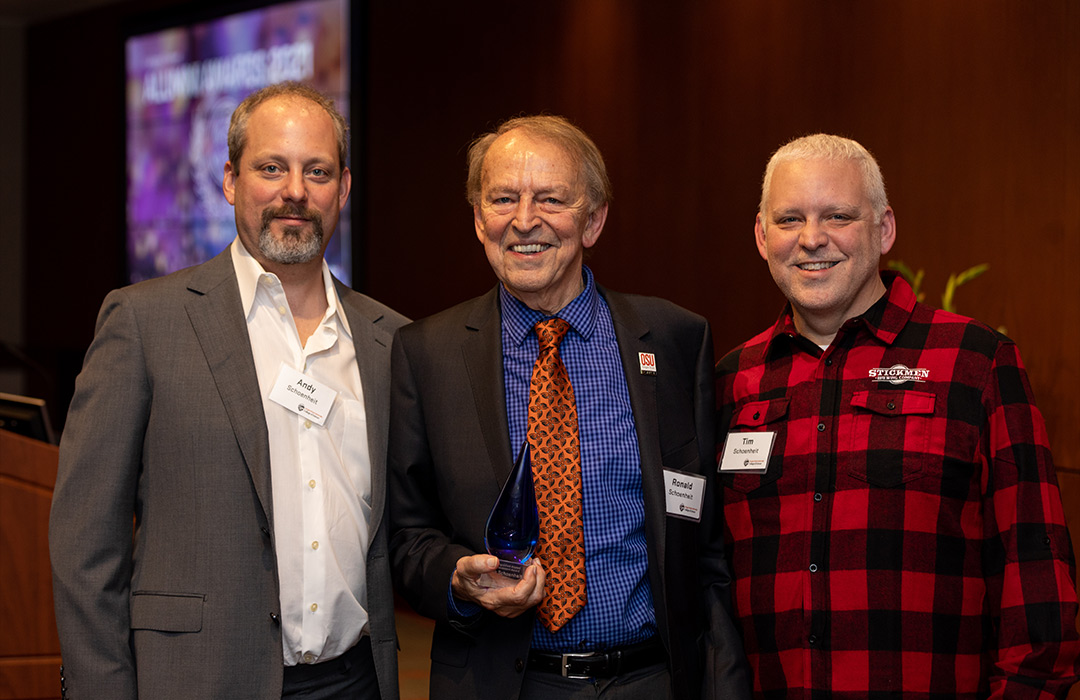
Ron Schoenheit (’65) 2021 Distinguished Alumni Achievement Award

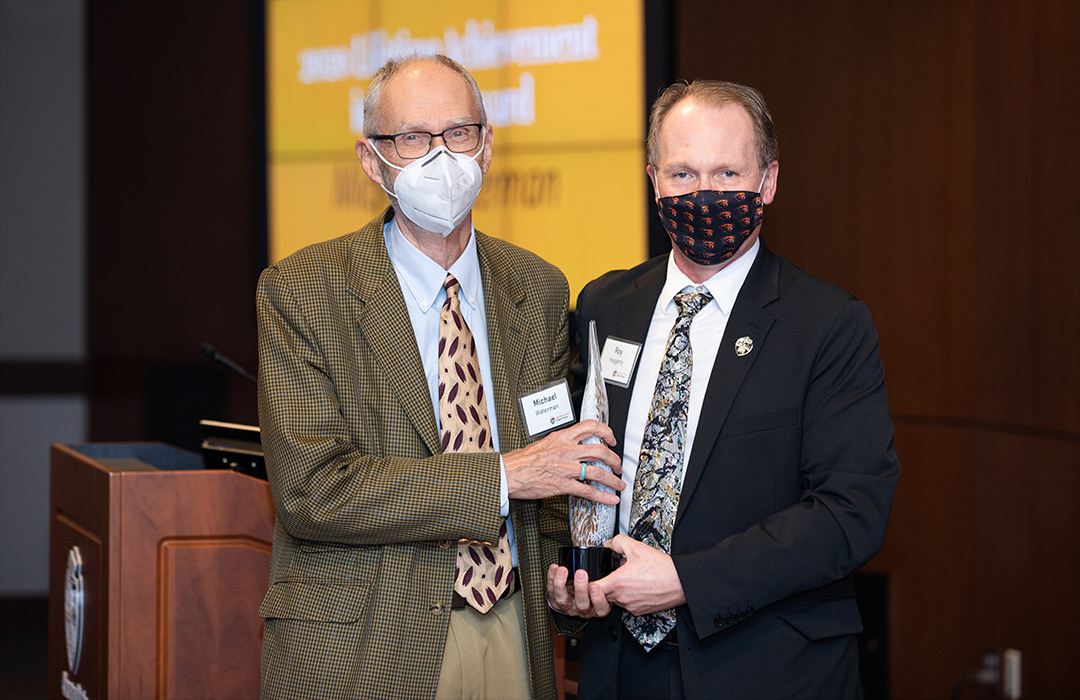
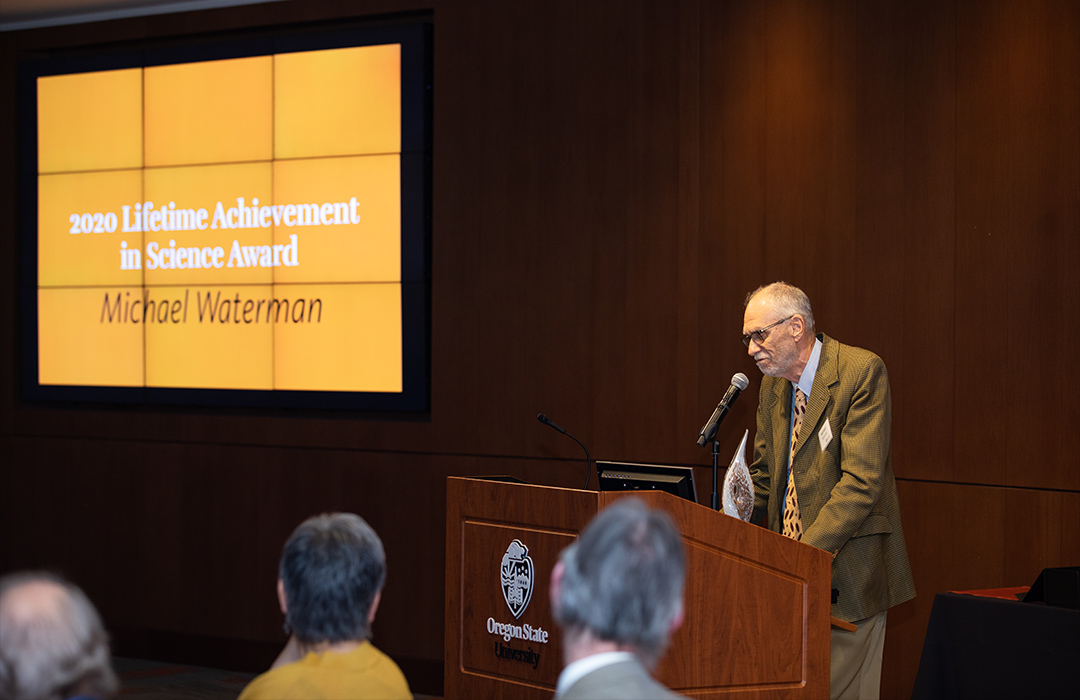
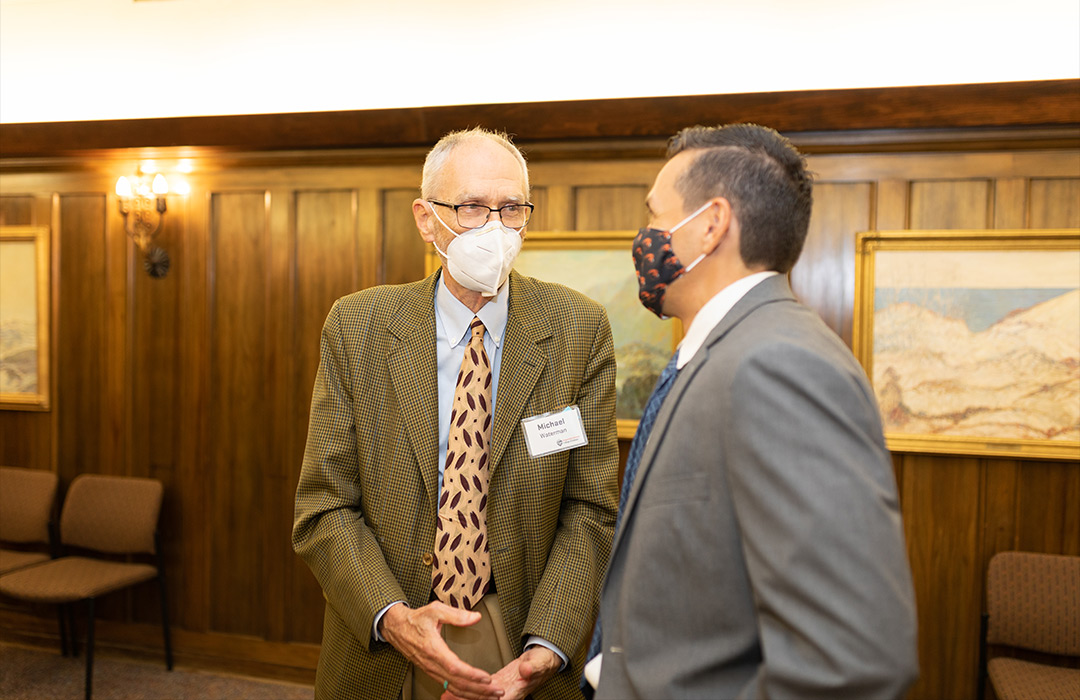
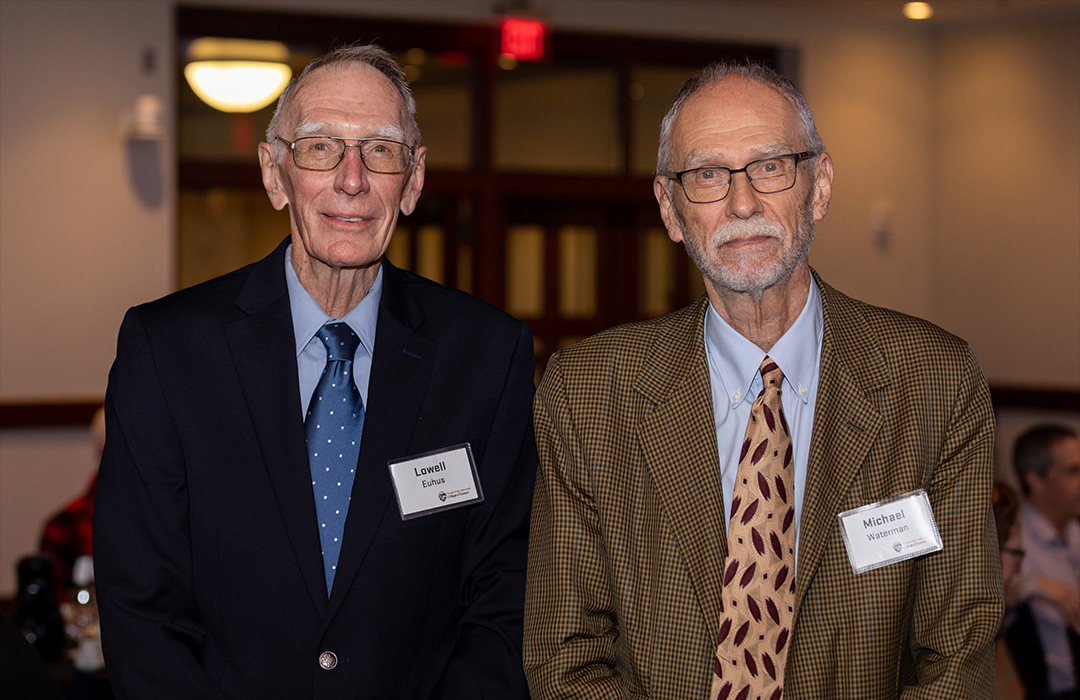
Michael Waterman (’64, ’66) 2020 Lifetime Achievement in Science Award

Congratulations to these outstanding individuals.

Michael Waterman

Genomics pioneer paves the way for first-generation students

By Grace Peterman

Photo by Leah Lee

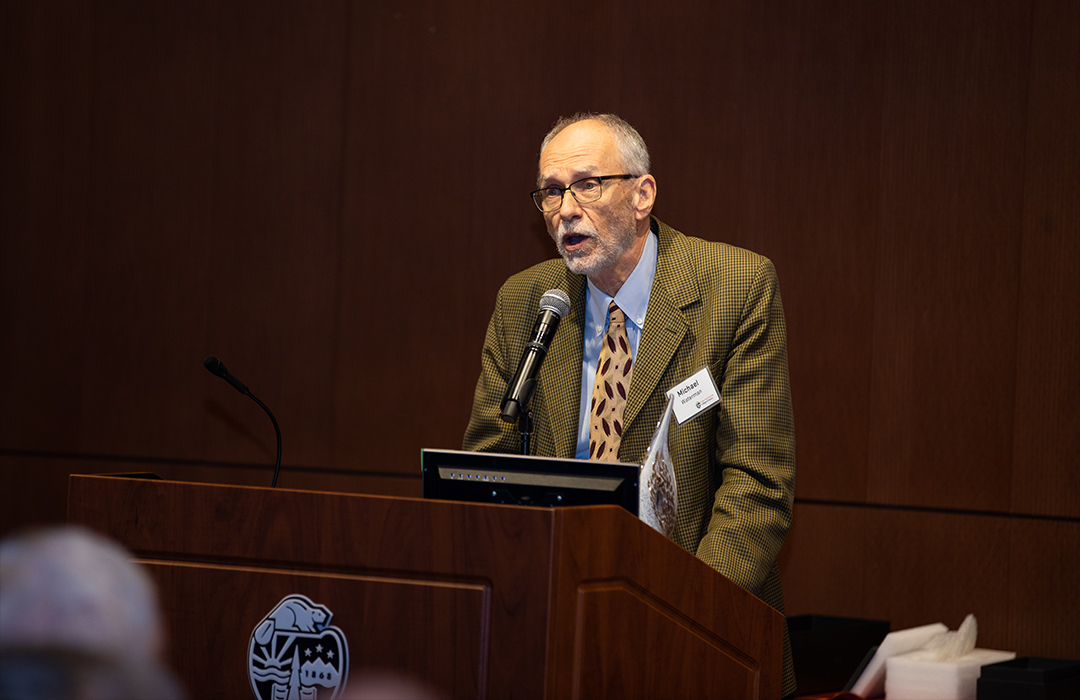
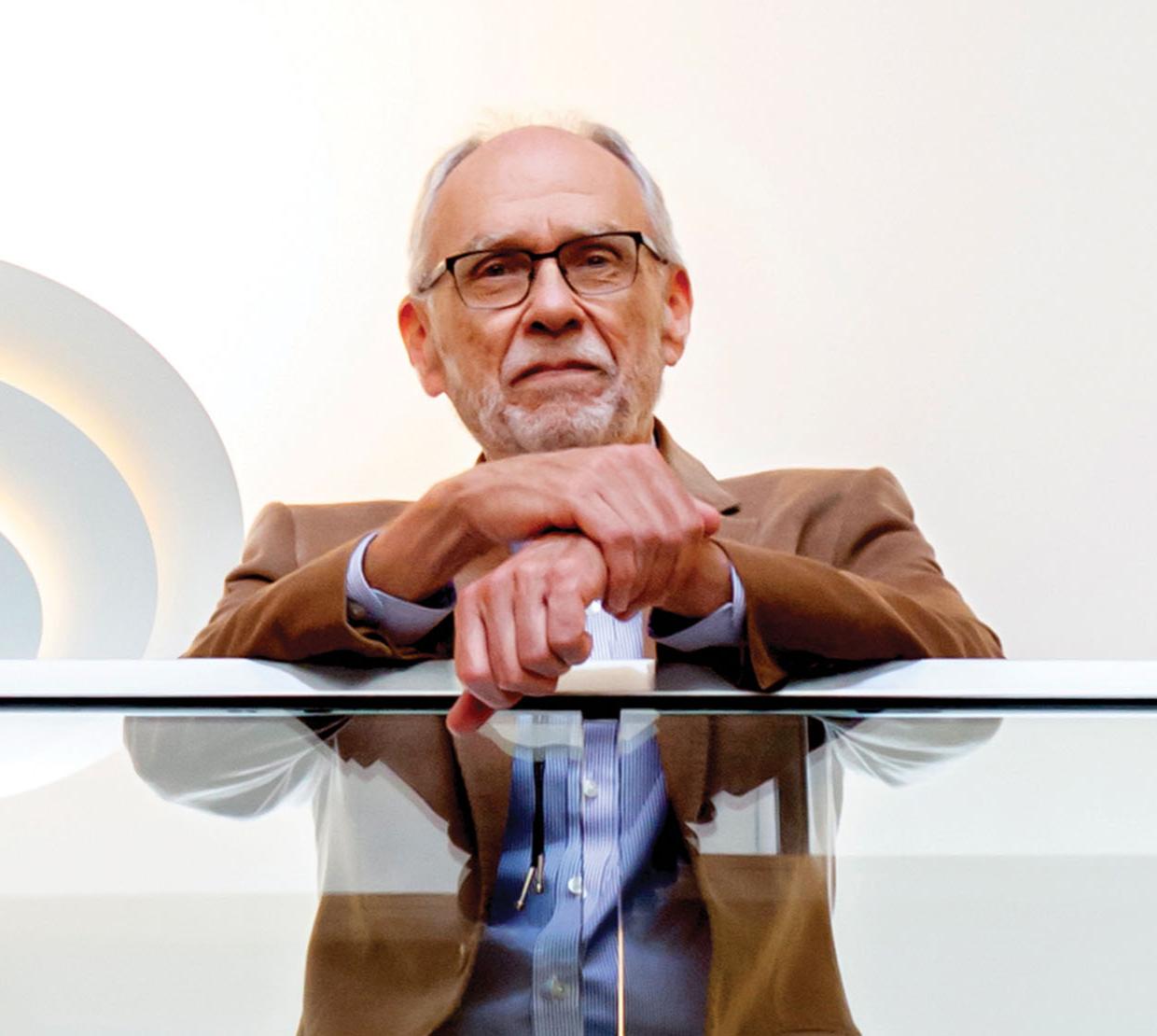
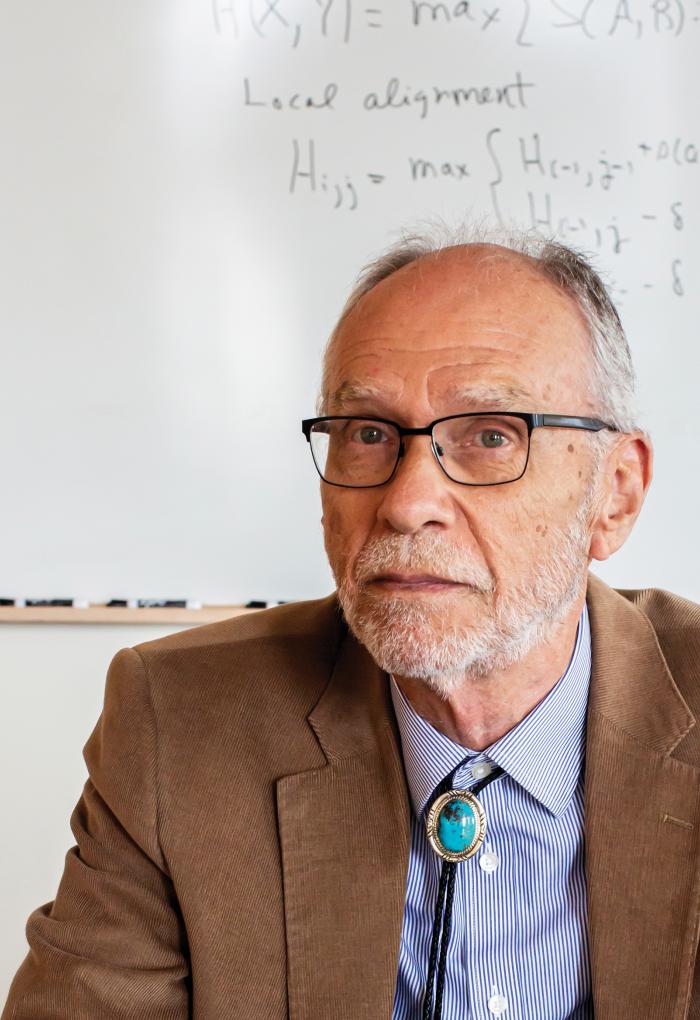
Michael Waterman (Mathematics ’64, ’66) grew up on a ranch in rural Southwestern Oregon. A first-generation college student, Waterman said entering Oregon State as a freshman “was the doorway to the rest of the world” for him.

After College, Waterman went on to make an international impact, transforming the field of computational biology. This year, he receives the College of Science's 2021 Lifetime Achievement in Science Award for his remarkable accomplishments that have brought honor, distinction and visibility to the University. Waterman’s extensive career includes research that has been foundational to many DNA mapping and sequencing projects, including the Human Genome Project.

"I am deeply grateful to land grant universities, and Oregon State in particular, that allowed me and many others to receive an excellent education,” he said.

Waterman presented the College of Science 2021 Distinguished Lecture on November 10, 2021, in the Memorial Union, Horizon Room, at Oregon State University. The lecture discussed Waterman’s deep ties to Oregon and Oregon State and explored the connections between mathematics and the biological sciences.

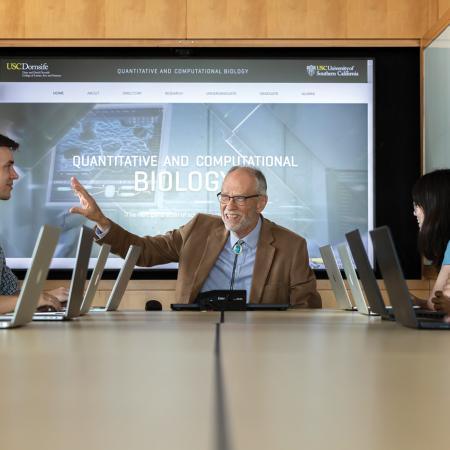
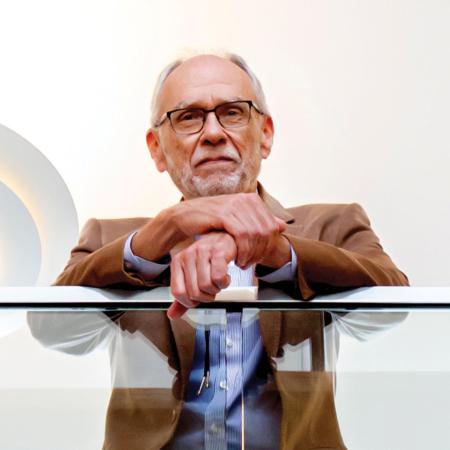
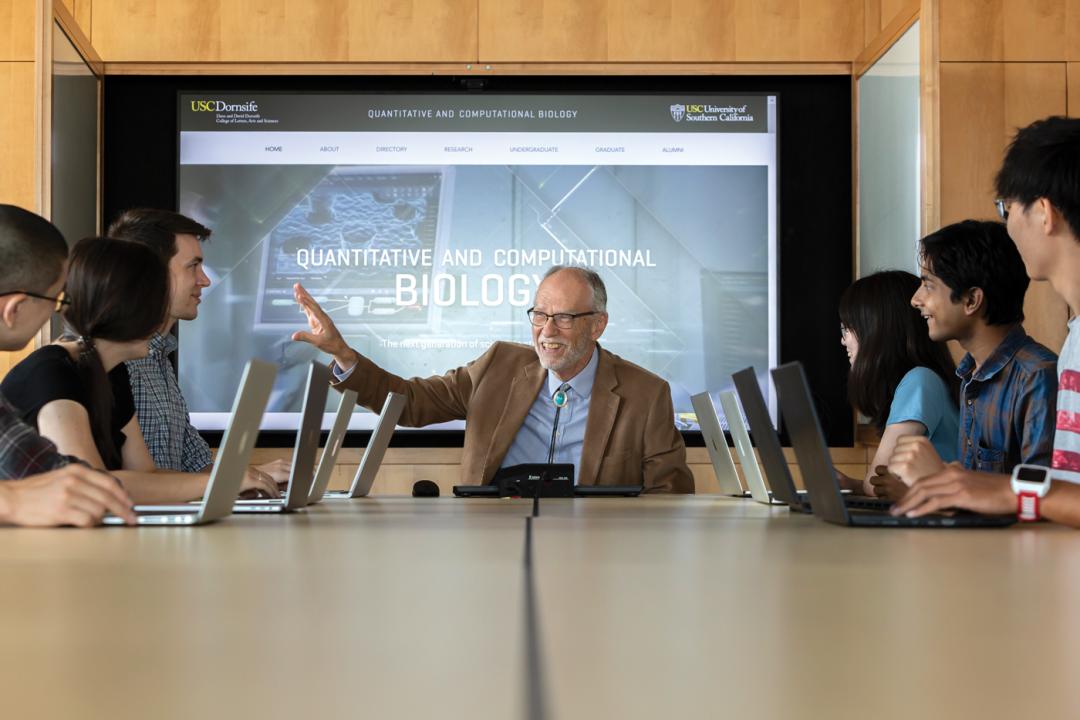
Michael Waterman teaching

Michael Waterman is an Emeritus University Professor at the University of Southern California. Photo by Leah Lee.

A global reputation in genomic sequence analysis

After earning his bachelor’s and master’s degrees in mathematics at Oregon State, Waterman went on to complete a Ph.D. in statistics and probability at Michigan State University. His work, focused on applying mathematics, statistics and computer science techniques to various problems in molecular biology, continues to play an important role in DNA sequencing today.

Waterman is an Emeritus University Professor at the University of Southern California, with joint academic appointments in the Departments of Biological Sciences, Mathematics, and Computer Science, and a Distinguished Research Professor at the University of Virginia.

He is also an elected member of both the U.S. National Academy of Sciences and of Engineering, the American Academy of Arts and Sciences and both the French and Chinese Academies of Sciences. He has received the William Benter Prize in Applied Mathematics, the Gairdner Foundation International Award in Biomedical Sciences, the Dan David Future Prize in Bioinformatics and a Guggenheim Fellowship.

Reflecting on his work upon receiving the Dan David Prize, Waterman said curiosity and a love for the process motivate him and his team more than anything. “Our research was not initially in any hot-topics category. We simply found fascinating problems that were irresistible, and we were determined to pursue them.”

That’s how the first serious meeting to discuss sequencing the human genome began as well. “We thought, ‘We’re mathematicians, we should be able to say something about this!’” said Waterman. Among the team of scientists assembled at University of California Santa Cruz in 1985, no one was even sure if such a huge undertaking was feasible. Yet, the idea was too good to pass up: “I remained steady in my belief that this was barely possible and truly important,” he said. “Just deciphering the code that our ancestors passed down to us as our genetic heritage was priceless.”

Michael Waterman

Waterman's early work on algorithms was the breakthrough needed to decode the human genome. Photo by Leah Lee.

Pathways to success for underrepresented students

Strong science thrives on this type of bold questioning of what’s possible. How did Waterman go from a rural ranch in Oregon to debating a landmark scientific project at UC Santa Cruz? Growing up, “it’s very hard to imagine beyond what you see,” said Waterman.

As a first-generation college student starting at Oregon State, Waterman experienced a world of possibility opening up for him. That’s why he established an endowed scholarship to open doors for other first-generation college students on their own paths to success. The Michael and Tracey Waterman Scholarship — the second largest in the College’s history — ensures future students are empowered with a sense of possibility and perspective.

“I believe that those who didn’t grow up with privilege should have a chance too,” he said. “I am pleased to see Oregon State is still accepting kids from a variety of backgrounds.”

Malgo Peszynska standing in front of a tree outside of Kidder Hall.

Applied mathematician Malgorzata Peszynska receives prestigious Geosciences Career Prize

By Mary Hare

Malgorzata Pesynska uses applied mathematics to solve problems related to climate change and energy engineering.

The College of Science is proud to announce that Malgorzata Peszynska, professor of applied mathematics, has received the Society for Industrial and Applied Mathematics (SIAM) Geosciences Career Prize for “exceptional contributions to analysis of multiphysics processes in geosciences, consistently producing mathematical and computational results of the highest quality, while supporting the community through exemplary service.”

Established in 2008, the prize is awarded every two years to “an outstanding senior researcher for broad and distinguished contributions to the solution of mathematical and computational problems in the geosciences.” Scientists who have held a Ph.D. for 15 years or longer are eligible for the highly competitive award.

Peszynska will formally receive the award at the 2021 SIAM Conference on Mathematical and Computational Issues in the Geosciences, originally scheduled to take place in Milan. The conference will facilitate the exchange of ideas between internationally reputed scientists in interdisciplinary fields related to the geosciences.

“Peszynska is held in the very highest esteem for her record of excellence in all facets of productive academic activity,” said Bill Bogley, chair of the Department of Mathematics. “Her record of engagement and leadership leaves no doubt that colleagues from Oregon State University, the nation and the world all recognize and seek to engage with her energy and expertise.” He commended her notable history of mentorship and advocacy for her students, including a 2006 Mortar Board Top Professor award and 2016 Department of Mathematics Graduate Faculty award.

Peszynska is the second Oregon State applied mathematician to receive the award. In 2017, Juan Restrepo received the Career Prize for his work using mathematical models to study the ocean and the atmosphere. With only seven total winners since 2008, this is an admirable achievement for the university.

With expertise that spans disciplines, Peszynska primarily works to use mathematical tools to solve problems related to energy engineering and climate change. Her modeling of transport includes porous media phenomena in aquifers, oil and gas reserves, carbon sequestration, solar cells and the effect of permafrost warming. Perhaps most notable is her use of computational mathematics to model methane hydrate transfer and evolution.

"As an applied mathematician in this area, the objective is to provide reliable and accurate modeling tools for simulation of various scenarios to help mitigate and contain the possible disasters”

Methane hydrate is an “ice” found primarily in the Arctic permafrost as well as in sub-ocean sediments. Known as one of the largest potential sources of fossil fuel, it is also one of the most risky. Existing in a delicate pressure-temperature equilibrium, exposure to heat could lead to melting that could cause explosions, or huge quantities of methane gas escaped into the atmosphere.

The specific conditions at which it exists have also meant that it has been exceedingly difficult to study using traditional research tools. This is where using mathematics can be so useful. “As an applied mathematician in this area, the objective is to provide reliable and accurate modeling tools for simulation of various scenarios to help mitigate and contain the possible disasters,” Peszynska said.

Supported by two National Science Foundation awards --one for $384K for 2015-21 and another Division of Mathematical Sciences award for $224K for 2019-22 -- Peszynska and her team have combined computational mathematics with geophysical mechanics of hydrate behavior, developing new mathematical models and results to study the transport and evolution of methane gas under the influence of changing sea temperatures, the warming of permafrost, and the huge range of length and time scales for key elements of the geophysical process.

Her success has been recognized with numerous awards, including her selection as a 2020 fellow of the American Association for the Advancement of Science (AAAS) for “outstanding contributions to multidisciplinary mathematical and computational modeling of flow and transport in porous media.” Among the 489 selected Fellows this year, she is one of only eight mathematicians chosen nationwide, and the first member of the Oregon State Department of Mathematics to receive this honor.

In addition, she has received the mathematics department’s Joel Davis Faculty Excellence Award, the Graduate Faculty Award, and has been recognized by the Kosciuszko Foundation as a Distinguished Fellow of the Collegium of Eminent Scientists of Polish Origin and Ancestry. Peszynska was also a 2009-2010 Fulbright Research Scholar at the University of Warsaw.

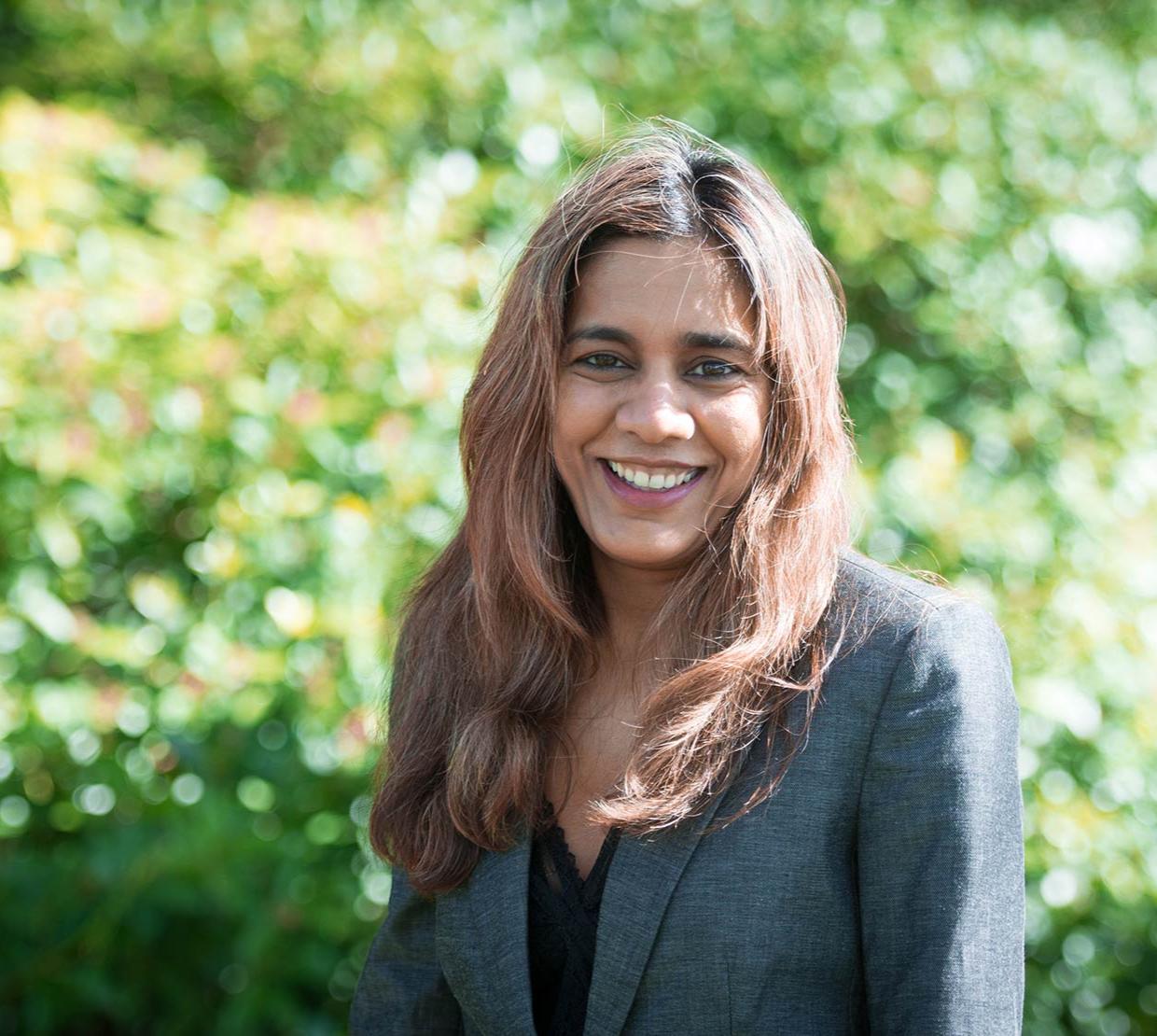
Vrushali Bokil standing in front of shrubbery.

New associate dean announced

By Tamara Cissna

Associate Dean for Research and Graduate Studies Vrushali Bokil

The College of Science is pleased to announce Vrushali Bokil as the new associate dean for research and graduate studies, effective October 19. Bokil brings outstanding leadership strengths, exceptional energy and research experience, and a deep commitment to inclusive and equitable excellence in research and teaching.

A member of the Oregon State faculty since 2006, Bokil is a professor in the Department of Mathematics who has served in many leadership roles during her tenure. Bokil’s primary research interests are in the numerical solution of wave propagation problems. She is also currently working on several problems in mathematical ecology that involve the construction and analyses of deterministic and stochastic models for applications in population dynamics, epidemiology and spatial ecology. She has worked on other topics in applied mathematics, scientific computing and numerical analysis, as well. Her most recent grant is a $225K NSF-funded project, "Computational and Multi-Scale Methods for Nonlinear Electromagnetic Models in Plasmas and Nanocomposites."

Bokil previously served as associate head of the Mathematics department during 2018-2019. She was an Advance Faculty Fellow in 2018, facilitating the implementation of equity, justice and inclusivity training seminars within the College of Science. She currently serves as an OSU faculty senator and was a Faculty Senate Executive Committee member from January of 2018 to January of 2020. She also serves as a member of the Career Opportunities Committee of the Society for Industrial and Applied Mathematics.

“I am very pleased to welcome Dr. Bokil as our Associate Dean for Research and Graduate Studies,” said Roy Haggerty, dean of the College of Science.

“Given Vrushali’s wide-reaching research contributions and effective collaborations with scientists and mathematicians at OSU and beyond, I am confident she will have a significant impact on the College’s research excellence, transformative educational opportunities, initiatives for faculty innovation, and productive collaborations across departments and colleges.

“I know she also will be an effective catalyst for advancing equity and inclusion for women scientists and others from historically underrepresented groups, making a positive difference in the College of Science and in Oregon State’s broad scientific community.

“I want to thank all the search committee members, including chair Elisar Barbar, head of the Department of Biochemistry and Biophysics, for their roles in appointing Dr. Bokil.”

As associate dean, Bokil will advocate for and provide a vision for the College’s research and graduate student educational opportunities in the College’s context as a major contributor to the educational and research mission of Oregon State University and the state of Oregon. She will contribute to day-to-day fiscal policy and budget implementation. In each and every aspect of her position, she will further the College’s commitment to enhancing diversity, equity and inclusion.

"It is my distinct pleasure to be selected to become a part of the leadership team in the College of Science and to work with Dean Haggerty in providing direction for our research and educational missions,” Bokil said. “I am particularly honored to have the opportunity to help craft policies and programs, which are evidence-based, compassionate and holistic, toward our shared mission to create a more diverse, inclusive and equitable scholarly and instructional environment."

Born and raised in India, Bokil earned her Ph.D. from the University of Houston and her master of science from New Mexico State University. She was a postdoctoral associate at North Carolina State University.

Doug Keszler, who served in this role since 2014, announced in July that he would step down. He will continue his materials science research in the Department of Chemistry.

“I want to thank Doug for his leadership and service over the last six years,” said Haggerty. “While serving in this capacity, Doug was highly instrumental in advancing the College’s research excellence and particularly in accelerating high-impact, collaborative research that addresses societal and marketplace needs. He also was effective in fostering industry partnerships with the College and connecting industry expertise with Science students.

“I know he is looking forward to having more time for research and innovation, and I am certain he will continue to mentor and inspire future chemists and entrepreneurs.”

Juan Restrepo sitting on ledge in front of shrubbery

Mathematician elected Fellow of American Physical Society for advancing understanding of climate change

By Srila Nayak

Juan Restrepo, Mathematics Professor

Mathematics Professor Juan Restrepo has been elected a 2019 Fellow of the American Physical Society(APS), the world’s second largest organization of physicists.

Election to Fellow of APS is a rare and highly prestigious honor that is conferred upon no more than one half of one percent of the society’s membership. This year, 168 fellows from all over the world were selected and recognized for their contributions to physics. Fellows are chosen on the basis of: outstanding physics research, important applications of physics, leadership in or service to physics, or significant contributions to physics education.

Restrepo was nominated for the honor by the Topical Group on Physics of Climate. His Fellowship citation commends him for “advancing the understanding of wave dynamics and uncertainty quantification in the climate system.”

Restrepo joins a distinguished roster of APS Fellows in the College of Science at Oregon State University. He is the second mathematician at OSU to be elected a Fellow of APS. Professor of Mathematics Tevian Dray was elected an APS Fellow in 2010. Other APS fellows include OSU physicists Janet Tate (2015), Henri Jansen (2005), Corrine Manogue (2004) and Heidi Schellman (1999).

“I’ve had great scientific collaborators over the years and they are also responsible for my receiving this honor. Becoming Fellow of APS is obviously gratifying,” said Restrepo. “Professionally the award is very meaningful to me because APS is recognizing that anthropogenic climate change is a major existential crisis and that tackling this issue is a pressing scientific priority.”

Restrepo has received several prestigious honors and awards in the recent past. In 2018, he was elected a Fellow of the Society of Industrial and Applied Mathematics (SIAM) for his exemplary contributions to the mathematical and computational modeling of the ocean. He received SIAM’s Geosciences Career Prize in 2017 in recognition of his substantial impact in computational geosciences.

Restrepo specializes in applied mathematics research studying problems at the crossroads of mathematics, geophysics and oceanography. His research focuses on geophysical fluid dynamics, statistical mechanics, scientific computing, and uncertainty quantification. His research encompasses two distinct areas:

  • The application of data science to understanding complex non-equilibrium physical and human systems and to the development of forecasting tools for these systems, and
  • The role of ocean and ocean transport in climate dynamics and in nearshore processes, such as oil-spill dynamics, wave breaking dynamics, wave-generated transport and the role of oceans in global climate.

In an interview with SIAM News, Restrepo discusses his interdisciplinary research in applied and computational mathematics in the several fields of geosciences:

“My work on oceans involves deciphering how waves contribute to Earth’s circulation and how that affects ocean transport of nutrients, pollutants, and heat. In climate science my work has suggested important ocean pathways critical to the carbon cycle. In the nearshore, my work has demonstrated the effect of waves on shore connected sand ridges, on a possible explanation for the slowing down and parking of pollutants bound for the beach. The transport model for ocean oil spills my team is developing will someday help abate oil spill disasters.”

Restrepo’s teaching broadly covers the areas of numerical analysis and scientific computing, as well as applied analysis. As an advocate of diversity in science and mathematics, Restrepo has mentored numerous students from underrepresented groups.

He received his Ph.D. in physics from Pennsylvania State University in 1992. Prior to coming to Oregon State in 2014, Restrepo was a mathematics professor at the University of Arizona with appointments in the Department of Physics and the Department of Atmospheric Sciences. At OSU, he has courtesy appointments in Statistics, Electrical Engineering and Computer Science and Physical Oceanography.

APS has a diverse roster of fellows drawn from different fields such as mathematics, materials science, chemistry, biochemistry, mechanical, electrical and chemical engineering, in addition to physics. Their cross-disciplinary work is in a broad spectrum of fields, encompassing both core subject areas and their applications to physics.

APS publishes more than a dozen scientific journals, including Physical Review and Physical Review Letters and organizes more than 20 science meetings each year. Founded in 1899, APS is one of the oldest non-profit membership organizations working to diffuse and advance the knowledge of physics. The organization represents more than 51,000 members, including physicists in academia, national laboratories, and industry in the country and throughout the world.

Math students

Helping students succeed in mathematics

OSU students working on math

The College of Science welcomes Wendy Rose Aaron as the new Coordinator of the Math and Statistics Learning Center (MSLC). The center enhances student success across campus in support of the teaching mission of the Department of Mathematics’ lower division, offering free math tutoring programs and professional support for mathematics educators across campus.

Aaron received her Ph.D. in Mathematics Education from the University of Michigan in 2011 and joins us most recently from the faculty of the College of Education at OSU. She brings extensive expertise and experience in teacher-training, including contacts with local K-12 schools and the College of Education.

Wendy Rose Aaron standing in office space

Wendy Rose Aaron, new Coordinator of the Math and Statistics Learning Center (MSLC)

As MSLC Coordinator, Aaron will build upon strengths of the MSLC to help student succeed in mathematics. She will promote a welcoming and inclusive environment, oversee daily operations and provide professional development to graduate students and learning assistants in their work with undergraduates. She will also serve as department liaison to other student success initiatives across campus and teach one course per quarter.

High failure rates in college algebra courses is a problem nationwide with lasting negative repercussions. Poor performance in college-level introductory mathematics poses a barrier to earning a STEM degree because mathematical courses in the first two years of college serve as pathways to many science and engineering majors.

“The heart of the MSLC is making those ‘aha’ moments happen, when a student grasps a concept for the first time, deepens their understanding, makes new connections, and applies what they’ve learned to the real world,” Aaron said. “It’s such a positive and important mission, and I look forward to working with OSU’s extended team of passionate tutors, graduate students, learning assistants and educators across campus to continue and enhance the tools and support we offer to students.”

The MSLC is a critical part of our strategy to make the College of Science a welcoming and inclusive place for all students, where every student has the resources they need to be successful. “I am excited to see how the center will evolve under Wendy’s leadership to continue to improve student success in mathematics,” said Roy Haggerty, Dean of the College of Science.


Read more stories about: news, faculty and staff, mathematics


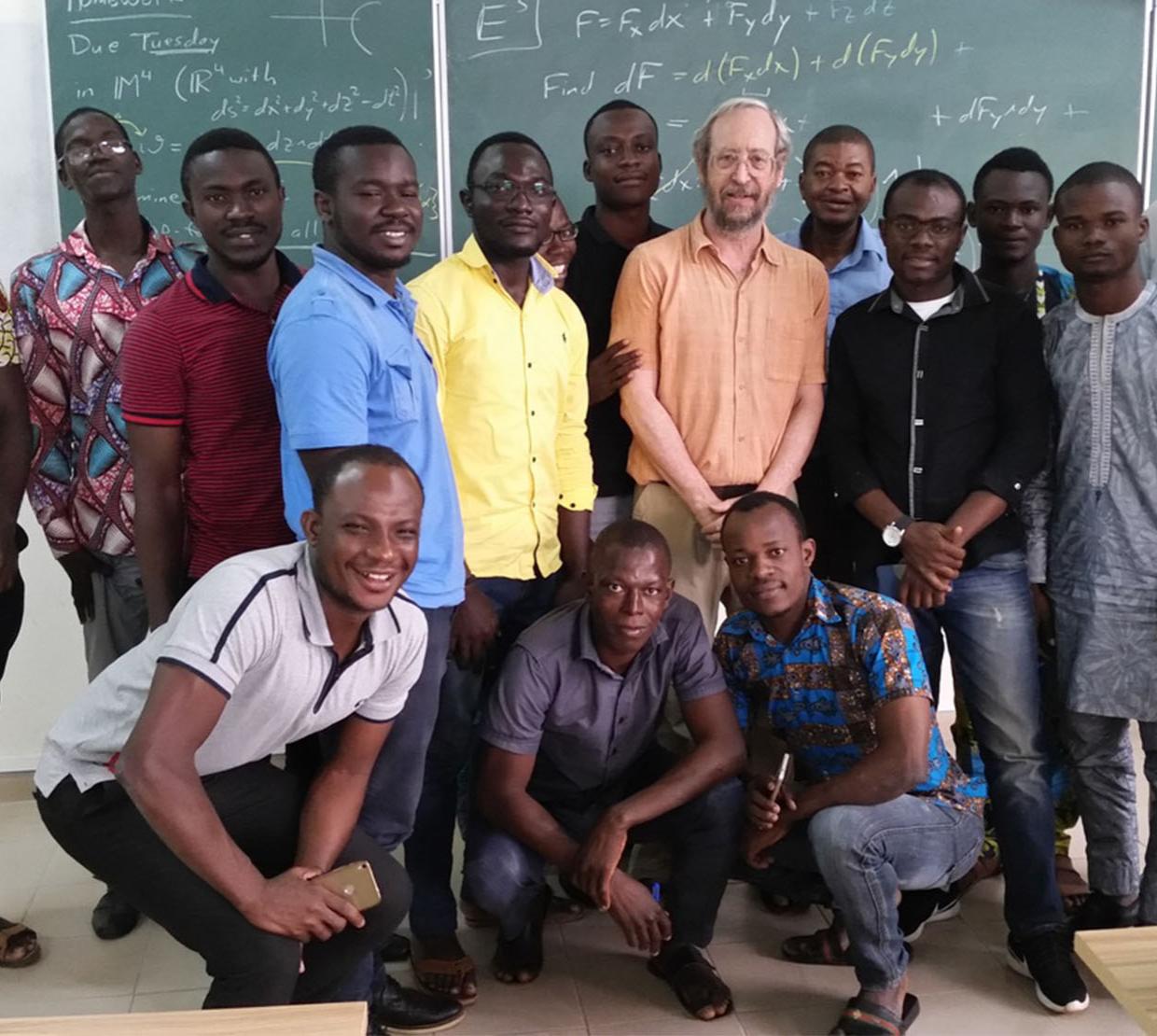
Tevian Dray with students in West Africa

Taking Mathematics Around the World: Dray Invited to Teach in Africa

This is the first article in our series on Taking Mathematics Around the World. The mathematics faculty are world-renowned for their insight and innovation in both teaching and research. This series of articles will focus on the impact that our faculty have on the mathematical community world-wide by highlighting some of the frequent international invitations that our faculty receive.
Tevian Dray recently returned from three weeks in West Africa. Through the Visiting Lecturer Program of the International Mathematical Union (IMU), he was invited to teach a graduate course in Lorentzian Geometry and General Relativity at the Institut de Mathémathiques et de Sciences Physiques (IMSP) of the Université de Abomey-Calavi in Bénin.

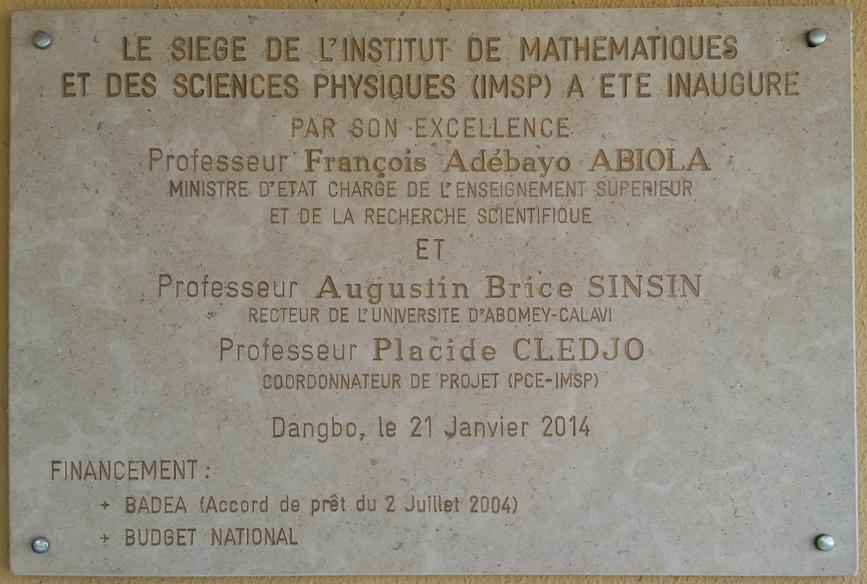
Plaque erected at IMSP.

Founding plaque at IMSP.

The IMSP is an African Centre of Excellence in the Mathematical Sciences, sponsored by the World Bank, with additional support from the Abdus Salam International Centre for Theoretical Physics. The IMSP attracts students from across West Africa; Professor Dray's course was attended by students from Burundi, Cameroon, Congo, Guinée, Mauritania, and Togo, in addition to Bénin. The working language at the IMSP is French, although the course was given (mostly) in English. While at the IMSP, Professor Dray also gave a colloquium entitled Using Active Engagement to Teach Mathematics, which led to several extended conversations about pedagogy.

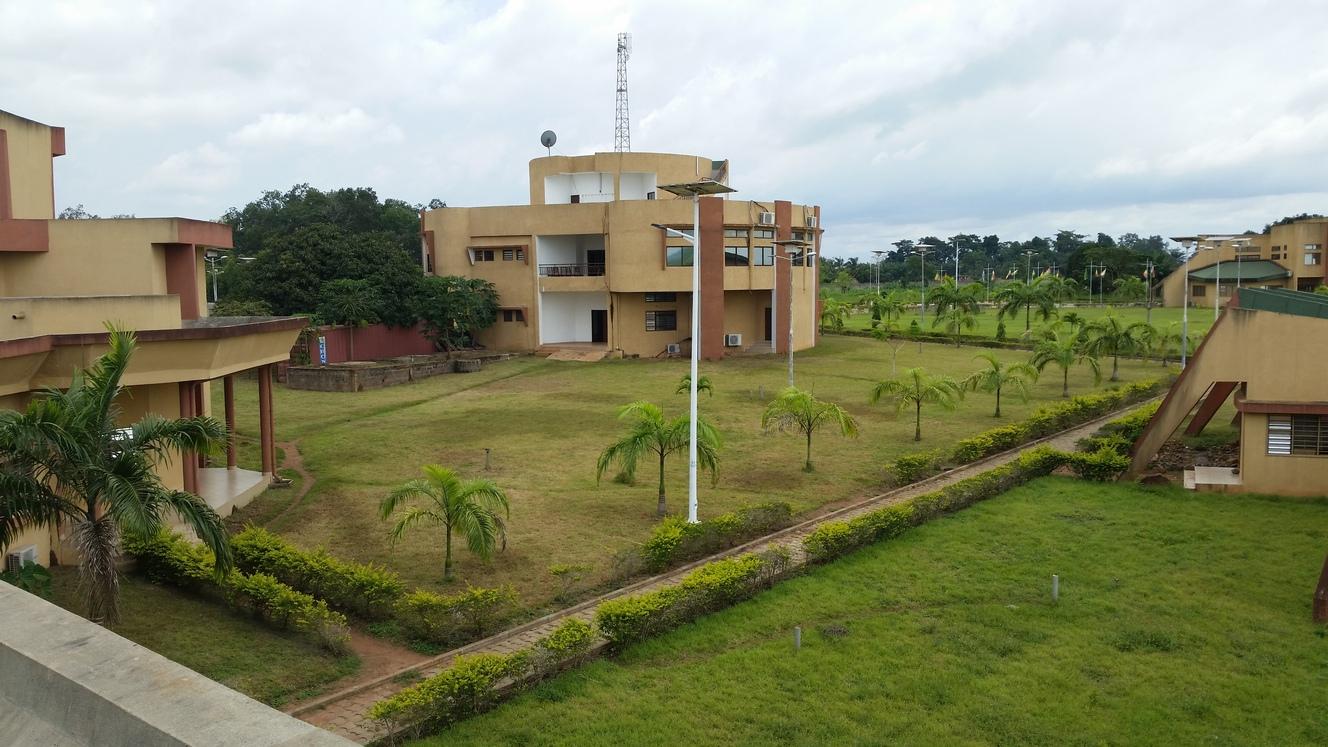
Buildings and walkways around IMSP.

View of the grounds at IMSP.

Professor Dray has extensive international experience, including several previous stays in India, although this was his first visit to West Africa. He was very well taken care of by his hosts, but was only starting to figure out how to manage on his own by the time he left. Everything from the cuisine (fried cheese in spicy peanut sauce accompanied by pounded yams) to transportation (the only "taxis" in the capital city of Porto-Novo are motorscooters) to the scenery (a village on stilts in a lake -- a World Heritage site) was new and different. Bénin is the home of voodoo and was the historical departure point for most slaves originating in West Africa.

“My most vivid impression of the trip was the apparent lack of friction between different groups-- rich and poor, Catholic and Muslim, boss and employee, shopkeeper and customer, and, last but not least, tourist and local.”

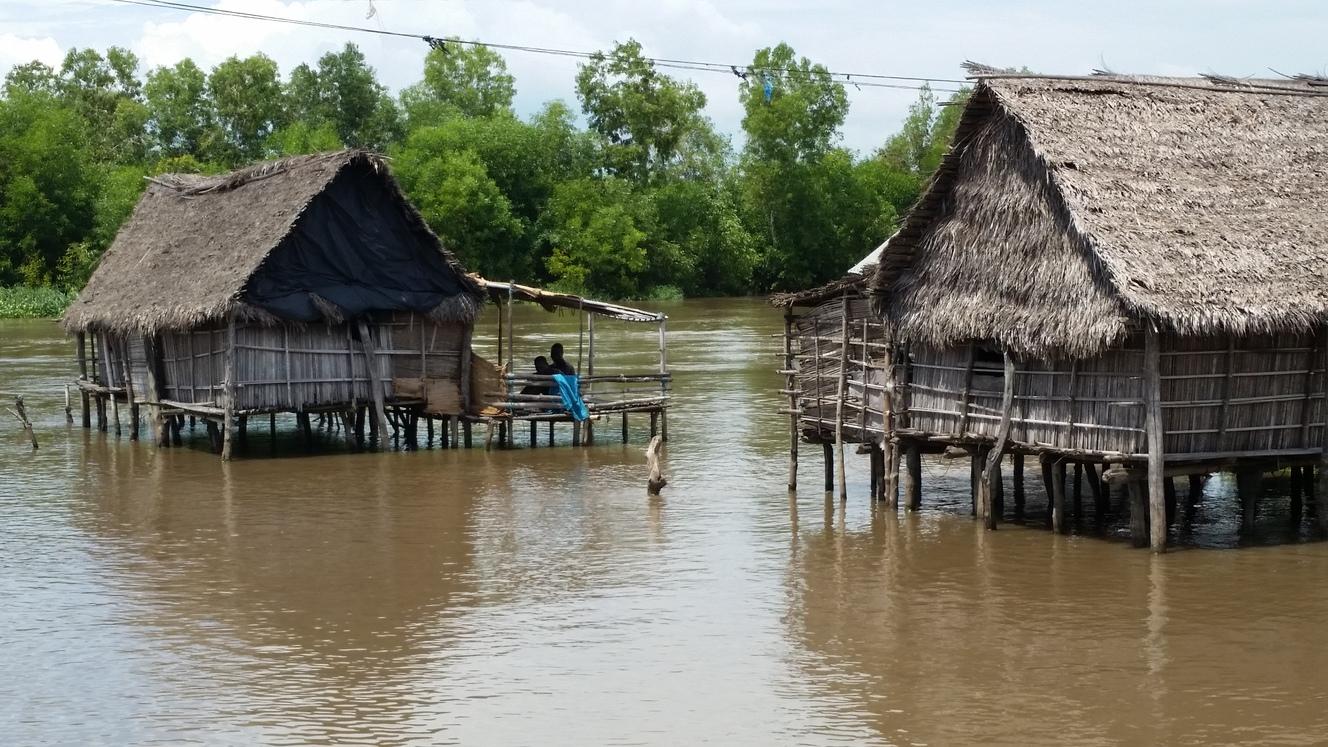
Two structures built in a wetland above the water.

Water village near Cotonou.

The IMSP is hoping to arrange a return visit. Stay tuned.
Professor Dray is a geometer whose research interests include general relativity, applications of nonassociative algebra to particle physics, and student learning of "middle-division" mathematics such as vector calculus. He is the author of several books on these topics, a Fellow of the American Physical Society, and an award-winning teacher.

Tevian Dray talking with colleague in lobby

Math professor receives national award for teaching excellence

By Katharine de Baun

Tevian Dray, professor in mathematics

Mathematics Professor Tevian Dray has received the 2017 Deborah and Franklin Tepper Haimo Award for Distinguished College or University Teaching of Mathematics from the Mathematical Association of America (MAA), in recognition of his exemplary mathematics teaching and his positive influence on college mathematics curriculum development and teacher training on a regional and national level.

He will be honored with the award at the 2017 Joint Mathematics Meetings(JMM) in Atlanta January 4-7. He is the first winner from Oregon State of this award since its inception nearly 25 years ago.

“Tevian Dray’s award is well-deserved and well-earned,” said Sastry Pantula, dean of OSU’s College of the Science. “We are very proud of him. His dedication to his discipline and to his students and colleagues sets a very high bar for teaching in the mathematical sciences.”

“We very much appreciate his continued work with our student success initiatives and math pathways," adds Pantula. "Tevian has enhanced the national recognition of our Department of Mathematics tremendously.”

Dray is a master teacher who consistently fosters curiosity and excitement in his hands-on, interactive classroom. He uses both alternative and non-traditional teaching methods as needed to empower students to discover themselves the beauty and depth hidden in mathematics. He has a particular knack for both timing and precision, asking just the right question to push a student to realize the surprising implication of their own argument or excavate an underlying theorem. And he knows when to remain quiet, knowing that it can be far more powerful to let students make mistakes and learn from each other.

Dray’s success is mirrored by his students’ assessments: more than 50% of his numerical evaluations in the past decade have ranked at least 5.8 on a 6.0 scale, and students comment consistently how he inspires them to be active learners and “removes barriers” through open yet expertly guided discussions.

Throughout the years, Dray has received numerous teaching awards, including the 2014 Elizabeth P. Ritchie Distinguished Professor Award, the University's highest teaching honor; the 2014 Distinguished Teaching Award of the Pacific Northwest section of the MAA; and the College of Science’s Loyd Carter Award for Outstanding and Inspirational Undergraduate Teaching and the Frederick Horne Award in 2004. In 2010, Dray was elected a Fellow of the American Physical Society for his work in relativity. He was named UHC Eminent Professor and UHC Outstanding Professor from OSU’s Honors College in 2012 and 2009 respectively.

"Good teaching is a joint effort between teacher and student," said Dray. "I am deeply moved by these awards, which recognize my good fortune in having been able to work with many, many dedicated students."

Dray has also made significant and original contributions to the national teaching of mathematics. His interdisciplinary strengths in math and physics—thanks to his early work in classical general relativity and his longtime collaboration with Physics Professor Corinne Manogue (his wife)—inspired him to make significant contributions to two pioneering, NSF-funded curriculum projects:

  • Vector Calculus Bridge project, that Dray directs and which addresses the divide between how vector calculus is taught by mathematicians and how it is understood by physicists, and
  • Paradigms in Physics project, that Corinne directs and is a complete redesign of the upper-division physics major

Recently, Dray designed a new course on Reference Frames and wrote an accompanying textbook that presents a geometric approach to relativity.

Dray has been a leader in teacher development throughout Oregon. At the Oregon Mathematics Leadership Institute (OMLI), he was part of the team that designed an OMLI course in non-Euclidean geometry that encouraged teachers to improve the quality of mathematical discourse in their classrooms by modeling instruction on an unfamiliar but accessible mathematical topic. He served as a co-PI of the Central Oregon Consortium, a Mathematics and Science Partnership providing professional development to middle-school math teachers in rural Oregon.

Dray received his bachelor of science in mathematics at the Massachusetts Institute of Technology and both his master’s and Ph.D. in mathematics from the University of California, Berkeley. He joined OSU’s mathematics faculty in 1988.

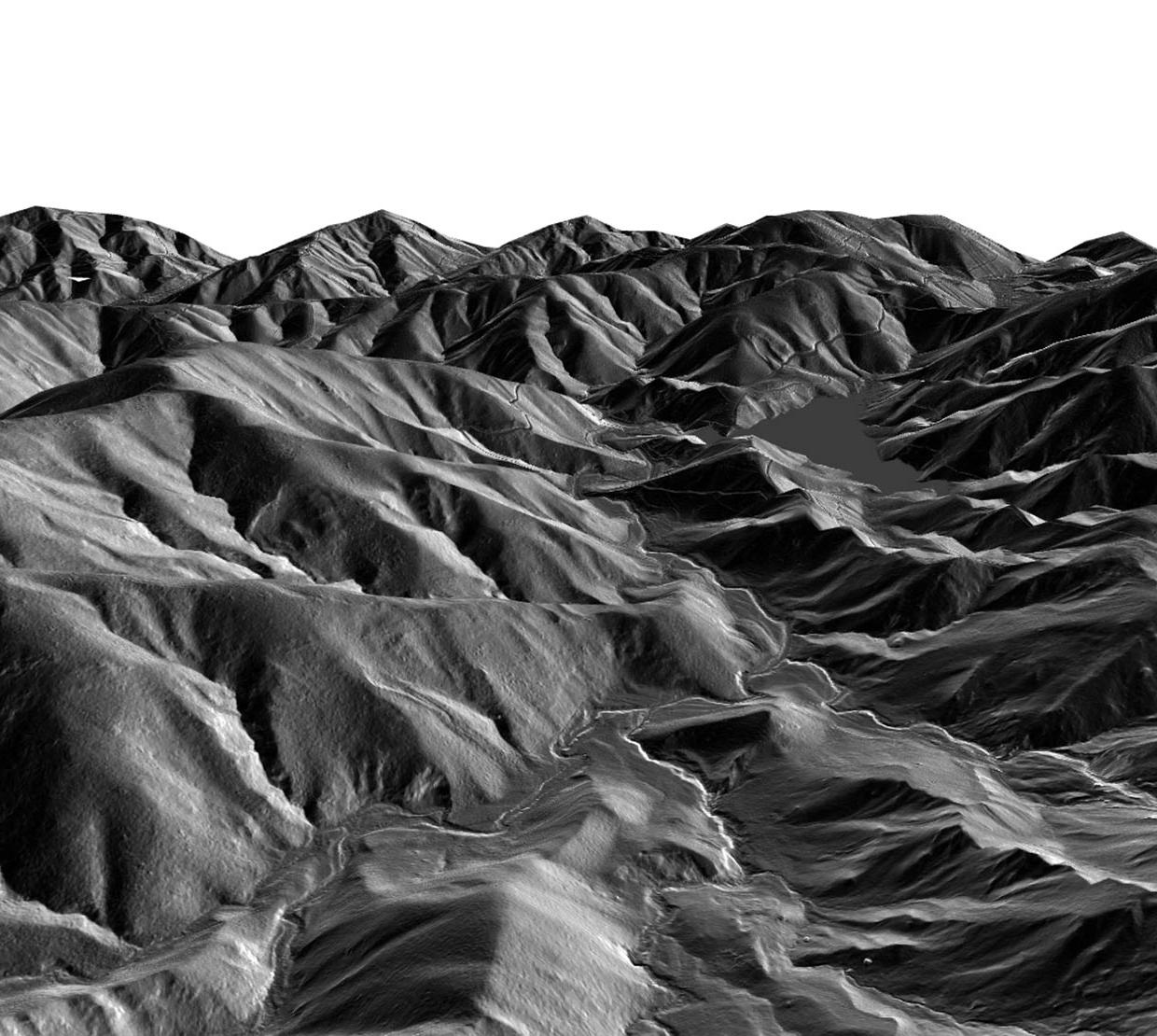
Black and white digital elevation models of mountains and hills

Big Data and Data Science Programs at NSF

image credit = LINZ Data Service

Chaitan Baru, Senior Advisor for Data Science for the Computer and Information Science and Engineering (CISE) Directorate at NSF, will visit campus January 15 to present a seminar on current NSF Big Data and Data Science program and activities. Science faculty and students are invited to attend the seminar, which will be held at 9 am in the Valley Library, Willamette Industries Seminar Room (room 3622) on the third floor.

Chaitan Baru in office space

Chaitan Baru, Senior Advisor for Data Science at NSF

Baru will present an overview of current programs and activities related to Big Data and Data Science at NSF and highlight inter-agency engagements within this area. He will also discuss future directions for Data Science research, education, and infrastructure.

NSF's BIGDATA program seeks novel approaches in computer science, statistics, computational science, and mathematics, along with innovative applications in domain science, including social and behavioral sciences, geosciences, education, biology, the physical sciences, and engineering that lead towards the further development of the interdisciplinary field of data science. Read more about NSF's BIGDATA program current solicitation. Deadline for proposals is February 9, 2016.

Considering that Data Science is a rapidly emerging, evolving field and discipline, Baru will take questions and allow ample time for discussions about where the field ought to be going given what we know today.

Currently on assignment with NSF, Baru is a Distinguished Scientist and Associate Director of Data Initiatives at the San Diego Supercomputer Center (SDSC), at the University of California, San Diego where he works on applied and applications-oriented research problems related to data management and data analytics. He leads the Advanced Cyberinfrastructure Development (ACID) Group at SDSC and is also Director of the Center for Large-scale Data Systems research (CLDS).

Baru has participated in a number of "data cyberinfrastructure" initiatives, including as Principal Investigator (PI) of the OpenTopography project; Cyberinfrastructure Lead, Tropical Ecology, Assessment and Monitoring network (TEAM); Co-Investigator of the Cyberinfrastructure for Comparative Effectiveness Research project (CYCORE); Member of the founding Senior Management Team of the National Ecological Observatory Network (NEON) and Co-PI of the NEON Cyberinfrastructure Testbed; Co-PI of the CUAHSI Hydrologic Information Systems (CUAHSI-HIS); Director, NEES Cyberinfrastructure Center (NEESit); PI/Project Director, Geosciences Network (GEON); and member of the How Much Information? project.

Subscribe to News