Mathematics

Mathematics

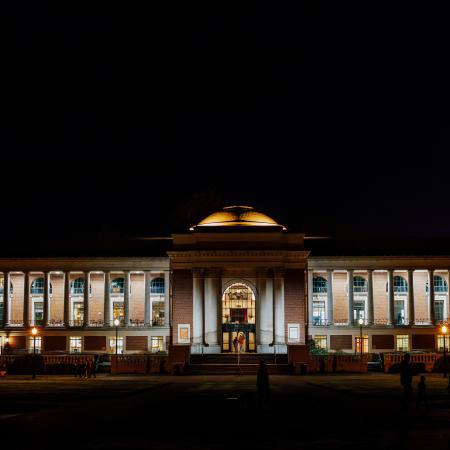
Seattle skyline at night

Math alumni reception set for JMM 2017

Last year's Joint Mathematics Meetings in Seattle

The Mathematics Department will welcome alumni and friends during the 2017 Joint Mathematics Meetings (JMM) in Atlanta at a special reception on Friday, January 6, from 7:00 - 8:30 pm at the Atlanta Marriott Marquis in room M102. Please join us for hors d’oeuvres and beverages and good conversation with new and old friends!

In addition to gathering friends and alumni, we will be honoring mathematics professor Tevian Dray, winner of the Deborah and Franklin Teppo Haimo Award for Distinguished College or University Teaching of Mathematics. The Mathematical Association of America (MAA) award honors teachers who have been widely recognized as extraordinarily successful and whose teaching effectiveness has been shown to have had influence beyond their own institutions. Please join us in congratulating, Tevian, who will receive the award at JMM 2017.

This is a great opportunity for alumni, friends and faculty to reunite and catch up. There is much good news to share!

If you aren’t attending JMM, consider attending or participating as an industry speaker or panelist next year. JMM is an excellent place to cultivate strong connections with academia and industry and to grow your professional network. One of our College’s strategic goals is to foster strong connections among academic, industry and government mathematicians and scientists.

JMM 2017 event poster

Many faculty and graduate students in the Department of Mathematics will be presenting talks at JMM this year.

THURSDAY, January 5, room A706, Atrium Level, Marriott Marquis

MAA Session on Research in Undergraduate Mathematics Education (RUME) I - A706, Atrium Level, Marriott Marquis

9:40 am, Is it a Function? Generalising from the Single- to Multivariable Setting, Allison Dorko*, Oregon State University

11:40 am, Student Generalizations from Finite to Infinite Dimensional Normed Spaces, Zackery Reed*, Oregon State University

1:40 pm, Supporting Instructional Change: The Raising Calculus to the Surface Project, Aaron D Wangberg*, Winona State University; Brian Fisher, Lubbock Christian University; Jason Samuels, City University of New York – BMCC; Tisha Hooks, Winona State University; Elizabeth Gire, Oregon State University

3:20 pm, Students’ Meanings of a (Potentially) Powerful Generalized Representation in a Combinatorial Setting, Elise Lockwood* and Zackery Reed, Oregon State University

MAA Poster Session on Projects Supported by NSF Division of Undergraduate Education - Marquis Ballroom, Marquis Level, Marriott Marquis

2:00 pm, Raising Calculus to the Surface, Aaron Wangberg*, Winona State University; Jason Samuels, City University of New York – BMCC; Brian Fisher, Lubbock Christian University; Elizabeth Gire, Oregon State University; Tisha Hooks, Winona State University

FRIDAY, January 6, 2017

AMS Contributed Paper Session on Topics in Analysis II, II Techwood, Conference Level, Hyatt Regency

10:15 am, The Reconstruction of The Band-limited Functions of Polynomial Growth with minimal Oversampling, Hussain Y. Al-Hammali*, Oregon State University

AMS Special Session on Quaternions, International 8, International Level, Marriott Marquis

1:00 pm, The eigenvalue problem for quaternionic and octonionic matrices, Tevian Dray* and Corinne A. Manogue, Oregon State University

1:30 pm, Division algebra descriptions of rotation groups, with applications to physics, Corinne A. Manogue* and Tevian Dray, Oregon State University

Presentations by MAA Teaching Award Recipients - Regency Ballroom VII, Ballroom Level, Hyatt Regency

2:30 pm, The geometry of calculus, Tevian Dray*, Oregon State University

SATURDAY, January 7, 2017

MAA Session on Discrete Mathematics in the Undergraduate Curriculum - Ideas and Innovations for Teaching I - A701, Atrium Level, Marriott Marquis

10:40 am, The Password Activity: An Instructional Tool for the Combinatorics Classroom, Zackery Kevin Reed*, Oregon State University

AMS Special Session on Inverse Problems and Multivariate Signal Analysis II - International 9, International Level, Marriott Marquis

3:00 pm, Numerical implementation of π-line reconstruction formulas in tomography, Adel Faridani*, Oregon State University

MAA Session on Discrete Mathematics in the Undergraduate Curriculum - Ideas and Innovations for Teaching II - A701, Atrium Level, Marriott Marquis

1:20 pm, How to Help Your Students Prove Combinatorial Identities, Elise Lockwood*, Oregon State University

AMS Contributed Paper Session on Combinatorics and Graph Theory IV - Greenbriar, Conference Level, Hyatt Regency

2:30 pm, Base Size Sets and Determining Sets, Joshua D Laison* and Erin M McNicholas, Willamette University; Nicole S Seaders, Oregon State University

AWM Workshop: Special Session on Number Theory II - A704, Atrium Level, Marriott Marquis

3:30 pm Generalized Legendre Curves and Quaternionic Multiplication, Alyson Deines, Center for Communications Research; Jenny G. Fuselier, High Point University; Ling Long and Fang-Ting Tu*, Louisiana State University; Holly Swisher, Oregon State University

Tevian Dray talking with colleague in lobby

Math professor receives national award for teaching excellence

By Katharine de Baun

Tevian Dray, professor in mathematics

Mathematics Professor Tevian Dray has received the 2017 Deborah and Franklin Tepper Haimo Award for Distinguished College or University Teaching of Mathematics from the Mathematical Association of America (MAA), in recognition of his exemplary mathematics teaching and his positive influence on college mathematics curriculum development and teacher training on a regional and national level.

He will be honored with the award at the 2017 Joint Mathematics Meetings(JMM) in Atlanta January 4-7. He is the first winner from Oregon State of this award since its inception nearly 25 years ago.

“Tevian Dray’s award is well-deserved and well-earned,” said Sastry Pantula, dean of OSU’s College of the Science. “We are very proud of him. His dedication to his discipline and to his students and colleagues sets a very high bar for teaching in the mathematical sciences.”

“We very much appreciate his continued work with our student success initiatives and math pathways," adds Pantula. "Tevian has enhanced the national recognition of our Department of Mathematics tremendously.”

Dray is a master teacher who consistently fosters curiosity and excitement in his hands-on, interactive classroom. He uses both alternative and non-traditional teaching methods as needed to empower students to discover themselves the beauty and depth hidden in mathematics. He has a particular knack for both timing and precision, asking just the right question to push a student to realize the surprising implication of their own argument or excavate an underlying theorem. And he knows when to remain quiet, knowing that it can be far more powerful to let students make mistakes and learn from each other.

Dray’s success is mirrored by his students’ assessments: more than 50% of his numerical evaluations in the past decade have ranked at least 5.8 on a 6.0 scale, and students comment consistently how he inspires them to be active learners and “removes barriers” through open yet expertly guided discussions.

Throughout the years, Dray has received numerous teaching awards, including the 2014 Elizabeth P. Ritchie Distinguished Professor Award, the University's highest teaching honor; the 2014 Distinguished Teaching Award of the Pacific Northwest section of the MAA; and the College of Science’s Loyd Carter Award for Outstanding and Inspirational Undergraduate Teaching and the Frederick Horne Award in 2004. In 2010, Dray was elected a Fellow of the American Physical Society for his work in relativity. He was named UHC Eminent Professor and UHC Outstanding Professor from OSU’s Honors College in 2012 and 2009 respectively.

"Good teaching is a joint effort between teacher and student," said Dray. "I am deeply moved by these awards, which recognize my good fortune in having been able to work with many, many dedicated students."

Dray has also made significant and original contributions to the national teaching of mathematics. His interdisciplinary strengths in math and physics—thanks to his early work in classical general relativity and his longtime collaboration with Physics Professor Corinne Manogue (his wife)—inspired him to make significant contributions to two pioneering, NSF-funded curriculum projects:

  • Vector Calculus Bridge project, that Dray directs and which addresses the divide between how vector calculus is taught by mathematicians and how it is understood by physicists, and
  • Paradigms in Physics project, that Corinne directs and is a complete redesign of the upper-division physics major

Recently, Dray designed a new course on Reference Frames and wrote an accompanying textbook that presents a geometric approach to relativity.

Dray has been a leader in teacher development throughout Oregon. At the Oregon Mathematics Leadership Institute (OMLI), he was part of the team that designed an OMLI course in non-Euclidean geometry that encouraged teachers to improve the quality of mathematical discourse in their classrooms by modeling instruction on an unfamiliar but accessible mathematical topic. He served as a co-PI of the Central Oregon Consortium, a Mathematics and Science Partnership providing professional development to middle-school math teachers in rural Oregon.

Dray received his bachelor of science in mathematics at the Massachusetts Institute of Technology and both his master’s and Ph.D. in mathematics from the University of California, Berkeley. He joined OSU’s mathematics faculty in 1988.

Sastry Pantula with alumni award winners

Recognizing excellence in science: 2016 Alumni Awards

By Debbie Farris

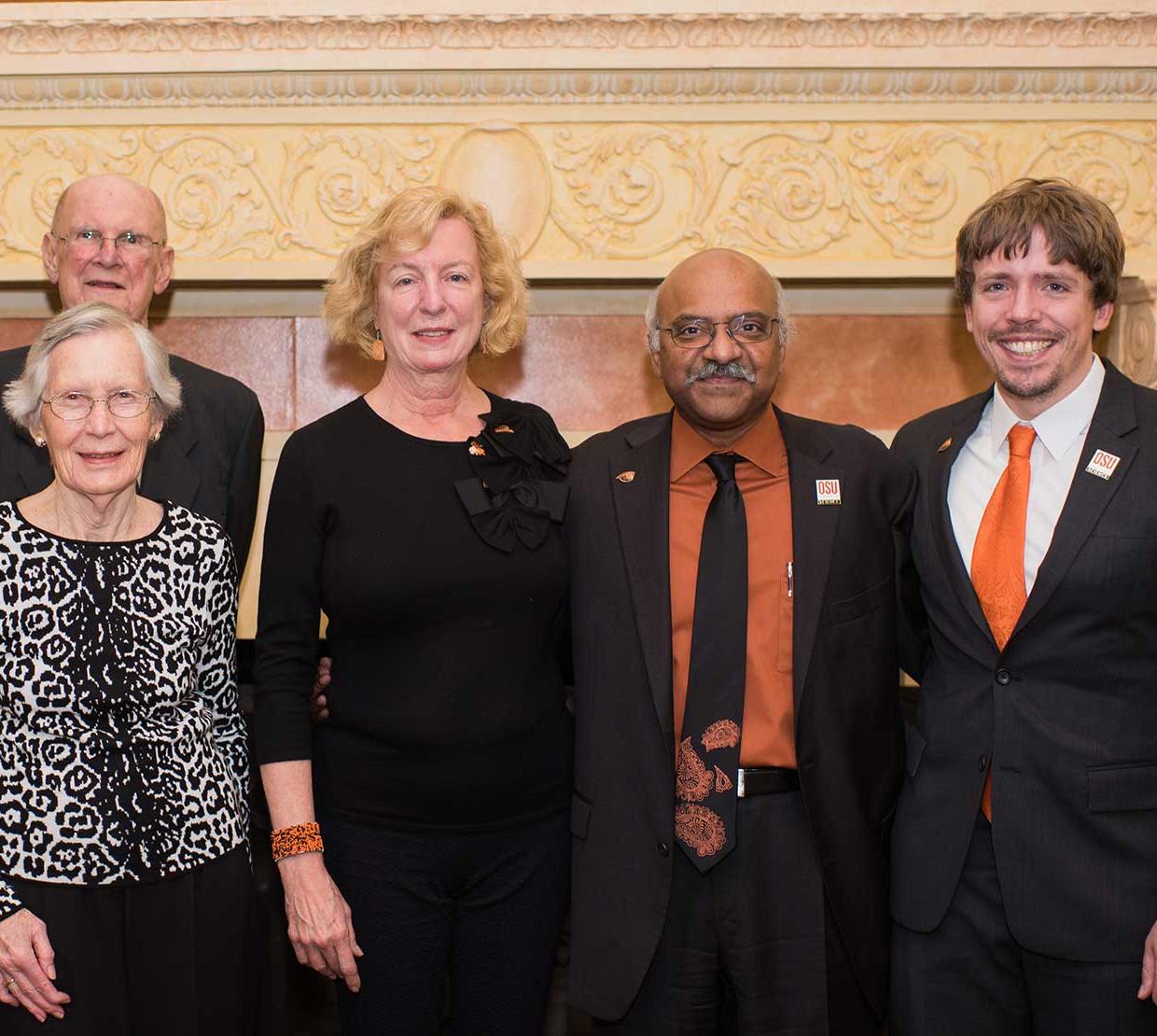
(Left to right) Ben and Elaine Whiteley, Gretchen Schuette, Sastry Pantula, and Scott Clark

The College of Science is proud to announce its 2016 Alumni Award recipients: alumnus and professor emeritus Ken Hedberg for the inaugural Lifetime Achievement in Science Award; Gretchen Schuette for the Distinguished Alumni Achievement Award; Ben and Elaine Whiteley for the Distinguished Service Award; and Scott Clark for the Young Alumni Award.

The awards publicly recognize alumni or friends of the College of Science for distinguished personal and career accomplishments and for exemplary contributions to society that bring credit to the College and to OSU.

“We are proud to honor these outstanding alumni and friends who have enriched so many lives through their professional achievements, impact and service," said Sastry G. Pantula, Dean of the College of Science.

"They have improved our communities here in Oregon and around the world through science while strengthening our College and OSU.”

The College celebrated the accomplishments of these distinguished individuals with a gathering of about 125 faculty, campus leaders, students, alumni and friends at its annual award ceremony and dinner at the Memorial Union's Horizon room.

Congratulations to these outstanding alumni for their scholarship, leadership and service to science at Oregon State University!

Check out these photos from the Alumni Awards Ceremony and dinner.

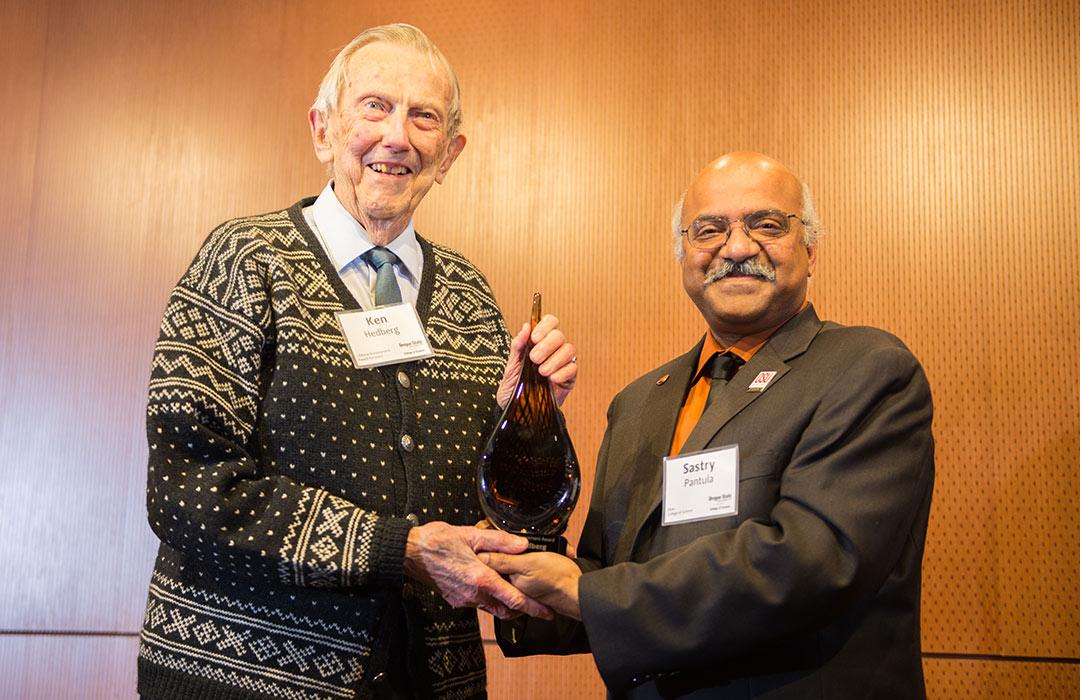
Ken Hedberg receiving award from Sastry Pantula

Ken Hedberg ('43), Professor Emeritus in Chemistry

Alumnus and professor emeritus of chemistry Ken Hedberg has lived a lifetime of science. He has spent more than seven decades advancing science as a chemist at OSU and is the emeritus professor who has conducted research for the longest well after retirement—nearly 30 years and counting. He graduated in 1943, joined our chemistry faculty in 1956, retired in 1987, but continues to keep regular hours in his office in Gilbert Hall, doing research, mentoring an undergraduate student and inspiring us all.

Read more of his incredible journey that began in 1939.

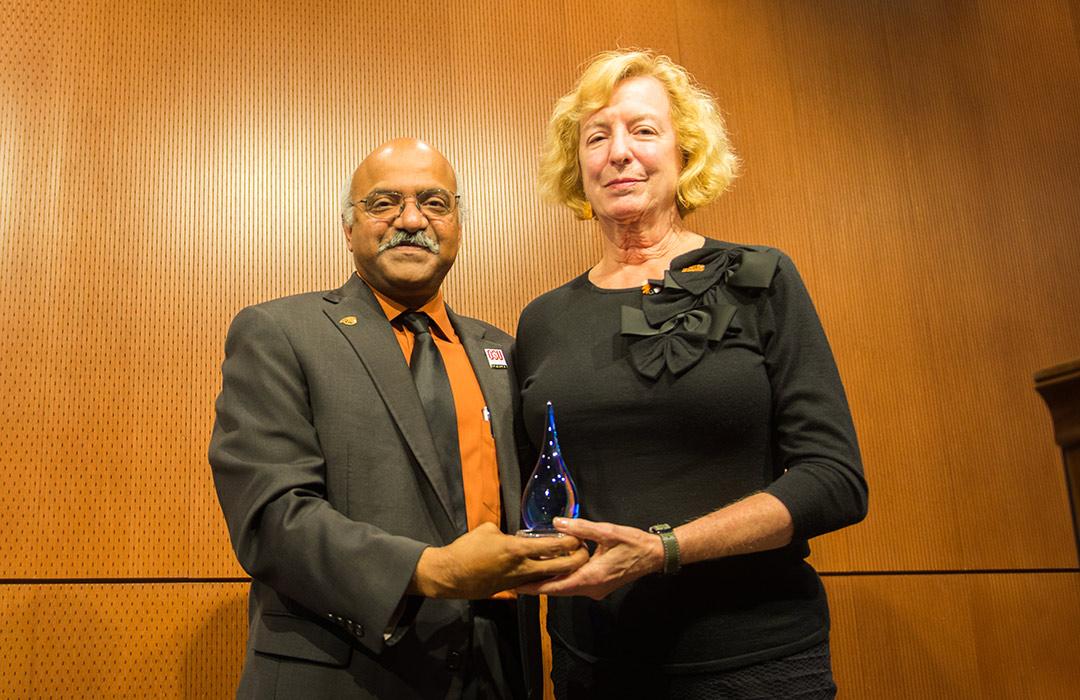
Gretchen Schuette receiving award from Sastry Pantula

Gretchen Schuette (‘80), Distinguished Achievement Award

An experienced education leader and advocate at many levels, alumna Gretchen Schuette (Ph.D., Oceanography, ‘80) served as Oregon State University’s first Dean of Distance and Continuing Education, as the Director of Portland Area Programs, President Emeritus of Chemeketa Community College and previously served at Linn-Benton Community College and Mount Hood Community College. Dr. Schuette also served as Oregon's Commissioner of Community Colleges and as superintendent of the Gresham-Barlow School District.

Read more of about her strong leadership across multiple levels of higher education in Oregon.

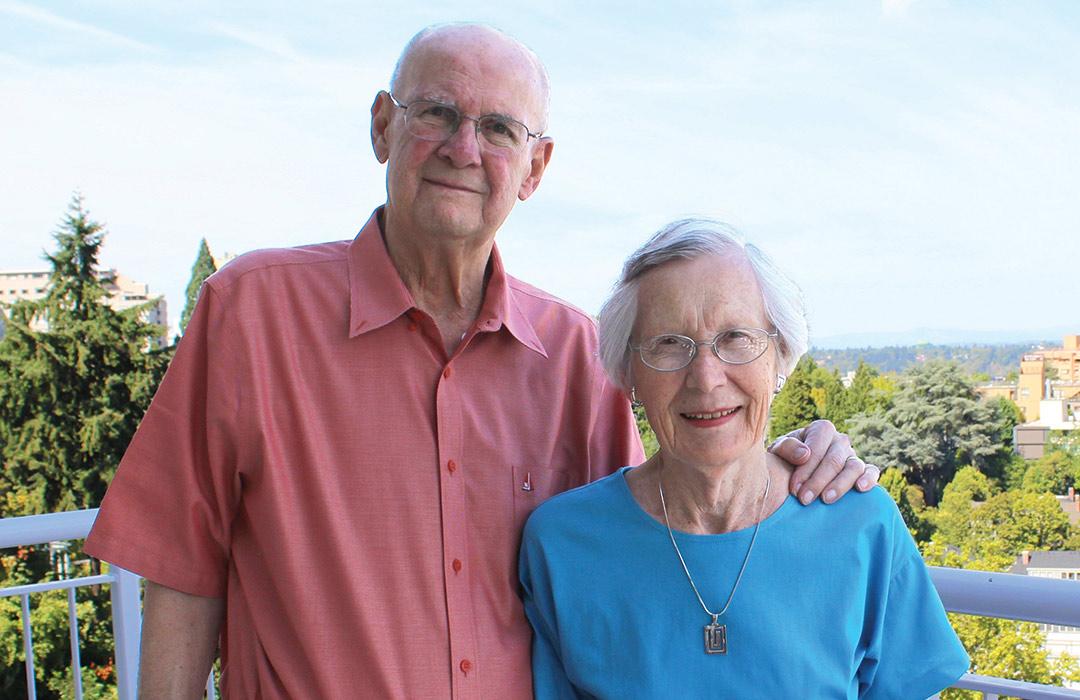
Ben and Elaine Whiteley standing on balcony overlooking town

Ben (’51) and Elaine Whiteley (’53), Distinguished Service Award

Ben and Elaine Whiteley are known for their humility and for putting service above self. Throughout their careers and lives, Ben and Elaine have exemplified a deep commitment to service and to actively helping others—all with hallmark Beaver humility. We are very fortunate to have them as part of Beaver Nation and our Science community. Ben was a business major in the class of 1951 but filled his electives with as many mathematics courses as he could. Elaine was in the Class of 1953 and majored in secretarial science and home economics.

Read about the tremendous impact they have made on many organizations throughout the years.

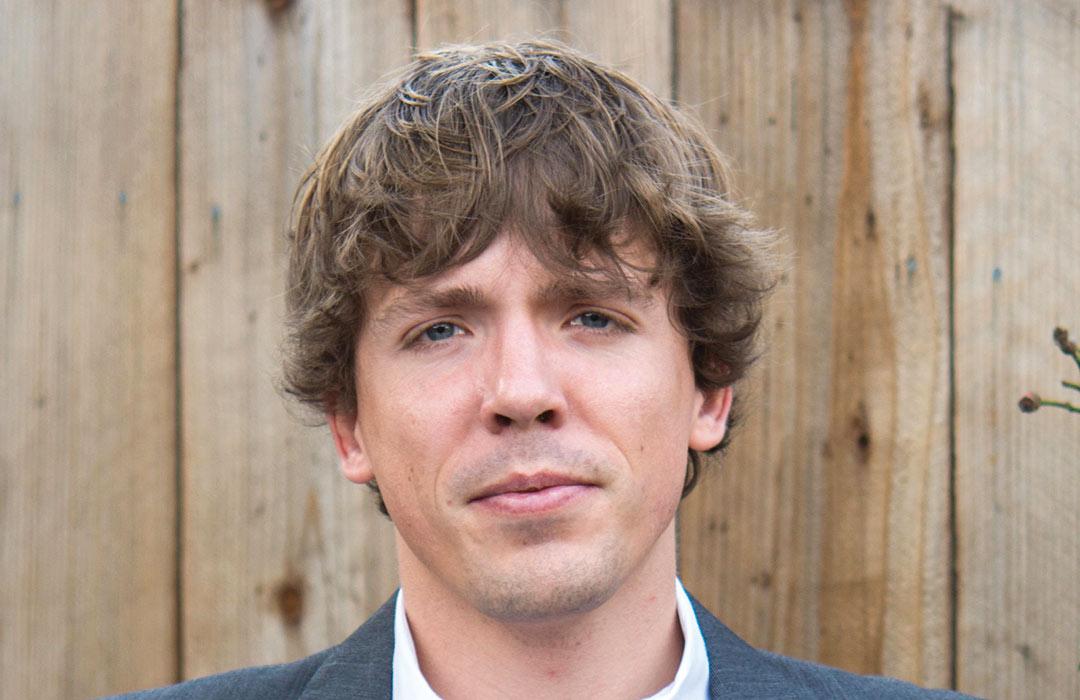
Scott Clark standing in front of fence

Scott Clark (’08), Young Alumni Award

Physics and mathematics alumnus Scott Clark was selected for the Young Alumni Award because of his extraordinary professional accomplishments achieved so early in his career. Named one of Forbes’ 30 under 30 in 2016 from among 15,000 nominees, Clark is in good company: he is one of 600 of America’s best and brightest young entrepreneurs, innovators and leaders. He was one of the first Ph.D.’s hired at Yelp, where he applied his academic research to developing the black box optimization system that helped improve the company's web analytics.

Read about the extraordinary accomplishments Scott has achieved so far in his career.

Sastry Pantula giving Scott Clark his alumni award

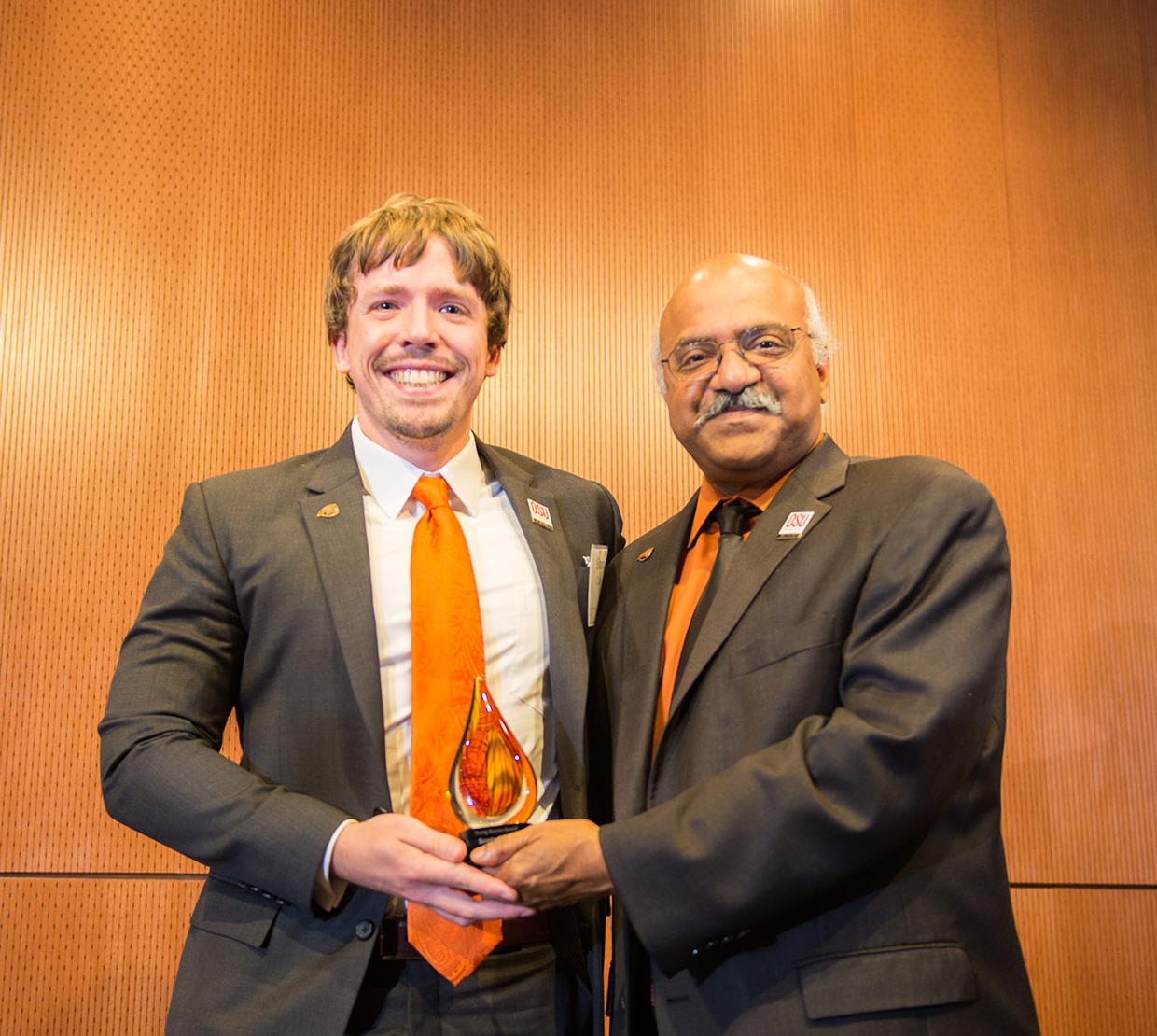
Young Alumni Award winner makes Forbes' 30 under 30 list

By Srila Nayak

Alumnus Scott Clark ('08) with Sastry Pantula

Physics and mathematics alumnus Scott Clark (’08) is the recipient of the 2016 College of Science Young Alumni Award thanks to his extraordinary professional accomplishments achieved so early in his career. Named one of Forbes’ 30 under 30 in 2016 from among 15,000 nominees, Clark is in good company: he is one of 600 of America’s best and brightest young entrepreneurs, innovators and leaders.

Clark grew up in Tigard, Oregon, and attended Central Catholic High School in Portland before arriving at Oregon State to study mathematics and physics. He is a very proud fourth generation Beaver; his parents, grandparents and great-grandparents graduated from OSU. Clark’s parents majored in journalism during the 1970’s and his father served as the editor of the Barometer.

Clark is deeply appreciative of his parents for encouraging his interest in mathematics and science, even though they didn’t have a background in the subjects.

“While I was in high school, they presented me with Feynman’s lectures in physics on my birthday,” remarked Clark.

OSU was a natural pick for Clark: his family had extensive ties to OSU and the university had a reputation for strong physics and mathematics program. He was a high-achieving undergraduate student, earning three bachelor's degrees in physics, mathematics, and computational physics in just four years.

Clark participated in undergraduate research and received funding through the National Science Foundation's Research Experiences for Undergraduates (REU) program to study quantum physics at the Max Planck Institute in Dresden, Germany. At the Max-Planck Institute, Clark got to combine physics and computer science for a project on extreme value statistics for chaotic quantum systems. “It was my first taste of getting some of the biggest computers in the world to solve math and physics problems,” recalled Clark.

Clark says his educational goal has always been to explore ambitious interdisciplinary projects that hold the possibility of large-scale social and scientific impact. It is a goal that was supported and encouraged in the science and math programs at OSU. Yet another REU award enabled Clark to work on a project in computational biophysics as they applied to protein folding at the University of California, Davis. While still an undergraduate, Clark published the results of this research in a well-regarded academic journal.

Clark fondly recalls his courses in numerical analysis, computational physics and the rigorous training he received in the Paradigms in Physics major. “They were all incredibly useful and satisfied the intellectual breadth and depth I was seeking.”

While at OSU, Clark worked closely with mathematics professor Malgorzata Peszynska on his thesis, “Finite Element Modeling on Uncertain Surfaces,” that was supported by an Undergraduate Research, Innovation, Scholarship and Creativity (URISC) award at OSU.

“The exposure to high-level research I got with Malgorzata gave me the ability to tackle complex problems at the interface of mathematics, physics and computer science. It solidified my desire to go to graduate school and helped me understand how research was done in the real world,” said Clark.

After graduating, Clark earned a Ph.D. in applied mathematics at Cornell University. While completing his degree, Clark observed researchers/domain experts often tweaking what they had built via trial and error often in the final stage of their research. So he developed MOE, a global, black box optimization engine for metric optimization, to solve this problem. Later he used this technology to optimize machine learning models and A/B tests at his first job at Yelp.

“It is extremely rewarding to unlock academic research and bring it to the real world,” said Clark.

Clark was one of the first Ph.D.’s hired at Yelp, where he applied his academic research to developing the black box optimization system that helped Yelp improve its web analytics, resulting in higher click-through rates and an enhanced user experience.

In 2014, Clark left Yelp and co-founded, SigOpt, a software company that uses machine learning and complex algorithms to optimize user experiments for websites and other applications.

The startup offers a Cloud-based optimization platform that amplifies research by tuning it in place, boosting business objectives. Industries, data science professionals and websites use the software to optimize their products and accelerate projects. The software is used widely by globally recognized leaders across insurance, credit card, algorithmic trading and consumer packaged goods industries. To date, SigOpt has raised $8 million in funding from Andreessen Horowitz, Y Combinator, Data Collective and others.

Clark’s advice for science majors is to seek out interdisciplinary training in college because it is highly valuable in the job market and provides the confidence to apply skills to different businesses. “An interdisciplinary layer to your work gives a lot of dividends in industry.”

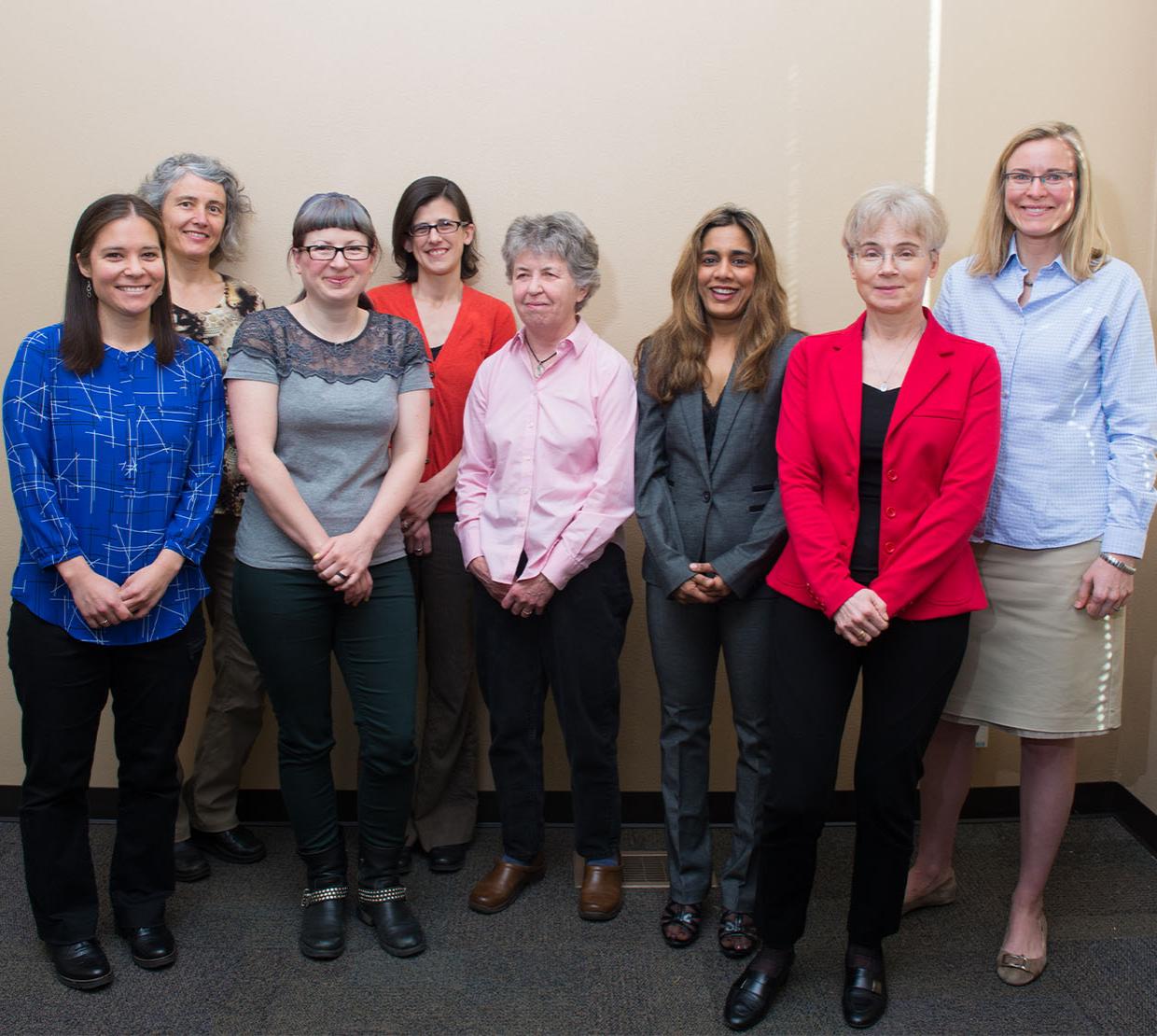
Women professors in the Math department.

Balancing the equation: OSU women mathematicians are adding up

By Srila Nayak

From left to right: Elise Lockwood, Christine Escher, Holly Swisher, Elaine Cozzi, Mary Flahive, Vrushali Bokil, Malgorzata Peszynska, and Mary Beisiegel.

Mathematics associate professor Holly Swisher is eloquent about what it means to be a woman mathematician at a time when the number of female research mathematicians continues to remain low.

“I think the biggest obstacle for an individual in an underrepresented group is just being able to see yourself doing a certain job that people have never imagined someone like you doing. I can think of at least three instances when a female student has come up to me and said, ‘Meeting you makes me visualize myself in this job.’ ”

Swisher is one of nine women tenure-track and tenured faculty in Oregon State University’s Department of Mathematics, an impressive number considering the national trend. When you do the math, that’s 30% women in the department, which is home to 30 tenured and tenure-track faculty.

According to a 2010 survey by the Conference Board of the Mathematical Sciences, women comprise only 16% of the tenured and tenure-line faculty at doctoral-level mathematics departments. Despite gains in the numbers of women opting to study math and science*, a large disparity exists between men and women’s representation in tenured and tenure-track positions in the fields of mathematics, physics and engineering.

The statistics clearly indicate that the gender composition of OSU’s Mathematics Department marks a striking departure from the norm.

Currently, the department has three tenure-track women mathematicians: Elaine Cozzi, Mary Beisiegel and Elise Lockwood. It has two associate professors, Vrushali Bokil and Holly Swisher, and four professors, Mina Ossiander, Mary Flahive, Christine Escher and Malgorzata Peszynska.

Ossiander, who joined the department in 1988, was the first woman to become a full professor. The women mathematicians boast of highly impressive research and teaching accomplishments. They have received competitive research grants from prestigious institutions across the country, and have been lauded for their extraordinary teaching and service contributions

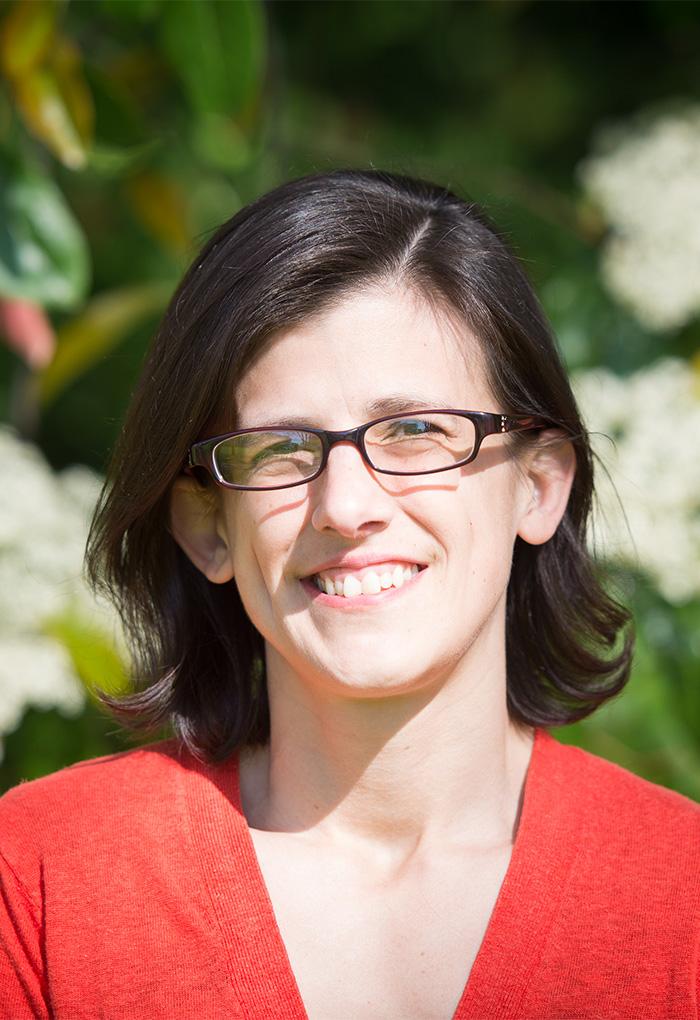
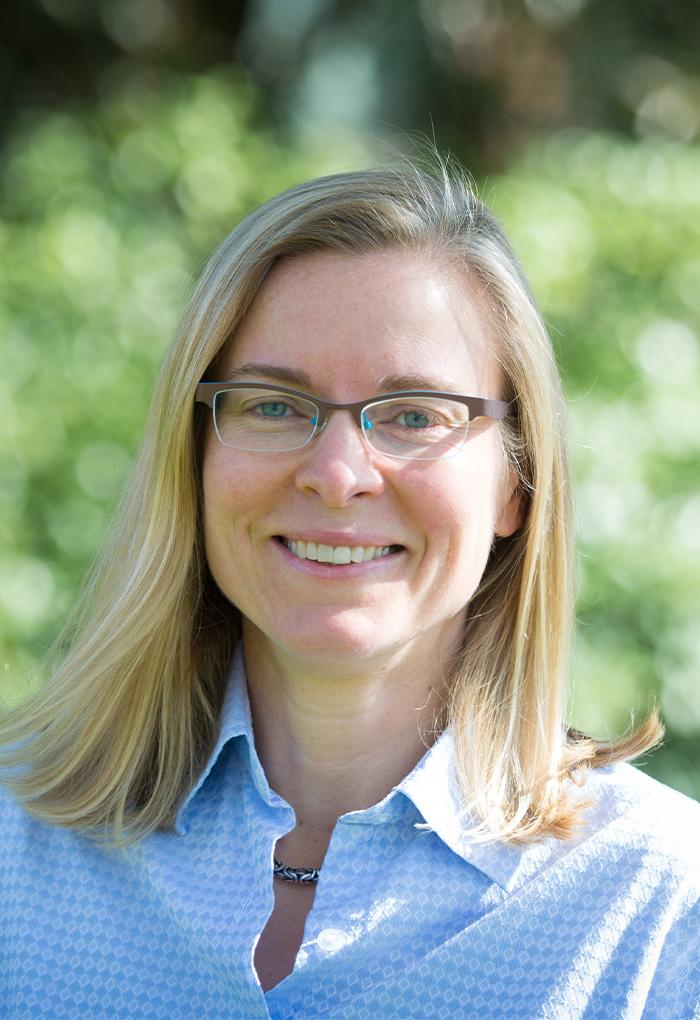
Portrait photo of Elaine Cozzi

Elaine Cozzi

Cozzi was awarded a 4-year National Science Foundation (NSF) grant for a project on mathematical fluid mechanics and the graduate student faculty award for her mentorship and teaching. Bokil has received multiple NSF awards as well as grants from the National Energy Technology Laboratory (NETL). She is currently collaborating with a mix of biologists and mathematicians on a project funded by NIMBioS, the NSF funded National Institute of Mathematical and Biological Synthesis.

Portrait photo of Christine Escher

Christine Escher

Portrait photo of Mary Flahive

Mary Flahive

Escher has received grants from the NSF and the Association for Women in Mathematics for her work in algebraic topology and differential geometry. Mary Flahive has collaborated with Bella Bose in computer science on work funded by NSF. She has written three books, including a research monograph published by the American Mathematical Society, and has received the College of Science’s Olaf Boedtker Award for Excellence in Undergraduate Advising.

Portrait photo of Malgo Peszynska

Malgorzata Peszynska

A computational mathematician, Malgorzata Peszynska has received numerous NSF and Department of Energy grants (DOE, NETL) for her interdisciplinary research projects spanning computational mathematics and applications in hydrology, oceanography, environmental engineering, physics and materials science.

Ossiander, whose research encompasses theoretical and applied probability, has been principal investigator and co-investigator on a number of grants from NSF and other governmental agencies. Recently she has contributed her expertise in statistical modeling to interdisciplinary projects in hydrology and geostatistics.

Portrait photo of Holly Swisher

Holly Swisher

Holly Swisher is a member of one of the most ambitious mathematical collaborations in recent times. She was chosen to join a team of more than 70 mathematicians from 12 different countries who worked over a period of five years to create a massive mathematical database called the “L-functions and Modular Forms Database (LMFDB). The database catalogs objects of central importance in number theory and maps out the intricate connections between them.

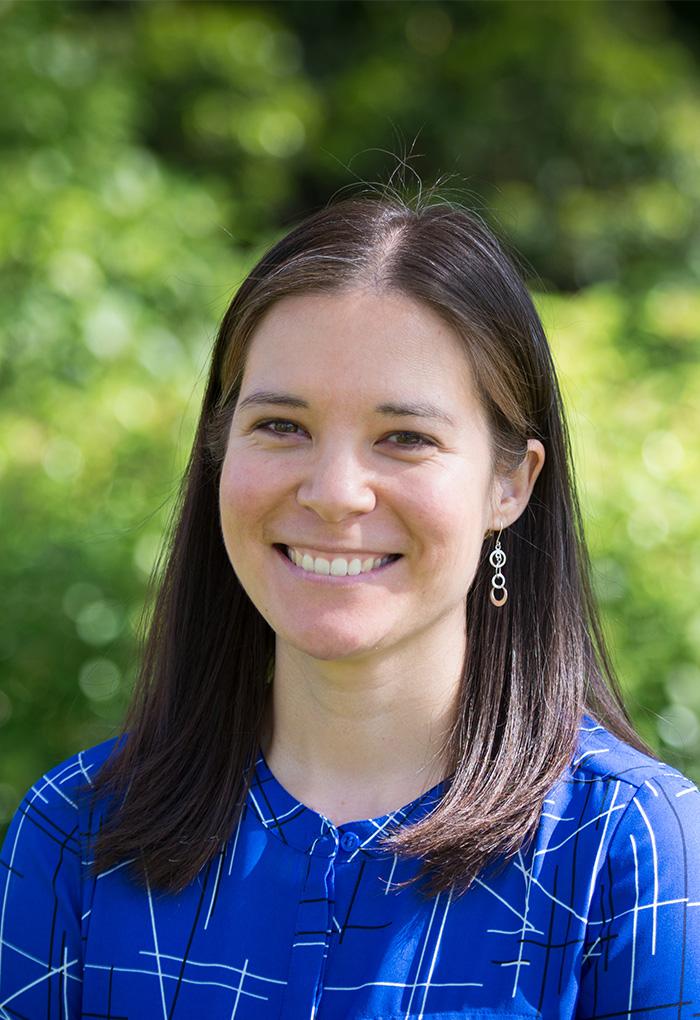
Portrait photo of Mary Beisiegel

Mary Beisiegel

A specialist in mathematics education for post-secondary teaching, Mary Beisiegel has been awarded an NSF grant for "Improving Undergraduate STEM Education," a collaborative effort among 11 institutions aimed at improving teaching in lower division mathematics and science courses.

Portrait photo of Elise Lockwood

Elise Lockwood

Elise Lockwood, an expert in mathematics education research, is a co-principal investigator on a grant awarded by the NSF Research on Education and Learning (REAL) program.

Lockwood investigates student learning in a variety of mathematical environments. “My zeal for math education research developed when I took a combinatorics class,” Lockwood observed. “I fell in love with counting problems and became obsessed with learning everything I could about why students struggle to solve such counting problems and how I could help them improve.”

Many say they learn something new every day as mathematicians.

“I loved math before I knew what a ‘career’ is,” said Peszynska, who grew up in Poland and once encountered a university professor who called her parents to suggest they steer their daughter to a career other than mathematics. Her sentiments toward the pursuit of mathematics are widely shared by her colleagues.

“What inspires me is my love for teaching mathematics and sharing the conceptual ideas and representations with students,” emphasized Beisiegel. Escher enjoys studying the “powerful tools” of algebraic topology and their uses in various other fields such as differential geometry and theoretical physics. “It is a beautiful connection between different areas of mathematics that leads to strong classification theorems.”

Dual career mathematician couples

In a study of dual-career academic couples by Stanford University’s Clayman Institute of Gender Research, a participant remarked, “Talented academics are often partnered, and if you want the most talented, you find innovative ways of going after them.” Not surprisingly, traditionally a lack of institutional support for dual-career hiring or meeting the needs of academic couples has held women back from pursuing competitive jobs in academic STEM fields.

A key reason behind the Mathematics Department’s success in hiring and retaining higher numbers of female mathematicians is its friendly and encouraging attitude toward accommodating academic couples. The department has successfully implemented a dual hiring initiative in several cases and currently has five mathematician couples in tenured or tenure-track positions—all of whom were partnered before they arrived at Oregon State.

There is ample evidence suggesting that lack of career support for partners leads to a high proportion of women accepting nontenure-track and part-time positions at research universities, instead of tenured or tenure-track positions. The American Association of University Professors views partner hiring at academic institutions as “common and necessary.”

There is yet another unconventional feature that sets the Mathematics Department apart from most other academic departments—in most of its dual partner hires, the woman was the first hire. According to a survey of 9,000 full-time faculty at 13 leading U.S. research universities, men comprise the majority of first hires: 58%, in fact, reported Stanford University’s Clayman Institute. OSU’s Mathematics Department has reversed the gender ratio in this respect.

Bokil observed that four of the five women mathematicians were the first hire. OSU was able to successfully hire their partners for faculty positions as well. It was a win-win situation: the partner hires brought skills and qualifications that matched important research and teaching objectives in the department.

When Cozzi was interviewed, she informed the hiring committee that her mathematician spouse, Clay Petsche, was on the job market as well. They were both interviewed and both offered tenure-track jobs.

“The department made a huge effort to consider both of us for jobs. They are very good at taking advantage of situations where there are two people who want to come and are quality candidates,” said Cozzi.

Mentorship has also played a significant role in enhancing the career success of women faculty.

“This department has been, in addition to creating space for spouses, really good in mentoring young faculty,” Bokil pointed out. She was mentored by men and women in the department, and received valuable advice on writing grants, editing proposals, applying to workshops and conferences.

“In our department, people go out of their way to think of others, help others, promote others,” added Bokil. Several research studies have shown the significance of mentoring for women’s success in achieving tenure and promotion.

A number of OSU women mathematicians say they attended Ph.D. programs where there were no or very few female research professors. Flahive, who did her doctoral studies at Ohio State University in the 1970s, was one of just a few women students.

Swisher had very few women professors in graduate school. “At University of Wisconsin-Madison, while I was a graduate student, there were only two female faculty out of 50 professors. It was very different from here," said Swisher.

Little wonder then that Oregon State’s Department of Mathematics feels like a breath of fresh air to its women professors.

The department’s younger women mathematicians were encouraged at what they saw during the interview process: the hiring committees were either chaired by women or comprised women members.

“I think, in some degree, I was drawn to a department where I saw other women. OSU Math has done a really good job ensuring they interview qualified women candidates and then give them a chance to showcase their work,” said Cozzi.

Flahive, who joined the department in 1990, has witnessed the gender diversification of the Mathematics Department over the years.

“It has something to do with the attitude of my colleagues. We don’t think of hiring women mathematicians as unusual.”

Overcoming biases and stereotypes

Society at large continues to stereotype mathematics as a male domain, and such beliefs can discourage women from entering or pursuing mathematical careers. A 2010 CBMS survey reported that women earn 45% of the undergraduate degrees in mathematics, but women comprise only 11% of tenured faculty and 27% of tenure-eligible faculty in doctoral mathematics departments.

OSU’s Mathematics Department has done its fair share to overturn stereotypes about gender and mathematical ability and send a powerful message that women can do math and excel at very high levels of mathematical performance.

Women mathematicians at OSU have mentored and advised high numbers of women undergraduate and graduate students as well as postdoctoral researchers over the years. Bokil proudly mentioned that her first doctoral student was a woman who is pursuing a successful research career at Los Alamos National Laboratory.

They are also acutely aware of their influence as educators and mentors in a field that has fewer female role models.

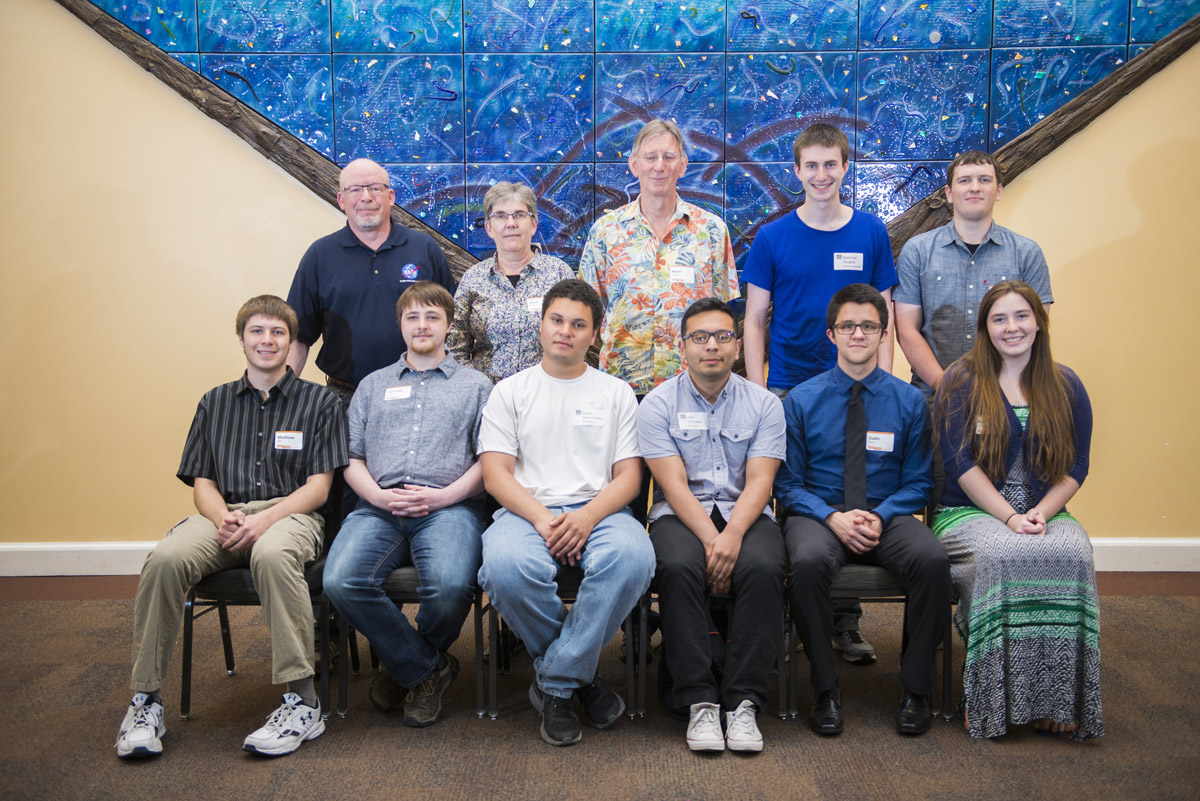
Swisher is the organizer and faculty mentor of OSU’s highly successful Research Experiences for Undergraduates (REU) program in Mathematics, an NSF-funded research program in mathematics and theoretical computer science for undergraduate students that has been held nearly every summer since 1987.

Focused on cutting-edge research in pure and applied mathematics, the REU program supports 10 undergraduate students and runs for eight weeks in the summer. The program has a strong track record of enrolling at least 50% female students in each cohort from large and small, public and private universities who would not otherwise be exposed to the research process.

There were times as a student when Cozzi, who conducts research in mathematical analysis, admits she would find herself thinking, “I am the only woman in this room. Maybe there is something to this idea that I don’t belong.” Cozzi is pleased that some of the women she is teaching may see her and believe that a research career in mathematics is possible.

Over the years, Bokil has found herself thinking about cultural forces that stand in the way of women mathematicians. After attending numerous mathematics conferences throughout her career, she was struck by the privileges enjoyed by men.

“I notice that male mathematicians at conferences get more exposure, more access to research networks and collaborations. It can appear as an impenetrable men’s club.” This year, Bokil is part of a research group of three women that has received funding to do research at the Institute of Computational and Experimental Research in Mathematics (ICERM) at Brown University and the Mathematisches Forschungsinstitut Oberwolfach (MFO) in Germany.

“I was determined to find more women mathematicians to work with. I think this is one way women mathematicians can be successful: By coming together to form research teams,” Bokil said.

A number of initiatives exist to redress gender imbalance in mathematics and combat entrenched sociocultural biases that hold back women mathematicians in the areas of research collaboration, promotions, research awards, inclusion in journal editorship, scientific associations and conference committees. Prominent among them is the Association for Women in Mathematics (AWM), which supports domestic and foreign research travels for women mathematicians and has recently received a $750,000 NSF ADVANCE grant to help establish research networks for women by fostering research collaborations at conferences and AWM Workshops.

*According to the National Science Foundation, in 1966 women earned 6% of doctorates in mathematics and in 2006 earned nearly 30% of doctorates.

Sources

  • Schiebinger, Londa, et al. “Dual-Career Academic Couples: What Universities Need to Know.” Michelle R. Clayman Institute for Gender Research, Stanford University, 2008.
  • Blair, Richelle, et al. Conference Board of Mathematical Sciences Survey Reports 2010. American Mathematical Society, 2013.
  • Jaschik, Scott. “Doing ‘Dual Career’ Right.” Inside Higher Ed, 2010.
  • National Science Foundation, Division of Science Resources Statistics, 2008, Science and engineering degrees: 1966–2006.
  • Peszynska, Malgorzata. “Meet Malgorzata Peszynska.” Oregon Women in Higher Education, 2015.

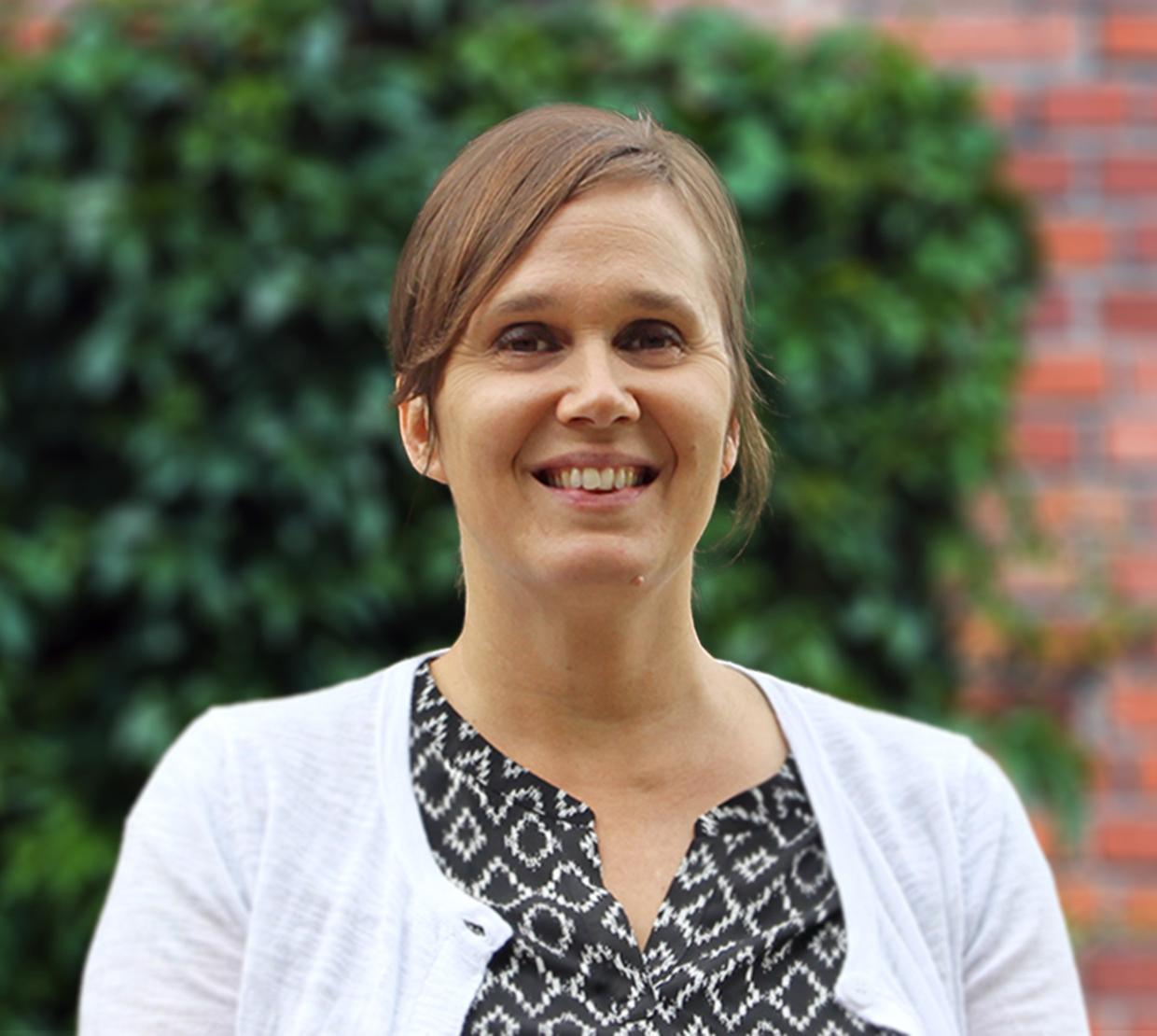
Lyn Riverstone in front of brick wall and shrubbery

Meet Interim Assistant Dean Lyn Riverstone

By Debbie Farris

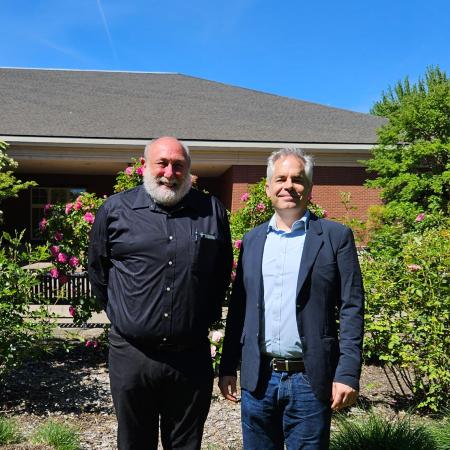
Lyn Riverstone, academic advisor in the Department of Mathematics and interim Assistant Dean for Academic and Student Affairs

The College of Science welcomes Lyn Riverstone as interim Assistant Dean for Academic and Student Affairs in our College. She will continue to serve as an academic advisor in the Department of Mathematics where she also coordinates math placement.
She has served as a senior mathematics instructor and academic advisor at OSU and brings more than 20 years of experience teaching mathematics at the university and at community college.

“I am happy to welcome Lyn as our interim Assistant Dean for Academic and Student Affairs,” said Sastry G. Pantula, dean of the College of Science. “I know her passion for student success and excellence in science will make a positive difference on our students and in our community of OneScience.”

The Assistant Dean position is an integral part of the Executive Leadership Team working closely with the Dean, Associate Deans, unit Heads, Marketing Director, faculty, and staff to advance the mission of the College. Specifically, this position is responsible for implementing the strategic plan of the College and leading the faculty in development of policies and programs to improve undergraduate student success and equalization by closing gaps in degree completion for Pell-eligible, First Generation, and Underrepresented Students in the science disciplines within the College.

“I am honestly excited about every one of the duties as assistant dean!” said Riverstone. “But I’m especially excited about the opportunities to collaborate with colleagues and students across campus to develop and to continuously improve the experiential learning programs in our College.”

Riverstone will split her time between directing advising and developing and managing experiential learning programs. She will serve as Director of Advising and supervise the Head Advisor in the College. In addition, she will help lead the College’s efforts for continuous improvement of undergraduate academic programs and will support student success and equalization, which includes recruitment, orientation, first- and second-year experience programs, living learning communities, and diversity initiatives.

Most recently, Riverstone began serving on the College Algebra implementation team of the project, “All Hands on Deck: Adaptive Learning Transformation,” part of the APLU grant managed by Julie Greenwood, Associate Dean for Undergraduate Studies in the Division of Undergraduate Studies. The project will implement adaptive courseware in eight of OSU’s high enrollment general education courses that act as predictors of attrition and lay the foundation to scale-up the use of this courseware to support undergraduate student success.

For the last three years, Riverstone has taught INTO OSU Pathway students, implementing active-learning strategies—clickers, flipped classroom, personalized homework, and classroom discussion of student work—to help increase the success of our international students. She also led the implementation of ALEKS, the adaptive math placement assessment, and coordinated OSU’s mathematics placement program.

With an extensive record of leadership and service, Riverstone served as a trustee on the Board of Education of Linn-Benton Community College. In addition, she served on an instructional design team for the Oregon Mathematics Leadership Institute, a 5-year NSF-funded project. The intensive 3-week summer institute deepens K- 12 teachers’ content knowledge of mathematics and helps develop their leadership skills.

Riverstone earned her master’s degree in mathematics with a math education option at OSU and her bachelor’s degree at California State University, Sacramento.


Read more stories about: news, faculty and staff, mathematics


Certificate icon above aerial shot of the Memorial Union at sunset

Graduate students earn teaching excellence certificates

Teaching excellence

The College of Science congratulates the following graduate students who have earned the Graduate Certificate in College and University Teaching (GCCUT): Trevor Tivey (Zoology), Sarah Erickson (mathematics), Emerald Stacy (mathematics) and Chelsea Holman (Biochemistry and Biophysics).

Offered as part of the Graduate School, GCCUT is an 18-credit certificate program offered over the course of two years that enhances teaching skills through advanced coursework and experiential learning opportunities. Students in the program generally plan to teach in a higher education setting or work in a field that requires facilitation skills. Students receive a formal, transcript-visible credential.

Students complete this training on top of their graduate coursework and research.

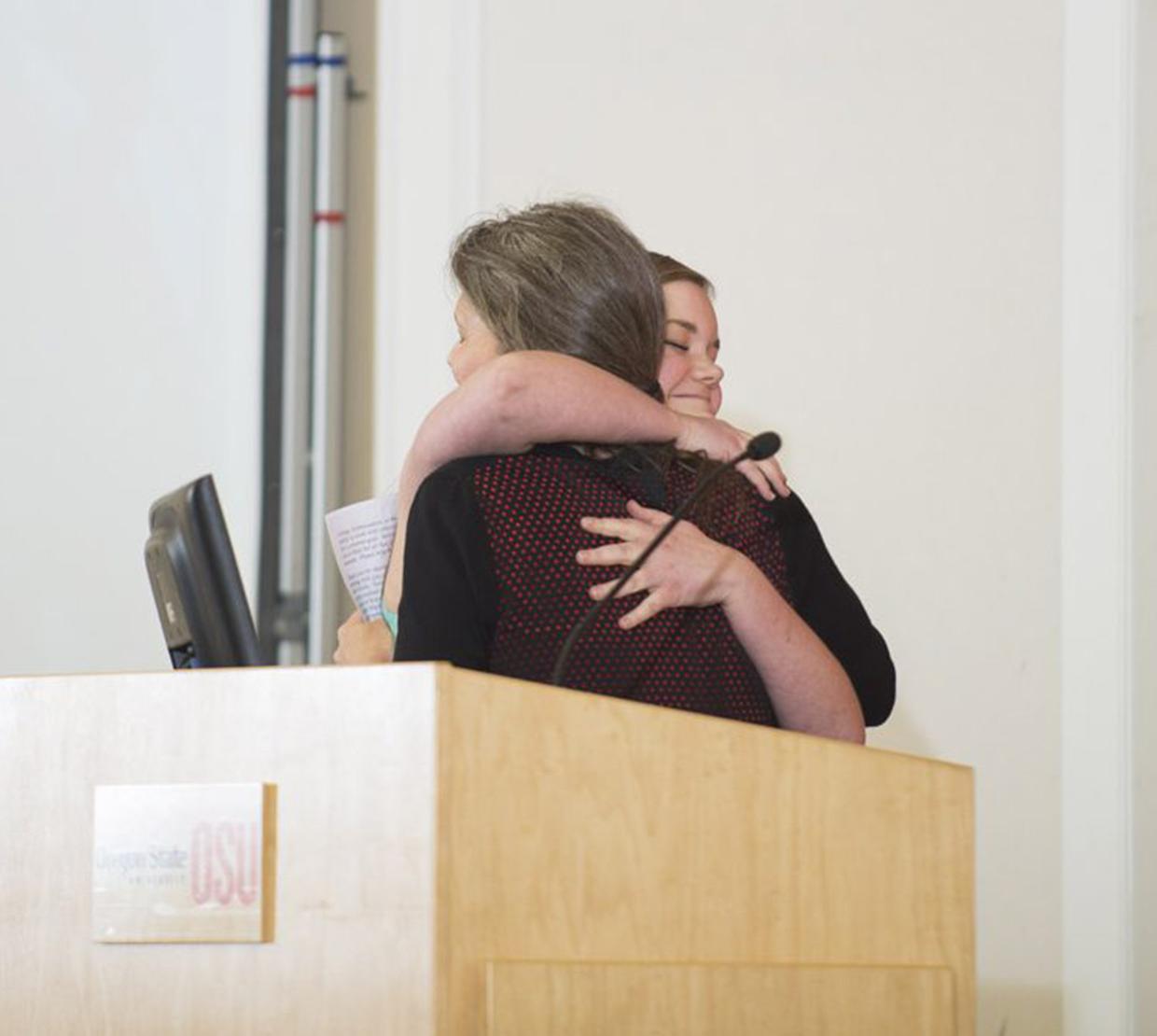
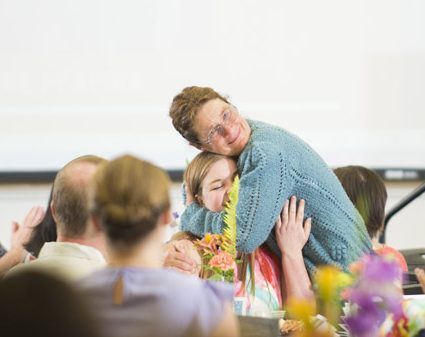
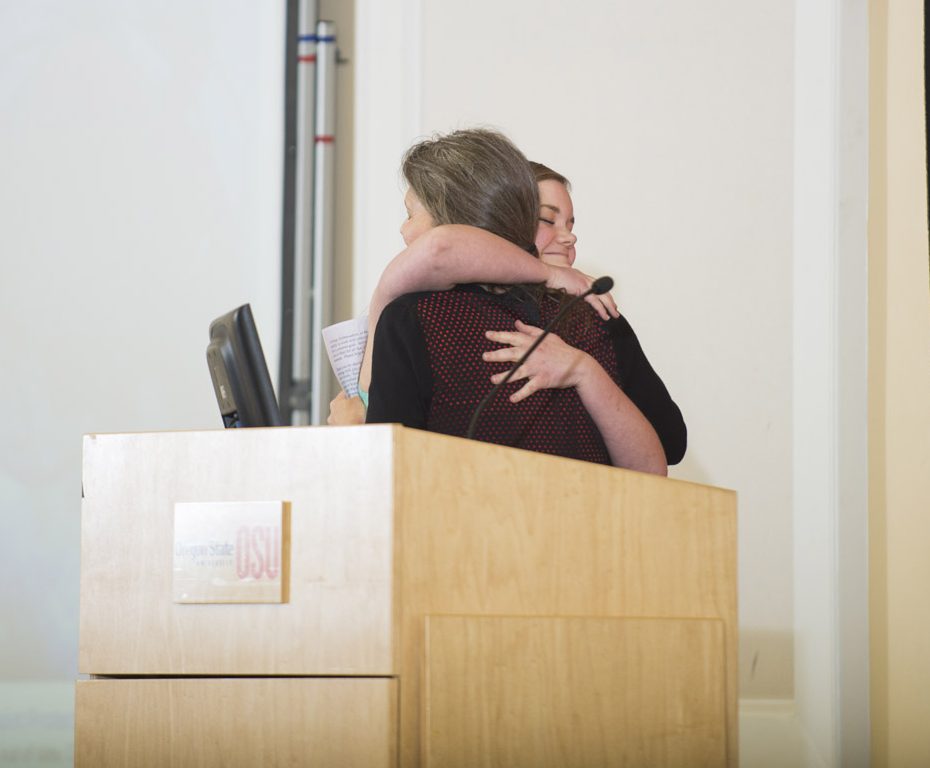
Two women hugging each other behind podium

Celebrating scholarship at our annual dessert

Celebrating at the Scholarship Dessert

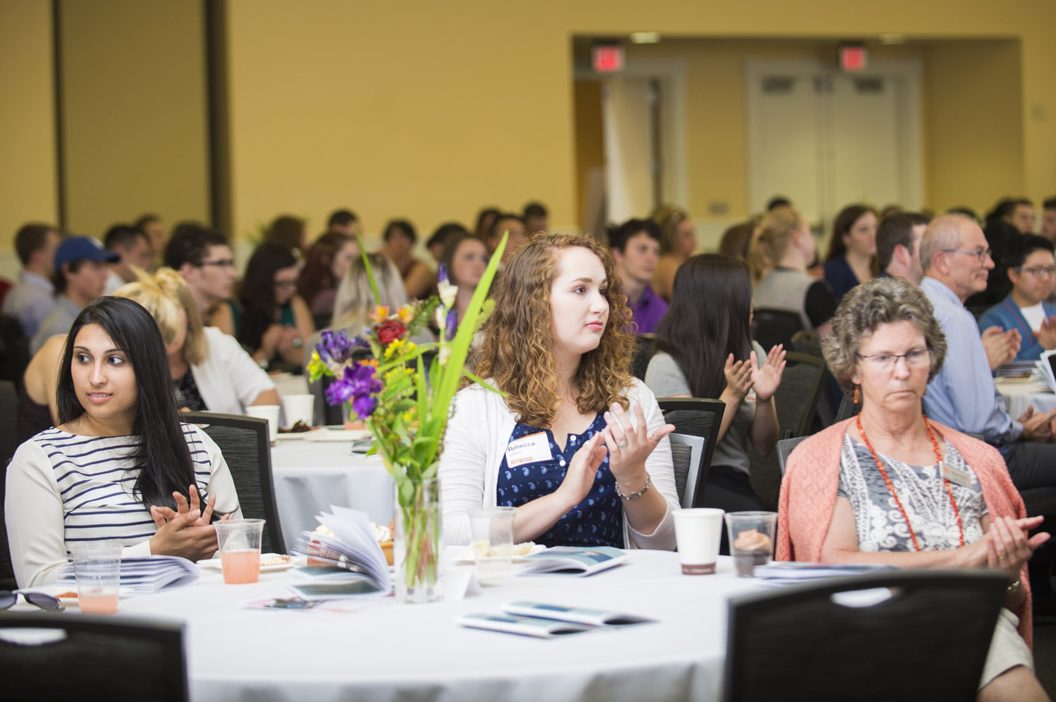
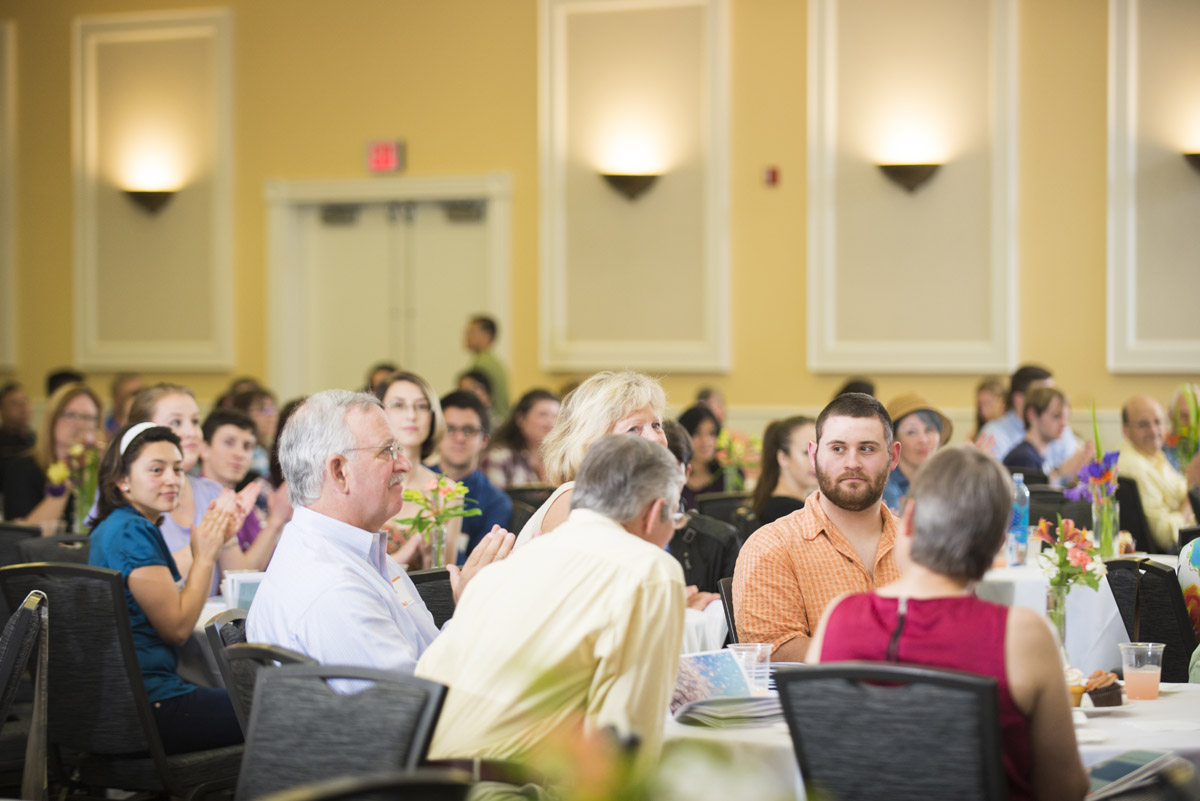
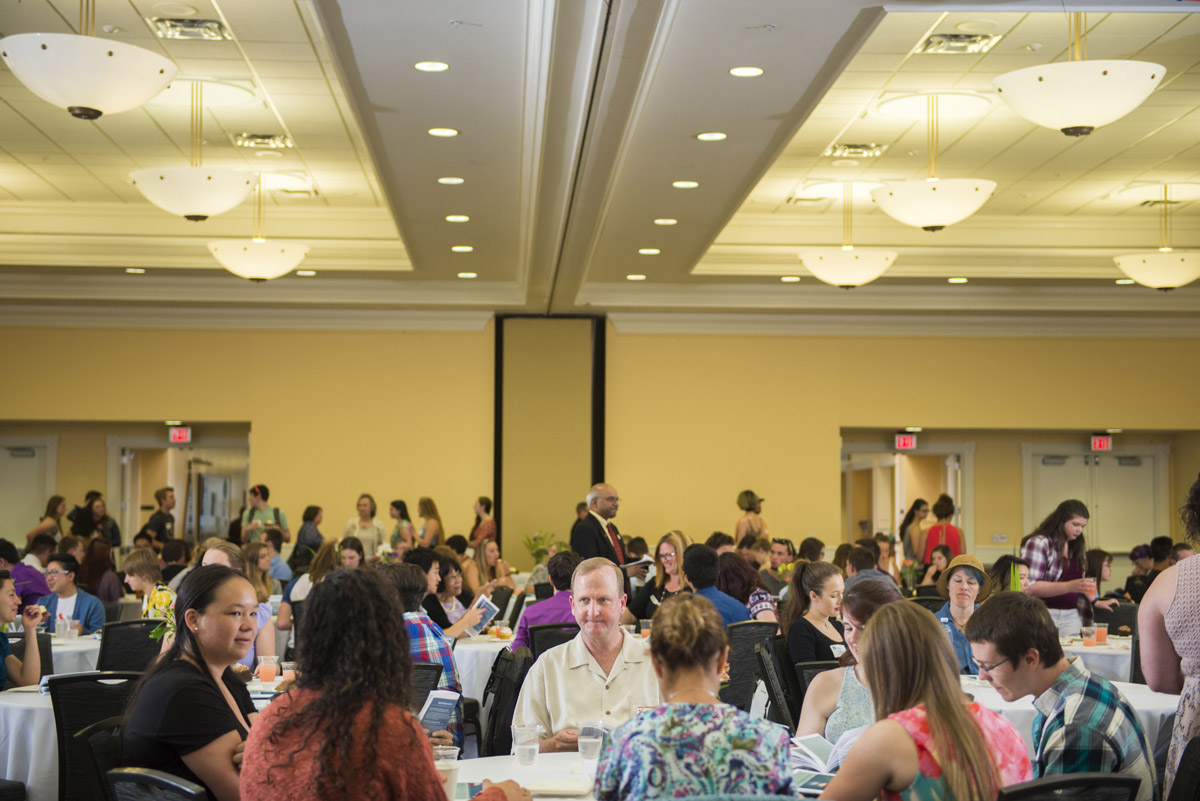
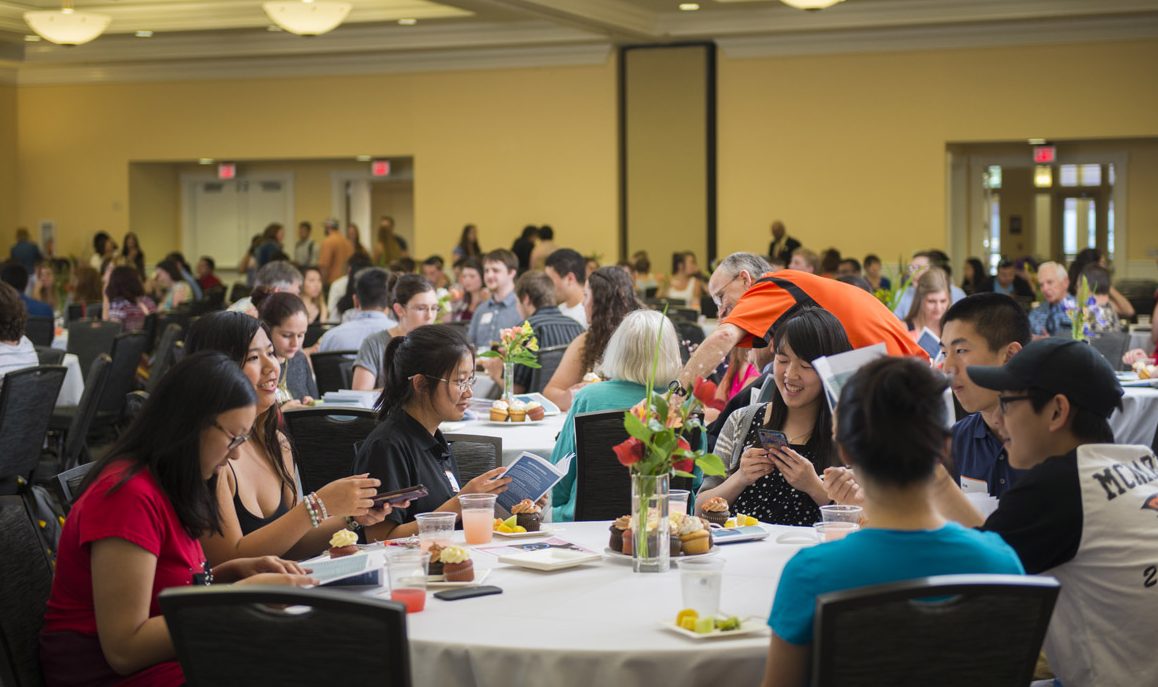
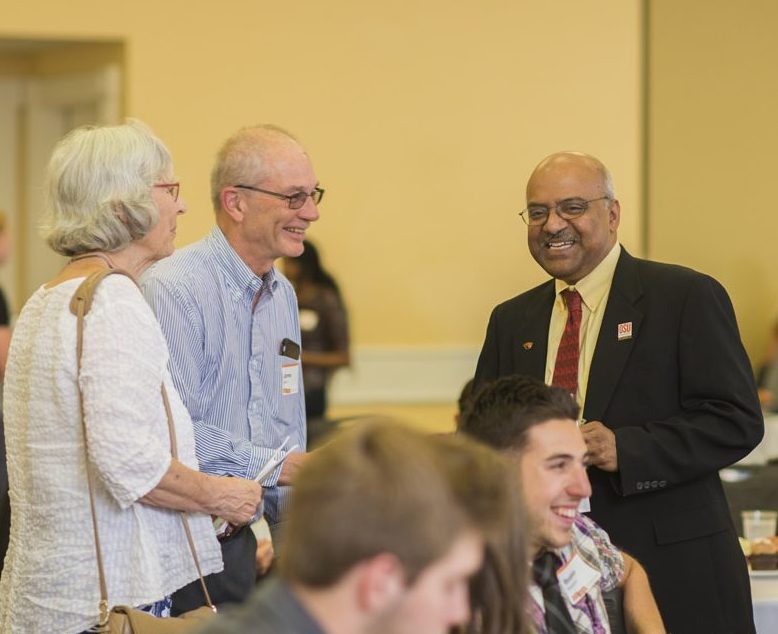
The College of Science celebrated our outstanding scholarship students at our annual spring Scholarship Dessert in June. For the 2016-17 academic year, the College awarded scholarships for merit, need and undergraduate research experiences. The Scholarship Dessert—a festive occasion—connects students, their families, advisors, faculty and many alumni/friends whose generous support funds these awards.

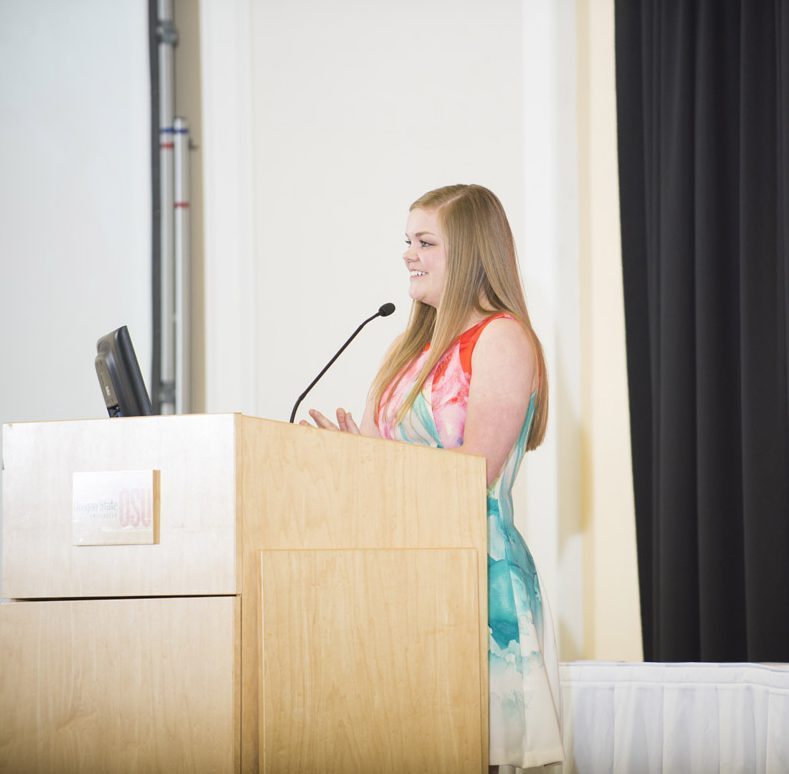
This year two scholarship recipients spoke, Shan Lansing, a senior chemistry major, and Jackson Dougan ('13), a recent integrative biology alumnus. They shared their unique perspectives and experiences about their science education, transformative experiences and the power of scholarships.

For a complete list of our scholarships, visit: science.oregonstate.edu/scholarships.

Scenes from our 2016 Scholarship Dessert

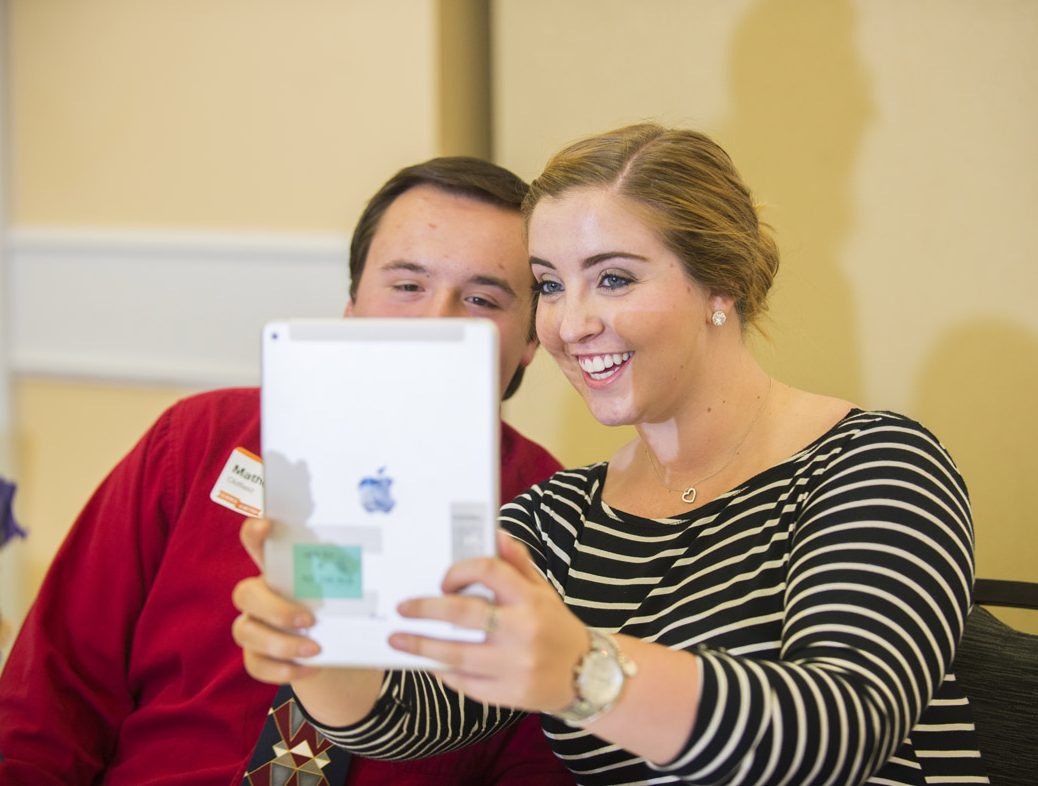
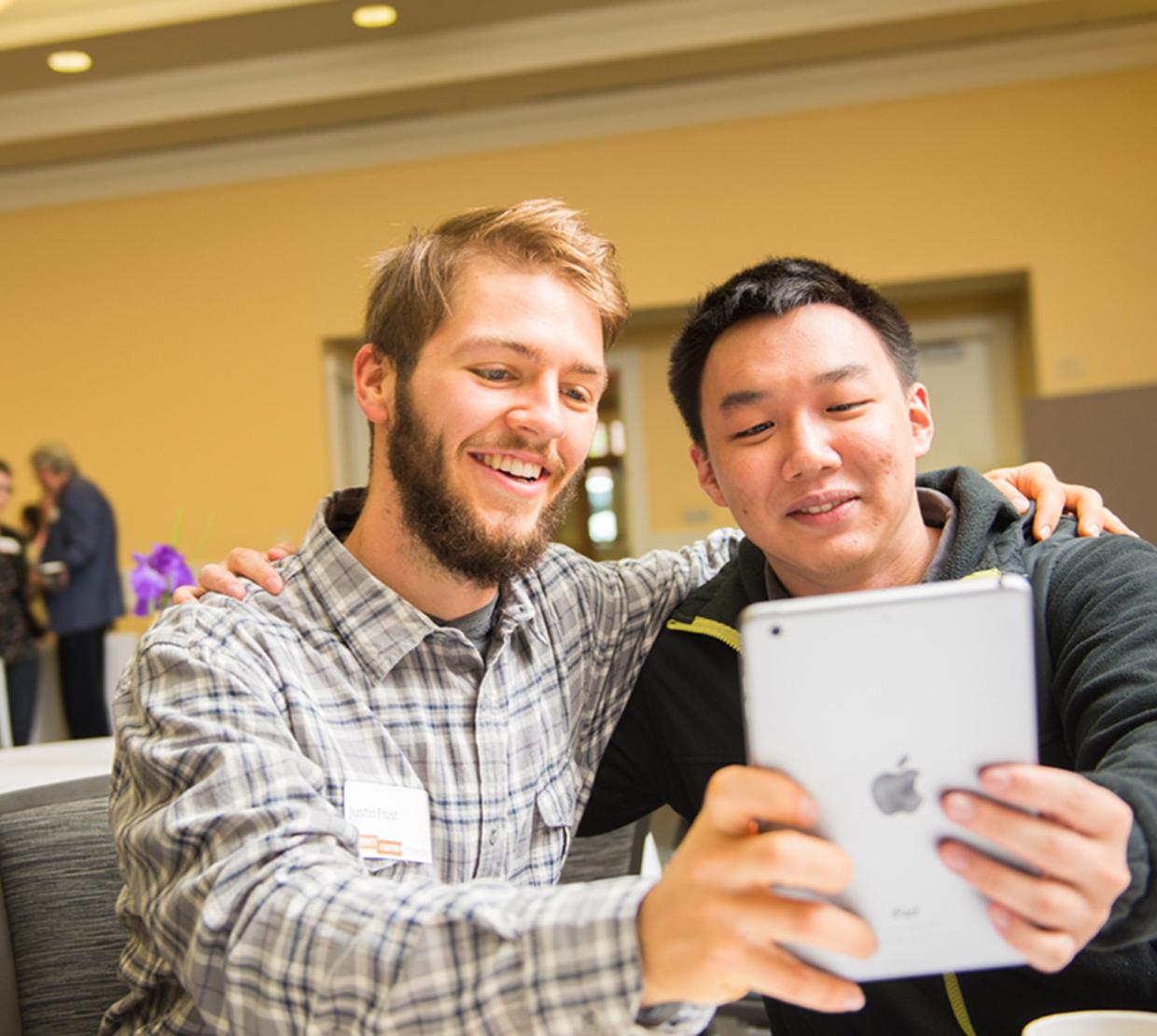
Justin Frost and colleague taking selfie on iPad

Graduates take stock of experiences in science

Microbiology graduate Justin Frost with friend Tony Duong

The College of Science is graduating a record 596 students with baccalaureate degrees in 2015-16, including 73 honors baccalaureates. This represents a 34% increase from last year. In addition, we are graduating 47 master’s and 50 doctoral students--the highest number of Ph.Ds in recent years. We are proud of all of our graduates!

The class of 2016 represents nine majors in the life, physical, mathematical and statistical sciences. They exemplify the College’s commitment to excellence in science education, inclusion and to geographic, economic, ethnic and intellectual diversity.

Graduates receive all the vital ingredients of an outstanding education: outstanding classroom teaching, research opportunities, internships and transformative experiences, such as study abroad, leadership and experiential learning. These experiences can transform great students into extraordinary leaders in science.

Our graduates venture out into the world as researchers, community leaders, teachers, physicians, veterinarians, pioneering scientists and informed, engaged citizens. They are a part of our OneScience community committed to having healthy people, living on healthy planet, in a healthy economy.

“We are extremely proud of our students and look forward to their future accomplishments, leadership and contributions to science,” said Sastry G. Pantula, dean of the College of Science.

“Our College’s mission is to advance science. And we do that through our graduates—the next generation of global leaders in science.”

Science students gain invaluable experience, critical thinking and soft skills as a result of the integral role research played in their education. In recent years, OSU has attracted attention for the number of opportunities it provides undergraduates to participate in research and has been ranked among the top 50 research universities in the nation.

Katherine Banowetz standing in front of shrubbery
Physics major has eyes set on healthcare

Katherine Banowetz stands out as the only woman in her senior year physics class.

Jason Sandwisch working with Chemistry equipment with other student in lab
Marching through the sciences, landing in physical chemistry

A first generation college student earns his bachelor's degree in chemistry and heads to the University of California, Berkeley for a Ph.D. in physical chemistry on a full scholarship and research stipend.

Jonathan Van Why standing outside of Kidder Hall
Mathematics + Robotics = Google job

Honors College and mathematics major Johnathan Van Why lands job at Google months before graduation.

Jonathan Van Why standing outside of Kidder Hall

Mathematics + Robotics = Google job

By Srila Nayak

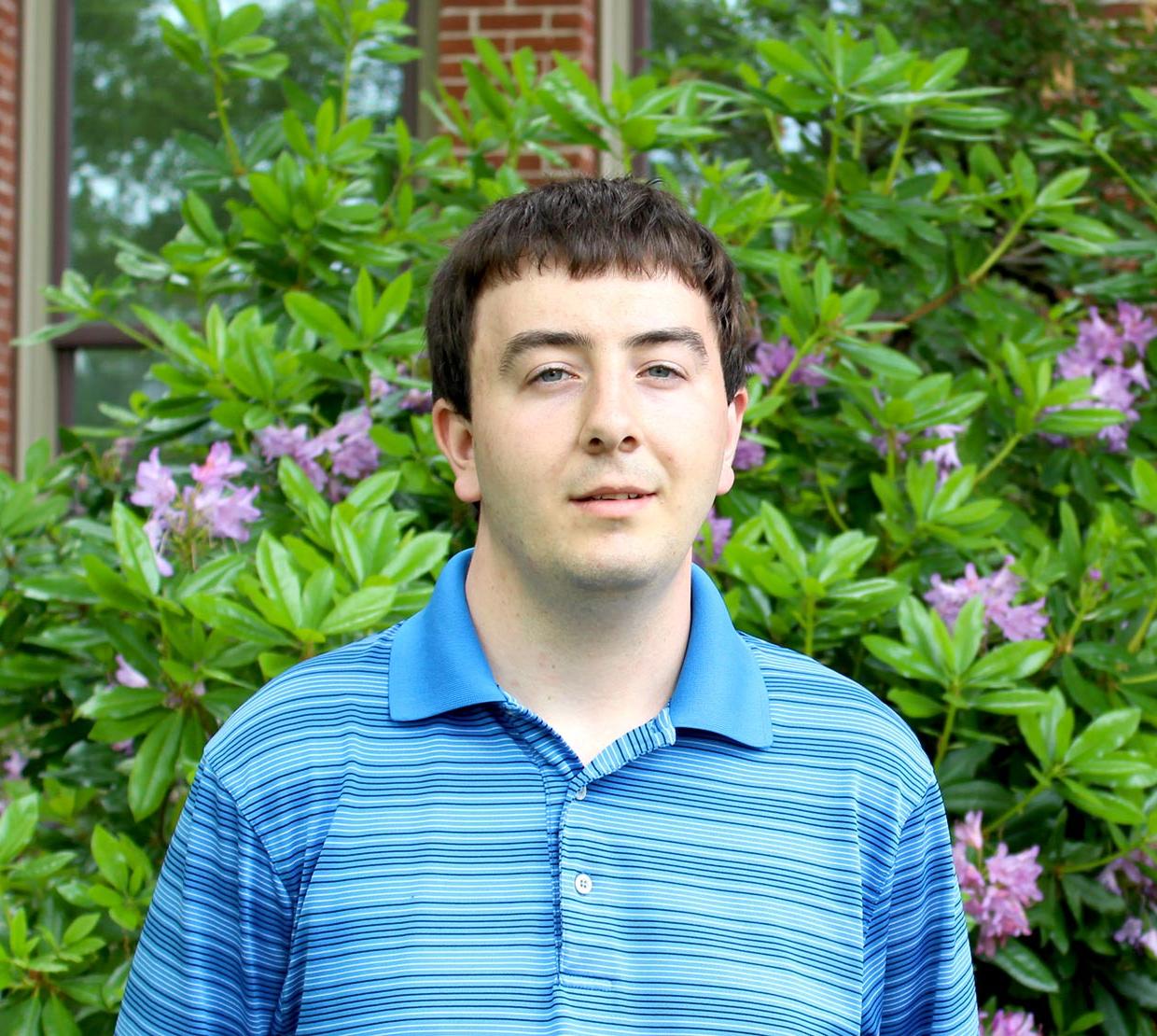
Johnathan Van Why, Honors College and mathematics major

Honors College and mathematics major Johnathan Van Why has landed a job at Google months before graduation. He will start as a software engineer at Google’s Mountain View headquarters (Googleplex) in California.

It is a highly impressive feat if you consider Google’s hiring statistics: They receive more than two million applicants a year and only one in 130 applicants gets a job, according to Forbes and Staff.com. Therefore, it is approximately 10 times harder to get a job at Google than it is to get into Harvard University. Not to mention the fact that the multinational tech giant is consistently rated as the most desirable company to work for on a global scale.

Johnathan’s case is made more exceptional by the fact that he did not apply for a job at Google, but sort of stumbled into its recruitment process.

An Albany, Ore., native, Johnathan says he has been passionate about mathematics and programming since the fourth grade. Enthusiastically involved in robotics research in OSU’s School of Engineering from his high school days, Johnathan made up his mind to pursue a Ph.D. in robotics at Carnegie Mellon University.

But one day in the summer of 2015 changed his plans for life after graduation. Johnathan, who is an avid and frequent programmer, was doing a programming-related search when a black box with white text popped up with the question, “Would you like a challenge?” Thinking it was a game, Johnathan hit ‘yes.’ Thus began the gradual unfolding of the Google recruitment dragnet.

Johnathan eventually realized he was being evaluated as a potential hire by Google. He faced off a series of programming challenges of varying levels of difficulty over a 10-day period.

"I was able to select mathematical challenges and I have a solid knowledge of programming. So between the two, I was able to do well at the challenges.”

Confronted by one of the most difficult problems in his set of programming challenges, Johnathan was able to solve it rapidly. A recruiter contacted him shortly after that.

“It would have probably been difficult for a computer science major. But it was a basic math problem, which I completed in 21 minutes and sent it off," said Johnathan.

As Google is wont to do with job candidates, Johnathan went through onsite interviews at Googleplex as well as two phone interviews before receiving an enthusiastic job offer.

When asked if certain mathematics courses at OSU played a role in his success, Jonathan responded, “I am very glad that I had computational number theory. Problems in that area would repeatedly show up in the online challenges as well as in the interviews.”

Mathematics also played a vital role in Johnathan’s undergraduate research career. He conducted controls research for legged robots and was part of a team that developed software for the multi-university ATRIAS robot project. As the only math major in the robotics lab, Johnathan realized he had unique strengths in a roomful of mechanical engineers.

“Anytime something math-related would come up, I knew what I was doing. Computational number theory, modular arithmetic, multivariable calculus, differential equations and linear algebra—all of them helped me write most of the software that runs the robot and in controls and optimization research.”

Johnathan notes that his interests in mathematics, robotics and programming dovetailed in very rewarding and meaningful ways as an undergraduate as well as helped him succeed in his job interview.

“An undergraduate degree in math is a foundation to work on other stuff. You can either go to graduate school or you find another field that relies on math and you get to be the math person on the team. It is so useful in so many fields,” added Johnathan.

His parting advice for incoming mathematics majors: Do research.

“One of the things that math majors are not as essentially involved in as they should be is research. It is hard for an undergraduate to find a research topic in math,” said Johnathan.

“But look beyond math. For instance, in an area like robotics, math undergraduates can jump in and make significant research contributions.”

Subscribe to Mathematics