Statistics

Statistics

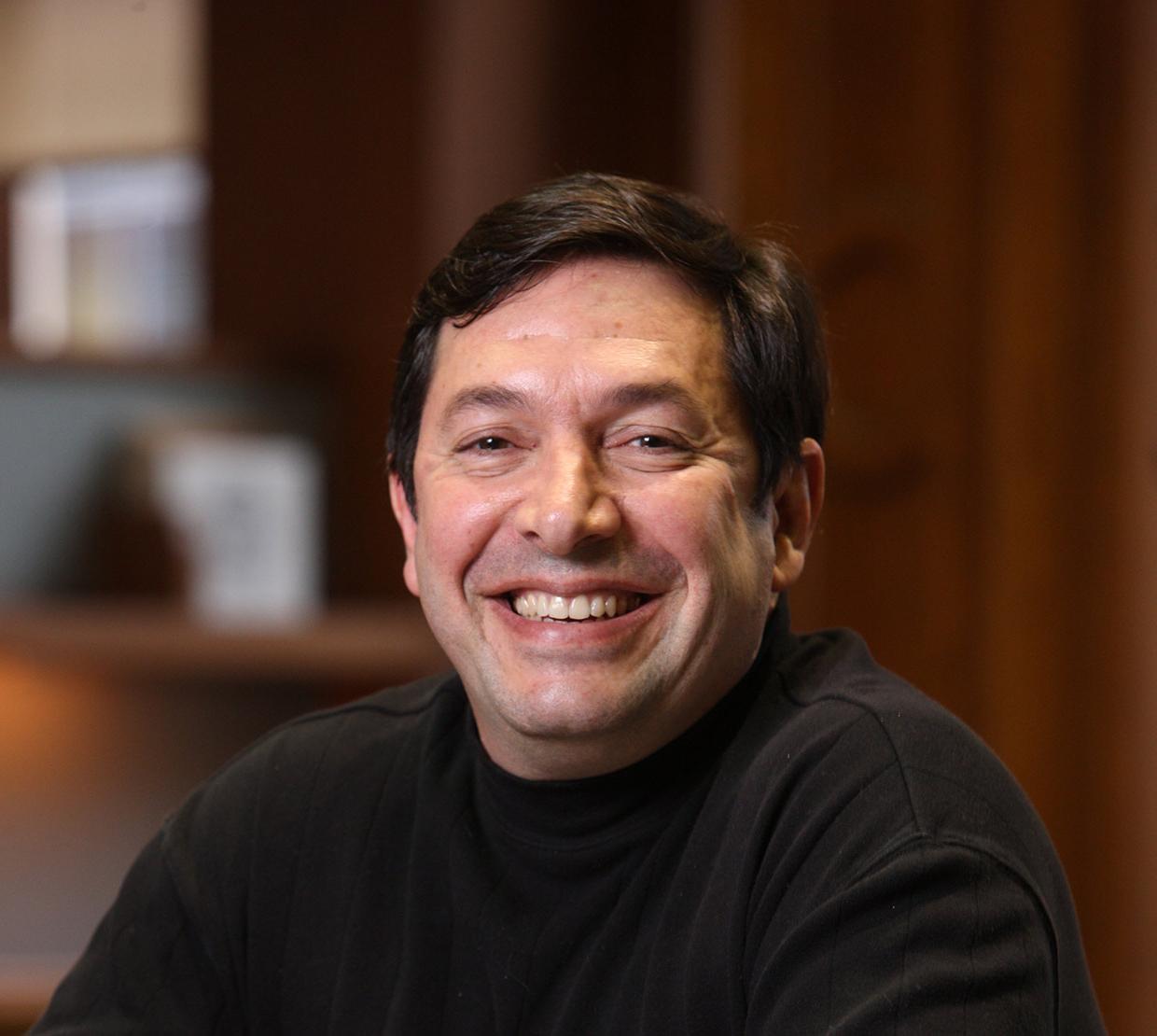
Juan Restrepo in his classroom

Former musician, aspiring surfer, mathematician: Juan Restrepo, a life of diversity

By Katharine de Baun

Juan M. Restrepo, Mathematician

Some of the most interesting lives don’t move forward in a straight line. Mathematician Juan M. Restrepo thought he would spend his life as a professional musician, for example, until he stepped into an advanced math class and never looked back. Recently, he shared reflections on his life and work, including why a diverse, interdisciplinary approach is critical to his research.

You recently won the SIAM (Society of Industrial and Applied Math) Geosciences Career Prize for your outstanding contributions to the field of computational geoscience. Can you explain what computational geoscience is?

There are three ways to do science: theoretically, experimentally (this includes observation/field work) and computationally. Most scientific results now combine all three modalities. The award I received acknowledges the impact I’ve had in applied mathematics, specifically in developing new computational tools that make it feasible to pursue geoscience problems that were not amenable to existing computational tools. These tools allow us to tackle new and challenging questions in the field.

What are some of those new and challenging questions?

How to model and make predictions about massively complex systems like Earth’s climate or financial markets. Typically, in these systems, knowing something about each element in isolation is extremely helpful but doesn’t automatically lead to an understanding of the system as a whole. Complex systems have many degrees of freedom (as well as variables that cannot be precisely pinned down). So we are seeking ways to eke out a low dimensional representation of the system that either explains the basic mechanism behind the complex behavior, and/or enables us to capture the complexity with a smaller (usually finite-dimensional) number of degrees of freedom--all the while taking into account the consequences of uncertainties in the physics and its parameters.

I have also proposed new quantitative tools and techniques for improved forecasting, particularly in highly unstable systems like the weather and extreme or rare events like droughts and deluges. I have worked on statistical representations of high dimensional systems that then yield more manageable proxies of the full system. I have worked on tools that try to help us look into the near future and answer questions like “How warm is it getting?” or “What are the trends in today’s financial data?”

What makes this work so difficult?

For one, we don’t have a full understanding of a lot of things in isolation, let alone as interacting elements in larger systems. The types of problems I focus on have lots of small things that interact with each other and these, in turn, interact as groups in different ways.

To illustrate, I’ll use a problem that my student Dallas Foster, my collaborator Matthew Sottile and I are working on. The problem relates to how a collective group of ants react to certain environmental conditions. In a colony of tens of thousands of ants, the behavior of each ant requires a huge number of degrees of freedom to describe. One might think that understanding everything about each individual ant and understanding how each individual ant interacts would lead to answers on how a large collection of ants respond to their environment (never mind the fact that each individual ant would demand a whole library-worth of information). The traditional thing to do is to formulate a model for the large-scale behavior and forgo the small scale. But it turns out that there is only a very tiny number of problems for which one can generate a model of the group while ignoring small-scale interactions or individual agents. The collective ant case is representative of a myriad of problems where small scales cannot be ignored.

But it turns out that there is only a very tiny number of problems for which one can generate a model of the group while ignoring small-scale interactions or individual agents. The collective ant case is representative of a myriad of problems where small scales cannot be ignored.

In response to this type of problem, we are working on formulating a population model with a manageable number of degrees of freedom that reasonably describes the collective behavior, but does not ignore critical aspects of small-scale interactions of the ants or individual ants. The ‘dimension reduction’ we want to effect does not ignore critical small-scale interactions. Instead, the small-scale interactions are ‘upscaled’ so that they affect the collective, without requiring specific knowledge of the small scale. We will need to create a special type of statistics that allows us to ‘filter’ the small scale to get the collective effect of small-scale interactions at the larger scales of the group behavior.

You are so interdisciplinary – with multiple appointments across colleges in the Departments of Statistics, Electrical Engineering, Computer Science and Physical Oceanography. Is an interdisciplinary approach necessary to the questions you study?

A salient characteristic of my research output is that I tightly combine physics, mathematics, computation and data in the tools I develop. Hence, for me interdisciplinary exploration is necessary. A word of caution is in order, however. Although academia now considers interdisciplinary research a good thing, in practice, this modality of investigation is not suited for everyone. It can be career suicide for some, in fact.

Why? What are the dangers?

If you don’t achieve expertise in any particular subject, it can lead to not getting tenure, not getting grants, and not being perceived as “scholarly” enough. In academia, you are rewarded for developing mastery and this should be unique: this is what we call expertise. And without expertise, you risk not being consequential. Most commonly, without enough depth in a core discipline, you risk discovering something that's already known, or, worse yet, rediscovering something and doing a worse job at it.

So I advise my students to be aware of what their strengths are, what they’d like to work on, and then think strategically about how to get there. Some are more comfortable being specialists, and that’s fine. Applied mathematics, applied statistics and applied computer science are good homes for people with diverse interests, as they grapple with a variety of archetypical computational problems which are common to many engineering and science applications.

Interdisciplinary work makes perfect sense to me. But being interdisciplinary should not be considered synonymous with being diverse. The desire has never been stronger than it is today to tackle problems that cross disciplines and so there is a demand for people who have the ability and background to work across disciplines. But diversity in science has always been critical: we need diverse but expert ways to tackle problems, diverse but state-of-the-art techniques, etc. Diversity means working across disciplines, but it also means tackling problems with different specialized tools.

How did you personally arrive at having so many disciplinary strengths?

How I arrived at having so many interests is a colorful story. Believe it or not, I used to be a professional musician. Tired of the long hours, bad conditions and low pay, I went back to school to take a break from work. Having concentrated on music and philosophy as an undergraduate, I thought it would be fun to do something completely different and chose engineering. I had nothing to lose since this was just a break and I planned to return to music anyway. My first mathematics class, in partial differential equations, was a turning point.

What happened? Did the professor recognize you in some way?

The professor was Michael Tabor at Columbia University. He often says I was his “best music student.” [Laughs] I wasn’t all that bad; I got an A-. Professor Tabor, who oddly enough later became my boss when I was faculty at the University of Arizona, strongly suggested I consider a career in applied math. He also loves music and I spent a fair bit of time in his office discussing science and music. My intention was to return to music after my foray in engineering, but I did not return to music. From engineering I eventually switched to physics and mathematics. I had more questions of the “how” and “why” variety than of the “what for.”

That’s quite a switch. As a physics major, how did you then become interested in computational geoscience as a field?

Geosciences appealed to me because in many of its challenging problems one is faced with the interplay of diverse physics across vast scales of space and time. A love of the outdoors probably plays a factor, too—I spend a lot of time in adventure traveling, skiing, climbing, trekking and biking.

Your work has focused substantially on oceans.

I love the ocean and was completely smitten by the idea that there were scientists who could understand some aspects of what makes the ocean so amazing, and were bold enough to think that someday we could understand the oceans as a whole.

Specifically, I’m fascinated with the role played by oceans on the transport of heat around the globe, and the destabilizing role played by perturbations of the thermally- and salt-driven circulation we presently enjoy. I’m also interested in the role ocean transport plays in the movement of greenhouse gases and the maintenance of ice snow caps and their reflectance of the Sun’s radiation.

I am also fascinated by waves. The focus of my Ph.D. research was in a rather special wave called a soliton. It has wonderful/rich underlying mathematical structure. Incidentally, there are folks here at Oregon State who are world experts in solitary waves, the family of waves in which solitons belongs. I’m also exploring the role that waves play in Earth’s climate and the interaction between ocean waves and currents. I’ve developed models for how specific types of sandbars form and used supercomputers to characterize the fundamental forces on sand particles as they are forced by shearing and wavy ocean flows.

Presently I am developing a model for ocean oil spills.
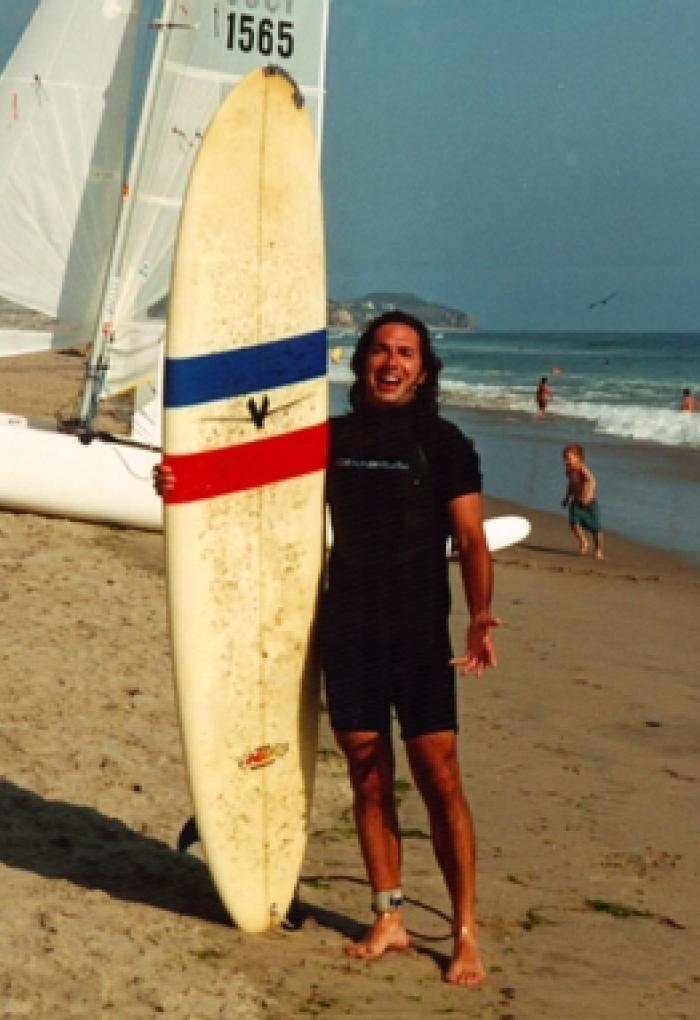
young Juan Restrepo standing on beach with surfboard

Restrepo in his surfing days

Speaking of waves, you used to be a surfer. Does that experience have anything to do with your interests now as a scientist?

When I was a postdoc in Chicago I crewed for several sailing teams. When I was at UCLA I decided to learn to surf. The first board I borrowed came back decorated with duct tape. I was terrible, but usually the first in, the last one out. The good surfers tolerated me, perhaps because they thought I made for good shark food.
But I was a good source of information: I tracked swells, tides and wind, and predicted the best time to get to the beach; I had a good idea of when waves were worth riding and understood how wind affected waves. Several of my nearshore scientific studies were inspired by these experiences: for example, my interest in how waves transport sand, pollutants and swimmers. One of my recent results explains why flotsam and jetsam parks itself outside of the break zone, a finding relevant to tracking pollution in the nearshore, also known as "sticky waters."

You are a strong advocate for diversity in science. Where does that passion/commitment come from?

Innovation is the most significant competitive, technological, cultural and economic asset this country has had. It may be argued that it is in peril presently.

Science thrives on innovation, and innovation is strongly correlated with diversity. Diversity is essential in collective adaptation, and thus essential to evolutionary biology. For similar reasons, it is also essential to science.

There are more practical reasons for encouraging diversity: for example, with regard to gender, it is patently stupid to ignore 50 percent of the potential workforce. Diversity leads to collective work adaptation. It also leads to a culture of learning and of listening.

Diversity makes organic sense to me: my background and my life history is a story of diversity. I grew up in a multi-ethnic neighborhood in big cities, in a family of artists who hailed from three continents. Diversity is essential to my work: I tend to work with people who contribute specialized skills and appreciate my creativity and ability to draw ideas from diverse disciplines.

What are your hopes for the future of computational geosciences as a method/field/set of inquiries and what are you working on now?

I am working with a team of statisticians, engineers, and social scientists to formulate adaptive response strategies to disasters. As usual, I am taking a "diverse" approach: in addition to instrumental data, we want to incorporate citizen cell phone reports to produce quantitative data that allows us to tell what's happening as the disaster is taking place in real time.

We need anthropologists to exploit social media and to interpret citizen data. We are using ideas of statistical physics to formulate cluster dynamics of populations responding to disasters. We are combining statistically physical models and data to develop fast algorithms that allow us to forecast and test options for future responses based on past disasters.

OSU is a perfect research environment for this project: it is supportive of diversity, and it builds upon many of our research strengths. It’s also locally relevant, given that we live in the Cascadia Zone, and globally significant because what we learn here will impact on disaster response elsewhere.

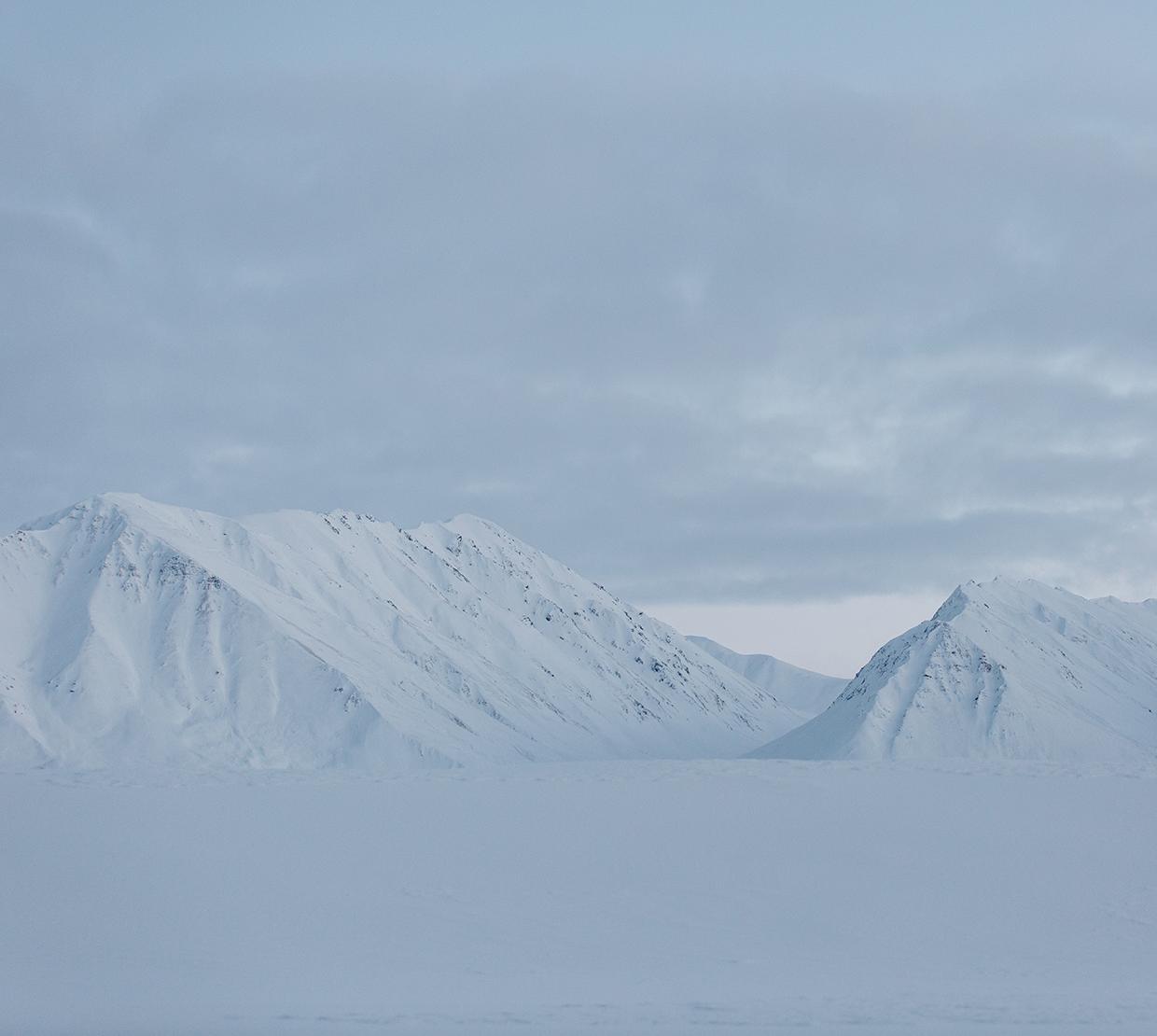
snowy mountains

Quantifying risk in a changing world

By Katharine de Baun

Landscapes at danger due to climate change

Note: this article is part of a series on how Oregon State scientists are working to mitigate climate change. Read more: Warm Oceans need Cool Science (introduction), Informing Policy and Sustaining Resources.

In 2016, our planet reached the highest temperature on record for the third year in a row according to independent analyses by NASA and the National Oceanic and Atmospheric Administration. Analyzing big data to model our evolving future is mission critical in an era of potentially catastrophic global warming.

“Statistical analysis and data science are key to discoveries and innovation,” says Sastry G. Pantula, dean of the College of Science. New fields involved in big data like bioinformatics are often interdisciplinary and collaborative.

“Solving major complex issues …requires teams with a diversity of expertise across science, mathematics and statistics. An interdisciplinary cohort enhances depth in core areas, breadth of communication across various fields, and strength in statistical and computational skills,” adds Pantula. Scientists at Oregon State work with big data to tackle climate change on many fronts.

Big data for the next generation

Mathematician Juan M. Restrepo is Chair of the Focus Group on Climate in the American Physical Society. He works on improving weather and climate forecasts by combining data and weather models, and is presently focused on finding ways to compute statistics of rare and extreme weather events. Some of the methods developed in this line of research lead to adaptive ways to respond to disasters, such as flooding and hurricanes.

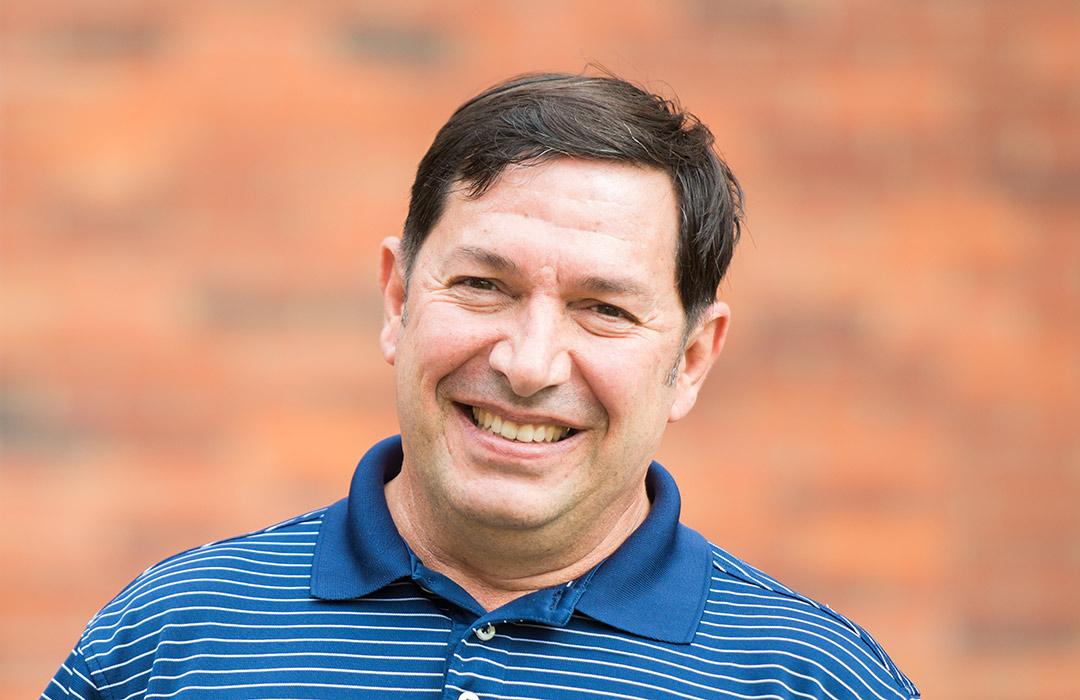
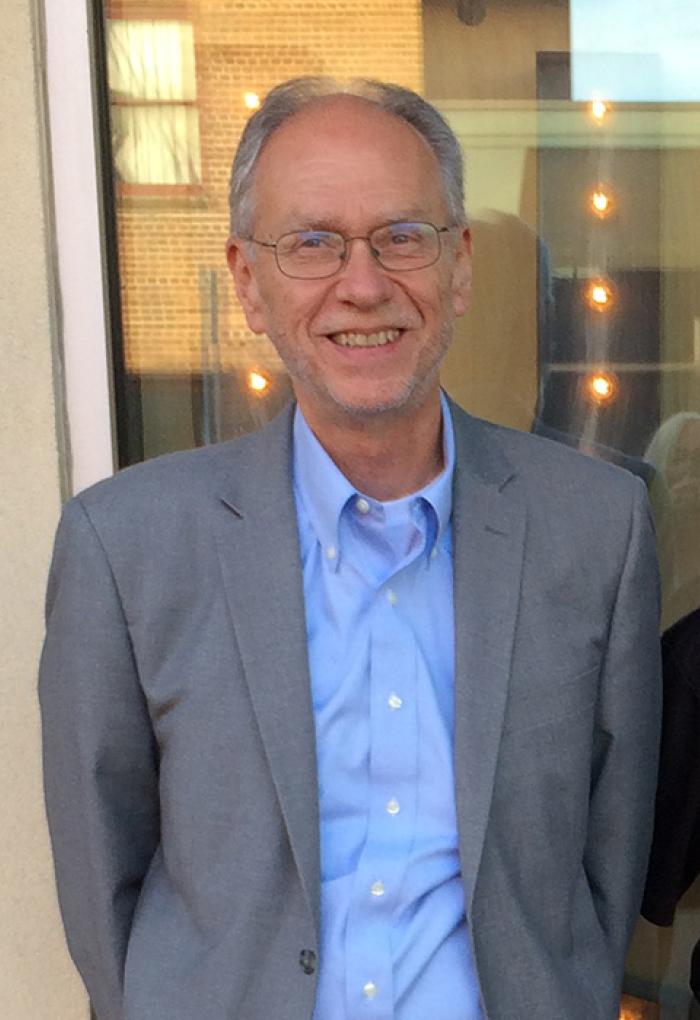
Juan Restrepo in front of brick wall

Juan M. Restrepo, mathematician

Restrepo and statistician Alix Gitelman are co-principal investigators in a $3 million NSF Research Traineeship to prepare a new generation of scientists capable of assessing and communicating risk and uncertainty in the development of marine resource management strategies and policies. The student teams comprise future scientists, engineers and social scientists, who are trained to work with big data, engineered and natural systems, and stake-holders. Restrepo, together with students, statistician Claudio Fuentes and engineer Harry Yeh, is developing improved methods for forecasting and responding to tsunami disasters.

Models for real-world problems and solutions

Mathematician Malgo Peszynska and her students collaborate with geophysicists, engineers, microbiologists and others to create mathematical models that are accurate, fast and relevant to better understand a warming climate. The models predict how warming temperatures can trigger the release of huge pockets of methane gas trapped in ocean sediments, and how leakage could occur if carbon dioxide emissions are pumped into the ground.

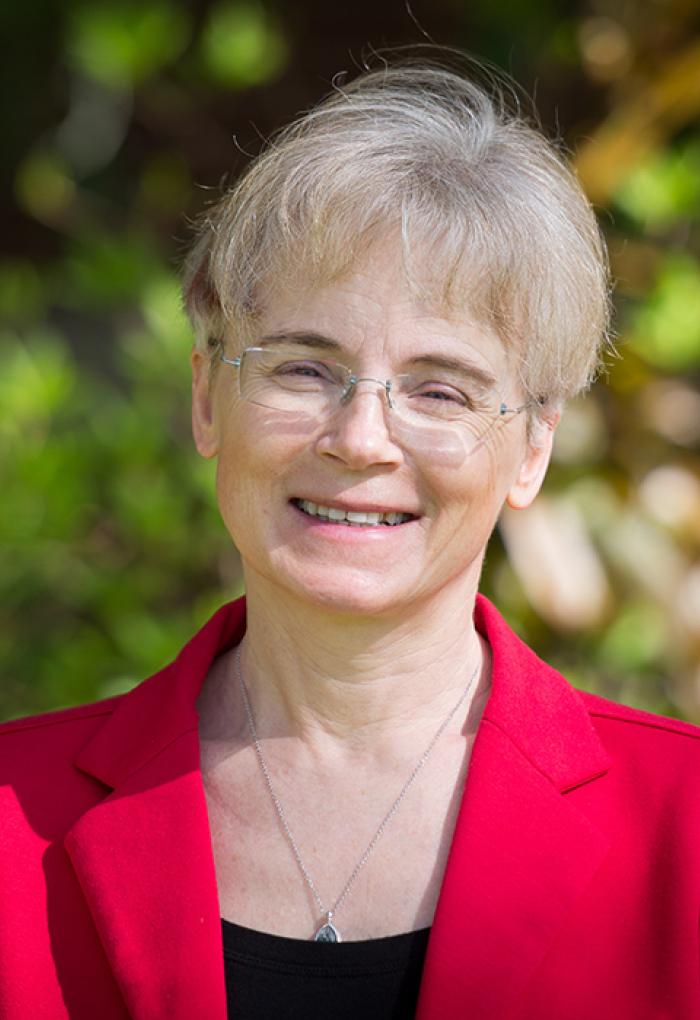
Malgo Peszynska in front of shrubbery

Malgo Peszynska, mathematician

Mathematician and biologist Patrick De Leenheer is at the leading edge of mathematical biology, a new branch of study that has evolved in recent decades as research in biology and medicine becomes increasingly dependent on mathematics and computation.

De Leenheer uses dynamical mathematical models to describe and illuminate biological processes ranging from the cellular to the ecological scale. He has helped develop new modeling approaches for the analysis and design of Marine Protected Areas to enhance fisheries as part of an NSF-funded project. He has also published studies on critical thresholds for extinction in population growth models and has been modeling the effects of climate change on disease severity.

Huge impacts, tiny creatures

The smallest known free-living cells, plankton SAR11, discovered by microbiologist Stephen Giovannoni, are so dominant that their combined weight exceeds that of all the fish in the world’s oceans. En masse, the tiny creatures produce enough sulfur gasses to play an important role in cloud formation and the stabilization of Earth’s atmosphere.

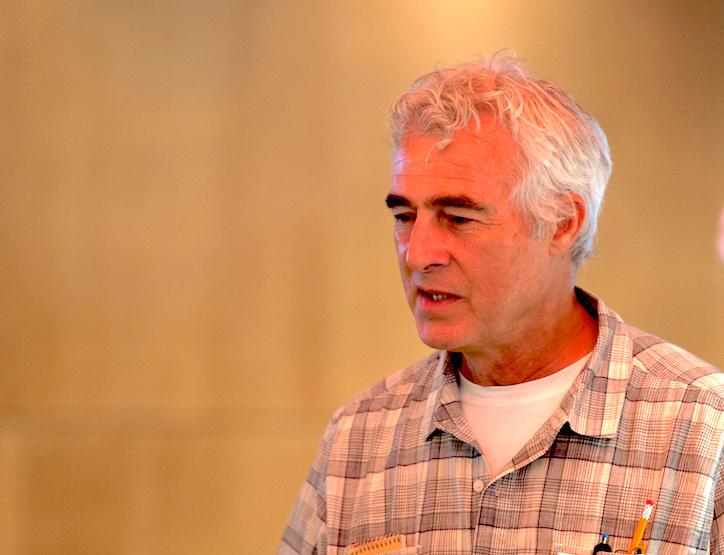
Stephen Giovannoni in from of wooden wall

Stephen Giovannoni, microbiologist

Collaborating with scientists around the world, Giovannoni is now building a database of plankton genomes collected from faraway places, from Massachusetts to Bermuda and the Sargasso Sea, against which future changes in the oceans can be assessed. Understanding the role of plankton is critical to accurately model climate change and its effects.


Read the rest of this series on how scientists at OSU are tackling global warming:

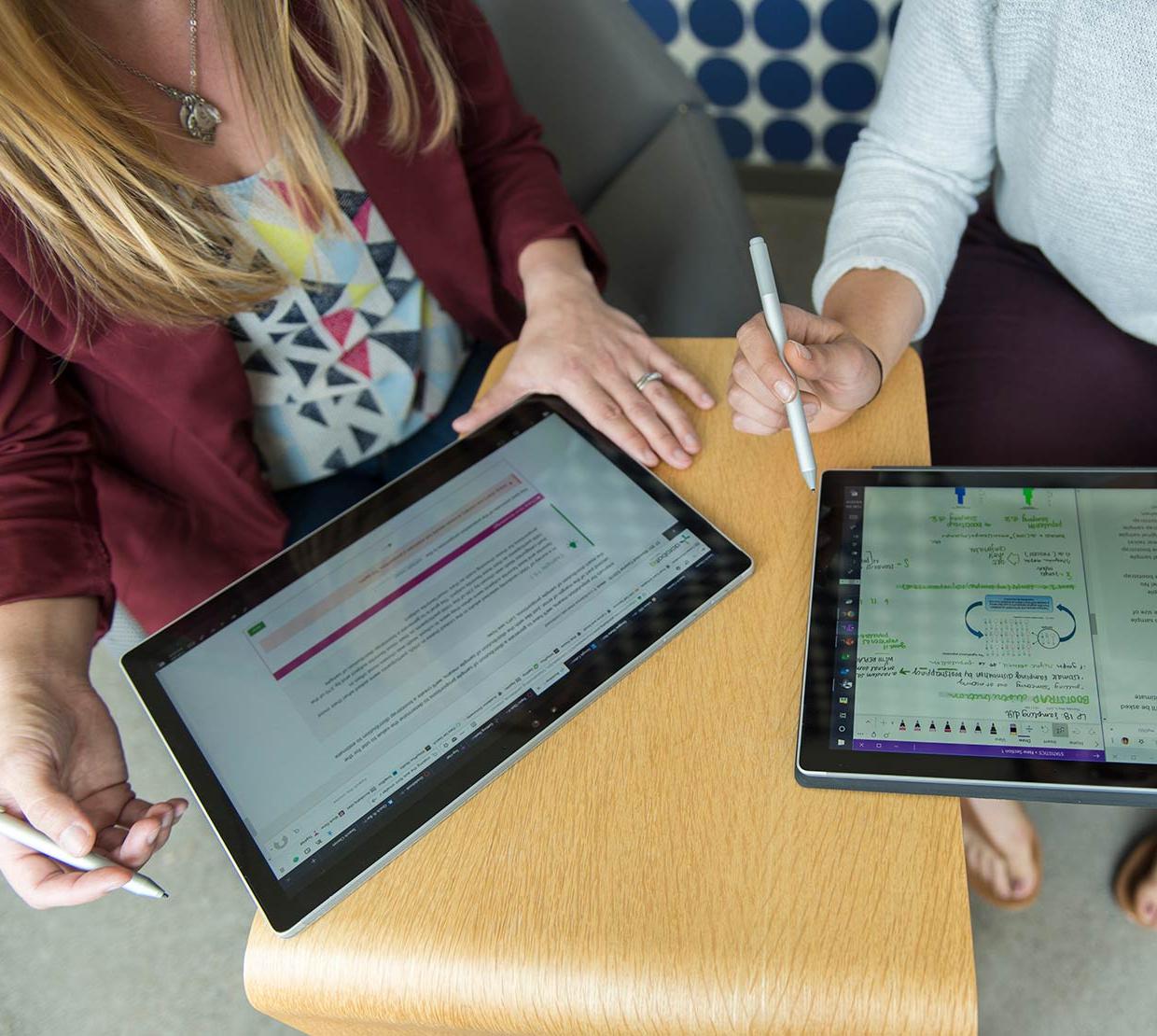
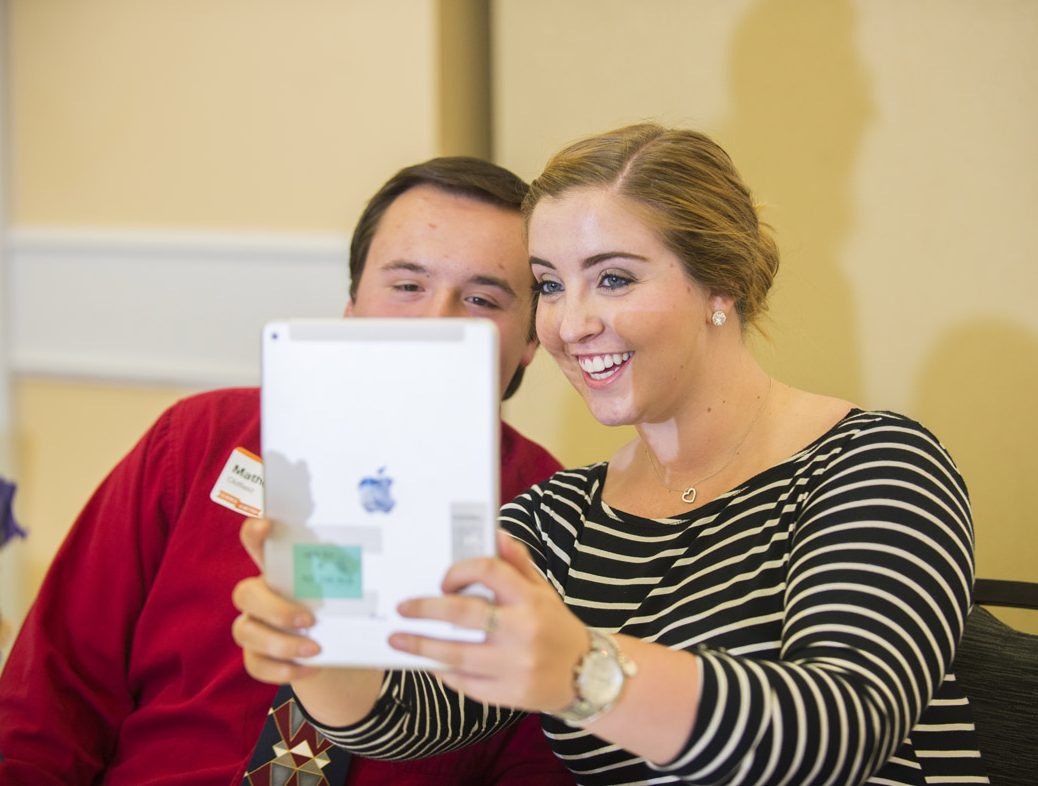
Two women working on iPads in the Learning Innovation Center

Statistician speaks at Women in Data Science event

Women in Data Science event

Associate Professor of Statistics Sarah Emerson gave a presentation at the Corvallis Women in Data Science (WiDs) satellite event on February 3, 2017, which was organized by the Department of Mathematics. Emerson presented her talk on sparse methods for clustering as part of the Applied and Computational Math Seminar. The presentation was a satellite event of the second annual 2017 WiDs Conference at Stanford University.

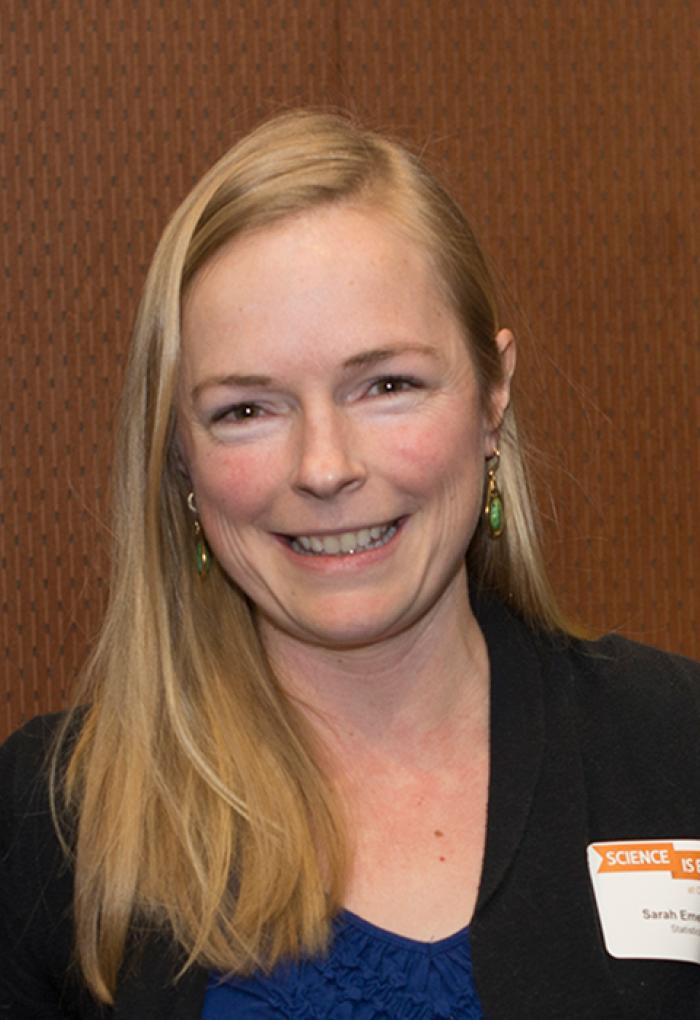
Sarah Emerson in front of wooden backdrop

Sarah Emerson, Associate Professor of Statistics

WiDs inspires and educates data scientists worldwide, regardless of gender, and supports women in the field. The conference, hosted at Stanford and more than 75 locations worldwide, including Oregon State, focused on the latest data science related research, applications in multiple domains and how leading-edge companies are using data science for success.

Emerson's research focuses on the areas of clinical trial design, biomarker evaluation and statistical genetics applications, as well as methodological and theoretical work in high-dimensional data settings and statistical learning.

Watch the video of Emerson's presentation online.

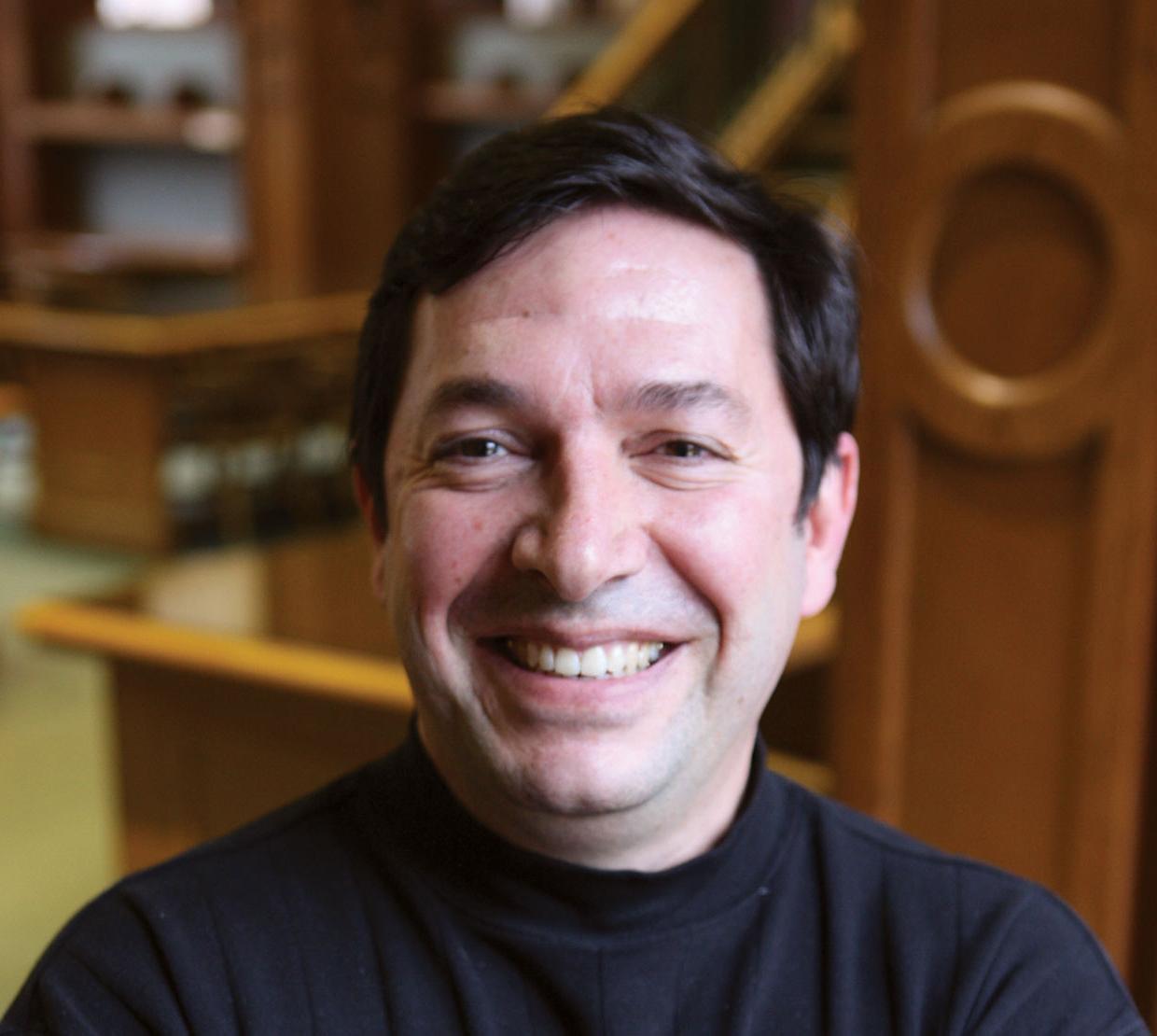
Juan Restrepo standing in library

Mathematician earns career prize in geosciences

By Katharine de Baun

Juan Restrepo, professor in mathematics

Mathematician Juan Restrepo's impressive and extensive leadership in mathematical modeling and numerical simulation of oceanography and climate dynamics, which has had substantial impact in computational geosciences, has earned him the Society for Industrial and Applied Mathematics (SIAM) Geosciences Career Prize.

The award recognizes an outstanding senior researcher who has made broad and distinguished contributions to the field of geosciences.

The prize will be awarded at the SIAM Conference on Mathematical and Computational Issues in the Geosciences, to be held September 11-14, 2017, at the University Erlangen-Nürnberg in Erlangen, Bavaria, Germany.

Restrepo is a professor of mathematics with courtesy appointments in Statistics, Electrical Engineering and Computer Science and Physical Oceanography. He specializes in applied mathematics research and training and teaches numerical analysis, scientific computing, statistical mechanics and geophysical fluid dynamics.

Restrepo's primary research interests lie in uncertainty quantification, ocean dynamics, climate, oil/pollution transport and acoustics. Prior to coming to Oregon State in 2014, he was a mathematics professor at the University of Arizona with appointments in the Department of Physics and the Department of Atmospheric Sciences. He was also visiting faculty for 17 years at Los Alamos National Laboratory working on bio-related homeland security work, bone dynamics, voting theory and climate dynamics research.

He is a co-principal investigator of the National Science Foundation (NSF) Research Traineeship at OSU, which has received $3 million to implement the program. The proposal, “Risk and uncertainty quantification in marine science and policy,” prepares a new generation of natural resource scientists and managers to study, protect and manage ocean systems. The program encourages the development of bold and transformative models for graduate education in STEM fields.

A strong advocate for diversity in science, Restrepo has an impressive and extensive record of advising young scientists from underrepresented groups. He received his Ph.D. in physics from Pennsylvania State University. He also holds degrees in engineering acoustics, electrical engineering and music.

diploma icon above light texture

Celebrating excellence in teaching and advising

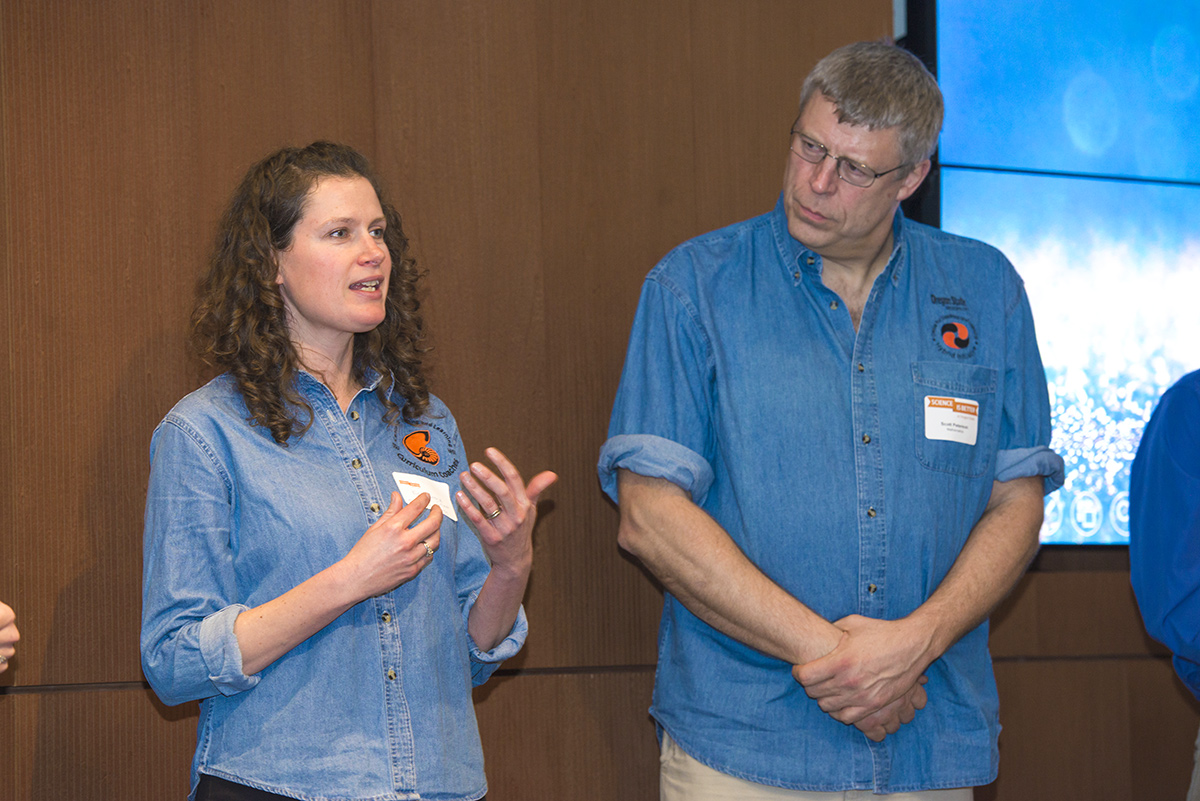
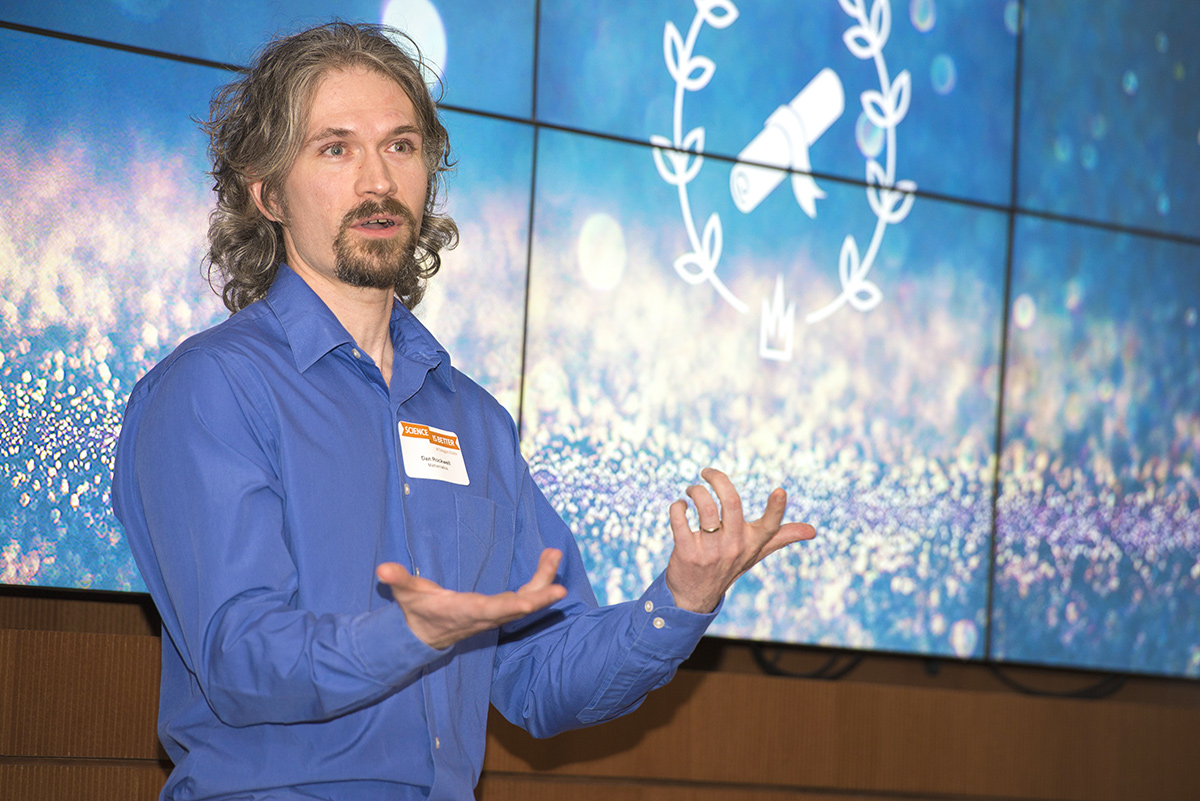
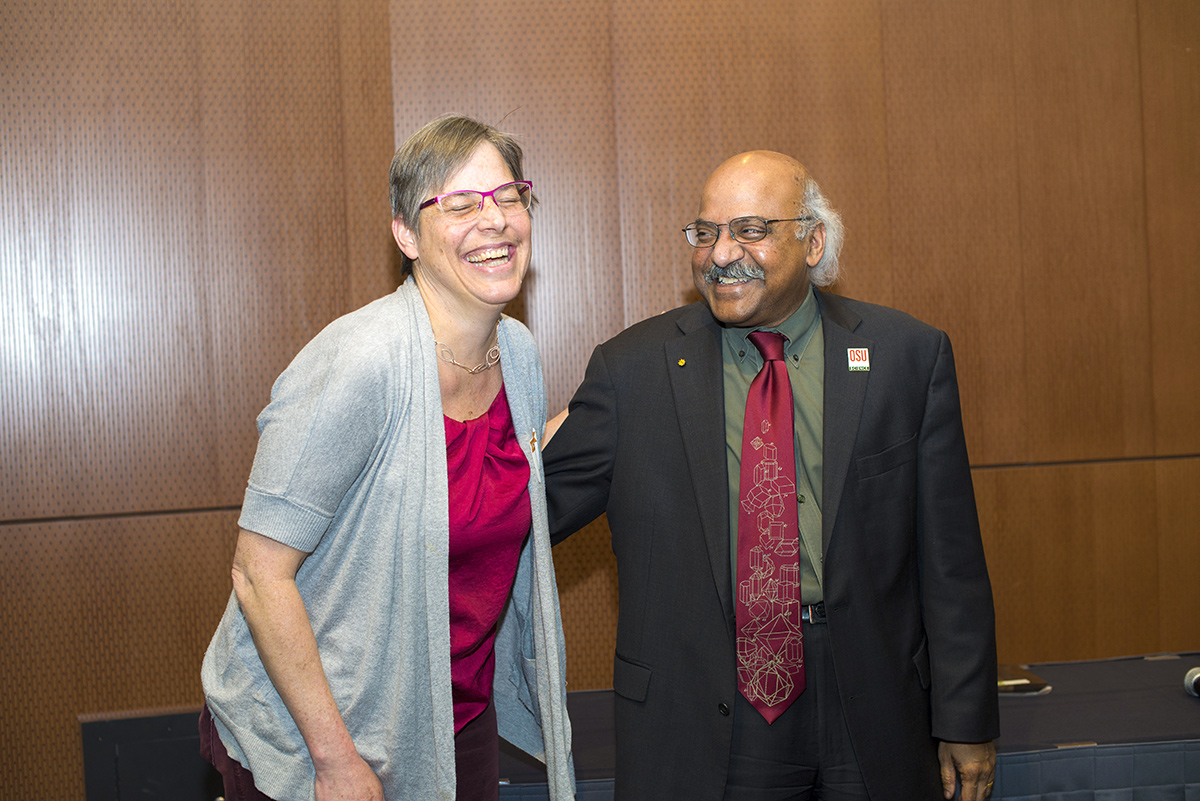
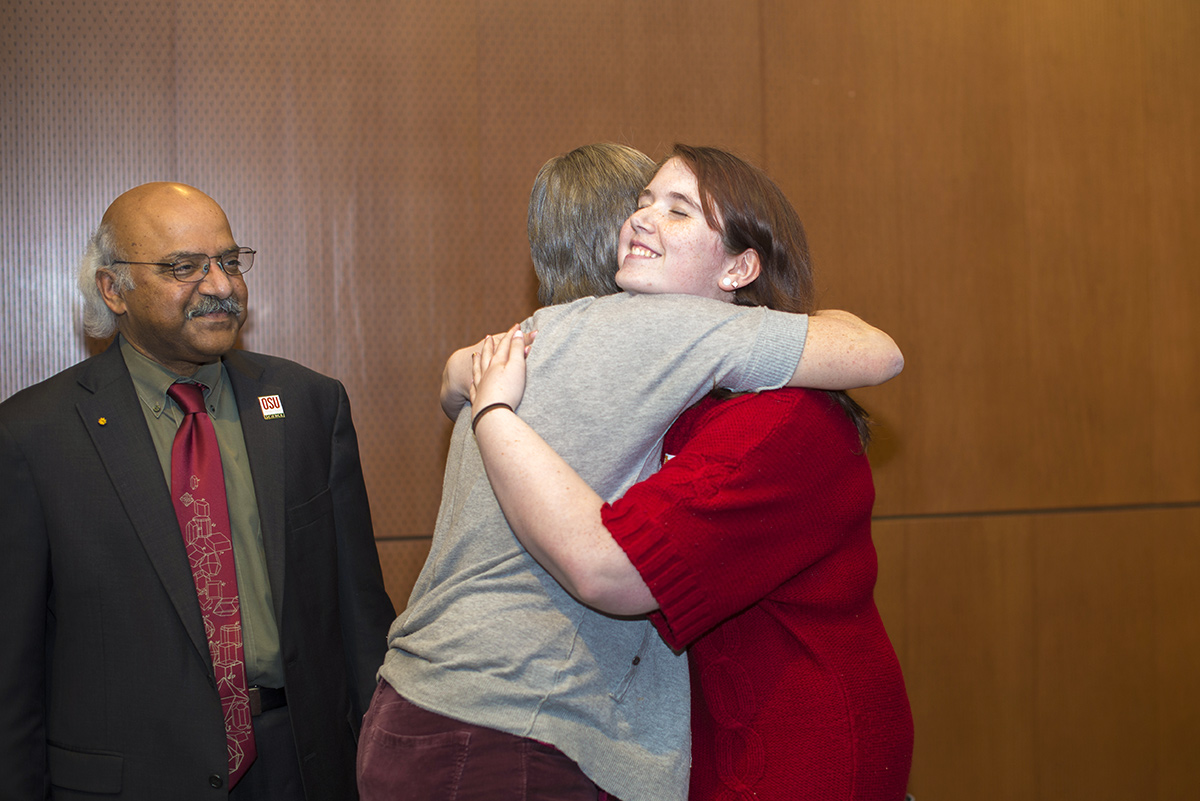
2017 College of Science Teaching and Advising Awards

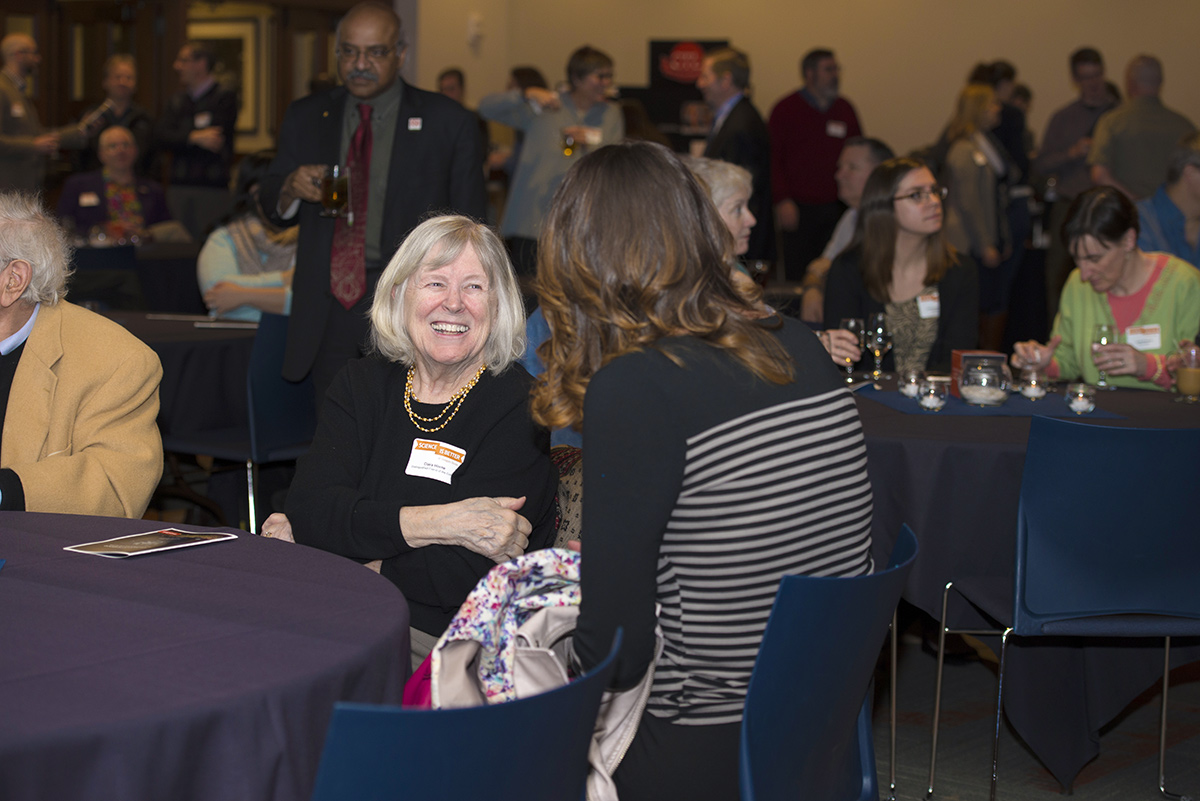
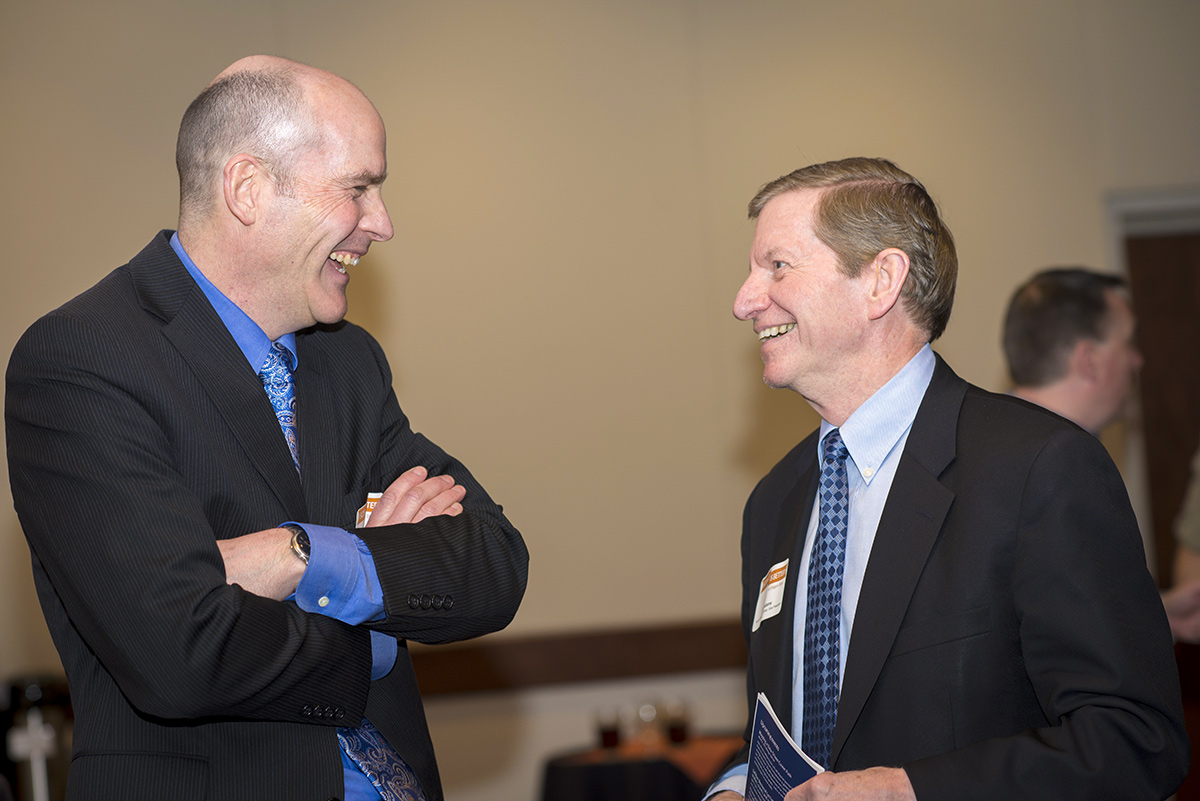
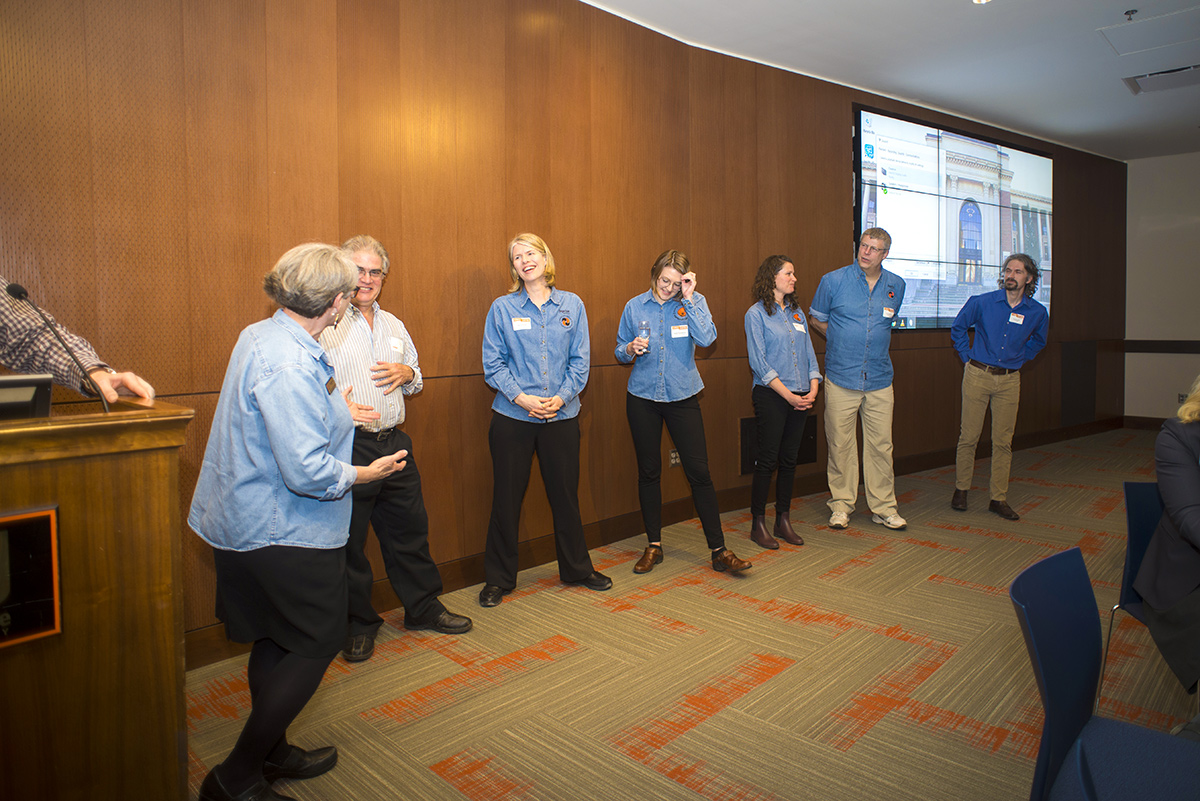
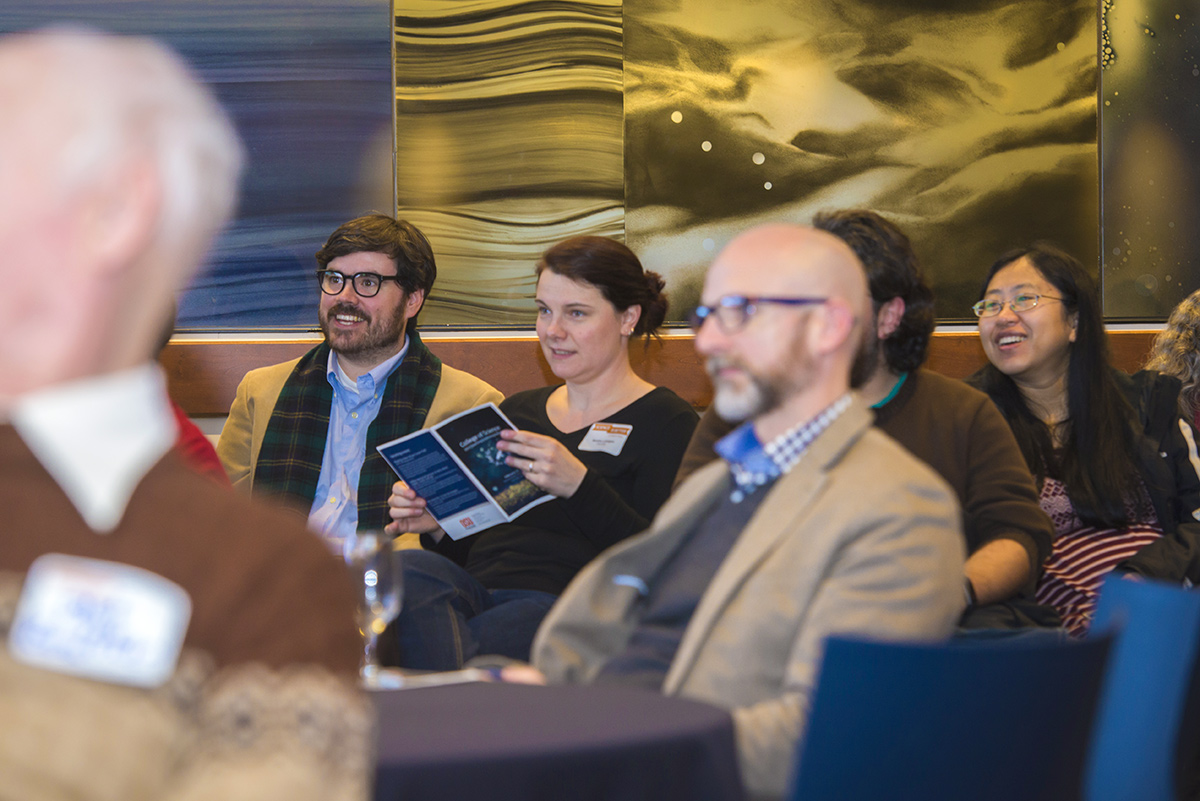
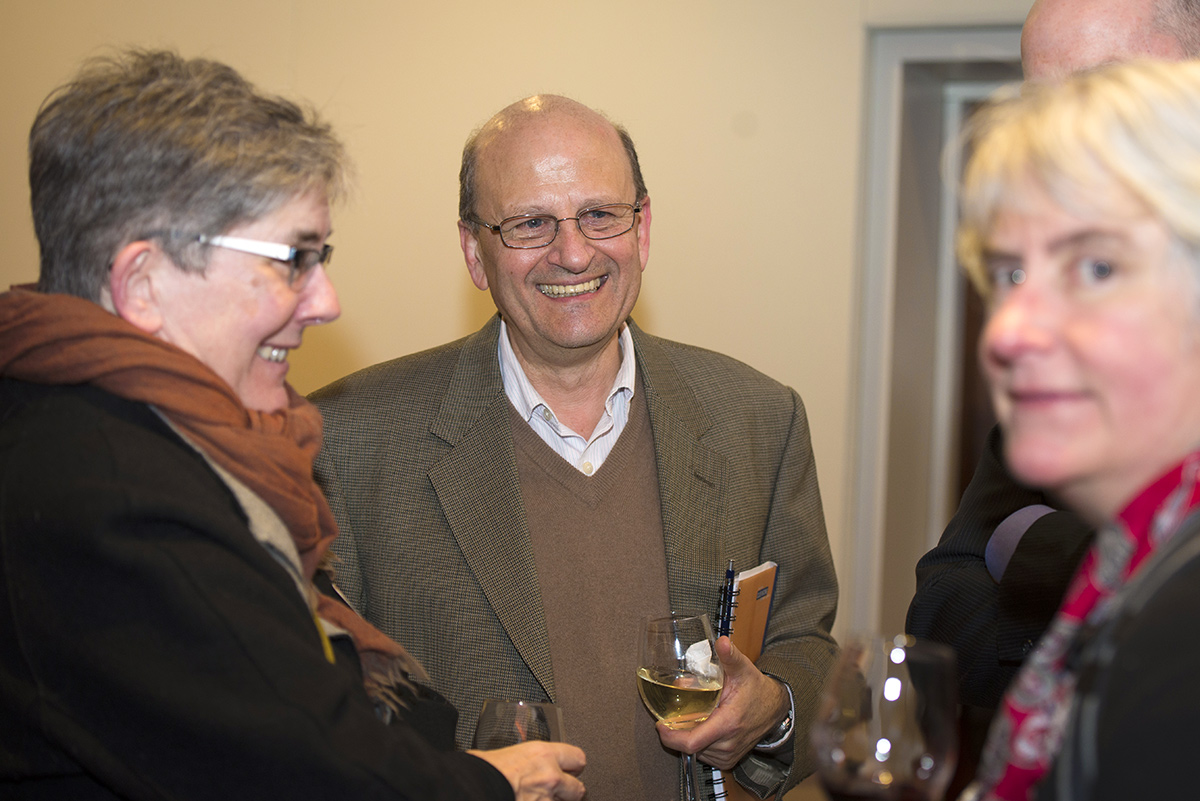
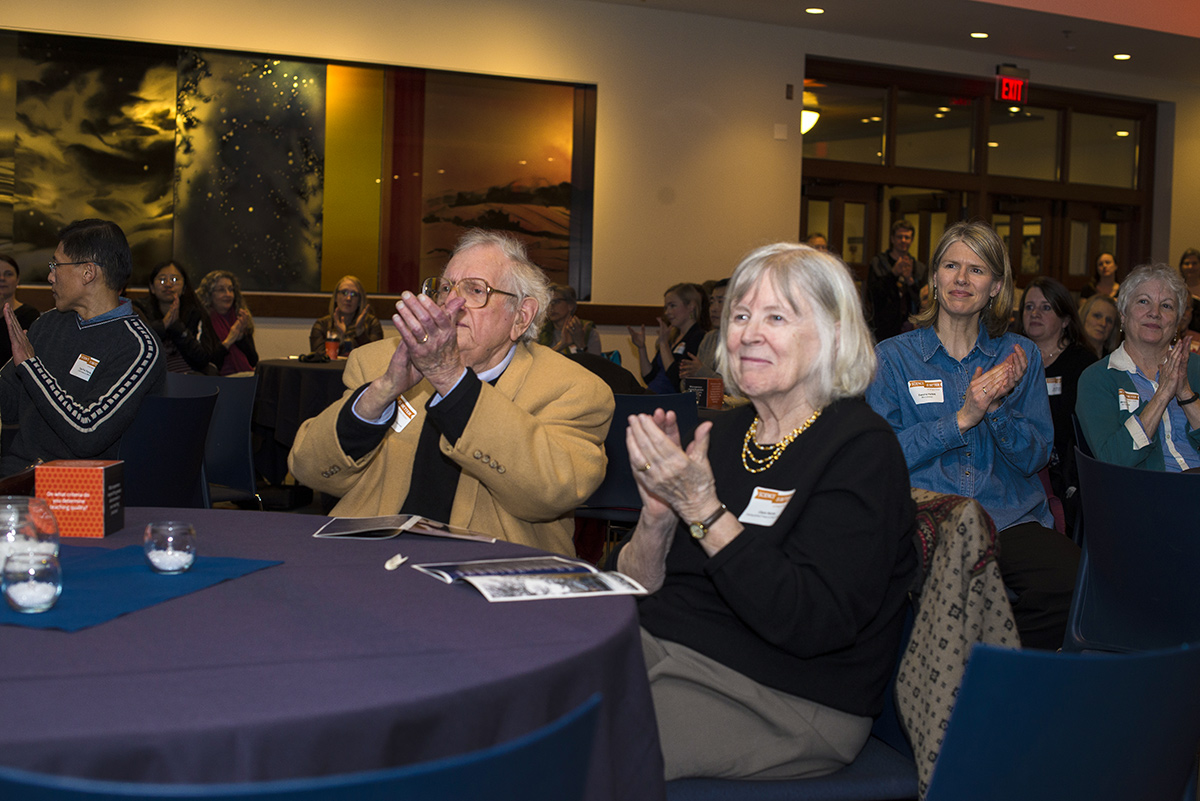
The College of Science celebrated its 2017 Winter Teaching and Advising Awards with faculty, advisors and students on February 27, which recognized excellence in teaching and advising, both hallmarks of our College. We are deeply committed to the success of all our people—faculty, advisors, staff and of course, our students. We want everyone in our OneScience community to thrive, not just survive.

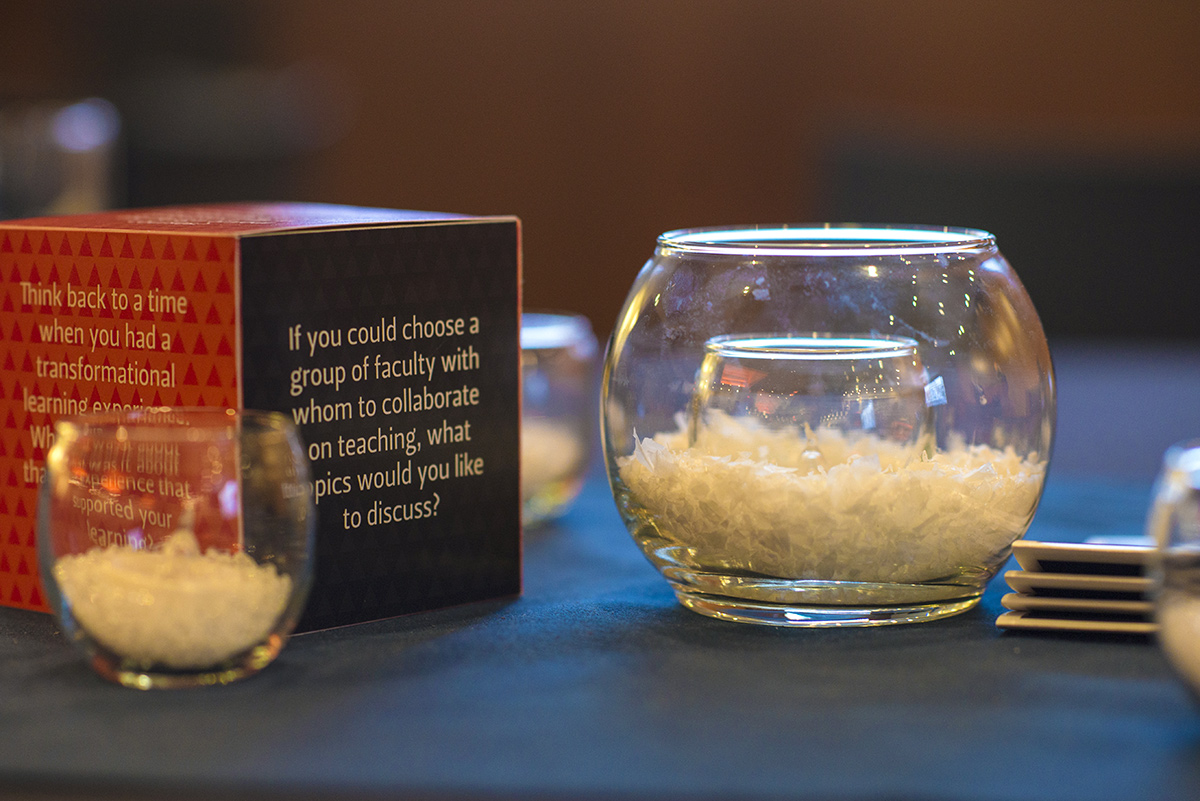
Enjoy the photos from the event below.

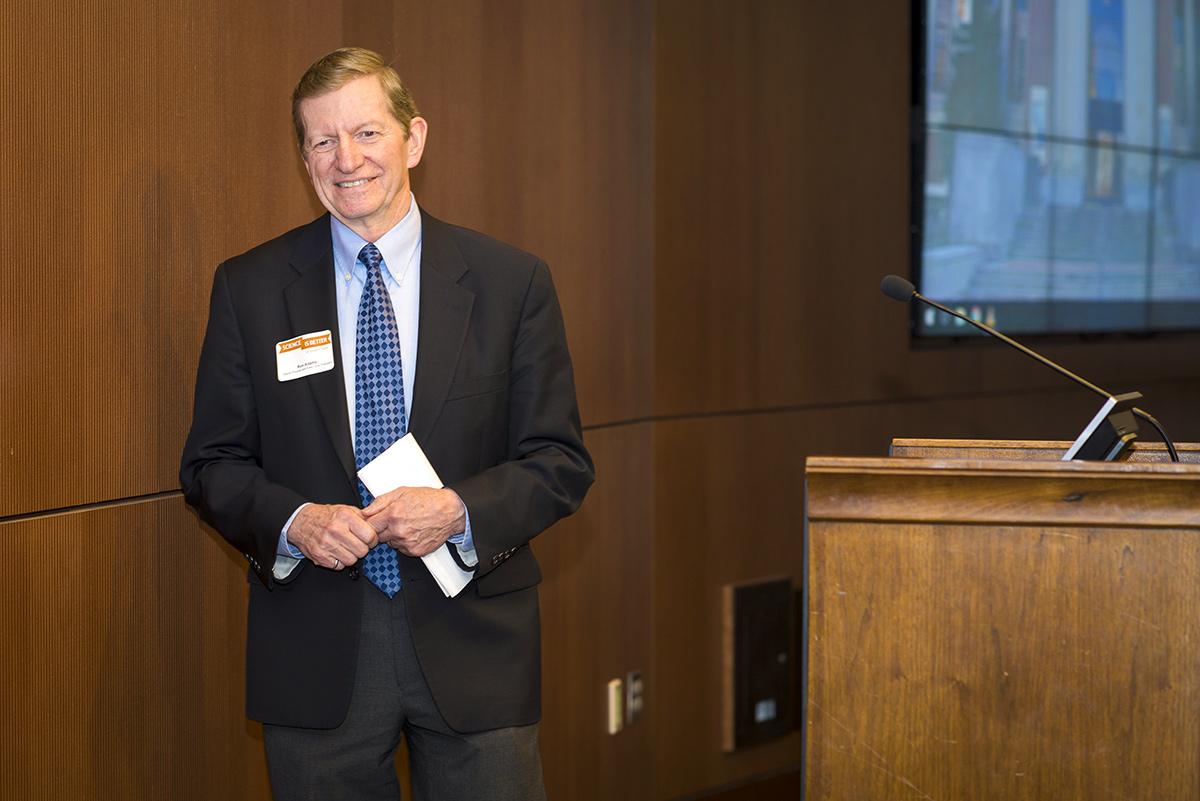
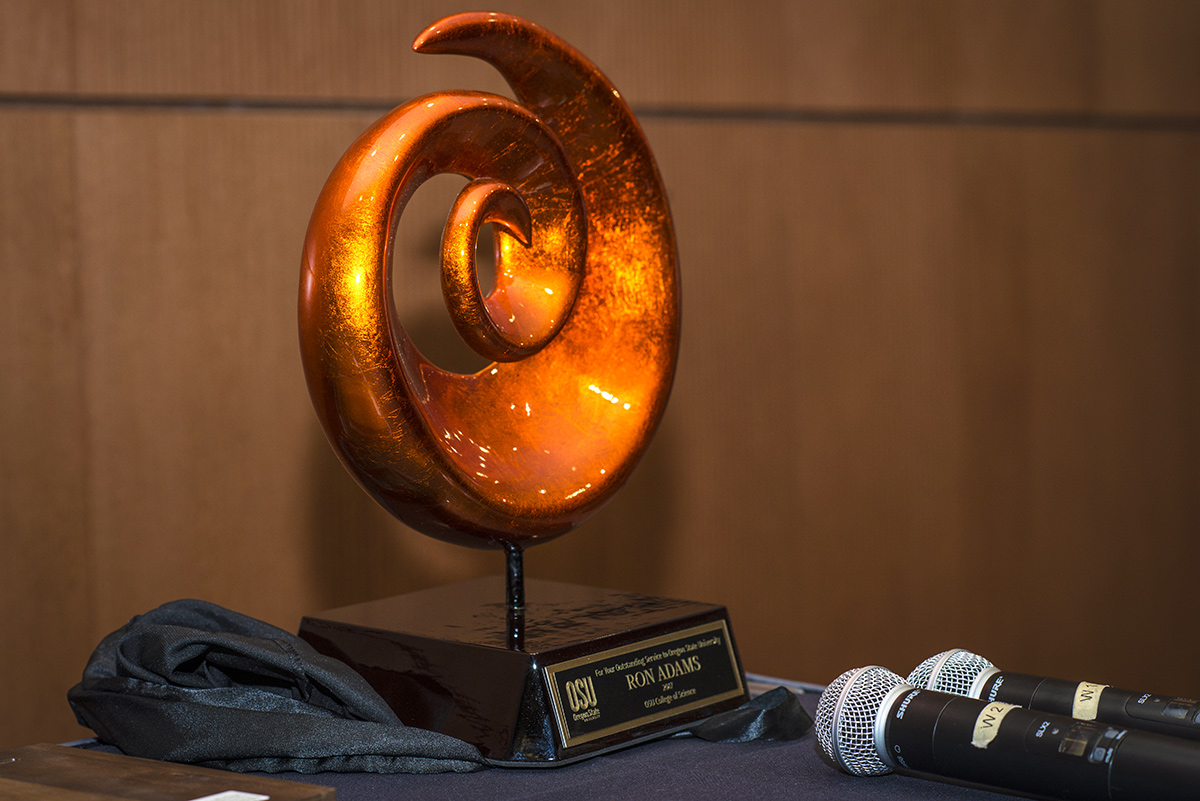
Dean Sastry Pantula welcomed everyone and Associate Dean Staci Simonich emceed the event. Guests included Interim Provost Ron Adams, who was presented with a special award acknowledging his service and dedication to the College and to OSU and to representatives from the Center for Teaching and Learning (CTL), a year-round resource offering professional development courses as well as individual consultations for faculty.

CTL advances excellence in teaching at OSU and beyond by providing a forum for discussion and hands-on activities supporting evidence-based methods and practices. The Center helps faculty who want to transform their curriculum, transcend traditional academic boundaries, incorporate more experiential learning, innovate with a hybrid or “flipped” classroom, or simply polish what’s already working well.

Watch this video to hear science faculty discuss how a professional learning community with CTL impacted their teaching.

Congratulations to all of our nominees and award winners! They exemplify deep commitment, skill, effectiveness and impact in teaching and advising, which helps build strong leaders in science. They are truly transforming lives.

2017 Award Winners

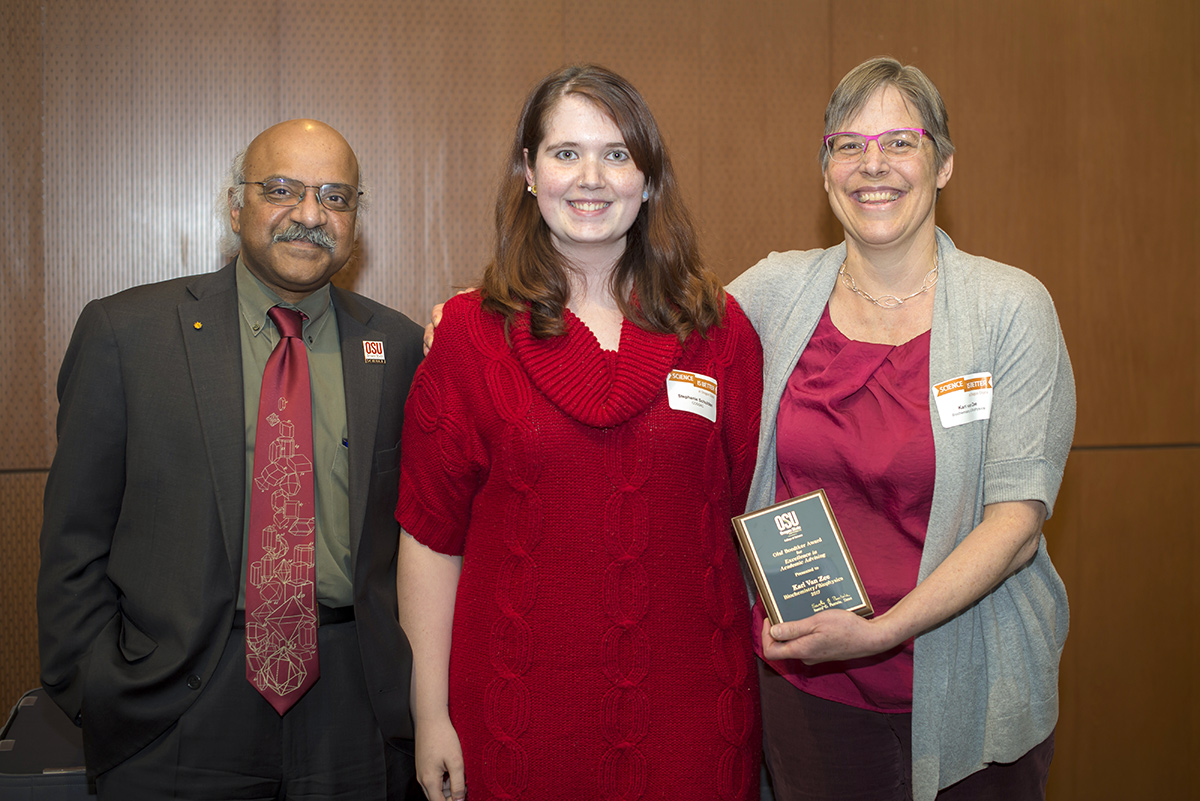
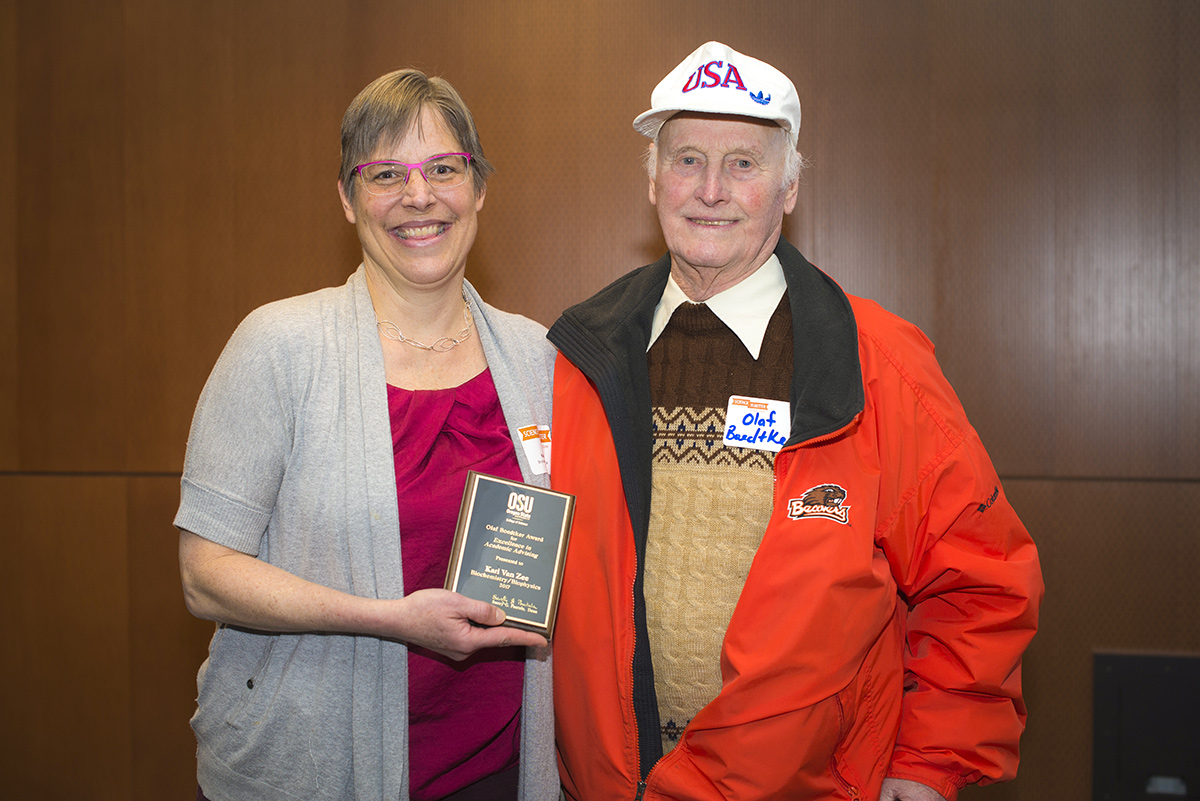
Olaf Boedtker Award for Excellence in Academic Advising

Nominees: Brock McLeod, Integrative Biology; Geneva Anderson, Microbiology; Elise Lockwood, Math; Sandra Loesgen, Chemistry

Winner: Kari van Zee, Biochemistry and Biophysics

Instructor and advisor Kari van Zee is dedicated to preparing undergraduate and graduate students for a variety of careers in the life sciences and for life-long learning in STEM. She has also been heavily involved in outreach to Oregon high school students and teachers and is Program Coordinator of STEPs (Scientists and Teachers in Education Partnerships).

Loyd F. Carter Award for Outstanding and Inspirational Teaching in Science, Undergraduate

Nominees: Viviana Perez, Biochemistry and Biophysics; Bob Mason, Integrative Biology; Lindsey Biga, Microbiology and Biohealth Sciences; David Koslicki, Mathematics

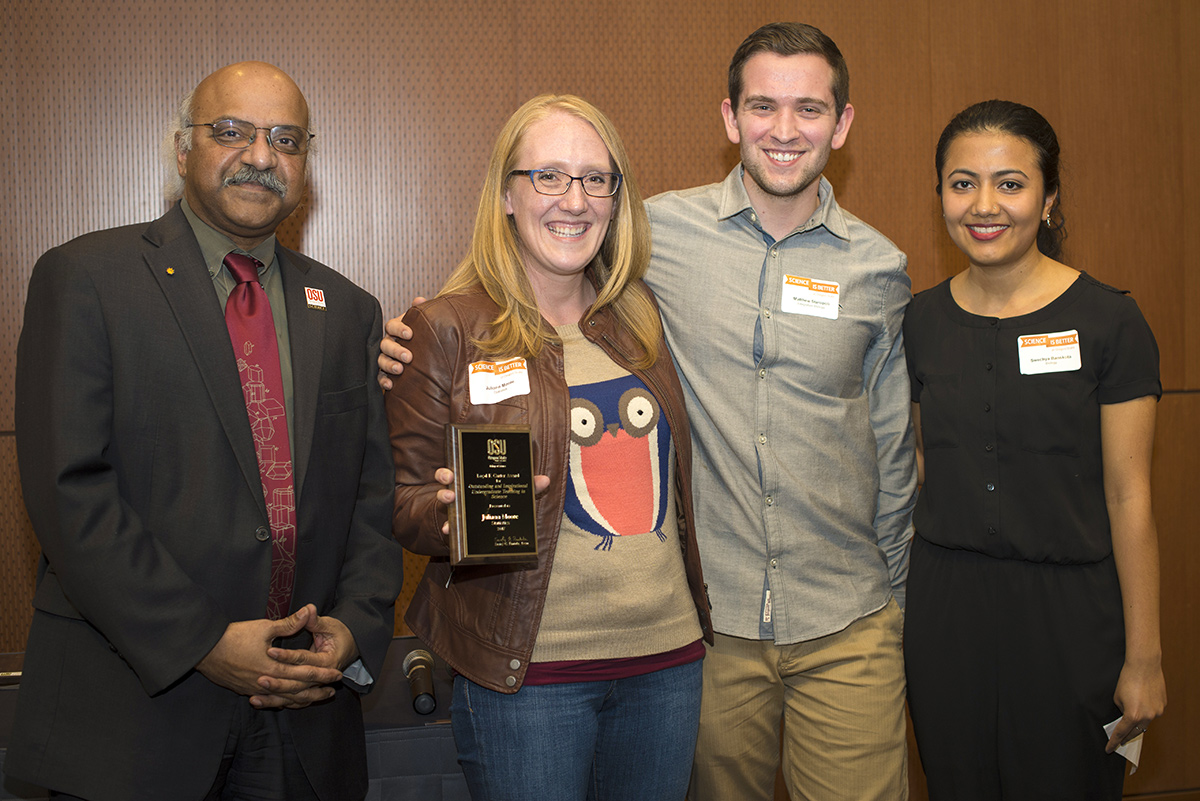
Winner: Juliann Moore, Statistics

Instructor Juliann Moore fell in love with statistics as a psychology undergraduate at Oregon State after taking upperlevel statistics courses with Jeff Kollath, and went on to pursue an M.S. in Statistics, graduating in 2011. While a graduate student, she worked as a teaching assistant and fell in love a second time, with teaching! Now in her dream job, Juliann has enjoyed being involved in iteratively improving statistics classes, particularly statistics 201. The improvements have had a positive impact on student grades, reducing the DFW rate (the rate at which students receive D-grades, F-grades or Withdrawals) by 14%.

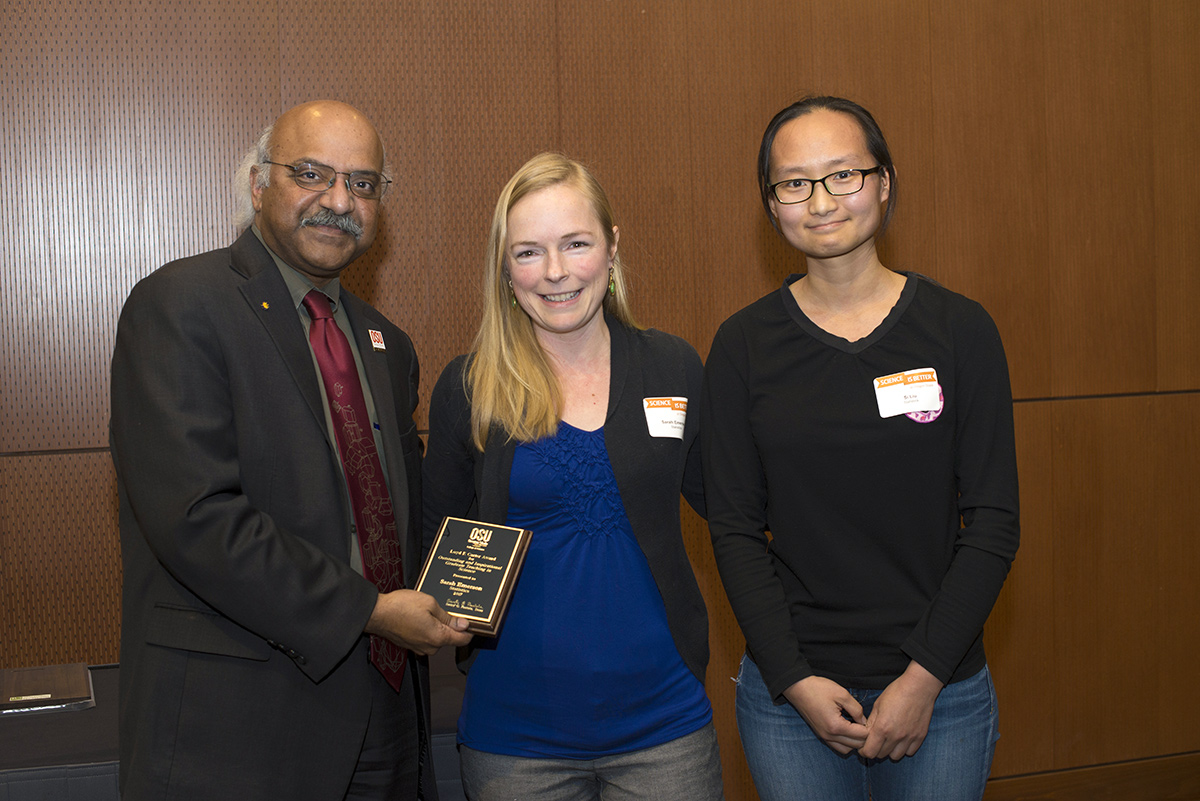
Loyd F. Carter Award for Outstanding and Inspirational Teaching in Science, Graduate

Nominees: Lindsay Biga, Integrative Biology; Sean Burrow, Chemistry; David Hendrix, Biochemistry and Biophysics

Winner: Sarah Emerson, Statistics

Associate Professor Sarah Emerson is a highly dedicated and effective teacher who has thrice received the Outstanding Teaching Award for “Significant Contribution the Educational Experience of Statistics Students” from the department’s students. She has been closely involved with developing the curriculum and the course contents for the department’s newly launched master’s program in Data Analytics.

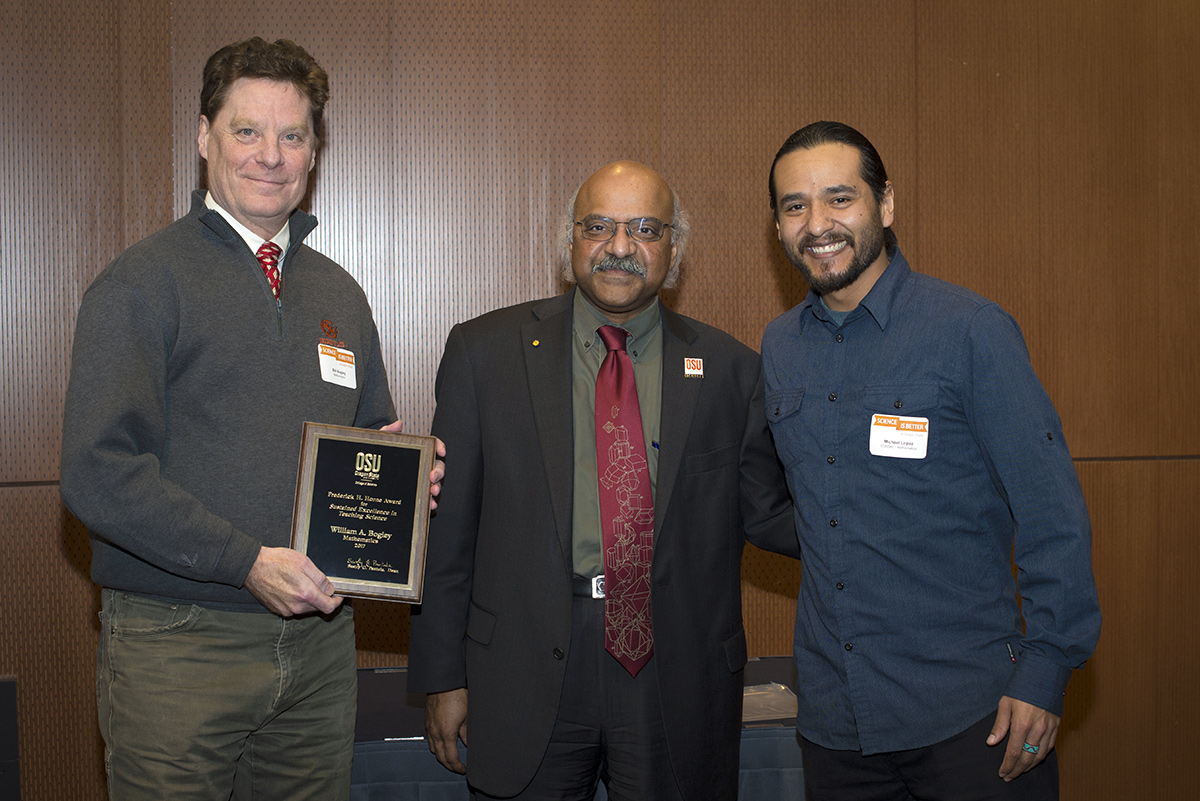
Fred Horne Award for Excellence in Teaching Science

Winner: Bill Bogley, Mathematics

Professor Bill Bogley is an inspirational teacher who learned early on to drop his formal lecture notes and become a "participant" in the class, working Socratically from a few written objectives and responding spontaneously from there to students' reactions and questions. This interactive style of teaching helped his students "become the kind of thinkers who can work on a problem while they are walking across the quad or eating breakfast - consciously or unconsciously." Bogley is also a very early online ed-preneur, who in 1996 with co-author Robby Robson, developed what is arguably the world's first complete web-based course in differential calculus, the basis for OSU's online course until 2010.

Galaxy in space

Free movie, dinner and discussion: Hidden Figures

By Srila Nayak

The College of Science will treat science students, faculty and staff to dinner and a movie followed by a lively discussion on Tuesday, January 31. The movie is “Hidden Figures,” the 2016 Oscar-nominated biographical film about pioneering yet little known female African-American mathematicians at NASA.

Based on the book Hidden Figures: The American Dream and the Untold Story of the Black Women Mathematicians Who Helped Win the Space Race by Margot Lee Sheerly, the film depicts the incredible and inspiring NASA careers of Katherine G. Johnson, Dorothy Vaughan and Mary Jackson who started working in the Jim Crow era. Johnson was a physicist and mathematician, who calculated flight trajectories for Project Mercury, the 1969 Apollo 11 flight to the moon and many other early NASA missions. Jackson went on to become NASA’s first black female engineer. Vaughan was the first African-American woman to supervise a staff at NASA.

The film shows how the three women overcame racial discrimination and other social obstacles to contribute in vital ways to NASA’s various missions at a time when black women and men were still being subjected to segregation and barred from higher education and high-skilled jobs.

After the movie, the College will host a pizza dinner and an hour-long discussion exploring issues raised by the film that go beyond NASA and the field of mathematics and connecting with many of the College’s initiatives around diversity, equity and inclusion.

If interested, faculty, students, faculty and staff can RSVP to Michael Lopez at [email protected]

Movie: Carmike Cinema at 4:10 pm, January 31, 2017 (Tuesday). Please arrive 15 minutes early.

Discussion and Dinner: Kidder 128, 6:45 p.m.—7:45 p.m.

Michael Waterman in office space

Going the distance: From Coos County and Corvallis to L.A. and the world

By Debbie Farris

Alumnus Michael Waterman (’64, ’66)

Alumnus Michael Waterman (’64, ’66) has traveled quite a distance to get where he is. From humble beginnings on an isolated livestock ranch in southern Oregon in the 1950s to becoming an internationally celebrated mathematician and biologist at the University of Southern California (USC), Waterman has shattered all expectations.

“For me, OSU was the doorway to the rest of the world,” said Waterman, whose mother was committed to the idea of her children going to college.

Reflecting on his rural childhood, he recalls thinking, “You have no idea what’s out there. It’s very hard to imagine beyond what you see.”

Waterman struggled to see a clear career path forward, but pursued mathematics which proved to be a fortuitous jumping off point in his young life.

The values he acquired growing up in the Pacific Northwest—a respect for living off the land, freedom from outside authority, and a slight tendency to go against the grain and reach beyond the imagination—served him well.

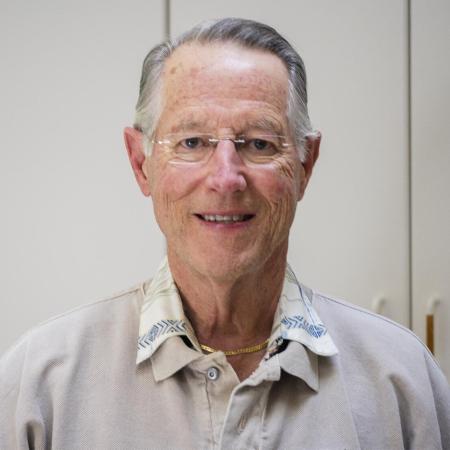
Michael Waterman sitting outside office space

Alumnus Michael Waterman, Professor of Biological Sciences, Computer Science and Mathematics at University of Southern California

Waterman earned bachelor’s and master’s degrees in mathematics at Oregon State and a Ph.D. in statistics and probability at Michigan State University, which propelled him to become a founder and leader of computational biology and a renowned human genome theorist.

Waterman holds joint academic appointments in the Departments of Biological Sciences, Mathematics, and Computer Science at USC and an appointment at Fudan University in Shanghai. Previously, Waterman held positions at Los Alamos National Laboratory and Idaho State University.

Waterman’s work in the 1980s formed a cornerstone for many DNA mapping and sequencing projects, including the Human Genome Project. His work continues to play an important role in DNA sequencing. He is member of both the U.S. National Academy of Sciences and of Engineering, the American Academy of Arts and Sciences, and both the French and Chinese Academies of Sciences.

In recent years, Waterman reconnected with mathematicians at OSU and returned to present the Mathematics Department’s Milne Lectures in Mathematics, Statistics, and Computer Science. He presented a talk on the mathematical, statistical and computational challenges of sequencing DNA and the historical developments contributing to new methods that are accelerating the speed of DNA sequencing.

Waterman’s work is focused on applying mathematics, statistics, and computer science techniques to various problems in molecular biology. His work in the 1980s formed one of the theoretical cornerstones for many DNA mapping and sequencing projects, including the Human Genome Project. He also helped develop some of the most widely used tools in the field, including new technologies to solve basic problems. His work continues to play an important role in DNA sequencing.

Waterman has acquired an international reputation evident by his outstanding scientific achievements. He is member of the U.S. National Academy of Sciences, the U.S. National Academy of Engineering, the American Academy of Arts and Sciences, the French Academy of Sciences and the Chinese Academy of Sciences. He received a Gairdner Foundation International Award in Biomedical Sciences and the Dan David Future Prize in Bioinformatics. He is also founding editor of the Journal of Computational Biology.

Waterman has pondered the disparity between the two worlds he navigated between: his rural childhood in a ranching community that was relatively under-populated and undeveloped and the private university experience in the nation’s second-largest city as a globally renowned scientist at the convergence of math and biology.

Reflecting on his own journey, Waterman has considered ways he might make a difference and impact future generations of scientists, especially first generation students from rural, less privileged communities.

“I believe that those who didn’t grow up with privilege should have a chance too, said Waterman. “I am pleased to see OSU is still accepting kids from a variety of backgrounds. That is not very common to see these days.”

This notion inspired Waterman to establish an endowed scholarship for science students—the second largest in the College’s history. Waterman’s legacy gift, the Michael and Tracey Waterman Scholarship, has the ability to transform students’ lives in a deep, profound way. He is particularly interested in supporting first-generation students, a population often with low success rates as they struggle to transition academically and culturally while struggling with financial need.

Waterman’s legacy gift goes a long way to support science students, transforming their lives forever in a deep and profound way. Noting the tremendous difficulty public universities have contracting public support and funding today, Waterman heartily supports OSU’s mission, rooted in the land-grant tradition of accessible education, problem-solving research and outreach that serves communities statewide.

Philanthropic support at public institutions is growing more and more vital every year. This is especially true in Oregon, which cut per-student spending in higher education more than any other state in the country except one between 2000 and 2014, according to a 2015 study by the Urban Institute.

male student in front of orange-filtered classroom

National leader in mathematics reform to discuss student success and equalization

By Katharine de Baun

How can universities better prepare students to meet the urgent needs of the 21st century? What best practices can help enhance and equalize student success, especially among those from diverse backgrounds? These are just a few of the topics William "Brit" Kirwan, a nationally recognized authority on mathematics reform and other critical issues facing higher education, explored as part of a special lecture hosted by the College of Science on Tuesday, January 24, 2017.

Watch a his lecture on YouTube.

Dr. Kirwan is currently the executive director of the Transforming Post-Secondary Education in Mathematics project, and Chancellor Emeritus of the University System of Maryland (USM). His talk “The Student Success Imperative: Challenges, Opportunities, and Responsibilities,” came at an opportune time given the state and national dialogue taking place.

Kirwan presented evidence-based strategies and pedagogies, on both a university-wide and classroom-level, that provide hope for greater and more diverse student access and success, even in a time of diminishing public investment in higher education. He also highlighted key trends, including making smart use of new technologies, developing an active learning “emporium model” and defining alternative pathways for degree requirements in mathematics, among others.

Nationwide, colleges of science, where foundational courses are taught in mathematics, statistics and sciences, play a critical role in student success, and ultimately in college completion. Kirwan offered a clear picture of how universities and faculty must evolve quickly to increase students’ quantitative literacy, driven by the reality that math is the single largest roadblock for many to affordable degree completion and because in today’s data-driven world, mastery of mathematical and statistical concepts has become essential for success in highly desirable STEM disciplines and careers.

Many contend that mathematics and statistics can make us better thinkers. Kirwan explained that math is not just a linear winnowing process to weed out the (white, male) Einsteins from the masses, but a fundamental tool for all that should be opening more doors than it closes.

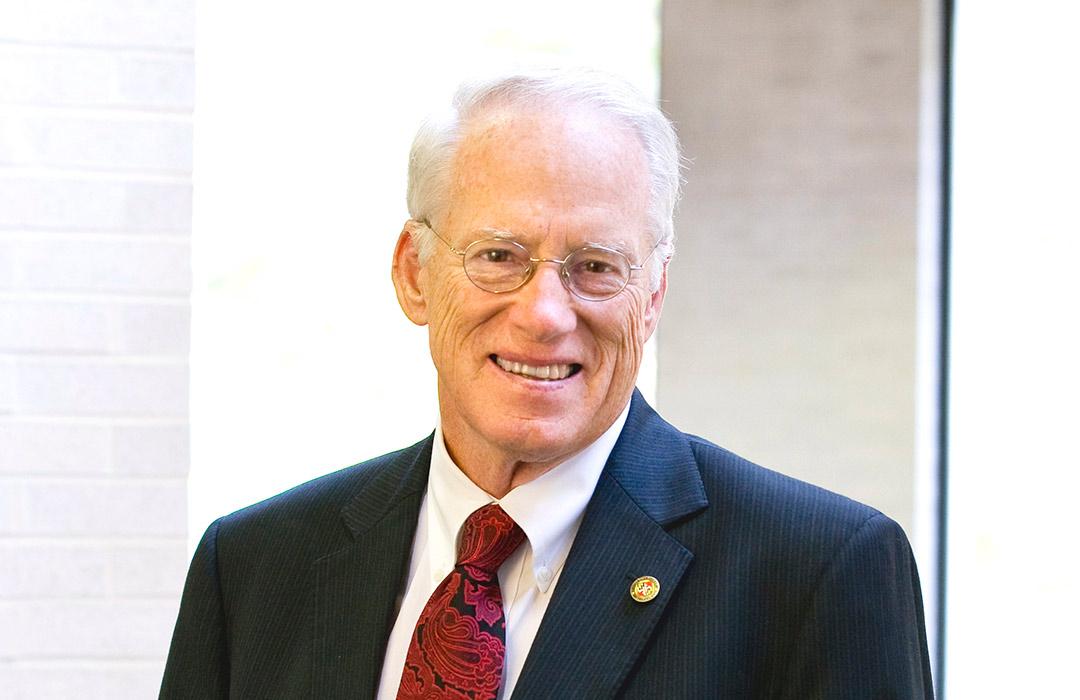
William Kirwan standing in office space

William “Brit” Kirwan, Chancellor Emeritus of the University System of Maryland

Kirwan also explored how a sea-change is needed in how trajectories in K-12, college-level, and graduate-level math education are viewed. Too often, implicit bias or “expectancy effects” on the part of teachers not only restricts what could be a broader, more diverse stream of students into higher math (i.e. calculus and beyond), but shortchanges math at all levels as a discipline benefiting clear thinking and analysis across the curriculum.

While on campus, Kirwan met with OSU leaders and administrators, faculty in the Departments of Mathematics and Statistics as well as education faculty and students to explore some of the above topics in more depth.

Prior to his Chancellorship at USM (2002-2015), Kirwan served as President of The Ohio State University from 1998-2002 and previously as President of the University of Maryland, College Park for 10 years and a mathematics professor there for 24 years.

Among Kirwan's many honors is the 2010 TIAA-CREF Theodore M. Hesburgh Award for Leadership Excellence. Considered one of the nation's top higher education honors, this award recognizes outstanding leadership and commitment to higher education and contributions to the greater good. Dr. Kirwan was elected a Fellow of the American Academy of Arts and Sciences in 2002.


Read more stories about: events, mathematics, statistics


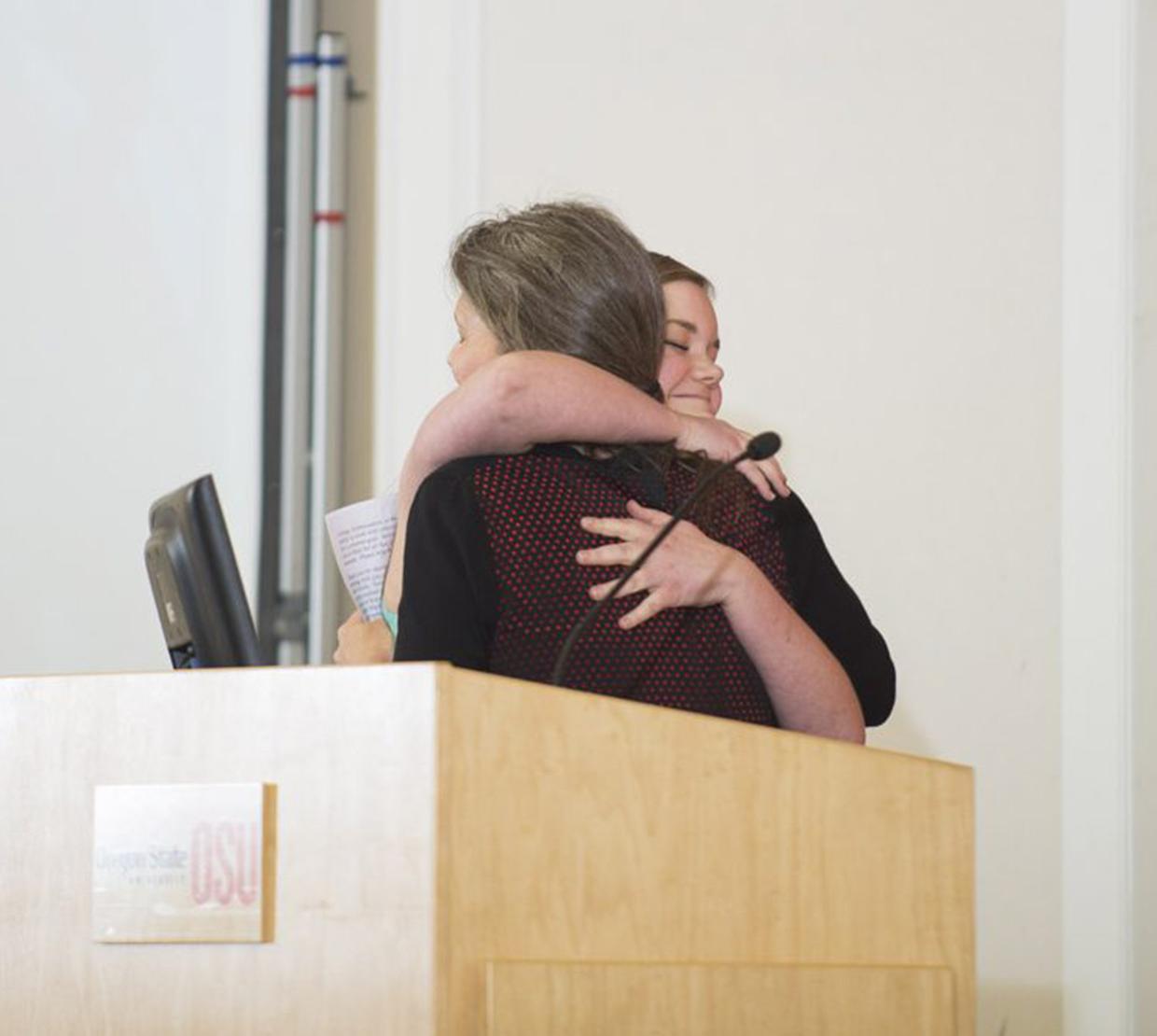
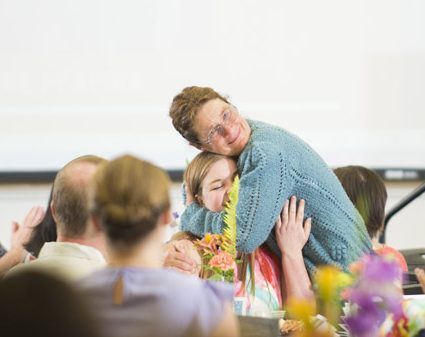
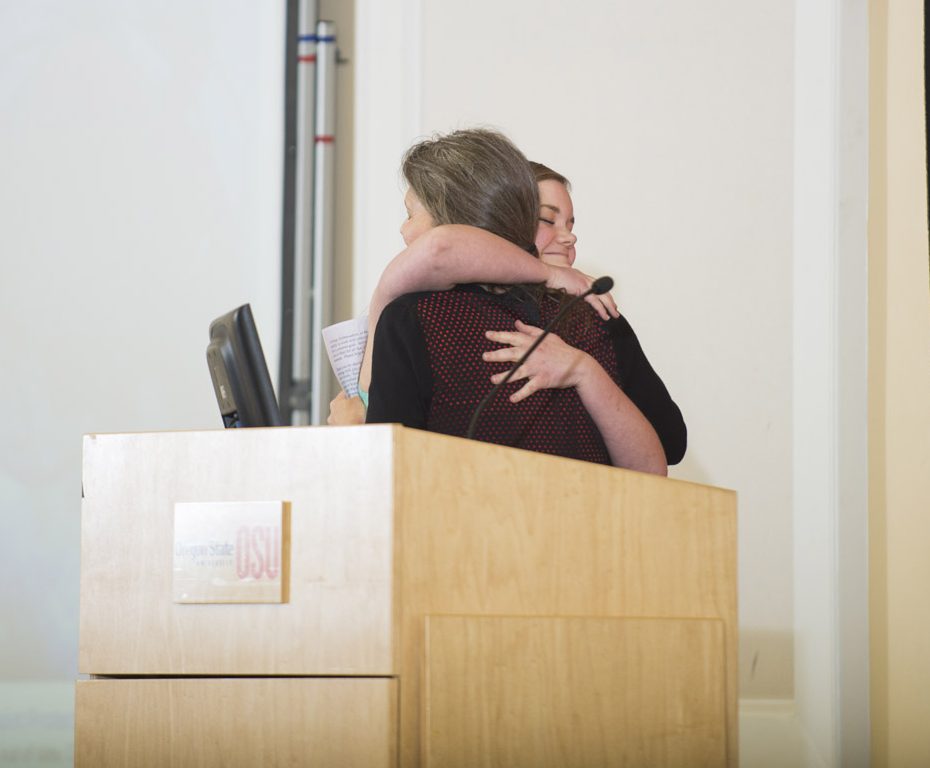
Two women hugging each other behind podium

Celebrating scholarship at our annual dessert

Celebrating at the Scholarship Dessert

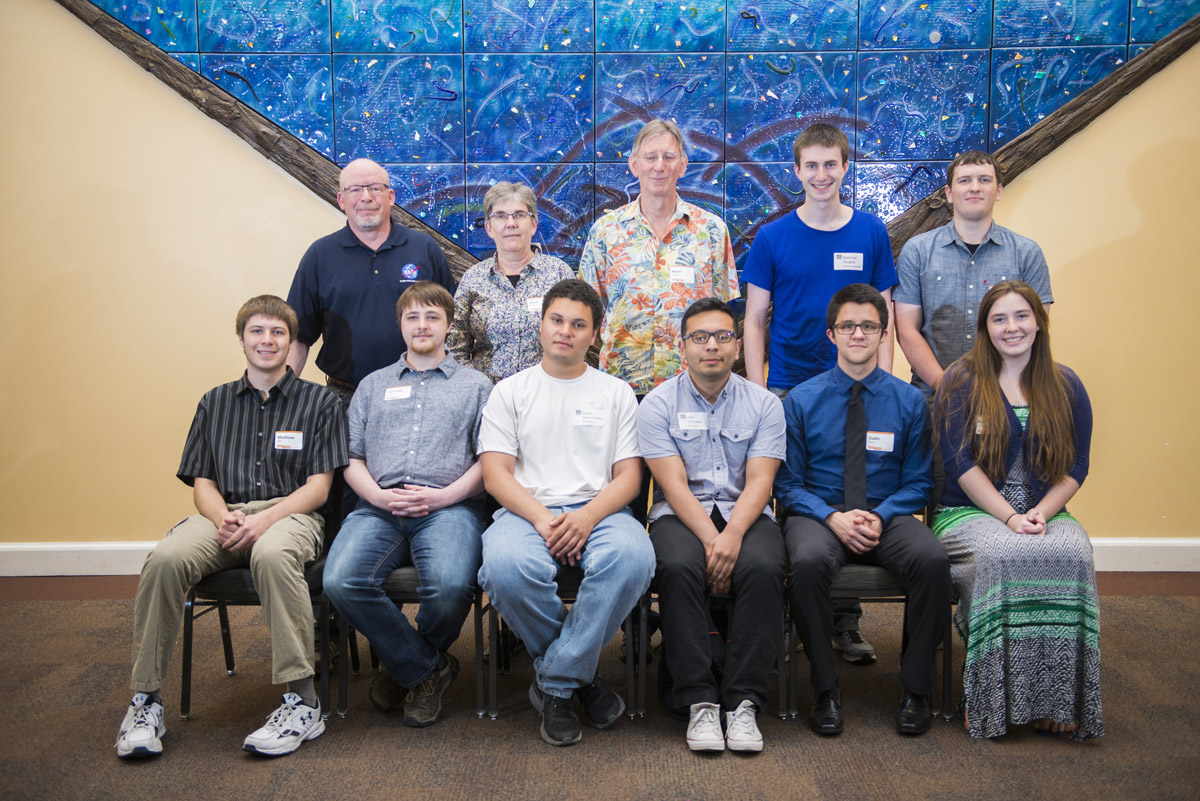
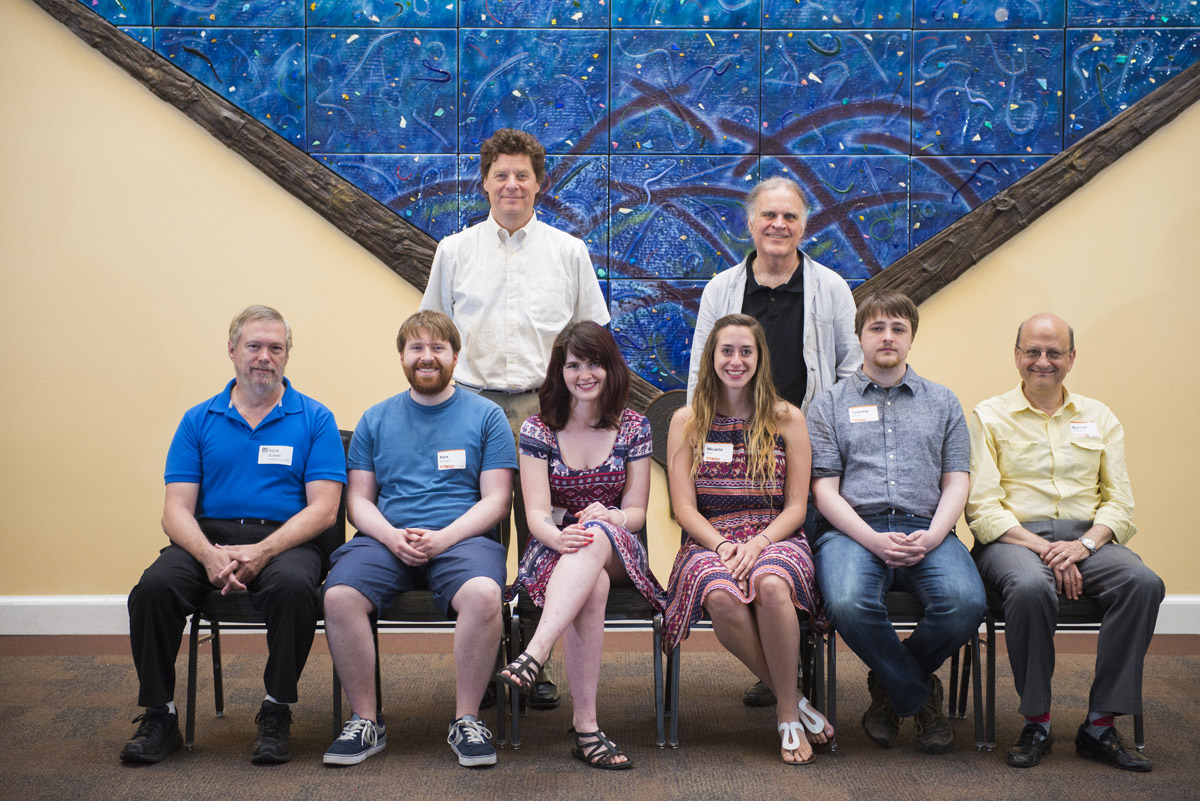
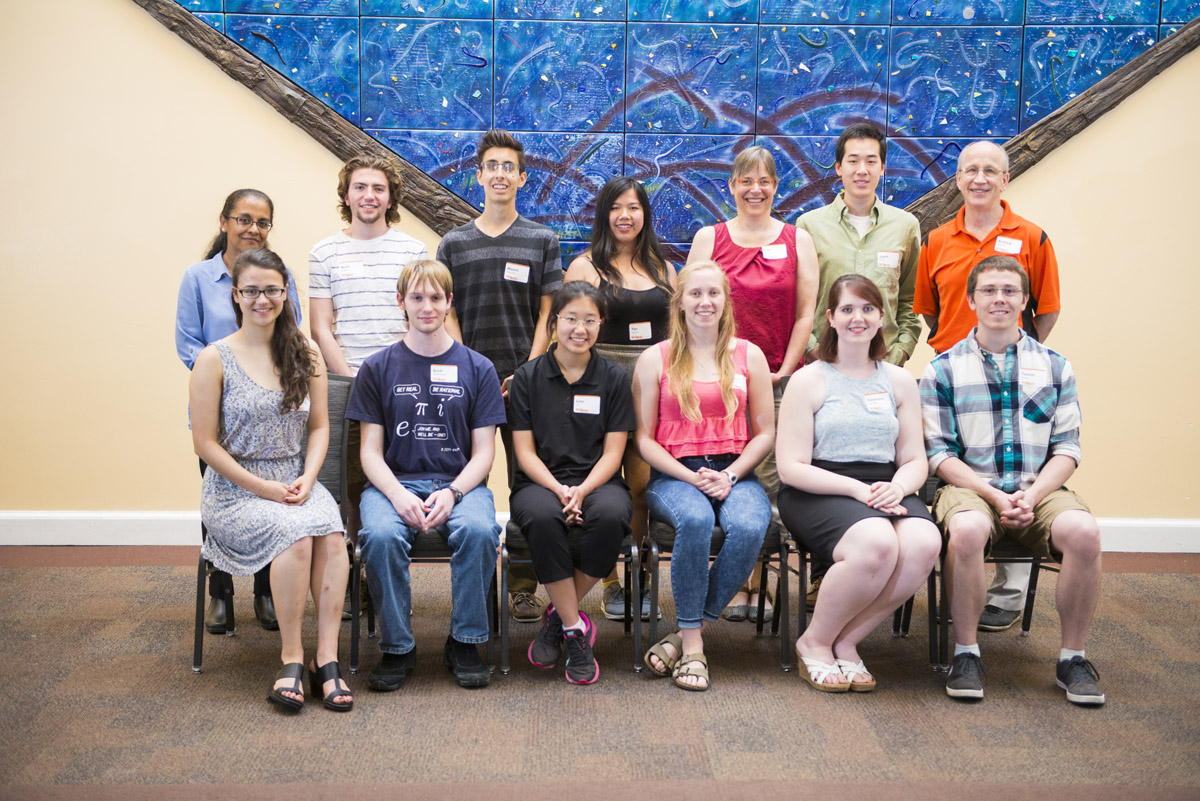
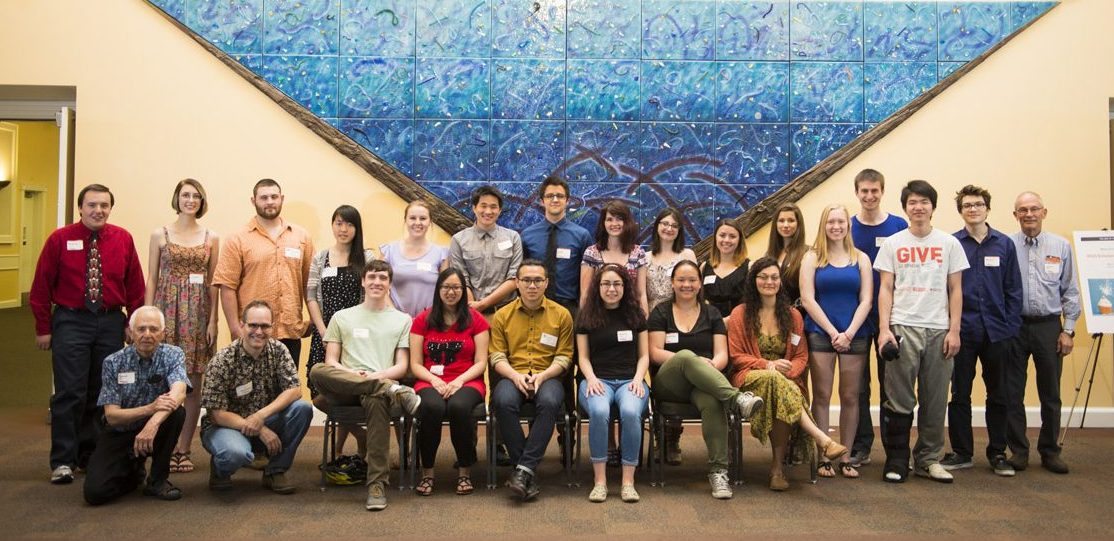
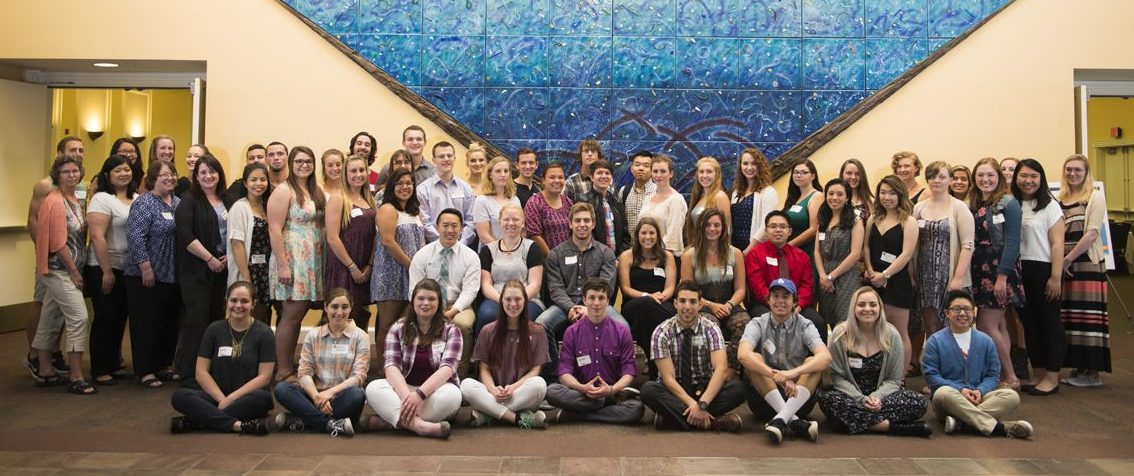
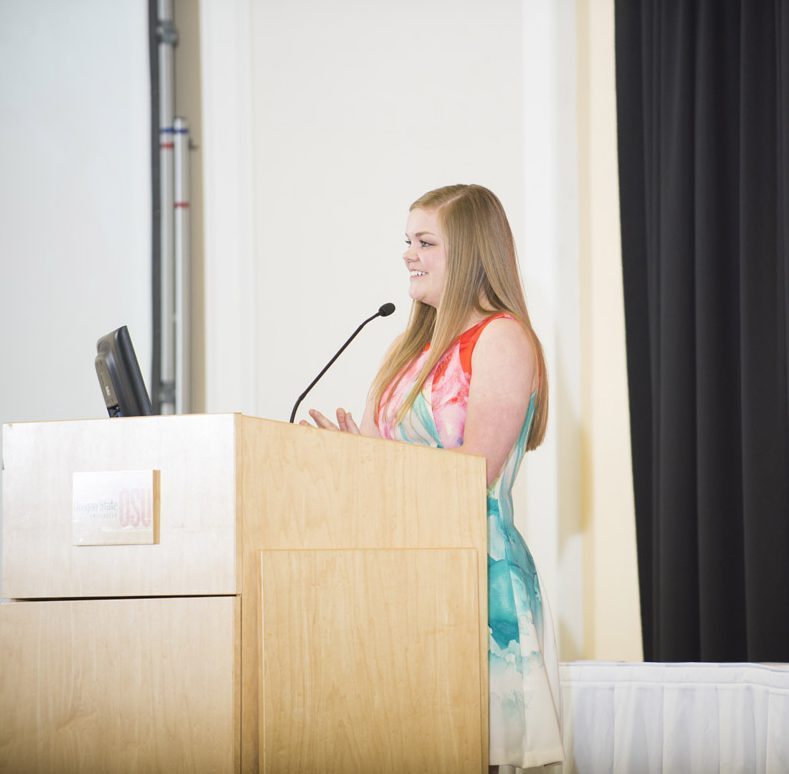
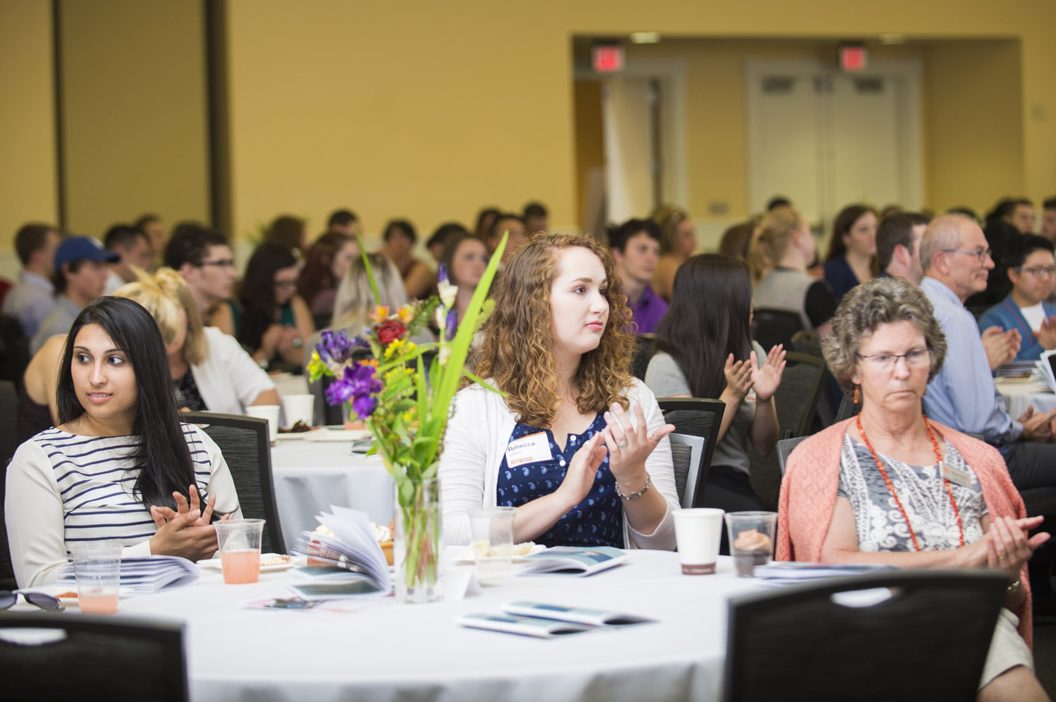
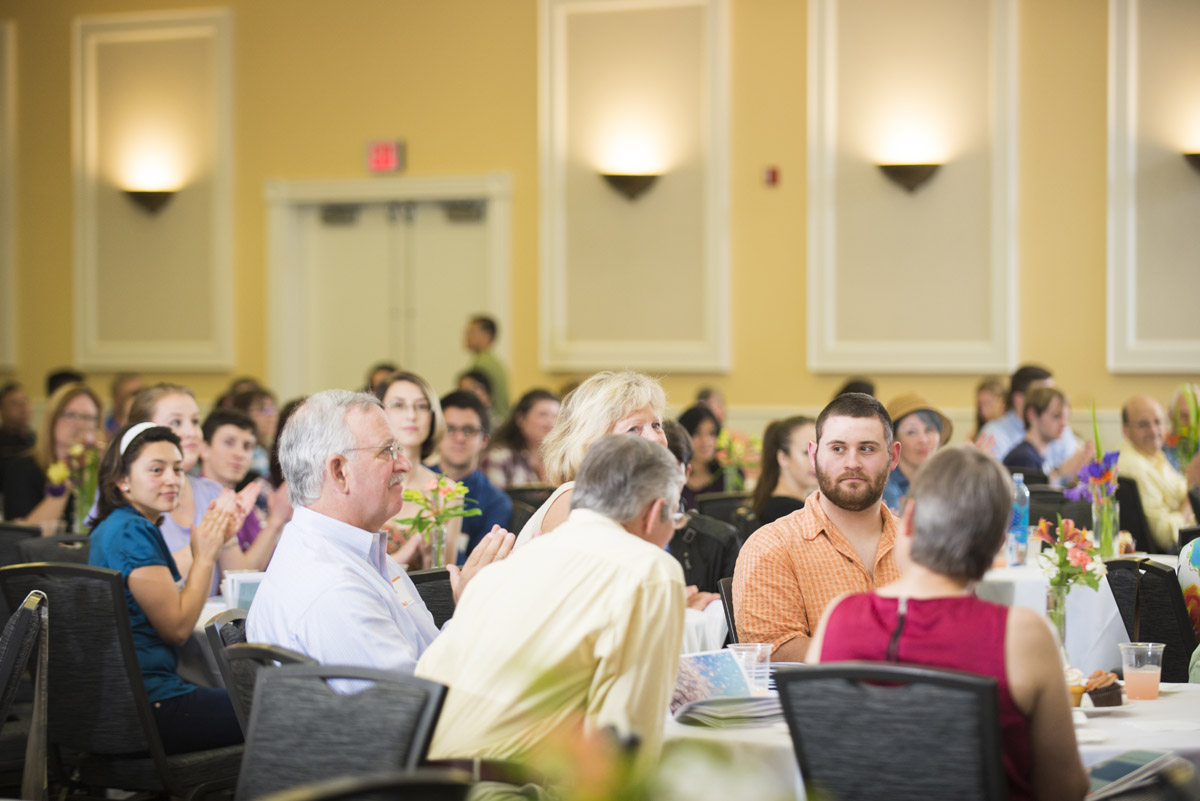
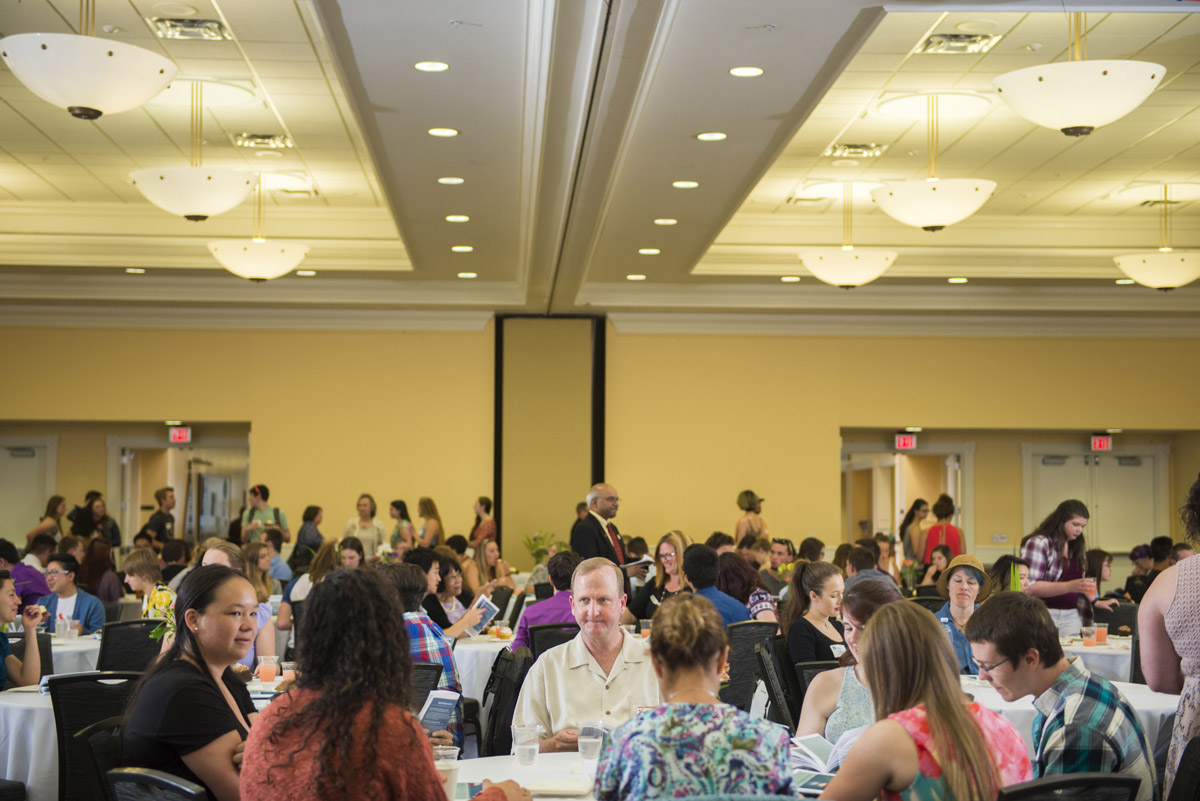
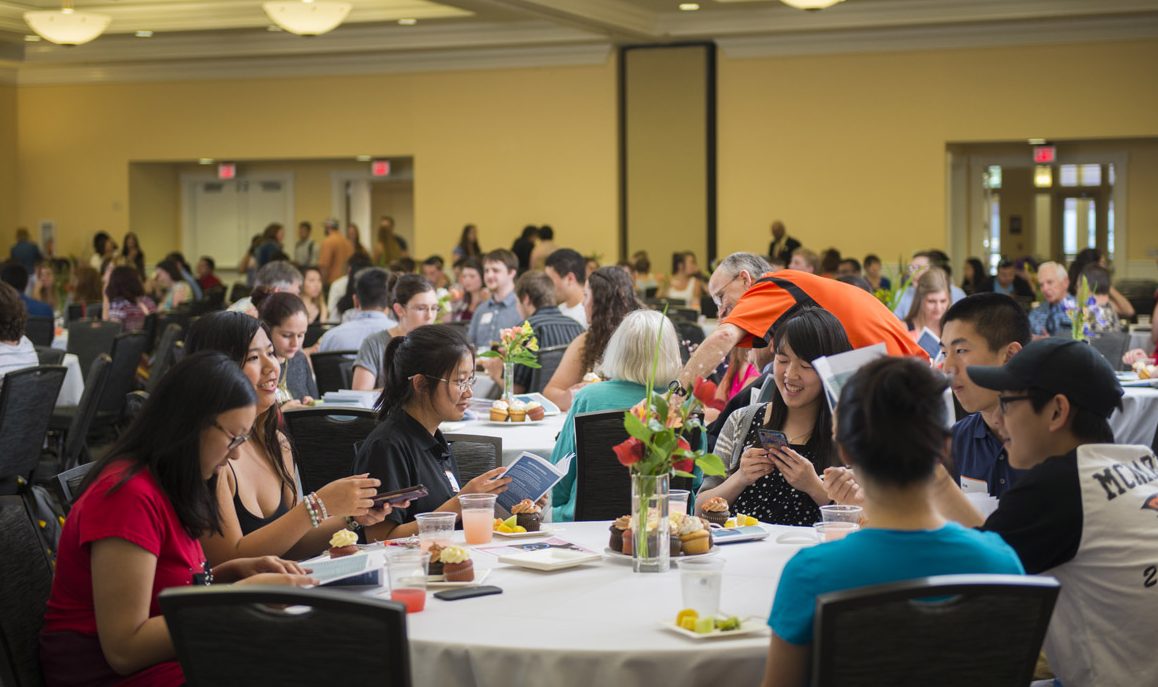
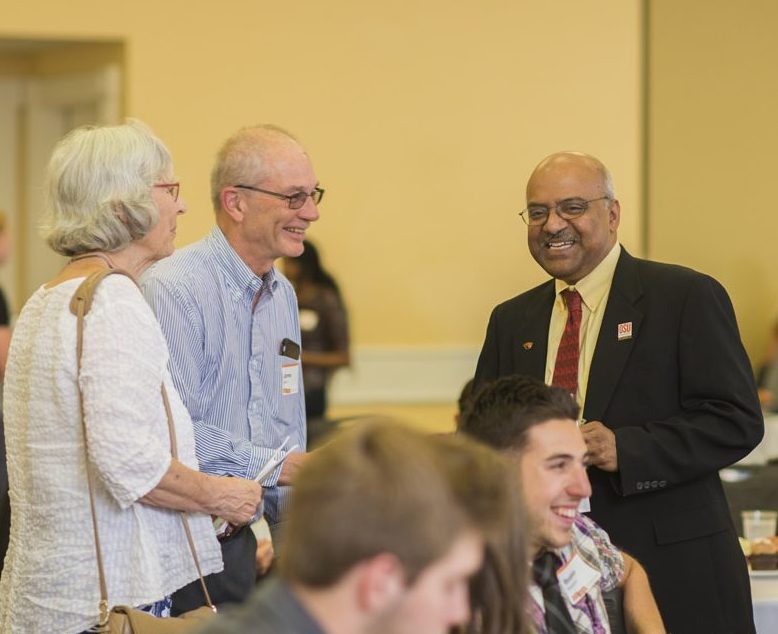
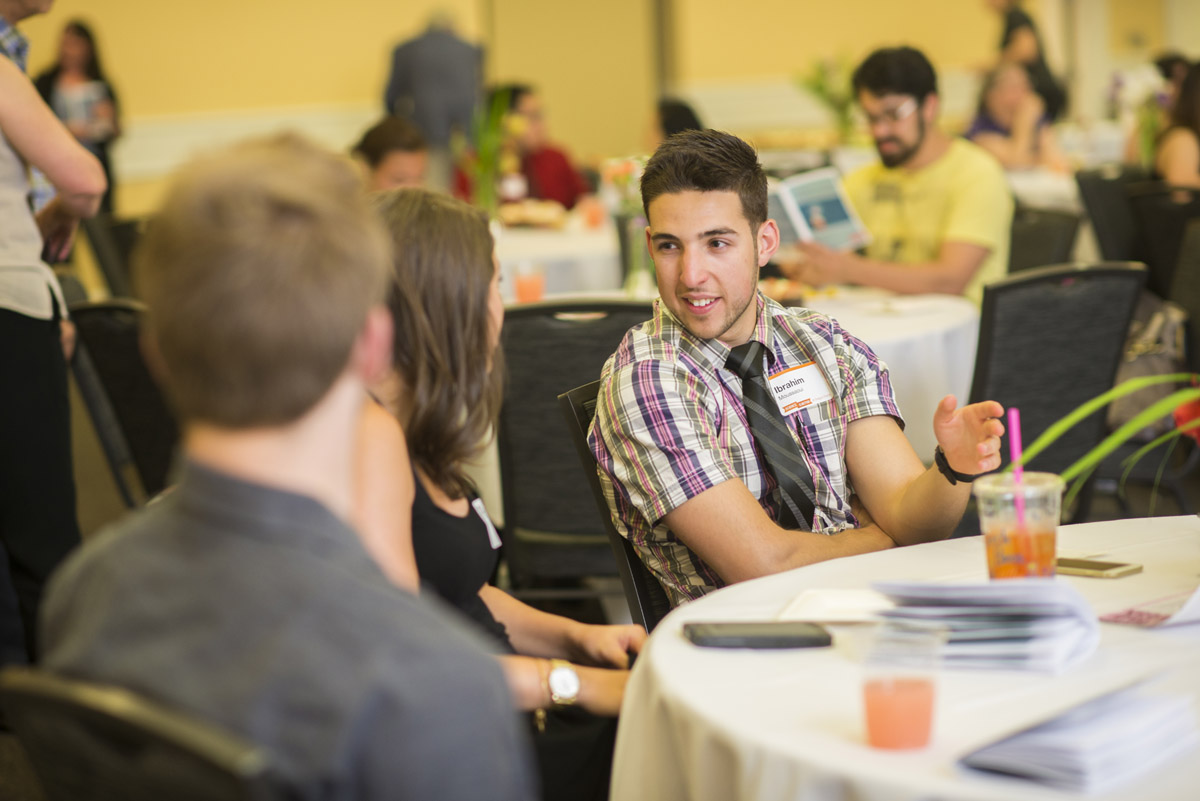
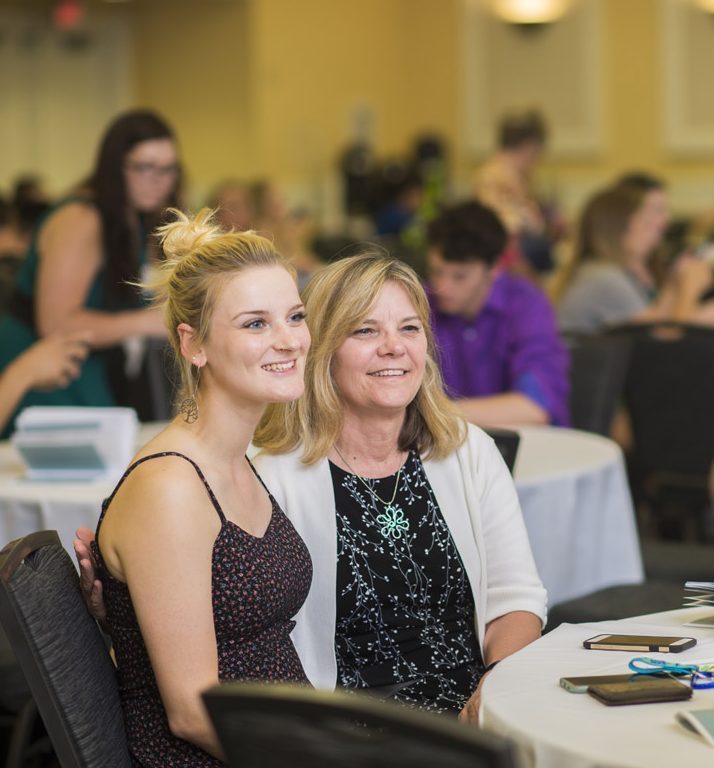
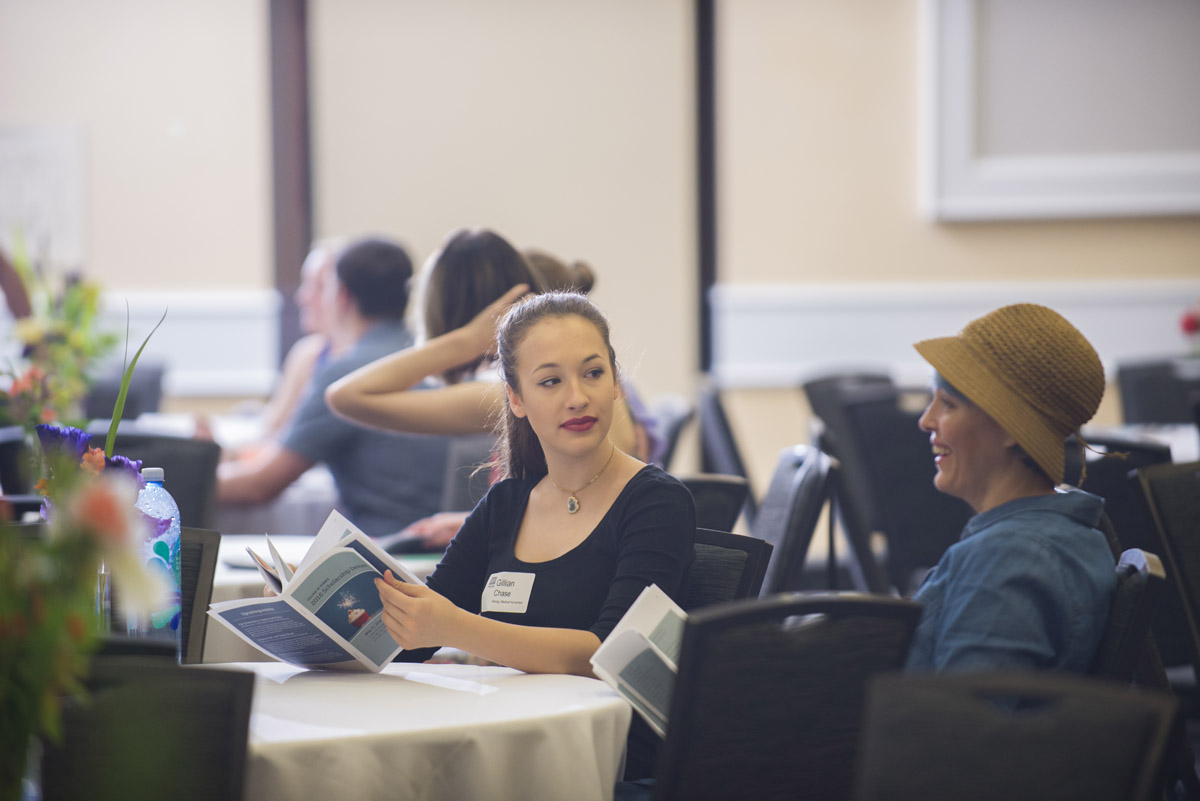
The College of Science celebrated our outstanding scholarship students at our annual spring Scholarship Dessert in June. For the 2016-17 academic year, the College awarded scholarships for merit, need and undergraduate research experiences. The Scholarship Dessert—a festive occasion—connects students, their families, advisors, faculty and many alumni/friends whose generous support funds these awards.

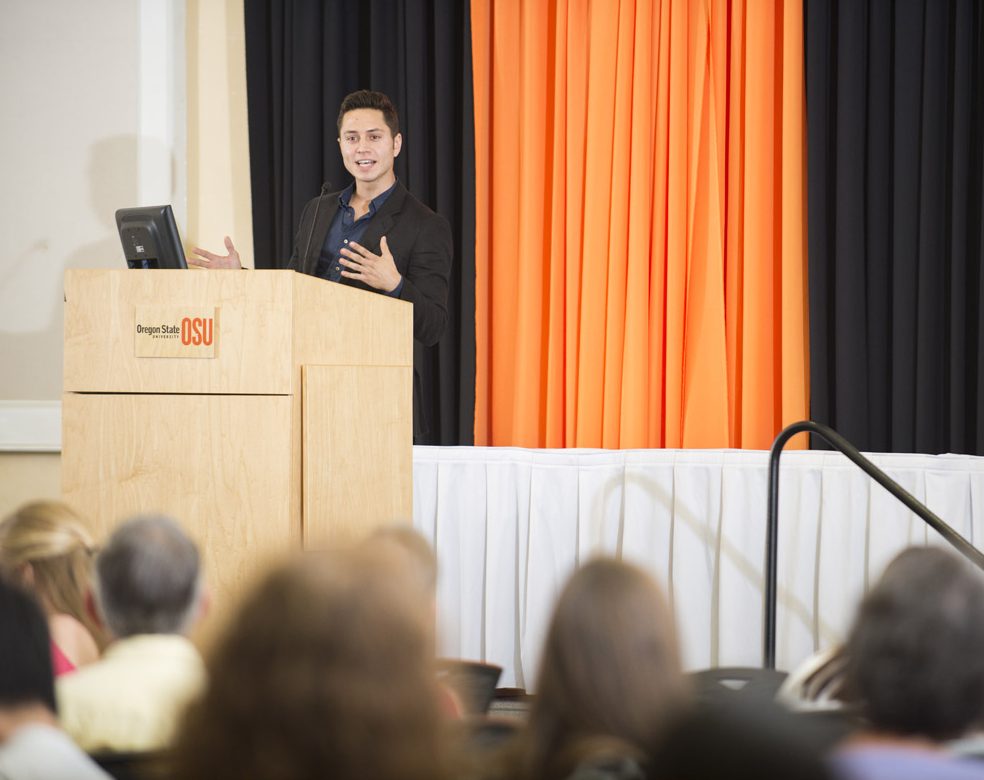
This year two scholarship recipients spoke, Shan Lansing, a senior chemistry major, and Jackson Dougan ('13), a recent integrative biology alumnus. They shared their unique perspectives and experiences about their science education, transformative experiences and the power of scholarships.

For a complete list of our scholarships, visit: science.oregonstate.edu/scholarships.

Scenes from our 2016 Scholarship Dessert

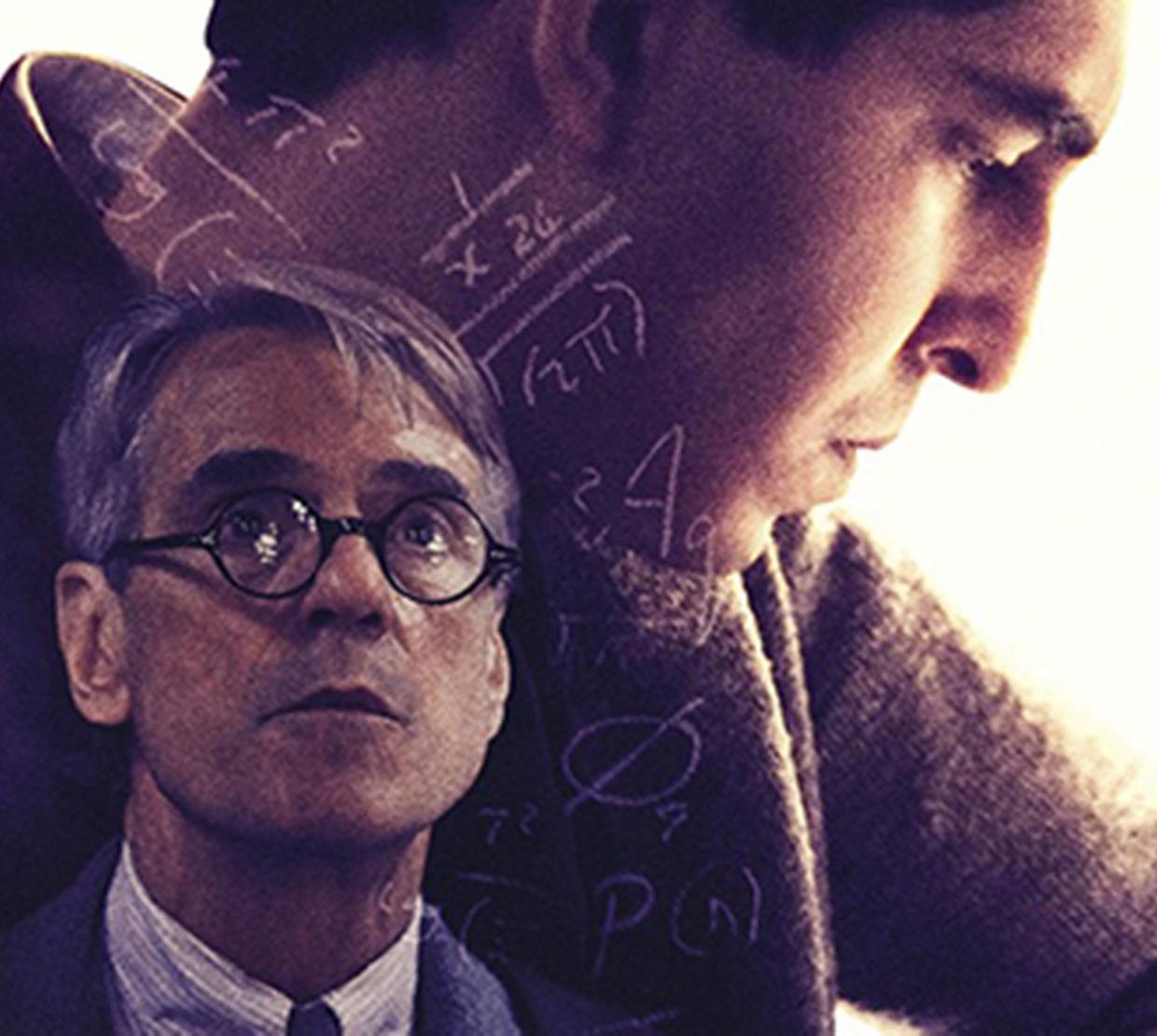
The man who knew infinity movie poster

Free movie, dinner and discussion: The man who knew infinity

The man who knew infinity screening

The College of Science will treat mathematics, physics and statistics students and faculty to an evening of movie, dinner and a Skype discussion with OSU alumnus (BS & MS '60) and world famous mathematician, Dr. George Andrews on Thursday, May 26. The group will watch "The Man Who Knew Infinity" the recently released biographical drama film on the life of Indian mathematical genius, Srinivasa Ramanujan at Darkside Cinema at 3:30 pm.

The film portrays the relationship between Ramanujan and University of Cambridge number theorist G.H. Hardy in the early 1900s and Ramanujan's experiences with English racism during his visit to Trinity College.

After the movie, the College of Science will host a 45-minute Skype discussion with professor Andrews, who is the Evan Pugh Professor of Mathematics at Pennsylvania State University and a member of the National Academy of Sciences. Among his many towering mathematical achievements, Andrews is perhaps best known for his work on Ramanujan's "Lost Notebook" as it is called in the mathematical community.

A few months before he passed away, Ramanujan had spoken about his new work on theta functions which physicists use in their study of the heat equation. However, he didn't leave behind any published work on the subject and nothing more was known about his contributions to this branch of mathematics until Andrews' amazing find.

Andrews discovered Ramanujan's "Lost Notebook" in a library of Trinity College, Cambridge in 1975. Excitedly leafing through the 100-odd loose pages, Andrews found they contained 600 equations in all—revolutionary mathematical findings on mock theta functions—of which only a fifth had been independently discovered in the years after Ramanujan's death in 1920. In the decades following his discovery, Andrew has co-authored several books that provide proofs of most of the theorems listed in "the Lost Notebook."

Delicious pizza will be served during the discussion. The movie and discussion will give students a renewed appreciation of the human dimensions of mathematics and a fascinating peek at the history and legacy of twentieth-century mathematics.

Mathematics, physics and statistics students and faculty can click here to RSVP today

Source: http://www.pnas.org/content/102/13/4663.full

Subscribe to Statistics