Statistics

Statistics

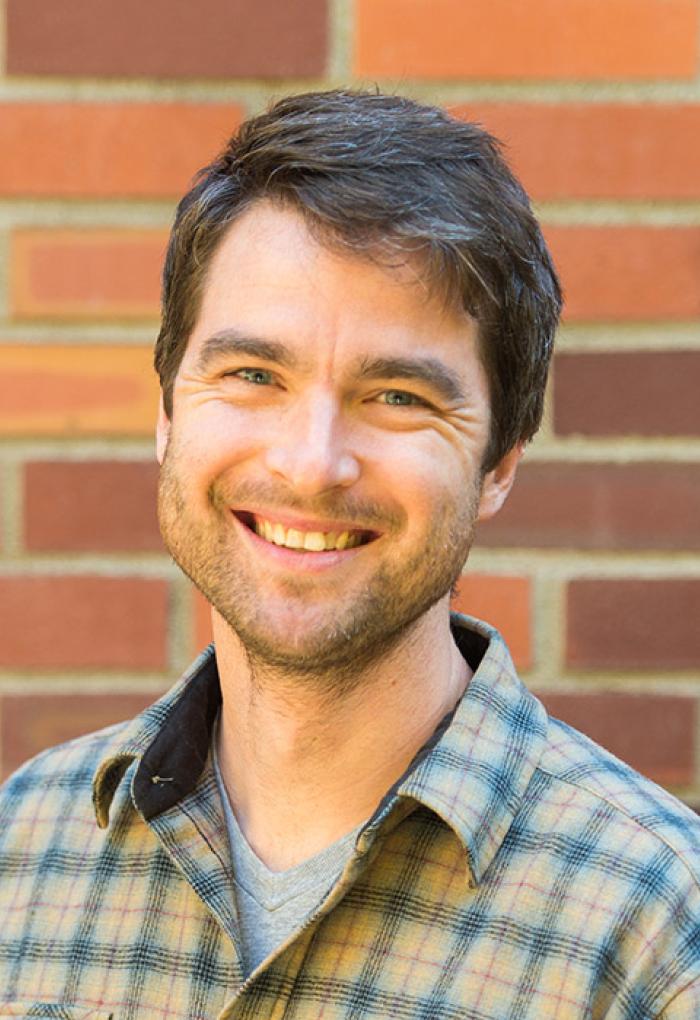
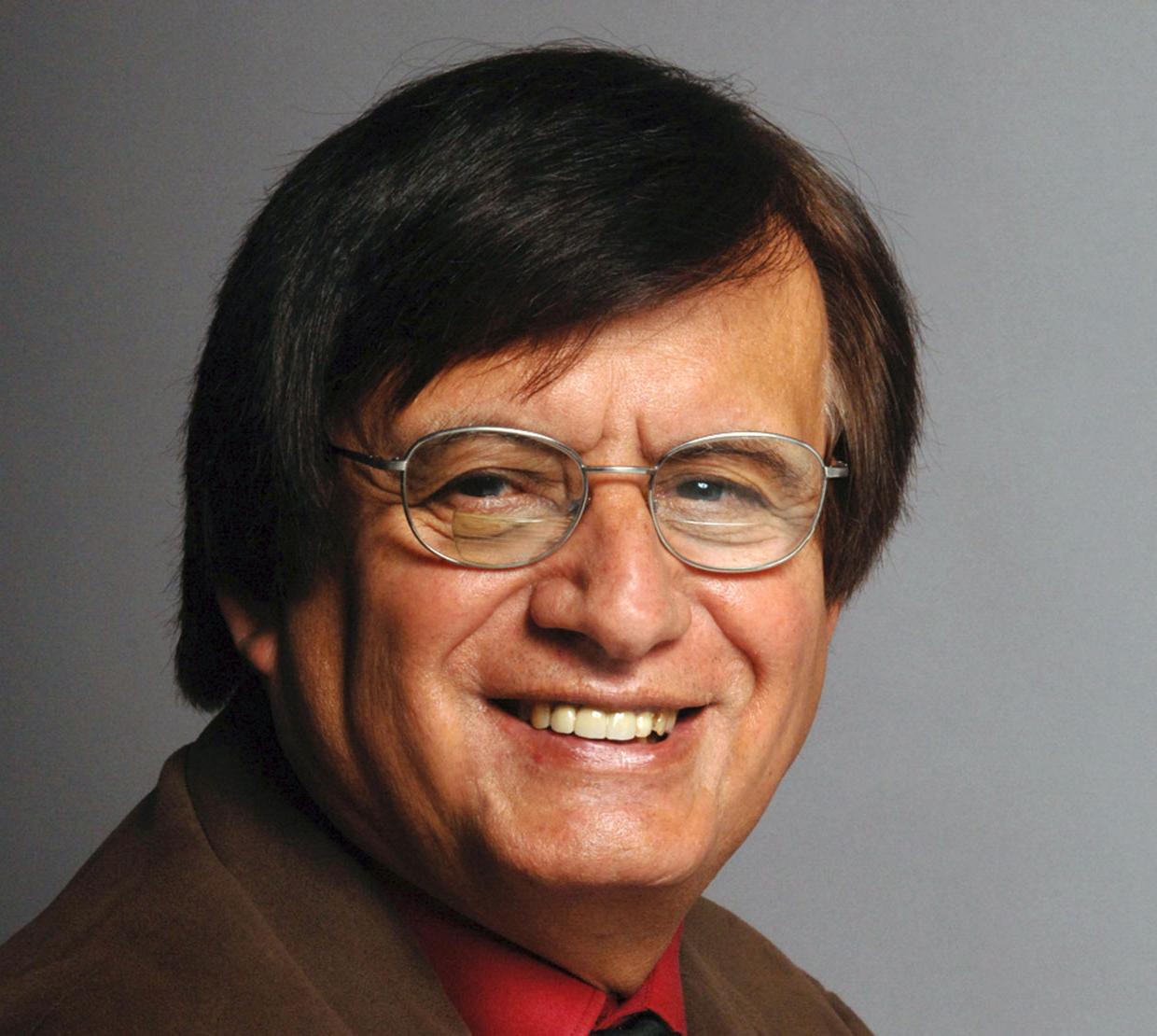
Richard Tapia in front of grey backdrop

Renowned mathematician uses math to enhance his personal life

Richard Tapia, professor in mathematics at Rice University

The College of Science welcomes renowned mathematician Richard Tapia who will present a public science lecture entitled, "Using Mathematics to Enhance My Personal Life," for faculty and students. The event will be held May 11 at 3:00 pm in Snell International Forum at 2150 SW Jefferson Way on campus. REGISTER here. Dr. Tapia is a University Professor in Rice University’s Computational and Applied Mathematics Department, the university’s highest academic title awarded to only seven faculty in its history.

For many years, Dr. Tapia was involved in BMX bicycle racing as a supportive father for his son. He will kick off his talk using several lively videos to identify and illustrate what he calls the "Curse of Lane 8" or "The Fair Lane Assignment Problem in BMX Bicycle Racing." Next, he will use his mathematical training to formulate the issue as a mathematical problem and then solve the problem using a computer while describing the solution technique.

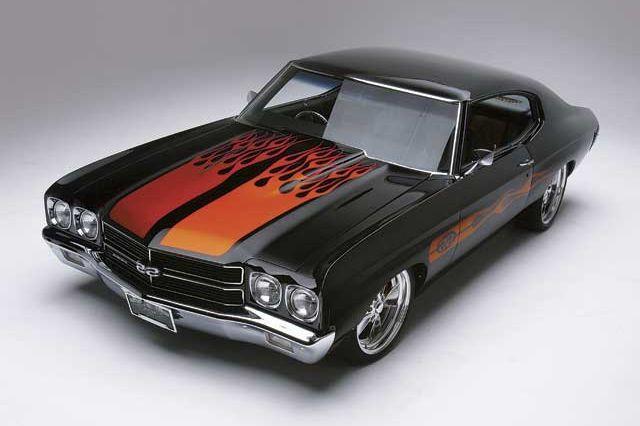
In the second part of this talk, Dr. Tapia will show and describe how he made a riveting video with the help of a dual art and math undergraduate at Rice University that ended up accompanying him as he showed his 1970 Chevelle Malibu SS at car shows across the country. Both the car and video are named, “Heavy Metal.” Check out an interview of Dr. Tapia at the Detroit Autorama 2008.

1970 Chevelle in front of grey backdrop

Dr. Tapia’s 1970 Chevelle SS, “Heavy Metal”

The video depicts the late 1960’s and early 1970’s, an era marked by muscle cars, heavy metal music and social rebellion. The psychedelic images in the video were constructed entirely using mathematics. Numerical simulations of fluid in and around the car were developed using numerical methods to solve the Navier-Stokes partial differential equations that govern fluid flow.

By being creative with the mathematical parameters and solution techniques, Tapia and the student created some highly striking and interesting images and patterns. Using video, they were able to demonstrate that mathematics can take us places where physics can’t.

Dr. Tapia is the 2011 awardee of the National Medal of Science, the highest honor bestowed by the U.S. government on scientists and engineers. He has received the National Science Board’s Vannevar Bush Award, has been elected to the National Academy of Engineering--the first Hispanic to receive these honors, and has served on the National Science Board from 1996-2002.

In 1990, the National Research Council named Tapia one of the 20 most influential leaders in minority mathematics education in the country. Later that year, he received the Hispanic Engineer National Achievement Award for Education from Hispanic Engineer.

Internationally recognized for his research in the computational and mathematical sciences, Dr. Tapia is also Director of Rice University’s Center for Excellence and Equity in Education. He has also been featured in a video promoting the Society for the Advancement of Chicanos and Native Americans in Science (SACNAS).

"Professor Tapia and late professor Blackwell are two folks whom I admire, first for their excellence in mathematics and statistics, and second for their leadership in enhancing diversity--two of our College's core values," said Sastry G. Pantula, dean of the College of Science.

"The Blackwell-Tapia conferences, named after these two leaders, have a great impact on building diverse leaders in science. The OSU community is in for a treat. We can all learn a lot from Dr. Tapia's experiences."

The renowned mathematician holds honorary doctorates from Carnegie Mellon University, Colorado School of Mines, University of Nevada, and Claremont Graduate University. He also has two professional conferences named in his honor: the Richard Tapia Celebration of Diversity in Computing Conference and the Blackwell-Tapia Mathematics Conference.

Dr. Tapia presents the Mathematics Department’s 31st annual Lonseth Lecture May 10 at 4:00 pm in LaSells Stewart Center, Construction & Engineering Hall, following the annual Mathematics Awards ceremony at 3:30 pm. This scientific talk, “The Remarkable Journey of Isoperimetric Problem: From Euler to Steiner to Weierstrass,” will offer an overview of the history of the impactful isoperimetric problem. A reception will follow the events.

3D model of ocean systems

Next generation of scientists to manage ocean systems

Big Data to analyze effects of human activities and climate change on oceans

A transdisciplinary team in our College was awarded $3 million to implement the National Science Foundation (NSF) Research Traineeship at Oregon State. The program encourages the development of bold and transformative models for graduate education in STEM fields.

The proposal, “Risk and uncertainty quantification in marine science and policy,” prepares a new generation of natural resource scientists and managers to study, protect, and manage ocean systems.

NSF chose OSU to develop the program, which focuses on the use of “big data” to analyze and understand the effects of human activities and climate change on the ocean system around the world. It also requires students to look at the impact of potential management decisions on the stakeholders – the fishing industry, for example – as well as the environment.

Requiring students to work across disciplines is what they’ll encounter in the working world, said Sastry Pantula, dean of the College of Science, which is actively involved in the new program.

“Solving major complex issues related to climate change, marine studies and risk assessment requires people to have a diversity of expertise to work together,” Pantula said.

“No single person has expertise in all sciences, mathematics and statistics. Bringing an interdisciplinary cohort together will enhance depth in core areas, breadth of communication across various fields, and strength in statistical and computational skills. This program takes advantage of the unique collaborative spirit of OSU.”

Mathematics professor Juan Restrepo and statistics professor Alix Gitelman are leading the NRT program as co-principal investigators in a collaborative effort with researchers across OSU; mathematics professors Enrique Thomann and Ed Waymire are core members of the team.

Aimed at advancing graduate education training in STEM, the program emphasizes the use of big data and mathematical and statistical models to address climate and policy problems in marine systems.

The program will provide for more than 30 fellowships for OSU master’s and doctoral students, with room for an additional 30 students if they have alternative funding. The students and participating faculty will decide on the projects. Read more.

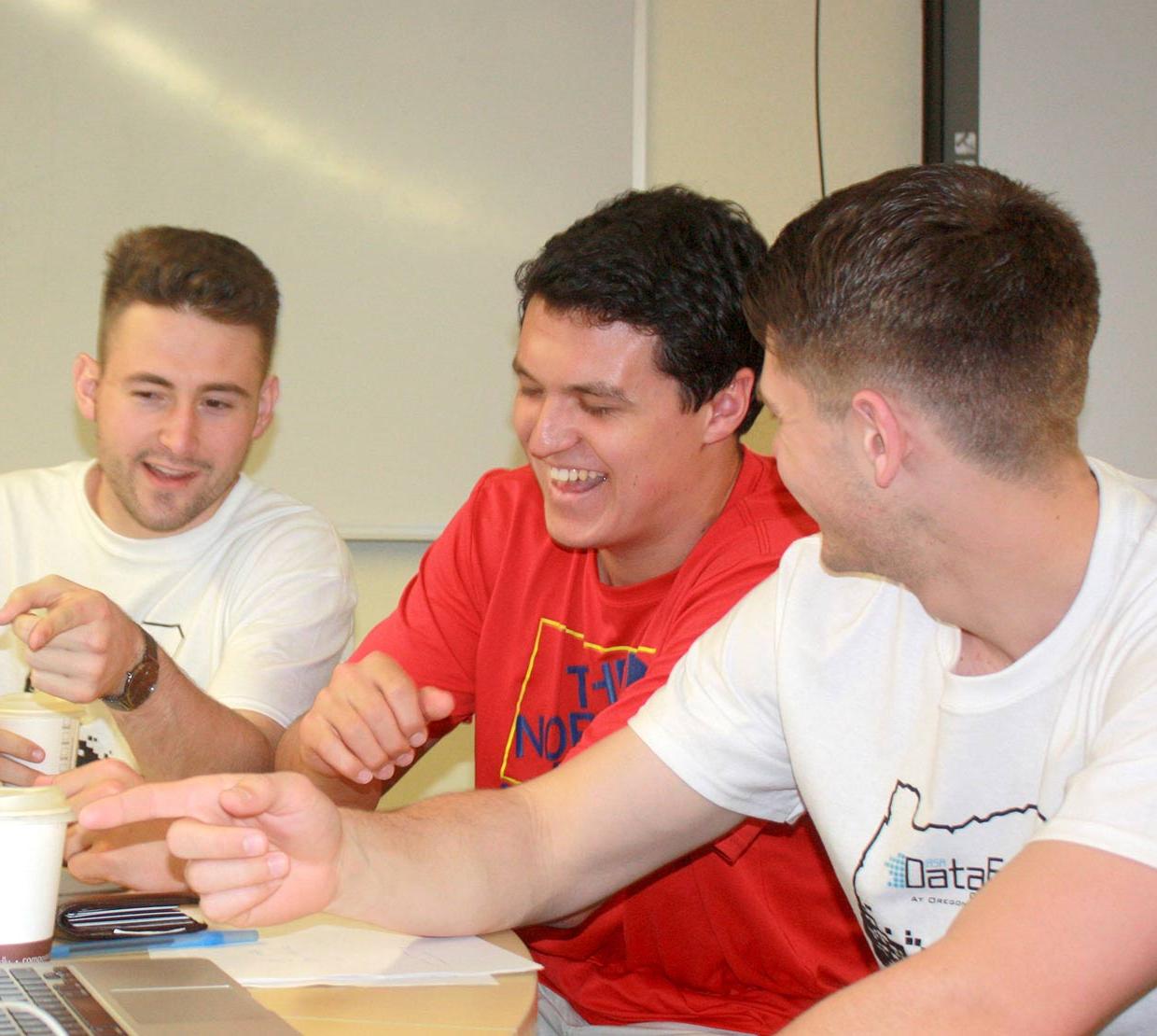
Male students interacting with data fest booth

DataFest Oregon delivers mind-numbing fun

The American Statistical Association’s Datafest

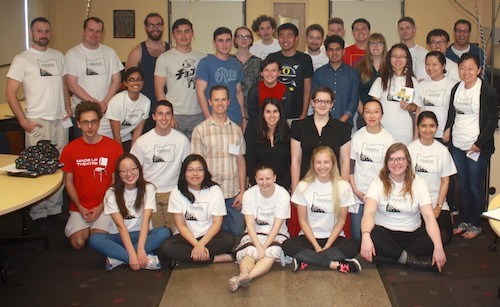
The American Statistical Association’s Datafest, a nationally coordinated data analysis competition that brings together the data science community, was held at Oregon State University April 15-17, 2016. Nine teams comprising 37 students and faculty from OSU, University of Oregon and Reed College matched up in data competitions and learned more about data science and statistics than you might think is humanly possible in one weekend.

The competitions kicked off at 7:30 pm Friday, April 15 in Weniger Hall and continued through Sunday, April 17 at 4 pm. Students came prepared with laptops locked and loaded with data analysis software and tools.

DataFest Oregon is a celebration of data in which teams of undergraduates work around the clock to find and share meaning in a large, rich, and complex data set. It’s a good way to meet other students interested in data.

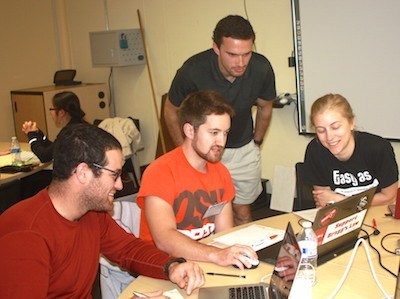
Undergraduate and graduate students did the work, working under pressure as part of a team and examined their own critical thinking processes, with assistance from a cadre of roving consultants, including graduate students, faculty, and industry professionals.

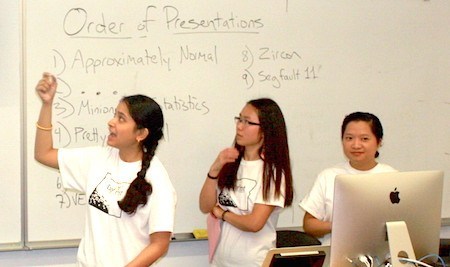
After two days of intense data wrangling, analysis, and presentation design, each team developed a mere two presentation slides in just a few minutes in hopes of impressing the panel of judges.

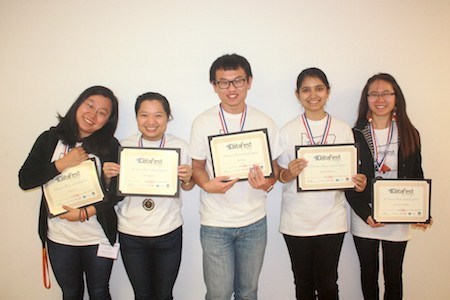
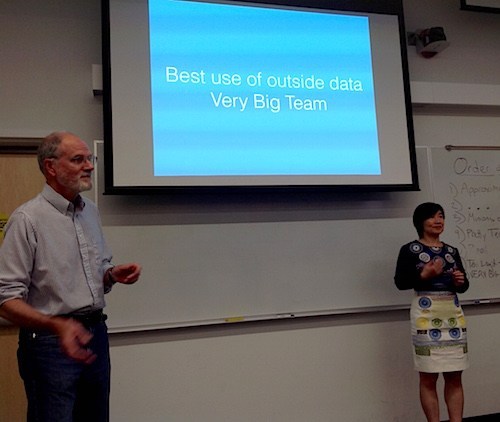
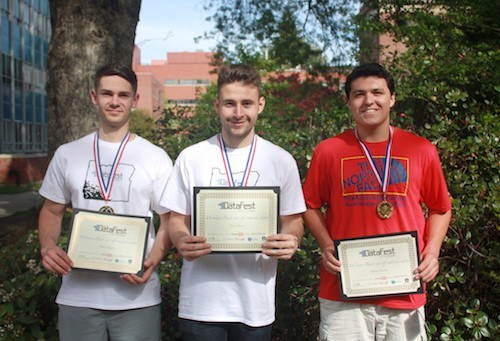
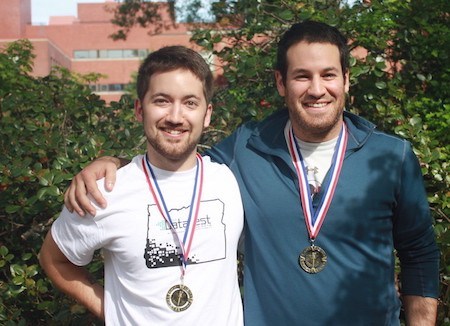
Did we mention the prizes? Prizes, fame and glory (and cool T-shirts) went to the following students who were awarded Best Insight, Best Use of External Data, and Best Visualization. Winners received medals, a book bundle, and a one-year membership to the American Statistical Association.

Best Visualization

Minions of StatisticsXiaoxi GuOregon State UniversityStatistics
Minions of StatisticsMei MengOregon State UniversityStatistics
Minions of StatisticsArpita MukherjeeOregon State UniversityStatistics
Minions of StatisticsMai NguyenOregon State UniversityStatistics
Minions of StatisticsYiran (Rain) WangOregon State UniversityStatistics

Best use of external data

Very Big TeamBret LorimoreOregon State UniversityComputer Science
Very Big TeamChris VlessisOregon State UniversityComputer Science
Very Big TeamGeorge HarderOregon State UniversityComputer Science

Best insight

Pretty TerrestrialAndrew BreretonOregon State UniversityBiochemistry and Biophysics
Pretty TerrestrialMichelle WileyOregon State UniversityBiochemistry and Biophysics
Pretty TerrestrialSteven FriedmanOregon State UniversityBiochemistry and Biophysics
Pretty TerrestrialCamden LopezOregon State UniversityStatistics

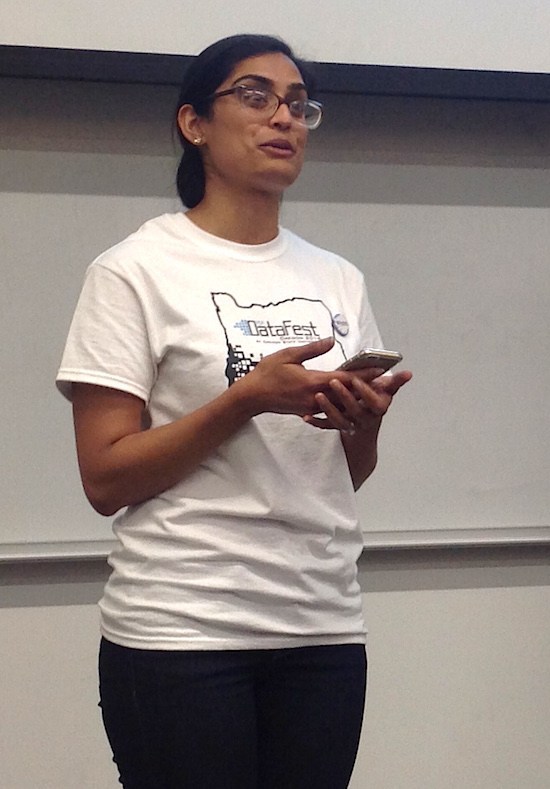
Charlotte Wickham, Assistant Professor in the Department of Statistics at OSU, was instrumental in bringing ASA DataFest to campus for the first time, championing the student competitions, and leading planning and organizing efforts.

DataFest Oregon was sponsored by the College of Science, Department of Statistics, the American Statistical Association, Google and DataCamp and Oregon State University.

Read more about ASA DataFests.

Photos from DataFest Oregon 2016:

3D model of red blood cells

Biohealth science's connection to quantitative sciences

By Srila Nayak

BioHealth

Redefining quantitative and biohealth sciences

Faculty and researchers in the College of Science are interpreting and advancing biohealth sciences in innovative new ways by applying the natural sciences, such as mathematics, statistics and chemistry. In recent times, researches in biology and medicine have been guided by biomolecular analysis technologies, mathematics and computations, and scientists are using these tools to address a spectrum of biological questions about diseases, from how they spread to risk factors.

In the last few years, our College has experienced an impressive spurt of transdisciplinary research in the quantitative and biohealth sciences. Ongoing studies and research advances range from analyzing genetic data on epidemics and inventing disease-detecting biosensors to developing statistical methods to better understand neuron connectivity and the transmission of signals in the brain. Through collaborative research across our campus, our faculty are paving the way for innovative biohealth science research which broadens the training of students across scientific disciplines.

Biological systems and mathematical models

Connections between biology and the mathematical sciences are fueling innovation and expansion in those disciplines. Statistician Sharmodeep Bhattacharyya explains how interpreting data from various experimental sources can generate new insights and solutions in the areas of neuroscience and genomics.

“Statistical methods, with their inherent objective of analyzing the uncertainty of a system help identify key interesting factors in the deluge of interesting data," said Bhattacharyya. "Such jobs can range from identifying a key set of genes affecting a disease for a specific group of people (like in precision medicine) or identifying the interaction between key regions of the brain for people who have a set of genes that causes a neurological disease."

Bhattacharyya has developed new statistical methods to analyze Electro-Cortico Graph (ECoG) array data from human and rat brains to identify connections involving speech and hearing.

Mathematician Vrushali Bokil’s research demonstrates how mathematical modeling, analysis and numerical simulations can illuminate insights in complex biological systems and how the health sciences, in turn, can spark new mathematical ideas. She collaborates with a mix of biologists and mathematicians across the country as well as in the UK, France and Germany on a project funded by NIMBioS (the National Institute of Mathematical and Biological Synthesis).

The project will allow Bokil and her colleagues to generate novel mathematical and statistical methods involving multiple hosts and multiple pathogens and that operate across a range of spatiotemporal scales, and to analyze the effects of climate change and human activities on the emergence of new plant viruses. Bokil points to the increasing use of mathematics to model complicated biological systems.

“It is exciting to be at the interface of biology and math,” said Bokil. “I write down a system of equations that models the physical or biological system. While the mathematical modeling and numerical simulations are fascinating in and of themselves, the added value of feeding back into biological applications is very rewarding.”

Benjamin Dalziel, an assistant professor in Integrative Biology, is part of a growing breed of biologists who are turning the biological sciences into a more quantitative field. Dalziel is a population biologist who uses mathematical tools to answer questions about the spread of infectious diseases, such as influenza and measles in populations and cities.

Dalziel, who also has an appointment in the mathematics department, maps hotspots of pathogen activity and diversification, and develops mathematical models to explain the patterns he finds. A current project explores whether there are systematic differences among cities with respect to their epidemic risk.

“I find the connections between mathematical modeling and biology very interesting. After developing a model, we ask, 'Is this happening in nature and how do we test it?' And if nature is doing something different, 'What did we get wrong with the model?' Sometimes there is a lot you have to do with the model besides [reviewing the] data to understand its behavior and to get it to interface with the real world," said Dalziel, who is developing a new mathematics course specifically for the life sciences.

Innovative disease imaging

A major application of analytical chemistry and its quantitative aspects to biology involves the creation of tools that directly aid in the diagnosis of cancer, heart disease, strokes and other serious ailments.

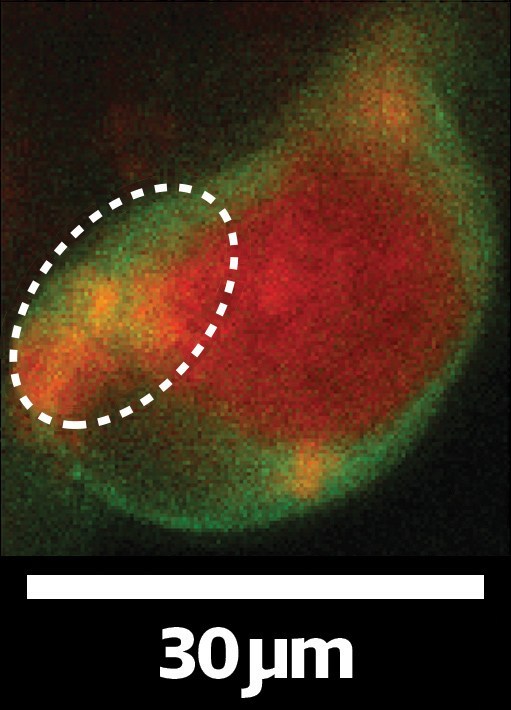
Chemistry assistant professor Sean M. Burrows runs a busy lab comprising undergraduates and doctoral students and their research is focused on innovating technologies to visualize biomarkers of disease. They pioneer novel, colorful fluorescent biosensor designs—analytical devices that relate biological molecules to a fluorescent signal—for visualizing and quantifying microRNAs, which are small non-coding RNA molecules that have a role in a plethora of gene regulatory events.

MicroRNAs hold great potential to yield information about the beginning stages of a disease and cell/tissue activity. Burrows and his team are trying to develop highly efficient fluorescent technologies for basic research and clinical use.

“Basically the idea is to design an imaging technology that will give us more information on the molecular interactions within the cell,” explains Borrows. “[For example], can we create an instrument that greatly advances the information content in terms of the numbers of colors we can look at in a cell? With the current technology, you could see one or two colors from the cell. But if we can look at 10 or more different colors, that will tell us much more about a biological mechanism," adds Burrows.

In an exciting breakthrough, the Burrows group designed a more efficient fluorescent biosensor for better signal interpretation from microRNA biosensors. The innovation has attracted significant attention in the field and was favorably reviewed in an article on the field of emerging microRNA biosensors in Analytical Chemistry.

However, existing imaging technology to learn about the underlying details of cellular mechanisms, such as the super resolution microscopy, is expensive. Burrows is keen to develop a cheaper alternative that can be used in a regular microscope.

“We can then open the door for more researchers to get more information from the cells they are interested in studying. This, in turn, will enable more transformative breakthroughs to understand disease progression and ultimately find cures.”

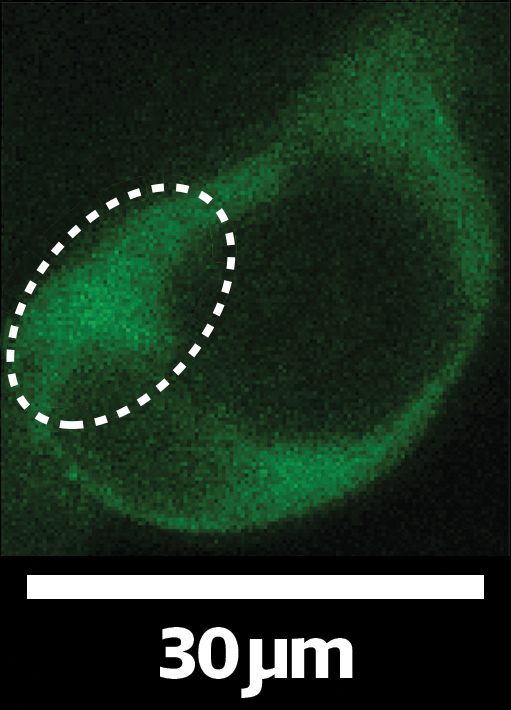
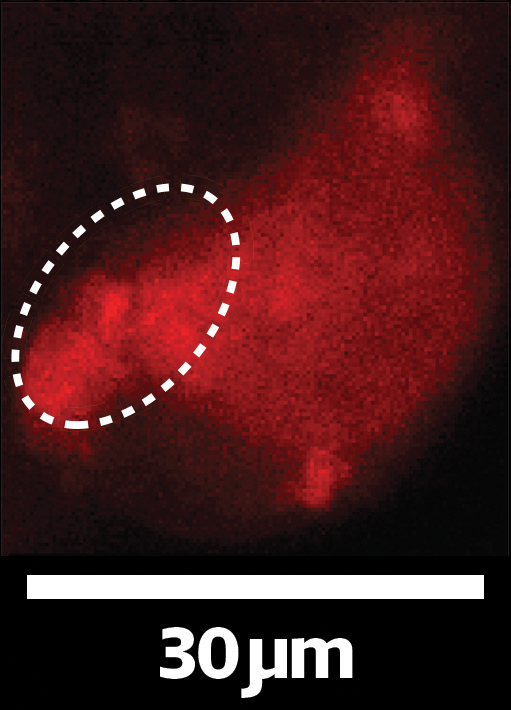
This figure shows that the biosensors can enter a cell’s cytoplasm and nucleus to find where microRNA expression occurs within the cell. Green shows the cytoplasm and the dark green spot is the nucleus. Red indicates the biosensor. The circle and the red nucleus indicate where the biosensor has entered the cytoplasm and nucleus, respectively.

student working on math homework holding calculator

Big Data expertise transcends disciplines

Impacting data science on transdisciplinary research

Data science is a strategic opportunity for the College of Science. By making strategic investments in mathematics, statistics and life sciences faculty, the College has extended its impact of data science on transdisciplinary research. In a science-without-borders approach, the College is deepening engagement between data science and other sciences, engineering, education, arts and business. Cluster hiring in bioinformatics across disciplines has brought expertise in mathematical biology; ecological, evolutionary, and functional properties of the microbiome; and deep sequencing data.

Read more about data science in the College of Science in our iMPACT magazine.

Charlotte Wickham, Statistics

“Our visual system is one of the fastest ways for us to consume information. The goal of my research is to harness this strength, not only to help scientists make discoveries, but also to engage and communicate with the public at large.

Charlotte Wickham in front of shrubbery

Charlotte Wickham, Statistics professor

“The object of visualization is very often not raw data. Particularly in the era of big data, summarization or modeling is an essential precursor to making sense of the data. Visualization becomes crucial to understanding how decisions at this stage propagate to conclusions and good visualization tools encourage experimentation with alternate approaches. We have methods for propagating statistical uncertainty through a data pipeline, but we are still learning how to best communicate uncertainty visually.

“There are interesting technical challenges along the way. For example, where should the data live? Can analyses be run on the fly, or do they require lengthy distributed computing? Can an approximate answer be achieved in a quicker manner? Is an approximate answer good enough for visualization purposes? Answering these questions requires close collaboration between computer scientists, statisticians and domain experts.”

Bringing data science to the non-data scientist. Wickham recently won first place in an international competition sponsored by EMC2 and hosted by Crowdanalytix . The contest was designed to visually reveal insights into the differences between a professional and amateur motorcycle rider based on data collected at the millisecond level from sensors on the bike, engine and rider during six laps of racing. Simply separating the data into laps posed a data exploration challenge. The iteration between data preparation and visualization was the key to separating the interesting from the uninteresting data.

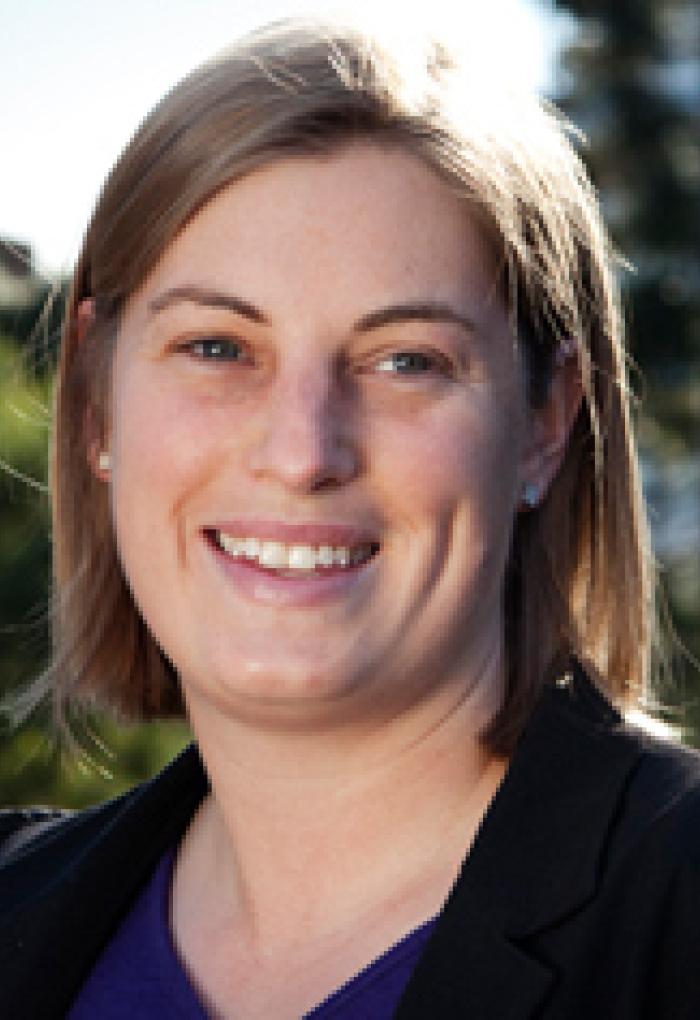
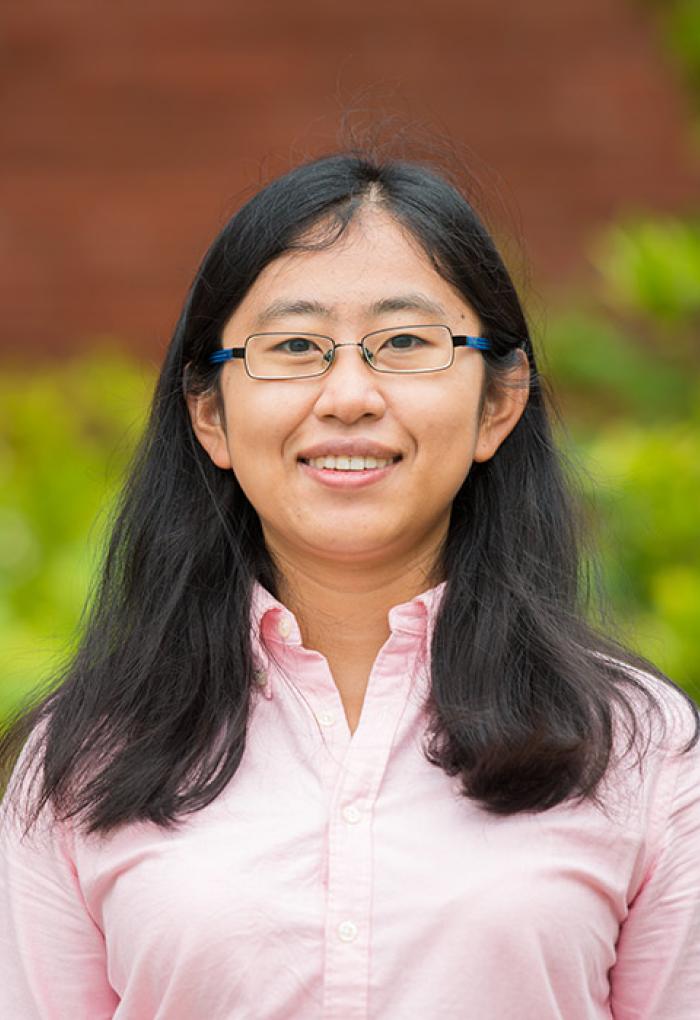
Duo Jiang, Statistics

“My research aims at developing statistical and computational methods to address challenges posed by the growing amount, dimensionality and complexity of data in biological and biomedical research. A recent focus has been on correlated data methods in genetic association studies, functional enrichment analysis and biological network inference.

Duo Jiang in front of shrubbery and brick wall

Duo Jiang, Statistics professor

“Through interdisciplinary research and collaborations, I hope to make statistical innovations that not only provide improved data analysis, but also enable new ways of leveraging data to answer biological questions and transform study design considerations for researchers at OSU and in the broader scientific community.”

Debashis Mondal, Statistics

Mondal focuses on research applications in agriculture, geographical epidemiology and environmental sciences.

Debashis Mondal in front of brick wall

Debashis Mondal, Statistics professor

"Advances in the field of spatial statistics are important because they can be used to answer scientific questions in agriculture, astronomy, biomedical imaging, computer vision, climate and environmental sciences, epidemiology and geology.

"I seek to enhance scientific understanding of environmental bioassays, arsenic contamination of groundwater and geographic variations in cancer risk. My statistical and computational work addresses questions relevant to environmental or global change and to health studies. I am also interested in Markov chain Monte Carlo computations, time series, ranking and selection and random graphs and trees."

Sharmodeep Bhattacharyya, Statistics

“I work on developing statistical methods for network and high-dimensional data. Large network data sets are currently becoming quite common in several scientific fields from biological to social sciences. My work is focused on networks and high-dimensional data related to large scale -omics studies, neuroscience studies and social interaction studies.

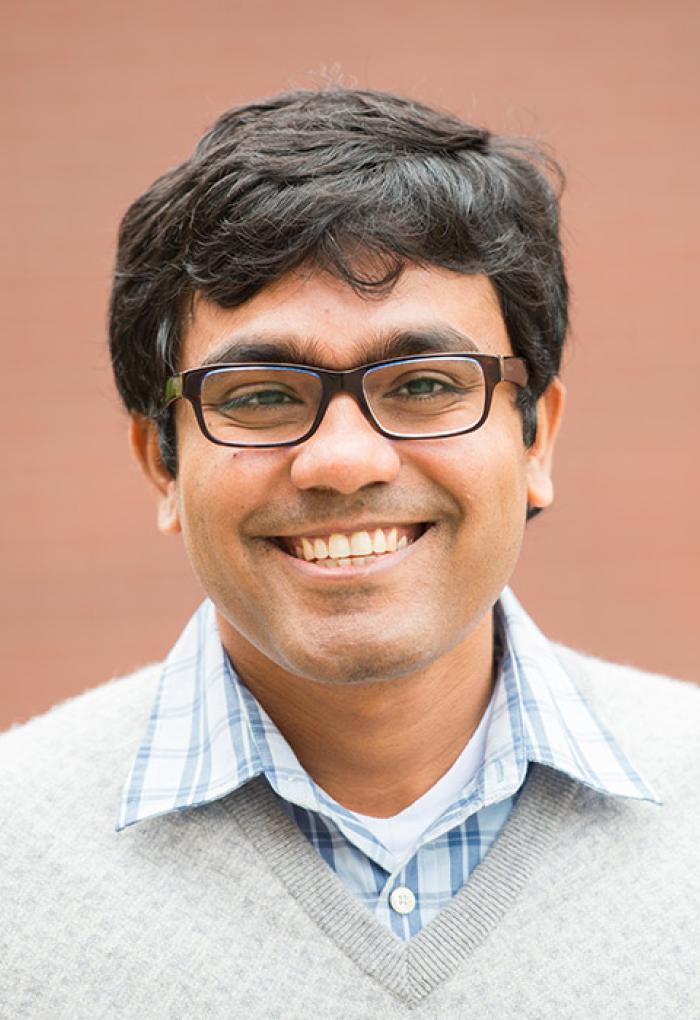
Sharmodeep Bhattacharyya standing in front of Kidder Hall

Sharmodeep Bhattacharyya, Statistics professor

"The development of statistical methods to analyze large-scale data coming from several different experimental sources helps our understanding of complex systems, such as human brain, which has so far remained highly elusive.”

Davide Lazzati, Physics

David Lazzati in office space

Davide Lazzati, Physics

Lazzati's research is focused on understanding the physics of cosmic dust and gamma-ray bursts—the brightest and most mysterious explosions in the present day universe. He also studies theoretical high-energy astrophysics, quantum chemistry, soft condensed matter and numerical methods. He was among the first to realize the importance of time dependent effects in the interaction of the burst radiation with interstellar material.

Patrick De Leenheer, Mathematics and Integrative Biology - Bioinformatics hire

De Leenheer’s research interests include mathematical biology, differential equations and control theory. He brings extensive experience in developing instructional and scholarly bridges between mathematicians and biologists. Prior to joining OSU, he was on the mathematics faculty at the University of Florida for nearly 10 years.

Patrick DeLeenheer in front of shrubbery

Patrick De-Leenheer, joint appointments in Mathematics & Integrative Biology

De Leenheer earned a master of science electro-mechanical engineering and a Ph.D. in applied sciences from Ghent University in Belgium.

David Hendrix, Biochemistry & Biophysics - Bioinformatics hire

David Hendrix in front of grey backdrop

David Hendrix, Biochemistry and Biophysics

Hendrix’s lab focuses on understanding the structure, function and mechanisms of action of non-coding RNAs. Since the discovery of numerous non-coding RNAs in the past decade, their function is still largely unknown. Hendrix uses structure prediction, genome-wide sequence analysis and deep sequencing data to explore the roles these molecules play in gene regulation. His team also develops algorithms to understand different areas of computational biology.

Thomas Sharpton, Microbiology and Statistics - Bioinformatics hire

Sharpton is developing the quantitative biology curricula and is teaching courses in bioinformatics and microbial genomics. His research team focuses on characterizing the ecological, evolutionary, and functional properties of the microbiome—the vast collection of microorganisms that live on our bodies.

Thomas Sharpton in front of grey backdrop

Thomas Sharpton, joint appointments in Microbiology and Statistics

The team seeks to better understand how the physiologies of our body and our microbiome interact. Their work is interdisciplinary, relying heavily on microbiology, bioinformatics and systems biology, and borrowing from molecular biology, computer science, and statistics.

David Koslicki, Mathematics - Bioinformatics hire

"My research is mainly data-driven as I primarily develop new mathematical techniques to answer biological questions in genomics. Studying metagenomics in particular, I routinely analyze DNA sequencing data with sizes ranging from 10's of gigabytes to 10's of terabytes. Thankfully, Oregon State is well equipped to facilitate analyzing this sort of data, particularly with the Center for Genomics Research and Biocomputing.

David Koslicki in front of brick wall

David Koslicki, Mathematics professor

"The recent discoveries regarding the human microbiome make it an exciting time to be at the interface of biology, mathematics, and computer science."

Koslicki’s research focuses on bioinformatics and the application of tools from the mathematical theory of symbolic dynamical systems to problems in genomics. He is currently interested in problems stemming from the field of metagenomics: the study of bacterial communities through their sampled DNA. He uses a variety of big data techniques, including compressed sensing, probabilistic data structures, and high-performance computing.

Joe Beckman, Biochemistry and Biophysics

“Researchers increasing collaborate across OSU and around the world to better understand what we are exposed to in everyday life, what the cellular actions of these exposures are and how we respond biochemically to these exposures. This involves measuring thousands of chemicals, tens of thousands of genes that are changing, and hundreds of thousands of biochemical molecules.

Joe Beckman sitting in lab

Joe Beckman, Distinguished Professor in Biochemistry & Biophysics; Burgess and Elizabeth Jamieson Chair

"The integration and management of these data has become a major challenge as has learning how to make the result comprehensible to the public and to decision makers.”

Juan Restrepo, Mathematics

Restrepo's research is focused on uncertainty quantification, ocean dynamics, climate, oil/pollution transport and acoustics. He has worked on bio-related homeland security work as a visiting professor at Los Alamos National Laboratory, bone dynamics, voting theory as well as climate dynamics research.

Juan Restrepo in front of brick wall

Juan Restrepo, Mathematics professor

"Elucidating whether a present or future extreme event has low probability, and/or is the result of a changing world is fundamental to developing risk analyses. Finding ways to improve the chances of a fast and cheap recovery after a disaster (rather than of avoiding it) is of great social interest. Producing better predictions from complex dynamic models by combining data and models, taking into account their inherent uncertainties, has high practical engineering and scientific impact.

"The two aspects that distinguish our research, which focuses on extremely high-dimensional problems, are 1) we work with time dependent processes, in which classical equilibrium notions are not applicable, and 2) we work with processes that generate outcomes which are not simply characterized by their mean and their variance.

"My group combines data/observations and methods from probability and statistics, statistical physics, machine learning, and dynamics in order to propose new methods for answering questions in climate, ocean processes, disaster recovery and resilience in natural and man-made systems.

Benjamin Dalziel, Mathematics and Integrative Biology

Dalziel is a population biologist working at the interface of theory and data. He uses mathematical models to uncover causal connections among different types of times-series data, including high-resolution data on animal movement patterns, population density, and the incidence of infectious disease.

Ben Dalziel in front of brick wall

Ben Dalziel, joint appointments in mathematics & integrative biology

"I want to know how populations work: Why do epidemics of infectious diseases happen more often in some cities than others? In addition, what leads migratory animals to “flock” over long distances each year, and how does this affect their vulnerability in a changing world?

"To me, data science is about integrating diverse sources of information--such as environmental measurements, behavior and genetic data--to predict how complex adaptive systems like a group of interacting animals will respond. This is part of a systems–based approach to understanding nature, and it’s made possible by recent increases in the volume and quality of data available.

"But big data is noisy, and a challenge now is how to develop rigorous approaches for extracting “signals” from the all the noise. This isn’t the statistics you learned in school – it’s new, and it’s a bit wild. In a way, data science is about approaching wilderness – that which defies the mind’s attempts at appropriation, as the poet Don McKay says."

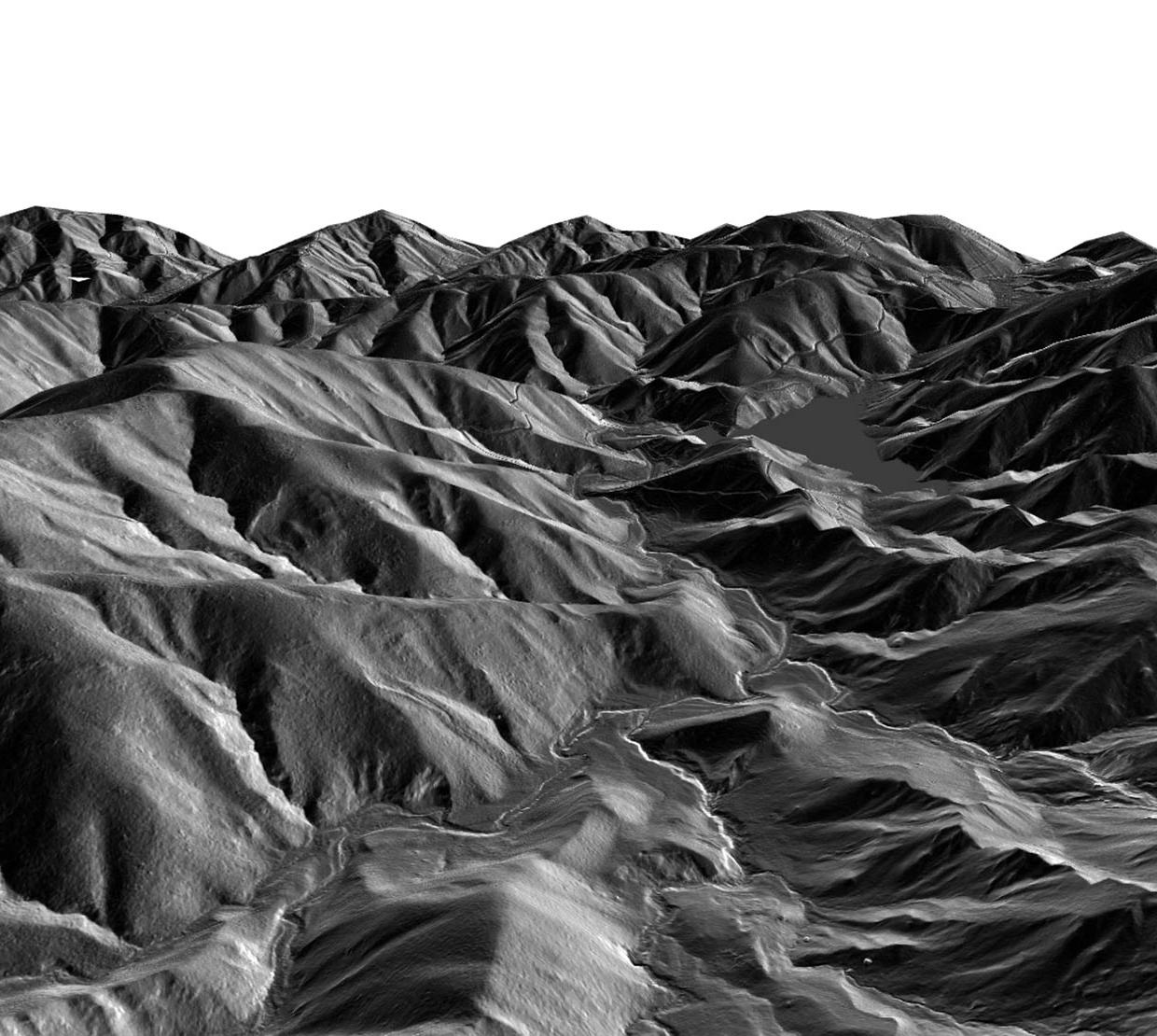
Black and white digital elevation models of mountains and hills

Big Data and Data Science Programs at NSF

image credit = LINZ Data Service

Chaitan Baru, Senior Advisor for Data Science for the Computer and Information Science and Engineering (CISE) Directorate at NSF, will visit campus January 15 to present a seminar on current NSF Big Data and Data Science program and activities. Science faculty and students are invited to attend the seminar, which will be held at 9 am in the Valley Library, Willamette Industries Seminar Room (room 3622) on the third floor.

Chaitan Baru in office space

Chaitan Baru, Senior Advisor for Data Science at NSF

Baru will present an overview of current programs and activities related to Big Data and Data Science at NSF and highlight inter-agency engagements within this area. He will also discuss future directions for Data Science research, education, and infrastructure.

NSF's BIGDATA program seeks novel approaches in computer science, statistics, computational science, and mathematics, along with innovative applications in domain science, including social and behavioral sciences, geosciences, education, biology, the physical sciences, and engineering that lead towards the further development of the interdisciplinary field of data science. Read more about NSF's BIGDATA program current solicitation. Deadline for proposals is February 9, 2016.

Considering that Data Science is a rapidly emerging, evolving field and discipline, Baru will take questions and allow ample time for discussions about where the field ought to be going given what we know today.

Currently on assignment with NSF, Baru is a Distinguished Scientist and Associate Director of Data Initiatives at the San Diego Supercomputer Center (SDSC), at the University of California, San Diego where he works on applied and applications-oriented research problems related to data management and data analytics. He leads the Advanced Cyberinfrastructure Development (ACID) Group at SDSC and is also Director of the Center for Large-scale Data Systems research (CLDS).

Baru has participated in a number of "data cyberinfrastructure" initiatives, including as Principal Investigator (PI) of the OpenTopography project; Cyberinfrastructure Lead, Tropical Ecology, Assessment and Monitoring network (TEAM); Co-Investigator of the Cyberinfrastructure for Comparative Effectiveness Research project (CYCORE); Member of the founding Senior Management Team of the National Ecological Observatory Network (NEON) and Co-PI of the NEON Cyberinfrastructure Testbed; Co-PI of the CUAHSI Hydrologic Information Systems (CUAHSI-HIS); Director, NEES Cyberinfrastructure Center (NEESit); PI/Project Director, Geosciences Network (GEON); and member of the How Much Information? project.

colleagues showing each other documents in meeting room

Internationally renowned statistician addresses statistics as the “transfer science”

The fall 2015 Milne Lecture

The fall 2015 Milne Lecture features Peter J. Bickel, a leading figure in the field of statistics and Emeritus Professor of Statistics at the University of California, Berkeley. He will discuss, “Statistics: The transfer science, Big Data and an experience with ENCODE." The ENCODE project is the Encyclopedia of DNA Elements.

Peter Bickel in front of shrubbery

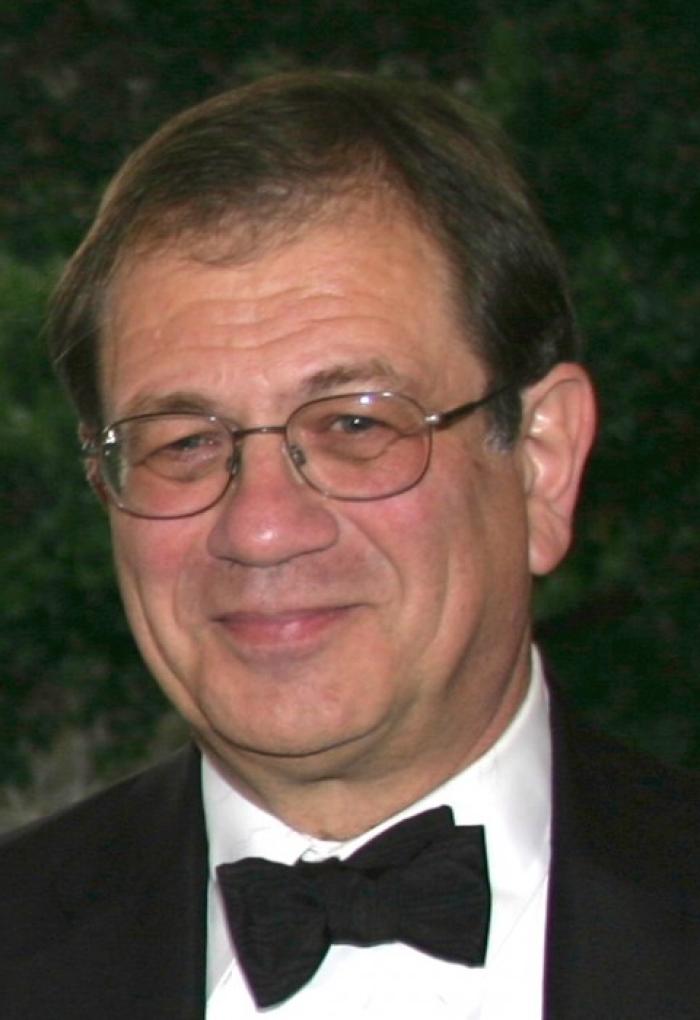
Peter Bickel, Emeritus Professor of Statistics, University of California, Berkeley

Hosted by the Department of Statistics, the fall Milne Lecture will be held on Monday, November 23 at 4 pm in the Memorial Union, Horizon room with a reception and cash bar from 5 - 7 pm. The Milne Lecture in Mathematics, Statistics, and Computer Science is a collaborative series of distinguished lectures launched in 1981 to honor founding Mathematics Department Chair and William Edmond Milne, a pioneer in numerical analysis.

Bickel is widely recognized as a leading statistician in any metric: breadth, depth or productivity. He will use illustrative examples to show how statistics is the transfer agent for methodology related to extracting information from aggregates.

In his talk, Bickel will address the new challenges posed by “big” and complex data as well as discuss a significant experience with the ENCODE project, a public research project that aims to identify all functional elements in the human genome and serves as one of the follow-ups to the Human Genome Project.

Credited with a wide range of contributions to the field of statistics, Bickel has conducted pioneering research in statistical sub-disciplines and has made important contributions in many areas of statistics, including robust statistics, decision theory, semiparametric modeling, the bootstrap, nonparametric modeling, machine learning, computational biology, and other areas where statistics and quantitative approaches play an important role.

“The message that statistics is a “transfer science” which enables discoveries in every area of science and most other disciplines is becoming a universal truth,” said Sastry G. Pantula, dean of the College of Science. “I am thrilled to have one of the top minds in statistical and data sciences come to Oregon State to talk to our community about how statisticians convert Big Data to useful knowledge.”

Bickel’s scientific findings have helped reshape aspects of statistical theory and methodological development. His research has influenced developments in other quantitative disciplines, including branches of engineering, economics, finance, computational biology, public health, among others. He is a co-author of the textbook, Mathematical Statistics: Basic Ideas and Selected Topicsv.I and II.

Bickel served as president of The Institute of Mathematical Statistics, The Bernoulli Society and the Board of Trustees of the National Institute of Statistics. Nationally, he has held leading positions within the National Academy of Sciences and the National Research Council.

Bickel has received many awards and honors, including being named the Wald Lecturer and Rietz Lecturer of the Institute of Mathematical Statistics. He was the first to receive the COPSS Presidents’ Award from the Committee of Presidents of Statistical Societies, which includes current and past presidents and presidents-elect of five professional societies of statisticians in Northern America. Three of Bickel’s students have also received the COPSS Presidents’ Award.

His work has also been recognized outside of the statistical profession through the John D. and Catherine T. MacArthur Foundation and Guggenheim Fellowships; and election to the American Academy for Arts and Sciences (AAAS), the National Academy of Sciences and the Royal Netherlands Academy of Arts and Sciences.

Born in Bucharest, Romania, Bickel earned a Ph.D. from the University of California, Berkeley at the age of 22. The Hebrew University, Jerusalem and the ETH (Eidgenossische Technische Hochschule, Zurich) awarded him honorary doctorate degrees. Although he officially retired in 2006, Bickel maintains an active research program in the Department of Statistics at Berkeley.

Support for the Milne Lectures comes from a generous gift from the Milne family as well as support from the College of Science’s Departments of Mathematics and Statistics, the College of Engineering‘s School of Electrical Engineering and Computer Science and from the Center for Genome Research and Biocomputing at OSU.

Star icon above light texture

Faculty excellence: Promotions and tenure 2015

Promotions and tenure 2015

The College of Science is proud to congratulate the following faculty for receiving promotions and/or tenure this spring. A well deserved pat on the back for their excellent work!

Tremendous consideration goes into each promotion and tenure decision. The dean’s office, department chairs, promotions and tenure committee members, faculty, external reviewers, students who offer letters of support, and of course the individual faculty member spends many hours preparing, processing and reviewing the documentation. The process is extremely rigorous in order to award the best candidates for promotion and/or tenure.

Special thanks to our College of Science Promotions and Tenure Committee for devoting a significant time this spring engaged in the review process. Also, thanks to the provost and the University Promotions and Tenure Committee for their hard work in evaluating and supporting the outstanding accomplishments of our faculty.

Biochemistry & Biophysics Department

Lanelle Connolly has been promoted to Senior Faculty Research Assistant I of Biochemistry and Biophysics, effective July 1, 2015.

Dr. Indira Rajagopal has been promoted to Senior Instructor II of Biochemistry and Biophysics, effective July 1, 2015.

Chemistry Department

Dr. Christopher M. Beaudry has been promoted to Associate Professor of Chemistry and granted indefinite tenure, effective September 16, 2015.

Dr. Ha Yeon (Paul) Cheong has been promoted to Associate Professor of Chemistry and granted indefinite tenure, effective September 16, 2015.

Dr. Jeff Walker has been promoted to Senior Instructor II of Chemistry, effective July 1, 2015.

Paula Joy Edwards Weiss has been promoted to Senior Instructor I of Chemistry, effective July 1, 2015.

Integrative Biology Department

Dr. Lesley Mae Blair has been promoted to Senior Instructor II of Integrative Biology, effective July 1, 2015.

Dr. Francis Chan has been promoted to Associate Professor, Senior Research of Integrative Biology, effective July 1, 2015.

Eileen Shin Yeu Chow has been promoted to Senior Faculty Research Assistant I of Integrative Biology, effective July 1, 2015.

Mark Lavery has been promoted to Senior Instructor II of Integrative Biology, effective July 1, 2015.

Dr. David Lytle has been promoted to Professor of Integrative Biology, effective September 16, 2015.

Mathematics Department

Dr. Christine Escher has been promoted to Professor of Mathematics, effective September 16, 2015.

Dr. Filix Maisch has been promoted to Senior Instructor I of Mathematics, effective September 16, 2015.

Microbiology Department

Dr. Linda Diane Bruslind has been promoted to Senior Instructor II of Microbiology, effective July 1, 2015.

Dr. Katharine Field has been promoted to Professor of Microbiology, effective July 1, 2015.

Statistics Department

Dr. Yanming Di has been promoted to Associate Professor in Statistics and granted indefinite tenure, effective September 16, 2015.

Dr. Alix Gitelman has been promoted to Professor of Statistics, effective September 16, 2015.

Keep up the excellent work!

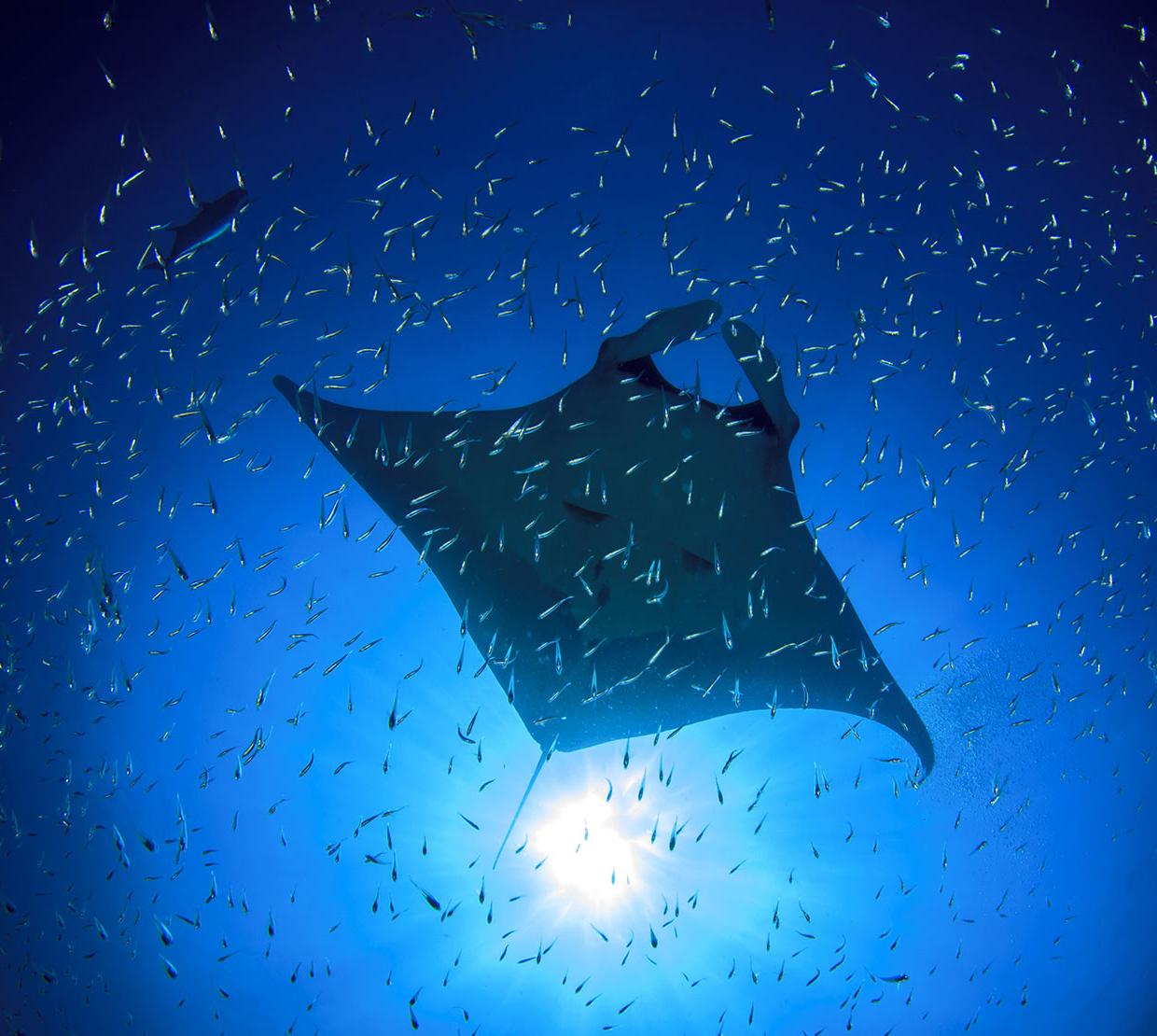
manta ray swimming though krill

Bio+Math

By Srila Nayak

Sting Ray swimming through krill near ocean surface

The ever-growing field of mathematical biosciences

In the last two years, the College of Science has focused on augmenting its expertise in data and life sciences with strategic hires in mathematical biology and bioinformatics. Almost immediately the new faculty have strengthened interdisciplinary and collaborative research in the College as well as across OSU.

These faculty have quickly connected with scientists across campus, paving the way for interdisciplinary research and broader training of graduate and undergraduate students in different areas of science.

Among the key hires are David Hendrix, assistant professor of biochemistry/biophysics and computer science; Duo Jiang, assistant professor of statistics; David Koslicki, assistant professor of mathematics; Patrick De Leenheer, professor of mathematics and integrative biology; Thomas Sharpton, assistant professor of microbiology and statistics.

“I am thrilled to welcome this extraordinarily talented cohort to the College,” said Sastry G. Pantula, dean of the College of Science.

“They will strengthen our foundation in fundamental sciences while building bridges to enable discoveries in other sciences, engineering and education.”

While the need for mathematical biosciences has grown rapidly due to massive sets of data in life sciences, computational and mathematical algorithms and new statistical methodology, the current community of mathematical bioscientists remains relatively small. The new faculty will strengthen the College’s efforts to advance research at the intersection of mathematical, statistical and biosciences research and nurture a new generation of scientists in a comprehensive, systematic way.

Mathematical Biology: What is it?

De Leenheer is one of a growing number of researchers worldwide who works in both the mathematical and biological sciences. De Leenheer uses mathematics to better understand how a variety of biological systems behave.

Although mathematical biology evolved throughout the twentieth-century, only in the last couple decades has it become its own branch of applied mathematics, primarily because research in biology and medicine has become more dependent on mathematics and computation. To illustrate, federal agencies such as NSF have initiated programs in Mathematical Biology and Research at the Interface of Biological, Mathematical and Physical Sciences.

De Leenheer uses dynamical mathematical models that describe and illuminate biological processes ranging from the cellular to the ecological scale. Currently, he is developing new modeling approaches for the analysis and design of Marine Protected Areas (MPA) to enhance fisheries as part of an NSF-funded project. This work will be instrumental in better informing policymakers on MPA implementation.

Bioinformatics: The new age of data

Bioinformatics professors David Koslicki and Thomas Sharpton have found Oregon State particularly favorable for their research, thanks to the extremely collaborative culture and the high-quality biological and computing resources at the Center for Genome Research and Biocomputing.

“A transdisciplinary field, bioinformatics requires expertise in biology, computer science, mathematics and statistics. It's rare that one researcher has sufficient expertise in all these areas so collaboration is often needed to solve a problem,” says Sharpton.

“OSU is easily the most collaborative environment that I have been a part of, and the supportive and interactive nature of my colleagues helps produce more impactful bioinformatic discoveries at a faster rate.”

Bioinformatics, which is the creation of software tools, algorithms and databases to analyze biological data, evolved into a discipline in the 1970s with the development of DNA sequencing. The explosive quantities of genomics-related data have spurred the growth of bioinformatics databases and tools for a variety of biological fields: medicine, microbiology, ecology, pharmacology, and many more.

“We have massive data sets that have the ability to transform many different fields,” says Koslicki. “But you need algorithms that are extremely efficient to be able to analyze these things.”

So, what does a bioinformatics project look like?

Koslicki invented a bacterial community reconstruction tool in which he sequenced the DNA of an environmental sample to determine which bacteria were present. Using an optimization technique derived from mathematical theory, Koslicki developed a swifter, more accurate method of classifying bacteria.

“Simultaneously, we were able to develop the algorithm to help the biology as well as learn some new mathematics about these compressed sensing techniques that hadn’t been observed before,” remarked Koslicki.

Spanning microbiology and statistics, Sharpton’s lab researches DNA sequences of microorganisms that live on the human body, known as the human microbiome, to understand how they influence health.

“Bioinformatics is critical to our work,” says Sharpton.

“We develop and apply computational and statistical methods to ascertain which microbes comprise the human microbiome, their biological functions, and their association with human health.”

The College of Science is investing in young, diverse faculty whether it’s to advance OSU’s Marine Studies Initiative or national priorities like precision medicine. Currently we are recruiting a quantitative biologist, two computational biologists and senior leaders in mathematics and statistics.

Teaching the next generation of students

Mathematical biology has a reputation for being one of the most difficult branches of applied mathematics, but that only spurs Leenheer and Koslicki’s determination to mentor and train the next generation of students who will work at the intersection of mathematics and biology.

“The important thing as I train graduate students is that they should have a solid mathematical background,” says Koslicki. “Presently, I am teaching the probability sequence. Probability is key for the kinds of things I do. In addition, students need to be able to program and to work with these big data kind of problems."

De Leenheer adds, "In the next five years, I hope to see biology students who have taken certain math courses in order to go to that next step and start using math as a tool in their own research. That would be fantastic."
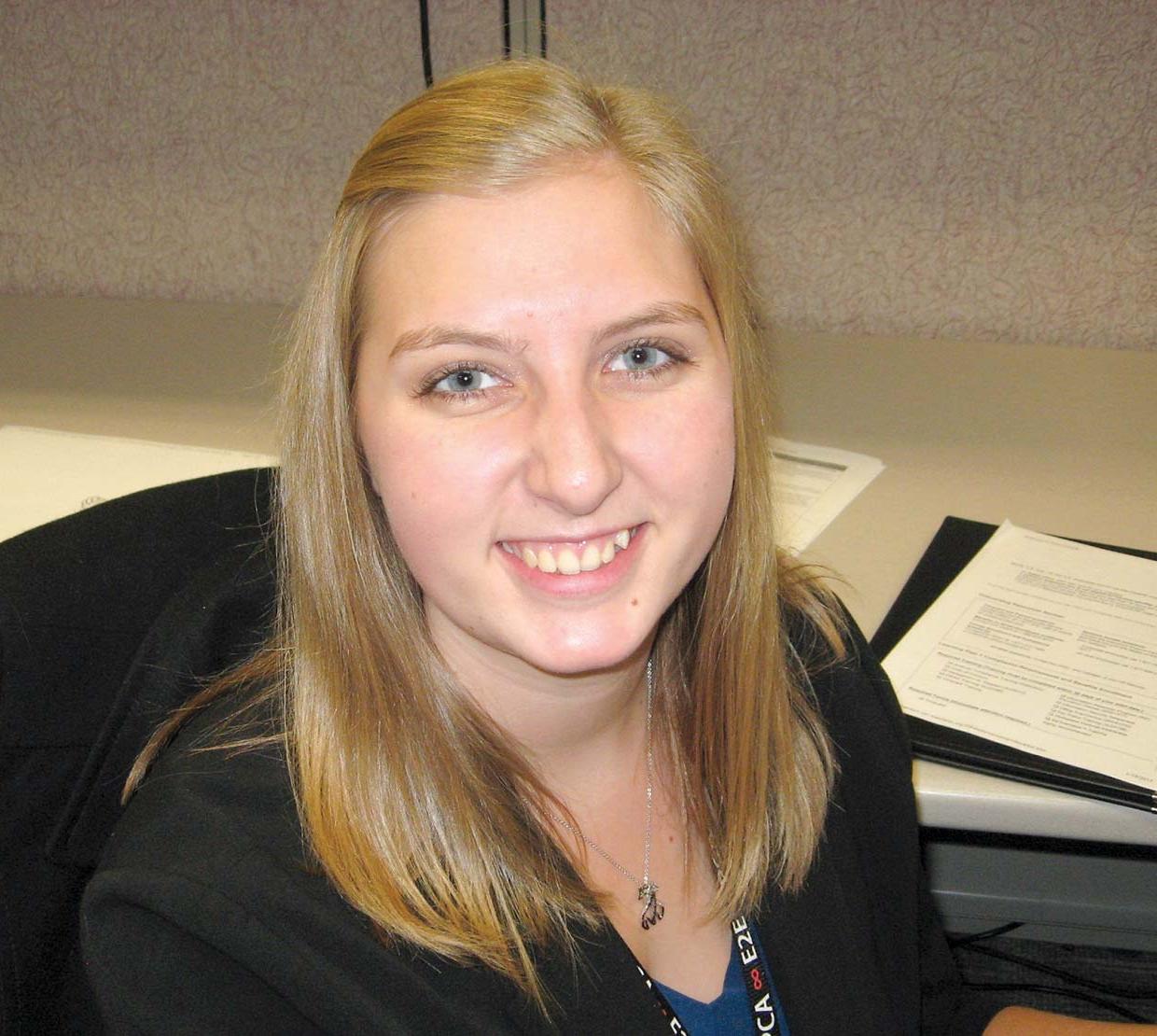
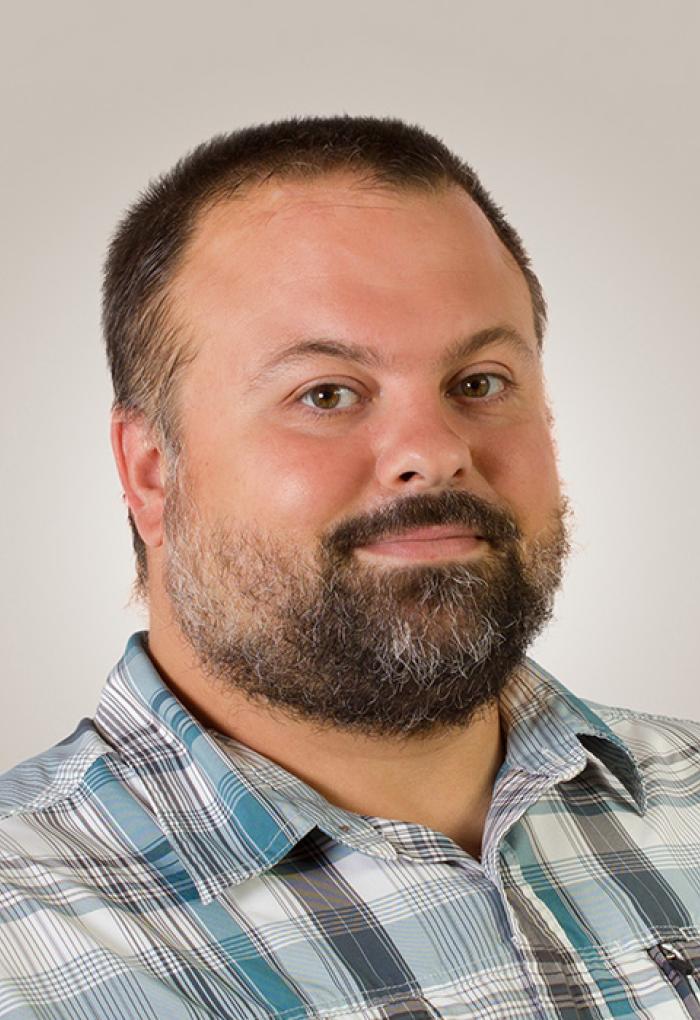
Susan Dunham sitting in cubicle

Market demands graduates with data analysis skills

By Srila Nayak

Susan Dunham, the first Oregon State mathematics graduate with the statistics option.

The employment surge for statisticians along with Oregon’s drive to increase the number of students pursuing degrees in STEM fields has led the Department of Mathematics at Oregon State University to offer a new undergraduate degree option in mathematics allowing an emphasis in statistics. Developed in close collaboration with the Department of Statistic, this new concentration prepares students for the current marketplace where statisticians have a professional edge, according to recent surveys and studies.

Mashable, an online news site that covers digital culture and technology, labels statistical analysis and data science as 2015’s “hottest profession.” In the last five years, such enthusiastic epithets have been increasingly applied to the field of Statistics, once viewed as an esoteric and unexciting discipline.

Amstat News—the magazine of the American Statistical Association—cites data that tracks this revolutionary shift in attitude toward statistics and statisticians. Amstat’s comprehensive mathematical sciences survey reveals a 78% increase in undergraduate statistics degrees from 2003 to 2011 and a 40% increase from 2009 to 2011.

Suddenly, it seems, everyone from Google and Netflix to Walmart, Gap and the federal government are hiring people with statistical skills and expertise.

Susan Dunham, the first mathematics graduate with the statistics option at OSU, found that her training made her a frontrunner in the job market. She was hired by a top insurance and finance company, before even completing her degree in December 2014 with a BS in Mathematics, a statistics option, and a minor in actuarial science.

Dunham, who has always enjoyed data analysis, honed her talent in the area through the seven statistics courses she took during her undergraduate career, five of which have counted towards her statistics option. She recently started working as an actuarial analyst trainee at State Farm’s auto pricing unit in its corporate headquarters in Bloomington, Illinois.

Dunham said her statistical skills and knowledge helped her land an internship with State Farm’s research unit last summer. When she impressed her managers with her abilities in data analysis, it helped pave the way for a full- time job offer.

“The statistics courses I was able to take at OSU definitely have an impact on my career."
"My managers are very excited about my coming into the company with this knowledge. One of my managers I spoke with today was actually really excited to hear that I had some experience with R—the data analysis software—(thanks to ST 411 and 412) and wants me to use it in my job for certain tasks,” Dunham wrote in an email. “The courses in the statistics option helped give me a good base knowledge for some of the actuarial exams I will be taking in the next few years as well.”

Statistics 411 and 412 are called Methods of Data Analysis and give students training in statistical applications.

Besides the promising job potential of a degree in statistics, the discipline itself has achieved impressive gender parity. According to a recent article in The Washington Post, statistics is ahead of all other STEM fields in “attracting, retaining and training women.” More than 40 percent of the degrees in statistics go to women, and they make up 40 percent of tenure-line faculty in departments. In the Department of Statistics at OSU, 50 % of tenured or tenure-line faculty are women.

OSU’s Department of Statistics is the only one of its kind among public universities in Oregon. It does not itself currently offer a undergraduate degree, so the new statistics option in mathematics offers a unique opportunity for students.

“The new Statistics option for mathematics students gives an avenue for undergraduates to develop an expertise in statistical applications together with an understanding of the mathematical theory underlying statistics,” says Mina Ossiander, professor of Mathematics and undergraduate advisor for the Statistics option.

Dunham, who says that she would have majored in Statistics if OSU had offered it, had already taken many statistics courses in high school when she started as a math major in 2011.

Although Dunham began with a minor in Statistics, she found herself wanting more challenging, upper-level statistics courses.

“The minor in Statistics required a lot of basic statistics courses that I had gained experience with in high school, or skipped and gone straight to the upper division classes,” says Dunham.

Dunham jumped at the chance when Ossiander, who had taught Dunham and was well aware of her career goals and preferences, told her about the newly developed Statistics option.

“I preferred statistics more than the pure mathematics focus of the major. I told Mina I'd sign up as soon as possible!” says Dunham. “So in short, I chose the stats option because it let me take more statistics courses, which was where I wanted to focus.”

With this new degree program, OSU joins other high-impact public universities such as UC Berkeley, University of Washington and University of Utah that offer similar degrees in the mathematical and statistical sciences.

The Statistics option has succeeded in attracting attention from mathematics majors. Currently, there are about a dozen Math majors who are enrolled in the Statistics concentration. Ossiander predicts that there will be 5-10 Statistics Option graduates annually.

Subscribe to Statistics